


The best time of year to clean gutters depends on your local weather and surrounding trees. As a general baseline, plan to clean them at least twice a year: once in late spring and again in late fall. A house tucked under heavy oaks or in a storm belt will need a different rhythm than one on an open, treeless lot. Getting this timing right keeps the chore quick, allowing you to stay ahead of the debris instead of digging out a packed trough.
Best Time of Year to Clean Gutters, Season by Season
Gutters collect different types of debris throughout the year, so the best cleaning schedule depends on the season. Working out the best time of year to clean gutters for your home starts with knowing what each season brings. The two anchor cleans are spring and fall; summer and winter are mostly about watching and reacting.
Spring: Clear Winter Debris, Prep for Rain
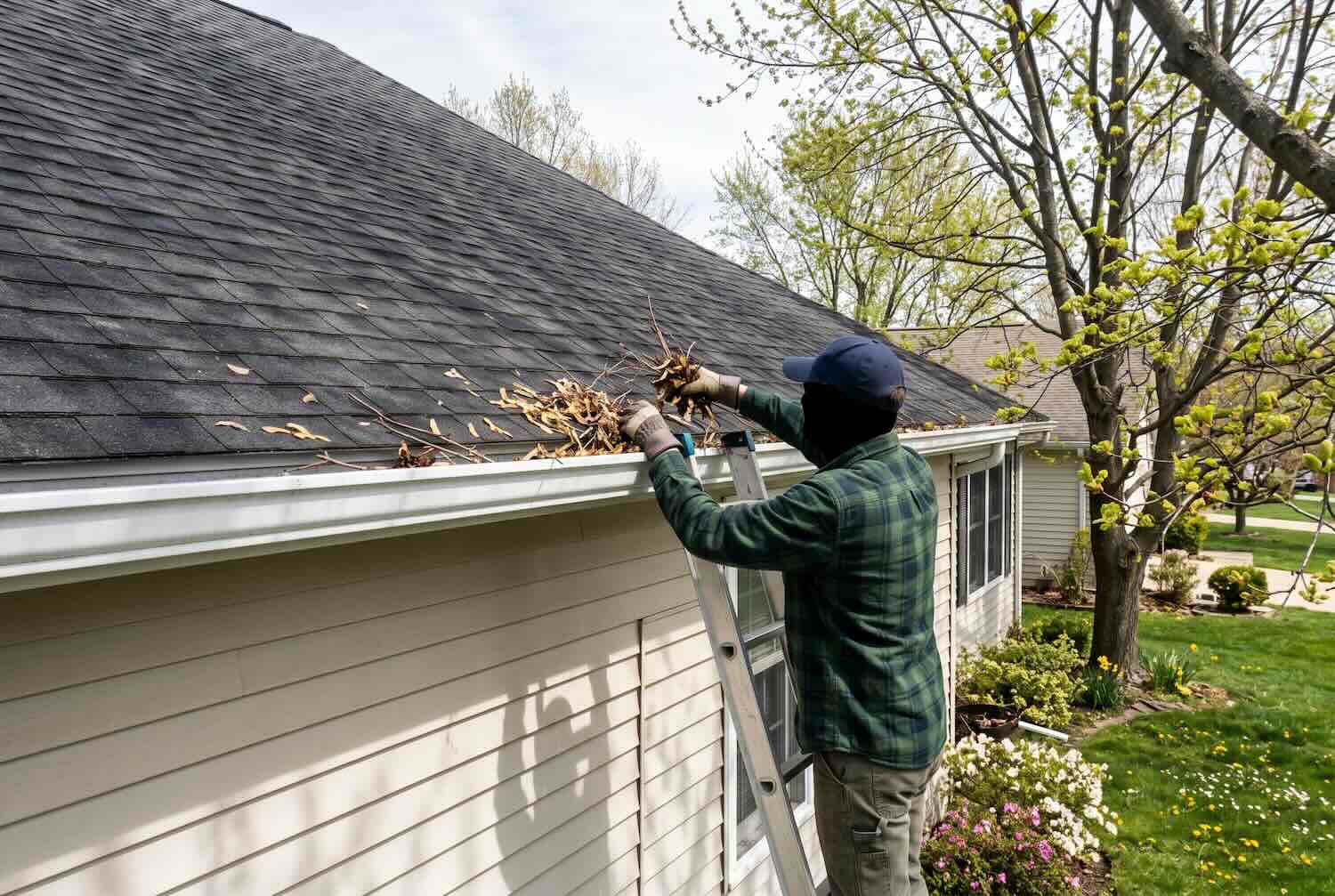
Spring cleaning clears out the debris winter left behind: twigs, seed pods, matted leaves, and washed-down shingle grit. Plan this for late spring, after trees have dropped their buds, blossoms, and maple seeds. Clearing the system before heavy spring rains arrive ensures your gutters can safely handle the season’s high water volume.
In much of the country, spring brings the heaviest and most frequent rain of the year, so a gutter that limped through winter clogged will finally fail here if you do not get to it. A gutter that overflows in downpour is where a lot of basement leaks begin. Spring is also the moment to look for winter damage while you are up there: hangers loosened by ice and snow load, a run that has started to tilt, and downspouts still packed from fall. Repairing these issues now is much easier than dealing with an emergency mid-storm.
Summer: Check After Storms and Pollen

Summer is the quiet season, but it is not one to ignore. Heavy pollen early on can cake into a film that dries and narrows the flow, and a single summer storm can drop leaves, twigs, and blown-in debris in one afternoon. Rather than a full cleaning, summer calls for a check, especially after a big thunderstorm, to clear anything that landed and confirm the water still runs. A five-minute walk around the house looking up at the gutter line is usually enough to catch a problem before it grows. If you have pines, the needles start dropping now too, so a quick pass keeps them from stacking up.
The upside of a summer job is dry debris, which lifts out far more easily than the wet, matted mess you fight in spring and fall. If you run gutter guards, summer is a good time to brush the pollen film off the surface so the mesh keeps draining.
>>> Read more: What Happens If You Don’t Clean Your Gutters? The Real Risks
Fall: The Most Important Clean, After Leaves Drop
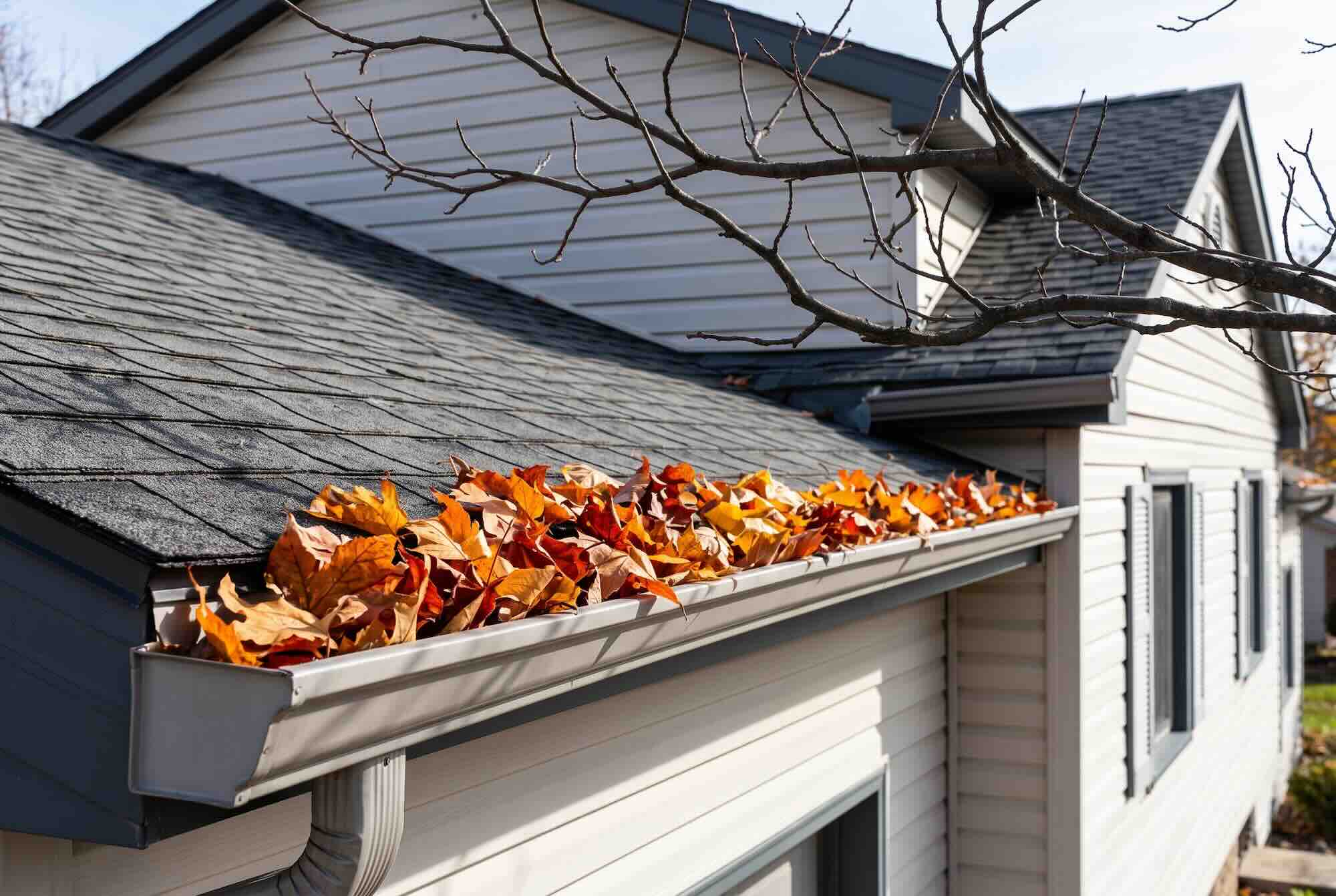
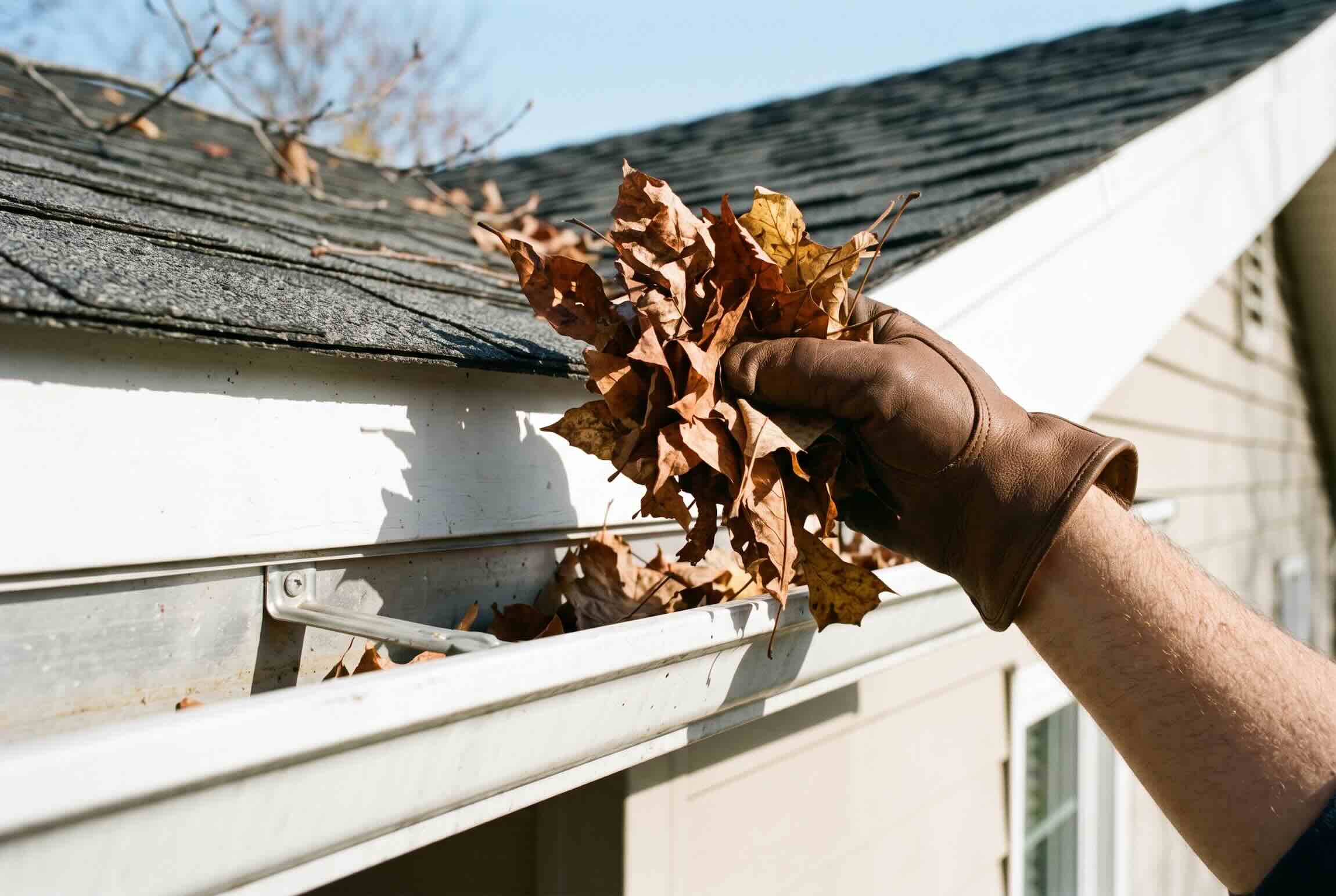
Fall is the cleaning that matters most, and the timing is the whole trick. Wait until the trees near your roof have shed the bulk of their leaves, usually mid to late fall, so you are not clearing the same gutter twice. Clean too early and a second wave fills it right back up; leave it too late and the first freeze locks the debris in place.
In a heavy-leaf yard, two fall passes, one midway and one after the last leaves fall, beat a single early attempt. This is the clean that sets you up for winter, so it is worth taking your time over. A simple cue that the trees are done is when a strong wind stops bringing down fresh leaves. While you are finishing, flush each downspout and confirm a strong stream at the bottom, since a clear trough over a blocked downspout still backs up and freezes.
Winter: Watch for Ice Dams
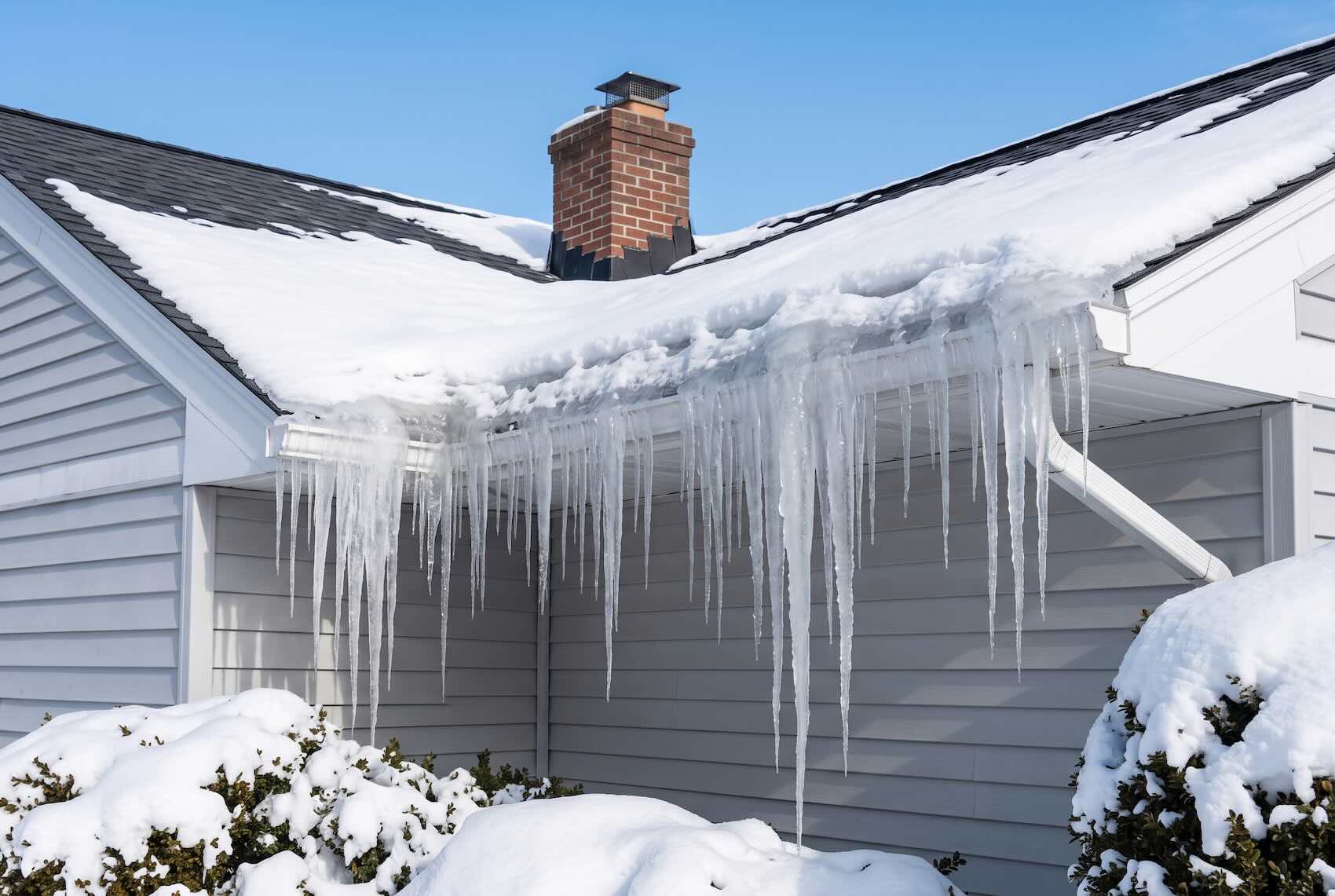
Winter is less about cleaning and more about watching, since climbing an icy ladder is a dangerous trade. In cold climates, the main danger is the ice dam: leftover debris traps water, which freezes at the roof edge and drives backed-up meltwater under the shingles. To prevent and manage ice dams effectively, follow these steps:
- Prioritize a fall clean: The best defense is a thorough fall cleaning so no debris is left to trap water in the first place.
- Melt ice safely: If a dam does form, resist the urge to hack at it with tools. Instead, follow a guide on how to clear ice from gutters to melt it out without harming the roof or the gutter system.
- Improve attic insulation: Upgrading your attic insulation and ventilation cuts down on the escaping roof heat that causes dams to form.
- Install heated cables: Running heated cables along the eaves is a reliable option for roofs that experience ice dams every year.
- Skip wet cleaning: Avoid pressure washing or wet cleaning in freezing weather, as the runoff will simply turn into a dangerous slipping hazard underfoot.
Signs You Need to Clean Off-Schedule
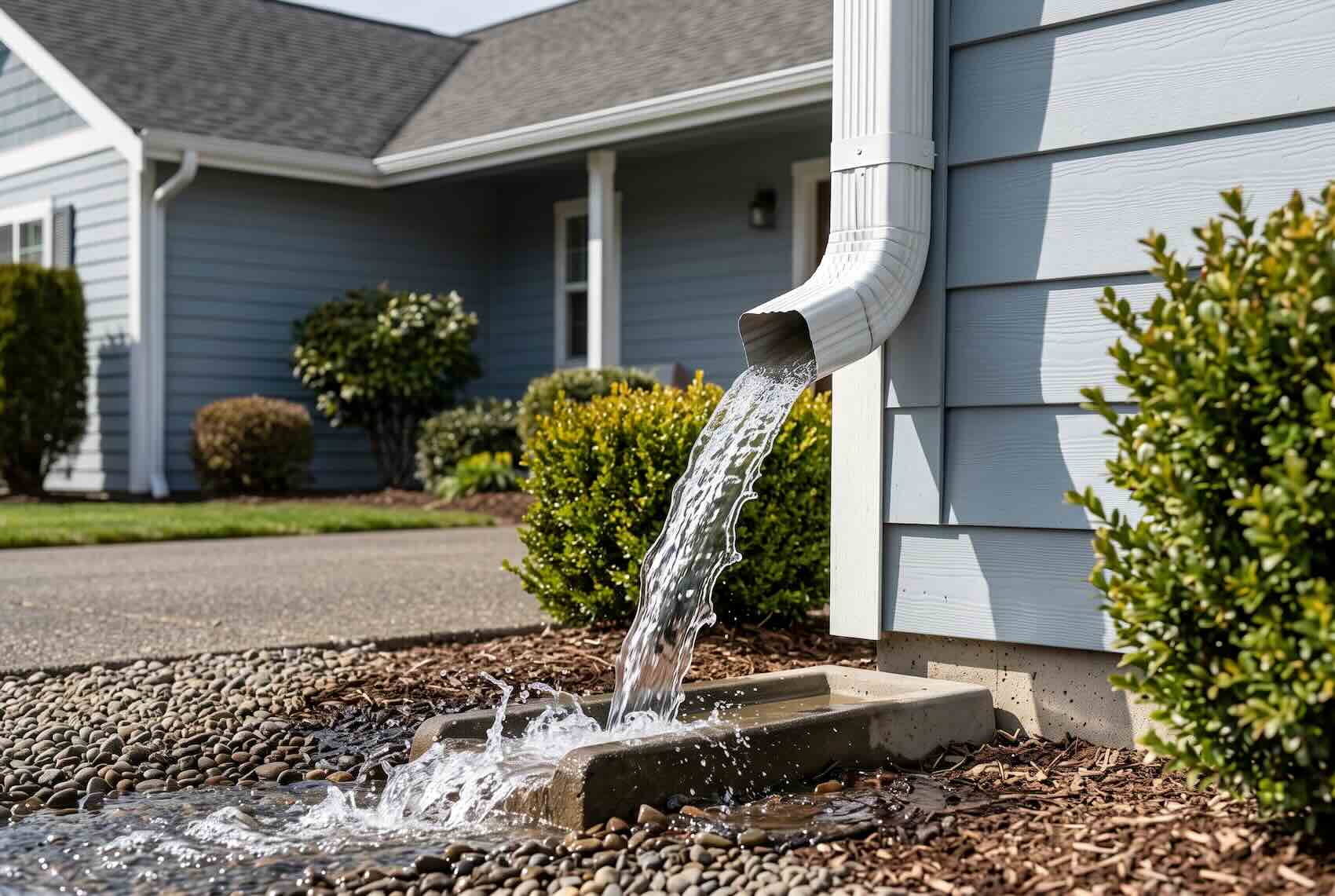
The calendar sets a baseline, not a rule, and the gutters will tell you when they need attention sooner. Clean off-schedule the moment you notice any of these:
- Water spilling over the edge during a storm instead of draining to the downspout, the clearest signal of all.
- A visible sag, or a run pulling away from the fascia under the weight of wet debris.
- Plants or weeds sprouting from the trough, which means enough soil has settled there to grow in.
- Grit and granules piling up, a sign the roof and the debris are washing down into the gutter.
- Birds, insects, or nests working the eaves, often paired with stains streaking down the siding.
A new house, a recent storm, or a neighbor’s tree hanging over your roofline can move that timeline up without warning. So it is worth a two-minute look during and just after the next heavy rain, when a struggling gutter shows itself most clearly.
How Often Should You Clean Gutters? Quick Reference Table
If you would rather match your own situation to a schedule, this table sums up the best time of year to clean gutters by circumstance. Please keep in mind that this table is a general reference guide. You should always adjust your cleaning frequency based on the specific tree coverage, weather conditions, and overall environment of your property.
| Your situation | How often | Best time |
| Few or no nearby trees | Once a year | Late fall |
| Many deciduous trees (oak, maple) | Twice a year or more | Late spring and late fall |
| Pines or evergreens nearby | 3 to 4 times a year | Spring, summer, and fall |
| Storm-prone area | Twice a year, plus after big storms | Late spring, late fall, post-storm |
| Snowy or cold climate | Twice a year, weighted to fall | Late fall, before the freeze |
| Gutter guards installed | Once a year, plus surface checks | Late fall |
Treat the table as a starting point rather than a verdict. A single tall tree directly over one corner of the roof can mean that stretch of gutter needs more attention than the rest of the house, so watch the runs under the heaviest cover most closely. Guards stretch the interval but do not remove it, since even guarded gutters need the surface cleared and an occasional flush.
FAQ
Can you clean gutters too often?
No, not in a way that harms the gutters, though you can waste your own time. Cleaning more than the debris warrants does no harm, but there is little point clearing a trough that is already empty. The smarter approach is to match the frequency to your trees and weather rather than a fixed number, so you clean when there is something to clear. If you find the gutters empty every time, you can safely stretch the interval; if they are packed every time, tighten it.
Does the time of day matter for cleaning gutters?
A little. Midday on a dry, calm day is easiest, since debris is lighter when dry and you have full light to see the trough. Avoid early-morning dew, wet conditions, and the hottest stretch of a summer afternoon if you are up on a ladder. The bigger factor is a few dry days beforehand, which is what lets caked debris lift out cleanly. Wet leaves clump and stick, turn heavy, and clog the downspout as you flush, so a dry spell does more for the job than any particular hour of the day.
Should new gutters be cleaned on the same schedule?
Yes. New gutters catch leaves and grit exactly like older ones, so they follow the same late-spring and late-fall rhythm. The upside is that new gutters and downspouts drain freely, so the work goes faster and problems are easier to spot early. Do not let the newness talk you into skipping a season. If the installer added guards, follow the guarded schedule instead, but keep checking the surface until you know how your particular trees behave.
Do you clean gutters before or after a roof replacement?
After, as the final step. A roof replacement drops a surprising amount of debris into the gutters: old shingle granules, nails, and cutoffs. So a good roofer clears them as part of the cleanup. Confirm that it is included, then check the gutters yourself once the crew leaves, since leftover grit and fasteners can clog a downspout in the first rain. Loose nails in a gutter are also worth clearing before they rust and stain the metal.
Is spring or fall cleaning more important if you can only do one?
Fall, in most cases. The single best time of year to clean gutters, if you get one shot, is late fall, since clearing the leaves before winter keeps water moving and heads off ice dams. Spring still matters, especially before heavy seasonal rain, but a thorough late-fall clean protects the house through its hardest months. If your area gets its heaviest rain in spring rather than snow in winter, flip that priority and make the spring clean your non-negotiable one.
Conclusion
There is a best time of year to clean gutters, late spring and late fall, but your own yard has the final say on the rest. Count the trees over your roof, weigh your storms and winters, and let the gutters pull you off-schedule whenever they overflow or start to sag. Whatever cadence you settle on, a cleaning only counts if it is done safely, so choose a method that keeps you off a shaky ladder and make it a habit. Time it well and gutter upkeep shrinks to a couple of easy afternoons a year, the kind of small, unglamorous win that Home Tips Daily is built on.