

Most advice on how to reduce AC noise in apartment rentals is secretly written for homeowners: swap the unit, open up the ductwork, build an enclosure. None of that helps a renter who cannot touch the equipment or drill into a wall. What follows is the renter version, a set of reversible, landlord-safe fixes that lower the sound from a window, portable, PTAC, or mini-split unit with nothing to undo at move-out. Then, start with diagnosis, because the source decides the fix.
First, Identify Where the AC Noise Is Coming From
The same rattle can have three different cures depending on its source, so start by pinning down where it originates. Stand close to the unit, then move away, and listen for where the sound actually lives:
- From the unit itself. A window, portable, PTAC, or mini-split that buzzes or rattles is usually a vibration or airflow issue you can treat directly.
- From the vents. Air rushing through the registers or a straining fan points to airflow, so clearing the path does more than soundproofing would.
- Through a shared wall or ceiling. Noise from a neighbor’s equipment is a soundproofing problem, and it calls for a different set of moves aimed at your room rather than the machine.
How to Reduce AC Noise in Apartment
Once you identify the primary source, work through the corresponding fixes. Most cost very little, none require formal landlord permission, and their effects stack. Layering two or three minor adjustments usually beats hunting for one perfect solution. Start with the cheap, fully reversible options and only add more if the noise still bothers you.
Add Soft Surfaces (Rugs, Curtains, Fabric)
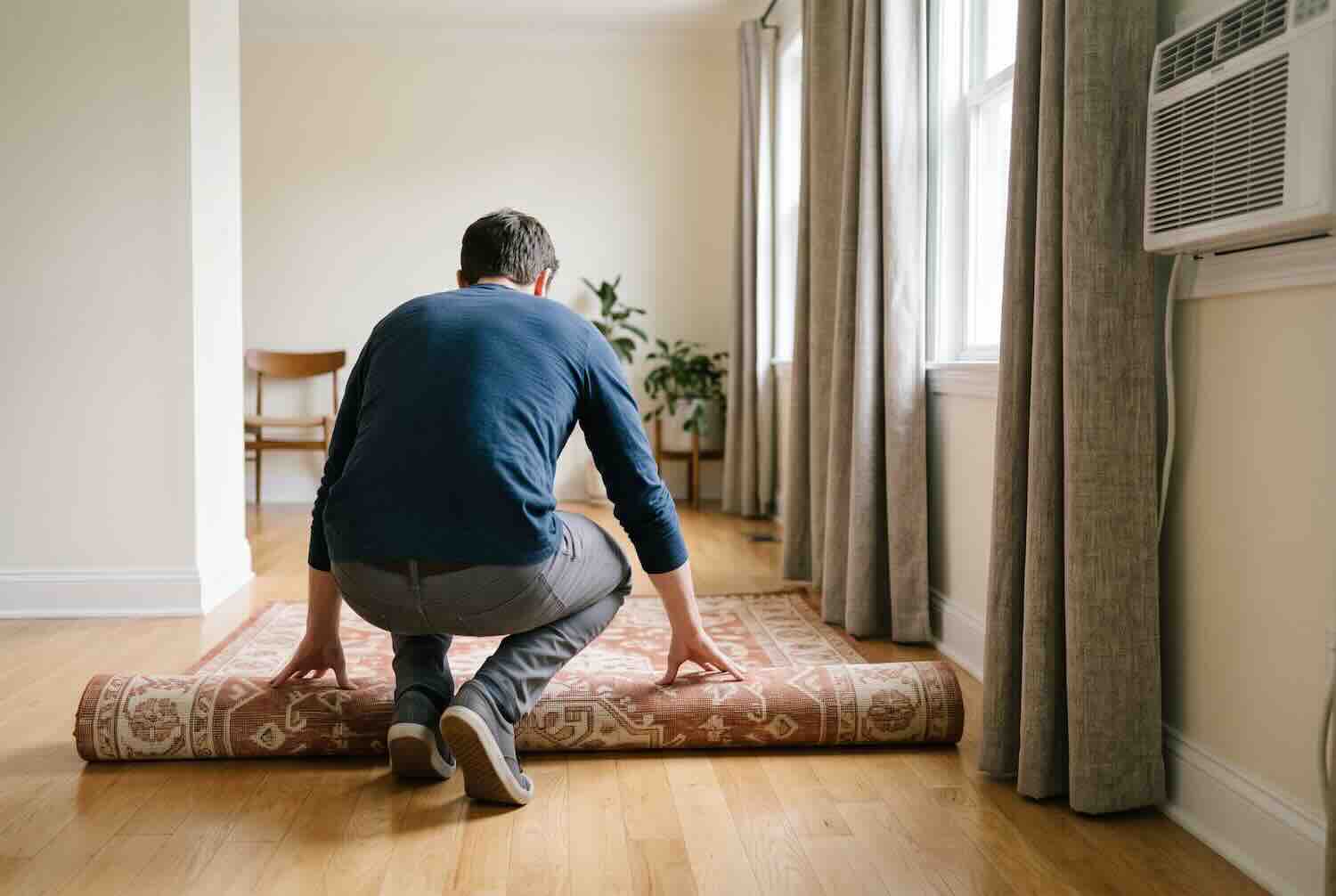
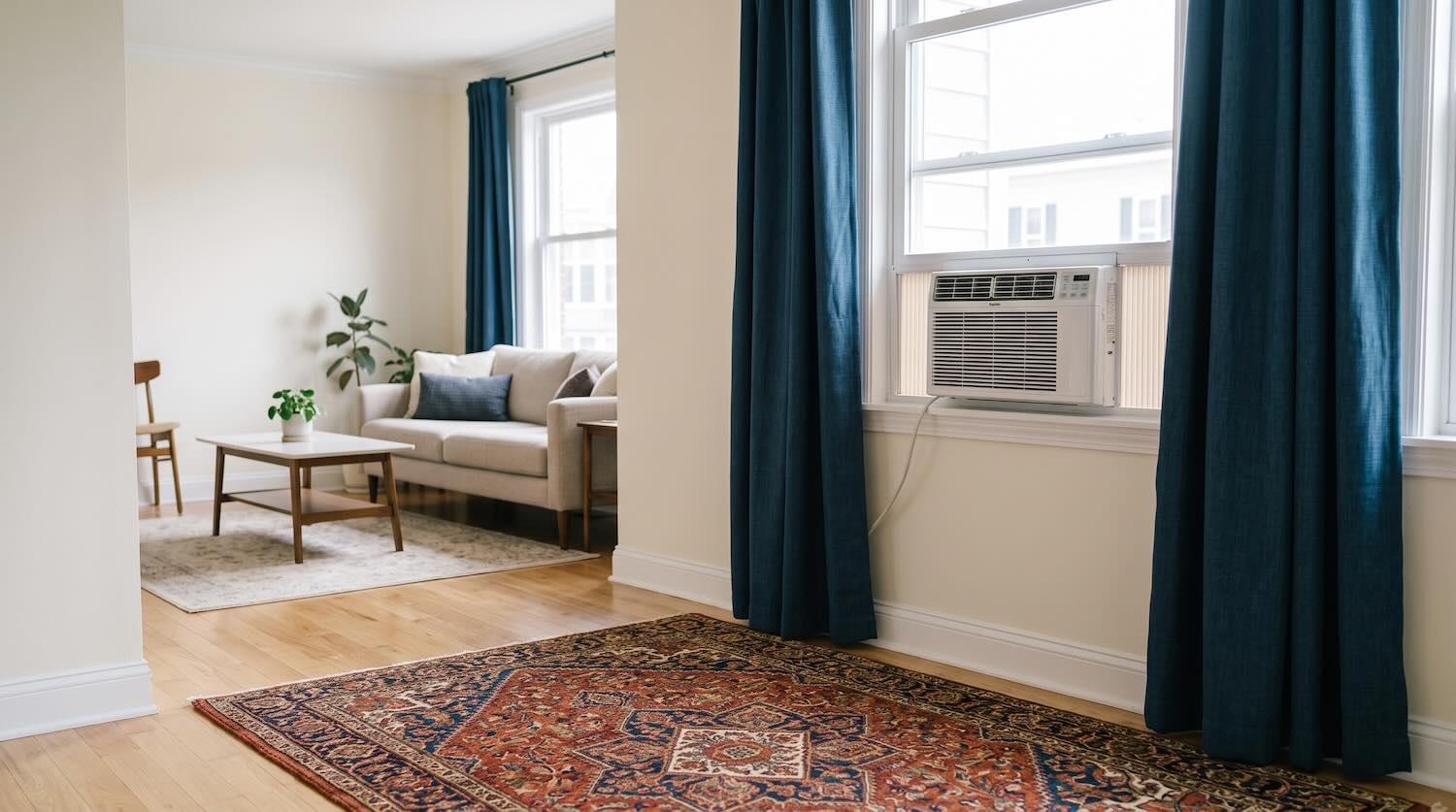
Hard, bare rooms bounce sound around, making any AC seem much louder than it actually is. Laying down a thick area rug, hanging heavy window curtains, and adding upholstered furniture gives the noise something soft to sink into rather than echo off. Aim these soft materials at the large reflective surfaces nearest the unit, like a bare hardwood floor or an uncurtained window directly beside it. This single step will not silence a mechanical rattle, but it takes the harsh edge off the overall sound.
Seal Gaps and Weatherstrip a Window Unit
A window unit often leaks as much sound as air through the gaps around it, so tightening it up quiets the rattle and blocks outside noise at the same time. Work through it in order:
1. Tighten the mounting. Confirm the unit is firmly secured in the window and the sash is snug against it, since a loose frame amplifies every vibration.
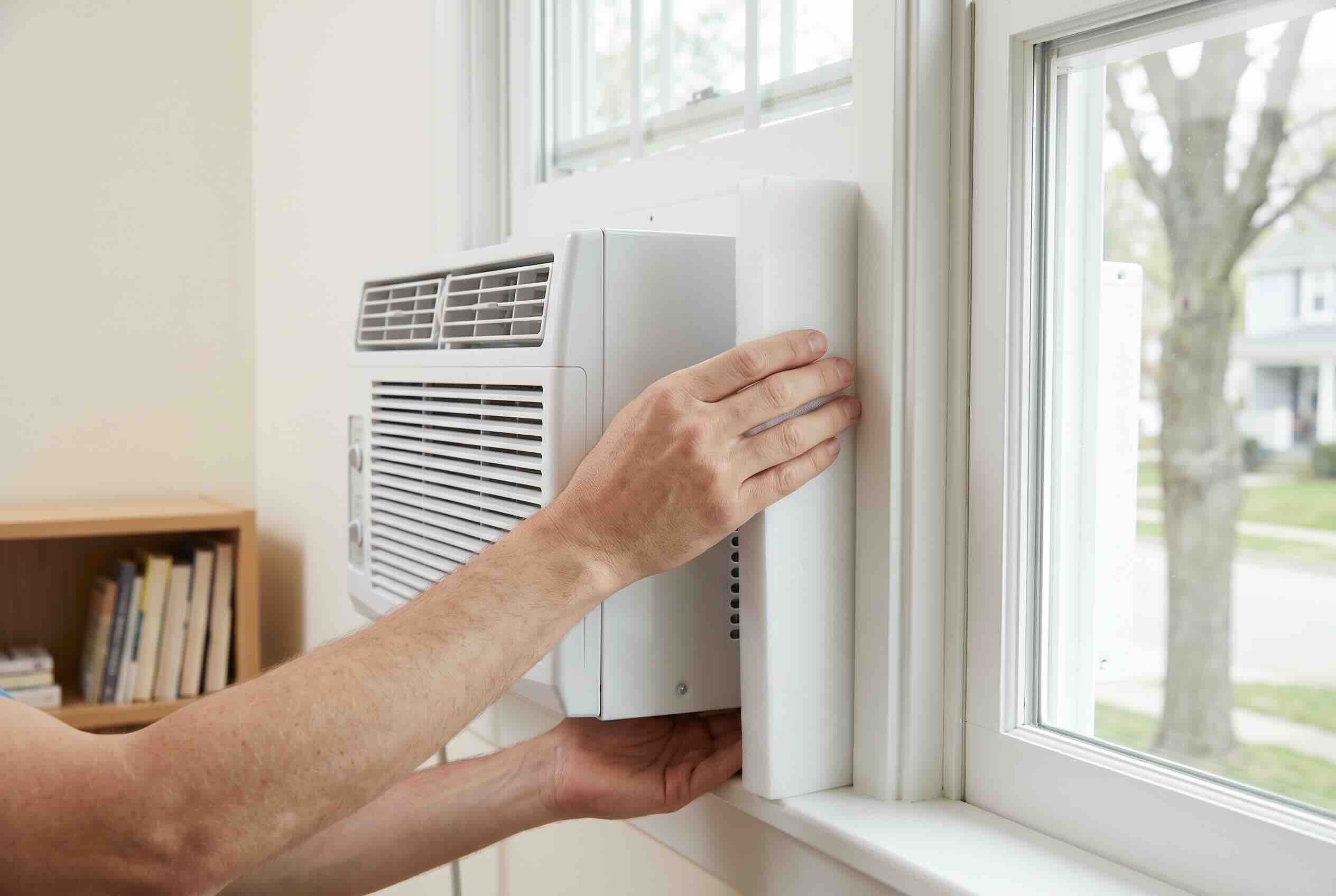
2. Add foam side panels. Replace or reinforce the accordion side panels with rigid foam, which seals better and dampens sound more than the thin stock panels.
3. Level the unit. Check that it sits at the slight tilt the manual specifies, because a unit that is off-level vibrates and can knock against the frame.
4. Close the interior gaps. Seal the seams between the unit and the window with removable weatherstripping or foam tape so sound has fewer paths into the room.
Add Anti-Vibration Pads Under a Window or Portable Unit
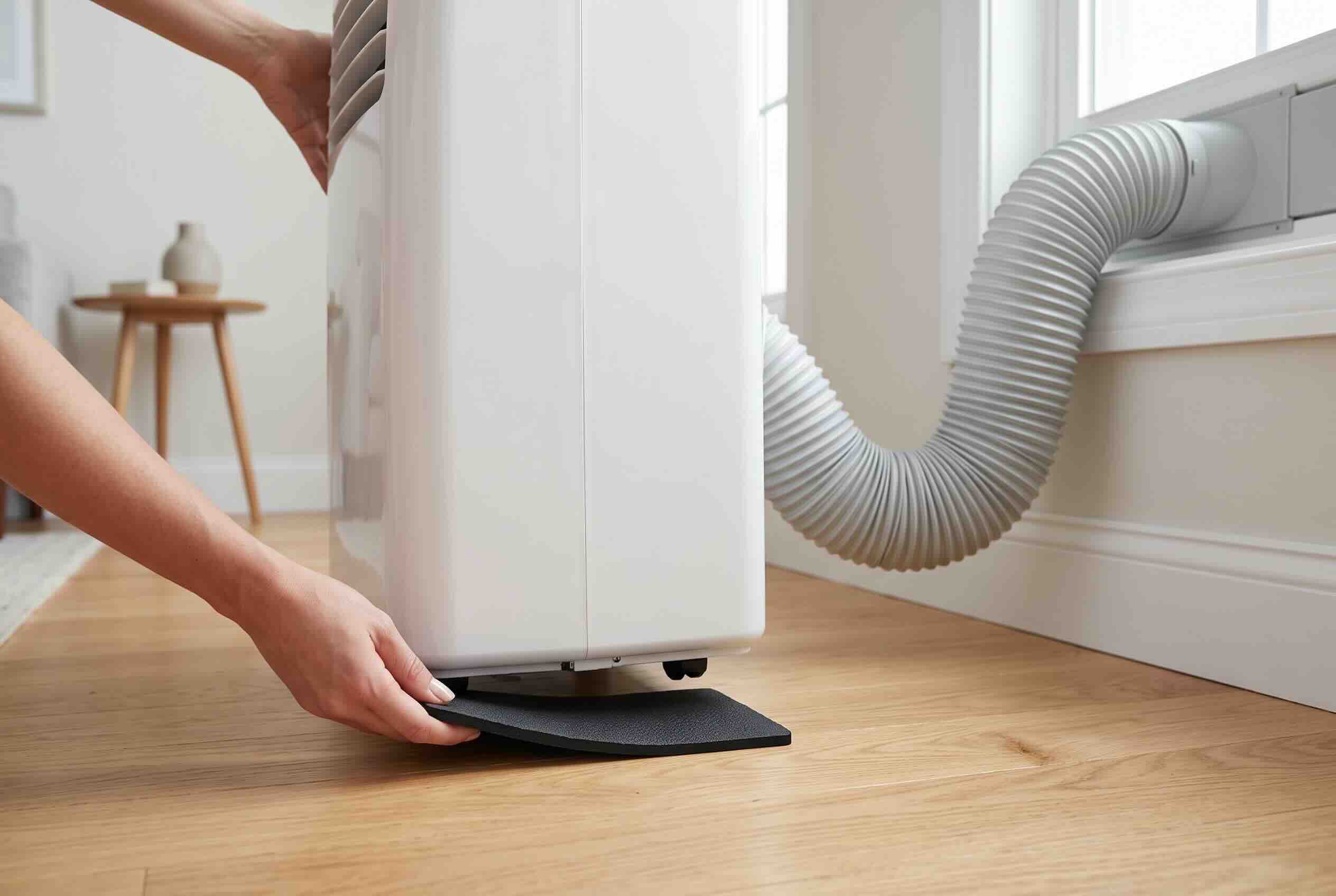
A large share of AC noise is vibration traveling into the floor or windowsill, then broadcasting through the structure. Anti-vibration pads, the rubber or cork kind sold for washing machines and appliances, break that path. Slip them under a portable unit’s feet, or between a window unit and the sill wherever the two make contact. The buzz that seemed to come from everywhere often drops once the unit stops transmitting into the surface it rests on.
Do the Maintenance You Safely Can
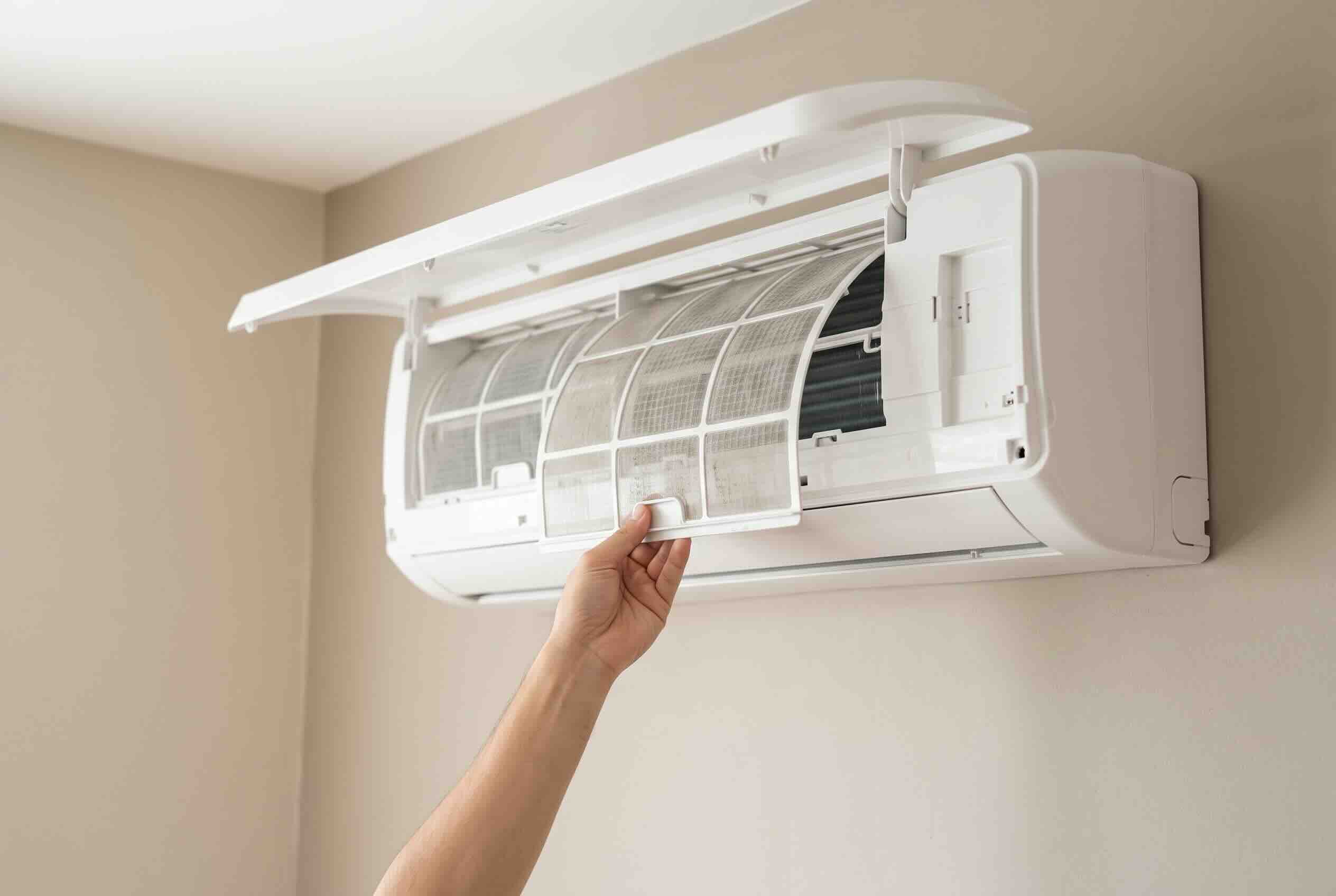
A dirty or clogged AC works harder and louder than a clean one, and some upkeep is safe for a renter to handle. Stick to what you can reach without opening the housing:
- Clean or replace the filter on the schedule the manual gives, since a choked filter makes the fan strain and whine.
- Wipe dust and debris from the accessible intake and any blades you can reach from outside the housing.
- Leave the rest to a pro. Anything behind a panel or near the electrical parts belongs to the landlord or a technician, because renter fixes should stop where safety does.
Reposition Furniture for Better Airflow
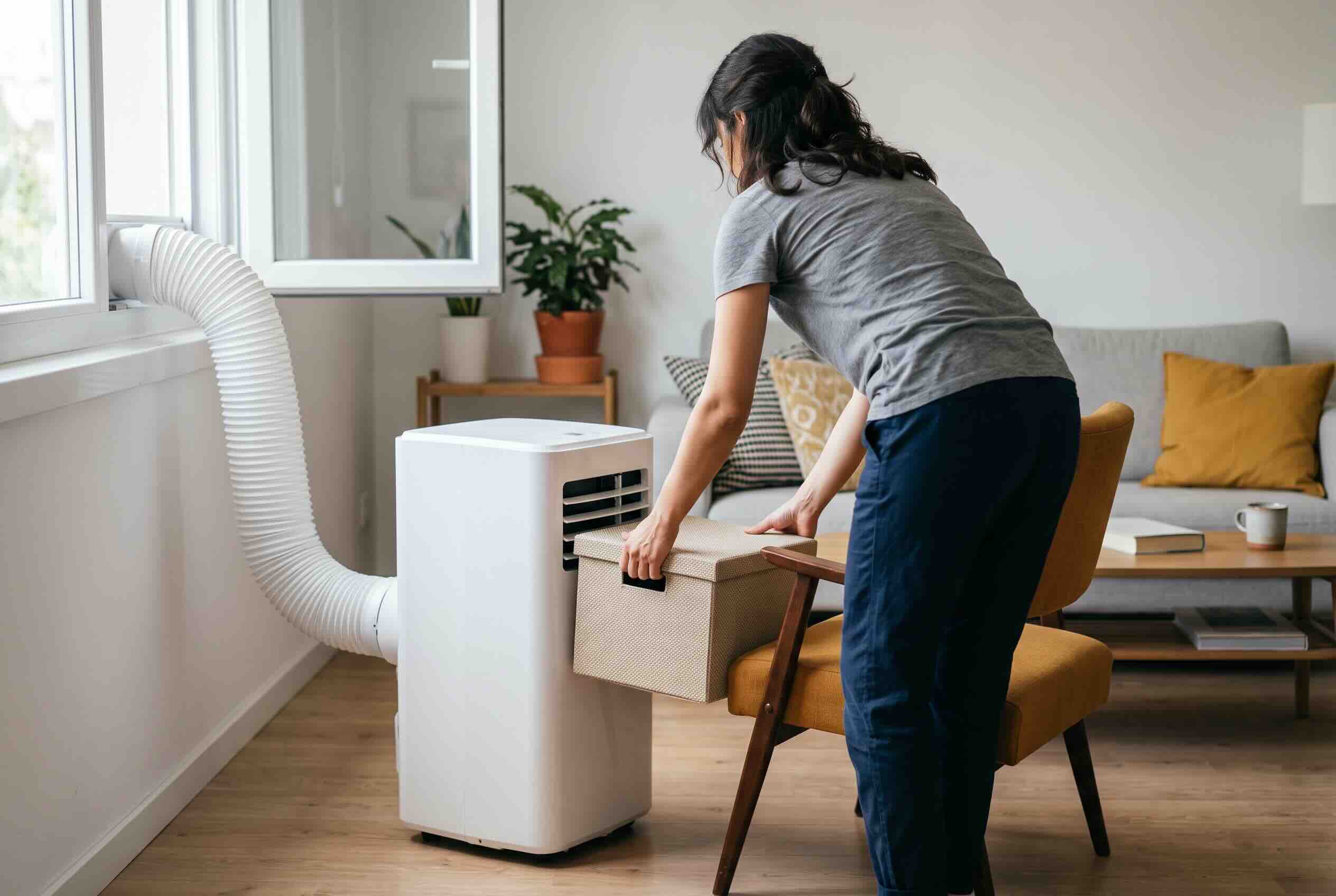
An AC that constantly fights for airflow inevitably runs longer and much louder than one that breathes freely. Pull heavy furniture, storage boxes, and thick curtains back from both the intake and the output vents so the air moves without obstruction. If a portable unit’s thick exhaust hose is kinked or crowded, straightening the physical path lets the unit cycle off sooner. Better airflow means the unit reaches your target temperature faster and spends far less time running at full roar.
>>> See more: Apartment Move-In Checklist: Inspect Set Up Settle In
Use Removable Acoustic Panels (No Wall Damage)
When soft furnishings are not enough, acoustic panels add real absorption without touching the walls permanently. Hang them with removable adhesive strips, lean them on a shelf, or mount them on a freestanding frame near the noisiest surface. Focus them on the wall or corner closest to the unit, where they intercept the most sound. Because they come down cleanly, they suit a lease that forbids nail holes or paint.
If the Noise Comes Through the Walls, Soundproof the Room
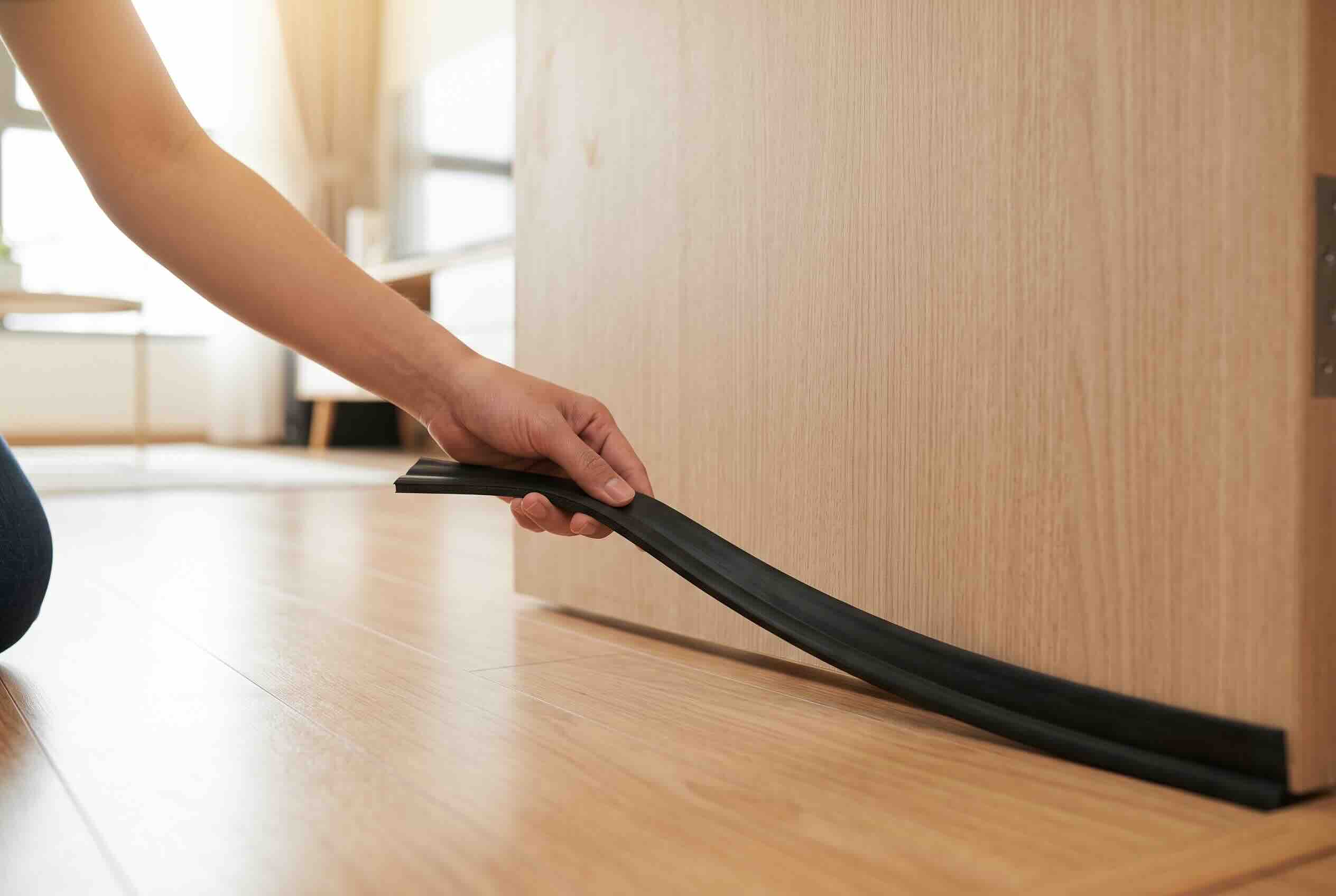
If your diagnosis pointed to a neighbor’s equipment bleeding through a shared wall, the fix shifts from your AC to your room. A few layers stack well here:
- Heavy curtains over the shared wall add mass that blocks some of the sound crossing into your space.
- Thick rugs and soft furnishings cut the echo that makes the intrusion feel louder than it is.
- A door sweep closes the gap under the door, a common leak point for hallway and neighbor noise.
- A white-noise machine or fan does not remove the sound but masks it, which is often enough to sleep or focus.
When the Noise Is Out of Your Hands
Some noise is beyond what soft surfaces and pads can fix, and that is not a failure of your effort. When you have worked through the renter side of how to reduce AC noise in apartment living and a unit still grinds, screeches, or clanks from within, the problem is mechanical, and mechanical failures are the landlord’s to repair. Report it in writing so there is a record, and include:
- The specific sound (grinding, screeching, rattling) and where it seems to come from.
- When it happens, whether that is constant, only at startup, or worse at night.
- What you have already tried, which shows the issue is the equipment rather than your setup.
A failing unit also wastes energy and cooling, which is a fair point to raise if the response is slow.
FAQ
What’s a normal noise level (dB) for an apartment AC?
Most modern room units run somewhere around 50 to 60 decibels, roughly the level of ordinary conversation, with quieter models dipping below that. A unit that has climbed well above that range, or that changed suddenly, is worth investigating rather than accepting.
Why is my AC louder at night?
Usually because the daytime background noise that masked it has faded, not because the unit itself changed. Sound also carries farther in a quiet building, and cooler night air can make some units run a little differently. The machine is often the same, and the silence around it is what shifted.
Can I ask my landlord to fix or replace a loud AC unit?
Yes, especially when the noise comes from a mechanical fault rather than normal running. Put the request in writing, describe the specific sound, and frame it as a repair issue, since a grinding or screeching unit is a maintenance problem rather than a preference.
Do quieter portable AC units exist for renters?
They do, and some are marketed specifically on low decibel ratings and quiet night modes. If you own your portable unit and noise is the dealbreaker, comparing published dB ratings before you buy is the most direct fix of all. Manufacturers list these figures, so check the spec sheet rather than the marketing headline.
Conclusion
No single trick turns a rattling window unit into silence, and the quiet you want comes from stacking small fixes instead. A rug and heavy curtains absorb what the room used to bounce back, anti-vibration pads kill the buzz traveling through the floor, and a sealed, level unit stops the rattle at its source. Layer the ones that fit your setup, and if what remains is a grinding motor or a compressor that clearly needs service, that is where how to reduce AC noise in apartment rentals stops being your job and becomes your landlord’s. For more renter-friendly fixes that work around a lease rather than against it, Home Tips Daily has the rest covered.