

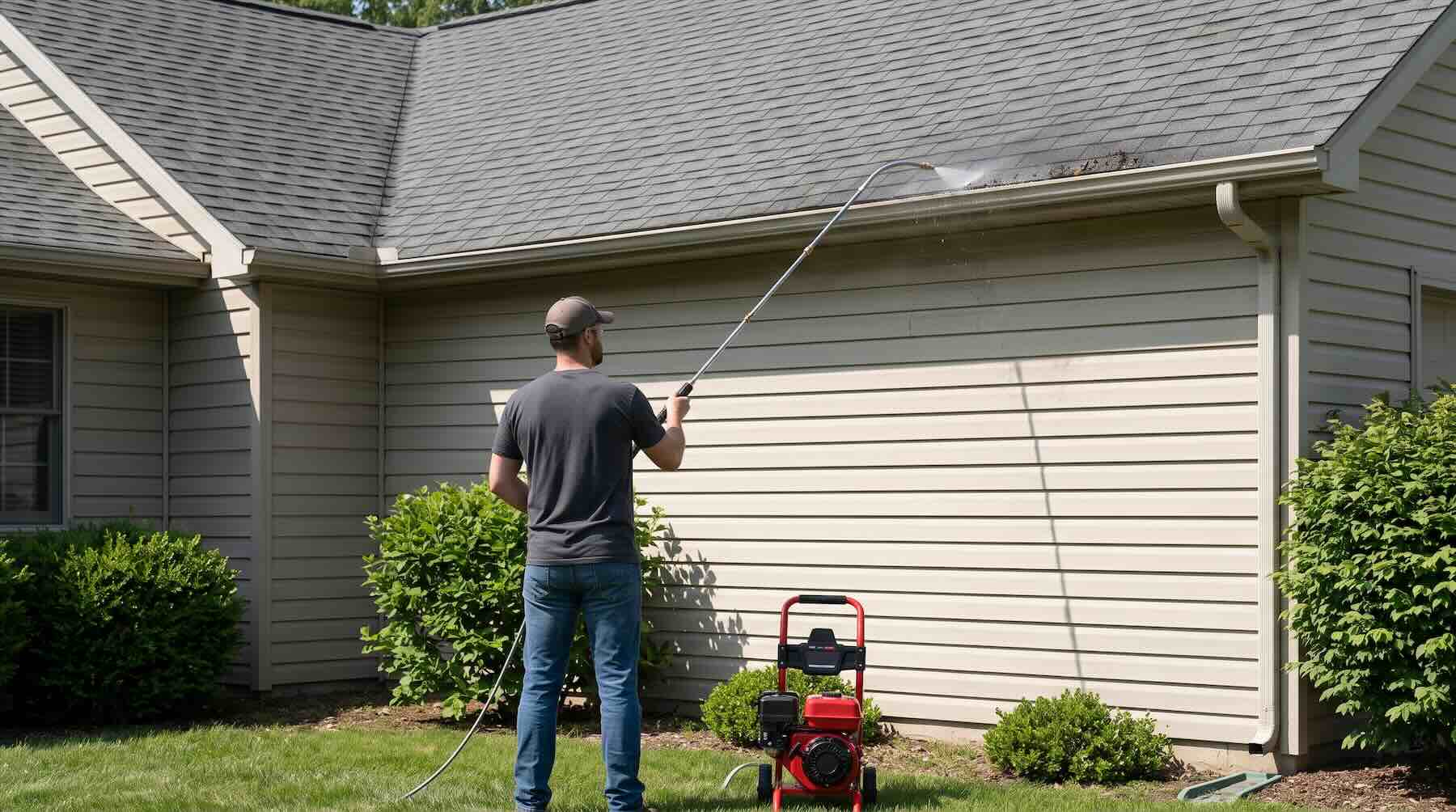
A pressure washer turns a slow, messy gutter cleaning into a fast one, clearing packed debris a scoop or hose would fight for an hour. Learning how to clean gutters with a pressure washer is as much about restraint as power. Using the wrong pressure or angle can peel paint, gouge your fascia, and force water under your roof shingles. This guide covers the necessary gear, the safest starting pressure, and a step-by-step process to protect your house while you clean.
What You Need to Clean Gutters With a Pressure Washer
The gear list is short, and if you already own the washer, you likely have most of it. The extras below are cheap, and the ground wand in particular is worth adding, since it turns a ladder job into a standing-on-the-lawn one:
- A pressure washer, electric or gas. Electric models sit at the lower, more gutter-friendly end of the pressure range, which is a point in their favor here.
- A gutter cleaning wand or extension wand, if you want to work from the ground instead of a ladder.
- A gutter scoop or a small trowel for lifting out the heavy debris first.
- Gloves and safety glasses, since the spray throws grit and water back at you.
- A drop cloth or tarp to catch the sludge and keep the beds below clean.
One rule before you pull the trigger: skip the pressure washer on gutter guards, brittle old roofs, and two-story runs near power lines, where the risk outweighs the speed.
Choose the Right Pressure and Nozzle
Before turning on the machine, you must configure your equipment correctly to avoid damaging your home. What matters more than any extra attachment is your pressure setting and nozzle choice:
- Safe Pressure (1,200 to 1,500 PSI): Start within this range. It is strong enough to move debris without denting aluminum gutters or driving water behind the fascia. Only increase the pressure if a specific section refuses to budge.
- Wide-Angle Nozzle (40-degree): Always use a 40-degree white tip or set an adjustable head to its gentlest setting. Never use narrow 0-degree or 15-degree tips, as they focus the water into a damaging, cutting jet.
- Adjusting Distance: If your washer feels too powerful even on the lowest setting, pull the wand a foot or two away from the surface to soften the water’s impact.
- Test First: Test your spray on a low, out-of-the-way section of the gutter first so you learn how it behaves before tackling highly visible areas.
The 6-Step Process: How to Clean Gutters With a Pressure Washer Safely
With the pressure set low and the area protected, here is how to clean gutters with a pressure washer from the first scoop to the final leak check.
Step 1: Set Up And Protect The Area
Preparation is key to preventing accidental damage and mess. Before any water flows, secure your workspace:
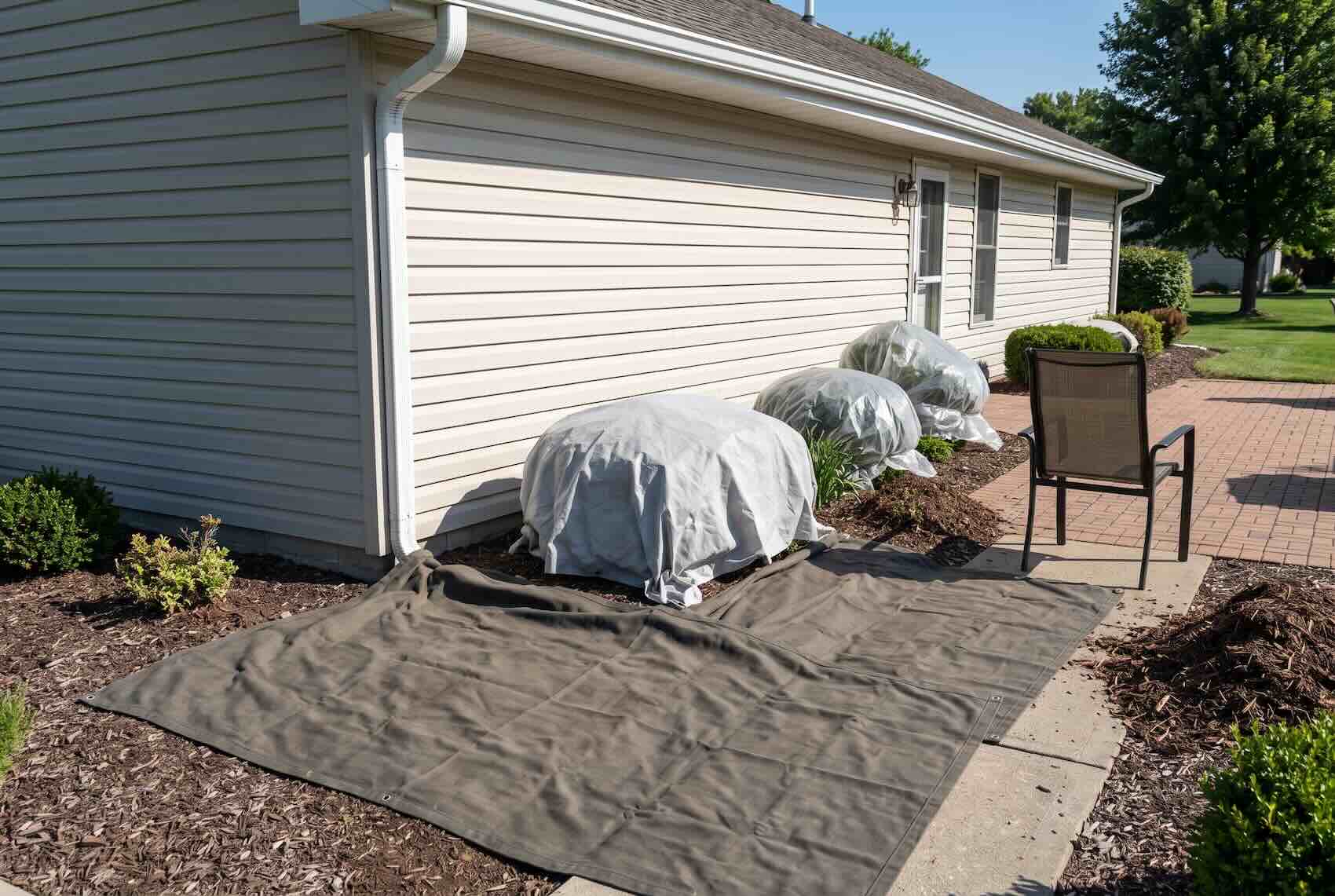
- Cover valuables: Move or cover patio furniture, grills, light fixtures, and delicate plants directly below the gutters.
- Catch the runoff: Lay a drop cloth along the base of the exterior wall to catch dirty water and debris.
- Secure your ladder: If working from a ladder, place it on firm, level ground. Always have a spotter steady the base, as a pressure washer’s recoil can easily push you off balance.
- Manage electrical cords: Keep all cords and electrical connections well clear of standing water.
- Locate downspouts: Note where the downspout outlets drain so you know exactly where the flushed debris will travel.
Step 2: Scoop Out Large Debris First
Pressure washers are designed to remove grime, not heavy clumps. Skipping this step turns a wet mess into a bigger one.
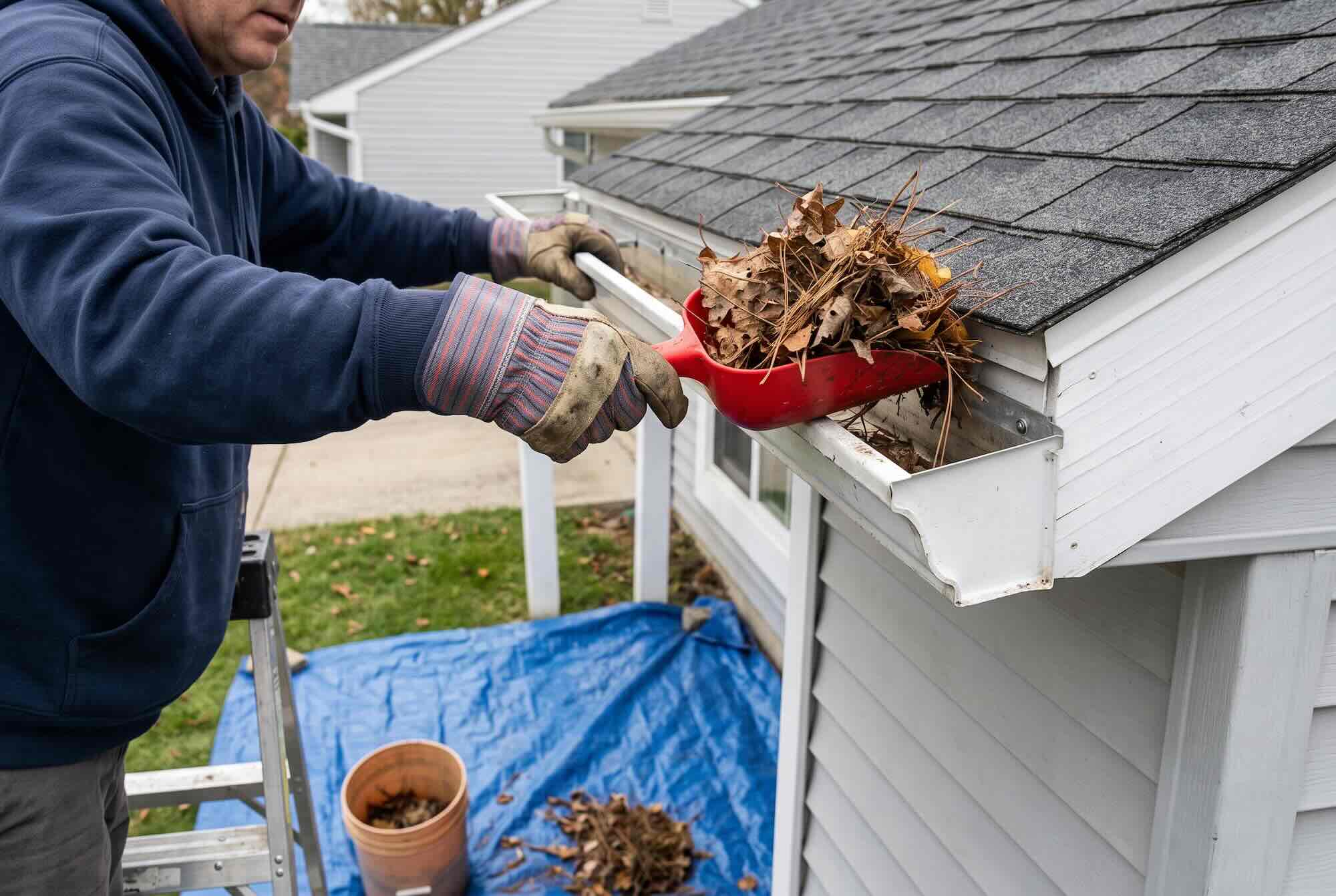
- Clear by hand: Remove leaves, twigs, and matted piles manually or with a scoop before you spray. Blasting full gutters will pack sodden debris straight into the downspout.
- Use your drop cloth: Drop the debris directly onto the tarp below rather than scattering it back into your yard.
- Inspect for damage: As you scoop, check the gutter for cracks, sagging runs, or pulled-away brackets so you know which areas require a gentler spray.
Step 3: Low-Pressure Rinse
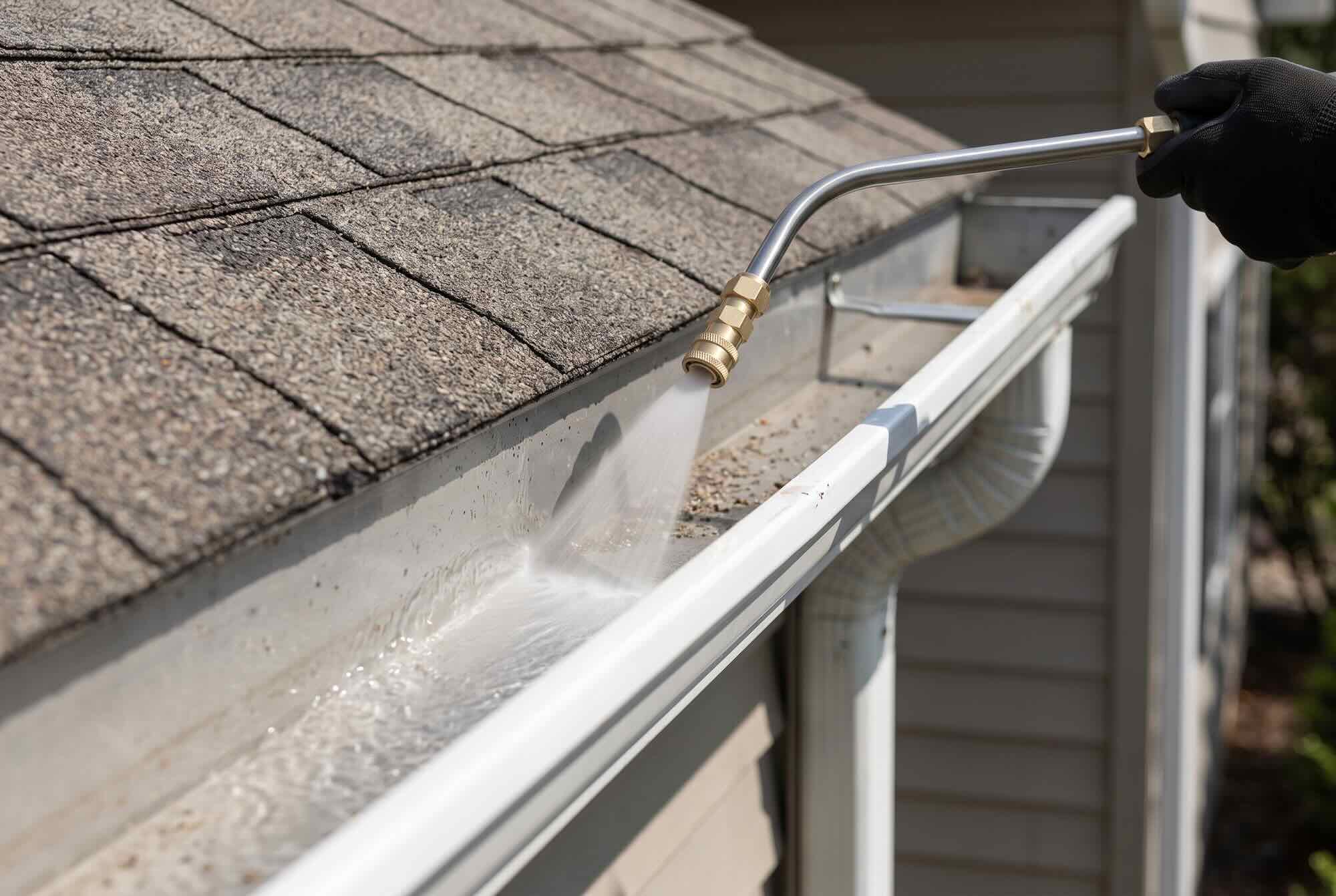
Open with a gentle rinse to flush the loose grit and safely test how the gutter drains before committing to full force.
- Angle the spray: Aim the wand along the trough toward the downspout rather than pointing it straight down. This guides the debris instead of hammering it against the seams.
- Spot the stubborn areas: This first pass will clearly reveal the tough spots that require detergent or a firmer wash.
- Check for clogs: Watching the water leave the downspout gives you an early warning of any hidden blockages.
Step 4: Apply Detergent And Let It Soak
If your gutters are streaked with dirt, mildew, or black weathering stains on the outside face, rely on chemistry rather than sheer force.
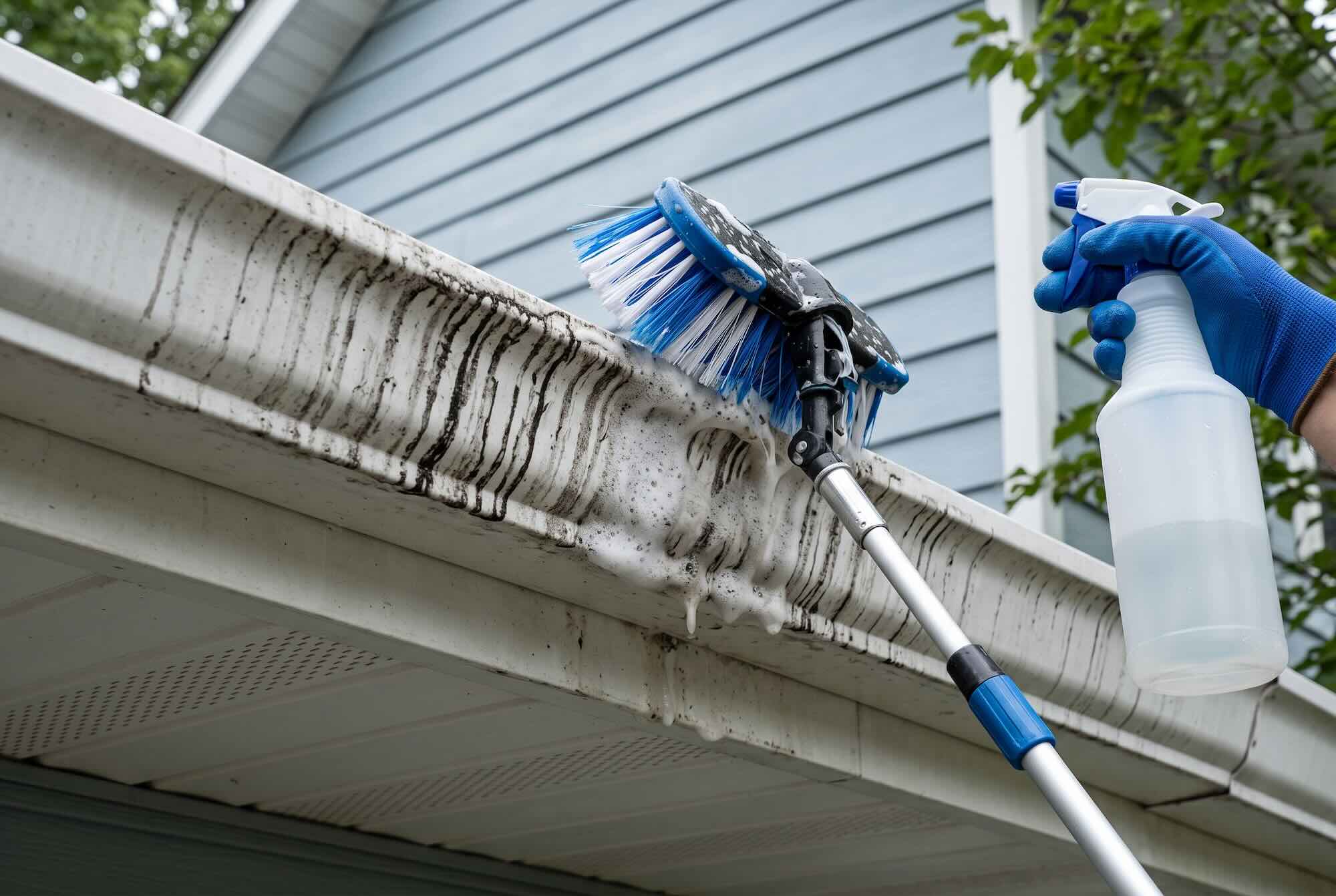
- Apply exterior cleaner: Spray the stained areas with a dedicated exterior cleaner and let it sit for a few minutes to break down the grime.
- Work in the shade: Apply detergent on a cool surface or in the shade so it does not dry out before it can act. Ensure you keep the chemicals off any uncovered plants.
- Use a soft brush: For the highly visible outside face of the gutter, use a soft-bristle brush on an extension pole to gently scrub away stubborn stains.
Step 5: Wash Off With Higher Pressure
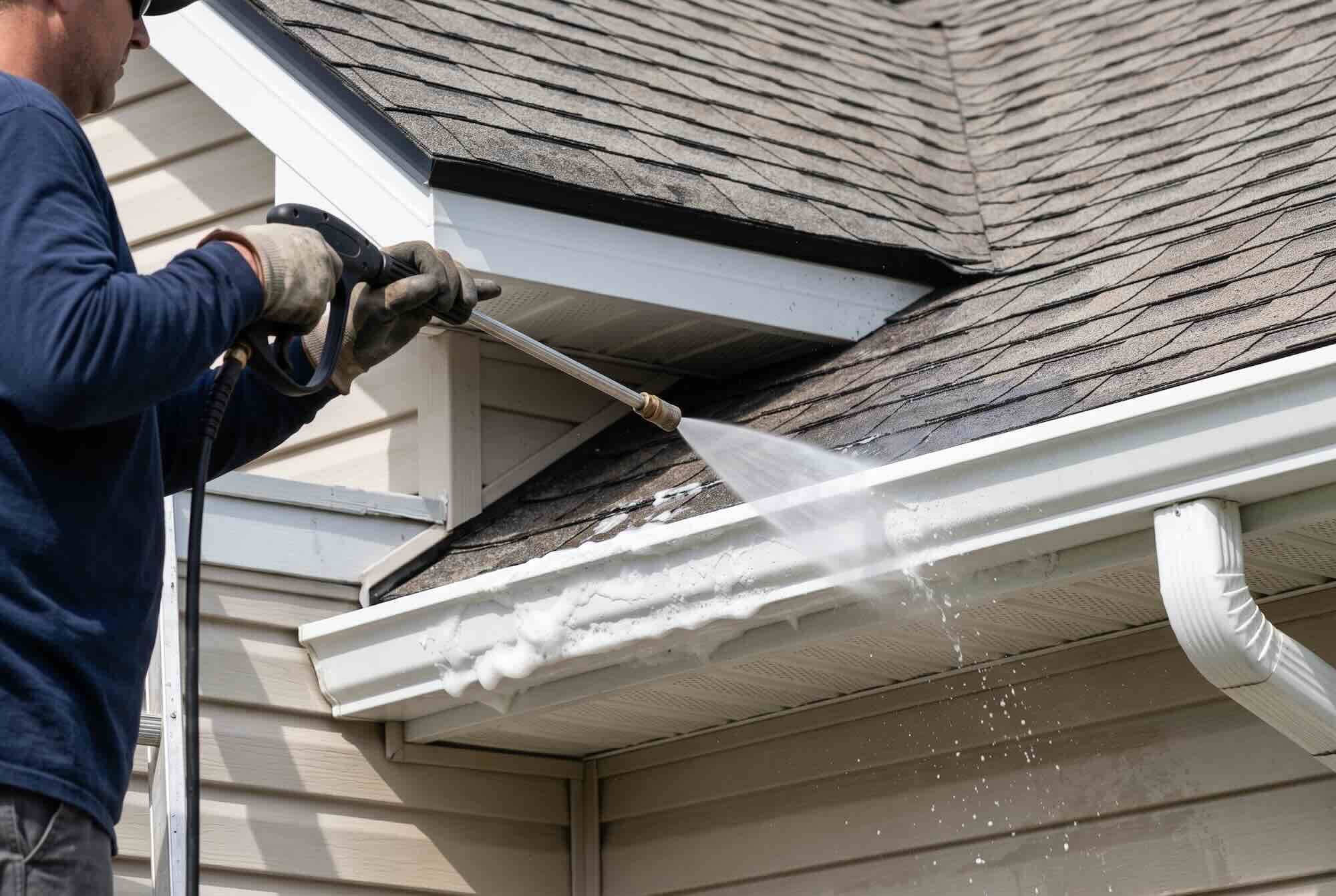
Once the detergent has had enough time to break down the grime, it is time to rinse the system clean using a higher, but carefully controlled, pressure setting. Follow these guidelines to safely wash the exterior without causing damage:
- Raise pressure gradually: Only increase the water pressure as much as a stubborn stretch demands, and no more.
- Keep the wand moving: Hold a consistent distance from the surface and move in steady passes. Parking the spray on one spot will strip the paint and cause gouges.
- Flow in one direction: Work from one end toward the downspout so all debris flows the same way.
- Protect the joints: Ease off the pressure when you spray near seams, end caps, and brackets, as concentrated force can easily work a joint loose.
Step 6: Flush The Downspout And Check For Leaks
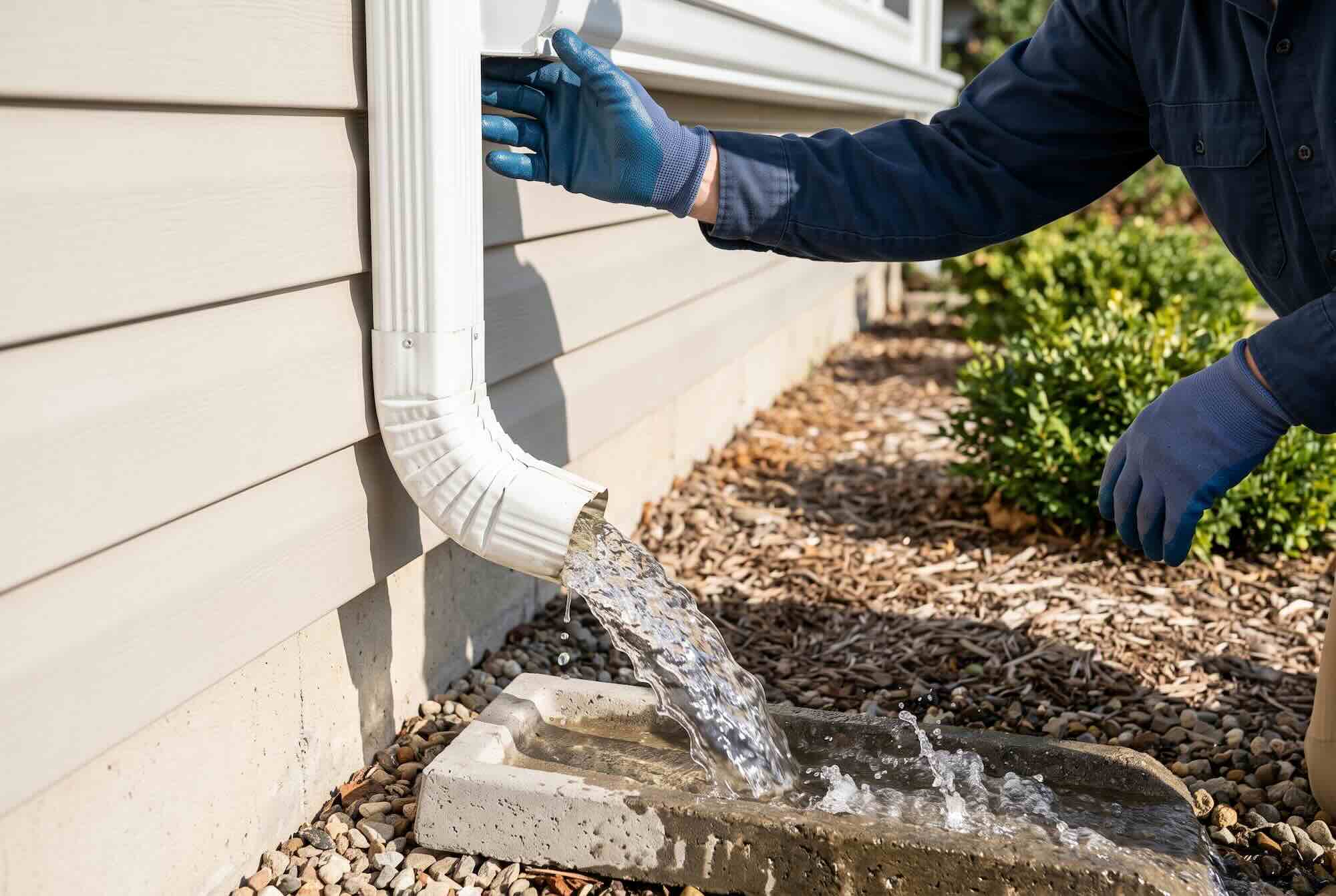
The final step of the cleaning process ensures that water flows freely away from your home’s foundation and verifies the structural integrity of your entire gutter system. Pay close attention to the following details as you wrap up:
- Clear the system: Finish by running water down each downspout to clear it and confirm a strong stream at the bottom.
- Identify clogs: A weak trickle points to a clog that you will need to break up from below.
- Inspect for leaks: With everything clean, walk the full length of the gutter system and look for drips at the seams and joints.
- Check the fascia: Watch carefully for any water slipping behind the gutter and onto the fascia board.
- Make early repairs: It is much better to catch a loose bracket or a tired seam now, on a dry, mild day, than during the next heavy downpour.
Common Mistakes to Avoid When Cleaning
Most of the damage people do traces back to a short list of avoidable errors, and none of them are hard to sidestep once you know they are coming. Watch for these:
- Too much pressure, or too narrow a nozzle. A high PSI or a pinpoint tip cuts into aluminum, strips paint, and forces water where it does not belong. Start low and keep the spray wide.
- Spraying up under the shingles. Aiming the wand up at the roof edge drives water beneath the shingles and into the roof deck, so keep the spray level or angled down into the trough.
- Pressure washing gutter guards. The force dents and tears mesh and screens, so take the gentler route for guarded gutters, which is its own job covered in cleaning gutters with gutter guards.
- Skipping the hand-scoop. Blasting a gutter full of packed leaves relocates the clog rather than clearing it, usually into the downspout. Clear the bulk first.
- Working off a ladder without a spotter. The wand’s recoil can unbalance you a few rungs up, so have someone foot the ladder, or clean from the ground with an extension wand.
- Forgetting the downspout. A gutter can look spotless and still back up if the downspout stays blocked, so flush it and confirm the flow before you call it done.
>>> How to Clean House Gutters Without a Ladder: 6 Easy Methods
FAQ
When should you not use a pressure washer on gutters?
Skip it whenever the risk beats the reward. Avoid it on gutter guards, which the force damages. Avoid it on old or already-loose gutters and brittle roofs, where the pressure can finish them off. And avoid it on two-story homes, especially near power lines, where you would be managing recoil at height. In those situations a hose wand, a hand scoop, or a pro is the smarter choice.
Can you pressure wash gutters from the ground?
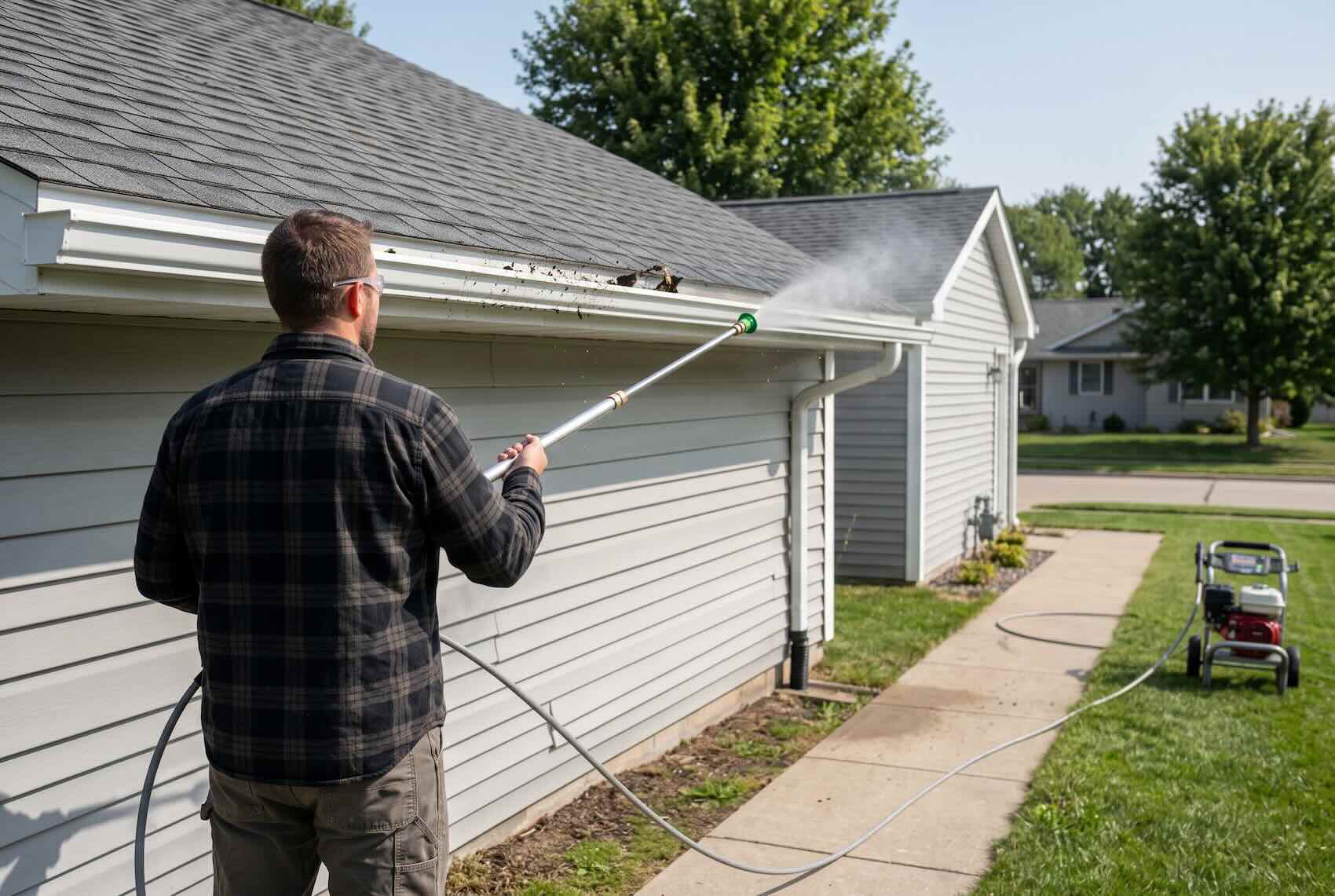
Yes, with a gutter cleaning wand or an extension attachment that reaches over the lip from below, which is the safest way to run a pressure washer on a single-story home. It keeps you off the ladder and away from the recoil at height. For the wider set of no-climb options, see how to clean house gutters without a ladder. Two-story gutters usually sit past what a ground wand can reach with any real control.
Do you need a special attachment to pressure wash gutters?
Not to clean the inside of an accessible gutter, where a standard wand and a wide nozzle do the job. A curved gutter attachment or an extension wand helps if you want to reach over the lip from the ground or clean without a ladder. The one upgrade worth having either way is a wide-angle tip, so you are not leaning on a narrow jet that can cut.
Is it better to pressure wash or hand-clean gutters?
It depends on the debris. Hand-cleaning with a scoop is gentler and better for clearing thick, dry leaves. A pressure washer excels at removing packed dirt, stubborn grime, and stains. For the best results, combine both: scoop out the heavy clumps by hand first, then use the pressure washer as a finishing tool to rinse the system perfectly clean.
How often should you pressure wash your gutters?
Once or twice a year suits most homes, in late spring and again in fall, plus an extra pass after a big storm if your roof sheds a lot. Pressure washing tends to be the deeper clean you reach for when a gutter has gone too long, rather than a monthly routine. Getting the timing right matters, which is the whole subject of the best time of year to clean gutters.
Conclusion
Knowing how to clean gutters with a pressure washer comes down to letting technique lead and power follow. Always scoop the heavy debris out first, then start with a low-pressure rinse. Let the detergent handle stubborn stains, and only raise the water pressure if a section truly needs it before flushing the downspout. Remember to protect your fascia, your landscaping, and yourself along the way. For more practical home maintenance guides and seasonal checklists, explore the latest tutorials on Home Tips Daily.