

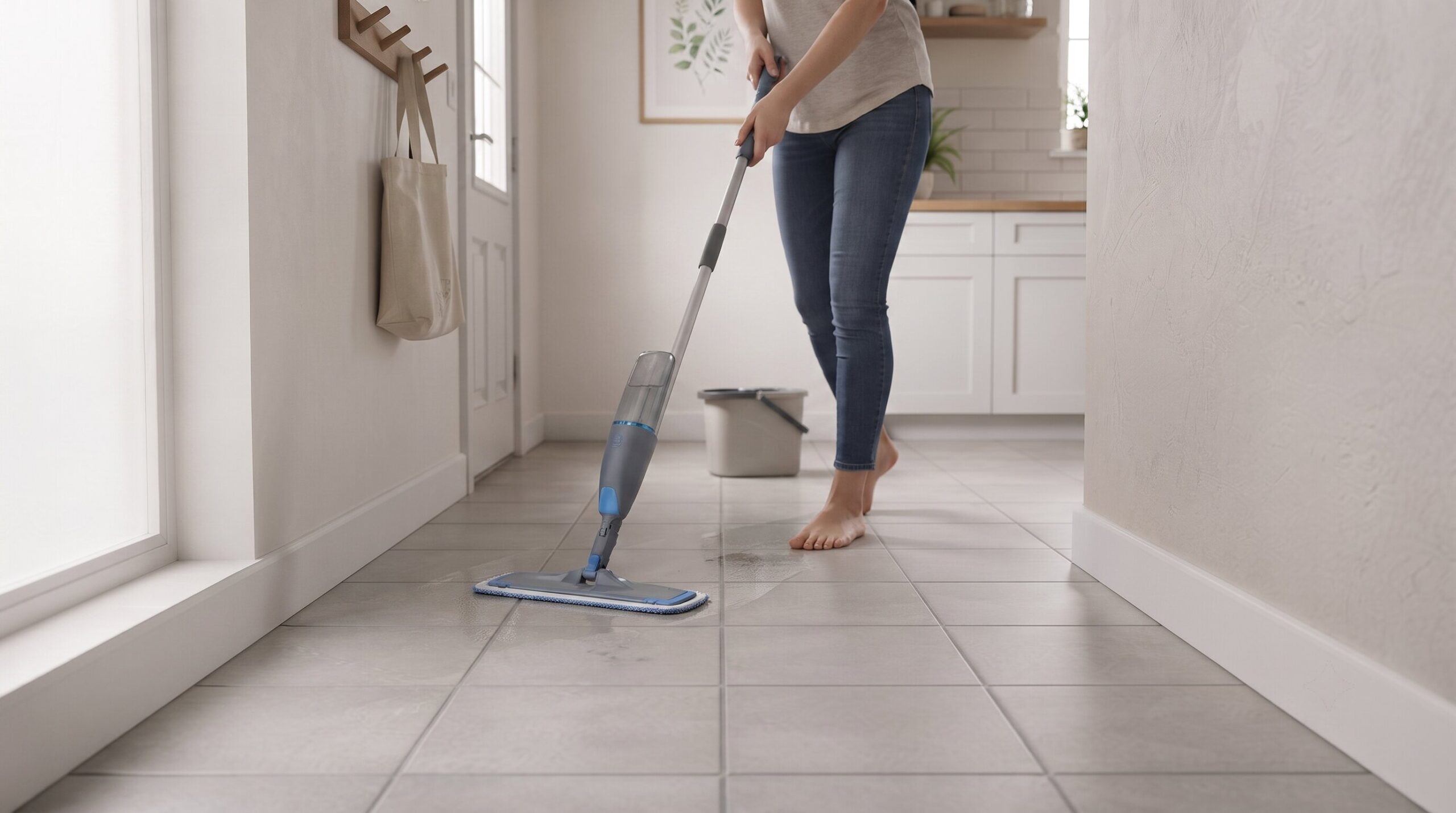
A tile floor covered in a cloudy film, with grout lines gone gray or black, is one of the most common complaints in any home. One rule matters more than any other when it comes to how to clean tile floors properly: the cleaner has to match the tile material. Using the wrong chemical on the wrong type of tile can create more problems than it solves. What follows walks through the full project, from gathering the right supplies to restoring grout that’s years overdue for attention.
Gather the Right Tools Before Starting
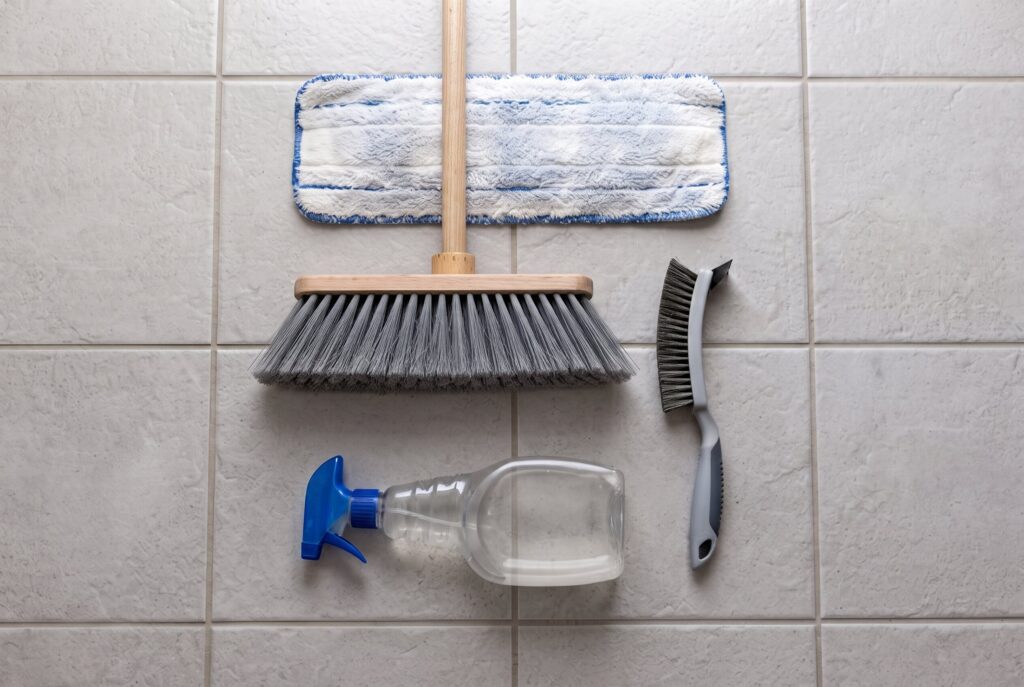
A cleaning job goes faster and lasts longer with the right supplies on hand rather than improvising halfway through. Before you can get to the best way to clean tile floors, you need to arm yourself properly. A short shopping list covers nearly every situation:
- A microfiber mop, since it lifts dirt rather than just pushing it around the way a sponge mop tends to. In most homes, a microfiber option is simply the best mop for tile floors, precisely because it holds and releases water more evenly than a sponge head. The same logic applies to wood surfaces too, covered in more depth in how to clean hardwood floors, where moisture control matters even more.
- A soft bristle broom or vacuum for dry cleaning first.
- A dedicated grout brush with stiff, narrow bristles built to reach into the seams.
- A cleaning solution matched to the tile type, which gets covered next.
Skipping straight to mopping without this prep is exactly how streaks and half finished grout jobs happen.
Know the Tile Before Choosing a Cleaner
Ceramic and Porcelain
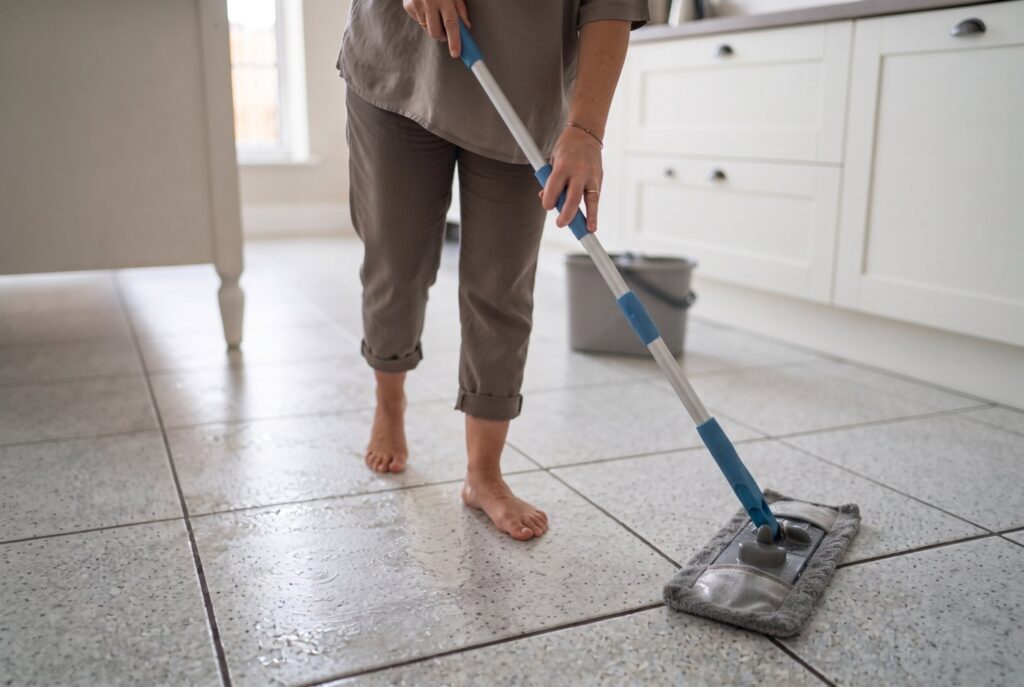
These two are the most forgiving materials in most homes. Ceramic and porcelain hold up against nearly every household cleaning product on the market, so the main focus of how to clean porcelain tile comes down to avoiding anything that leaves a waxy or soapy film behind. A rinse pass with plain water after mopping clears any residue that a stronger cleaner might leave.
Natural Stone
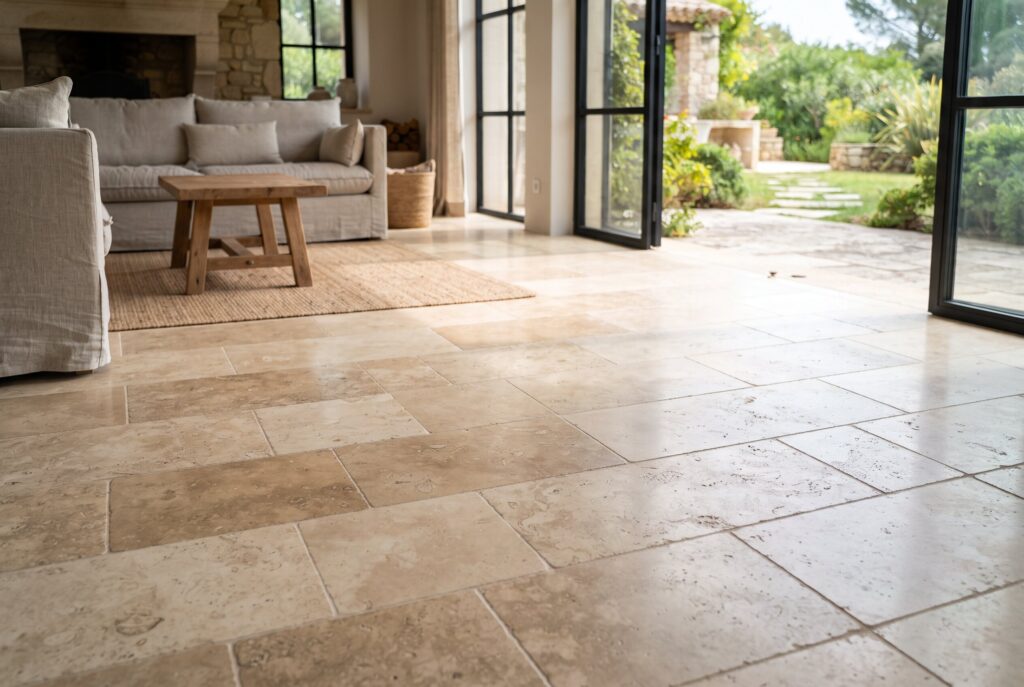
Marble, granite, and travertine play by a different set of rules entirely. Acidic solutions, including vinegar and lemon based cleaners that show up constantly in DIY tips, eat away at the surface’s protective seal over time and leave permanent etching. A neutral pH stone specific cleaner is the only safe option here, no exceptions.
Build a Streak Free Sweeping and Mopping Routine
Sweep or vacuum before mopping, never after. Leftover grit scratches the glaze once a wet mop drags across it.
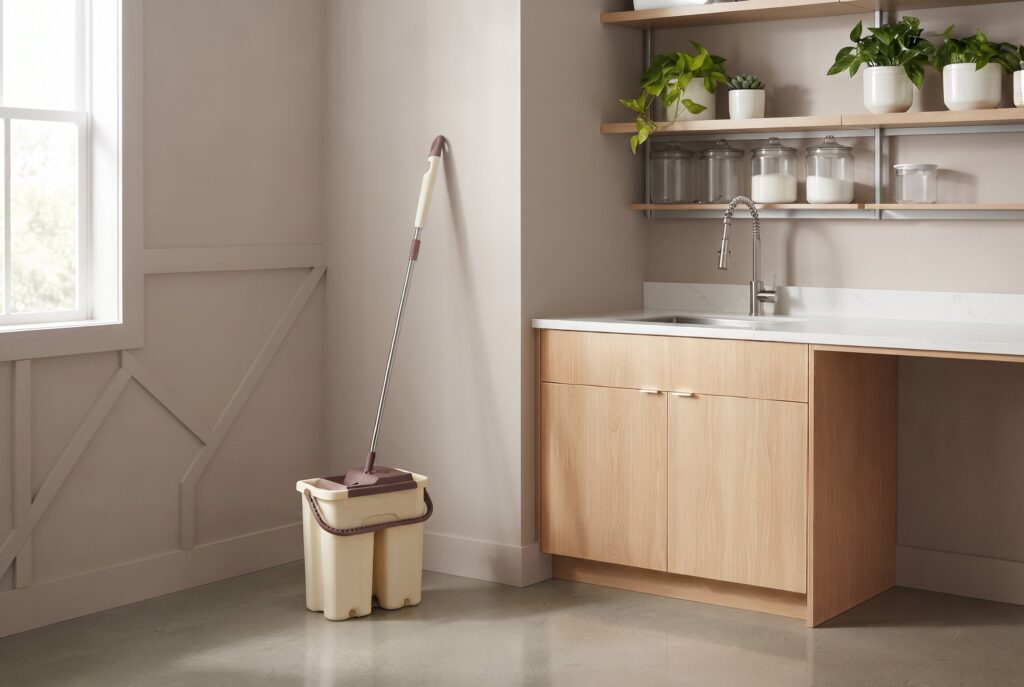
Mop with a two bucket setup: one bucket holding the cleaning solution, a second filled with plain water for rinsing the mop head between passes. The full mechanics behind this technique are covered in how to mop a floor the right way, since the same method applies well beyond just tile. Run the mop through the rinse bucket often, and swap that water out the moment it turns cloudy. Dunking a dirty mop back into the same cleaning water is the single most common reason floors end up hazy after they dry.
Tackle Grout, the Part Everyone Dreads
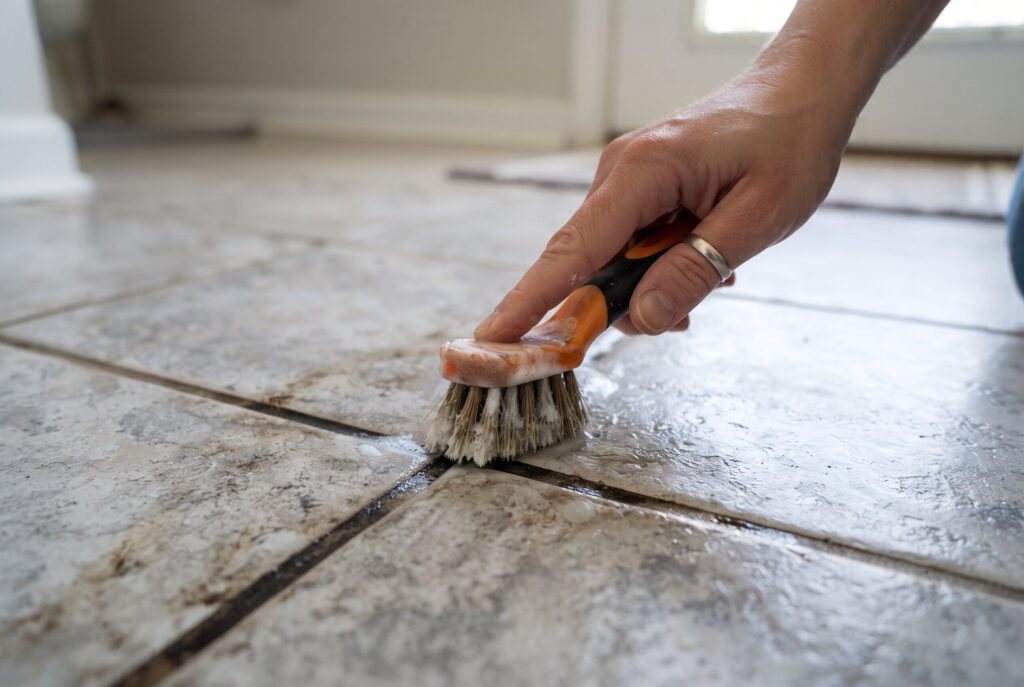
Grout causes more frustration than the tile itself, mainly because it’s porous by nature and absorbs grease, dirt, and moisture the tile surface simply repels.
A homemade paste made from baking soda and hydrogen peroxide handles most everyday grout staining. Applied directly to the lines and left to sit for a few minutes before scrubbing with a stiff grout brush, it lifts discoloration without introducing harsh chemicals into the home.
For grout that’s been neglected for years and won’t budge with scrubbing alone, a steam cleaner brings considerably more force to the job. The combination of heat and pressure breaks down built up grime while sanitizing at the same time, which matters most in kitchens and bathrooms where grout tends to collect bacteria along with dirt.
Chemical or Natural: Picking a Tile Floor Cleaner
A pre-mixed tile floor cleaner offers a reliable dilution ratio right on the label, usually a quarter cup per gallon of water. A homemade version works just as well for routine cleaning: mix one to two tablespoons of mild dish soap per gallon of warm water. Going heavier than that is what leaves the sticky residue people usually blame on “using too much water” instead. Either route works; the choice comes down to convenience versus ingredient control.
Final Thoughts
Cleaning the floor is only half the job. Once grout lines have been restored to their original color, applying a grout sealer locks that result in place for six months to a year at a time. The sealer creates a thin, invisible barrier that keeps future spills and dirt from soaking back into the porous material, which means less scrubbing the next time around. Master the best way to clean tile floors and pair it with a sealer applied on schedule, and a tile floor stays genuinely bright underfoot, the kind of surface that feels just as good bare footed as it looks from across the room.
Related articles: How to Clean Any Floor Type: Simple, Effective Tips for a Fresh, Sparkling Floor