

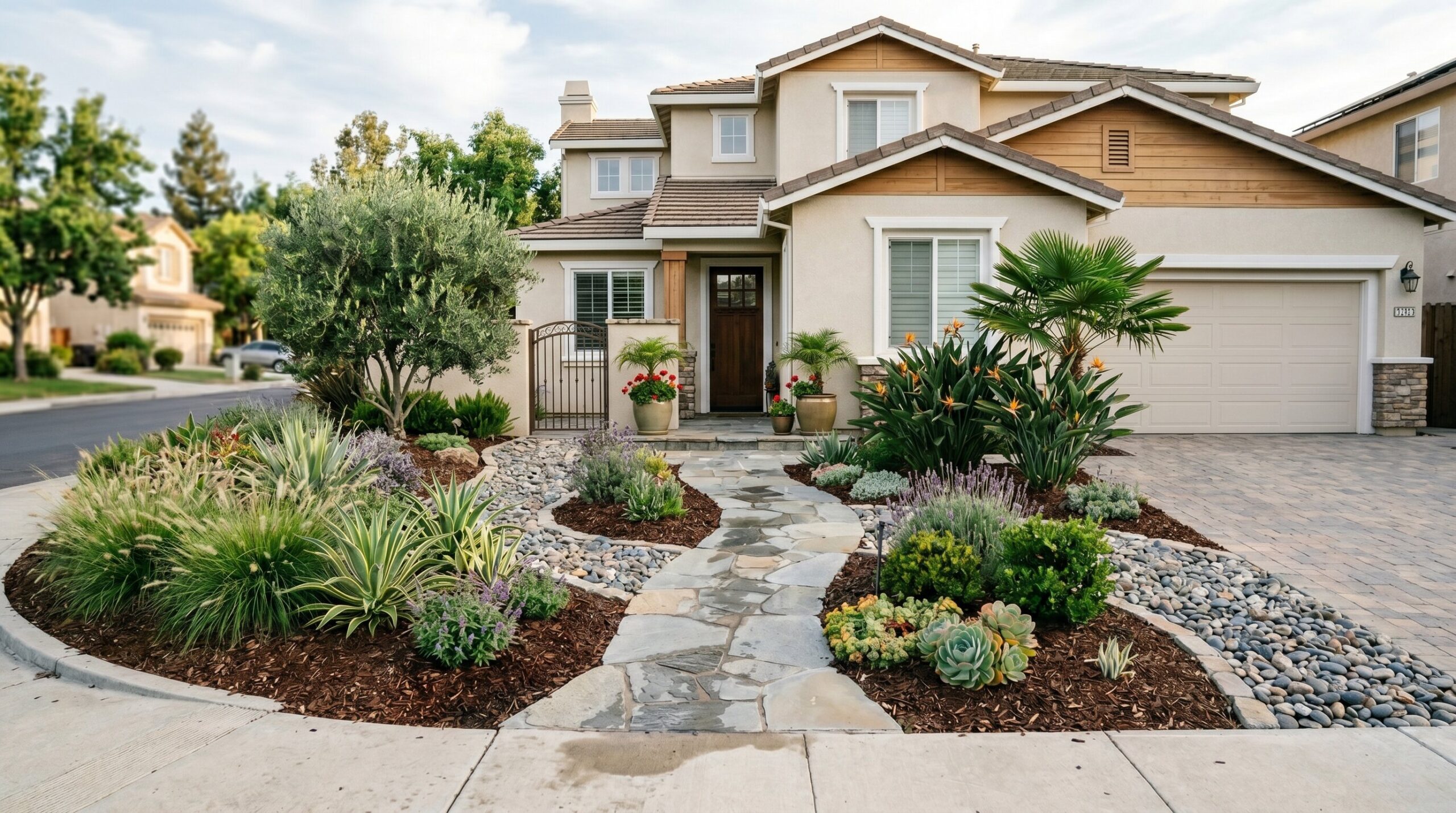
Low-maintenance front yard landscaping isn’t about removing every living thing from your yard. It’s about choosing smarter materials, fewer demanding plants, and better systems so your home still has curb appeal without stealing every weekend.
The best low-maintenance ideas reduce mowing, watering, pruning, and weeding. That usually means replacing part of the lawn with ground cover, adding hardscape like gravel or pavers, and choosing drought-tolerant plants that can handle your climate.
If you want a front yard that feels polished but easy to care for, start with the planning basics below, then pick from these 31 easy-care designs.
How to Plan Low-Maintenance Front Yard Landscaping
Know your climate zone. Check your USDA Plant Hardiness Zone before buying anything. A plant rated for your zone survives winter without extra protection, which is the first step toward a yard that takes care of itself.
Map sun, shade, and soil. Note which parts of the yard get full sun, partial shade, or deep shade, and whether water drains quickly or puddles after rain. Matching plants to these conditions prevents most of the watering, replanting, and disease problems that make a yard feel like work.
Favor native plants. Plants native to your region are adapted to local rainfall, soil, and pests, so they usually need less water, fertilizer, and spraying once established. Your local cooperative extension office or native plant society can suggest reliable species for your area.
Check HOA and local rules. Some HOAs require a minimum amount of lawn or restrict artificial turf, and some cities limit how tall grasses and meadows can grow near the street. On the other hand, many water utilities, especially in dry regions, offer rebates for replacing thirsty lawn with water-wise landscaping, so check before you start.
Decide on weed barrier. Landscape fabric under gravel and rock can slow weeds at first, but windblown soil and leaves eventually collect on top and weeds sprout anyway. Under mulch in planting beds, fabric can also block organic matter from reaching the soil. A thick layer of mulch, or cardboard laid under mulch when converting lawn, is often the simpler long-term option.
Low-Maintenance Options at a Glance
| Approach | Ongoing Care | Upfront Cost | Water Use |
|---|---|---|---|
| Clover or creeping thyme ground cover | Low (occasional mowing or trimming) | $ | Low to moderate |
| Artificial turf | Very low (rinse and brush) | $$$ | None to minimal |
| Gravel, decomposed granite, and pavers | Very low (occasional weeding and raking) | $$–$$$ | None |
| Mulched beds with shrubs | Low (top up mulch yearly) | $ | Low once established |
| Native and drought-tolerant plants | Low (annual cleanup) | $–$$ | Low once established |
| Rock garden and boulders | Very low | $$ | None to low |
| Wildflower meadow | Moderate for 2–3 seasons, then low | $ | Low to moderate |
Phase 1: Ditch the Grass With Ground Covers and Hardscape Ideas
1. The Barefoot-Friendly Clover Lawn
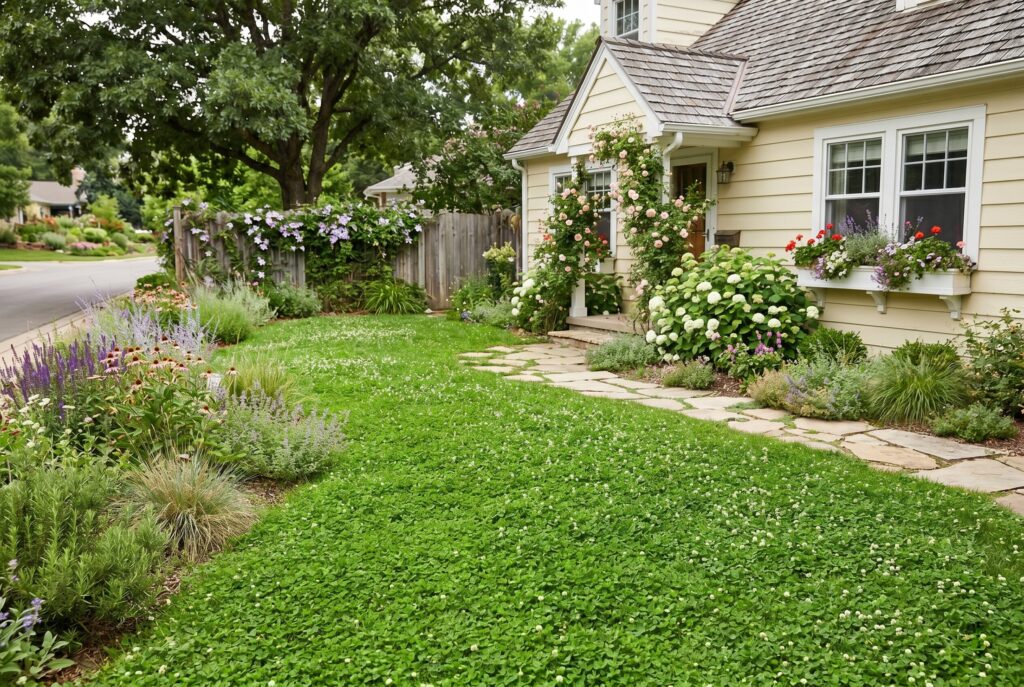
Clover is a softer, easier alternative to traditional turf. It stays green with less water, needs less mowing, and helps create a relaxed, natural front yard. It also feels wonderful under bare feet, especially in a cottage, farmhouse, or casual suburban landscape. Keep in mind that clover flowers attract bees, so mow occasionally to remove blooms if you walk barefoot, or choose microclover, which has smaller leaves and fewer flowers. Use it where you still want a green carpet but don’t want the constant upkeep of a standard lawn.
2. Creeping Thyme Ground Cover
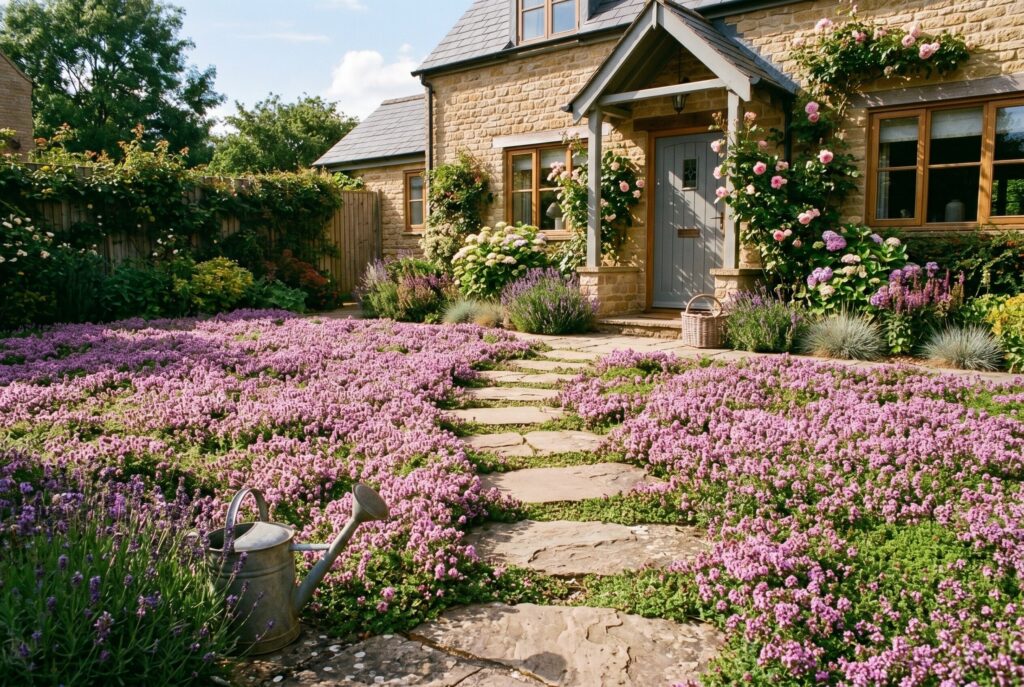
Creeping thyme is one of the prettiest ground covers you can plant instead of a lawn. It grows low, spreads between stepping stones, and releases a light herbal scent when walked on. It works best in sunny areas with good drainage and handles light foot traffic, but not a busy play area. Once established, it creates a soft, romantic look with very little maintenance.
3. High-Quality Artificial Turf
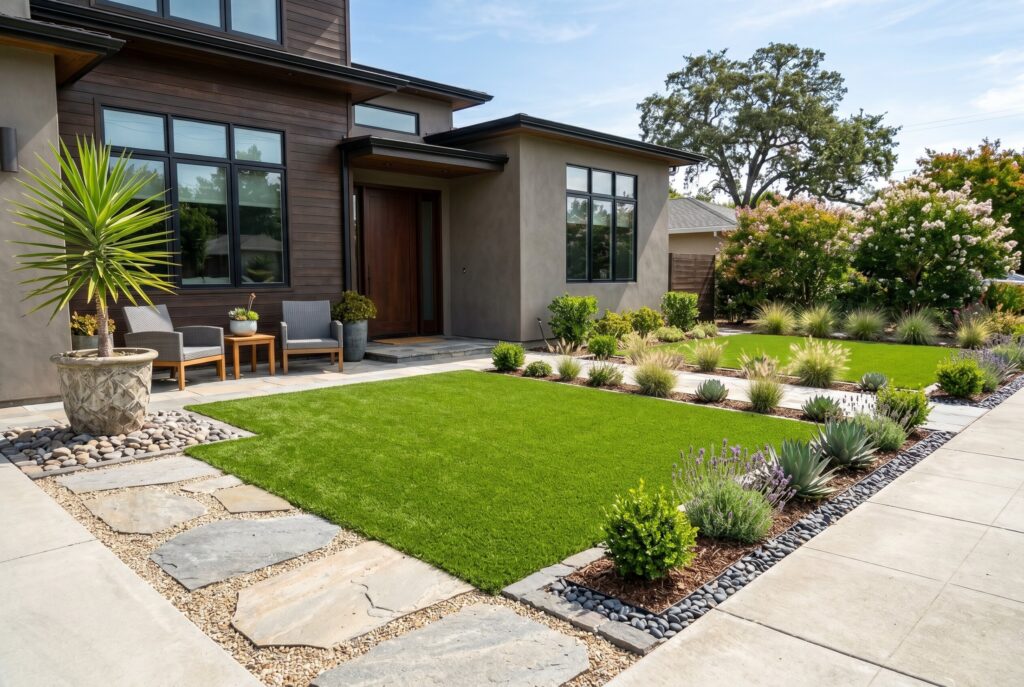
Artificial turf can work well for homeowners who want a green front yard without mowing, watering, or fertilizing. Choose high-quality turf with realistic texture and proper drainage. It isn’t the cheapest option upfront, but it can reduce long-term care. Use it carefully in hot climates because some turf can hold heat, and check your HOA and city rules first, since some restrict it.
4. Oversized Stepping Stones With Pea Gravel
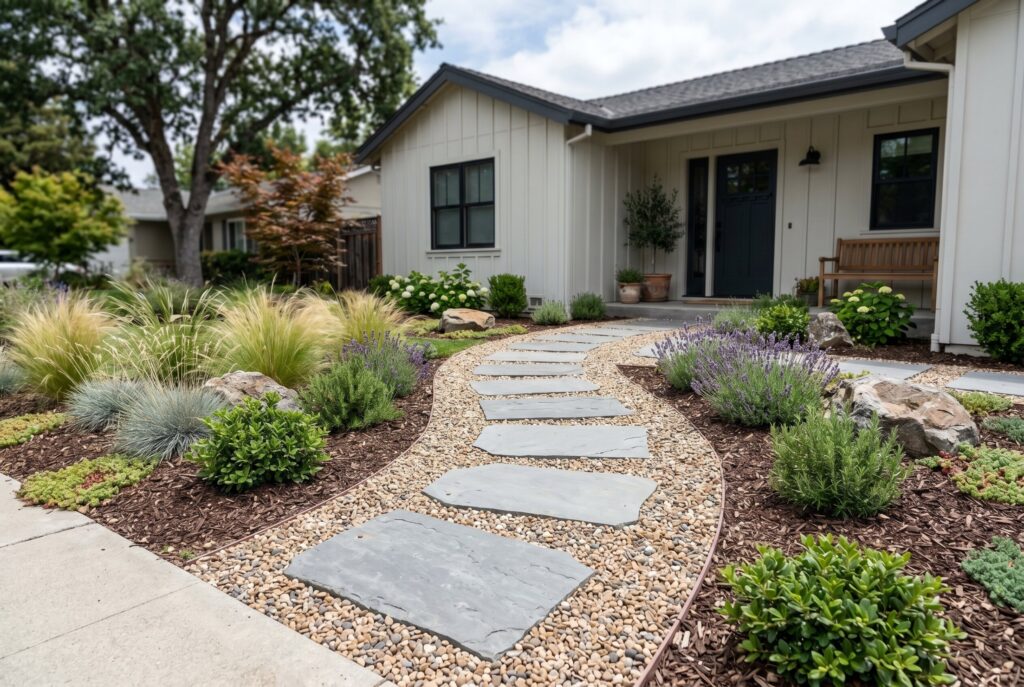
Large stepping stones set into pea gravel create a simple landscape that looks modern and intentional. This design works especially well for Japandi, modern farmhouse, and minimalist homes. The gravel suppresses mud, the stones create structure, and the whole path needs almost no maintenance once installed correctly.
5. Large-Scale Paver Walkways
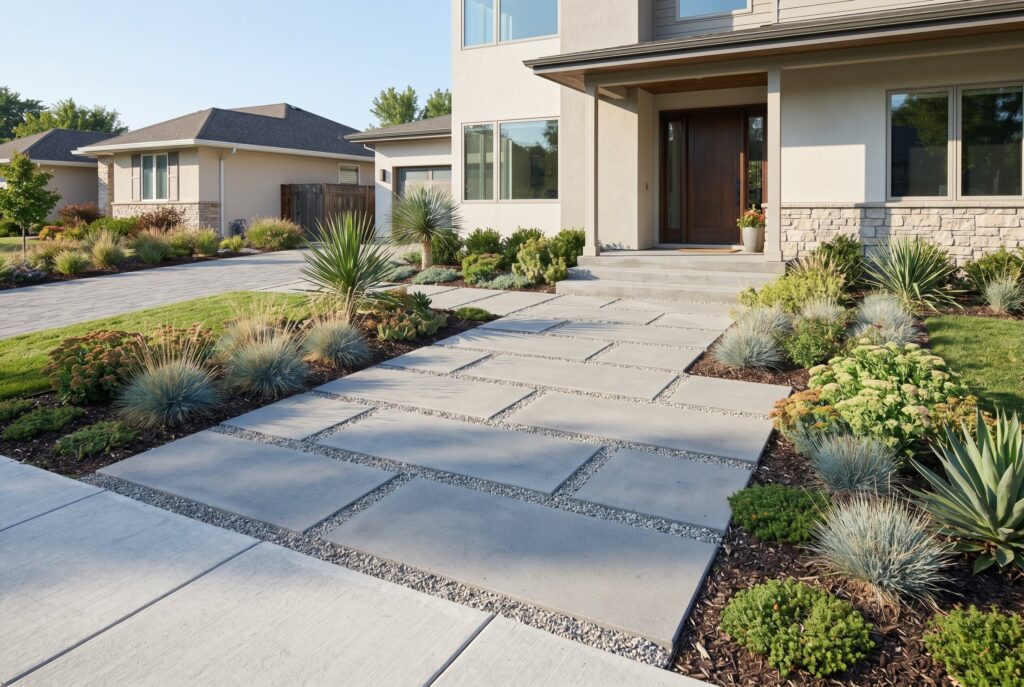
Large pavers reduce the number of gaps where weeds can grow. They also make the entry feel grander and cleaner. Use them from the driveway to the porch, or as a direct path from the sidewalk to the front door. For a low-maintenance front yard landscaping design, keep the lines simple and use gravel or groundcover between sections.
6. The Modern Concrete Grid
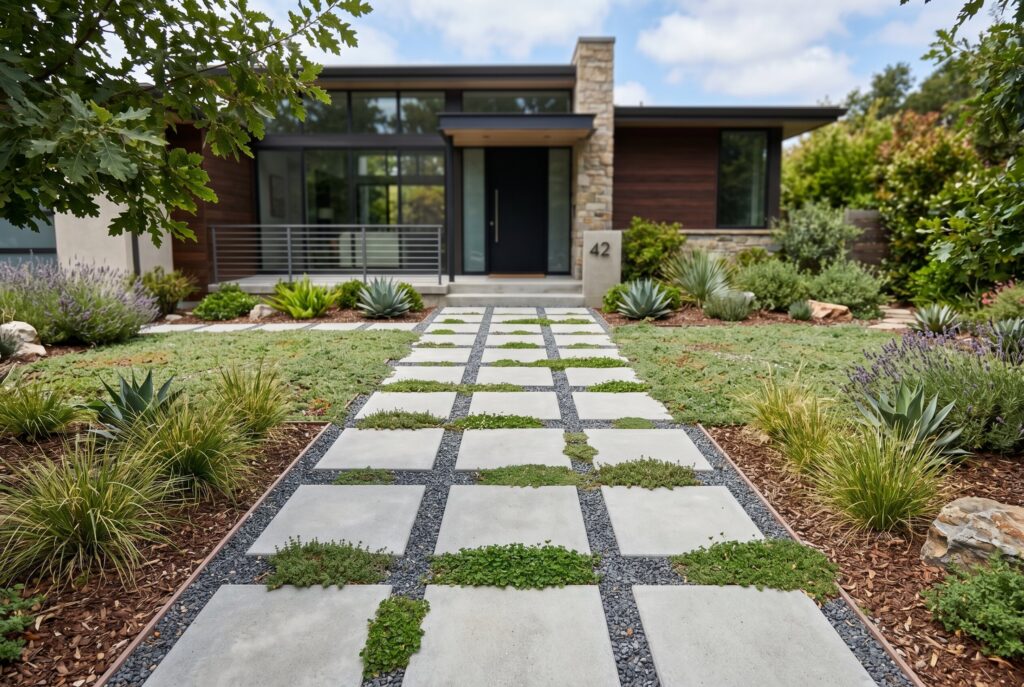
A concrete grid creates a crisp geometric look. Square slabs can be separated by gravel, clover, artificial turf, or creeping thyme. This is one of the strongest hardscape choices for modern homes because it looks structured and requires little care. It also reduces the amount of lawn you need to mow.
7. Decomposed Granite Beds
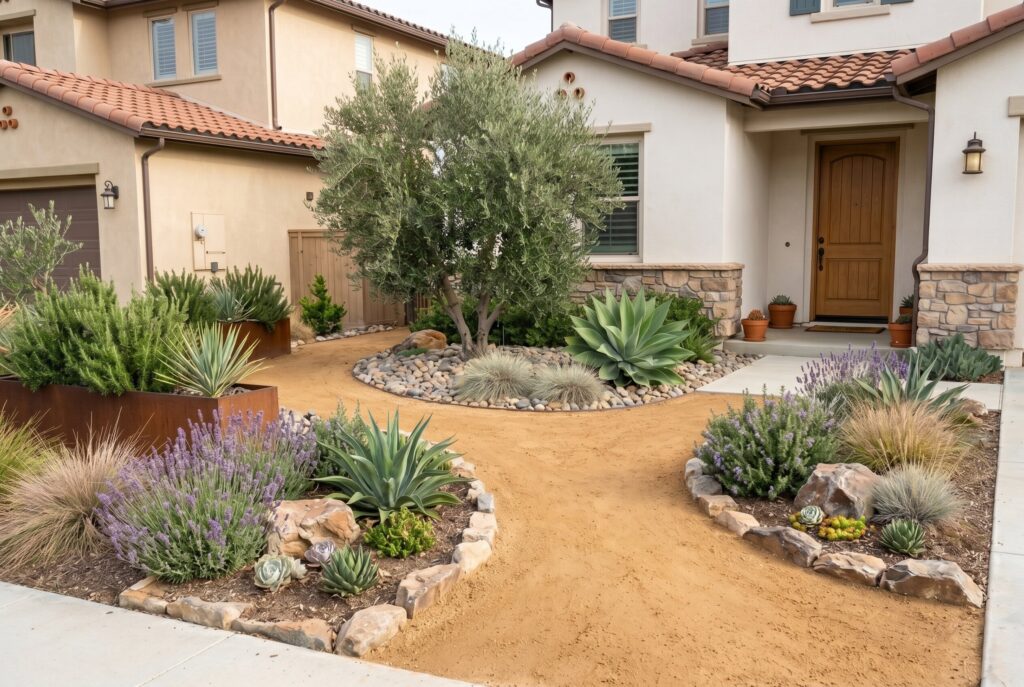
Decomposed granite, often called DG, gives the yard a natural, compacted surface that drains well and feels warm underfoot. It is excellent for dry climates and casual pathways. Use it around drought-tolerant plants, boulders, or raised planters for a relaxed but designed look.
8. Poured Concrete Slabs

Poured concrete slabs create a clean, architectural front yard. They are ideal if you want a simple landscape with almost no upkeep. Pair them with black planters, ornamental grasses, or a single sculptural tree. The result feels calm, modern, and easy to maintain.
9. Natural Flagstone Pathways

Flagstone paths have a softer, more organic look than concrete. They work beautifully with cottage gardens, rustic homes, and natural landscapes. Place flagstones through mulch, gravel, or creeping groundcover. Because each stone has an irregular shape, the path feels timeless rather than overly manufactured.
10. Mulch-Heavy Garden Beds

Expanding mulch beds is one of the easiest ways to reduce lawn. A thick layer of mulch helps block weeds, hold moisture, and make planting beds look finished. Keep mulch about three inches deep, but avoid piling it directly against trunks or stems.
Phase 2: Set It and Forget It With Evergreens and Drought-Tolerant Plants
11. Mass Planting Ornamental Grasses
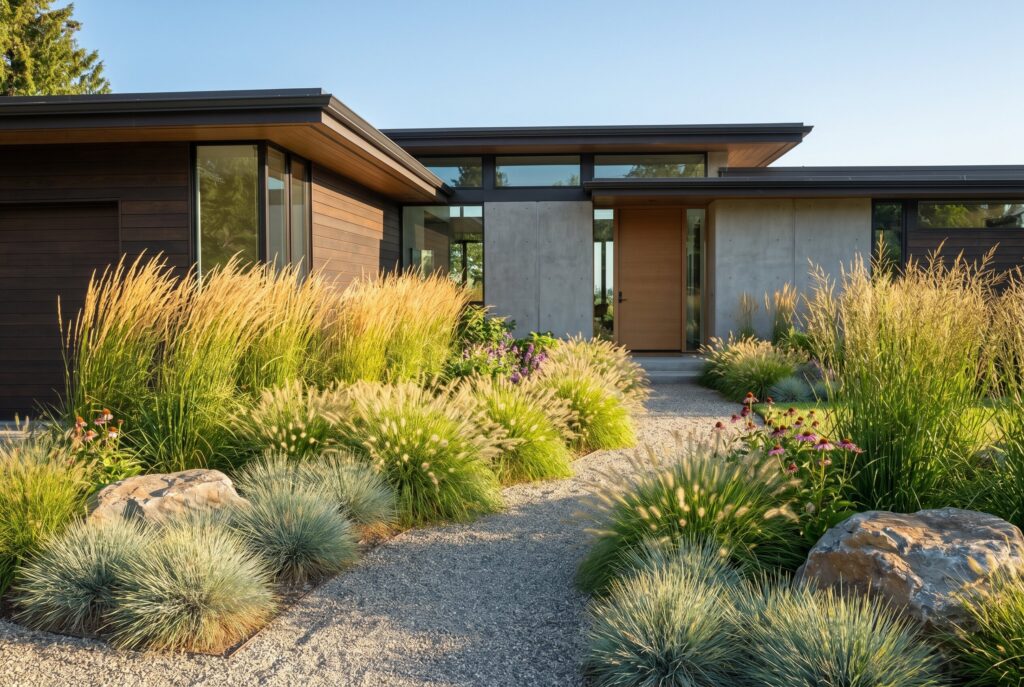
Ornamental grasses add movement, softness, and height without constant pruning. Plant them in repeated groups for a designer look. Fountain grass, feather reed grass, blue fescue, and switchgrass can all work depending on your region. They are especially beautiful beside gravel paths and modern façades.
12. The Structured Boxwood Hedge
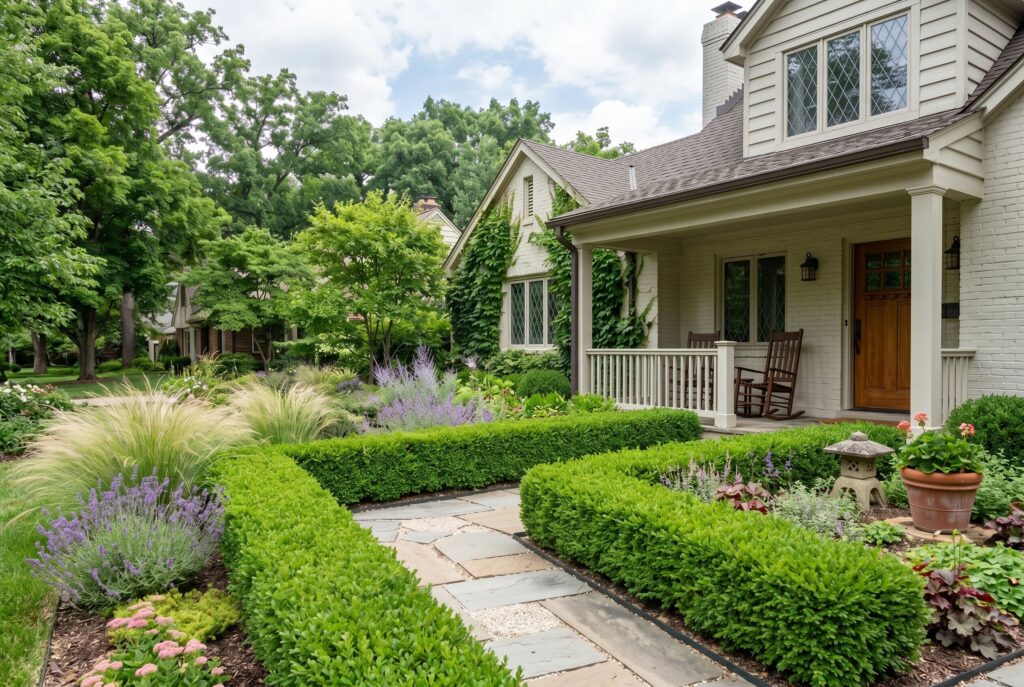
Boxwood hedges give an evergreen planting scheme a classic, polished shape. They define walkways, frame porches, and create structure all year. Choose compact varieties if you want less trimming. In some regions, boxwood blight and the box tree moth have become serious problems, so ask a local nursery which varieties hold up in your area. A few neat boxwood forms can make the whole front yard feel organized, even if the rest of the planting is loose.
13. Agave and Yucca Focal Points
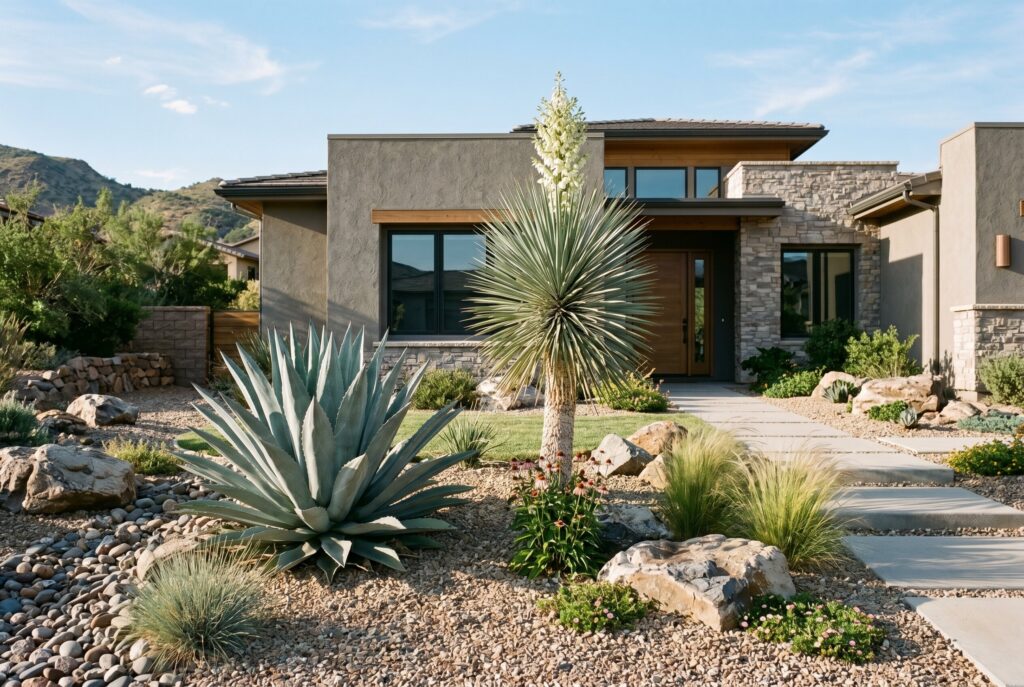
Agave and yucca are architectural drought-tolerant plants that need very little attention once established. Their sculptural forms make them perfect focal points near driveways, entries, or rock gardens. Pair them with gravel, boulders, and low grasses for a clean desert-modern effect.
14. Lavender Borders for Scent and Color

Lavender gives you fragrance, flowers, and a relaxed Mediterranean look. It thrives in sunny, well-drained spaces and doesn’t need rich soil, but it dislikes wet, heavy soil and humid summers. Give it a light trim once a year after flowering to keep it from getting woody. Plant it along walkways or porch edges where visitors can brush past the scent. It also pairs beautifully with stone, gravel, and warm wood.
15. The Drought-Tolerant Succulent Garden
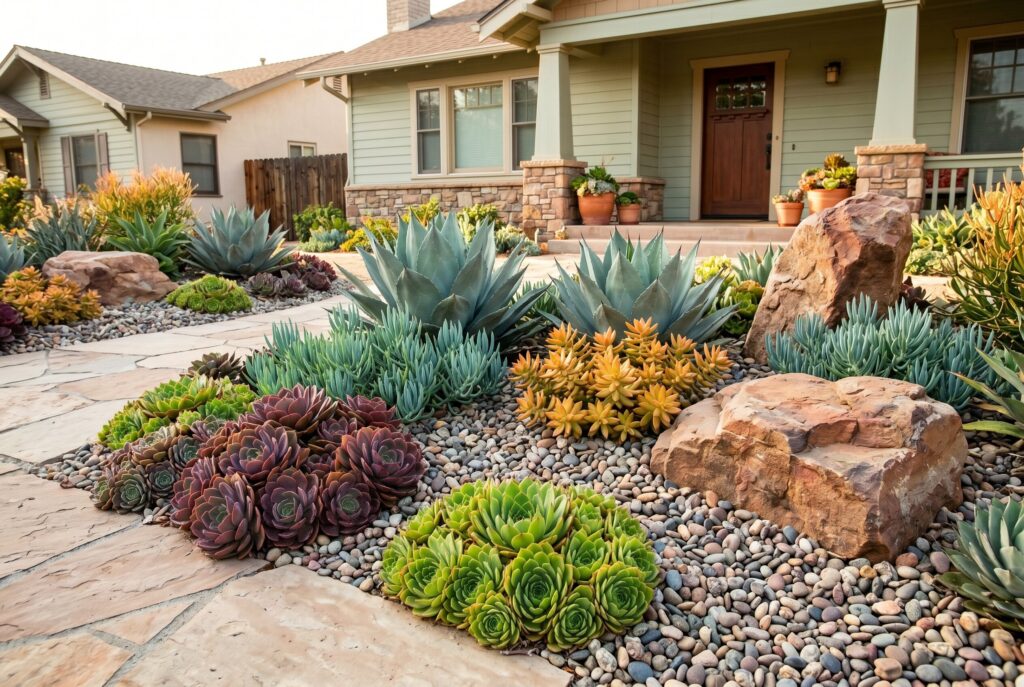
A succulent garden is ideal for sunny front yards with limited water. Mix different shapes, colors, and heights for interest. Use gravel mulch and larger rocks to make the bed look intentional. Succulents are especially useful in small spaces because they provide strong visual impact without spreading wildly.
16. Hostas for Shady Front Yards
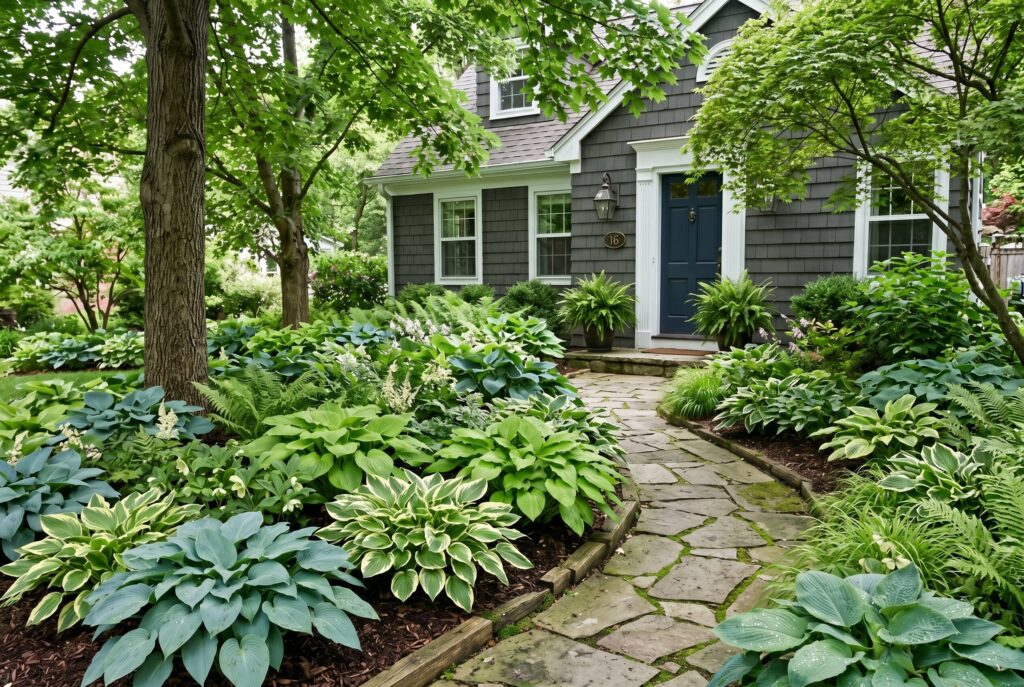
If your front yard is shaded, hostas are a dependable low-care choice. Their large leaves add lush texture without needing bright sun. Use them under trees, along shaded walkways, or near north-facing foundations. Mix green, blue-green, and variegated varieties for depth. One caution: deer and slugs love hostas, so in areas with heavy deer pressure, shade-tolerant ferns or native ground covers may be less work.
17. Dwarf Trees for Minimal Pruning
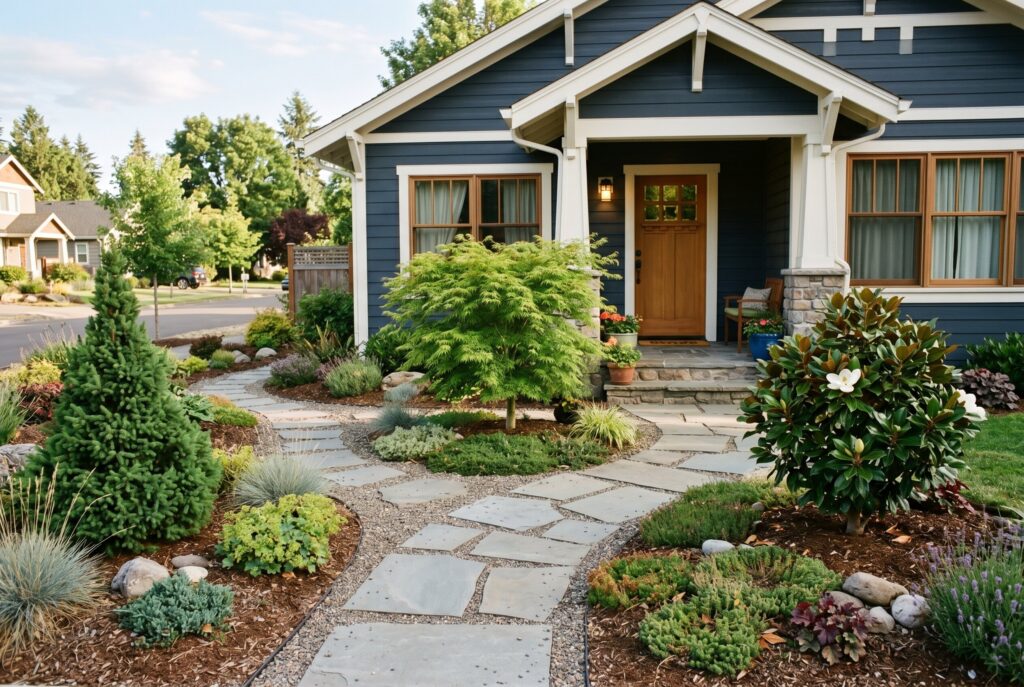
Dwarf trees give structure without becoming unmanageable. Dwarf Japanese maple varieties, dwarf magnolia, dwarf spruce, or compact flowering trees can add height and seasonal interest while staying small. Not every Japanese maple is a dwarf, so check the label for mature height and width. Choosing the right mature size means the tree won’t outgrow the space or block windows, and you’ll only need occasional light pruning.
18. Perennial Wildflower Meadows

A small wildflower meadow can replace thirsty lawn with color and pollinator habitat. Use perennial seed mixes suited to your region. Expect it to take two to three seasons to fill in, with more weeding in the first year before it becomes low-maintenance. This look works best when framed with a clean edge, path, or mowed border so it feels intentional rather than neglected, and it’s worth checking local rules on plant height near sidewalks.
19. Hydrangea Bushes for Easy Blooms
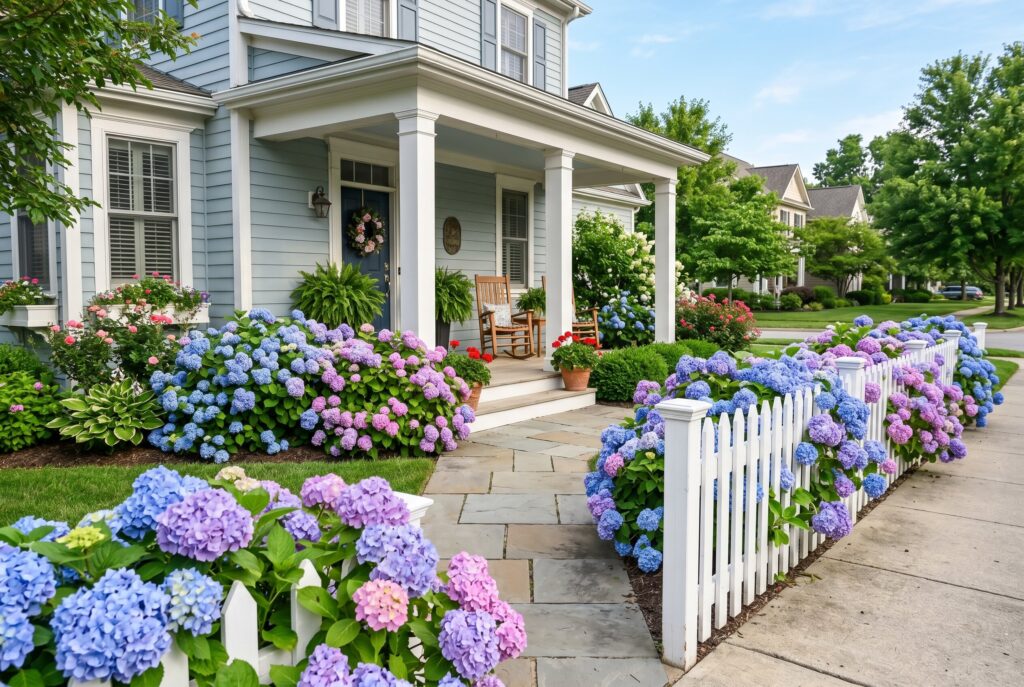
Hydrangeas create big visual payoff with relatively simple care. They work well near porches, fences, and foundation beds. Unlike most plants in this list, they are not drought-tolerant and need regular watering, especially in hot weather, so pair them with drip irrigation. Panicle hydrangeas are among the toughest and most forgiving types, while bigleaf hydrangeas bloom on old wood and can lose flowers if pruned at the wrong time. Choose the right variety for your sun exposure and climate.
20. The One Tree, Zero Lawn Minimalist Approach
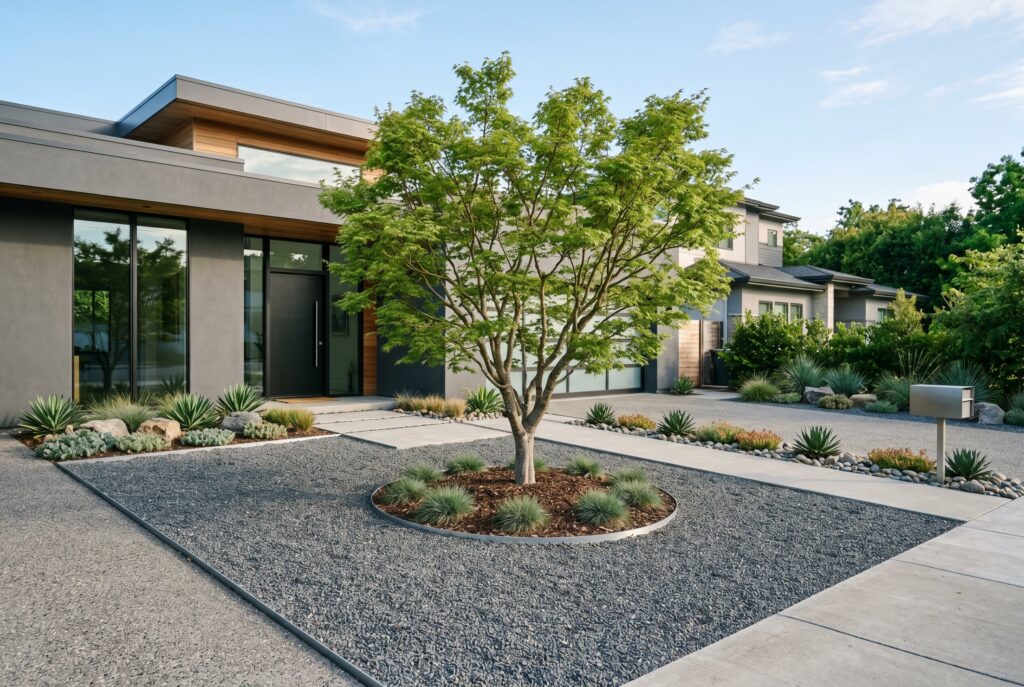
For a bold minimalist yard, remove most of the lawn and keep one beautiful tree as the main focal point. Surround it with gravel, mulch, groundcover, or low planting. This approach is calm, architectural, and easy to maintain when the tree is chosen correctly.
Phase 3: Rock Gardens and Architectural Elements
21. The Zen Japanese Rock Garden
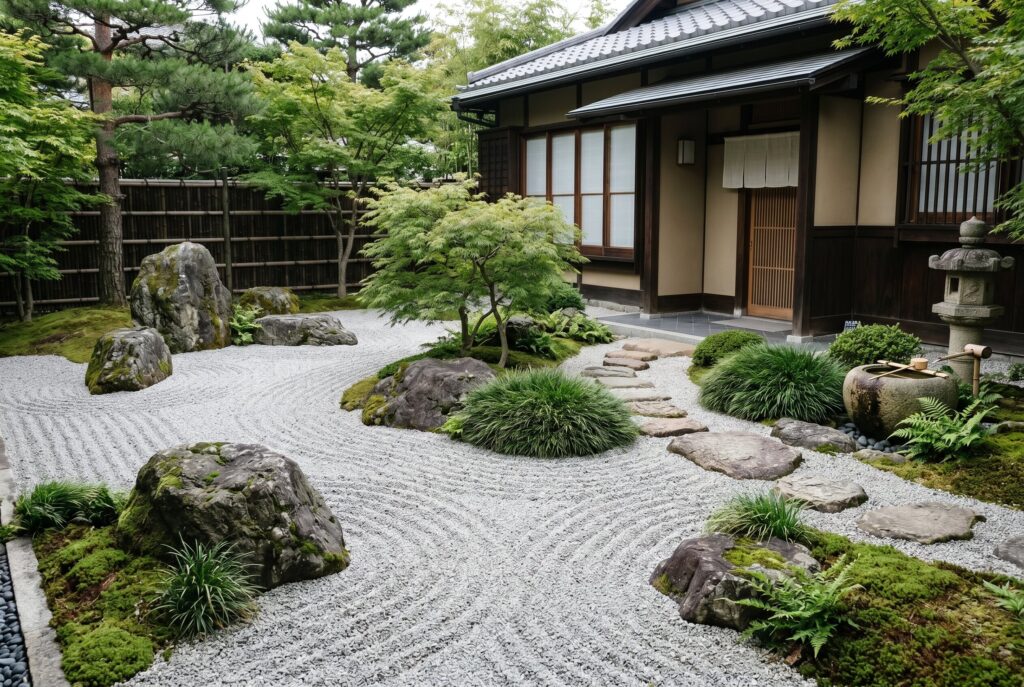
Rock garden ideas work well when you want peace, texture, and almost no watering. Use gravel, sand, boulders, and a few carefully chosen plants. Keep the design simple. A Japanese-inspired rock garden should feel quiet and balanced, not overcrowded with decorations.
22. River Rock Drainage Swales

River rocks are both beautiful and practical. Use them to create shallow drainage swales that guide rainwater away from the house. They help prevent erosion while adding a natural dry-creek look. This is one of the best solutions for yards with runoff problems.
23. Bold Black Lava Rock Beds
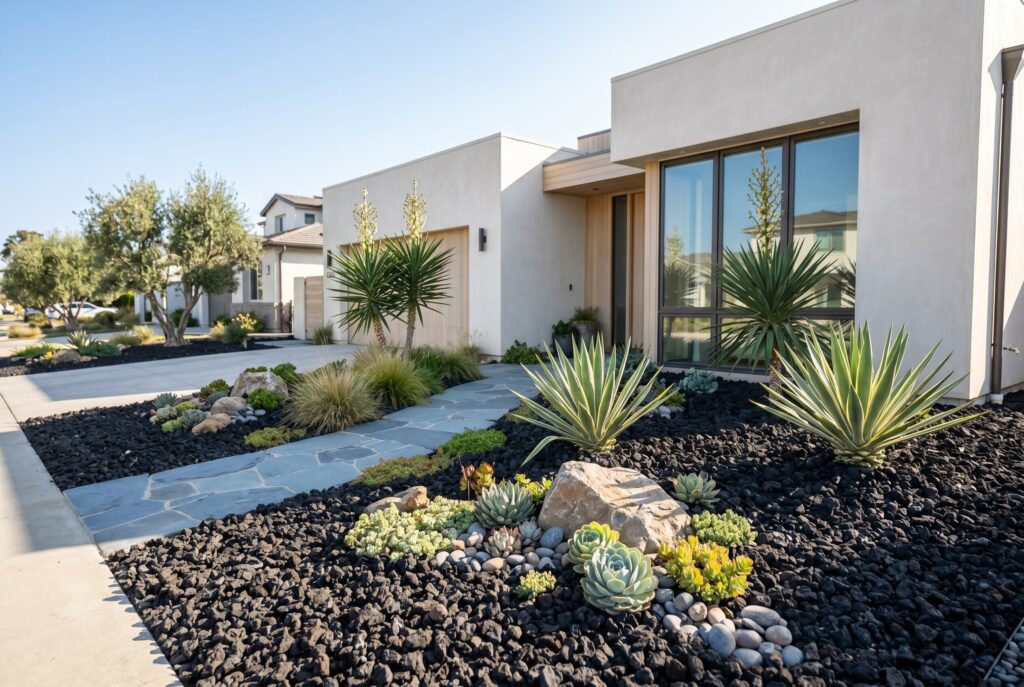
Black lava rock creates strong contrast against green plants and light-colored homes. It works especially well with succulents, agave, yucca, and modern architecture. Because dark rock can hold heat, use it with tough plants that can handle warmer soil.
24. White Marble Stone Highlights
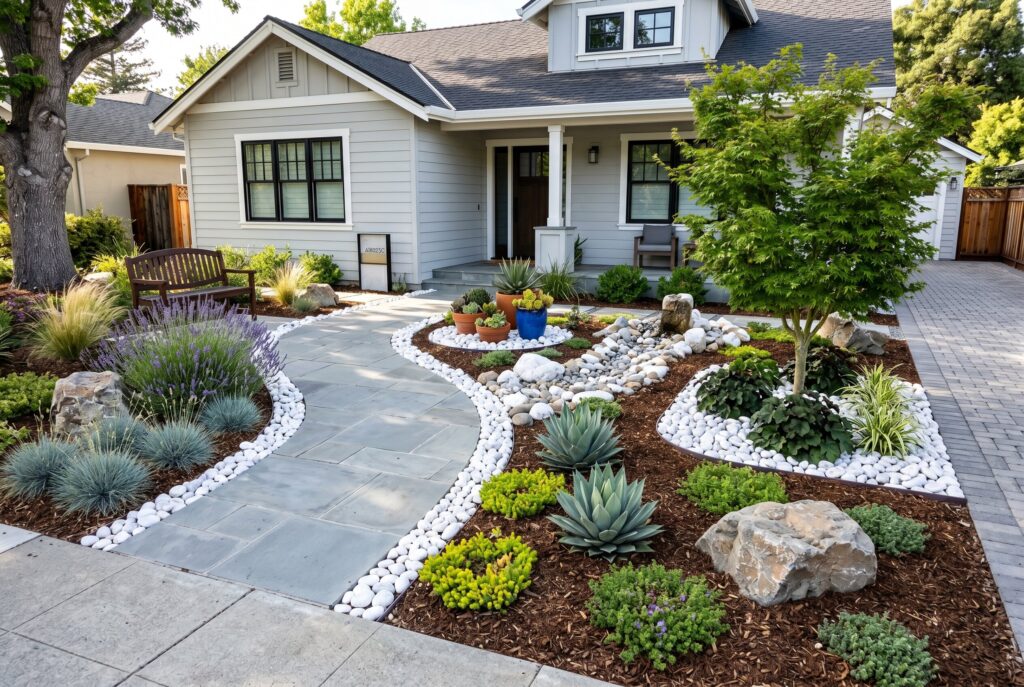
White stone brightens dark corners and gives the yard a clean, fresh look. Use it sparingly around planters, along paths, or as a small feature bed. Too much white stone can look harsh, but in the right amount it adds crisp curb appeal. Marble chips are calcium carbonate and can gradually raise soil pH, so keep them away from acid-loving plants like azaleas, rhododendrons, and blueberries.
25. Large Boulder Accents

Large boulders act like natural sculpture. They fill space, add texture, and never need watering or trimming. Use three to five boulders in varied sizes for a more organic look. Pair them with grasses, succulents, or river rocks.
26. Corten Steel Planter Boxes
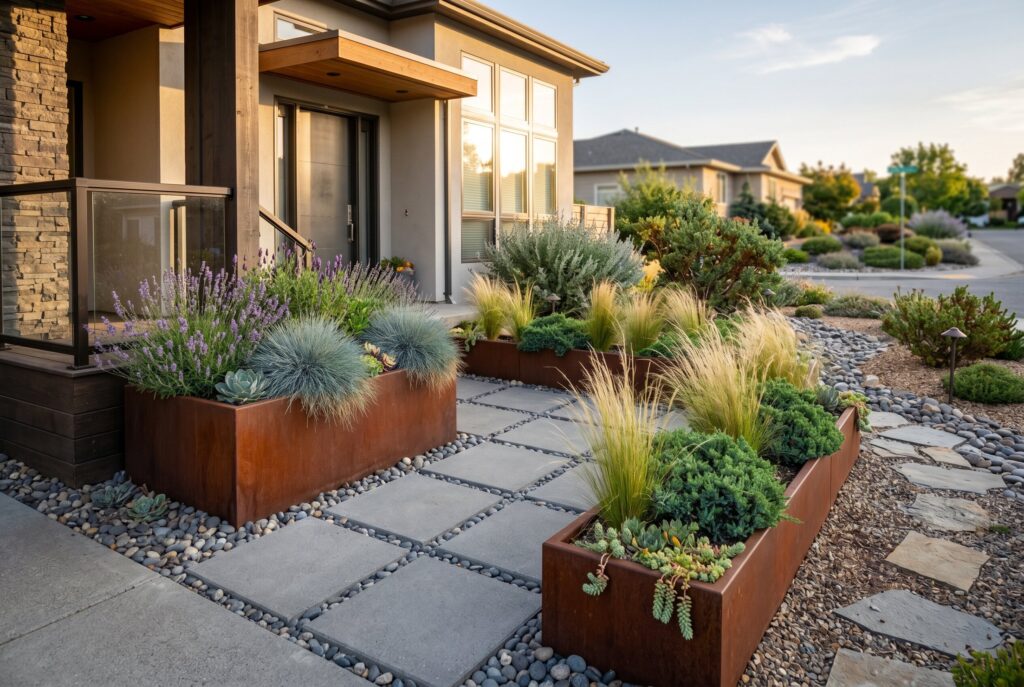
Corten steel planters add warm rust color and modern structure. They are durable, bold, and excellent for controlling plant spread. Use them near the porch, driveway, or walkway. Fill them with grasses, lavender, succulents, or evergreen shrubs.
27. Retaining Walls for Slope Management
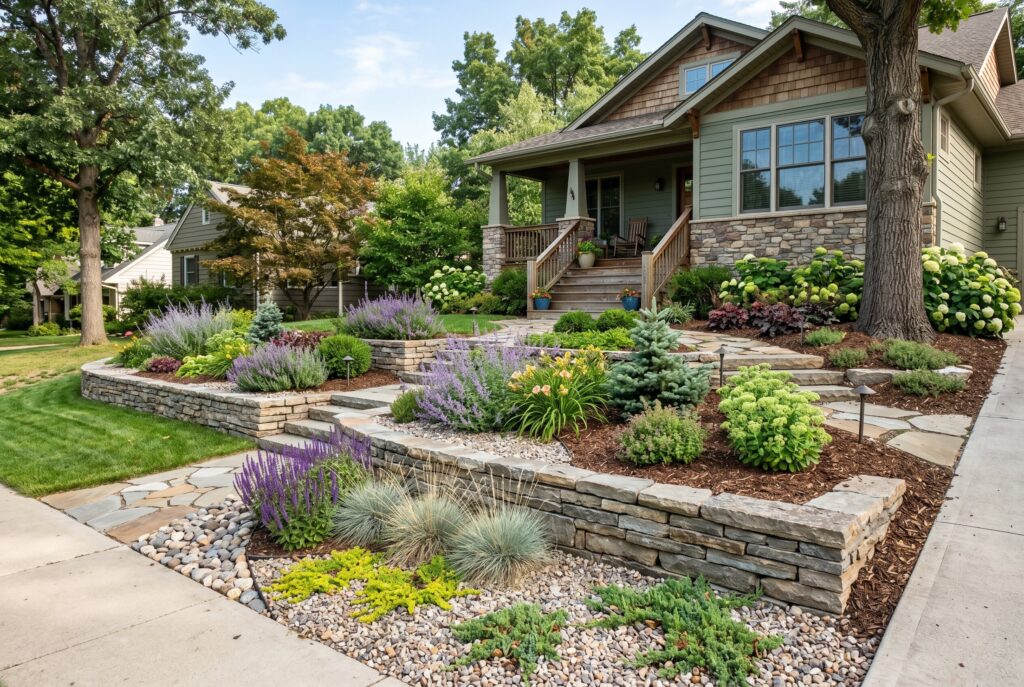
If your front yard slopes, retaining walls can reduce erosion and make planting easier. Use stone, concrete block, brick, or timber depending on your home’s style. Terraced levels also create clear zones, which makes the yard easier to maintain.
28. Built-In Porch Planters

Built-in porch planters make the entry feel designed and permanent. Concrete, stone, or wood planters can hold evergreens, grasses, or seasonal flowers. Because they are close to the house, they create high-impact curb appeal without requiring a full-yard makeover.
Phase 4: Smart Systems and Finishing Touches
29. Automated Drip Irrigation Setup

Drip irrigation is one of the smartest low-maintenance landscaping upgrades. It delivers water directly to plant roots and reduces waste. Add a timer so watering happens automatically. Hide the system under mulch for a clean look.
30. Solar-Powered Pathway Lighting

Solar lights are easy, affordable, and don’t require wiring. Place them along walkways, driveways, steps, and garden beds. Warm light makes the front yard feel safe and welcoming at night. Keep spacing even so the design feels polished.
31. The Seamless Gravel and Fire Pit Front Yard
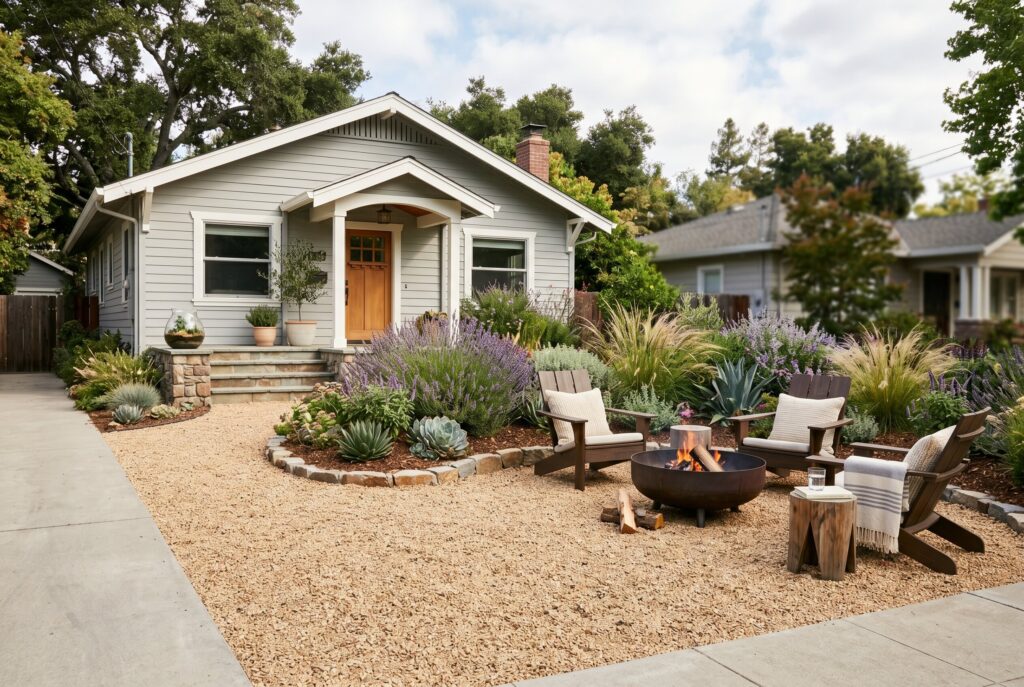
If your neighborhood rules allow it, a gravel seating area with a small fire pit can turn the front yard into usable living space. Check local burn regulations too, and keep the fire pit a safe distance from the house, trees, and anything flammable, following the manufacturer’s clearance guidance. Add low chairs, drought-tolerant plants, and a defined path. It reduces lawn while making the yard feel social and relaxed.
>>> How to Remove Oil Stains from Clothes: 7 Hacks for Old Grease
Frequently Asked Questions
What is the lowest-maintenance front yard?
A mix of hardscape, such as gravel or pavers, with native shrubs and grasses in thick mulch and a drip irrigation system is usually the easiest to care for. No yard is truly zero-maintenance, but this combination limits mowing, watering, and weeding to a few tasks each year.
What is the cheapest way to replace a front lawn?
Sheet mulching is one of the least expensive methods: cover the grass with cardboard, top it with several inches of wood chip mulch, and plant through it once the grass dies back. Overseeding with clover or installing gravel beds yourself are other budget-friendly options.
Is artificial turf worth it for a front yard?
It can be if you want a green look with no mowing or watering. The trade-offs are a high upfront cost, heat buildup in full sun, and the fact that some HOAs and cities restrict it. Planted ground covers or gravel may be better value in many yards.
Which plants need the least maintenance?
Plants native to your region and rated for your hardiness zone are the safest bet. In sunny, dry yards, ornamental grasses, agave, yucca, and succulents are very low-care. In shade, ferns and native ground covers often need less attention than hostas, especially where deer are common.
Can my HOA stop me from replacing my lawn?
Possibly. Many HOAs have landscaping rules, so review your covenants and get approval before major changes. Some states, particularly in drought-prone regions, limit how much an HOA can restrict water-wise landscaping, so it’s worth checking your state’s rules too.
Conclusion
Low-maintenance front yard landscaping doesn’t mean plain, empty, or boring. It means designing with intention. Replace demanding grass, choose drought-tolerant plants, use river rocks and hardscape where they solve real problems, and build evergreen structure that looks good across seasons.
The best curb appeal doesn’t come from the yard that needs constant attention. It comes from the yard that still looks cared for when life gets busy. Start with one section, remove one high-maintenance problem, and let your front yard become easier every year.