

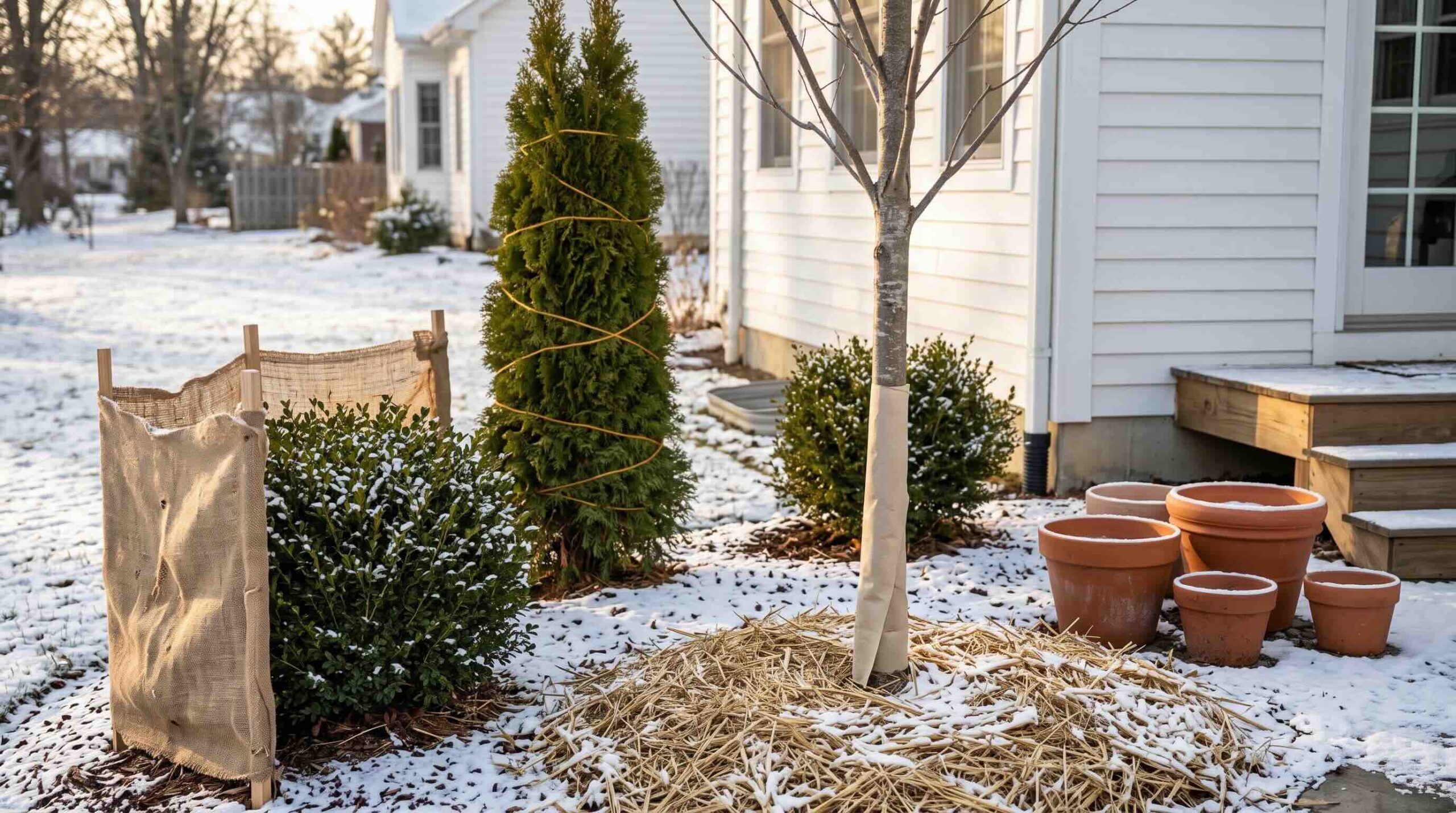
Protecting your garden from severe cold requires proactive timing, not just reacting to a freeze. To truly understand how to keep plants alive in winter outside, you must choose the right plants, water them before the ground freezes, mulch correctly, and deploy covers when temperatures drop below 28°F. This guide explains the hidden causes of winter plant death and provides actionable steps to prevent them.
Why Outdoor Plants Die in Winter
Cold itself is only part of the story. Outdoor plants die over winter from a handful of causes, and knowing which one you are up against tells you which fix matters and which part of how to keep plants alive in winter outside your yard needs most.
Freezing Temperatures That Rupture Plant Cells
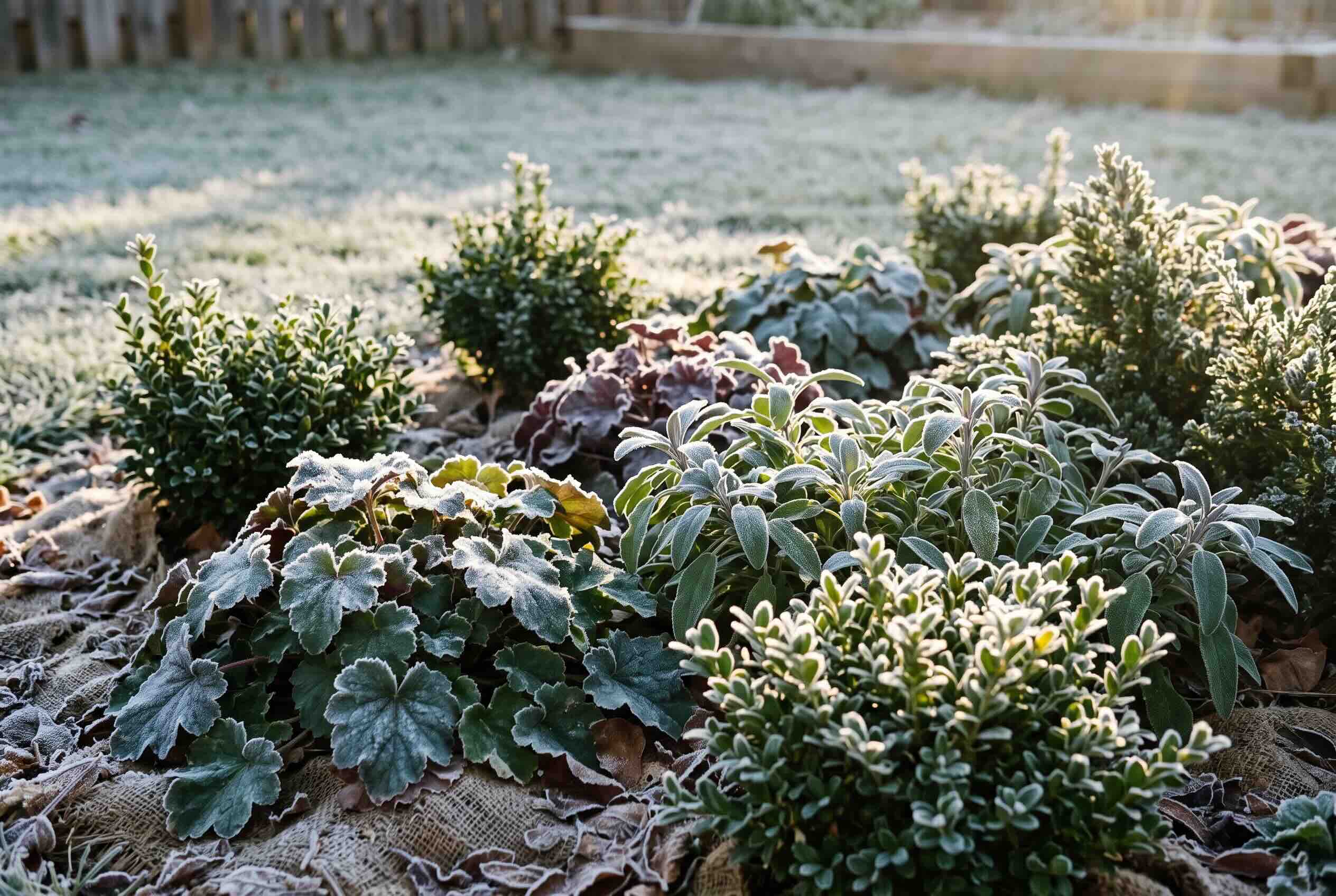
The core damage is physical. When the temperature drops far enough, the water inside a plant’s cells freezes and expands, bursting the cell walls, which is why frozen foliage turns to mush as it thaws. How much harm a cold night does depends on how far the temperature falls and how long it holds.
| Freeze level | Temperature | What it harms |
| Light frost | About 29 to 32°F | Tender annuals, basil, soft new growth |
| Moderate freeze | About 25 to 28°F | The tops of many perennials, semi-hardy plants, buds |
| Hard freeze | 28°F and below, sustained | Tender and many semi-hardy plants down to the root, unprotected potted plants |
A quick, light frost may only nip the tips, while hours below 28°F reach the stems and roots. The longer the cold holds, the deeper it goes, which is why a still, hard freeze does more than a brief dip.
Frost Heave From Freeze and Thaw Cycles
Repeated freezing and thawing physically shoves shallow-rooted perennials out of the ground. Wet soil expands as it freezes and lifts, then settles as it thaws. This constant push and pull exposes the roots to the open air, causing them to dry out and freeze. Frost heave is most destructive in climates that constantly swing above and below freezing.
Winter Burn From Dry Wind and Frozen Soil
Evergreens keep their leaves through winter, and that is where this one hits. Cold, dry wind pulls moisture out of the foliage, but with the ground frozen the roots cannot draw up more to replace it, so the leaves dry and brown, usually on the windward side. Broadleaf evergreens like boxwood, holly, and rhododendron show it most.
Snow, Ice, and Sunscald Damage
Weather does mechanical damage too. Heavy wet snow and ice load branches until they bend or snap, and an upright evergreen or a multi-stem shrub splays open under the weight. Sunscald is the quieter one: winter sun warms the bark on a young trunk by day, the tissue wakes up, and the night cold then kills it, leaving a long dead patch on the south or southwest side.
How to Keep Plants Alive in Winter Outside
With the causes clear, here is the work that carries plants through the cold. Most of how to keep plants alive in winter outside is about timing, doing the right thing before the weather turns rather than after.
Choose Plants Hardy to Your USDA Zone
The surest fix starts before planting. Look up your USDA hardiness zone and choose plants rated to it or colder, since a plant hardy to your zone handles a normal winter on its own. Pushing a plant a zone or two warmer than yours means protecting it through every cold snap. For plants already in the ground, the zone tells you which ones can fend for themselves and which need a hand.
Water Deeply Before the Ground Freezes
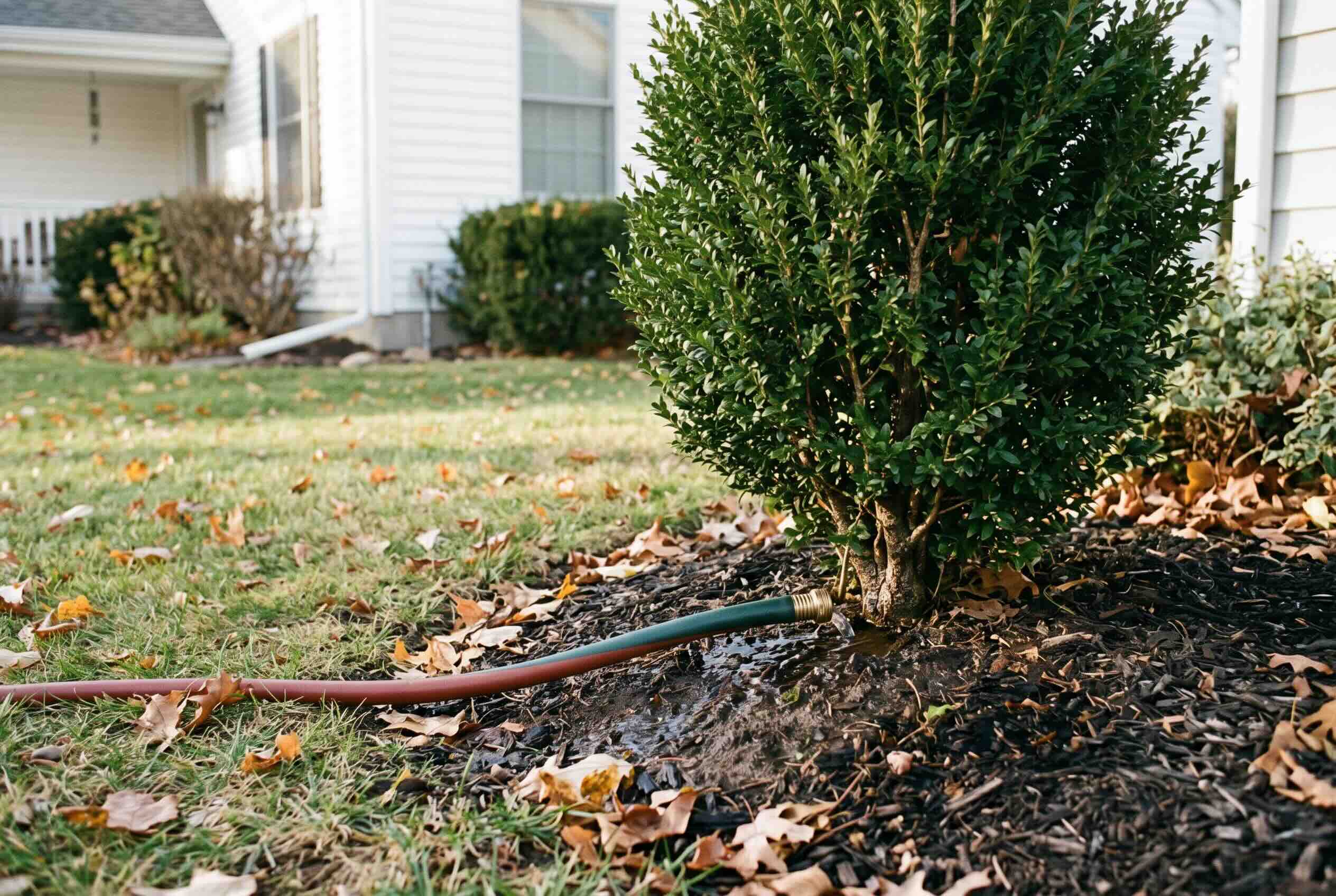
A well-watered plant goes into winter stronger. Moist soil holds heat better than dry soil and buffers the roots, and a hydrated evergreen resists winter burn. Give beds and evergreens a deep soak in late fall, before the ground freezes hard, and keep watering through a dry fall. Stop once the ground freezes, since the water can no longer soak in.
Mulch After the First Hard Freeze
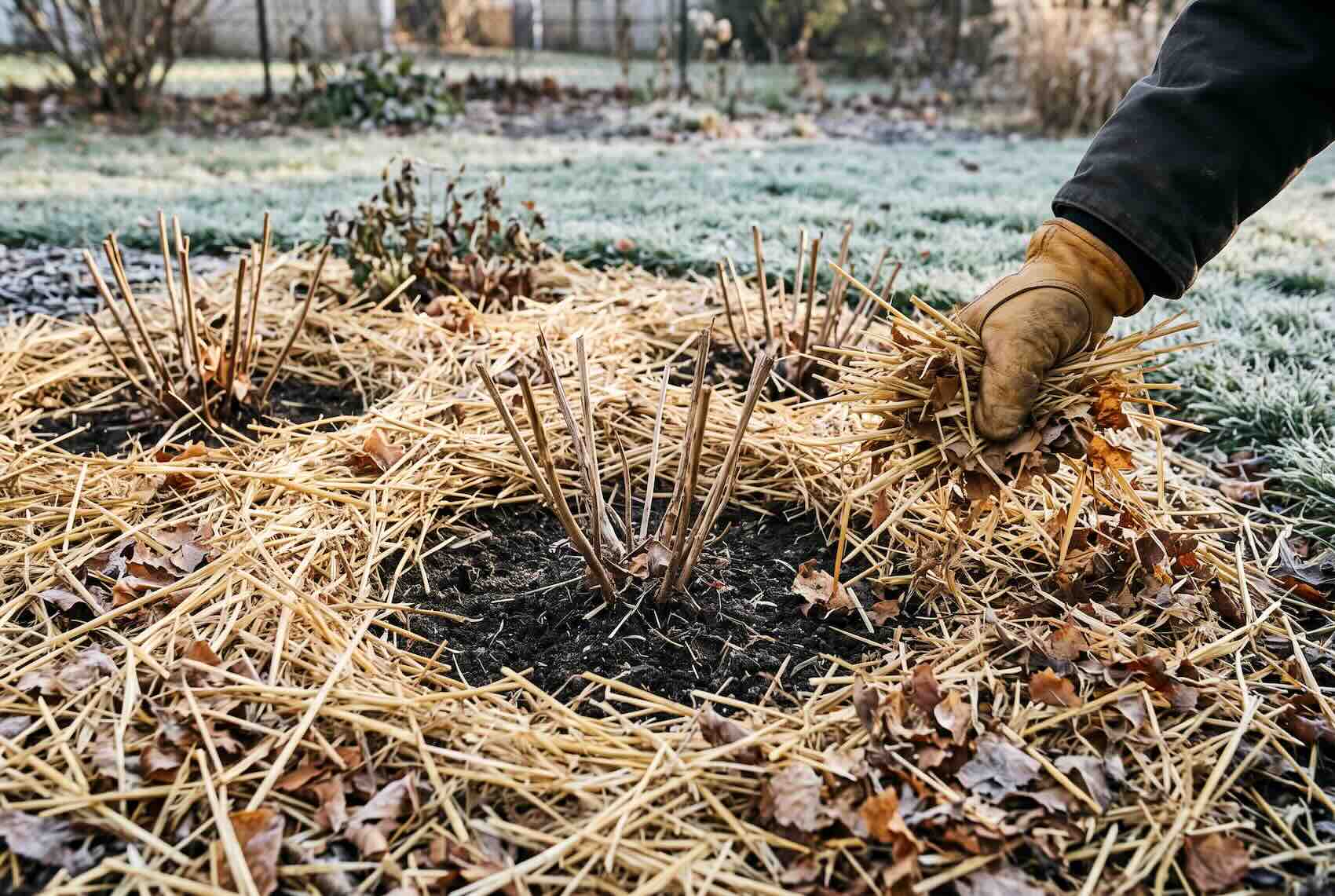
Mulch steadies the soil rather than warming it, so the timing runs opposite to what people expect. Wait until after the first hard freeze, once the ground has chilled, then lay a few inches of mulch, straw, bark, or shredded leaves over the root zone. Mulching too early keeps the soil warm and tempts tender growth.
Caution: Voles often nest in loose winter mulch and gnaw on bark and roots. Always keep mulch pulled back a few inches from stems and trunks. If rodents are an active issue in your yard, you must proactively set up rodent deterrents around outdoor living areas to protect your vulnerable plants.
Cover Tender Plants on Freeze Nights
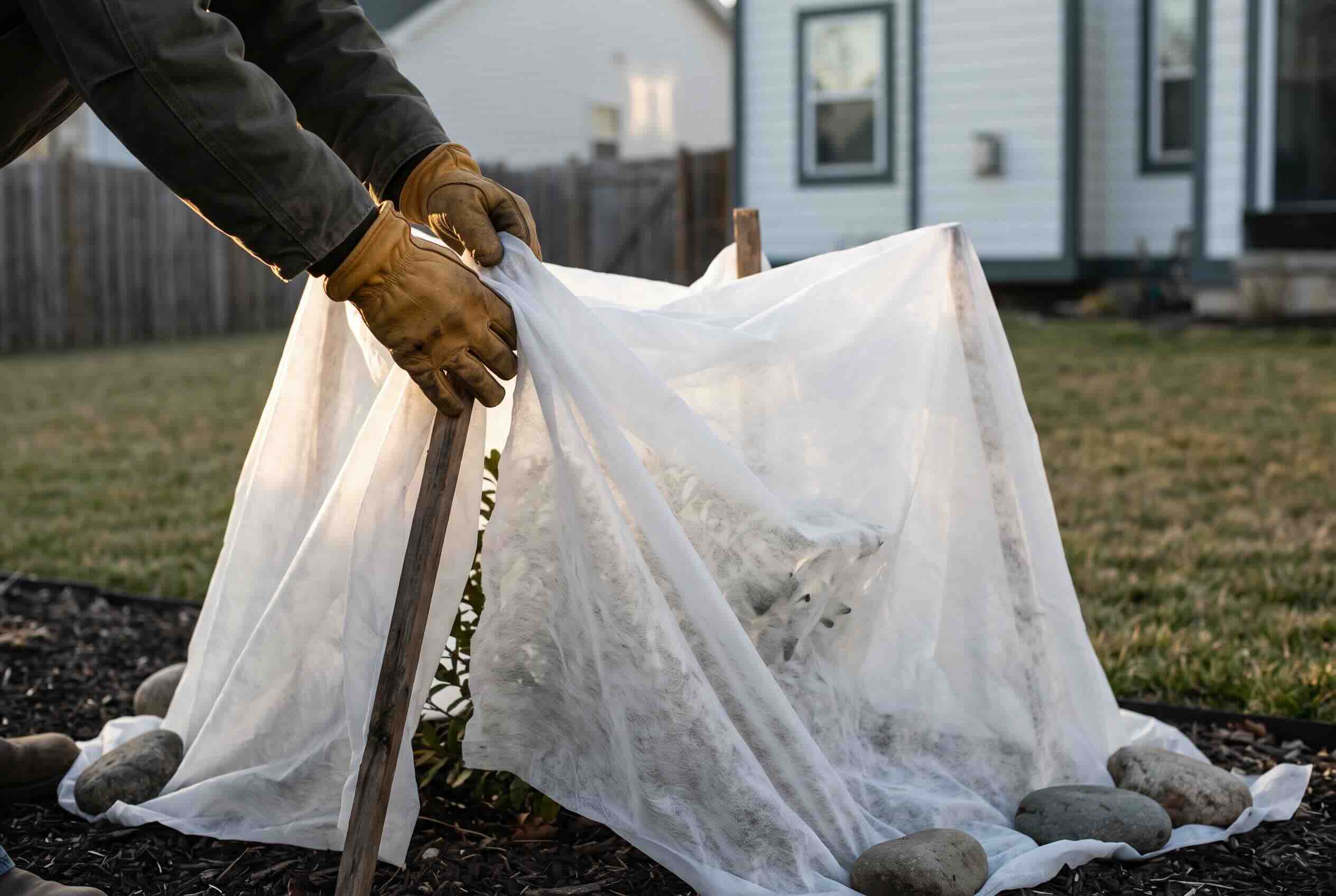
On a night below 28°F, a cover is what saves a tender plant. The point is to trap the ground’s heat, not to add any, so it goes on late and comes off early. For the indoor side of this and more on covers, see how to keep plants warm in the winter. To cover a plant well:
- Use frost cloth, an old sheet, or a blanket, and keep plastic off the leaves.
- Drape it before dusk, while the soil still holds the day’s warmth.
- Take it all the way to the ground and anchor the edges, so it traps the earth’s heat around the whole plant.
- Pull it off in the morning once the air warms, so the plant gets light and does not cook under cover.
Protect Potted Plants That Stay Outside
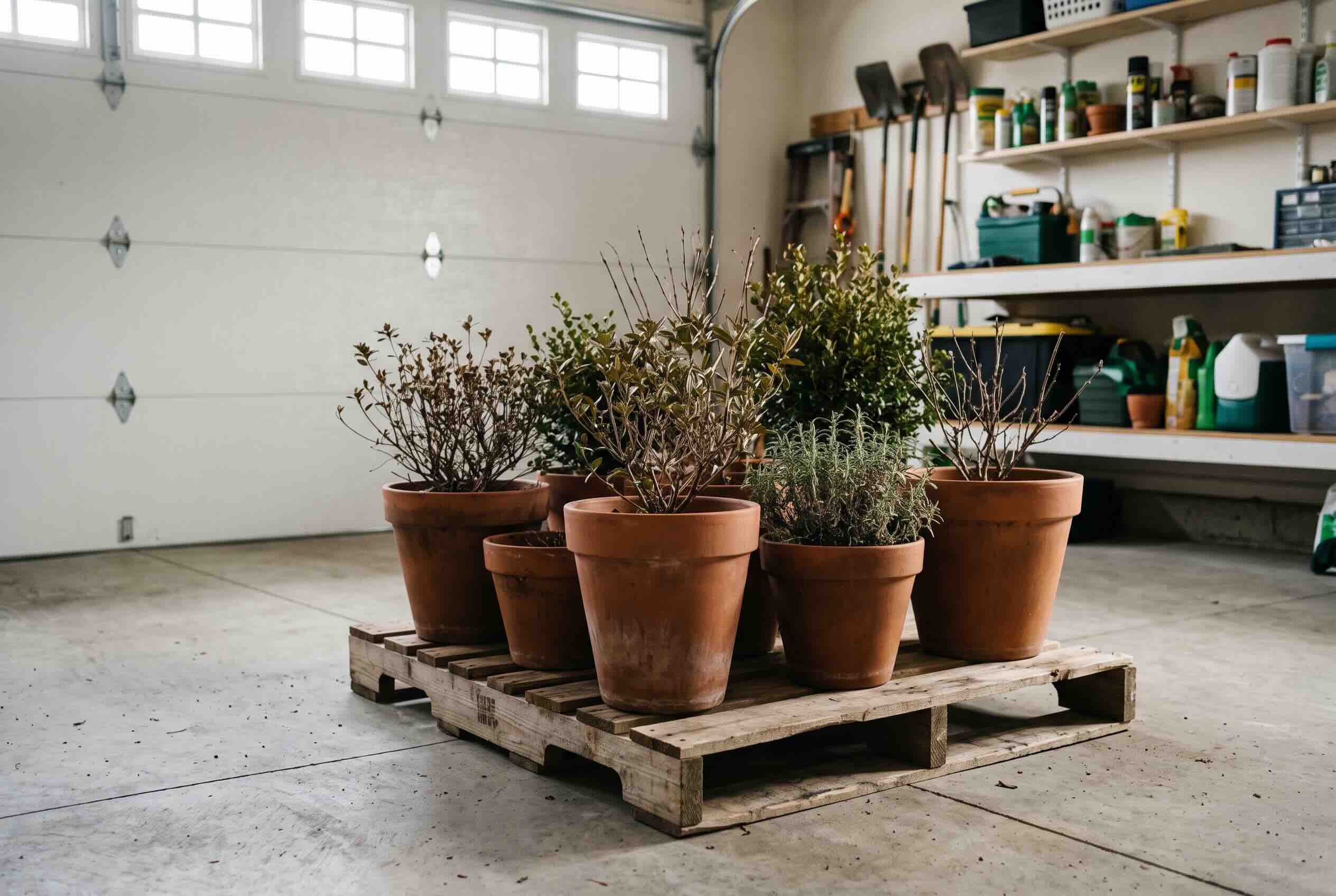
A pot has no ground to buffer it, so its roots sit near the air temperature. That makes a potted plant about two zones less hardy than the same plant in the ground. Plan for that gap: a plant rated to your zone in a pot needs the protection you would give a plant two zones more tender. Cluster pots together against a sheltered wall, wrap the containers in burlap or bubble wrap, and raise them off cold concrete. On the hardest nights, move what you can into an unheated garage or shed. If you want to avoid this heavy lifting next season, consider decorating your patio with hardy house plants that tolerate cold right from the start.
Screen Evergreens From Drying Wind
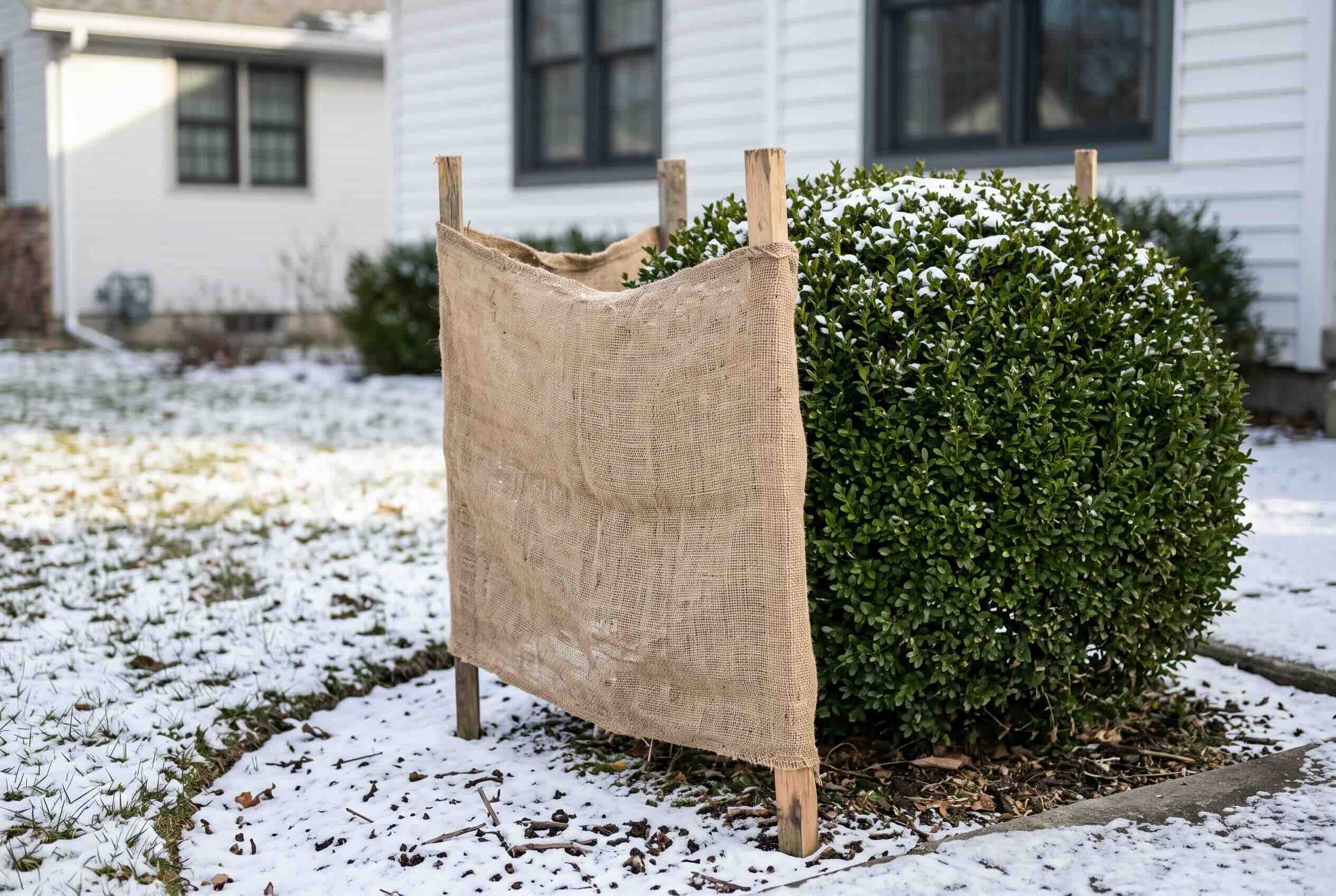
Winter burn is a wind problem, so a windbreak is the fix. Set a burlap screen on the windward side of an exposed evergreen, staked a few inches off the plant so air still moves, or wrap a small shrub loosely. An anti-desiccant spray, which coats the leaves to slow moisture loss, helps on broadleaf evergreens. A deep late-fall watering does as much as anything, since a hydrated plant loses less.
Tie Up Shrubs Before Heavy Snow
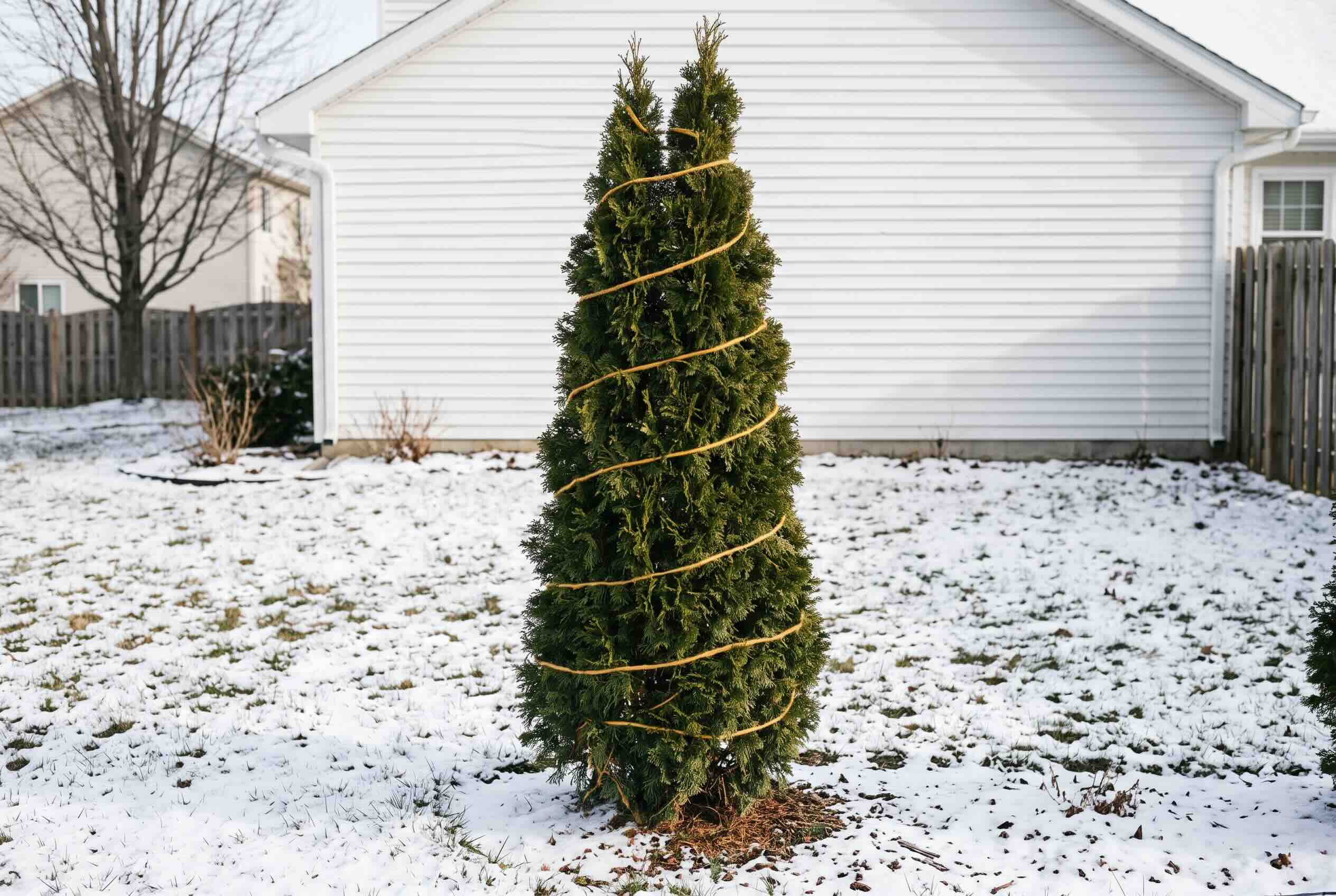
Snow load splits multi-stem shrubs and bends upright evergreens, so tie them before the storm. Wrap twine up a columnar evergreen or an arborvitae in a loose spiral to hold the branches in, and gather a floppy shrub into a tighter bundle. The goal is to stop the branches from splaying under weight, not to crush them, so keep the twine snug rather than tight.
Wrap Young Tree Trunks Against Sunscald
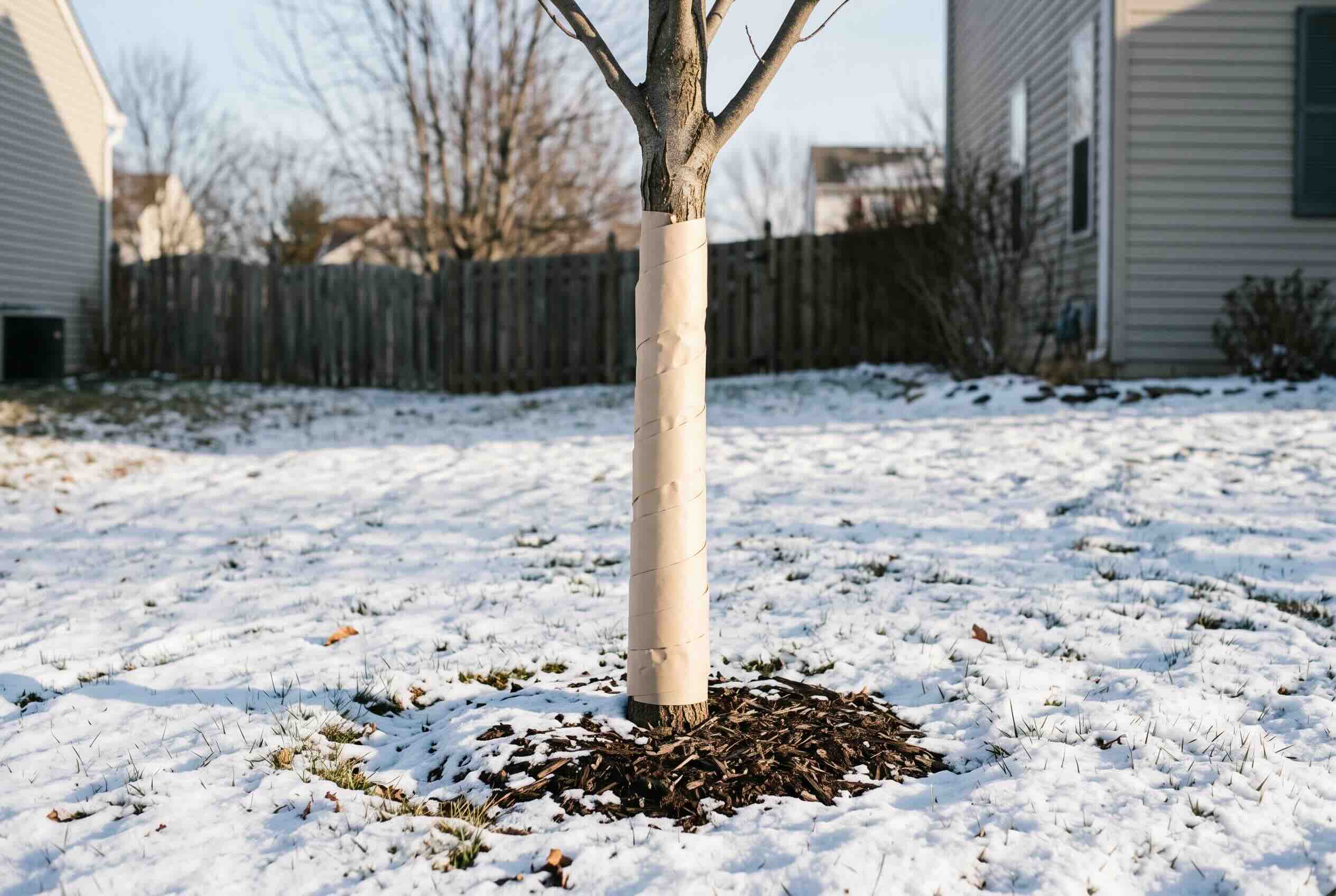
A young, thin-barked tree is the one that sunscalds, so guard the trunk through its first few winters. Wrap it with a light-colored tree wrap or a plastic trunk guard from the base up past the lowest branches in late fall, then take it off in spring so it does not trap moisture and pests. The light color reflects the winter sun that would otherwise warm the bark and leave it to freeze.
Check for Winter Damage Before Cutting Back
When spring comes, wait before you prune. Cold-damaged wood can look dead and still push new growth from lower down, so cutting too soon removes what would have recovered. Scratch the bark with a thumbnail: green underneath means it is alive, brown and dry means it is gone. Prune back to live wood once new growth shows you what came through.
Winter Plant Care Mistakes to Avoid
A few common habits set plants up to fail, and most come from doing the right thing at the wrong time.
Pruning in Fall
Fall pruning tells a plant to grow, and the tender shoots it pushes get killed by the first freeze while the cut stresses the plant going into winter. Hold most pruning until late winter or early spring, once the hard cold has passed.
Fertilizing After Late Summer
Fertilizer drives soft new growth, the last thing you want heading into the cold. Stop feeding by late summer so the plant hardens off and goes dormant on schedule, rather than growing tissue that will not survive.
Letting Plastic Touch the Leaves
Plastic works as an outer cover but carries the cold straight to anything it touches, so leaves pressed against it freeze in the shape of the sheet. Hold plastic off the foliage on stakes or a frame, or use cloth against the plant instead.
Knocking Ice Off Branches
Ice makes branches brittle, and hitting or shaking them to clear it snaps the wood you are trying to save. Leave the ice to melt on its own. For heavy snow, brush it off gently with an upward sweep before it turns to ice.
Piling De-Icing Salt Near Garden Beds
Rock salt from the walk runs off into the soil, burns roots, and browns foliage through the winter. Keep salted paths draining away from beds, use a plant-safer de-icer like calcium magnesium acetate near plantings, and flush the soil in spring where salt has built up.
FAQ
How do you protect roses outside in winter?
After the ground freezes, mound soil, mulch, or compost about a foot up over the base of the plant to guard the graft union, the swollen spot where the rose was joined to its rootstock. Stop feeding in late summer and leave the last blooms on rather than pruning, which keeps the plant dormant. In a cold zone, tie the canes and wrap climbers, or use a rose cone with the top vented. Pull the mound away in spring once the hard frosts pass.
What should I do if a plant froze last night?
Leave it alone for now. Do not prune the damaged growth, since it shelters the rest from the next cold, and do not water a frozen root ball. Let the plant thaw slowly out of direct morning sun, which eases the damage. Wait until spring to see what grows back, then cut away only the wood that stays dead.
Which side of the house is best for plants in winter?
A south-facing spot gets the most winter sun and warmth, which suits plants that want heat but raises the sunscald risk on thin bark. A north or east side stays colder and steadier, which can be safer for plants that should stay dormant, since it avoids the warm-then-freeze swing. A spot sheltered from the prevailing wind beats an exposed one on any side.
Conclusion: So, How to Keep Plants Alive in Winter Outside?
Surviving a hard freeze is not about luck; it is about timing. Mastering how to keep plants alive in winter outside means acting before the thermometer drops, whether that is giving your evergreens a deep fall soak, laying mulch after the ground chills, or tying up heavy shrubs. Do not wait for the cold to arrive. Check your local USDA zone this week and set up freeze alerts on your phone. When that first 28°F night hits, you will be ready to simply drape your frost cloths rather than panicking. Stay connected with Home Tips Daily as we guide you through the rest of the freezing season.