

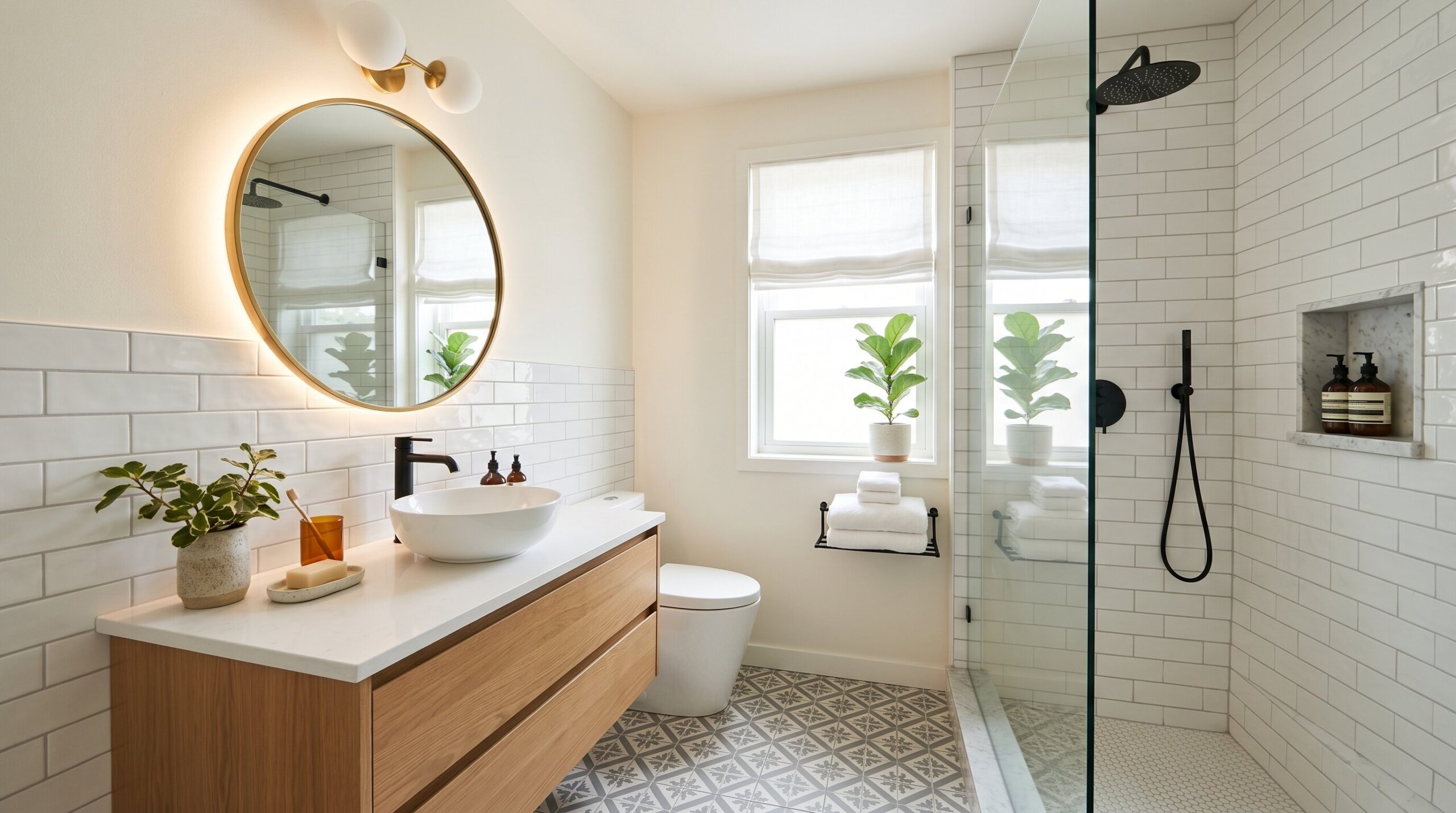
Small bathrooms may have limited square footage, but they often deliver one of the highest visual and resale impacts per dollar spent in a home remodel. A cramped, outdated bathroom can quietly drag down the entire feeling of a house, even if the kitchen and living areas are updated. The good news is that the right small bathroom remodel ideas don’t require massive expansion or luxury-level spending to make the room feel dramatically better.
The biggest mistake homeowners make is chasing trends instead of solving real problems. In 2026, the most valuable upgrades focus on layout clarity, hidden storage, layered lighting, durable materials, and visual calm. The bathrooms that feel expensive are usually the ones that feel functional first.
What Actually Adds Value in a Small Bathroom Remodel?

What the Resale Data Says
Bathroom remodels rarely pay back every dollar, but midrange projects come closest. The 2025 Cost vs. Value Report put a midrange bathroom remodel at about 80 percent of its cost recouped at resale nationally, while upscale remodels recouped far less, roughly 42 to 50 percent, according to a summary by Block Renovation. The 2025 NAR/NARI Remodeling Impact Report estimated about 50 percent cost recovery for a broader bathroom renovation, as summarized by America’s Dream HomeWorks.
The takeaway is simple: durable, broadly appealing upgrades within the existing footprint tend to hold value best, while highly personalized luxury features recoup a smaller share. That is exactly where the ideas below focus.
Layout Efficiency Matters More Than Size
A bathroom doesn’t need to be large to feel luxurious. The real issue in many small bathrooms is poor space planning. Oversized vanities, awkward door swings, cramped tubs, and bulky storage can make the room feel stressful even when the square footage is technically enough.
Start with clearances. The International Residential Code (IRC) requires at least 15 inches from the center of the toilet to a side wall or fixture and 21 inches of clear space in front of it, while the National Kitchen & Bath Association (NKBA) recommends a more comfortable 18 and 30 inches. A shower needs at least 30 by 30 inches of interior space under the IRC. When you can move comfortably between the vanity, shower, and toilet, the bathroom feels calmer and more expensive, and smart layouts almost always outperform expensive materials in daily use.
Buyers Prioritize Storage and Lighting
Storage is one of the biggest hidden pain points in small bathroom design. Buyers immediately notice when there’s nowhere to place towels, toiletries, cleaning products, or daily essentials.
Lighting matters just as much. Dark bathrooms feel older and smaller, while layered lighting creates warmth and depth. Good sconces, mirror lighting, and dimmable fixtures make even budget bathrooms feel far more custom and intentional.
Cohesive Materials Feel More Expensive
One reason luxury bathrooms look expensive is because the materials feel coordinated. Too many tile styles, metal finishes, paint colors, and textures can overwhelm a compact room.
Using one consistent palette creates visual calm. Warm stone-look tile, soft paint colors, matching metals, and simple cabinetry help the room feel polished instead of chaotic. This is especially important in a small bathroom remodel on a budget, where simplicity often looks more elegant than overdesign.
Functional Upgrades Often Beat Trendy Decor
Decor trends change quickly, but practical upgrades hold value much longer. Better ventilation, recessed storage, water-efficient toilets, durable tile, and improved lighting provide real long-term benefits. A beautiful wallpaper won’t matter much if the bathroom lacks storage or develops moisture issues. Function is what makes the room enjoyable every single day.
Water Efficiency and Low Maintenance Matter More in 2026
Modern buyers increasingly care about maintenance and efficiency. WaterSense toilets, low-flow showerheads, stain-resistant surfaces, and easy-clean materials all add practical value. Bathrooms that are easy to clean and cheaper to maintain often feel more modern than bathrooms overloaded with trendy decorative details.
Quick Comparison: Cost and Impact of Each Upgrade
Use this table to prioritize. Impact reflects how much each upgrade typically improves function, appearance, and buyer appeal; cost is relative, from $ (low) to $$$ (high). Both are general estimates, not guarantees for your home.
| Upgrade | Impact | Cost | DIY-Friendly? |
|---|---|---|---|
| 1. Floating vanity | High | $$ | Partly |
| 2. Frameless glass | High | $$ | No |
| 3. Large-format tile | High | $$–$$$ | No |
| 4. Vertical storage | Medium | $ | Yes |
| 5. Layered lighting | High | $$ | No (electrician) |
| 6. Keep the plumbing layout | High | Saves money | — |
| 7. Large mirror | Medium | $ | Yes |
| 8. Warm neutral paint | Medium | $ | Yes |
| 9. New fixtures and hardware | Medium–High | $–$$ | Yes |
| 10. Recessed shower niches | Medium | $$ | No |
| 11. Shallower vanity with drawers | Medium | $$ | Partly |
| 12. Cohesive material palette | Medium | Planning only | Yes |
| 13. Water-efficient fixtures | Medium | $–$$ | Partly |
| 14. Powder room wallpaper | Medium | $ | Yes |
| 15. Better ventilation | High | $–$$ | Partly (electrician) |
| 16. Continuous flooring | Medium | $$ | No |
| 17. Upgraded accessories | Medium | $ | Yes |
| 18. Recessed medicine cabinet | Medium | $–$$ | Partly |
| 19. Walk-in shower instead of tub | High (if another tub exists) | $$$ | No |
| 20. One strategic splurge | Medium | $$ | Partly |
| 21. Storage before decor | Medium | $ | Yes |
21 Small Bathroom Remodel Ideas That Increase Home Value
1. Install a Floating Vanity
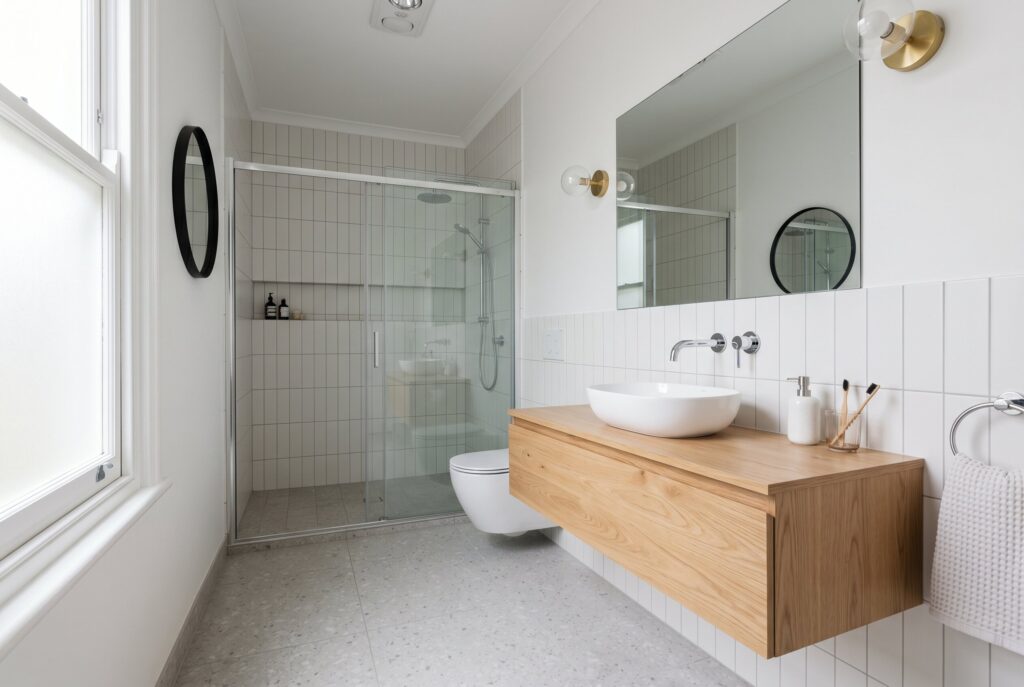
A floating vanity shows more floor, and more visible floor makes a small room read as larger. It also creates cleaner sightlines and makes mopping easier. Because the vanity hangs on the wall, it needs solid blocking between the studs, so plan it while the walls are open. A floating design also lets you set the counter at the height that suits you instead of a fixed cabinet height.
2. Replace Shower Curtains with Frameless Glass
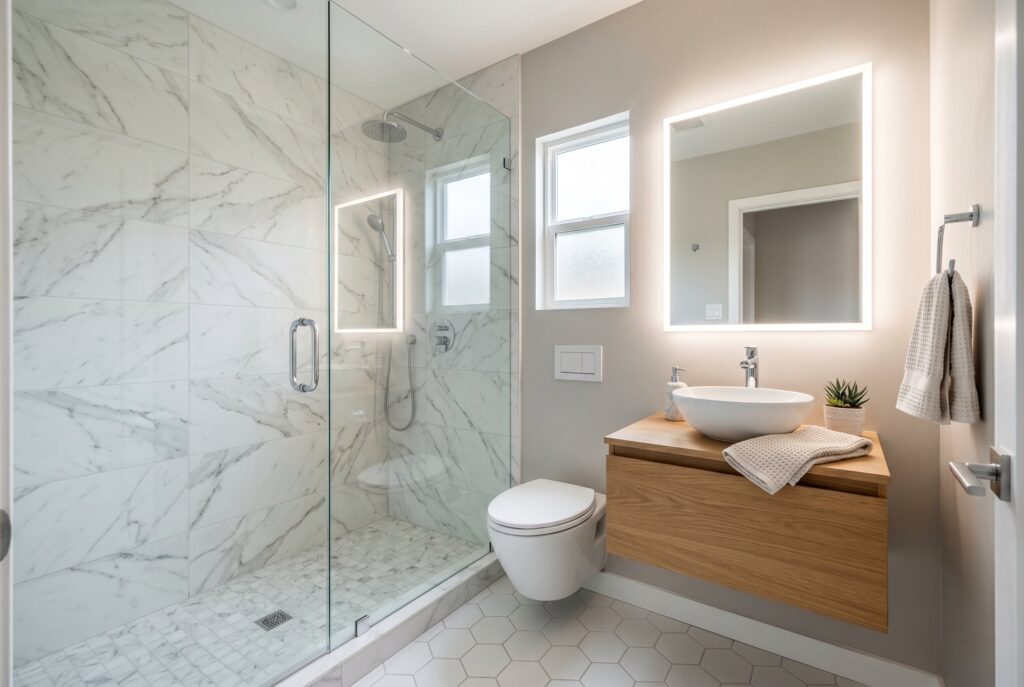
A shower curtain cuts a small bathroom in half visually. Frameless glass lets the eye travel to the back wall, keeps tile work visible, and lets light reach the whole room, which is why it pairs so well with a walk-in shower. It costs more than a framed enclosure, and it needs regular squeegeeing to stay clear, but a single fixed panel is often enough and cheaper than a full door.
3. Use Large-Format Tile with Minimal Grout
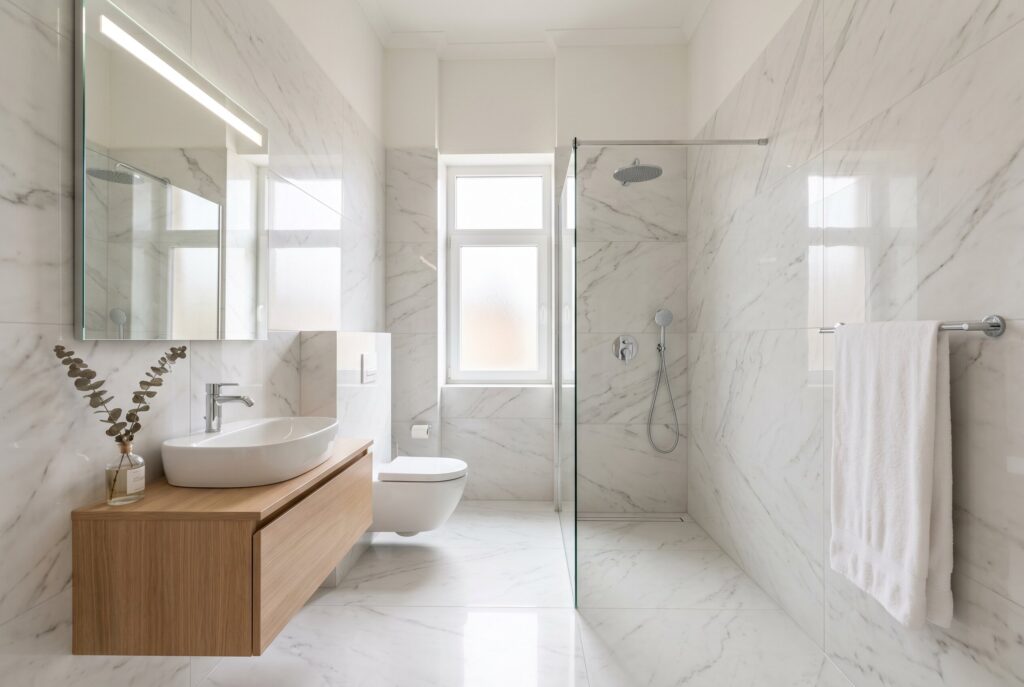
Large-format tile means fewer grout lines, so walls and floors look calmer and there is less grout to scrub. Stone-look or marble-look porcelain gives a spa feel without the upkeep of real stone. Big tiles need a very flat substrate to avoid uneven edges, and on a shower floor they make it harder to create the slope to the drain, so many installers pair them with a linear drain or switch to smaller tile inside the shower.
4. Add Vertical Storage Instead of Bulky Cabinets

Floor cabinets eat the circulation space a small bathroom can’t spare. Vertical storage uses wall height instead: floating shelves above the toilet, a tall narrow cabinet beside the vanity, or recessed shelving between studs. Inside cabinets, a bathroom cabinet organizer keeps everyday items from piling up.
5. Upgrade Lighting with Layered Fixtures
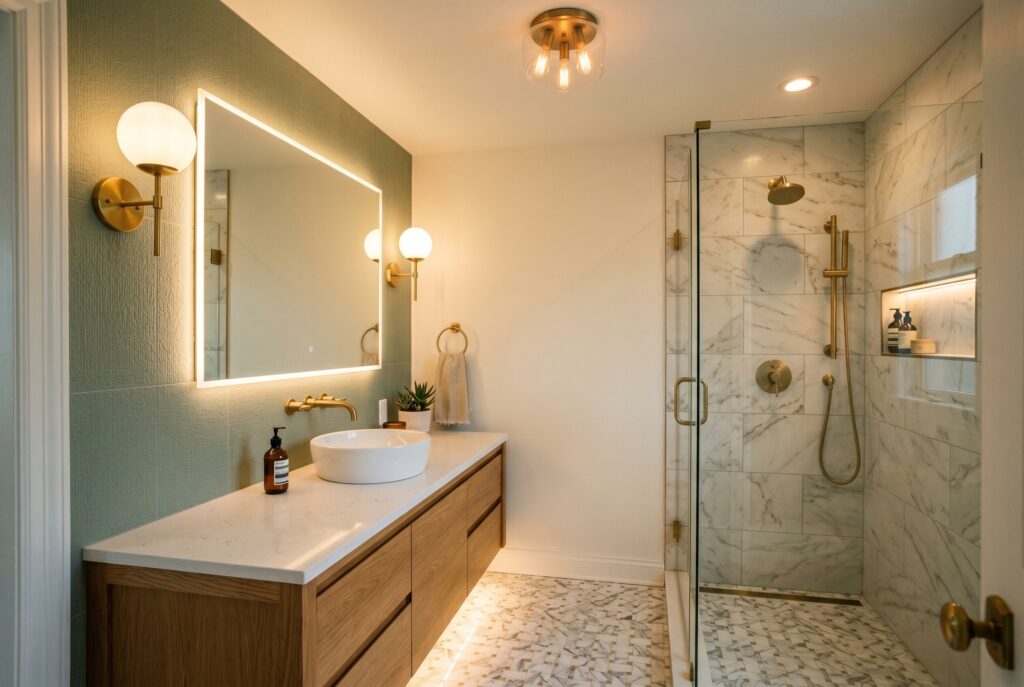
A single ceiling light casts shadows across your face at the mirror. Layer it instead: ambient ceiling light, task lighting at face height, and a softer accent such as a backlit mirror or dimmable sconce. Sconces on both sides of the mirror give the most even light for shaving and makeup. Choose fixtures rated for damp locations, and wet-rated fixtures inside the shower.
6. Keep the Existing Plumbing Layout if Possible
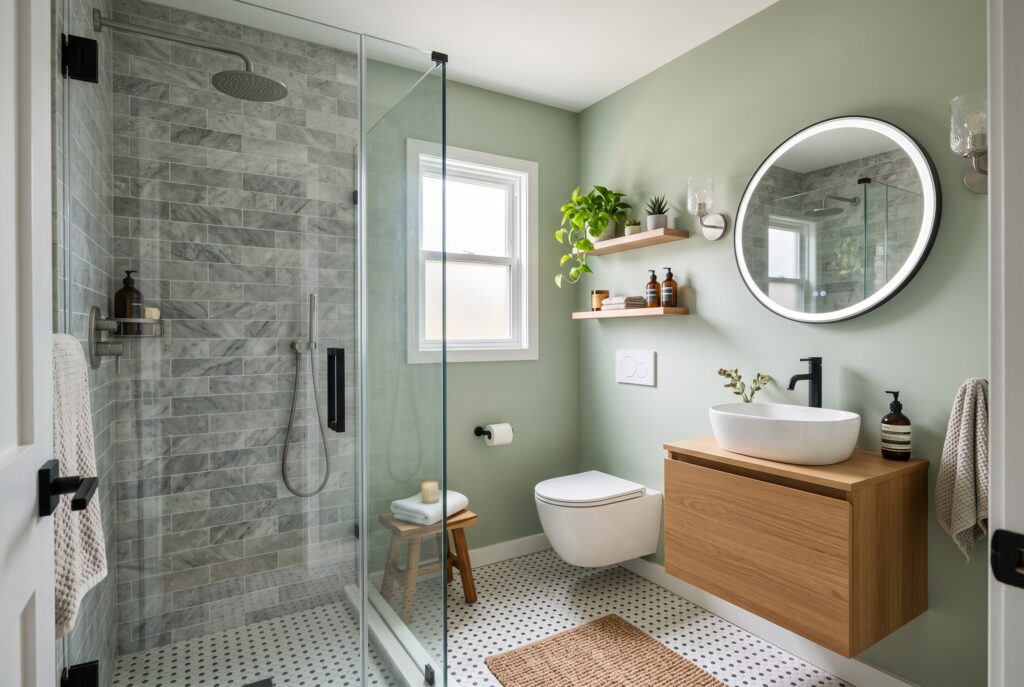
Moving a toilet or shower drain is one of the fastest ways to blow a budget. It can mean opening floors, rerouting drain lines through joists, and adding permits and inspections. Keeping fixtures where they are frees money for the finishes buyers actually see, such as tile, the vanity, lighting, and fixtures, which is where midrange remodels earn their stronger returns.
7. Add a Large Mirror to Reflect Light
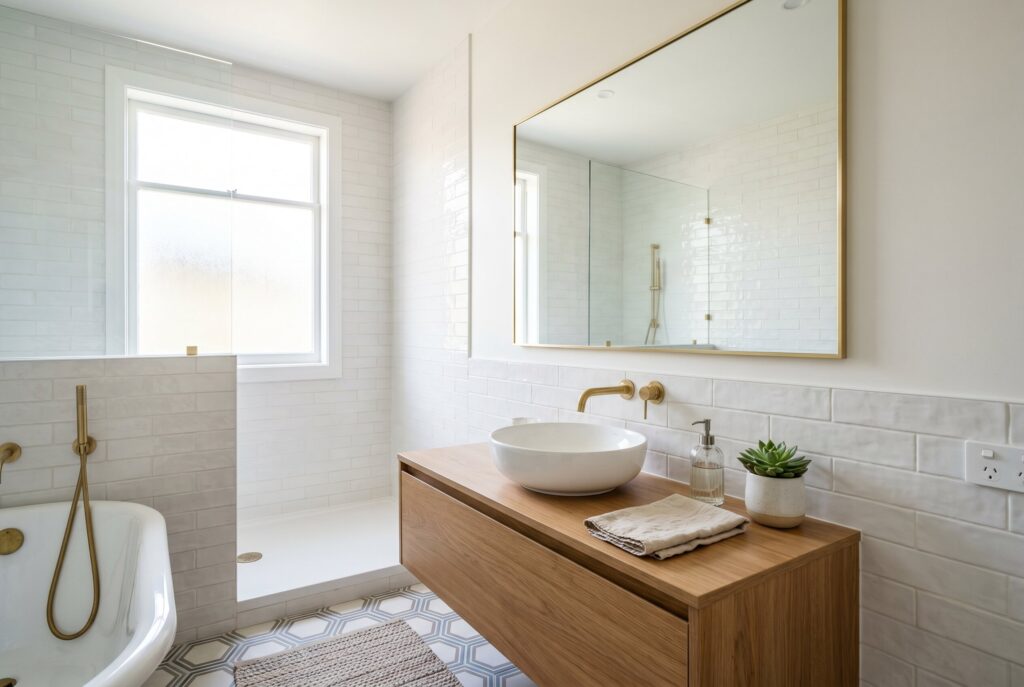
A mirror that spans most of the vanity width doubles the sense of depth and bounces light around a windowless room. Match the mirror width to the vanity rather than choosing a small decorative piece that floats in empty wall. A slim frame looks more finished than a bare builder-grade sheet mirror, and an anti-fog or lighted mirror adds everyday convenience.
8. Use Warm Neutral Paint Instead of Cold White

Stark white can feel clinical under bathroom lighting. Greige, warm beige, creamy white, and soft taupe feel calmer and pair well with wood vanities, brass or black hardware, and stone-look tile. Use a satin or semi-gloss finish, or a paint made for bathrooms with mildew-resistant additives, so the walls can handle steam and scrubbing.
9. Upgrade Fixtures to Matte Black or Brushed Brass

Fixtures act like jewelry for the bathroom. Replacing outdated faucets, towel bars, shower hardware, and cabinet pulls can modernize the entire room surprisingly quickly. Brushed brass adds warmth, while matte black creates sharp contrast. The key is consistency. Matching metals help the room feel intentionally designed.
10. Add Recessed Shower Niches
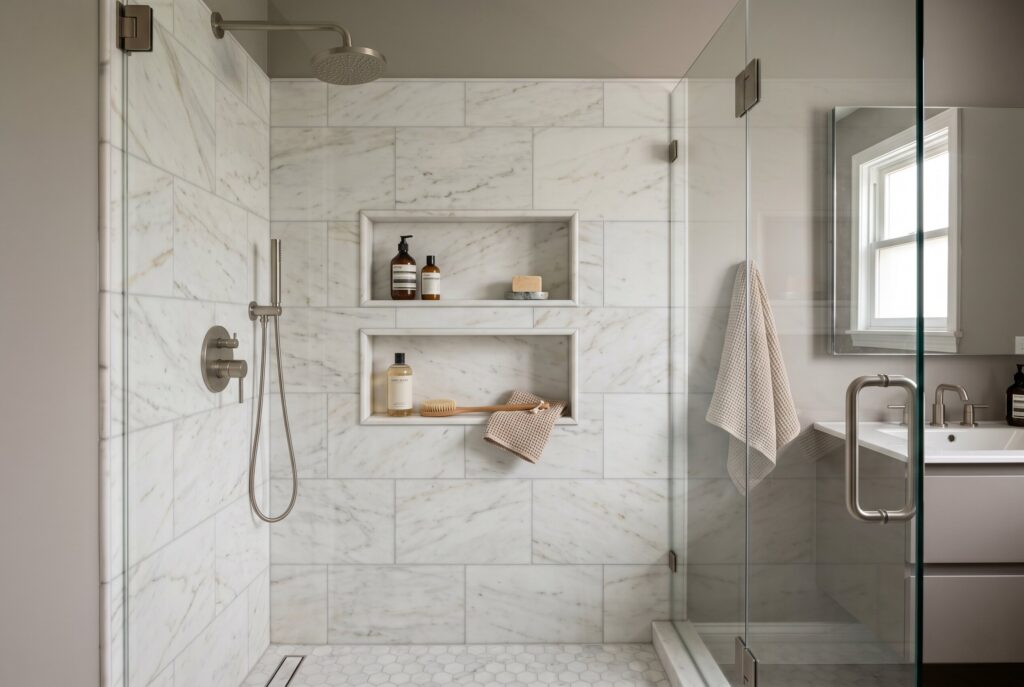
A niche replaces hanging caddies and corner baskets with built-in storage that sits flush with the wall. Plan it on an interior wall, since exterior walls hold insulation, and fit it between studs. The waterproofing has to wrap continuously into the niche, and the bottom should slope slightly toward the shower so water doesn’t pool. Align it with tile joints for a cleaner, custom look.
11. Replace Oversized Vanities with Smarter Storage
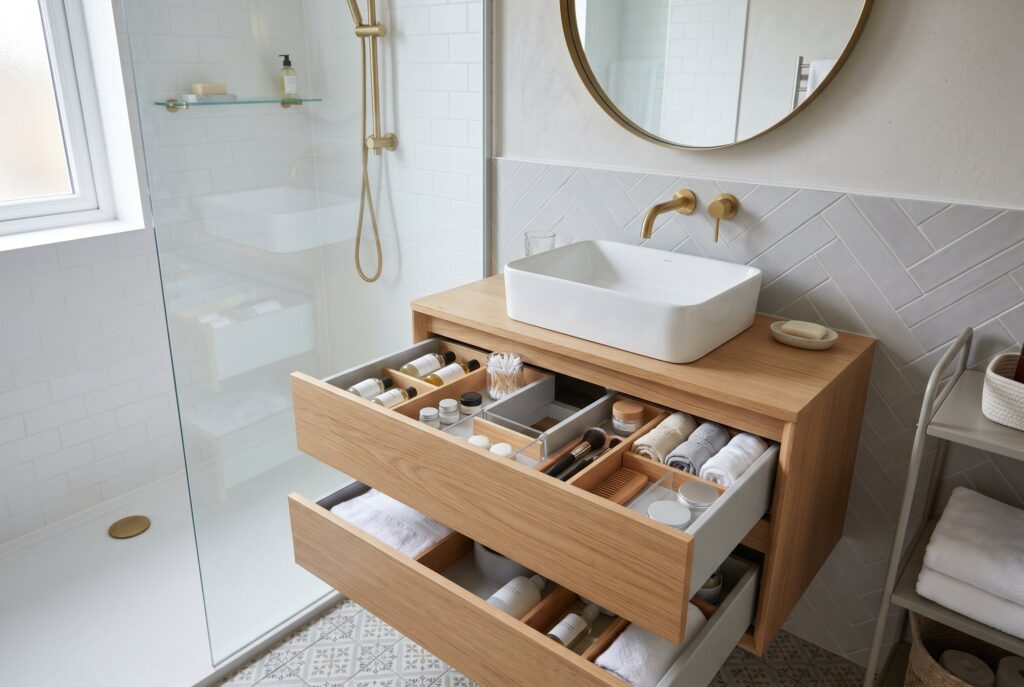
A deep vanity with one big cabinet often becomes a jumble under the sink. Many standard vanities are about 21 inches deep, while shallower models around 18 inches or less free up walking space in a tight room. Choose drawers over doors where you can, and add dividers so every item has a place.
12. Use One Cohesive Material Palette

A compact room can’t absorb many competing materials. A simple rule works: one dominant tile, one accent material, one metal finish, and paint that ties them together. The result looks deliberate and calm, and it costs nothing extra because it happens at the planning stage.
13. Install Water-Efficient Fixtures

WaterSense-labeled toilets use no more than 1.28 gallons per flush, and WaterSense showerheads flow at no more than 2.0 gallons per minute, below the 2.5-gallon federal maximum. Current models perform well, so you give up little in comfort while lowering water bills. It isn’t the most visible upgrade, but it is one buyers increasingly ask about.
14. Add Wallpaper in Powder Rooms
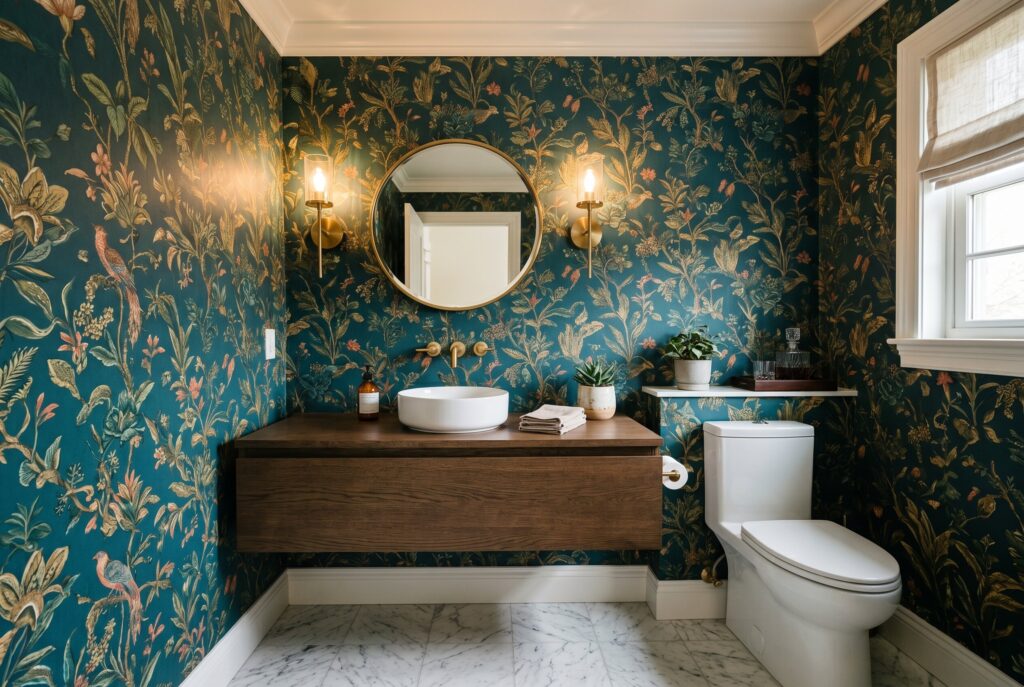
A powder room has no shower steam, so it is the safest place for a bold print that creates a jewel-box effect. Keep the vanity, lighting, and accessories simple so the wallpaper stays the star. In a full bathroom, choose vinyl or other moisture-resistant wallpaper and keep it away from the shower.
15. Improve Ventilation
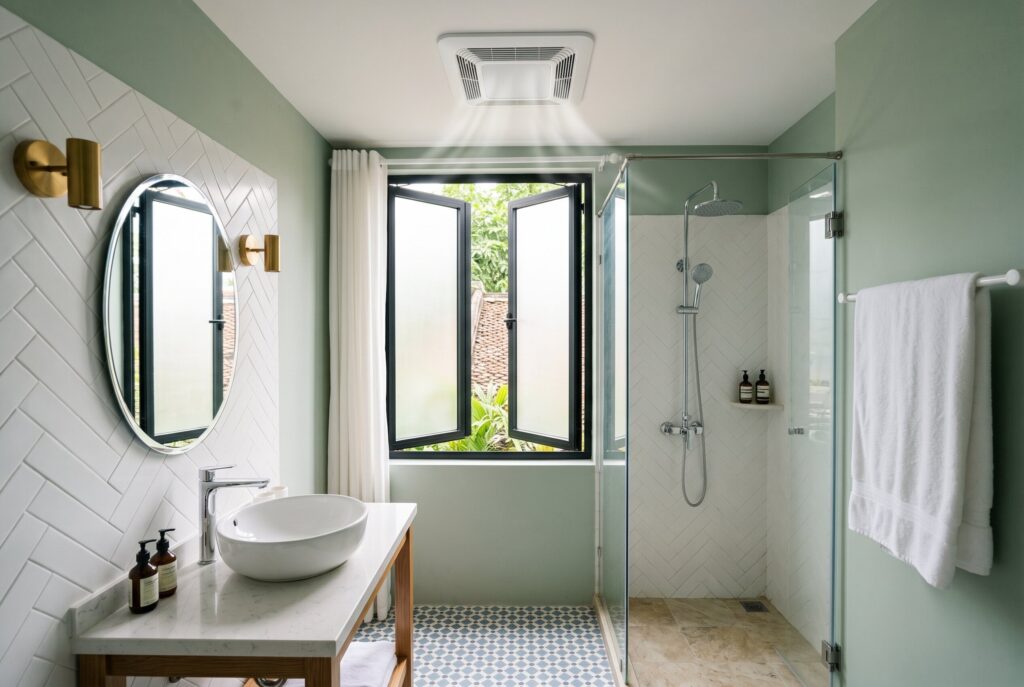
Moisture is what quietly ruins a remodel: peeling paint, damaged grout, mildew, and eventually mold. The Home Ventilating Institute suggests about 1 CFM of fan capacity per square foot for bathrooms up to 100 square feet, with a 50 CFM minimum. Vent the fan to the outside, never into the attic, and run it for about 20 minutes after a shower.
16. Use Continuous Flooring Throughout the Space
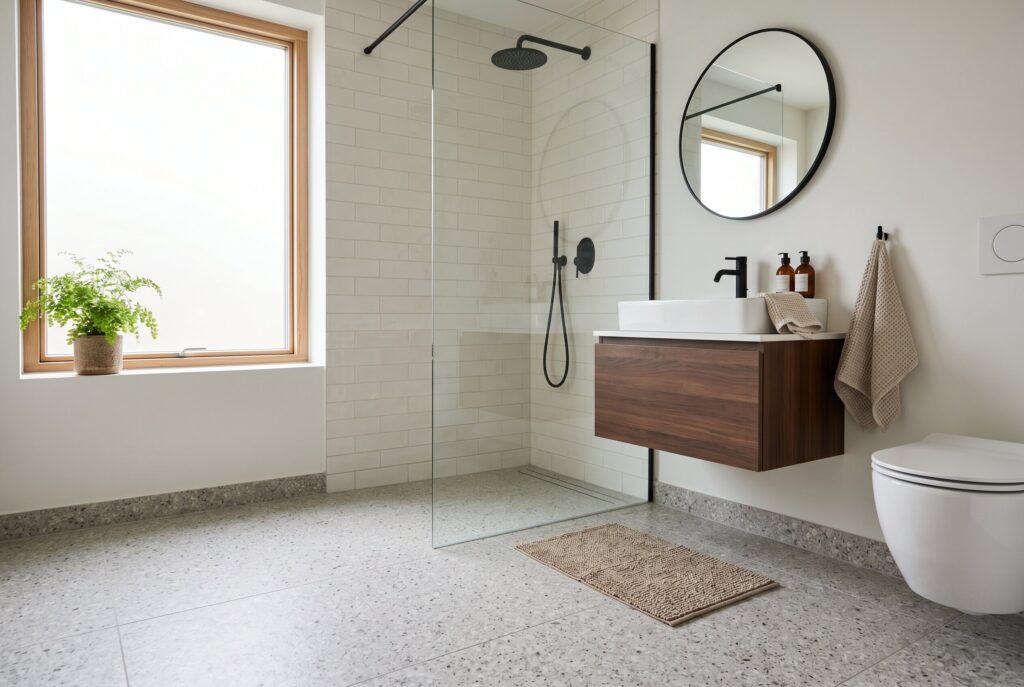
One flooring material from the door to the back wall removes visual breaks and makes the room feel longer. If you extend it into a curbless shower, choose tile rated for wet areas. A common benchmark is a wet dynamic coefficient of friction (DCOF) of at least 0.42 for level interior floors, and many designers switch to a smaller mosaic in the same color on the shower floor for grip and drainage.
17. Replace Builder-Grade Accessories
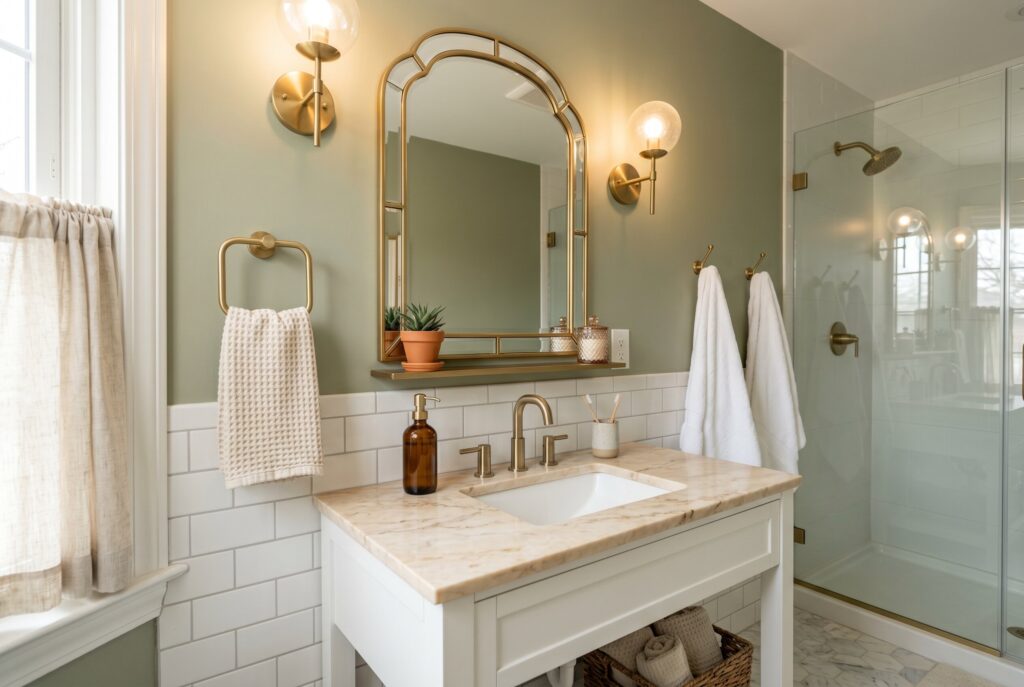
Contractor-grade mirrors, towel rings, and light bars make a room look unfinished. Swapping them is one of the cheapest visible upgrades, often a weekend project. Match the new pieces to your fixture finish so the room reads as one design.
18. Create Hidden Storage Behind Mirrors
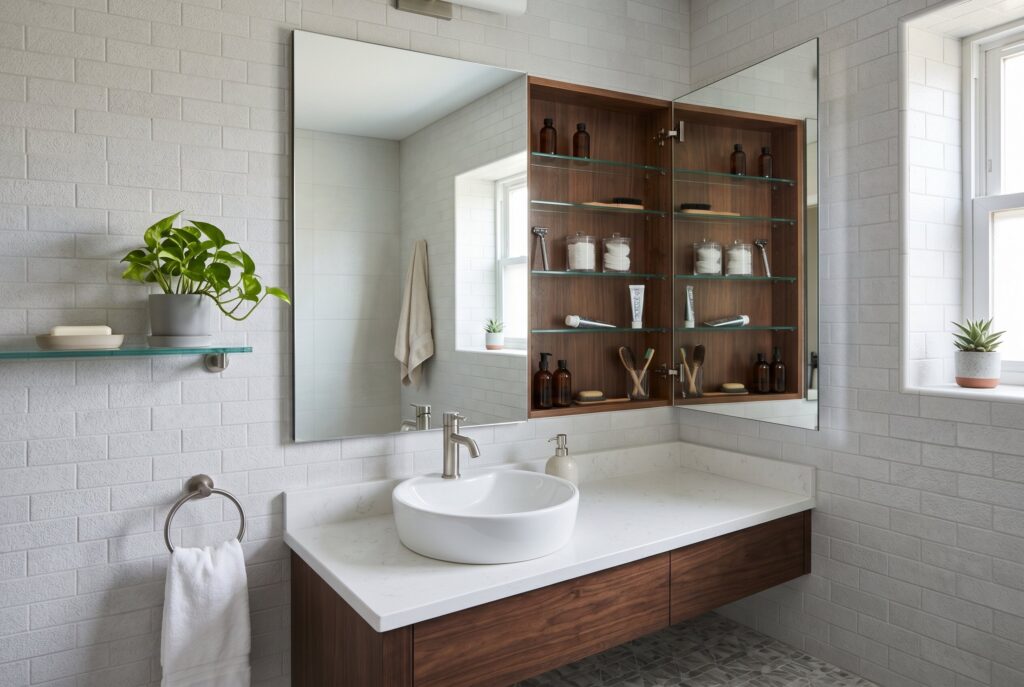
A recessed medicine cabinet clears the counter without using any floor space. Recessed models fit between studs, so check the wall for plumbing, wiring, or vent ducts before cutting. If the wall won’t allow it, a slim surface-mounted cabinet still beats a plain mirror.
19. Add a Walk-In Shower Instead of a Bulky Tub
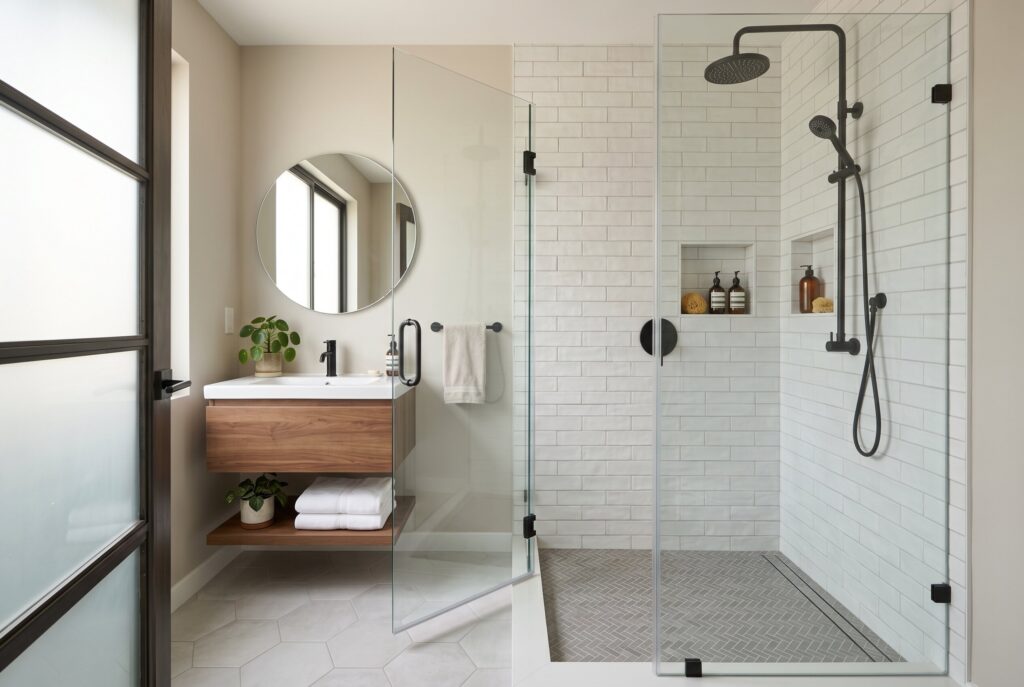
If another bathtub exists elsewhere in the home, swapping a cramped tub for a walk-in shower opens the room and makes it easier to use as you age. Keep at least one tub in the house, since families with young children often expect one. A curbless design usually requires recessing the subfloor so the floor can slope to the drain, which adds cost.
20. Use Budget-Friendly High-Impact Materials Strategically

A small footprint means premium materials go further. A statement vanity, one feature tile wall, or marble-look flooring may need only a few boxes of material, so the splurge stays affordable. Choose one hero element and keep everything around it simple.
21. Prioritize Storage Before Decor
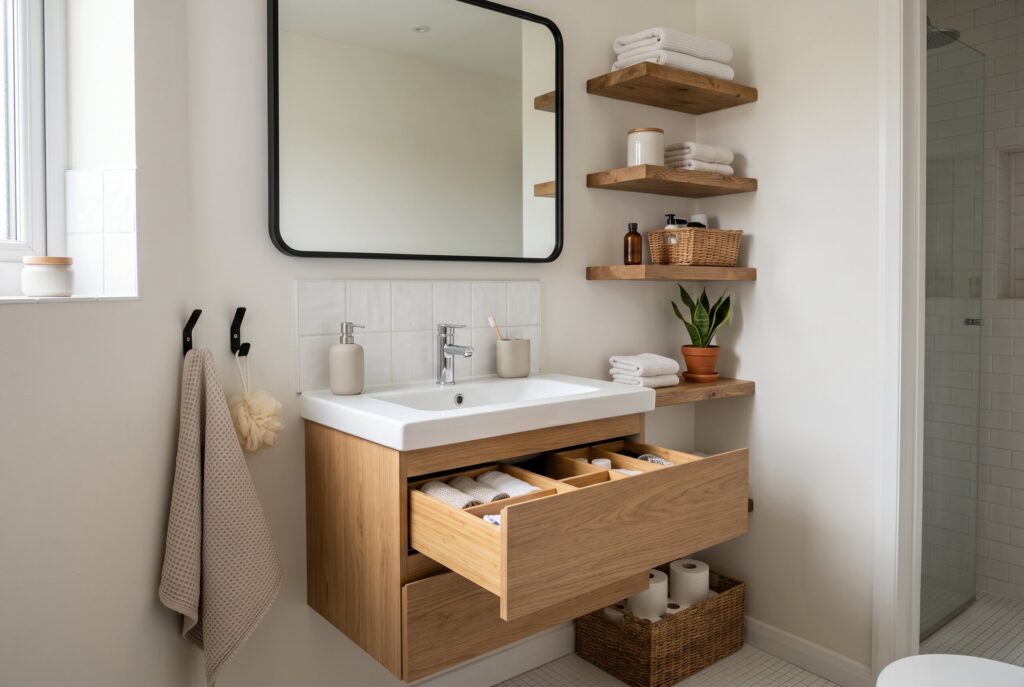
Even a beautiful bathroom feels stressful if the counter is always cluttered. Plan hooks, drawer dividers, shelves, niches, and under-sink organizers before you pick decor. Storage is what keeps the room looking finished long after the remodel.
>>> Outdoor Bar Ideas: 17 Backyard Layouts for Every Budget
Small Bathroom Remodel Trends for 2026
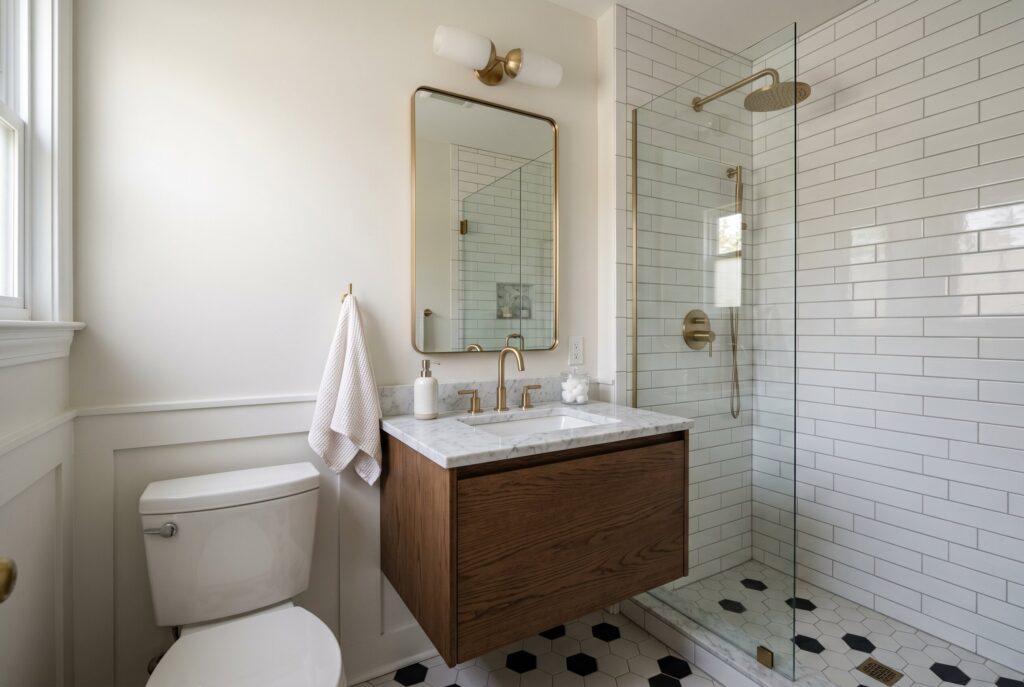
The strongest small bathroom remodeling trends in 2026 include floating vanities, frameless showers, oversized tile, layered lighting, hidden storage, warm spa-inspired neutrals, warm metal finishes, and organic modern materials. Homeowners are moving away from cold gray minimalism and toward warmer, softer, more calming spaces. Another major trend is practicality. Bathrooms are increasingly designed for real-life durability, easier cleaning, long-term functionality, and smarter storage instead of purely decorative upgrades.
Frequently Asked Questions
How much does a small bathroom remodel cost?
It depends on scope. A cosmetic refresh with paint, fixtures, and accessories can cost under $5,000, according to NerdWallet. A full midrange remodel costs considerably more; the 2025 Cost vs. Value Report put the national average for its standard midrange bathroom project at roughly $26,000. Moving plumbing, adding a curbless shower, or choosing premium materials pushes the total higher.
How long does a small bathroom remodel take?
A cosmetic update can take a few days. A full gut remodel usually takes several weeks once you factor in demolition, plumbing and electrical rough-in, inspections, tile work, and custom items like glass or vanities, which can have long lead times. Order key materials before demolition starts.
Do I need a permit to remodel a small bathroom?
Cosmetic work such as painting, replacing a vanity in the same spot, or swapping fixtures usually doesn’t need a permit. Moving plumbing, adding circuits or a new exhaust fan, or changing walls generally does. Rules vary by city and county, so check with your local building department.
Should I remove the bathtub in a small bathroom?
It can make the room feel much larger, but keep at least one tub somewhere in the home. Buyers with young children often expect one, and removing the only tub can limit resale appeal.
Which bathroom upgrades return the most at resale?
Midrange, broadly appealing updates within the existing layout tend to recoup the most, while upscale remodels recoup a smaller share of their cost. Fresh fixtures, better lighting, durable tile, a new vanity, and good ventilation are safe bets. Highly personalized luxury features add enjoyment but rarely pay for themselves.
Final Thoughts
The best small bathroom remodel ideas focus on solving problems before chasing trends. Layout clarity, lighting, ventilation, storage, and material consistency create more lasting value than oversized decorative statements.
Small bathrooms don’t necessarily need bigger square footage to feel luxurious. In many cases, thoughtful planning, visual simplicity, and practical upgrades create a stronger transformation than expensive expansion projects ever could.