

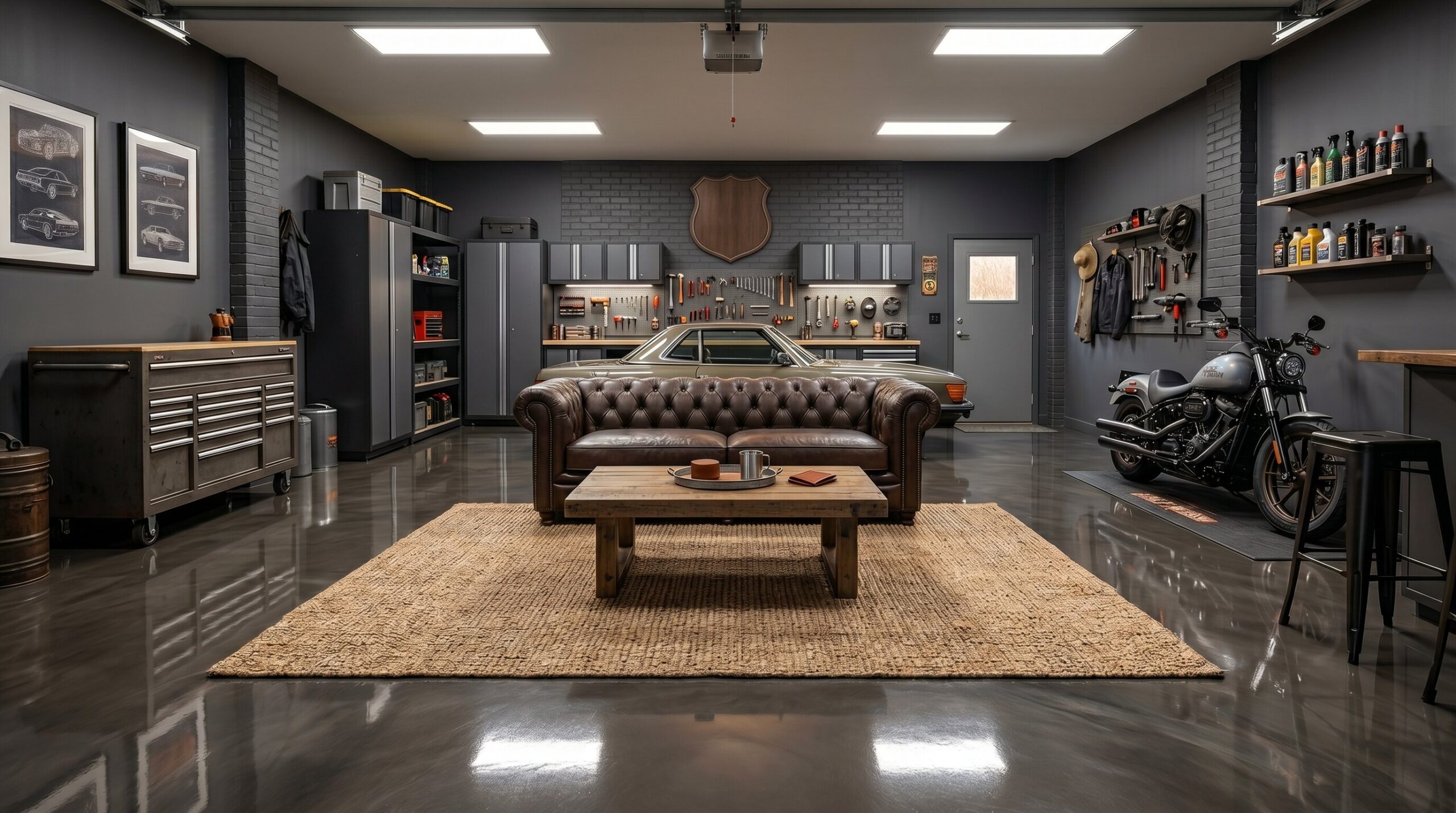
When people search for garage man cave ideas, they often find two extremes: luxury garage conversions that cost thousands of dollars or messy rooms filled with leftover furniture. The truth is that low budget garage man cave designs can still look polished if you focus on the right foundation. A professional looking space does not begin with expensive decor. It begins with insulation, clean flooring, smart storage, a controlled color palette, and furniture that fits the room. With a few disciplined choices, your garage can become an Organic Modern retreat without draining your budget.
Start With the Foundation: 2 Upgrades Before You Decorate
Seal and Insulate
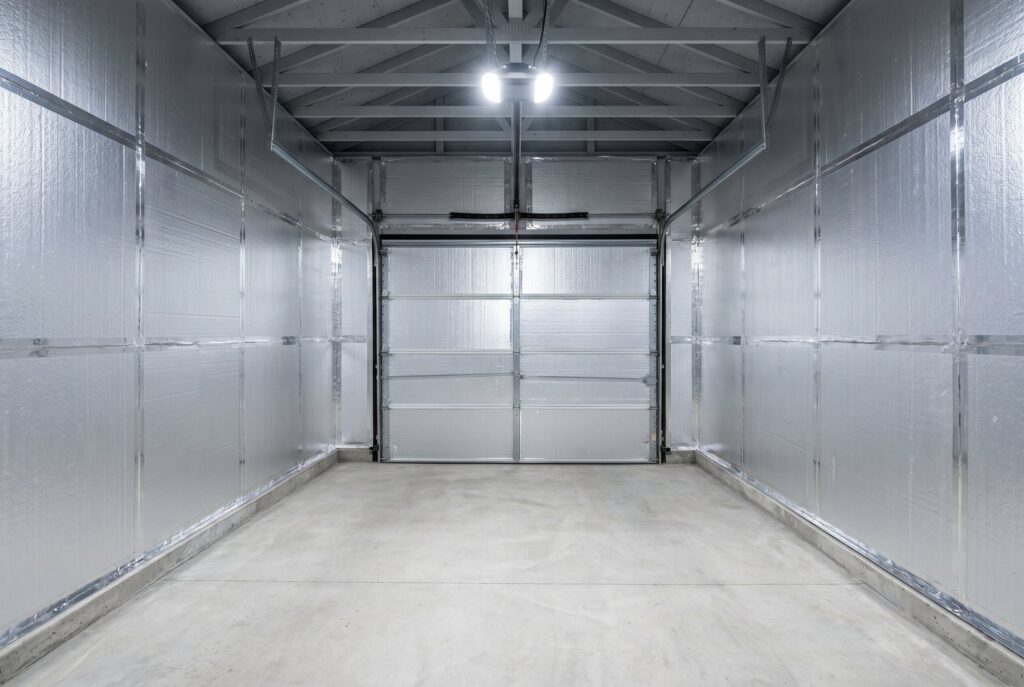
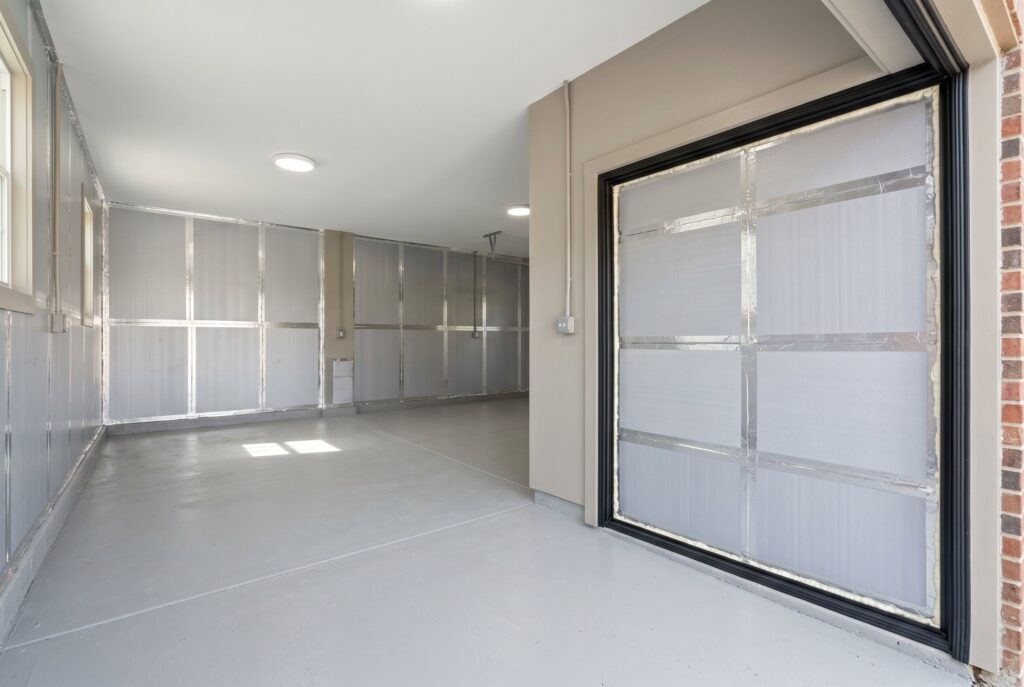
Before bringing in furniture, deal with comfort. A garage that is freezing in winter or boiling in summer will never feel like a real retreat. Add foam board insulation to the inside of the garage door, seal obvious gaps, and use weatherstripping around the frame. This is one of the cheapest ways to make a garage man cave comfortable year-round. If the garage still feels unfinished, hang simple wall panels or paint the walls in a warm neutral to create visual calm.
The High Gloss Epoxy Hack
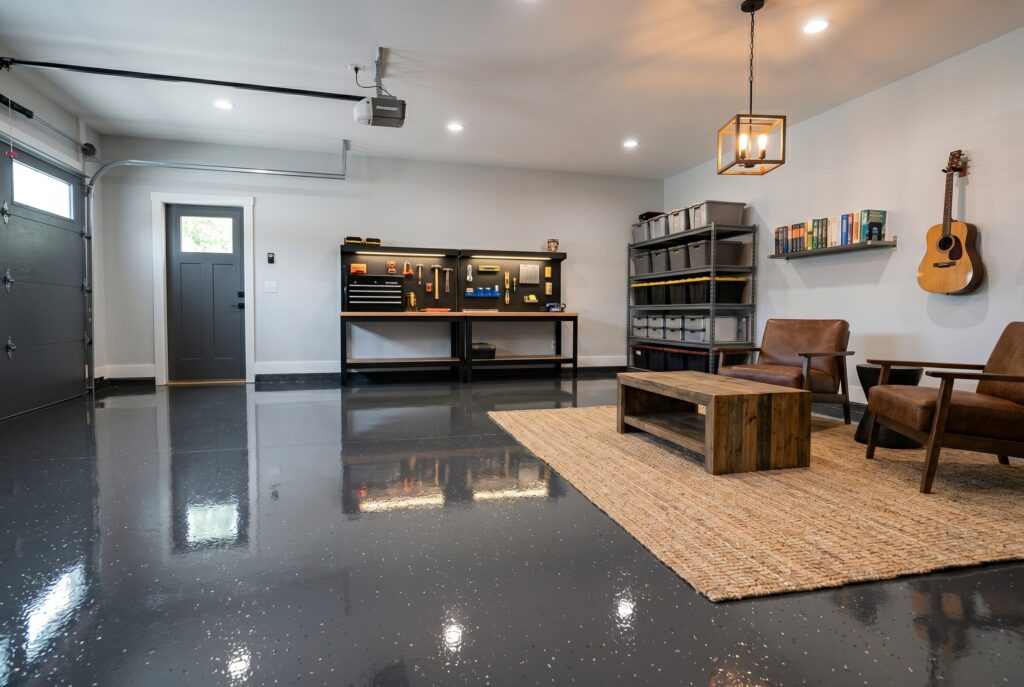
A dusty concrete floor makes every design look temporary. A DIY epoxy floor kit can transform the garage quickly, especially in light gray or warm charcoal. The glossy surface reflects light, cleans easily, and gives the room a finished base. Add a large woven rug under the seating area so guests can take off their shoes and relax barefoot. This single upgrade is one of the smartest small man cave ideas for making a tight space look more expensive.
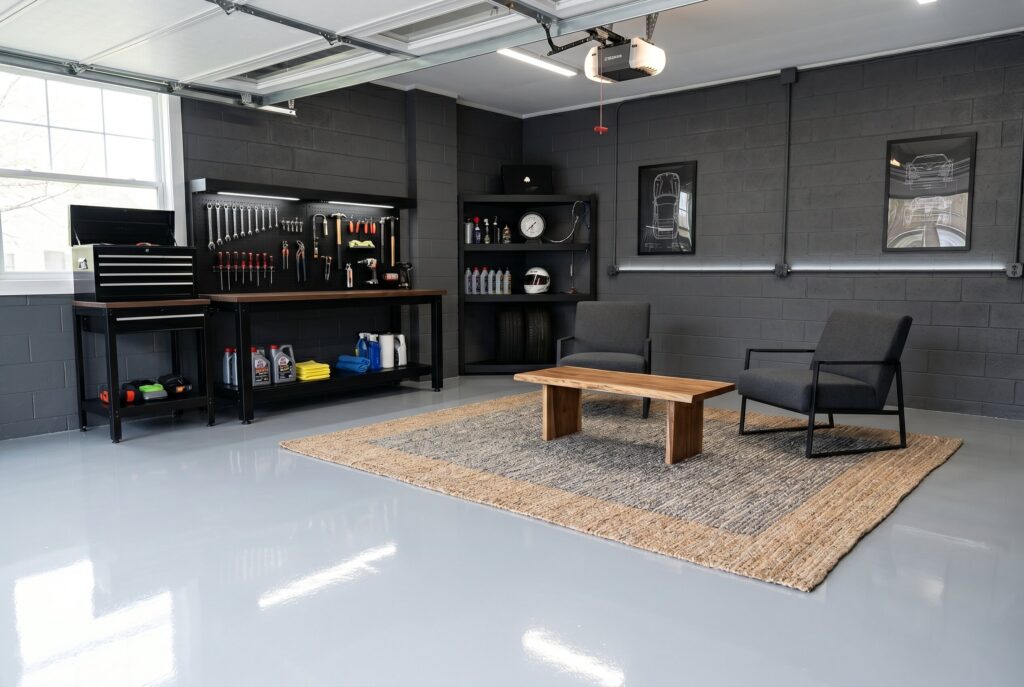
7 Low Budget Garage Man Cave Designs That Look Pro
1. The One Wall Walnut Pub
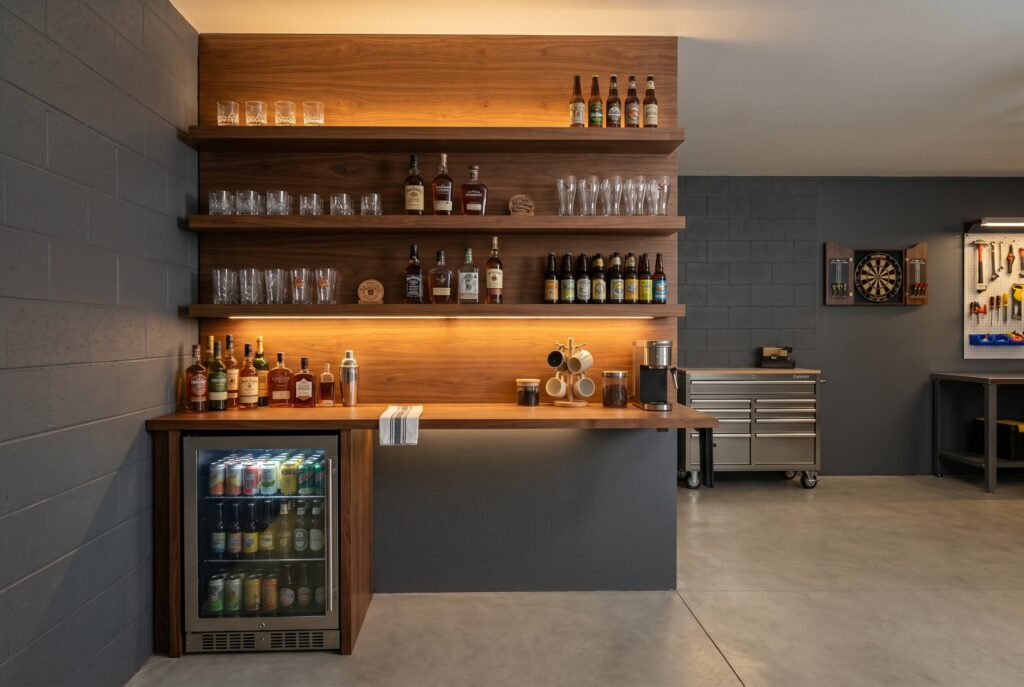
Instead of spreading your money across the whole garage, focus on one statement wall. Install walnut tone floating shelves, a narrow counter, a mini fridge, and warm LED strips. Keep the rest of the garage open so the room feels larger. This design works well for drinks, snacks, coffee, or game night without the cost of plumbing a wet bar.
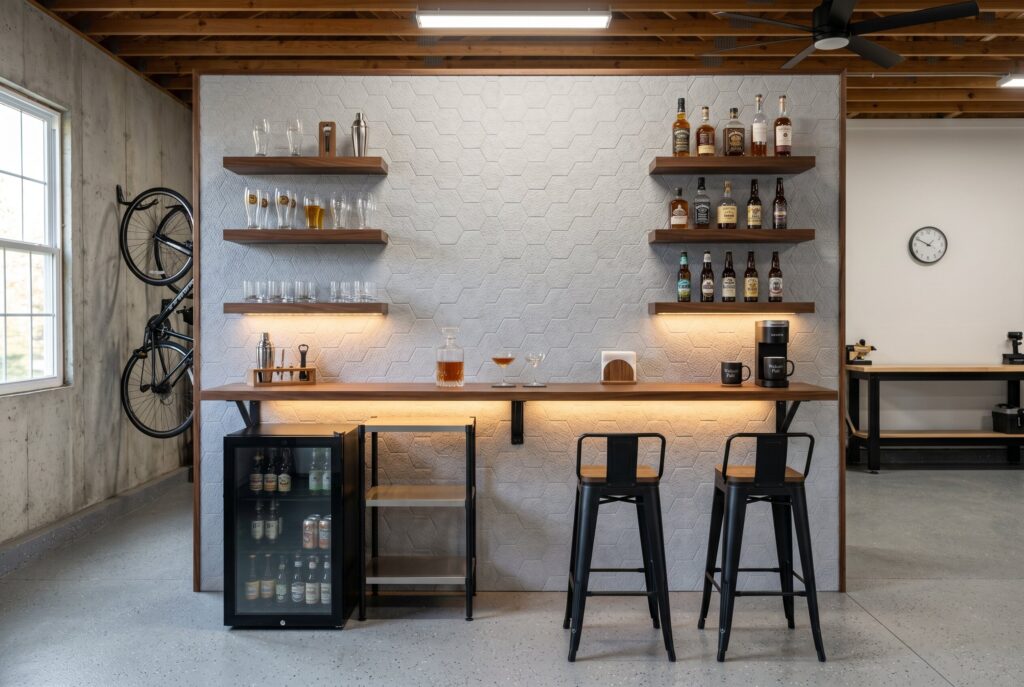
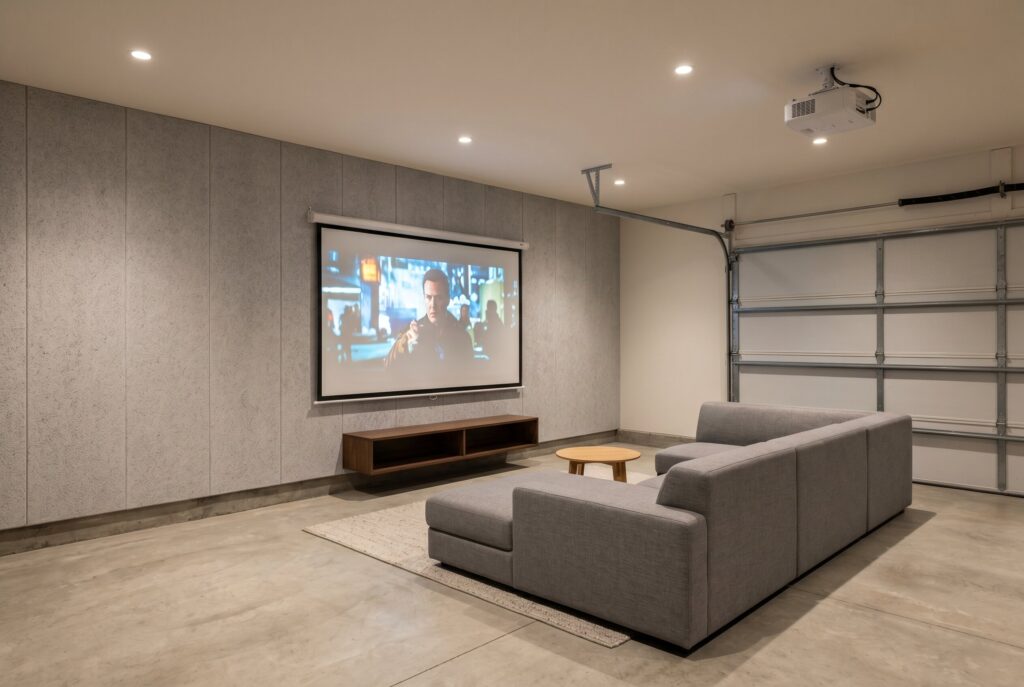
2. The Japandi Cinematic Lounge
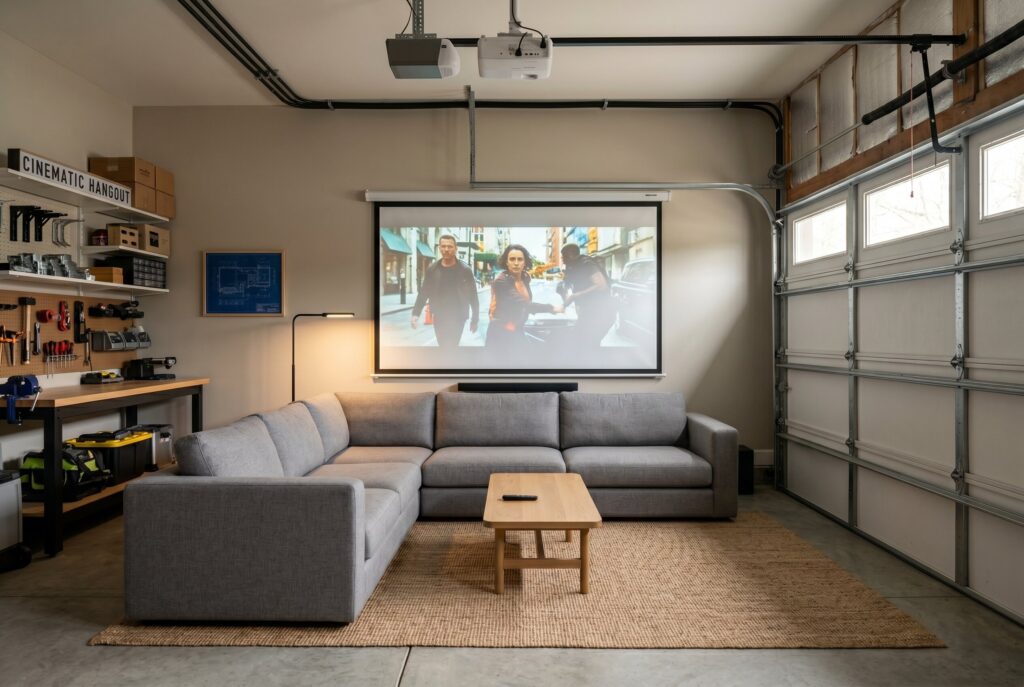
For movie nights, skip separate recliners because they waste space and make the garage feel cluttered. Use a low profile L shaped sectional in gray linen or performance fabric. Add a pull down projector screen instead of buying a large TV. Paint the wall behind the screen matte warm white or soft greige for better viewing. This layout gives you a calm theater feel on a realistic budget.
3. The Barefoot Recovery Gym
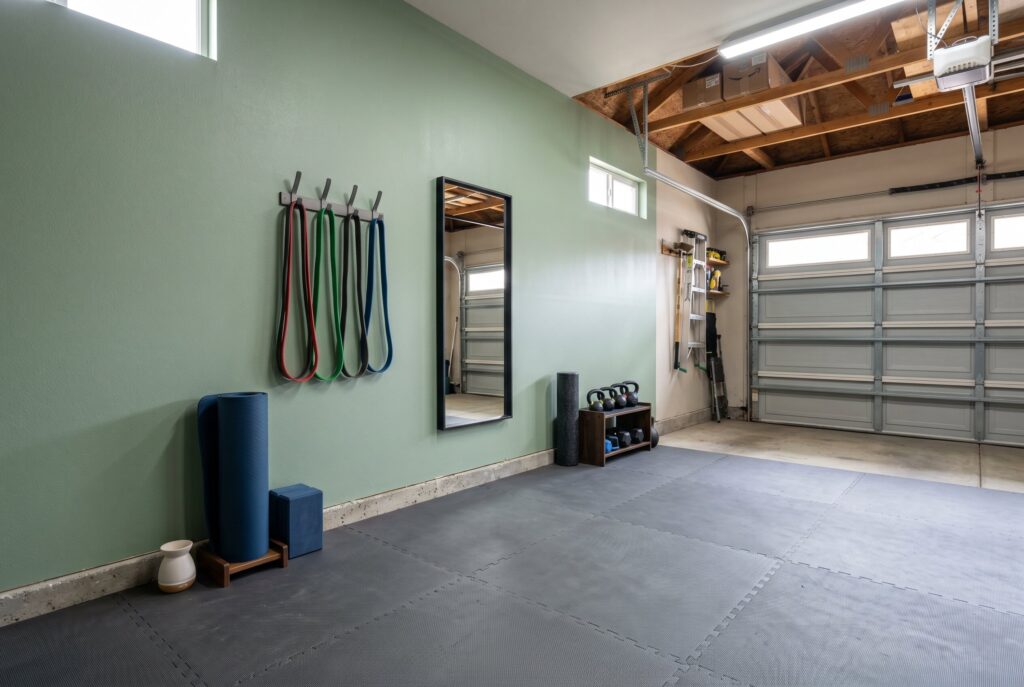
A garage gym can look refined instead of harsh. Use interlocking rubber mats for the workout zone, then paint one wall sage green to soften the atmosphere. Add a yoga mat corner, wall hooks for resistance bands, and a slim mirror to visually expand the space. This design works especially well for homeowners who want a fitness room that also feels like a quiet recovery zone.
>>> See more: Does a Studio Apartment Have a Bedroom? Here’s the Answer
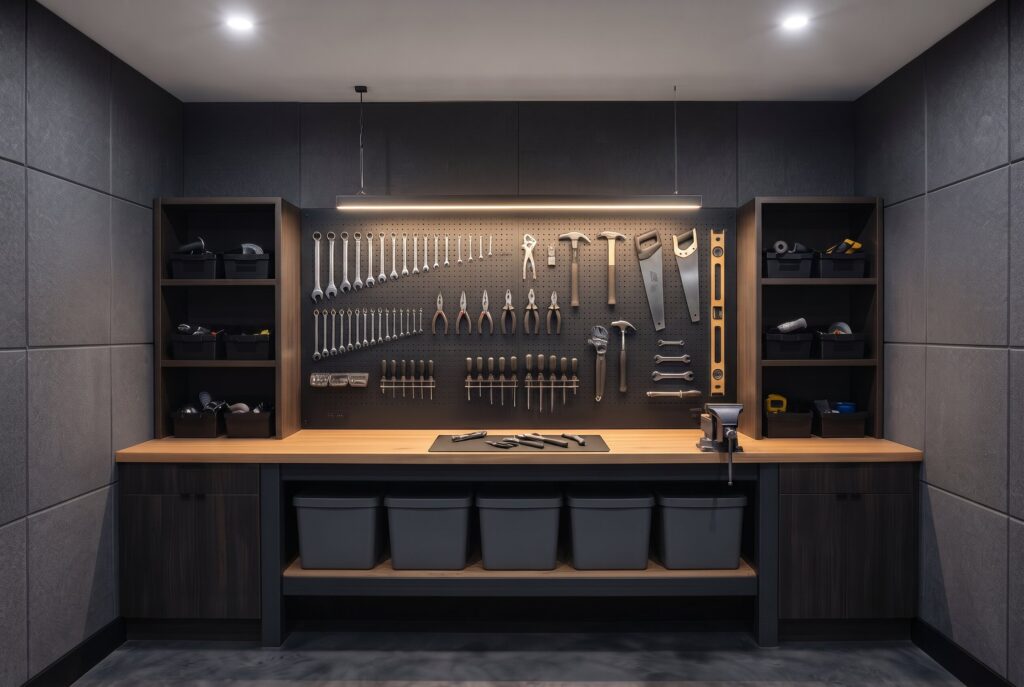
4. The Minimalist Tool and Craft Workshop
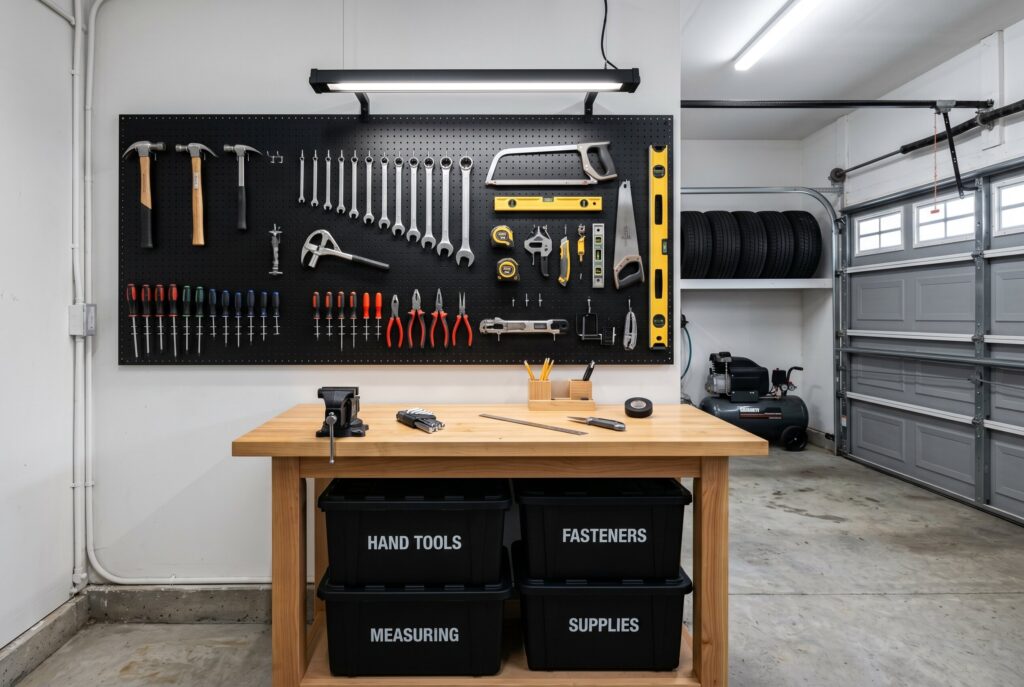
If your garage still needs to function as a workspace, make the tools part of the design. Paint a pegboard matte black so it blends into the wall, then arrange tools in clean rows. Add a simple workbench, task lighting, and labeled bins hidden below. This keeps the practical side of the garage intact while creating a sharper, more intentional man cave.
5. The Acoustic Vinyl Listening Bay
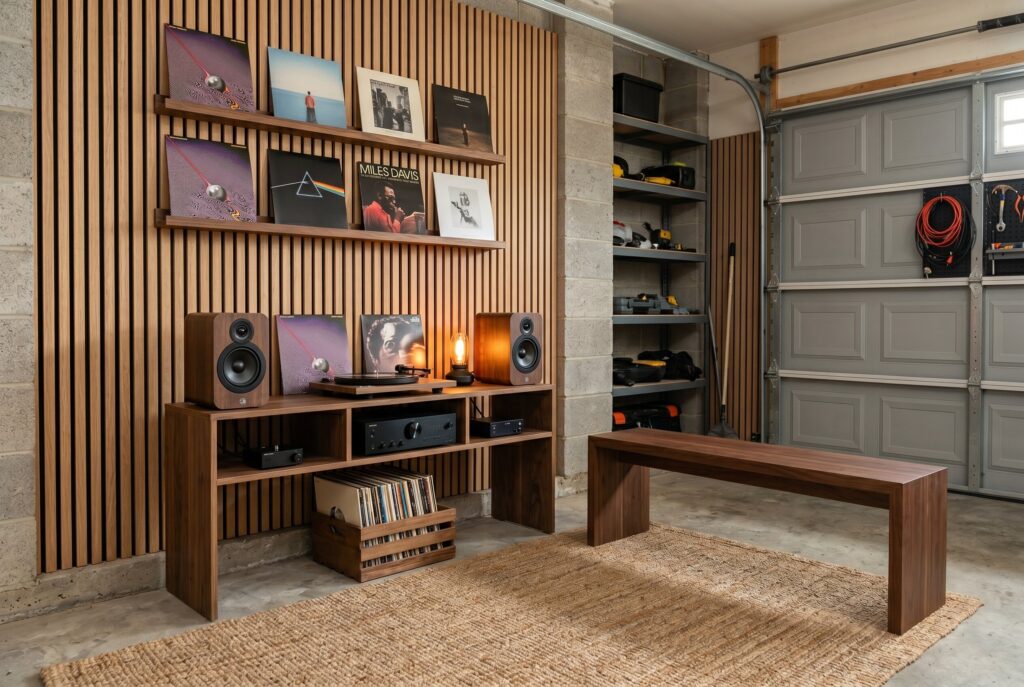
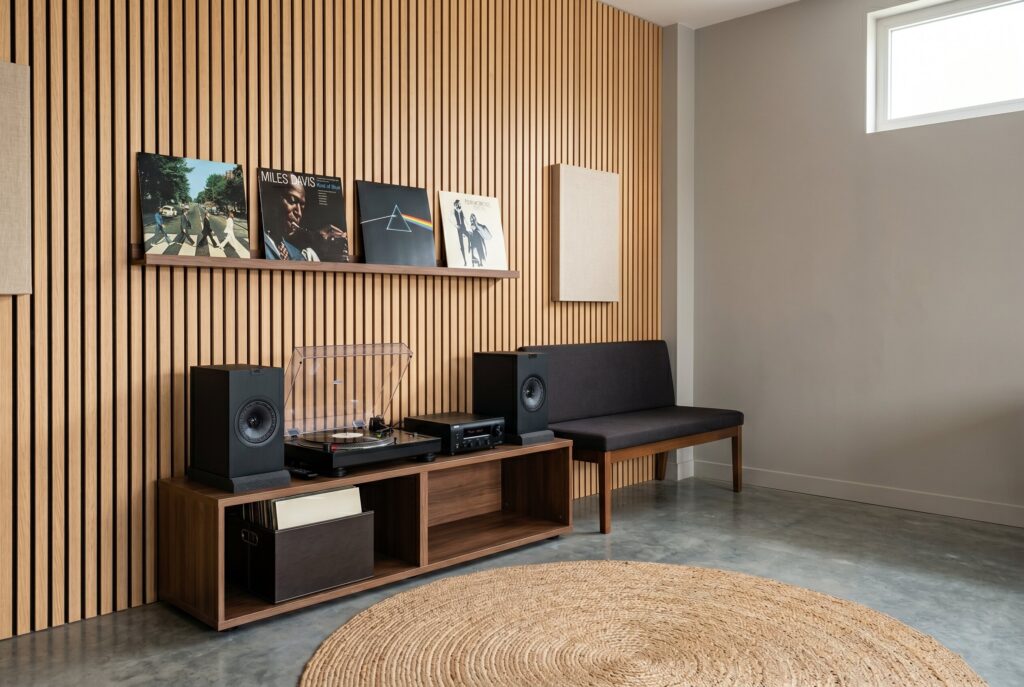
For music lovers, create a listening bay with affordable wood slat panels, a jute rug, and a compact Hi Fi setup. The slats help control echo, while the rug softens sound from the concrete floor. Use a small bench or wall hugging sofa instead of bulky chairs. Display only a few favorite records on floating shelves so the space feels curated rather than crowded.
6. The Low Light Gaming Corner
A gaming setup does not need the whole garage. Pick the corner farthest from the garage door, where drafts and street noise are weakest. Place a simple desk against the wall, add a comfortable chair, and run a warm LED strip behind the monitor to reduce eye strain in a dark room. Hang two or three fabric acoustic panels on the nearest walls to cut the echo that concrete and metal create. Route cables along the wall with adhesive clips so the corner still looks clean when the lights come up.
7. The Game Day Sports Bay
For sports fans, mount a TV on a tilting wall bracket at eye level for a seated viewer, then add a narrow bar height ledge along the opposite wall with two or three stools. The ledge gives guests a place for drinks and plates without the footprint of a full table. Frame a few jerseys or pennants on one wall instead of covering every surface, so the room feels like a clubhouse rather than a souvenir shop. For bigger game day layouts, our basement man cave ideas guide shows how to plan seating around a screen.
How Much Does a Low Budget Garage Man Cave Cost?
Most of the money in a garage man cave goes into two places: the foundation upgrades and the one design you choose. The ranges below are typical DIY costs for materials only and assume you already own basic tools.
| Project | Estimated DIY Cost (USD) | What It Covers |
|---|---|---|
| Garage door insulation kit | $80 to $185 per single door | R-8 fiberglass panel kit for one uninsulated metal door |
| Weatherstripping and gap sealing | $20 to $60 | Door seal, frame weatherstripping, caulk |
| Epoxy floor kit | $110 to $400 for one car | A two car garage usually needs about twice the material |
| One Wall Walnut Pub | $350 to $750 | Floating shelves, narrow counter, mini fridge, LED strips |
| Japandi Cinematic Lounge | $250 to $600 | Budget projector and pull down screen; sectional not included |
| Barefoot Recovery Gym | $350 to $550 | Rubber mats, paint, mirror, wall hooks |
| Minimalist Tool and Craft Workshop | $250 to $500 | Pegboard, paint, workbench, task lighting, bins |
| Acoustic Vinyl Listening Bay | $300 to $600 | Wood slat panels, jute rug, bench; audio gear not included |
| Low Light Gaming Corner | $300 to $550 | Desk, chair, acoustic panels, LED strip; console or PC not included |
| Game Day Sports Bay | $250 to $500 | TV mount, bar height ledge, stools; TV not included |
Prices vary by region, brand, and garage size. As a rule of thumb, the foundation plus one design lands somewhere between $500 and $1,400 when you do the work yourself. Finish the foundation first, then add pieces for your chosen design as the budget allows.
Garage Man Cave Safety and Permit Checklist
- Ventilate during epoxy work. Open the garage door, use a fan, and follow the temperature and cure times on the kit label.
- Never run engines indoors. Do not idle a car or run a gas generator in a closed garage, and install a carbon monoxide alarm if people will spend hours in the space.
- Heat safely. Choose a space heater with tip-over and overheat shutoff, and plug it directly into a wall outlet instead of an extension cord.
- Check your outlets. Garage outlets should be GFCI protected, and new circuits for a fridge, heater, or AV setup should be installed by a licensed electrician.
- Ask about permits. Paint, flooring, and furniture usually do not need one, but new walls, electrical circuits, windows, HVAC, or converting the garage into living space typically do. Check with your local building department before you start.
Garage Man Cave FAQs
How much does it cost to turn a garage into a man cave?
A budget DIY project with insulation, an epoxy floor, and one focused design usually costs about $500 to $1,400 in materials. A full conversion into finished living space with drywall, new electrical, HVAC, and permits costs far more and is usually a job for a contractor.
Do I need a permit for a garage man cave?
Cosmetic upgrades such as paint, epoxy flooring, shelving, and furniture generally do not require a permit. Adding electrical circuits, building walls, installing HVAC, or turning the garage into a habitable room usually does. Rules vary by city, so confirm with your local building department.
Can I still park my car in a garage man cave?
Yes, if you keep the design against one wall. The One Wall Walnut Pub and the Minimalist Tool and Craft Workshop both leave the center of the floor open. Choose furniture that folds, stacks, or rolls so you can clear space quickly, and never leave the engine running inside.
How do I keep a garage man cave warm in winter?
Start by insulating the garage door and sealing gaps around the frame, since the door is usually the biggest source of heat loss. Then add a space heater with safety shutoffs for occasional use. If you plan to use the room daily, a ductless mini split is a longer term option worth pricing.
Conclusion
The best low budget garage man cave designs do not depend on luxury purchases. They depend on discipline. Start with the parts that make the garage feel finished: insulation, sealed gaps, clean flooring, better lighting, and hidden storage. Then choose one clear purpose, such as movies, music, fitness, gaming, tools, or sports.
A professional look comes from consistency. Repeat the same wood tone, keep the color palette quiet, use fewer pieces of better decor, and avoid bulky furniture that blocks movement. With epoxy flooring, sage green walls, walnut accents, wall hugging seating, and smart storage, even a basic garage can become a comfortable retreat that feels designed rather than improvised.