

When homeowners browse 2026 kitchen trends, it’s easy to fall for beautiful images without asking whether those ideas will still feel relevant five years from now. A kitchen remodel can cost $40,000 or more, so choosing outdated kitchen trends isn’t just a design mistake. It’s a resale value risk.
Kitchen trends 2026 are moving away from sterile white rooms, chaotic open layouts, basic quartz, heavy Shaker fronts, shiny metal overload, blocky islands, and flat gray walls. The smarter direction is warm, personal, and highly functional. Think trending kitchen cabinet colors, natural wood, navy blue kitchen cabinets, sage green, the closed kitchen trend comeback, hidden kitchen storage, statement stone, saturated kitchen paint colors, and furniture style islands.
The Out vs. In Masterlist for 2026
1. OUT: The Sterile All White Kitchen | IN: Earthy Neutrals & Trending Kitchen Cabinet Colors
For more than a decade, the all white kitchen dominated renovation shows, Pinterest boards, and new construction homes. It felt clean, bright, and universally safe. The problem is that what once looked timeless now often feels predictable, flat, and emotionally cold.
A fully white room creates little visual depth. Cabinets, tile, counters, and walls start blending together, making even expensive finishes look generic. White surfaces also reveal scratches, food splashes, fingerprints, and daily wear faster than warmer materials. That means the kitchen may photograph well on day one but become exhausting to maintain in real life.
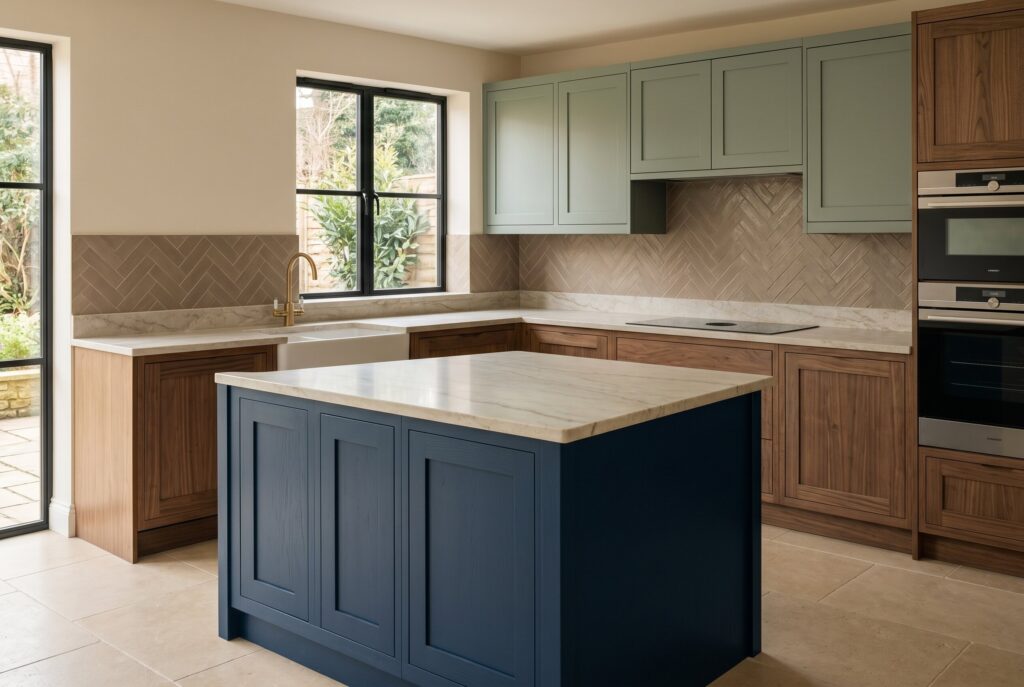
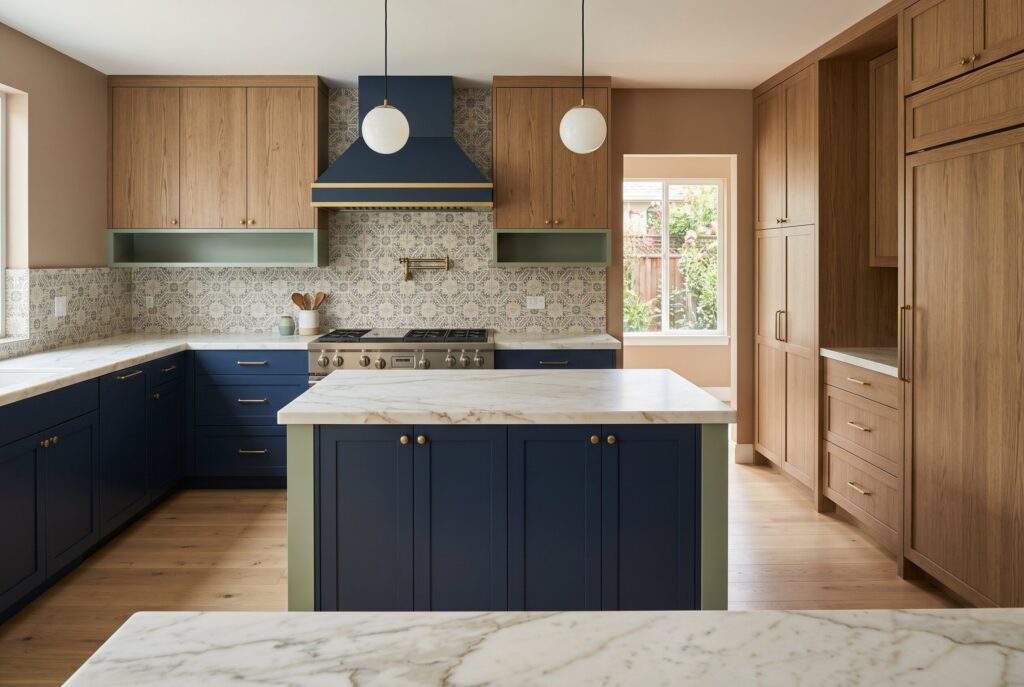
The strongest 2026 kitchen cabinet colors are warmer and more grounded. Oak, walnut, mushroom brown, clay taupe, sage green, and soft olive bring character without making the room feel loud. For homeowners who want a stronger statement, blue kitchen cabinets and navy blue kitchen cabinets offer depth, elegance, and strong contrast while still feeling classic. These tones help a kitchen feel lived in, layered, and more valuable than another blank white box.
2. OUT: The Chaotic Open Concept | IN: The Closed Kitchen Trend Comeback
Open concept kitchens became popular because they promised connection. The cook could talk to guests, watch children, and keep the home feeling spacious. But after years of living with fully open layouts, many homeowners have discovered the downside: noise, smells, clutter, and zero visual privacy.
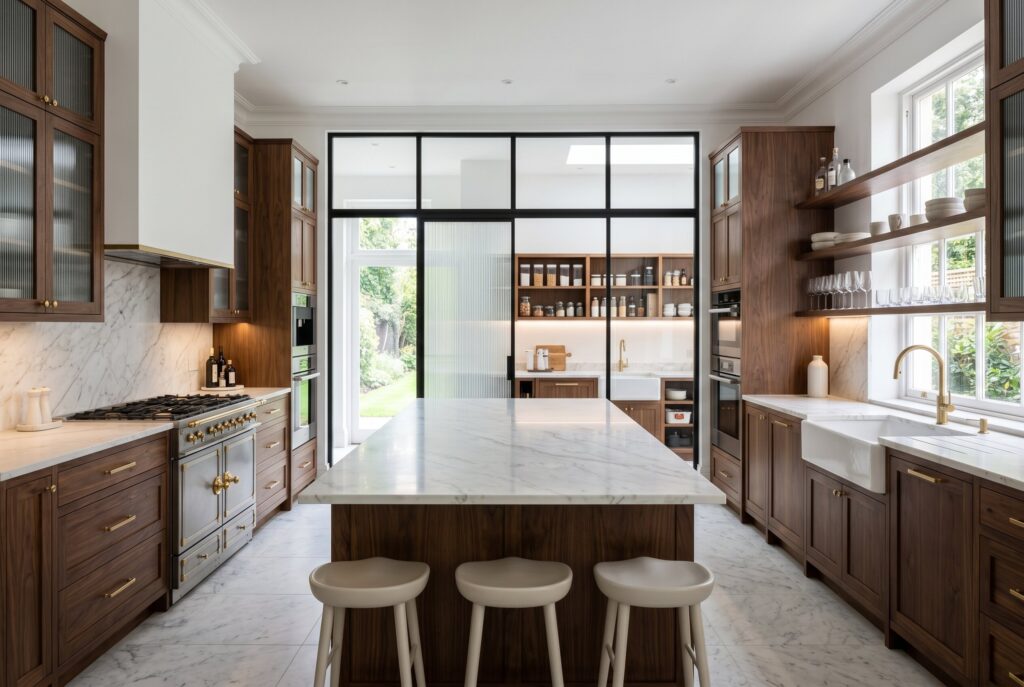
When the kitchen is completely exposed, every dirty pan, delivery box, blender, and drying rack becomes part of the living room view. The dishwasher competes with the TV. Cooking smells drift into upholstery. Guests see the mess before dinner is served. For families who actually cook often, that constant exposure can feel stressful rather than luxurious.
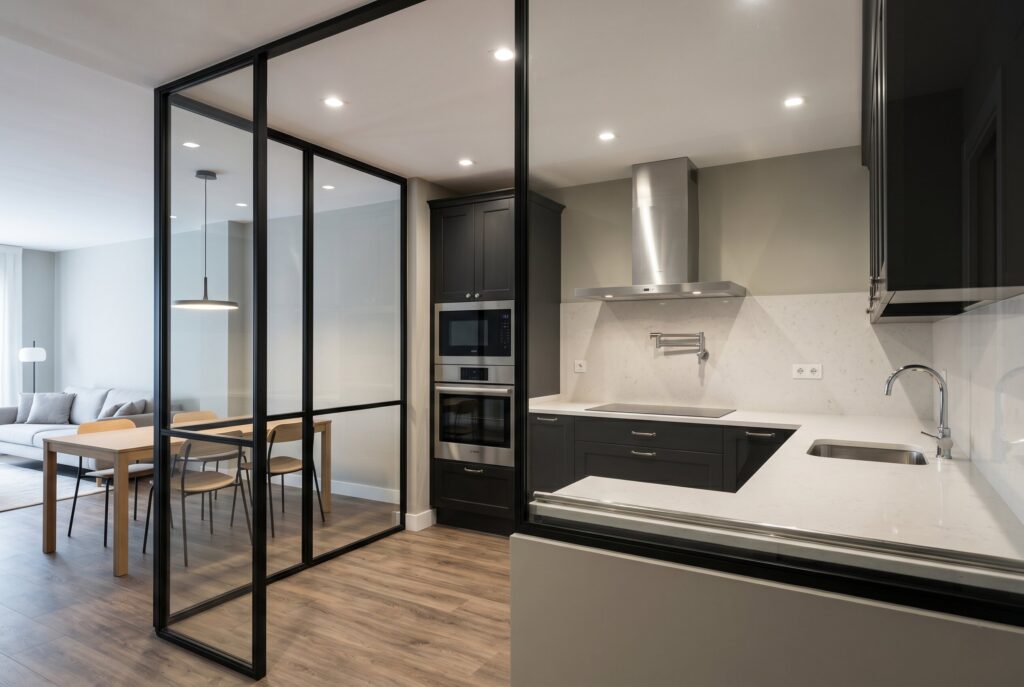
That is why the closed kitchen trend comeback is gaining attention. It doesn’t mean returning to dark, isolated rooms. The better 2026 version is broken plan design: partial walls, glass partitions, pocket doors, sculleries, and butler’s pantries. These features preserve connection while hiding the chaos. A secondary prep zone or hidden kitchen storage wall can keep the main kitchen camera ready while the real mess stays behind the scenes.
3. OUT: Basic White Quartz | IN: Statement Stone & 2026 Kitchen Countertop Trends
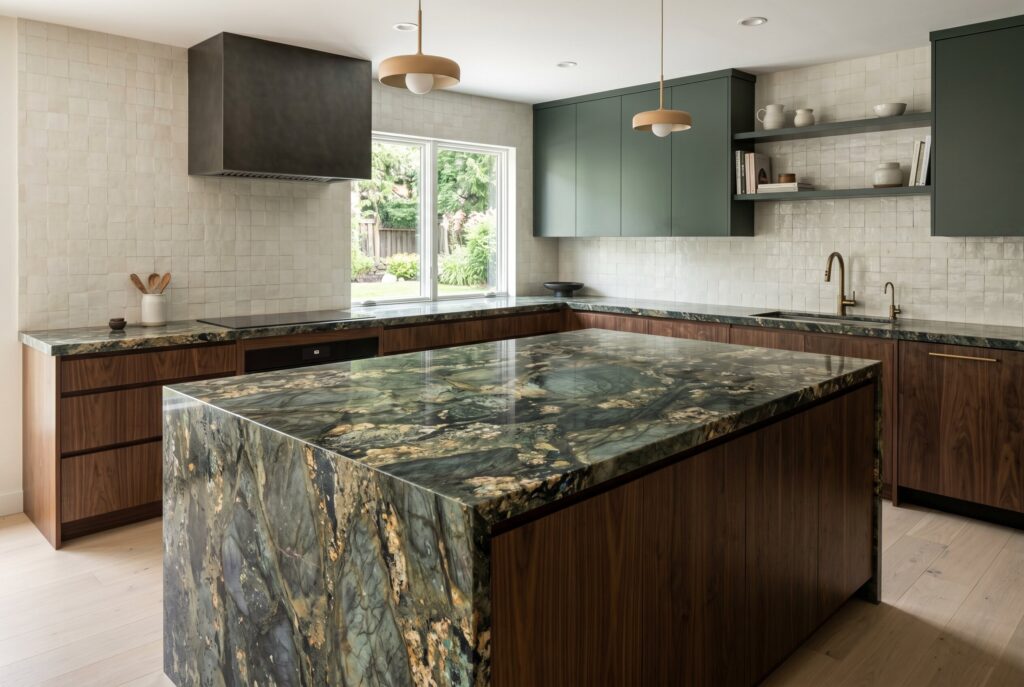
White quartz with faint gray veining became the default countertop choice because it’s durable, bright, and easy to pair with almost anything. But its popularity is also the problem. It has become so common that many remodels now look copied from the same builder package.
The issue isn’t quartz itself. It’s the overused, low contrast version that tries to imitate marble without the drama of real stone. In a high budget kitchen, that safe choice can make the entire room feel cautious. It doesn’t create a focal point, and it doesn’t tell a story.
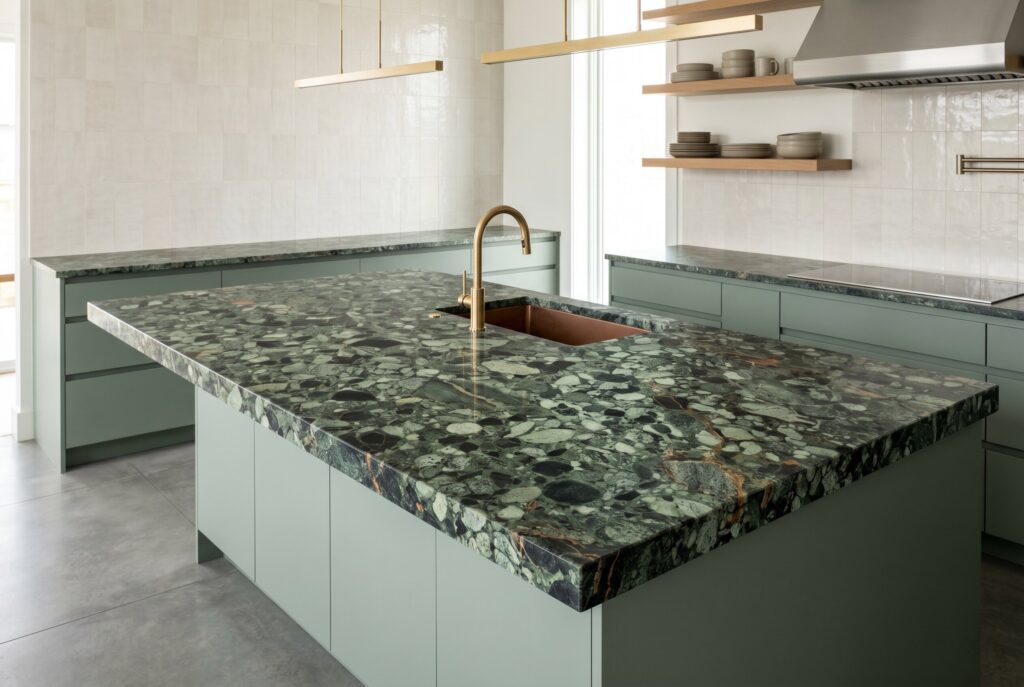
The strongest 2026 kitchen countertop trends are moving toward surfaces with personality. Dramatic marble, quartzite, soapstone, green stone, brown veining, and richly patterned slabs turn the counter into an architectural feature. Green countertops are especially compelling because they introduce color in a natural, grounded way. Instead of adding random decor, the stone itself becomes the art. The key is balance: let the countertop lead, then keep cabinets, tile, and hardware quieter.
4. OUT: Ornate Shaker Fronts | IN: Flat Panel Cabinets & Seamless Integration
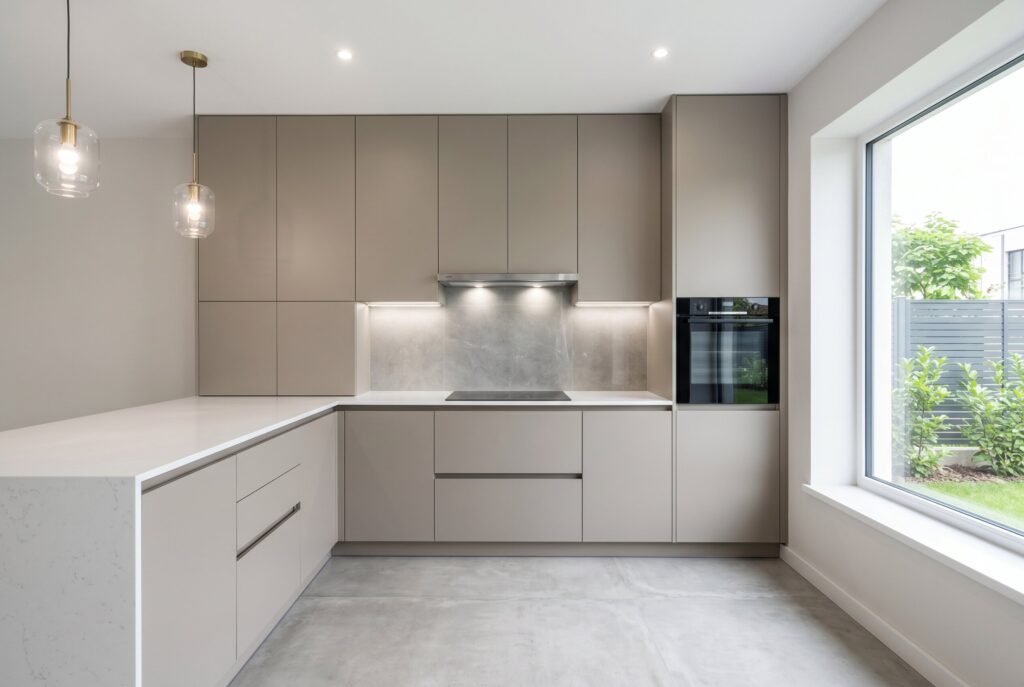
Shaker cabinets aren’t disappearing, but the heavy, traditional version is losing its grip. Thick frames, deep grooves, and bulky profiles can make a kitchen feel busier than necessary, especially when paired with visible hinges, strong hardware, and high contrast paint.
There is also a maintenance problem many homeowners don’t consider. Raised details collect dust, grease, and residue. In a kitchen that sees daily cooking, those little edges become cleaning traps. What looks charming in a showroom can feel tedious after a year of wiping oil from cabinet corners.
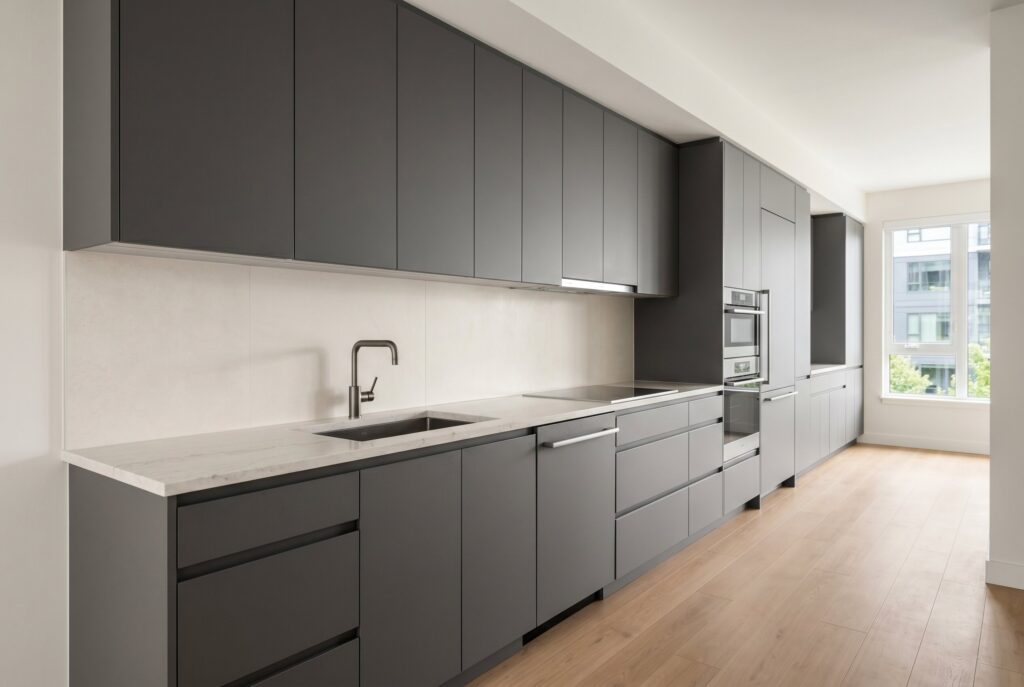
Flat panel cabinets solve this with cleaner lines and a calmer surface. They work beautifully in Organic Modern, Japandi, Modern Farmhouse, and transitional kitchens because they create a smooth backdrop for wood grain, stone, tile, and lighting. For homeowners who still want a hint of tradition, Slim Shaker is the smarter compromise. It keeps the framed look but reduces visual weight. Paired with matte finishes, it feels modern, practical, and easier to keep beautiful.
5. OUT: Cold Industrial Metals | IN: Tonal Wood Hardware
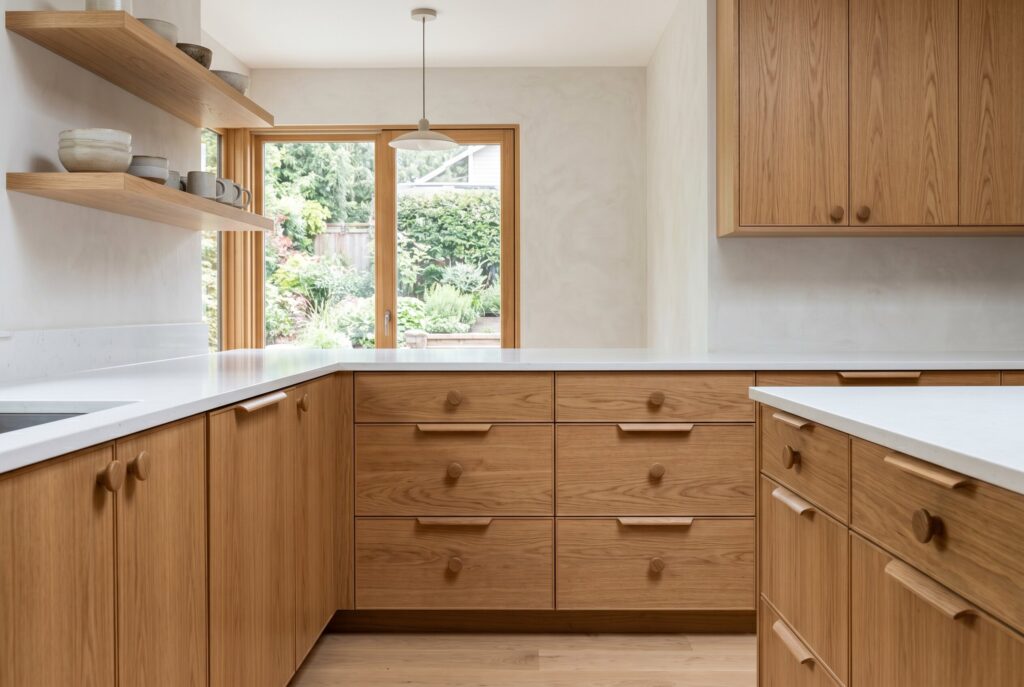
For years, kitchen hardware swung between glossy brass, matte black, and oversized industrial pulls. These finishes can still work, but when used everywhere, they begin to feel formulaic. A kitchen with black pulls, black faucets, black lights, and black frames can quickly look harsh rather than refined.
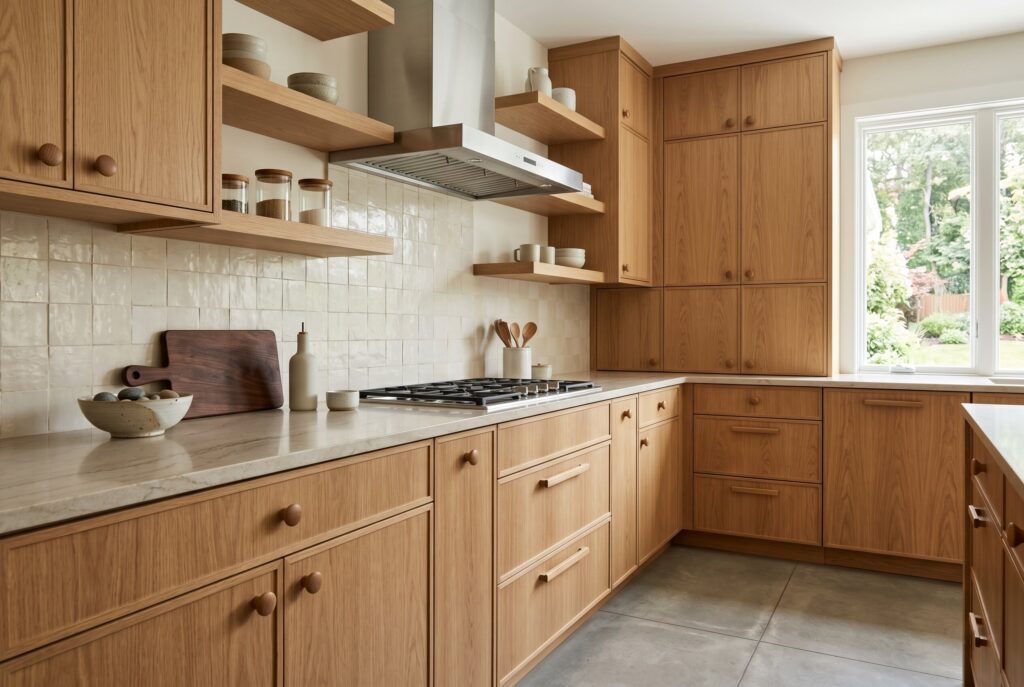
The more sophisticated 2026 direction is quieter. Tonal wood hardware is gaining attention because it blends into cabinetry instead of interrupting it. On oak or walnut doors, matching wood knobs and pulls create a seamless, crafted effect. The hardware doesn’t shout. It supports the whole design.
This is especially powerful in Japandi and Organic Modern kitchens, where calmness and material honesty matter. Tonal hardware lets wood grain remain the star, while still giving cabinets function and detail. It also ages more gently than trendy metal finishes. If the goal is a kitchen that feels custom without looking overdesigned, wood kitchen hardware is one of the smartest small upgrades.
6. OUT: Monolithic Block Islands | IN: Furniture Style Islands
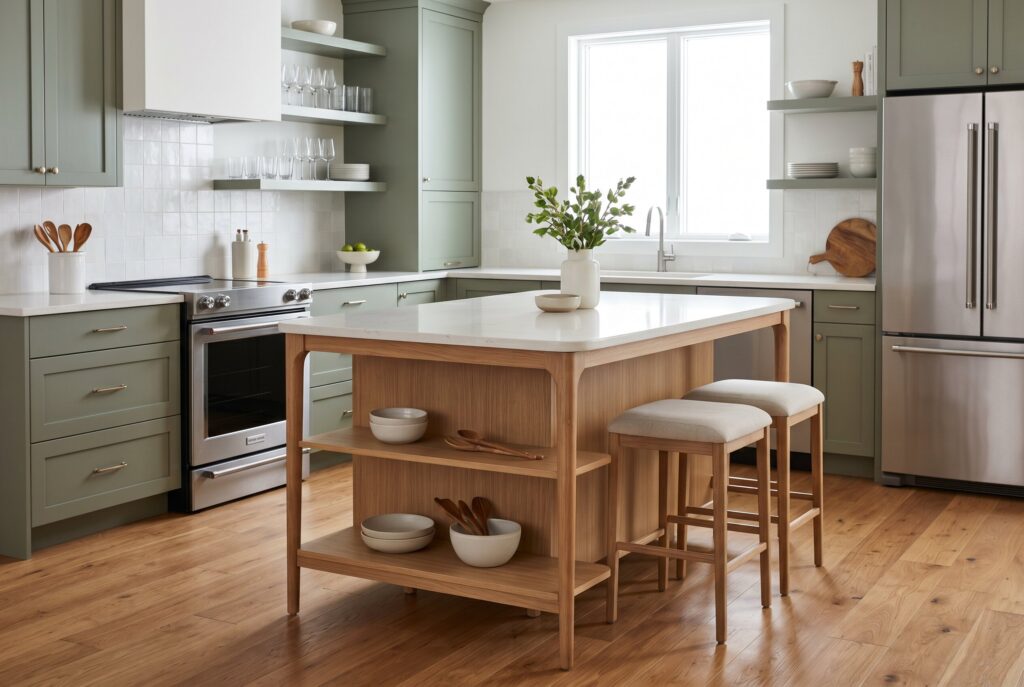
The oversized island became a status symbol, but bigger isn’t always better. A massive rectangular block can swallow floor space, interrupt traffic, and make the kitchen feel heavy. In smaller homes, it can even reduce functionality because people have to walk around it constantly.
A block island also tends to look built in rather than thoughtfully designed. It may provide storage, but it doesn’t always support how people actually gather. Guests end up lined along one side like a counter service bar, while the cook remains separated from conversation.
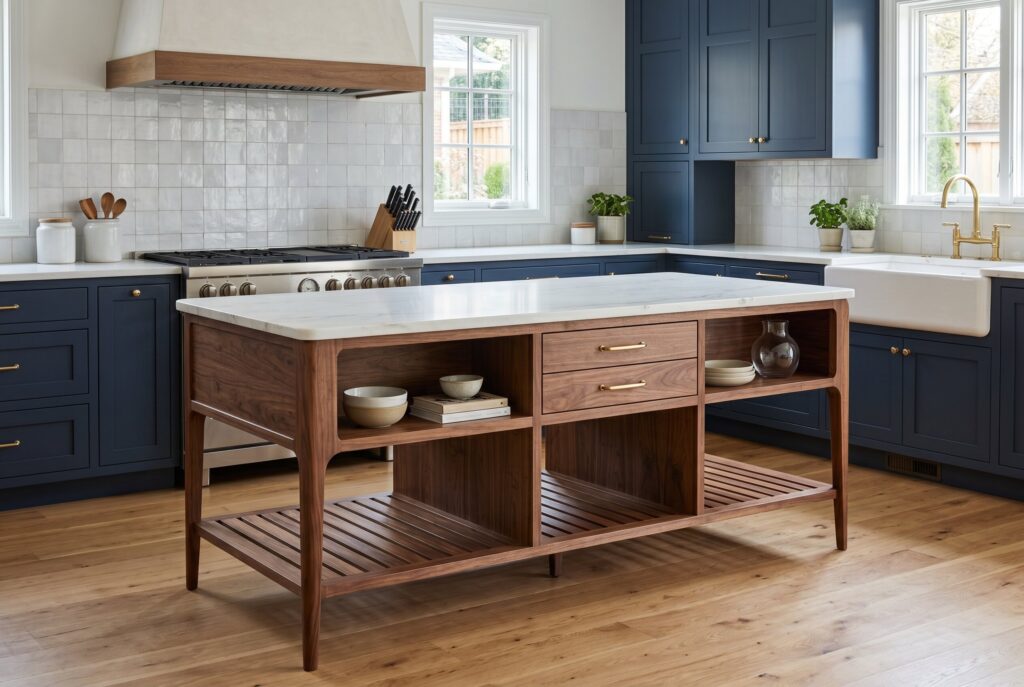
Furniture style islands are more graceful. They may have slimmer legs, rounded corners, open shelves, mixed materials, or integrated seating. Some pair beautifully with banquette seating nearby, creating a softer breakfast area instead of a hard workstation. The best islands in 2026 are multifunctional without being massive. They support prep, storage, dining, homework, coffee, and conversation while still allowing the room to breathe.
7. OUT: Featureless Walls | IN: Saturated Kitchen Paint Colors
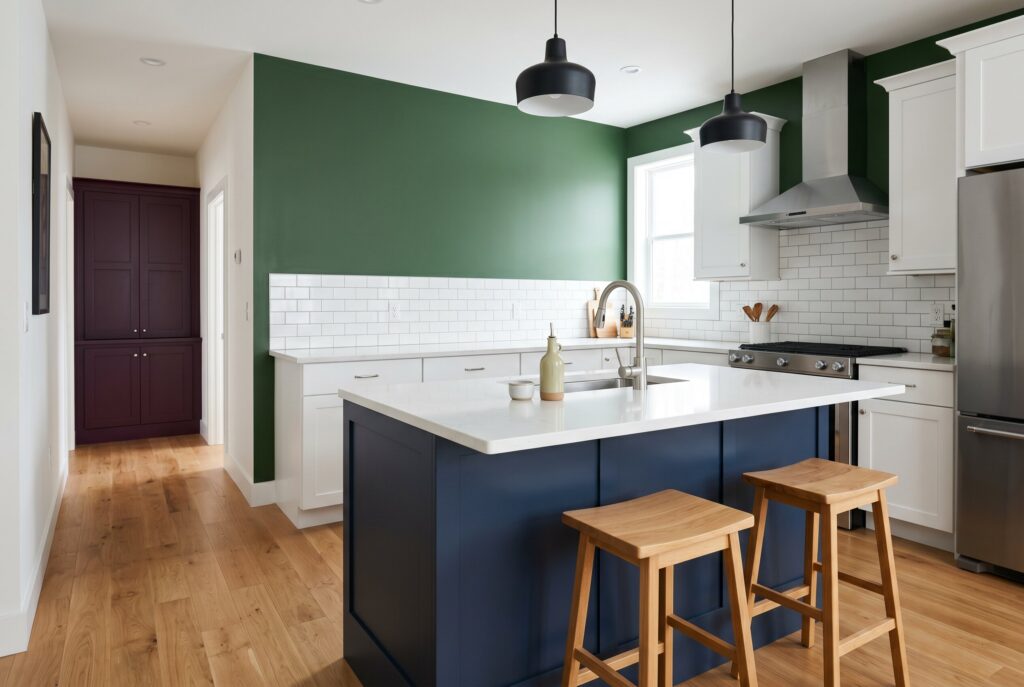
Cold gray walls, flat beige paint, and blank white surfaces are losing energy. They may feel safe, but they often don’t add anything meaningful to the kitchen. In a room where cabinets and counters already take up most of the visual space, wall color is one of the easiest ways to add mood.
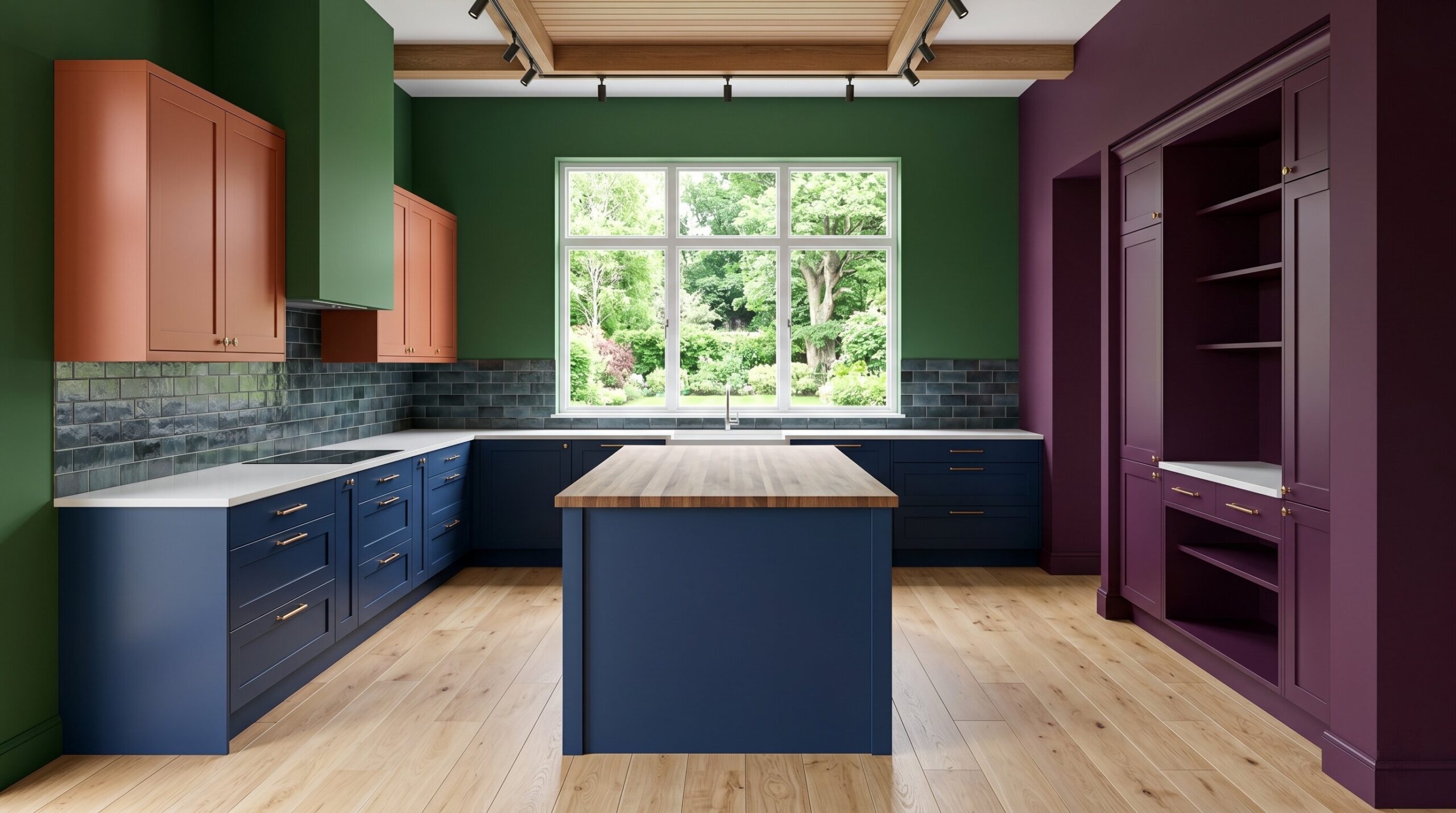
The rise of saturated kitchen paint colors reflects a larger shift toward personality. Homeowners aren’t only designing for resale photos anymore. They’re designing spaces that feel emotionally specific. Deep plum, moss green, navy, aubergine, terracotta, and smoky blue can make a kitchen feel intimate and memorable.
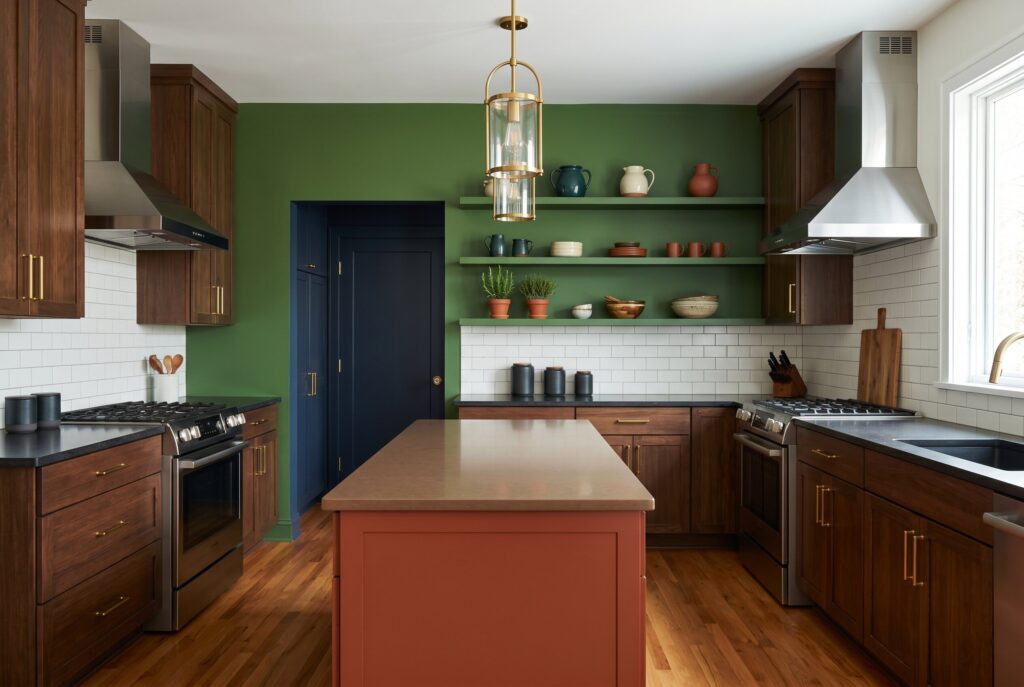
The key is control. You don’t need to paint every surface a bold color. Try a pantry wall, breakfast nook, built in hutch, island base, or ceiling detail. This creates the joydrenching effect without overwhelming the entire room. Done well, saturated color makes a kitchen feel collected, confident, and far more personal than another flat neutral shell.
Conclusion
Chasing every trend is the fastest way to drain a $40,000 renovation budget. The best 2026 kitchen trends aren’t about novelty. They’re about warmth, storage, durability, and personality that still feels livable.
Before approving a remodel, ask whether each choice improves daily function, maintenance, resale value, and emotional comfort. If a trend only looks good in a photo but makes cooking, cleaning, or hosting harder, it isn’t worth the money.
Ditch sterile white rooms, chaotic open plans, basic quartz, heavy cabinet fronts, harsh hardware, oversized islands, and lifeless walls. Choose wood kitchen cabinets, trending kitchen cabinet colors, thoughtful kitchen paint colors, statement countertops, hidden kitchen storage, and a layout that supports real life. A kitchen that feels current in 2026 should still feel calm, useful, and beautiful in 2036.
Related Articles
Top 10 Interior Design Trends Shaping Modern Homes Today
Smart Appliance Trends for 2026: Top Innovations to Enhance Efficiency and Comfort at Home
41 Luxury Modern Kitchen Designs for a Timeless Home (2026)
Timeless Kitchen Design: 11 Luxury Materials & Colors to Use
Small Warm and Cozy Living Room Ideas: Apartment Decor Trends 2026