

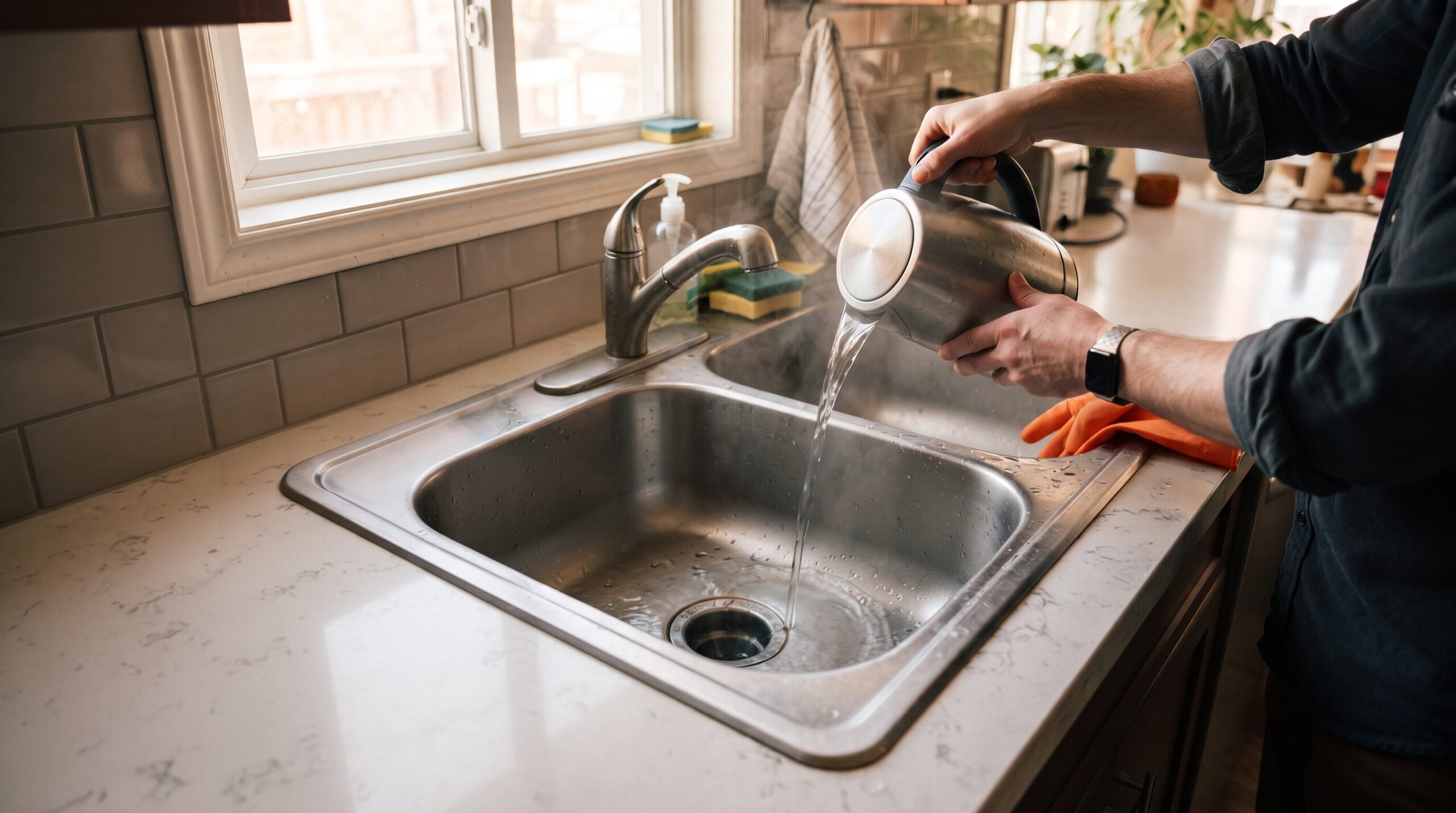
When dealing with a clogged drain, resist the urge to reach for chemical cleaners right away. Try hot water and dish soap, use a plunger, remove debris with a drain snake, and clean the P-trap before considering a septic-safe drain cleaner. This approach removes the blockage physically and helps protect your pipes.
It’s also important to identify the cause of the clog. Kitchen drains are often blocked by grease, food scraps, and soap residue, while bathroom drains usually clog from hair and soap scum. If several drains back up at the same time, the issue may be deeper in the plumbing system and require professional help.
The Baking Soda and Vinegar Myth: Why It Fails for Clogs
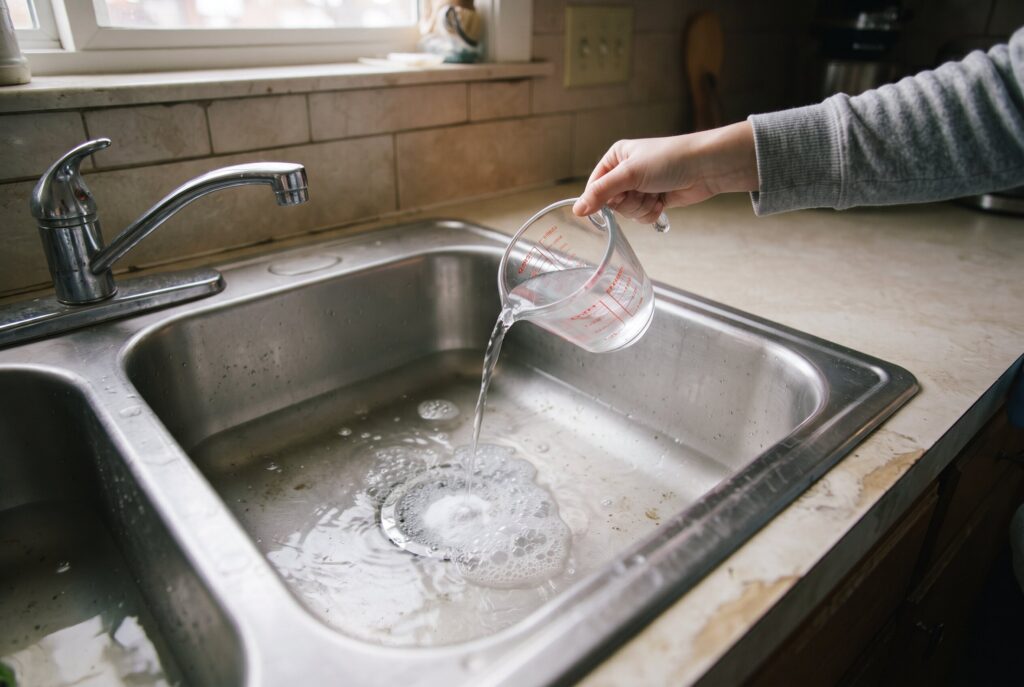
The baking soda and vinegar drain trick is everywhere online because the bubbling looks powerful. But fizz isn’t the same as cleaning strength. Baking soda is alkaline. Vinegar is acidic. When they meet, they mostly neutralize each other into a weaker mixture that can’t reliably dissolve grease, hair, or compacted food.
That doesn’t mean the method is useless for light deodorizing. It may freshen a slow drain temporarily. But if you’re dealing with standing water, a deep clog, or a greasy kitchen blockage, baking soda and vinegar usually won’t be strong enough. Worse, dumping powder into a slow drain can add more material to a pipe that is already struggling. For real clogs, use movement, pressure, and extraction first.
Step 1: The First Response
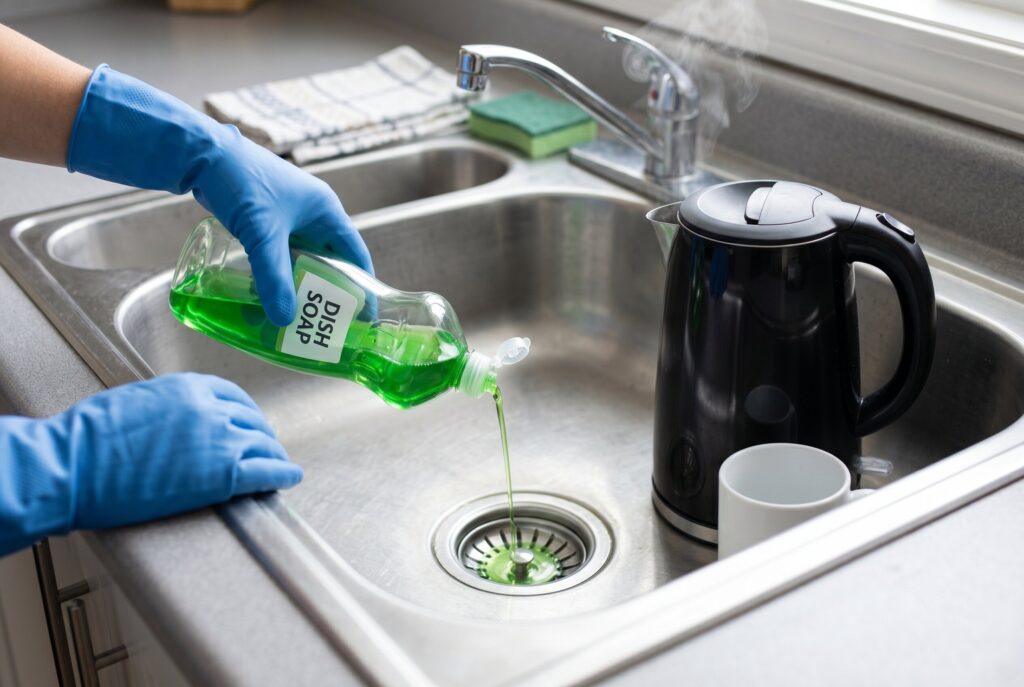
If the water drains slowly but isn’t fully blocked, start with dish soap and hot water. This works best for kitchen grease and light soap buildup.
Pour about 1/2 cup dish soap into the drain and let it sit for 5 to 10 minutes. The soap helps loosen oily residue and lubricate the pipe walls. Then slowly pour a kettle of hot water down the drain.
Be careful with boiling water. It may not be safe for every pipe, every sink material, or porcelain fixtures. For bathroom sinks and older plumbing, very hot tap water may be safer than a full rolling boil. If the drain improves, repeat once. If water still sits in the basin, move to pressure.
Step 2: The Pressure Phase
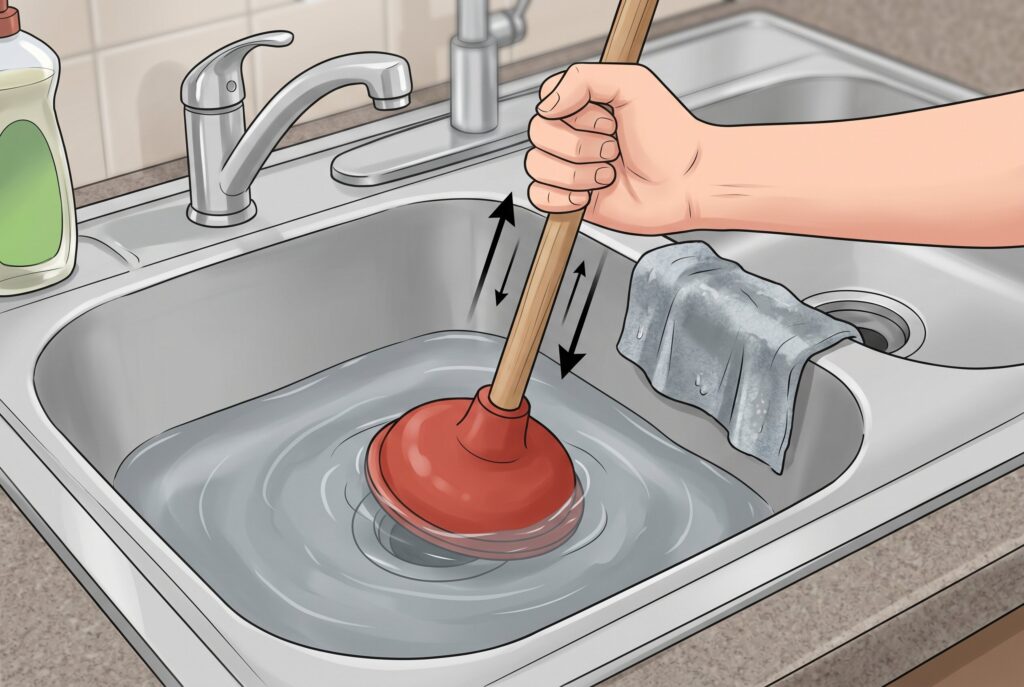
A plunger can clear many sink clogs, but only if you create a tight seal. Use a cup plunger for sinks, tubs, and showers. A toilet plunger has a different shape and should stay with the toilet.
If you have a double sink, block the other drain with a wet rag. Add enough water to cover the rubber cup. Place the plunger directly over the drain and push firmly up and down about 10 to 15 times. Keep the seal tight. Pull up sharply on the last motion.
If dirty water suddenly drains, flush with hot water for a few minutes. If the water barely moves, the clog may be hair, food, or debris that needs to be pulled out.
Step 3: The Mechanical Extraction
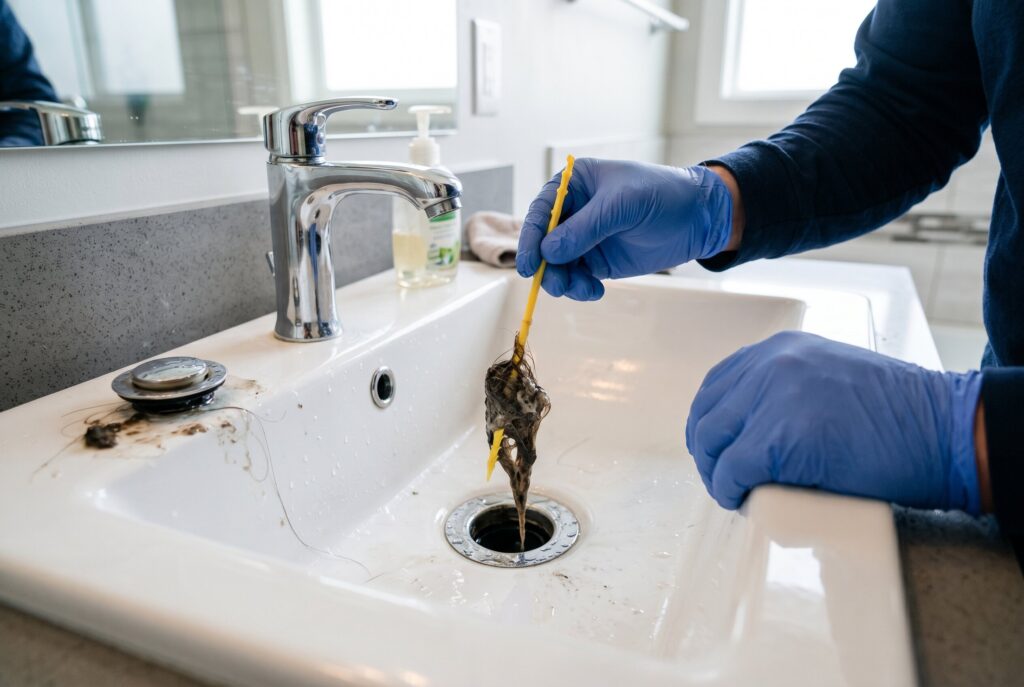
The best way to unclog bathroom sink problems is often to remove the clog physically. Hair wraps around the stopper and collects soap scum until water can’t pass freely.
Remove the drain stopper if possible. Put on gloves. Use a plastic drain snake, hair clog tool, or a wire hanger with a small hook bent at the end. Feed it into the drain slowly, rotate it, and pull upward. You may remove a disgusting clump of hair and sludge, but that is exactly what has been blocking the water.
Run hot water after extraction. For bathroom drains, this method often works better than any liquid cleaner because hair doesn’t dissolve easily. Avoid pushing too hard. If the tool gets stuck or you hear scraping, stop. You don’t want to damage the pipe or push the clog deeper.
Step 4: The Hardware Disassembly

If you still need to know how to unclog sink drain after hot water, plunging, and snaking, the clog may be sitting inside the P trap. This is the curved pipe under the sink. It holds water to block sewer gases, but it also catches jewelry, hair, grease, and debris.
Place a bucket under the P trap. Put towels nearby. Loosen the slip nuts on both ends of the curved section. Many can be loosened by hand, but some need pliers or a small wrench. Remove the trap carefully and empty it into the bucket.
Clean the inside with a bottle brush or old toothbrush. Check the pipe going into the wall too. Then reinstall the trap, tighten the nuts, and run water while checking for leaks. This step sounds intimidating, but it’s often the most direct way to fix a stubborn sink clog.
Step 5: The Chemical Last Resort
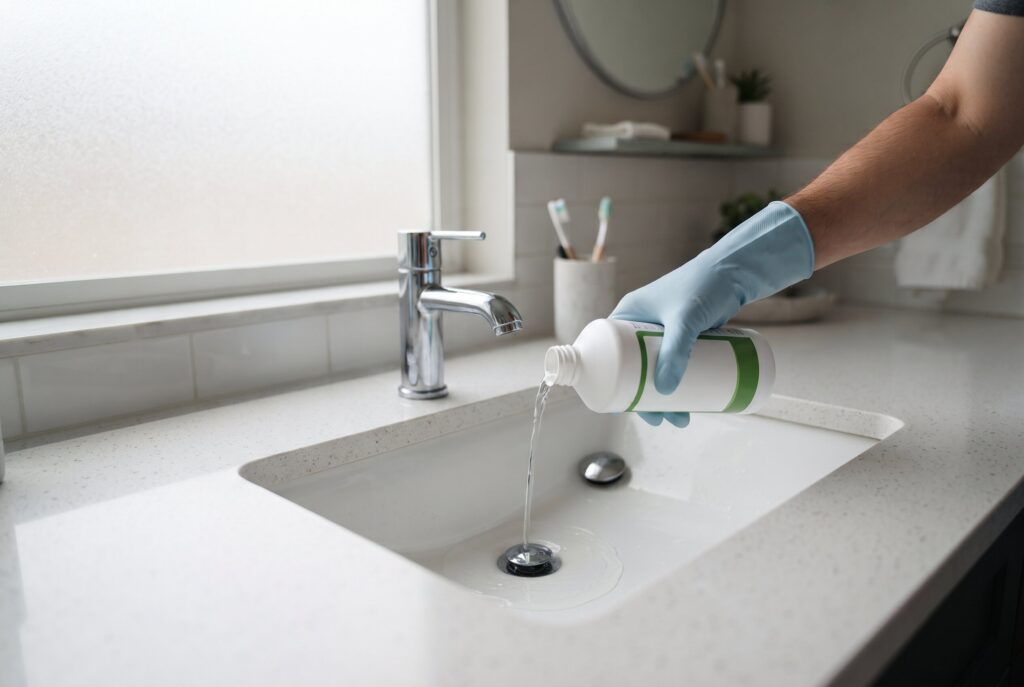
Chemical drain cleaners should not be your first move. Strong products can be harsh on pipes, dangerous to skin and eyes, and risky if water backs up. They can also create a serious hazard for a plumber who later has to work on the drain.
If you want a safer last resort, choose an enzyme based or septic safe drain cleaner. These products take longer because they use bacteria or enzymes to break down organic matter slowly. They’re better for maintenance and mild organic buildup than emergency standing water. Use them overnight, follow the label exactly, and never mix drain cleaners with bleach, vinegar, ammonia, or other chemicals.
Conclusion
The easiest drain to unclog is the one that never gets blocked. Use a hair catcher in the shower, a sink strainer in the kitchen, and keep grease, coffee grounds, rice, pasta, and other food waste out of the drain. A quick monthly flush with hot water and dish soap can also help prevent buildup.
Most single-drain clogs can be handled with simple DIY methods, but recurring backups, multiple clogged drains, sewage odors, or water backing up into other fixtures are signs of a larger plumbing problem. Fix small clogs early, know when to stop troubleshooting, and call a plumber before a minor blockage turns into an expensive repair.