

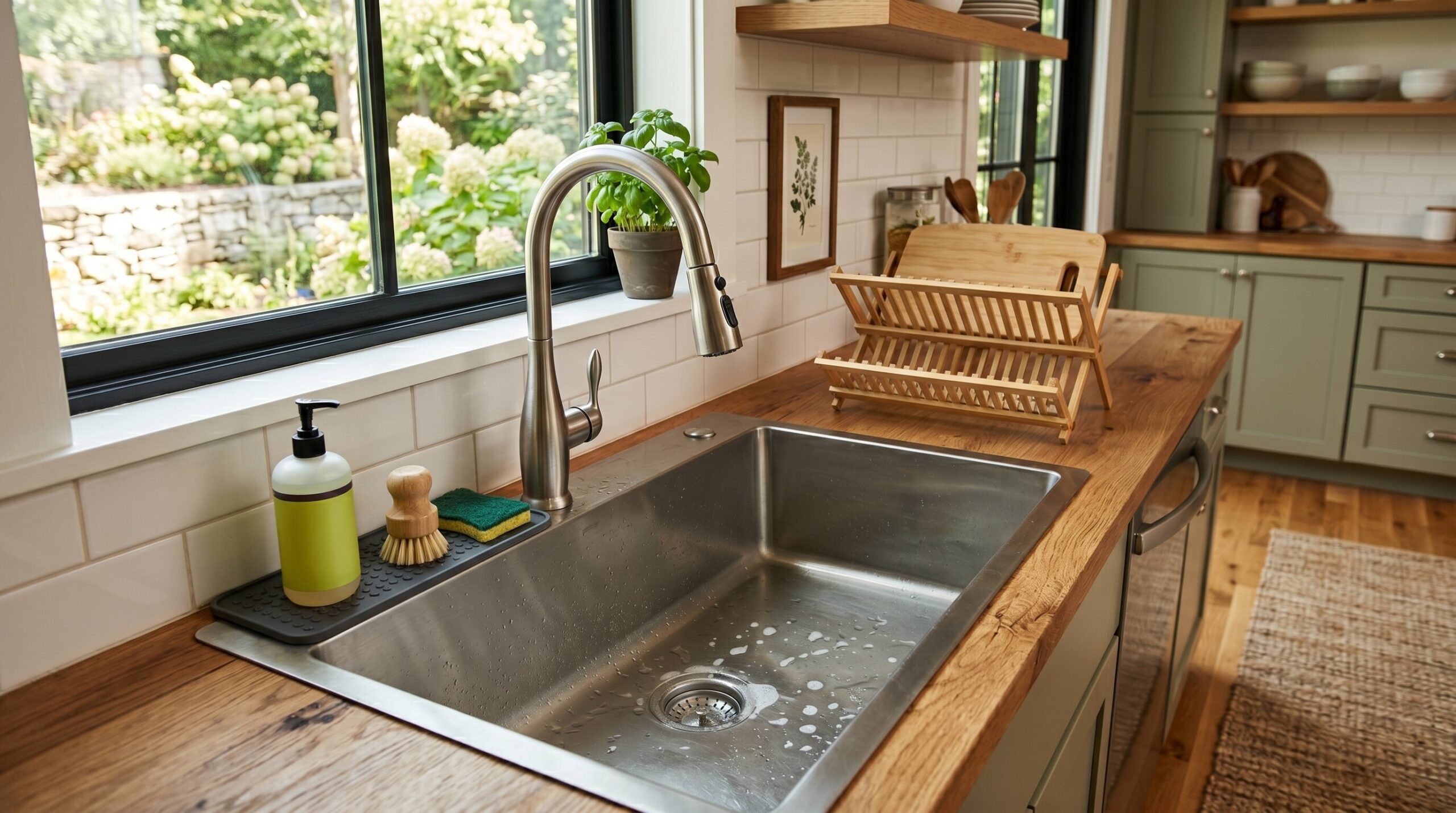
If your kitchen sink drain smells bad, the problem is usually buildup inside the pipes, not the sink itself. Food residue, grease, soap film, and bacteria can collect over time, creating persistent sour or rotten odors.
The simplest fix is a two-step cleaning routine. First, use baking soda to absorb odors and loosen buildup. Rinse it away with hot water, then follow with white vinegar and another hot water flush. Using the two ingredients separately works better than mixing them together, since the fizzing reaction weakens their cleaning power.
The Invisible Threat: Why You Must Clean Kitchen Sink Weekly
A kitchen sink handles raw meat juices, vegetable scraps, dirty dishes, grease, coffee residue, and food prep mess. That makes it one of the most important surfaces to clean regularly. Learning how to clean kitchen sink areas properly helps to reduce bacteria, odor, and cross contamination near the place where food is prepared.
The sink basin should be cleaned daily or at least several times a week if you cook often. The drain needs deeper attention about once a month, or sooner if you notice smells, slow draining, fruit flies, or greasy film around the opening.
A clean kitchen sink drain also protects the pipe from buildup. Small food particles and oil cling to the inside wall of the drain. If you ignore them, odor becomes the first warning. Slow drainage becomes the second.
The Chemistry Trap: Stop Mixing Baking Soda and Vinegar
The baking soda and vinegar drain trick is everywhere online, but it’s often misunderstood. Baking soda is alkaline. Vinegar is acidic. When poured together, they react quickly, fizz, and neutralize each other.
That fizz can help loosen light debris near the drain opening, but it isn’t the strongest way to clean out drain buildup. For odor control, baking soda works best when it has time to absorb smell on its own. Vinegar works best afterward, when it can contact mineral residue and lingering odor without being instantly canceled.
So the better method isn’t baking soda and vinegar drain cleaner in one dramatic pour. It’s a separate routine: baking soda first, rinse, vinegar second, rinse again. Less theater, better cleaning.
The Pro 2 Step Odor Elimination Process
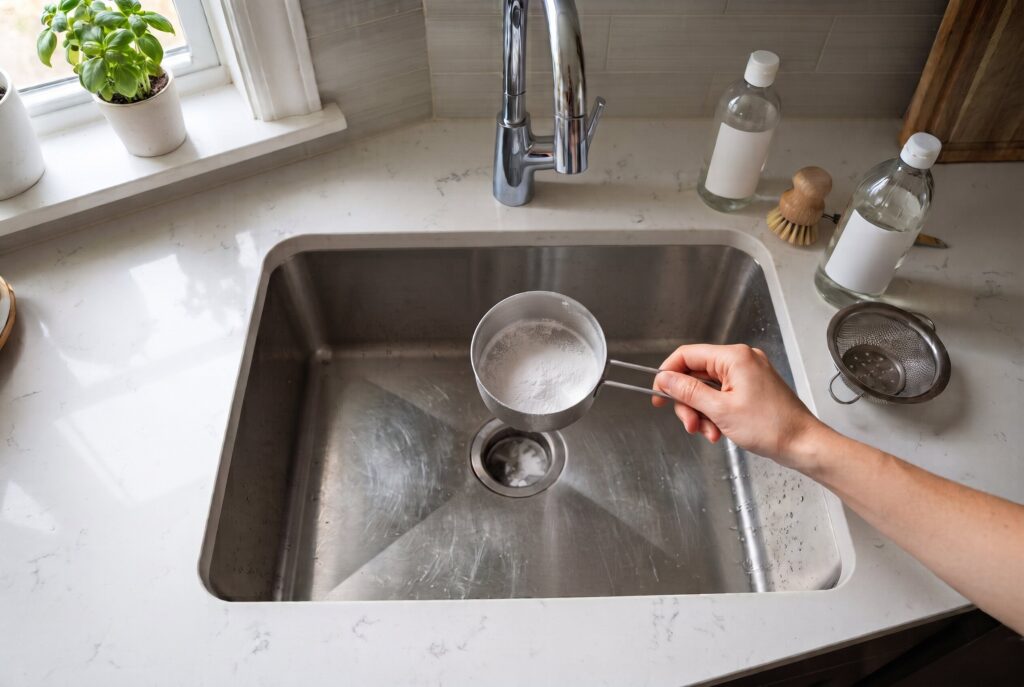
Start with a cleared sink. Remove dishes, food scraps, and anything sitting near the drain. If you have a strainer, wash it separately with dish soap and a brush.
For step one, pour 1/2 cup baking soda directly into the drain. Try to keep the powder dry as it goes in so it can sit inside the drain opening instead of washing away immediately. Leave it for 15 minutes. This baking soda drain cleaner step helps absorb sour smells and loosen light greasy film.
Now rinse with hot water. If you have PVC pipes or older plumbing, don’t use aggressively boiling water. Very hot tap water is safer for routine cleaning.
For step two, pour 1 cup white vinegar down the drain after the baking soda has rinsed away. Let it sit for 10 minutes. Then flush with hot water again for 30 to 60 seconds. This helps clear remaining residue and leaves the drain smelling fresher.
How to Clean the Sink Basin Too
The drain isn’t the only dirty area. Food bacteria and grease often sit on the sink walls, faucet base, drain rim, and splash zone.
Stainless Steel Sinks
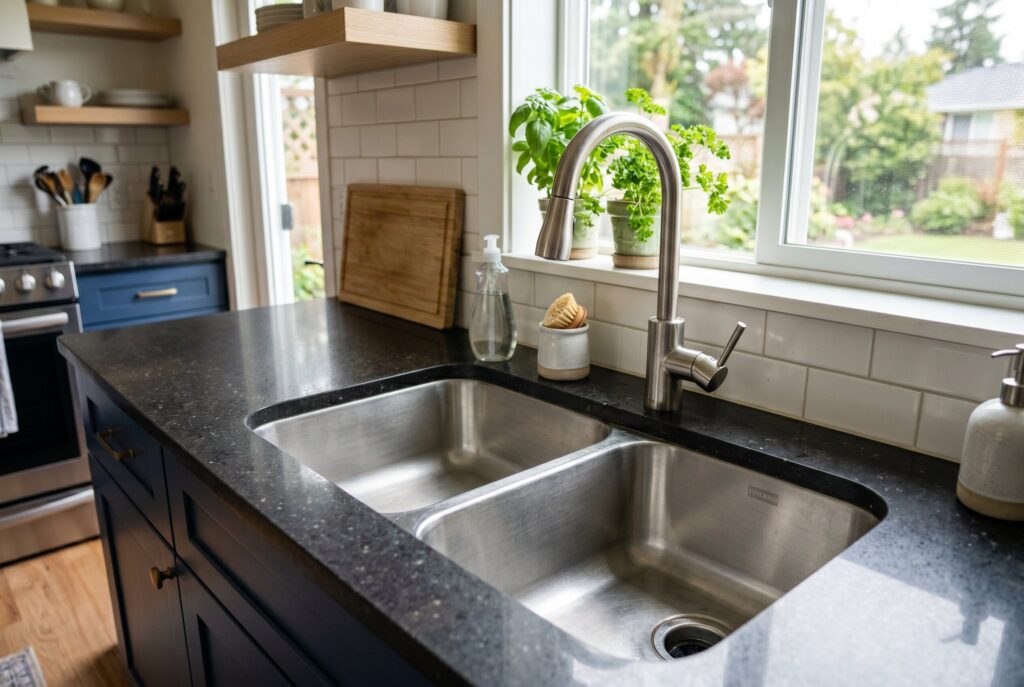
For stainless steel sinks, start by rinsing away loose food particles and debris. Sprinkle a small amount of baking soda onto a damp sponge or soft microfiber cloth, then gently wipe the surface following the direction of the grain. Cleaning with the grain helps lift residue without creating fine scratches that can dull the finish over time. Pay extra attention to corners, around the drain, and areas where water tends to sit. After cleaning, rinse thoroughly with warm water to remove any remaining baking soda residue. Finally, dry the sink completely with a clean microfiber cloth. This last step is important because stainless steel easily develops water spots and mineral deposits if left to air dry.
Porcelain Sinks
For porcelain sinks, choose a gentle non-abrasive cleaner or a mixture of warm water and mild dish soap. Apply the cleaner with a soft sponge or cloth and work in small circular motions to remove soap scum, toothpaste stains, and everyday grime. Avoid steel wool, abrasive scrub pads, or harsh scouring powders, as these can scratch or gradually dull the glossy porcelain glaze. For stubborn stains, let the cleaner sit for several minutes before wiping rather than scrubbing aggressively. Once the surface is clean, rinse thoroughly with warm water and dry with a soft towel to maintain the sink’s smooth, polished appearance and help prevent future staining.

Copper Sinks
For copper, skip acidic cleaners unless the manufacturer says they’re safe because vinegar can affect the finish. Clean the faucet handle, sprayer, and drain flange too. These touch points often stay dirty because people focus only on the bowl.

Advanced Tactics: Enzyme Cleaners and the P Trap
If the smell keeps coming back, the problem may be deeper than the drain opening. A sink drain cleaner based on enzymes can help with organic food residue. It works slowly, often overnight, but it’s gentler than harsh chemical drain cleaners and useful for routine maintenance.
If the odor is strong, greasy, or rotten, check the P trap. This is the curved pipe under the sink. Place a bucket underneath, loosen the slip nuts, remove the curved section, and clean out trapped sludge with a brush. Reinstall it tightly and run water to check for leaks. This step is especially useful when food particles, rice, pasta, or grease have settled in the trap.
What Not to Pour Down the Drain
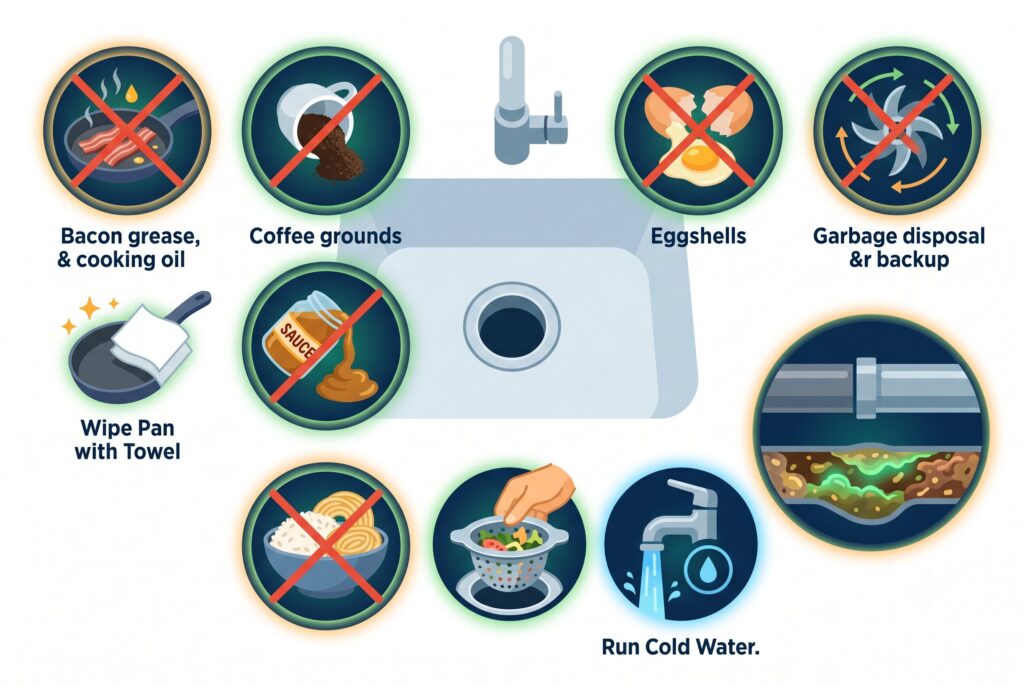
Prevention matters more than rescue. Never pour bacon grease, cooking oil, coffee grounds, thick sauces, rice, pasta, or eggshells into the sink drain. Even if the garbage disposal seems to handle them, they can build up downstream.
Wipe greasy pans with a paper towel before washing. Use a sink strainer. Run cold water while using the disposal, then keep water running a few seconds after switching it off.
Conclusion
Learning how to clean kitchen sink drain systems is less about finding a miracle cleaner and more about following a consistent routine. Clean the sink regularly, deep clean the drain once a month, and remove grease and food buildup before odors develop. If smells persist, use an enzyme cleaner or clean the P-trap instead of masking the problem.
A fresh-smelling kitchen comes from removing the source of the odor, not covering it up. A few minutes of routine care can keep your sink, drain, and garbage disposal clean and odor-free all year.
Related Articles
How to Unclog a Drain Fast: 5 Pro Steps to Try Before Calling a Plumber
How to Unclog a Bathtub, Shower, or Bathroom Sink: Pro Methods for Hair