

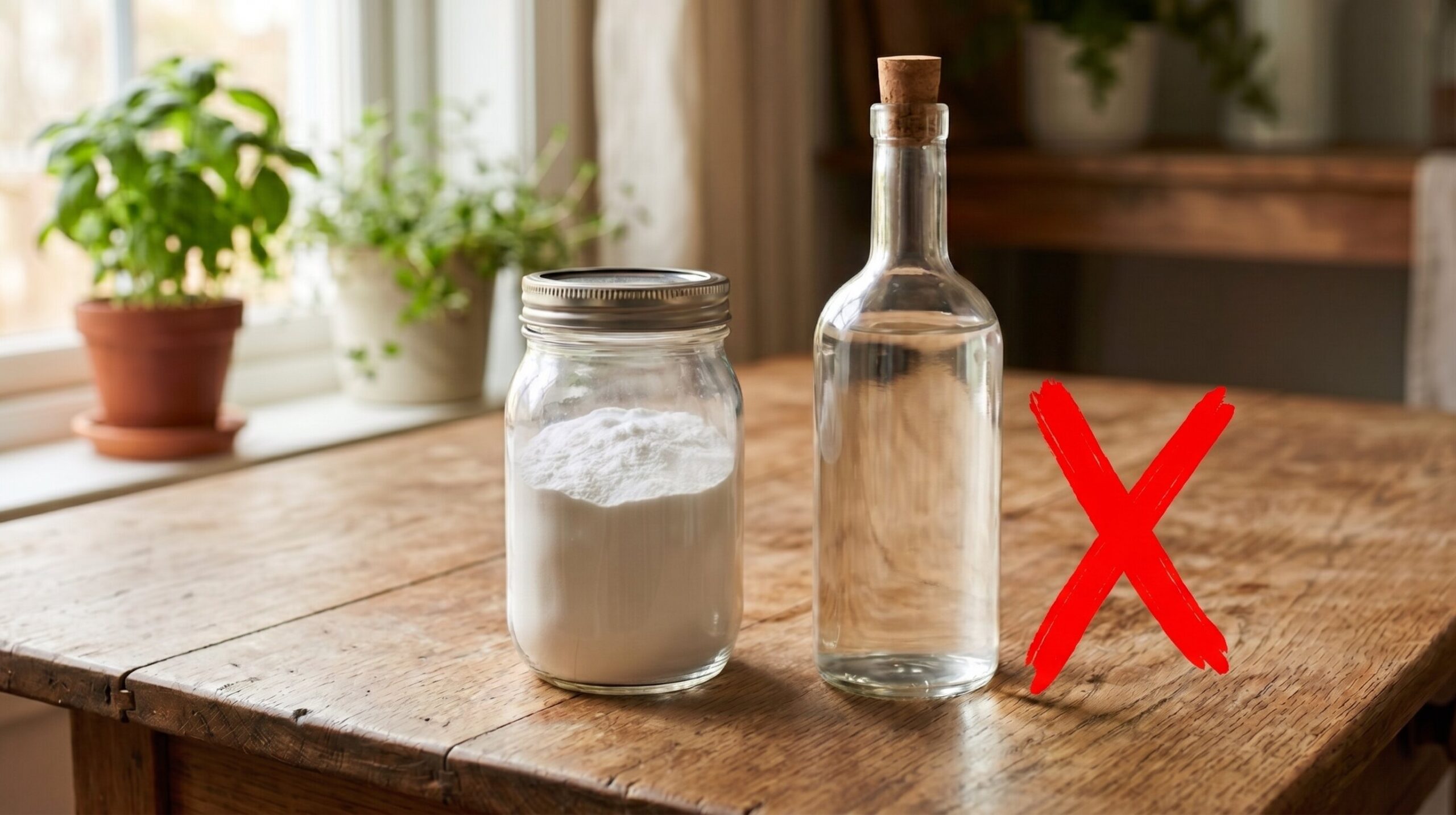
Many people use baking soda and vinegar to unclog a drain because the fizzing reaction looks effective. This is exactly why you should never use baking soda and vinegar to unclog a drain if you’re dealing with a real blockage. However, those bubbles don’t have enough power to remove common blockages such as grease, hair, or food debris. In some cases, baking soda can even settle in a slow-moving pipe and contribute to buildup.
For a true clog, mechanical methods like a plunger, drain snake, or cleaning the drain trap are usually much more effective because they physically remove the obstruction. Vinegar and baking soda are better suited for light deodorizing than serious drain cleaning.
The Science of the Fake Volcano
The baking soda and vinegar drain trick became popular because it feels satisfying. You see foam rise, hear bubbling, and believe something intense is happening inside the pipe. But the reaction happens too fast and too close to the surface.
Baking soda is alkaline. Vinegar is acidic. When they combine, they neutralize each other. That means both ingredients lose much of the cleaning power they might have had separately. The fizz is carbon dioxide gas escaping upward into open air. Since most drains aren’t sealed pressure chambers, that gas doesn’t create enough force to push a clog out.
This is why the method fails so often. A grease clog needs surfactants, heat, or physical pressure. A hair clog needs pulling. A soap scum clog needs scraping or loosening. A foreign object needs removal. Bubbles alone won’t chew through a dense wad of hair mixed with toothpaste, conditioner, and body oils.
Why It Can Make a Clogged Drain Worse
A slow drain is already struggling to move water. When you pour powder into it, the baking soda may not reach the clog evenly. Some of it can clump, settle in the trap, or stick to wet pipe walls. Then vinegar reacts with only part of it, leaving behind residue.
If you repeat the process again and again, you may add more loose grit to the drain without removing the main blockage. This is especially risky when there’s standing water, because the mixture becomes diluted before it can reach anything useful.
Some people try to trap the reaction by covering the drain tightly. That is also a bad idea. Forcing pressure inside older pipes, weak PVC joints, or worn rubber seals can create stress where you don’t want it. A home drain system isn’t a science fair volcano container. It’s plumbing, and plumbing likes steady flow more than random pressure.
The Under $10 Tool That Actually Works
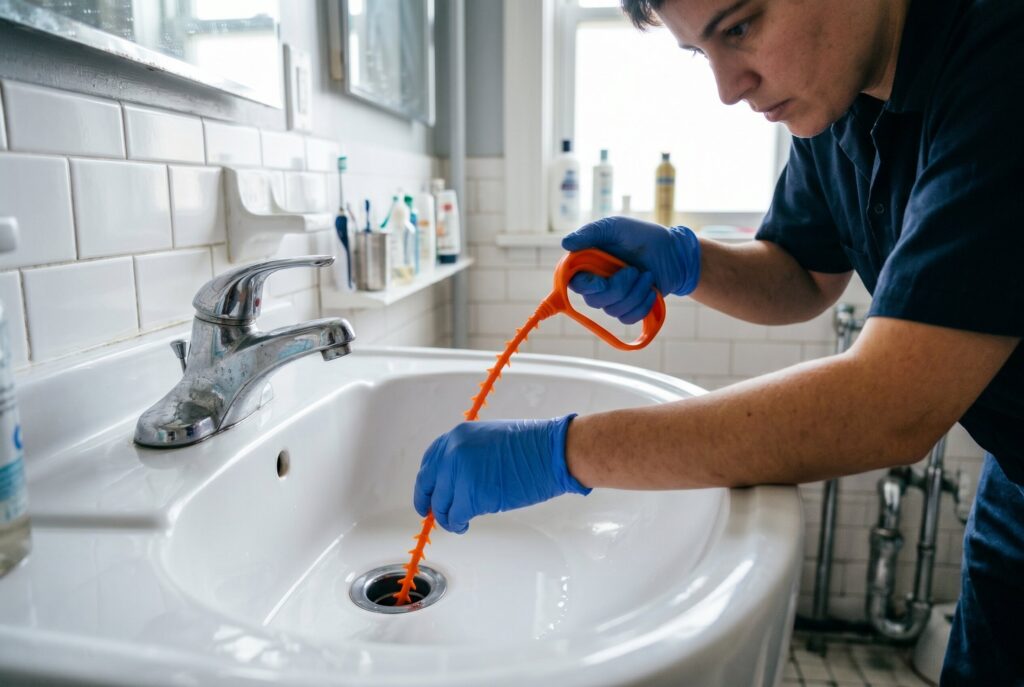
The cheapest effective fix for many bathroom clogs is a plastic drain snake tool. It’s often under $10, and it works because it grabs the real problem instead of pretending to melt it.
Most bathroom sink clogged problems come from hair wrapped around the stopper. Add toothpaste, shaving cream, soap, and skin oils, and that hair turns into a sticky rope inside the drain. No amount of fizz will reliably dissolve that. A plastic barbed tool can slide past the stopper, hook the hair, and pull the clog out in one disgusting but satisfying motion.
To use it, remove the stopper if possible. Put on gloves. Push the tool slowly into the drain, twist it, then pull it back up. Don’t force it if it catches on something hard. Rinse the drain with hot tap water afterward. This is the best answer for how to clean bathroom sink drain because it deals with the clog directly.
The Cup Plunger Technique for Kitchen Grease
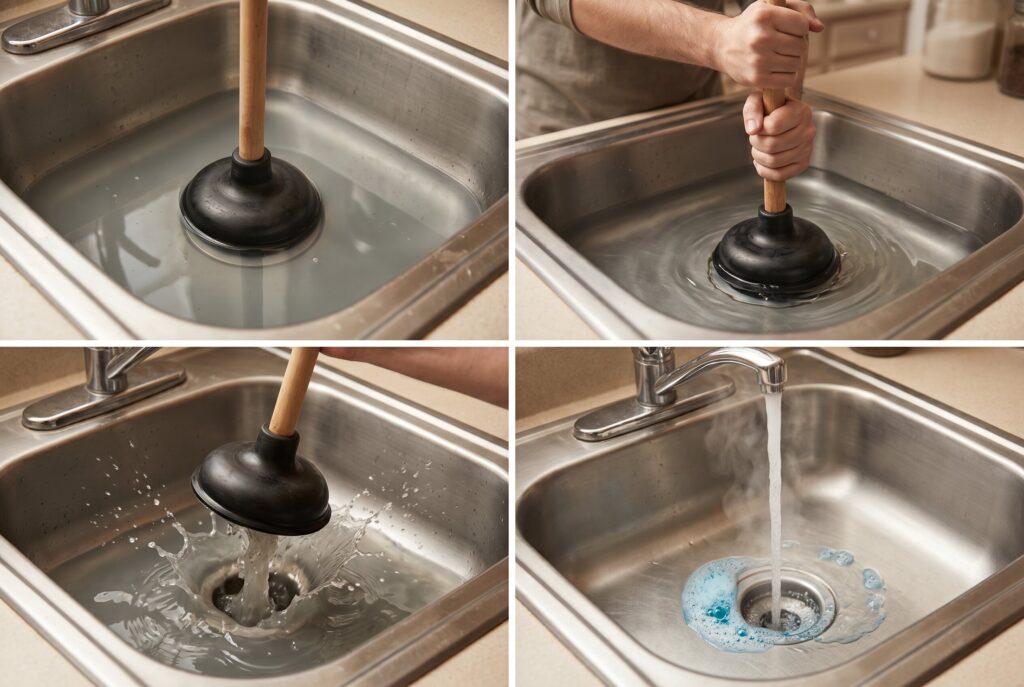
For kitchen sinks, the better first move is often a cup plunger. Grease, oil, food scraps, and starches can collect inside the sink drain. Instead of using baking soda and vinegar, use pressure.
Add enough water to cover the rubber cup. If you have a double sink, block the second drain with a wet rag so pressure doesn’t escape. Place the plunger over the clogged side and push firmly up and down 10 to 15 times. Keep the seal tight. On the final pull, lift sharply.
This is also one of the simplest methods for how to clean kitchen sink drain lines affected by grease and food residue before the clog becomes severe. Dish soap is useful because it helps break up oily residue and carry grease away. This makes more sense than fizz because dish soap is designed to deal with fats. This method is especially helpful when you need to unclog sink problems caused by food film and grease, not hair.
When to Clean the Drain Trap
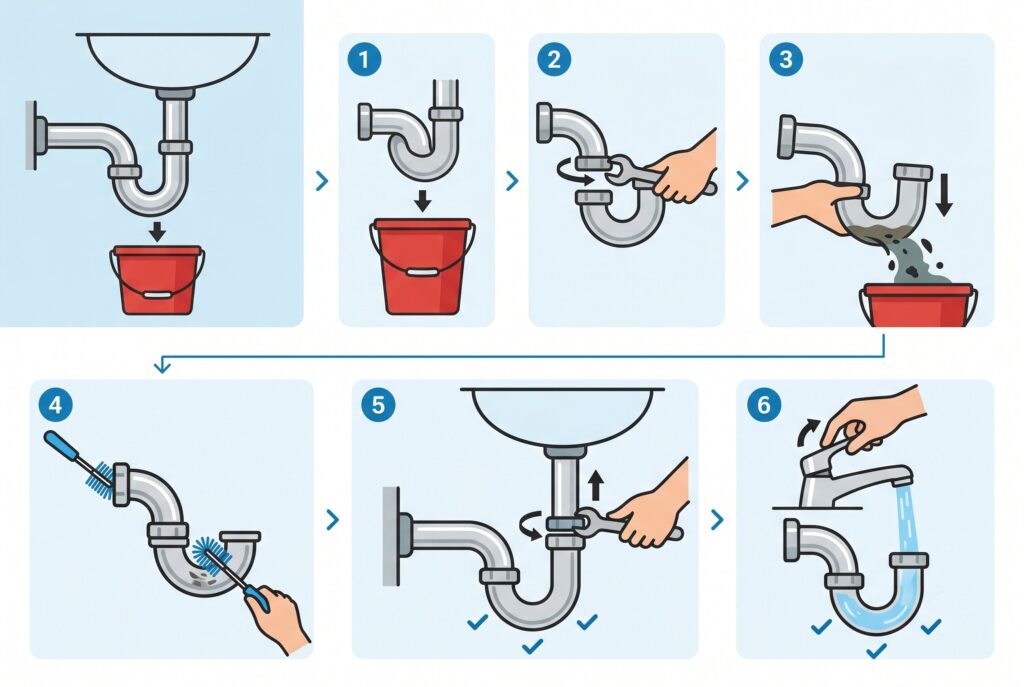
If plunging and snaking don’t work, the clog may be sitting in the P trap. This is the curved pipe under the sink. It holds water to block sewer gas, but it also catches hair, jewelry, sludge, food scraps, and grime.
Place a bucket under the trap. Loosen the slip nuts on each end. Remove the curved section slowly because dirty water may spill out. Clean the drain trap inside with a bottle brush or old toothbrush, then reinstall it tightly. Run water and check for leaks. This step sounds intimidating, but it’s often easier than wasting an hour on a weak homemade drain cleaner.
Natural Drain Cleaner That Makes More Sense
A natural drain cleaner can be useful for maintenance, but it should match the job. If you’re looking for the best drain cleaner for kitchen sink grease, hot water, dish soap, or an enzyme-based cleaner are usually better choices than baking soda and vinegar. For organic buildup, an enzyme drain cleaner can help slowly break down residue overnight. For septic systems, choose a septic safe drain cleaner and follow the label carefully.
Enzyme cleaners aren’t instant. They’re better for prevention and mild organic buildup than emergency clogs. But they’re gentler than harsh chemical drain cleaners and safer for routine maintenance.
Conclusion
Baking soda and vinegar can freshen a drain lightly, but they’re not a serious solution for how to unclog a drain. The fizz is mostly theater. It doesn’t reliably remove grease, hair, food, soap scum, or deep blockages.
Use the right tool instead. Use a drain snake tool for hair, a cup plunger for sink pressure, dish soap and hot water for grease, and clean the drain trap when the clog is local. If multiple drains are backing up, sewage smells appear, or water returns through another fixture, stop experimenting and call a plumber. A clear drain doesn’t come from bubbles. It comes from removing the thing that is blocking the pipe.
Related Articles
How to Unclog a Drain Fast: 5 Pro Steps to Try Before Calling a Plumber