

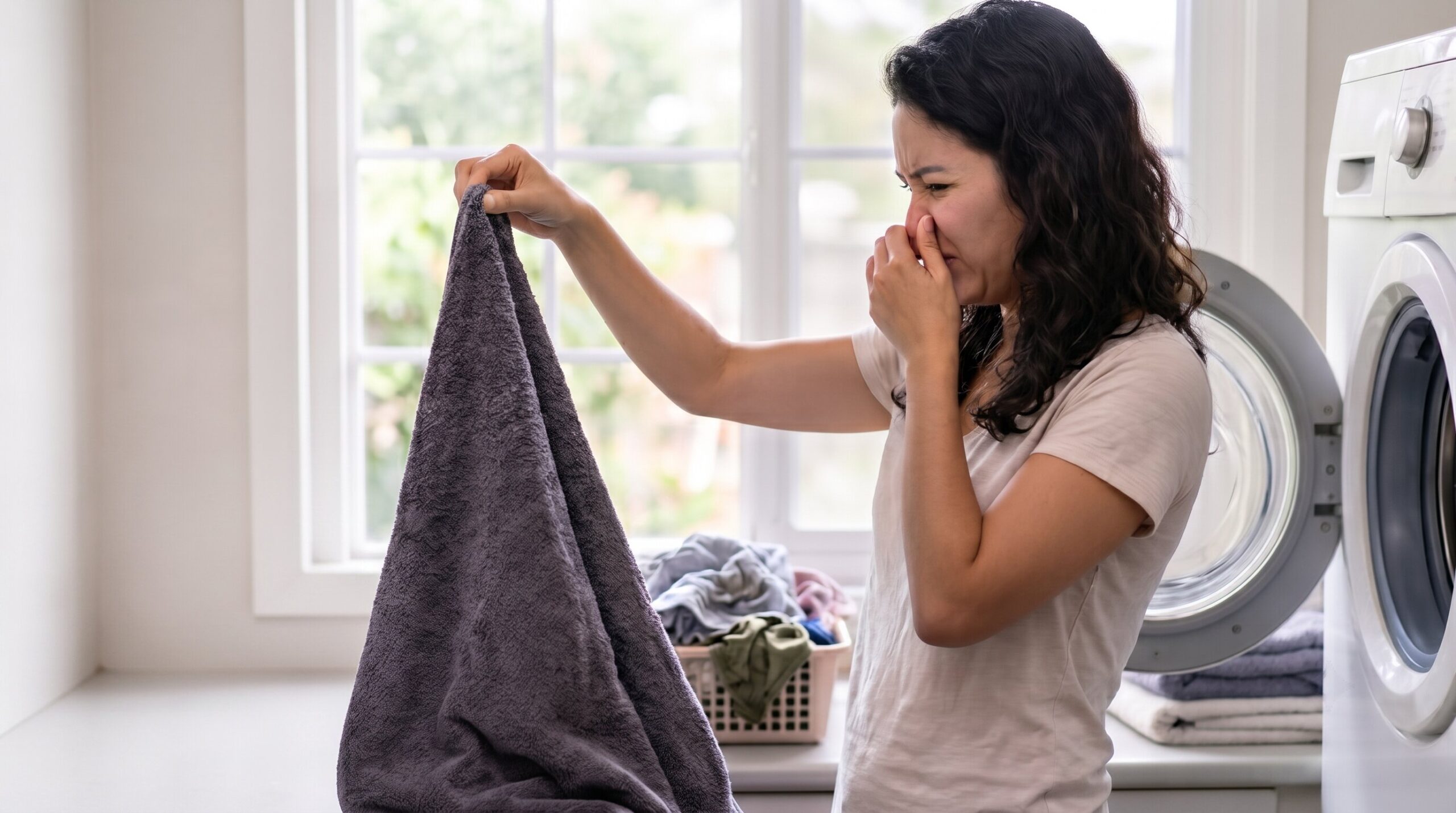
If your towels still smell musty after washing, the problem is usually trapped moisture, detergent residue, fabric softener buildup, and bacteria inside the fibers. Instead of adding more fragrance, wash towels once with 1 cup of white vinegar and no detergent, then run a second cycle with 1/2 cup of baking soda. Dry them completely afterward. If odors remain, try borax, oxygen bleach, or a sanitize cycle. Most importantly, allow towels to dry fully between uses to prevent mildew from returning.
Why Towels Smell Musty After Washing
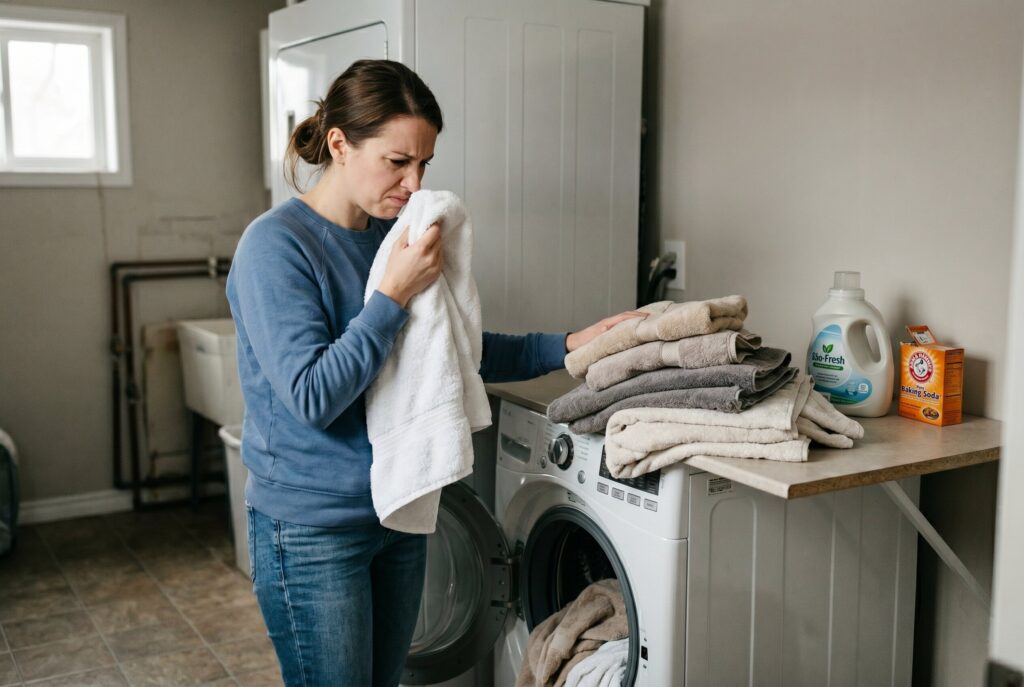
Towels are built to absorb water, which is exactly why they trap problems so easily. Every shower leaves behind moisture, skin oils, soap residue, and body soil. If the towel stays damp on a hook, in a hamper, or inside the washer, bacteria and mildew get the perfect place to grow.
Too much detergent can make this worse. When detergent doesn’t rinse out fully, it leaves a film inside the fibers. Fabric softener is even worse for towels because it coats fibers with a waxy layer. That coating may feel soft at first, but it reduces absorbency and traps odor.
That is why sour towels can smell clean when warm from the dryer, then smell musty again the moment they get damp. The smell wasn’t gone. It was hiding under fragrance.
The Chemistry Mistake: Separate Vinegar and Baking Soda

Many people talk about vinegar and baking soda towels as one combined trick. It looks powerful because it bubbles. But the bubbles are the problem. Vinegar is acidic. Baking soda is alkaline. When you combine them too early, they react and cancel each other out.
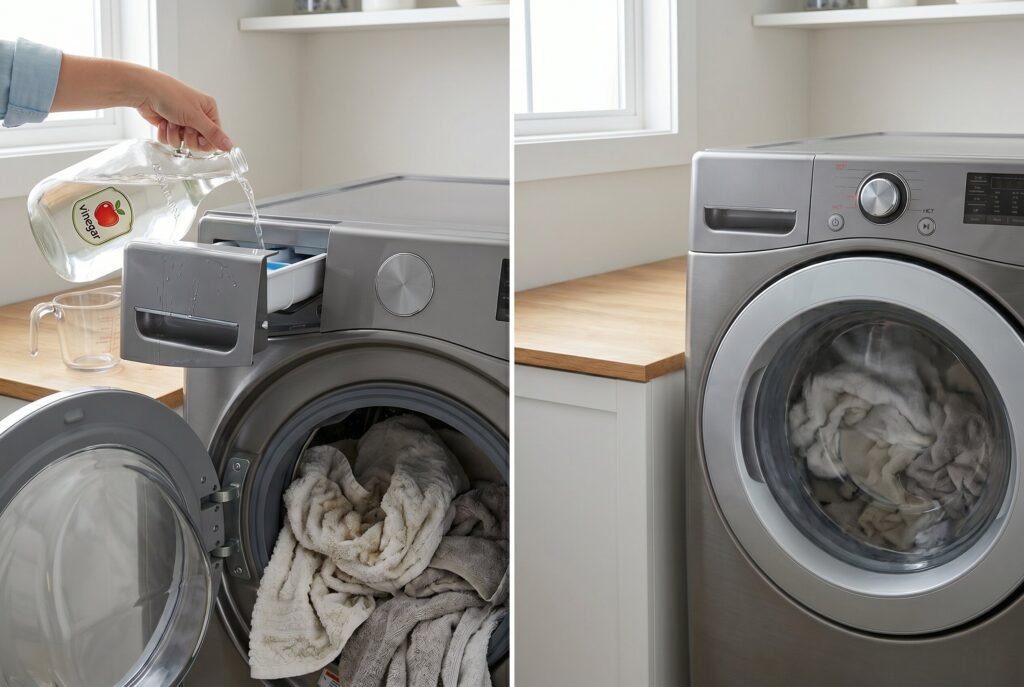
Use washing towels with vinegar as the first step. Vinegar helps loosen mineral residue, detergent film, and fabric softener buildup. Put the towels in the washer, add 1 cup white vinegar to the drum or dispenser if your machine allows it, skip detergent, and wash hot.
Then run the baking soda cycle. Add 1/2 cup baking soda directly to the drum and wash again. This helps remove lingering odor and refresh the fibers. Don’t add detergent in this second cycle either. The goal is to rinse and reset, not add more buildup.
Step-by-Step Towel Reset Method
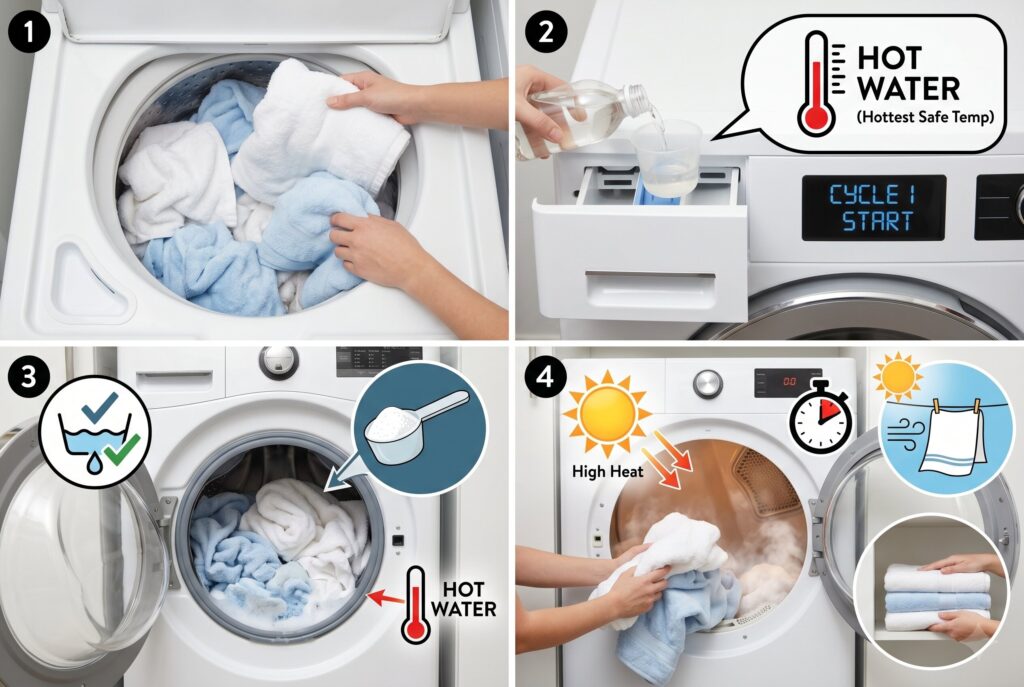
Step 1: Start with towels only. Don’t mix them with clothes, sheets, or cleaning rags. Avoid overloading the washer, since this can block water movement and leave residue behind.
Step 2: Set the washer to the hottest water temperature that is safe for your towels. Add 1 cup of white vinegar and run a full cycle without detergent.
Step 3: When the first cycle ends, do not dry the towels yet. Run a second cycle with 1/2 cup of baking soda. Again, do not use detergent or fabric softener.
Step 4: After the second cycle, dry the towels immediately. Use high heat if the care label allows it. If air is drying, place them in direct sunlight with strong airflow. Never fold or store towels while they are even slightly damp.
If the towels smell fresh when dry but sour after one use, the fibers may still have residue, or your bathroom drying setup may be the real problem.
Heavy Duty Rescues: Borax and Oxygen Bleach
If the two cycle reset doesn’t fully work, the odor may be deeper. Borax towel odor treatment is useful for stubborn smells. Dissolve 1/2 cup borax in hot water, soak towels for about 1 hour, then wash as usual. Borax helps lift residue and deodorize heavy buildup.
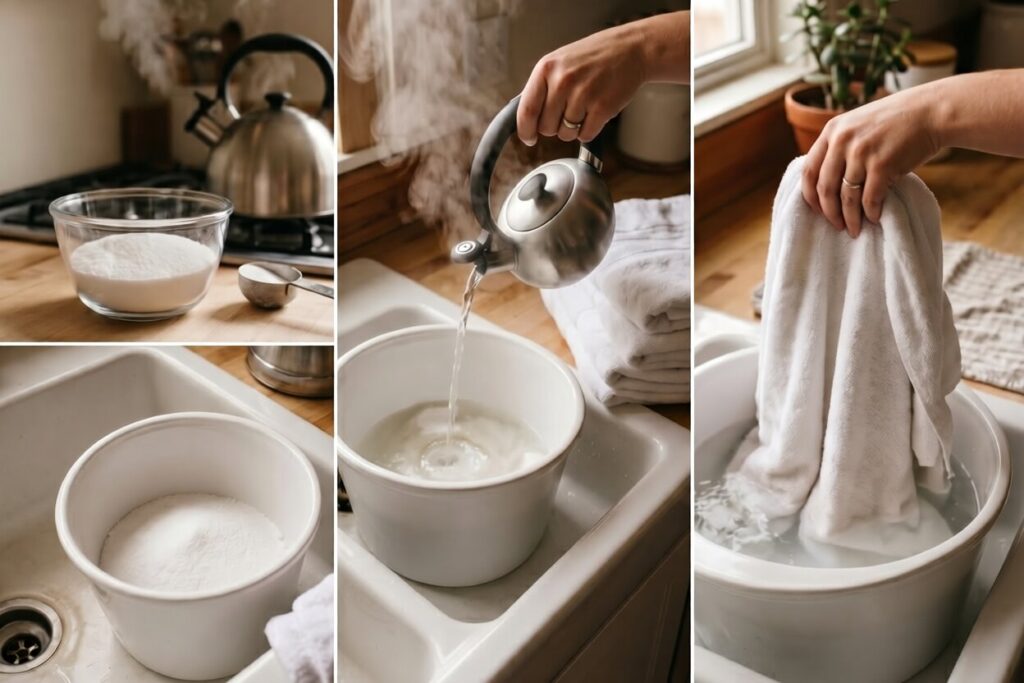
Oxygen bleach towels treatment is another strong option, especially for white or color safe towels if the label allows it. Oxygen bleach is gentler than chlorine bleach and can help with mildew odor without the same fabric damage risk. Follow the package directions carefully because concentration varies.
For white towels with a serious mildew smell, hydrogen peroxide may help, but test first and avoid using it on colors unless the care label says it’s safe. If your washer has a sanitize cycle, use it occasionally for durable towels. Heat can help reduce odor causing microbes, but don’t overuse high heat on delicate or luxury towels because it can shorten fabric life.
The Fabric Softener Trap
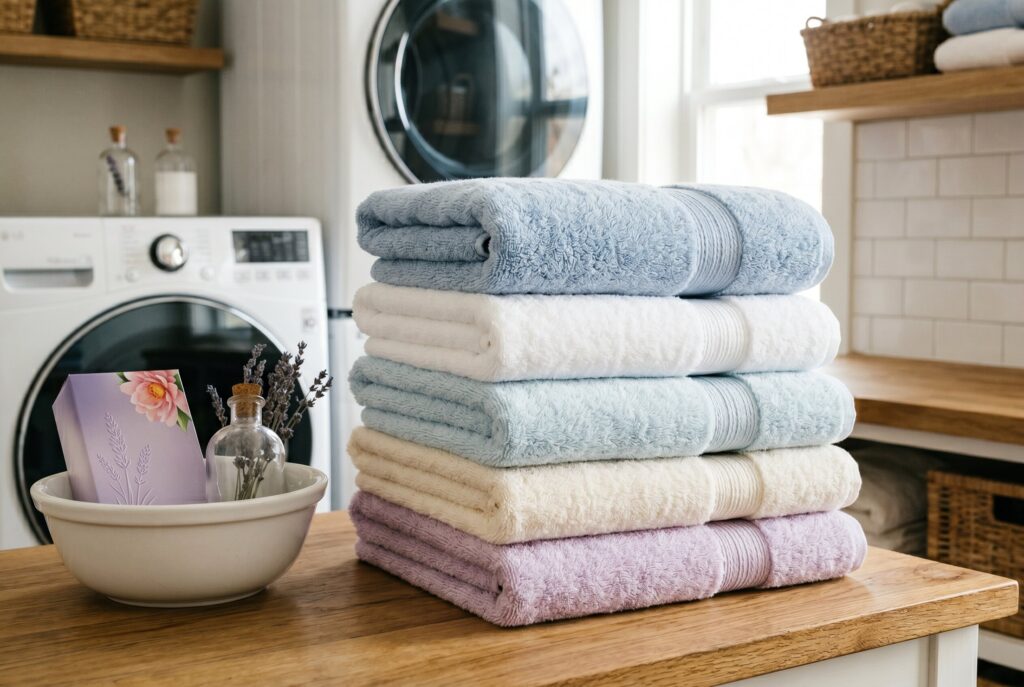
Fabric softener towels may feel fluffy in the short term, but it often creates the exact problem you’re trying to solve. The softener coats cotton loops, blocks absorbency, and locks moisture inside the towel. That damp, coated environment is perfect for odor.
Laundry beads can be similar. They add scent, but scent isn’t sanitation. If your towels smell musty after washing, adding perfume won’t fix the bacteria, oils, or residue trapped in the fibers. Skip fabric softener for towels completely. If you want softness, use less detergent, rinse well, avoid over drying, and shake towels before drying. Clean fibers feel better than coated fibers.
Check the Washer Too

Sometimes the towel isn’t the only problem. Front loading washers, rubber gaskets, detergent drawers, and damp drums can hold mildew. If every load smells off, clean the washer before blaming the towels. Wipe the gasket, clean the detergent drawer, run a washer cleaning cycle, and leave the door open after laundry so the drum can dry. A smelly washer can re-contaminate clean towels every time you wash them.
Conclusion
How to remove mildew smell from towels is only half the solution. Preventing it from coming back starts with proper drying. Hang towels flat instead of on tight hooks, never leave damp towels in the hamper or wet laundry in the washer, avoid overloading the machine, and use only a small amount of detergent. Skip fabric softener because it can trap moisture and odors in the fibers.
A towel that dries completely stays fresh longer. Clean fibers, thorough rinsing, and good airflow keep towels fresh far better than heavy fragrances. Make drying part of your routine, and mildew odors are far less likely to return.
Related Articles
Bathroom Towel Storage: 7 Spa Inspired Ideas for Tiny Bathrooms