

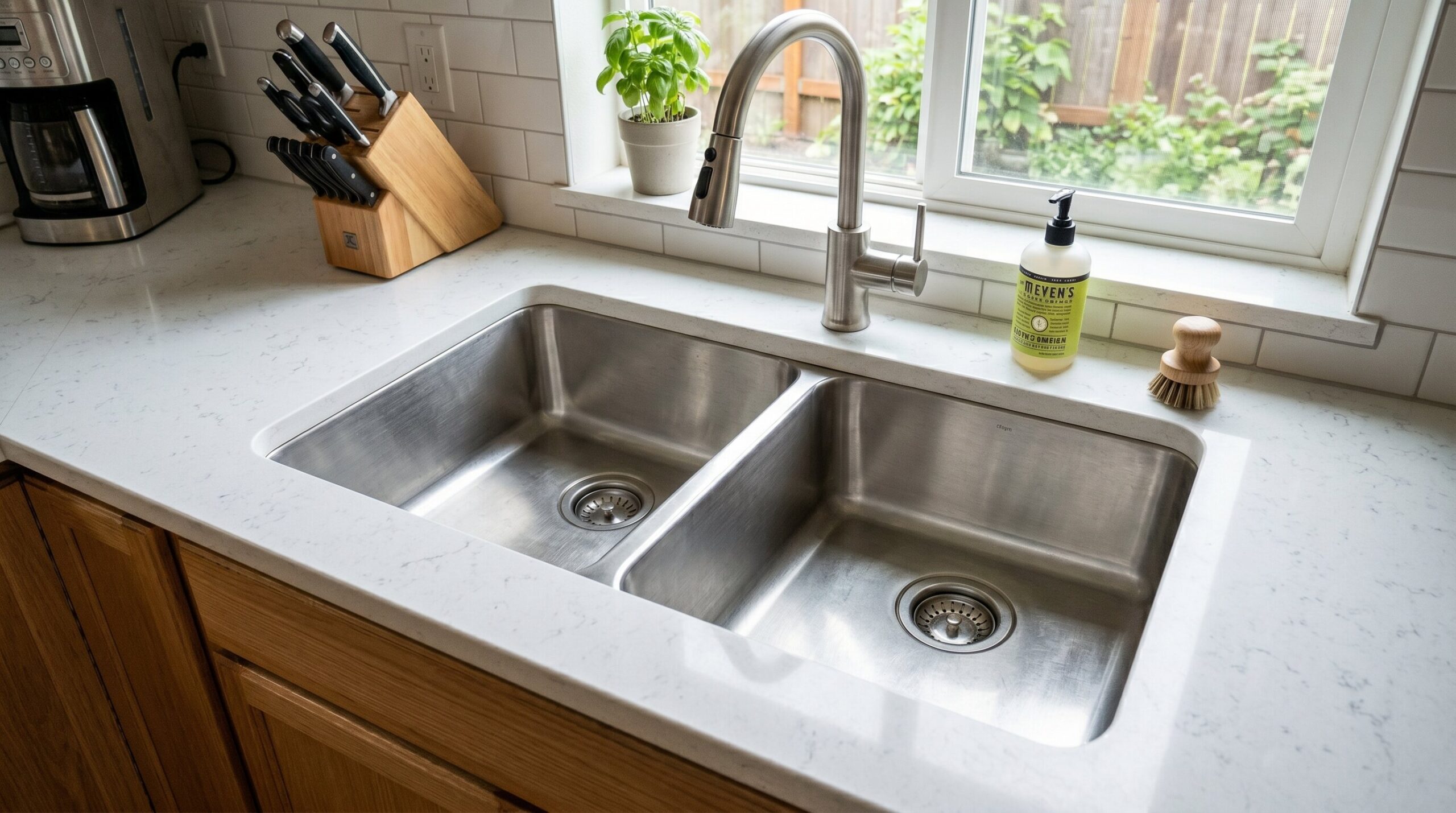
Many people accidentally damage a stainless steel sink by using steel wool, bleach, or abrasive scrubbers. While durable, stainless steel can still scratch, lose its shine, and develop water spots if cleaned the wrong way.
The best way to clean a stainless steel sink is simple: wash with baking soda and dish soap, rinse briefly with vinegar to remove water spots, then dry and buff with a few drops of mineral or olive oil. Most importantly, always scrub with the grain to avoid visible scratches and keep the finish looking like new.
Supplies You Need
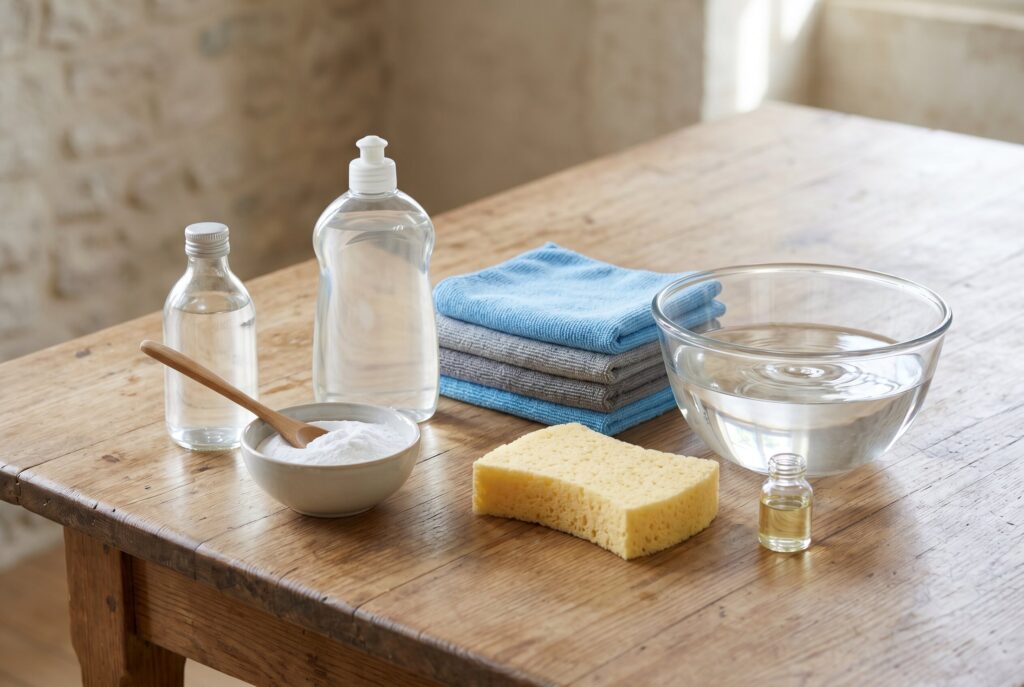
You don’t need a cabinet full of specialty products. For routine stainless steel sink cleaning, gather baking soda, dish soap, white vinegar, microfiber cloths, a soft sponge, warm water, and a few drops of olive oil or mineral oil.
For tougher stains, keep cream of tartar or Bar Keepers Friend nearby. These are useful for stainless steel sink rust stains or stubborn discoloration, but they should be used carefully and briefly. Always rinse cleaners away fully. Even gentle ingredients can leave residue if they dry on the surface.
Step 1: Baking Soda and Dish Soap
Start by emptying the sink completely. Remove dishes, food scraps, strainers, and metal objects. Rinse the basin with warm water so the surface is damp.
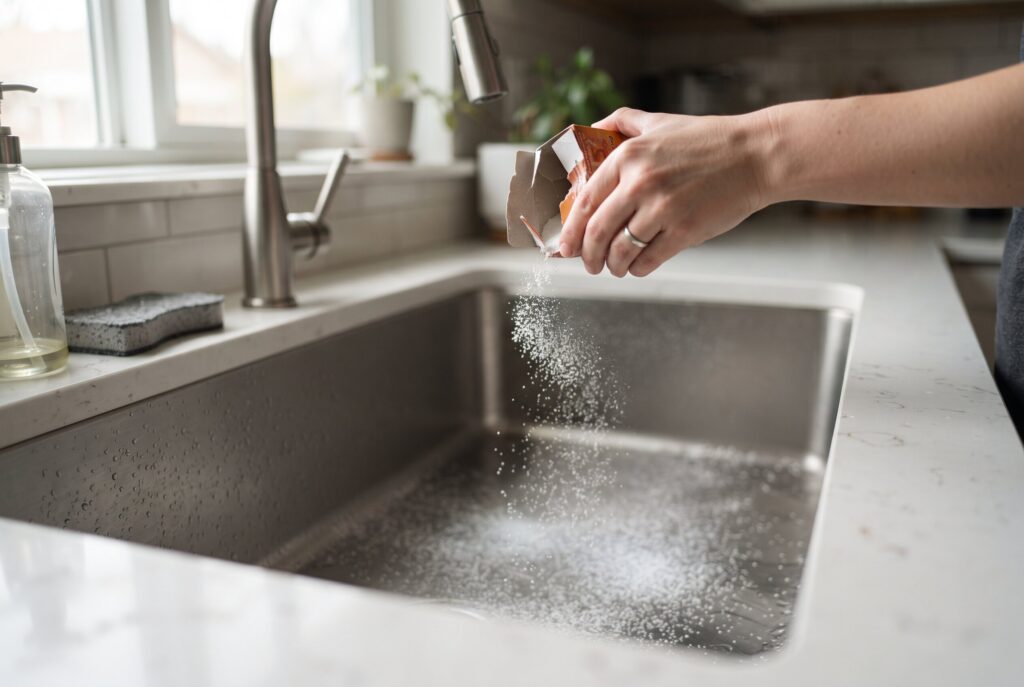
Sprinkle a thin layer of baking soda across the sink. Baking soda is mildly abrasive, which means it can lift grime without acting like sandpaper. Add a few drops of dish soap to a soft sponge. Scrub gently with the grain, paying attention to corners, the drain rim, faucet base, and any dull patches.
This step handles daily grime, grease film, food residue, fingerprints, and light stains. It is also one of the safest ways to clean stainless steel sink naturally because it avoids chlorine and harsh fumes. Rinse thoroughly with warm water when finished.
Step 2: Vinegar Rinse for Water Spots
Hard water can leave cloudy marks and white mineral deposits. For those stainless steel sink water spots, vinegar can help, but contact time matters. Spray or wipe a small amount of white vinegar onto the spotted areas, let it sit briefly, then rinse well.
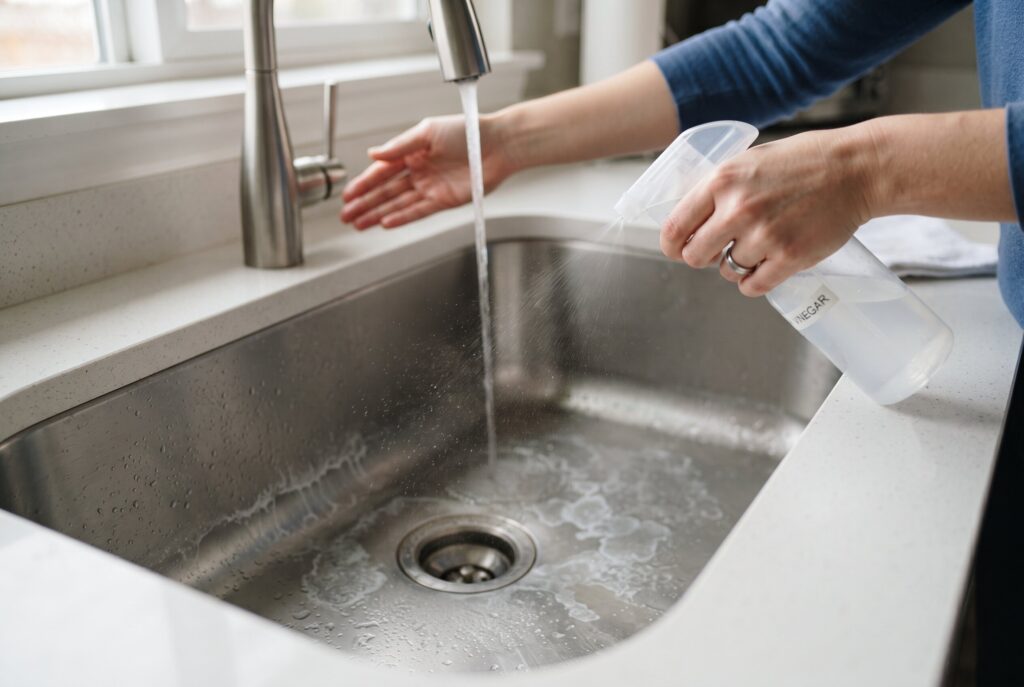
Don’t soak stainless steel in vinegar for a long time. Acid can be helpful for minerals, but prolonged exposure isn’t friendly to every finish. The goal is a quick rinse, not an overnight bath. If your manufacturer warns against acidic cleaners, follow that guidance. When in doubt, test a hidden spot first.
Step 3: Dry and Buff With Oil
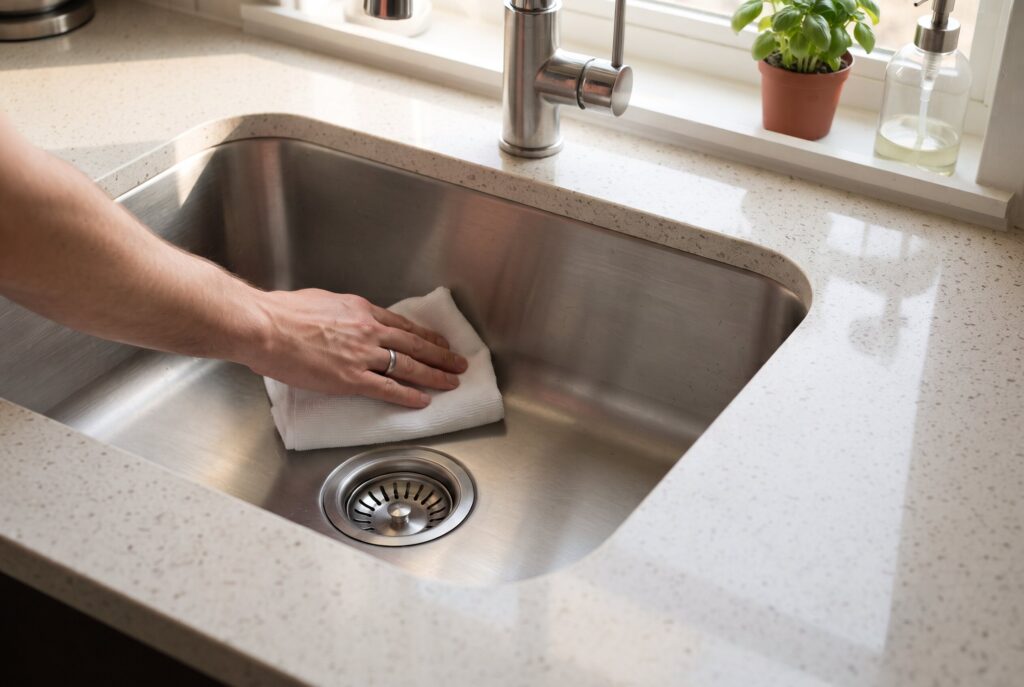
Never let the sink air dry if you want it to shine. Standing droplets create new water spots. Use a clean microfiber cloth to dry every surface, including the walls, corners, and drain area.
Once dry, add 2 or 3 drops of olive oil or mineral oil to a clean cloth. Buff lightly with the grain. This gives the sink a soft shine and helps reduce streaks. Use only a tiny amount. Too much oil can feel greasy and attract dust. This oil buff is the final detail that makes a clean sink look polished instead of merely rinsed.
Advanced Rescue: Rust-Like Spots
Rust-like stains on stainless steel often come from outside iron particles, not from the sink itself. A forgotten steel wool pad, metal can, cast iron pan, or cheap metal utensil can leave tiny particles that oxidize on the surface.
Don’t attack these spots with force. For stainless steel sink rust stains, use a cream of tartar paste or a stainless steel safe cleaner such as Bar Keepers Friend. Apply briefly, rub gently with the grain, rinse completely, and dry.
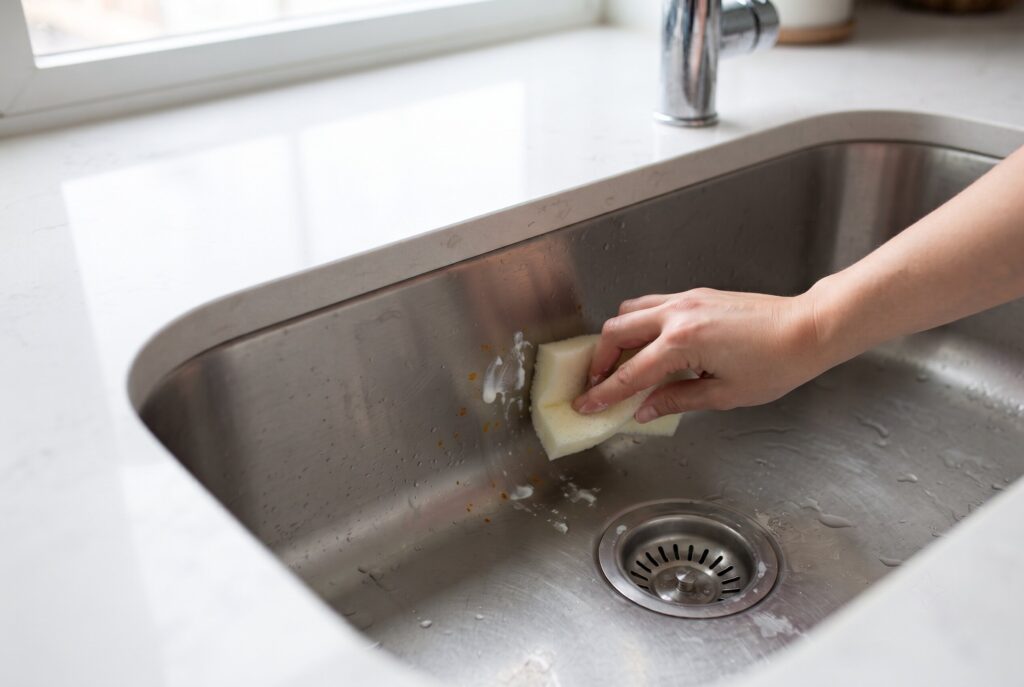
If using Bar Keepers Friend, don’t let it sit too long and don’t mix it with bleach or other cleaners. More time and more pressure don’t mean better results. They often mean more risk.
The Manufacturer’s Never Use List

- Avoid steel wool stainless steel cleaning at all costs. Steel wool can scratch the sink and leave iron fragments that later look like rust.
- Avoid bleach stainless steel cleaning unless your manufacturer specifically approves a diluted method. Chlorine can damage stainless steel’s protective layer and create pitting or discoloration.
- Avoid leaving standing water, wet sponges, rubber mats, cast iron pans, or metal cans in the sink overnight. Trapped moisture and metal contact can create stains that are harder to remove later.
- Also avoid dry abrasive powders, silver cleaner, oven cleaner, and harsh chemical mixes. Stainless steel rewards consistency, not aggression.
How Often Should You Clean It?
Keeping a stainless steel sink clean is usually more about consistency than heavy scrubbing. After cooking or washing dishes, give the sink a quick rinse and wipe to remove food residue, grease, and soap. If hard water is a problem in your area, taking an extra minute to dry the sink before bed can go a long way toward preventing water spots and mineral buildup.
About once a week, give the sink a more thorough cleaning with baking soda and dish soap to remove everyday grime and restore its shine. Save vinegar for occasional water spots or mineral deposits, and only reach for rust-removal products when you actually see rust stains developing.
The truth is that spotless sinks rarely come from marathon cleaning sessions. They come from small habits repeated consistently. A quick wipe today is often worth more than an hour of scrubbing next month.
Conclusion
Learning how to clean a stainless steel sink is more about technique than stronger cleaners. Baking soda and dish soap handle most everyday grime, vinegar helps remove water spots, and a small amount of mineral or olive oil restores shine. Always scrub with the grain, rinse thoroughly, and dry the sink to prevent streaks and mineral buildup.
Skip steel wool, bleach, and abrasive scrubbers, which can damage the finish over time. A few minutes of gentle cleaning each week is all it takes to keep a stainless steel sink clean, scratch-free, and looking like new for years.
Related Articles
How to Get Rust Off Stainless Steel: The Safe and Easy Way