

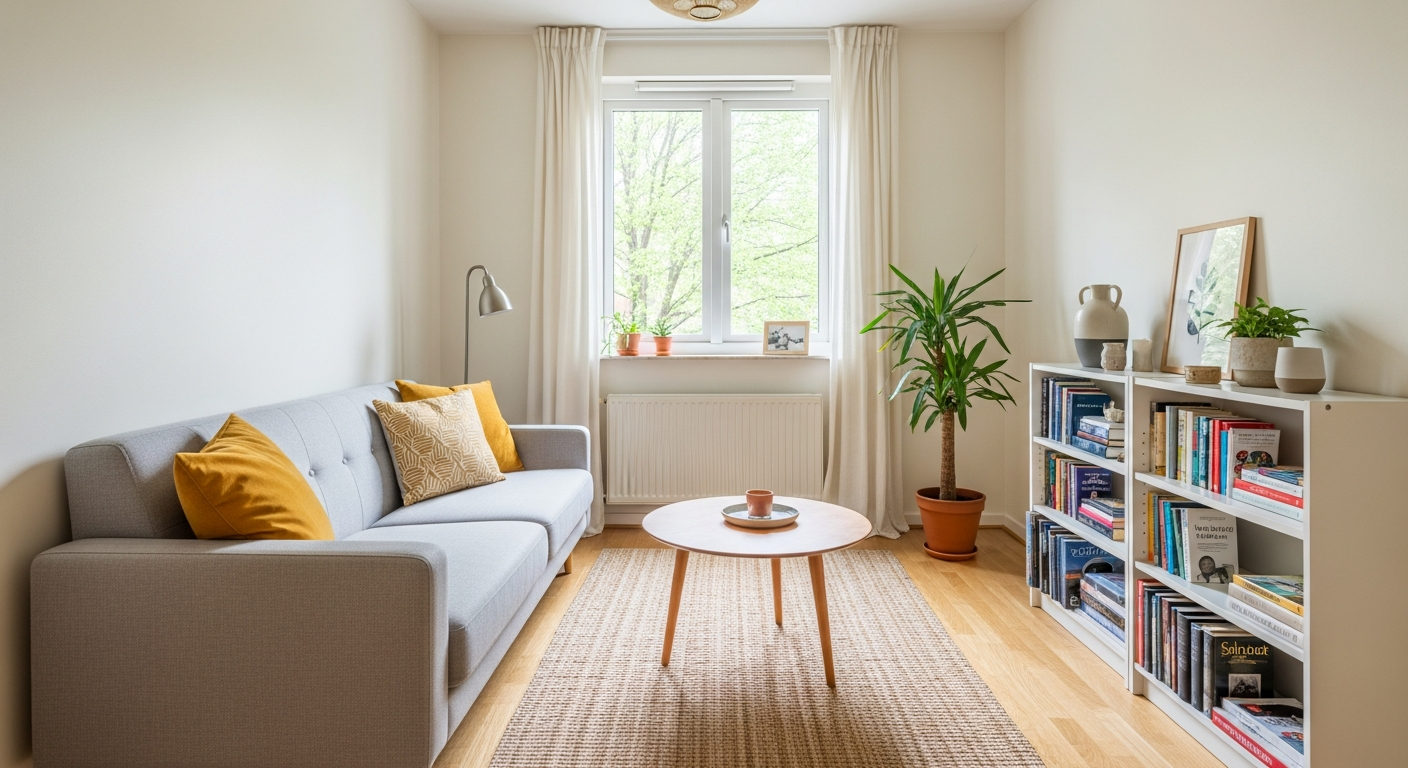
Living in a small home doesn’t mean sacrificing comfort, style, or functionality. Across the United States, more homeowners are choosing apartments, townhomes, and compact houses that fit modern lifestyles.
As living spaces shrink, interior design plays a critical role in shaping how these homes function and feel. Smart interior design helps small homes feel organized, open, and intentionally designed, even when square footage is limited.
Introduction: Why Smart Design Matters in Small Homes
Smart design matters in small homes because every square foot has a purpose. In many big cities where housing costs continue to rise, compact living spaces have become a practical choice for individuals, couples, and small families. A well designed small home supports daily routines, reduces clutter, and improves overall quality of life.
Rather than relying on visual tricks alone, smart interior design focuses on flexibility, storage efficiency, and thoughtful layout. These principles allow small homes to adapt to changing needs while maintaining comfort and visual balance.
1. Multifunctional Furniture: Double Duty for Space Efficiency
Multifunctional furniture is essential in small homes. Pieces that serve more than one purpose reduce the need for excess furnishings while increasing usability.
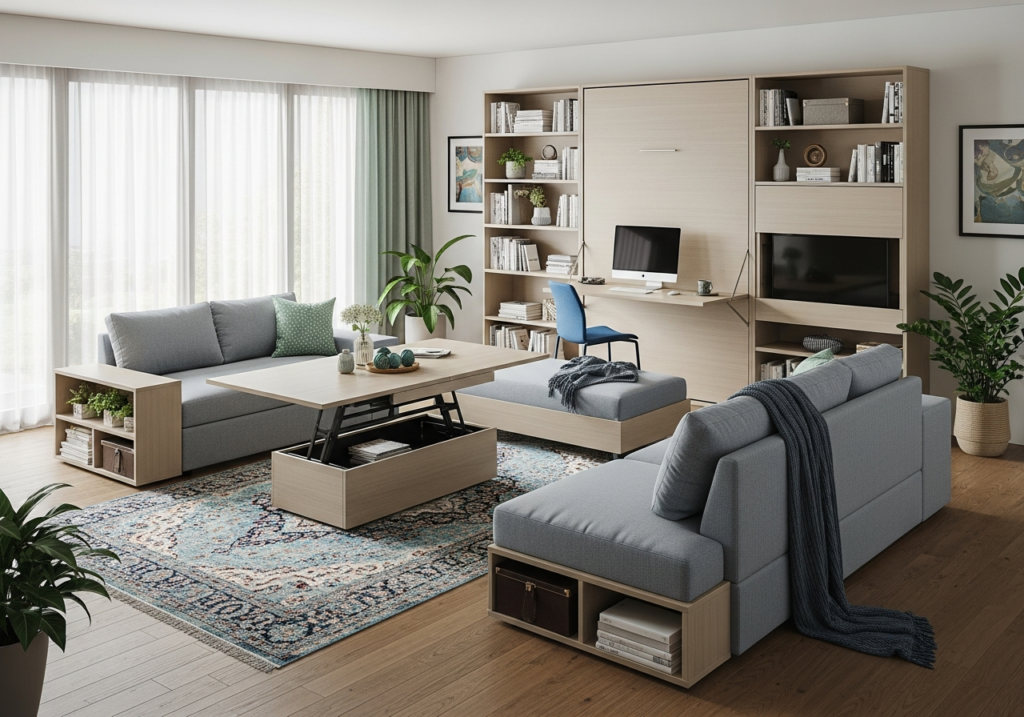
In apartments and condos, common examples include sofa beds, extendable dining tables, storage ottomans, and desks that fold into walls. These pieces support everyday living without overcrowding the space. Multifunctional furniture also allows rooms to shift functions throughout the day, which is especially valuable for homeowners who work remotely or host guests occasionally.
2. Vertical Storage Solutions: Going Up When Space Is Tight
When floor space is limited, vertical storage becomes a powerful design strategy. Using wall height efficiently helps keep small homes organized and visually open.
Tall shelving units, wall mounted cabinets, and floating shelves are popular in American small homes. These solutions store essentials while keeping walkways clear. Vertical storage also draws the eye upward, making ceilings appear higher and rooms feel more spacious.
3. Mirrors: Creating the Illusion of More Space
Mirrors are a classic tool in small space design, but their impact remains significant. Strategically placed mirrors reflect light and visually expand a room.
In many small homes, mirrors are often placed opposite windows or near light sources to amplify brightness. Large mirrors or mirrored furniture pieces can make narrow spaces feel wider and more open. When integrated thoughtfully, mirrors enhance both function and aesthetics without overwhelming the design.
4. Light, Neutral Color Palette: Brightening Up Small Spaces
Light, neutral color palettes help small homes feel airy and cohesive. Shades like white, soft beige, light gray, and warm cream reflect light and reduce visual clutter.
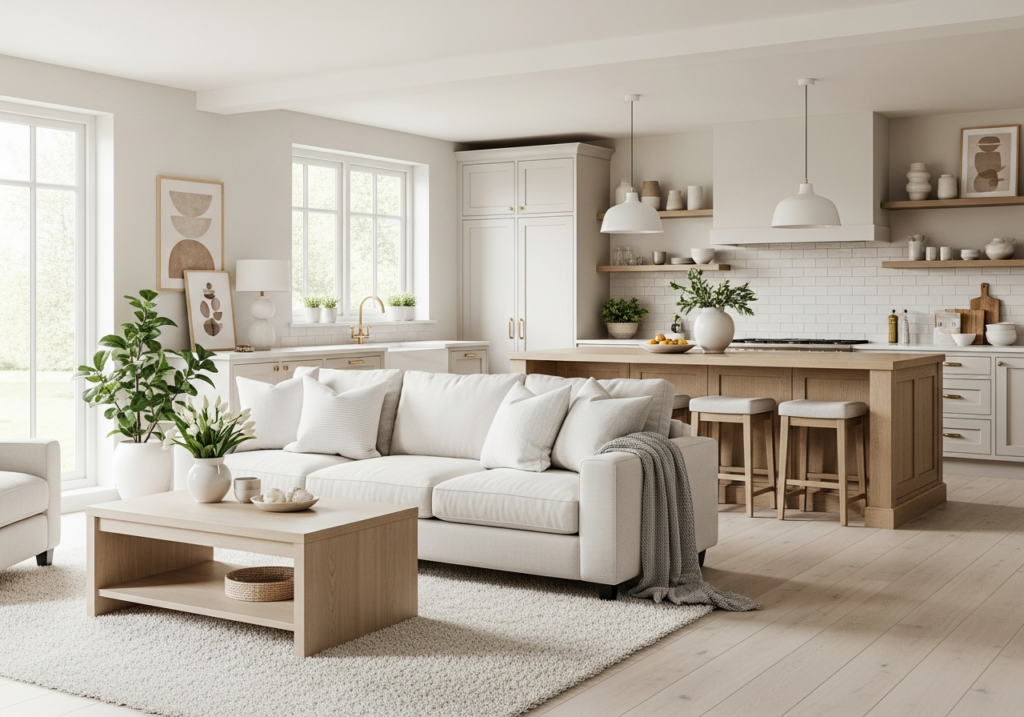
Some homeowners often choose neutral walls as a foundation, allowing furniture and decor to add subtle contrast. Light colors also make transitions between rooms smoother, which is especially important in open or semi open layouts. This approach supports a calm and spacious atmosphere throughout the home.
5. Pocket and Sliding Doors: Saving Space with Style
Traditional swing doors can take up valuable space in small homes. Pocket doors and sliding doors offer a practical alternative by eliminating the need for clearance.
In many homes, these doors are commonly used for bathrooms, closets, and home offices. They improve circulation and allow furniture placement closer to doorways. Modern designs ensure these doors feel stylish and intentional rather than purely functional.
6. Minimal Decor: Less Is More in Small Spaces
Minimal decor helps small homes feel intentional rather than crowded. Carefully selected decor pieces make a stronger impact than numerous small items.
In compact homes, homeowners often choose a few meaningful accents such as artwork, plants, or textured textiles. This approach keeps visual noise low while allowing personality to shine through. Minimal decor also makes spaces easier to clean and maintain, which supports everyday comfort.
7. Under Bed Storage: Making the Most of Bedroom Space
Bedrooms in small homes benefit greatly from under bed storage. This often overlooked area provides valuable space for storing seasonal clothing, linens, or personal items.
Many homeowners use beds with built in drawers or add low profile storage containers underneath. This solution keeps bedrooms organized without requiring additional furniture, preserving a sense of openness and calm.
8. Open Shelving in the Kitchen: Combining Utility and Design
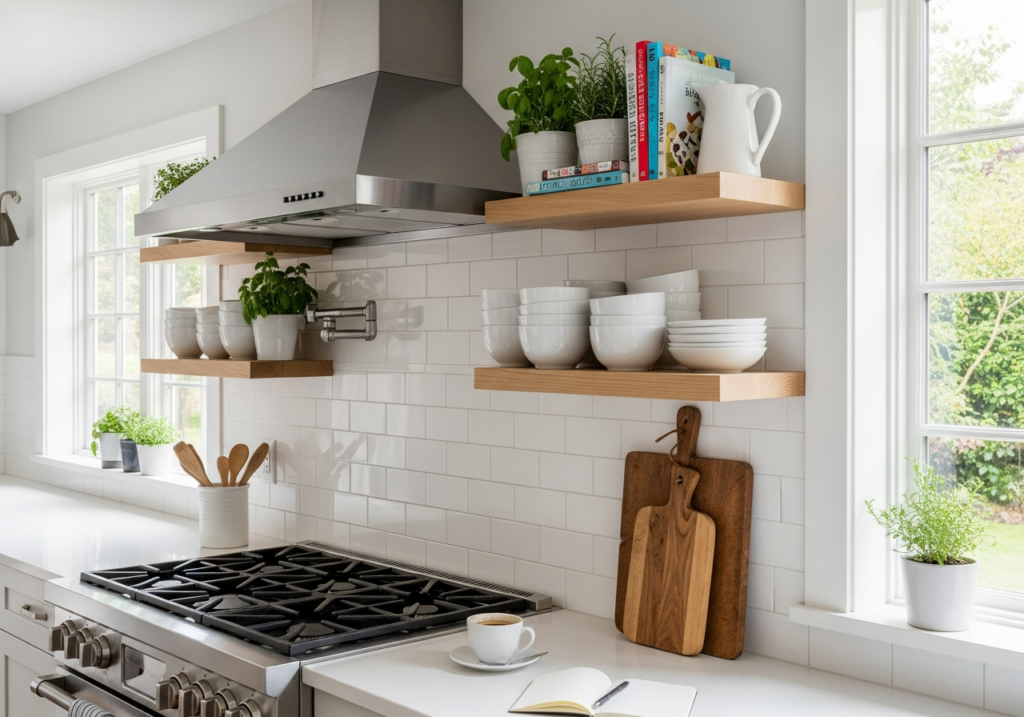
Open shelving is a popular choice in small kitchens. It provides storage while making the space feel lighter and more accessible.
In small homes, open shelves are often used to store frequently used items such as dishes, glassware, and pantry staples. When styled thoughtfully, open shelving adds visual interest and encourages organization. This approach works particularly well in kitchens with limited cabinetry.
9. Multi Use Spaces: Flexible Rooms for Dynamic Living
Multi use spaces are a defining feature of smart small home design. Rooms that serve more than one function help maximize usability without increasing square footage.
In many modern homes, living rooms often double as home offices, guest rooms, or workout spaces. Design elements such as movable furniture, area rugs, and adaptable lighting help define zones within a single room. This flexibility supports changing lifestyles and daily routines.
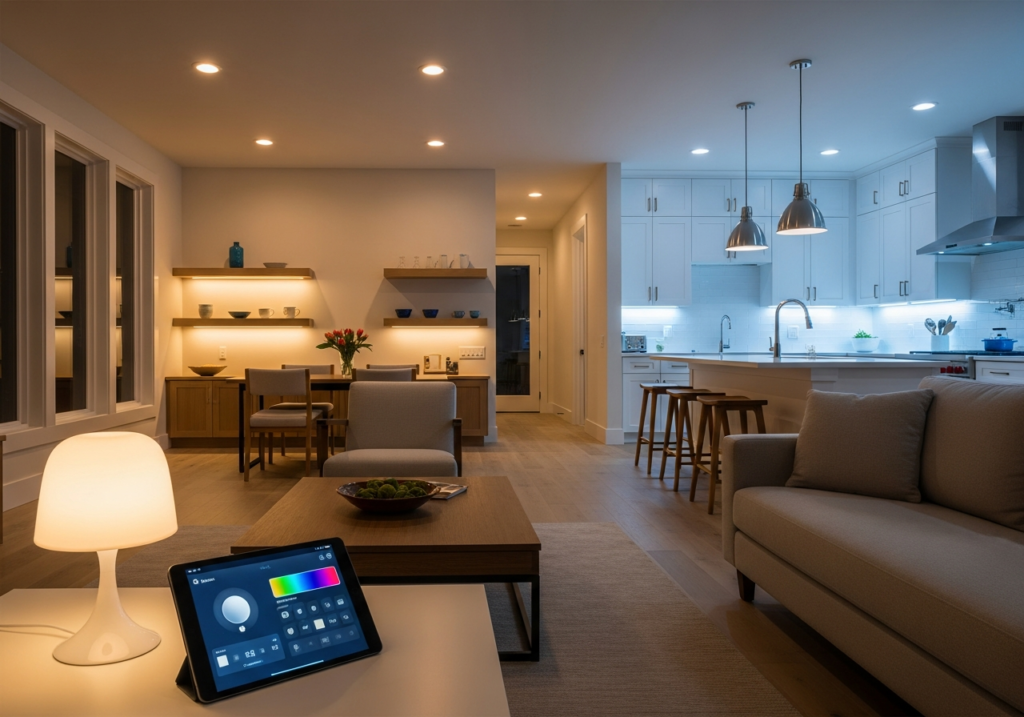
10. Smart Lighting Solutions: Enhancing the Ambiance
Lighting plays a crucial role in how small homes feel. Smart lighting solutions enhance both functionality and atmosphere.
Layered lighting that combines ambient, task, and accent sources helps small spaces feel balanced and comfortable. In American homes, smart bulbs and dimmable fixtures allow homeowners to adjust lighting based on time of day and activity. Proper lighting reduces shadows and adds depth, making rooms feel larger and more inviting.
Conclusion
Smart interior design ideas for small homes focus on efficiency, flexibility, and intentional choices. For homeowners living in limited spaces, thoughtful design transforms constraints into opportunities.
By using multifunctional furniture, smart storage, adaptable layouts, and well planned lighting, small homes can feel comfortable, organized, and visually spacious. These design principles support long term livability and help small homes meet the demands of modern life with confidence and style.
Related Articles
10 Small Living Room Layout Ideas to Maximize Space and Enhance Your Home’s Functionality