

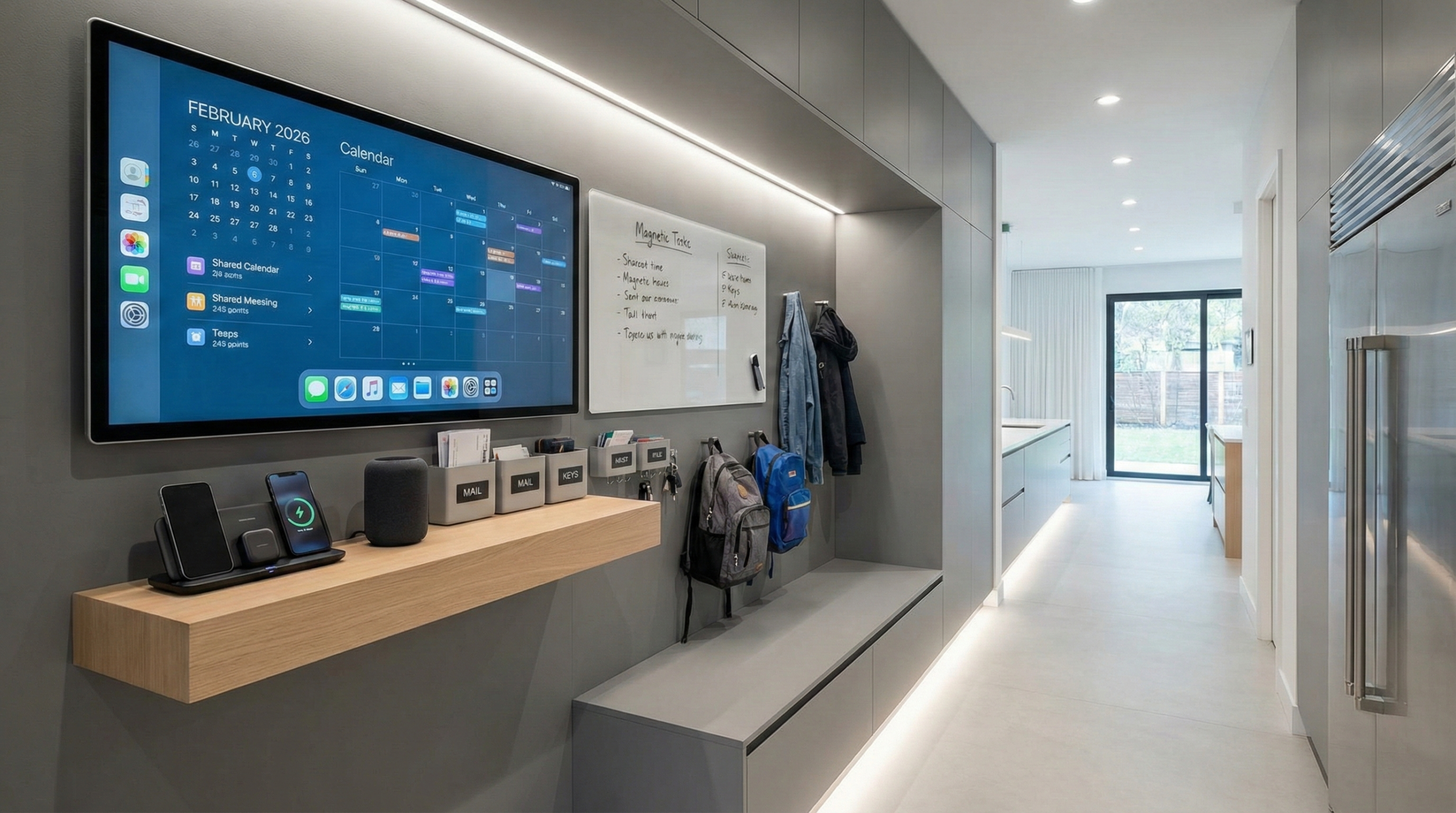
In the hustle and bustle of daily life, keeping track of everyone’s schedules, appointments, chores, and important documents can feel overwhelming. A family command center is an effective solution to organize the family’s busy life and reduce clutter in the process. By creating a centralized system, you can streamline schedules, stay on top of to-do lists, and create a more organized, functional space in your home.
This guide will take you through 10 practical setup ideas to help you create a family command center that works for your unique needs. From scheduling solutions to smart storage ideas, these tips will help you reduce stress, keep your home organized, and ensure that everything stays on track.
1. Select the Best Location for Your Command Center
The first step in setting up an effective family command center is choosing the right location. Ideally, you want a space that’s easily accessible to everyone in the household. This will help encourage its use, making it a hub for managing family activities and responsibilities.
Best Locations for Your Command Center
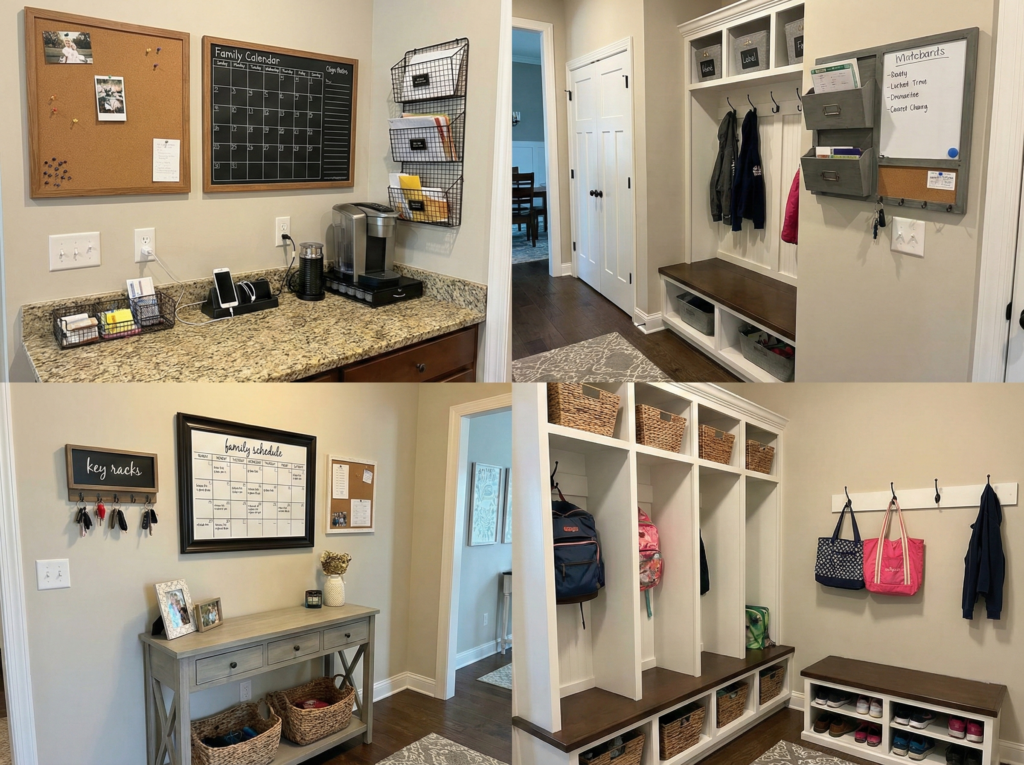
- Kitchen: The kitchen is a natural choice for many families. It’s a high-traffic area where everyone gathers, and it’s easy to add organizational tools like a calendar, to-do lists, or mail sorter to the wall or a nearby counter.
- Hallway or Entryway: If your kitchen is already filled with other items, consider setting up your family command center in the entryway. A small nook can be perfect for organizing backpacks, shoes, keys, and even a family calendar.
- Mudroom: For homes with a mudroom, this is another ideal spot. It keeps the clutter from spreading to other rooms while providing an organized space for coats, shoes, and school bags.
By selecting a location that works for your space, you’re ensuring the command center becomes a useful and accessible part of your family’s daily routine.
2. Centralized Family Calendar for Streamlined Scheduling
One of the cornerstones of a family command center is a centralized family calendar. With everyone’s schedules to juggle, a shared calendar helps keep track of everything from work commitments to school events to doctor appointments. A visible, easy-to-access calendar prevents double-booking and ensures no one misses important events.
For families with multiple members, using a large wall calendar or a dry-erase board can be a game-changer. Color-code each family member’s activities for visual ease.
For example, assign different colors for work schedules, school events, and personal commitments, so everyone can quickly identify their responsibilities. If you prefer a digital solution, Google Calendar or family organizer apps can sync everyone’s schedules and provide reminders to keep everyone on track.
This shared calendar will save time and reduce the stress of managing everyone’s commitments in one place.
3. Paper Sorting System for Important Documents
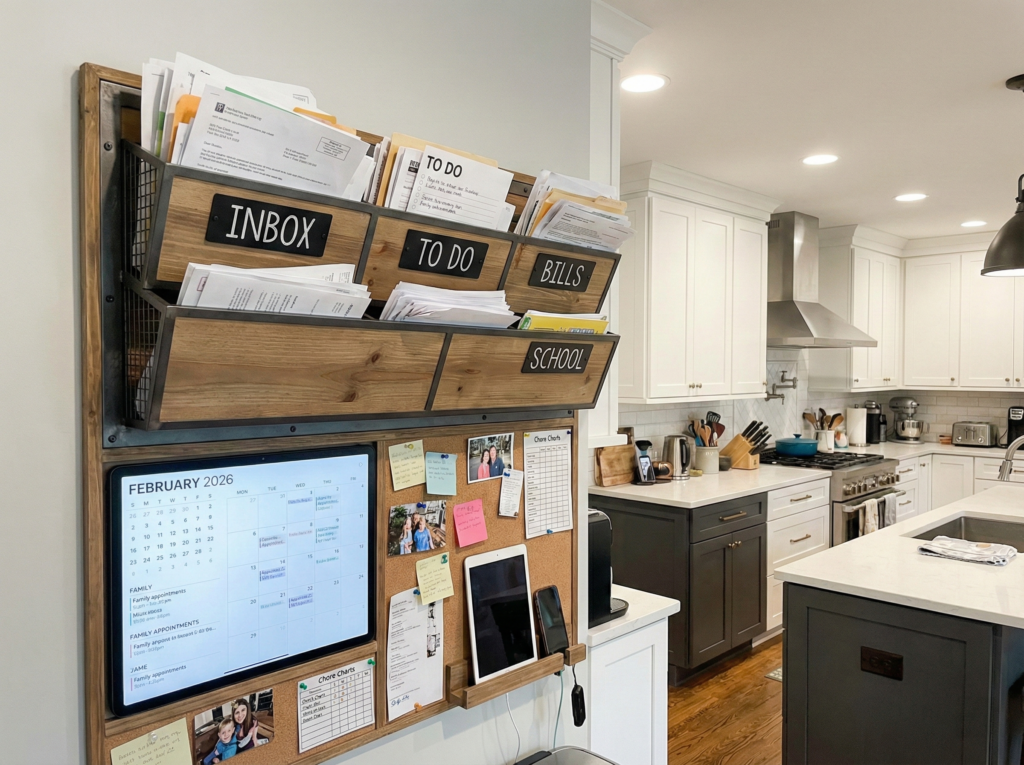
Managing paperwork can be one of the most overwhelming parts of household organization. Bills, school forms, insurance documents, and important notices can quickly pile up. A paper sorting system within the command center will prevent this from happening and ensure all important documents are stored safely and accessed easily.
Start by creating a simple system for incoming and outgoing papers. For bills or paperwork that needs to be dealt with, use a file organizer or tray labeled “To Be Paid” or “To Be Filed”. On the other hand, use a filing cabinet or drawer organizers to sort documents by category: insurance, medical, or education. Keep everything labeled clearly and ensure that it’s easy for family members to find the information they need.
4. Key Hooks and Storage for Everyday Essentials
Another important aspect of your family command center is providing designated spots for everyday items like keys, wallets, bags, and sunglasses. Creating a place for these items keeps your home tidy and reduces the stress of running out the door in the morning and not finding your keys.
Set up wall-mounted key hooks near the command center for quick access. Add a small bowl or tray for wallets, sunglasses, and phones, so everyone knows where to put their items when they walk in the door. For families with kids, consider creating cubbies or individual hooks for school bags, coats, and other personal items. These organizing solutions will help prevent the clutter from piling up in the entryway and keep essential items organized and easy to find.
5. Family Task List for Household Chores
To keep the household running smoothly, a family task list is essential. This can be a to-do list that tracks daily, weekly, and long-term household chores. By assigning tasks to everyone and keeping them visible, you’ll prevent confusion and ensure that chores are completed on time.
Use a magnetic whiteboard or dry-erase board to write down household responsibilities. You can include tasks like taking out the trash, vacuuming, and laundry, with checkboxes for accountability. Create a rotating schedule so that tasks don’t fall on the same person all the time. For example, one person may be responsible for vacuuming this week, while someone else takes care of it next week. Make sure the task list is visible to all family members, so everyone knows what’s expected of them.
6. Smart Storage for Supplies and Essentials
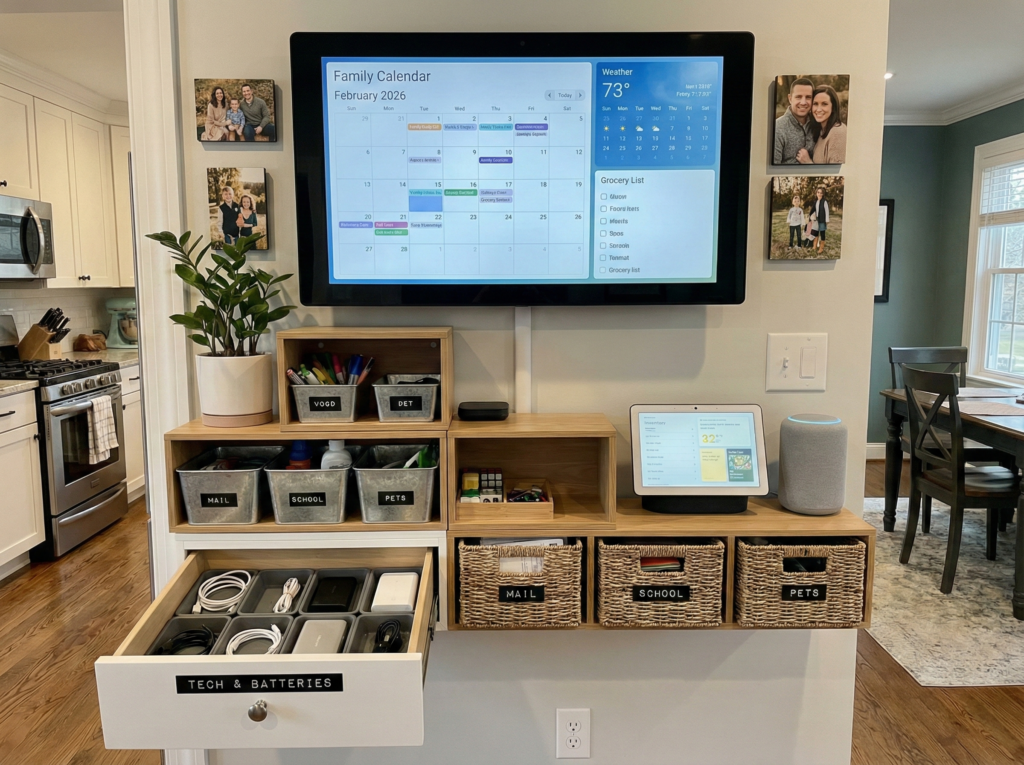
A well-organized command center needs adequate storage for everything from school supplies to cleaning products to spare light bulbs. Smart storage solutions will help keep the space neat and prevent clutter from accumulating.
Consider using clear bins or stackable containers for smaller items like batteries, tools, and first-aid supplies. Label everything clearly, so it’s easy to grab what you need quickly. If space allows, use shelving units or wall-mounted organizers to store larger items such as extra toilet paper, cleaning supplies, or paper towels. The key is to have a dedicated storage area for household essentials so you’re never scrambling to find something you need.
7. Family Command Center for Meal Planning
In a busy household, meal planning can sometimes feel like an afterthought. A well-organized command center should include a section for meal planning to help streamline grocery shopping and reduce the stress of last-minute dinner decisions.
Use a whiteboard or chalkboard to write down the week’s meals. Plan for breakfast, lunch, and dinner to keep your family on track. If you’re particularly busy, consider pre-packing snacks and meals for easy access during the week. Add a grocery shopping list that can be updated throughout the week as things run out. Keeping meal plans visible in your command center will make it easier to stay organized, save time, and cut down on food waste.
8. Use Digital Tools for Family Communication
While a physical command center can be very effective, digital tools can also help families stay connected and organized. There are plenty of family organizing apps that allow you to sync calendars, tasks, and shopping lists.
How to Do It
- Use apps like Cozi or Google Calendar to sync schedules, set reminders, and track family activities.
- Create a shared grocery list on your phone so anyone in the family can add items when they notice something’s running low.
- Use communication apps to send quick updates, reminders, or even just check in with each other throughout the day.
Incorporating digital tools into your command center ensures that everyone is on the same page, no matter where they are.
9. Add Personal Touches to Make It Feel Like Home
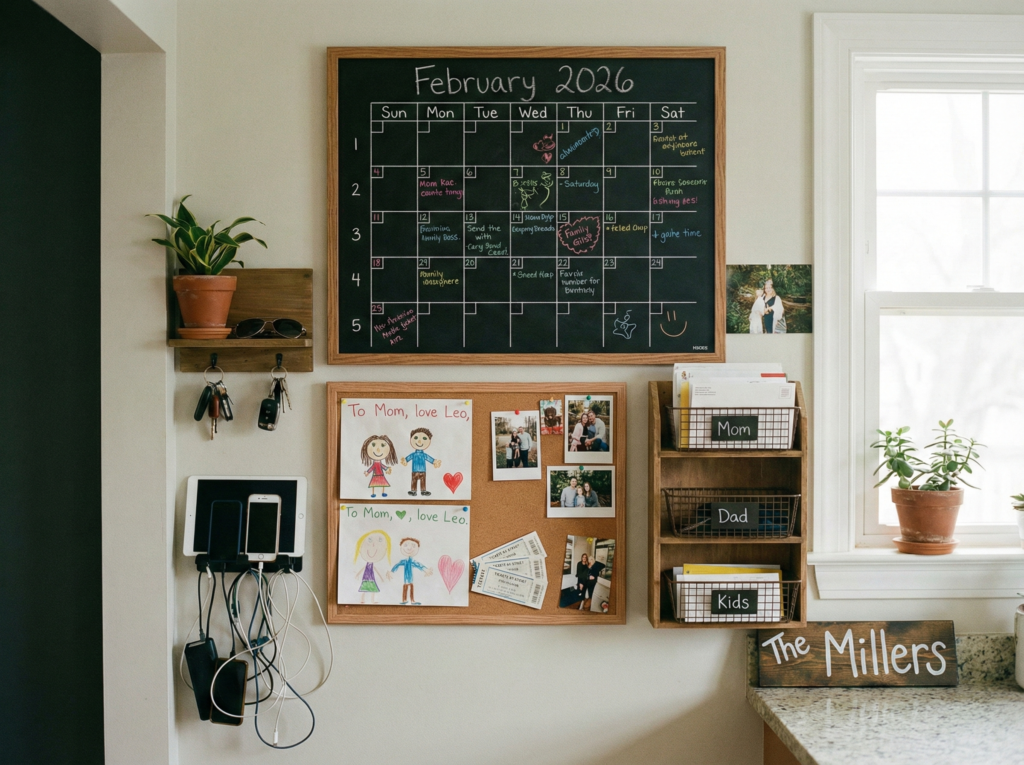
While functionality is key in a family command center, it’s also important to add personal touches that make the space feel welcoming and enjoyable for the whole family. Think of it as your family’s home base, where everyone feels comfortable, organized, and motivated. Add photos of family vacations, motivational quotes, or a family calendar that includes fun events or birthdays. These touches can create a sense of community and connection, encouraging everyone to use the space consistently.
10. Keep It Consistent and Maintain the System
To ensure your family command center remains effective over time, consistency is key. You can create the most organized space, but if no one uses it regularly, it won’t work. Set a weekly family check-in where everyone updates their schedules, chores, and task lists. Encourage your family members to keep their areas tidy and contribute to the upkeep of the command center. Consistency in maintaining the system will ensure it remains functional and organized for the long term.
Conclusion: A Family Command Center That Works for You
A family command center is a game-changer for maintaining an organized, efficient home. With these 10 setup ideas, you can streamline your household’s schedules, reduce clutter, and create a space that works for the entire family. Whether you opt for a digital or physical command center, consistency and organization are the keys to success. By taking small steps each day to maintain the system, you’ll find that your home becomes a more functional, organized, and stress-free place for everyone.