

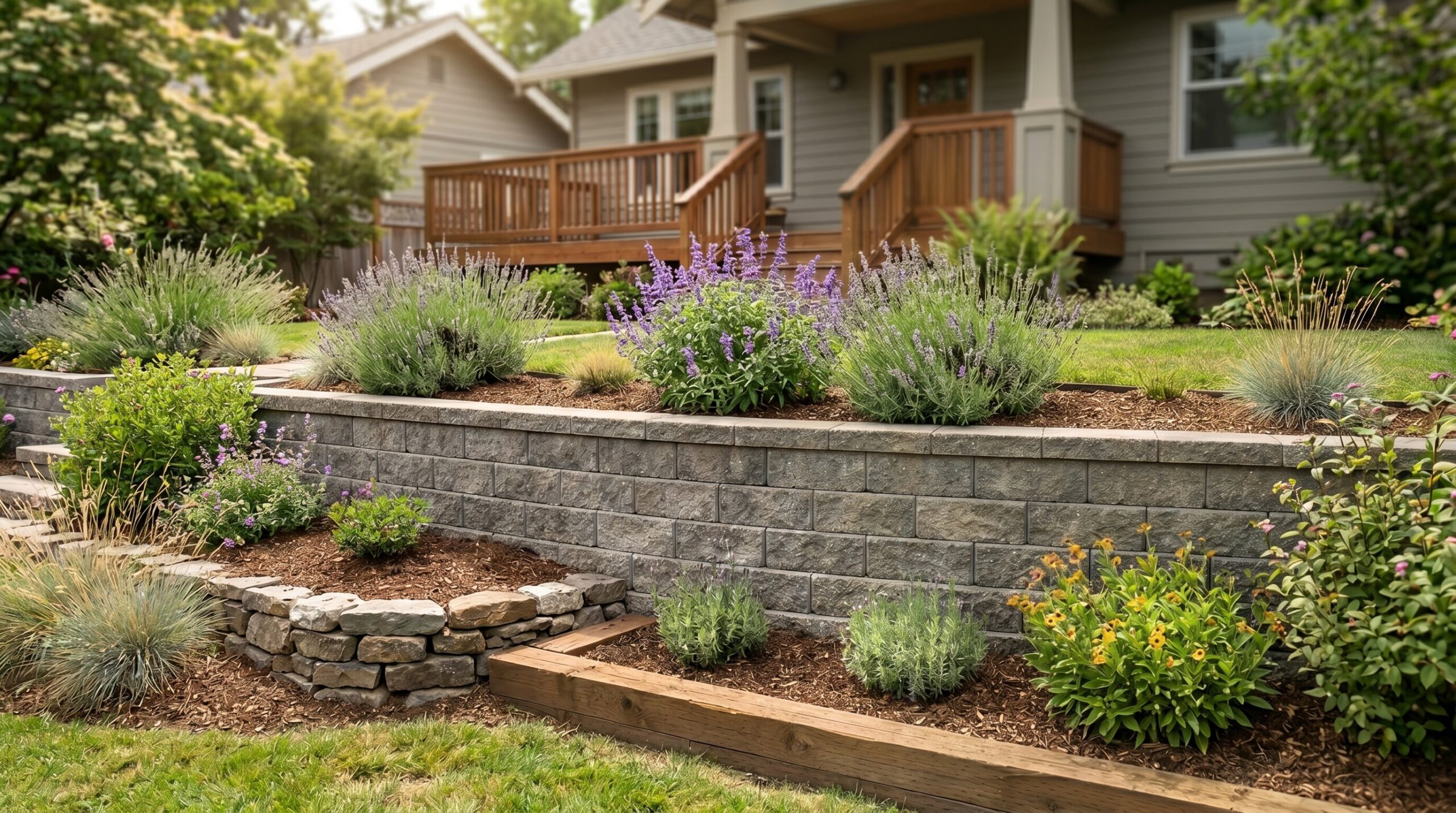
Standing in a backyard and staring at a sloping mess of dirt feels like watching a slow-motion migration toward the patio every time rain hits. Professional landscaping quotes often look more like a down payment on a house than a garden fix. It’s enough to make a person pull the blinds and pretend the backyard doesn’t exist.
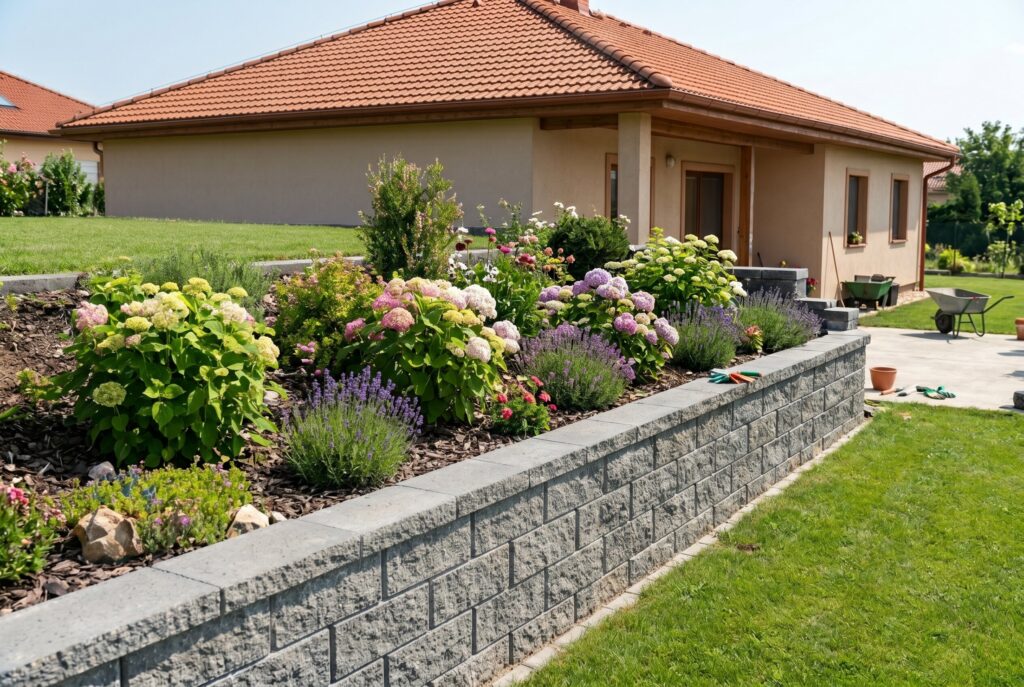
However, a massive bank account isn’t a requirement to reclaim outdoor space. Whether seeking small retaining wall ideas to border a flower bed or needing retaining wall ideas for sloped backyard solutions, plenty of ways exist to finish the job without a professional price tag. Realizing inexpensive cheap retaining wall ideas through DIY efforts can save thousands of dollars while maintaining high aesthetic standards.
The Golden Rules of a Budget Retaining Wall
Before discussing the visual elements, the technical aspects that keep a structure standing deserve attention. Most budget guides skip these details, which is exactly why those projects fail after one season.
1. Master the Drainage
The primary enemy of any structure isn’t the soil: it’s the water. Hydrostatic pressure, the heavy, wet weight present after a storm, pushes a wall over faster than a mudslide.
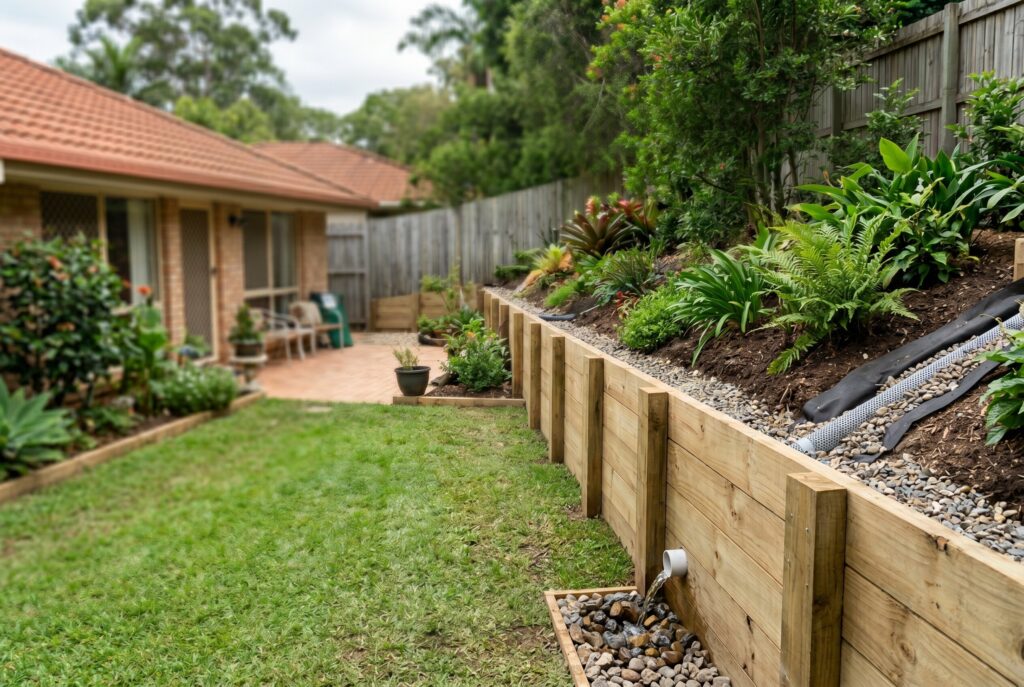
When researching how to build a retaining wall, the plan must include a weep hole or a perforated ag-pipe behind the structure. Surrounding this pipe with a healthy layer of gravel ensures longevity.
2. Know Your Limits (The 3-Foot Rule)
In most regions, structures higher than 600mm or 1 meter enter permit territory.
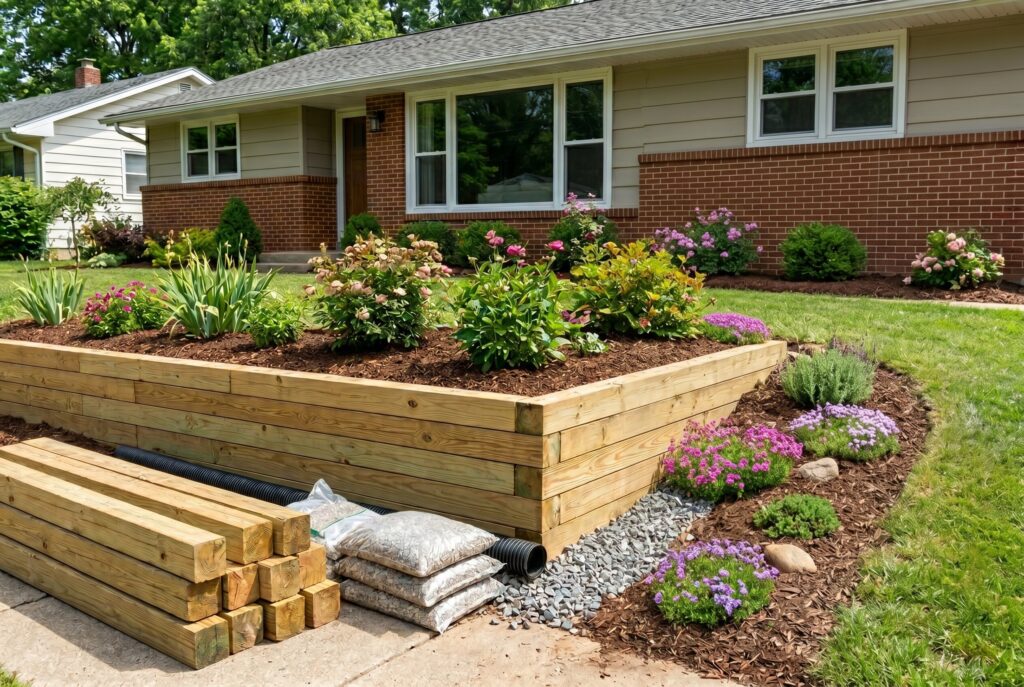
To keep a project within the realm of inexpensive cheap retaining wall ideas, sticking to shorter, tiered sections is a smart move. This strategy avoids expensive structural engineering fees and complex legal paperwork.
Top 5 Proven Low-Cost Ideas for Your Backyard
Choosing a material involves balancing cost, durability, and the physical labor required. Here is a quick breakdown of the cheapest retaining wall options available currently:
| Material | Estimated Cost | Pros | Cons |
| Timber sleepers | Lowest | DIY-friendly; lightweight | Can rot over time |
| Interlocking blocks | Medium | Durable; no mortar | Heavy; needs level base |
| Natural rock | Low if sourced | High aesthetic value | Hard to stack for beginners |
| Gabion walls | Medium | Natural drainage | Industrial style |
| Cinder blocks | Low | Very strong structure | Needs paint for beauty |
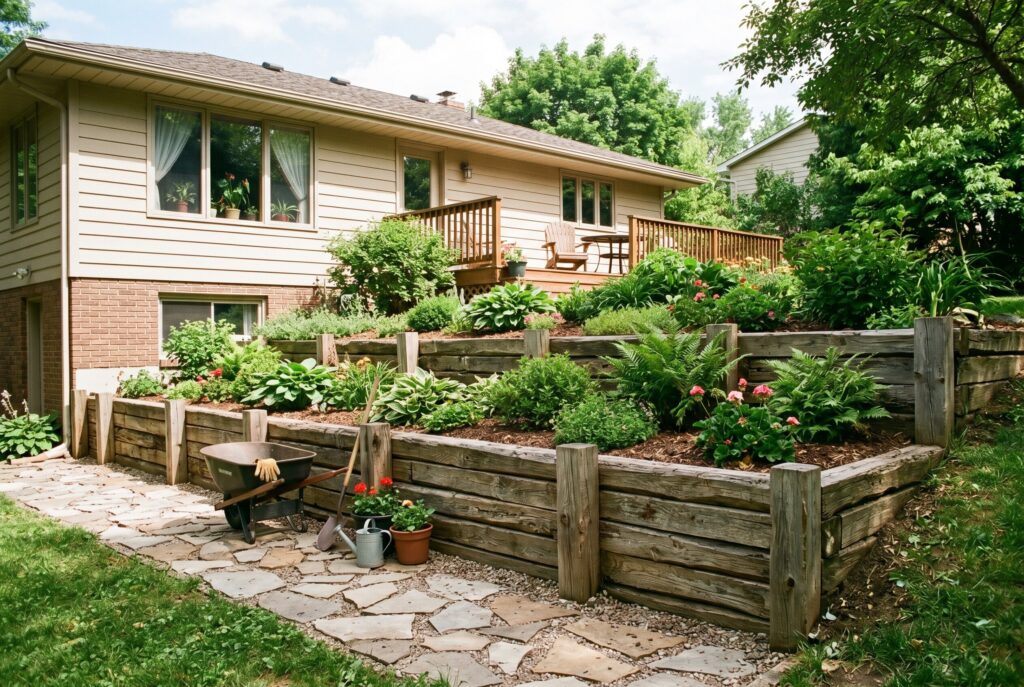
1. Wood and Timber Sleepers: The Rustic Solution
Timber remains a top choice for cheap retaining wall DIY projects because it’s forgiving. If a piece is slightly too long, it’s easily sawed off.
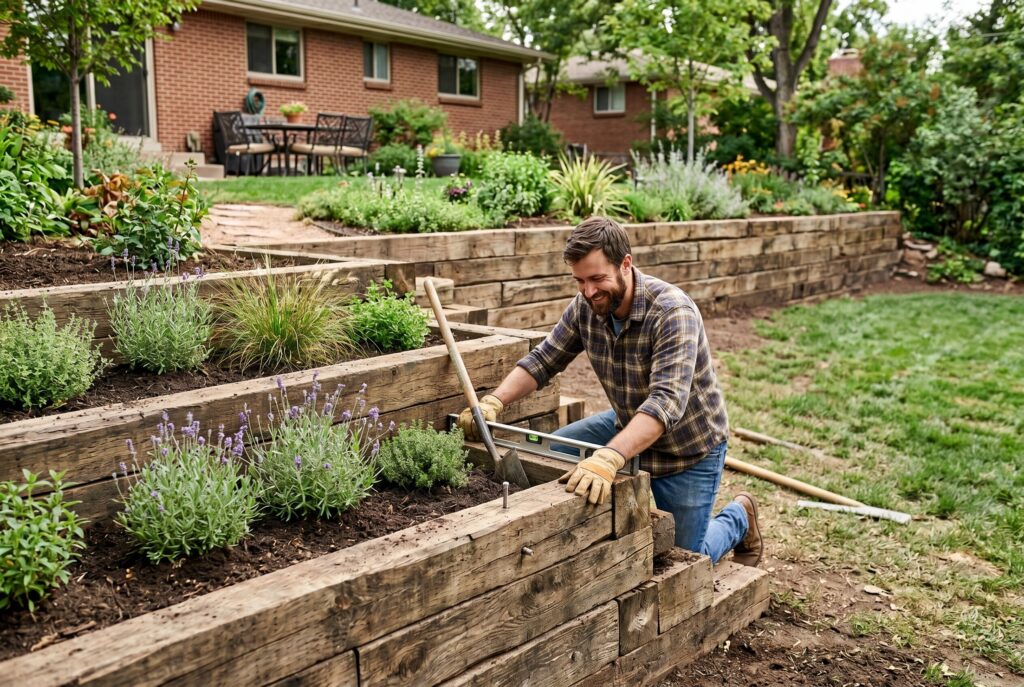
Using pressure-treated wood or rot-resistant finishes ensures it lasts against the elements, making it perfect for an organic garden feel. It’s the most accessible entry point for beginners because it requires basic tools like a saw, drill, and level.
2. Interlocking Retaining Wall Blocks: The DIY Favorite
For a look that appears professional but installs like toy bricks, retaining wall blocks are an excellent choice. These blocks feature a lip on the back that automatically creates the necessary batter, or backward lean, as they’re stacked.
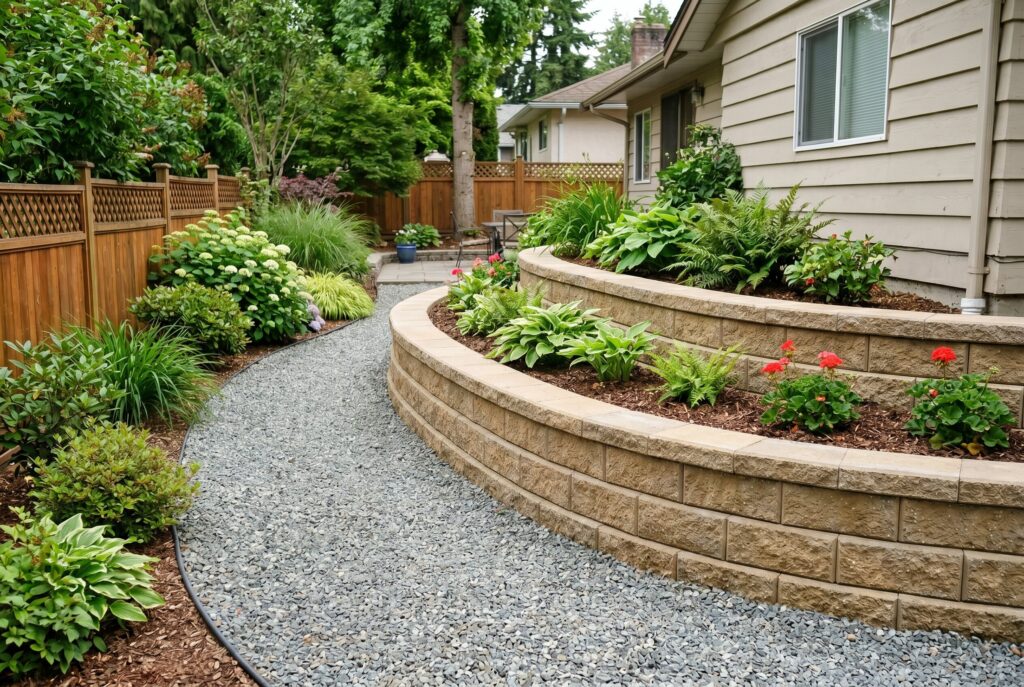
It’s a system that requires no mortar and creates no mess, making it a favorite for homeowners who want a clean, modern aesthetic without hiring a mason. Interlocking retaining wall blocks are widely available at local hardware stores, allowing for easy product replacement if needed.
3. Natural Rock and Stone: Leveraging Free Resources
If a property has existing stone, those obstacles can become assets. A rock retaining wall made from found stone is technically the lowest-cost option since materials are free.
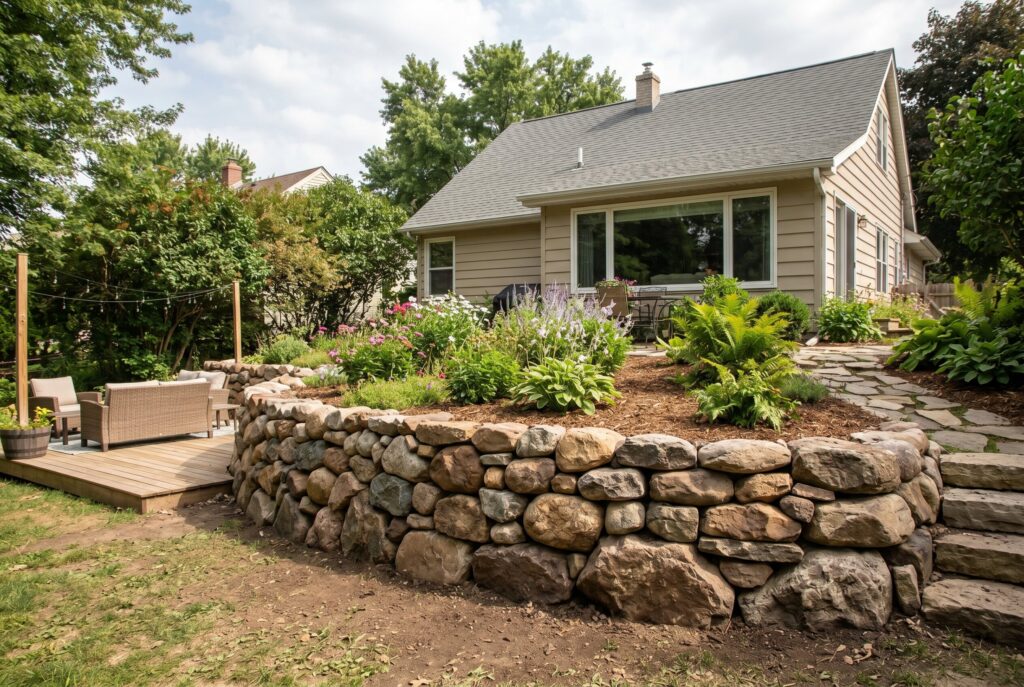
While fitting the pieces together takes more time and patience, the result looks timeless and blends perfectly with natural landscaping. Even if stone isn’t on-site, “urbanite” broken-up old concrete from sidewalk removals which can be stacked to create a similar, eco-friendly effect.
4. Cinder Block Retaining Wall: Strength on a Budget
Standard cinder blocks are incredibly affordable and structurally superior to many other options.
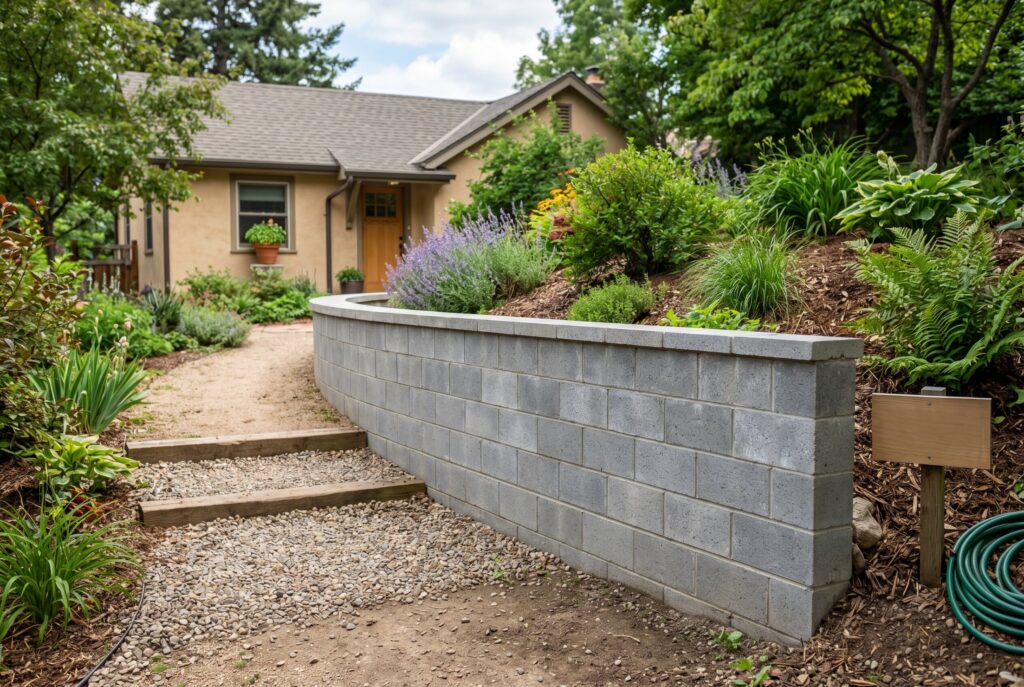
While they aren’t much to look at initially, a coat of exterior paint, modern stucco, or even vertical garden plantings can turn a cinder block retaining wall into a piece of high-end masonry. This material is ideal for functional walls where strength is more important than immediate out-of-the-box beauty.
5. Gabion Baskets: The Modern Industrial Edge
Gabion walls consist of wire cages filled with rock rubble or recycled materials. They are trending in 2026 as biophilic “living walls” where succulents can be tucked into the gaps.
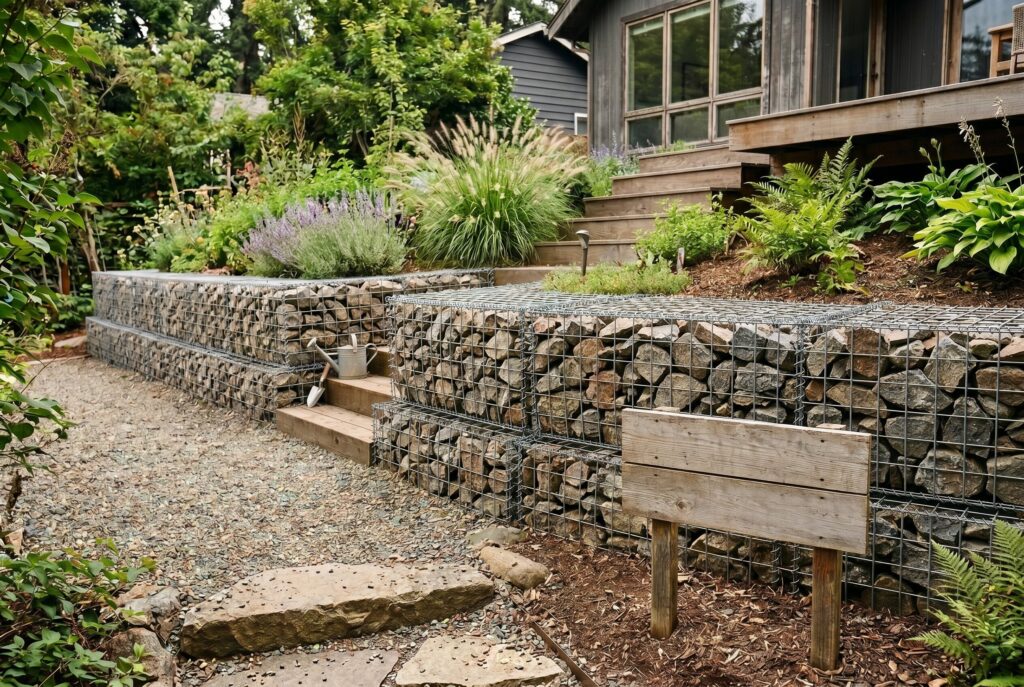
They’re virtually indestructible and offer the best retaining wall drainage of any system because water flows freely through the stones. DIYers can save money by filling the center of the cages with less expensive rubble and using decorative stone only for the visible exterior layer.
Crucial Measurements and Step-by-Step Implementation
Success in retaining wall construction is largely about preparation.
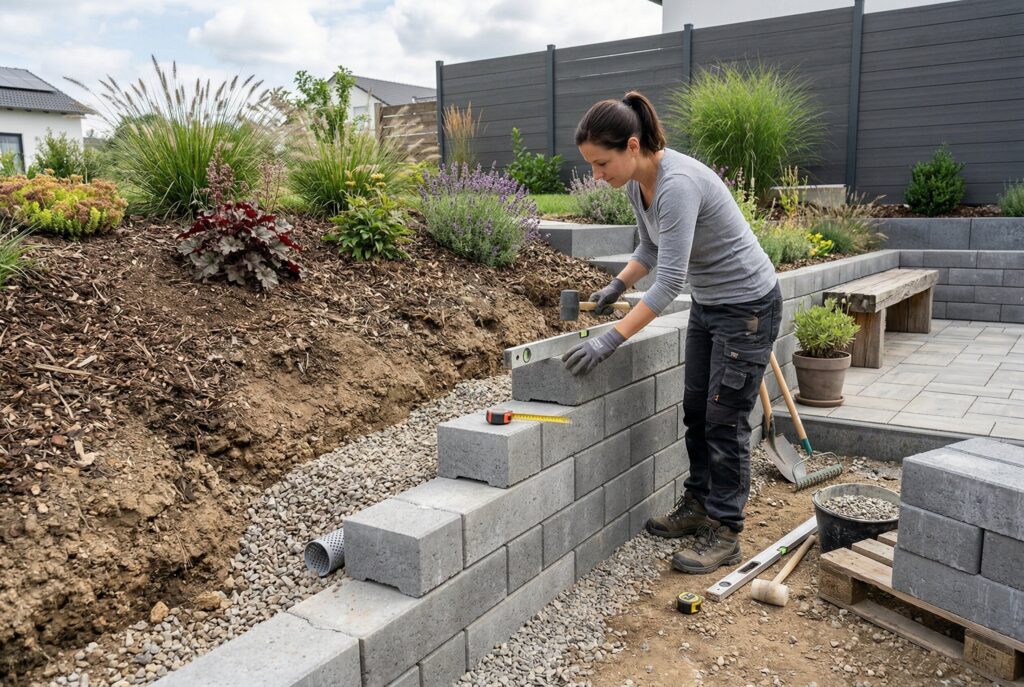
- The Trench: Never build on top of raw soil because it’ll shift.
- The Base: A compacted gravel trench is necessary for stability.
- The Batter: Ensuring the wall leans slightly into the hill prevents future collapse.
- The Level: If the first row is even slightly off, the entire project will eventually look crooked.
Detailed retaining wall installation requires attention to trench depth and the spacing of supporting posts.
Budgeting a Project: The Splurge vs. Save Framework
Keeping a project within the realm of inexpensive retaining wall ideas requires knowing where to cut corners.
- Save: Doing the digging manually or renting a small excavator for a day is much cheaper than hiring a full crew. Using “urbanite,” or broken-up old concrete, is another way to find free materials.
- Splurge: Don’t skimp on high-quality drainage gravel or filter fabric. Investing in solar LED lighting can also add a luxury vibe without a massive electrical bill.
Frequently Asked Questions (FAQ)
What is the cheapest type of wall to build?
Pressure-treated timber sleepers or found natural stone are generally the most budget-friendly materials.
Is a building permit required?
Many areas don’t require permits for walls under 1 meter, but local council regulations should always be checked first.
How is the amount of material calculated?
Measuring the length and height of the site is the first step. Most retaining wall retailers provide square footage details for their products to help with these calculations.
Next Steps for Backyard Transformation
A beautiful backyard doesn’t start with a thick wallet: it starts with a smart plan.
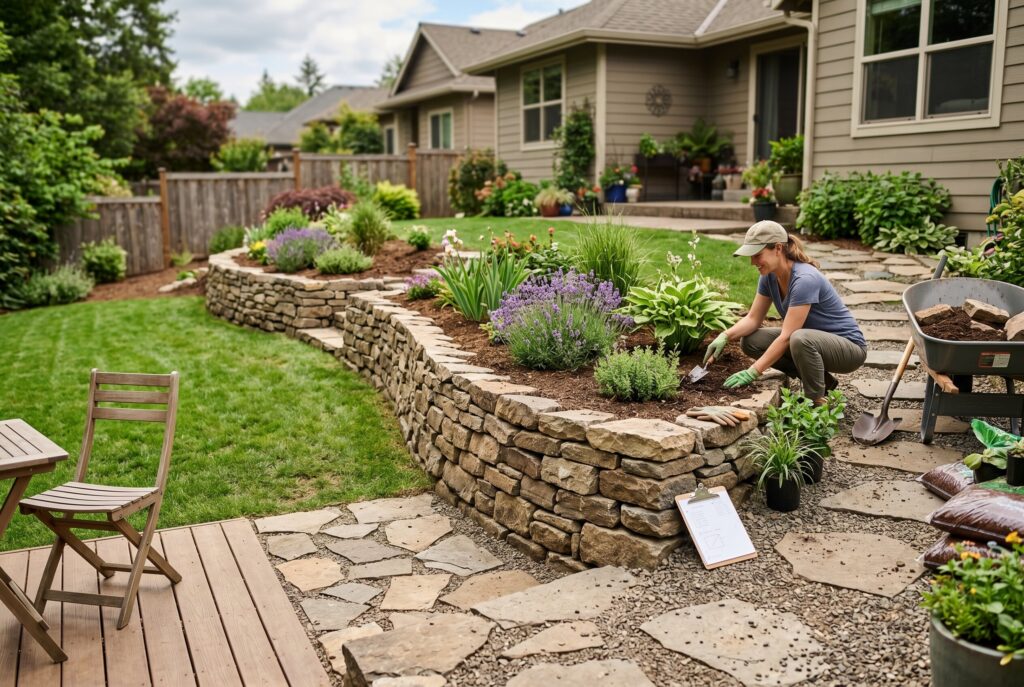
By choosing the right materials and focusing on technical must-haves like drainage, a messy slope can be transformed into a leveled asset. The first step is simply marking out the line and grabbing a shovel.
Related Articles
The Ultimate Guide to Retaining Wall Ideas: Cost, Types & DIY Tips