


Red is one of the most misunderstood bedroom colors. Used badly, it can feel too loud, too romantic, or too energetic for sleep. Used well, it creates warmth, intimacy, drama, and a cinematic sense of luxury. The difference usually comes down to shade, finish, lighting, and restraint.
The best red bedroom ideas don’t start with bright primary red. They start with deeper, moodier tones like burgundy, oxblood, terracotta, crimson, garnet, and wine red. These shades feel rich instead of aggressive, especially when paired with dark wood, brass lighting, crisp white bedding, velvet, and soft linen.
11 Designer Rules for a Luxury Red Bedroom
1. Ban “Fire Engine” Red Immediately
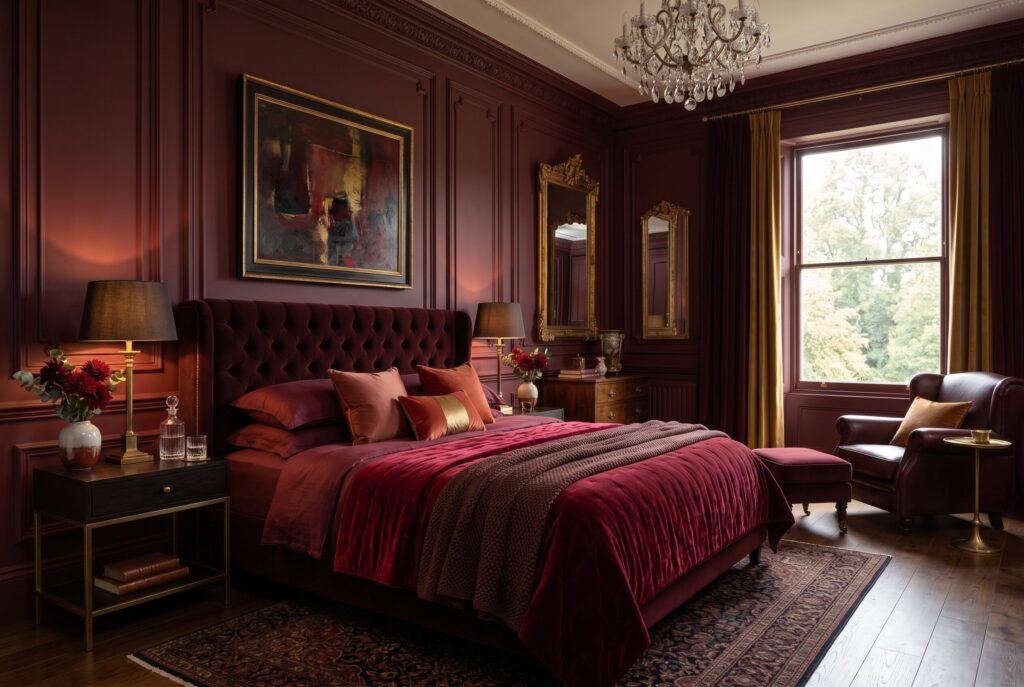
The fastest way to ruin a red bedroom is choosing a flat, primary red that feels too bright and restless. That kind of red can work in a diner, a toy room, or a graphic poster, but it rarely creates a restful bedroom. It reflects too much energy and can make the room feel visually hot.
Instead, choose bedroom paint colors with depth. Burgundy feels elegant and moody. Terracotta feels earthy and warm. Oxblood feels dramatic and expensive. Crimson can work beautifully when it is muted, not glossy or neon.
2. Embrace the Color-Drenching Technique
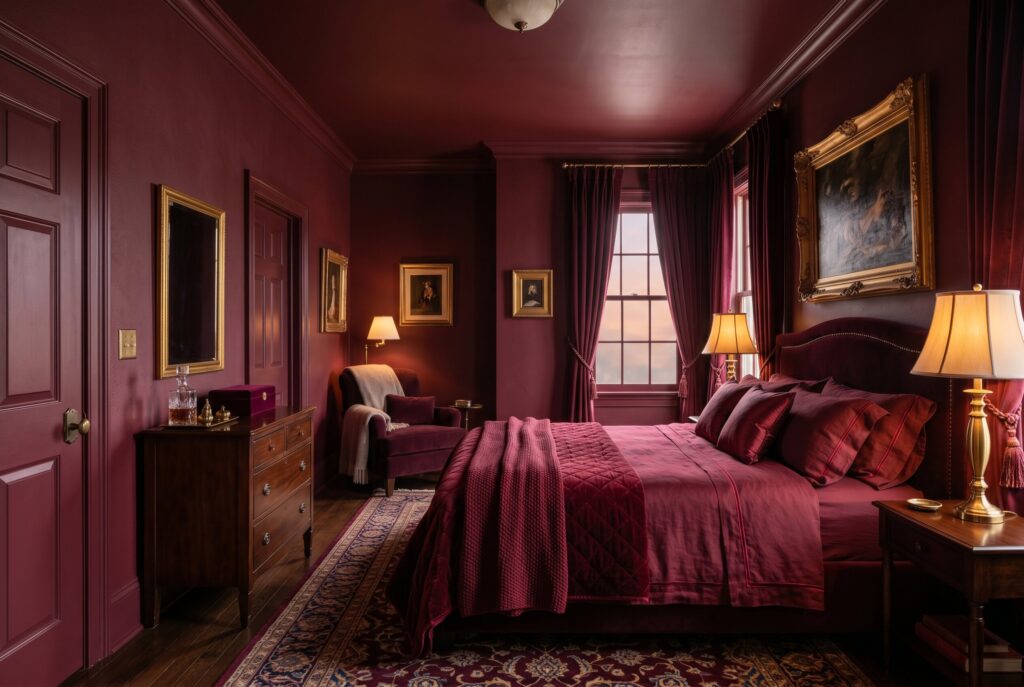
Color-drenching means painting the walls, trim, doors, and sometimes ceiling in one continuous shade. In a red bedroom, this can create a jewel-box effect that feels cozy rather than chaotic. It removes the sharp contrast of white trim against red walls, which can make the room feel busy.
This technique works best with deep reds, not bright reds. Burgundy, wine, and garnet tones wrap the room softly. Add warm lamps and layered textiles so the red feels atmospheric instead of overwhelming. Red has been used successfully through walls, ceilings, carpet, bedding, wallpaper, trim, and alcoves, showing that the color can work in many levels of commitment.
3. Insist on Matte, Flat, or Limewash Finishes
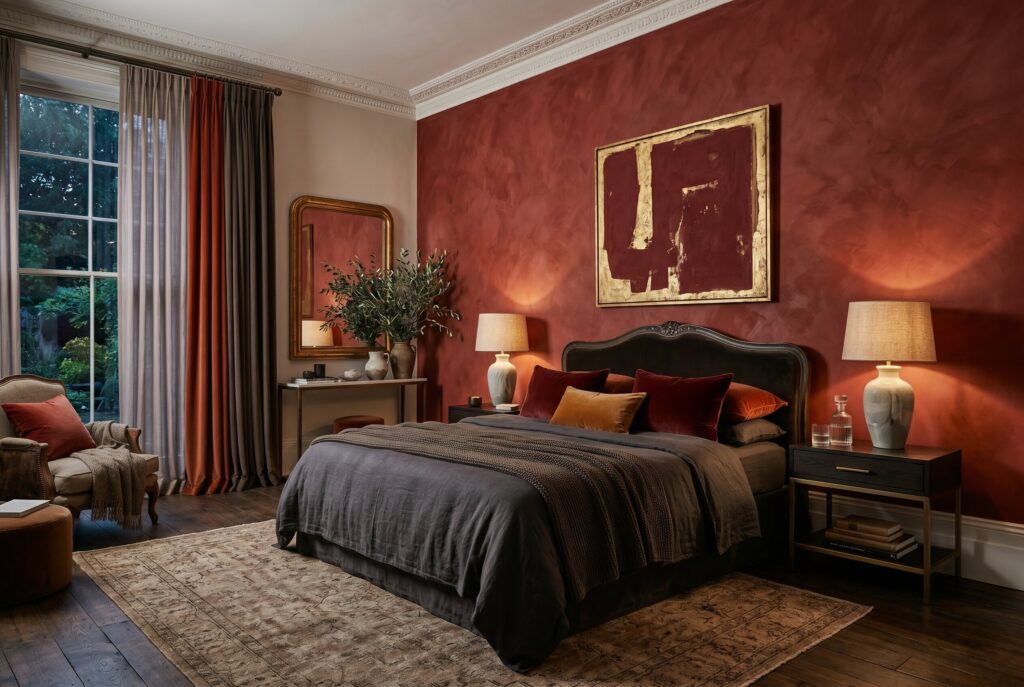
Glossy red paint can look harsh because it reflects light strongly. It can also make imperfections on the wall more obvious. A matte, flat, plaster, or limewash finish absorbs light and gives red a softer, more expensive presence.
Limewash is especially beautiful because it adds movement. Instead of one solid block of red, the wall gains subtle variation. This makes the bedroom feel handmade, layered, and calmer.
4. Ground the Red with Dark Walnut Woods
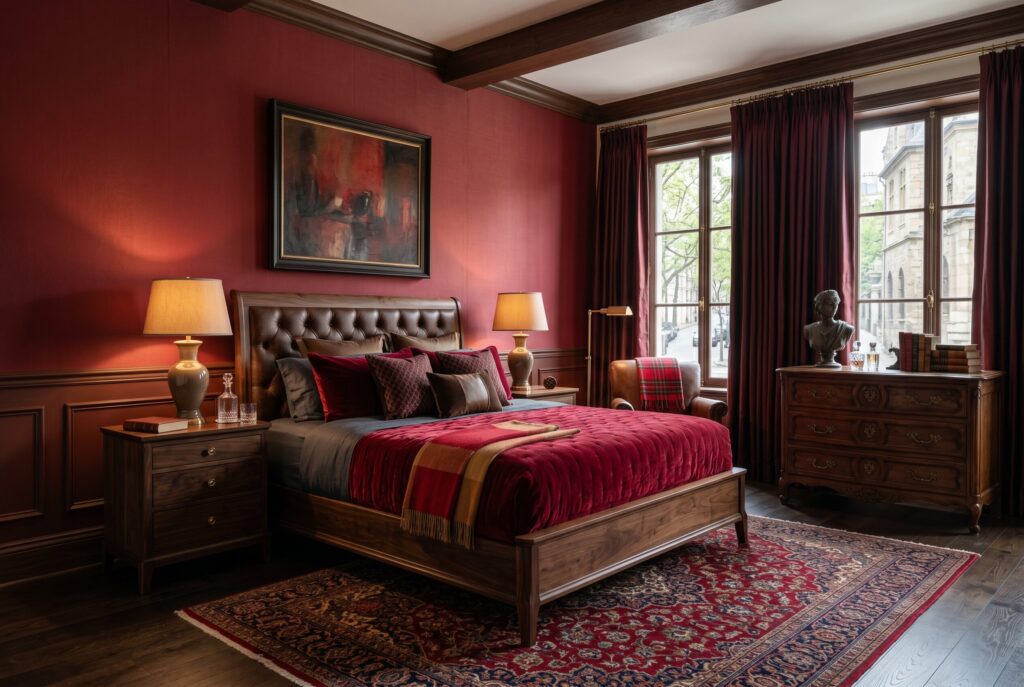
Red needs grounding. White furniture can make red look too retro or too high-contrast, while dark walnut, mahogany, espresso oak, or antique wood gives the room maturity. The natural wood grain also breaks up the intensity of the color.
Try a walnut bed frame, dark wood nightstands, or a carved dresser. These pieces make a red bedroom feel collected and timeless rather than themed. The result is closer to a boutique hotel or old-world library than a loud statement room.
5. Break Up the Color with Crisp White Bedding

If the walls are red, the bed needs visual relief. Crisp white percale, ivory linen, or cream cotton bedding creates a clean pause in the room. It keeps the space from feeling too heavy and gives the eye somewhere peaceful to rest.
The bed should feel fresh, not flat. Layer white sheets with a cream quilt, a burgundy throw, or small patterned pillows. This keeps the palette connected while preventing the room from becoming one solid red block.
6. Introduce Moody Black Accents

Black helps control the heat of red. A matte black bed frame, black picture frames, black lampshades, or a dark metal curtain rod can make the room feel sharper and more cinematic. This is especially useful if you want a dark bedroom effect without making the whole room black. Use black as punctuation, not as competition. A red and black bedroom can look powerful, but too much black can make the space feel heavy. Balance it with warm lighting and soft textiles.
7. Use Velvet to Soften the Intensity

Velvet and red are a natural pair because velvet absorbs light beautifully. A burgundy velvet headboard, wine-red pillow, or deep crimson accent chair instantly makes the room feel more luxurious. The fabric gives red depth and shadow, which helps it feel less loud.
Velvet also adds a tactile quality that a cozy bedroom needs. If red paint feels too risky, start with velvet textiles instead. It gives you the richness of red without committing every wall.
8. Warm Up the Space with Brass Lighting

Cool chrome can clash with red, especially if the red has orange or brown undertones. Brass, antique gold, bronze, and aged metal feel warmer and more natural. They bring out the richness of burgundy, terracotta, and oxblood.
Use brass through wall sconces, a chandelier, picture lights, or bedside lamps. The glow matters as much as the metal. Warm lighting makes red feel romantic and soft, while cold lighting can make it look sharp or cheap.
9. Filter Light with Heavy Linen Drapes
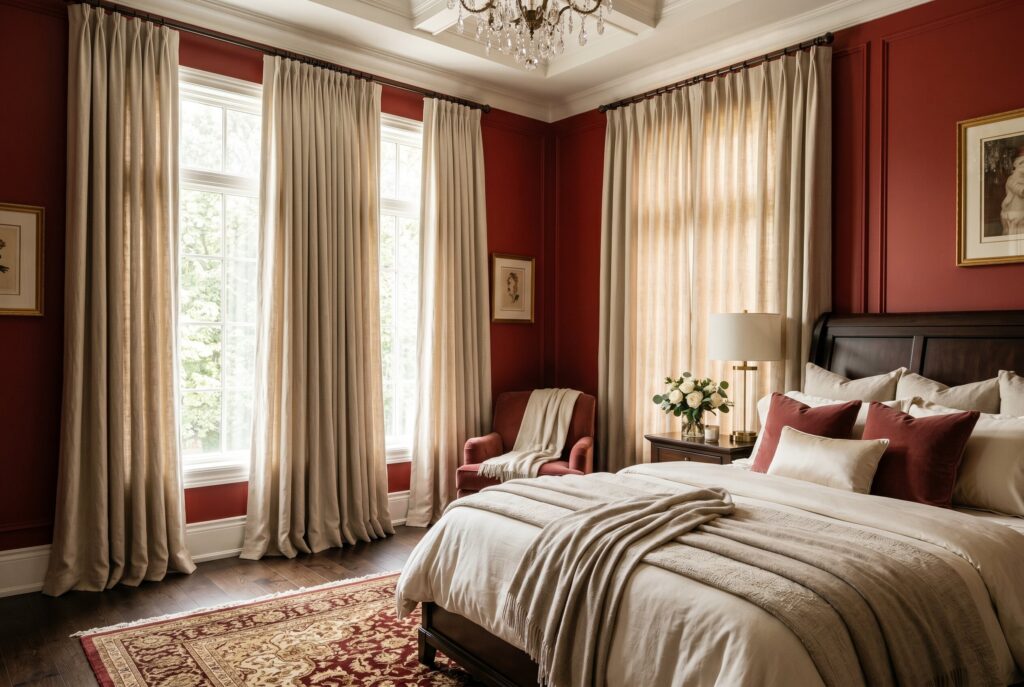
Direct sunlight can make red walls look too intense during the day. Heavy linen drapes soften the light before it hits the room. This keeps the red from feeling glaring and helps the bedroom stay restful. Hang curtains close to the ceiling and let them fall to the floor. Ivory, oatmeal, taupe, or muted red linen can all work. The vertical fabric also makes the room feel taller and more elegant.
10. Start with a Vintage Persian Rug

If you aren’t ready to paint, a vintage Persian rug is the easiest way to bring red into the bedroom. Brick red, garnet, rust, and faded ruby tones add warmth without overwhelming the walls. A rug also anchors the bed and introduces pattern naturally. This is ideal for renters or anyone testing red for the first time. Pair the rug with neutral walls, white bedding, and dark wood furniture. The room will feel rich without requiring a permanent change.
11. Create a “Red Thread” with Accessories
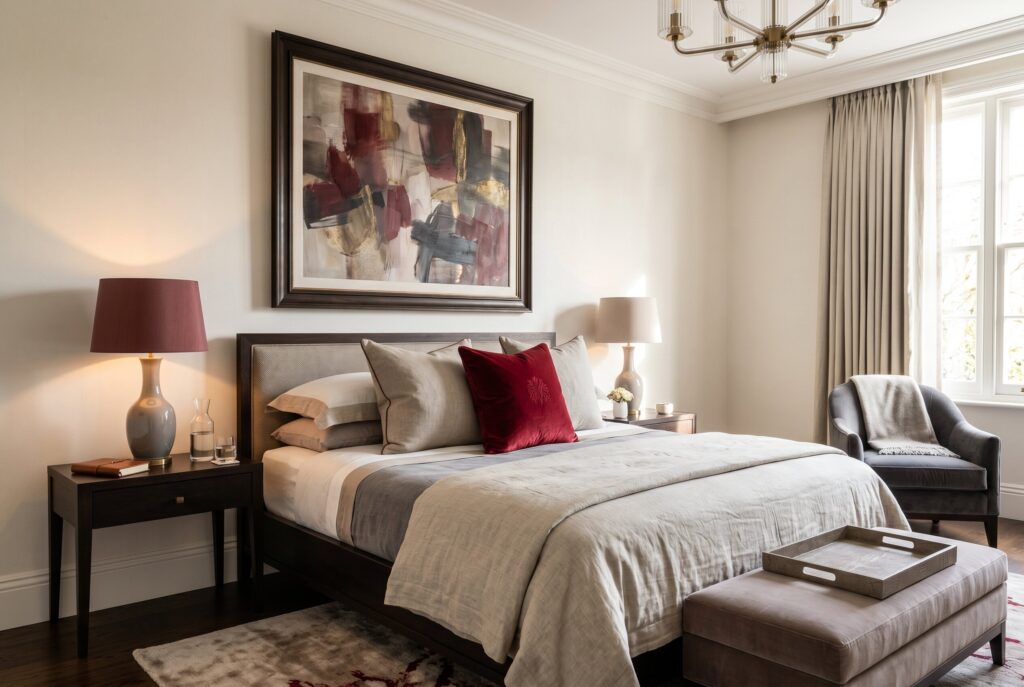
A red bedroom doesn’t need red walls. You can create a subtle red thread by repeating the color in three small places: a pillow, a lampshade, and a piece of artwork. This makes the color feel intentional rather than random. The trick is repetition. One red item can look accidental. Three red moments create rhythm. Use muted reds so the room feels elevated, not childish.
The One Mistake That Ruins a Red Bedroom
The biggest mistake is pairing red with cool white LED lighting. Cold light can make red turn neon, orange, or pink in the wrong way. It also removes the softness that a bedroom needs. Use warm bulbs around 2700K and add dimmers if possible. Red is emotional and atmospheric, so it needs lighting control. At night, the room should glow, not glare.
Conclusion

A red bedroom isn’t for timid design, but it doesn’t have to feel loud. The secret is choosing the right red, using soft finishes, grounding the room with dark wood, and balancing intensity with white bedding, velvet, linen, brass, and warm light. When handled with restraint, red becomes more than a bold color. It becomes a mood: intimate, luxurious, cozy, and unforgettable.
Related Articles
- 17 Red Kitchen Cabinets: Modern Painted Ideas to Wow Guests in 2026
- White Bedroom Ideas: 21 High-End Ways to Style a Luxury Minimalist Space
- Black Bedroom Ideas: 21 Rules for Cozy, Not Cramped Spaces
- Black and White Bedroom Ideas: 21 Rules to Master the 60-30-10 Color Ratio
- Sage Green Bedroom: 27 Minimalist Bedding And Comforter Ideas 2026
- Green Bedroom Ideas: 24 Ways to Find Your Perfect Shade