

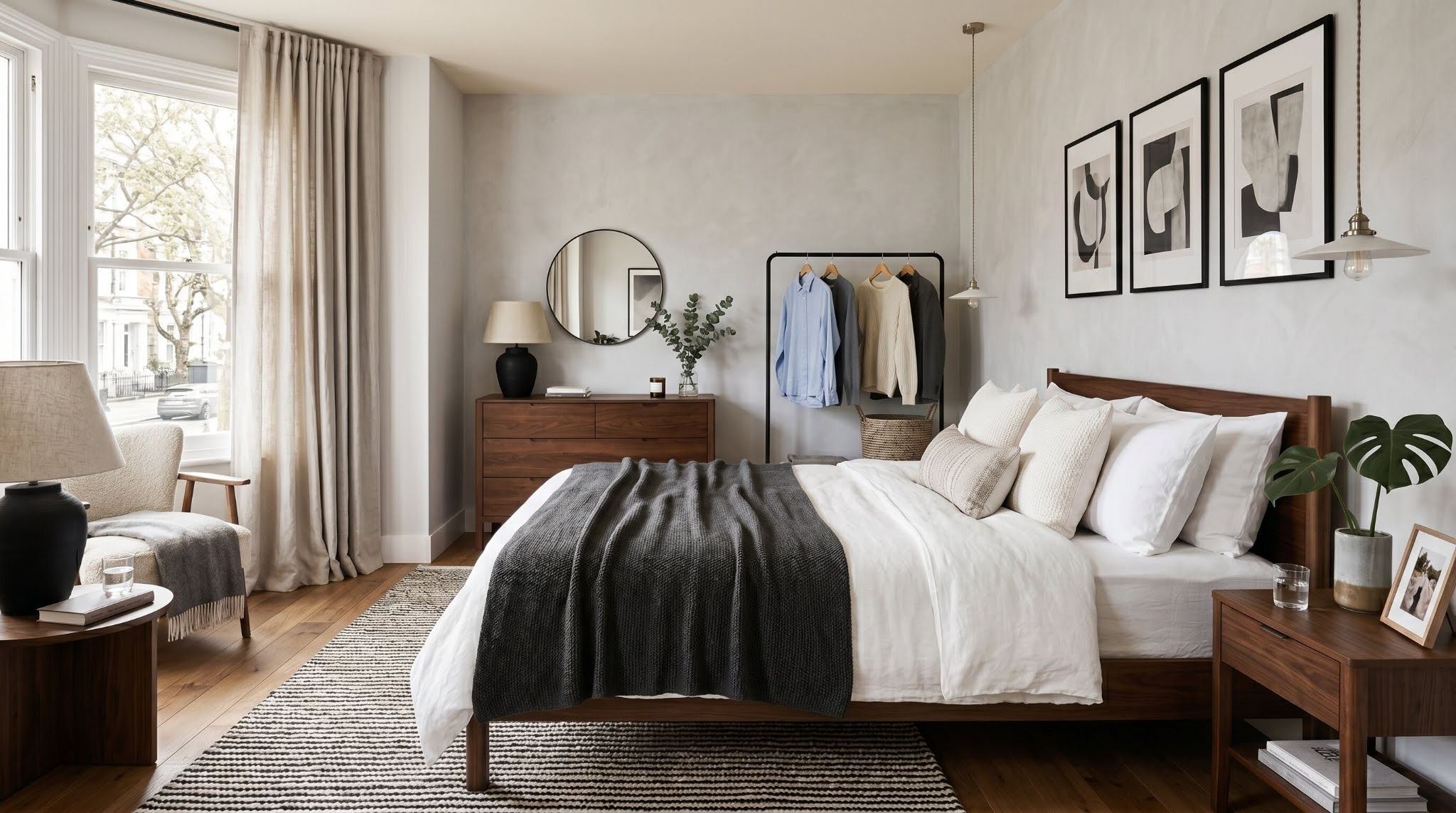
A black and white bedroom sounds easy to design until the room starts looking too harsh, too flat, or too cold. The palette is timeless, but it needs balance. When black and white are used without texture, warmth, or a clear ratio, the space can feel more like a chessboard than a restful bedroom.
The best black and white bedroom ideas don’t rely on equal amounts of both colors. They use the 60-30-10 rule: 60% dominant color, 30% secondary contrast, and 10% warmth through wood, brass, leather, plants, or soft texture. That final 10% is what makes a black and white room feel expensive instead of sterile.
What Is the 60-30-10 Rule in a Black and White Room?
The 60-30-10 rule prevents a monochrome bedroom from feeling visually exhausting. A 50/50 split between black and white often creates too much contrast, especially in a bedroom where the goal is rest. Instead, one color should lead, one should support, and the final layer should soften the whole palette.
In a white and black bedroom, the walls, ceiling, and bedding may become 60%. Black furniture, picture frames, lamps, or rugs can become the 30%. The final 10% might be oak nightstands, brass sconces, a tan leather bench, or green plants.
The 60% Base: Establishing Your Dominant Color
1. Opt for 60% White for Small Spaces

White is the safest dominant color for small bedrooms because it reflects light and makes the room feel more open. Use warm white walls, white bedding, and light curtains to create an airy base. Then add black in controlled places, such as a headboard, frames, lamps, or rug pattern. This keeps the black and white bedroom crisp without shrinking the space visually.
2. Embrace a 60% Dark Bedroom for Coziness
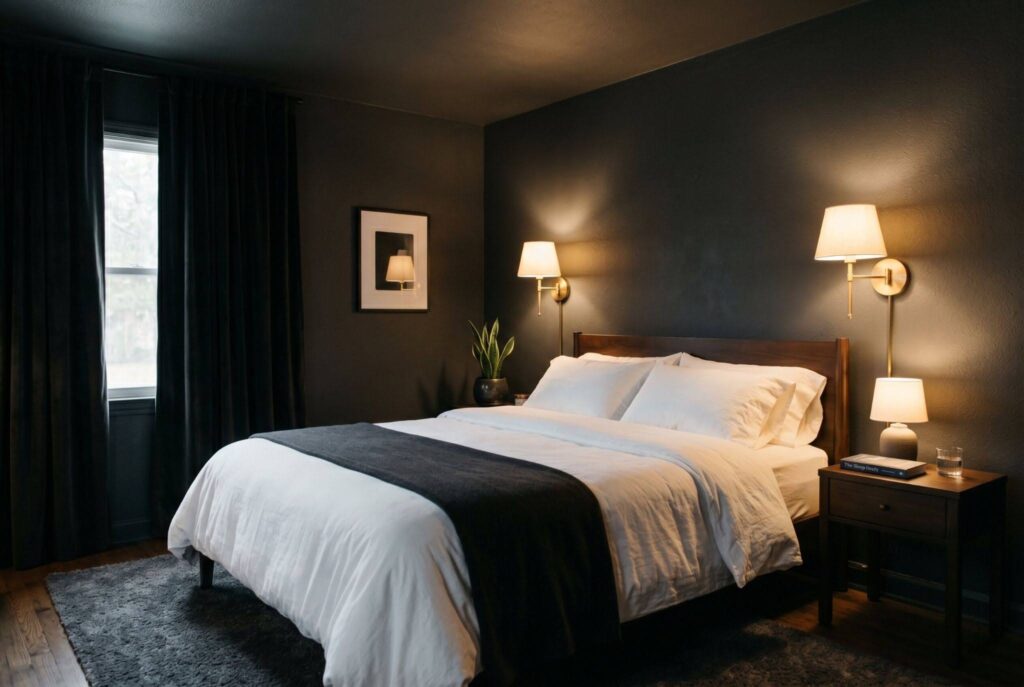
A dark bedroom can feel deeply relaxing when black, charcoal, or deep graphite becomes the main color. Instead of using black only as an accent, wrap the walls in a soft matte dark shade for a moody cocoon effect. To avoid heaviness, pair dark walls with white bedding and warm lighting. This creates contrast while keeping the room calm enough for sleep.
3. Use Soft Off-Whites Instead of Stark White
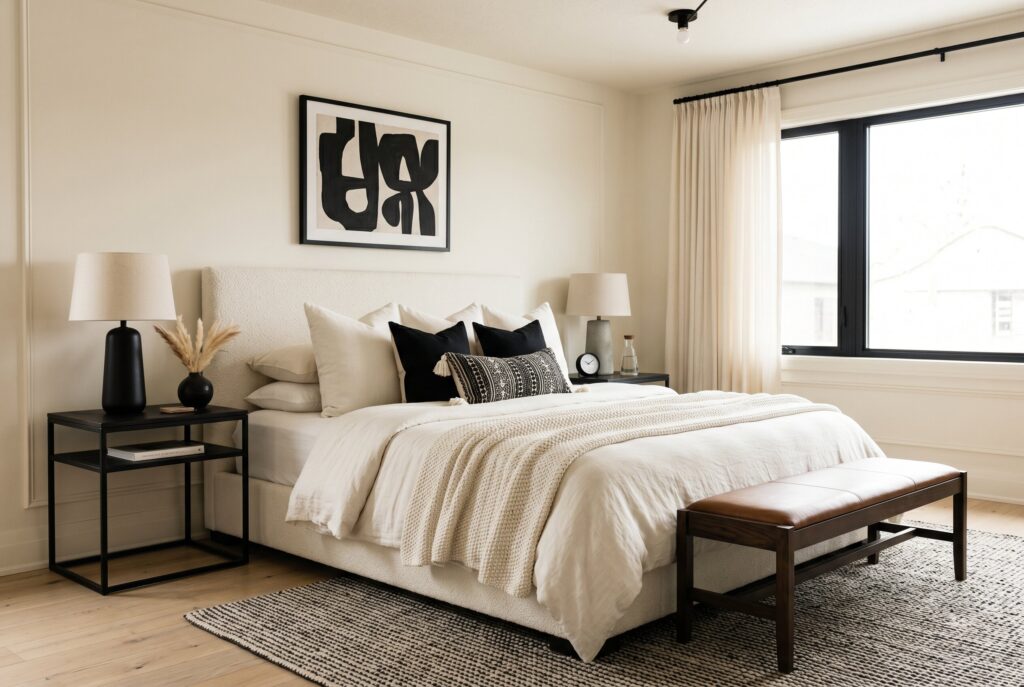
Pure white can look harsh beside black. Soft off-white, ivory, cream, or warm chalk tones create a more elegant foundation. These shades still read as white bedroom colors, but they feel less clinical. They also pair better with wood, brass, linen, and natural materials.
4. Paint the Ceiling to Match Your Dominant Choice
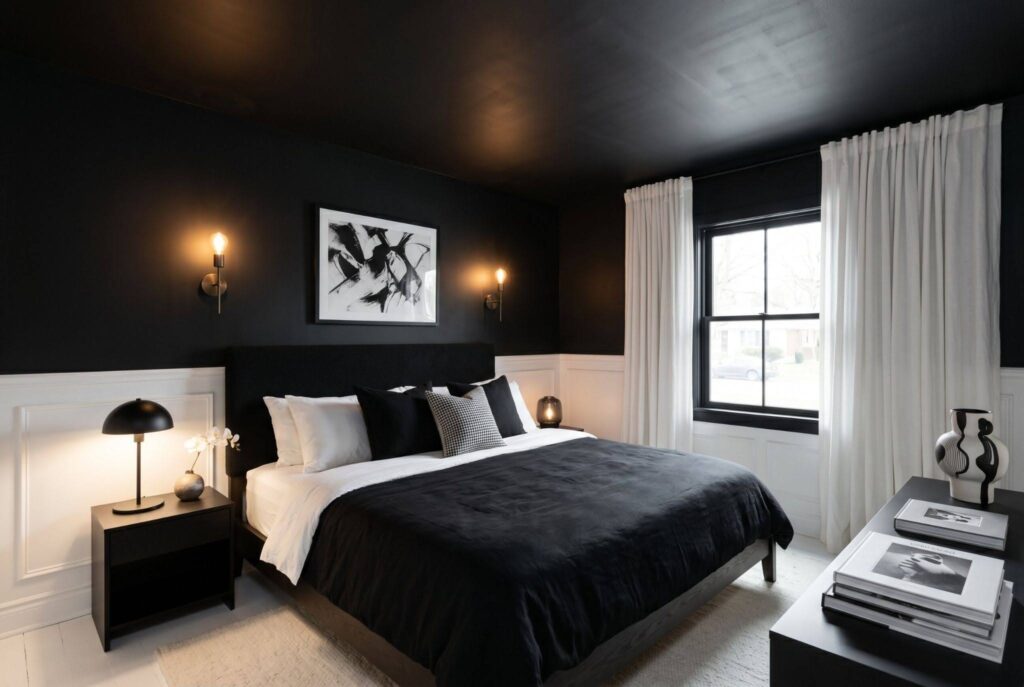
The ceiling is often ignored, but it affects the whole room. In a white bedroom, a matching white ceiling keeps the space bright and seamless. In a dark bedroom, painting the ceiling the same color as the walls creates a cocoon effect. This works especially well with matte paint and layered lamps.
5. Let Your Largest Rug Set the 60% Tone
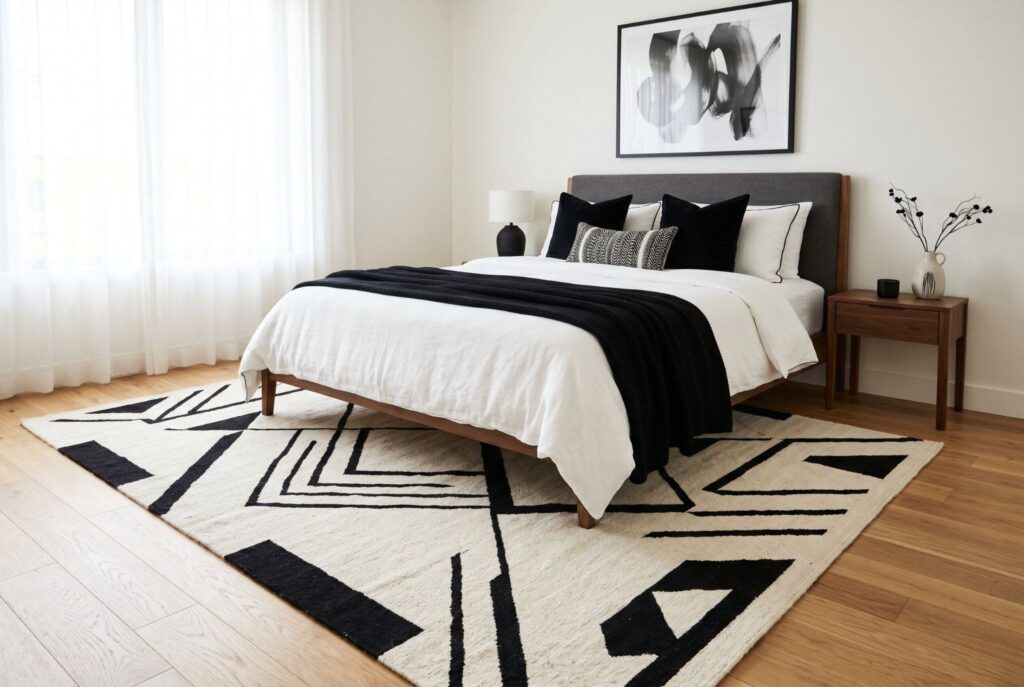
If you don’t want to repaint, use a large rug to establish the dominant color. A mostly white rug with black pattern keeps the room light, while a charcoal rug grounds the bed. The rug should be large enough to extend beyond the bed. A tiny rug can make the entire design feel unfinished.
6. Anchor the Base with Your Window Treatments

Curtains can quietly control the entire palette. White linen curtains soften a black and white room, while black or charcoal blackout curtains add drama. For a luxury look, hang curtains high and wide. This makes the ceiling feel taller and the bedroom more polished.
The 30% Secondary Color: Creating Visual Contrast
7. Use Black Window Frames in a White Room
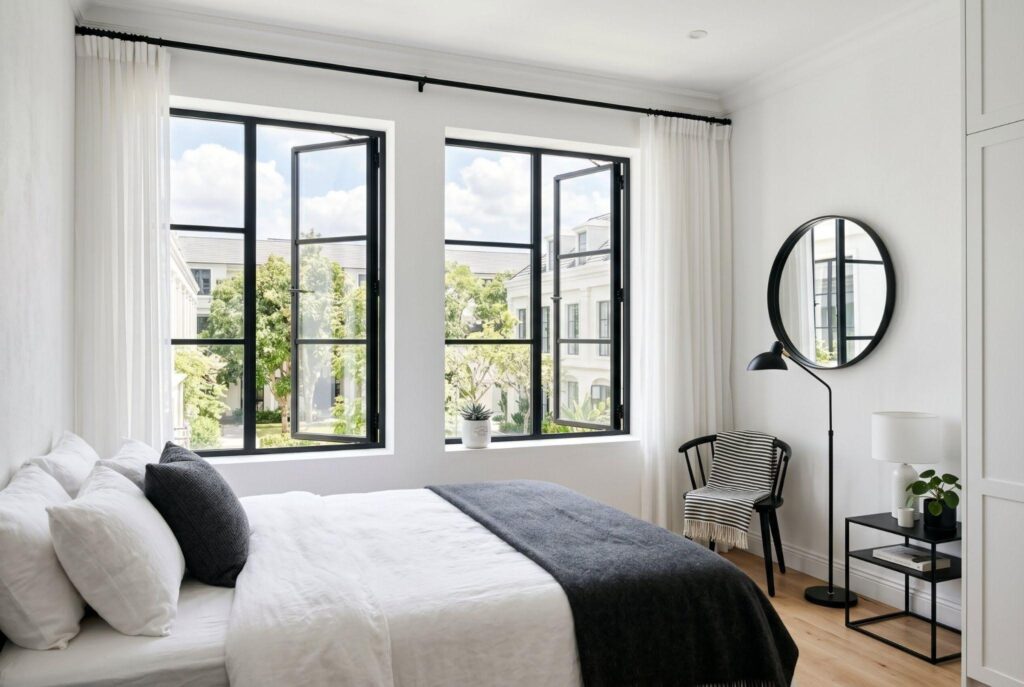
Black window frames add structure to a white room without needing a full dark wall. They create clean architectural lines and make even simple bedrooms feel more custom. If replacing windows isn’t realistic, use black curtain rods, black trim, or black-framed mirrors to create a similar effect.
8. Invest in Black or Dark Grey Bedroom Furniture

White bedroom furniture can disappear in a light room, but black or dark gray furniture adds definition. A black bed frame, dresser, or nightstand creates a strong visual anchor. Choose simple shapes so the room doesn’t feel bulky. Matte finishes usually look more sophisticated than shiny black furniture.
9. Layer Black and White Patterned Bedding
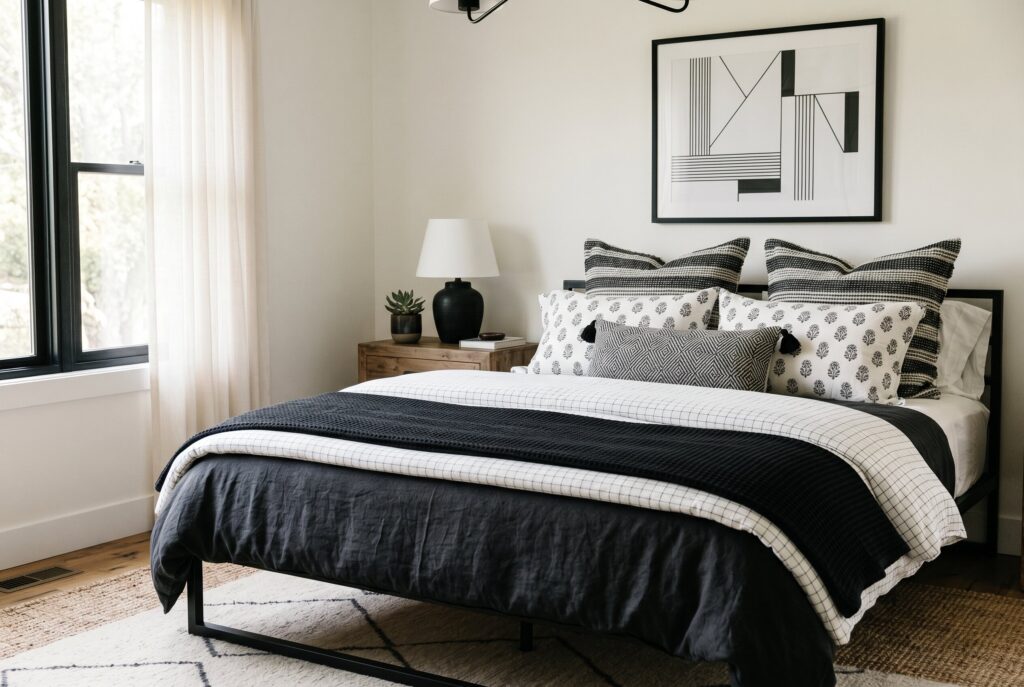
Patterned bedding keeps a black and white bedroom from feeling too plain. Try stripes, small geometrics, subtle checks, or embroidered borders. The key is restraint. If the bedding is bold, keep the rug or wallpaper quieter so the room doesn’t feel busy.
10. Install a Statement Black Headboard

A black headboard is one of the easiest ways to add contrast without painting the walls. Upholstered black linen, velvet, leather, or wood can make the bed feel like a true focal point. This is especially useful in rental bedrooms. You get the drama of black without making a permanent change.
11. Create a 30% Accent Wall

A black accent wall behind the bed can make the room feel grounded and intentional. It frames the sleeping area and adds depth. Use matte black, charcoal, limewash, wallpaper, or black wood paneling. Keep the other walls softer so the accent wall feels elevated, not overwhelming.
12. Use Large-Scale Black and White Photography

Black and white photography is a natural fit for this palette. Large-scale art adds emotion, personality, and movement without introducing extra color. Choose one oversized piece instead of many tiny frames. Big art feels more expensive and avoids visual clutter.
13. Choose Geometric Black and White Room Rugs

A geometric black and white room rug adds energy underfoot. Stripes, checks, diamonds, and abstract shapes work especially well in modern bedrooms. If your room already has patterned bedding or wallpaper, choose a softer rug. The goal is contrast, not competition.
The 10% Rule: Adding Warmth to a Neutral Bedroom
14. Introduce Natural Walnut or Oak Woods
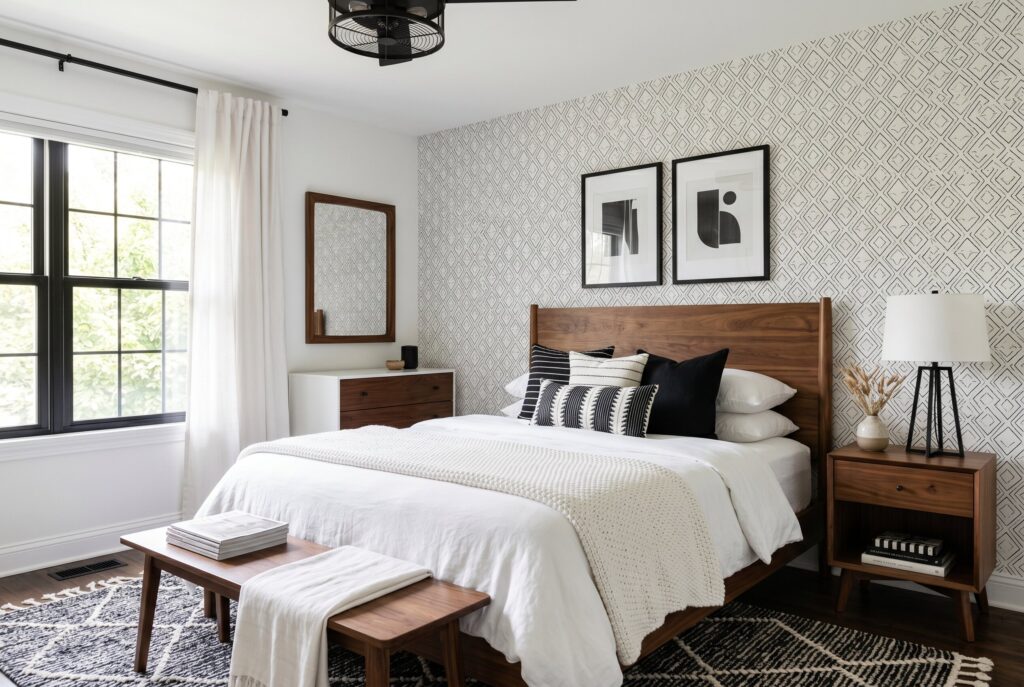
Wood is the easiest way to warm up neutral bedroom ideas. Walnut adds richness, while oak keeps the room lighter and softer. Use wood through nightstands, benches, picture frames, or a dresser. Even one natural wood piece can stop a black and white bedroom from feeling cold.
15. Warm Up the Space with Brass Lighting Fixtures
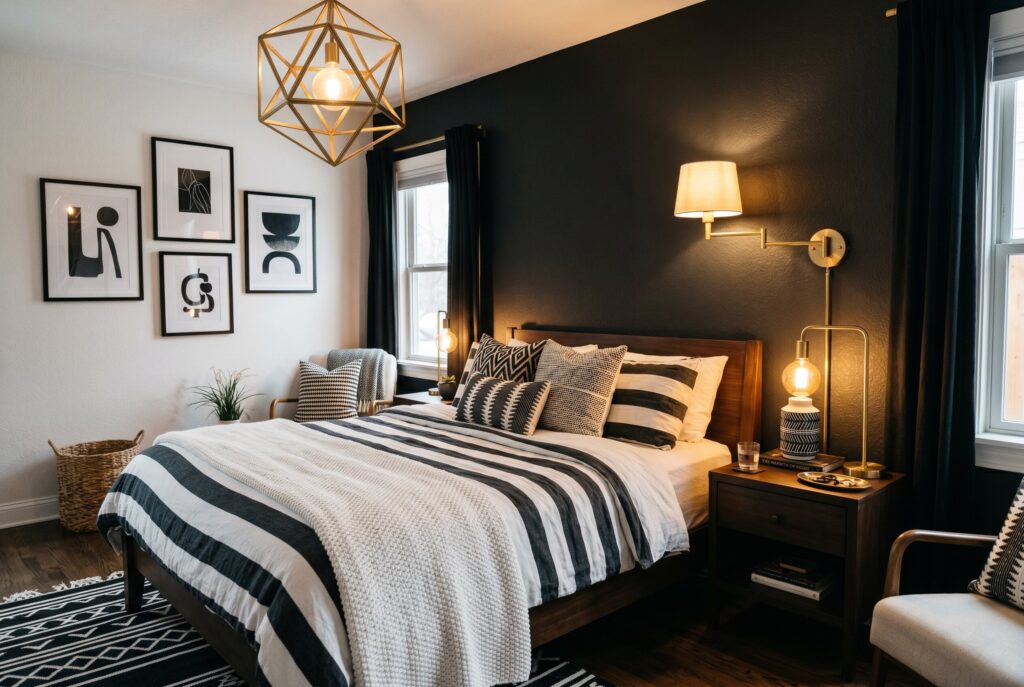
Brass lighting adds warmth and polish. A brass sconce, pendant, or table lamp glows beautifully against black and white. Choose warm bulbs, not cool white bulbs. Lighting temperature can completely change how bedroom colors feel.
16. Add a Pop of Leather
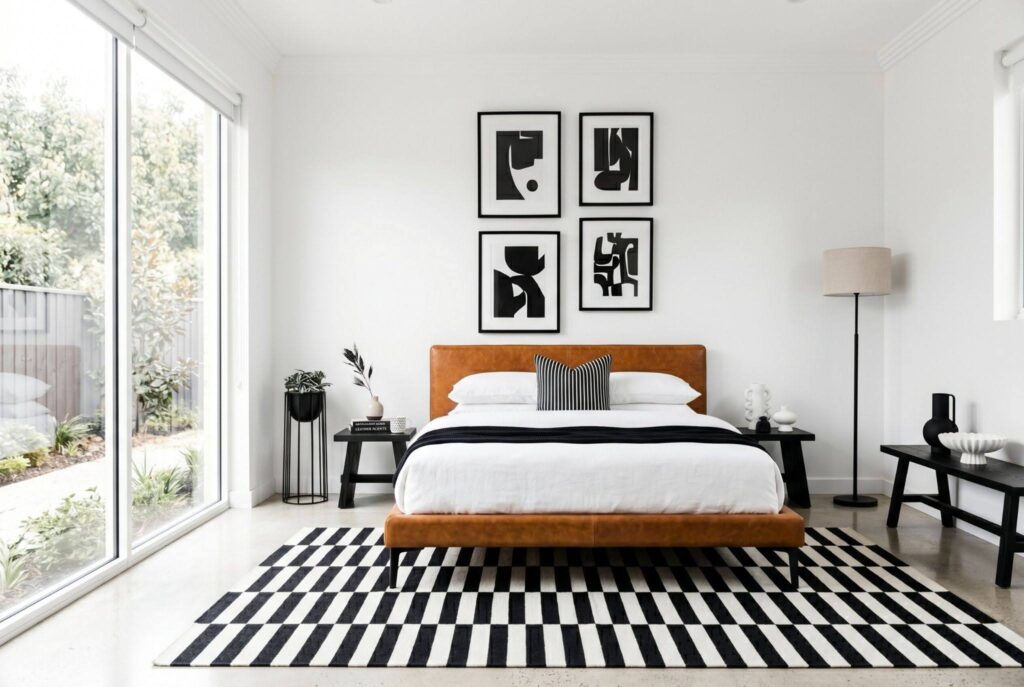
Cognac or tan leather brings warmth, texture, and maturity. A leather bench, accent chair, pillow, or tray can soften the strong contrast. Use leather sparingly. One or two pieces are enough to make the room feel layered.
17. Use Live Plants for Organic Greenery

Plants bring life to a black and white bedroom. A snake plant, olive tree, pothos, or rubber plant adds natural contrast without disrupting the palette. Greenery works like a quiet accent color. It makes the room feel fresher and less staged.
18. Layer Chunky Knit Neutral Throws

Texture is essential in monochrome rooms. A chunky knit throw, linen quilt, waffle blanket, or wool layer adds softness to the bed. This matters because black and white can feel flat without touchable materials. Texture creates depth even when the color palette stays simple.
19. Incorporate Woven Rattan or Jute Baskets
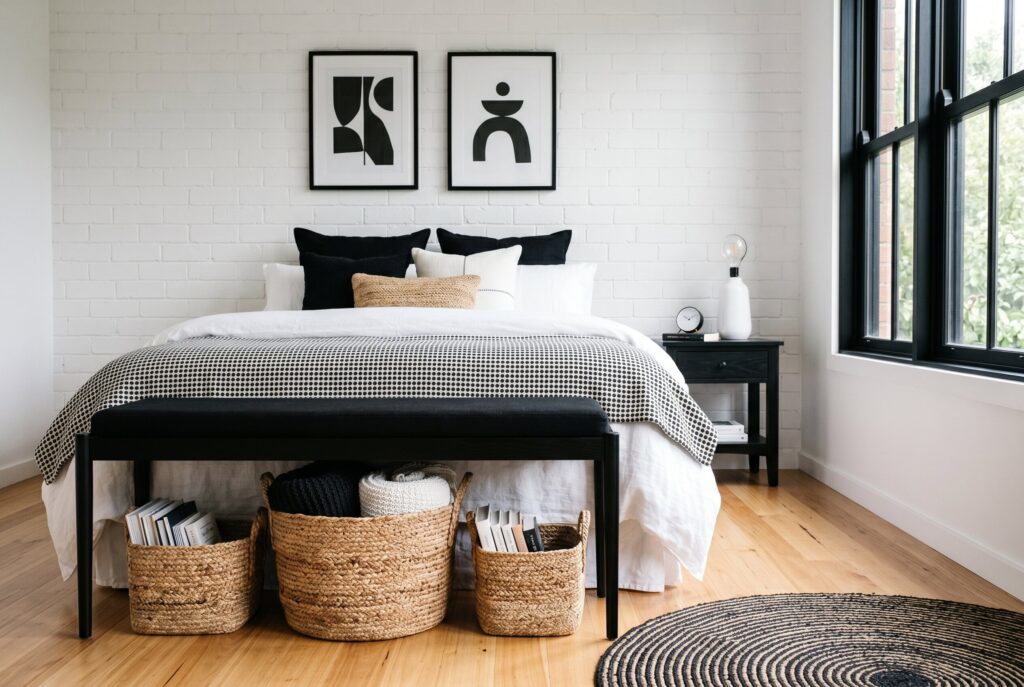
Rattan and jute bring casual warmth into a high-contrast room. Use baskets for extra blankets, laundry, books, or storage under a bench. These materials are especially helpful in minimalist bedrooms because they add texture without adding visual clutter.
20. Soften with Matte Gold Drawer Pulls
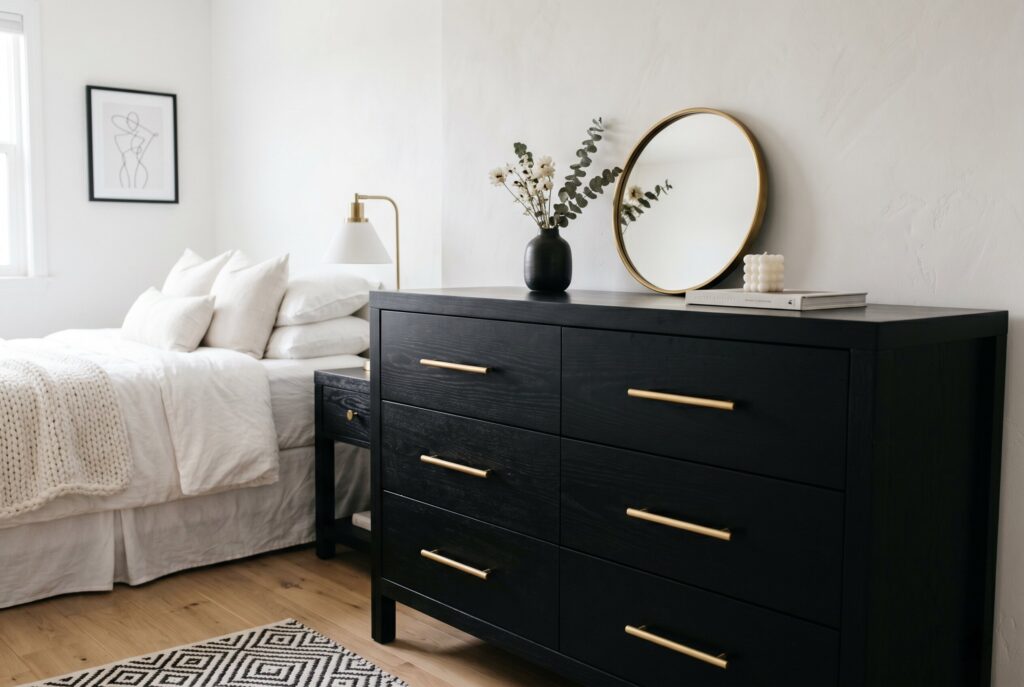
Small hardware changes can make a big difference. Matte gold or soft brass drawer pulls add warmth to black or white furniture. This is a budget-friendly upgrade that makes basic furniture look more custom. Keep the finish consistent with your lighting for a more designed look.
21. Add Subtle Charcoal or Greige Soft Furnishings

Black and white doesn’t have to mean only pure black and pure white. Charcoal, greige, stone, oatmeal, and soft gray can create a smoother transition. Use these shades in pillows, throws, curtains, or upholstery. They make the palette feel more sophisticated and less severe.
Common Mistakes in Black and White Bedroom Ideas
- The first mistake is using a strict 50/50 split. Equal black and white can feel harsh and restless. Choose one dominant color instead.
- The second mistake is forgetting texture. Without linen, wool, velvet, wood, rattan, leather, or greenery, the room can feel flat.
- The third mistake is using cool lighting. Warm lighting is what turns contrast into comfort.
Conclusion
The best black and white bedroom ideas are never just black and white. They use contrast intelligently, then soften it with warmth, texture, and proportion. Start with the 60-30-10 rule. Choose your dominant color, add controlled contrast, then finish with natural materials. That final 10% is what makes a black and white bedroom feel timeless, livable, and quietly luxurious.
Related Articles
- White Bedroom Ideas: 21 High-End Ways to Style a Luxury Minimalist Space
- Black Bedroom Ideas: 21 Rules for Cozy, Not Cramped Spaces
- Red Bedroom Ideas: 11 Designer Rules for a Luxury Space
- Sage Green Bedroom: 27 Minimalist Bedding And Comforter Ideas 2026
- Green Bedroom Ideas: 24 Ways to Find Your Perfect Shade
- Dark Green Bedroom Ideas: 25 Looks for a Restful Oasis