

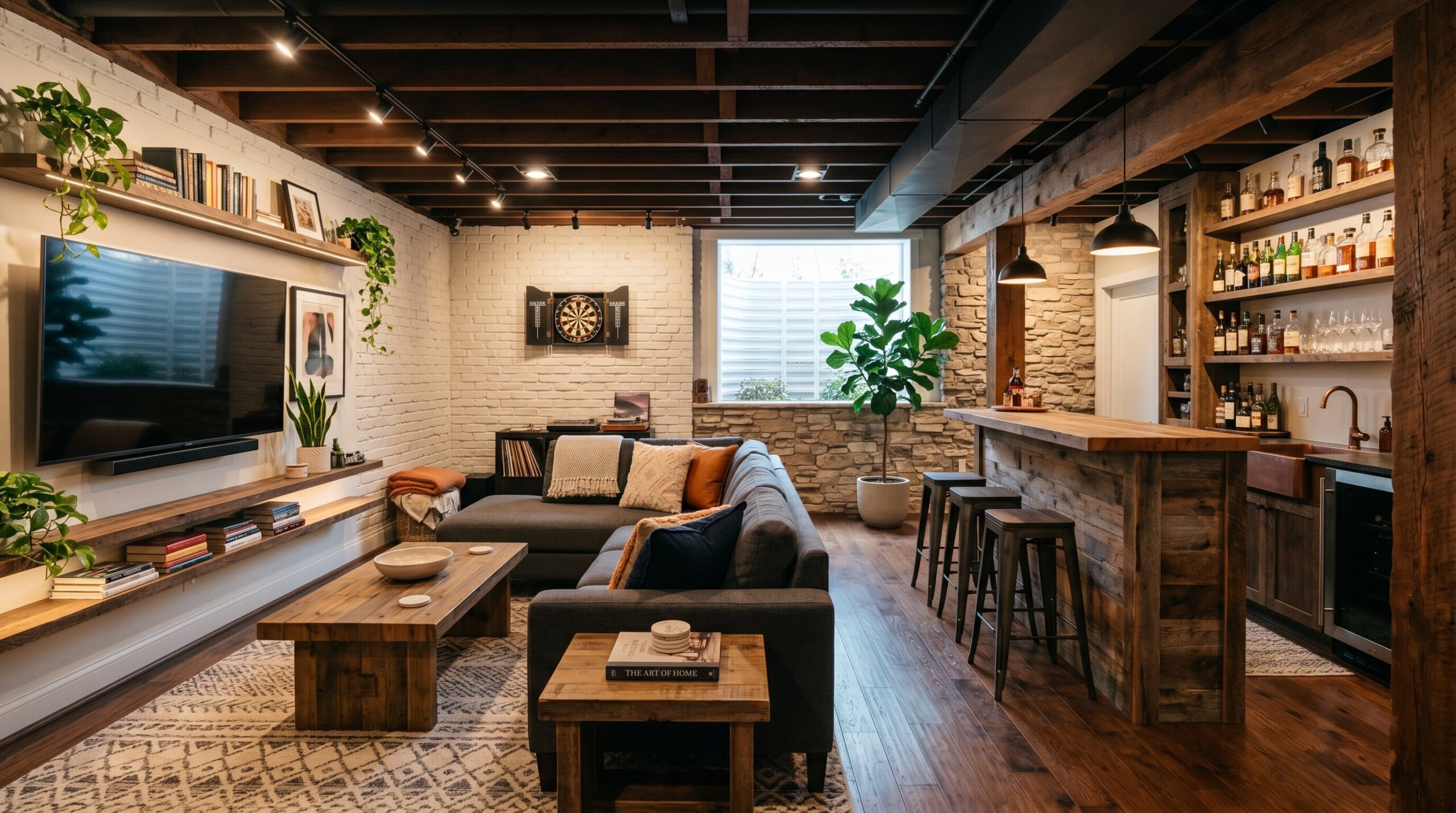
Whether you are planning polished finished basement ideas or simply upgrading a basic lower level, choosing the right basement flooring ideas should be one of your top priorities. The first rule is always the same: concrete is porous. Even when it looks dry, a basement slab can pull moisture from the soil below and push vapor into the room. That is why waterproof basement flooring isn’t only a design choice. It’s the protective layer that helps prevent mold, swelling, odors, and premature floor failure. The best basement floor ideas for 2026 use either fully inorganic materials or reliable moisture barriers, turning cold concrete into a cleaner, warmer, and more livable surface.
9 Best Waterproof Flooring Options for Basements
1. Luxury Vinyl Plank
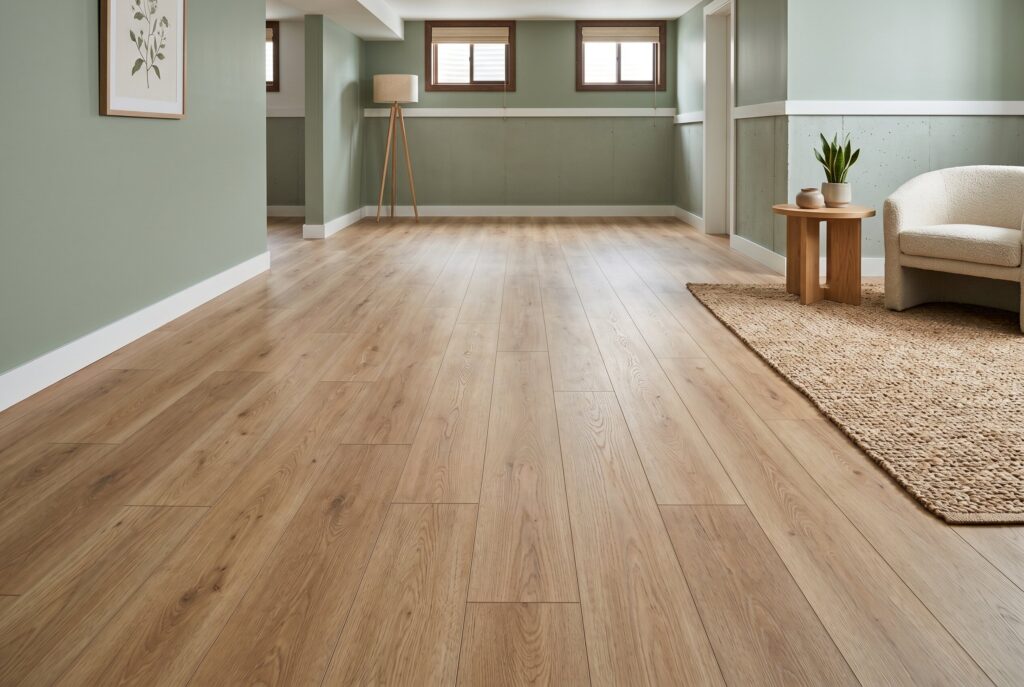
Luxury vinyl plank is one of the most popular waterproof basement flooring options because it gives the warmth of wood without the weakness of wood fiber. SPC and WPC cores don’t swell like traditional laminate when exposed to water. In Organic Modern or Japandi spaces, white oak and walnut tones create a calm, barefoot friendly floor that works beautifully with sage green walls and woven rugs.
2. Wood Look Porcelain Tile
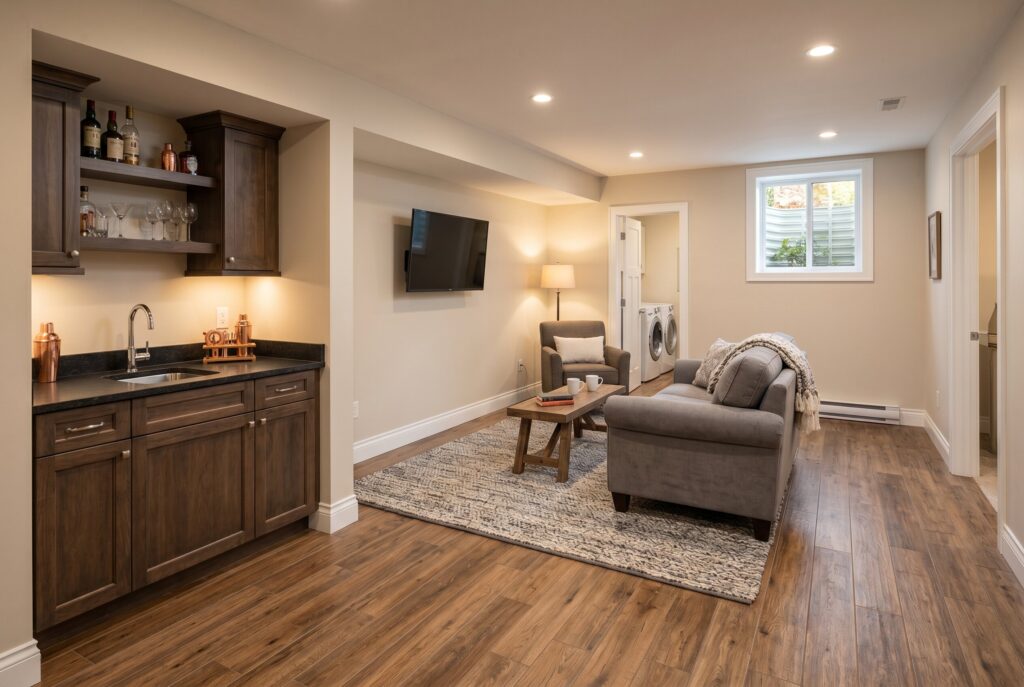
Wood look porcelain tile gives you the beauty of plank flooring with the durability of tile. It’s excellent for basements with wet bars, bathrooms, laundry zones, or walkout doors. Porcelain doesn’t absorb water easily, and if the basement ever experiences flooding, the tile itself can often survive. The main tradeoff is comfort. It feels cooler and harder underfoot, so radiant heat or large area rugs can make the space more inviting.
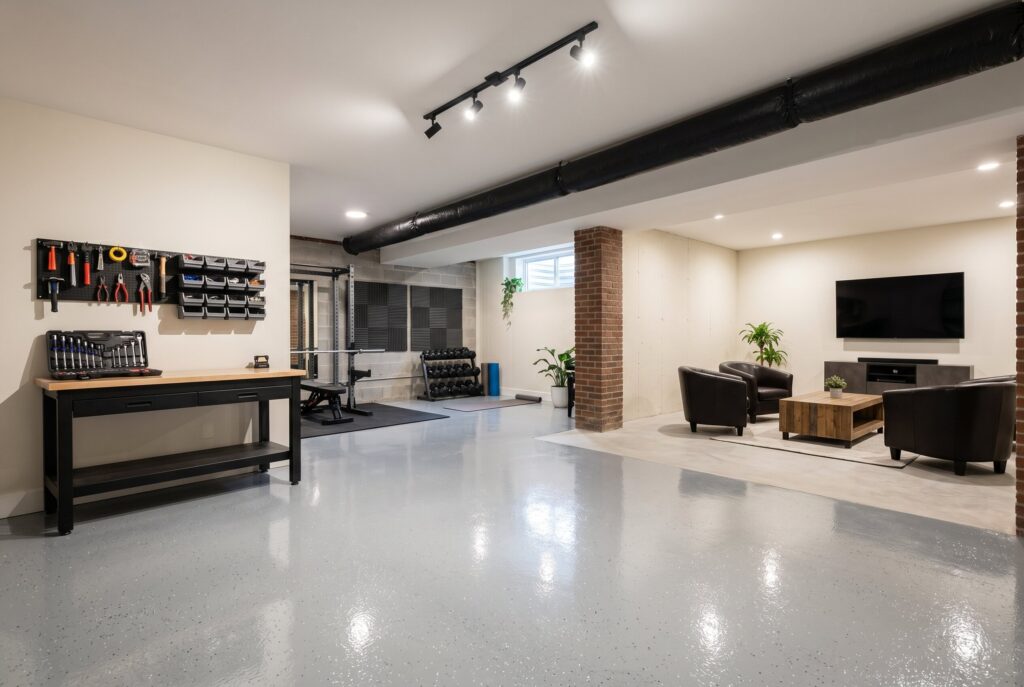
3. Epoxy and Polyaspartic Coatings
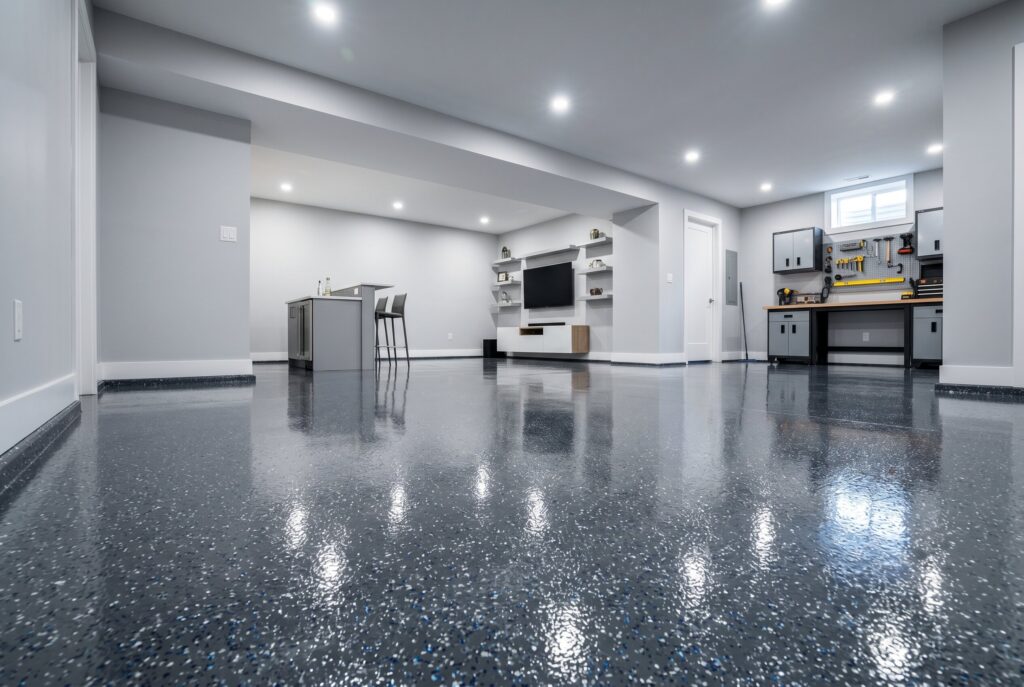
Epoxy and polyaspartic coatings turn the concrete slab into a finished floor. They are ideal for industrial basement ideas, gyms, workshops, and sleek entertainment rooms. A glossy coating reflects light, which can make a low ceiling basement feel brighter and larger. The surface resists stains, scratches, and moisture when installed over a properly prepared slab. The key is preparation. If moisture vapor is too high, coatings may bubble or peel.
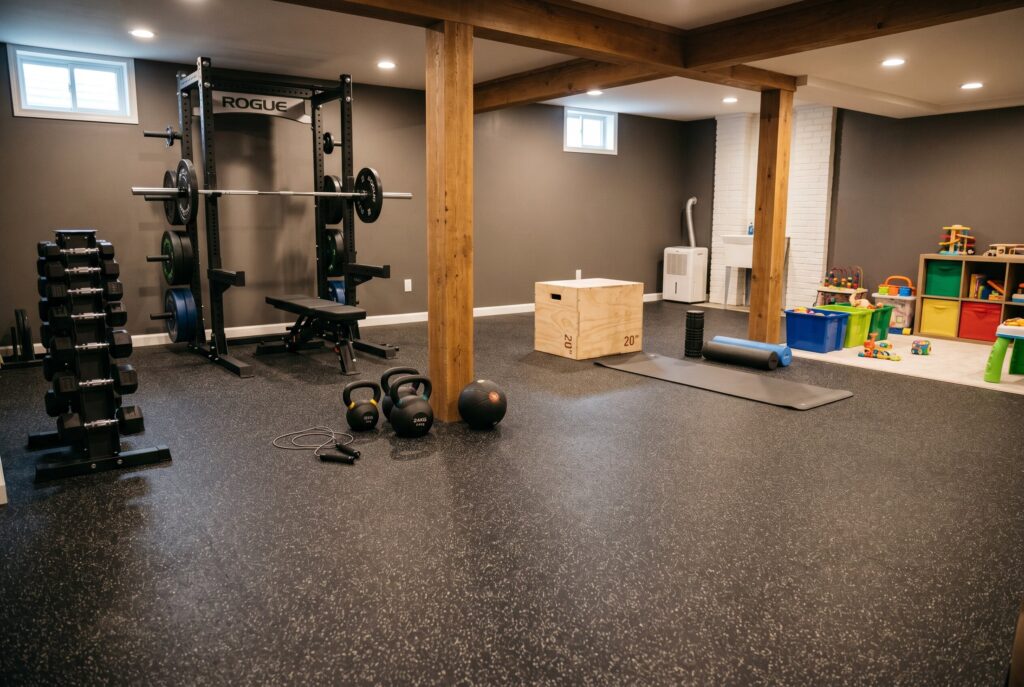
4. Rubber Flooring Rolls and Tiles
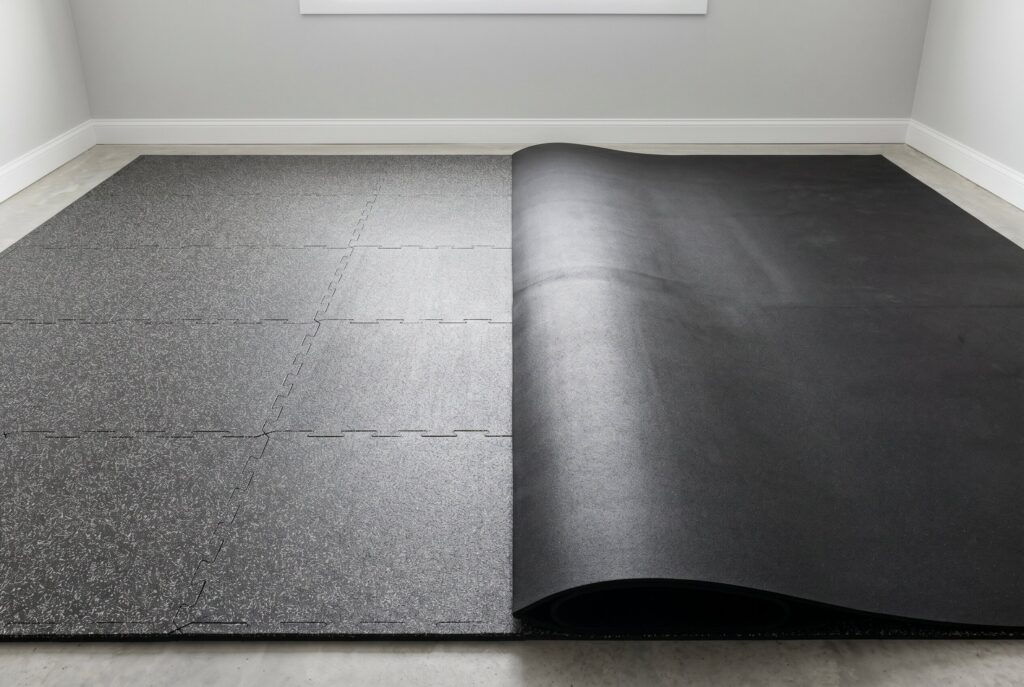
Rubber flooring is a smart choice for basement gyms, playrooms, and high impact activity areas. It resists water, absorbs shock, and protects the concrete from dropped weights or heavy equipment. Rolled rubber gives a cleaner appearance with fewer seams, while interlocking tiles are easier for DIY installation. It isn’t the most elegant choice for a formal lounge, but for active rooms, it’s practical and durable.
5. Waterproof Interlocking Foam Tiles
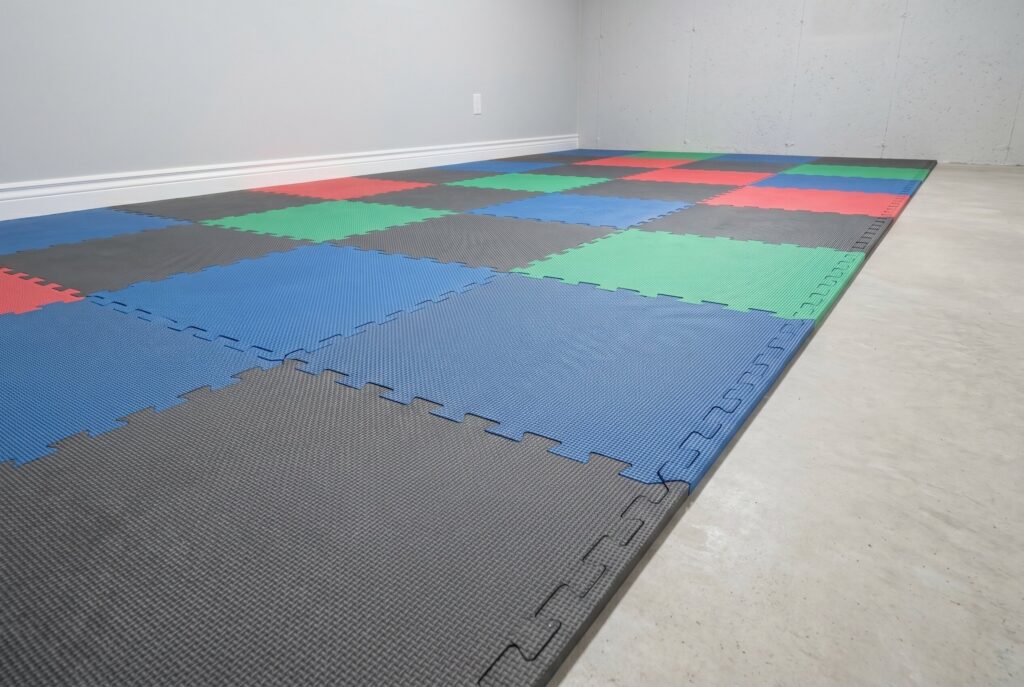
Foam tiles are one of the quickest unfinished basement ideas for families who need a softer floor fast. EVA foam doesn’t absorb water the way carpet padding does, and it helps insulate bare feet from cold concrete. It works best for kids’ play zones, temporary workout areas, hobby rooms, or budget upgrades. It isn’t ideal under heavy furniture because it can dent, but it offers comfort at a low cost.
6. Stained and Polished Concrete
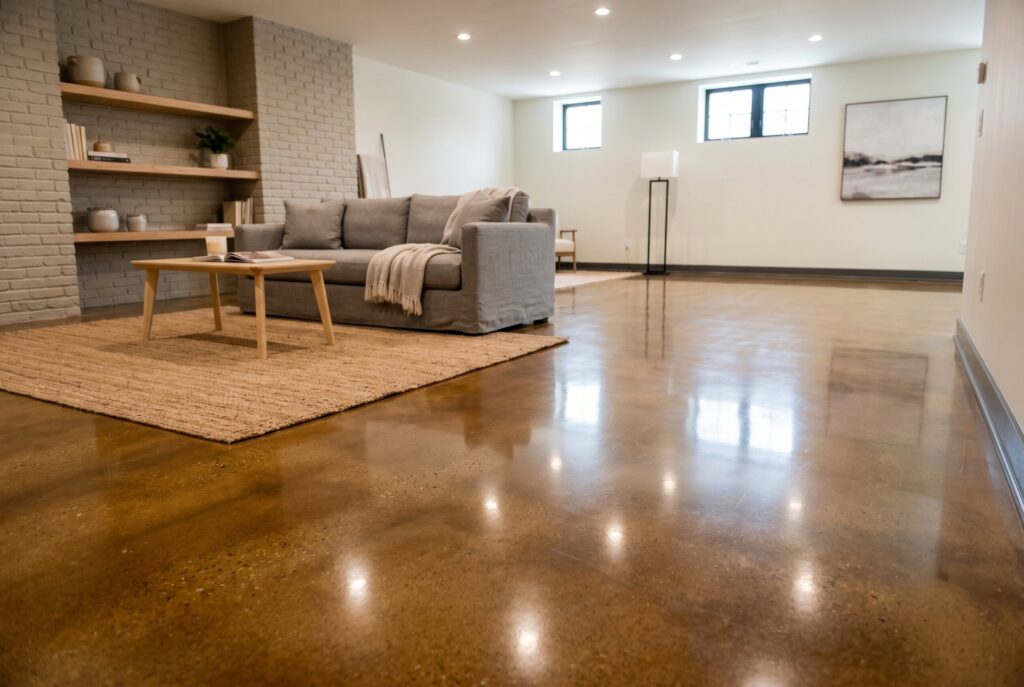
Polished concrete is minimal, durable, and surprisingly stylish when finished well. Staining can add warmth, while a clear sealer helps protect against surface moisture and stains. This option suits Japandi, industrial, and modern farmhouse basements where simplicity matters. It’s also one of the easiest floors to clean. However, concrete remains hard and cool, so rugs are important in family rooms or theater spaces.
7. Waterproof Carpet Tiles
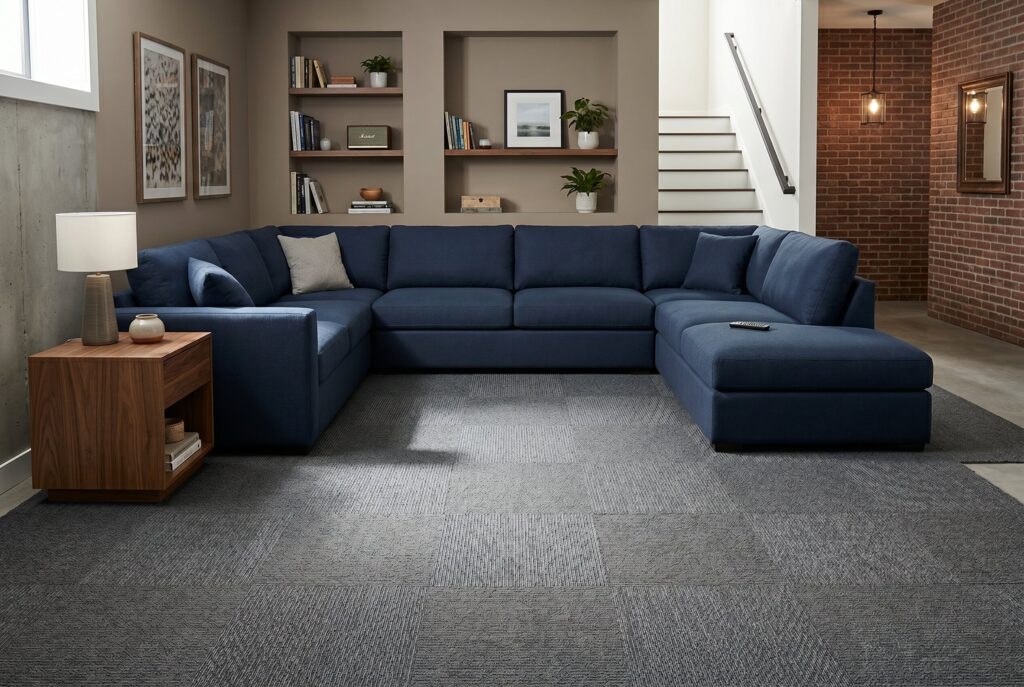
Traditional wall to wall carpet is risky in damp basements, but waterproof carpet tiles offer a more flexible alternative. Many have synthetic fibers and moisture resistant backings that are easier to clean and replace. They are especially useful for home theaters, basement bedrooms, and lounge zones with a large U shaped sofa. If one tile gets damaged, you can replace that section instead of removing the entire floor.
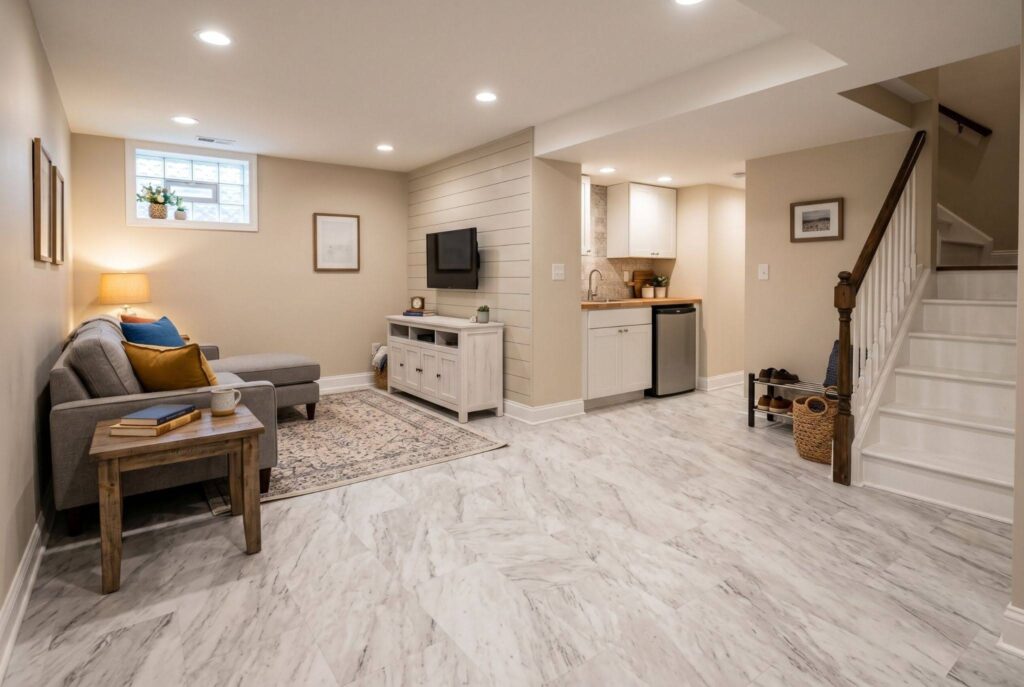
8. Sheet Vinyl
Sheet vinyl is underrated for waterproof basement flooring because it has very few seams. Fewer seams mean fewer paths for spills to reach the slab below. Modern sheet vinyl can mimic marble, stone, terrazzo, or classic patterned tile, making it useful for budget conscious finished basement ideas. Installation quality matters because cuts around walls and fixtures must be tight to maintain water resistance.
9. Engineered Vinyl Plank
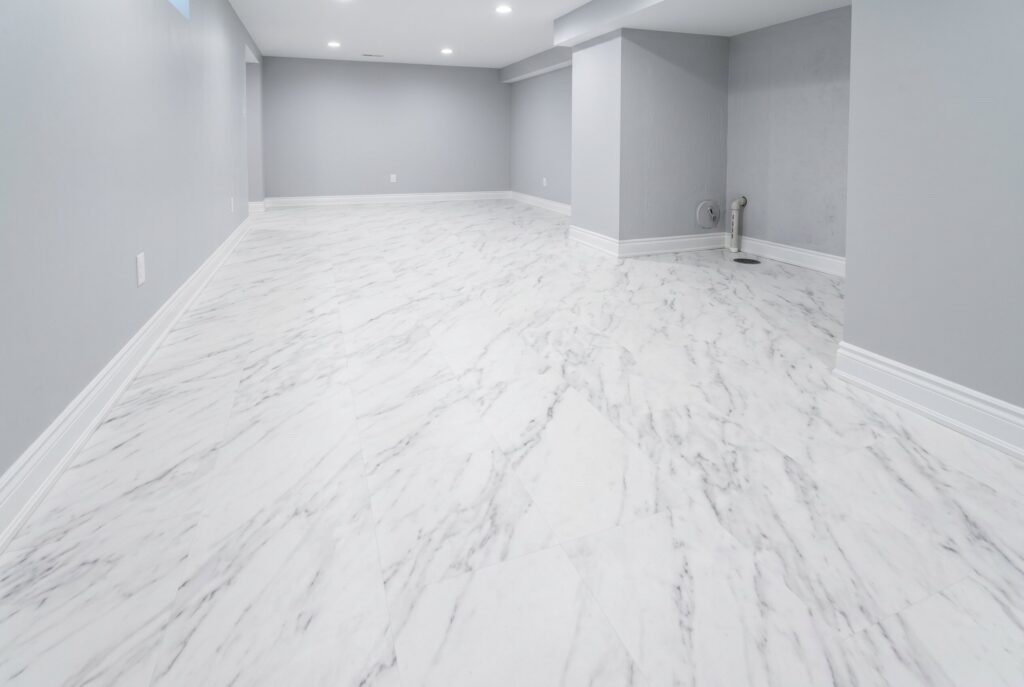
Engineered vinyl plank is a thicker, more premium version of vinyl flooring with stronger dimensional stability, realistic textures, and often an attached acoustic pad. It’s excellent for basement living rooms, guest suites, home offices, and multipurpose spaces where comfort and sound control matter. It offers a polished look while still supporting the moisture demands of below grade installation.
Conclusion
A successful basement floor is half material and half preparation. Even the best waterproof basement flooring can fail if it’s installed over active moisture, cracks, trapped vapor, or an uneven slab. Before choosing LVP, porcelain tile, epoxy, rubber, foam, polished concrete, carpet tiles, sheet vinyl, or EVP, make sure the concrete is clean, sealed, level, and ready. The right choice depends on the mission of the room. Choose LVP or EVP for warm everyday living, porcelain for wet areas, epoxy for durability, rubber for gyms, foam for quick comfort, polished concrete for minimal style, carpet tiles for softness, and sheet vinyl for budget friendly water protection. With the right floor system, a basement can stop feeling like a cold storage zone and become a finished, comfortable part of the home.
Related Articles
Basement Flooring: 7 Best Materials (Pros, Cons & Costs)