

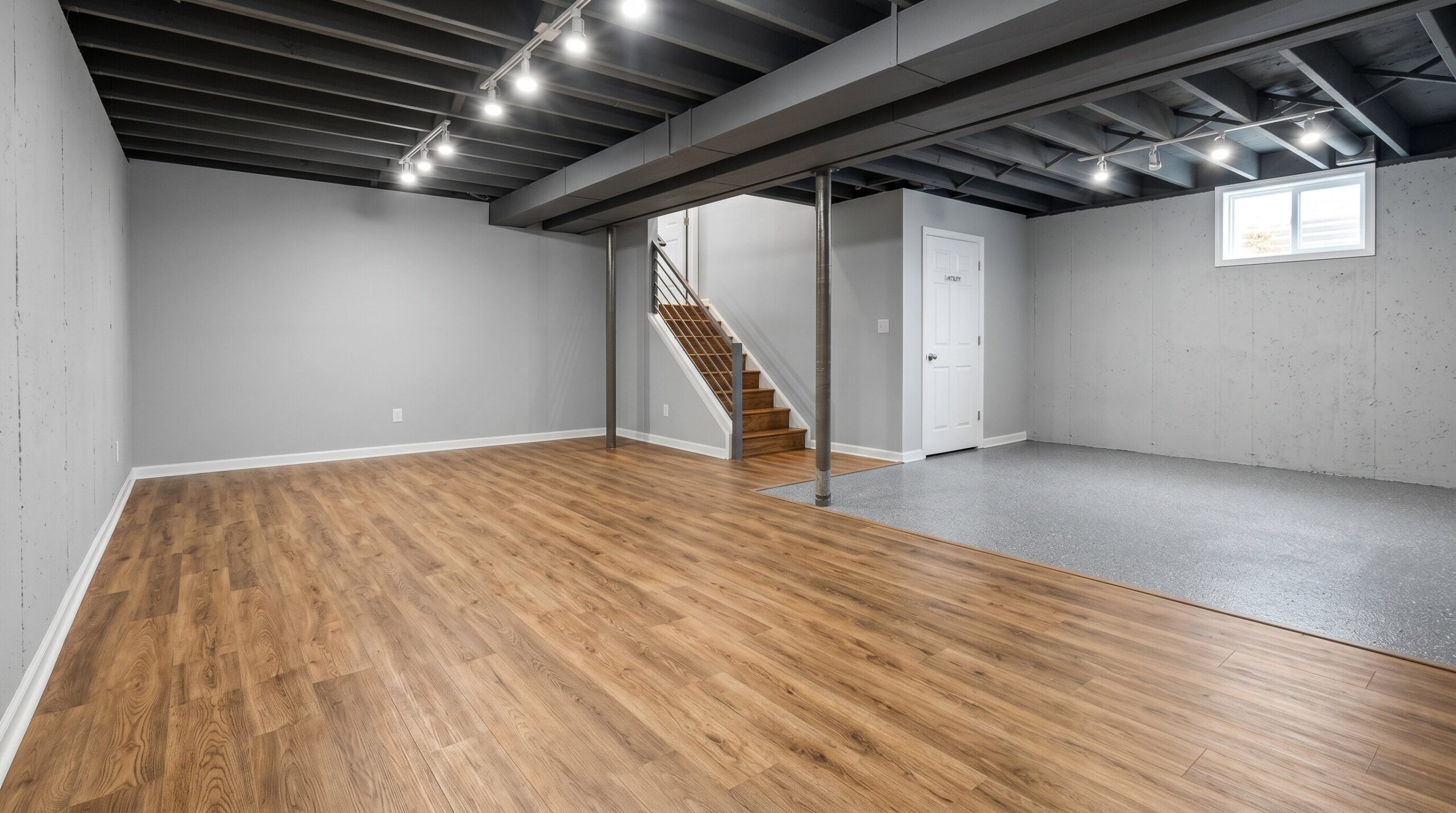
When choosing materials for basement floor ideas, the first rule is simple: remember that you are building below ground. Concrete may look solid, but it’s porous and can absorb moisture from the soil beneath it. That is why waterproof basement flooring isn’t just a style upgrade. It’s the foundation of a healthier, longer lasting basement remodel. Whether your goal is a cozy family theater, a Japandi guest suite, a home gym, or a polished entertainment lounge, the best basement flooring ideas must balance moisture protection, comfort, cost, durability, and the way your family actually uses the space.
The 7 Best Materials for Your Basement Remodel
1. Luxury Vinyl Plank or Tile
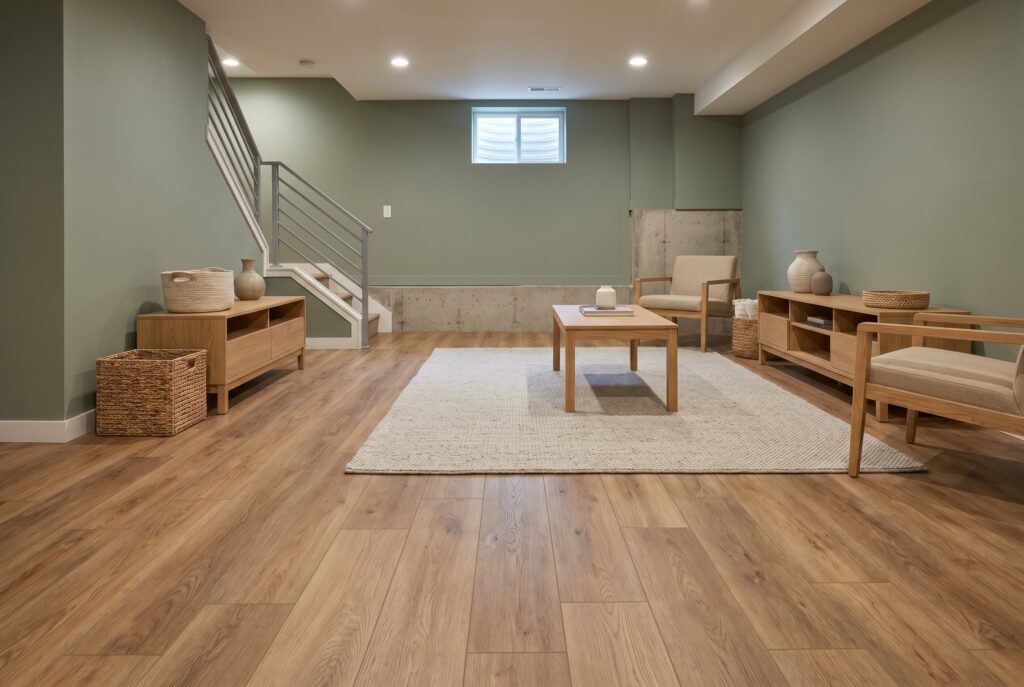
Luxury vinyl plank and luxury vinyl tile are among the most practical basement flooring options for modern homes. LVP can mimic white oak, walnut, stone, or concrete while staying more forgiving underfoot than tile. It works beautifully in Organic Modern and Japandi interiors, especially when paired with sage green walls, oak furniture, and soft woven rugs.
Pros:
- Completely waterproof, making it one of the safest flooring choices for basements where moisture is always a concern.
- Replicates the look of hardwood, stone, or concrete at a fraction of the cost of natural materials.
- Softer and more comfortable underfoot than tile, especially for families who spend a lot of time in the space.
- Easy to clean and maintain, requiring little more than regular sweeping and occasional mopping.
- Available in click-lock systems that are DIY-friendly and quick to install.
Cons:
- Doesn’t offer the same premium feel or resale value as real hardwood flooring.
- Lower-quality products can dent or scratch under heavy furniture or appliances.
- Damaged planks typically can’t be refinished and must be replaced.
- Some budget options may look less realistic when viewed up close.
Cost:
- Approximately $3–$7 per sq. ft.
2. Ceramic and Porcelain Tile
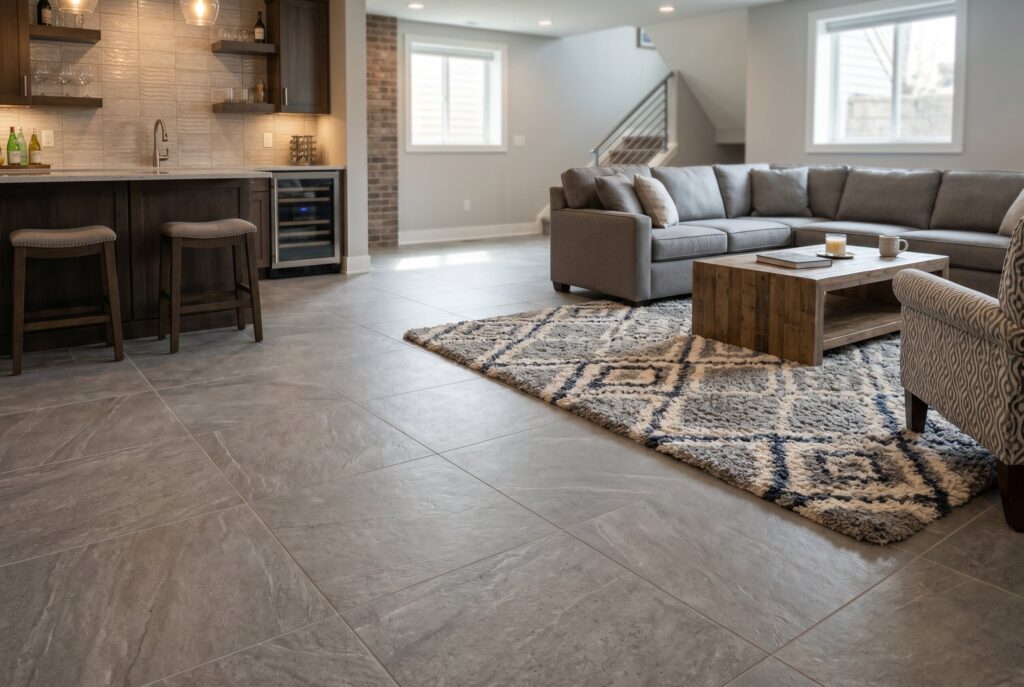
Ceramic and porcelain tile are the strongest choices for wet zones such as basement bathrooms, laundry rooms, wet bars, and walkout entries. Porcelain is especially dense, making it one of the best flooring for basement projects where moisture resistance is the top priority.
Pros:
- Highly water-resistant, making it an excellent choice for basement bathrooms, laundry rooms, and wet bars.
- Extremely durable and capable of lasting for decades with minimal wear.
- Resistant to scratches, stains, and humidity, making it ideal for high-traffic areas.
- Works exceptionally well with radiant floor heating systems.
- Available in a wide variety of styles, colors, patterns, and sizes.
Cons:
- Feels cold and hard underfoot unless paired with area rugs or heated flooring.
- Fragile items such as dishes or glassware are more likely to break when dropped.
- Installation can be labor-intensive and more expensive than other flooring options.
- Grout lines require periodic sealing and maintenance to prevent staining and mildew buildup.
Cost:
- Approximately $5–$15 per sq. ft.
3. Epoxy and Painted Concrete
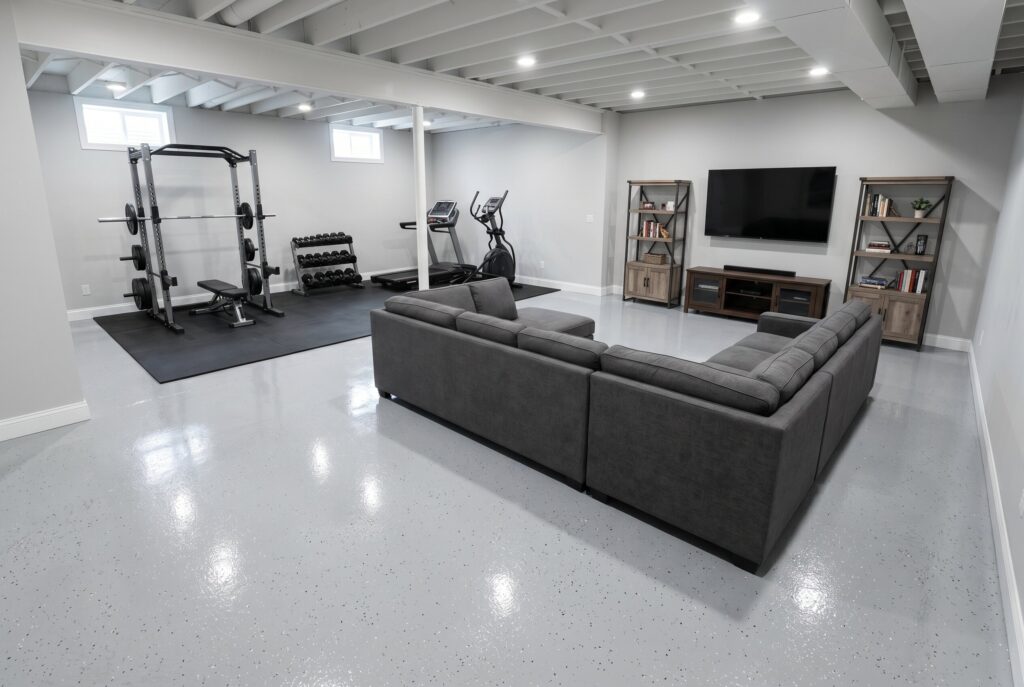
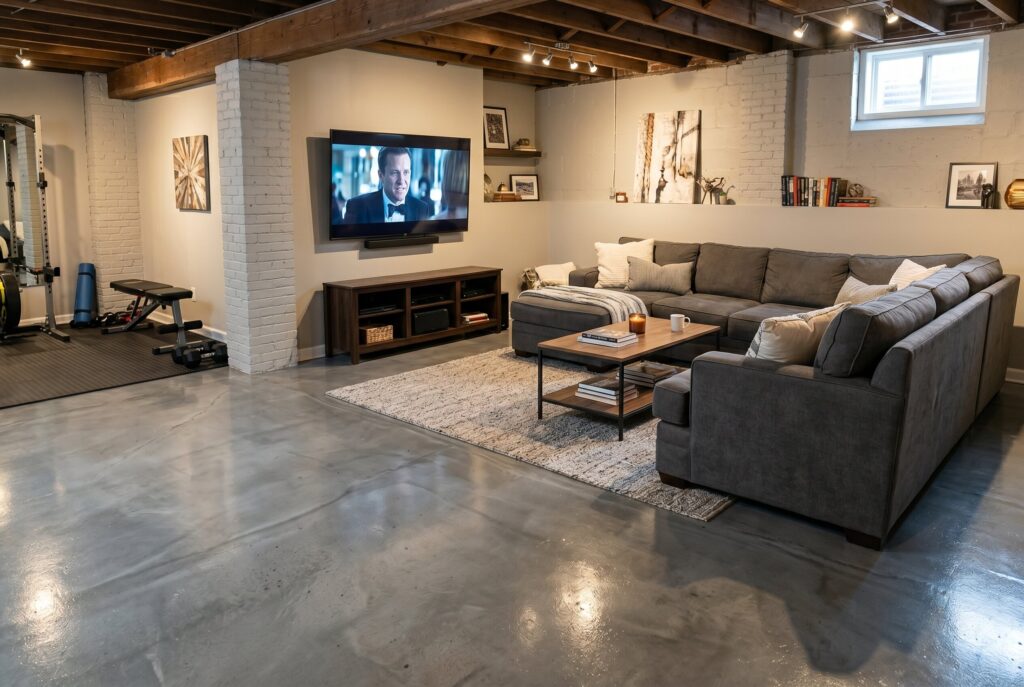
Epoxy and painted concrete are ideal for homeowners who like a clean industrial look. Instead of covering the slab, this option turns the slab itself into the finished surface. In a modern basement, epoxy can look sleek beneath a large U shaped sectional, a home gym, or an entertainment area.
Pros:
- Highly resistant to moisture, stains, chemicals, scratches, and heavy foot traffic.
- Creates a sleek, modern industrial aesthetic that works well in gyms, workshops, and entertainment spaces.
- Easy to clean and maintain, with no grout lines or seams to collect dirt.
- Available in a range of finishes, including high-gloss, metallic, and decorative flake systems.
Cons:
- Can feel cold and unforgiving compared to softer flooring materials.
- Proper surface preparation is critical and often requires professional installation.
- Moisture vapor rising through the concrete slab can cause peeling, bubbling, or coating failure.
- Repairs can be difficult to blend seamlessly with the original finish.
Cost:
- Approximately $3–$9 per sq. ft.
4. Engineered Hardwood
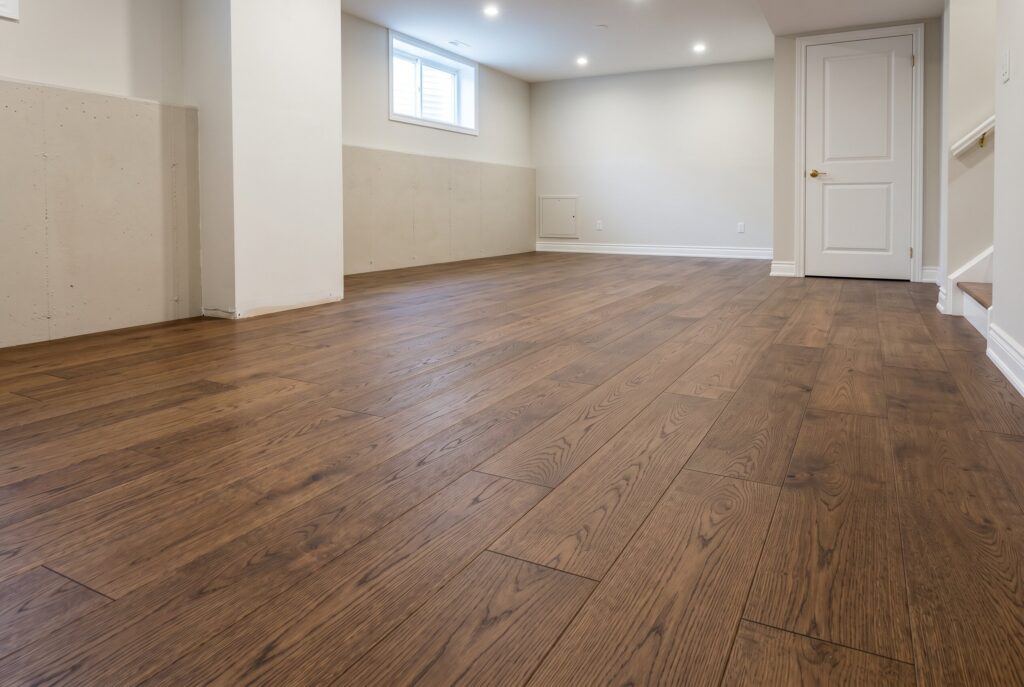
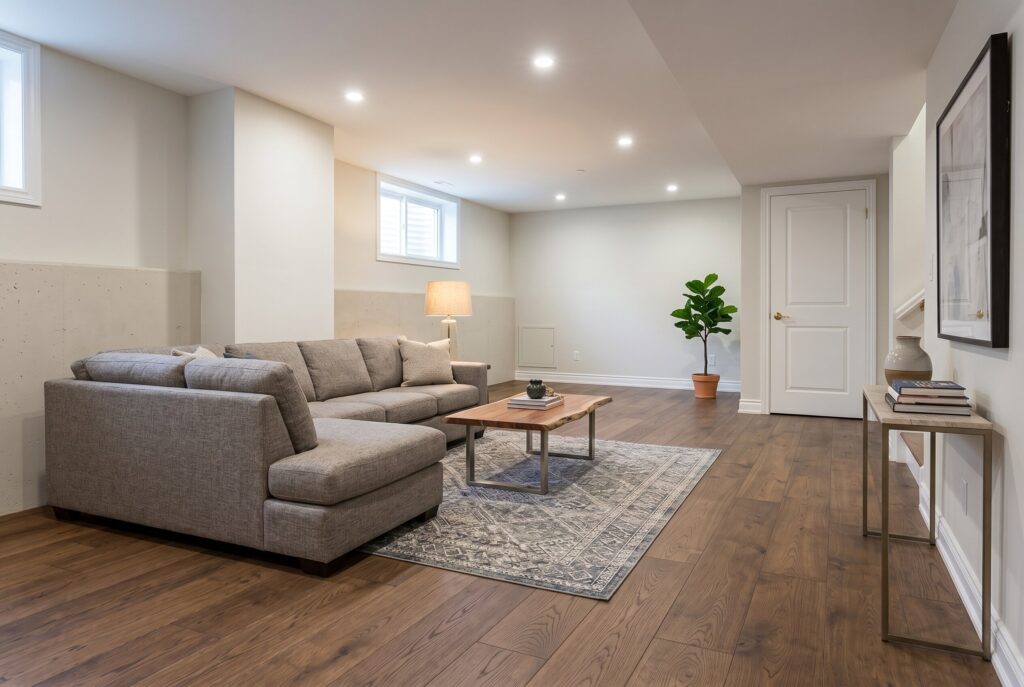
Engineered hardwood gives a basement the richness of real wood without the same movement risks as solid hardwood. Its layered structure makes it more stable in changing humidity, though it still needs a dry basement and the right underlayment.
Pros:
- Provides the warmth, beauty, and authenticity of real wood flooring.
- More dimensionally stable than solid hardwood, making it better suited for basements.
- Elevates the overall look of a finished basement and can enhance home value.
- Works particularly well in upscale designs featuring warm lighting and natural materials.
Cons:
- Not waterproof and can be damaged by leaks, flooding, or prolonged exposure to moisture.
- More expensive than vinyl or laminate flooring options.
- Some products have thin veneer layers that limit refinishing possibilities.
- Requires a consistently dry environment and proper moisture control.
Cost:
- Approximately $6–$14 per sq. ft.
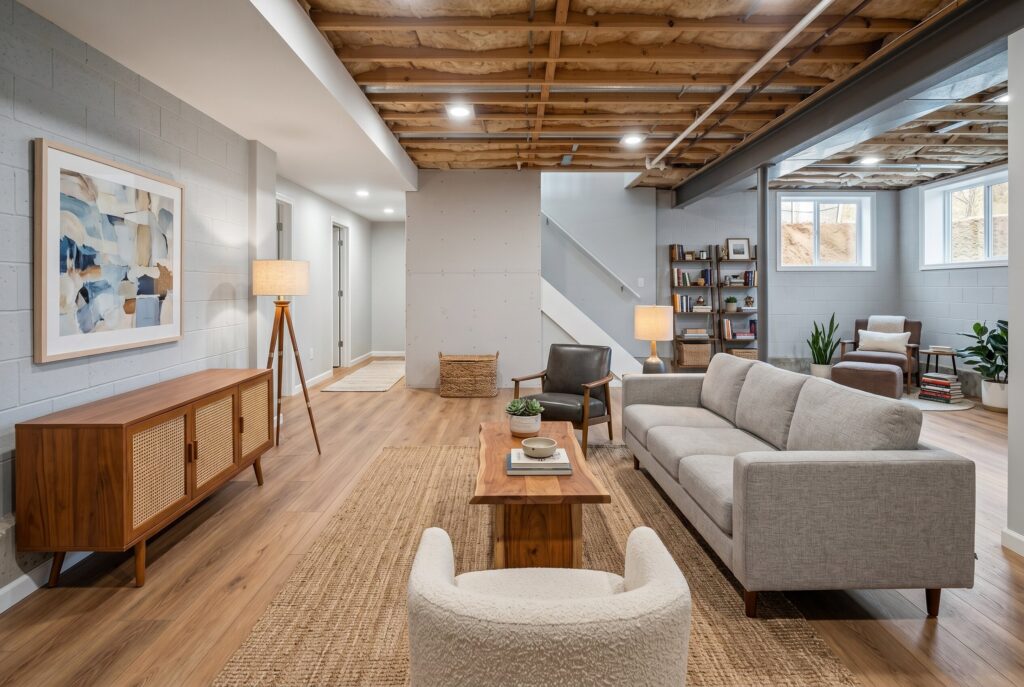
5. Laminate Flooring
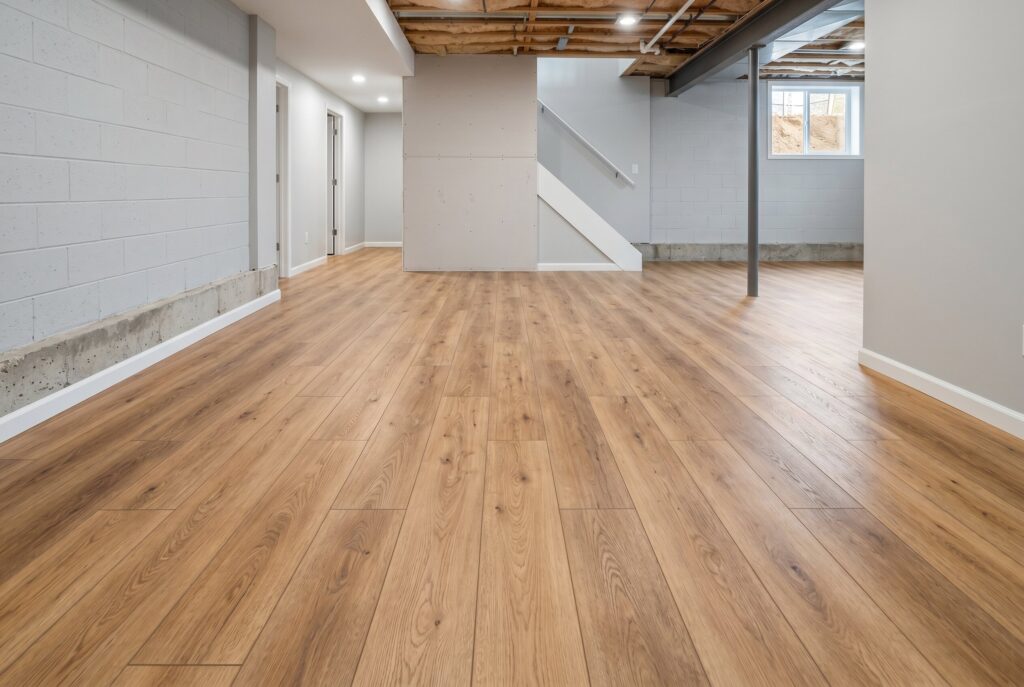
Laminate flooring is a budget friendly choice for dry basements, offices, hobby rooms, and casual recreation spaces. Modern laminate can look surprisingly realistic, with wood grain textures and wide plank styles that suit many basement ideas.
Pros:
- Budget-friendly while still delivering an attractive, finished appearance.
- Modern products offer realistic wood textures and wide-plank designs.
- Resistant to everyday scratches and wear, making it suitable for offices and recreation rooms.
- Floating-floor installation systems make it relatively easy and fast to install.
Cons:
- Less moisture-resistant than vinyl or tile flooring.
- Water penetration can cause the fiberboard core to swell, warp, and permanently fail.
- Not recommended for basements with recurring moisture issues.
- Typically has a shorter lifespan than tile or engineered hardwood.
Cost:
- Approximately $2–$5 per sq. ft.
6. Carpet and Carpet Tiles
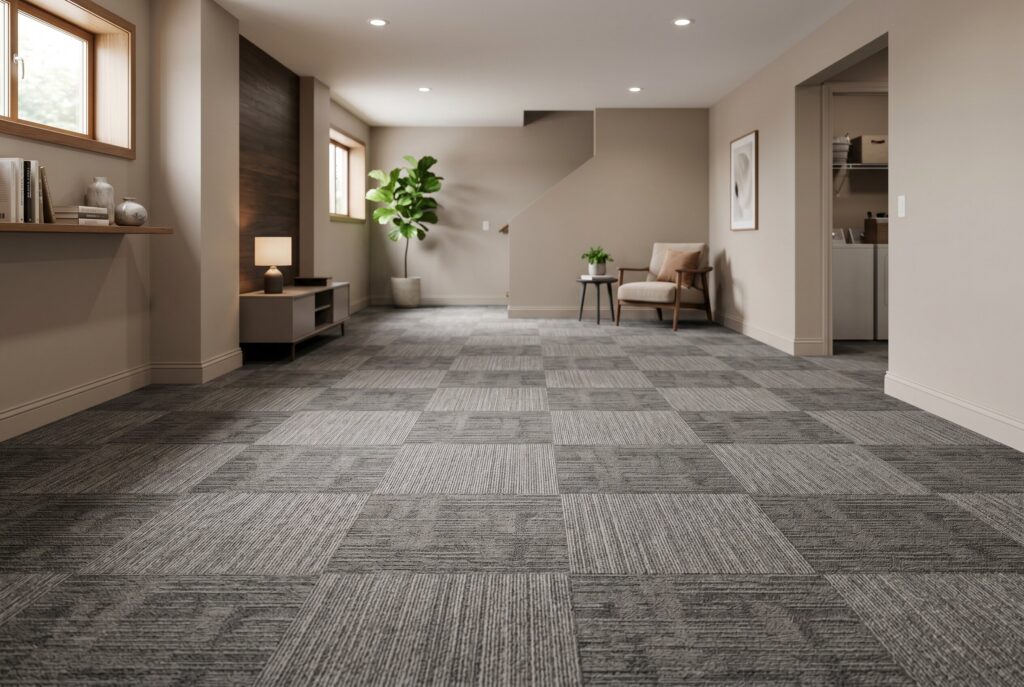
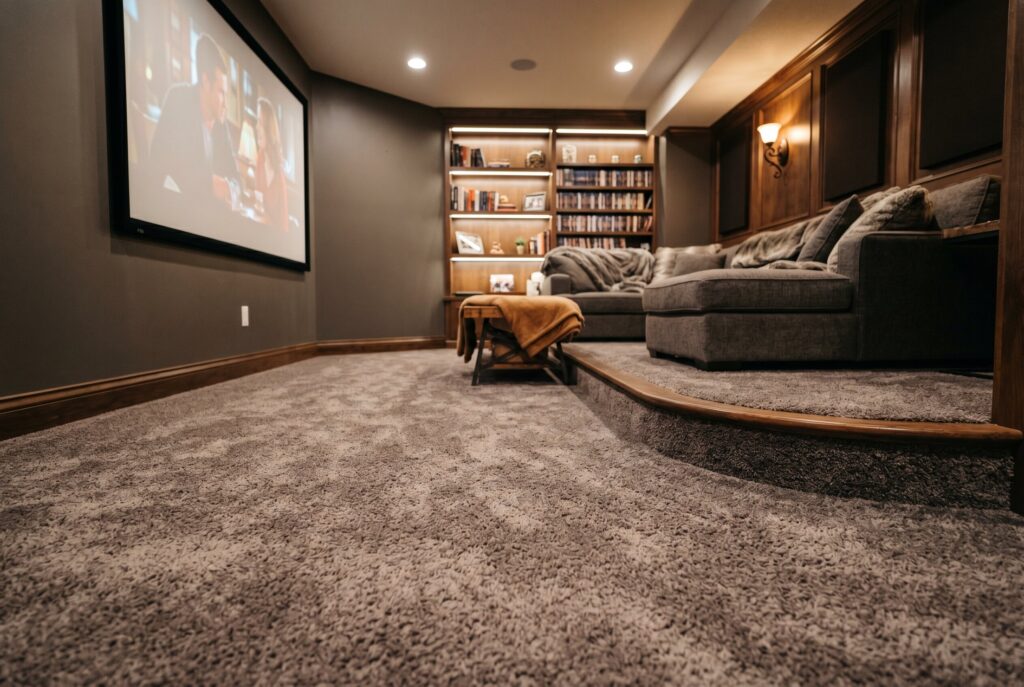
Carpet is best for basements designed around comfort. It softens sound, adds warmth, and makes a theater room or basement bedroom feel more inviting. Carpet tiles are often smarter than wall to wall carpet because individual squares can be replaced if stained or damaged.
Pros:
- Provides the warmest and most comfortable feel underfoot of any basement flooring option.
- Excellent at reducing noise, making it ideal for home theaters, bedrooms, and playrooms.
- Creates a cozy and inviting atmosphere that encourages relaxation.
- Carpet tiles allow individual sections to be replaced if they become stained or damaged.
Cons:
- Can trap moisture, odors, allergens, and dust if humidity levels aren’t properly controlled.
- Vulnerable to mold and mildew in damp basement environments.
- More difficult to clean thoroughly than hard-surface flooring.
- Not a good choice for basements with flood risks or frequent moisture problems.
Cost:
- Approximately $2–$6 per sq. ft.
7. Rubber Flooring
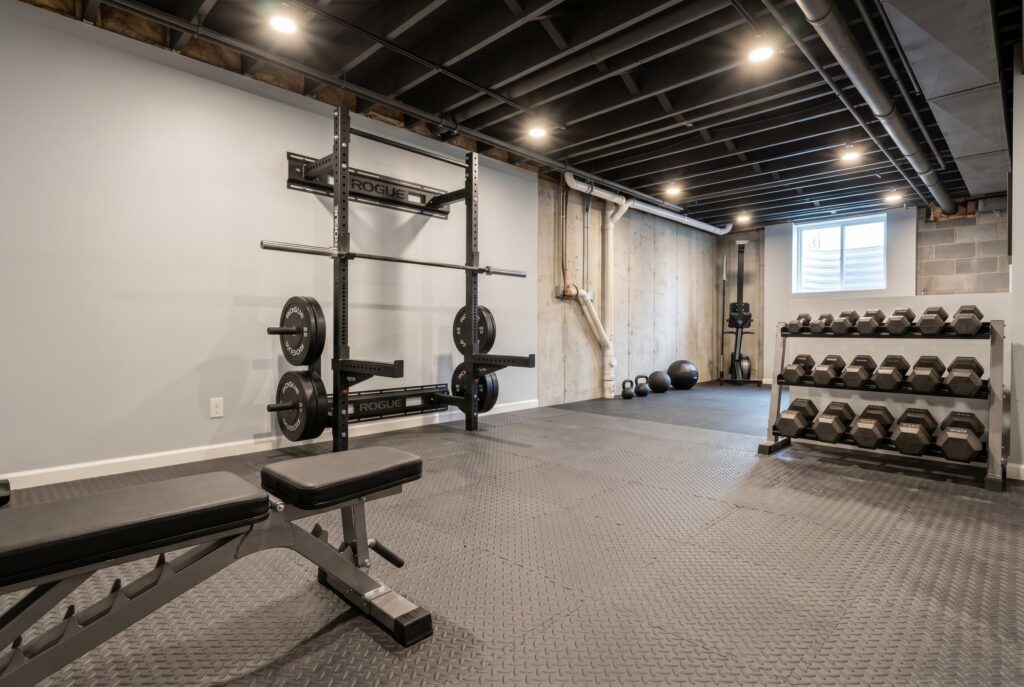
Rubber flooring is the practical winner for basement gyms, kids’ play areas, workshops, and heavy use zones. It protects the concrete slab, absorbs impact, and creates a safer surface for exercise or active family spaces.
Pros:
- Excellent shock absorption, making it the preferred choice for home gyms and workout areas.
- Slip-resistant surface improves safety for exercise, children’s play areas, and workshops.
- Reduces noise and vibration from equipment, weights, and high-impact activities.
- Helps protect the concrete slab from heavy impacts and wear.
Cons:
- Typically lacks the refined appearance homeowners want in living rooms or entertainment spaces.
- May produce a noticeable rubber odor immediately after installation.
- Design and color options are generally more limited than other flooring materials.
- Prolonged exposure to direct sunlight can lead to fading over time.
Cost:
- Approximately $3–$8 per sq. ft.
Conclusion
There is no single perfect floor for every basement. The right choice depends on moisture, comfort, budget, and function. For most homeowners, luxury vinyl plank is the safest all around waterproof basement flooring because it balances style, price, and durability. Tile is best for wet rooms. Epoxy works for industrial spaces and gyms. Engineered hardwood brings the most upscale look, while laminate offers savings in dry areas. Carpet creates softness for bedrooms and theaters, and rubber is the clear choice for workout zones.
Before installing anything, test the concrete for moisture, repair cracks, and think carefully about how the room will be used. A basement floor isn’t just a surface. It’s the layer that decides whether the space feels cold and temporary or warm, finished, and truly livable.
Related Articles
9 Waterproof Basement Flooring Options Over Concrete (2026)
Basement Lighting Ideas: 17 Tricks to Hide Low Ceilings