

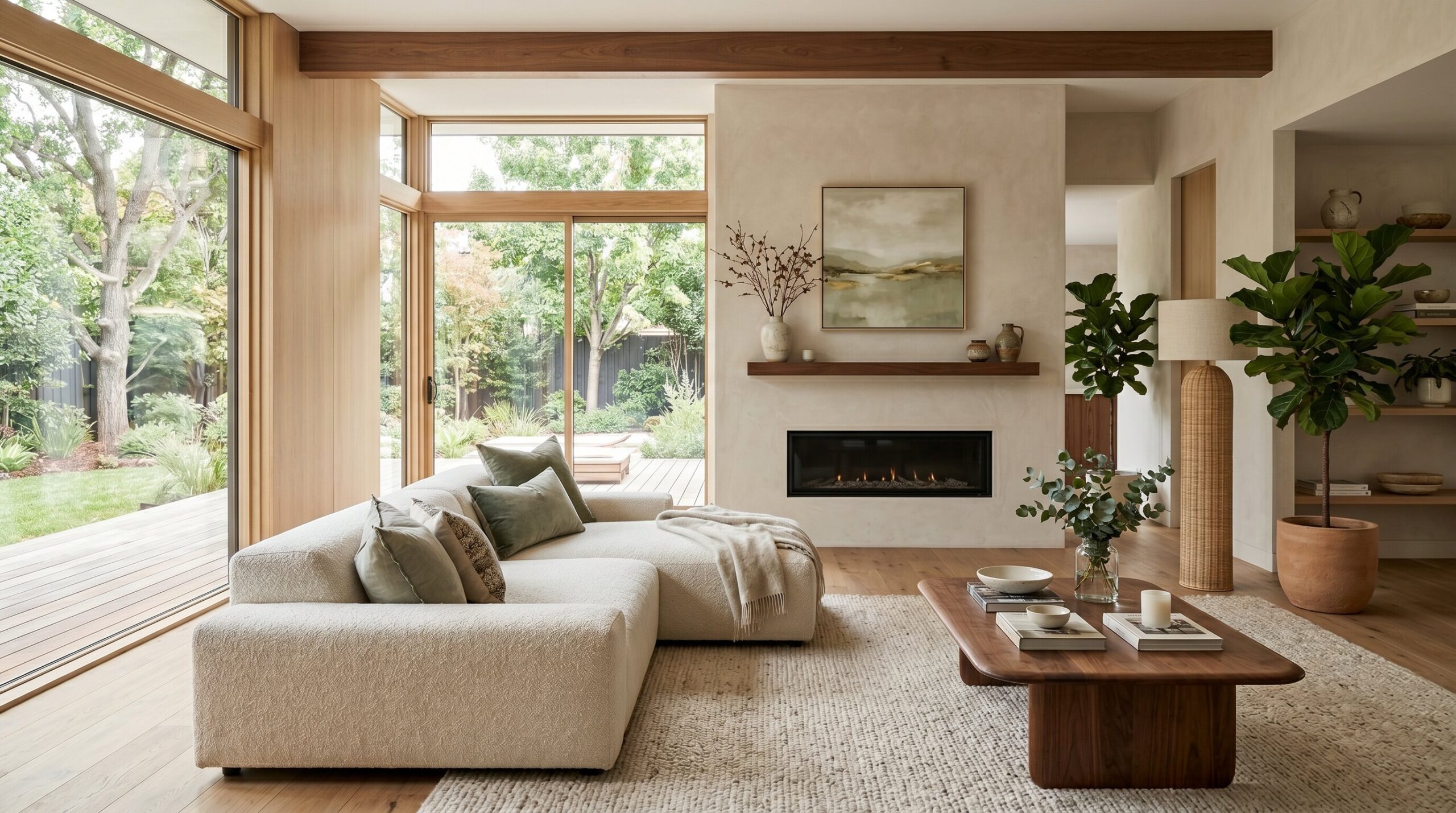
Most DIY home decor ideas online stop at small crafts, quick wall prints, or decorative objects that look nice for a week but rarely change how a room feels. A stronger DIY home decor project should do more than fill empty space. It should improve proportion, texture, comfort, and the overall rhythm of your home.
The secret is consistency. Instead of mixing random trends, choose one design language and repeat it through every decision. Organic Modern, Japandi, and Modern Farmhouse all work beautifully because they rely on warm wood, calm colors, natural textiles, and generous seating. These styles make a home feel collected, not cluttered.
The following ideas are designed for homeowners and renters who want budget room makeovers with a high end result. Some are weekend home improvement projects. Others are simple paint, textile, or furniture changes. Together, they can make your home feel calmer, warmer, and more intentional.
Architectural and Woodwork Upgrades
1. Fluted Wood Accent Walls
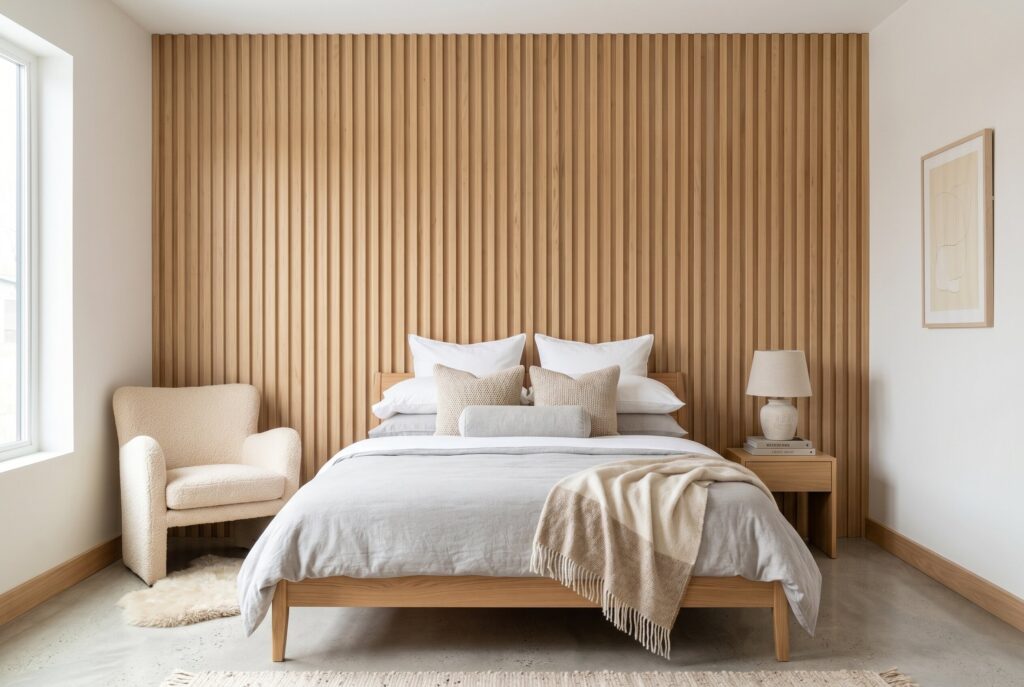
Fluted wood accent walls are one of the most effective ways to make a plain room feel custom. The vertical rhythm adds shadow, depth, and quiet movement without using bold color or busy pattern. In a Japandi room, light oak slats behind a bed or sectional sofa can create a warm focal point while keeping the mood calm. The key is restraint. Covering every wall can make the room feel heavy. One carefully chosen wall is usually enough to create architectural interest.
2. Floating Walnut Shelves
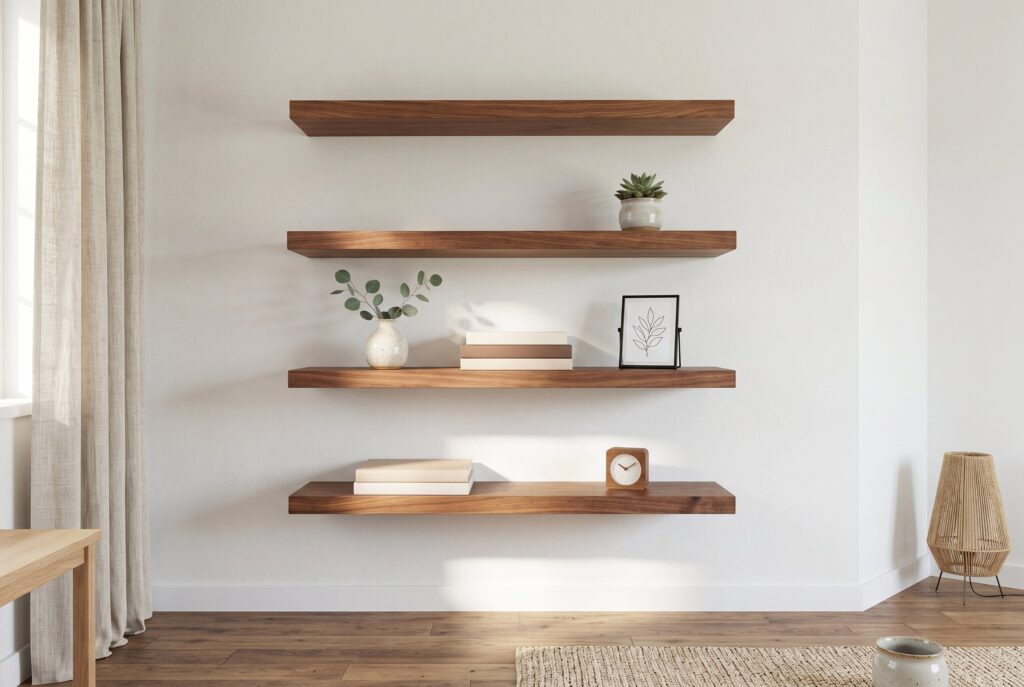
Floating walnut shelves bring warmth and function to a blank wall. They work especially well in living rooms, kitchens, home offices, and reading corners. Walnut has a richer tone than oak, so it adds visual weight without needing much styling. Use hidden brackets for a clean built in look, then style each shelf with fewer objects than you think you need. A ceramic vase, a small stack of books, and one framed piece will look more refined than crowded decorative clutter.
3. Roman Clay Textured Walls
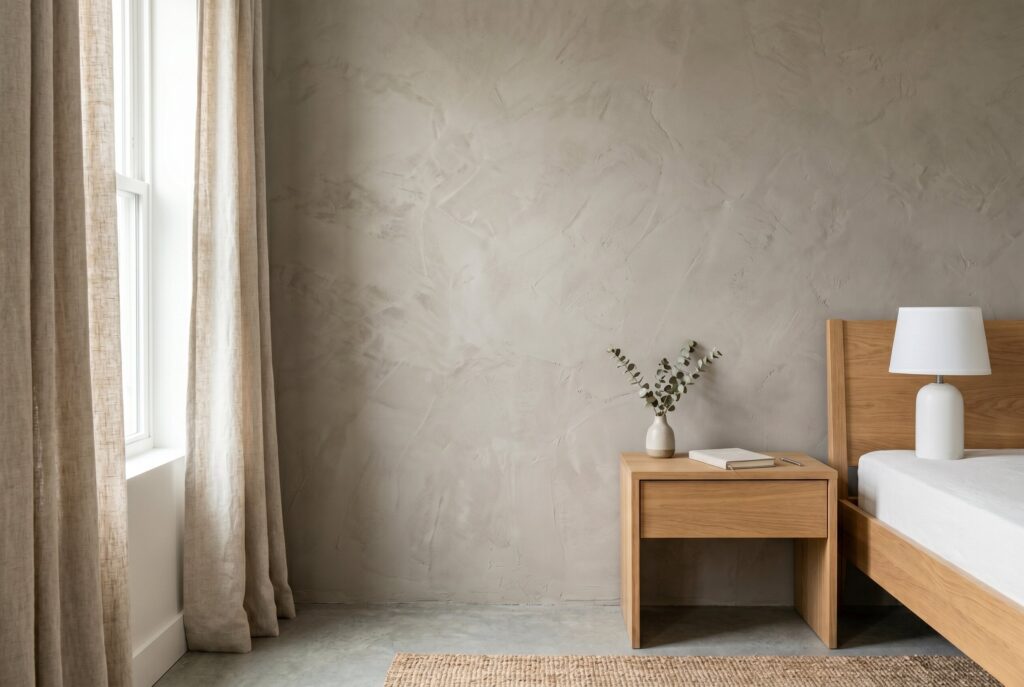
Roman clay gives walls a soft, hand finished look that flat paint can’t achieve. It is perfect for bedrooms, dining rooms, powder rooms, and quiet corners where you want warmth without heavy decoration. The beauty of Roman clay is its subtle movement. It catches light differently throughout the day, which makes the room feel alive. Choose warm neutrals, mushroom gray, soft taupe, or muted sage for a timeless result. This upgrade feels especially elegant when paired with linen curtains and simple wood furniture.
4. Minimalist Fireplace Mantel
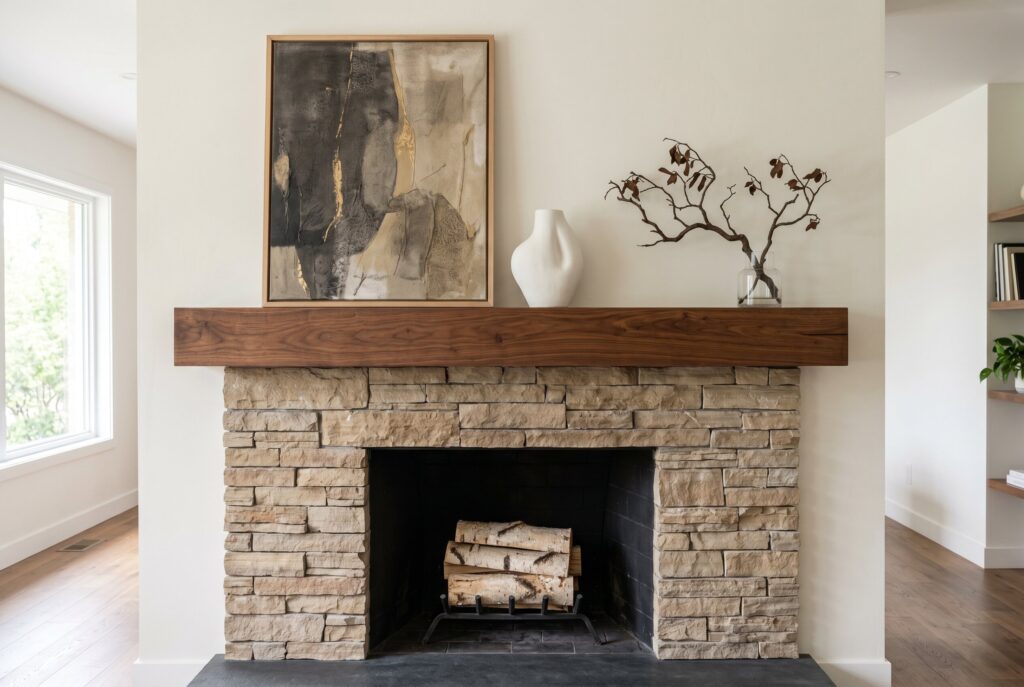
A fireplace can easily become the busiest part of a room, especially when the mantel is overloaded with small objects. A minimalist fireplace mantel does the opposite. Replace a thin or dated mantel with a thick walnut or oak beam, then style it with intention. One large artwork, one sculptural vase, and a low branch arrangement may be enough. The goal is to create a calm focal point, not a seasonal display shelf. This approach works beautifully in Organic Modern interiors.
5. Oak Slat Room Dividers
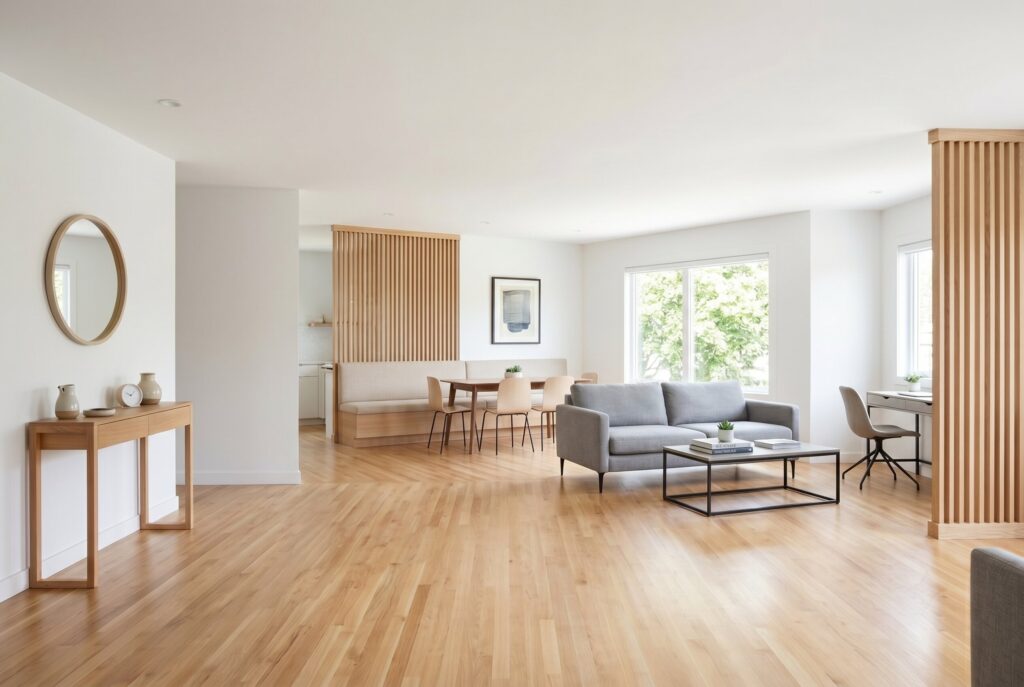
Oak slat room dividers are ideal for open floor plans because they create separation without blocking light. Use them between an entryway and living room, behind a dining bench, or beside a home office area. The spacing between the slats matters. Too narrow, and the divider feels like a wall. Too wide, and it loses structure. A balanced layout gives privacy while still allowing the eye to travel through the room. This is a smart weekend home improvement project for homes that need zones.
6. Custom Radiator Covers
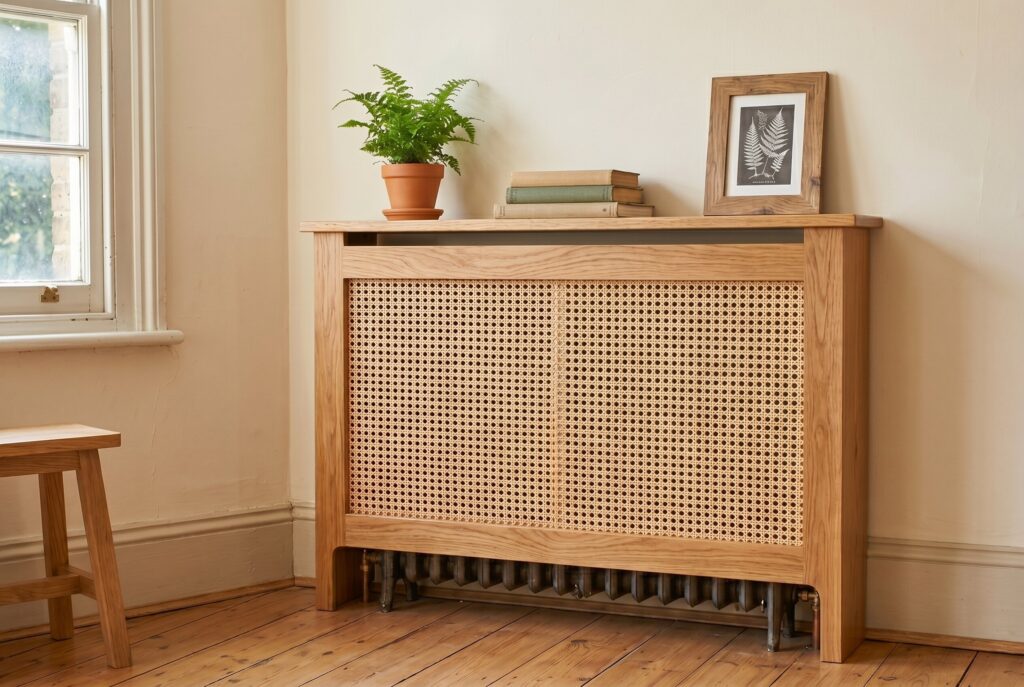
Old radiators can interrupt an otherwise polished room. A custom radiator cover turns that awkward element into a design feature. Use wood framing with cane, grille, or slatted panels so heat can still circulate safely. The top can become a display ledge for art, plants, or books. Paint the cover the same color as the wall for a seamless look, or stain it in oak for warmth. This project works especially well in older homes where charm and utility need to coexist.
7. Built In Window Seating
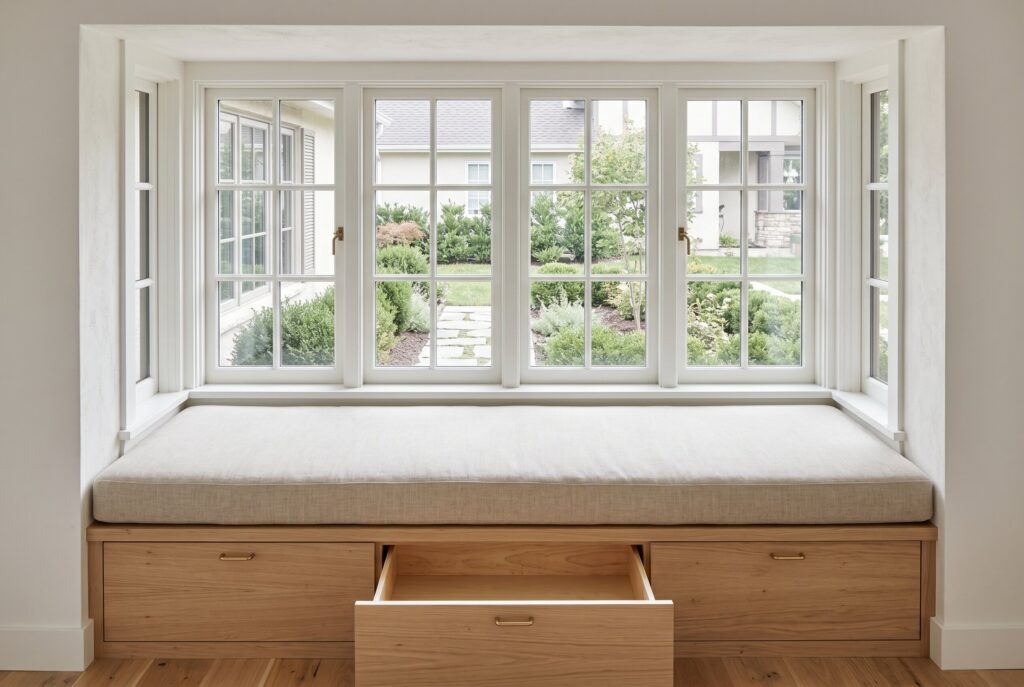
Built in window seating makes unused floor space feel purposeful. Instead of placing a single chair near the window, build a long bench with a fitted cushion and hidden storage below. It creates a reading nook, extra guest seating, and a softer architectural moment all at once. Choose linen, boucle, or performance fabric for the cushion. For a Japandi look, keep the base simple and add only two or three pillows. The result feels calm, useful, and deeply inviting.
8. Wood Paneled Ceilings
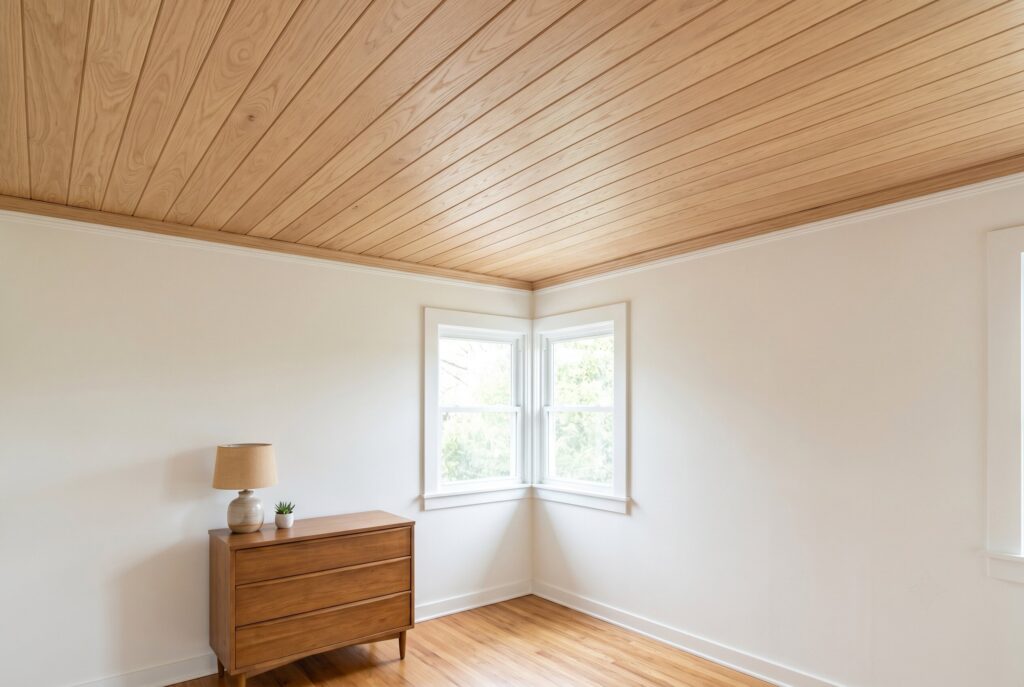
A wood paneled ceiling adds warmth where people least expect it. It can make a bedroom feel cocooned, a dining room feel intimate, or a living room feel more grounded. Light oak keeps the effect airy, while walnut creates a richer mood. If your ceiling is low, use narrow boards and a pale finish to avoid visual heaviness. Pair the wood with simple walls and soft lighting. This project works best when the rest of the room is restrained.
9. Japandi Shoji Screens
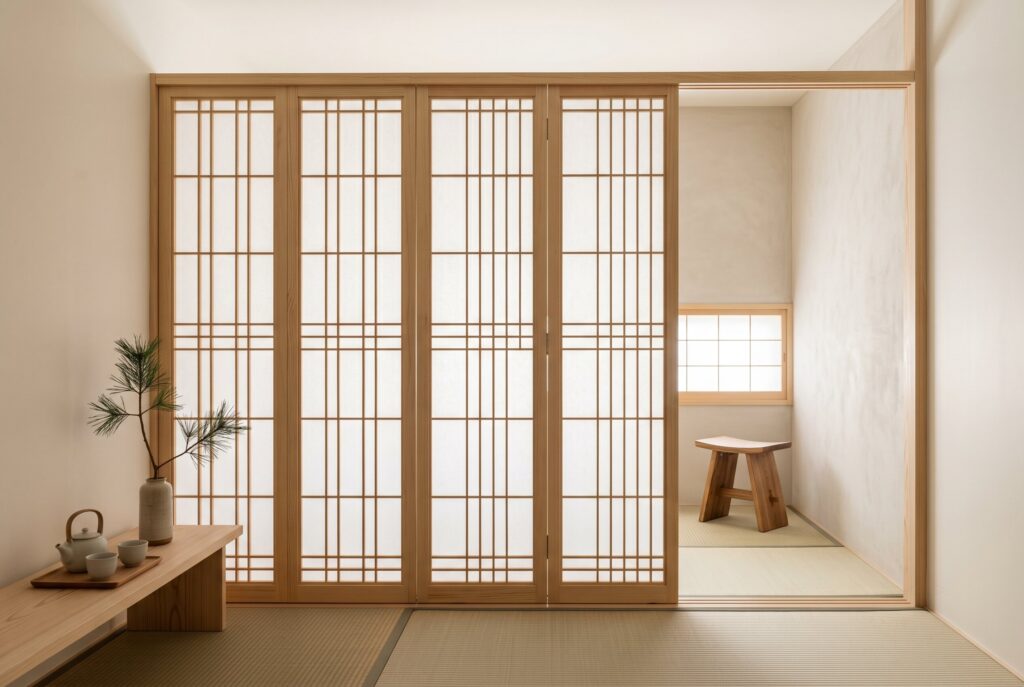
Shoji style screens bring softness, privacy, and filtered light into a space. They are especially useful in bedrooms, meditation corners, home offices, and open living areas. Build a simple wood frame and use translucent panels to create a gentle glow. Unlike heavy curtains or solid partitions, Shoji screens keep the atmosphere light. They also add a handcrafted quality that suits Japandi interiors. Keep the surrounding decor minimal so the screen becomes an intentional architectural element rather than a decorative afterthought.
10. Walnut Trimmed Doorways
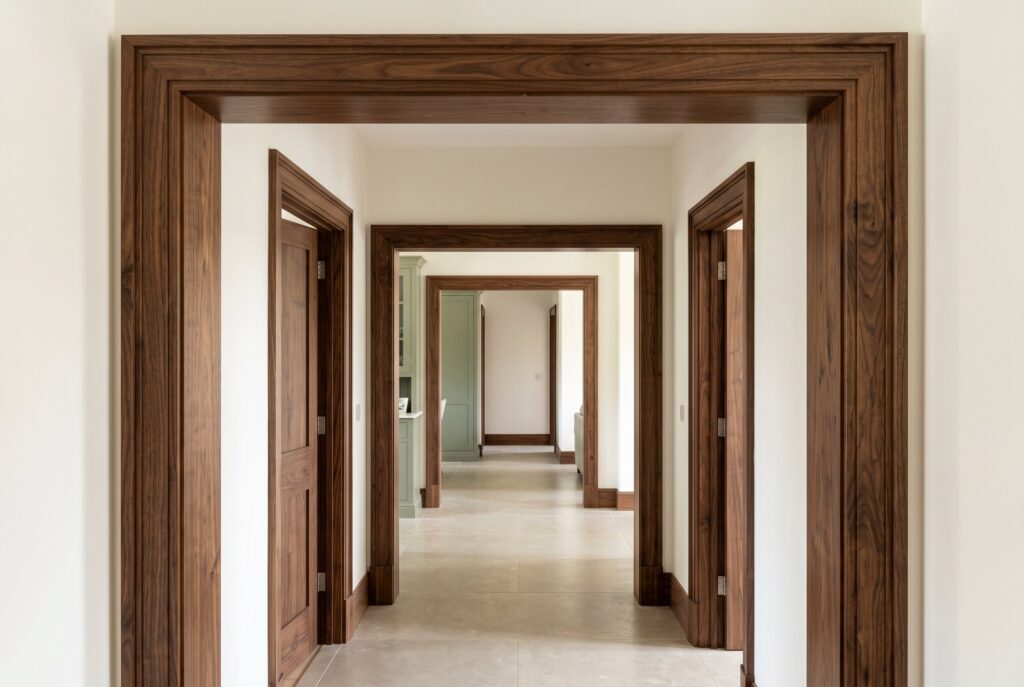
Most builder grade doorways are flat and forgettable. Adding walnut trim gives them presence. This upgrade works best when repeated throughout a hallway or main living area so the home feels cohesive. Wide trim can frame each transition like a quiet architectural detail. Use it with warm white walls, sage green accents, or stone flooring for a refined look. If walnut is too expensive, use a quality wood veneer or stain a more affordable hardwood in a deep walnut tone.
Paint and Wall Treatments
11. Painted Wall Arches
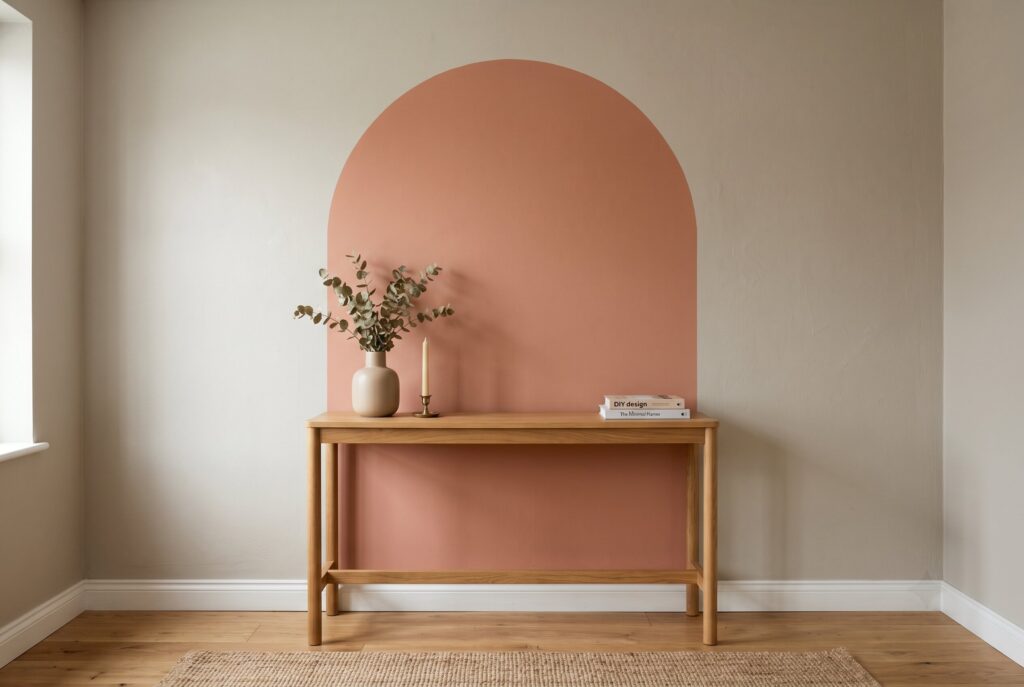
Painted wall arches are one of the smartest budget room makeovers because they create the illusion of architecture without construction. Use one behind a bed, writing desk, console table, or reading bench. The arch should be slightly wider than the furniture below it so the composition feels anchored. Soft sage, terracotta, warm greige, and dusty blue all look more sophisticated than loud colors. This is also renter friendly if you are allowed to paint, since it transforms a wall in one afternoon.
12. Sage Green Kitchen Cabinets
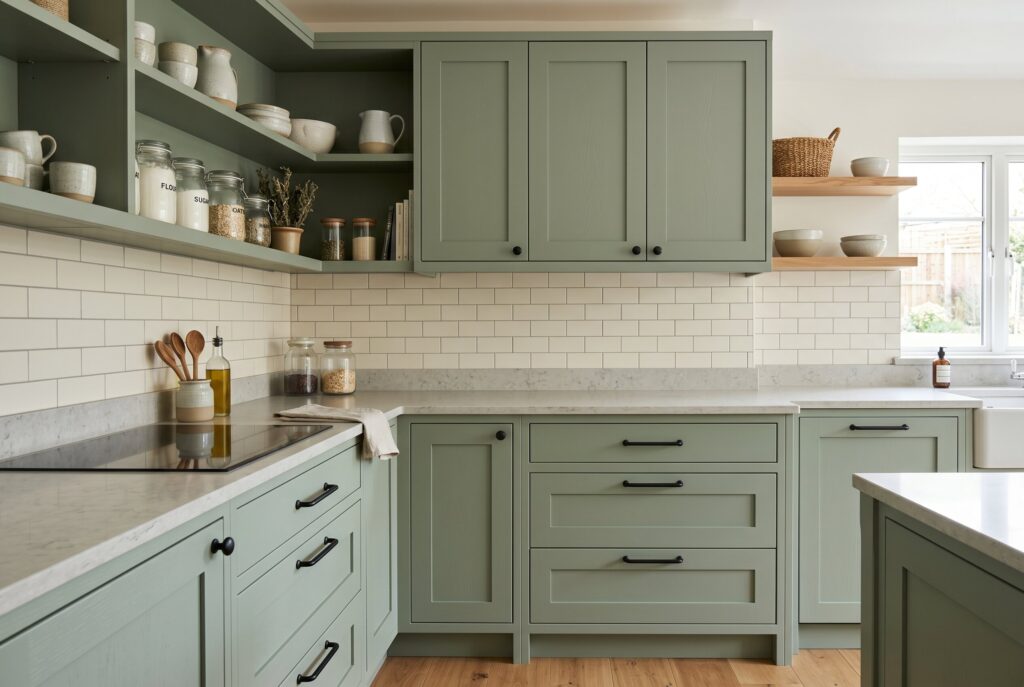
Sage green cabinets can make a kitchen feel calm, fresh, and expensive. The color works because it sits between neutral and nature inspired, which means it pairs well with oak, brass, cream tile, stone counters, and matte black hardware. Before painting, clean and sand the cabinets carefully. Skipping prep is the fastest way to get peeling paint. For a more elevated look, use a satin or soft matte finish rather than anything too glossy.
13. Evergreen Accent Wall
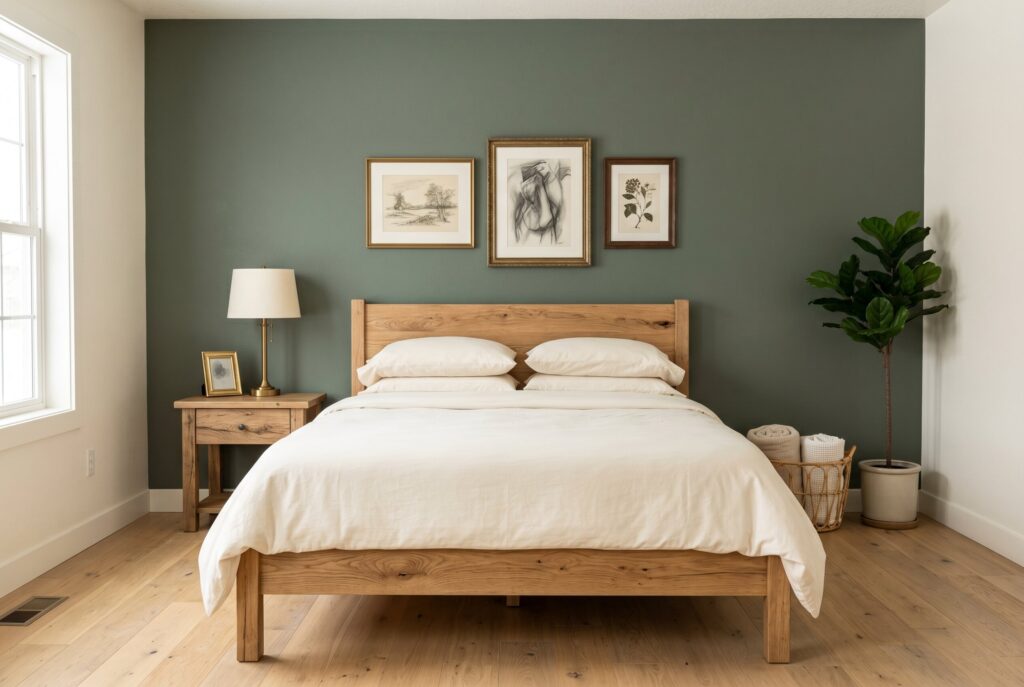
A muted evergreen accent wall can give a living room or bedroom quiet depth. It is especially beautiful behind oak furniture, cream upholstery, or a long sectional sofa. The trick is choosing a green with gray or brown undertones so it feels mature rather than bright. This color can also make artwork and warm metals stand out. Avoid adding too many competing accent colors nearby. Let the green wall become the anchor, then support it with natural textures.
14. Wallpaper Backing for Bookcases

Adding wallpaper to the back of a bookcase is a small project with a surprisingly polished effect. It adds pattern without overwhelming the entire room. Choose grasscloth, botanical prints, soft geometrics, or tone on tone textures. This idea works especially well for old bookcases that feel too plain or dark. After applying the wallpaper, style the shelves with breathing room. Leave some empty space so the pattern can show through and the bookcase doesn’t feel crowded.
15. Matte Black Hardware
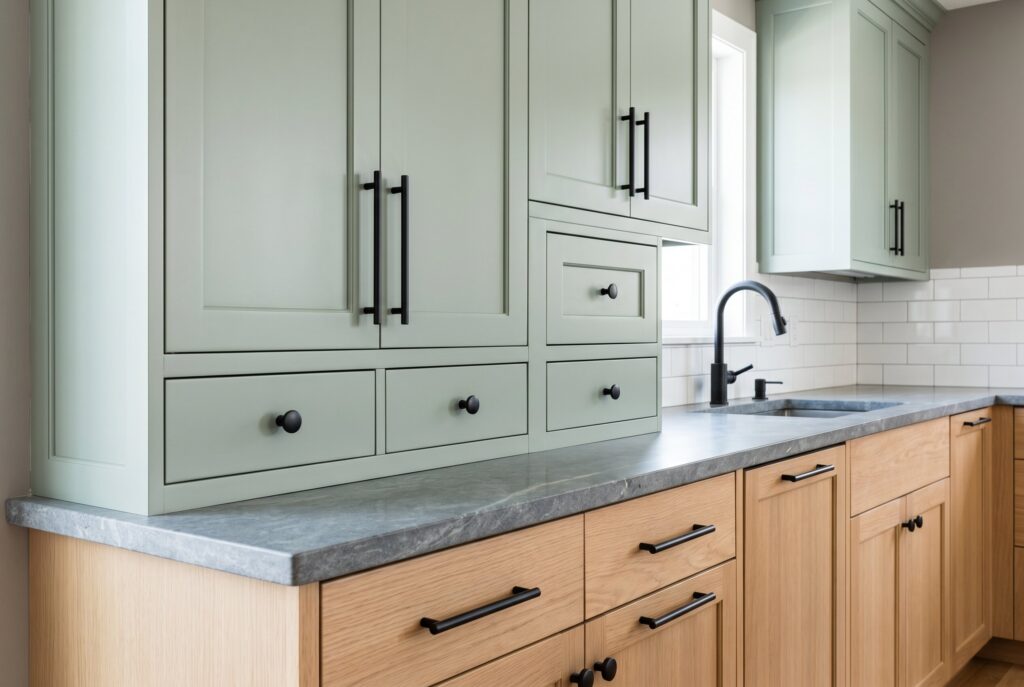
Changing hardware is one of the fastest ways to update a room. Matte black pulls, knobs, hinges, and curtain rods can make dated cabinets or furniture feel sharper. This works especially well with sage green, white oak, warm gray, and natural stone. The mistake many people make is mixing too many hardware finishes without intention. If you choose matte black, repeat it at least three times in the room so it feels deliberate.
16. Baking Soda Textured Vases
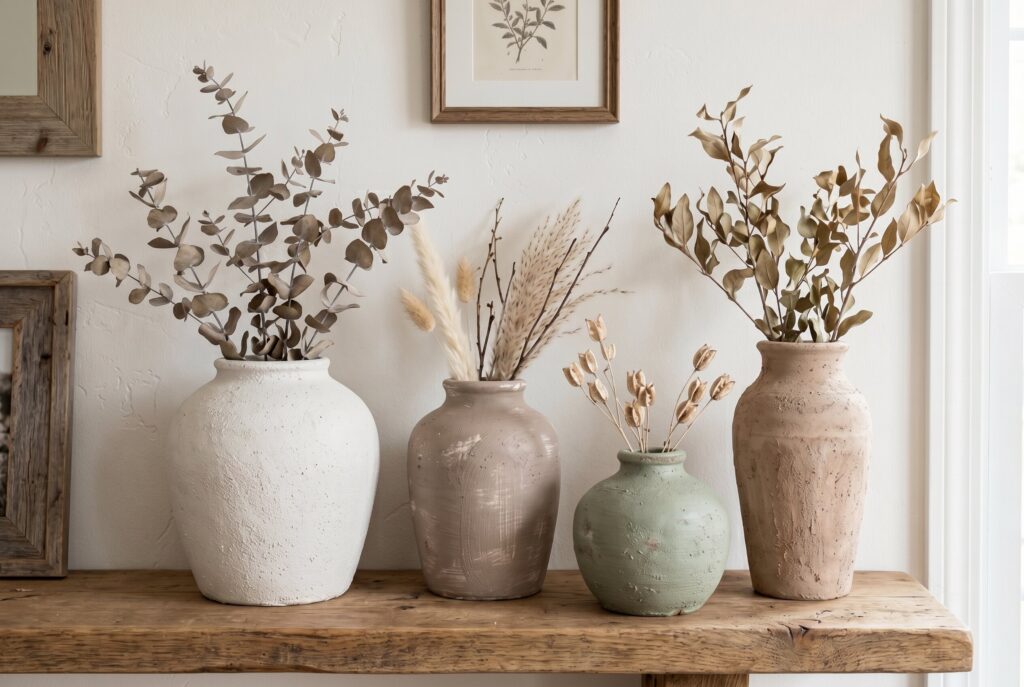
The baking soda vase hack is popular because it turns shiny, outdated decor into pieces that look handmade. Mix baking soda into leftover paint until the texture feels slightly gritty, then brush it onto old glass or ceramic vases. Soft white, beige, clay, taupe, or sage tones look the most expensive. The goal is not perfection. Slight brush marks make the piece feel artisanal. Use these vases on a mantel, open shelf, or dining table with dried branches.
17. Faux Limewash Technique
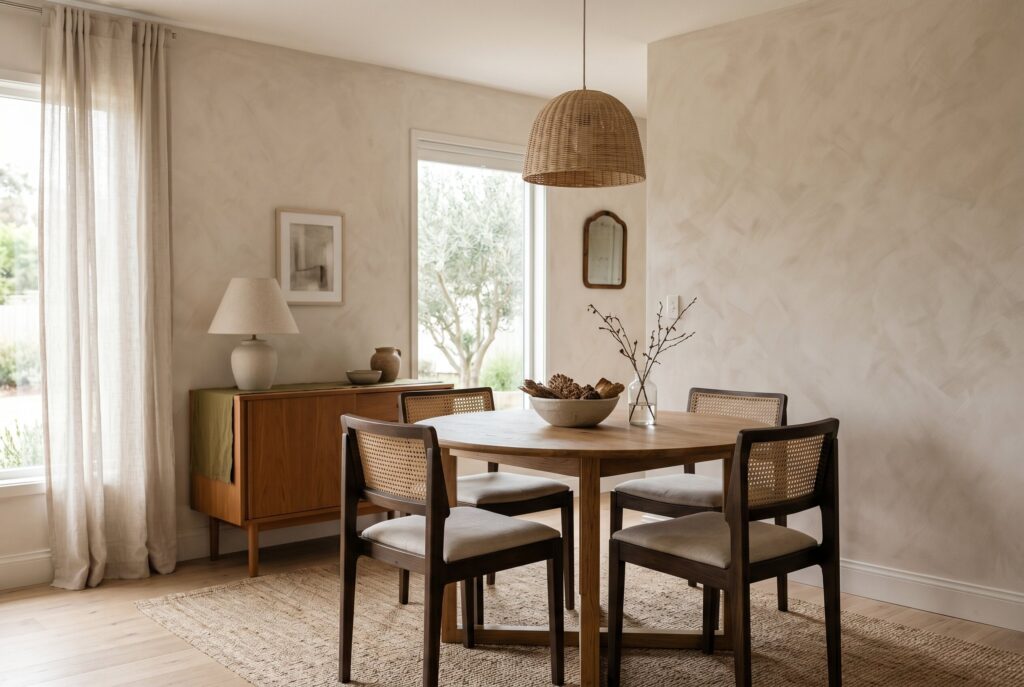
Faux limewash gives walls a soft aged look without the complexity of real limewash. Use two close paint colors and apply them with loose crossing strokes. The movement should be subtle, not streaky. This treatment works best in bedrooms, dining rooms, and entryways where you want quiet texture. Choose earthy colors such as warm stone, pale mushroom, soft clay, or muted gray green. Keep furniture simple so the wall finish can become the main atmosphere of the room.
18. Monochromatic Trim
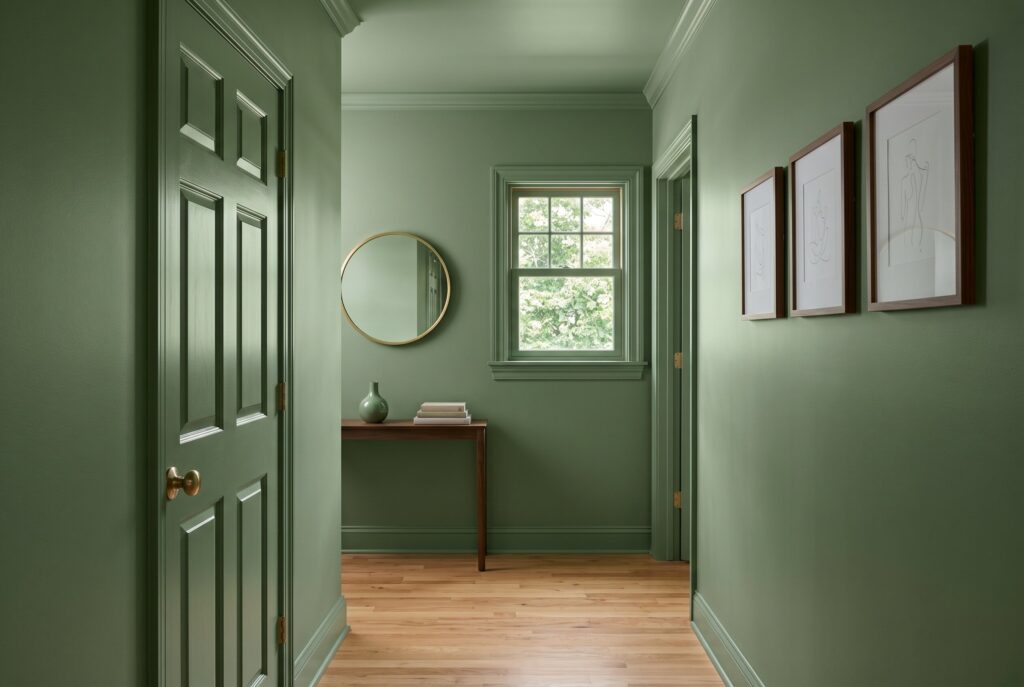
Painting trim, baseboards, doors, and walls in the same color creates a wrapped, designer effect. This technique is sometimes called color drenching, and it can make a small room feel calmer because there are fewer visual breaks. Sage green, warm taupe, soft gray, and creamy beige all work well. Use a slightly different sheen on the trim for durability while keeping the color consistent. This is a powerful choice for bedrooms, hallways, and home offices.
High End Textiles and Softscapes
19. Oversized Floor Poufs
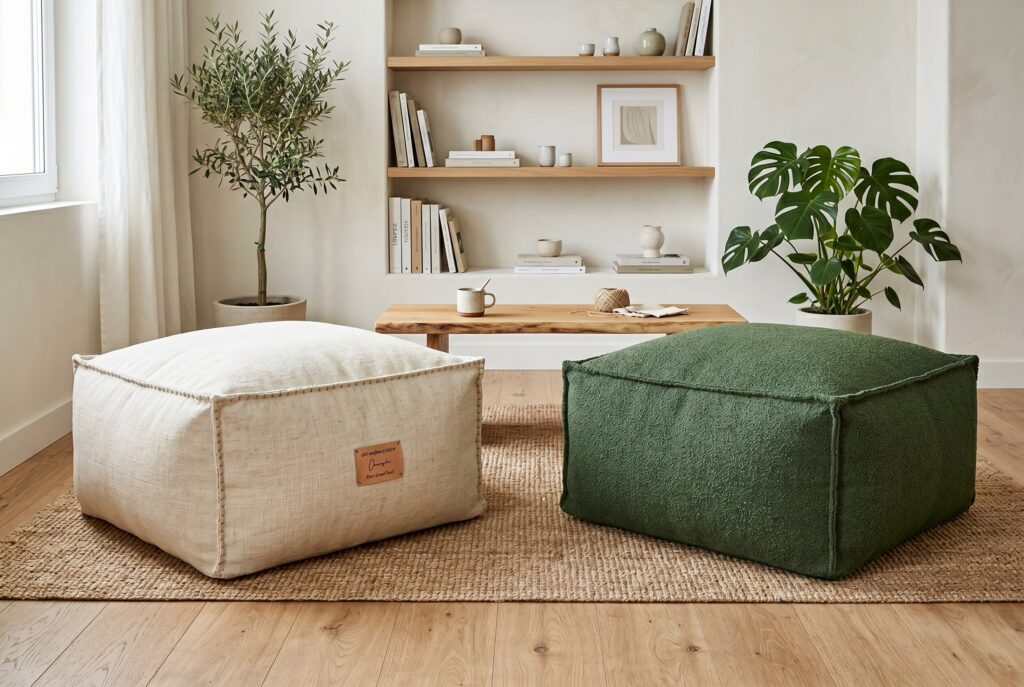
Oversized floor poufs add relaxed seating without the stiffness of extra chairs. They are ideal for family rooms, media rooms, and casual living spaces where people naturally gather barefoot. Use heavyweight linen, canvas, boucle, or velvet for a more luxurious feel. The pouf should be large enough to look intentional, not like a small accessory. Fill it firmly so it holds shape. In Organic Modern rooms, two large poufs near a low table can make the space feel warm and social.
20. Pinch Pleat Linen Curtains
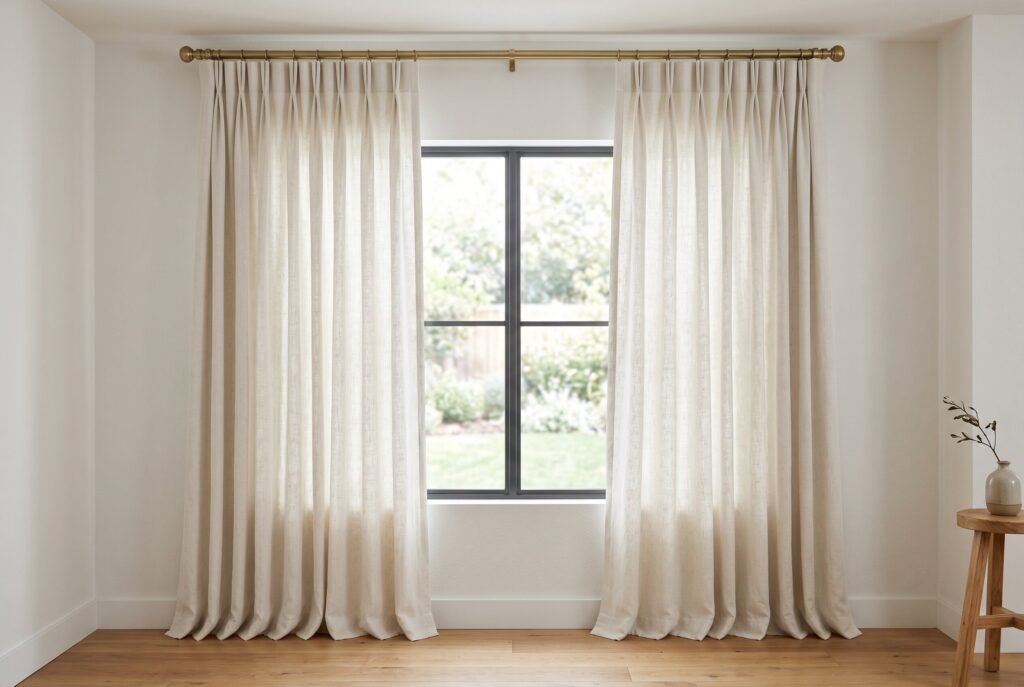
Few upgrades change a room as quickly as properly hung curtains. Mount the rod close to the ceiling and extend it wider than the window frame. This makes the window look larger and the ceiling feel higher. Pinch pleat linen curtains add structure while still feeling soft. Linen filters light beautifully and pairs well with wood, stone, and textured walls. Avoid curtains that stop at the sill. Floor length panels almost always look more finished and expensive.
21. Layered Jute Rugs
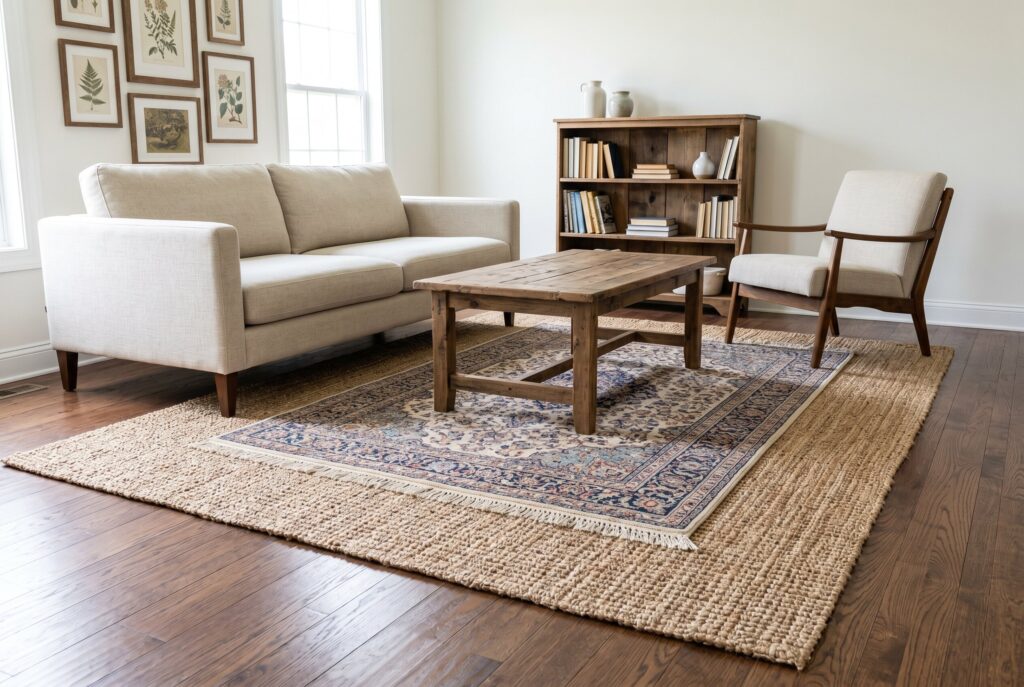
Layered rugs create comfort and depth, especially in rooms with hard flooring. Start with a large jute rug as the base, then layer a softer wool or vintage rug on top. Jute adds texture, while the upper rug adds softness and color. This combination is ideal for barefoot living because it feels natural but still cozy. Choose a base rug large enough to sit under the main furniture. A rug that is too small can make the room feel disconnected.
22. Reupholstered Long Bench Seating
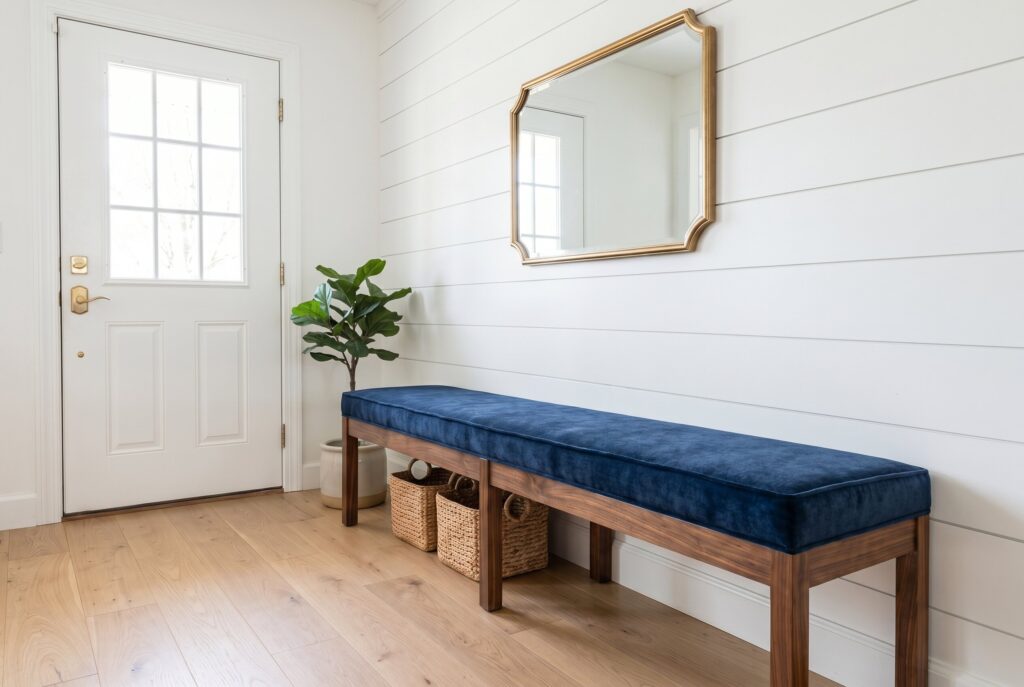
A long bench can transform an entryway, dining room, bedroom, or window area. Reupholstering the seat in velvet, boucle, leather, or heavy linen gives it a custom look. Long benches also make rooms feel more connected than scattered single chairs. If the frame is wood, sand and stain it to match other tones in the home. This project is especially useful when you want more seating but don’t want the visual clutter of multiple separate pieces.
23. Framed Vintage Tapestries
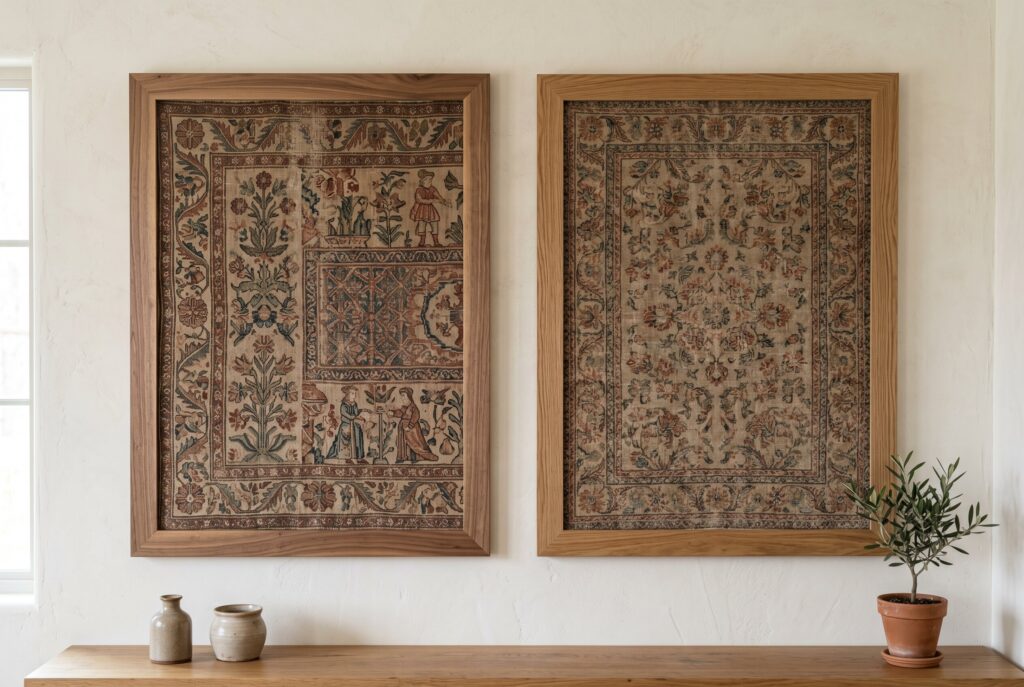
Framing a vintage tapestry turns fabric into real wall art. This is one of the strongest wall art decor hacks because it adds scale, texture, and history. Instead of pinning fabric directly to the wall, stretch it neatly and frame it in oak or walnut. The frame makes the piece feel curated rather than temporary. Choose muted textiles with faded reds, browns, greens, or blues. These tones blend beautifully with Organic Modern and Modern Farmhouse interiors.
24. Sage Green Pillow Covers
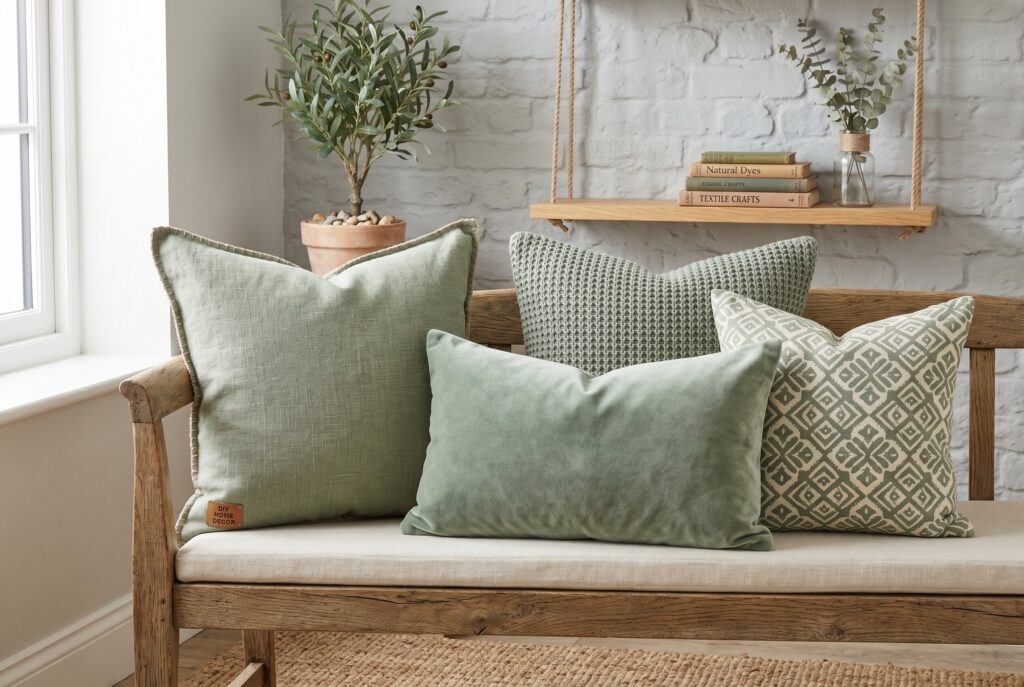
Sage green pillow covers are a simple way to connect a room to a broader palette. Use them on a sectional, bench, bed, or reading nook. The color is calm enough to act like a neutral but still adds freshness. Linen and cotton look casual, while velvet feels richer. For a more layered look, mix sage with cream, tan, olive, and warm gray. Avoid using too many identical pillows. Vary size and texture while keeping the color story consistent.
25. Chunky Knit Blanket Ladder
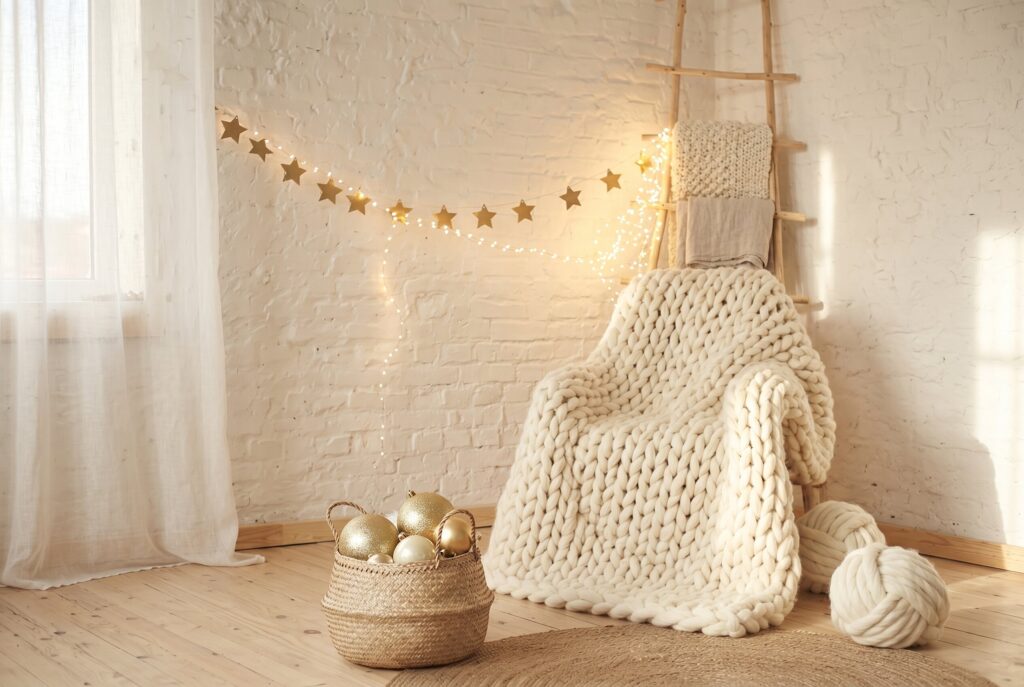
A blanket ladder adds vertical interest to an empty corner while keeping throws within reach. Build one from oak or pine, then stain it to match nearby furniture. The blankets should look soft and generous, not thin or decorative only. Chunky knits, wool throws, and textured cotton work best. This project is useful because it combines storage and styling. Place it in a living room, guest room, or bedroom where softness is part of the mood.
26. Macrame Wall Hangings
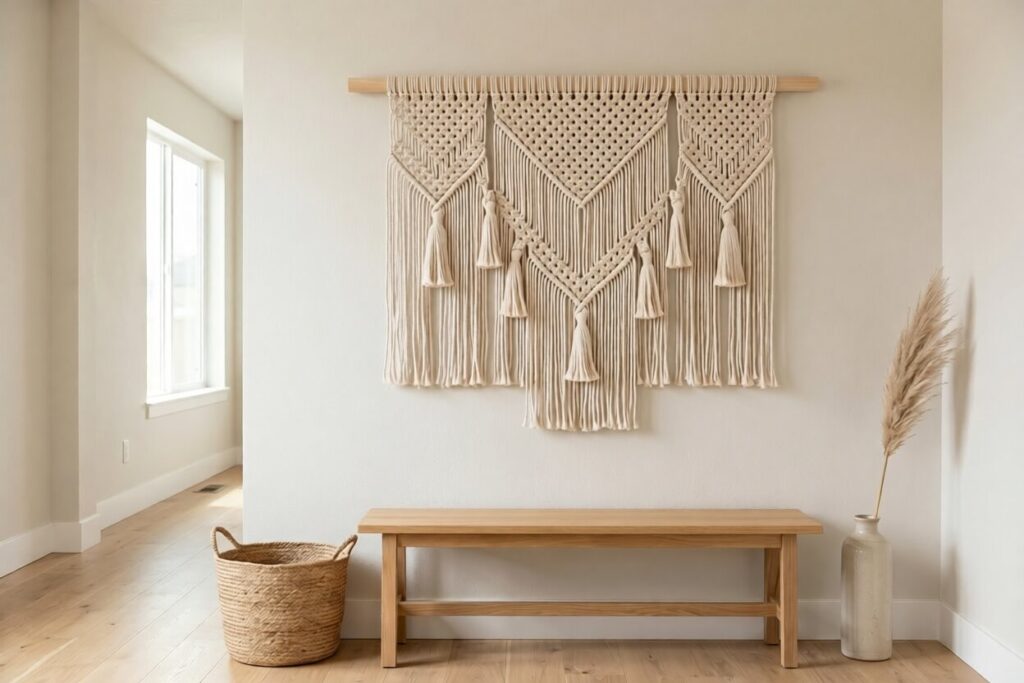
Macrame can look dated when it is too small or overly decorative. To make it feel modern, go oversized and simple. Use natural cotton cord, a clean wood dowel, and a limited pattern. Beige, cream, and warm taupe tones work best in calm interiors. Hang it above a bench, bed, or console table where the scale makes sense. A large macrame piece can soften a blank wall and add texture without introducing a busy print.
Furniture and Layout Transformations
27. Custom Oak Base for a Sectional
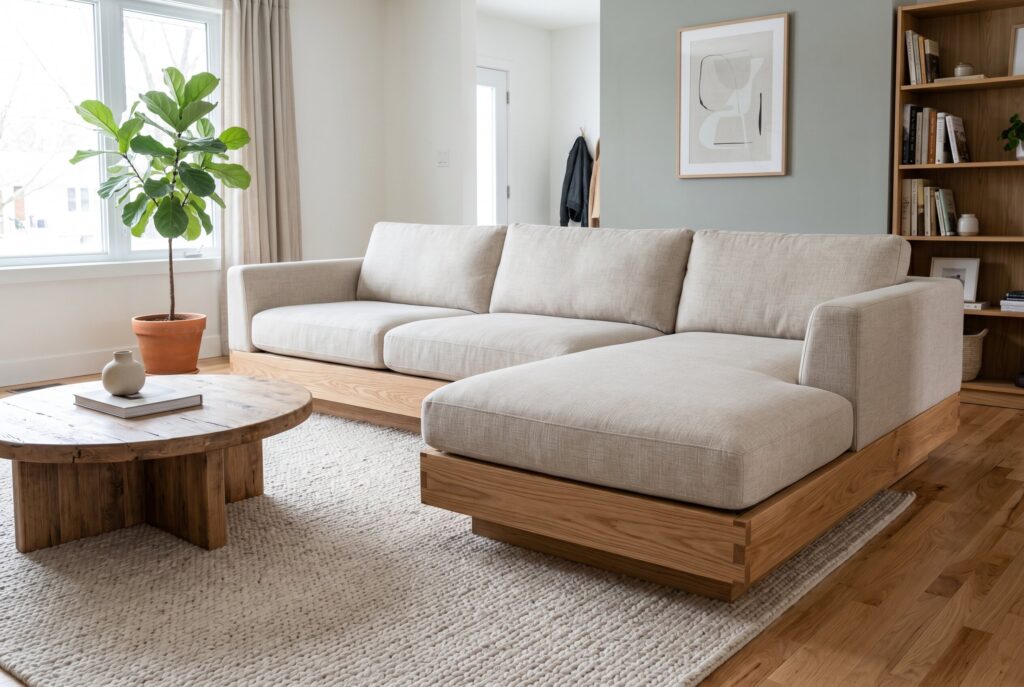
A sectional sofa already creates connection, but adding a custom oak base makes it feel built in and architectural. The base visually grounds the sofa and can make a basic piece feel more expensive. Keep the platform low and simple so it doesn’t compete with the upholstery. This idea works best in living rooms where the sofa is the main gathering point. Pair it with a large rug and a substantial coffee table so the seating area feels complete.
28. Restained Vintage Sideboards
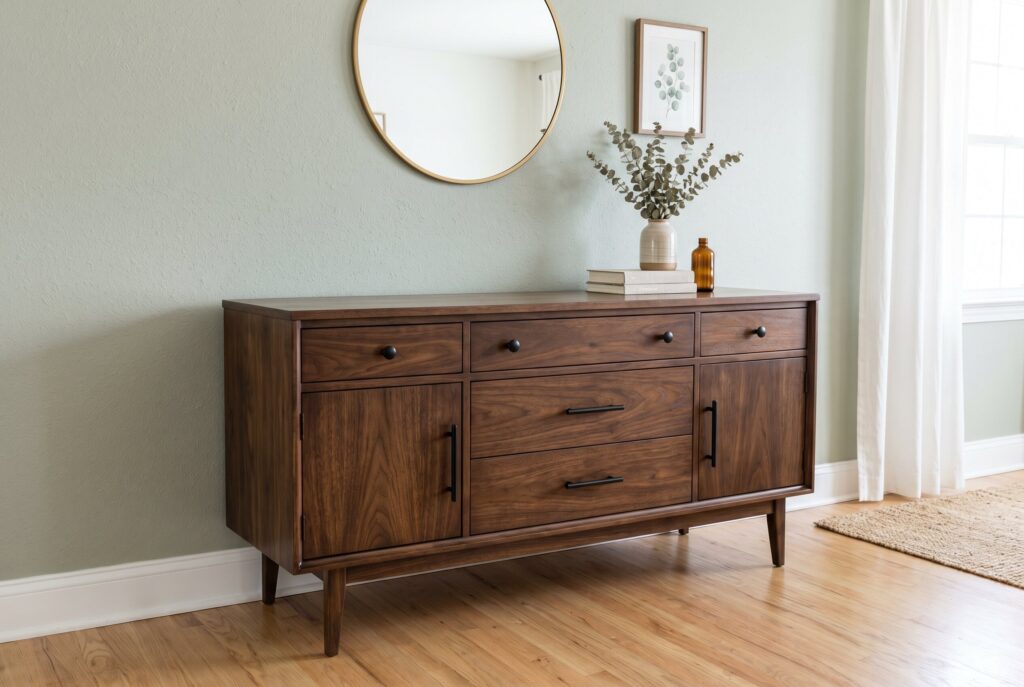
Vintage sideboards often have great proportions but outdated finishes. Sanding and restaining one in a walnut tone can give it a second life. This project works beautifully in dining rooms, hallways, and living rooms. Replace old hardware with brass or matte black pulls for a cleaner finish. The key is patience during sanding. Uneven prep will show through the stain. When done well, a restored sideboard looks far more personal than a new flat packed cabinet.
29. Low Platform Bed
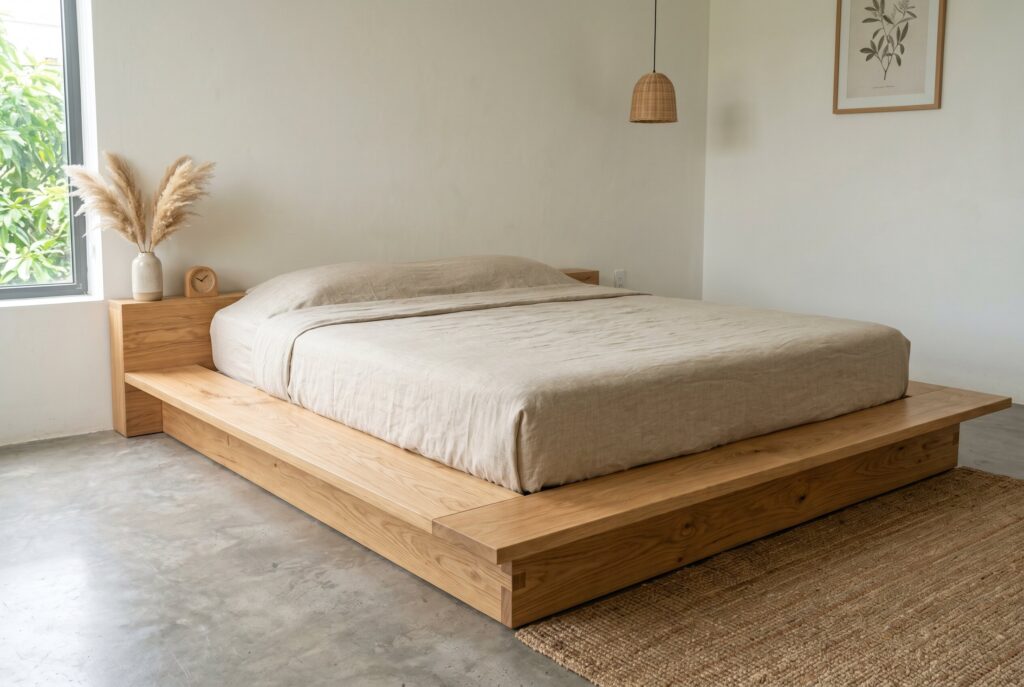
A low platform bed creates a grounded, restful bedroom. This is one of the most useful DIY home decor ideas for a Japandi inspired space because it lowers the visual center of the room. Use wide wood boards and extend the platform slightly beyond the mattress to create built in ledges. This can replace traditional nightstands in small rooms. Keep bedding simple with linen sheets, a textured throw, and only a few pillows.
30. Farmhouse Dining Bench
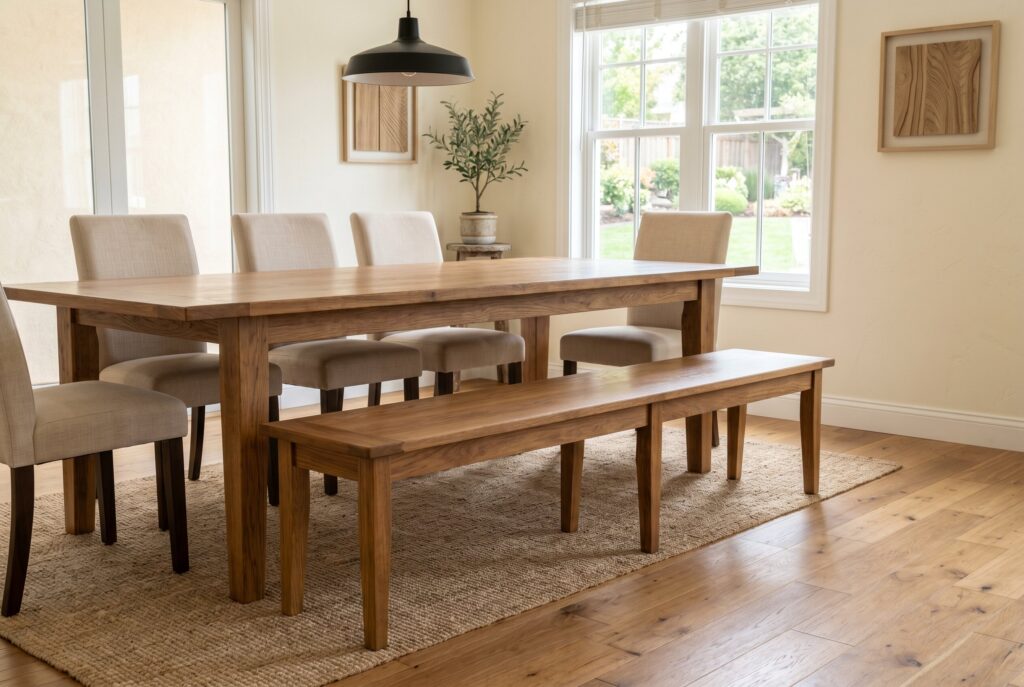
A long farmhouse dining bench makes a dining area feel more communal. It is also practical for families because it can seat more people than individual chairs. Build it from solid wood and keep the lines clean rather than overly rustic. A bench on one side of the table can balance upholstered chairs on the other side. If the room is small, the bench can slide under the table when not in use, freeing up space.
31. Live Edge Coffee Table

A live edge coffee table brings organic shape into a room filled with straight lines. Choose a slab with beautiful grain, then add simple metal or wood legs. Keep the finish matte to preserve the natural character of the wood. This project works best when the surrounding furniture is simple. If the sofa, rug, and lighting are already busy, the table may compete. In a restrained room, however, a live edge piece becomes a quiet sculptural centerpiece.
32. Hidden Tech Storage
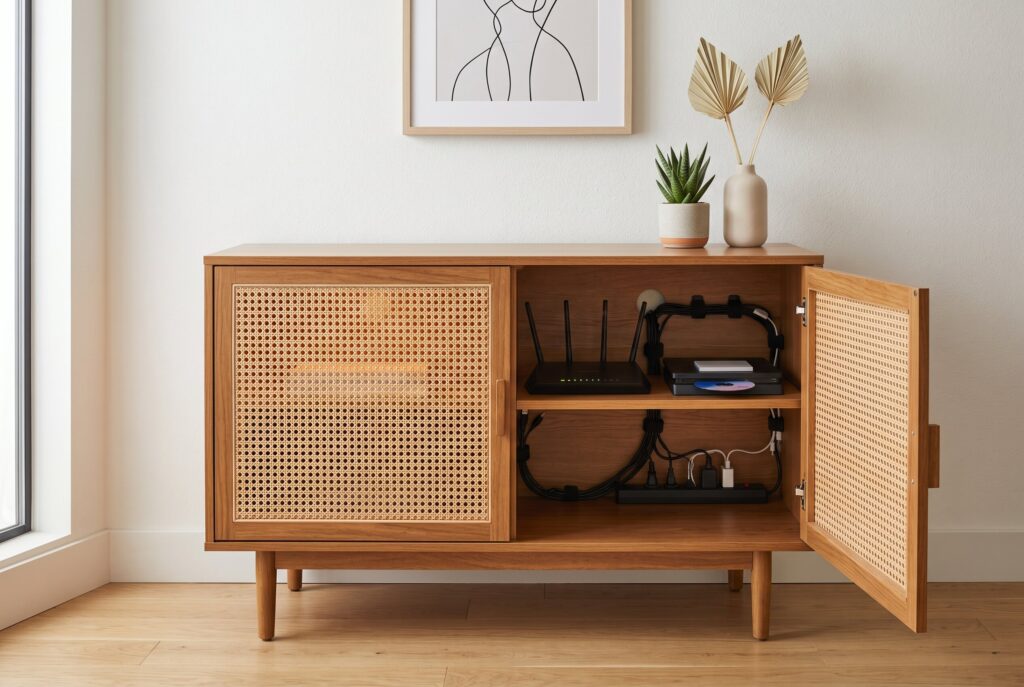
Routers, cords, gaming consoles, and charging stations can ruin an otherwise calm room. Hidden tech storage solves this without sacrificing function. Use a cabinet with cane or slatted doors so air can circulate. Add cable holes in the back and organize wires with clips or sleeves. This is especially useful in living rooms and home offices. The result is less visual noise, which makes the entire space feel more peaceful and intentional.
33. Modular Lounge Base
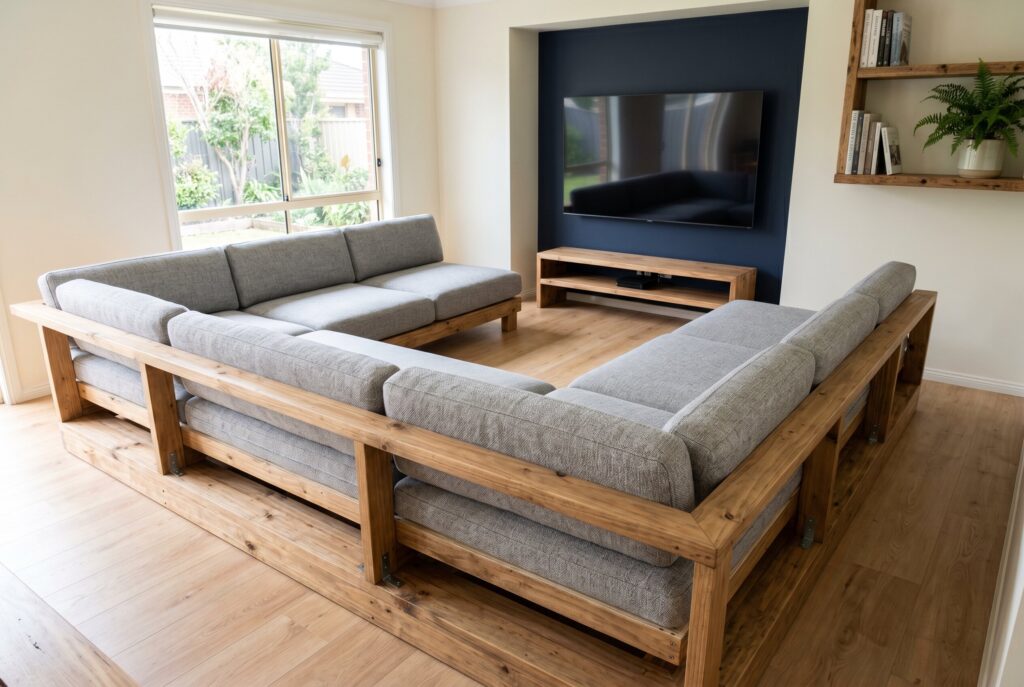
A modular lounge base creates a deep, connected seating area for media rooms, playrooms, or family spaces. Instead of separate chairs and small sofas, build a U shaped platform and top it with thick cushions. This encourages conversation, movie nights, and relaxed gathering. Choose washable performance fabric if children or pets use the room often. The scale should feel generous. A lounge like this works because it turns the room into a destination.
34. Floating Entry Console
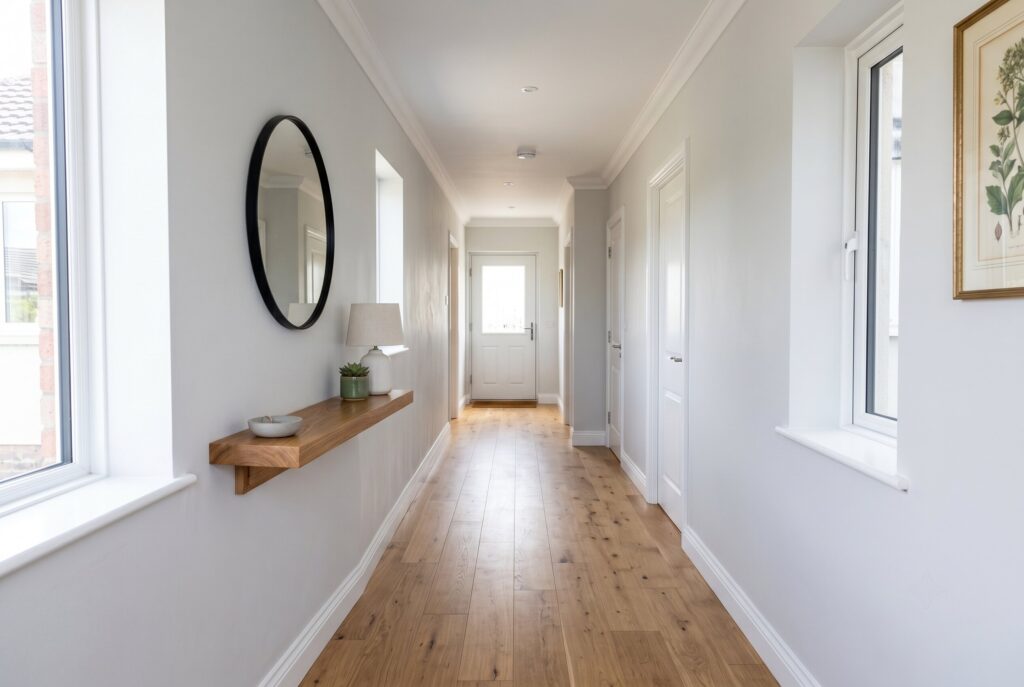
A floating entry console is perfect for narrow hallways because it provides function without taking up floor space. Use a slim oak board with hidden brackets, then style it with a tray, lamp, mirror, or small bowl for keys. The height should feel natural for dropping items as you enter. This project makes the entryway feel designed, even in a small home. Keep the styling minimal so the console doesn’t become a clutter zone.
35. Floating Oak Nightstands
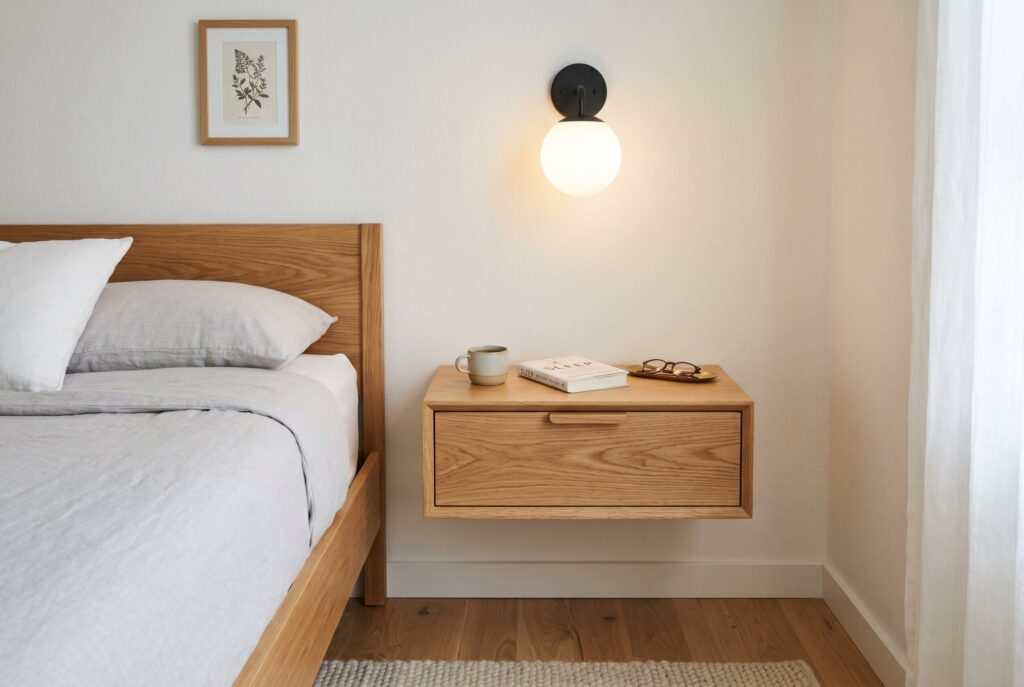
Floating oak nightstands make bedrooms feel lighter and cleaner. They are especially helpful in small rooms because they keep the floor visible. Build a simple box with one drawer or open shelf, then mount it securely to wall studs. The finish should match the bed frame or nearby wood tones. Use a wall sconce above each nightstand to free the surface from bulky lamps. The result feels calm, modern, and highly functional.
Conclusion
The best DIY home decor ideas aren’t the loudest or most complicated. They are the ones that make your home feel more cohesive. A fluted wall, sage cabinet, linen curtain, oak shelf, or long bench works best when it belongs to the same visual language as everything around it.
Choose your materials carefully. Repeat oak, walnut, sage green, linen, jute, brass, and matte black with discipline. Replace scattered small decor with stronger architectural gestures. Build seating that brings people together. Use texture instead of clutter. A beautiful home doesn’t need endless decoration. It needs warmth, rhythm, restraint, and a clear point of view. Start with one project this weekend, then let every upgrade support the same story.