

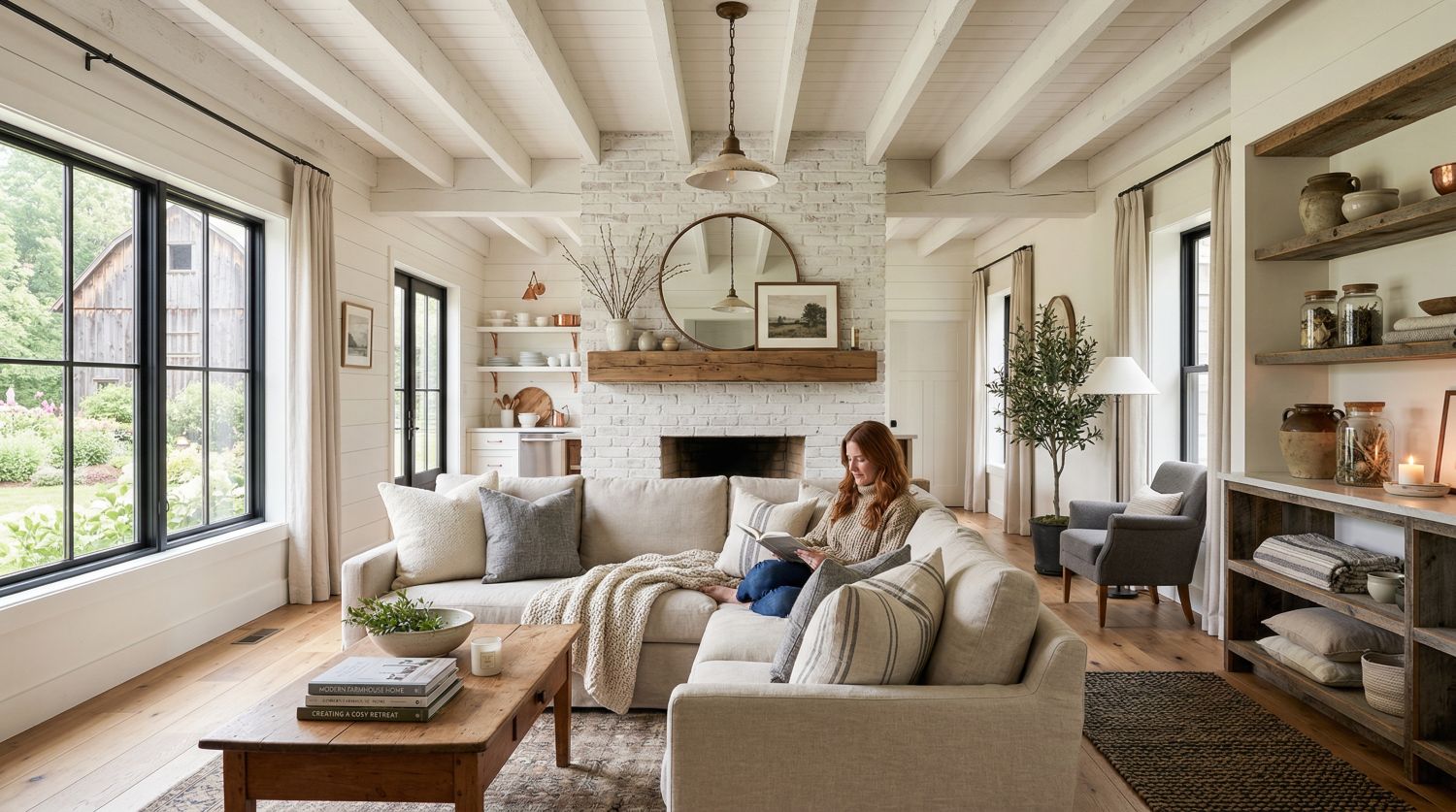
Interior design styles can feel overwhelming when you’re trying to design a real home, not just save inspiration. You scroll through endless interior design styles, from modern interior design to layered farmhouse decor, and suddenly nothing feels clear anymore. That confusion usually comes from mixing too many directions at once.
The smartest way to approach different types of interior design styles is to start with one strong foundation. For many homeowners, that foundation is modern farmhouse decor. It’s one of the most adaptable interior design styles because it blends warmth with structure and works across different layouts.
In this guide, you’ll learn how to build a modern farmhouse interior first, then explore other interior design styles so you can define what actually fits your space. Once you understand how these types of interior design styles work together, designing your home becomes much easier and more intentional.
The Ultimate Guide to the Modern Farmhouse Interior
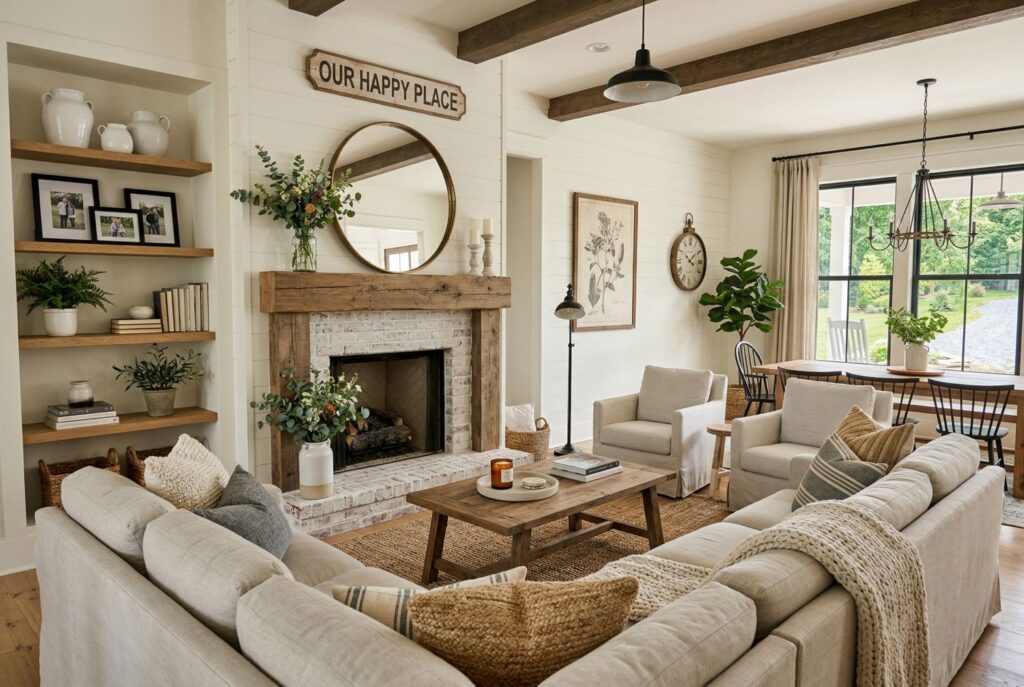
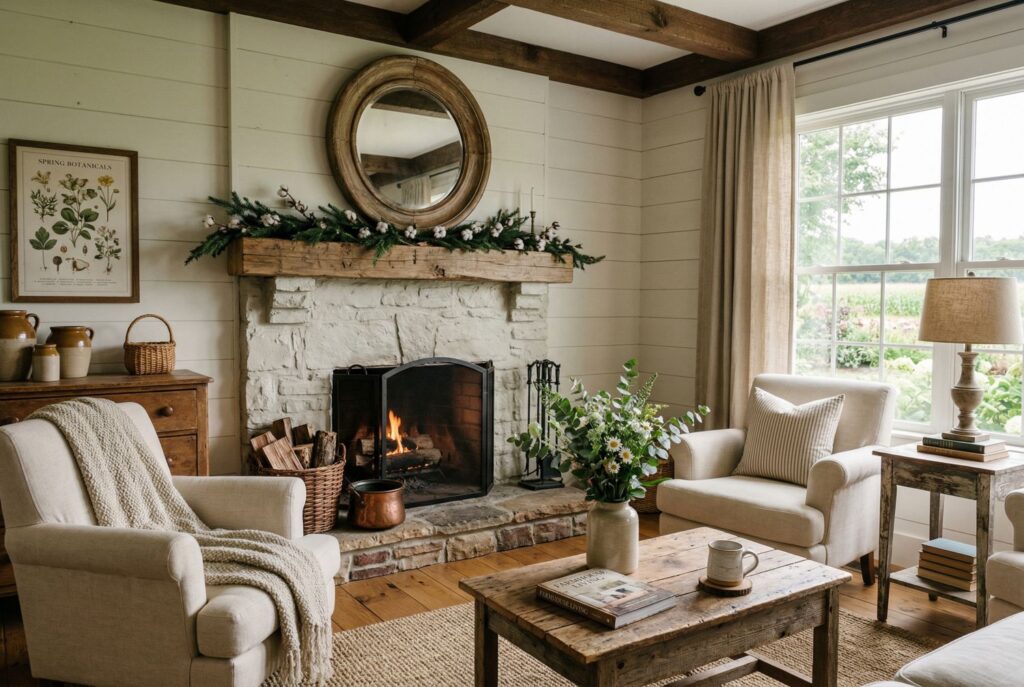
To make modern farmhouse decor work, balance is everything. A strong farmhouse interior should feel warm and grounded, but it also needs to stay clean enough to function in everyday life. That balance is what separates well designed spaces from ones that feel overly themed.
Modern farmhouse decor sits between rustic comfort and modern interior design simplicity. It uses natural textures, neutral colors, and subtle contrast to create a space that feels relaxed but still refined.
Designing a Modern Farmhouse Living Room
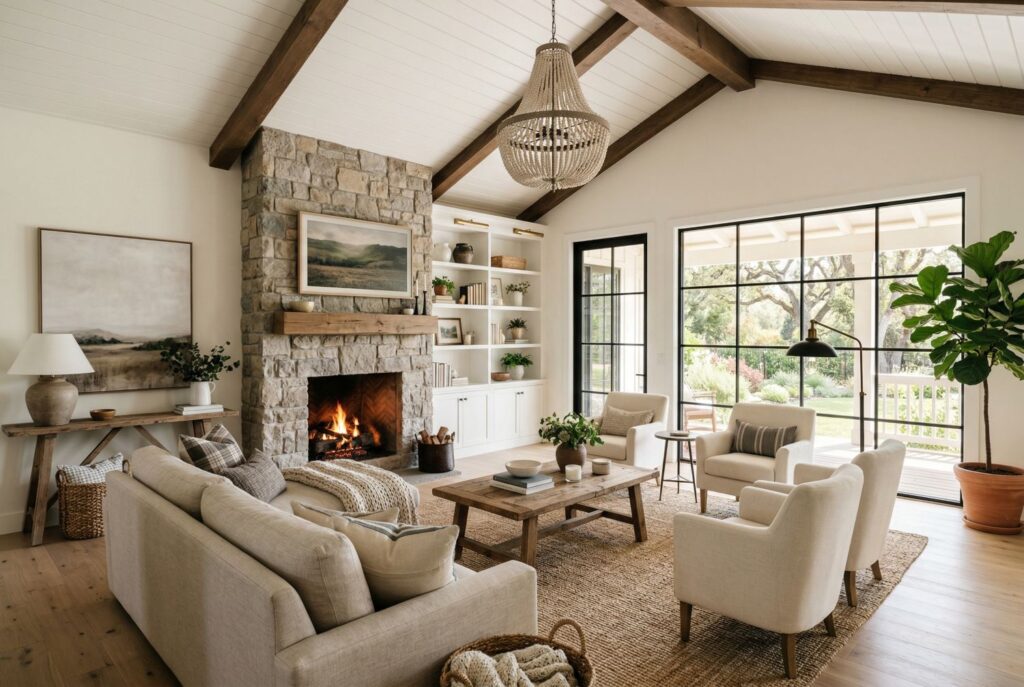
A modern farmhouse living room should always feel like a place where people gather naturally. Layout matters more than decor here. Seating should feel open and connected, not forced against walls or arranged without purpose.
Start with a neutral base that reflects a light and airy countryside aesthetic. Soft whites, warm beiges, and light wood tones help create a calm foundation. Then layer in texture through rugs, fabrics, and natural materials. In many modern farmhouse living room setups, the furniture does most of the work. A comfortable sofa, a simple media unit, and one or two accent chairs create structure. The goal is to support how people actually use the space.
Selecting Farmhouse Furniture and Details
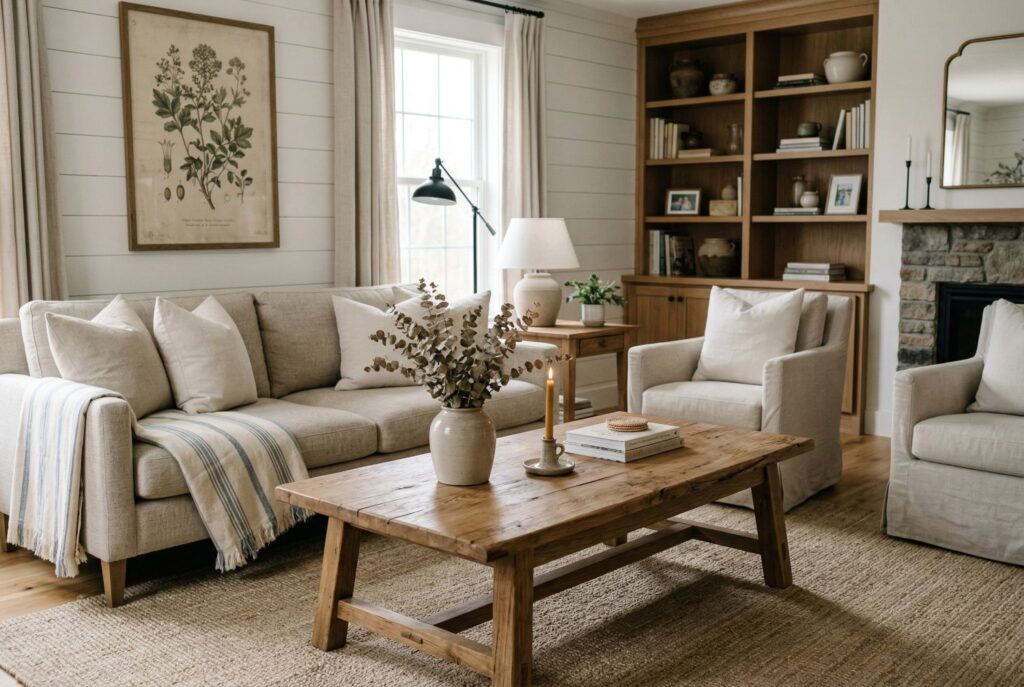
Choosing the right farmhouse furniture makes a bigger difference than adding more decor. Instead of over decorating, focus on a few key pieces that define the space. A farmhouse coffee table is often the anchor of a living room. It grounds the layout and connects the seating area. From there, you can build around it with smaller elements.
Rustic style should feel natural, not forced. Materials like wood, linen, and metal create contrast without overwhelming the space. This approach works across both modern farmhouse interior setups and more traditional farmhouse interior designs.
The biggest mistake is overdoing it. Too many themed items make the room feel staged. A better approach is restraint. Let each piece have space, and the overall design will feel more intentional.
14 Other Types of Interior Design Styles You Need to Know
Once you understand modern farmhouse decor, other interior design styles become easier to recognize. Each style has its own identity, but they often overlap in subtle ways.
1. Organic Modern Style
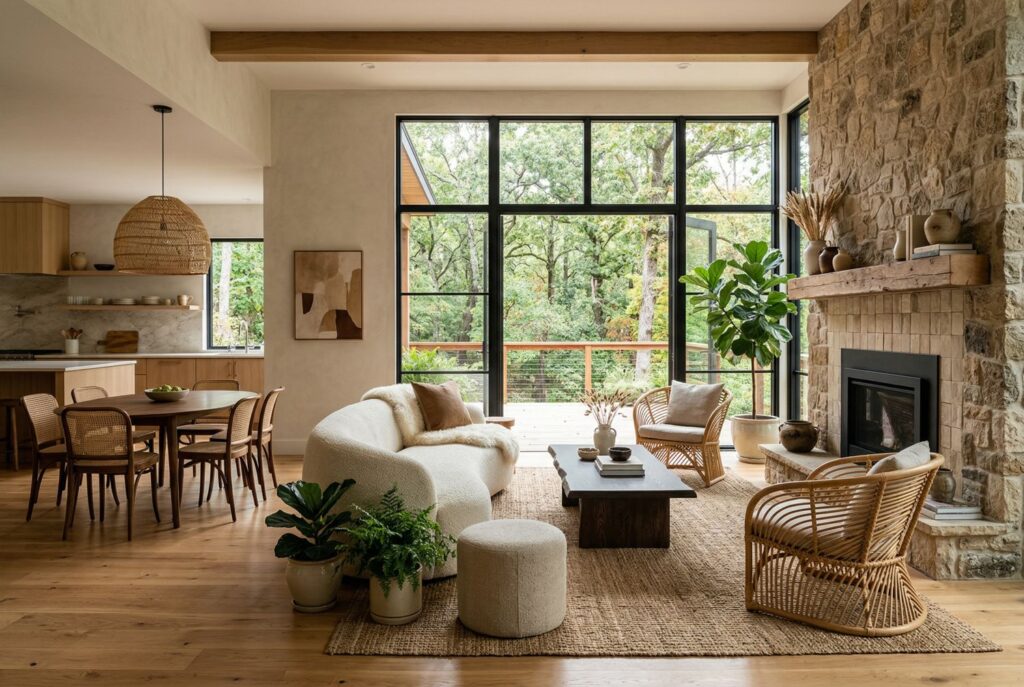
Organic modern style combines the clean, simple lines of modern design with the warmth of natural materials. It creates a softer and more inviting space by using elements like wood, stone, and neutral colors. This balance helps the interior feel calm, comfortable, and easy to live in while still maintaining a refined and contemporary look.
2. Japandi Interior Design
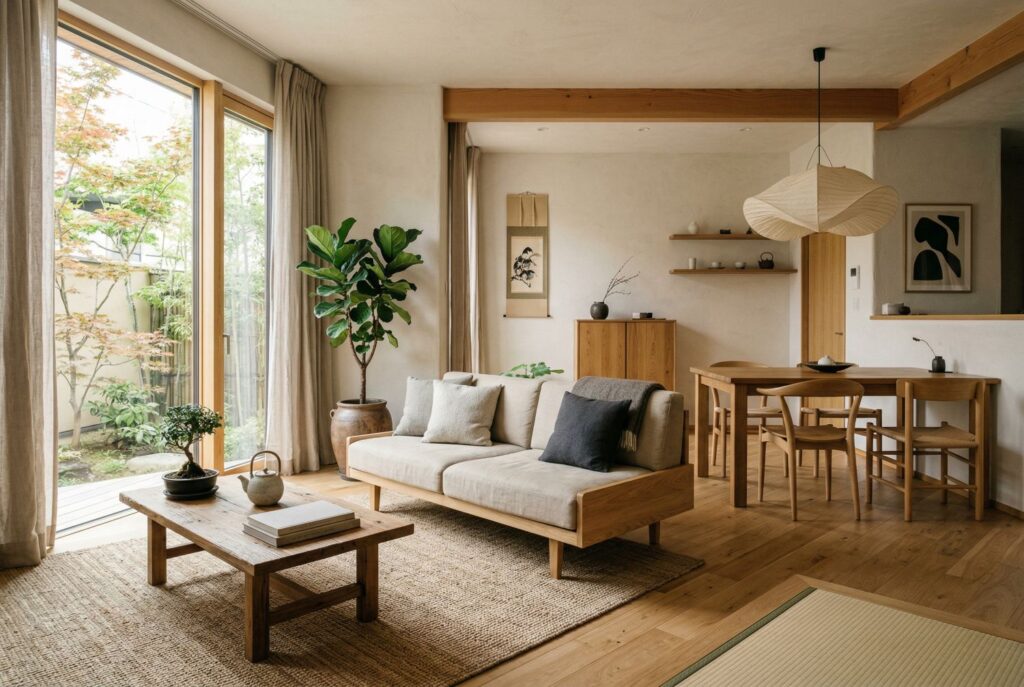
Japandi interior design blends the simplicity of Japanese aesthetics with the warmth of Scandinavian style, creating a space that feels both minimal and cozy. It emphasizes balance through clean lines, functional furniture, and a calm, uncluttered layout. Natural textures like wood, linen, and ceramics are often used to bring softness and a sense of harmony, making the overall environment feel peaceful and thoughtfully designed.
3. Bohemian Chic
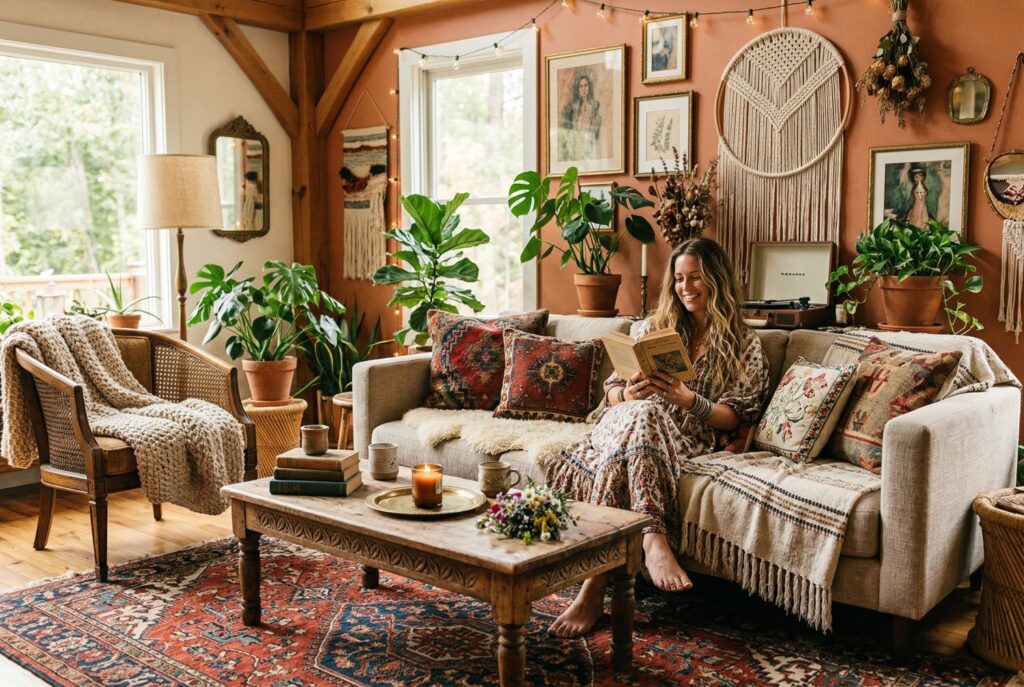
Bohemian spaces embrace layered textures, distinctive furniture, and expressive wall decor to create a rich and artistic atmosphere. The style prioritizes comfort and individuality, often mixing patterns, colors, and materials in a free-spirited way. Instead of following strict rules, it allows for personal expression, resulting in a relaxed and lived-in space that reflects the personality of its owner.
4. Hollywood Regency
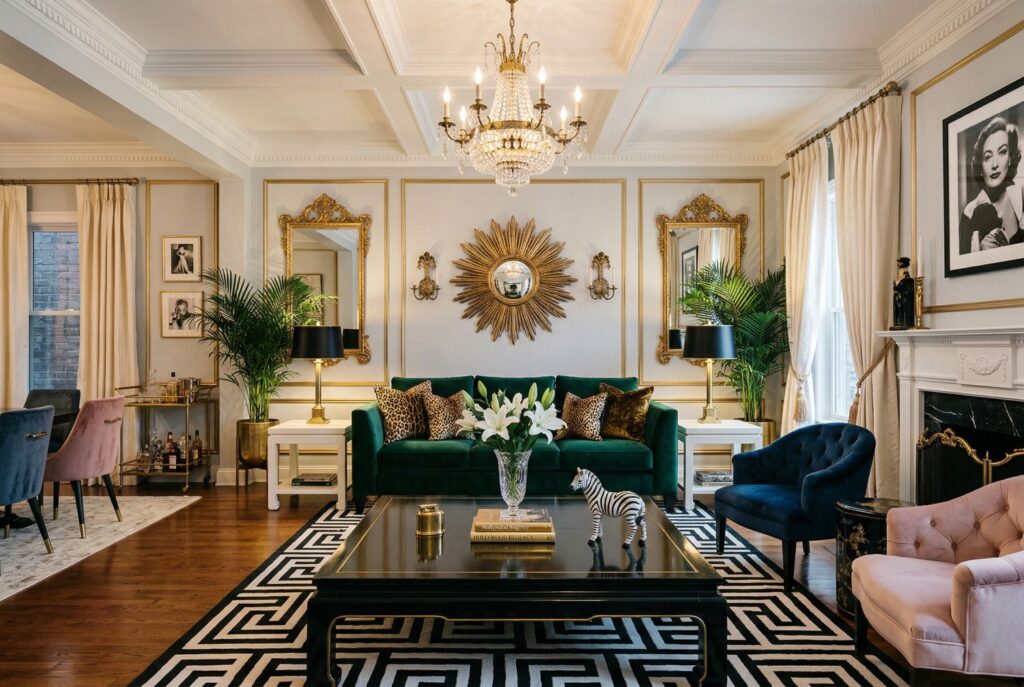
This style brings a sense of bold contrast and elegance through the use of regency furniture and refined decorative details. It highlights symmetry, rich materials, and sophisticated forms, creating a space that feels more polished and upscale. Compared to other interior design styles, it offers a more formal and luxurious atmosphere while still maintaining visual balance.
5. Eclectic Interior Design
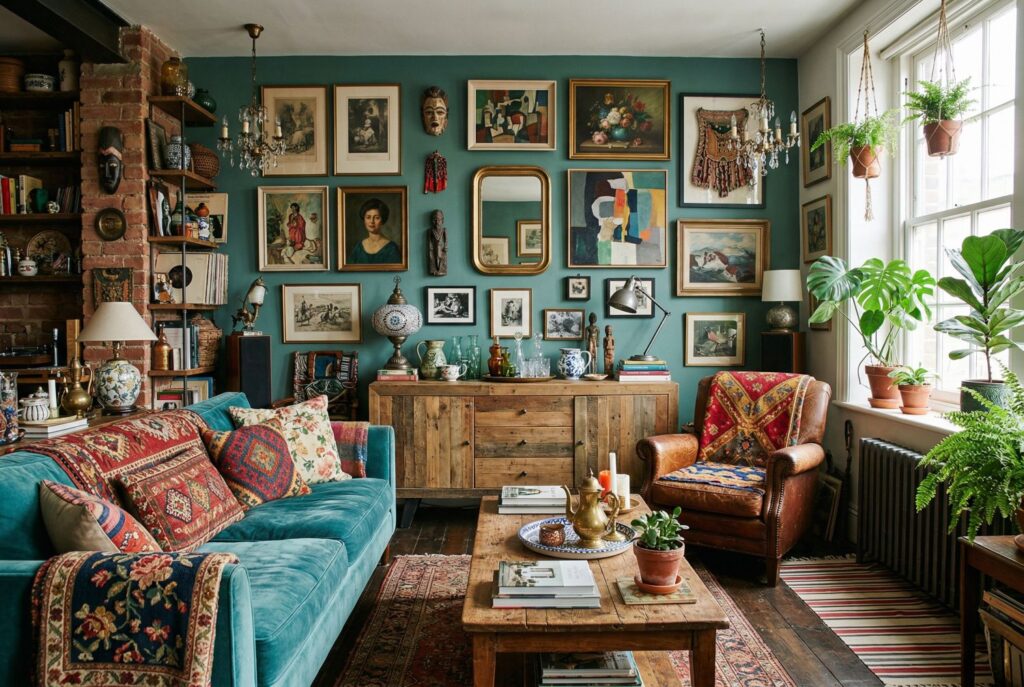
Eclectic interior design combines elements from different styles to create a unique and personalized space. It relies on thoughtful selection and balance, ensuring that colors, textures, and forms work together rather than clash. When done with intention, it feels cohesive and expressive, but without careful planning it can easily become disjointed.
6. Industrial Interior Design
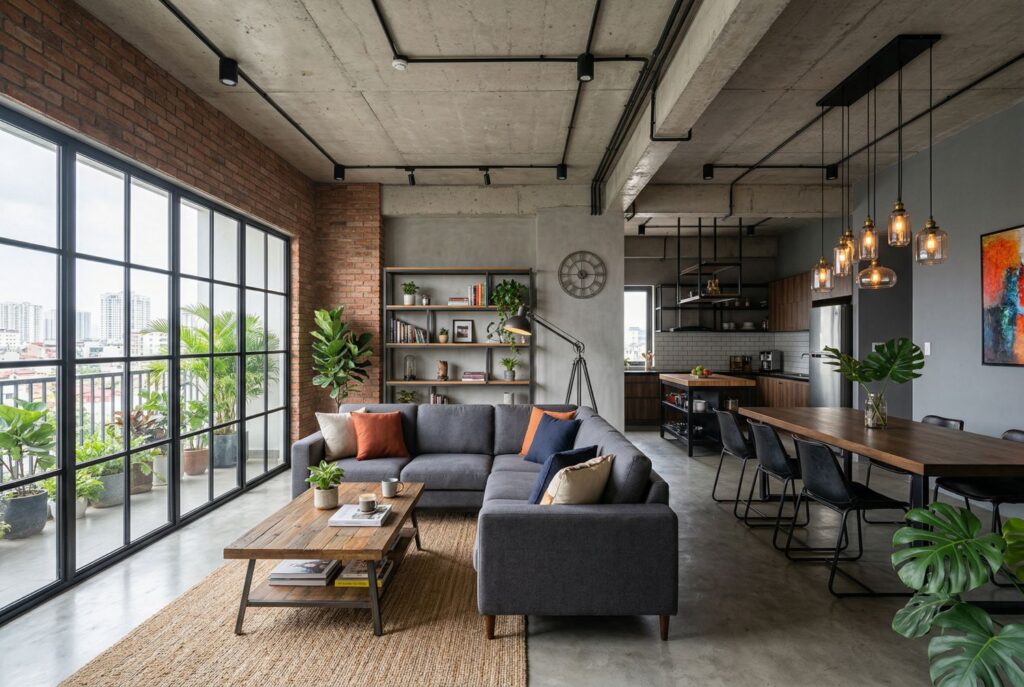
Industrial interior design highlights raw materials like metal and concrete to create a bold and textured look. It often features open spaces, neutral tones, and simple forms that emphasize structure and function. This style adds strong contrast and works especially well in modern homes that need more character and a slightly rugged edge.
7. Art Deco Revival
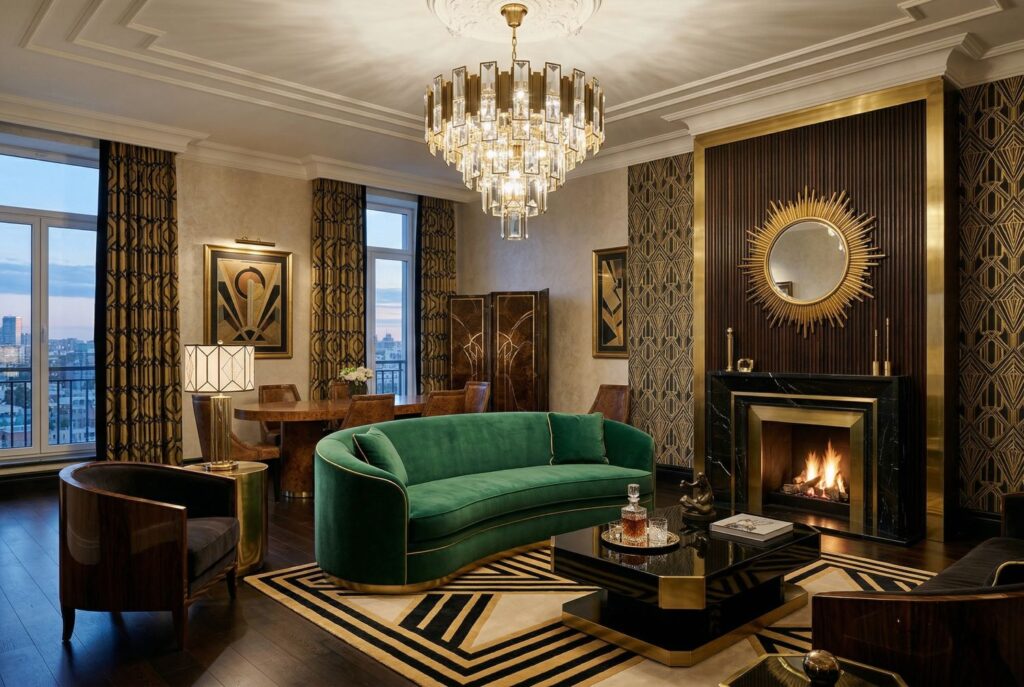
Art deco patterns add structure and visual interest through strong geometric shapes and balanced compositions. This style emphasizes symmetry, clean lines, and bold design elements, often combined with rich materials and striking contrasts to create a refined and eye-catching space.
8. Scandinavian Design
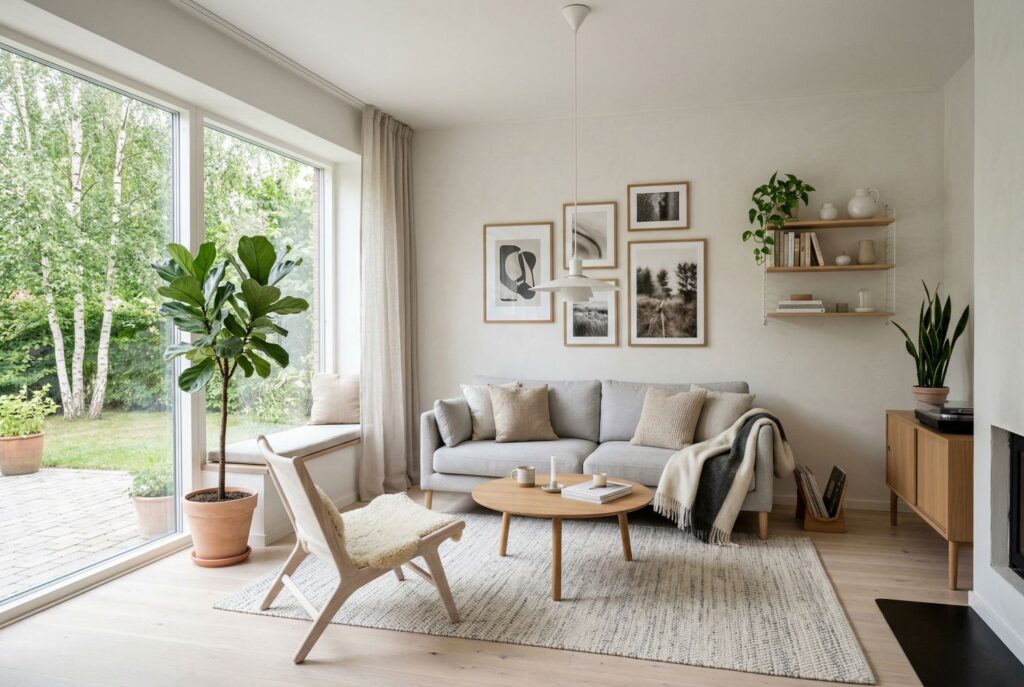
Scandinavian spaces prioritize function and simplicity, creating interiors that feel clean, bright, and practical. With a focus on minimal design, light colors, and natural materials, this style makes small homes feel more open and efficient. It is considered one of the most practical interior design styles, as every element is chosen for both usability and comfort.
9. Coastal Style
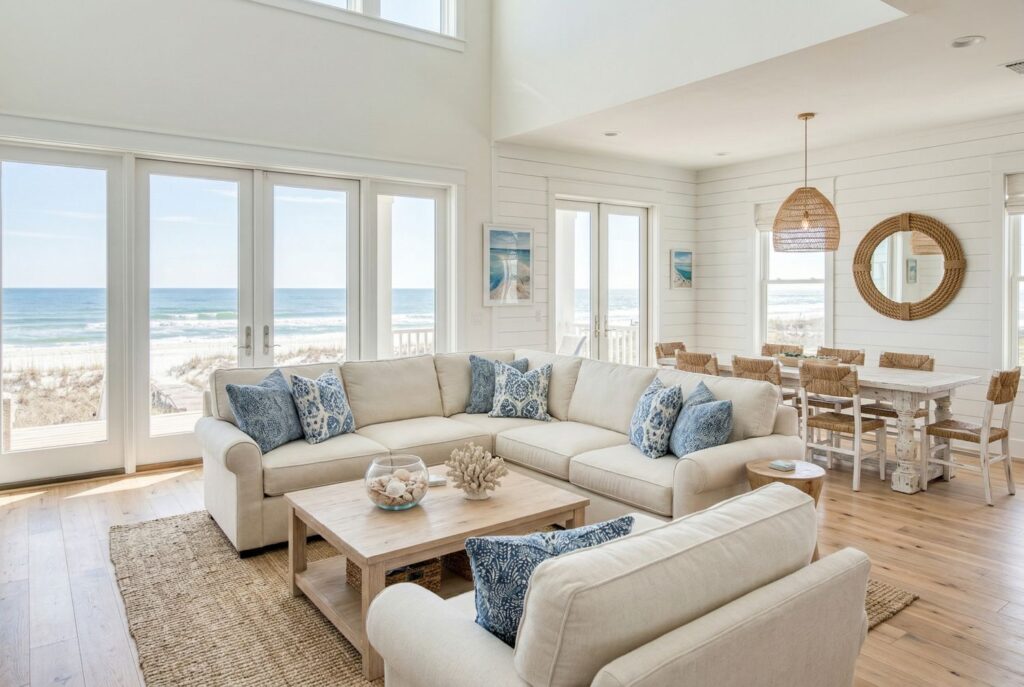
Coastal design uses light colors and soft textures to create a calm and relaxed atmosphere inspired by the seaside. Shades like white, beige, and soft blue are often combined with natural materials such as wood, linen, and rattan to enhance the airy feeling. The layout is typically open and uncluttered, allowing light to move freely throughout the space. This style makes interiors feel fresh, breathable, and comfortable, offering a sense of ease that is both inviting and timeless.
10. Midcentury Modern
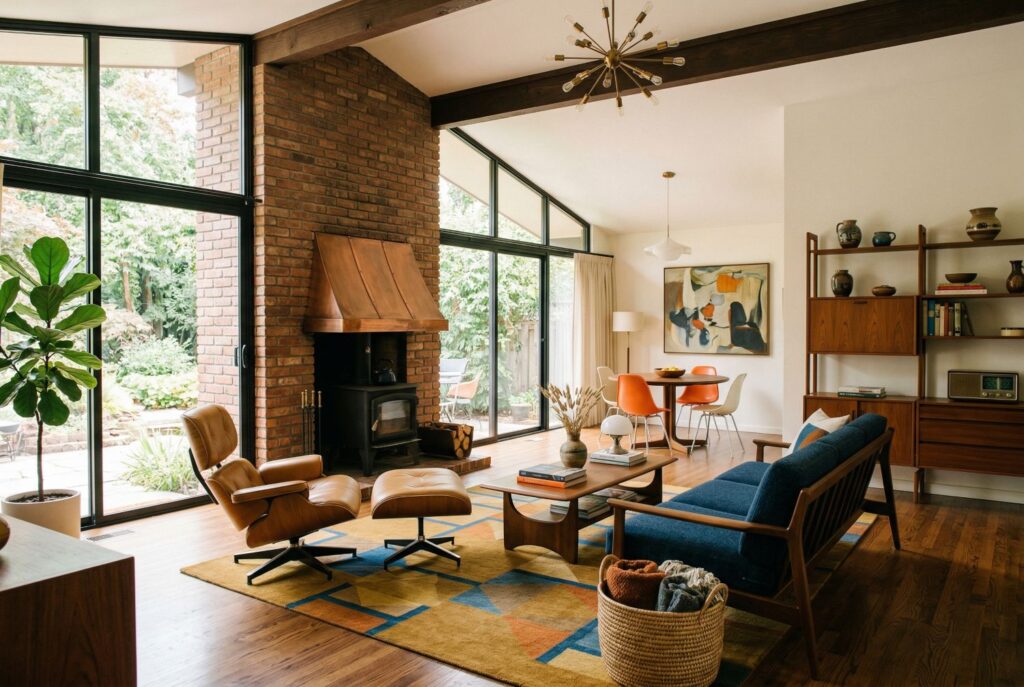
Midcentury modern focuses on distinctive furniture shapes and clean, simple lines that define its timeless appeal. It often features functional design, organic curves, and a mix of natural and man made materials to create a balanced look. This style remains one of the most recognizable modern interior design styles, offering a blend of retro character and lasting simplicity that still feels relevant today.
11. Contemporary Interior Design
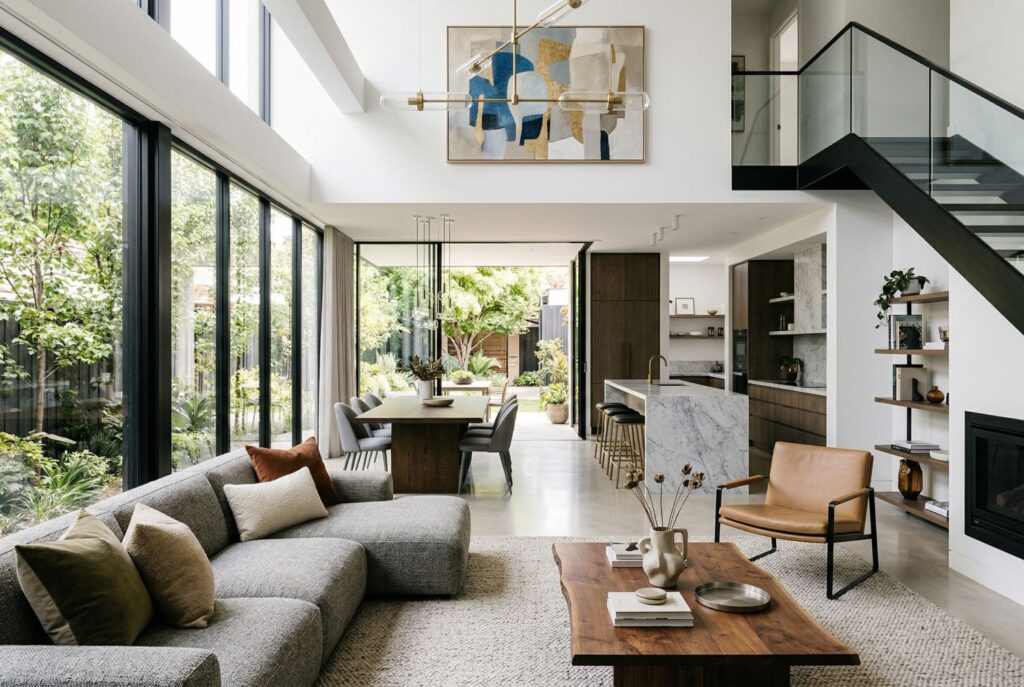
Contemporary interior design reflects current trends and adapts to what is popular at the moment, making it constantly evolving. It often features clean lines, open spaces, and a mix of materials that balance comfort with a modern look. Because it changes over time, this style is highly flexible, allowing homeowners to update and personalize their space without being tied to a fixed set of rules.
12. Traditional Interior Design
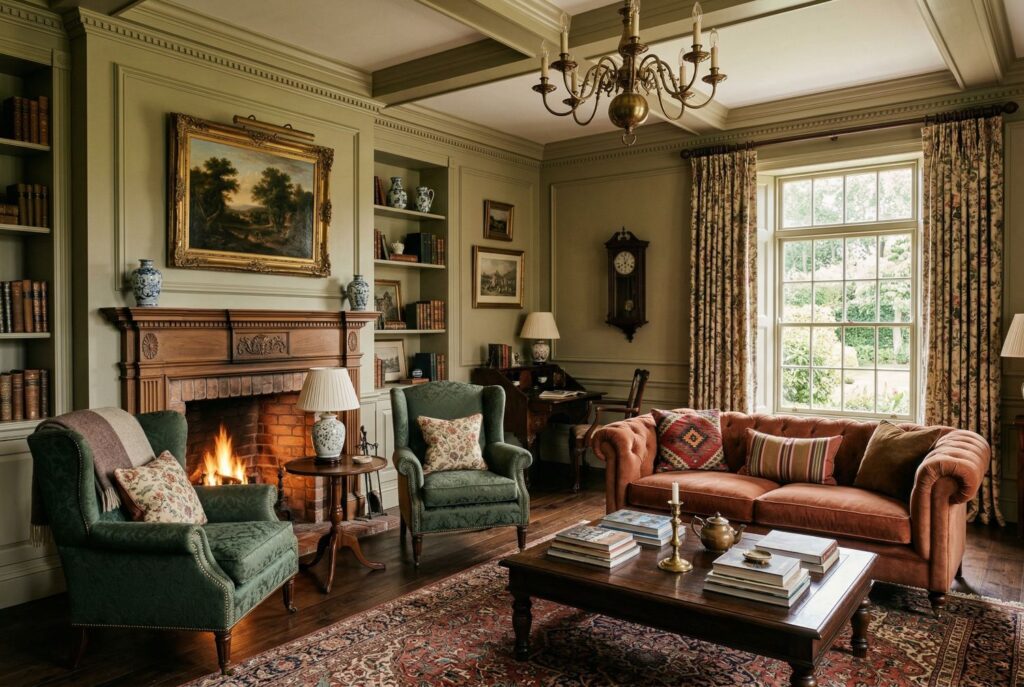
Traditional interiors rely on symmetry and detailed design to create a sense of balance and order. They often feature classic furniture, rich materials, and carefully arranged layouts that feel elegant and timeless. Decorative elements such as moldings, patterns, and refined finishes add depth, resulting in a space that feels formal, comfortable, and well structured.
13. Biophilic Design
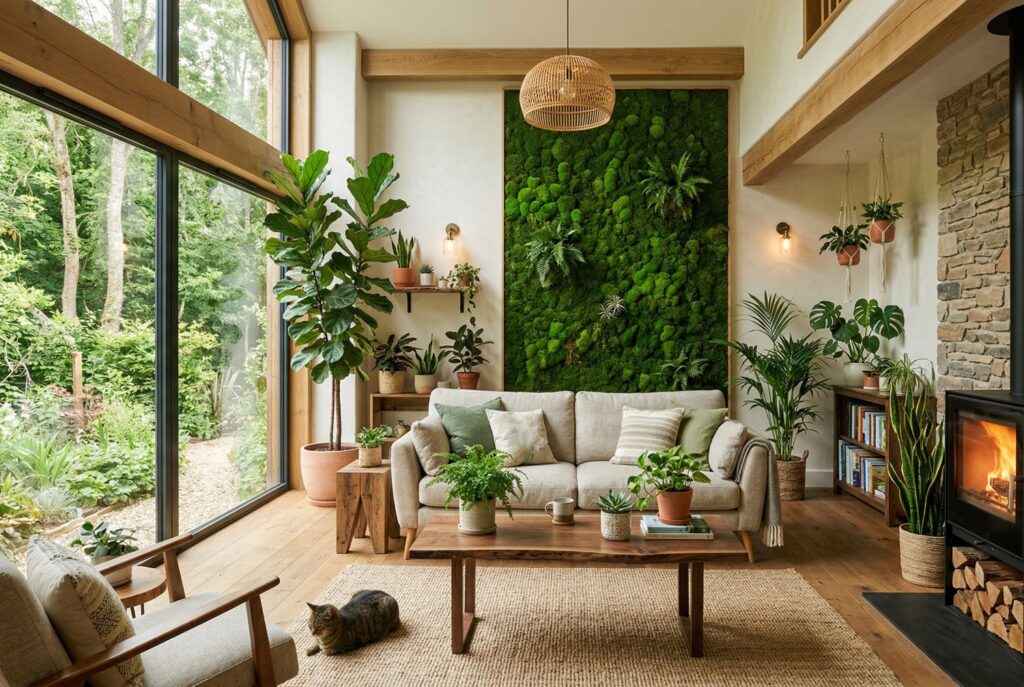
Biophilic design connects indoor spaces with nature by incorporating elements like plants, natural light, and organic materials. It creates a calming environment that supports well being and reduces stress. This approach aligns with modern interior design trends that focus on wellness, comfort, and creating a healthier, more balanced living space.
14. Transitional Style
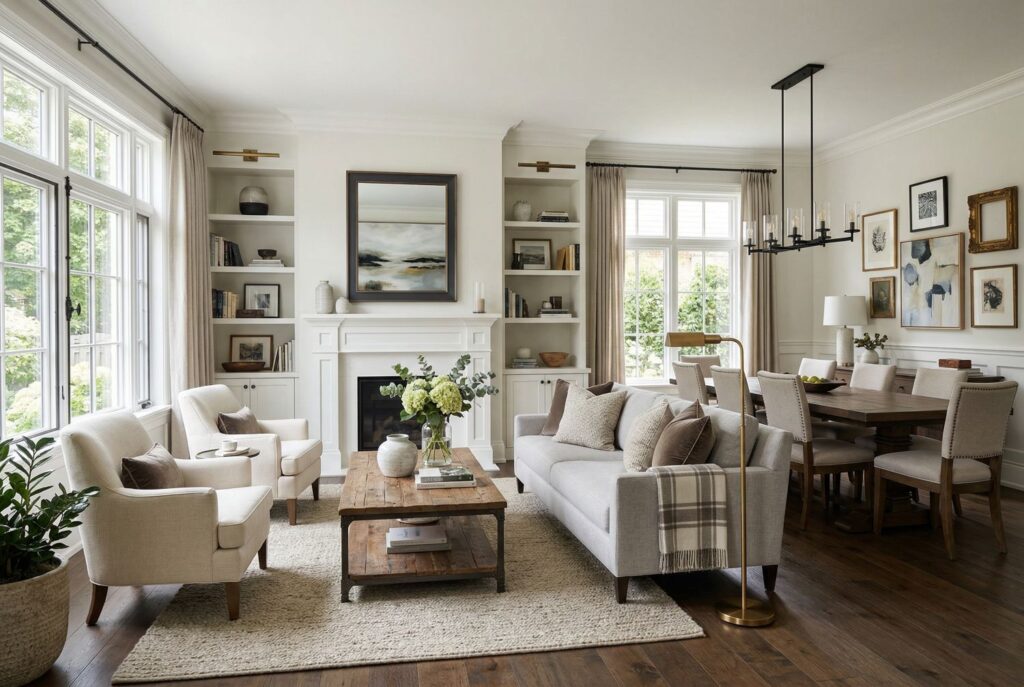
Transitional design blends traditional and modern interior design to create a balanced and timeless look. It combines classic elements with cleaner lines and a more updated feel, resulting in a space that is neither too formal nor too minimal. This style focuses on comfort, neutral colors, and subtle details, making it versatile and easy to live in.
Creating an Aesthetic Room: Trends to Watch
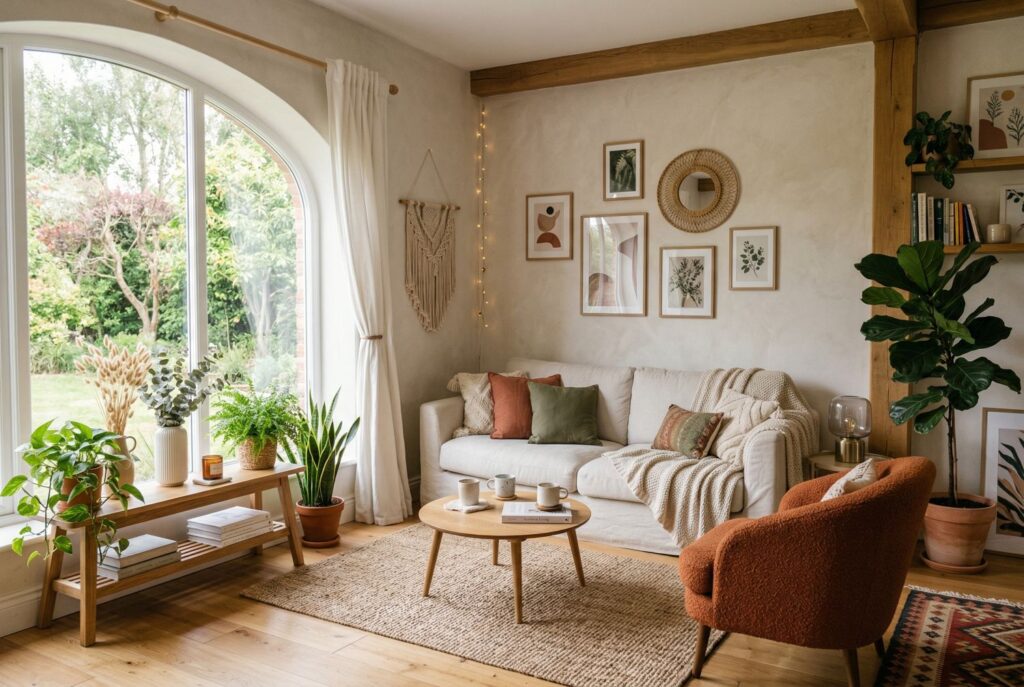
Creating an aesthetic room doesn’t require a full redesign. Many aesthetic room ideas focus on small, intentional changes that shift how the space feels. Aesthetic room decor often includes soft lighting, layered textures, and carefully chosen aesthetic art. These elements work together to create a space that feels personal and comfortable.
Instead of following trends too closely, focus on what feels right for your space. The best aesthetic room ideas aren’t about copying. They’re about adapting elements from different interior design styles in a way that feels natural.
Conclusion
Understanding interior design styles gives you clarity. It helps you stop guessing and start making decisions that actually work.
Whether you fully embrace modern farmhouse decor or blend elements from different types of interior design styles, the goal stays the same. Create a space that feels comfortable, functional, and personal. A well designed home doesn’t happen by accident. It comes from choosing a direction, understanding how it works, and shaping it around your life.
Related Articles
How to Choose the Right Interior Design Style: Practical Tips to Transform Your Space