

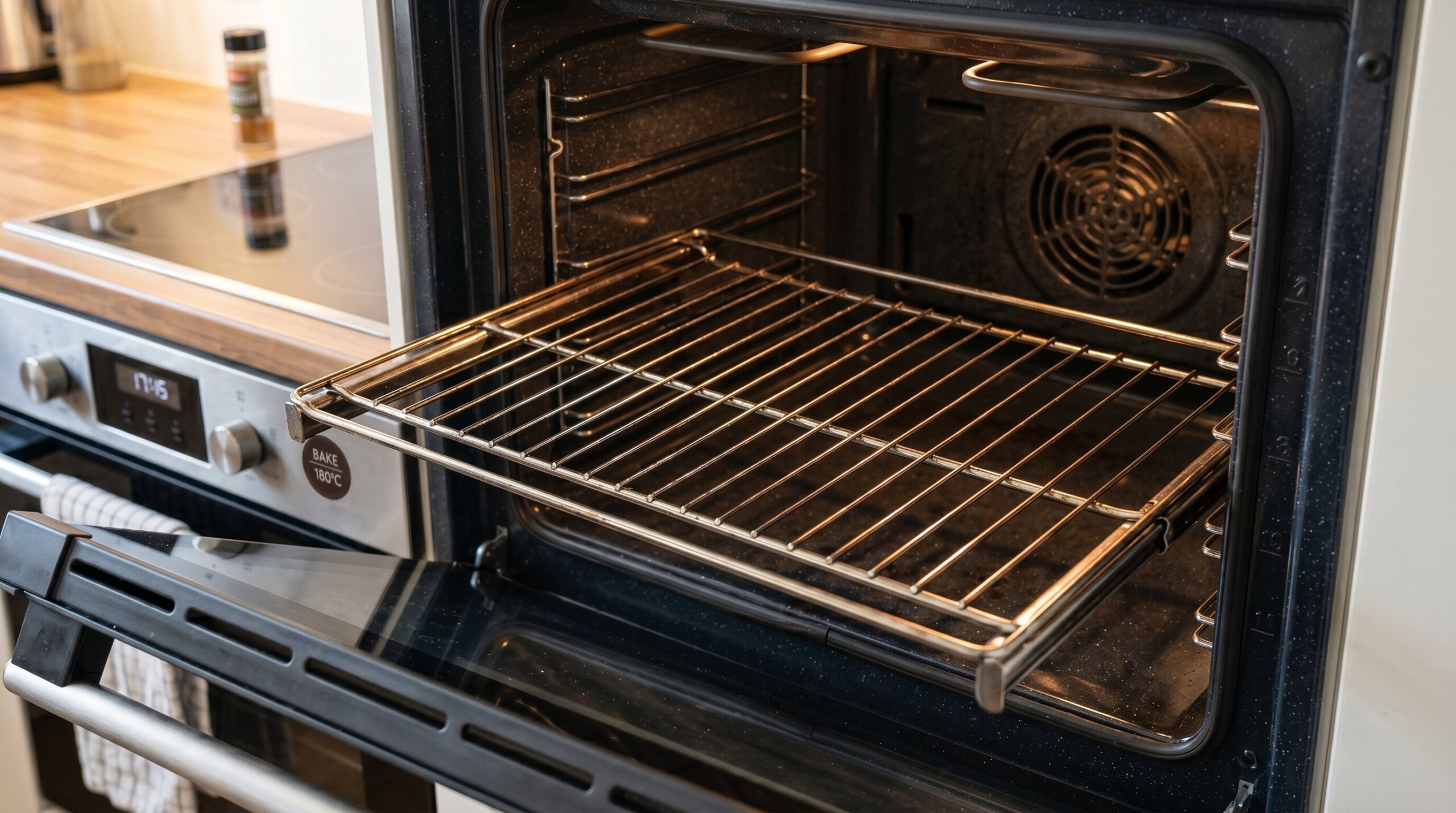
Skip the scrubbing at first. Most oven rack grime is simply baked-on grease that needs time to soften before it can be removed easily. Starting with an overnight soak saves effort and helps prevent unnecessary scratching.
Hot water and dish soap work well for everyday grease, dryer sheets are a popular hands-off option, and ammonia in a sealed trash bag is effective for heavy buildup. The cleaning solution matters, but patience matters even more.
The Deadly Mistake: Leaving Racks in the Self-Cleaning Oven
Many people think the easiest way to handle cleaning oven racks is to leave them inside and press the self clean button. It sounds logical, but it can ruin the racks.
A self-cleaning oven can reach temperatures close to 500°C or 900°F. That heat is designed to burn food residue inside the oven cavity into ash. It isn’t always safe for removable racks, especially racks with chrome finishes, glide coatings, or telescoping mechanisms. After one harsh cycle, the racks may look dull, feel rough, or stop sliding smoothly.
Even worse, grease on the racks can smoke heavily during the cycle. Instead of solving the problem, you may fill the kitchen with an acrid smell and still need to wipe residue later. To clean a self-cleaning oven safely, remove racks first, clear large food debris, ventilate the room, run the cycle only when needed, and wipe ash after cooling. The racks deserve a separate cleaning method.
3 Overnight Soak Methods for Stubborn Grease
Method 1: The Classic Bathtub and Dish Soap Soak
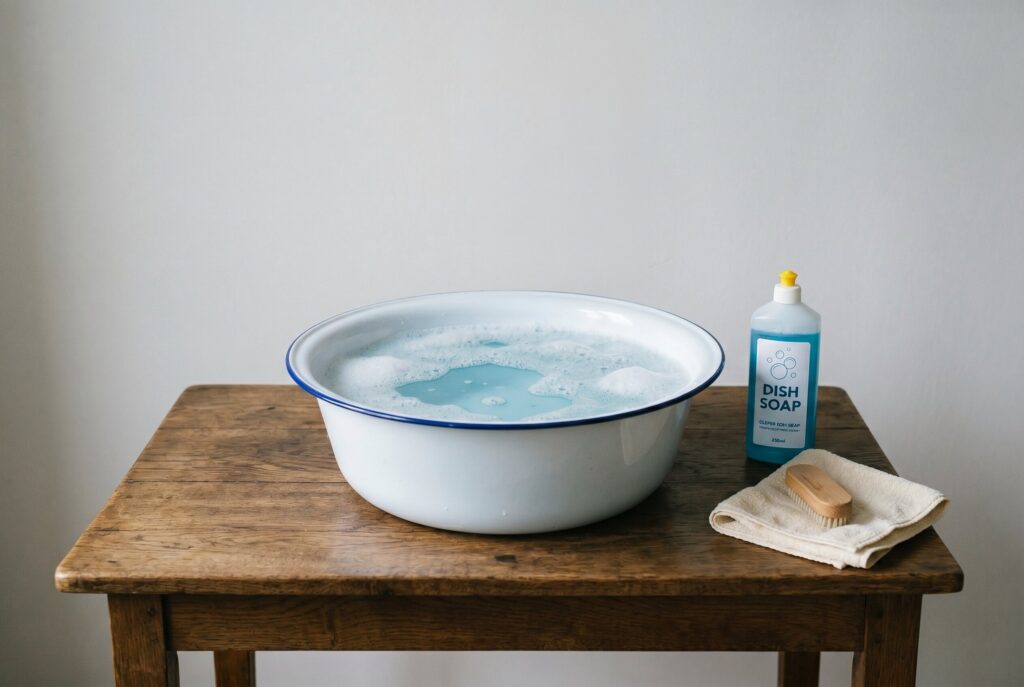
This is the safest starting point for most homes. It works well for normal grease, sticky residue, and racks that haven’t been ignored for years.
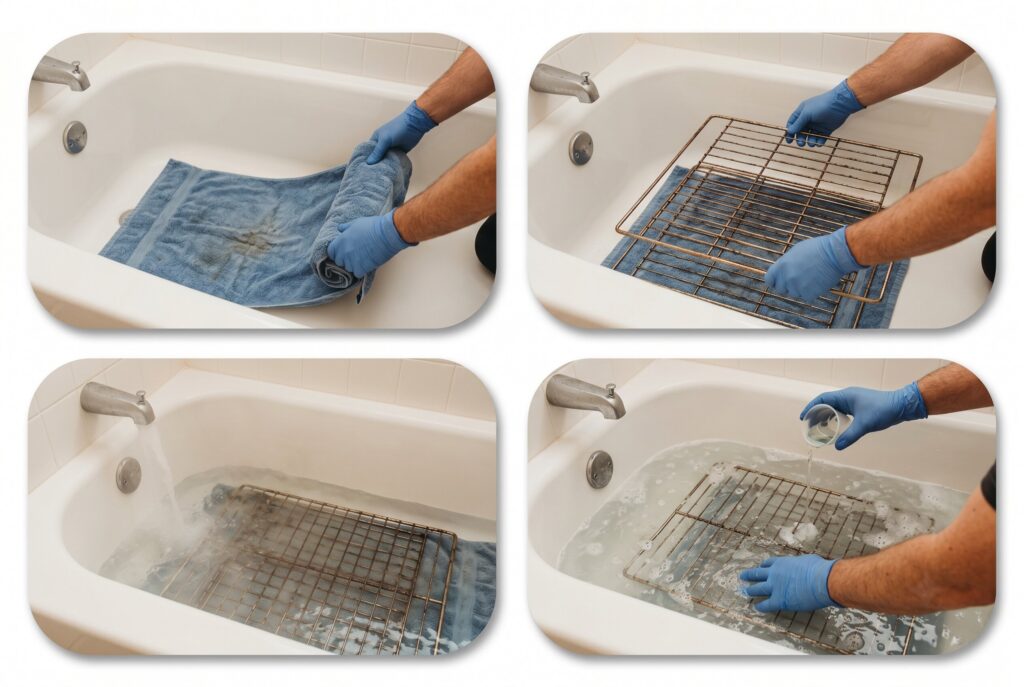
First, place an old towel on the bottom of the bathtub. This step is not optional. Metal racks can scratch porcelain, acrylic, or fiberglass surfaces. Lay the oven racks on top of the towel, then fill the tub with enough hot water to cover them. Add about 1/2 cup dish soap and move the racks slightly so the soap spreads through the water.
Let them soak overnight if possible. If you’re short on time, 4 to 6 hours can still help. By morning, the grease should feel softer. Use a non scratch sponge or soft brush to wipe each bar. Rinse carefully with clean water, then dry the racks fully so they don’t leave moisture inside the oven. This method is best if you want a simple, low odor, no harsh chemical approach. It isn’t always the fastest, but it’s gentle and reliable.
Method 2: The Viral Dryer Sheet Hack
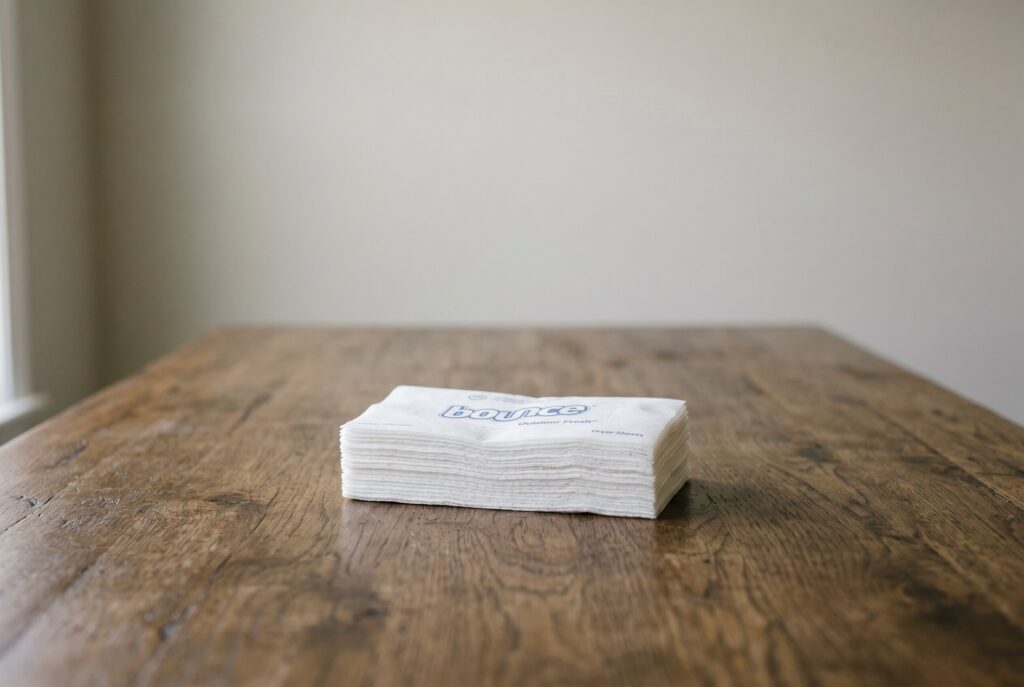
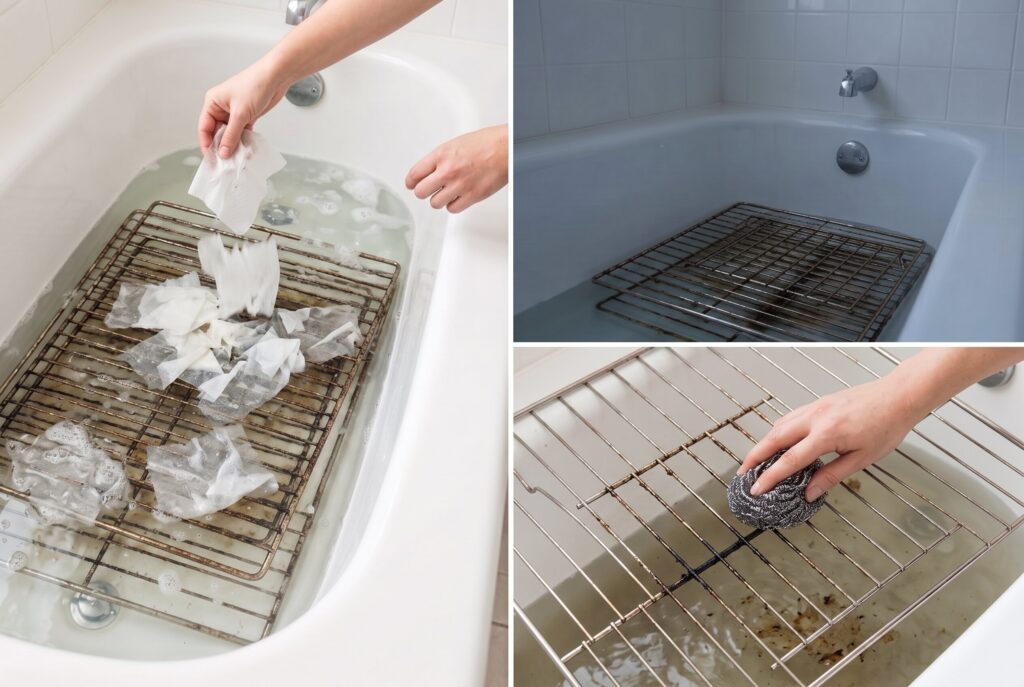
Dryer sheets became one of the most popular oven cleaning hacks because the method sounds strange but surprisingly practical. It follows the same bathtub setup, but adds 5 to 10 dryer sheets to the hot water and dish soap.
The idea is that dryer sheets contain softening agents that help loosen greasy buildup, while the sheet itself becomes a soft scrubber. After soaking overnight, you can use the wet dryer sheets to wipe grime from the racks. This can feel easier than using a stiff brush because the softened debris slides away more smoothly.
This method works best for medium grease and people who want a low effort cleaning routine. It also smells less aggressive than ammonia or commercial oven cleaner. Still, dryer sheets are not a natural cleaner, and some people dislike fragrance or residue near cooking equipment. If you use this method, rinse the racks thoroughly with hot water and dry them well. The dryer sheet method is useful, but don’t expect miracles on years of carbon buildup. For heavy black grease, you may need something stronger.
Method 3: The Ammonia Trash Bag Method
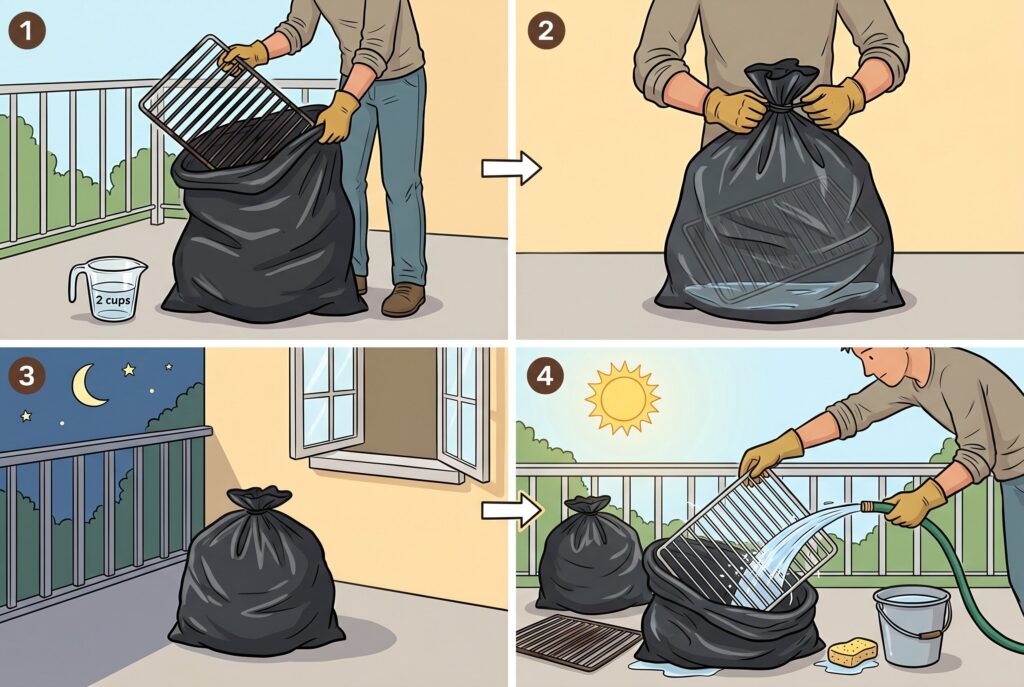
If your racks are coated in old, dark, baked on grease and you don’t have a bathtub, the ammonia trash bag method is the heavy duty option. It is powerful, but it must be handled with care.
Take the racks outside or to a very well ventilated area. Place them inside a thick contractor trash bag. Add about 2 cups of ammonia, then seal the bag tightly. The racks don’t need to be submerged. The fumes do most of the work by softening greasy buildup overnight.
Set the sealed bag outside on a balcony, patio, or protected outdoor area. Keep it away from children, pets, heat, and direct indoor living spaces. Never mix ammonia with bleach or any cleaner that contains bleach. That combination can create dangerous fumes.
The next day, open the bag away from your face in fresh air. Remove the racks with gloves, rinse thoroughly with a hose or in a utility sink, then wipe remaining residue with a sponge. This method is best for extreme grime, but it has the strongest smell and requires the most caution.
What If You Don’t Have a Bathtub?
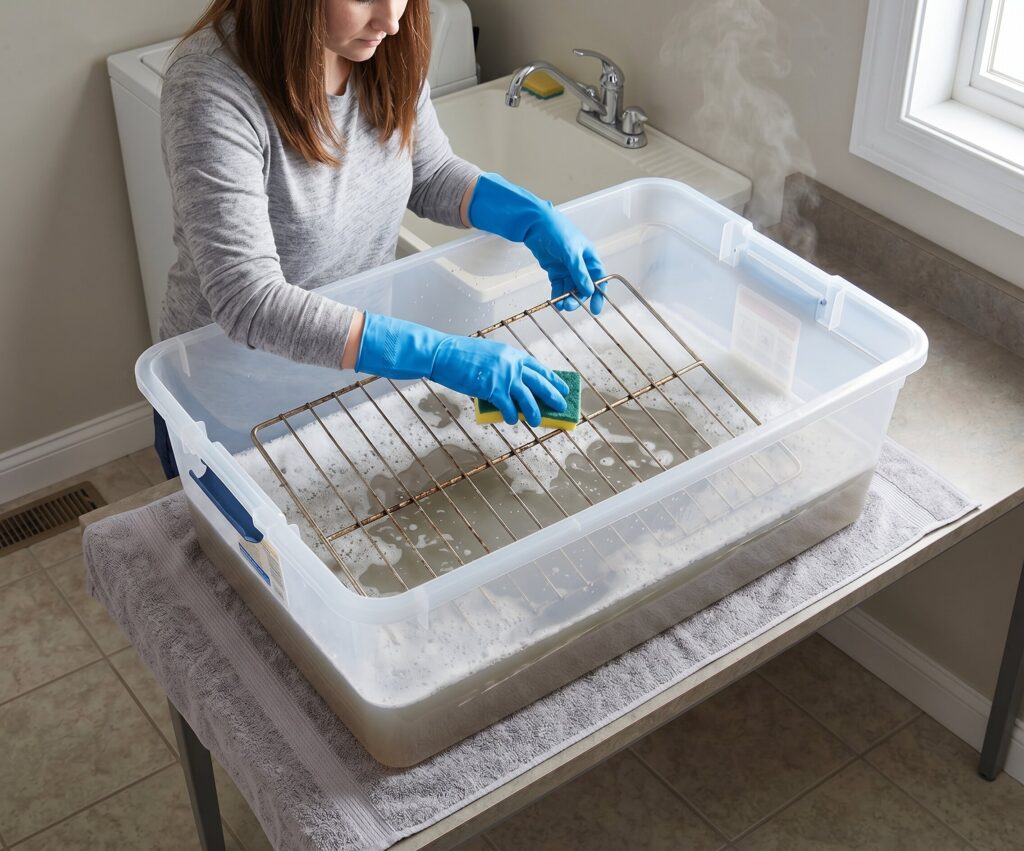
You can still clean oven racks without a bathtub. Use a large plastic storage bin, a laundry sink, a shower base, or the ammonia trash bag method. The key is giving the racks enough contact time with the cleaning solution.
For apartment dwellers, a heavy duty plastic bin is often the cleanest choice. Place it near the kitchen, fill it with hot water and dish soap, soak the racks, then empty it carefully. Avoid dragging greasy racks across floors or counters.
Conclusion
The best way to clean oven racks starts with choosing a soaking method that matches the amount of grease. If you’re wondering how to clean oven racks, start with dish soap and hot water for regular cleaning, try dryer sheets for a low-effort hack, or use ammonia for serious baked-on carbon.
Most importantly, don’t leave the racks inside a self-cleaning oven. Remove them, soak them separately, rinse them thoroughly, and let them dry before reinstalling. With the right method and enough soak time, the job becomes much easier.
Related Articles
How to Clean an Oven: 3 Step by Step Methods for a Spotless Finish
How to Clean an Oven Naturally: An Effortless Overnight Formula