

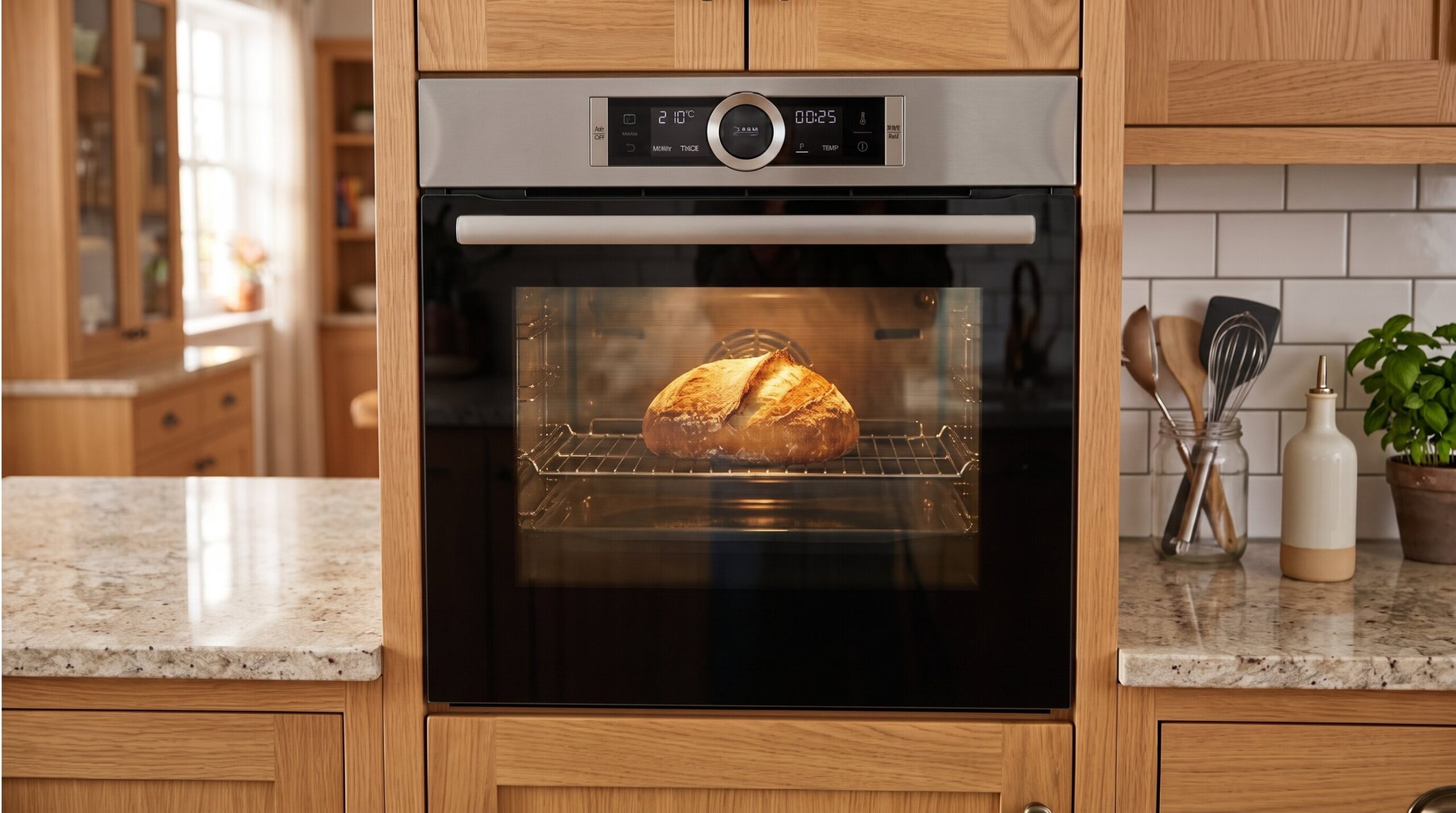
If you want to clean your oven naturally, you can do it without harsh oven cleaners or the smoky self cleaning cycle. The best low effort formula is an overnight baking soda paste. Mix 1/2 cup baking soda with a few tablespoons of warm water and a few drops of dish soap until it becomes a spreadable paste. Coat the inside of the oven, avoid the heating elements, let it sit for 12 hours, then wipe it away with a damp cloth.
This is the simplest answer to how to clean an oven without scrubbing. The secret isn’t force. It’s dwell time. Baking soda is mildly abrasive and alkaline, so it helps loosen grease when it has enough time to sit. Dish soap helps break down oily residue. Vinegar should only come at the end, as a light rinse to dissolve leftover white baking soda film.
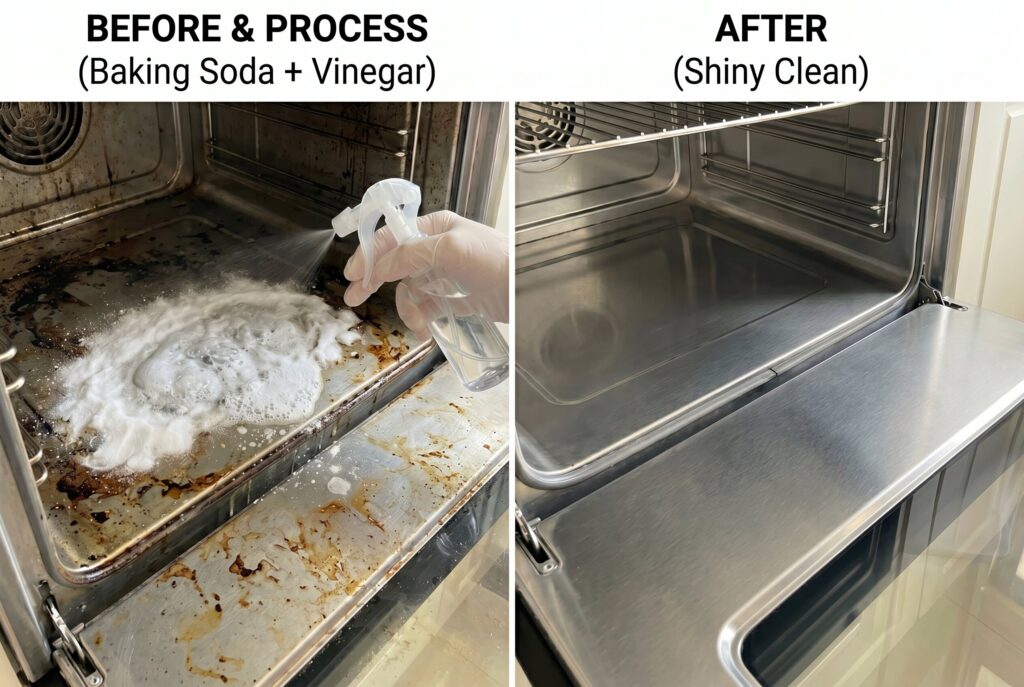
Many oven cleaning hacks tell you to mix baking soda and vinegar from the start. It looks dramatic because it fizzes, but that reaction weakens the cleaning power. For real grime, patience beats bubbles.
The Baking Soda and Vinegar Myth
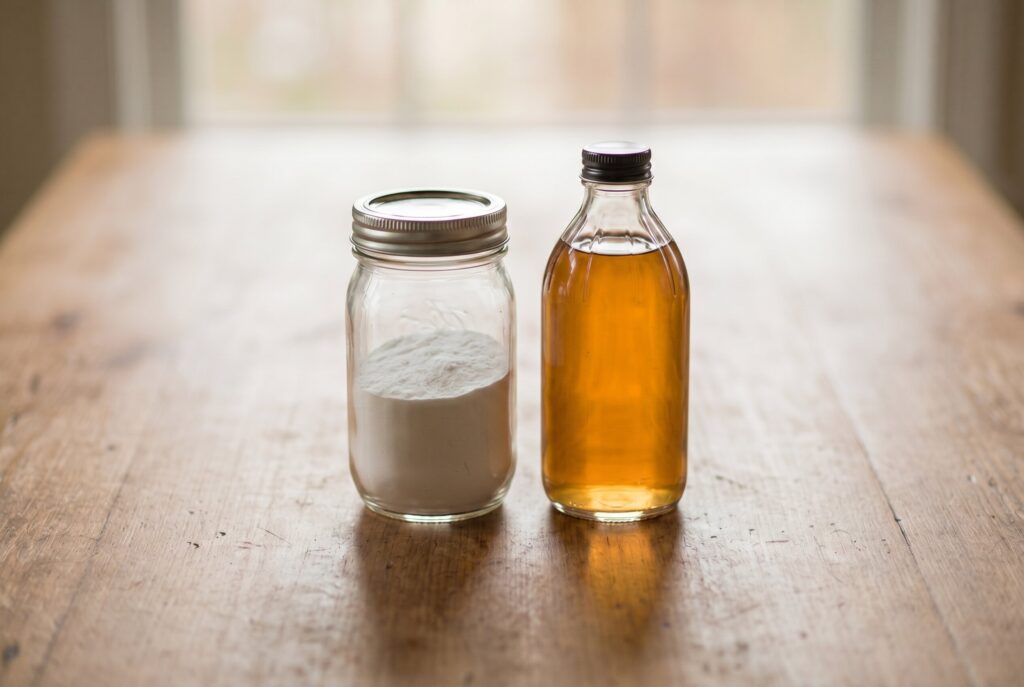
Cleaning the oven with baking soda works because baking soda gives you gentle abrasion and grease cutting power. Vinegar works well as a final rinse because it helps remove mineral residue and leftover powder. But when you mix them too early, they neutralize each other.
That fizzing reaction may feel satisfying, but it isn’t the best oven cleaner for baked on grease. You’re mostly watching acid and alkaline ingredients cancel each other out. The result is weaker than using baking soda paste first and vinegar later.
The better sequence is simple. Apply baking soda paste at night. Let it sit while you sleep. In the morning, wipe away the loosened grime. Then spray a little vinegar only on the remaining white residue. When it foams lightly on leftover baking soda, wipe again with a clean damp cloth. That small change makes your homemade oven cleaner more effective and less messy.
What You’ll Need
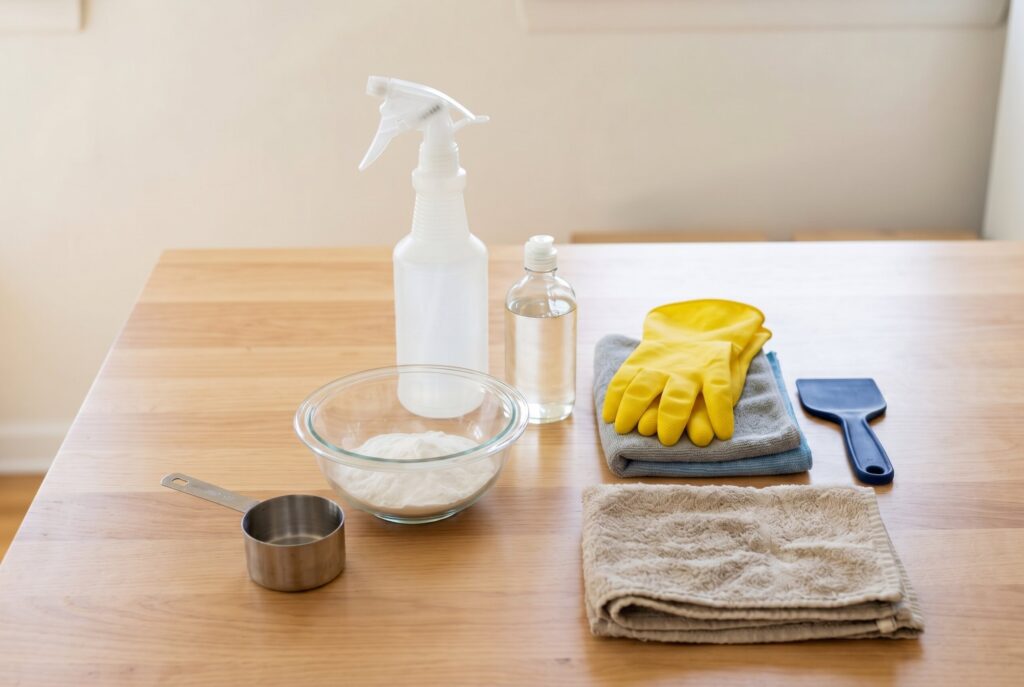
You don’t need a cabinet full of products. Gather 1/2 cup baking soda, warm water, a few drops of dish soap, white vinegar in a spray bottle, a bowl, rubber gloves, microfiber cloths, a plastic scraper, and an old towel.
Avoid metal scrapers because they can scratch enamel or glass. Avoid spraying liquid into vents, fans, heating elements, seals, or cracks around the oven door. If your oven is electric, make sure it is fully cool and turned off before cleaning. If you’re unsure about a surface, check the oven manual first.
How to Clean Inside of Oven Overnight
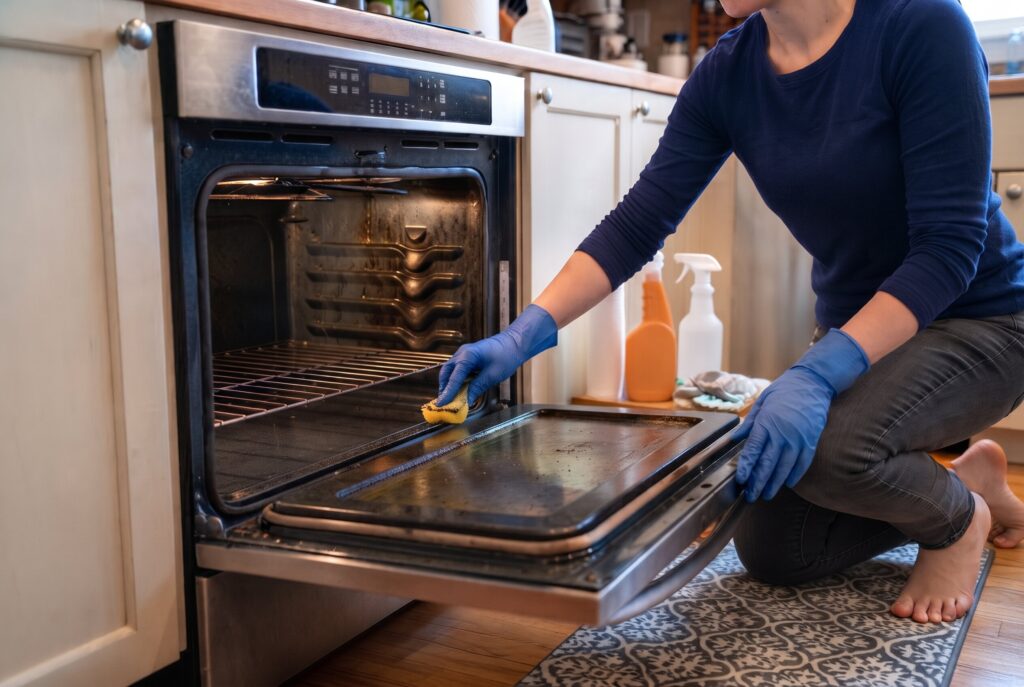
First, remove the racks. Brush out loose crumbs and burnt flakes from the bottom of the oven. This keeps the paste from turning into a gritty mess.
Next, mix your paste. Start with 1/2 cup baking soda, add warm water slowly, then add a few drops of dish soap. You want a texture like soft frosting, not soup.
Spread the paste over the interior walls, door glass, corners, and bottom of the oven. Focus on greasy areas and blackened buildup. Don’t coat heating elements, fans, vents, lights, or rubber seals. Close the door and let the paste sit for 12 hours. Overnight is ideal because it gives the mixture time to soften baked on grease.
The next morning, wipe with a damp cloth. Rinse the cloth often. Use a plastic scraper for stubborn patches. Once most of the paste is gone, mist vinegar lightly over any white residue. Wipe again until the surface feels clean. Leave the oven door open to air dry before using it again.
How to Clean Bottom of Oven Without Scrubbing
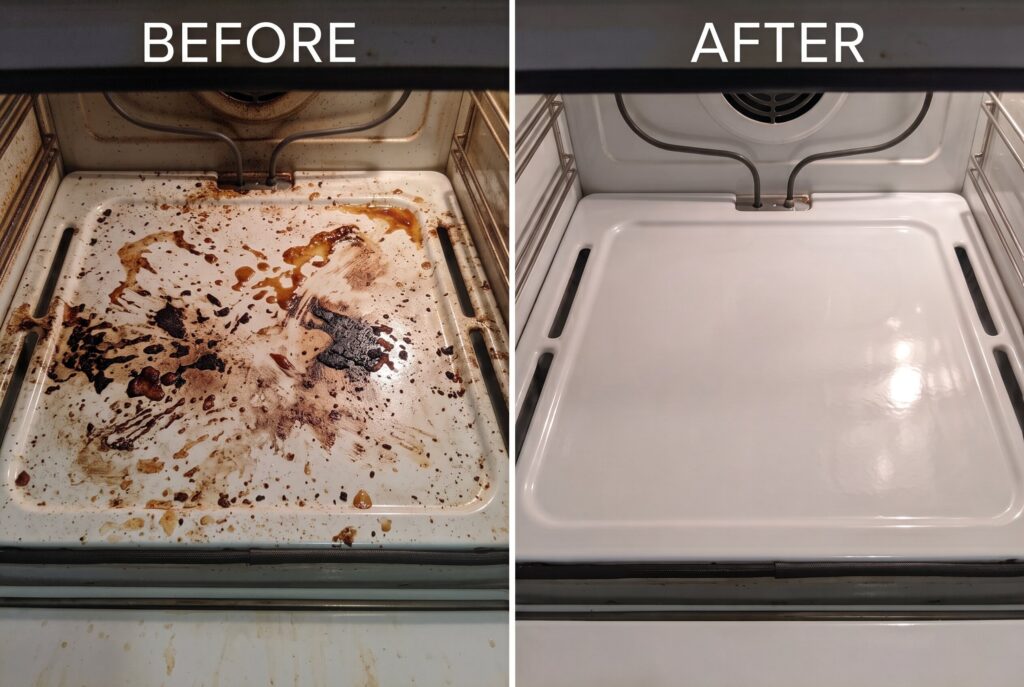
The oven floor usually has the worst buildup because spills land there and bake repeatedly. For the bottom of the oven, apply a thicker layer of paste and give it the longest dwell time.
If there is burnt sugar, cheese, or sauce, soften it first with a damp warm cloth for 10 minutes. Then apply the paste. In the morning, lift softened spots with a plastic scraper instead of grinding them with a scrub pad. Don’t pour water directly onto the oven floor. Too much liquid can seep into hidden areas and create problems later.
How to Clean Oven Racks: The Bathtub Method
The best way to clean oven racks is to stop fighting them in the kitchen sink. Use the bathtub method. Lay an old towel in the bottom of the tub to prevent scratches. Place the racks on top. Fill the tub with enough hot water to cover them. Add 1/2 cup dish soap or a gentle laundry detergent. Let the racks soak for 4 to 6 hours, or overnight if they’re very greasy.
After soaking, most grime should loosen easily with a sponge or soft brush. Rinse well, dry completely, and return the racks only after the oven interior is dry. Don’t use this method on racks with special coatings unless your manual says it’s safe.
Does the Lemon Steam Hack Work?
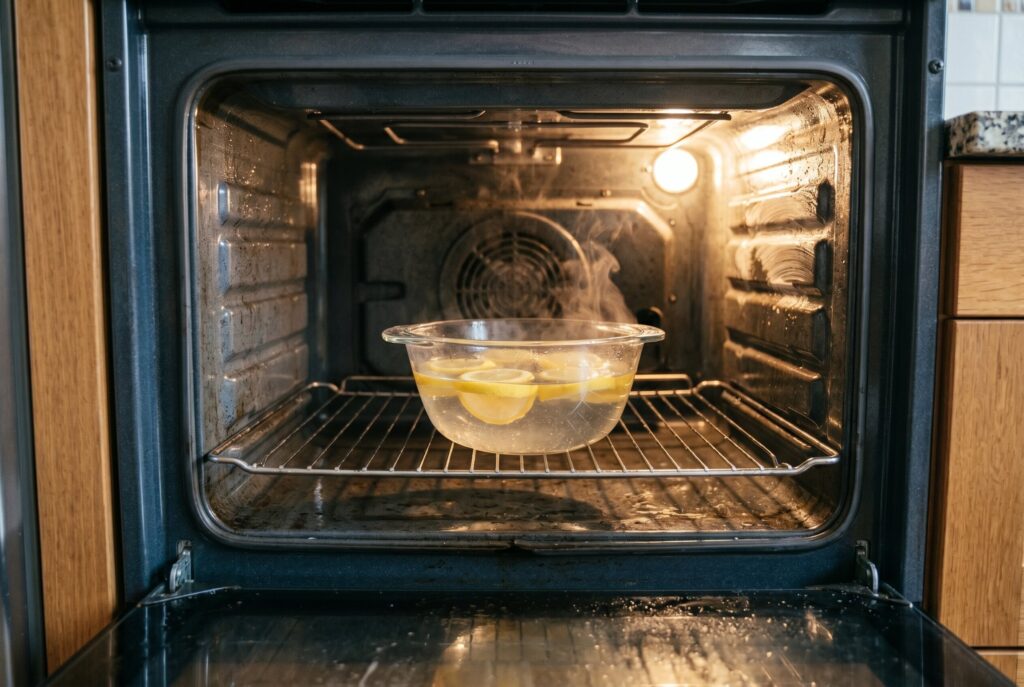
Lemon steam is useful, but it isn’t magic. It’s great for light grime, odor, and weekly maintenance. It isn’t strong enough for heavy black buildup. To try it, place lemon slices and water in an oven safe bowl. Heat the oven until steam forms, then turn it off and let the steam sit inside for 20 to 30 minutes. Once the oven cools enough to touch safely, wipe the interior. Use lemon steam when the oven smells bad or has light grease. Use baking soda paste when the oven needs a real deep clean.
Conclusion
When it comes to learning how to clean an oven naturally, patience matters more than fizz. A mixture of baking soda, warm water, and dish soap is often enough to tackle stubborn grease and grime if allowed to sit overnight. Use lemon steam for light maintenance, baking soda paste for deep cleaning, vinegar only as a final rinse, and the bathtub method for racks. Skip aggressive scrubbing whenever possible. A clean oven shouldn’t require chemical fumes, smoke, or sore arms. It just needs the right order, the right dwell time, and a little patience.
Related Articles
How to Clean an Oven: 3 Step by Step Methods for a Spotless Finish
How to Clean a Self-Cleaning Oven Safely: 4 Steps Without Ruining It