

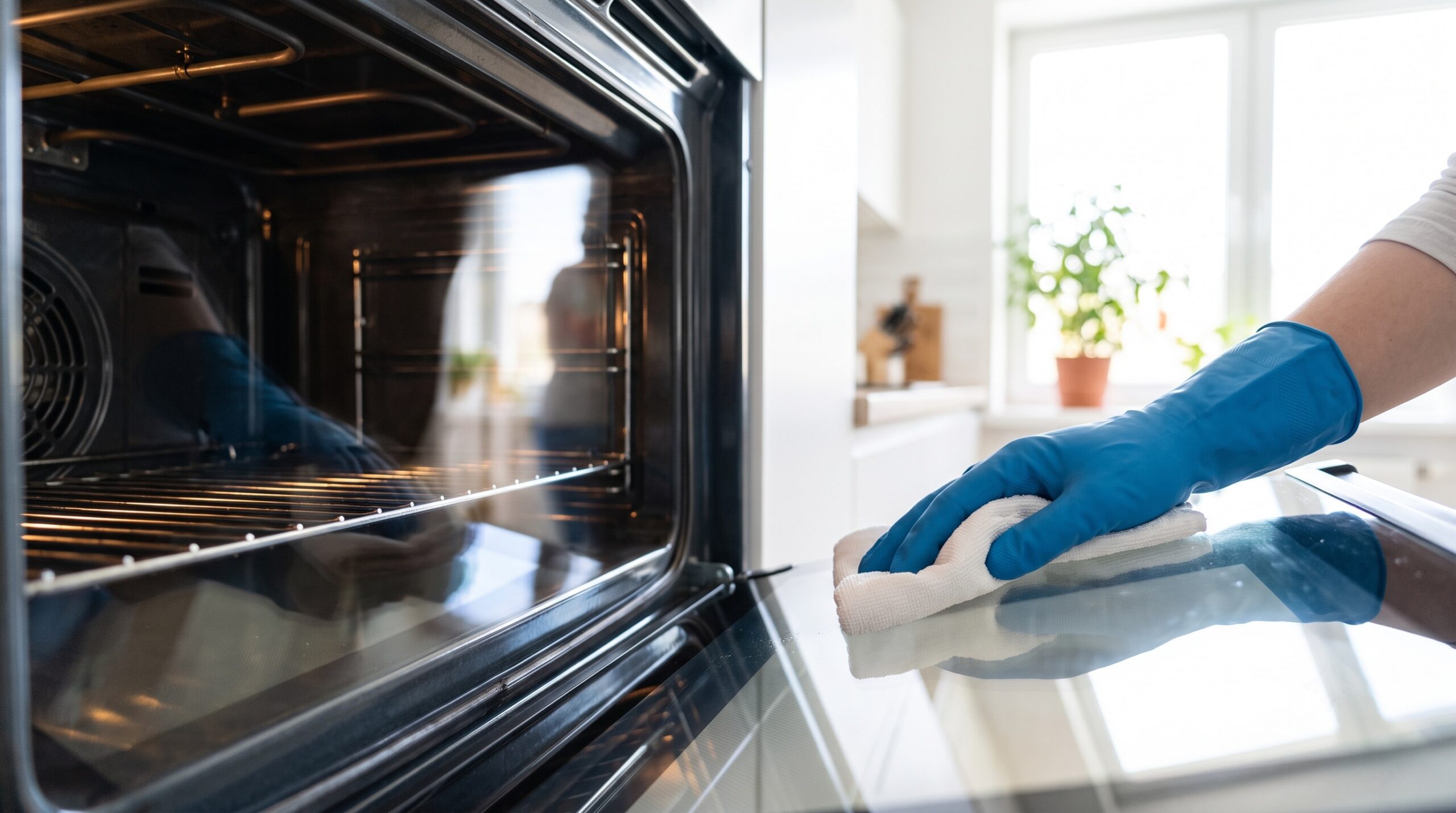
Learning how to clean an oven is about more than appearance. Burnt grease, food spills, and carbon buildup can cause smoke, unpleasant odors, uneven cooking, and even increase fire risk over time. The good news is that most ovens can be restored to a clean, grease-free finish with the right cleaning method.
The best way to clean an oven depends on how dirty it is. For everyday grease, baking soda and vinegar provide a safe, low-cost solution. For heavy burnt-on grime, a commercial oven cleaner works faster, while self-cleaning ovens can use the self-clean cycle if recommended by the manufacturer. Below, you’ll learn three effective cleaning methods, plus how to clean oven racks, glass doors, knobs, and keep your oven in top condition.
Method 1: The Natural Baking Soda and Vinegar Approach

When to Use This Method
This is the best choice if you want to know how to clean oven naturally without harsh chemical fumes. It works well for light to medium grease, sticky spills, and general brown buildup inside the oven. Baking soda is mildly alkaline, which helps loosen acidic food stains and grease. Vinegar adds a foaming reaction that helps lift softened grime from the surface.
Step-by-Step Process
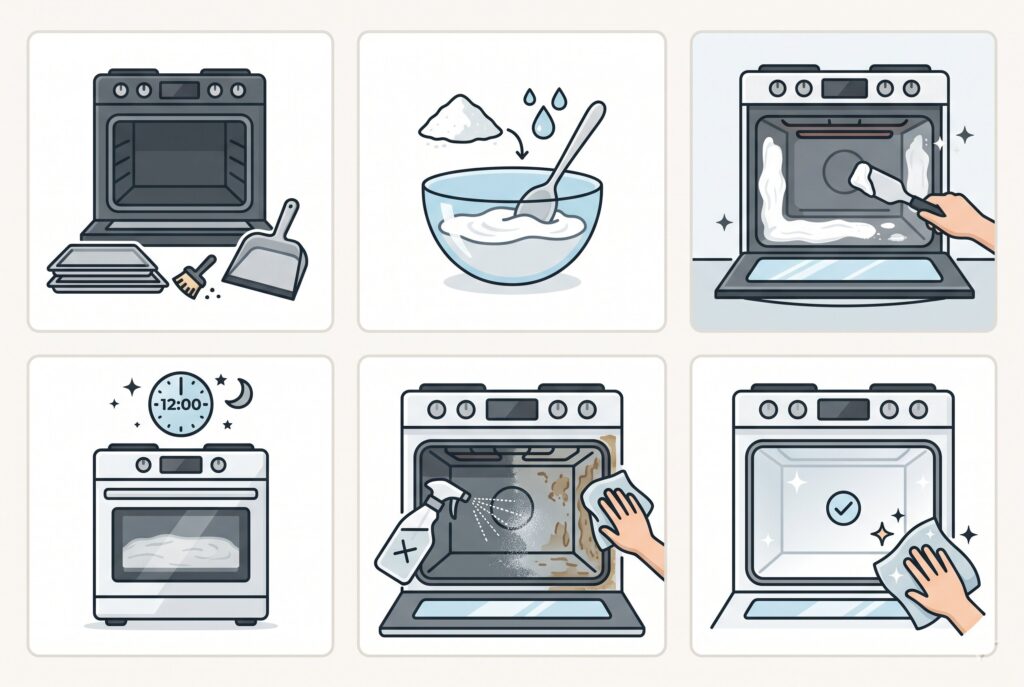
First, remove the oven racks, trays, and loose crumbs. Mix baking soda with a small amount of water until it becomes a thick paste. Spread the paste over the inside walls, floor, and door area, but avoid heating elements, fans, vents, and electrical parts. Let it sit for at least 6 hours, or overnight if the oven is very dirty.
The next day, wipe away the dried paste with a damp cloth. Spray white vinegar lightly over any remaining baking soda residue. It will fizz, soften, and release more grime. Wipe again with clean water until the oven feels smooth and no powder remains.
Why It Works Best
This homemade oven cleaner is gentle, cheap, and safer for regular maintenance. It isn’t always the fastest option, but it’s excellent for families, small kitchens, and anyone sensitive to strong fumes.
Method 2: High Performance Commercial Cleaners
When to Use This Method
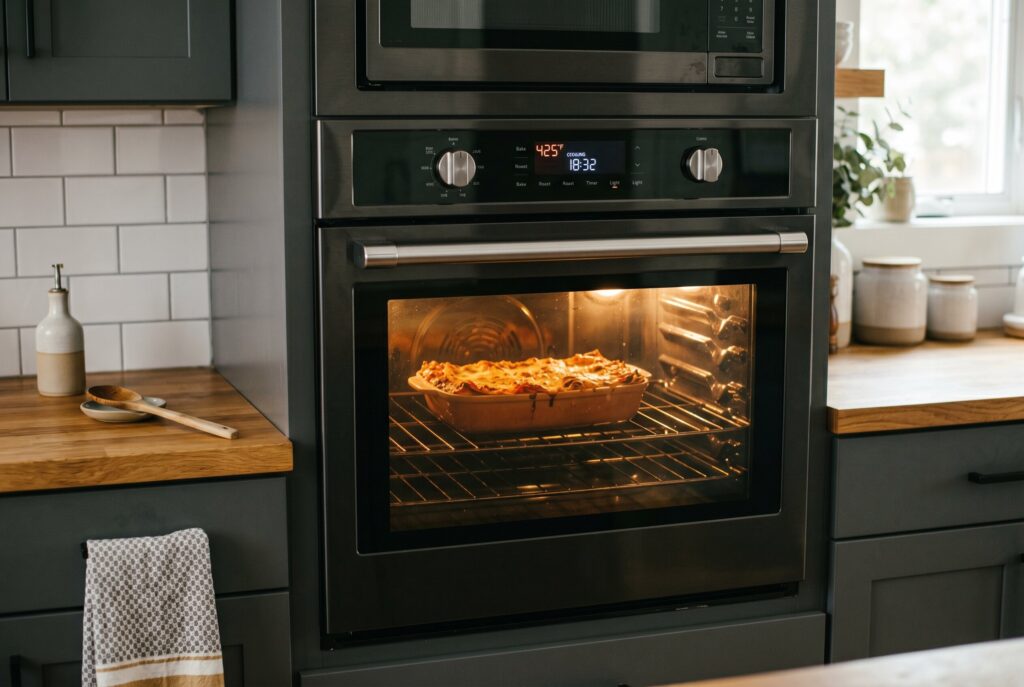
If your oven has thick black grease, burnt sugar, or years of baked on residue, a natural paste may not be strong enough. This is where a commercial oven cleaner spray can help. These products are usually alkaline and designed to break down stubborn grease faster than baking soda alone.
Step-by-Step Process
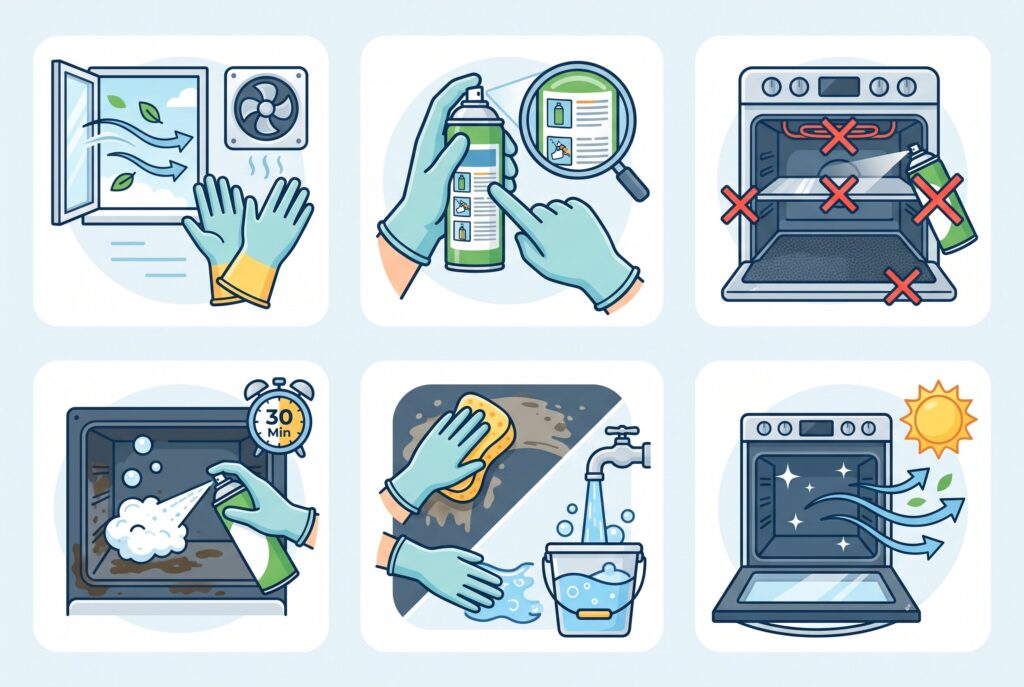
Before spraying, open windows, turn on ventilation, and wear rubber gloves. Read the label carefully because not every best oven cleaner is safe for every oven surface. Avoid using strong chemical cleaners on self cleaning oven liners, special coated interiors, aluminum parts, heating elements, or any area the manual warns against.
Spray the cleaner on the dirty enamel surfaces and let it sit for the recommended time. Don’t rush this waiting period because the chemical needs time to dissolve the grease. After that, wipe with a damp sponge or cloth. Rinse repeatedly with clean water so no residue remains. Before cooking again, leave the oven open to air out.
Why It Works Best
This method is powerful, but it demands caution. It’s best for neglected ovens, rental move outs, or serious grease buildup. It isn’t the best choice for weekly cleaning, and it shouldn’t be mixed with vinegar, bleach, or other cleaners.
Method 3: Utilizing the Self Clean Feature Safely
When to Use This Method
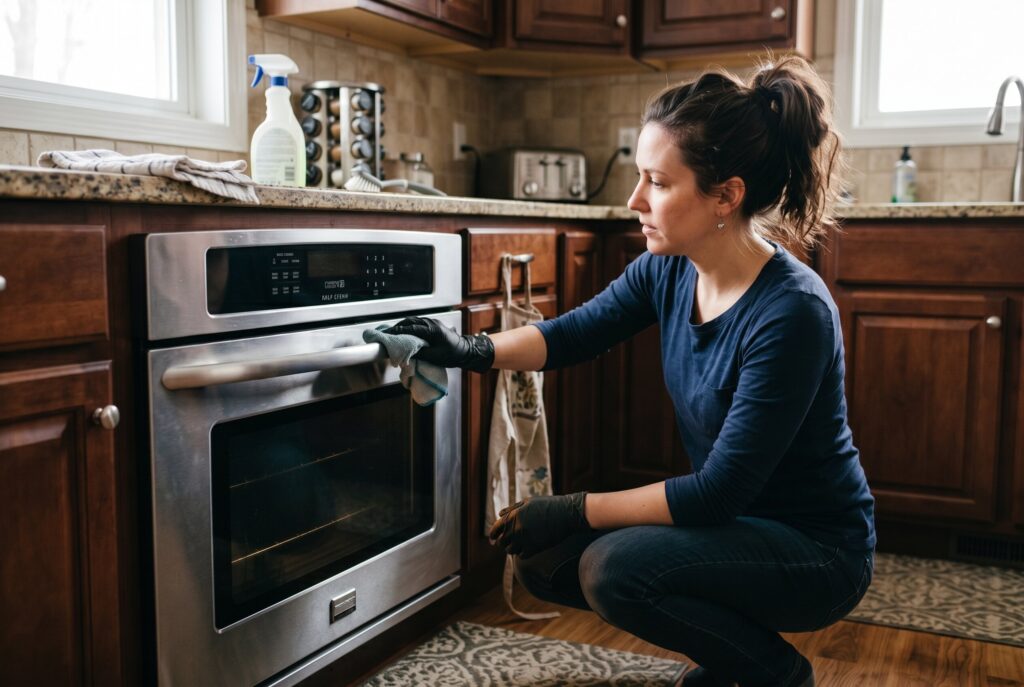
If you’re wondering how to clean a self cleaning oven, the most important thing is restraint. A self clean cycle uses extremely high heat to burn food residue into ash. It can be useful, but it also creates heat, odor, smoke, and stress on oven components. Use it only occasionally, usually once or twice a year, and only if your manual allows it.
Step-by-Step Process
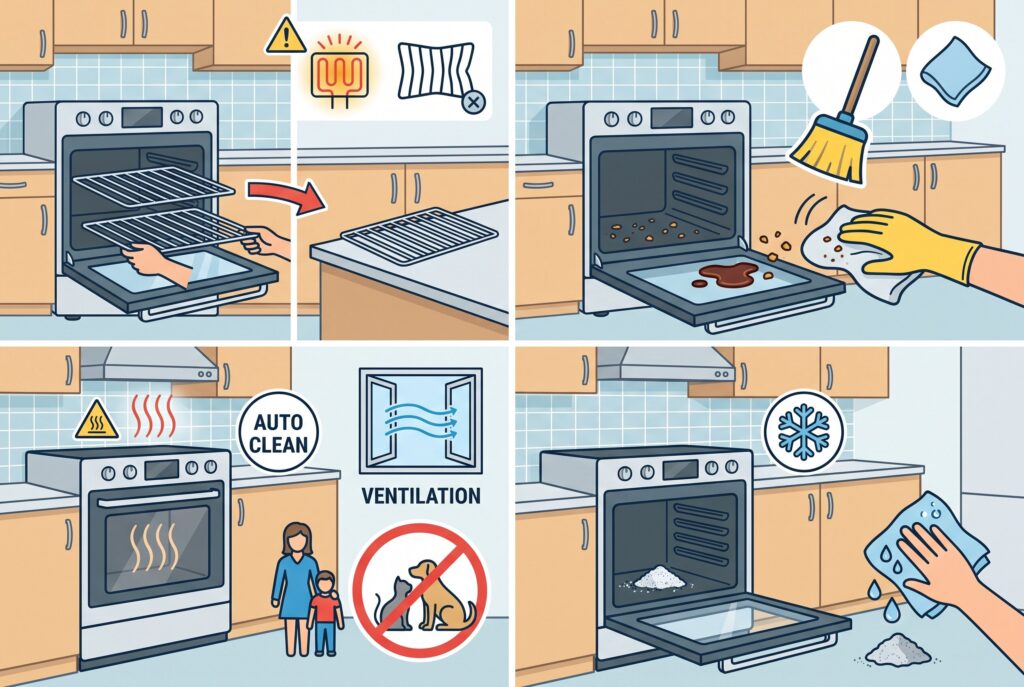
Remove racks before starting because high heat can discolor or warp them. Wipe out loose crumbs and large grease puddles first. Make sure the kitchen is ventilated, and keep children and pets away during the cycle. After the oven cools fully, wipe out the ash with a damp cloth.
Why It Works Best
Self clean is convenient for baked on residue, but it isn’t risk free. Don’t use it right before hosting, because odors can linger. Don’t run it if the oven already smokes heavily, has damaged seals, or has visible electrical issues.
Essential Oven Rack Maintenance
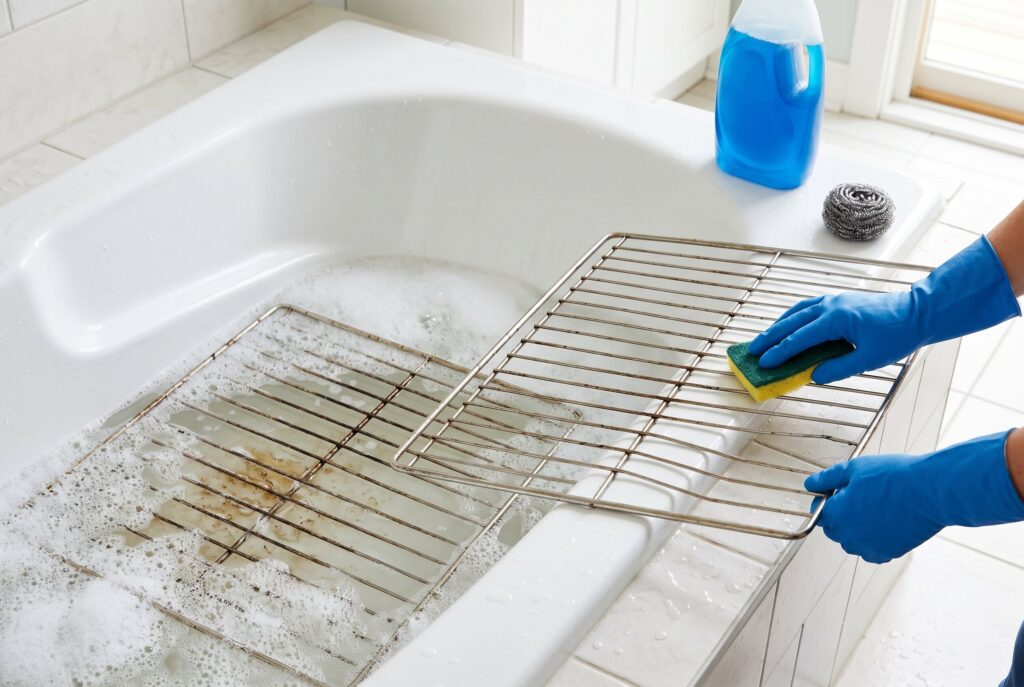
The best way to clean oven racks is soaking. Place the racks in a bathtub or large sink with hot water and dish soap. Let them soak for several hours. For stainless steel racks without delicate coating, scrub with a non scratch pad or fine steel wool. Rinse well and dry completely before putting them back.
For extra dirty racks, a baking soda paste can help loosen stubborn spots. Don’t leave harsh chemicals on racks without rinsing thoroughly, because residue can transfer during cooking.
Cleaning the Oven Door Glass and Knobs
How to Clean Inside of Oven Glass
Oven door glass needs a gentler touch. Use baking soda mixed with water into a soft paste, spread it over the glass, wait 15 to 30 minutes, then wipe with a damp cloth. Avoid metal scrapers unless the manual confirms they’re safe. For the exterior glass, a normal glass cleaner or vinegar water mix can remove fingerprints and streaks.
How to Clean Oven Knobs
Remove knobs only if your manual says it’s safe. Wash them with warm soapy water, dry them fully, and never soak the control panel. Grease around knobs can be cleaned with a damp cloth and mild dish soap.
FAQ: Frequently Asked Questions About Oven Care
How Often Should You Clean an Oven?
Most households should clean the oven every 3 to 6 months. If you bake often, roast meats, or notice smoke and odors, clean it sooner.
Why Shouldn’t You Overuse Self Clean?
Self clean creates extreme heat, which can stress seals, control boards, and nearby components. It’s useful sometimes, but manual cleaning is safer for routine care.
How Do You Remove Smell After Cleaning?
Place a heat safe dish with water and lemon peels or vinegar inside the oven. Warm it at a low temperature for 20 to 30 minutes, then let the oven air out.
Conclusion
Knowing how to clean an oven starts with choosing the right method for the amount of grease and buildup. A baking soda paste works well for routine cleaning, while heavy burnt-on residue may require a commercial oven cleaner. If your appliance has a self-clean function, use it only as directed by the manufacturer and only when necessary. Whichever method you choose, cleaning your oven regularly, including the racks, glass door, and knobs, will help prevent smoke, odors, and cooking problems while extending the life of your appliance.