

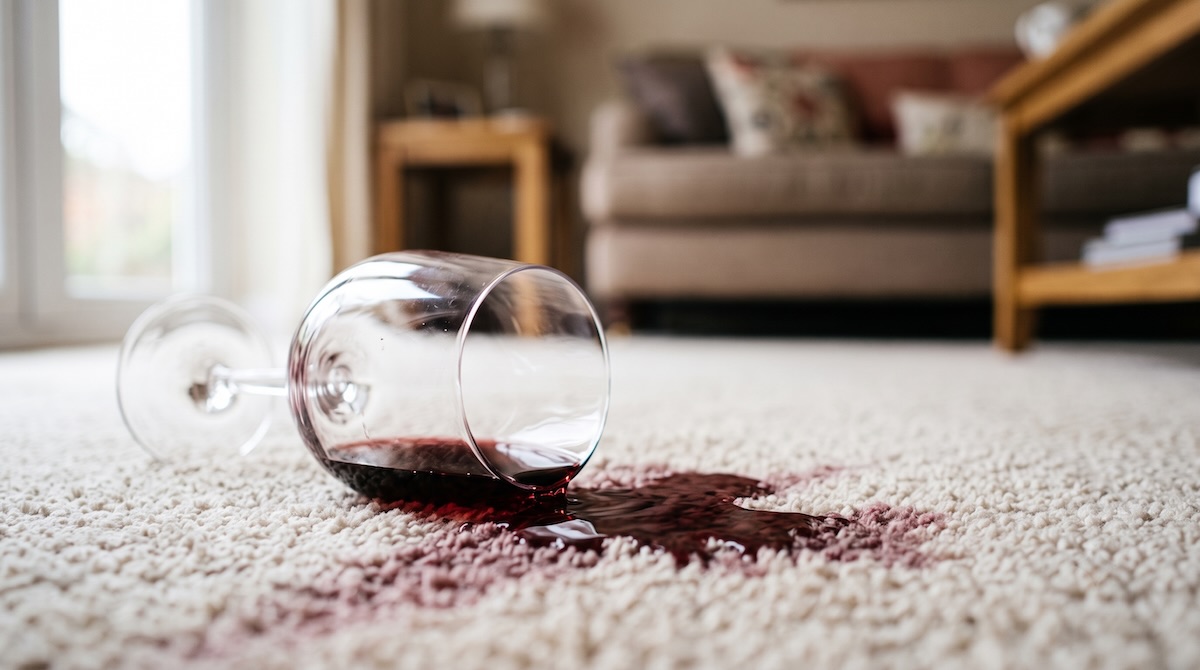
Learning how to remove red wine stains from carpet comes down to one rule: move fast and blot, never scrub. The moment the wine hits your rug, grab a clean white cloth to absorb it, apply cold water, and work from the outside edges inward before you reach for any chemical cleaner. Fresh spills are significantly easier to lift than dried ones, making those first few minutes critical to saving your floor. This guide covers every scenario, from immediate accidents and next-day discoveries to treating delicate wool fibers, while highlighting the common mistakes that permanently set the dye.
Blot the Spill Right Away (First 5 Minutes)
The fastest way to stop a red wine stain from setting is to lift the liquid before its natural dyes, specifically tannins and anthocyanins, bond to the carpet fibers. Speed matters most here, as these pigments sink deeper every minute they sit, so you must start working immediately using these sequential steps before reaching for a cleaner.
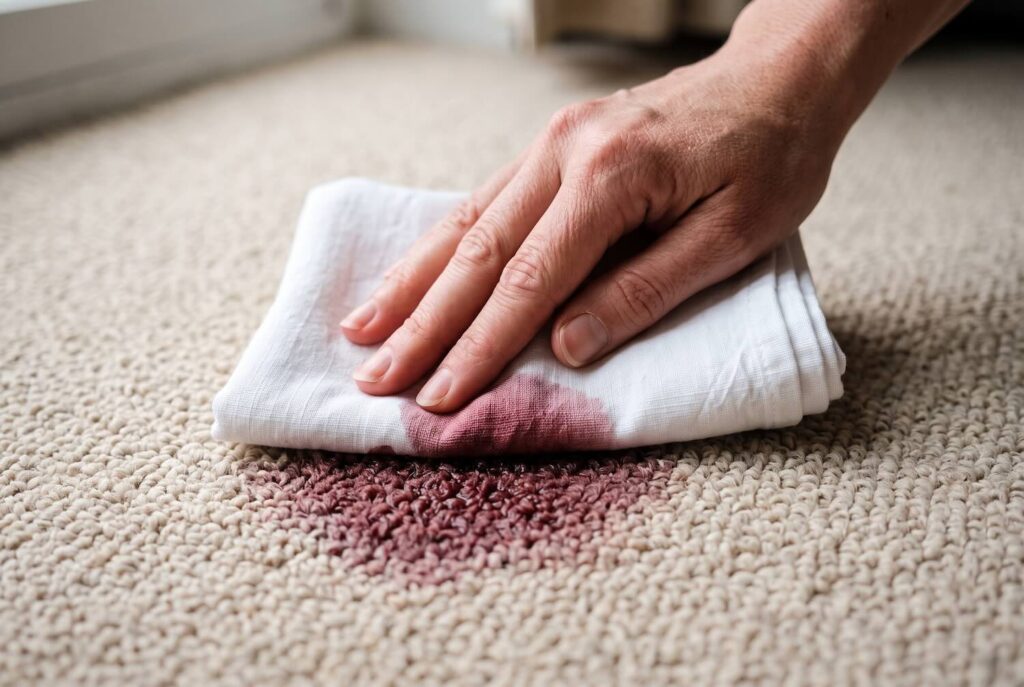
1. Blot with a clean white cloth. Press straight down on the spill and lift, then repeat this motion to pull the wine up instead of driving it in. Stick to white cloths or paper towels to prevent colored towels from bleeding their own dye into your carpet.
2. Move to a dry section each time. Shift to a fresh, dry spot on your cloth as it soaks through to avoid smearing the liquid back into the fibers. Continue this process until you see very little color transferring over.
3. Do not scrub. Rubbing pushes the red wine deeper into the padding and spreads the stain wider. Blotting takes longer, but it remains the only safe motion that removes the liquid rather than grinding it in.
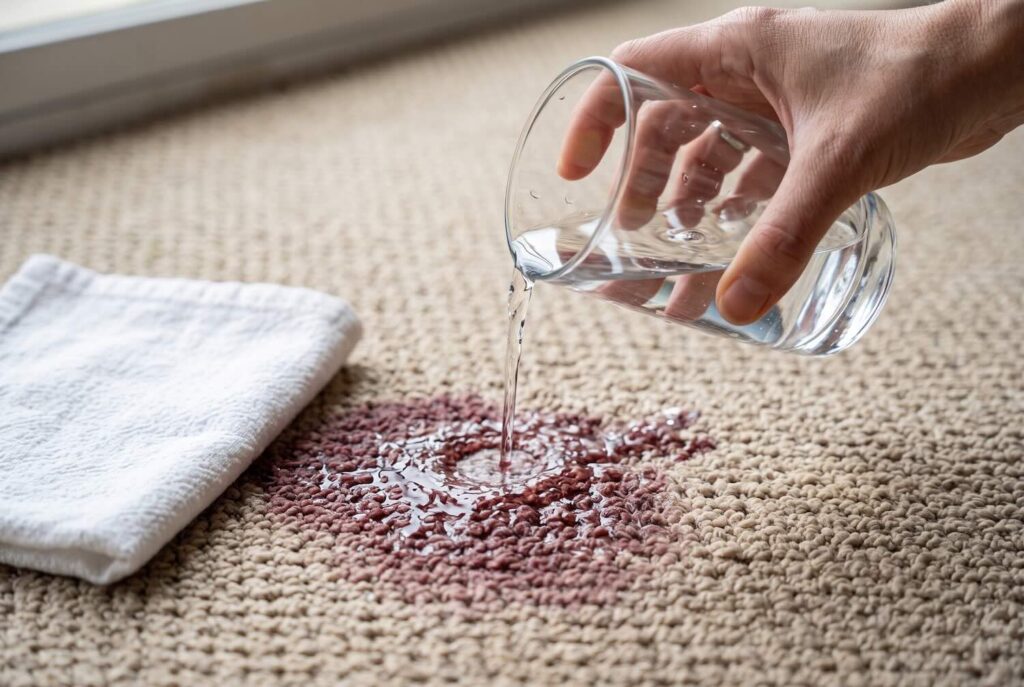
4. Add a little cold water, then blot again. Pour a small amount of cold water onto the spot to dilute the remaining liquid once you have lifted the bulk of it. You must use cold water because heat permanently sets the tannins. Blot this diluted mixture back out with a fresh cloth.
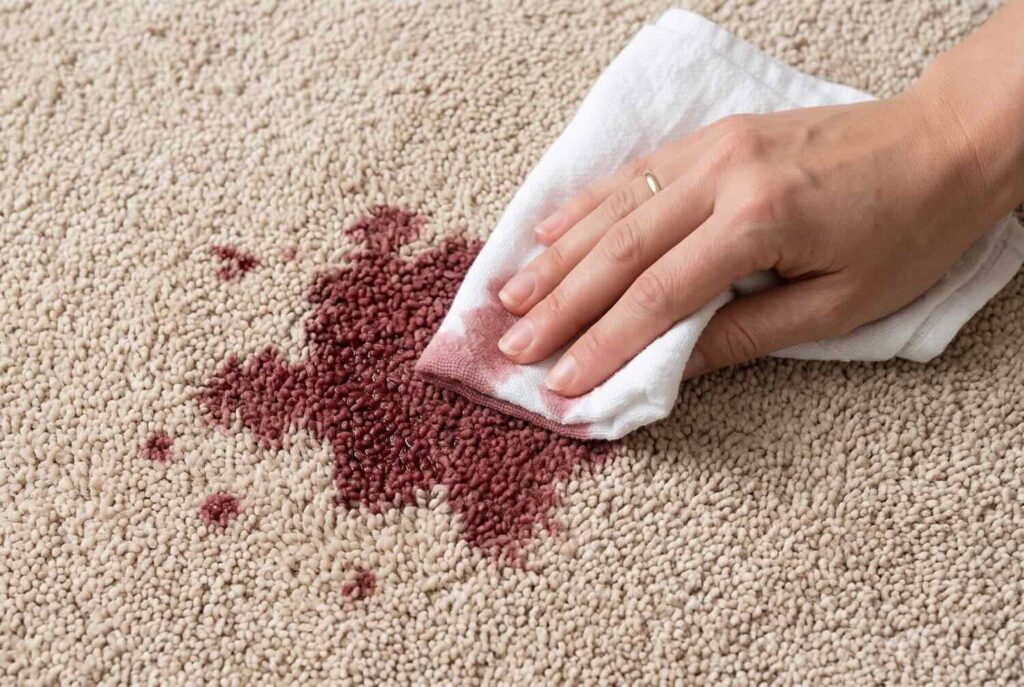
5. Work from the outside in. Blotting from the outer edge toward the center keeps the wine from expanding into the clean surrounding carpet. You are ready to choose a cleaning method once the excess liquid is gone.
How to Remove Red Wine Stains From Carpet: Methods That Work
Once the excess wine is out, you have two routes for how to remove red wine stains from carpet: household items you already own, or a purpose-built cleaner. Always test your chosen solution on a hidden patch first and continue using white cloths to prevent dye transfer.
Household Methods
Standard pantry items can break down or lift fresh wine pigments if you use them correctly. The options below run from gentlest to strongest.
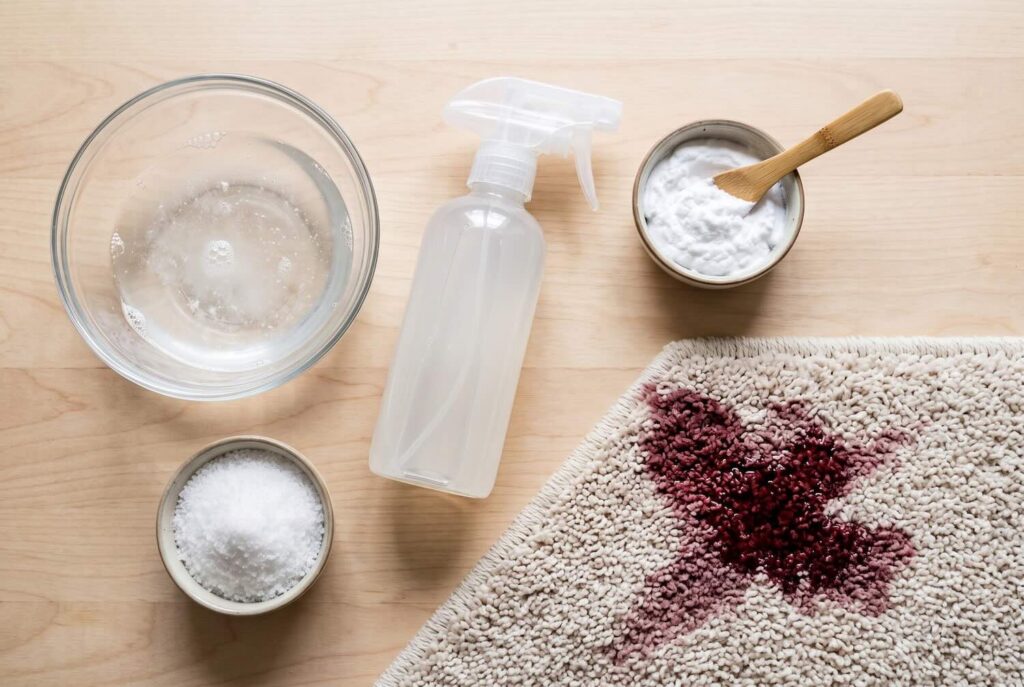
Dish soap and hydrogen peroxide is your strongest home option. Hydrogen peroxide acts as a mild bleaching agent to break down the color, while the dish soap lifts the loosened pigment. Mix two parts hydrogen peroxide with one part dish soap, apply it directly to the stain, and blot repeatedly until the color fades. Reserve this mixture for light-colored synthetic carpets only and never use it on wool, as the peroxide can lighten the fibers.
White vinegar and dish soap relies on acid to loosen the wine’s tannins. Combine one tablespoon of white vinegar with one tablespoon of dish soap in two cups of warm water, spray or dab the solution onto the spot, and blot. Make sure to use only white vinegar to avoid leaving a darker tint behind. This blend offers a milder alternative to peroxide and is safer for a wider variety of carpets.
Baking soda works best as a secondary step on a damp spot. After blotting the area, spread a paste made of three parts baking soda and one part water over the stain. Let the paste dry completely before vacuuming up the residue, allowing it to draw out moisture and lingering color as it hardens.
Salt and club soda serve as first-aid measures rather than true cleaners. They absorb some liquid from a fresh spill, but neither chemically removes the dye, and salt often leaves a gritty texture behind in the fibers. Use them merely as a holding step until you can apply a proper cleaning product. Step up to a commercial remover if color remains after two rounds of any household method.
>>> Read more: How to Get Rid of Mildew Smell in Washing Machine (Fast & Easy)
The Best Way to Get Red Wine Out of Carpet
The best way to get red wine out of carpet is an oxygen-based (OXY) carpet stain remover paired with extraction, because it breaks the wine pigment down instead of just hiding it at the surface. Household mixes can clear the visible stain while leaving color trapped in the backing, and that trapped color can resurface later. A dedicated remover is formulated to oxidize the colorants in wine without stripping most carpet dyes. When kitchen methods fall short, this is how to remove red wine stains from carpet for good.
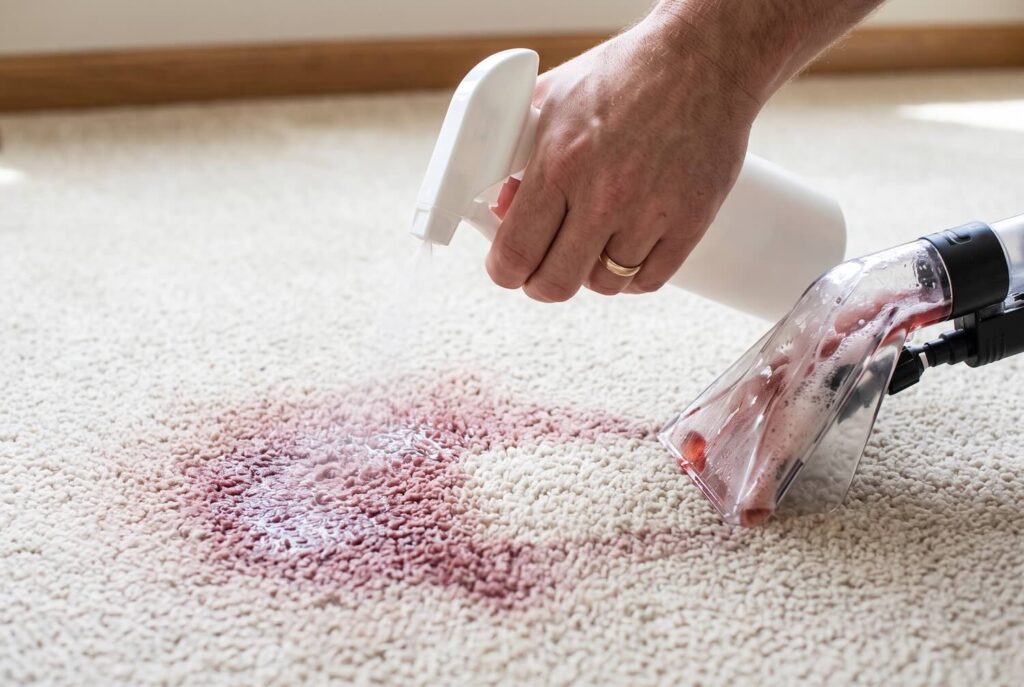
- Wet the stain fully. Spray your OXY remover heavily so the fibers are soaked down to the base, which is where the spilled wine settled. Surface-level applications leave color behind that will wick back up later. Always test the product on an out-of-sight corner first.
- Let it dwell. Allow the remover 10 to 15 minutes to work, following the specific label instructions for timing. This waiting period gives the oxygen action time to break the pigment apart, but you should not let the solution dry out on the fibers.
- Extract and repeat. Blot the treated area forcefully with a clean cloth, or utilize a portable carpet cleaner to spray, agitate, and suction the liquid back out. The extraction step physically stops the stain from creeping back up as the carpet dries. Repeat this entire cycle until no more color lifts away.
How to Remove Red Wine From Different Carpet Types
Before applying anything stronger than water, you must match the cleaning method to your specific carpet fiber, because the solution that rescues nylon can ruin wool. The material dictates how much chemical power and moisture the rug can handle.
How to Get Red Wine Out of a Wool Carpet
Successfully getting red wine out of a wool carpet requires a much gentler touch, relying strictly on cold water and WoolSafe-approved cleaners. Because wool is a natural protein fiber, it reacts badly to bleaching agents, meaning you must entirely skip hydrogen peroxide, chlorine bleach, and hard scrubbing. These harsh methods strip color, damage the structure, and leave permanent bald patches, while hot water can actually felt and shrink the material. Stick to cold water and gentle blotting first, then apply a diluted mild solution to your cloth rather than pouring it directly on the rug, tamping the spot gently instead of brushing.
Nylon, Polyester & Polypropylene
Synthetic carpets offer far more flexibility than wool. Nylon is hardy and easily tolerates stronger cleaners, including the hydrogen peroxide mix on lighter colors. Polyester and polypropylene clean up nicely but respond poorly to excess water and vigorous scrubbing, which can permanently distort their pile. Always spot-test first and use only enough liquid to treat the stain without soaking through to the backing.
Sisal, Jute & Natural Fibers
Natural-fiber carpets like sisal and jute absorb moisture incredibly fast, making red wine spills especially tricky to handle. You need to use minimal liquid, blot rapidly, and avoid saturating the weave, as excess water leaves its own marks and warps the material. These natural fibers rarely tolerate strong chemical cleaners. Stop your efforts and call a professional if the stain holds after a gentle treatment to avoid permanent damage.
| Carpet Type | Best Approach | Avoid |
|---|---|---|
| Wool | Cold water, WoolSafe cleaner | Bleach, peroxide, scrubbing, hot water |
| Nylon | Carpet remover, peroxide mix (light colors) | Over-wetting |
| Polyester / Polypropylene | Mild carpet-safe cleaner | Excess water, scrubbing |
| Sisal / Jute | Minimal moisture, quick blotting | Soaking, strong chemicals |
How to Remove a Dried or Next-Day Red Wine Stain
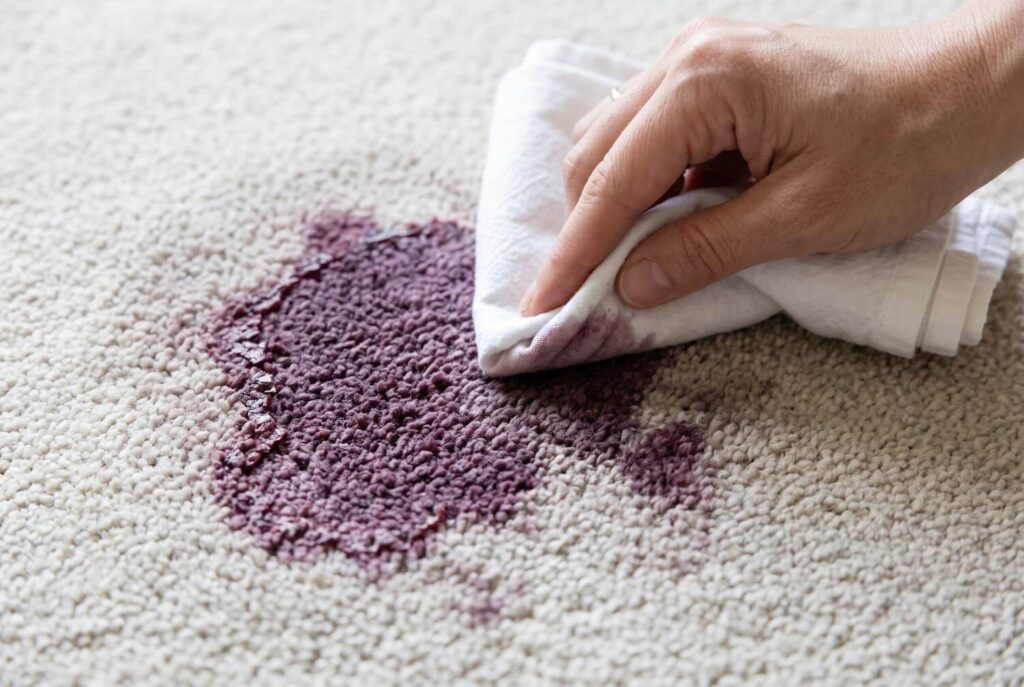
A dried or next-day red wine stain is harder to shift, but you can usually fix it by rehydrating the bonded pigment with cold water before applying an OXY cleaner. Patience matters more than scrubbing force when dealing with these set stains.
- Rehydrate the stain. Soften the dried wine by applying a small amount of cold water and letting it sit for a minute or two. Do not flood the carpet, as excess water simply pushes the wine deeper into the padding. Your goal is to loosen the pigment.
- Blot, then apply an OXY cleaner. Blot up the newly softened area, treat it directly with an oxygen-based carpet stain remover, and let it dwell. Follow the standard “wet-fully, dwell, extract” routine, repeating only as long as color keeps transferring to your towel.
- Watch for wick-back. Wine soaked into the backing sometimes travels back up as the carpet dries, an effect known as wick-back. To stop this fading and reappearing cycle, wet the spot fully and extract the moisture back out with a machine rather than leaving the cleaner sitting on top.
When to Call a Professional
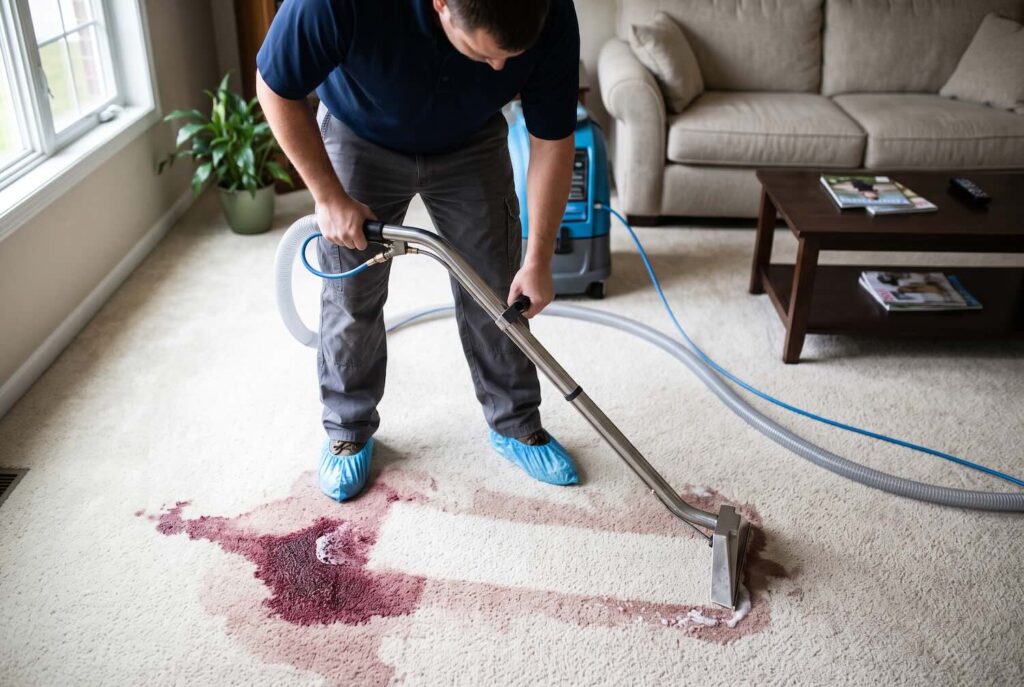
Knowing when to stop your DIY efforts and call a professional carpet cleaner will save your floor from permanent damage. Bring in a pro when the stain has fully dried and resisted your treatments, when the liquid has soaked deep into the padding, or when the color keeps wicking back up. You should also leave wool, antique, or high-value carpets to the experts, as they use specialized extraction equipment and controlled products that lift set-in dyes without destroying the delicate fibers.
Frequently Asked Questions
Here are detailed answers to a few common questions regarding wine spills that the steps above do not fully cover.
What if I can’t treat the spill for a few hours?
Blot up as much wine as physically possible, then cover the damp spot with a thick mound of salt to absorb the rest while you are away. Vacuum the salt up later and proceed with a proper cleaning method, keeping in mind that this only slows the setting process and does not replace real cleaning.
Does OxiClean or another oxygen powder work on red wine?
Oxygen-based powders use the exact same oxidizing action as commercial OXY carpet removers, meaning they can work on light synthetic carpets. Dissolve the powder according to the label, test a hidden area, rinse thoroughly so no residue remains, and keep it far away from wool.
Do white wine or club soda actually remove a red wine stain?
Not really. While white wine and club soda can dilute a fresh spill, neither actually removes the red dye, and white wine introduces sugar that will attract dirt later on. Plain cold water performs the exact same diluting job without any of the downsides.
Should I use chlorine bleach on a red wine stain?
No. Chlorine bleach can permanently strip your carpet’s color and weaken the structural fibers, often leaving a bleached mark that looks worse than the wine itself. Stick safely to hydrogen peroxide on light synthetics or a dedicated carpet-safe remover.
Can a red wine stain be removed after it has dried for weeks?
Sometimes, but your odds of success drop the longer the dye sits. Rehydrating the spot and treating it with an OXY cleaner is worth a try, though a weeks-old stain that has reached the padding almost requires a professional to lift it fully.
Final Word
While a spilled glass looks alarming, you can lift most stains by combining quick blotting, cold water, and the appropriate cleaner for your specific carpet fiber. Use gentle, approved products on delicate wool, deploy stronger OXY products on sturdy synthetics, and follow the outside-in blotting technique while the spill remains fresh. A professional can finish the job safely when a stain has dried out, soaked into the deep padding, or stubbornly keeps returning. Browse the other stain guides on Home Tips Daily for more help, and keep this method on hand for the next time you need to safely remove red wine stains from carpet.