

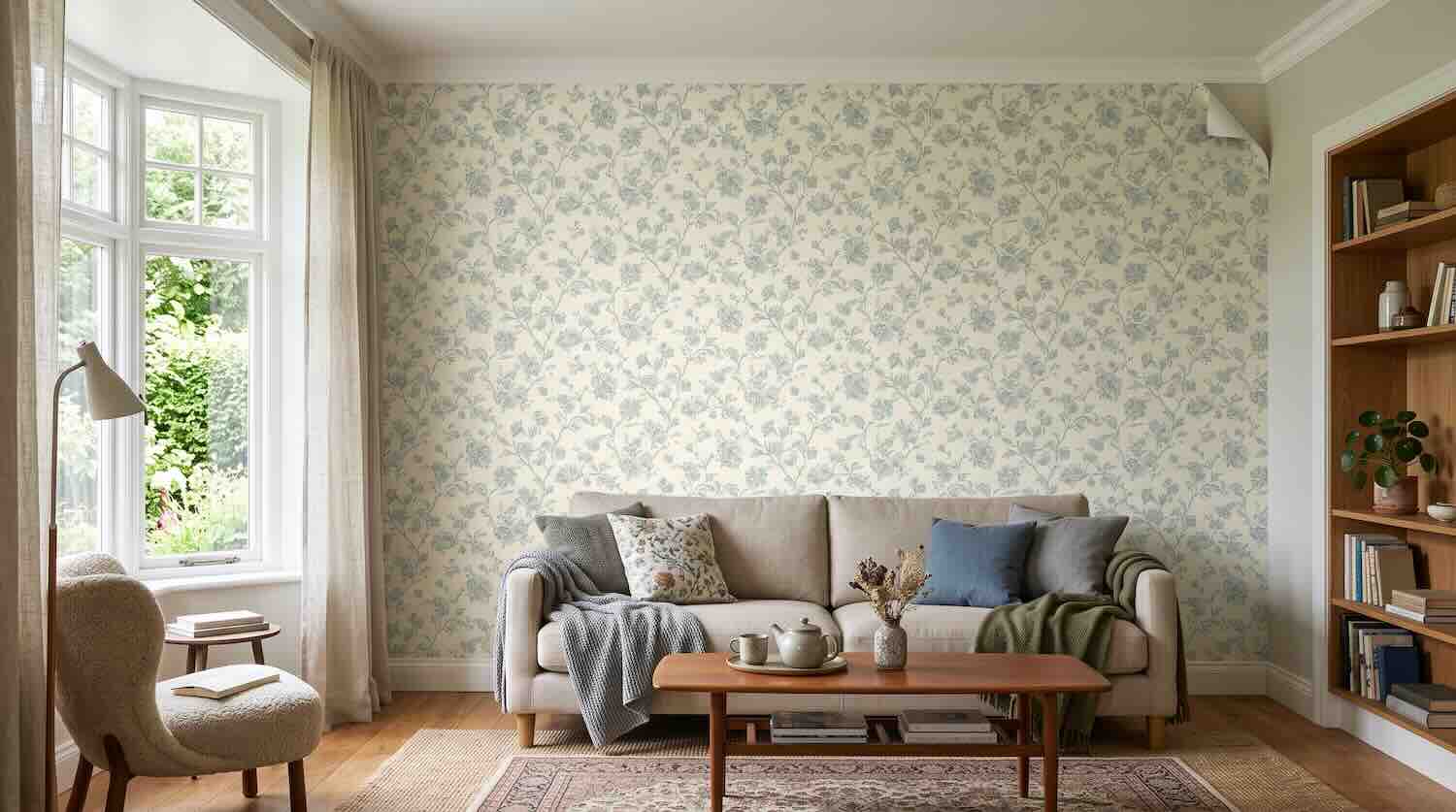
How long does peel and stick wallpaper last? In most homes, three to seven years, sometimes longer, but rarely the decade-plus you see in a product listing. Those inflated numbers almost always come from sellers describing a best case on a well-prepared wall. What you actually get depends on where the wallpaper hangs, what surface it is stuck to, and how carefully it was installed. This guide lays out the realistic ranges room by room and surface by surface, before showing how to push your installation toward the top of its range.
How Long Does Peel and Stick Wallpaper Last on Average?
On average, peel and stick wallpaper lasts three to seven years. The width of that range is where most of the confusion comes from.
Sources disagree because they are not measuring the same thing. A manufacturer quoting 10 to 15 years is describing premium vinyl on an ideal surface under near-lab conditions, not a sheet living above a stovetop. Independent guides usually land lower because they average real installs across mixed wall types and rooms.
The practical read is to treat high brand claims as a ceiling. You reach those numbers only with good prep and easy conditions, rather than treating them as a default.
How Long Does Peel and Stick Wallpaper Last by Room?
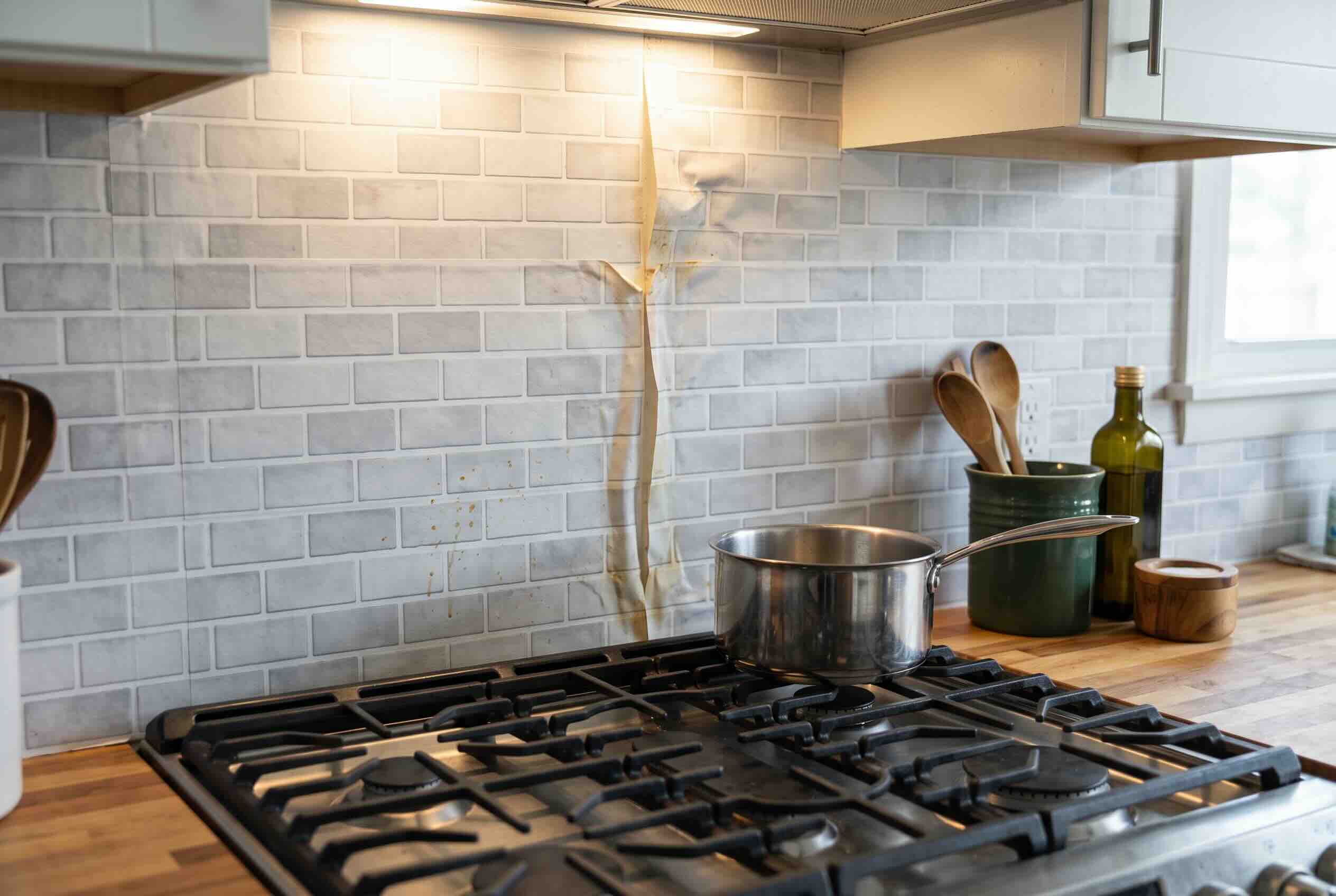
The room sets the lifespan far more than the brand does. Heat, moisture, and daily foot traffic all wear the adhesive down at different speeds.
A sheet in a calm, dry bedroom has an easy life. The same sheet over a busy kitchen counter fights steam and grease every day. Damp rooms are the harshest, and direct sun shortens any estimate by fading the ink.
| Room | Typical lifespan |
| Bedroom / living room | 5 to 7 years |
| Kitchen | 2 to 4 years |
| Bathroom | 1 to 3 years |
| High-traffic hallway / kids’ room | 2 to 4 years |
| Sunny, sun-exposed rooms | Shorter, from UV fade |
Bathrooms sit at the bottom for a reason. Constant humidity works under the edges and loosens the glue. If you have a damp room in mind, it is worth checking whether the product holds up in bathrooms before you count on it lasting.
>>> Read more: Does Peel and Stick Wallpaper Work in Bathrooms? (Yes)
How Long It Lasts by Wall Surface
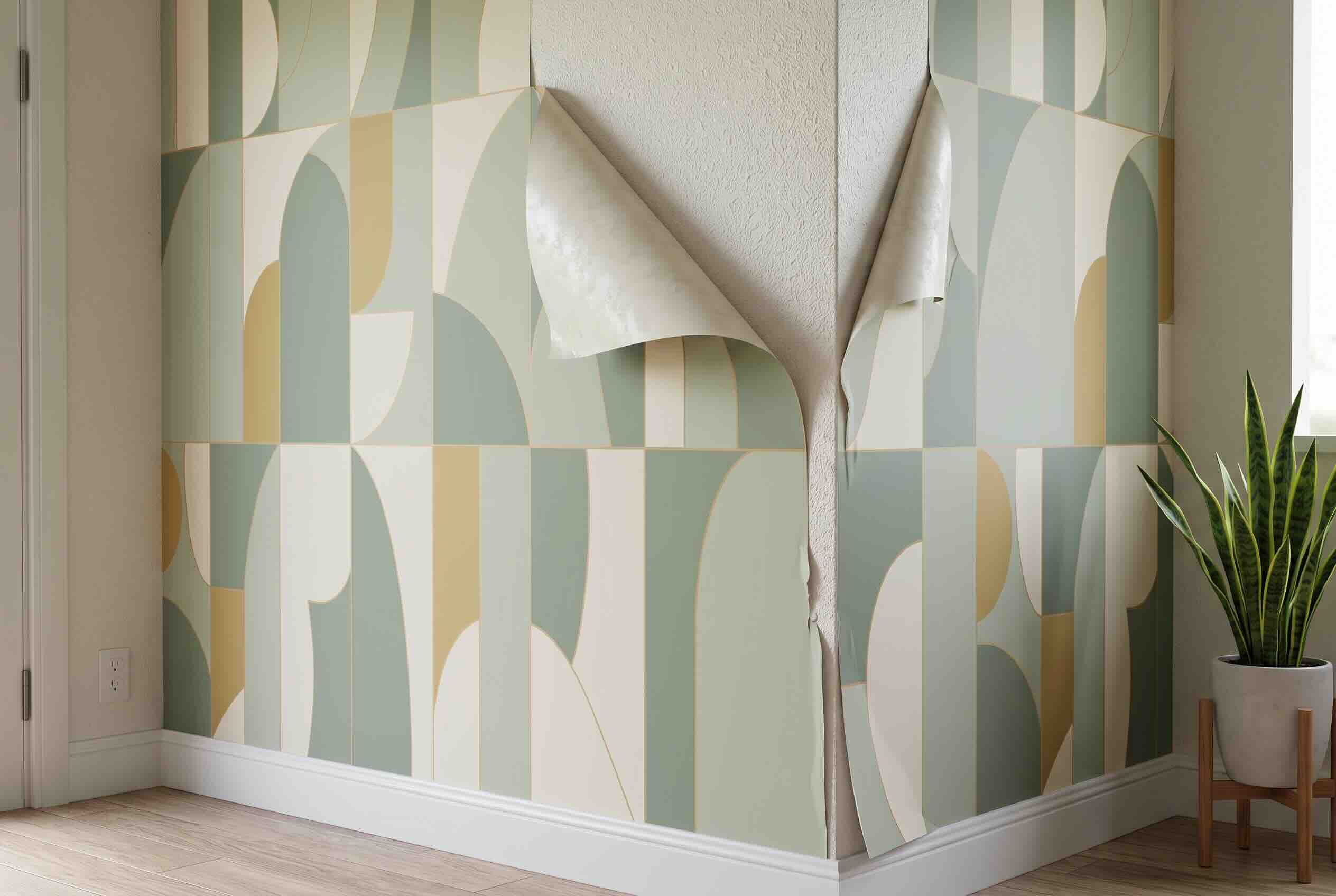
Even inside the same room, two walls can give the same wallpaper very different lifespans depending on what the adhesive grips.
Smooth, primed drywall is the ideal surface. The sealed, even surface lets the glue bond fully and hold for years. Matte paint gives the adhesive more to grab than a high-gloss finish, where the slick surface tends to release the paper early.
Texture is the quiet lifespan-killer. Orange-peel and knockdown walls only let the glue touch the high points, so the sheet holds by a fraction of its backing and lifts sooner. Brick and other porous surfaces are the shortest-lived of all, since their rough, absorbent face never gives the adhesive a continuous plane to stick to.
Does Wallpaper Quality and Brand Affect How Long It Lasts?
Quality buys you time, but only within the limits your room and wall surface already set.
Thicker vinyl resists tears, scuffs, and moisture far better than the cheap, thin film sold at the lowest price point. Premium products also tend to peel off cleanly at the end instead of shredding into pieces. Adhesive grade matters just as much as the face material, since a stronger, better-formulated glue keeps its grip through humidity swings.
This is really a buying decision more than a maintenance one. Paying up for a reputable vinyl with solid adhesive is worth it in a busy kitchen, a rental you want to look sharp, or any wall you would rather not redo in two years. For a low-traffic guest room, a mid-range sheet may last nearly as long for less money.
Peel and Stick vs Traditional Wallpaper: Lifespan Compared
Set against traditional wallpaper, peel and stick trades longevity for convenience, and it helps to see the gap plainly.
The removable format is built for easy installs and quick decor changes, not for decade-long permanence. So its shorter life is a feature rather than a flaw.
| Wallpaper type | Typical lifespan |
| Peel and stick | 3 to 7 years |
| Traditional pre-pasted | 10 to 15 years |
| Non-woven / paste-the-wall | 15 to 25 years |
Read the table as a trade-off, not a scoreboard. If you rent your home or rearrange decor often, the shorter span of peel and stick is what makes it useful. A forever wall in an owned home, on the other hand, may justify the labor of a traditional hang.
How to Make Peel and Stick Wallpaper Last Longer
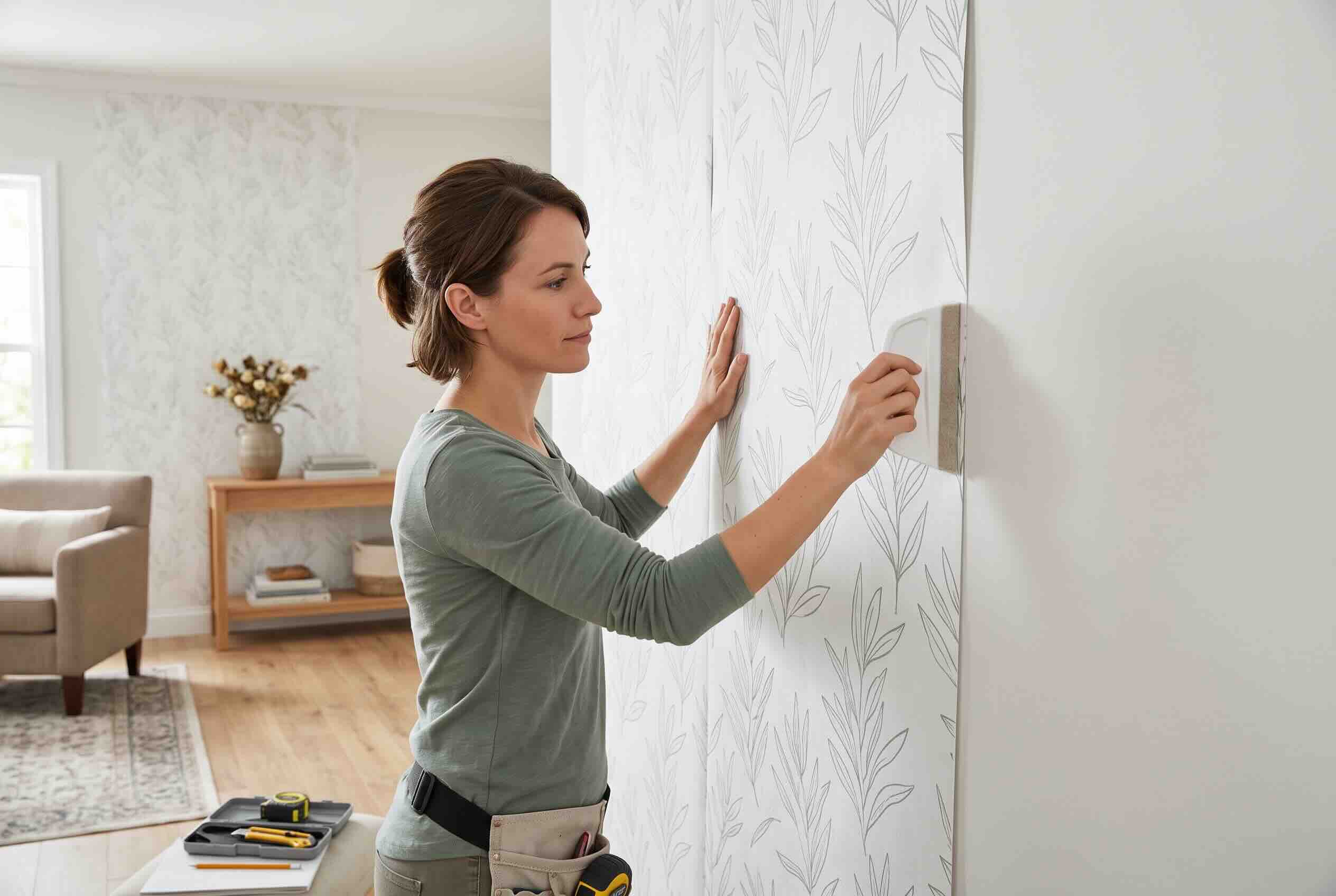
You can push your wallpaper toward the top of its range with a handful of habits, and most of them happen at installation time rather than after.
- Prep and prime the wall. Wipe the surface free of dust and grease, then prime any bare or patchy drywall so the adhesive meets a smooth, sealed layer. Good wall prep is the single biggest lever on how long the sheet holds.
- Smooth firmly, then let it cure. Press each panel down hard from the center outward to work out air pockets, because trapped bubbles become tomorrow’s lifting spots. Leave the fresh install undisturbed for 24 to 48 hours so the adhesive can set fully before anything touches it.
- Control humidity and sun. Run a fan or dehumidifier in damp rooms, and keep your wallpaper off walls that take hours of direct sun. Moisture attacks the edges, and UV fades the print long before the glue gives out.
- Re-press lifting edges early. The moment a corner or seam starts to curl, smooth it back down before dust gets trapped underneath. A quick re-press keeps a small lift from spreading into a peeling panel.
- Keep your leftovers. Save offcuts from the install for future patches. A small tear is easy to fix invisibly when the exact pattern is on hand, and this alone can add a year or two of good looks.
Signs Your Peel and Stick Wallpaper Needs Replacing
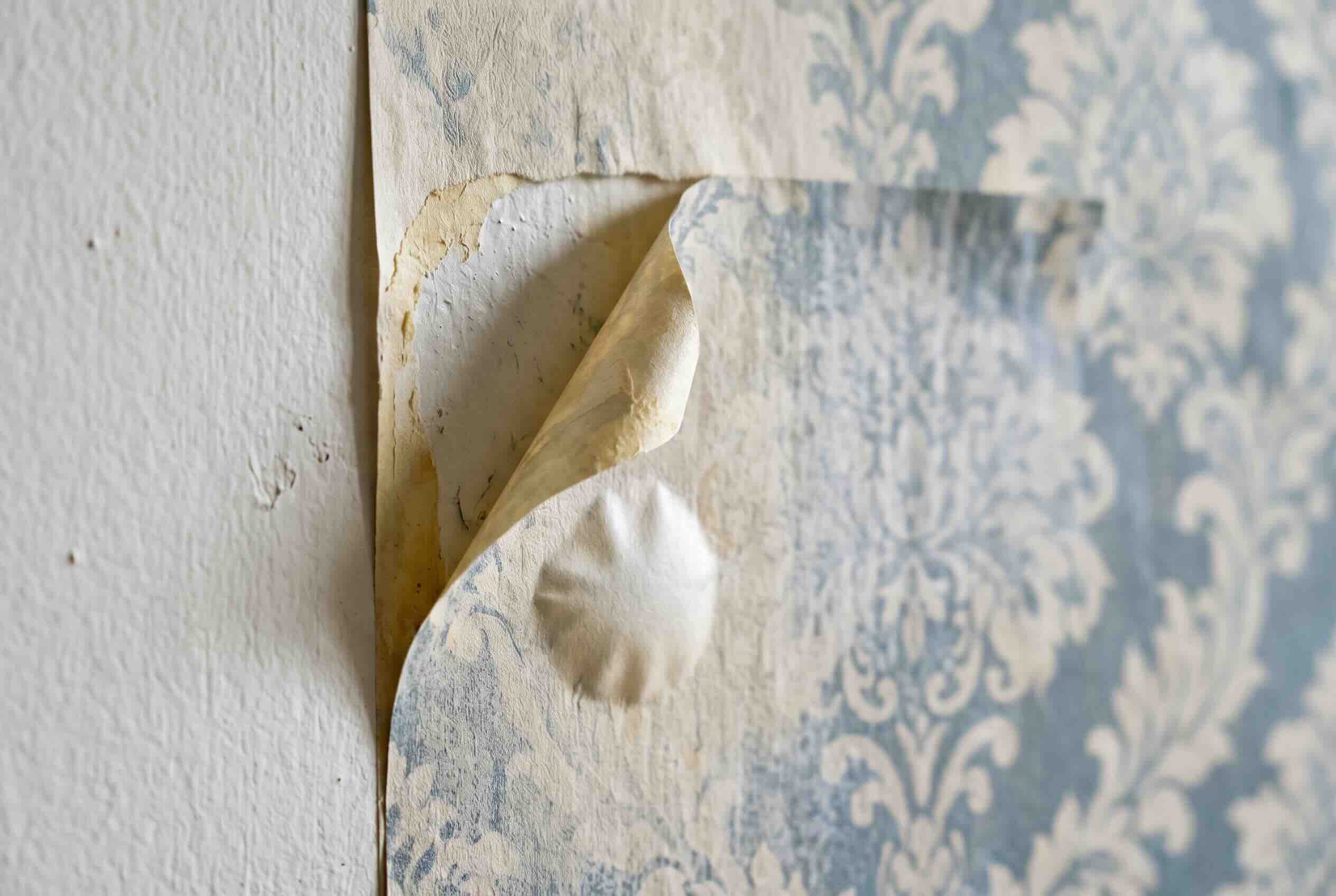
A few visible signs tell you the wallpaper is near the end, and they tend to snowball once they appear.
Curling at the edges and seams shows up first, since a lifted corner catches dust and pulls wider each week. Bubbling across the face means the adhesive is releasing underneath, and fading or yellowing shows the print has taken all the light and wear it can.
Watch the timing rather than any single flaw. One curled corner is a re-press job, but once two or three signs show up together, the failure usually spreads fast and a full replacement beats chasing each spot. Catching that turning point saves you from a patchy wall for months.
Does Removing It Damage Walls or Let You Reuse It?
Removal is usually clean when the paint underneath was fully cured before the installation, so a good hang years earlier pays off at teardown.
On a sound, primed wall, the sheet peels away with little more than slow pulling and some heat, leaving the paint intact. Bare or freshly painted drywall is where damage tends to happen.
Reuse is the longer shot. You can occasionally reposition panels soon after hanging, but once it has cured for months, the adhesive rarely survives a move in usable shape. When you are ready to take a wall down, following the right removal steps matters more for the wall than for saving the sheet.
Frequently Asked Questions
Here are answers to a few lifespan questions the sections above do not cover.
Does it last longer on ceilings or furniture?
Furniture and cabinet fronts often hold longer than walls, since they are smooth, sealed, and see less handling. Ceilings are the opposite, since gravity works against the adhesive all day and edges tend to drop first.
Can you leave it up permanently?
You can leave it as long as it still looks good, but it is not built to be permanent. Expect the adhesive to weaken over the years, and plan on it eventually needing removal or replacement rather than treating it as a forever finish.
Does it have an expiration date if stored unused?
An unopened roll does not spoil, but the adhesive can stiffen over several years in storage, especially in heat. Store rolls flat and cool, and use them within a couple of years for the best grip.
Is expensive peel and stick always more durable?
Usually, but not automatically. Price often tracks thicker vinyl and better adhesive, yet a premium sheet placed on a glossy or textured wall can still fail early. The surface and prep can outweigh the price tag.
Does it last in a rental long enough to be worth it?
For most renters, yes. A three-to-seven-year range easily covers a typical lease, and the clean removal at move-out is the whole point. Just prep the wall and keep the removal in mind so you leave the paint as you found it.
Conclusion
Strip away the marketing and the realistic answer holds steady: peel and stick wallpaper lasts about three to seven years, with prep, surface, and room doing most of the deciding. A primed, smooth wall in a dry room reaches the top of that range, while a textured wall in a steamy bathroom sits at the bottom no matter what brand you buy. Set your expectations by those factors rather than a listing’s best-case claim, and you will not be surprised. For more on getting it right from the start, see our guides on prepping walls and removing it cleanly on Home Tips Daily, and come back here whenever you need a straight answer to how long does peel and stick wallpaper last.