

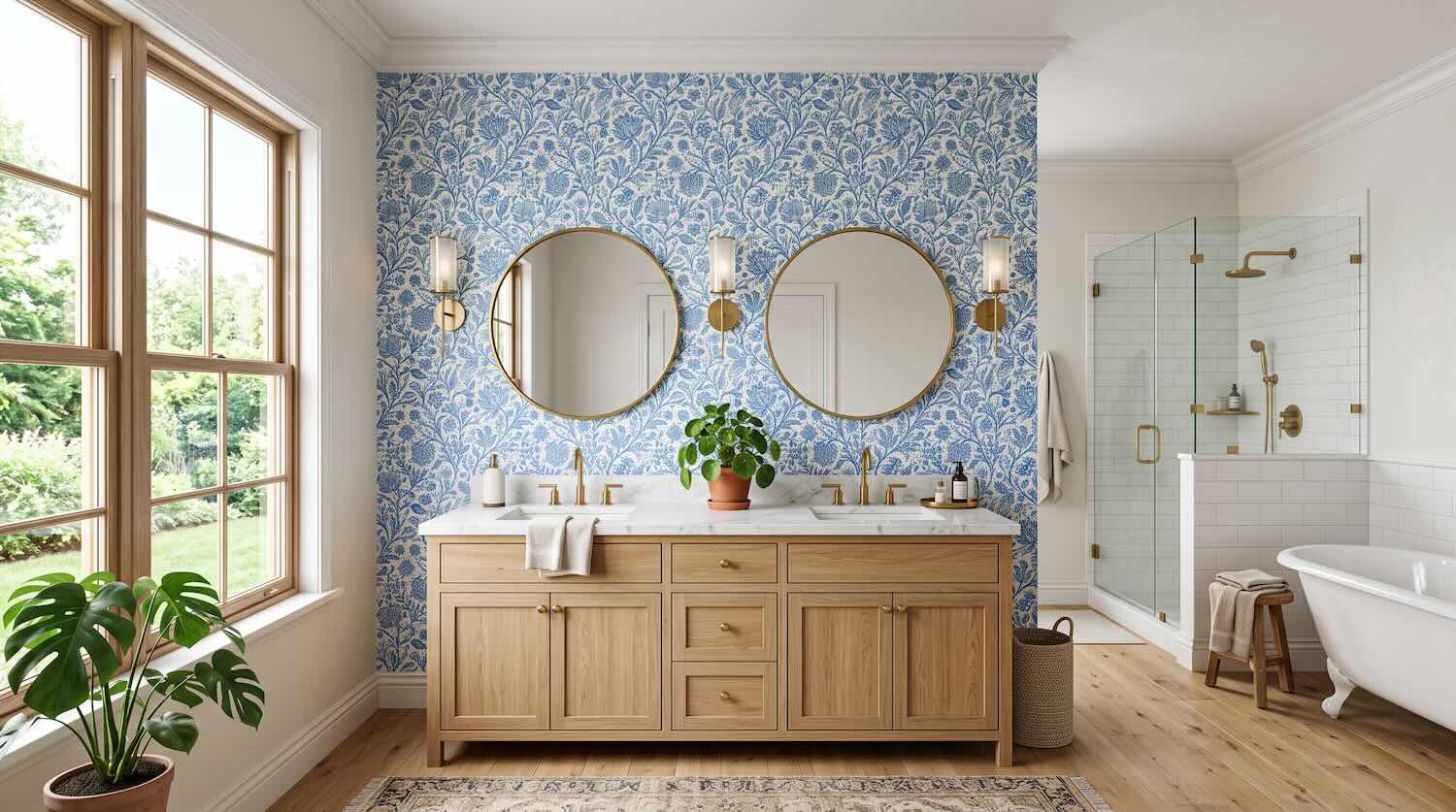
Many homeowners wonder about bringing stylish patterns into their dampest spaces, which raises a fair question: does peel and stick wallpaper work in bathrooms? The answer is yes, provided you keep the material out of direct splash zones and let the space dry out. Many people fear that humidity will ruin the adhesive, but the real threats are standing water and soaked edges. Get that one distinction right and a bathroom becomes a viable canvas for temporary decor.
Does Peel and Stick Wallpaper Work in Bathrooms?
Yes, peel and stick works in these spaces whenever it stays clear of direct water. The reason comes down to how the adhesive behaves. Manufacturers use a pressure-sensitive glue that bonds under hand pressure and does not activate or dissolve from airborne moisture. Steam and everyday humidity pass over the surface without breaking that bond.
The line to draw is between humid conditions and wet ones. A room that fogs up during a shower and clears afterward is humid, which the wallpaper handles easily. A surface that takes repeated direct water, such as the inside of a shower or the splash line behind a faucet, is wet, and no temporary product is built for that. So does peel and stick wallpaper work in bathrooms with real showers? It does, as long as you keep the sheets in the humid zones and skip the wet areas.
Where to Put It in a Bathroom
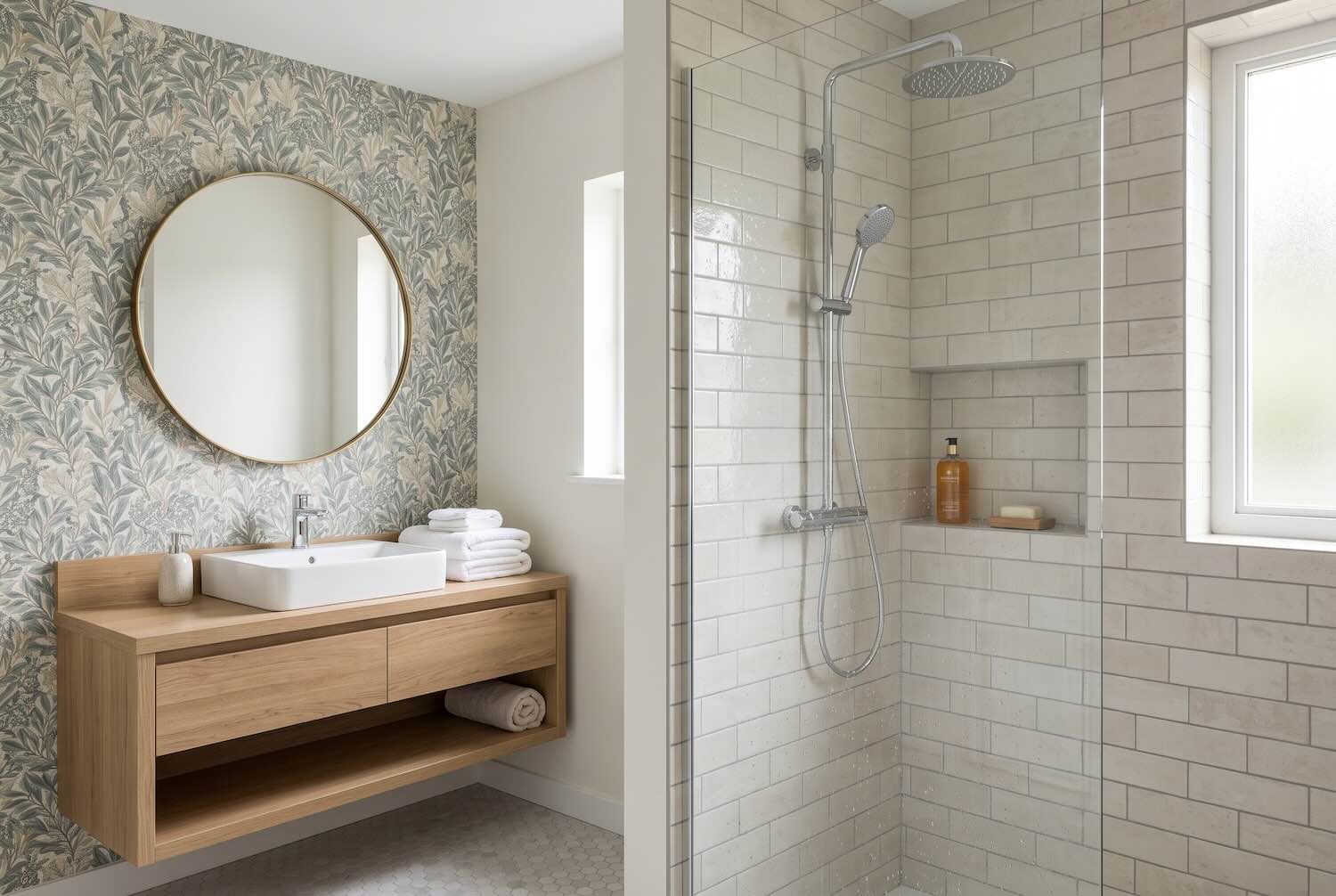
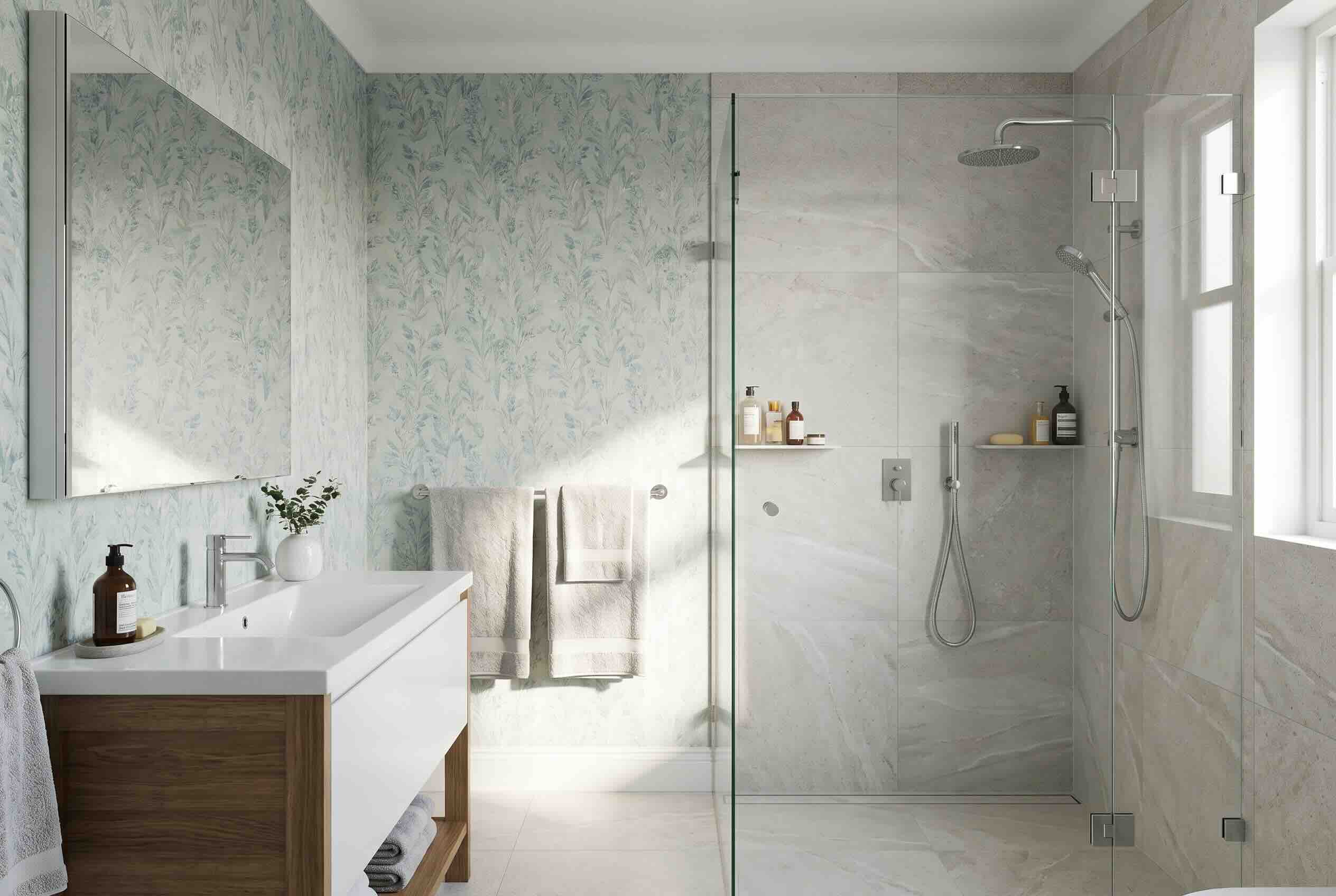
Placement decides whether your install lasts for years or peels within a month. The safe locations are any surface that gets steam but not direct spray, while the no-go zones are anywhere water lands. Reading the room layout matters more than buying an expensive brand.
| Good spots (humid) | Avoid (wet) |
| Wall behind the vanity | Inside the shower |
| Accent wall away from the tub | Tub splash zone |
| Above wainscoting or tile | Unprotected sink backsplash |
| Ceiling | Any surface hit by direct spray |
A consistent pattern emerges once you look at these spots. The further a surface sits from a spray source, the safer it is for your decor. An accent wall opposite the shower works fine, while the same wallpaper a foot from the showerhead does not. Treat borderline spots as wet zones, and either protect them or skip them.
Which Bathrooms Suit Peel and Stick Wallpaper?
Ventilation is the single best predictor of whether your wallpaper survives in a bathroom, and it decides which rooms peel and stick wallpaper works in more than anything else. Rooms that clear steam quickly give moisture no time to work under the edges, while a sealed, unventilated space keeps the walls damp for hours after every shower. Match your lifespan expectations to how well the room breathes.
| Bathroom type | Suitability |
| Powder room (no shower) | Excellent |
| Full bath with exhaust fan | Good, vent during and after |
| Window-only ventilation | Fair |
| No ventilation | Poor, expect a short life |
A powder room is the easiest case, since it rarely sees heavy steam. A full bath earns its keep if you run a working exhaust fan during and after each shower. If your only airflow is a window, open it every time you bathe, and if the room has no ventilation at all, expect the shortest lifespan and the most edge-lifting.
How to Install Peel and Stick Wallpaper in a Bathroom
Hanging temporary decor in a bathroom follows standard installation methods, plus a few precautions that carry extra weight in a damp room. The goal is a clean, dry, fully bonded surface that gives moisture nowhere to sneak in.
1. Deep clean the wall. Wipe the surface down with a 1:1 mix of isopropyl alcohol and water to strip off the soap film, hairspray, and grease that bathrooms build up. A clean wall lets the adhesive reach full strength, and this step matters more here than in any dry room.
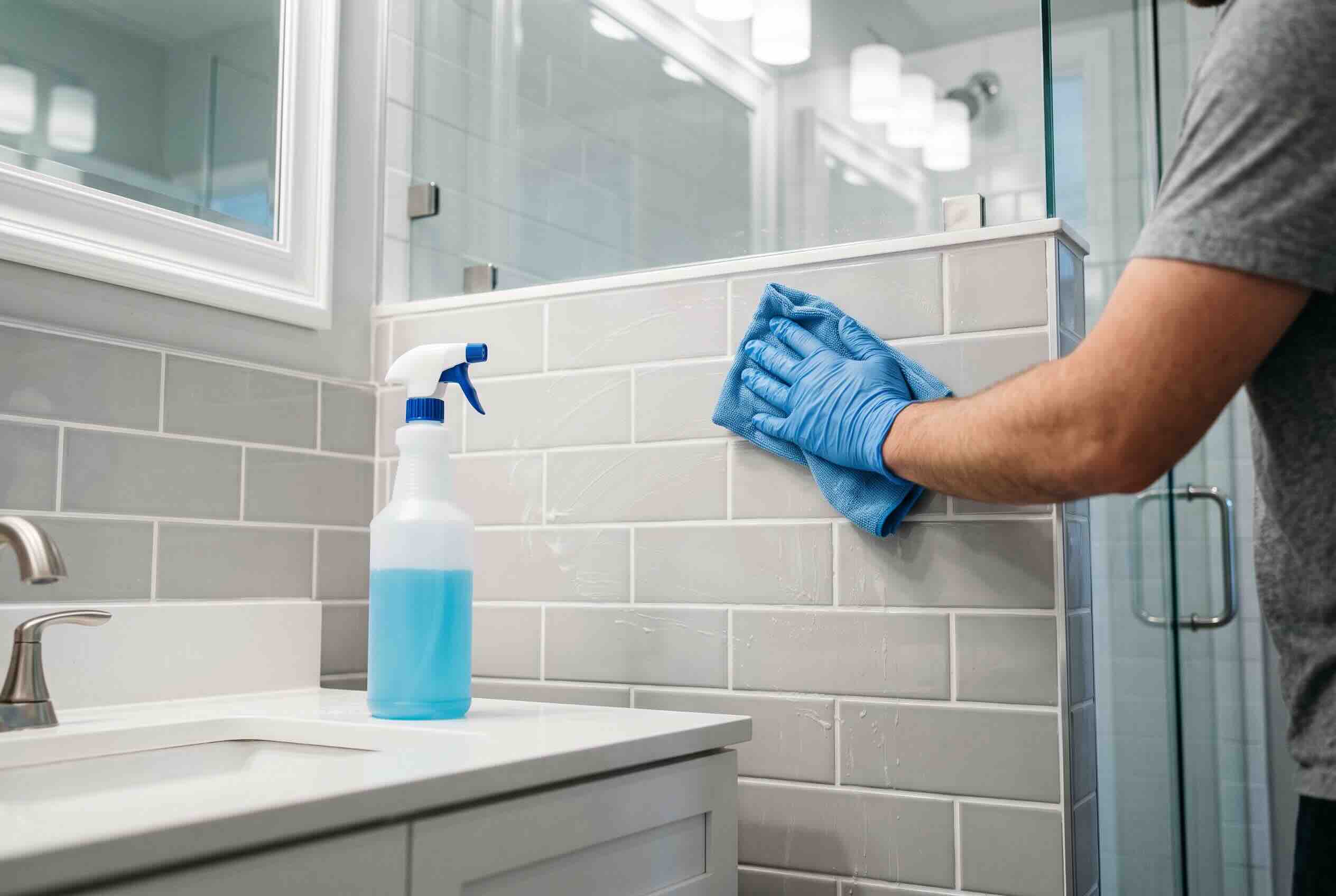
2. Let it dry, and check the paint. Give the wall a full 24 hours to dry after cleaning before you hang anything. Make sure the paint underneath is fully cured too, since fresh, soft paint releases under humidity and takes the wallpaper with it. Good wall prep is the difference between a clean install and an early failure.
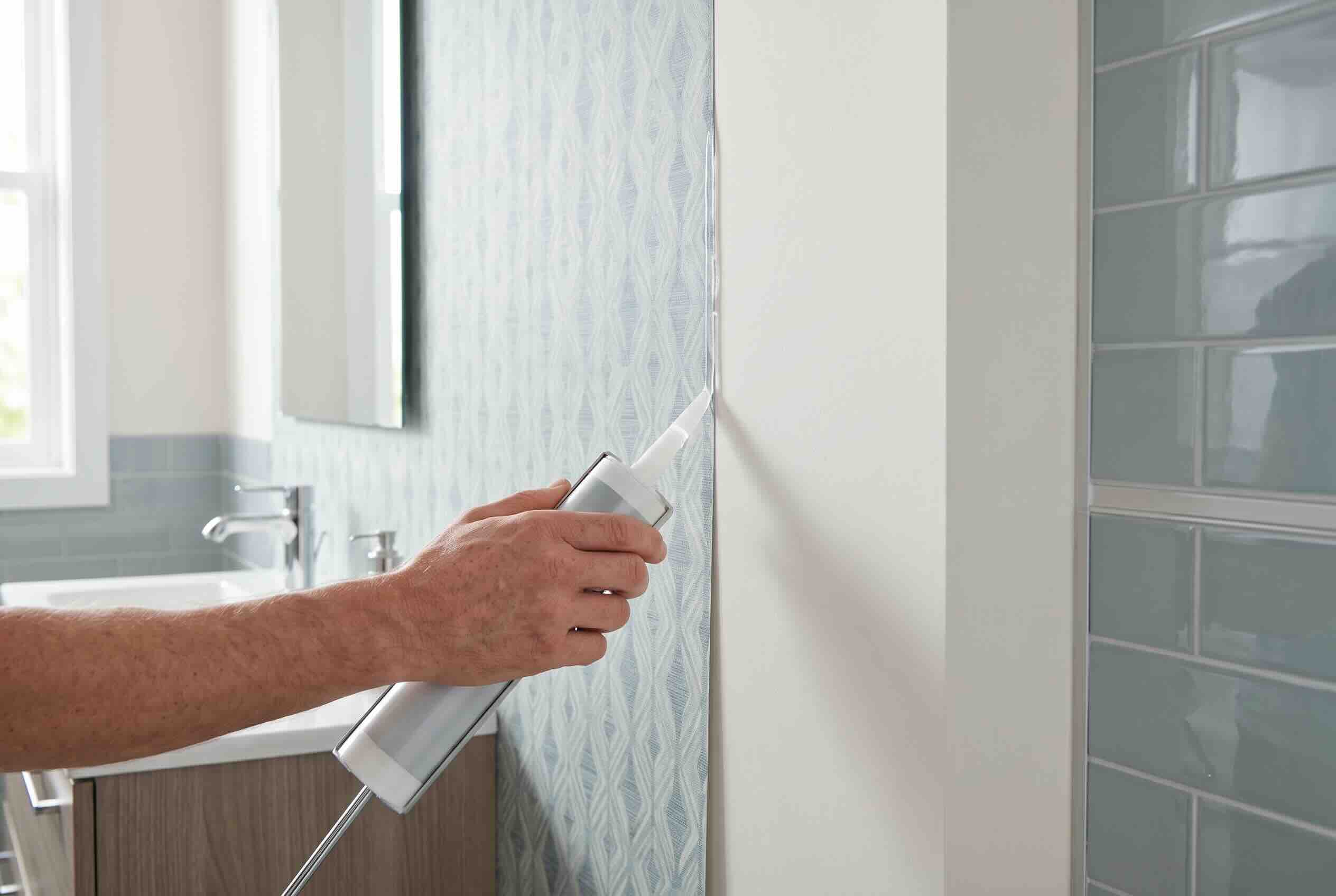
3. Hang, smooth, and seal the edges. Press each panel firmly from the center outward to work out air pockets, then run a thin bead of clear caulk along the exposed edges and seams. Sealing the edges is the bathroom-specific move that keeps humidity from creeping underneath, where peeling begins.
Frequently Asked Questions
Here are answers to bathroom-specific questions that cover the details the steps above do not.
Do you need to seal or varnish the wallpaper?
The sheet itself does not need a topcoat, since the vinyl face resists moisture. Applying clear caulk to the edges helps, but skip full varnish coats across the pattern. Liquid varnishes can cloud or peel over time and ruin the print.
What is the best material for a small bathroom?
Look for a thicker vinyl, PET, or polyester sheet rather than cheap paper-based film, since the material decides how well the product handles steam. In a small room, a lighter pattern also keeps the space from feeling closed in. Prep and ventilation still matter more than the print.
Can you use it in a rental bathroom without losing your deposit?
Usually, yes, as long as the wall was primed before you started. On a sound wall the sheets peel away cleanly at move-out, leaving the paint intact. Keep the decor out of the wet zones so nothing bonds too hard or damages the surface on removal.
Is the wallpaper actually waterproof?
No, these products are water-resistant, not waterproof. They shrug off steam and a quick splash is wiped away, but they are not made to sit under running water. Use tile, acrylic, or PVC panels for surfaces that take real water.
Will it fall off purely from shower steam?
In a sensible spot, that is unlikely, because modern pressure-sensitive adhesive holds through heat and humidity swings. The steam that fogs your mirror does not carry enough force to break a well-pressed bond. Peeling usually starts where a seam sits too close to a water source.
Does bathroom wallpaper cause mold?
Not on its own. Because mold needs trapped moisture to grow, the risk comes from damp walls and sealed-in humidity rather than the sheet. Dry walls and steady ventilation keep water from getting trapped behind the vinyl.
Final Word
Bringing temporary patterns into your most humid spaces is achievable. Expect the material to last roughly three to five years in a well-vented layout, dropping to one to three years if the room stays stagnant. The room itself rarely fails the decor; unprotected wet spots and stuffy air cause the damage. Combine smart placement, ventilation, and sealed edges, and you get a result that lasts. For more on these projects, see the Home Tips Daily guides on wall preparation, expected lifespans, and safe removal whenever you find yourself asking does peel and stick wallpaper work in bathrooms.