

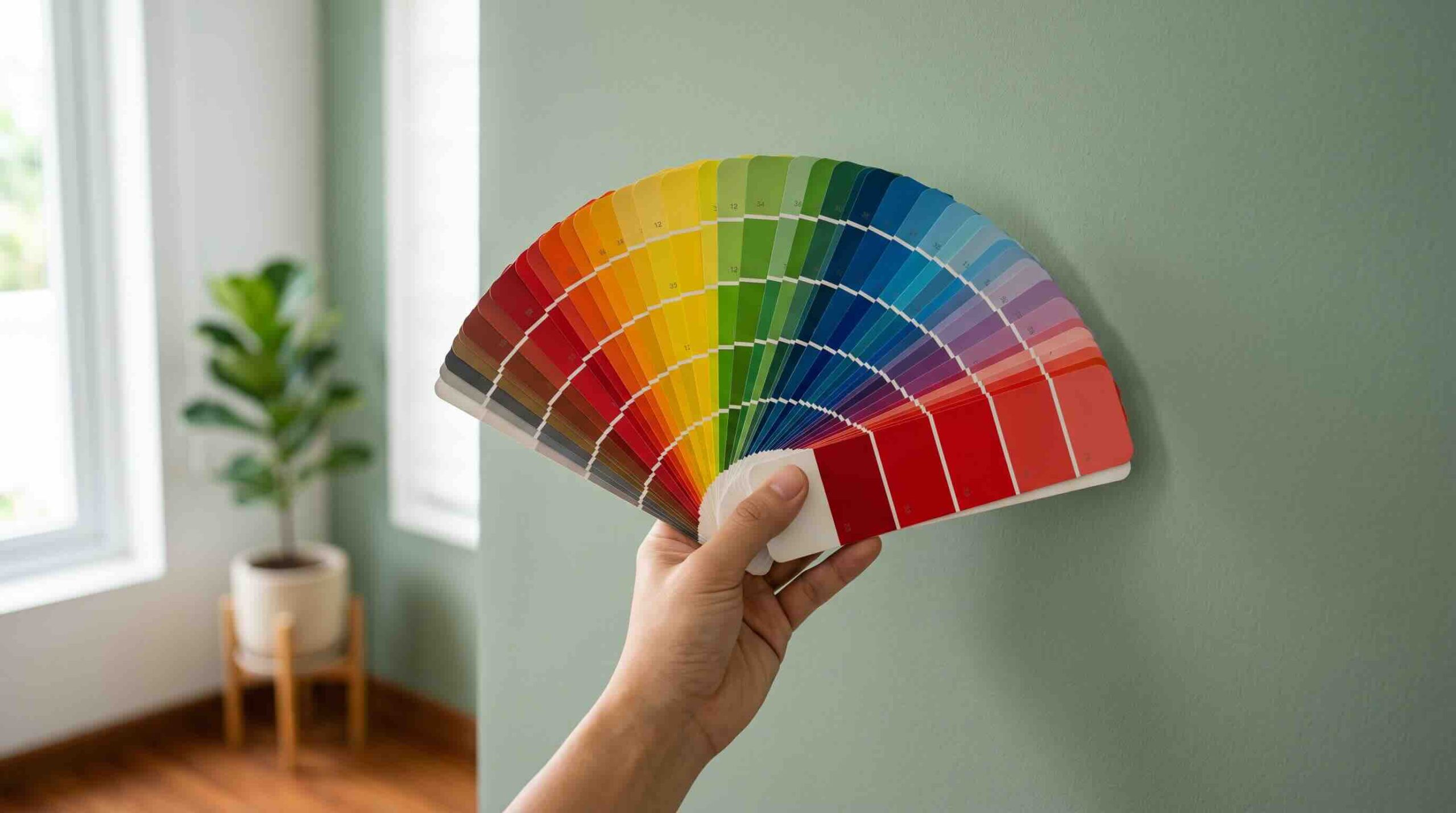
A scuffed hallway or a patched nail hole rarely justifies repainting a whole room, as long as you can match what is already on the wall. So how do you match paint color on a wall when you no longer have the original can?
You can rely on three practical approaches: bringing a physical paint chip to a hardware store for a scan, utilizing a digital color-matching tool, or visually comparing paper swatches. Just know going in that sheen and years of fading matter as much as the color itself, so an invisible touch-up takes a little technique on top of a good match.
How Do You Match Paint Color on a Wall?
All three methods share one goal: recreate the color already on your wall closely enough that a repair or a fresh coat blends in. Be honest with yourself first, though, because an exact match is rarely perfect. Paint fades and oxidizes over the years, and sheen changes how a color reads in the light, so the shade in the can is not always the shade on the wall. The method you choose comes down to how precise you need to be, and the three below run from most accurate to quickest.
Method 1: Match Paint by Cutting a Chip and Taking It to a Store
Cutting a physical chip provides the most accurate route because a paint store’s spectrophotometer reads both the color and the sheen.
- Cut a small piece from a hidden spot, such as behind an outlet cover with the breaker off or low along the baseboard. This placement keeps the missing paint out of sight.
- Ensure you have one clean, flat piece about a quarter-inch to an inch across for the scanner to read properly.
- Take the sample to a paint counter for a scan, then fill the small hole with spackle and a dab of your new paint match.
Method 2: Use a Color Matching App or Scanner
A color-matching app or sensor trades minor accuracy for speed and leaves no physical mark on the wall.
- Free smartphone apps like BEHR’s or Sherwin-Williams’ ColorSnap use your phone camera to suggest close matches. App results will fluctuate based on screen brightness and room lighting.
- Handheld color sensors that press flat against the wall are much more reliable because they read the surface directly instead of analyzing it through a camera lens. These handheld tools typically cost between $60 and $130.
- Scan in natural daylight and wipe the spot clean first, as dust and shadows will throw the reading off.
Method 3: Match With Paint Samples and Swatches
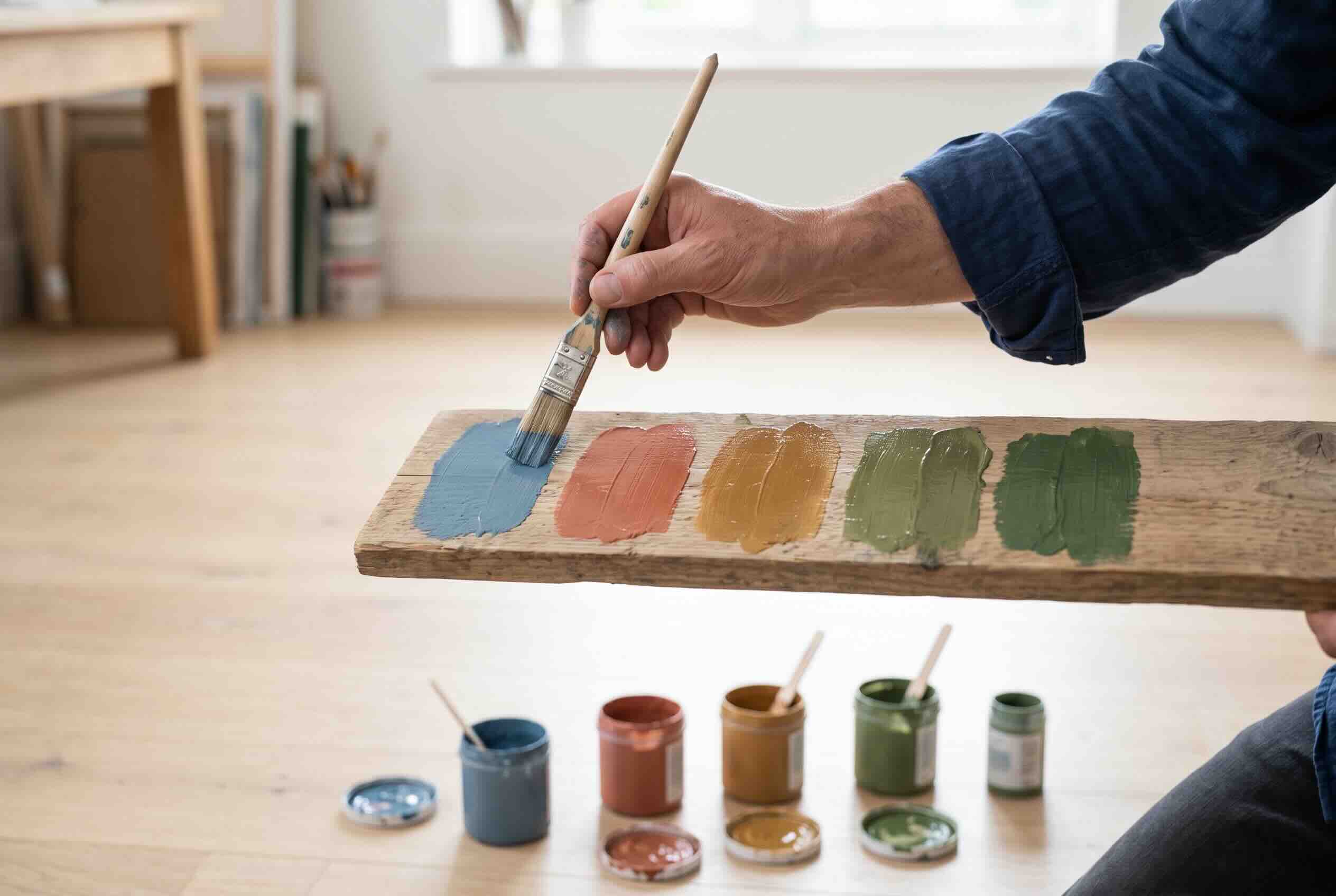
Matching by eye with physical samples works best when you plan to repaint a full wall rather than hide a small patch.
- Hold store chips or a fan deck against the wall in a few different lighting conditions, then narrow the field to two or three candidates.
- Brush sample pots onto wallpaper backing paper or a scrap board.
- Let the painted samples dry completely, and compare them directly on the wall in both morning and evening light.
- Paint reads differently when wet, dry, or viewed under shifting light, so judging a dried sample in place works better than trusting the color printed on a can lid.
Compare the 3 Paint Matching Methods
Each method wins on a different priority. The right choice depends on whether you want precision, speed, or a fresh look.
| Method | Accuracy | Time | Cost | Best for |
| Cut a chip, store scan | Highest | Medium (store trip) | Free scan | Exact touch-ups |
| App or sensor | Good to high | Fast | Free app; ~$60 to $130 sensor | Quick matches, no wall damage |
| Samples and swatches | Moderate | Slow (dry time) | Low (sample pots) | Repainting a wall a new color |
How to Touch Up Paint So It Doesn’t Show
>>> See more: How Often Do Landlords Have to Paint? What the Law Says
So how do you match paint color on a wall and still end up with a patch that shows? Usually because color is only part of the problem.
A repair can flash, meaning it catches the light differently from the wall around it, when the sheen is off, when the new paint goes on thicker than the surrounding coat, or when the wall has faded so far that the original formula no longer matches what is actually there. You should match the current faded state rather than the paint’s original recipe.
Once you have the right color and sheen, technique decides whether the repair disappears. Work through these steps in order:
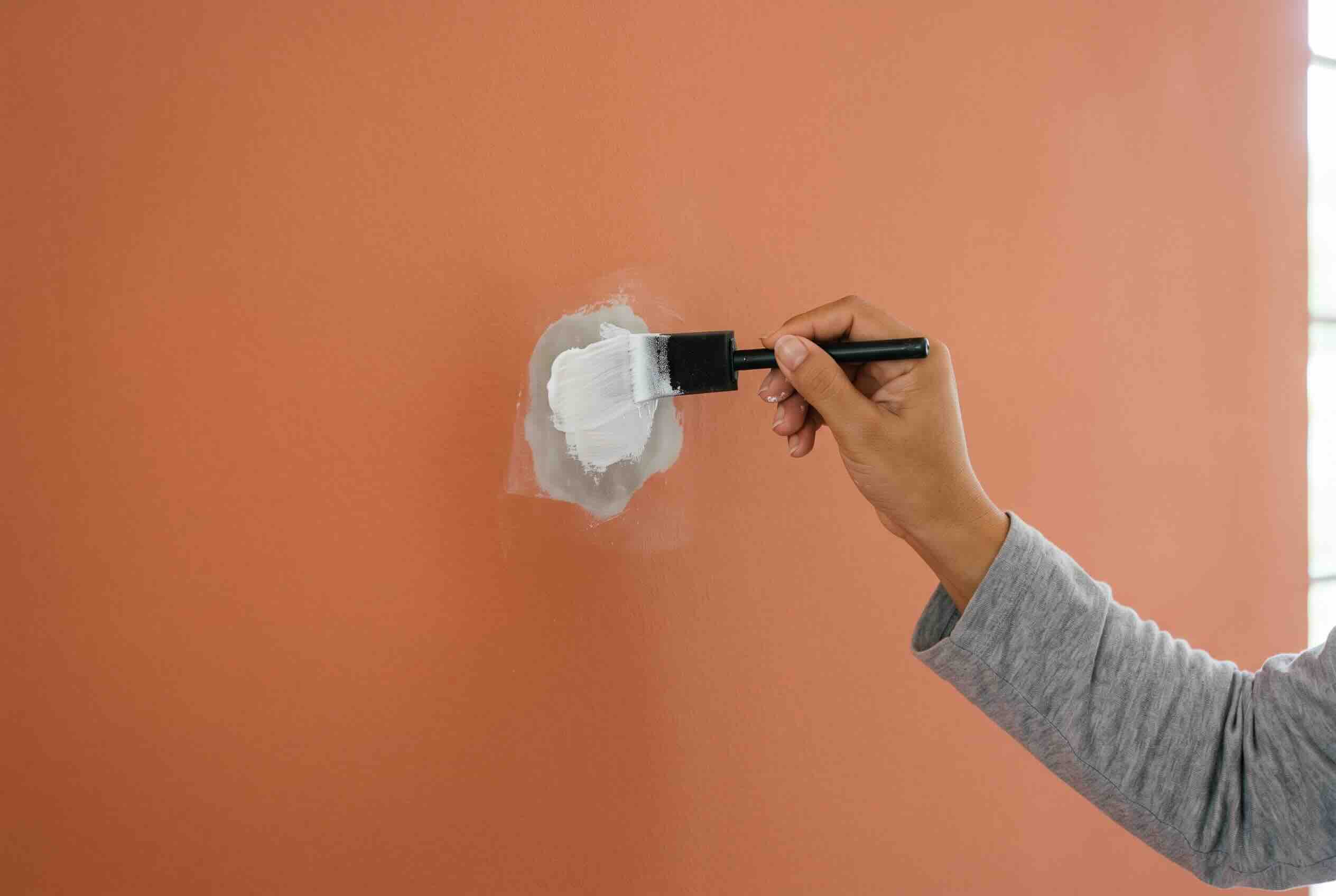
1. Clean and prime the spot. Wipe away dust and grease, then prime any patched or bare areas so the new paint absorbs evenly instead of soaking in unevenly.
2. Box or stir the paint well. Mix it thoroughly, or combine multiple cans into one container, so the color stays consistent from the first stroke to the last.
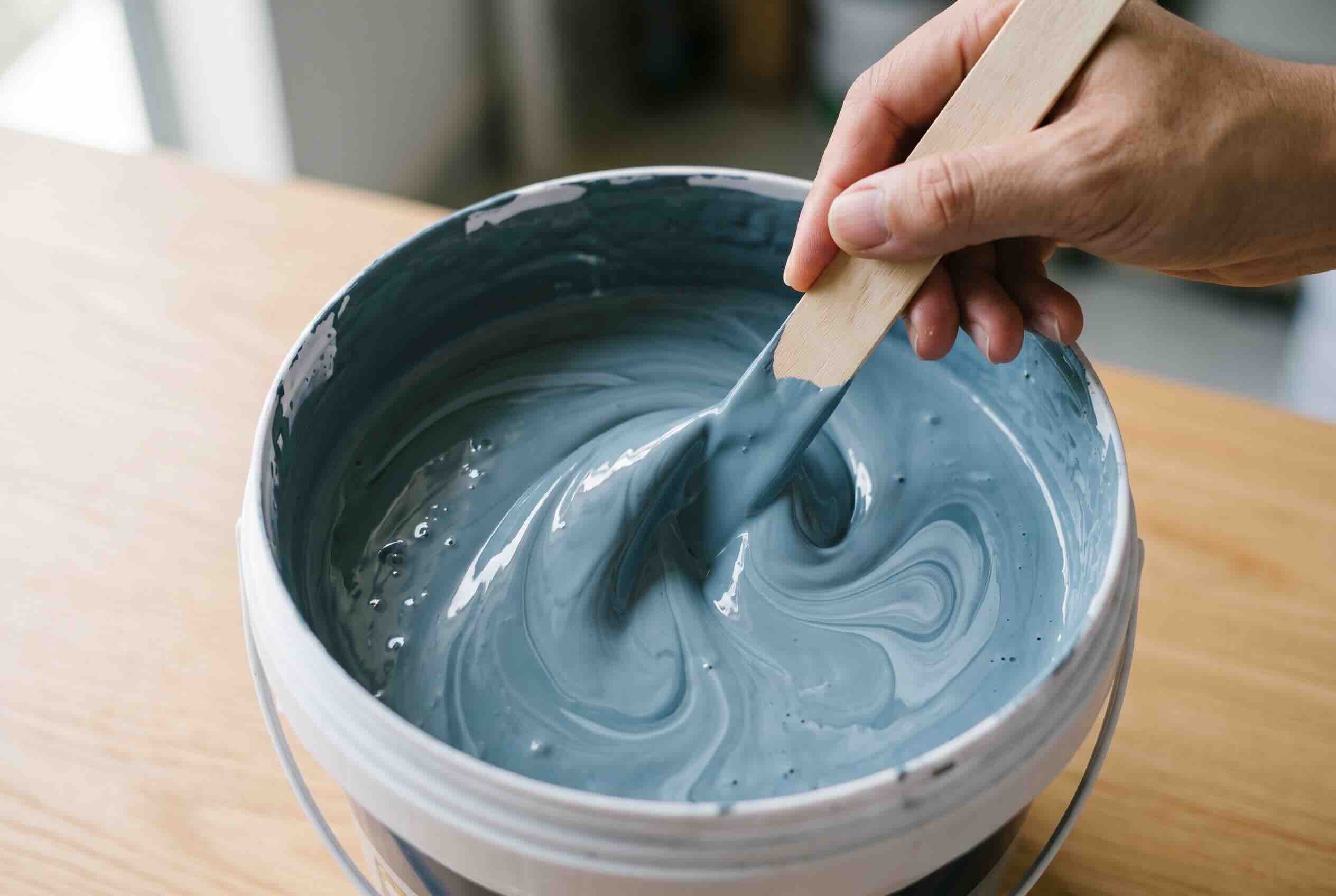
3. Thin the paint slightly. Diluting it about 5 to 10 percent softens the edges so they blend outward instead of leaving a hard ridge.
4. Apply with a light touch. Use a foam brush or a lightly loaded mini roller, and start in the center of the repair rather than at its edge.
5. Feather the edges outward. Blend from the center toward the surrounding paint so there is no sharp border, and stop before the area gets overloaded.
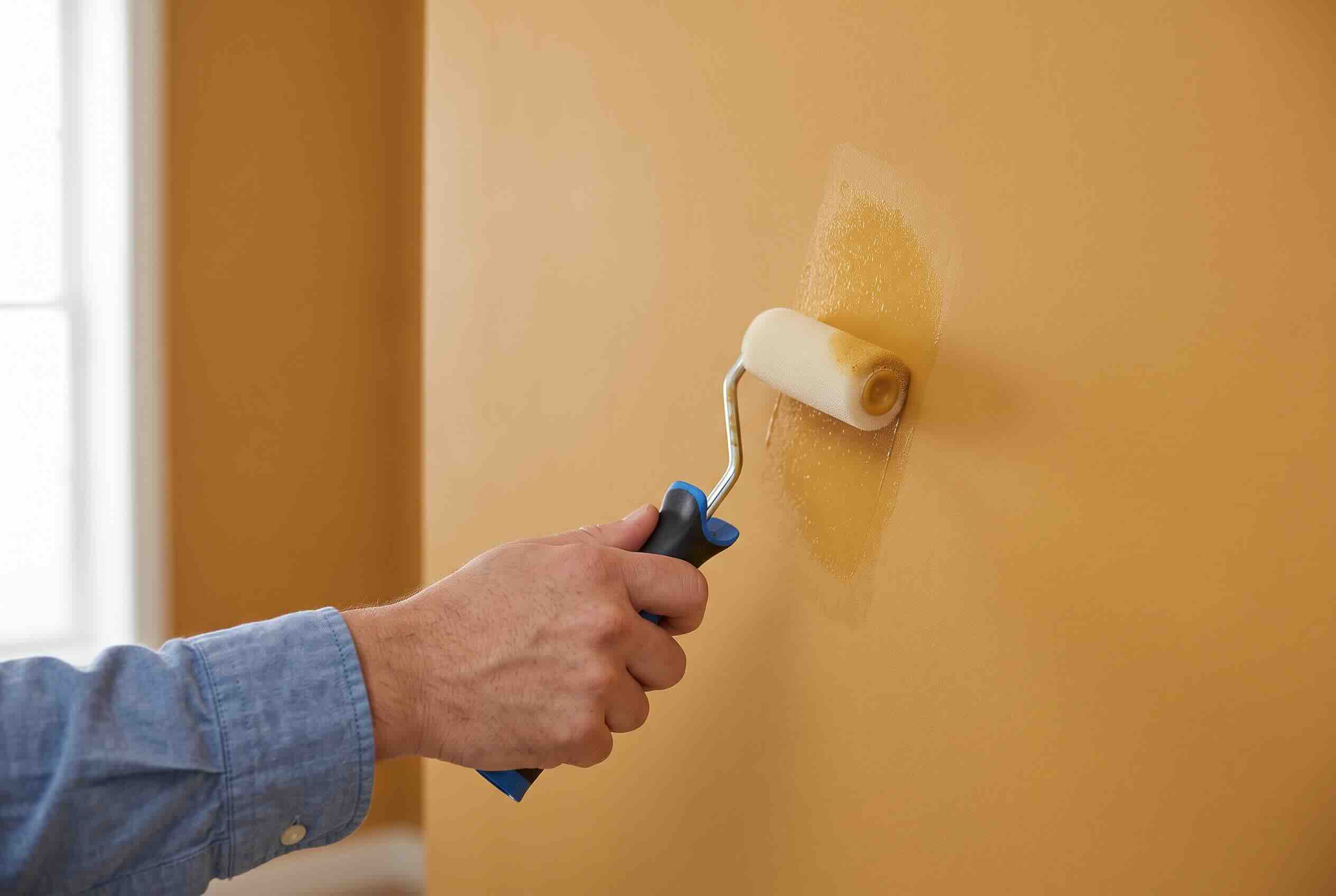
One point ties the whole thing together: if your paint and the wall share a color but not a finish, the patch will still stand out. Match the sheen (flat, eggshell, satin, or semi-gloss) as carefully as you match the color.
Tips for Matching and Touching Up Wall Paint
A few habits make the difference between a repair you notice and one you forget about.
- Clean the wall before scanning or cutting, since dust and grime skew both a sensor reading and a store scan.
- Test your match in your own lighting at different times of day, because a color that looks right at noon can look wrong under evening lamps.
- Do not lean on the leftover can, as paint shifts with age and the wall has shifted with sun exposure since the day it was painted.
- Match the same brand and product line when you can, because formulas and sheens vary from one manufacturer to the next.
- When a patch would still show, paint corner to corner so any mismatch hides at a natural edge instead of the middle of the wall.
- If the wall is in a rental, confirm what you are allowed to change first.
FAQ
Can a paint store match a color from a photo?
Not reliably. A photo distorts color through the camera, the screen, and the lighting it was shot in, so most stores need a physical sample or an in-person scan for a close match. A photo can help narrow the shade, but plan to bring in a chip for anything near exact.
Can you match one brand’s color using another brand?
Usually yes, since a spectrophotometer reads the color itself rather than the original recipe and can reproduce it in another brand’s base. The catch is sheen and base quality, which differ between product lines, so the finish may not behave the same way.
How do you match a discontinued paint color?
Bring in a physical chip and have it scanned, because the machine recreates the color whether or not the product still exists. If all you have is the old name or code, a store can sometimes pull the formula, though a fresh scan of the actual wall reads truer to its current state.
Do you need the original paint can if you have leftover paint?
Not necessarily, but the can helps confirm the brand, finish, and color code. Remember that leftover paint may no longer match the wall, which has aged and faded since it went up, so scanning the wall itself is often the better call.
How big should a test patch be before you commit?
Larger than you would guess, ideally a square foot or more, placed where you will actually see it day to day. A tiny dab dries too fast to judge and tells you nothing about how the color reads across a real stretch of wall in your own light.
Conclusion
Getting the color right is only half of a touch-up that disappears. So, how do you match paint color on a wall perfectly? You must also account for sheen, paint age, and your application technique to ensure no one can tell a repair happened. Box your paint, feather each patch from the center, and paint corner to corner if a spot still flashes in the light. For more painting projects and everyday home upkeep, the rest of the Home Tips Daily guides pick up from here.