

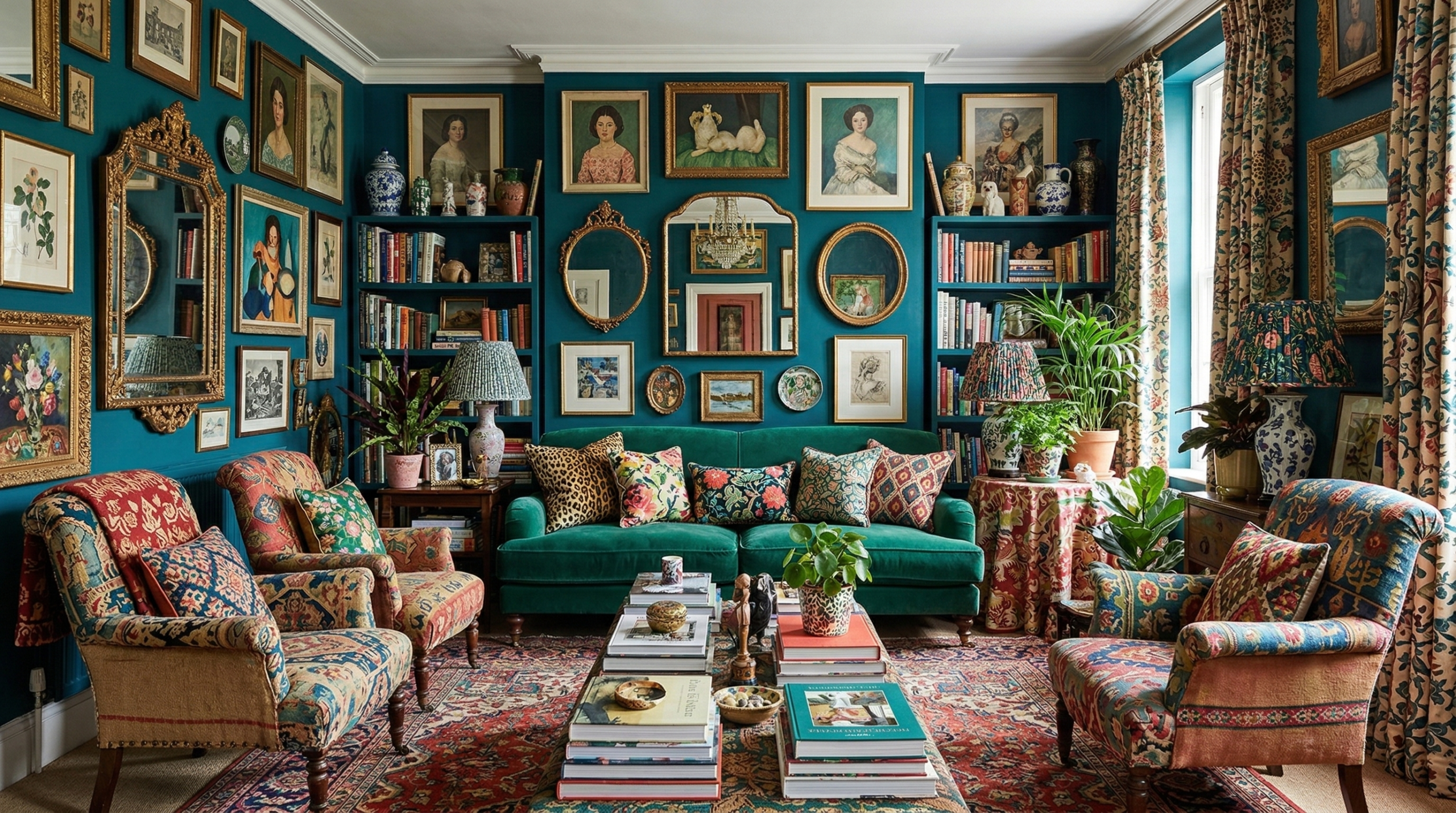
Maximalism interior design is all about embracing excess, vibrancy, and personalization. It’s a celebration of individuality, where more really does mean more. Unlike minimalist designs that focus on simplicity and neutral tones, maximalism encourages the use of bold colors, intricate patterns, eclectic furniture, and cherished collections.
If you’ve been hesitant to try this design style, now is the perfect time to jump in. Maximalism can add warmth, depth, and personality to any room in your home. Here are 10 bold ideas to help you create a personalized, vibrant space that reflects your style.
1. Embrace Bold Colors in Layers
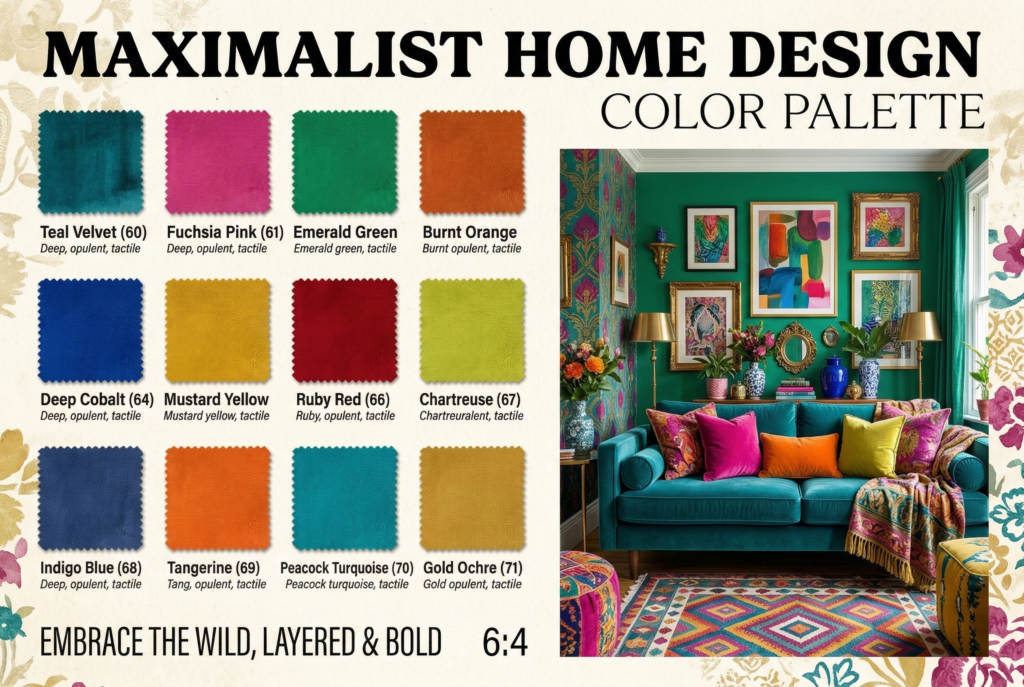
Color is the backbone of maximalism. Instead of sticking to a single shade, maximalism invites you to experiment with multiple bold hues. From wall colors to furniture and accessories, layering different colors in unexpected combinations can create a dynamic and inviting space.
How to Layer Colors
Start by choosing a bold base color that you love, such as deep teal, mustard yellow, or rich maroon. Once you’ve chosen your primary color, introduce complementary or contrasting shades in different areas of the room. For instance, you can pair a dark green sofa with mustard-colored pillows and bright blue curtains, creating a balanced, yet bold color palette.
A great way to balance the look is to use neutral tones as a background. Walls, trim, or flooring can be kept neutral (such as beige, gray, or white) to let the colors of the furniture and accessories stand out without overwhelming the space.
Experiment with color gradients to create visual interest. If you choose a primary color like emerald green, layer it with lighter and darker shades of the same hue in pillows, throws, or rugs to keep the space cohesive yet dynamic.
2. Mix and Match Patterns for Maximum Impact
One of the main features of maximalism is the mixing of patterns. Maximalist design encourages you to play with different textures, prints, and motifs. When done right, mixing patterns can give your space personality and energy.
How to Mix Patterns
Start by choosing a few core patterns that share a common color palette. For example, you can pair a floral wallpaper with a striped rug in a matching color. The key to making this work is ensuring the patterns vary in scale: large floral patterns with smaller stripes or polka dots.
For larger rooms, like living or dining areas, try combining bold geometrics with florals or animal prints with plaid. The patterns should be complementary without clashing too much.
If you’re hesitant to mix too many patterns at once, start small by adding patterned throw pillows to your couch or using patterned rugs in key areas of the room, like under a coffee table. You can gradually introduce more complexity once you’re comfortable.
3. Add Texture to Every Surface
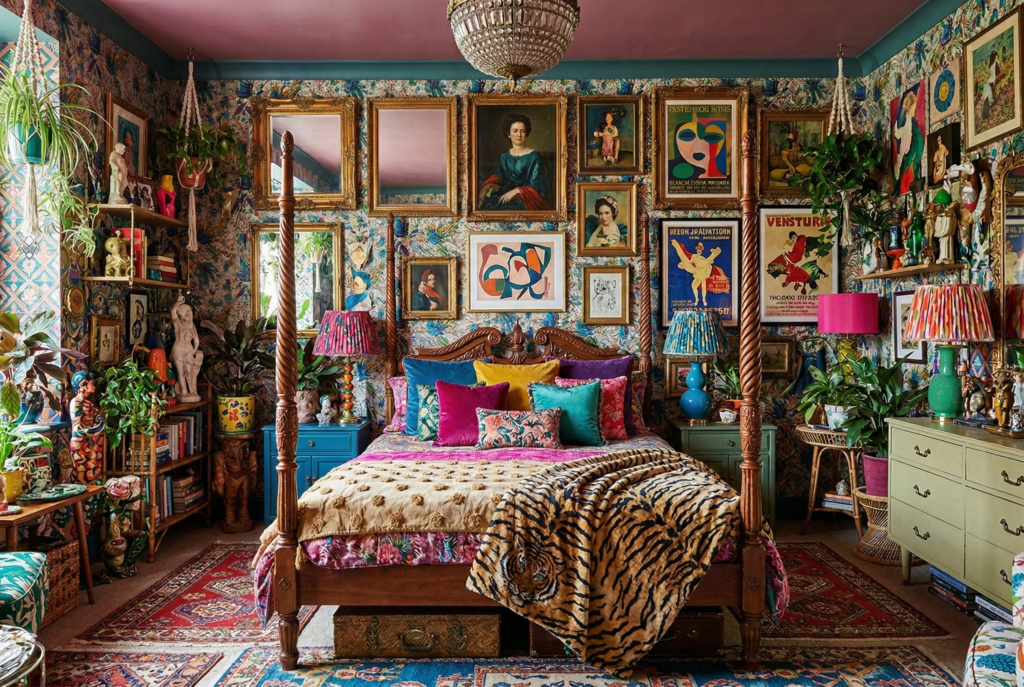
Maximalism is not only about color and patterns but also about texture. Different textures can make a room feel warm, inviting, and visually stimulating. Think of the contrast between velvet cushions and leather chairs, or woven rugs next to polished wood.
How to Layer Textures
In the living room, use velvet throw pillows on a leather sofa or linen curtains alongside a wool rug. These different textures will create depth and intrigue. For a cozier vibe, layer soft fabrics like wool, cotton, or faux fur on top of harder materials like wood, metal, or glass.
In bedrooms, consider using luxurious fabrics such as silk bedding, faux fur throws, and plush rugs to create a layered, tactile experience. This not only makes the space feel inviting but also adds comfort to a visually complex room.
Don’t be afraid to add unexpected textures, like metallic finishes (gold, silver, or brass) on side tables, mirrors, or light fixtures. These elements contrast beautifully with more tactile fabrics like velvet or wool.
4. Bring in Antique and Vintage Furniture
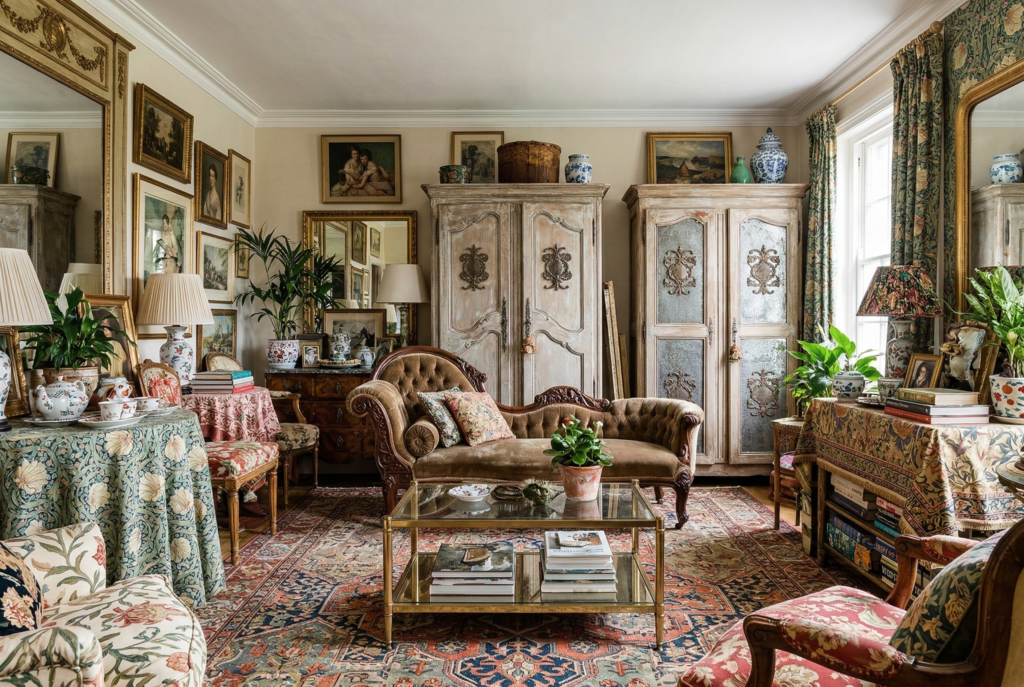
Maximalism thrives on the idea of mixing old and new. Incorporating vintage or antique furniture pieces into a room can give it a sense of history and uniqueness. These items provide a personal touch and contrast beautifully with modern pieces, which makes the space feel eclectic.
How to Add Vintage Furniture
Start by adding a vintage armchair, a vintage wooden table, or an antique mirror into your living room or bedroom. Look for classic mid-century modern pieces or art deco furniture for timeless elegance. Don’t worry if the styles seem different because maximalism encourages combining various periods and designs.
Pro tip: Pair a vintage lamp with modern furniture or hang a classic oil painting next to a contemporary sculpture. The key is to create harmony through color or shared design elements, even when combining contrasting styles.
5. Use Statement Lighting to Create Drama
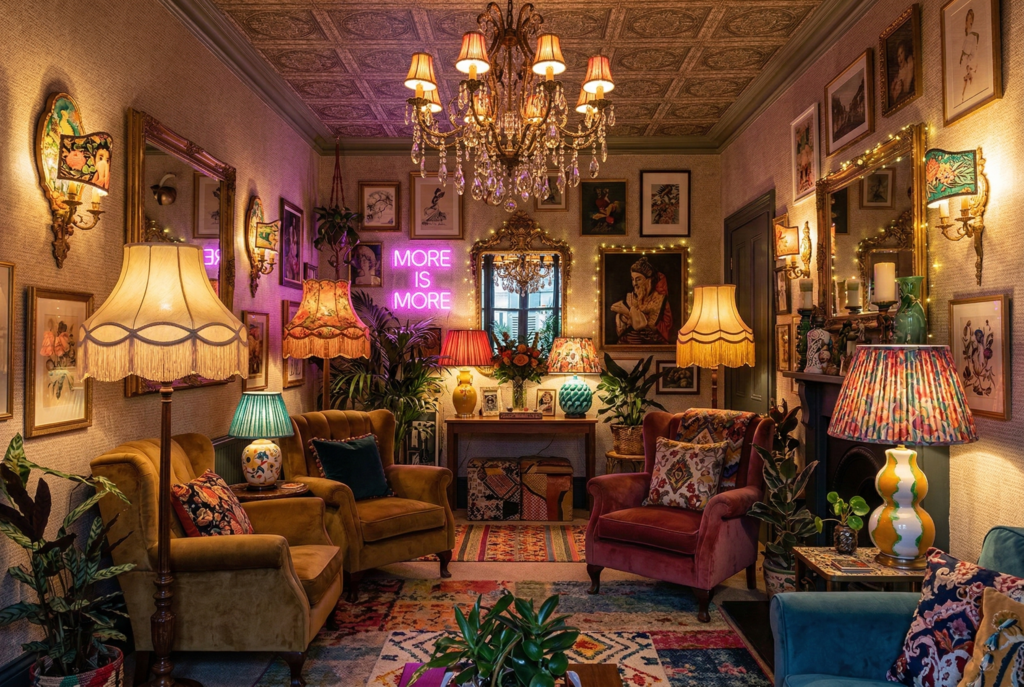
Lighting is one of the easiest ways to create visual impact in maximalist design. Statement lighting pieces, such as oversized chandeliers, ornate pendant lights, or quirky table lamps, can act as both functional lighting and striking decor.
How to Use Statement Lighting
In a dining room, consider installing a grand chandelier with intricate detailing, or use an art-deco floor lamp in the living room to add character. Pendant lights are another excellent option for kitchens or hallways; they bring focus to key areas while also contributing to the maximalist aesthetic.
6. Showcase Personal Collections and Art
Maximalism celebrates individuality and personal expression. If you collect things, be it books, art, or quirky objects, maximalism is the perfect design style to display them. The idea is to make your space reflect who you are, showcasing your interests and passions through the decor.
How to Incorporate Personal Collections
Create a gallery wall with an assortment of framed art, vintage posters, or family photographs. Consider displaying unique collections like figurines, antique vases, or bookshelves full of your favorite reads. The more eclectic, the better. If your collection includes travel souvenirs, use them as accent pieces in a room to tell a story. This adds a personal touch and invites conversation.
7. Bold Curtains and Drapery for Visual Impact
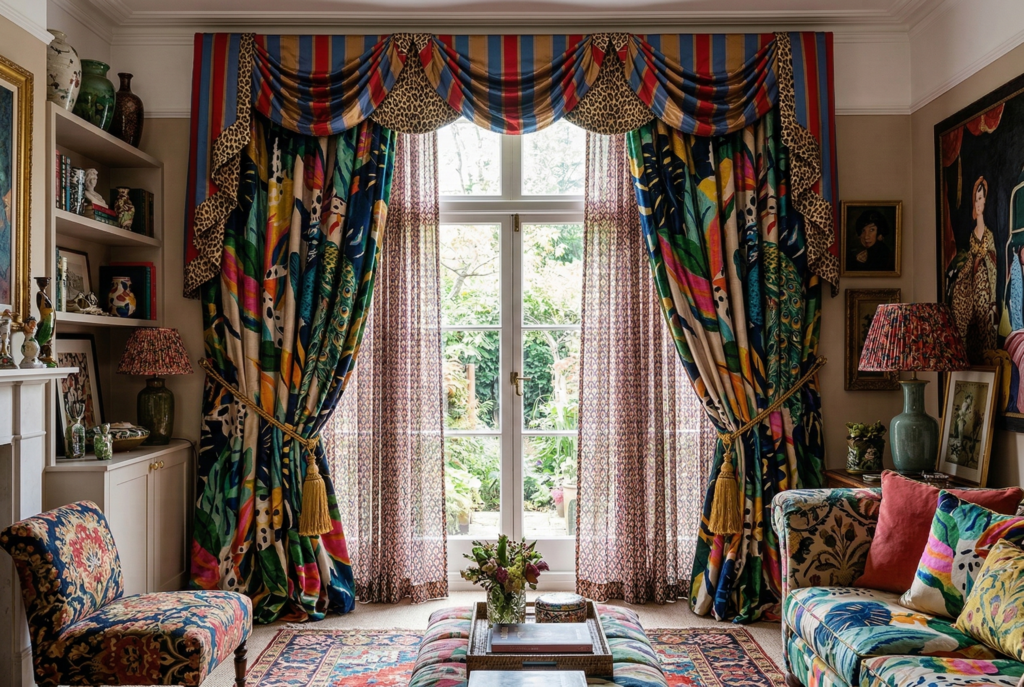
Curtains and drapery are often overlooked in interior design, yet they can play a crucial role in a maximalist space. Bold drapery can not only block out light but also serve as a statement piece. Maximalist design encourages using large patterns or luxurious fabrics to add both texture and visual intrigue.
How to Use Bold Curtains
Go for floor-to-ceiling curtains made of heavy materials like velvet or satin to add richness. You can choose floral prints, bold stripes, or intricate patterns that stand out against simpler walls or furniture. These dramatic curtains will instantly elevate the space.
Pro Tip
Make sure your curtains complement the rest of your color scheme while adding drama and softness to the room. If the walls are bold, choose a more neutral curtain, and if your walls are neutral, go for statement-making drapery.
8. Add Playful Accessories for Fun and Quirkiness
Maximalism thrives on playfulness. Don’t be afraid to introduce quirky and fun accessories, such as bright-colored vases, abstract sculptures, or funky throw pillows. These elements bring personality to your space and can act as conversation starters.
Consider bold art prints, decorative bowls, or loud-colored lamps in spaces like your living room or bedroom. Add playful throw pillows with unusual textures or patterns, and mix them with your regular furniture for contrast. Rotate accessories frequently to keep the room feeling fresh and reflective of your current mood or season. This allows your space to evolve over time.
9. Mix Different Furniture Styles for Eclectic Appeal
Maximalism isn’t just about using bold colors or patterns; it’s also about mixing different furniture styles. Combining modern furniture with traditional, vintage, or even industrial pieces can create a look that feels dynamic and curated.
In your living room, mix a modern sectional with vintage armchairs or pair a contemporary coffee table with traditional bookshelves. Play with different materials, such as combining wood, metal, and glass, to create contrast and interest.
Focus on maintaining harmony through shared colors or similar textures. For example, a modern leather sofa can pair beautifully with antique wooden chairs if they share a common color palette or metal accents.
10. Embrace Maximalism in Small Spaces
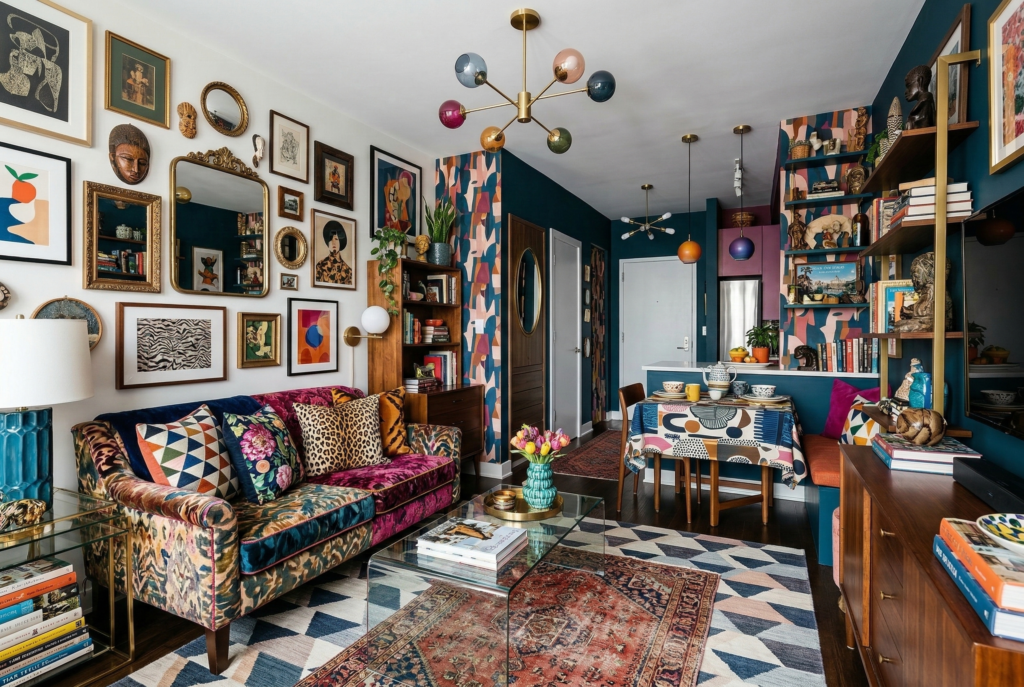
Maximalism works just as well in small spaces as it does in large ones. The key to applying this style in smaller rooms is to be strategic with color and furniture placement. A small room doesn’t have to be overwhelmed by too much, but rather it can shine with personality.
How to Maximize Small Spaces
In a small bedroom, layer vibrant throws, bold wallpaper, and eclectic lighting to bring the room to life. Incorporate small accent pieces like quirky nightstands or patterned cushions to make a big impact without overcrowding the space.
Additionally, use mirrors to reflect light and make the space feel larger. Mirrored furniture or decorative reflective surfaces add depth and make the room appear more expansive.
Conclusion: Embrace the Boldness of Maximalism in Your Home
Maximalism offers a bold, creative way to transform your space into a personalized, vibrant haven. By embracing layers of color, mixing patterns, adding texture, and showcasing your personality, you can create a room that feels alive and full of character. Whether you’re layering colors, experimenting with bold furniture, or introducing playful accessories, maximalism allows you to express yourself fully in your design.
Let these ten ideas inspire you to go beyond the traditional and make a statement in your home. Maximalism is a way to celebrate individuality and create spaces that tell a story. The possibilities are endless when you let your creativity run wild and fill your space with color, texture, and flair.
Related Articles
Minimalism vs. Maximalism: How to Choose the Best Interior Design Style for Your Home