

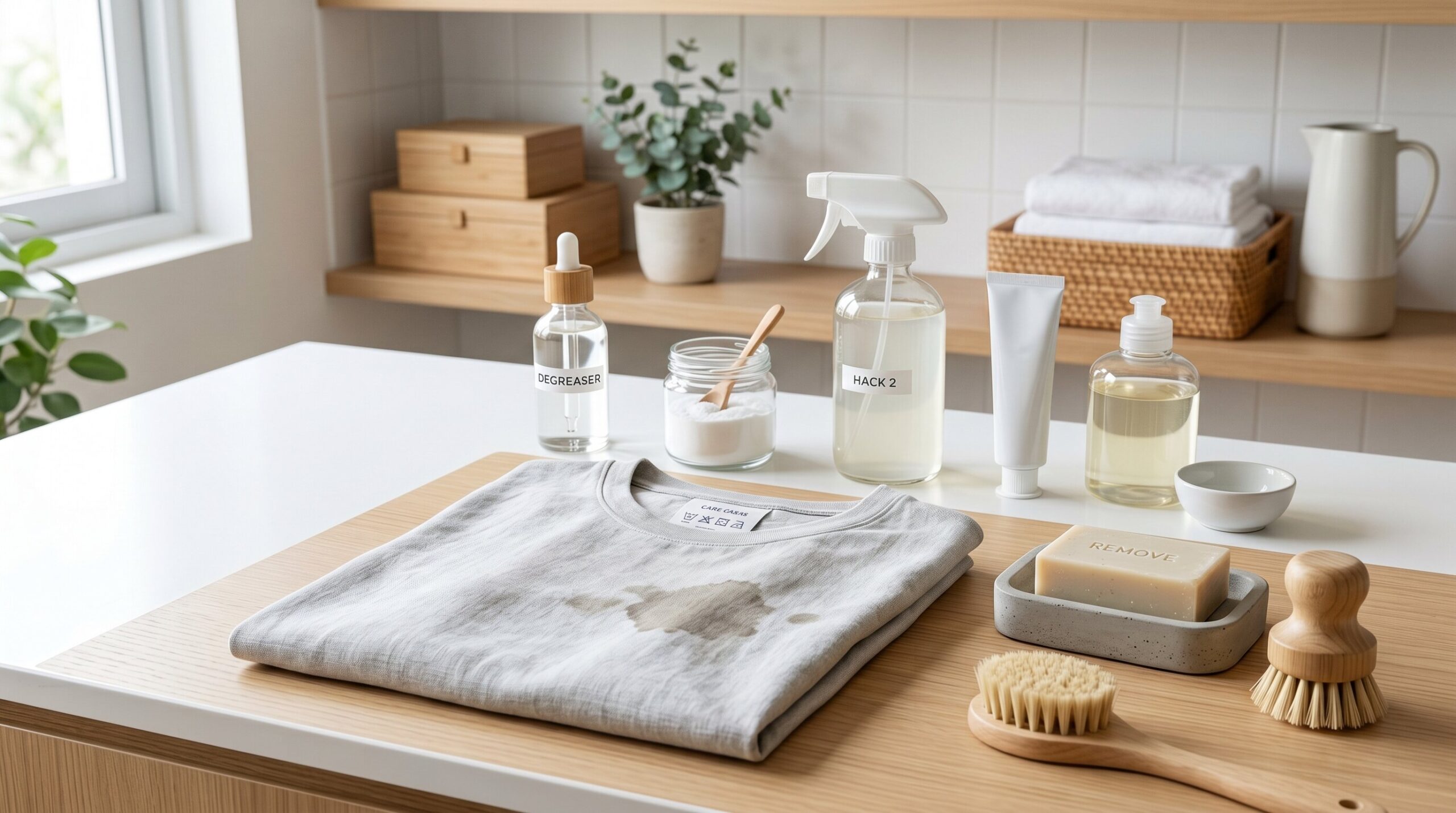
A splash of cooking oil, a drip of salad dressing, or a smear of bike chain grease can make a favorite shirt look ruined. The good news is that most oil stains come out, even ones that have been sitting for days, as long as you use a grease-cutting treatment and keep the garment away from heat until the spot is gone. Below, you’ll learn how to remove oil stains from clothes, whether the spill happened five minutes ago or already went through the wash.
Quick answer: Blot off excess oil, cover the spot with cornstarch or baking soda for 15 to 30 minutes, brush it off, then work a few drops of grease-cutting dish soap into the stain and let it sit another 15 to 30 minutes. Wash in the warmest water the care label allows, and air dry. Check the spot before using the dryer, and repeat if any shadow of the stain remains.

Fresh vs. Old Oil Stains: Which Method to Use
Fresh oil is still sitting partly on the surface, so the goal is to pull it out before it spreads. Old oil has soaked deep into the fibers and often oxidized into a darker, slightly stiff patch, so it needs something that loosens it first. A stain that has already gone through a hot dryer is the hardest case, but it is often still fixable with patience.
| Type of Stain | Best First Step | Follow Up With |
|---|---|---|
| Fresh cooking oil | Cornstarch or baking soda | Dish soap, then wash |
| Bacon or burger grease | Dish soap and baking soda paste | Warm wash |
| Salad dressing | Dish soap | Stain remover spray, then wash |
| Motor oil or bike chain grease | WD-40 | Dish soap, then warm wash |
| Lotion, makeup, or body oil | Dish soap | Stain remover spray, then wash |
| Old stain that went through the dryer | WD-40 or Murphy Oil Soap | Dish soap, then repeat as needed |
The Golden Rule: Keep It Away From the Dryer
Heat is what turns a fixable oil stain into a stubborn one. Dryer heat bakes the oil deeper into the fibers and makes it much harder to lift. After every treatment, let the garment air dry and look at the spot in good light. Oil stains often look like they are gone while the fabric is wet, then reappear as a darker patch once it dries. Only put the item in the dryer when you are sure the stain is completely out.
How to Remove Oil Stains from Clothes: 7 Methods
1. Cornstarch or Baking Soda for Fresh Spills
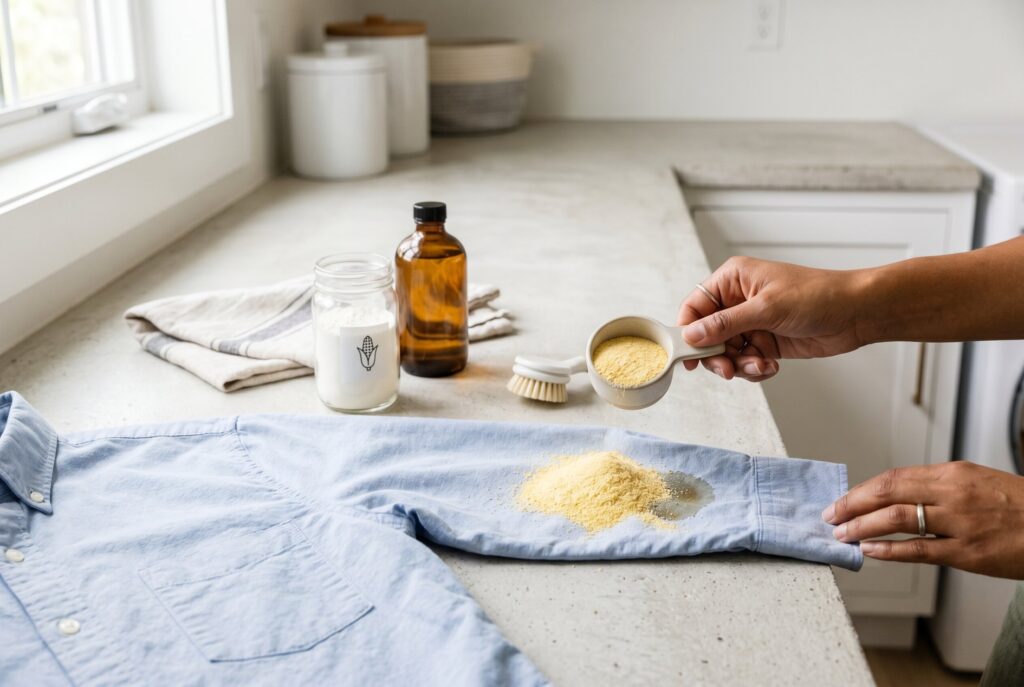
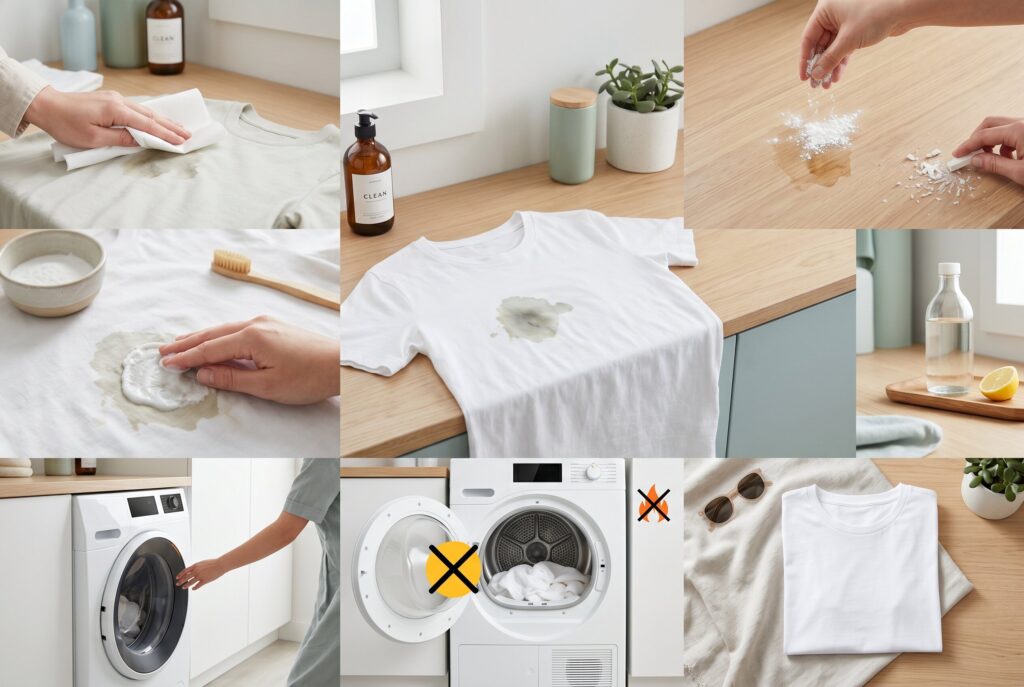
Use this first on any stain that is still wet. Blot the spot gently with a paper towel, without rubbing, to lift as much surface oil as you can. Cover the stain with a thick layer of cornstarch, baking soda, or cornmeal and let it sit for 15 to 30 minutes, or up to an hour for a larger spill. The powder draws oil out of the fabric. Brush it off, then move on to dish soap. If you are away from home, plain white chalk rubbed into a fresh spot does a similar job until you can treat it properly.
2. Dish Soap and Baking Soda for Food Grease
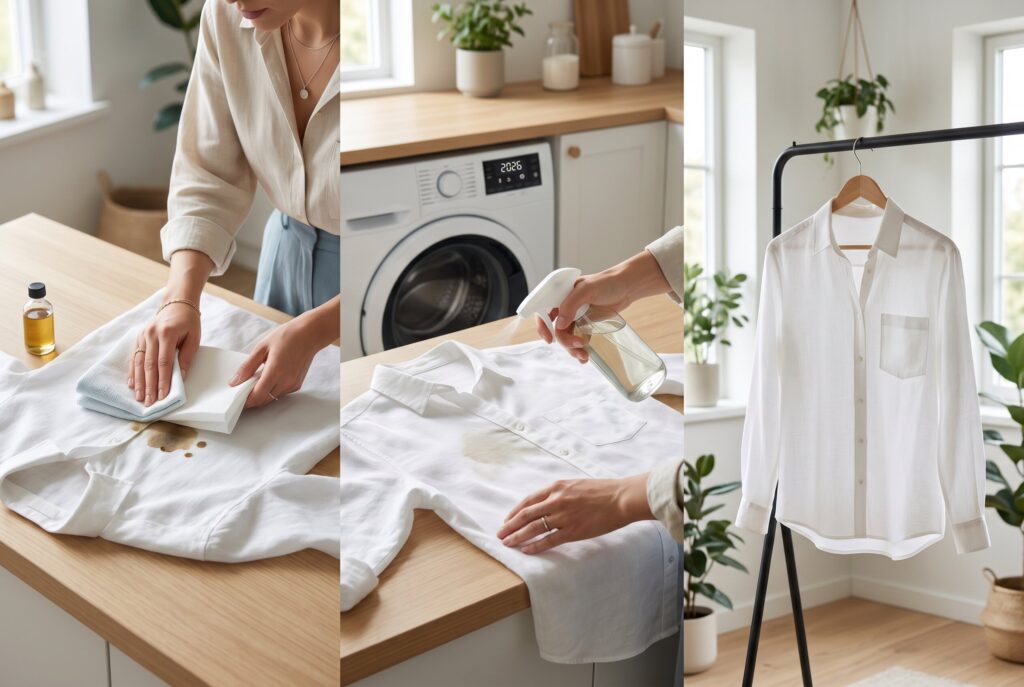
This is the workhorse method for kitchen stains like cooking oil, bacon grease, and butter. Grease-cutting dish soap is designed to break up oil, which is exactly what a laundry stain needs.
- Place a paper towel under the stain so oil does not transfer to the back of the garment.
- Work a few drops of dish soap into the stain from both sides with your fingers or a soft toothbrush.
- Sprinkle baking soda on top to form a paste and gently scrub in small circles.
- Let it sit for 15 to 30 minutes, then rinse with warm water.
- Wash in the warmest water the care label allows and air dry.
3. Murphy Oil Soap for Set-In Stains

Murphy Oil Soap is sold as a wood cleaner, but it is a gentle, plant-based soap that many people keep in the laundry room for older grease stains. Because it isn’t made for fabric, test it on a hidden seam first, especially on colored clothes. Apply a small amount straight onto the dry stain, work it in with a soft toothbrush, and let it sit for 15 to 30 minutes. For a stain that has been there a long time, you can leave it longer. Then wash as usual in warm water and air dry. It will not work instantly on every stain, but it is a good step before reaching for anything stronger.
4. WD-40 for Old, Dried, or Motor Oil Stains
It sounds backward to fight oil with an oil-based product, but WD-40 can soften hardened grease so soap can carry it away. It is most useful for motor oil, bike chain grease, and old stains that dish soap alone has not moved.
- Test on a hidden seam first, and skip this method on silk, wool, and other delicates.
- Put cardboard or paper towels under the stain, spray a light coat, and wait about 10 minutes.
- Immediately work dish soap into the area to break up both the grease and the WD-40, then rinse.
- Wash in warm water and air dry.
WD-40 is flammable, so use it in a ventilated area away from flames, and never put a garment in the dryer while any of it remains in the fabric.
5. OxiClean or Shout to Pretreat Before Washing

Commercial pretreaters are a good second pass after dish soap, especially for salad dressing, lotion, and makeup stains that mix oil with other ingredients. Spray or rub the product into the stain and let it sit for the time listed on the label before washing. Oxygen bleach powders like OxiClean can also be used as a soak for colorfast fabrics, but they are not meant for wool or silk.
>>> 15 Fireplace Mantel Decor Ideas That Look Expensive
6. White Vinegar for the Final Rinse
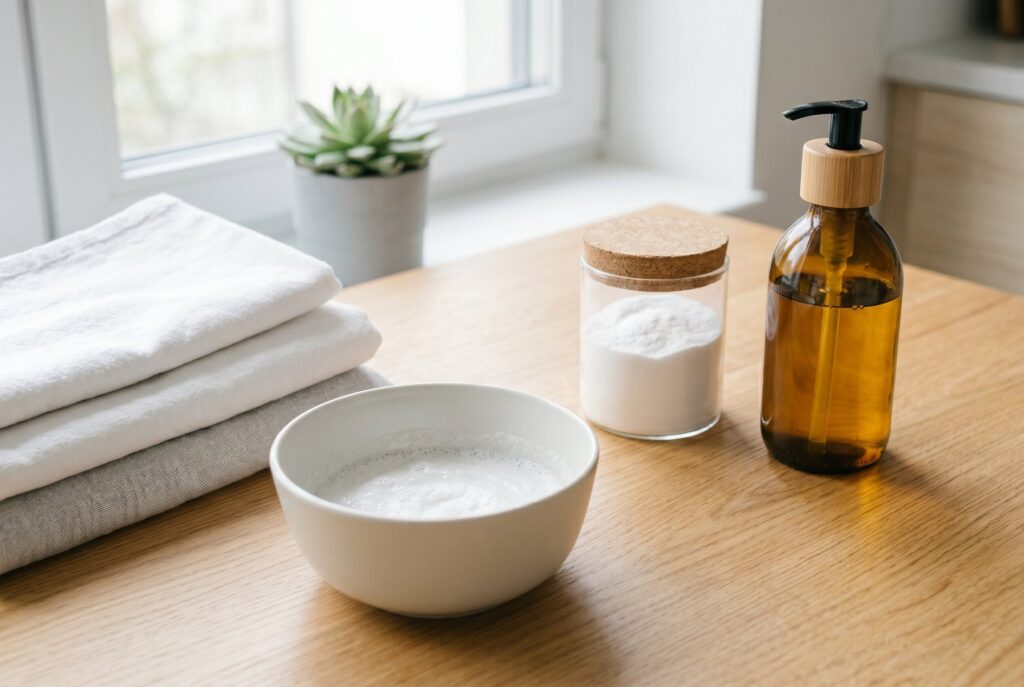
White vinegar is often recommended for grease, but it does not actually break down oil the way dish soap does. Where it helps is after the stain is treated. Adding about half a cup of white vinegar to the rinse cycle can clear leftover soap residue and cooking odors, so you can see whether any stain is truly left. Never mix vinegar with chlorine bleach, since the combination releases harmful fumes.
7. A Tide Pen for Spills On the Go
A stain pen is a handy first aid step when you spill at a restaurant or at work. Blot the spot, apply the pen, and let it dry. It works best on small, light spills and will not fully remove heavier grease, so treat the stain properly with dish soap once you are home and before the garment goes in the wash.
How to Remove Old Oil Stains That Went Through the Dryer
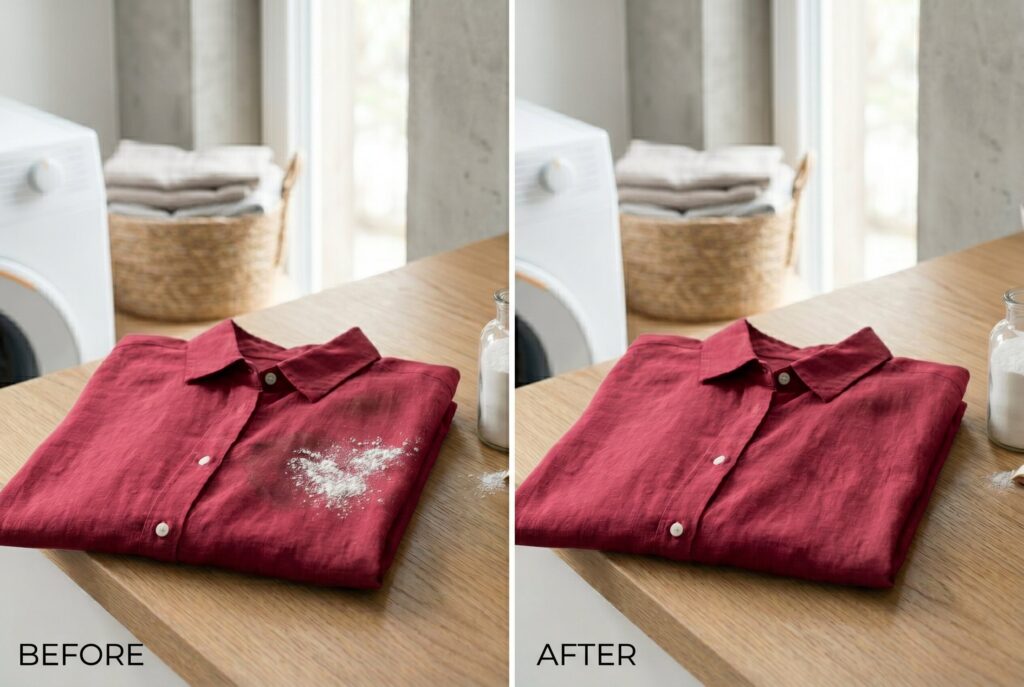
A heat-set oil stain is the toughest case, but it is worth trying before giving up on the garment. Expect to repeat the process two or three times.
- Loosen the stain with WD-40 or Murphy Oil Soap, following the steps above.
- Work in a generous amount of dish soap and let it sit for at least 30 minutes, or several hours for an old stain.
- Scrub gently with a soft toothbrush, then rinse with the warmest water the fabric can handle.
- For colorfast fabrics, soak in an oxygen bleach solution according to the package directions.
- Wash, air dry, and check the spot in daylight. Repeat if a shadow remains.

Some very old stains on synthetic fabrics may fade but not disappear completely. At that point, a professional cleaner is your best option.
Fabric Guide: Cotton, Denim, Polyester, Silk, and Wool

Cotton and denim are the easiest to treat. They handle scrubbing, dish soap, WD-40, and warm or hot water well, which makes them the best candidates for the heavy-duty methods. Work clothes and jeans stained with motor oil usually come clean with WD-40 followed by dish soap.
Polyester and other synthetics tend to hold onto oil stubbornly, so give dish soap more time to work and expect to repeat the treatment. A solvent-based laundry pretreater labeled for grease or oil can also help on synthetics; check the care label and test a hidden spot first. Silk, wool, and anything labeled dry clean only should get a cornstarch treatment at most, then go to a professional cleaner. Tell the cleaner the stain is oil so they can choose the right solvent.
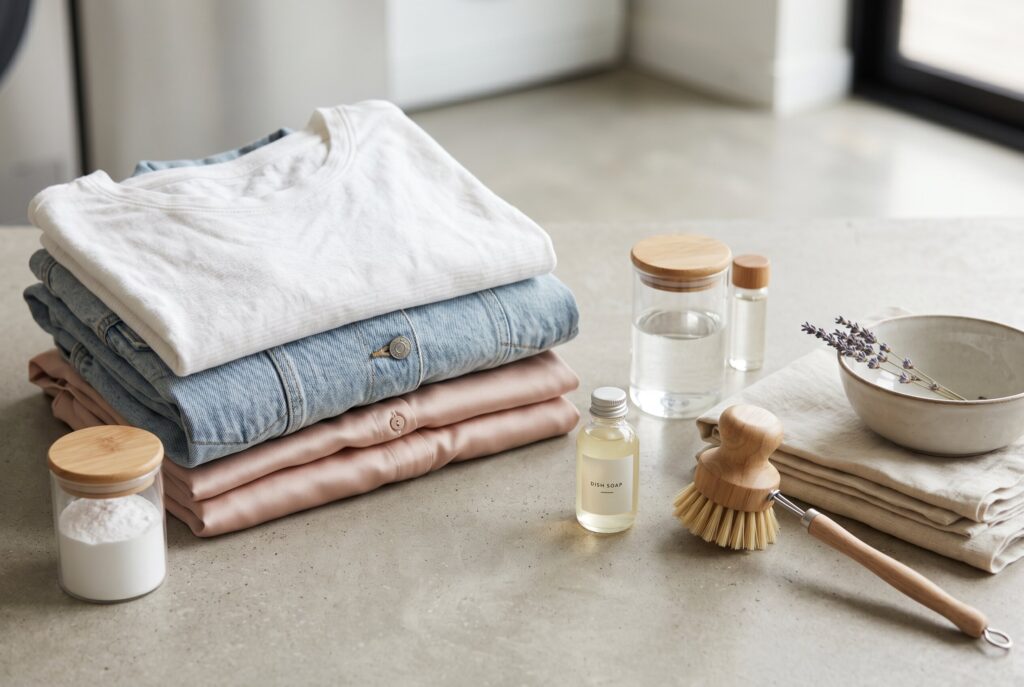
Your Oil Stain Kit
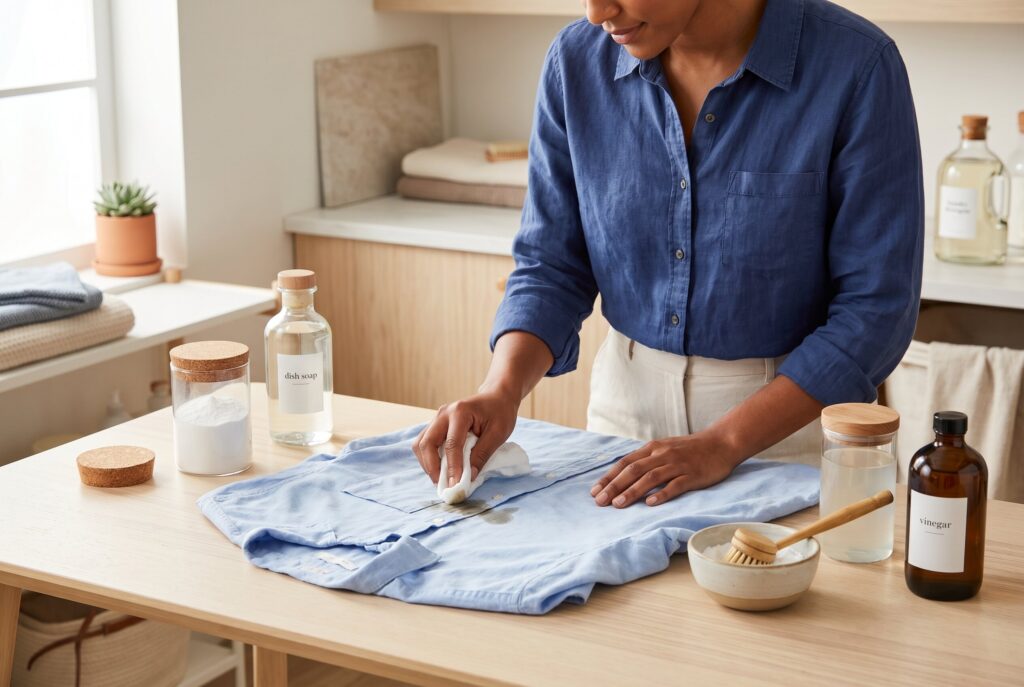
Keeping a few basics together means you can treat a spill right away, which is the biggest factor in getting it out.
- Cornstarch or baking soda
- Grease-cutting liquid dish soap
- A soft toothbrush
- Paper towels or scrap cardboard
- A laundry stain remover spray
- Oxygen bleach powder for colorfast fabrics
- Murphy Oil Soap, plus WD-40 for garage stains
- A stain pen for your bag or car
Dryer Fire Safety With Oily Clothes
Oil left in fabric is a real fire risk. Cooking oils, massage oils, and motor oil can remain in clothes even after washing, and when those clothes are heated in a dryer, the oil can self-heat and, in rare cases, ignite, sometimes after the cycle has ended. Air dry anything that has been heavily soaked in oil, or dry it on low heat only after the stain is fully gone. Take items out of the dryer promptly instead of leaving a warm pile inside, and clean the lint filter every load.
Oil Stain FAQs
Can oil stains come out after going through the dryer?
Often, yes, though it takes more work. Loosen the stain with WD-40 or Murphy Oil Soap, follow with dish soap, and wash in warm water. Expect to repeat the process two or three times, and air dry between attempts.
Is WD-40 safe to use on clothes?
It is generally safe on sturdy fabrics like cotton and denim if you test a hidden area first and wash it out with dish soap right away. Avoid it on silk, wool, and delicate fabrics, and never dry a garment while WD-40 is still in the fibers, since it is flammable.
How long should dish soap sit on an oil stain?
For a fresh stain, 15 to 30 minutes is usually enough. For an old or set-in stain, leaving it for a few hours before washing gives the soap more time to break down the grease.
Does hot water help remove oil stains?
Warm to hot water helps loosen grease, so wash in the warmest water the care label allows. Hot water is not a substitute for pretreating, though. Treat the stain with dish soap first, then wash.
Can baking soda alone remove an oil stain?
Baking soda can absorb a lot of surface oil from a fresh spill, but it rarely removes the whole stain on its own. Use it as the first step, then follow with dish soap to break down the oil that has already soaked into the fibers.
How do you remove oil stains from colored clothes without fading them?
Stick with dish soap, which is gentle on most colorfast fabrics, and avoid chlorine bleach entirely. Test any stain remover or oxygen bleach on a hidden seam first, turn the garment inside out for washing, and use the warmest water the care label allows rather than the hottest setting.
Conclusion
Most oil stains are not permanent. Knowing how to remove oil stains from clothes comes down to a simple order of steps: act quickly with an absorbent powder, lean on dish soap as your main tool, bring in WD-40 or Murphy Oil Soap for older grease, and keep the garment out of the dryer until the spot is truly gone. With a little patience, even a stain that has been through the wash once can often be saved.