

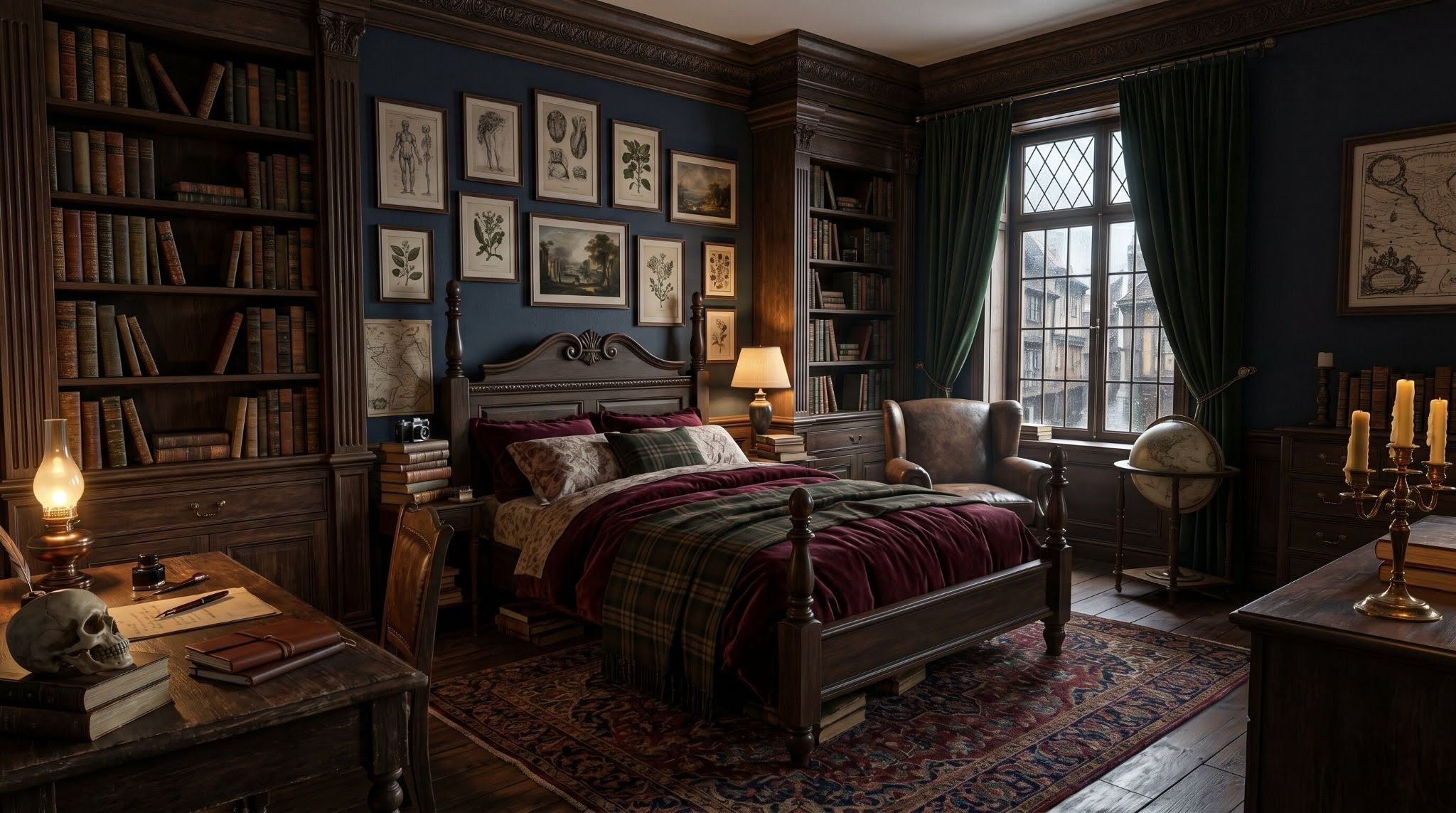
A dark academia bedroom should feel like a private library you can sleep in. It shouldn’t look like a storage room filled with random vintage objects. The best spaces are moody, intelligent, calm, and carefully edited. True dark academia interior design blends literature, old-world architecture, warm lighting, deep colors, worn textures, and a sense of quiet ritual. The room should invite you to read longer, sleep deeper, write more slowly, and detach from the noise outside.
These dark academia bedroom ideas are built around one principle: atmosphere must be curated. Whether you’re working with a rental room, a tiny apartment, a dark green bedroom, or a more masculine bedroom with leather and walnut, the goal is to create depth without clutter.
Foundation: The Best Bedroom Colors for Sleep
Dark colors don’t automatically make a room depressing. Used well, they create enclosure, privacy, and rest. Many of the best bedroom colors for sleep are muted, low-glare shades that help the mind slow down.
1. Create the Cocoon Before You Add Decor
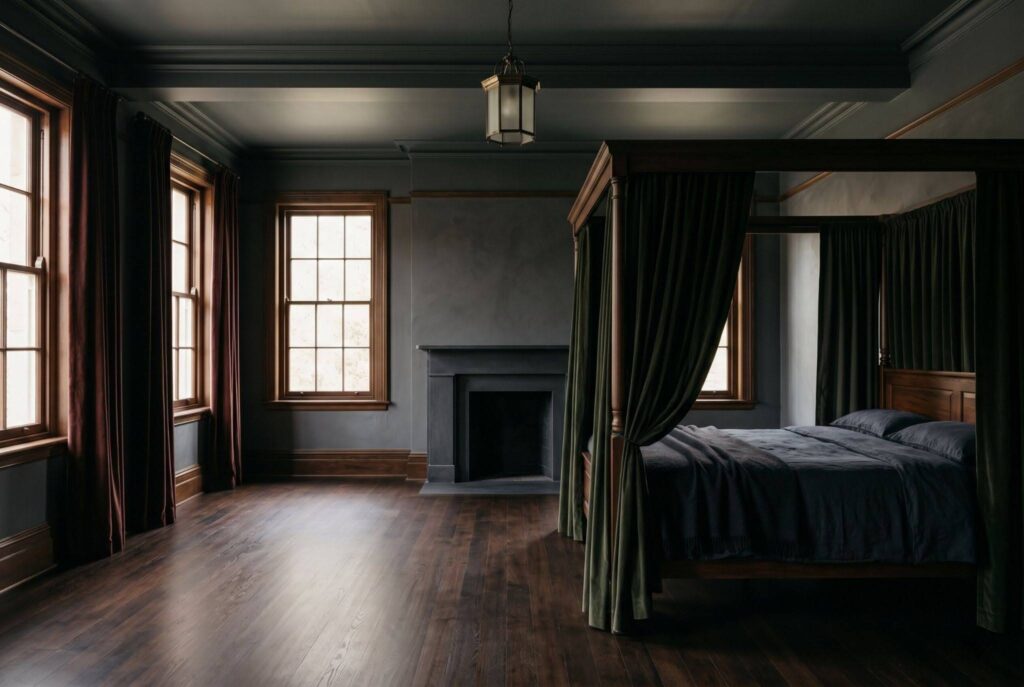
A strong dark academia room begins with the envelope of the space: walls, ceiling, floor, and light. Before buying books, candles, or art, decide how the room should feel when you first walk in. Deep paint colors create the psychological foundation. Charcoal, espresso, oxblood, navy, and moss green make the room feel protected from the outside world. This is why dark bedroom ideas can work beautifully for sleep. The room becomes a retreat rather than a display.
2. Use Dark Green as the Intellectual Neutral
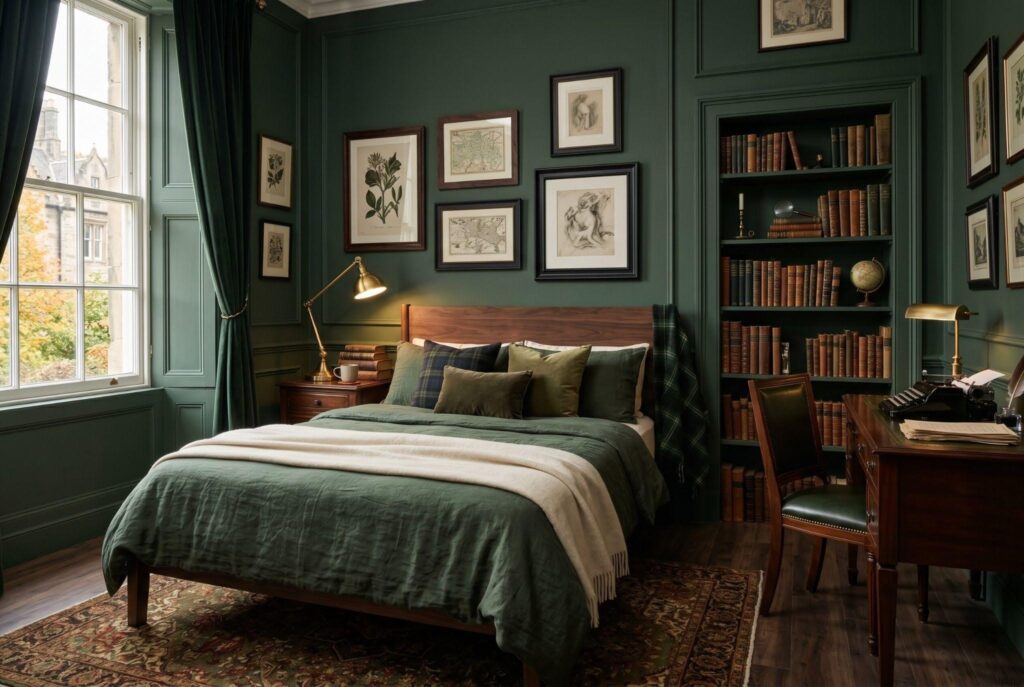
A dark green bedroom is one of the most versatile versions of this aesthetic. Forest green, hunter green, and olive feel historical without becoming theatrical. They pair naturally with walnut, mahogany, cream linen, brass lamps, and black-framed art. Green bedroom ideas also work because green is one of the most calming colors in interior design. It brings in a quiet connection to nature while still supporting the moody bedroom atmosphere.
3. Choose Depth Over Darkness
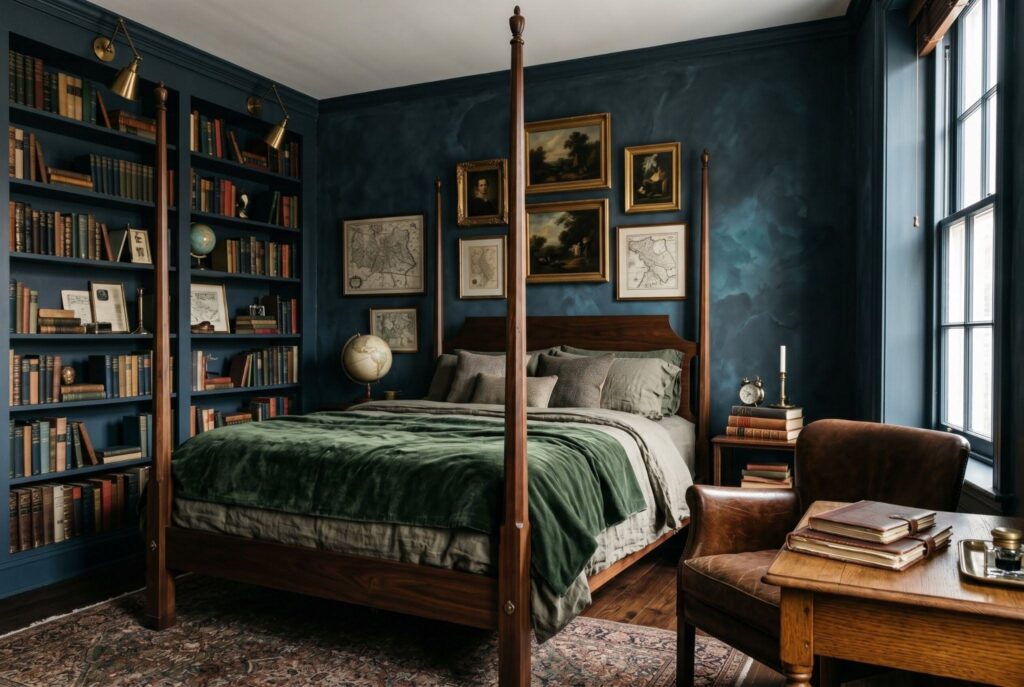
A dark bedroom doesn’t need to be black. In fact, pure black can feel flat if the room lacks texture. Better bedroom paint colors often have undertones: brown-black, blue-charcoal, green-gray, or espresso. These shades shift throughout the day. Morning light may reveal warmth. Evening lamplight may make the walls feel richer. That movement keeps the room alive.
4. Paint the Ceiling When the Room Feels Choppy
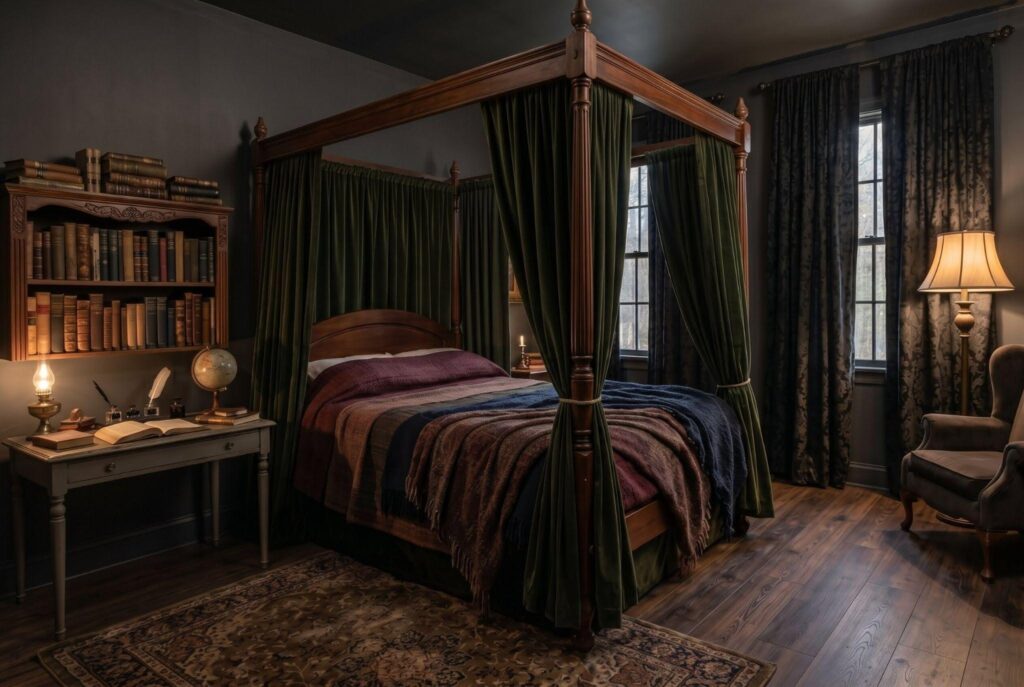
White ceilings can break the spell in a dark room. If the walls are deep green or charcoal but the ceiling stays bright white, the eye stops abruptly at the top of the room. Painting the ceiling the same shade, or one shade softer, creates the “cave effect.” Instead of making a small room feel cramped, it can make the space feel seamless, quiet, and cocoon-like.
Architecture & Layout: Curating the Space
Good bedroom layout ideas matter even more in a dark room. Heavy colors and old-world furniture need breathing space, or the design can quickly feel crowded.
5. Build Height With a Library Wall
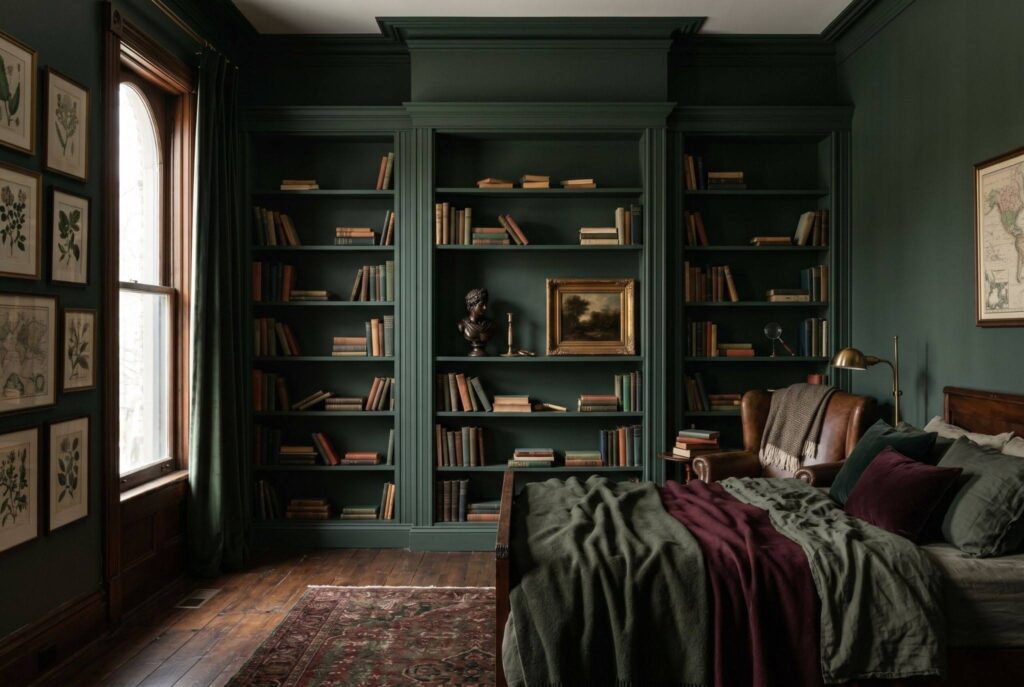
A floor-to-ceiling bookshelf is the backbone of a dark academia room. It pulls the eye upward, makes the ceiling feel taller, and gives the room architectural weight.
You don’t need custom built-ins. Tall bookcases, painted the same color as the wall, can create a similar effect. Leave some breathing room between books. Add framed art, a small bust, or a brass object to break up the rows.
6. Fake Old Architecture With Simple Molding
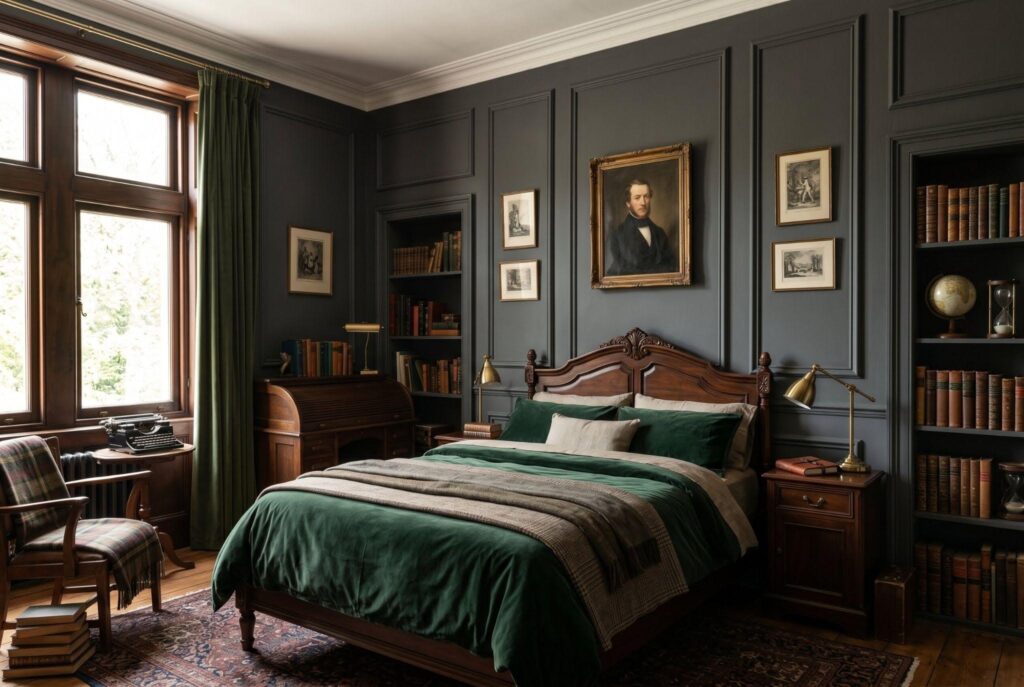
Dark academia decor works best when the room has architectural bones. If your space is plain, faux picture frame molding can add history without major renovation. Thin trim, adhesive molding, or renter-friendly wall panels can create the impression of an old study. Once painted the same color as the wall, the detail feels subtle rather than decorative. The room gains depth before you add a single accessory.
7. Replace the Accent Chair With a Reading Bench
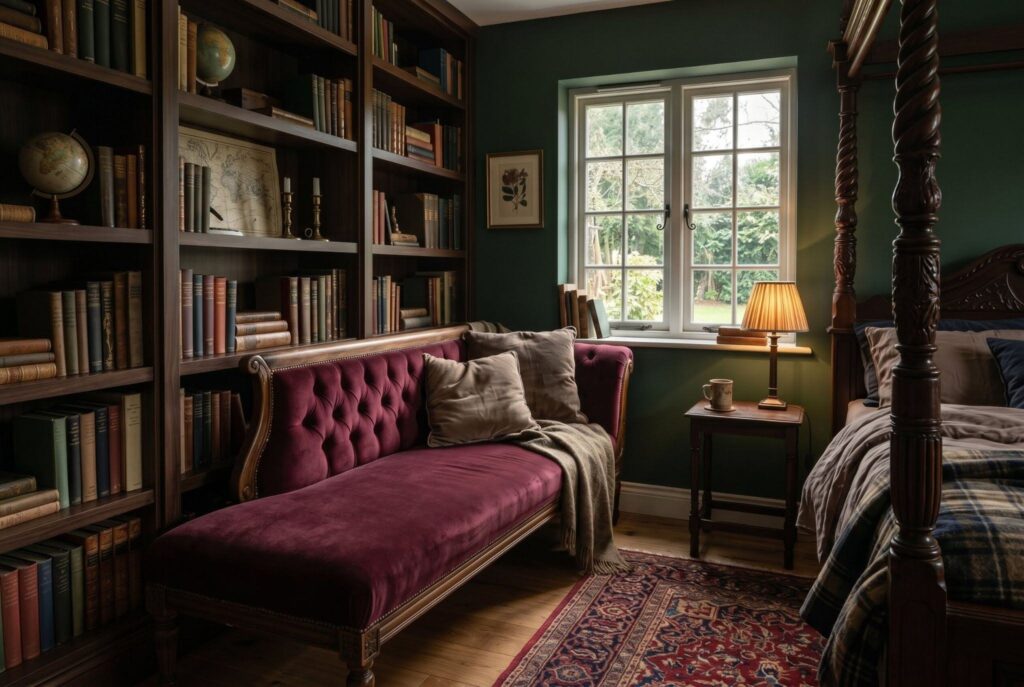
A tiny accent chair often looks decorative but rarely feels useful. A longer reading bench, window seat, or low upholstered settee gives the room a more substantial, old-library feeling. Choose velvet, leather, or heavy linen. Place it under a window, at the foot of the bed, or along a bookcase wall. This creates a reading zone without forcing the room to feel like a furniture showroom.
8. Keep the Floor Plan Quiet
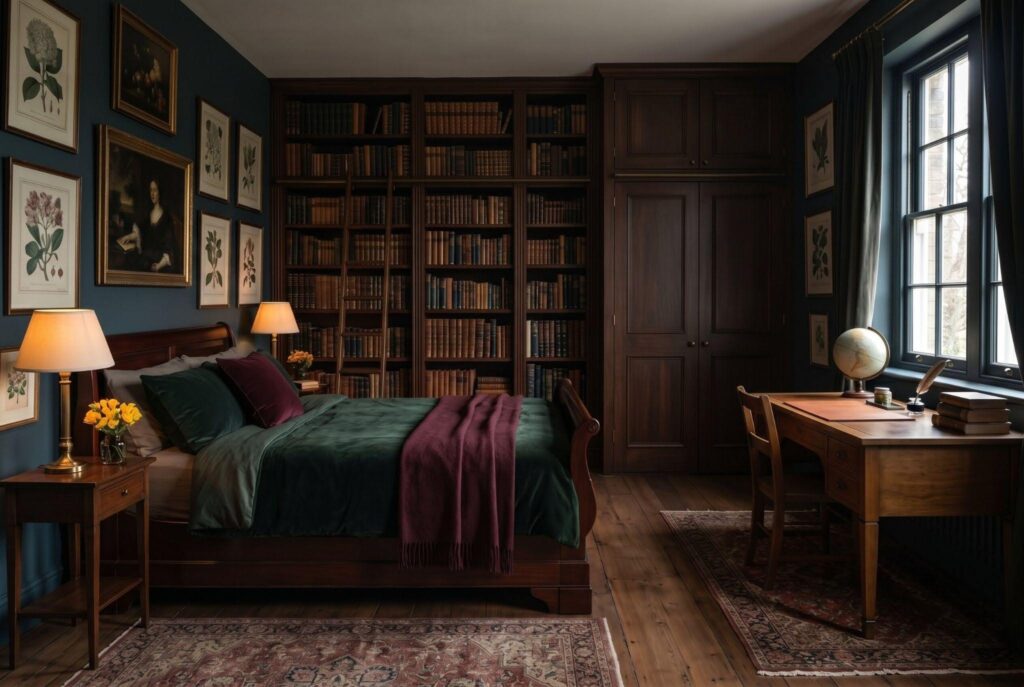
A moody bedroom should feel slow and easy to move through. If every corner is filled, the space becomes visually noisy. Keep a clear path from the bed to the door, closet, and desk. Push storage vertical instead of spreading it across the floor. The more controlled the layout feels, the more expensive the room looks.
9. Make Rental Walls Feel Permanent

Renters can still create strong dark academia interior design without paint. Use peel-and-stick wallpaper, dark fabric panels, oversized framed prints, or heavy curtains behind the bed. The goal is to create visual weight. A large dark textile can do more for the room than ten small accessories scattered across shelves.
Materials & Textiles: The Sensory Experience
A cozy bedroom isn’t built from color alone. It comes from touch, weight, warmth, and the way materials age.
10. Let Dark Woods Tell the Story
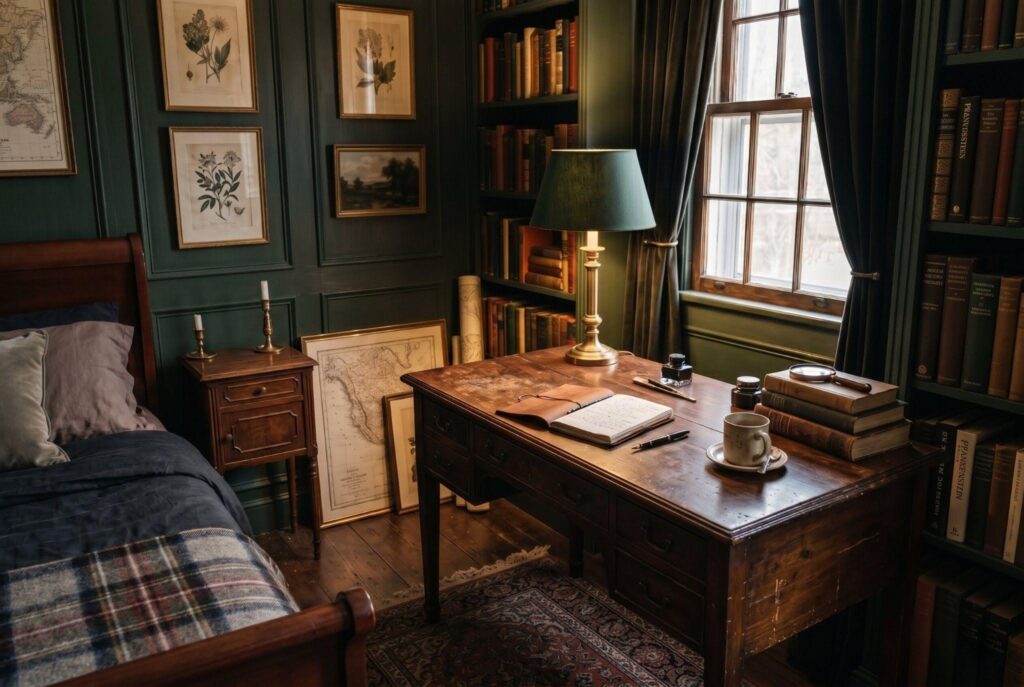
Walnut, mahogany, and espresso-stained wood instantly suggest libraries, old desks, and inherited furniture. Their grain adds movement in low light, which prevents a dark room from feeling flat. Instead of buying a matching set, choose one anchor piece with character. A worn writing desk, vintage nightstand, or tall bookcase can define the room. Scratches and patina aren’t flaws here. They make the space feel lived in.
11. Use Brass Like Candlelight
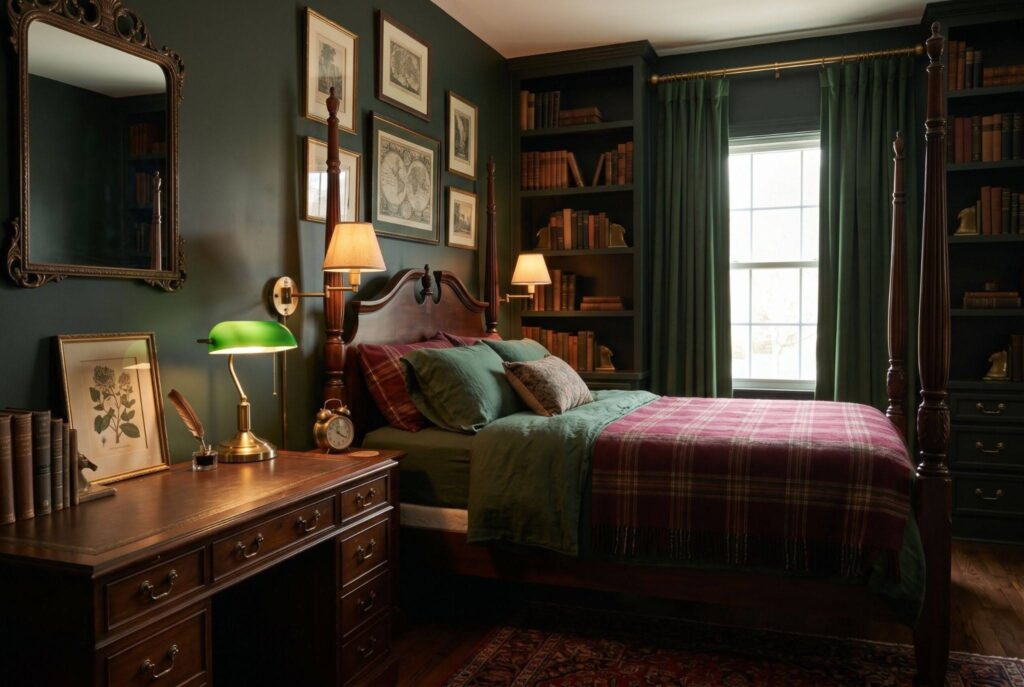
Aged brass and bronze add warmth where dark colors can feel heavy. Use them on lamps, mirror frames, curtain rods, drawer pulls, and picture frames. The trick is restraint. A few warm metallic details catch the light and make the room glow. Too much shine breaks the spell.
12. Control Light Like a Theatre Director
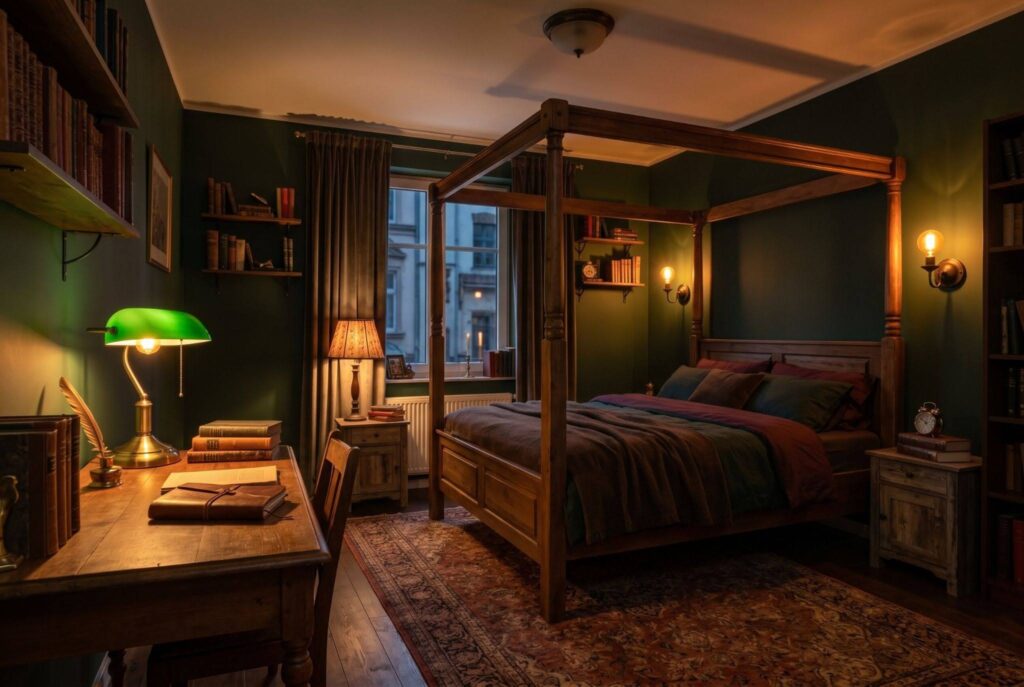
The most cinematic moody bedroom ideas depend on controlled light. Harsh overhead lighting makes everything look flat. Low, warm light creates shadow, depth, and intimacy. Heavy velvet blackout curtains help shape that mood. They block streetlights, soften noise, and create dramatic vertical folds. Deep green, navy, oxblood, chocolate, and charcoal all work beautifully.
13. Build the Bed in Layers, Not Sets
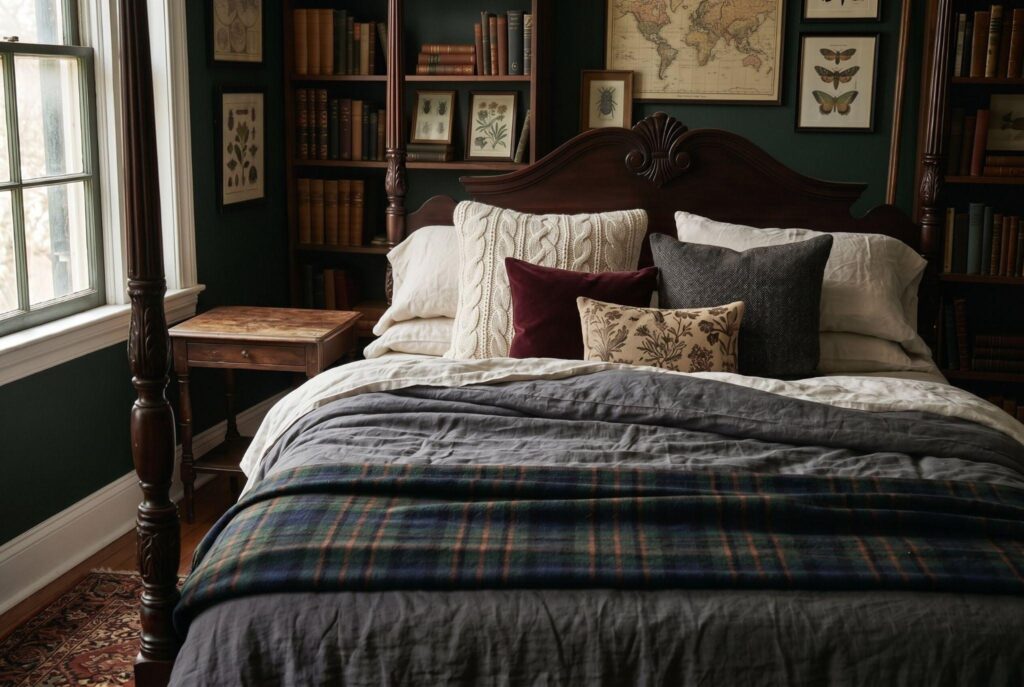
A dark academia bed should look collected, not packaged. Start with simple sheets, add a linen duvet, fold a wool or plaid blanket across the foot, then finish with textured pillows. Layering creates visual warmth. It also makes the bedroom feel restful rather than staged. For cozy bedroom ideas, texture is more important than a perfect matching color scheme.
14. Ground the Room With a Faded Rug
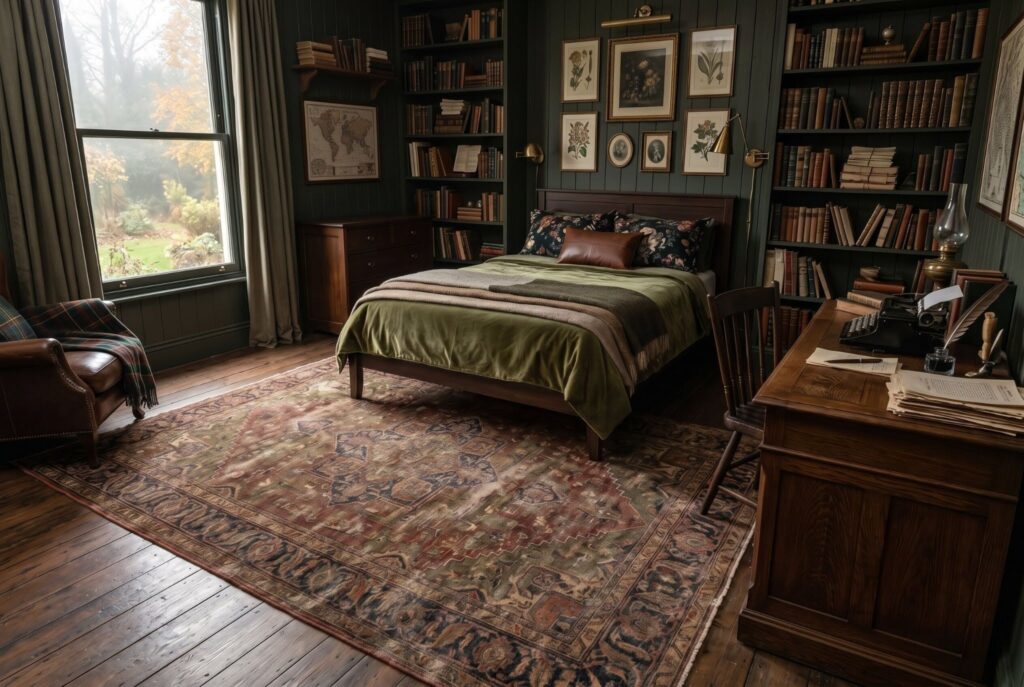
A vintage-style rug gives the room age and softness. Look for faded burgundy, olive, navy, rust, brown, or muted gold. The rug should feel slightly worn, as if it has belonged to the room for years. This small detail can make even modern furniture feel more connected to the dark academia aesthetic.
The Rule of 3 for Academia Decor
Dark academia decor becomes messy when every surface tries to tell a different story. Use fewer objects, but make each arrangement feel intentional.
15. Build a Gallery Wall That Feels Collected
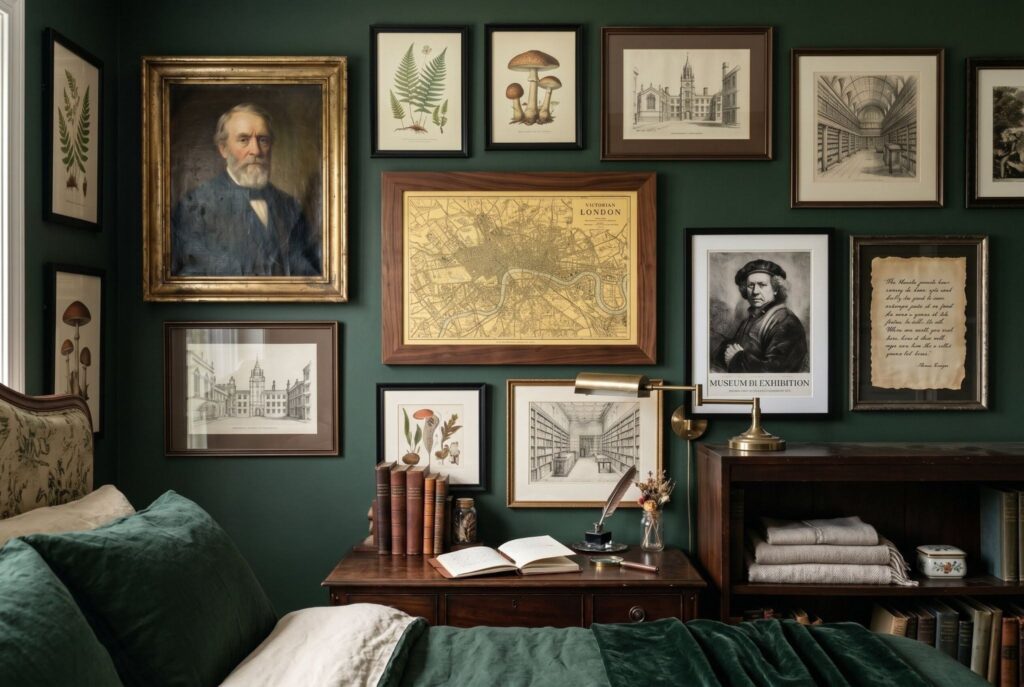
A strong gallery wall shouldn’t look like one online order. Mix oil portraits, botanical illustrations, old maps, architectural sketches, museum prints, and handwritten-style pieces. Use frames in slightly different finishes: black, walnut, antique gold, and dark bronze. The goal isn’t perfect symmetry. The goal is the feeling of a curious person collecting images over time.
16. Let Amber Light Replace the Ceiling Light
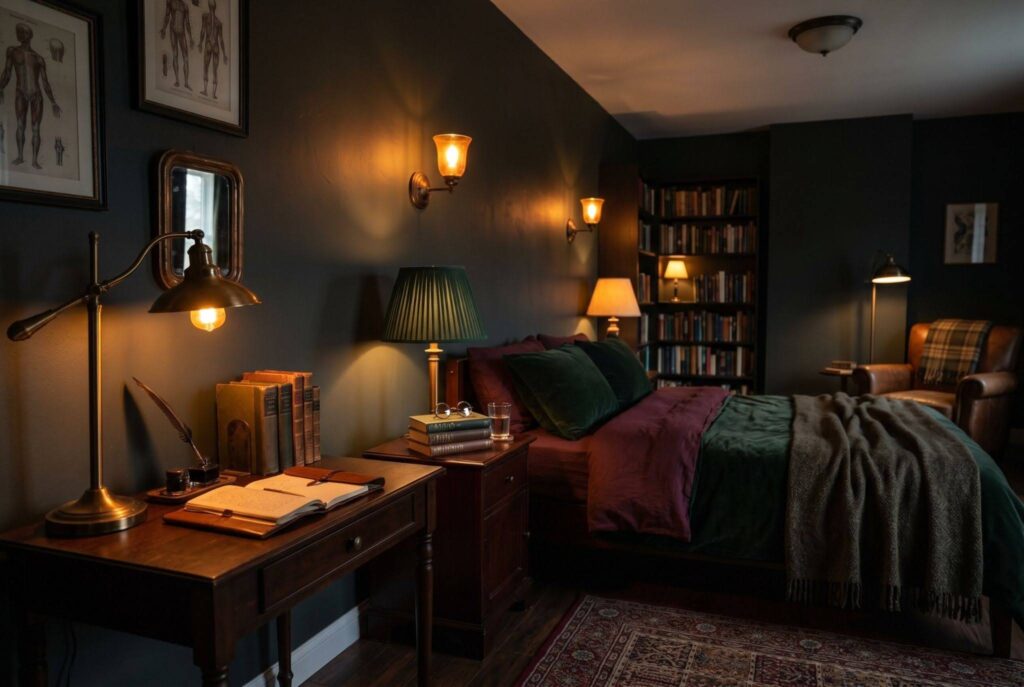
Turn off the overhead fixture whenever possible. Use table lamps, sconces, shaded desk lamps, and amber bulbs around 2700K. Warm lighting makes dark walls softer and skin tones more flattering. It also supports the sleep-friendly side of the style, making the room feel calm at night instead of gloomy.
17. Style Surfaces With the Rule of Three
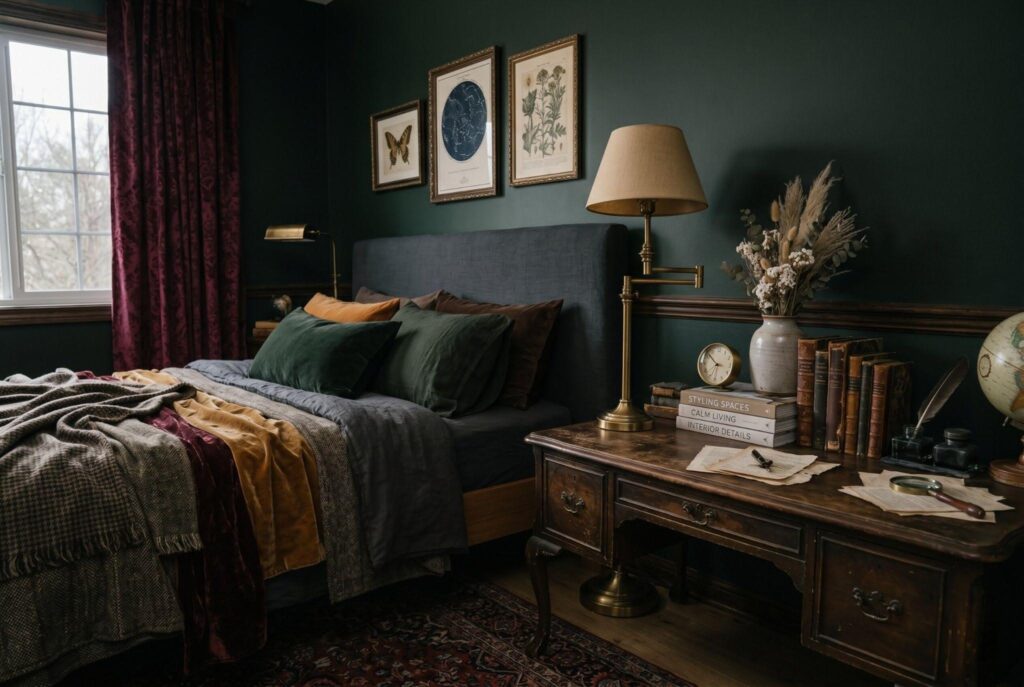
Every tabletop should have balance. Combine one vertical object, one horizontal object, and one organic object. For example, place a brass lamp, a stack of books, and dried flowers on a nightstand. On a desk, use a framed print, a notebook, and a small ceramic dish. This keeps styling controlled without making it sterile.
18. Give the Room an Intellectual Centerpiece
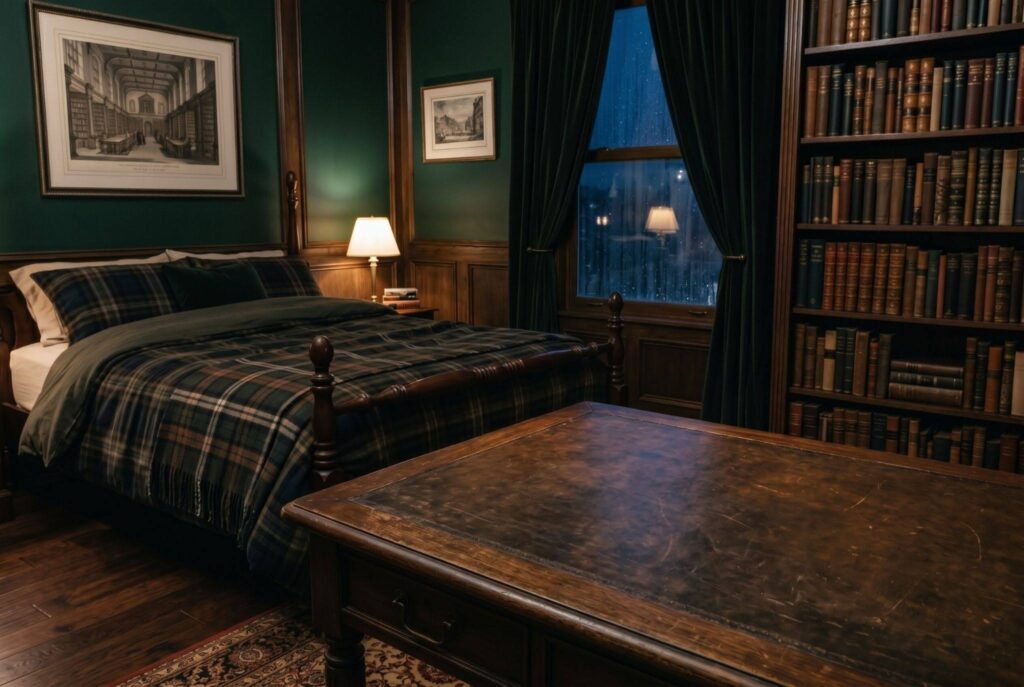
Every memorable dark academia bedroom has one object that sparks curiosity. It might be a globe, chess board, typewriter, telescope, old camera, or annotated book. Choose one meaningful focal point rather than scattering novelty objects everywhere. The room should suggest intelligence, not perform it too loudly.
19. Add Organic Texture to Break the Weight
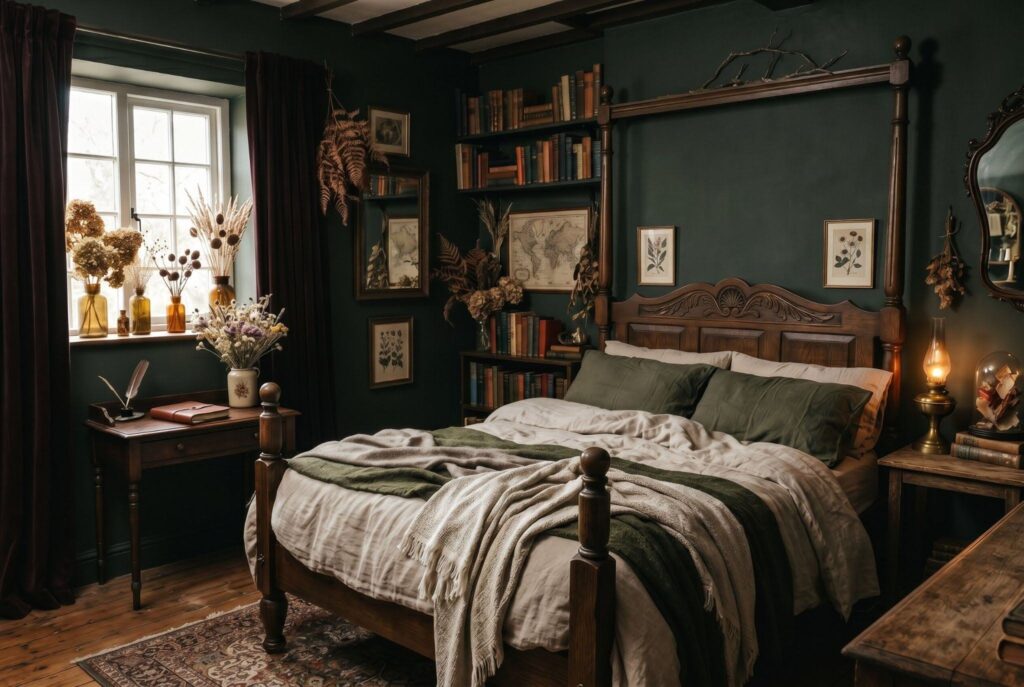
Books, dark wood, and heavy curtains can feel dense. Dried flowers, pressed botanicals, branches, old paper, and natural linen soften the composition. This is especially useful in a small dark bedroom. Organic details keep the room from feeling like a stage set.
20. Design the Room’s Scent
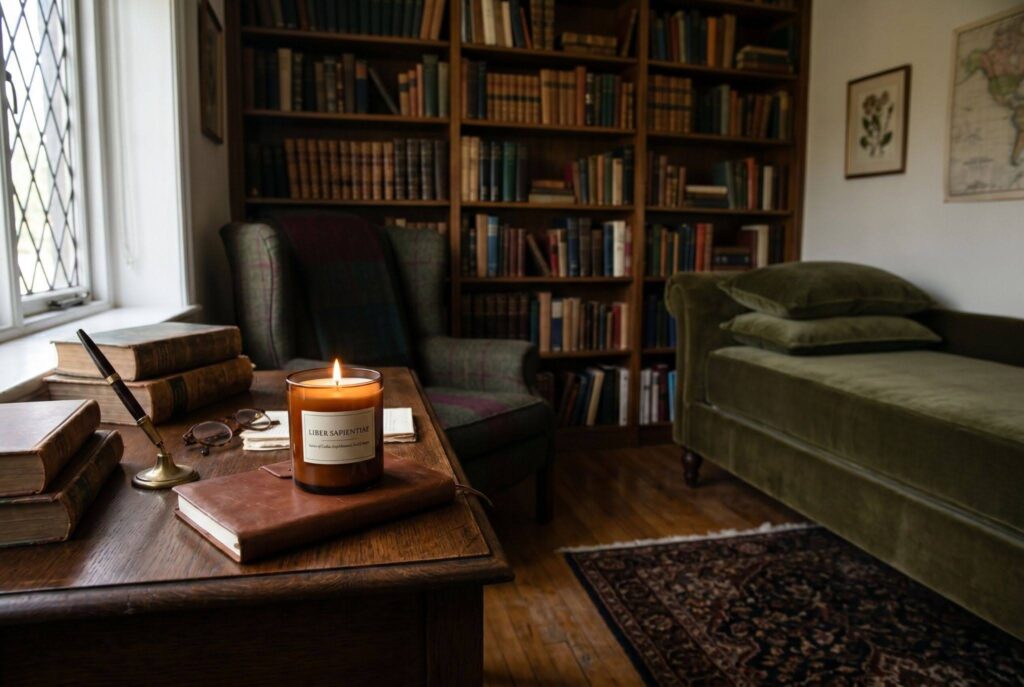
A room feels more immersive when it has a subtle scent. Cedar, sandalwood, leather, tobacco leaf, oak, amber, and old paper notes all support the dark academia mood. Use one candle, reed diffuser, or linen spray. The scent should be quiet. If it announces itself before the room does, it’s too strong.
Masculine, Moody, and Modern Details
Dark academia can also work as men’s bedroom ideas when the design is restrained, tactile, and grounded.
21. Use Leather for Structure
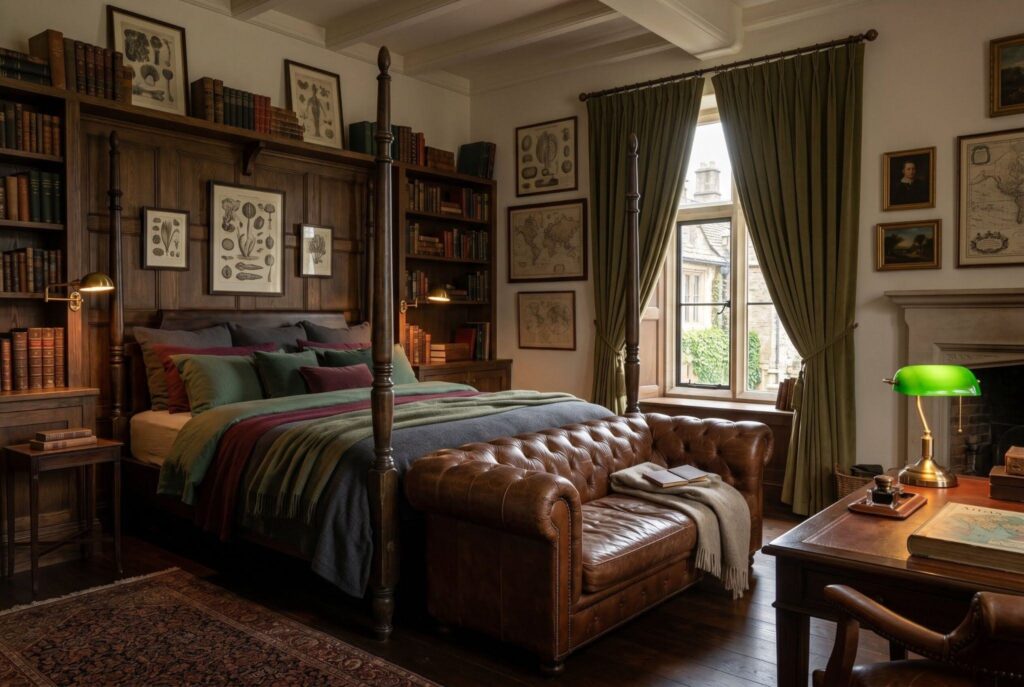
Leather brings weight and confidence to a masculine bedroom. A leather bench, desk chair, storage box, or lumbar pillow can sharpen the room without making it cold. Brown leather feels scholarly and classic. Black leather feels more modern and dramatic. Both work if balanced with warm light and soft bedding.
22. Make the Desk Feel Serious
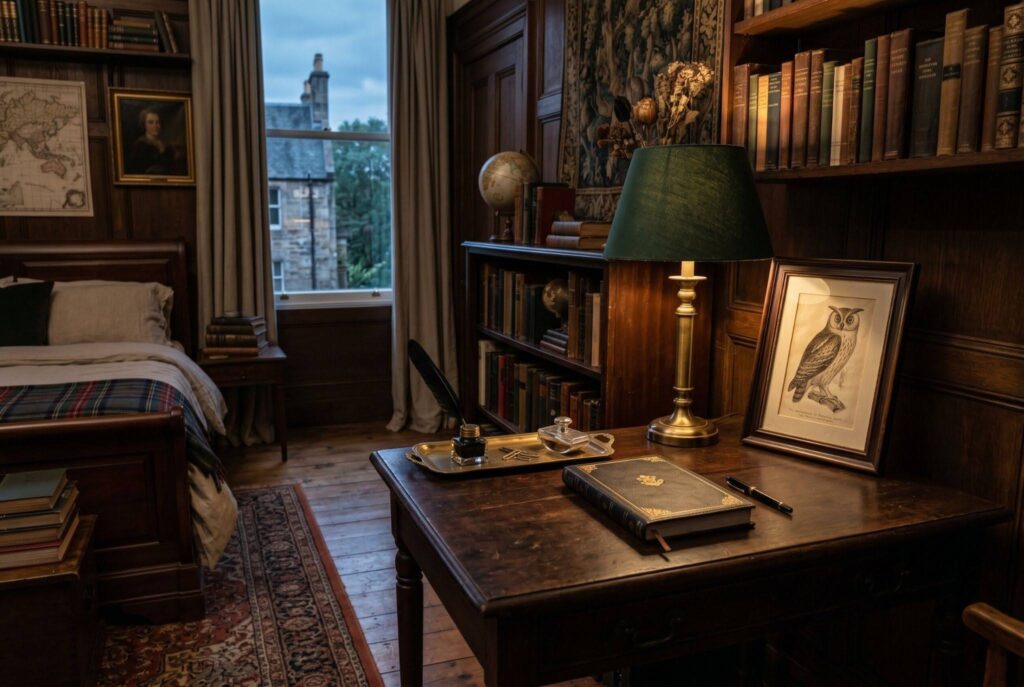
A dark academia desk should invite focus. Avoid bright plastic organizers and cluttered tech accessories where possible. Use a shaded lamp, a notebook, a small tray, and one framed print. Hide cables. Keep the surface usable. A beautiful desk that can’t be worked on is only decoration.
23. Balance Modern Lines With Old-World Texture
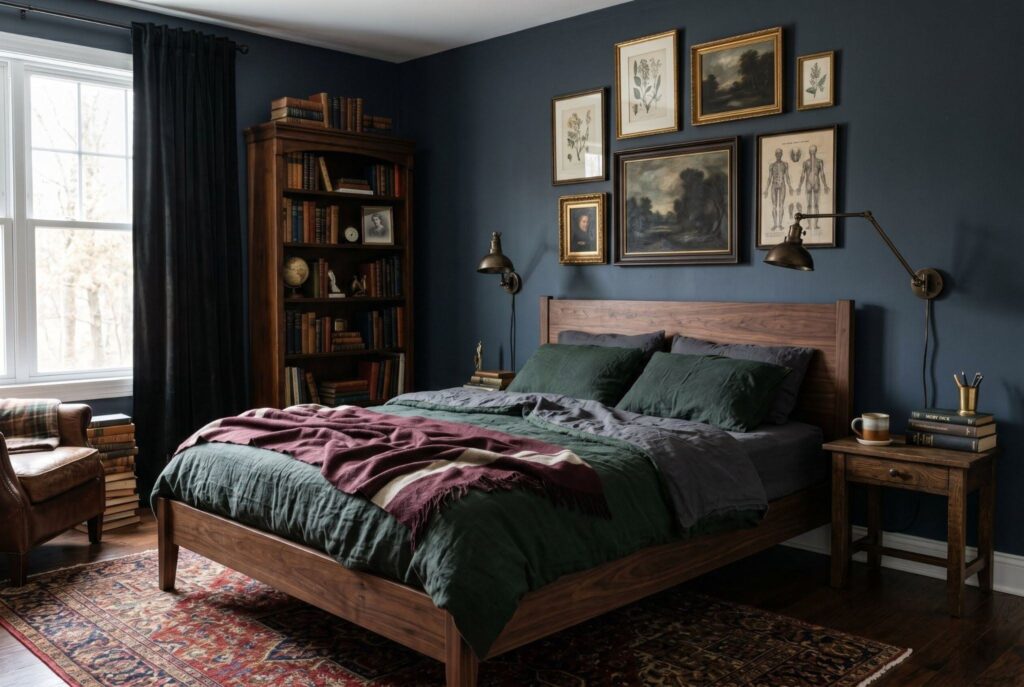
Modern dark academia works best when clean furniture meets rich materials. A simple platform bed can fit the style if paired with dark wood, linen bedding, brass lighting, and layered art. This prevents the room from feeling like a dorm or costume set. The result feels mature, calm, and livable.
24. Curate Ruthlessly
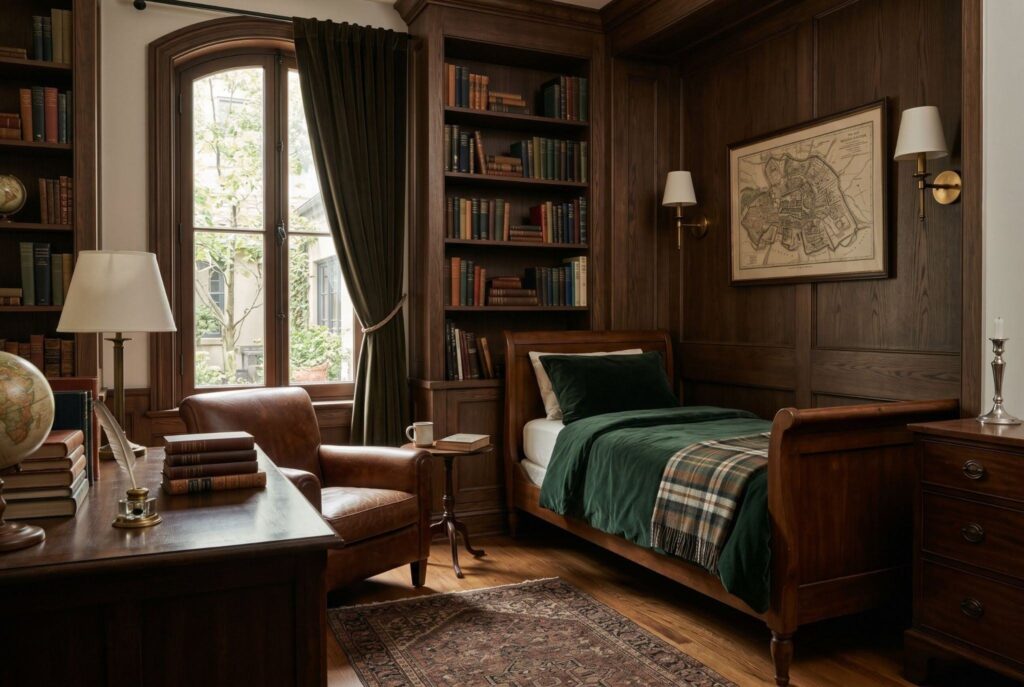
The most important rule is editing. Many people misunderstand dark academia bedroom design and assume more objects create more atmosphere. They don’t. Too many accessories make the room feel dusty and anxious. A well-designed space works like a great library: every item has a purpose, and every object earns its place. Before adding anything new, ask whether it strengthens the room’s story. If the answer isn’t clear, leave it out.
Conclusion
A dark academia bedroom succeeds when it feels intentional. Deep colors create the cocoon. Bookshelves add height. Velvet curtains control light. Walnut furniture and brass details bring warmth. Layered bedding makes the room deeply comfortable. Whether you’re creating a dark green bedroom, exploring dark bedroom ideas, refining a masculine bedroom, or searching for cozy bedroom ideas that feel more sophisticated, the rule stays the same: choose atmosphere over clutter. The best dark academia room doesn’t shout for attention. It waits quietly, like a good book on a rainy night.
Related Articles
Dark Academia Living Room Ideas: 21 Grand Library Layouts