

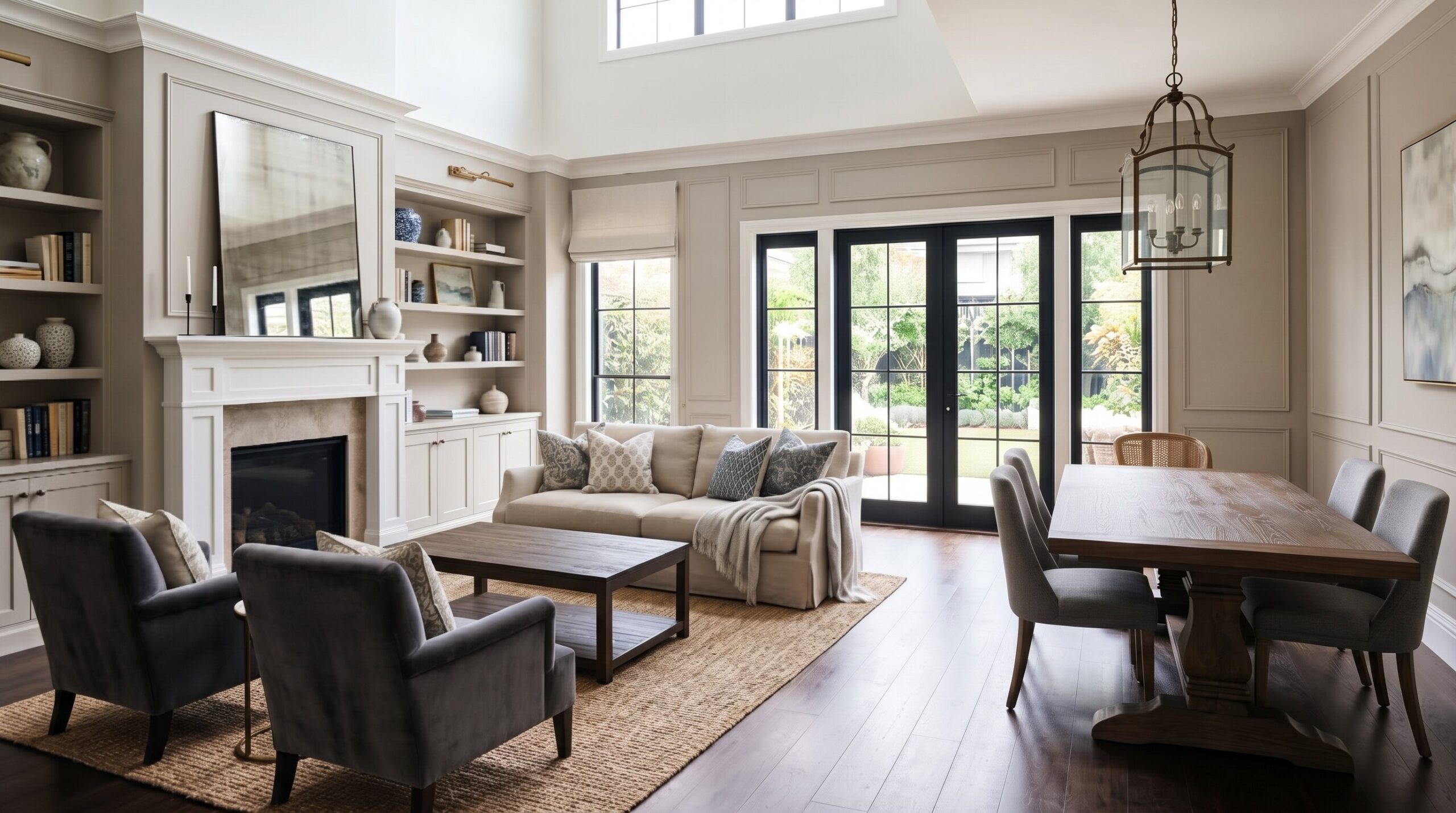
Many homeowners find themselves stuck between two worlds. They love the warmth and character of traditional interiors, yet worry that their home may feel dated. At the same time, they admire the clean simplicity of modern spaces but don’t want a home that feels cold or impersonal. That’s where transitional interior design shines.
Transitional style is the art of blending classic elegance with contemporary simplicity. Instead of choosing one design era over another, transitional design creates balance between the two. The most successful homes don’t split the difference evenly. A useful rule is the 70/30 approach. Let roughly 70 percent of the room lean toward clean contemporary forms while 30 percent introduces traditional details, texture, and character. The result is a timeless space that feels sophisticated, comfortable, and relevant year after year.
9 Elements of the Perfect Transitional Design
Creating a successful transitional home design isn’t about randomly mixing old and new pieces. It follows a clear framework built around materials, proportion, color, and restraint.
1. The Neutral Foundation
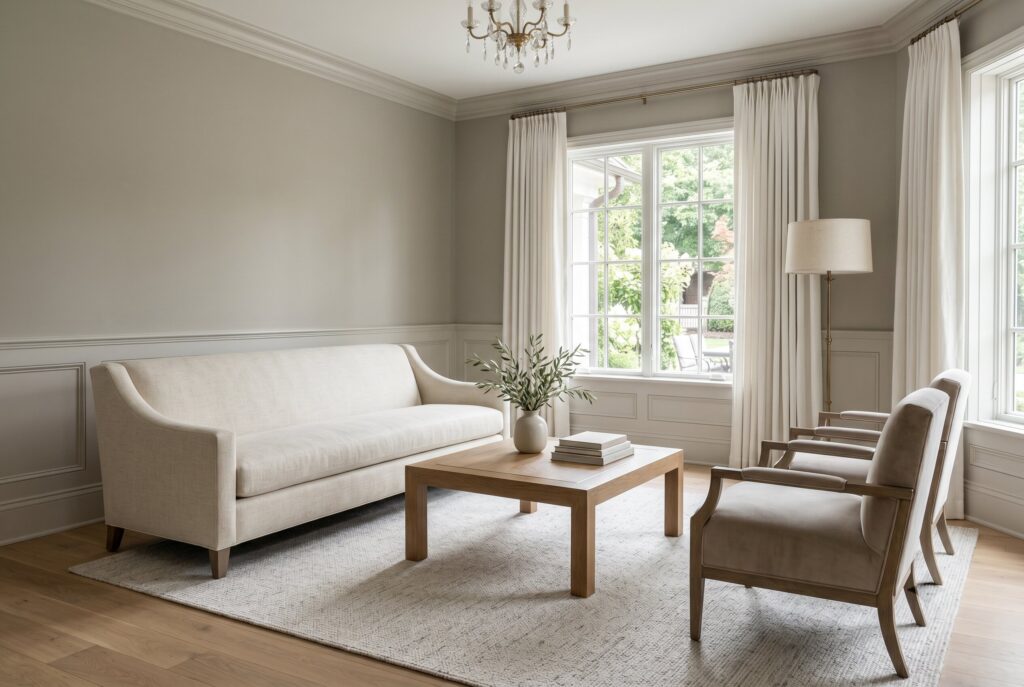
Every great transitional design begins with a neutral color palette. Soft ivory, warm white, light greige, taupe, and pale gray create the calm backdrop this style requires. These shades allow architectural details, furniture, and texture to become the focal point rather than competing with bold wall colors. To prevent the room from feeling flat, introduce subtle accent colors. Sage green works particularly well because it adds organic warmth without overwhelming the neutral foundation.
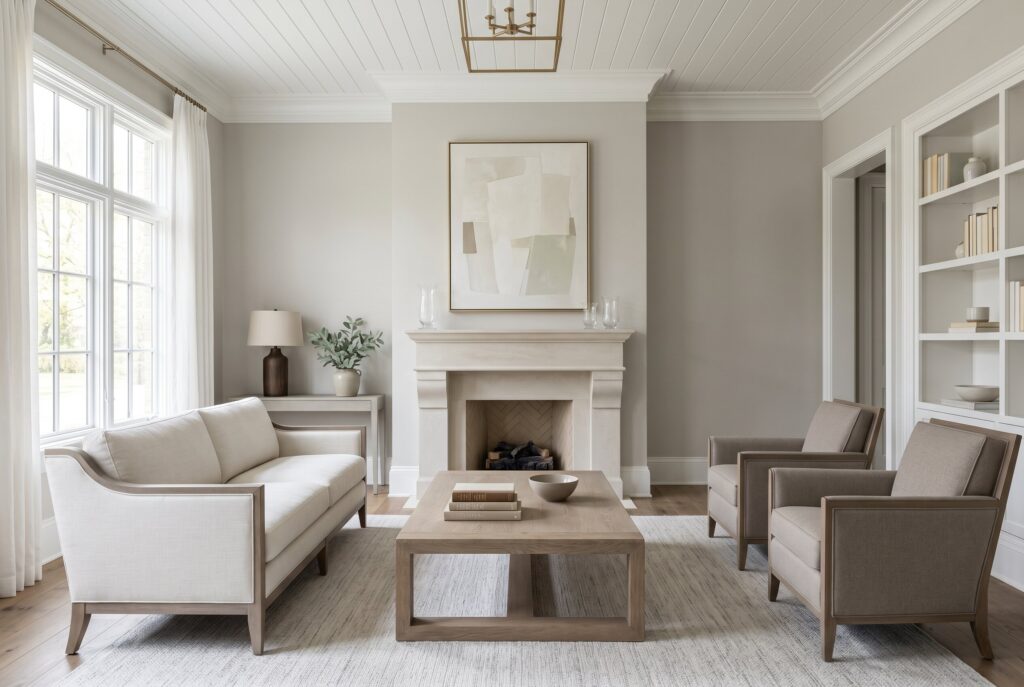
2. Warm Woods Over Glossy Surfaces
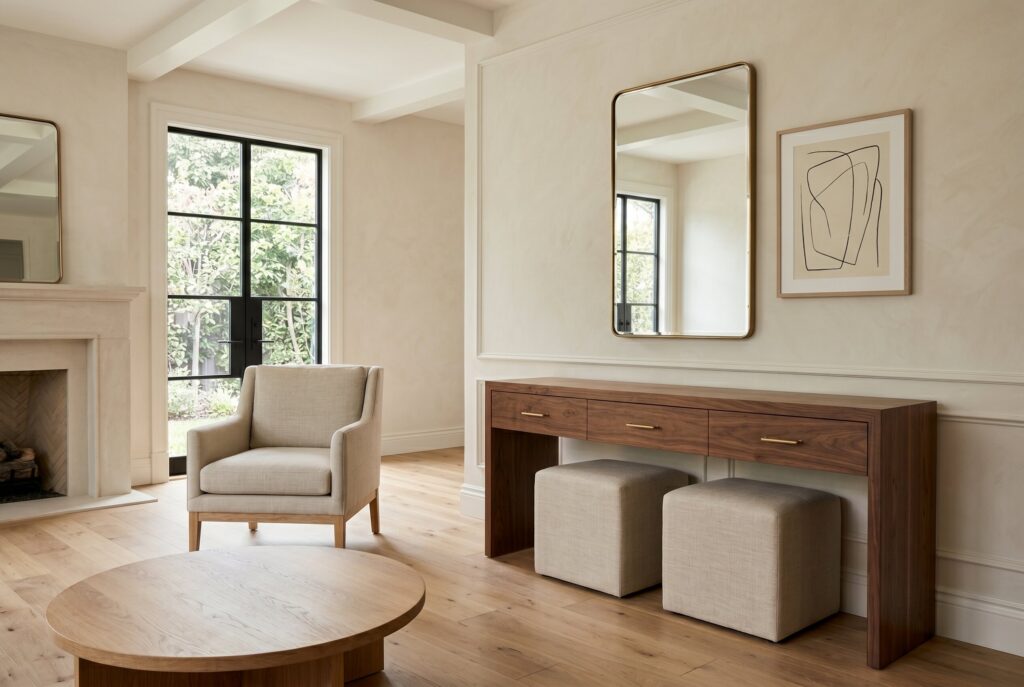
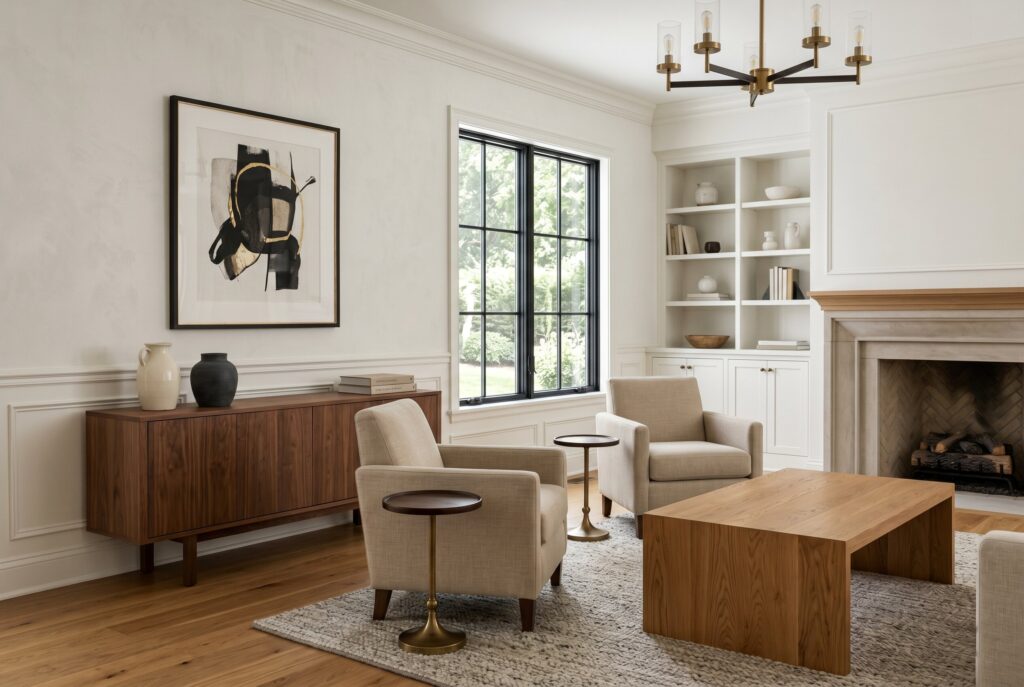
Natural materials are essential in transitional interior design. Oak and walnut are especially effective because they bridge traditional craftsmanship and contemporary simplicity. A walnut console table, oak flooring, or solid wood coffee table adds warmth that balances modern lines. Avoid excessively glossy finishes. Transitional interiors feel grounded, tactile, and authentic rather than sleek and futuristic.
3. The Anchor Sofa
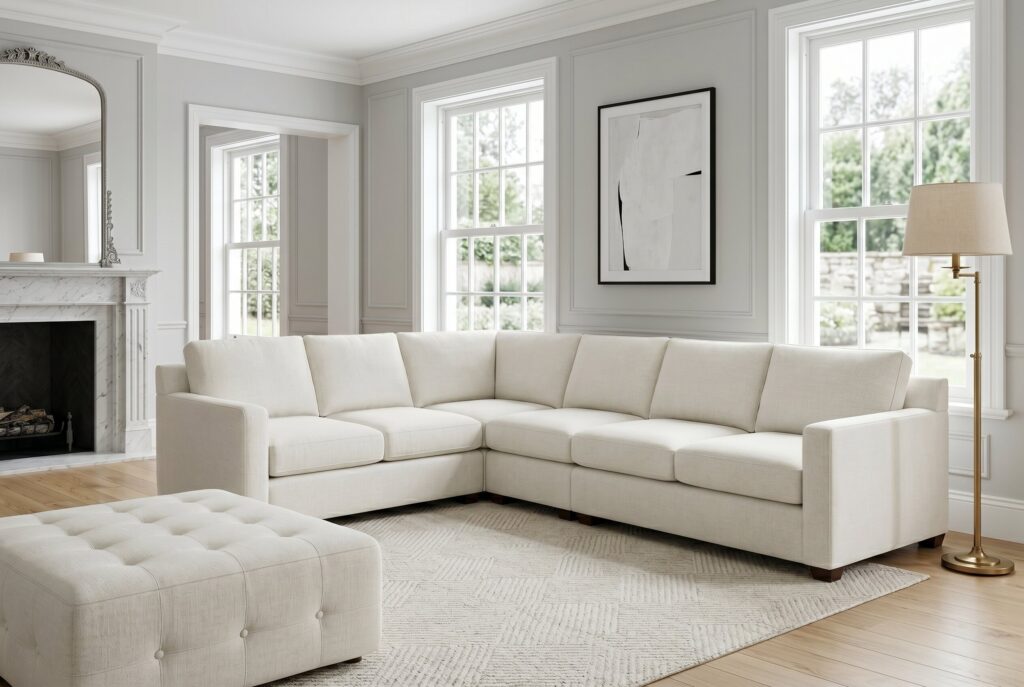
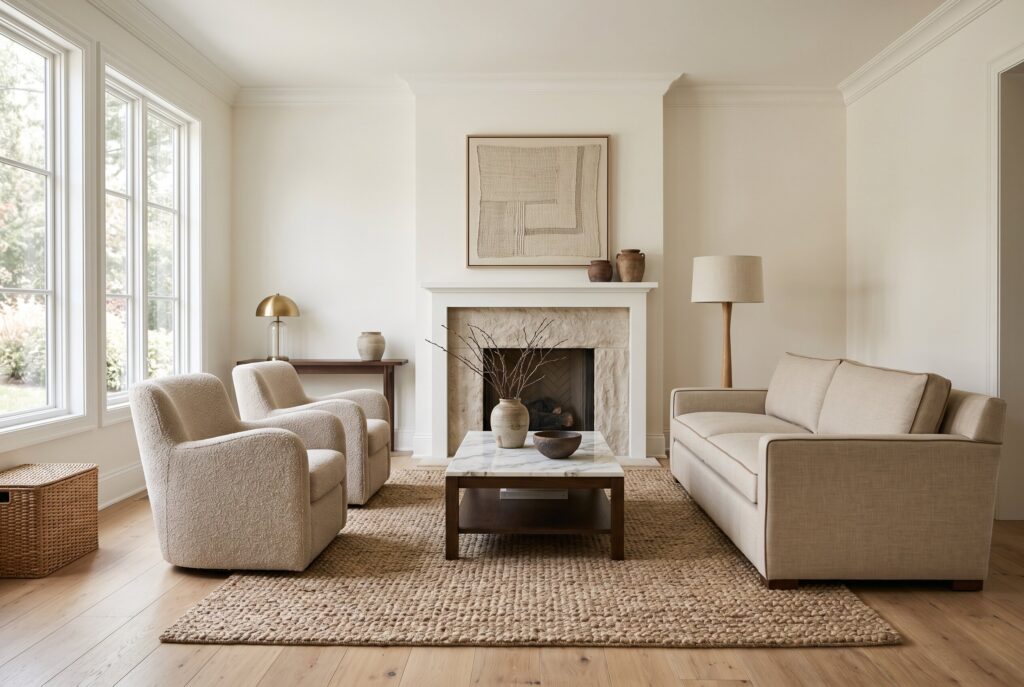
The sofa often determines whether a transitional living room succeeds or fails. Instead of several scattered seating pieces, choose a large L shaped or U shaped sectional that anchors the entire space. Upholstery in linen, performance fabric, boucle, or textured woven fabrics reinforces the relaxed sophistication associated with transitional home style. The silhouette should be clean and streamlined without feeling rigid. Comfort remains just as important as aesthetics.
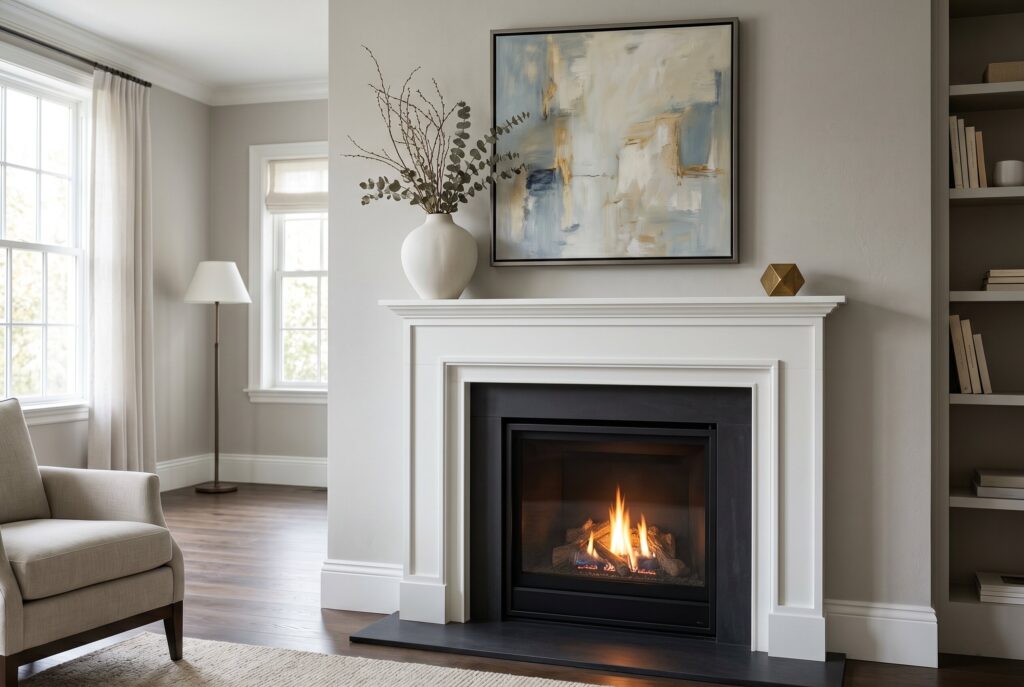
4. Minimalist Fireplace Mantels
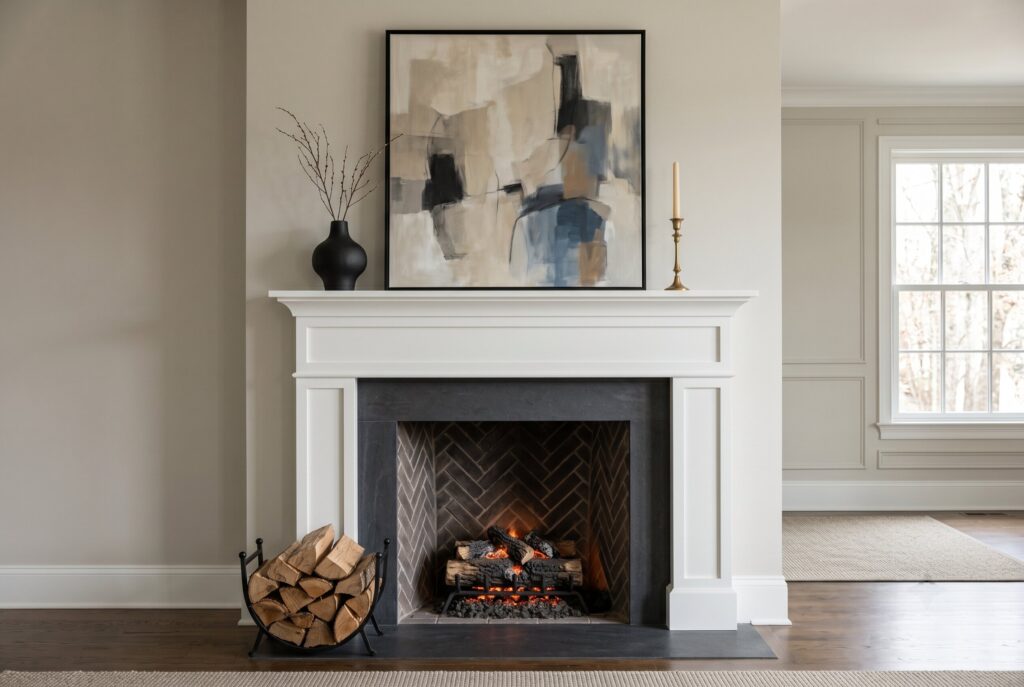
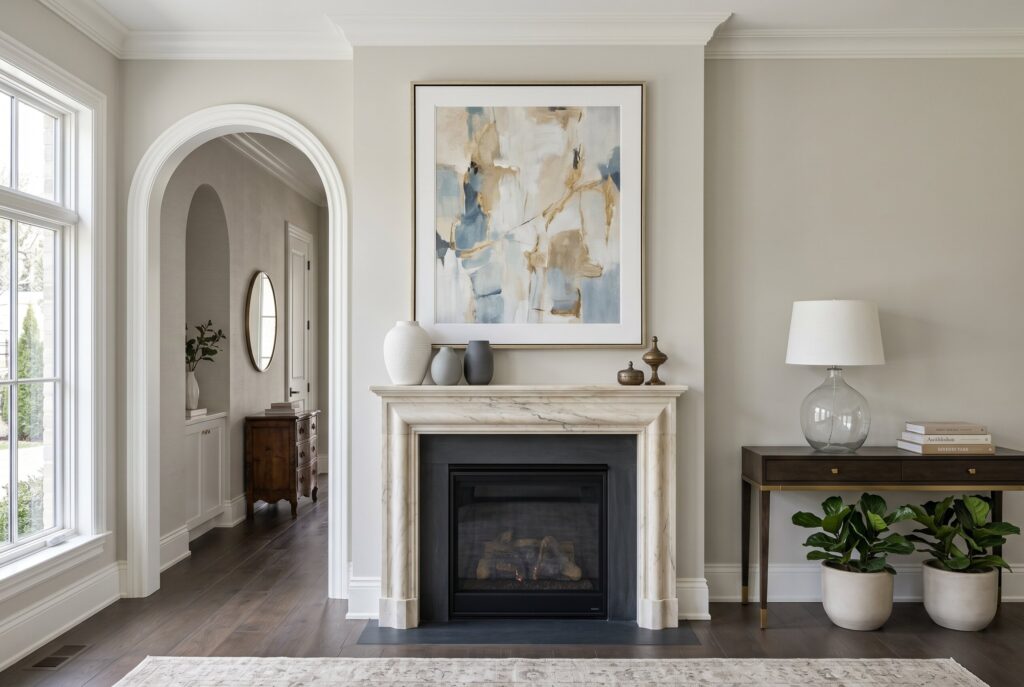
Many transitional homes incorporate traditional architectural features such as fireplaces. The difference is how they’re styled. Rather than ornate carvings and excessive decoration, transitional style simplifies the mantel. The structure remains classic, but the presentation becomes refined and minimal. A single large artwork, sculptural vase, or carefully chosen object often creates a stronger statement than multiple decorative accessories.
5. Mixed Metal Hardware
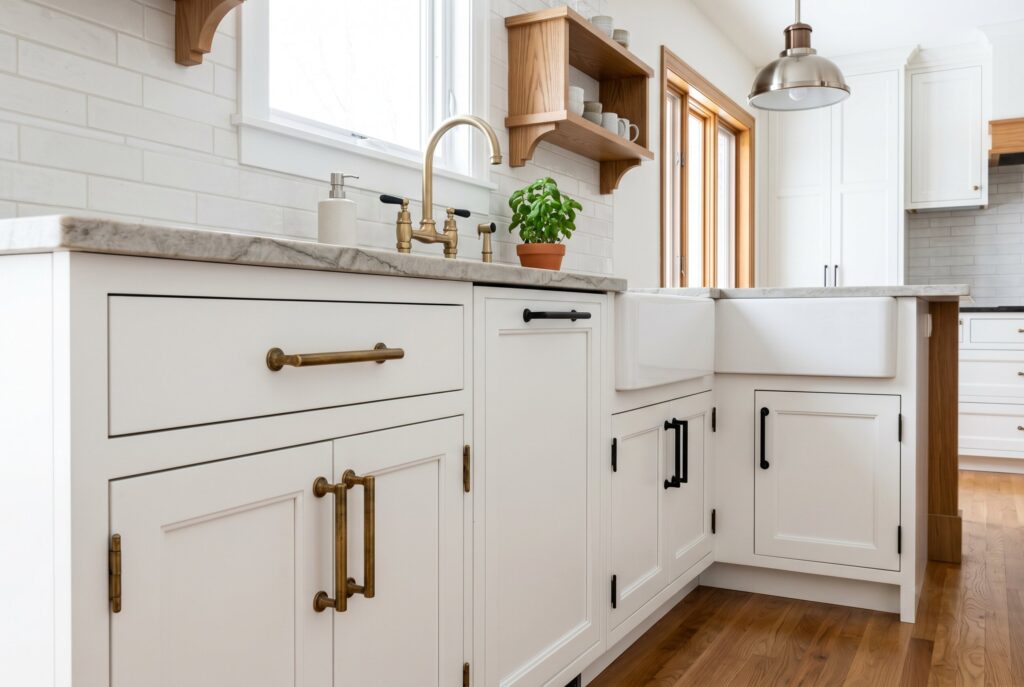
One of the most overlooked aspects of transitional home decor is transitional hardware. The best designers rarely use only one metal finish throughout a room. Warm brass cabinet pulls may coexist with matte black faucets. Brushed nickel lighting may complement bronze door hardware. This layering creates depth and sophistication. Mixed materials and mixed finishes help the space feel collected over time rather than purchased all at once from a showroom.
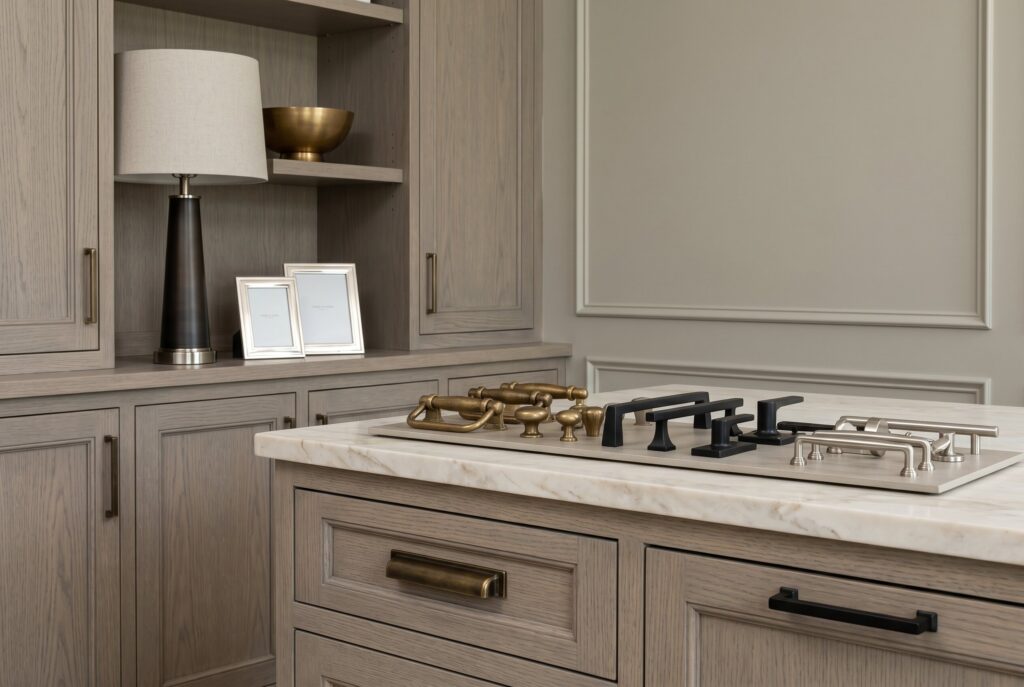
6. Textural Layering
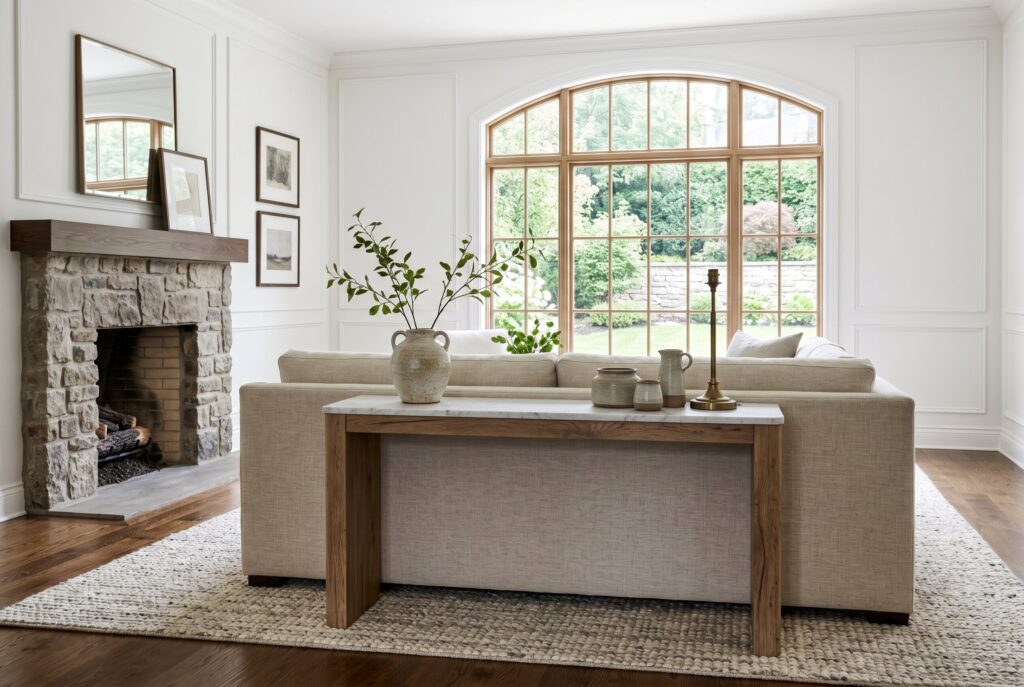
Color isn’t the primary source of visual interest in transitional interiors. Texture is. Combine woven fabrics, wool rugs, velvet pillows, natural wood, ceramic accessories, and stone surfaces. These layers create richness without relying on bright colors. A room filled with texture feels inviting because it engages the senses in a subtle way. This is one reason transitional style remains timeless while trend driven interiors quickly feel outdated.
7. Contemporary Lighting
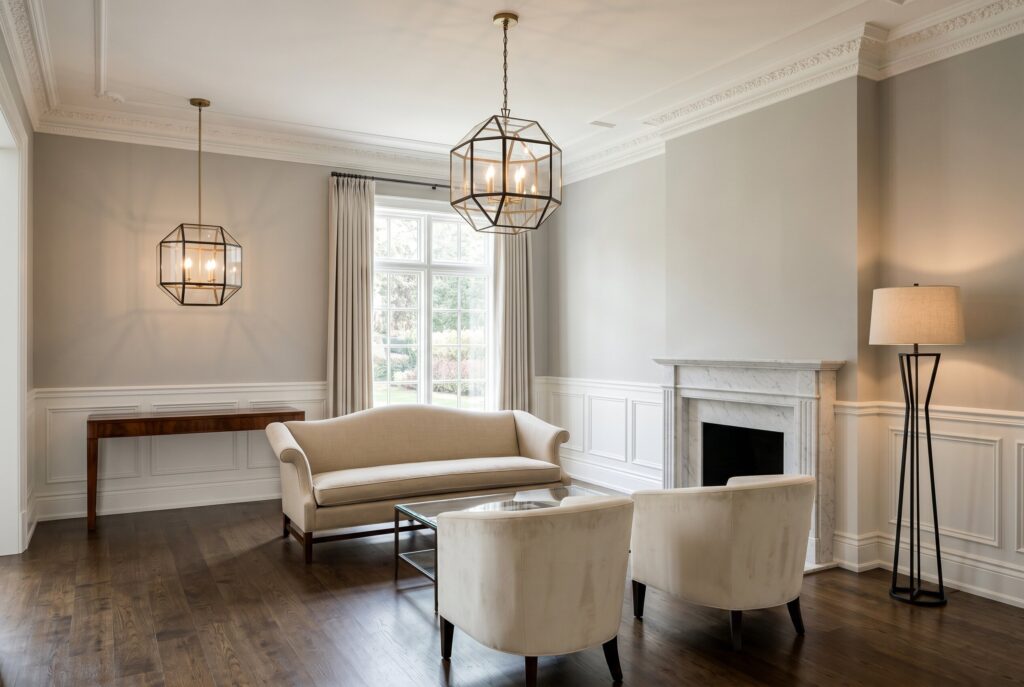
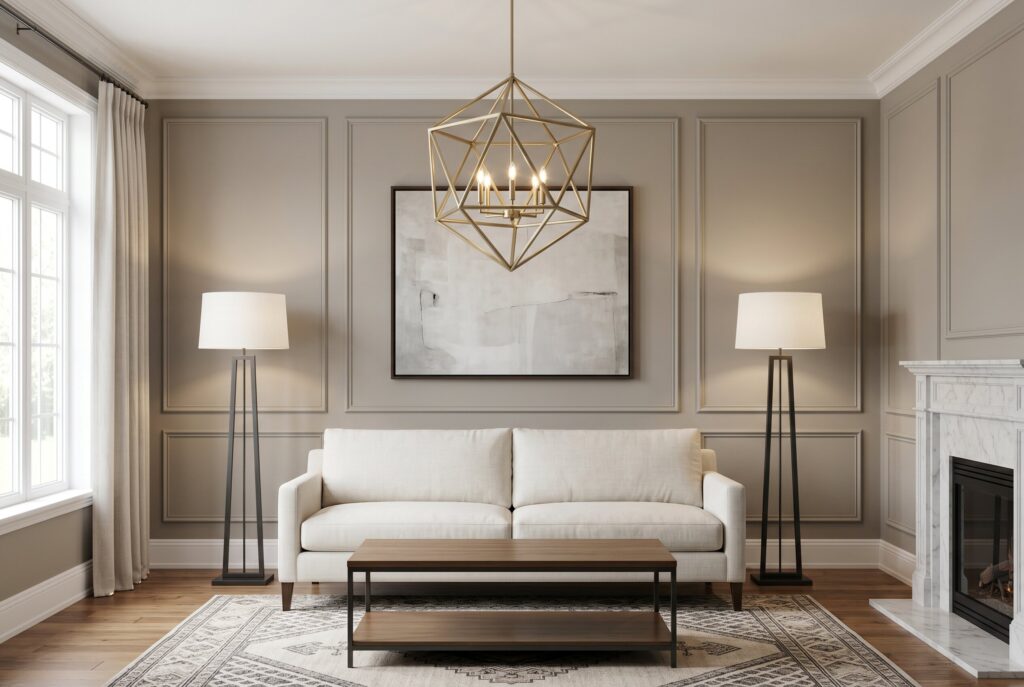
Lighting provides one of the easiest ways to modernize traditional spaces. Replace ornate chandeliers with geometric pendants, sculptural floor lamps, or streamlined metal fixtures. The lighting should feel current without becoming overly industrial or futuristic. A carefully selected fixture can instantly shift the balance toward a modern traditional interior while preserving warmth and elegance.
8. Edited Art and Accessories
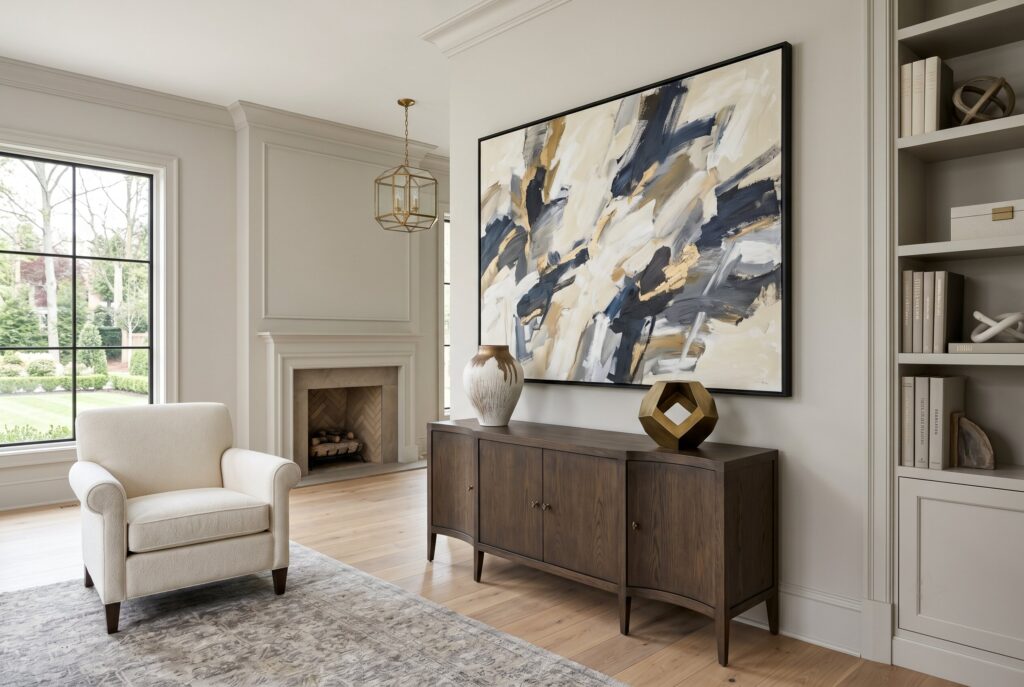
A common mistake is assuming more decoration creates more personality. In transitional design, restraint is often more powerful. Instead of filling every wall with small frames and every surface with decorative objects, focus on fewer, larger statements. Oversized artwork, carefully curated accessories, and intentional negative space create visual calm. This approach allows each element to have greater impact.
9. Barefoot Comfort
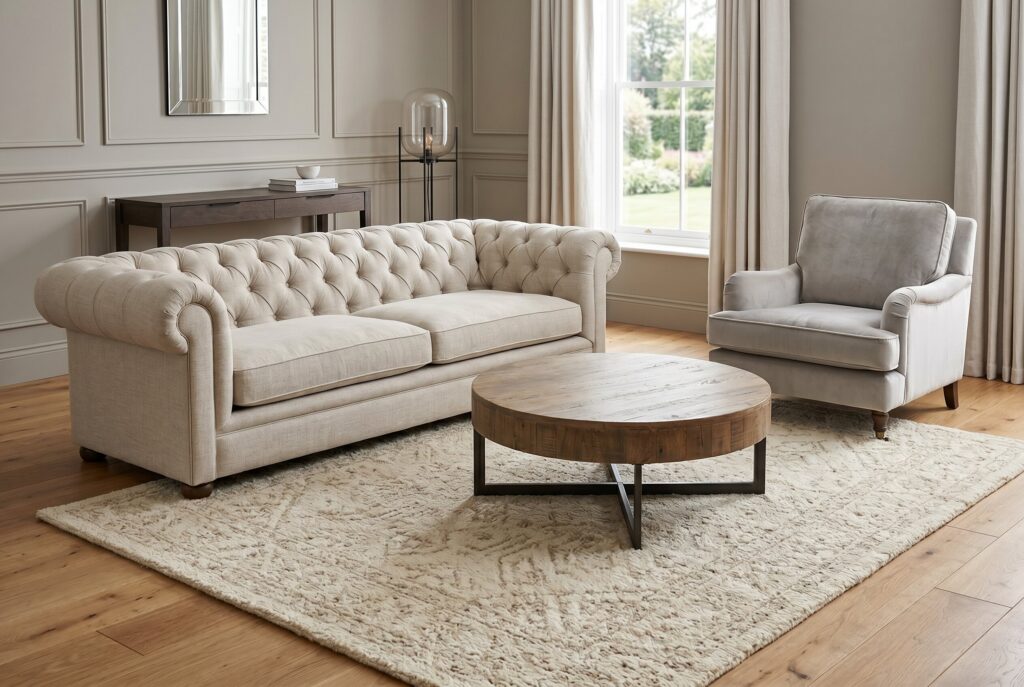
The final element separates transitional interiors from spaces that merely look good in photographs. Comfort. A true transitional home isn’t a showroom. It’s designed for daily living. Thick wool rugs, soft upholstery, layered textiles, and welcoming seating encourage relaxation. The best spaces invite people to kick off their shoes, sink into the sofa, and enjoy the room rather than simply admire it.
Designing the Ultimate Transitional Living Room
The transitional living room serves as the heart of the home.
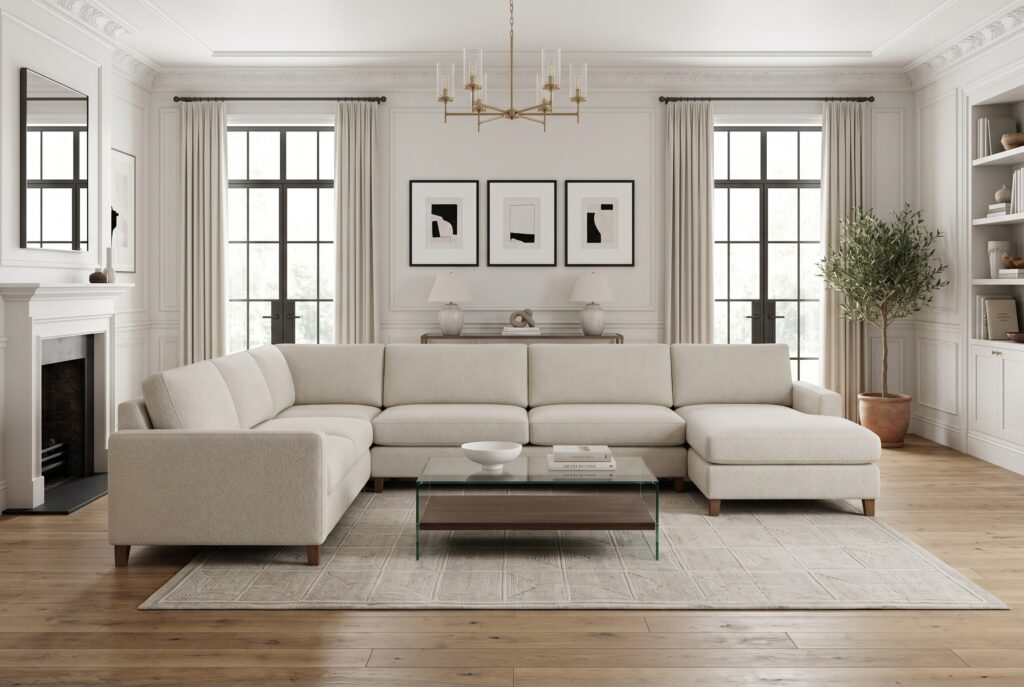
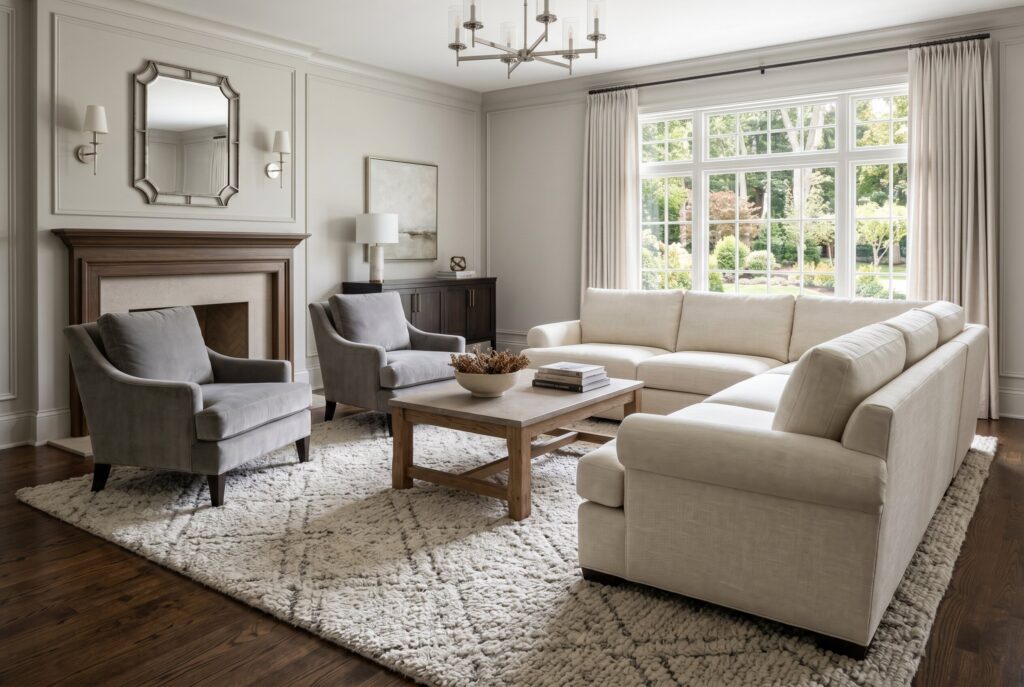
Start with the 70/30 rule. Let modern forms dominate the space while introducing selected traditional elements for warmth and personality. A large sectional sofa creates the primary seating zone. Add a walnut coffee table, a traditional inspired area rug with subtle patterning, and contemporary lighting overhead.
Natural light should be maximized whenever possible. Floor to ceiling drapery creates the illusion of height and enhances elegance without feeling formal.
The fireplace becomes the visual anchor. Surround it with minimal styling rather than excessive decoration. When executed correctly, the room feels neither traditional nor modern. It feels effortlessly balanced.
Conclusion
The true beauty of transitional interior design lies in its ability to remain relevant regardless of changing trends. By combining the comfort of traditional design with the clarity of contemporary aesthetics, transitional style creates homes that feel elegant, approachable, and enduring.
Focus on neutral foundations, warm woods, mixed materials, thoughtful transitional hardware, layered texture, and comfortable furnishings. Most importantly, remember that balance doesn’t mean equality. Let modern simplicity lead while traditional character supports the story. When done well, transitional home design creates more than a beautiful room. It creates a space where timeless style and everyday comfort coexist perfectly.