

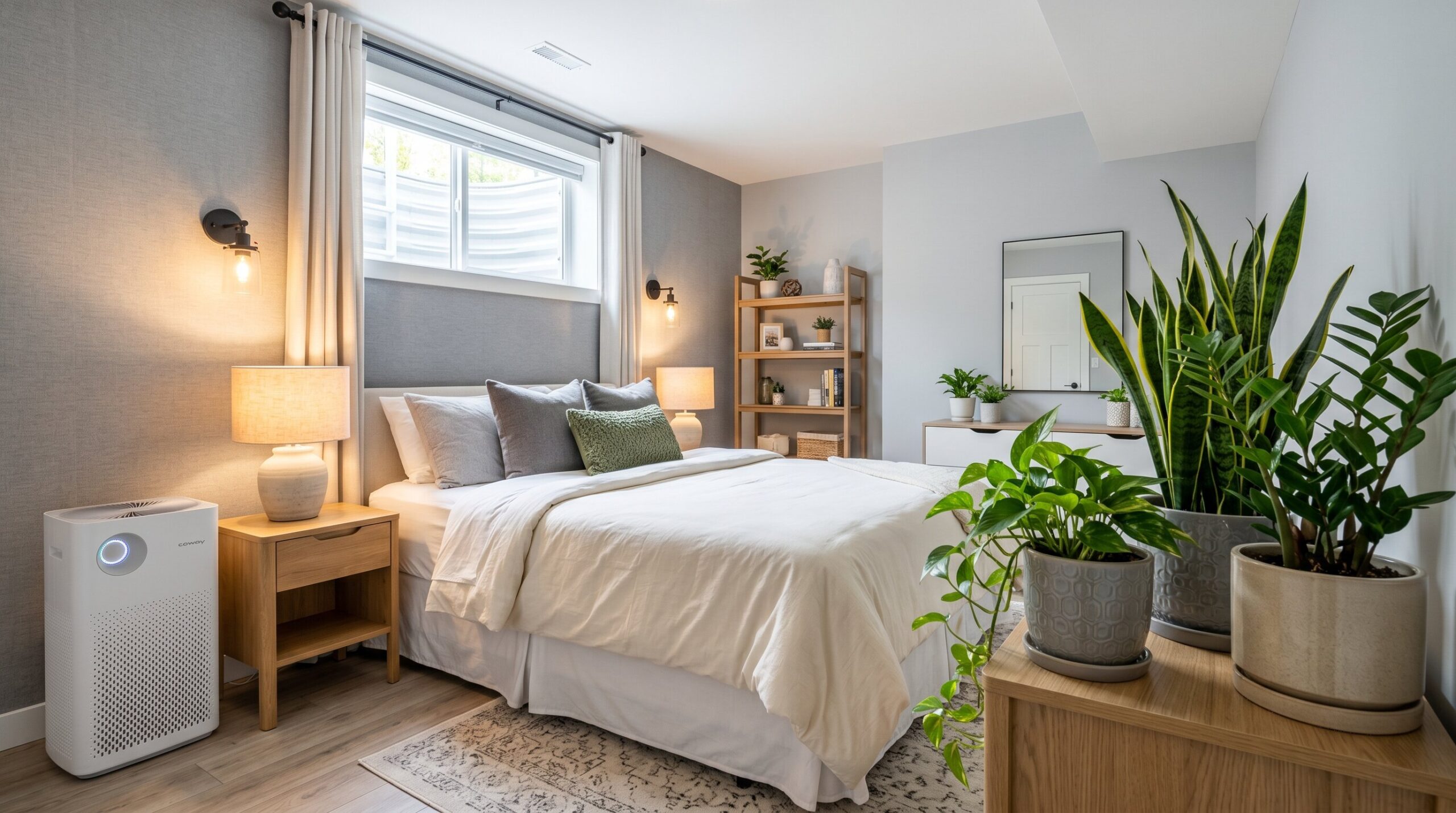
Most basement bedroom ideas focus on paint colors, bedding, and pretty decor. Those details matter, but they should never come first. A basement bedroom is different from a regular upstairs bedroom because it sits below ground, where moisture, low ceilings, limited light, and emergency exit rules all matter.
A beautiful basement guest room still needs to be dry, safe, warm, breathable, and legal. Before choosing wallpaper or a bed frame, think about egress, humidity, flooring, ceiling height, lighting, and ventilation. Once those basics are handled, the room can become one of the coziest spaces in the house.
The best finished basement ideas balance comfort with compliance. They make guests feel welcome while protecting them from the real risks of below grade living.
Phase 1: The Non Negotiables
1. The Legal Egress Window
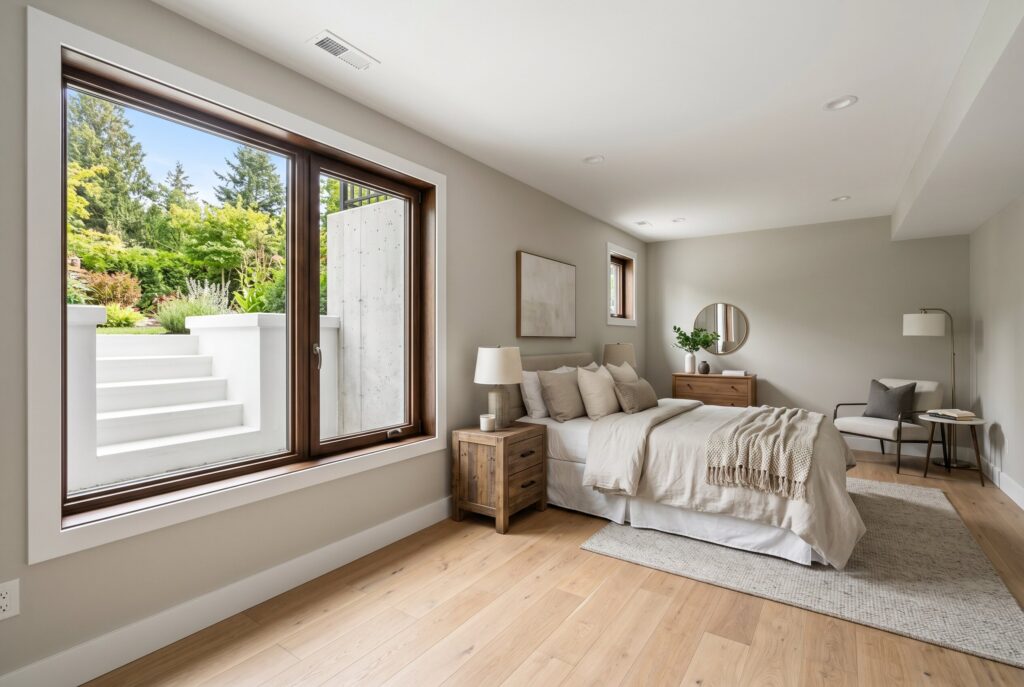
A basement room shouldn’t be treated as a bedroom unless it has a proper emergency exit. An egress window gives someone a way out during a fire and gives rescuers a way in. It also brings in daylight, which instantly makes the room feel less underground. If your window well is small, consider enlarging it before decorating. This one upgrade affects safety, comfort, resale value, and whether the room can truly function as a sleeping space.
2. The LVP Moisture Barrier
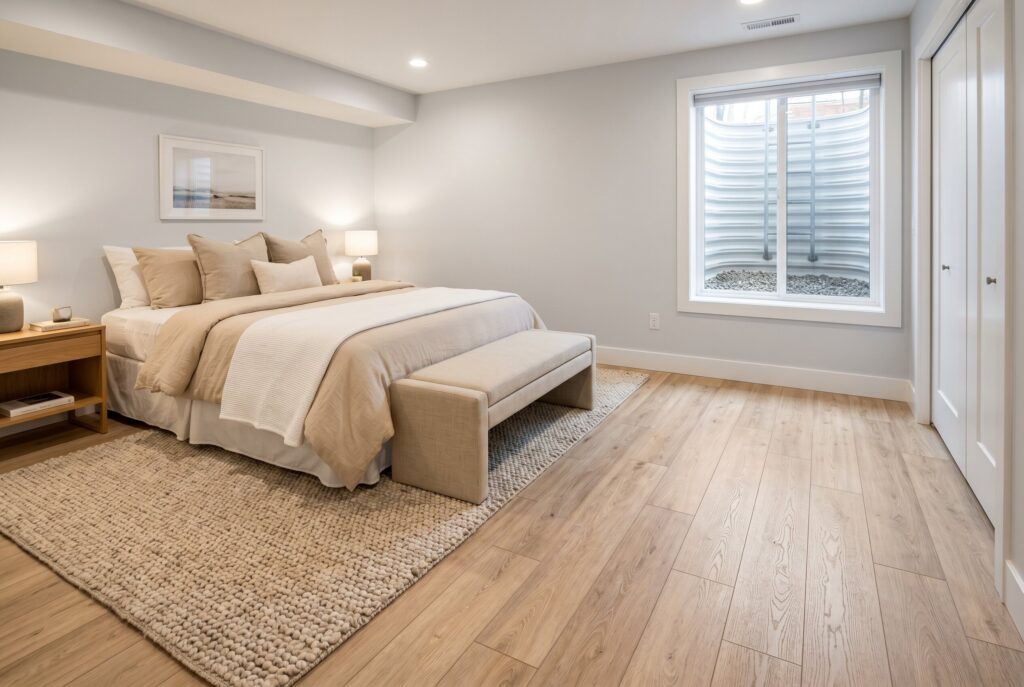
For best flooring for basement bedrooms, Luxury Vinyl Plank is usually more practical than real hardwood. Basement slabs can release moisture, and natural wood may warp over time. Choose waterproof basement flooring with a quality underlayment to reduce cold transfer from concrete. Light oak, soft beige, or pale walnut tones help brighten the room while still feeling warm. Add a thick rug beside the bed so guests never step onto a cold floor first thing in the morning.
3. Integrated Dehumidification Zones
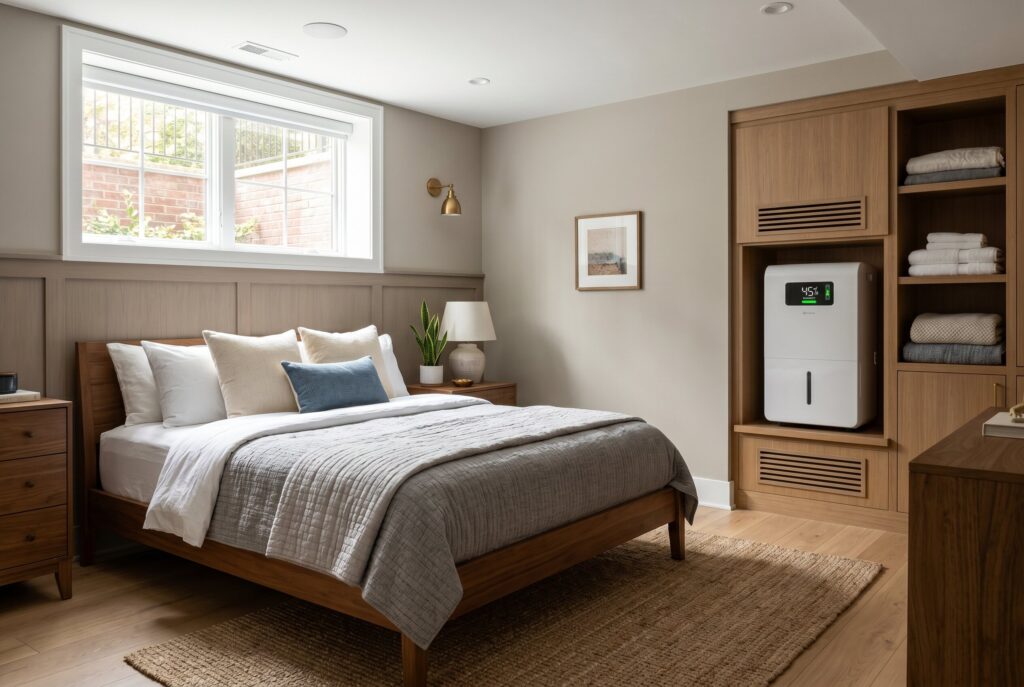
A basement bedroom should never smell damp. Keep humidity controlled with a dehumidifier, especially during humid months. A comfortable range is often around thirty to fifty percent. Place the unit where air can circulate, or use a built in system if the room will be used often. This protects bedding, furniture, walls, and air quality. It also makes the room feel more like a real guest suite instead of a converted storage area.
4. Code Compliant Ceiling Heights
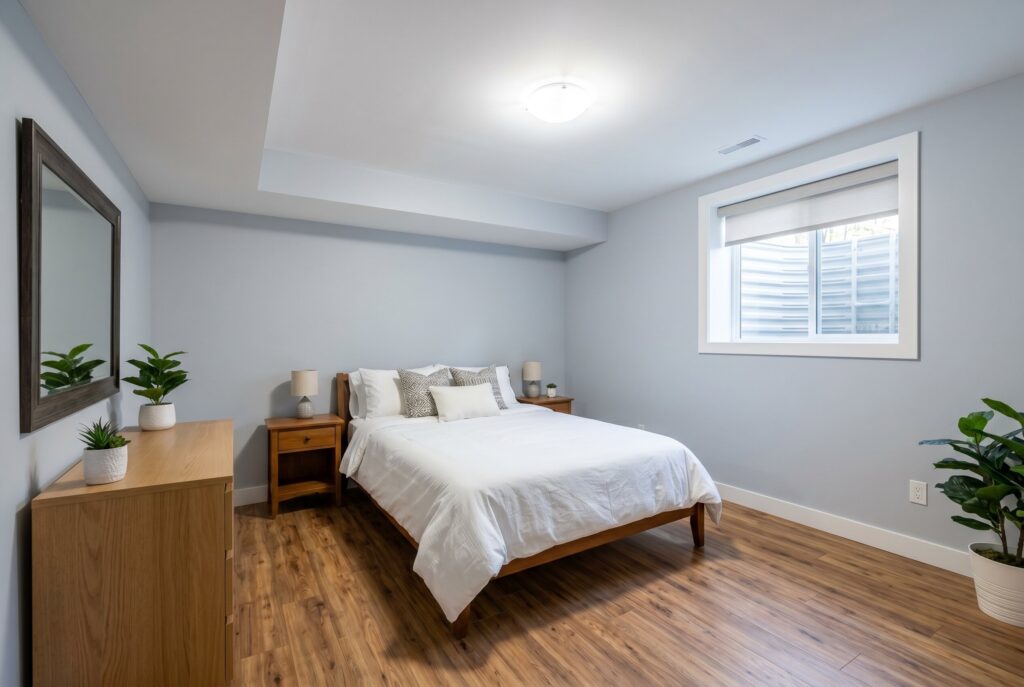
Low ceilings are common in basement bedrooms, but safety and comfort still matter. Many areas require minimum ceiling heights for habitable rooms, so check local rules before calling the space a bedroom. If pipes or ducts lower part of the ceiling, use a neat soffit instead of hiding everything with a bulky drop ceiling. A clean ceiling plan makes the room feel intentional and helps avoid the cramped basement feeling.
Phase 2: Basement Ceiling Ideas and Lighting
5. Beadboard and Shiplap Ceilings

Among basement ceiling ideas, beadboard and shiplap are smart because they add texture without stealing too much height. Paint the boards warm white or soft cream to reflect light and make the ceiling feel higher. This works especially well in Modern Farmhouse or cottage inspired guest rooms. Keep the lines simple and avoid heavy beams unless the room has enough height. The goal is charm without visual weight.
6. Layered Basement Lighting Ideas
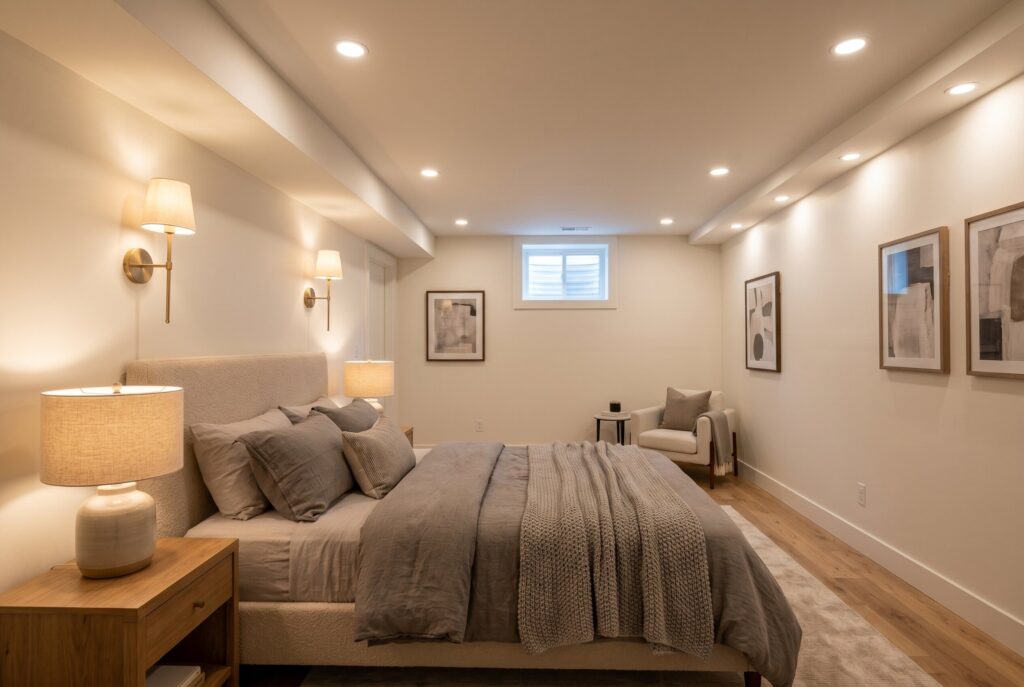
A single ceiling light will make a basement bedroom feel harsh and shadowy. Better basement lighting ideas use layers. Combine wall sconces, table lamps, recessed lights, and warm bulbs around 2700K. Put lamps near the bed so guests can read without getting up. Use dimmers if possible. Layered light makes the room feel softer, warmer, and more finished, especially when natural light is limited.
7. The Wall to Wall Curtain Hack
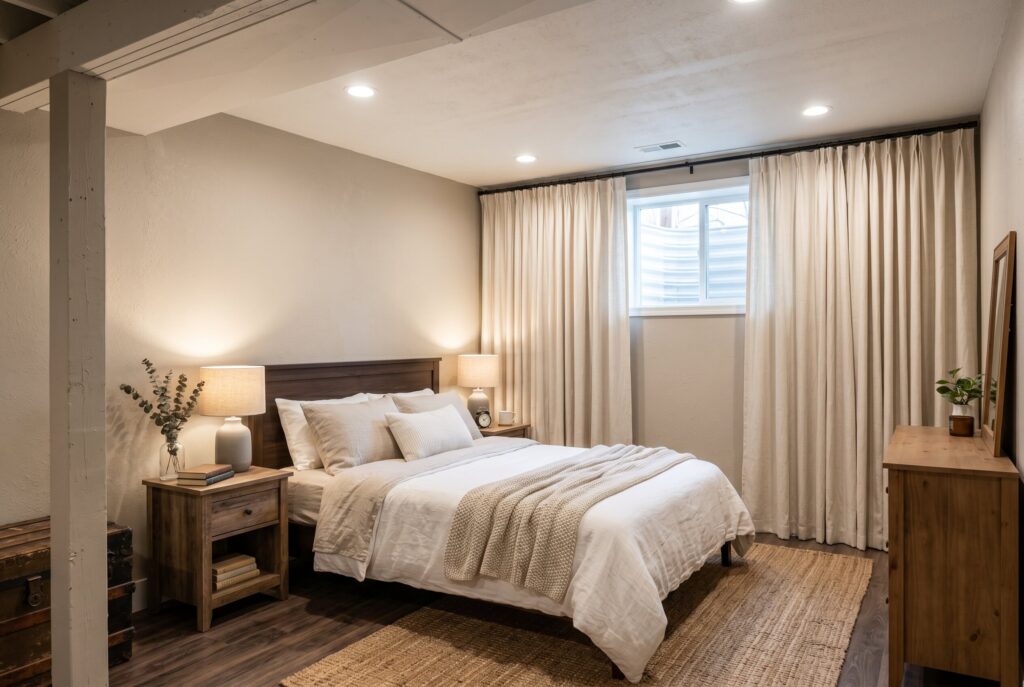
If the room has one small egress window, make it feel larger with wall to wall curtains. Hang linen curtains close to the ceiling and extend the rod well beyond the window. This creates the illusion of a much bigger opening behind the fabric. It also softens basement wall ideas that would otherwise feel cold or plain. Choose cream, oatmeal, sage, or dusty blue linen for an airy but cozy effect.
8. Oversized Floor Mirrors
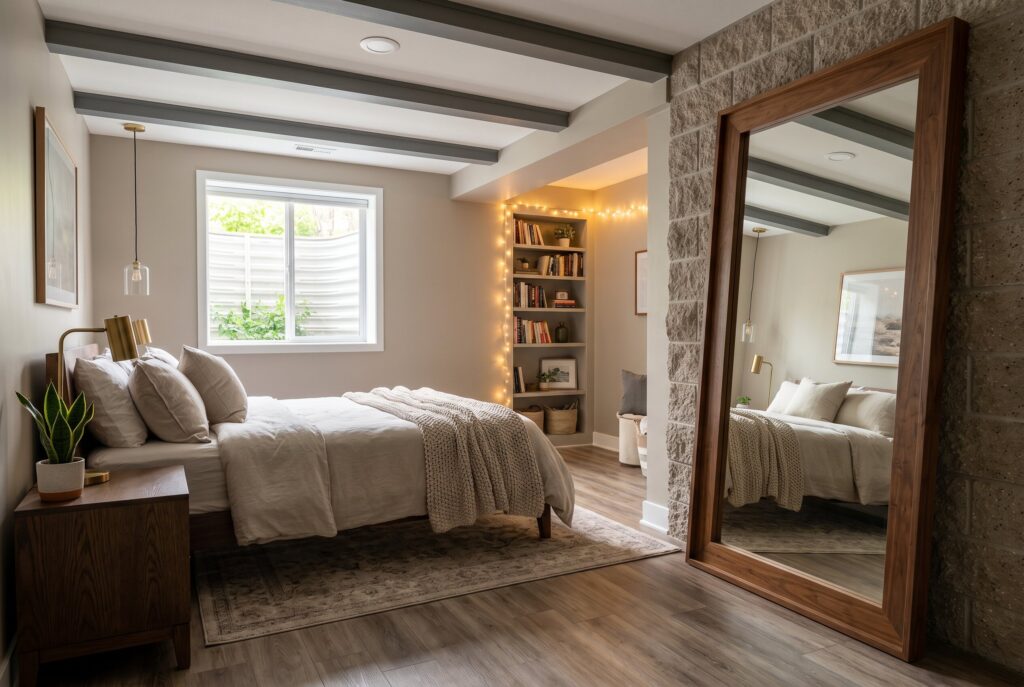
A large mirror can double the light in a basement bedroom when placed across from a window or lamp. Choose a wood frame in oak or walnut to add warmth. Leaning mirrors feel relaxed and stylish, but they must be secured safely to the wall. In small basement ideas, mirrors are especially useful because they expand the room visually without taking up much space.
Phase 3: Layouts and Guest Comforts
9. Color Drenching for Coziness
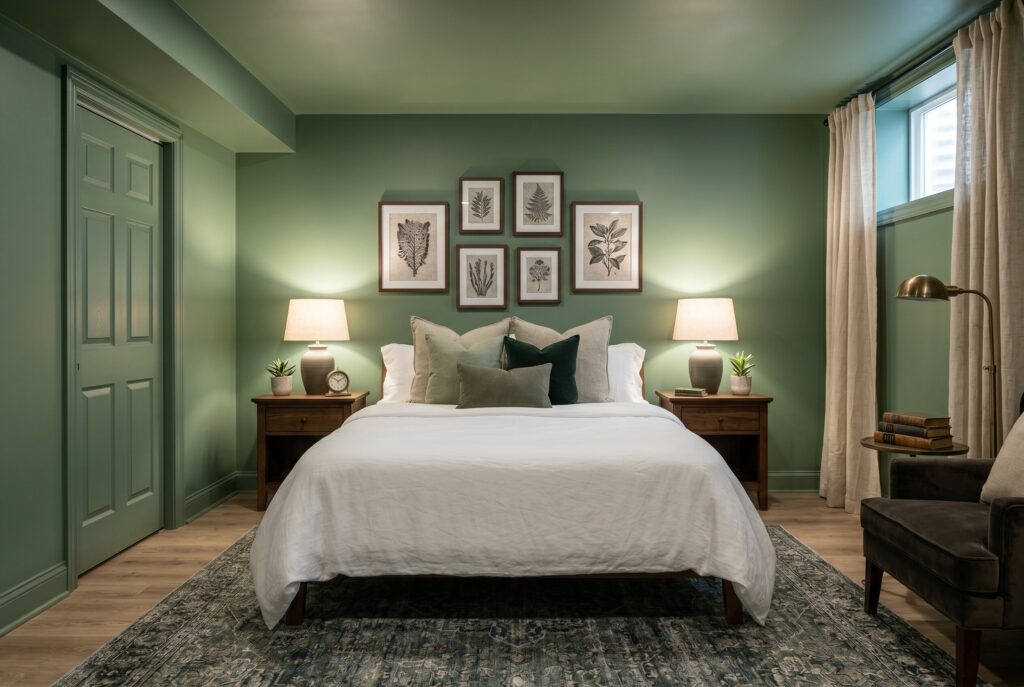
If the basement has little daylight, don’t force it to feel bright. Embrace the mood with color drenching. Paint the walls, trim, doors, and ceiling in one rich tone such as sage green, smoky blue, or warm mushroom. This makes the room feel wrapped and intentional. Darker colors can make a windowless basement bedroom feel like a cozy den instead of a failed attempt at brightness.
10. Barefoot Ready Layered Rugs
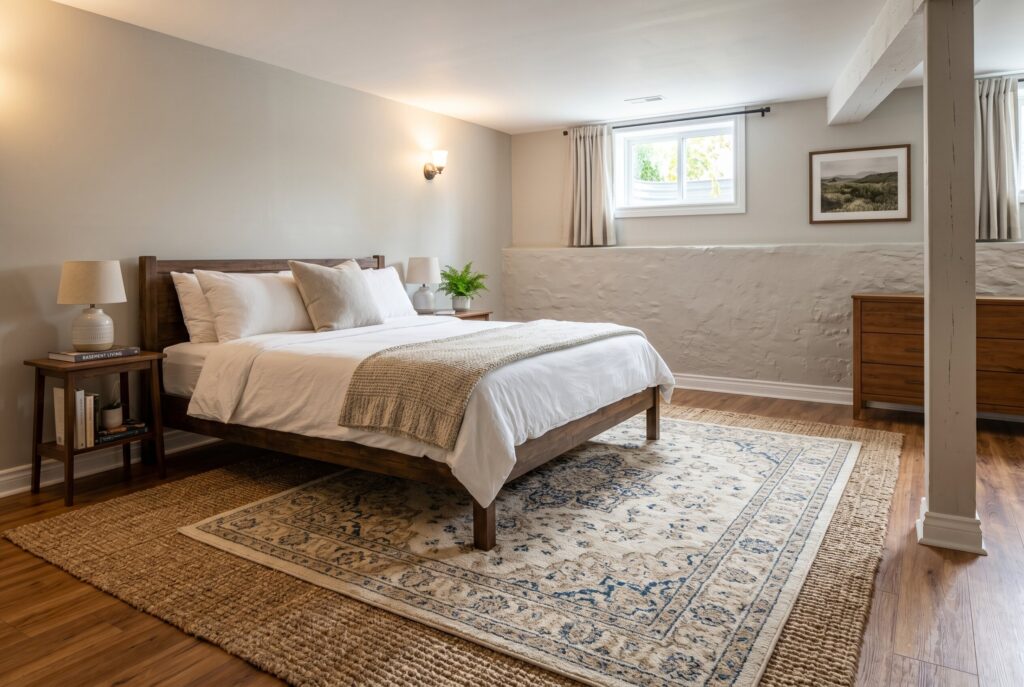
Basements often feel colder than the rest of the house. A thick wool rug under the bed changes the experience immediately. For extra softness, layer a large jute rug underneath and place wool on top. This adds texture, warmth, and sound absorption. A guest room should feel good underfoot, especially in the morning. Rugs also help define the sleeping zone in small finished basement ideas.
11. Hiding Utility Panels with Peg Rails
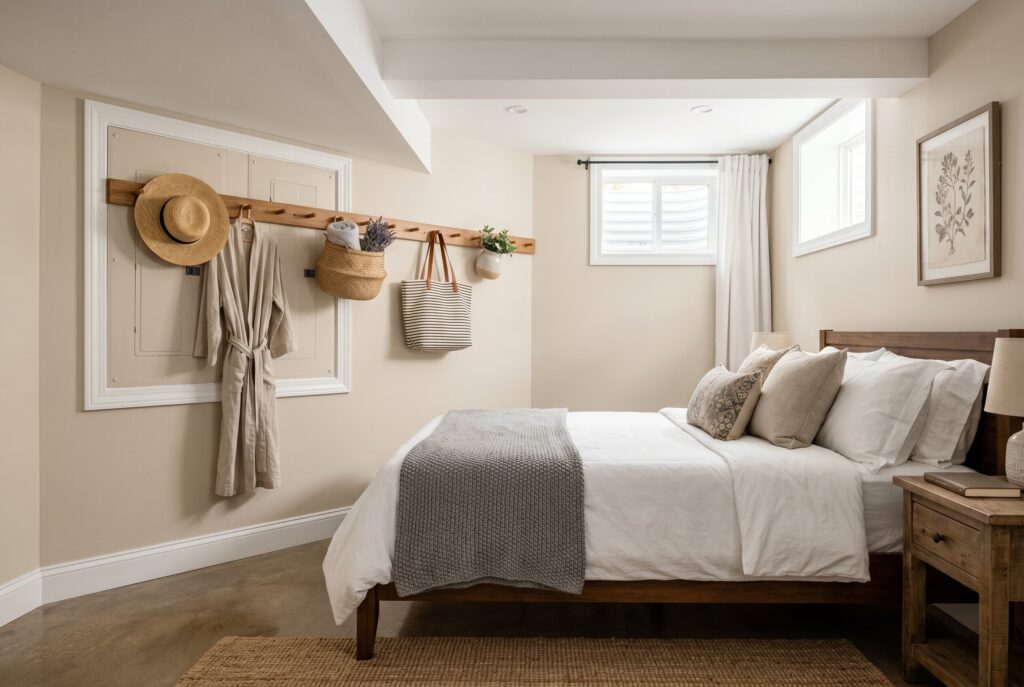
Electrical panels and access points are common basement eyesores, but they must remain reachable. A peg rail can distract from them without blocking access. Use it for baskets, robes, hats, or simple decor. This adds a cottage or farmhouse detail while keeping the wall functional. Never permanently cover panels with built ins or heavy furniture. In basement design, beauty should still respect maintenance needs.
12. The Windowless Accent Wall

Basement wall ideas should create a focal point when the room lacks a view. A botanical wallpaper, textured grasscloth, painted arch, or wood slat headboard wall can give the eye somewhere to rest. Place the accent behind the bed so the room feels designed as soon as someone enters. Keep the rest of the palette simple so the wall feels elegant rather than busy.
13. End of Bed Long Benches
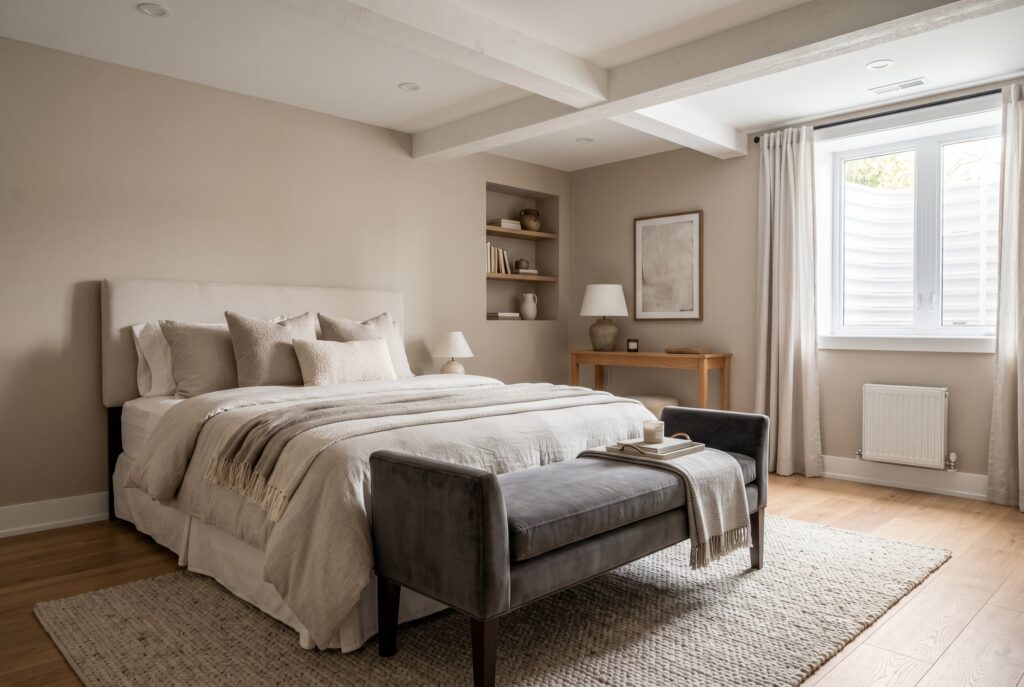
Instead of adding a bulky chair, place a long upholstered bench at the foot of the bed. Guests can use it for luggage, shoes, blankets, or sitting while getting ready. A bench takes less visual space than a separate seating area and works better in narrow rooms. Choose velvet, linen, or boucle for softness. This is a small detail that makes a basement guest room feel more like a hotel suite.
14. Concealed Closet Plumbing
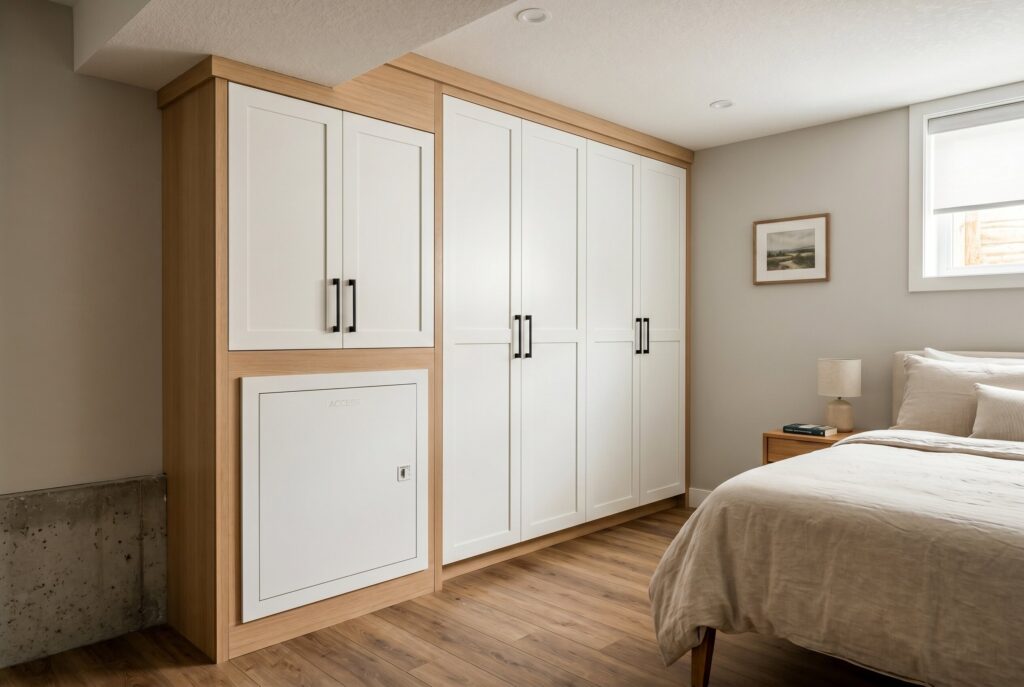
If plumbing lines or mechanical boxes interrupt the layout, turn the problem into storage. Build a closet around the awkward area while keeping required access panels clear. This gives guests a place for clothes and hides visual clutter. For small basement ideas, every structural obstacle should become useful if possible. A well planned closet can make the bedroom feel finished without major reconstruction.
15. The Complete Guest Suite
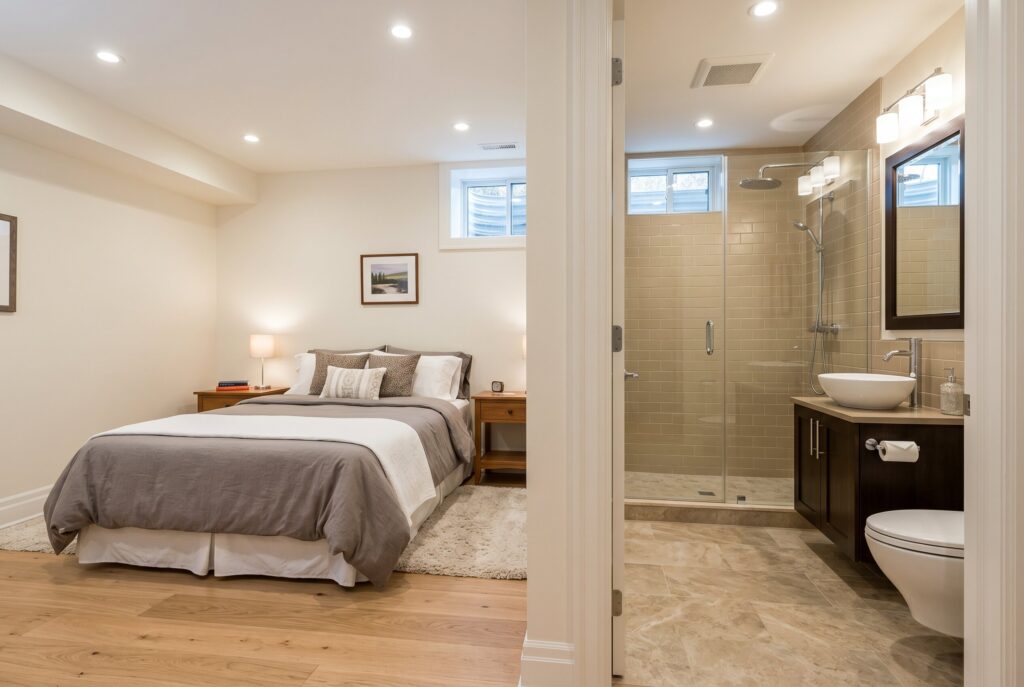
Basement bathroom ideas can turn a simple bedroom into a true guest suite. A compact bathroom with a glass shower, warm tile, good ventilation, and soft lighting makes the basement feel private and complete. Plumbing may require professional work, especially if the floor needs a pump system. It costs more than decor, but it can greatly improve comfort, function, and resale appeal.
Phase 4: Budget and Styling Hacks
16. Second Hand Wood Warmth
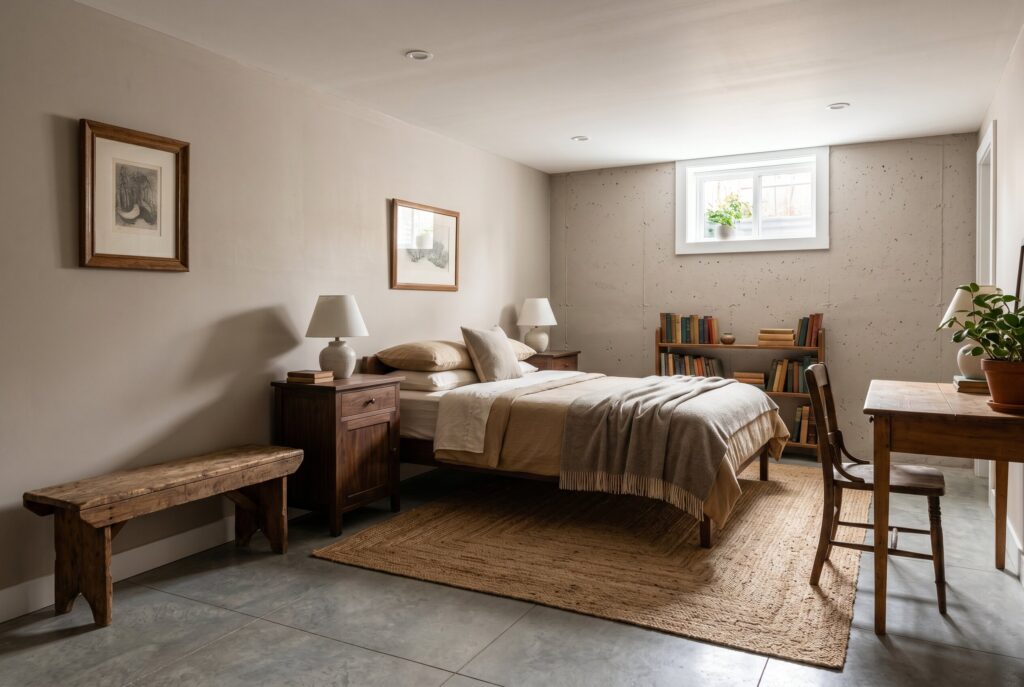
Basements need warmth, and second hand wood furniture is one of the easiest ways to add it. Look for walnut nightstands, oak dressers, vintage benches, or solid wood desks. Older furniture often has better character than new budget pieces. Natural wood balances cool flooring, concrete walls, and low light. It also makes the room feel collected rather than newly staged.
17. Multi Gen Loft Beds
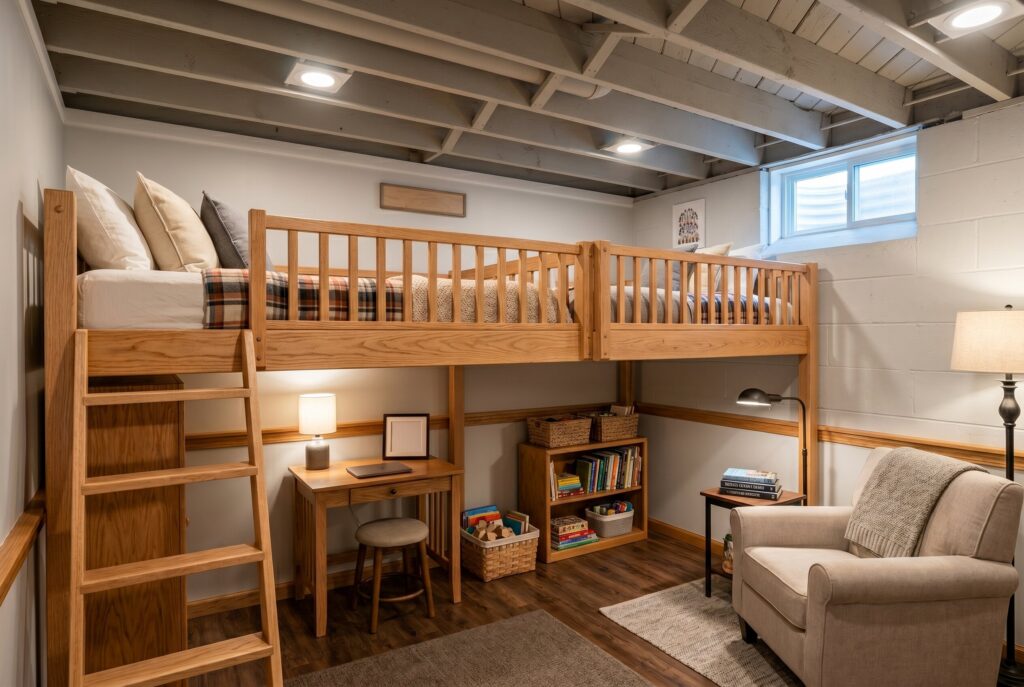
For children or grandkids, loft beds can make a small basement bedroom more flexible. The sleeping area rises upward, leaving room below for a desk, toy storage, or reading nook. Use solid wood frames and keep safety rails sturdy. This idea works best when ceiling height allows comfortable clearance. It is especially useful for shared guest spaces that need to serve more than one generation.
18. Thick Layered Bedding
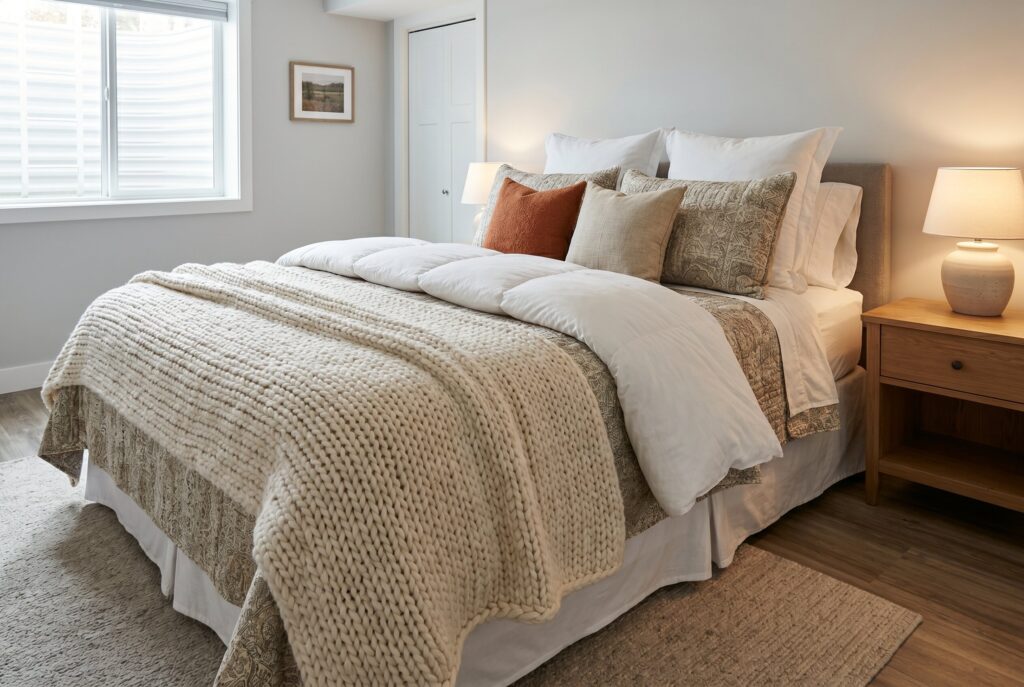
A basement bedroom should feel warmer than it technically is. Layer cotton sheets, a quilt, a duvet, and a chunky knit blanket so guests can adjust comfort through the night. Add extra pillows and a folded throw at the foot of the bed. This makes the room feel cared for. Small details like slippers, robes, and a basket of toiletries can turn a basement room into a memorable stay.
19. Air Purification and Greenery

Air quality matters in a basement bedroom. Add an air purifier if the space smells musty or lacks circulation. Greenery also helps the room feel alive. Snake plants, pothos, and ZZ plants tolerate lower light better than many houseplants. Pair them with ceramic pots and warm lamps for a softer look. The goal is to remove the basement smell and replace it with a clean, calm atmosphere.
Conclusion
Basement bedroom ideas should never begin with bedding alone. Start with egress, moisture control, safe ceiling height, waterproof basement flooring, and proper lighting. Then build comfort through rugs, curtains, mirrors, storage, warm wood, and layered textiles. A basement bedroom can feel safe, legal, cozy, and beautiful when every choice has a purpose. Design for sleep, safety, warmth, and dignity first. Style comes after that.
Related Articles
Basement Ideas: 27 Pro Designer Finished Transformations
Basement Bathrooms: 15 Smart Layouts & Pro Plumbing Tips
Basement Bar Ideas: 15 Sleek Wet & Dry Setups (2026)