

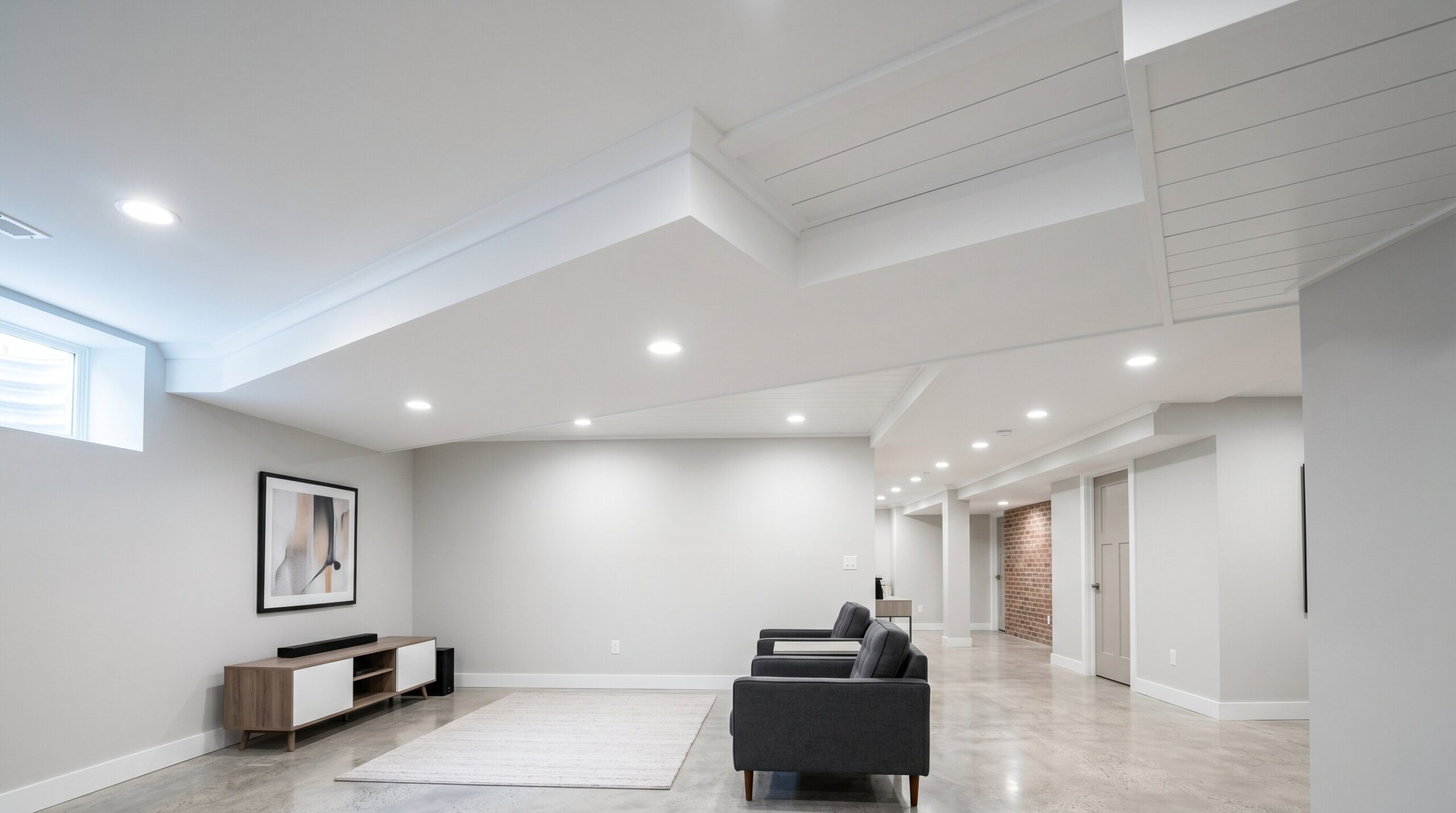
When looking for basement ceiling ideas, the biggest mistake is sealing every pipe, valve, wire, and duct behind a permanent drywall ceiling. It may look clean at first, but one leak or repair can force you to cut into the finished surface. The best basement ceiling options hide visual clutter while preserving access to utilities, protecting ceiling height, and improving the overall mood of the room. Whether you’re exploring unfinished basement ideas or simple finished basement ideas, the goal is the same: make the ceiling feel intentional without trapping the systems your home still needs.
Wood and Plywood Basement Ceiling Ideas
1. Plywood Panels with Shadow Lines
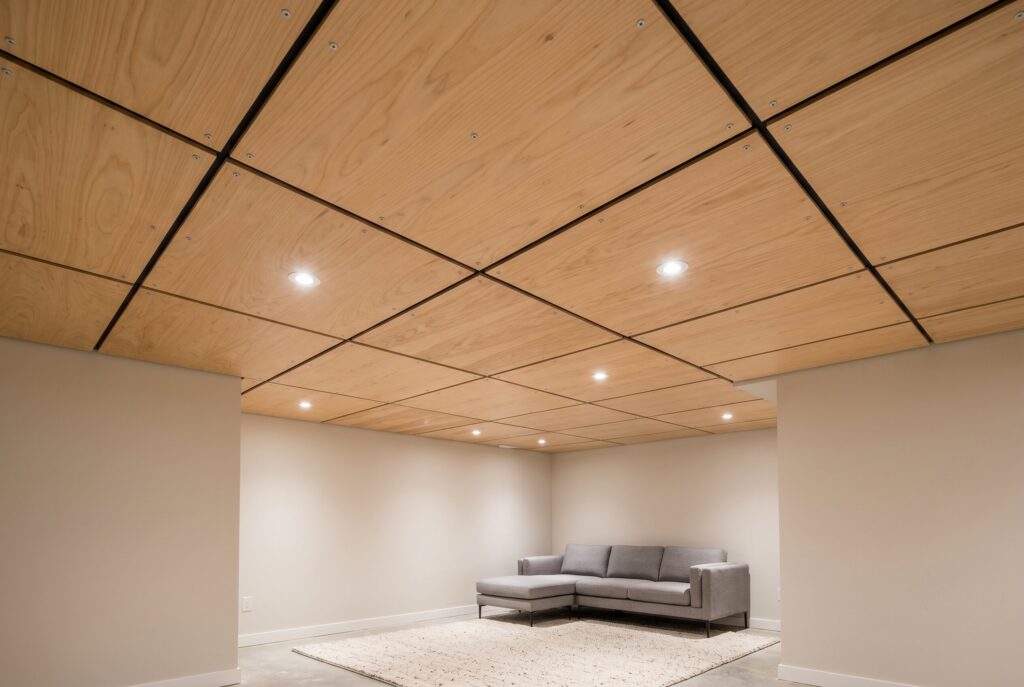
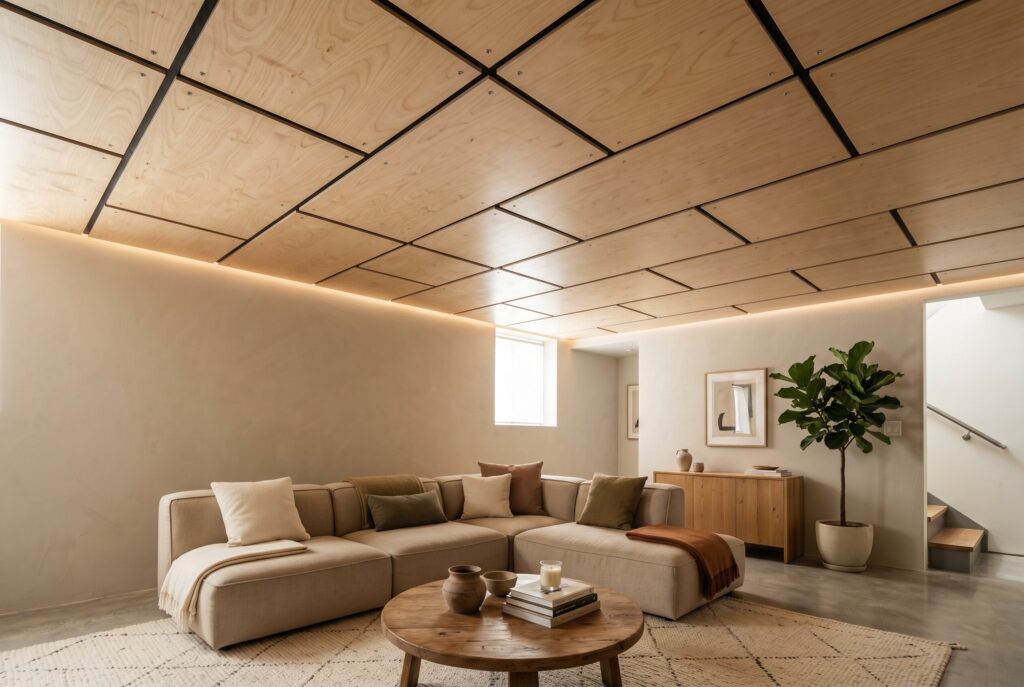
Plywood panels are one of the most budget friendly ways to cover an exposed basement ceiling. Cut the sheets into clean squares or rectangles, then leave slim shadow lines between each panel for a modern grid effect. The look feels warm, simple, and architectural, especially in an Organic Modern basement with neutral walls, a large rug, and a low profile sectional. For future access, install panels with screws rather than permanent adhesive.
2. Classic Beadboard Planks
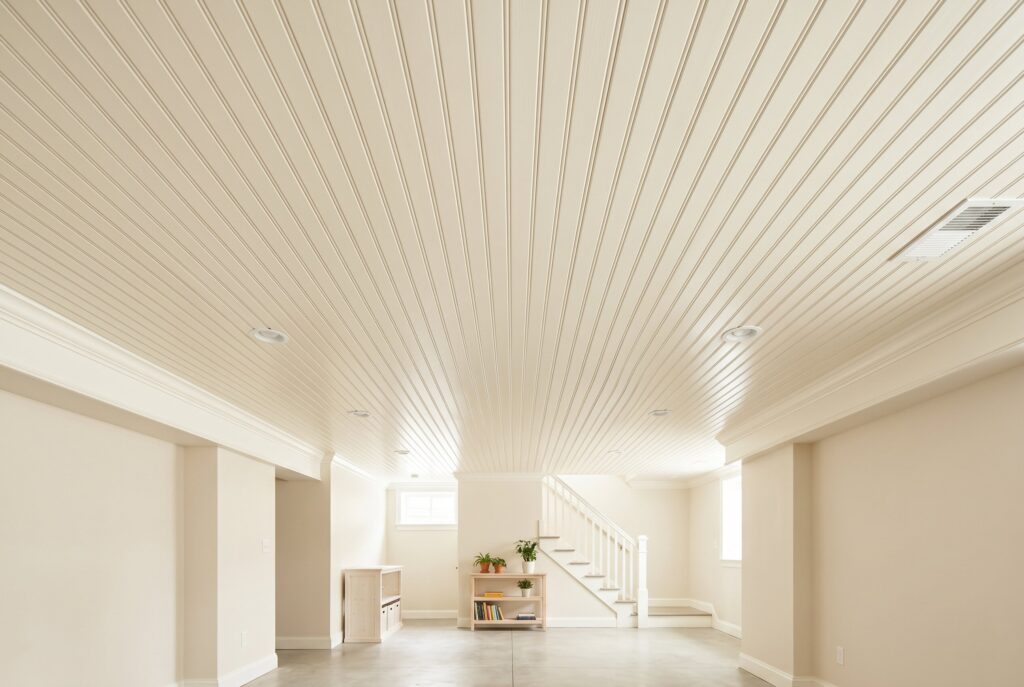
Beadboard brings cottage warmth to a basement without making the ceiling feel heavy. Painted soft white, cream, or sage green, it can make the room feel calmer and more finished. It works especially well in laundry rooms, playrooms, and casual family spaces. Use a shallow mounting system so you don’t lose unnecessary ceiling height.
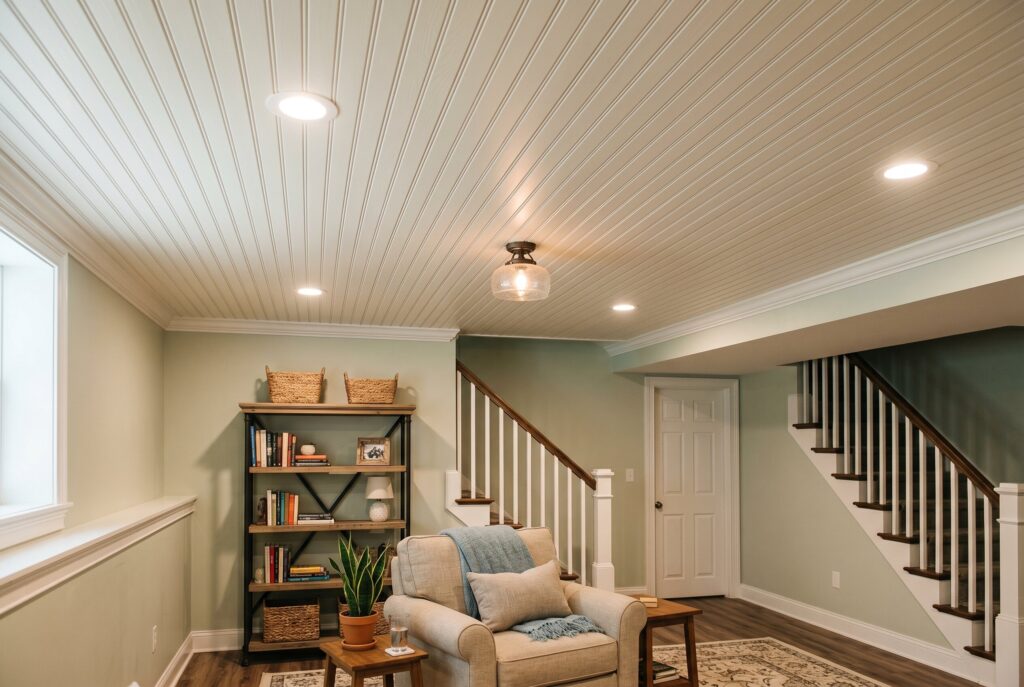
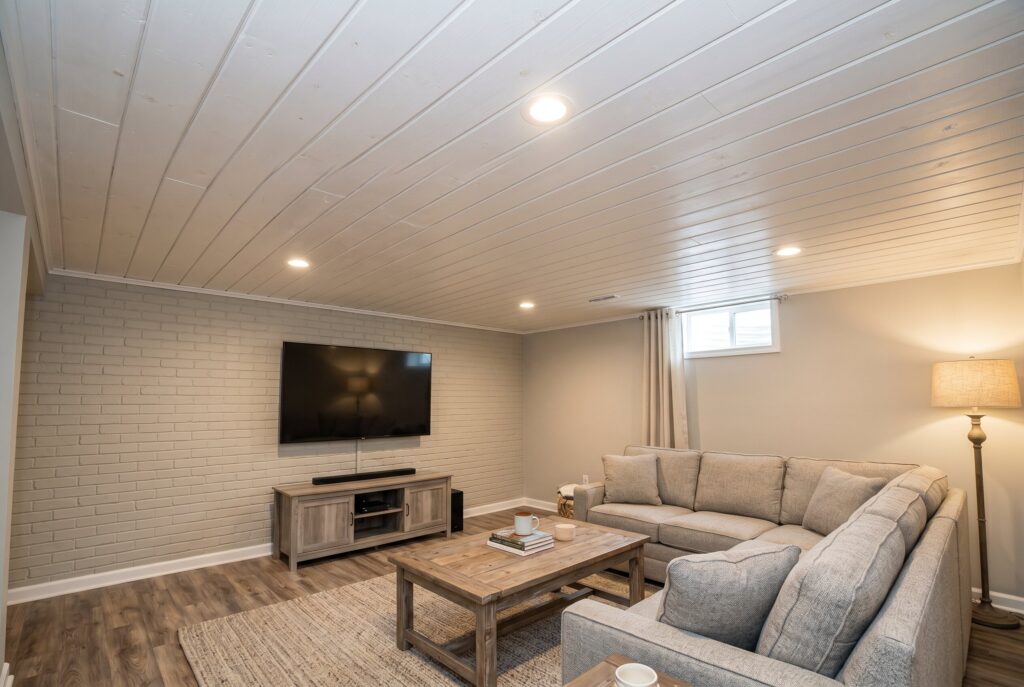
3. Shiplap for Farmhouse Warmth
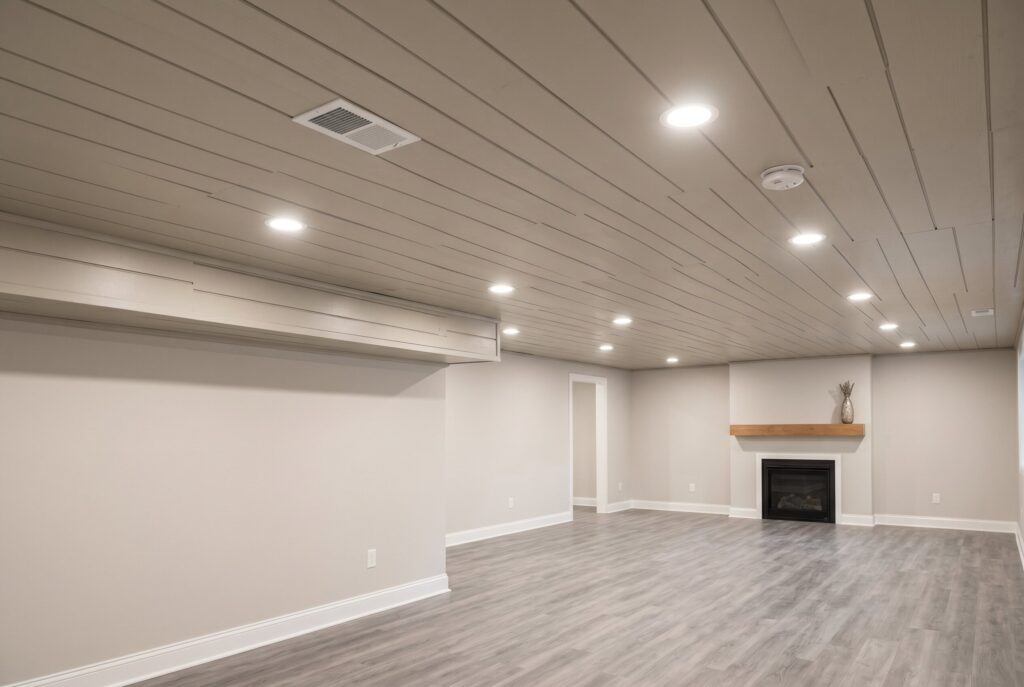
Shiplap is a simple choice for homeowners who want a clean ceiling but still need occasional access. Individual boards can be removed more easily than a full drywall sheet. White shiplap brightens a low basement, while warm greige or taupe creates a softer lounge atmosphere.
>>> See more: DIY Outdoor Fireplace: 7 Kits and Plans for Beginners 2026
4. Rustic Reclaimed Pallet Wood
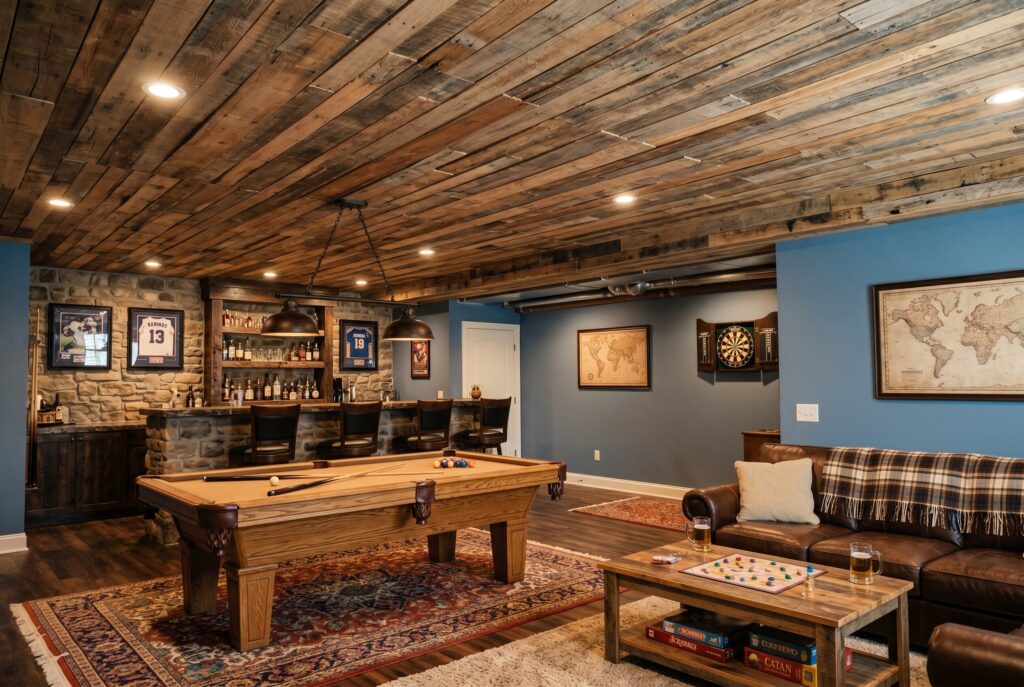
Reclaimed pallet wood gives an unfinished basement a relaxed, handcrafted feel. Instead of hiding every gap, use the variation in wood tone as part of the design. This approach works well in a game room, hobby room, or casual bar area. Use only pallets stamped HT, which means heat treated, and skip any marked MB, since those were fumigated with methyl bromide and don’t belong indoors. Always sand rough surfaces, seal the boards, and keep clearance around mechanical systems. For layouts that suit this kind of space, see our basement man cave ideas.
5. Acoustic Wood Slat Panels
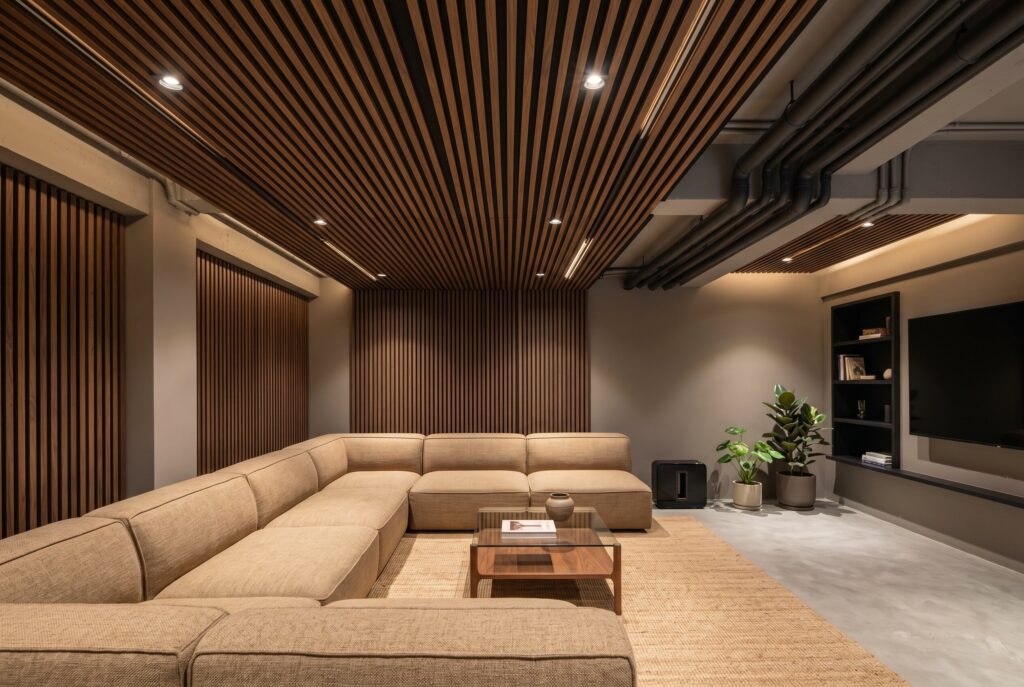
Wood slat panels are ideal for basements used as media rooms, music spaces, or lounges. Walnut slats over black acoustic backing help soften echo while creating a refined Japandi look. Pair them with a large U shaped sofa and warm basement lighting ideas so the room feels comfortable instead of cave like.
Painted Open Basement Ceiling Ideas
One note before you leave joists exposed: if the floor above is framed with engineered I-joists, residential building codes in many areas require a protective layer, such as 1/2 inch drywall, on their underside. Check with your local building department before choosing an open ceiling.
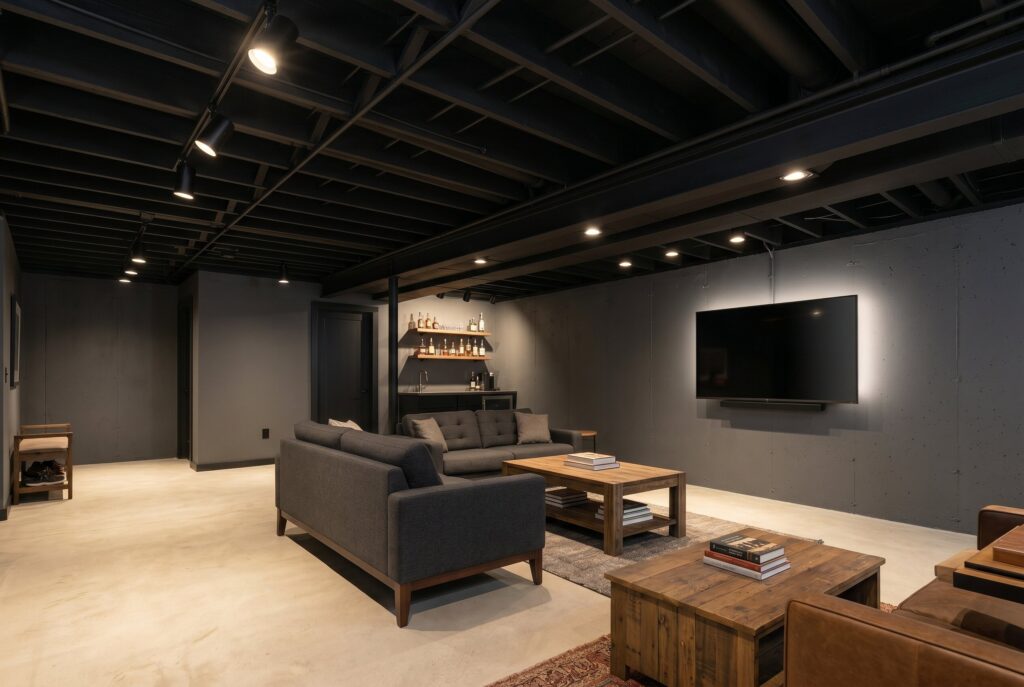
6. The Infinity Matte Black Spray
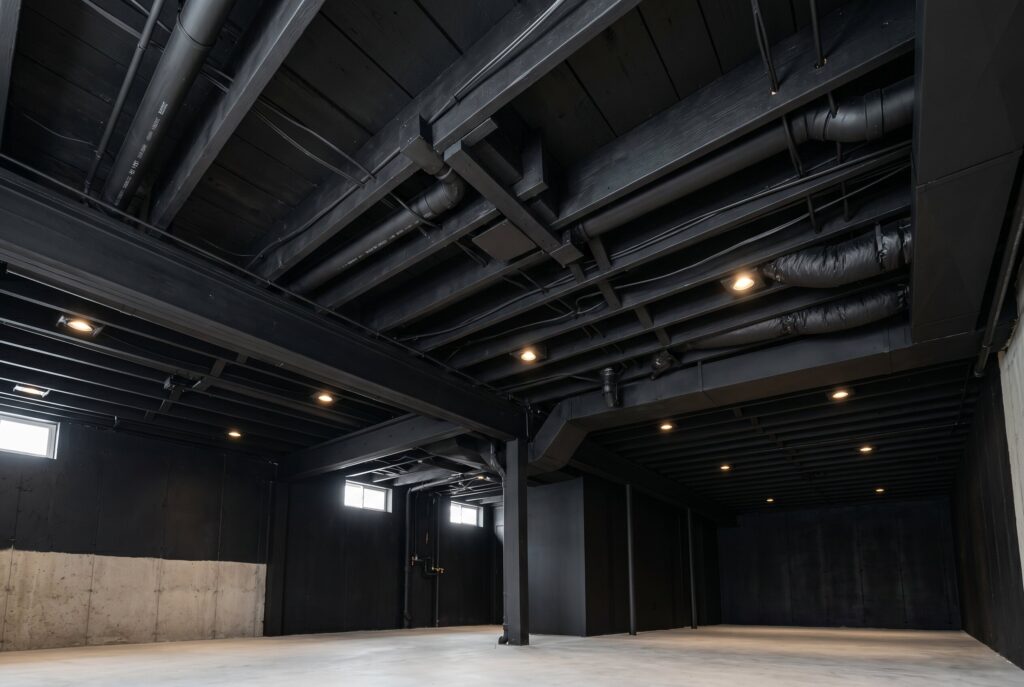
Painting the entire exposed ceiling matte black is one of the most effective ways to handle an unfinished basement ceiling. Pipes, joists, ducts, and wiring visually recede into shadow, making the ceiling feel higher than it really is. This works especially well in home theaters and moody lounges where darkness supports the atmosphere.
Before you spray, skip or mask the furnace and water heater flue pipes, which run too hot for standard paint, and keep the labels on gas lines and electrical boxes readable. Wear a respirator and keep the space well ventilated while you work.
7. Bright White Exposed Beams
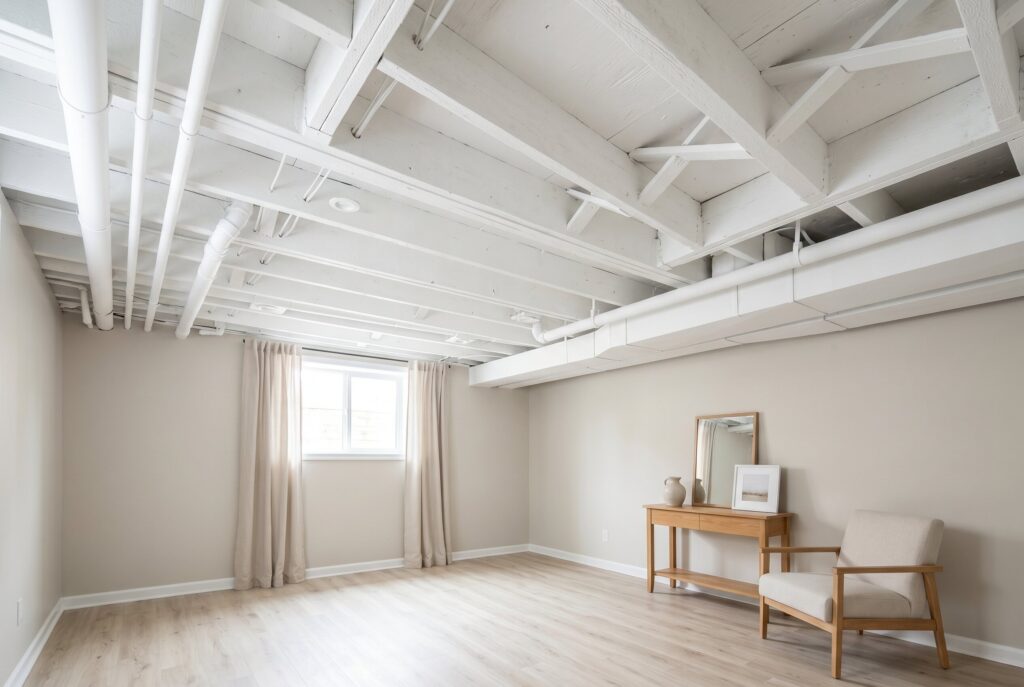
If the basement feels dark or cramped, go in the opposite direction. Spray the exposed ceiling bright white to reflect more light throughout the room. White beams and ductwork create a loft inspired look while helping the space feel cleaner and taller. This option pairs well with pale flooring, linen curtains, and warm wood furniture. The same spraying precautions from the matte black option apply here.
8. Color Drenched Ceilings
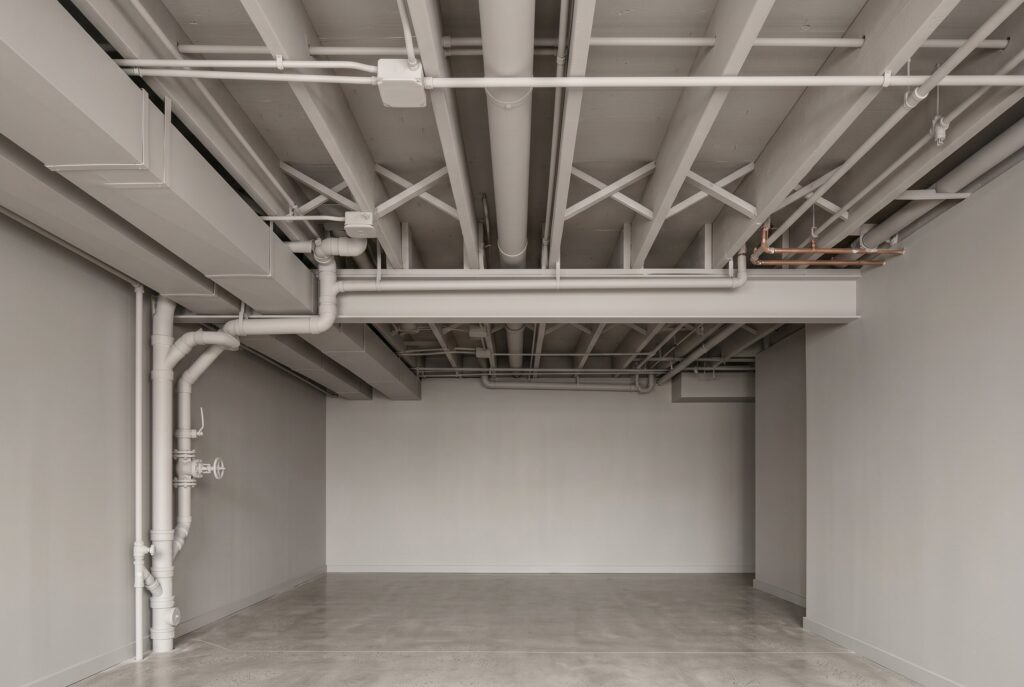
Color drenching means painting the ceiling, pipes, beams, and walls in one continuous tone. A soft beige, mushroom gray, or warm clay color can blur awkward transitions and make exposed systems look intentional. This is a smart choice when you want visual unity without building a full ceiling assembly.

Drop Ceiling and Tile Ideas for Basements
9. Modern PVC Drop Ceiling Panels
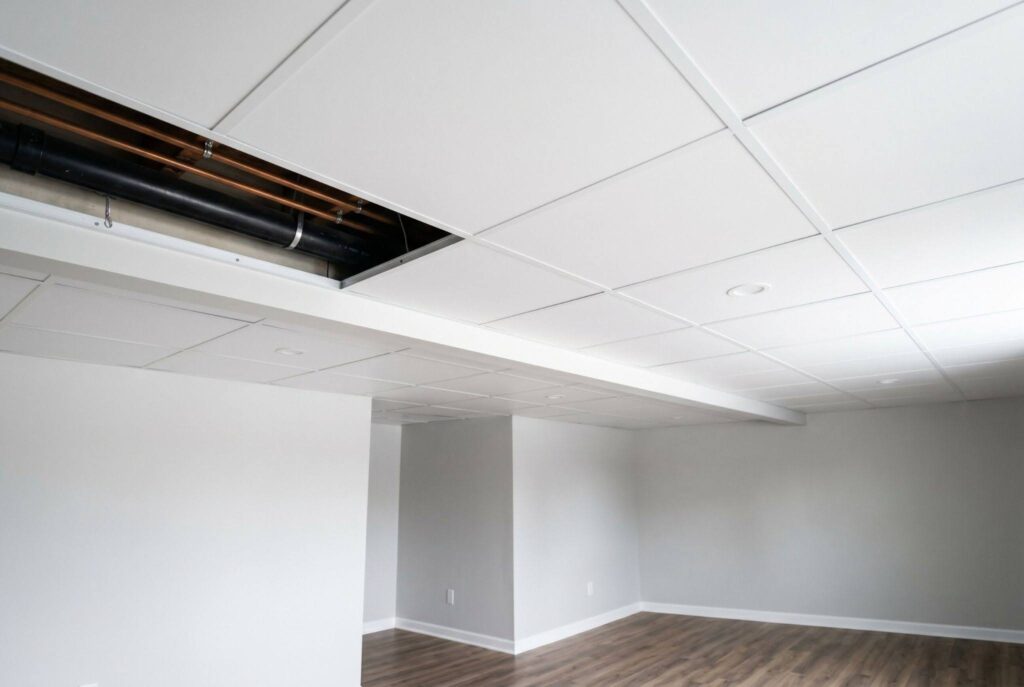
PVC drop ceiling panels are practical for basements because they provide clean coverage and easy utility access. If a pipe needs inspection, you can lift a panel instead of cutting open the ceiling. PVC also performs well in damp lower levels because it resists moisture better than many fiber based materials. For homeowners comparing basement ceiling options, this is one of the most balanced choices for access, durability, and appearance.
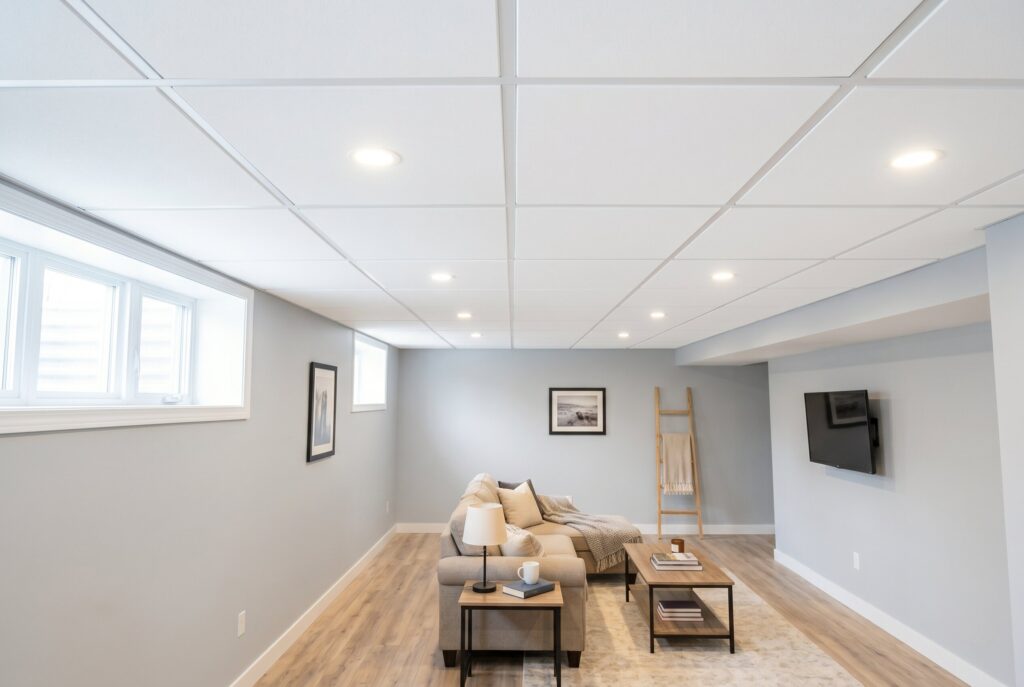
10. Faux Tin Ceiling Tiles
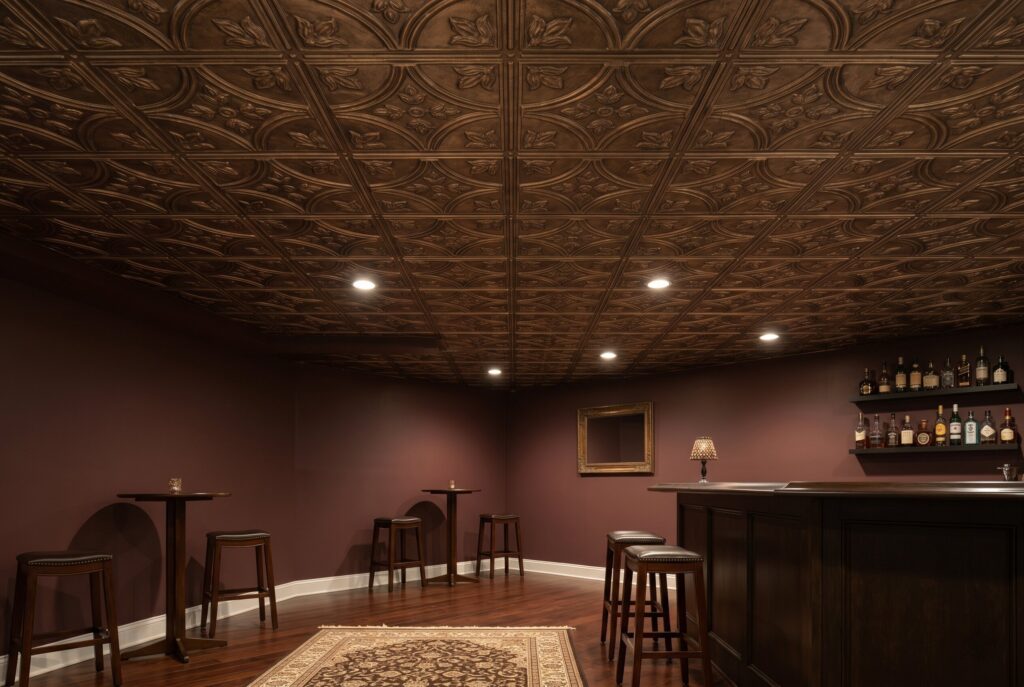
Faux tin tiles bring vintage character to a basement bar, speakeasy style lounge, or game room. Lightweight plastic or metal look tiles can add pattern without requiring heavy construction. Choose bronze, aged silver, or matte white depending on whether you want drama or subtle texture.

11. Acoustic Fiberglass Panels
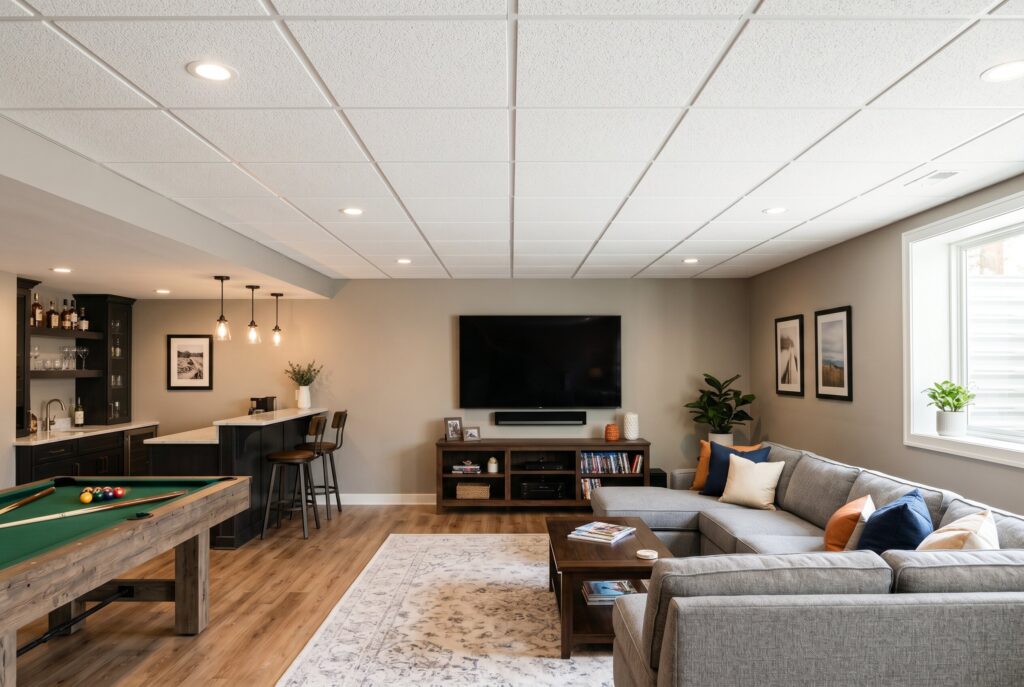
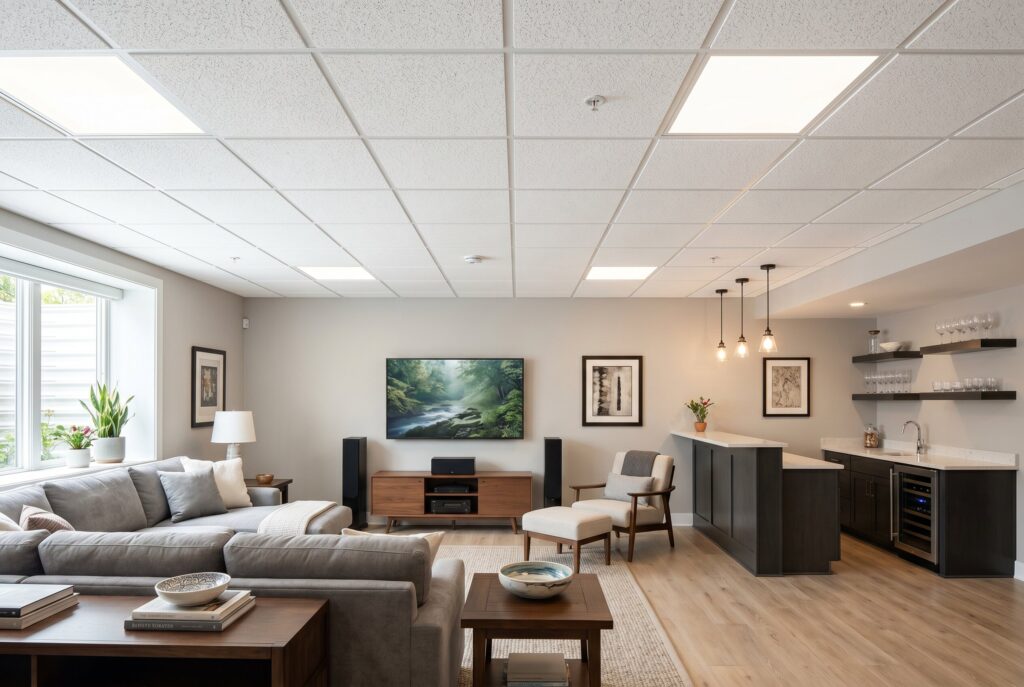
Acoustic fiberglass ceiling panels are excellent when sound control matters. They absorb sound inside the basement, which cuts the echo from televisions, music, and conversation. Footsteps from the floor above are a different problem: to reduce that impact noise, add sound insulation between the joists and consider resilient channel before the ceiling goes up. In a basement theater, combining both approaches improves comfort as much as visual design.
Fabric and Lighting Illusions
12. Draped Fabric Canopies
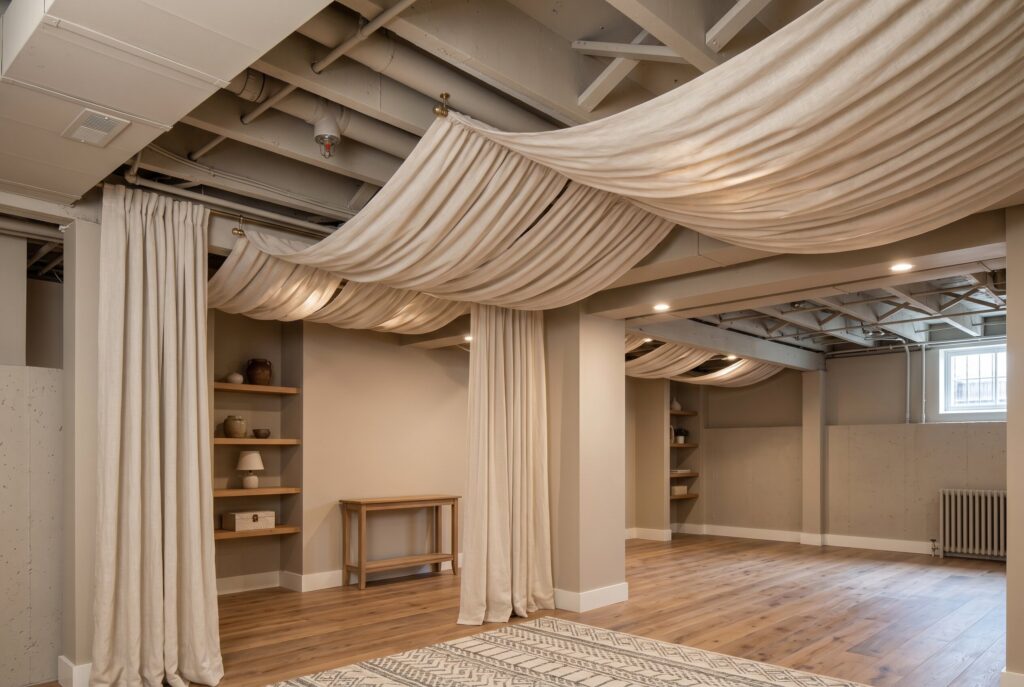
Fabric canopies are a creative way to soften exposed pipes without building a rigid ceiling. Light linen or canvas can be stretched or gently draped across sections of the room to create a relaxed Bohemian feel. Use only flame retardant fabric, ideally certified to NFPA 701, and keep it well away from furnaces, water heaters, flue pipes, and light fixtures. This idea is best for dry spaces and should never block vents, lights, sprinklers, or electrical access.
13. Floating Faux Skylights & Edge Lighting
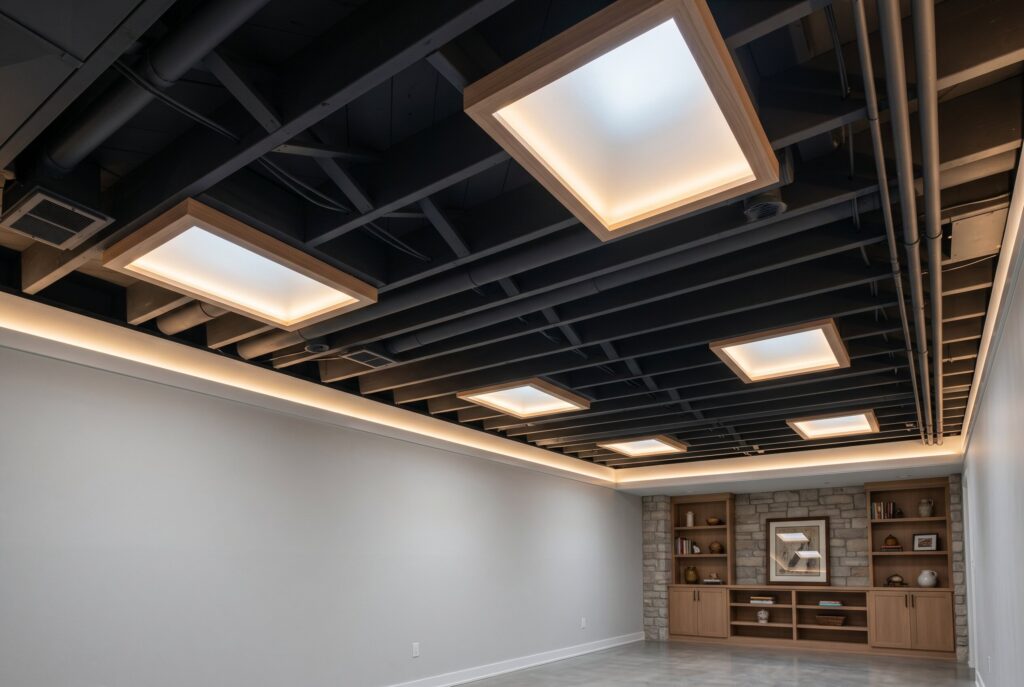
Lighting can do as much as materials by pulling attention away from the ceiling structure. Build shallow floating frames with translucent panels and LED lighting behind them to mimic skylights. Add edge lighting around the perimeter to create a soft glow that makes the ceiling feel lighter and more open.
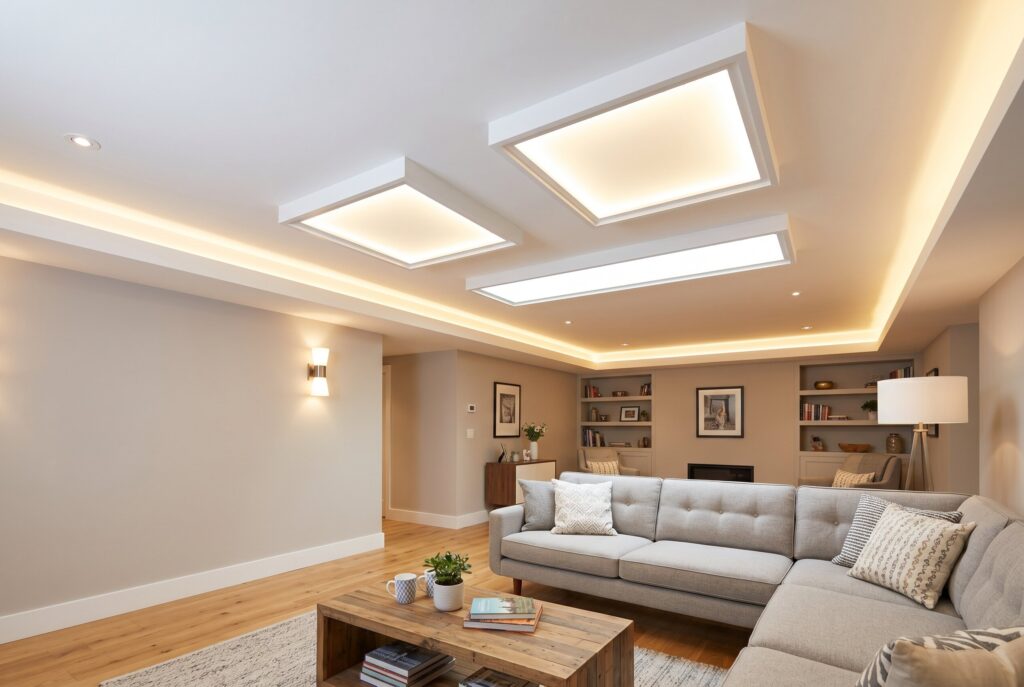
Box In Pipes and Ducts the Classic Way
14. Soffits With Access Panels
Most basements have a main trunk duct or drain line running below the joists. Rather than lowering the whole ceiling to clear it, frame a boxed soffit, also called a bulkhead, around just that run and finish the rest of the ceiling higher. Add a hinged or removable access panel anywhere the soffit covers a valve, cleanout, or junction box. Painted the same color as the ceiling, a clean soffit reads as architecture rather than a cover up.
15. Drywall With Access Panels
Drywall still gives the most finished looking basement ceiling, and it works well if you plan for service. Map every shutoff valve, cleanout, and junction box before hanging the boards, then install flush access panels at each one. Use moisture resistant drywall in basements prone to humidity, and remember that electrical junction boxes must stay accessible, so never bury them behind a solid ceiling.
Basement Ceiling Options Compared
| Option | Utility Access | Moisture Tolerance | Height Lost | DIY Difficulty |
|---|---|---|---|---|
| Plywood panels (screwed) | Good | Fair | Small | Moderate |
| Beadboard or shiplap | Fair | Fair | Small | Moderate |
| Painted open ceiling | Excellent | Good | None | Easy |
| PVC drop ceiling | Excellent | Excellent | Most | Moderate |
| Acoustic fiberglass tiles | Excellent | Fair | Most | Moderate |
| Fabric canopy | Excellent | Poor | Minimal | Easy |
| Soffits with access panels | Good at panels | Fair | Only under boxed runs | Moderate to hard |
| Drywall with access panels | Fair | Fair with moisture resistant board | Small | Hard |
How Much Ceiling Height Can You Afford to Lose?
Height matters more in a basement than anywhere else in the house. Under the International Residential Code, which many U.S. jurisdictions follow, a habitable basement generally needs a ceiling height of at least 7 feet, with beams, girders, ducts, and similar obstructions allowed to hang slightly lower. Local codes can differ, so confirm the rule where you live. Measure from the floor to the lowest pipe or duct before you choose a finish. Painted open ceilings keep every inch, panels and drywall cost only a little, and drop ceilings usually need several inches of clearance below the lowest obstruction so the tiles can tilt into the grid.
Basement Ceiling FAQs
What is the cheapest way to cover a basement ceiling?
Painting the exposed ceiling is usually the least expensive option, since it only needs paint, a sprayer or roller, and prep time. Plywood panels are a step up, while drop ceilings and drywall cost more once you add materials, framing, and access panels.
Should I drywall my basement ceiling?
Drywall gives the most finished look, but it makes future repairs harder. If you choose it, add access panels at every valve, cleanout, and junction box, or combine drywall with soffits around the main ducts and a drop ceiling section under the areas that need the most service.
How much height does a drop ceiling take?
A drop ceiling typically sits several inches below the lowest pipe or duct, because each tile needs room to tilt up and drop into the grid. Check the manufacturer’s minimum clearance and measure your lowest obstruction before you buy.
Do basement ceilings need moisture protection?
Fix leaks and high humidity first, since no ceiling finish will survive a wet basement for long. In damp spaces, choose moisture tolerant materials like PVC panels or moisture resistant drywall, and save wood, fiberglass tiles, and fabric for basements that stay dry year round.
Conclusion
The best basement ceiling ideas aren’t only about covering exposed pipes. They are about choosing the right balance between beauty, height, maintenance, moisture resistance, sound control, and access. A sealed ceiling can look polished, but it isn’t always the smartest choice for a lower level filled with plumbing, wiring, and HVAC systems. Wood panels add warmth, painted open ceilings preserve height, PVC drop panels protect access, and acoustic materials make entertainment spaces more comfortable.
Before choosing any ceiling treatment, look carefully at the systems above your head. Identify water valves, junction boxes, ductwork, cleanouts, and anything that may need future service. Then choose a finish that makes the basement feel calm and complete without creating repair problems later. With the right ceiling plan, even an unfinished basement can become a comfortable living space where the lights feel warm, the pipes disappear visually, and the room finally feels like part of the home.