

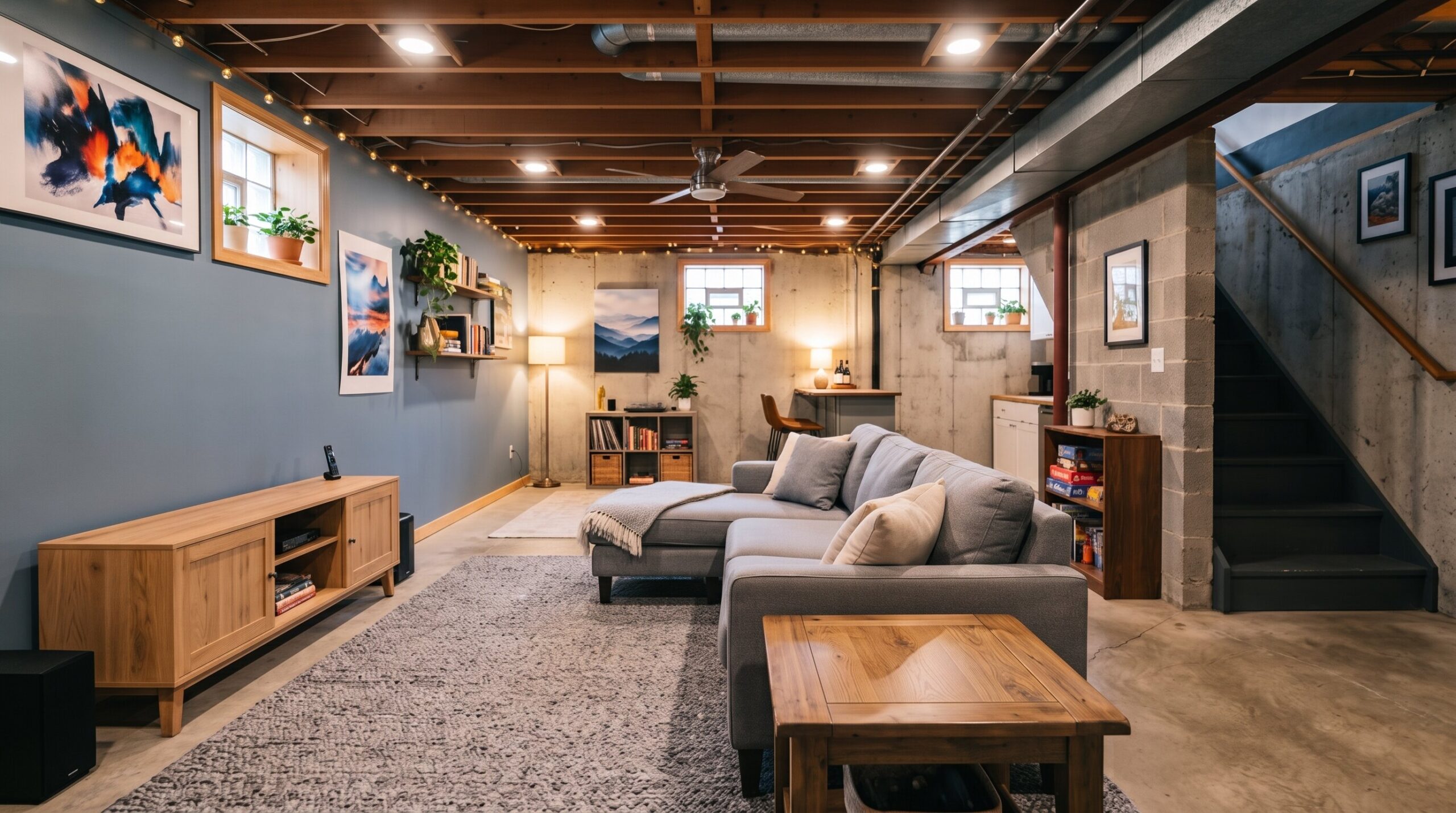
An unfinished basement can look cold, dusty, and forgotten, but it doesn’t need a full renovation to become useful. With the right unfinished basement ideas, you can turn raw concrete, exposed beams, and open utility areas into a warm, organized, and flexible living space.
The secret isn’t pretending the basement is already finished. Instead, embrace the raw structure and soften it with light, rugs, zones, storage, and furniture that makes the space feel intentional. A no renovation approach works especially well if you want a basement gym, play area, storage wall, hobby zone, basement bar, or casual man cave without spending tens of thousands of dollars. Before decorating, always check for moisture, musty smells, cracks, mold, and unsafe wiring. A beautiful basement still needs to be dry, clean, and safe first.
Phase 1: Upgrading the Unfinished Shell
1. The Infinity Blackout Ceiling
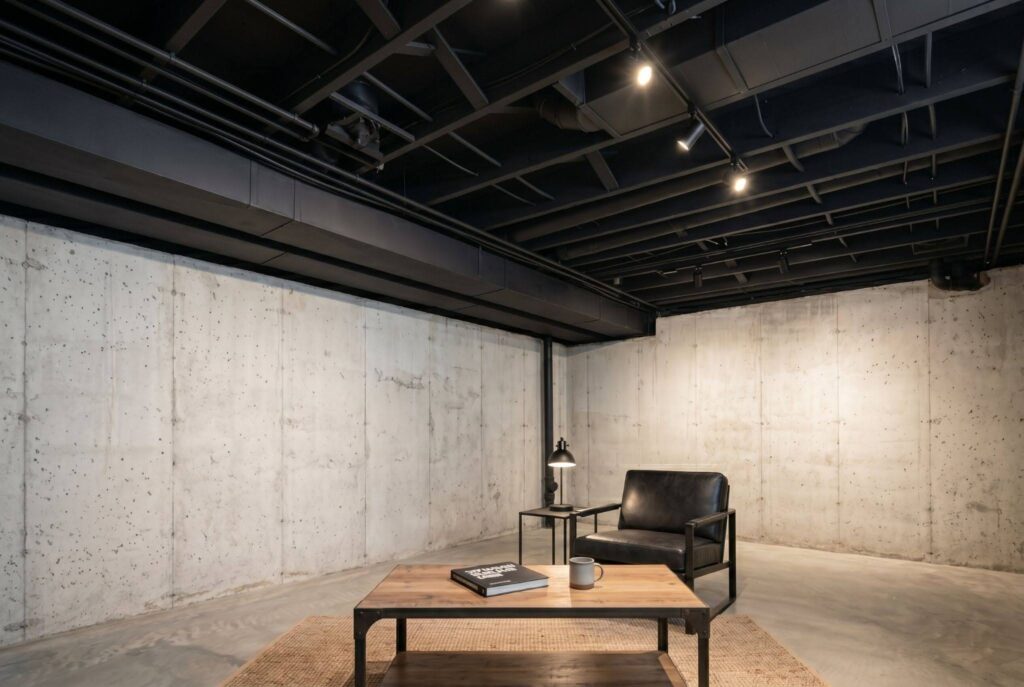
One of the smartest basement ceiling ideas is painting the exposed ceiling matte black. Instead of trying to hide pipes, joists, ducts, and wires with a low drop ceiling, this approach makes them visually disappear. The dark color creates an infinity effect and can make the ceiling feel less busy.
This works especially well in an industrial or modern farmhouse basement. Use a sprayer for even coverage, and protect floors and walls carefully. If the ceiling is very low, matte black often feels cleaner than white because it reduces visual clutter.
2. Painted and Stenciled Epoxy Floors
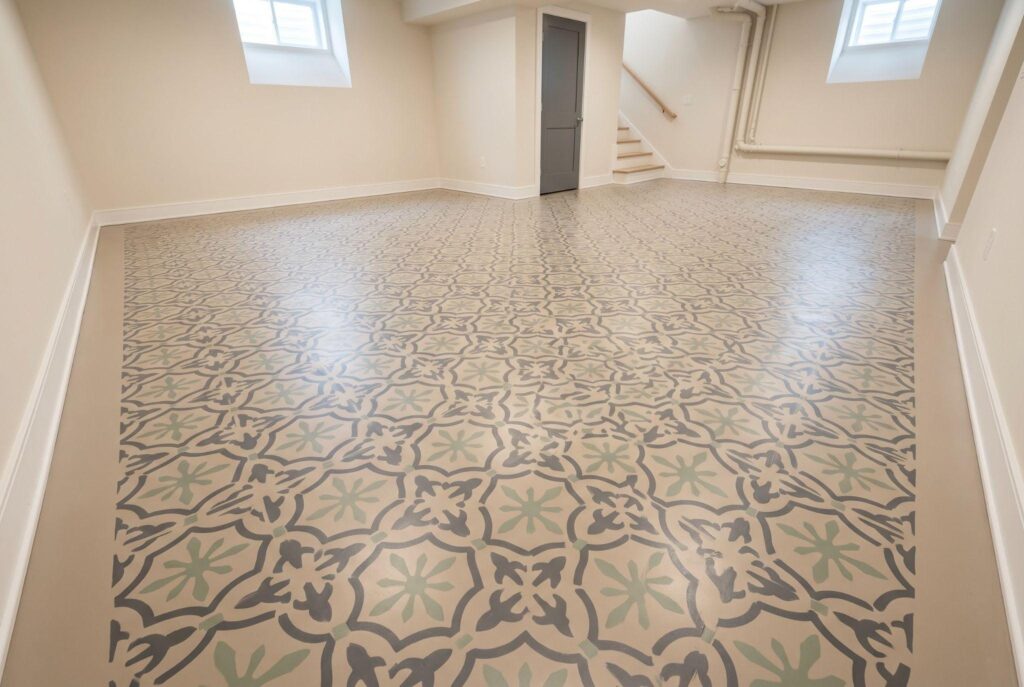
Concrete can feel unfinished, but it can also become one of the most practical basement floor ideas. Epoxy paint seals dust, improves durability, and makes the floor easier to clean. Add a stencil pattern if you want the look of tile without the cost. Choose soft gray, warm beige, charcoal, or sage green for a more designed finish. Avoid overly glossy coatings in family zones because they can show dust and feel slippery. A satin finish usually feels more residential and forgiving.
3. Whitewashed Basement Wall Ideas
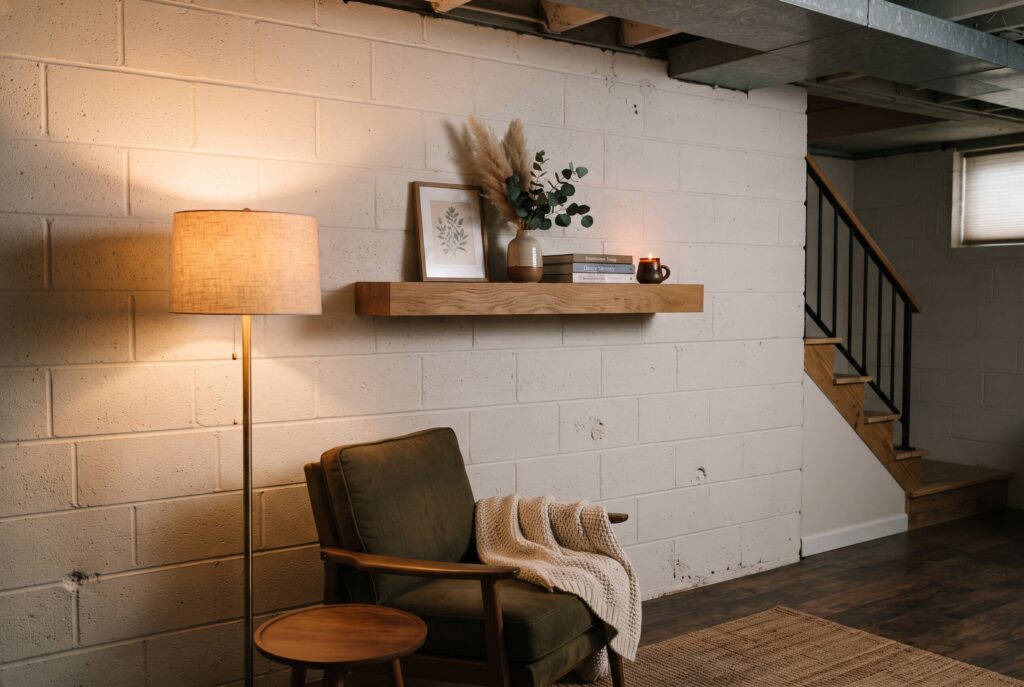
Cinder block walls can make a basement feel harsh. Whitewashing softens the surface while keeping the texture visible. This is one of the best basement wall ideas if you want brightness without losing the raw character of the space.
Whitewashed walls bounce light better than dark concrete and make the basement feel cleaner instantly. Pair them with jute rugs, walnut shelves, and warm lamps to prevent the room from feeling sterile. The result is simple, affordable, and much warmer than bare block walls.
4. Faux Brick Paneling
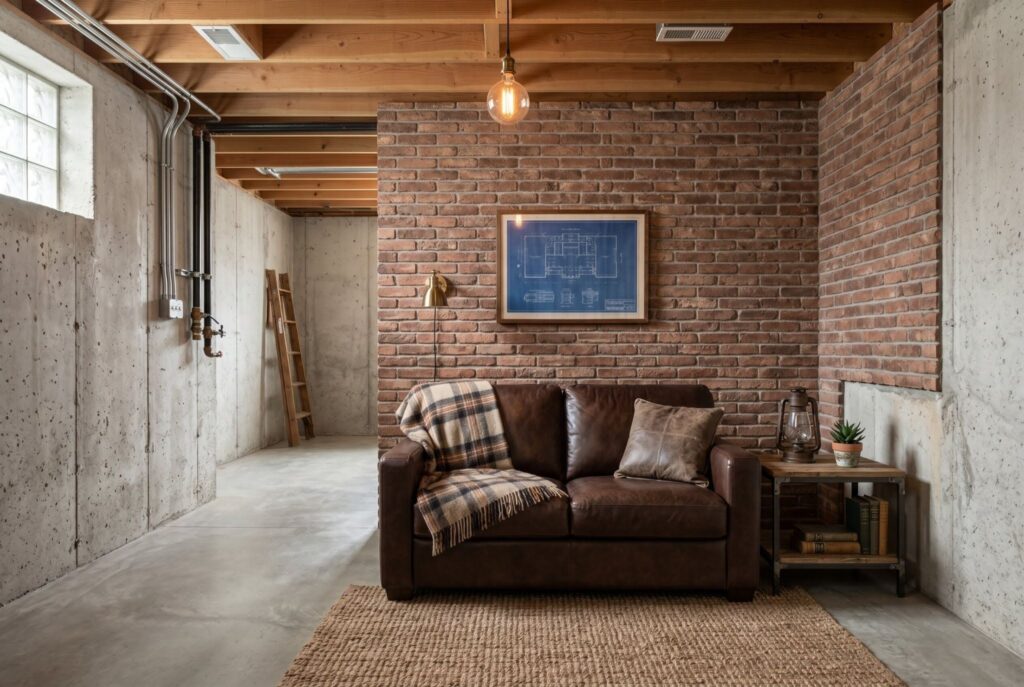
If one wall looks especially rough, faux brick paneling can turn it into a feature. It gives texture and warmth without the labor of real masonry. Paint it white for a farmhouse look or charcoal for a moodier lounge.
Use faux brick on one wall only. Too much can make the basement feel like a themed restaurant. A single accent wall behind a sofa, bar, or desk creates enough character while keeping the room calm.
5. Foam Board Insulation Wraps
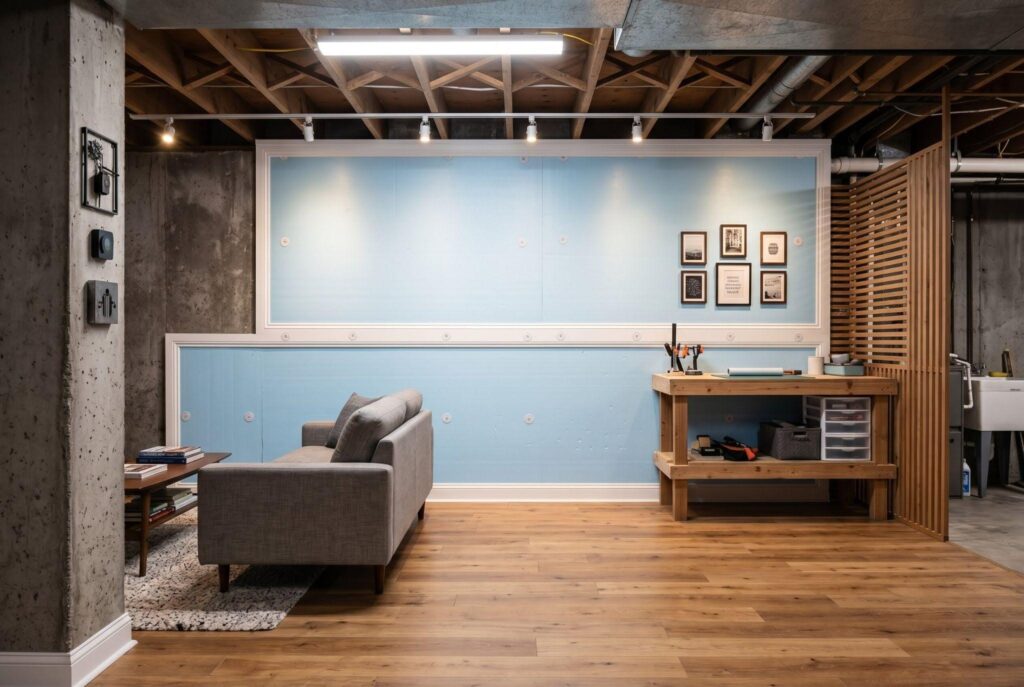
If your unfinished basement feels cold, foam board insulation can improve comfort without traditional framing. Use it along exterior concrete walls where permitted, then cover or finish it according to local fire safety requirements.
This idea is practical, but it should be done carefully. Some insulation materials require a thermal barrier. Before installing, check local code and product instructions. Comfort matters, but safety comes first.
Phase 2: Adding Warmth and Better Lighting
6. Oversized Layered Area Rugs
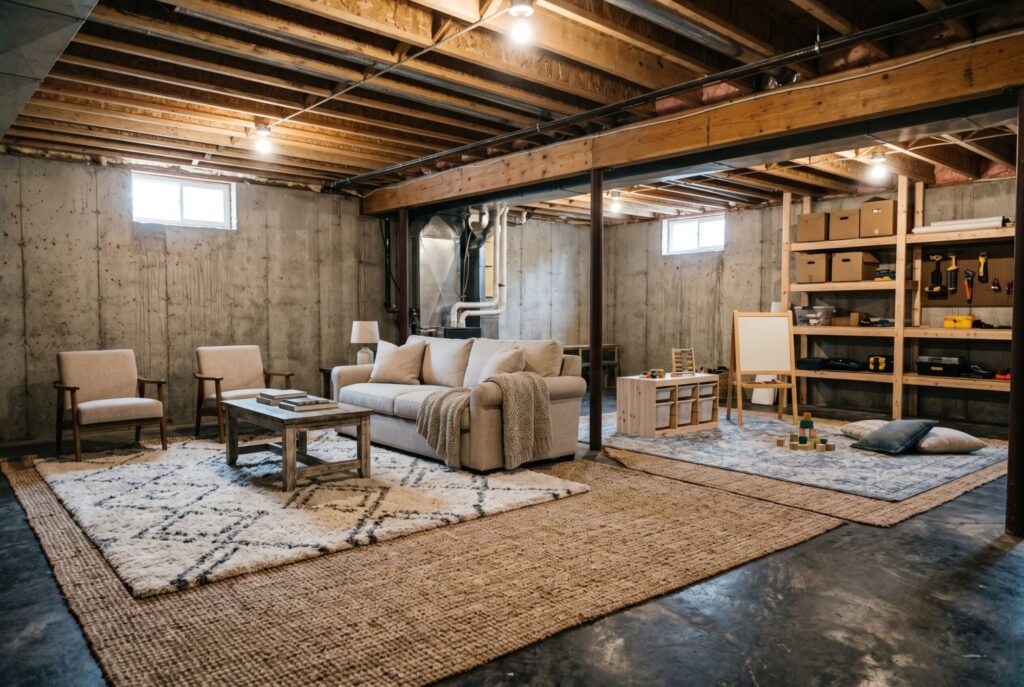
Large rugs are the fastest way to make a basement feel like a room instead of a storage area. Use a big jute rug as the base, then layer a softer wool or washable rug on top. This adds warmth, texture, and comfort under bare feet.
Layered rugs also help define zones. One rug can mark the lounge area, another can soften the playroom, and a durable outdoor rug can improve the laundry corner. In unfinished basements, rugs do more than decorate. They create boundaries.
7. Industrial String Lights
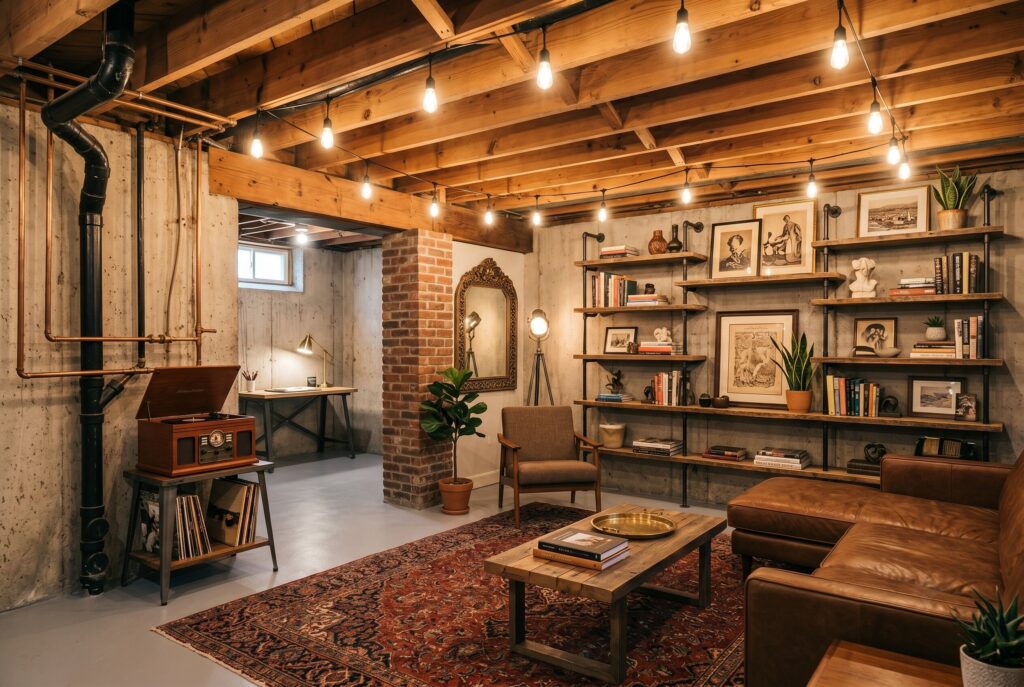
String lights are one of the easiest basement lighting ideas because they work with exposed beams instead of fighting them. Run warm LED lights across ceiling joists or around a lounge zone to create a soft glow.
Choose warm bulbs around 2700K so the basement feels cozy rather than harsh. Avoid random placement. Follow ceiling lines or zone edges so the lights feel intentional. This simple upgrade can change the mood in one evening.
8. Fabric Curtains as Room Dividers
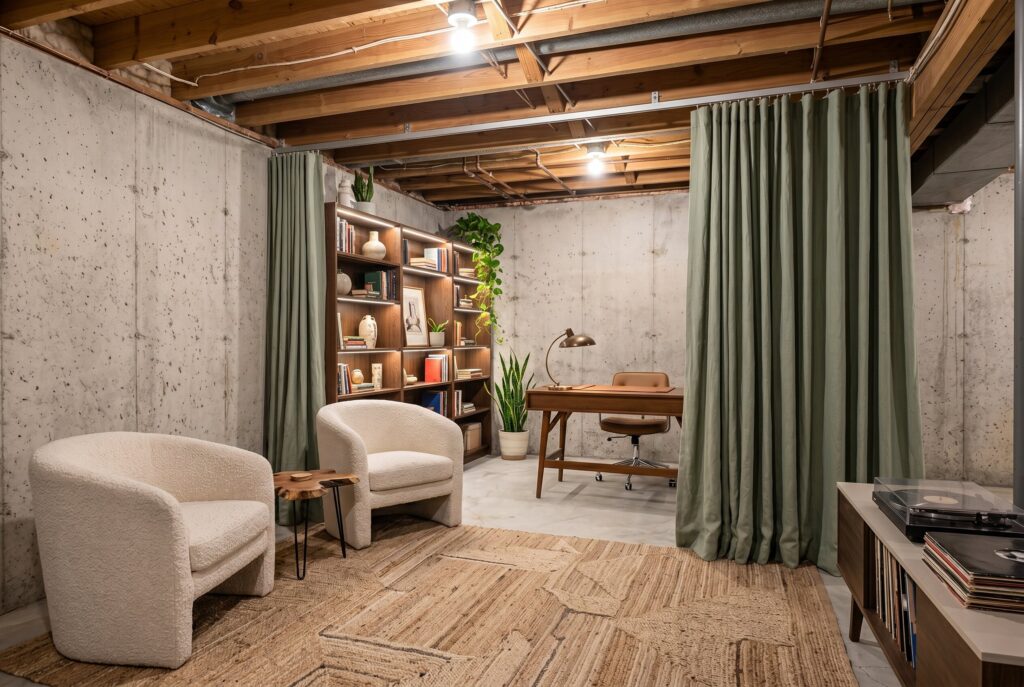
You don’t always need walls to hide utilities. Linen curtains can soften a basement while concealing water heaters, storage shelves, laundry areas, or mechanical zones. Sage green, oatmeal, charcoal, and warm white work especially well. Hang curtains from ceiling tracks so they look clean and move easily. Leave enough clearance around mechanical equipment for safety and access. The best unfinished basement decorating ideas balance beauty with function, and curtains do both.
9. Warm Glow Floor Lamps
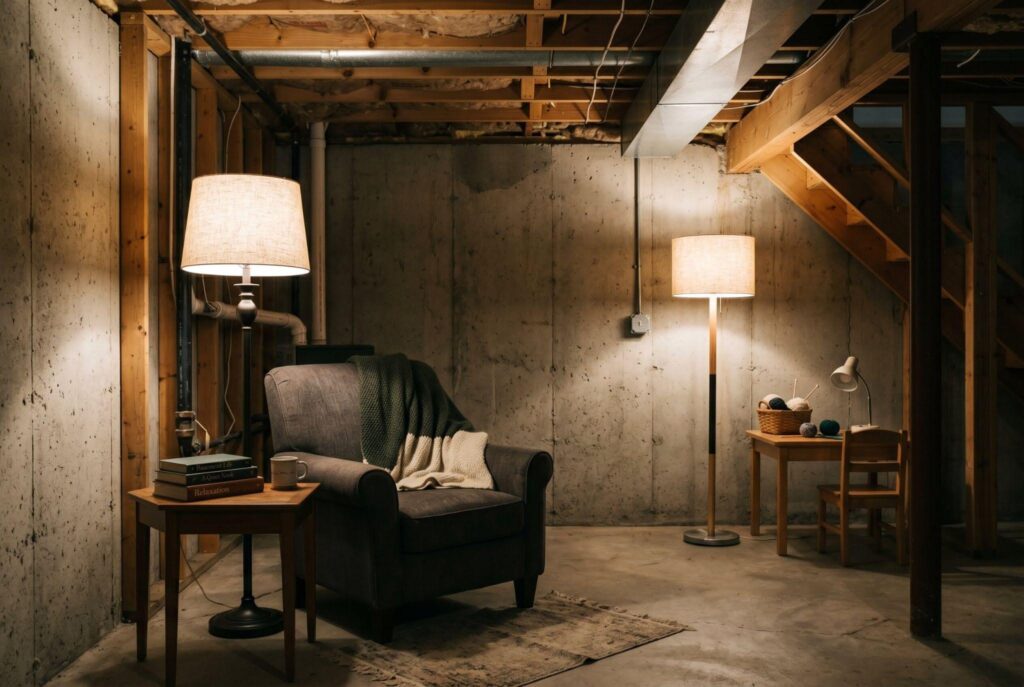
Basements often have overhead bulbs that create shadows and make the space feel flat. Floor lamps solve that problem by bringing light closer to human level. Place them in corners, beside sofas, near reading chairs, and next to hobby tables.
Use warm bulbs and fabric shades for softness. In an unfinished basement, lighting should create atmosphere, not expose every flaw. A few well placed lamps can make the room feel lived in almost immediately.
10. Minimalist Fireplace Mantel Illusion
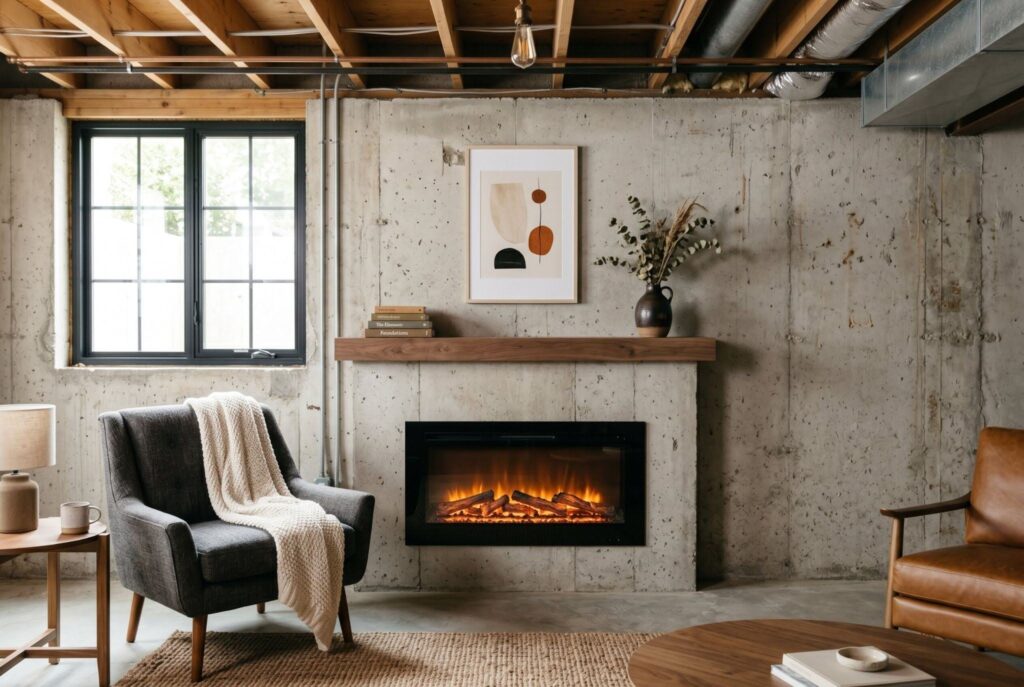
A real fireplace may be expensive, but a faux electric fireplace with a simple walnut mantel can create a strong focal point. Keep the styling minimal with one artwork, one vase, and a few books. This idea works best in a lounge or basement man cave area. It gives the room a center and makes the basement feel less temporary. Even if the fireplace is electric, the visual warmth helps people gather naturally around it.
Phase 3: Creating Functional Basement Zones
11. The U Shaped Sectional Upgrade
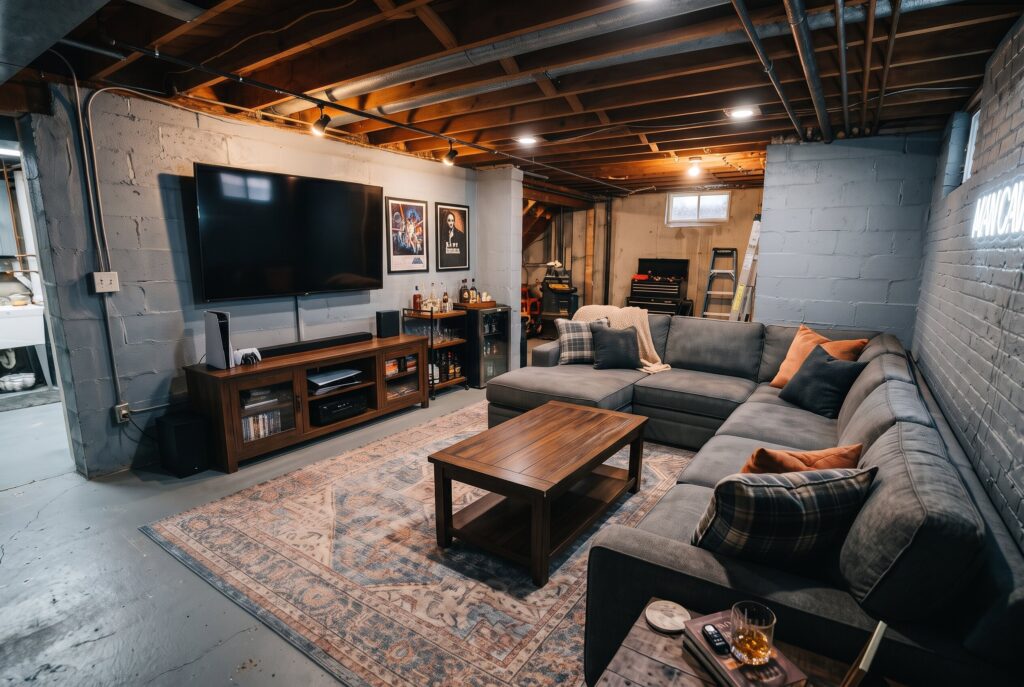
For man cave ideas, skip scattered single chairs. A large U shaped sectional creates better flow, more seating, and a stronger sense of gathering. Push it against the walls to keep the center open. Choose performance fabric if the basement will host kids, pets, snacks, or movie nights. Add a large rug underneath so the sofa zone feels grounded. In an unfinished basement, one substantial seating piece often looks better than many small pieces.
12. The Rustic Pallet Basement Bar
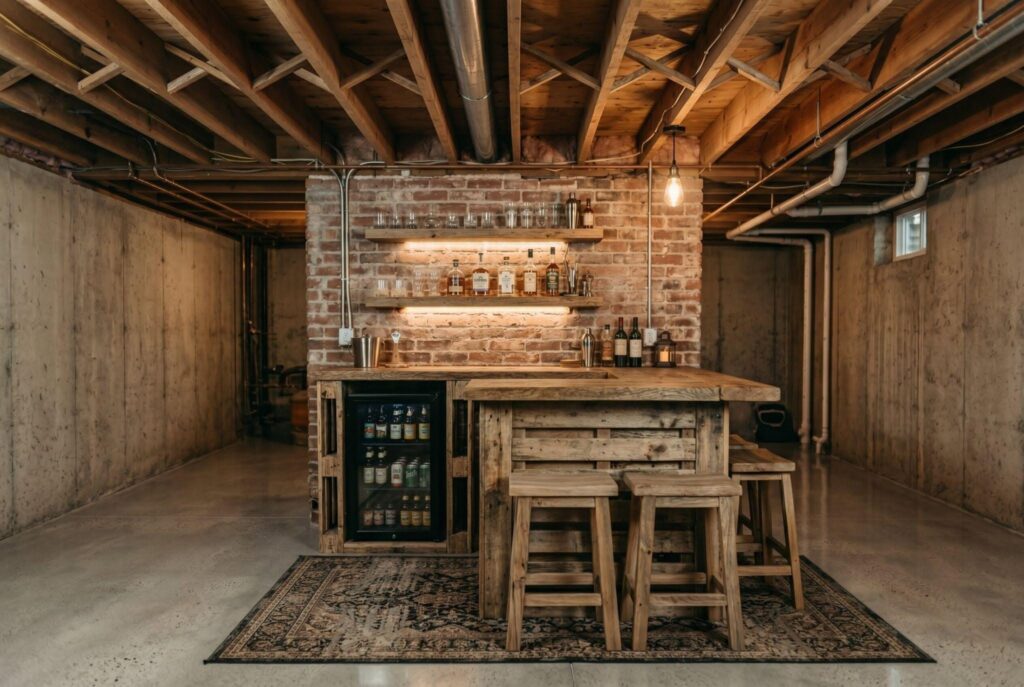
Basement bar ideas don’t need to be expensive. A simple bar made from reclaimed pallet wood, oak boards, or butcher block can create a weekend gathering spot without a full remodel.
Keep the bar compact and practical. Add floating shelves for glasses, a small beverage fridge if outlets allow, and warm lighting under the shelves. The goal is a relaxed basement bar, not a full restaurant setup.
13. The Moody Sage Green Gaming Corner
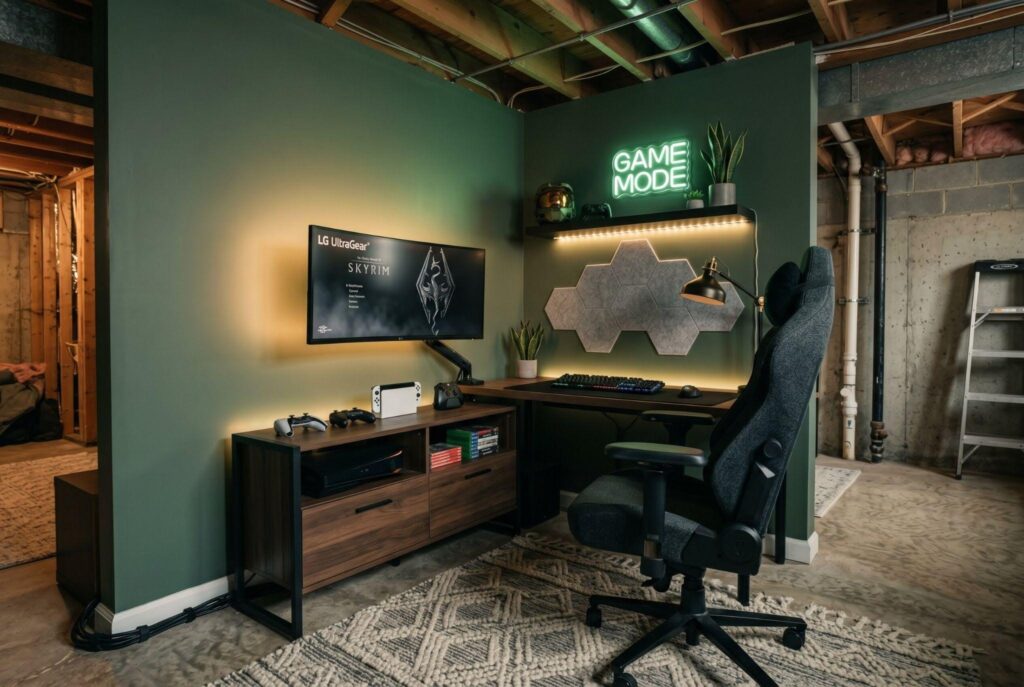
Small man cave ideas work best when they feel focused. Paint one corner sage green or deep olive, add a low media console, organize cables, and use LED backlighting behind the screen.
This creates a defined gaming zone without walls. Darker colors can work beautifully in basements because they make the space feel cozy rather than pretending it has natural light. Add a soft rug to absorb sound and make the corner more comfortable.
14. The Drop Down Projector Screen
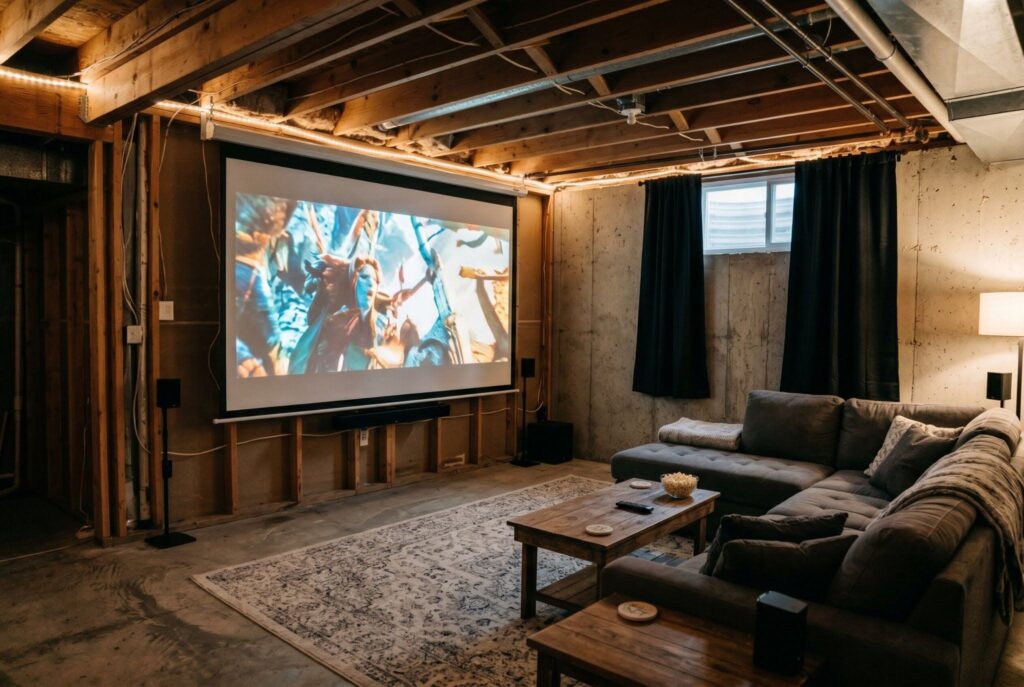
A projector is often more flexible than a large TV in an unfinished basement. A drop down screen can attach to a ceiling joist and disappear when not in use. This is perfect for movie nights, game days, or kids’ sleepovers.
Keep seating low and close enough for comfortable viewing. Use blackout curtains if there are small windows. The setup feels casual, but with the right lighting and rug, it can become the favorite room in the house.
15. Interlocking Foam Gym Floors
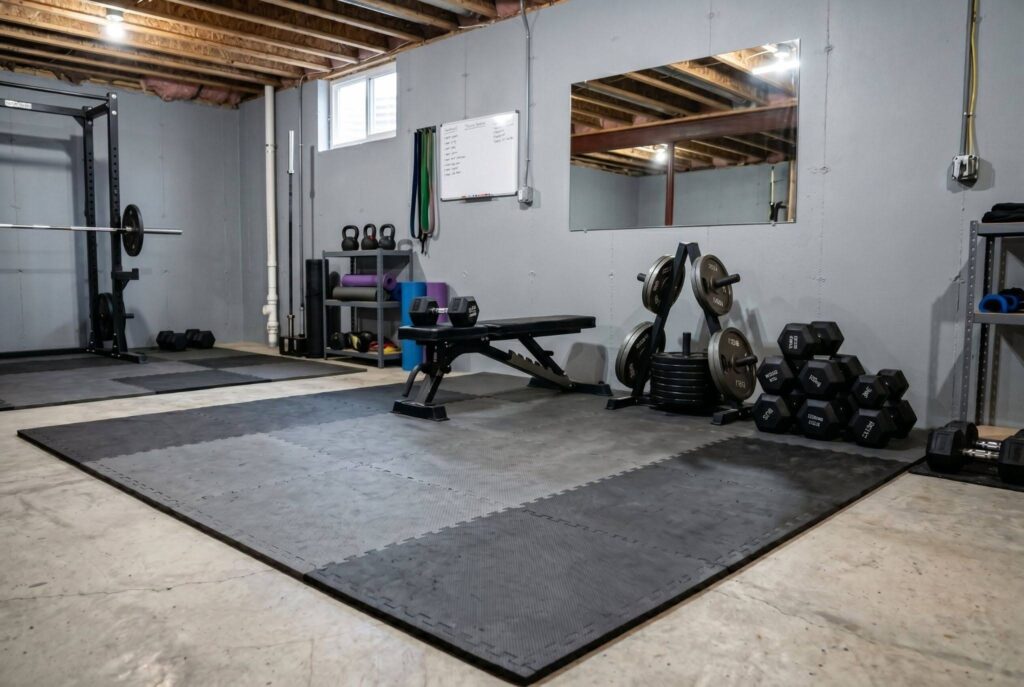
A home gym is one of the most practical unfinished basement ideas. Interlocking foam or rubber tiles protect the concrete, reduce impact, and create a safer workout surface.
Choose thicker rubber for weights and softer foam for stretching or yoga. Keep gym equipment along the wall so the center stays open. Add a mirror if possible, but make sure it’s securely mounted. A basement gym should feel durable, not delicate.
16. Heavy Duty Storage Racks
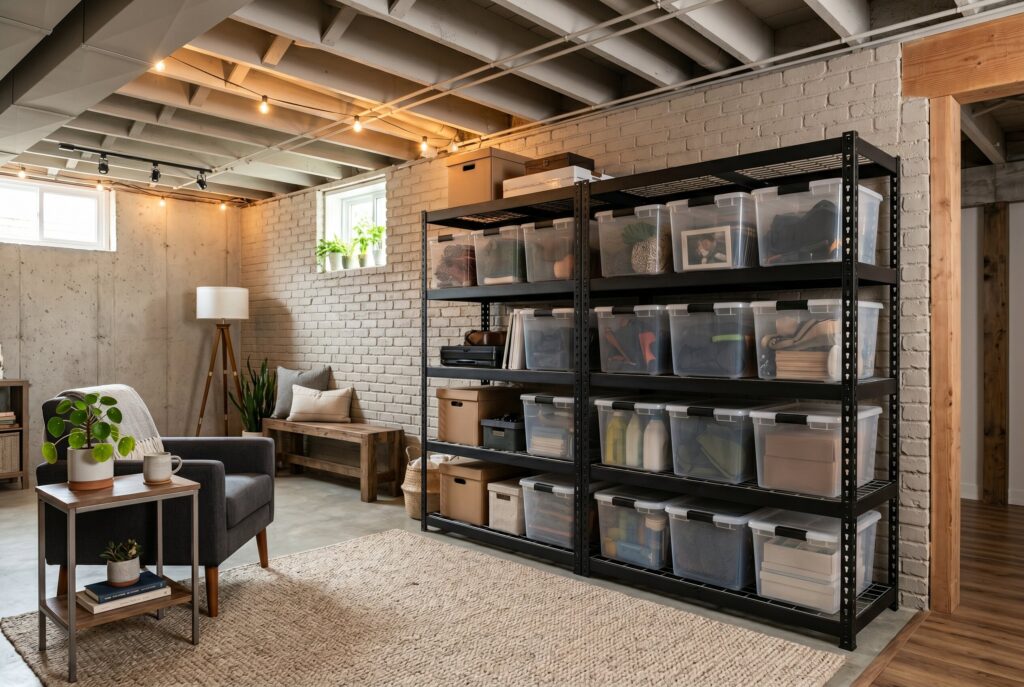
Storage is still one of the most important basement functions. Heavy duty shelving keeps seasonal decor, tools, sports gear, and household supplies off the floor. This matters because basements can flood or collect moisture.
Use clear bins with labels so you can see what you own. Group items by category and keep the most used items at eye level. Organization can make an unfinished basement feel calmer even before you decorate.
17. The Bright Laundry Nook
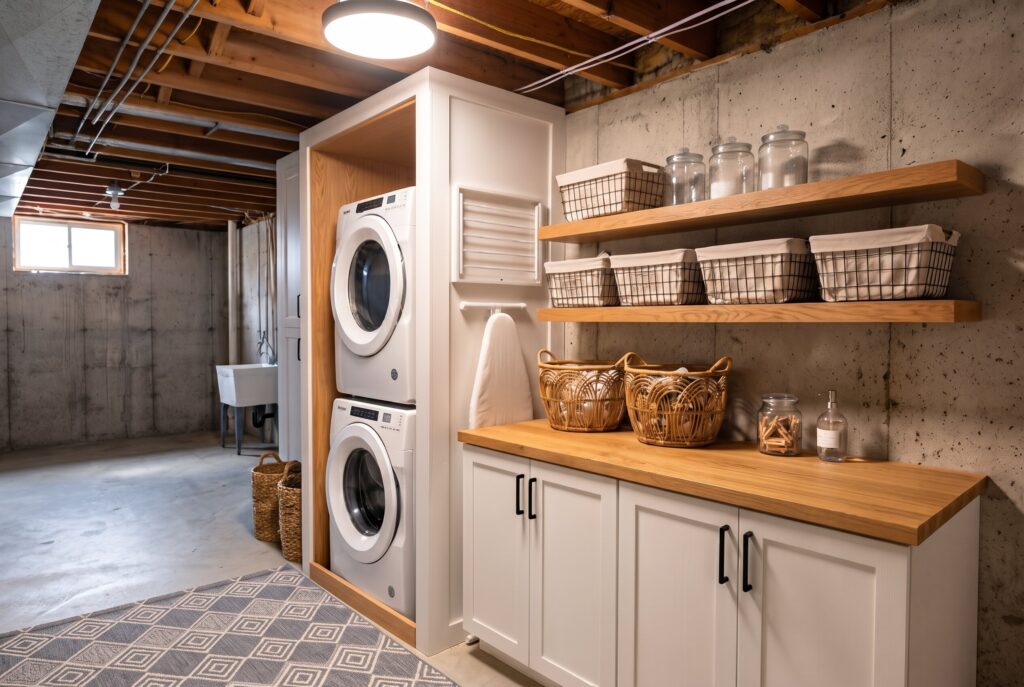
If your laundry area is in the basement, treat it like a real zone. Add an outdoor rug, wall shelves, labeled baskets, and a folding surface. Good lighting matters here because laundry corners often become dim and unpleasant.
Use waterproof or washable materials. A tidy laundry nook makes the entire basement feel more controlled, even if the surrounding space remains unfinished.
18. The Japandi Floor Seating Nook
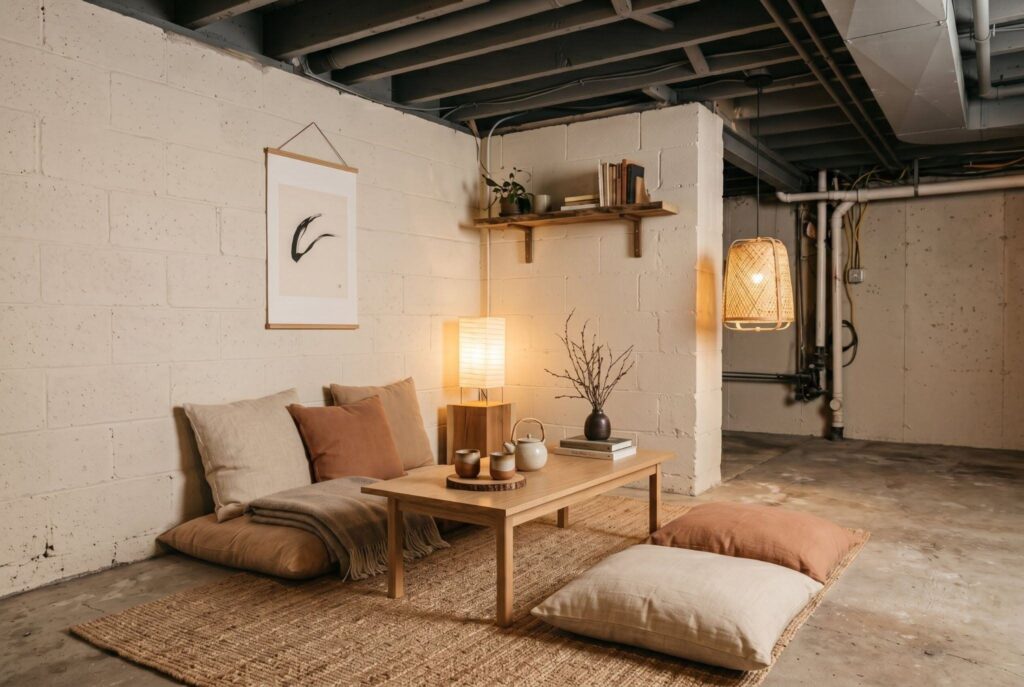
A floor seating nook brings softness to a raw basement. Use thick cushions, a low table, warm lamps, and a textured rug. This creates a quiet reading, tea, or meditation area.
Japandi style works well because it values simplicity, natural materials, and low furniture. In a basement with low ceilings, floor seating can actually make the room feel taller.
19. The Vinyl Sheet Crafter’s Zone
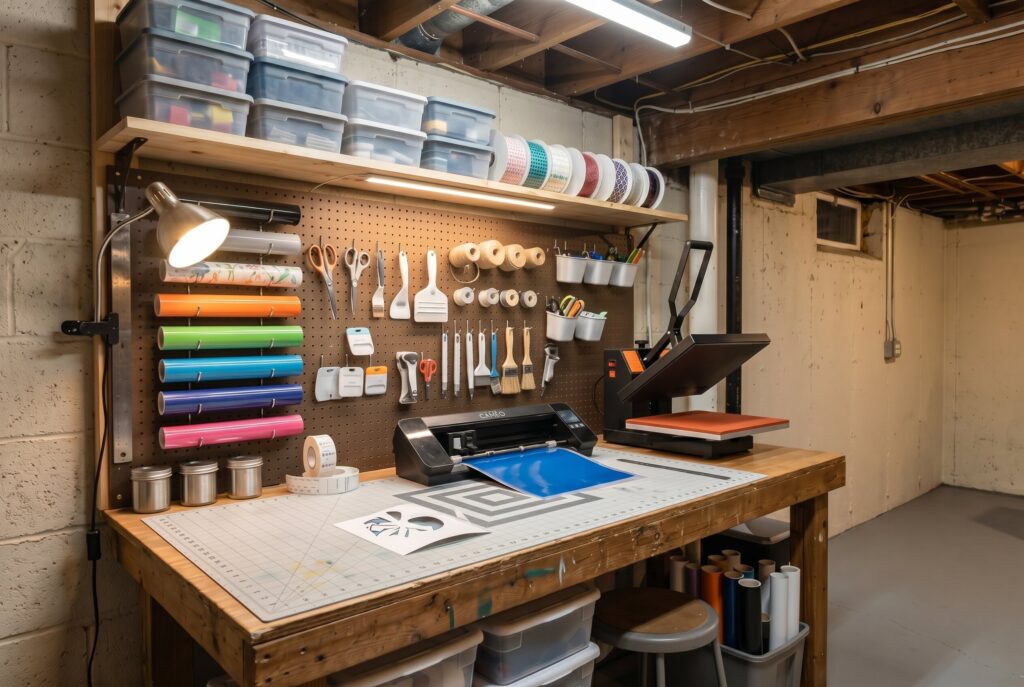
For DIY projects, use a vinyl sheet or washable mat to define a craft area. It protects the concrete from paint, glue, sawdust, and spills. Add a sturdy table, pegboard, and labeled bins.
This zone is ideal for hobbies because unfinished basements can handle mess better than upstairs rooms. The key is keeping the mess contained so the whole basement doesn’t become chaotic.
20. Upcycled Metal Locker Storage
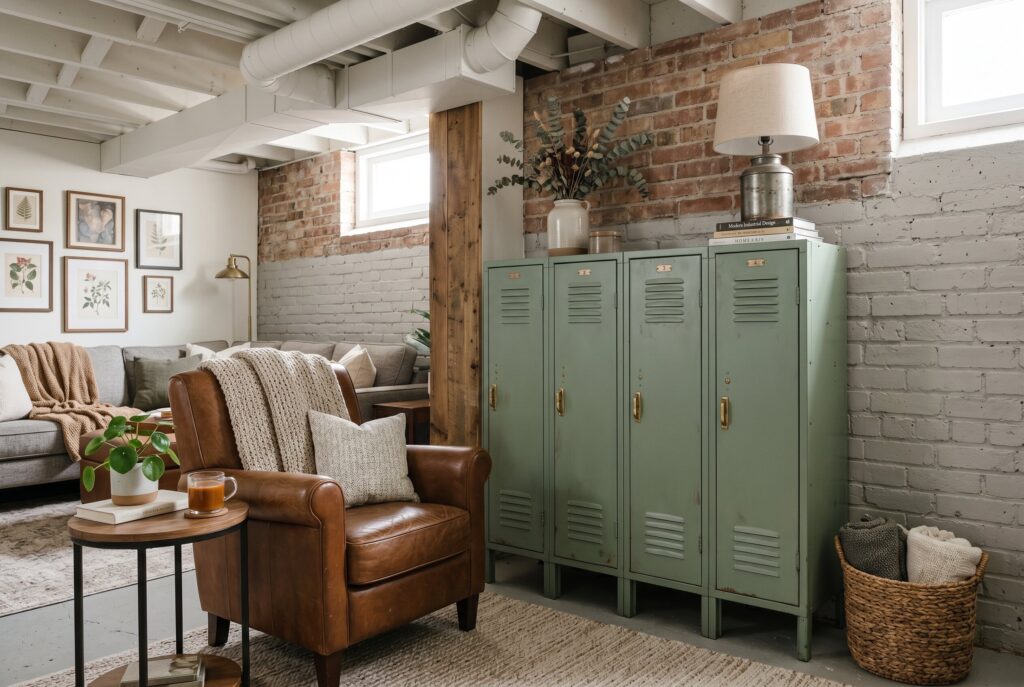
Old metal lockers add industrial charm and practical storage. Use them for sports gear, tools, boots, toys, or workout accessories. Paint them matte black, sage green, or warm gray for a cleaner look. Lockers are especially useful because they hide clutter behind doors. They also suit the unfinished basement aesthetic better than delicate furniture.
21. The Chalkboard Paint Kids’ Wall
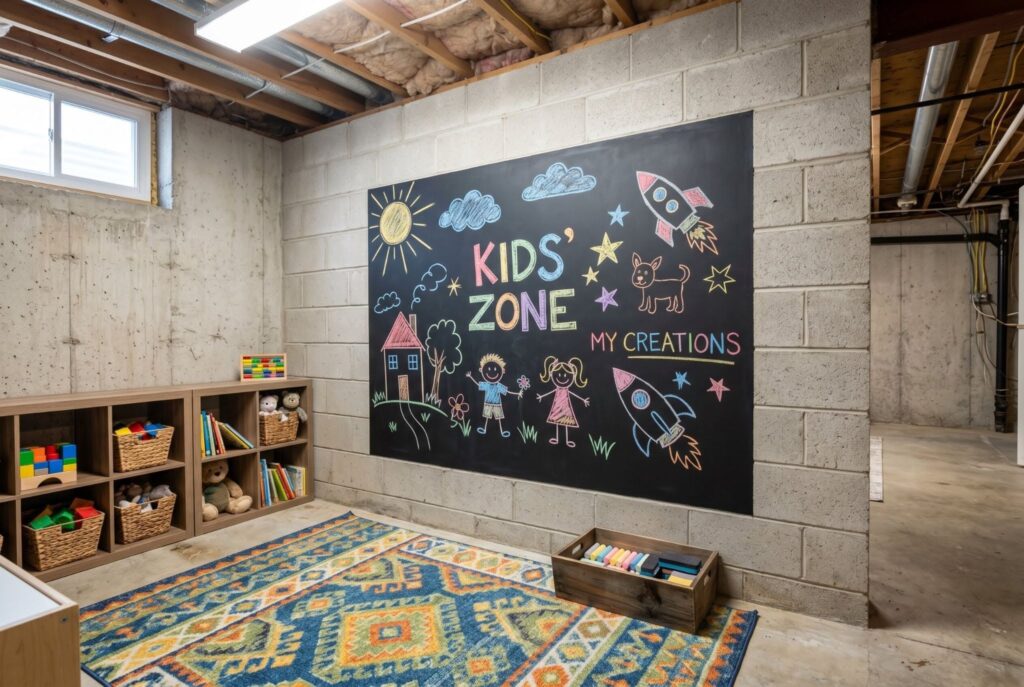
A chalkboard wall gives children a creative zone without adding bulky furniture. Paint one smooth concrete or drywall surface with chalkboard paint and place washable rugs beneath it. This works best near toy storage or a play zone. It turns an unfinished wall into an activity surface and gives kids permission to use the basement freely.
Conclusion
The best unfinished basement ideas don’t depend on pretending the space is finished. They make the raw structure feel intentional. Paint the ceiling. Seal the floor. Add warm lighting. Use rugs generously. Divide the room into clear zones. Choose furniture that brings people together.
A basement doesn’t need drywall, luxury flooring, or a huge budget to become useful. It needs dryness, order, warmth, and purpose. Start with one weekend project, then build the room in phases. That is how an unfinished basement becomes a cozy part of daily life.
Related Articles
Basement Ideas: 27 Pro Designer Finished Transformations
Small Finished Basement Ideas: 15 Hacks to Feel 2x Bigger