

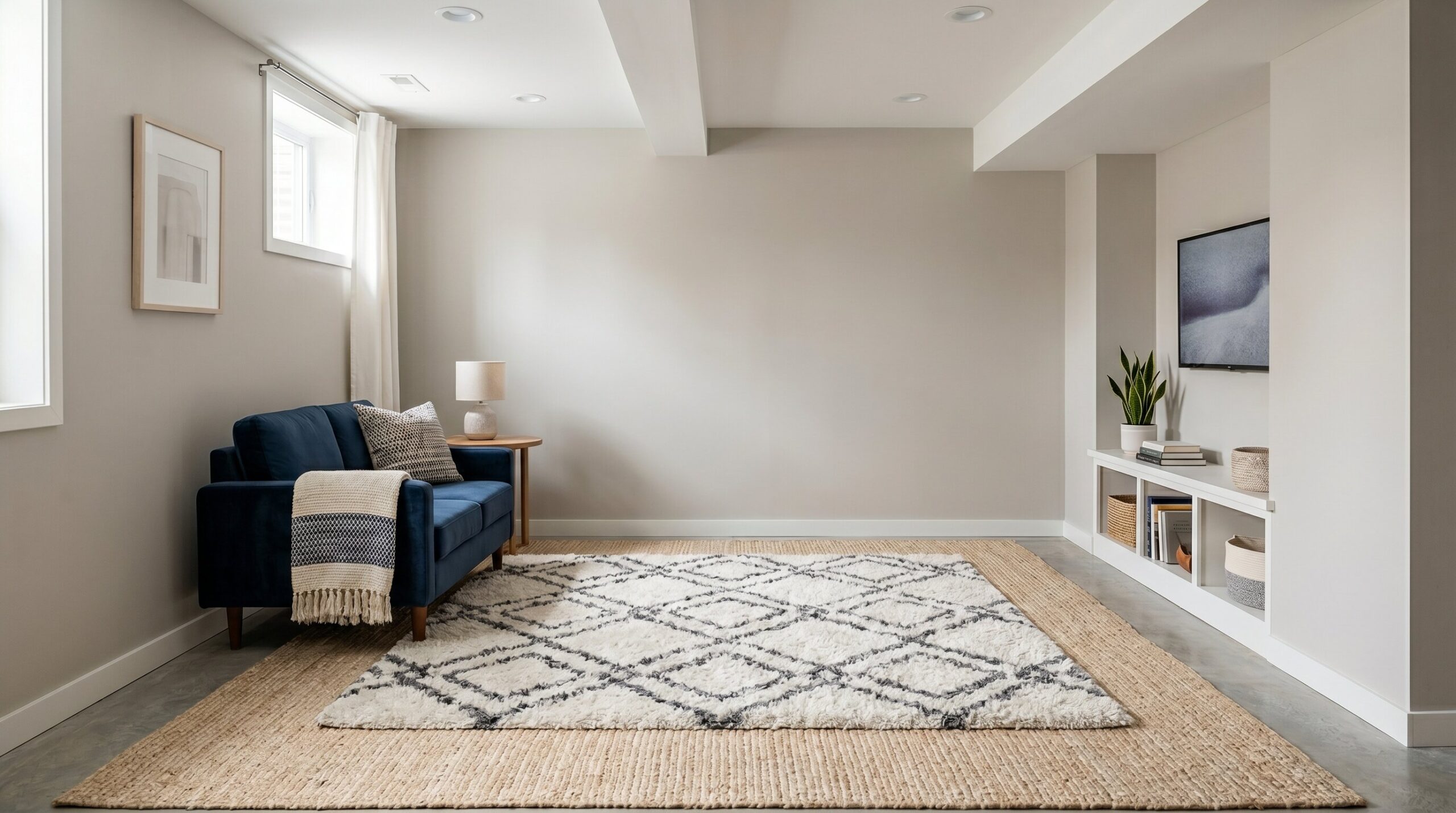
A small basement can feel like a design problem before you even begin. The ceiling may be low, the windows may be tiny, and the room may feel darker than the rest of the house. But the best small finished basement ideas don’t try to force the space into something it can’t be. They work with the basement’s natural limits and use smart lighting, low furniture, moisture resistant materials, and compact zones to make every square foot feel useful.
Before choosing paint colors or furniture, think about what the basement needs to become. A cozy movie lounge needs different planning than a guest bedroom, basement bar, home gym, or small man cave. The goal isn’t to fill the room. The goal is to make it feel intentional.
The Non Negotiables: Waterproofing and Legal Codes
1. The Egress Window Rule
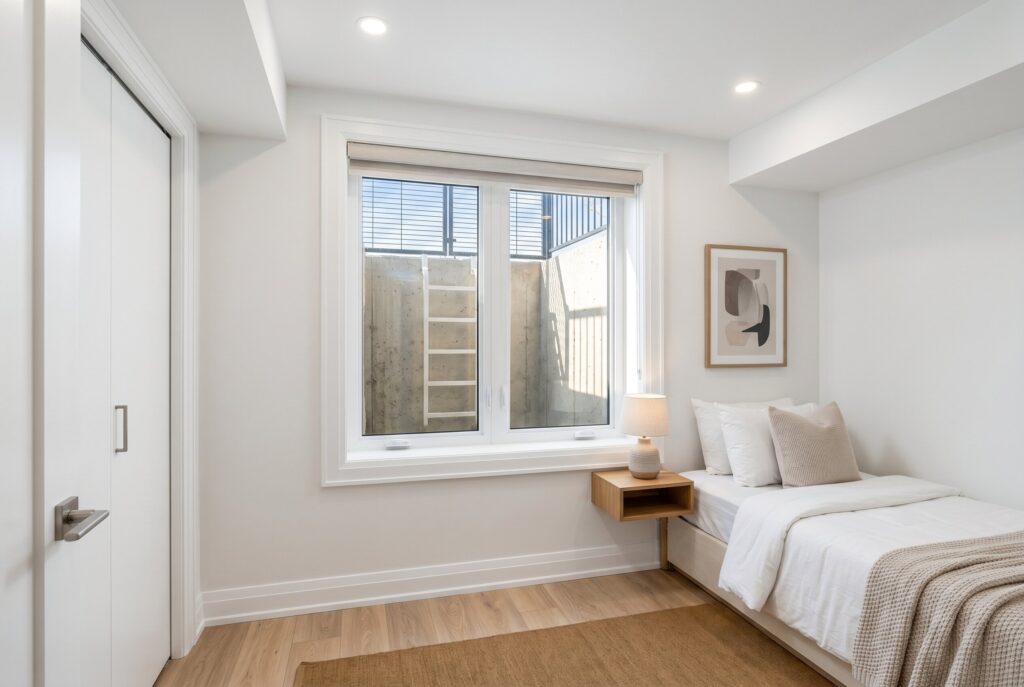
If you are exploring basement bedroom ideas, the first question isn’t style. It is safety. A basement bedroom usually needs a proper egress window so someone can escape during a fire or emergency. Without that window, the room may not qualify as a legal bedroom, even if it has a bed and closet.
An egress window also changes the feeling of the room. It brings in natural light, improves ventilation, and makes the space feel less buried. If your basement is small, this single upgrade can make it feel more livable before any furniture arrives.
2. The LVP Standard
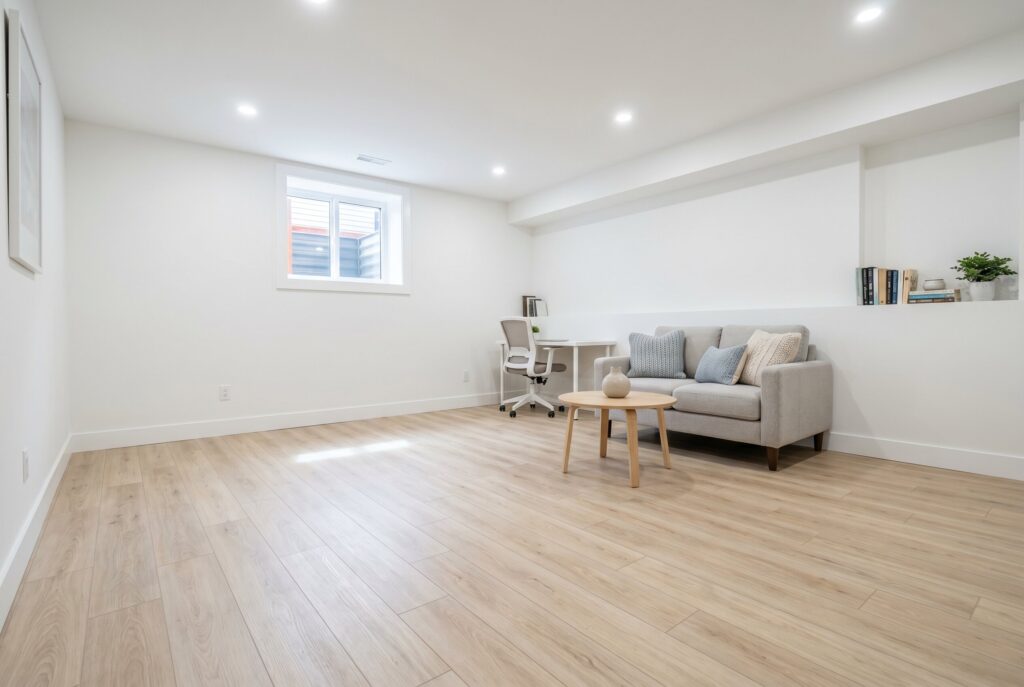
Waterproof basement flooring is essential because basements are more vulnerable to moisture than rooms above grade. Natural hardwood may look beautiful upstairs, but it can warp or swell below ground. Luxury Vinyl Plank is often a smarter choice because it handles moisture better while still giving the warmth of wood. For a small basement, choose light oak, pale walnut, or soft beige tones. Dark floors can look dramatic, but they may make the room feel tighter. A lighter floor reflects more light and helps the entire space feel wider.
Expanding Space: Ceilings and Basement Lighting Ideas
3. The Infinity Ceiling Hack
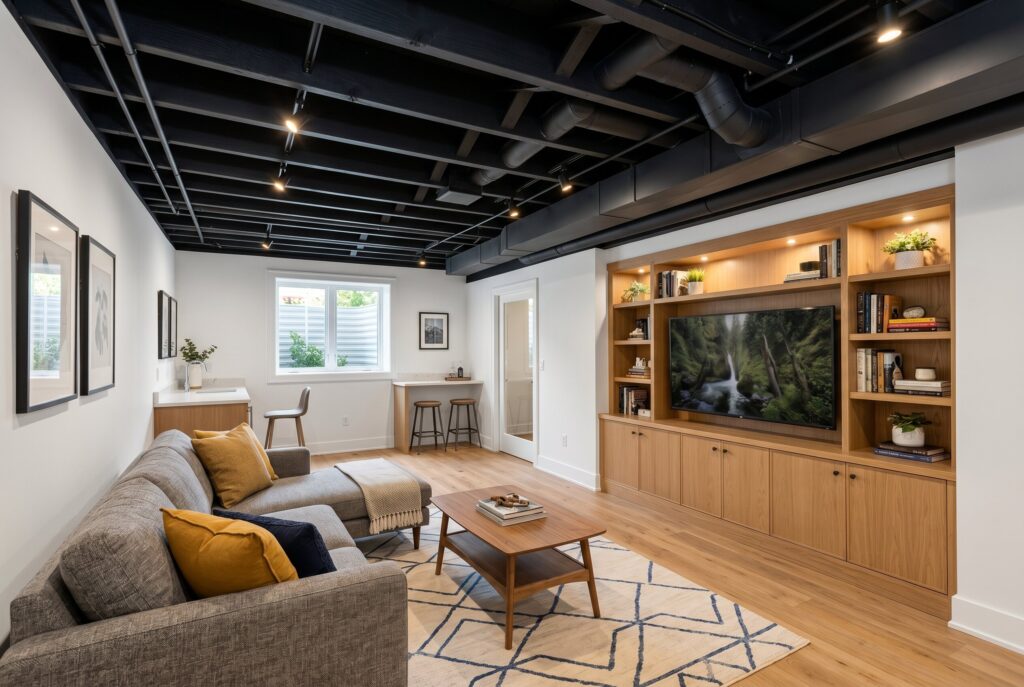
Basement ceiling ideas matter because every inch of height counts. If your ceiling is under eight feet, a bulky drop ceiling can make the room feel compressed. One smart basement ceiling option is to leave joists, ductwork, and pipes exposed, then paint everything matte black. This creates an infinity ceiling effect. The dark surface visually recedes, making the ceiling feel less defined. It also gives the basement an industrial modern look without sacrificing height.
4. Layered Wall Sconces
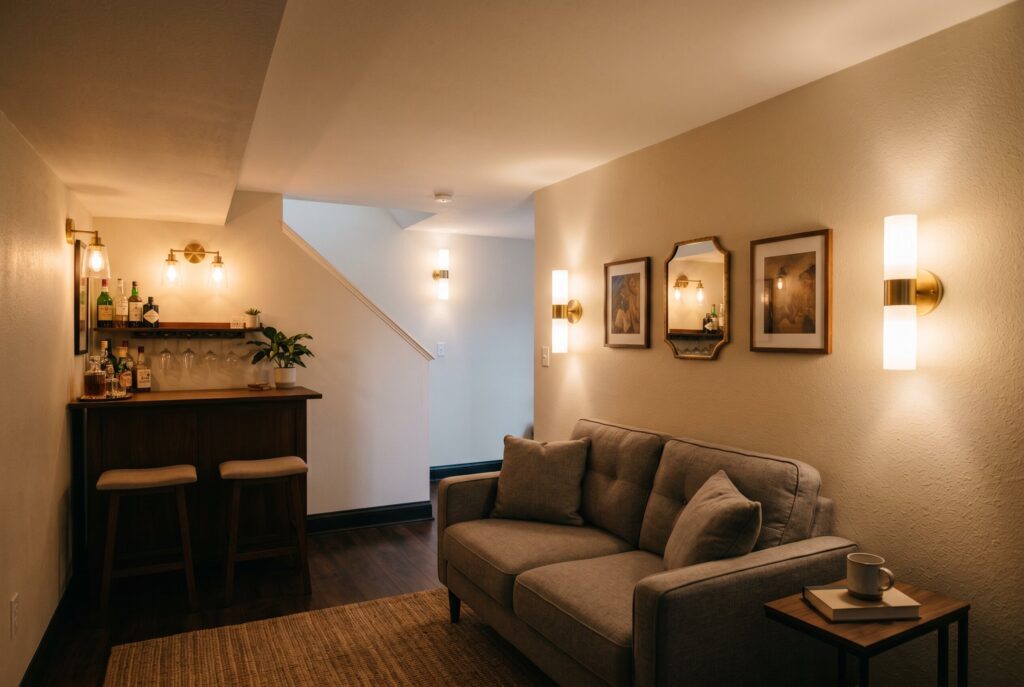
One ceiling light in the middle of the room will make a basement feel flat and shadowy. Layered sconces create warmth and depth by spreading light across the walls. When light washes upward, it makes the room feel taller. Use sconces beside a sofa, along a stair wall, near a bar area, or around a media zone. Choose warm bulbs rather than harsh white bulbs. A small basement needs softness, not interrogation room brightness.
5. Faux Skylights for Natural Illusion
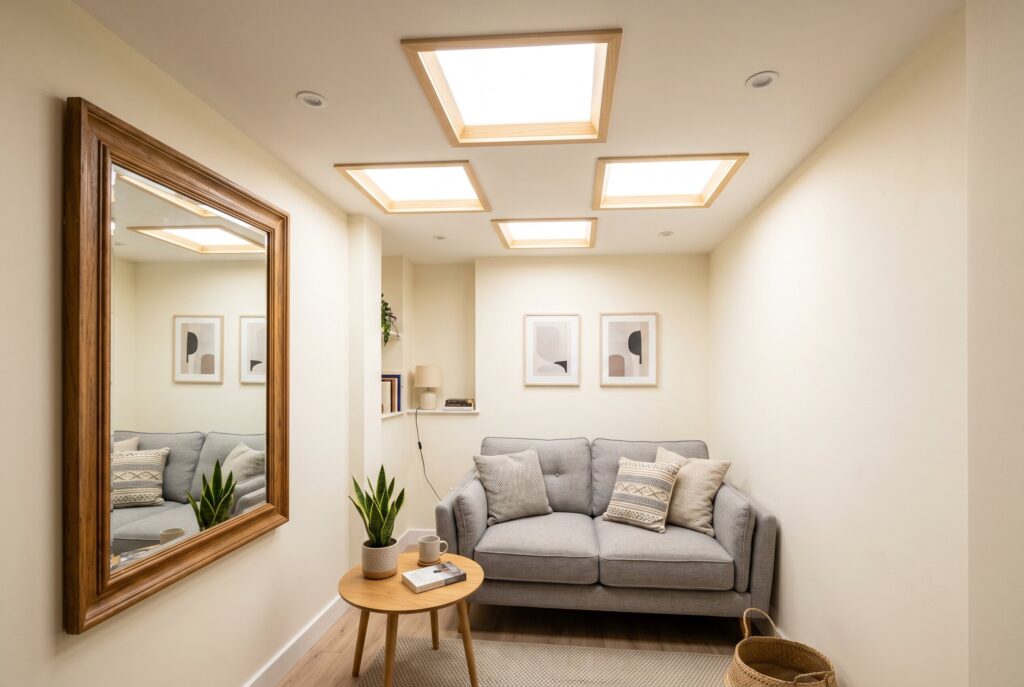
If your basement has little or no daylight, faux skylights can change the mood dramatically. These are flat LED panels with diffusers that mimic daylight. They work especially well in windowless rooms, home gyms, laundry areas, and basement offices.
The trick is placement. Install them where natural light would logically appear, such as above a seating zone or hallway. When paired with pale walls and mirrors, they make the basement feel less underground.
6. The White Out Paint Strategy
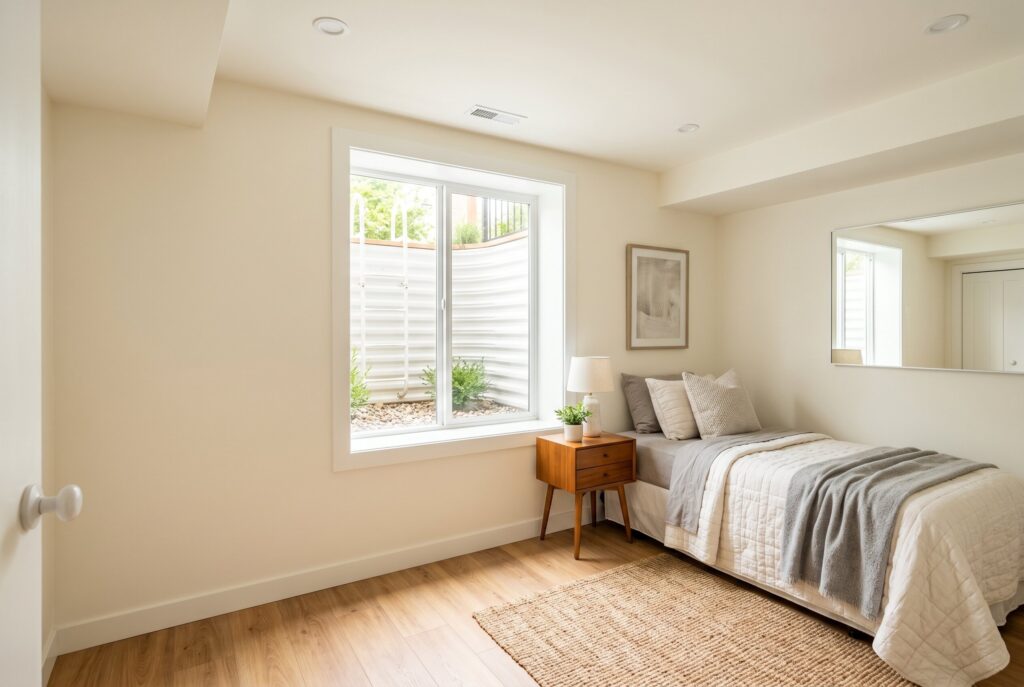
White paint can work in a small basement, but only if it is warm and layered with texture. A cold white can make concrete and low ceilings feel sterile. Choose warm white, soft cream, or pale greige for walls and ceilings.
Painting the ceiling and walls the same color reduces visual breaks. Add a large mirror opposite any window or light source to bounce brightness through the room. This is one of the simplest small basement ideas with the biggest visual payoff.
High ROI Micro Zones for Compact Footprints
7. The Wall Hugging Lounge

A small basement lounge should not be filled with separate chairs. Use a wall hugging sectional or one long built in bench with deep cushions. This keeps the center of the room open and creates more seating with less visual clutter.
Choose linen, boucle, or performance fabric in a light neutral tone. Add a wool rug so the room feels comfortable for barefoot movie nights. The best lounge layout feels relaxed but controlled.

8. The Under Stair Basement Bar
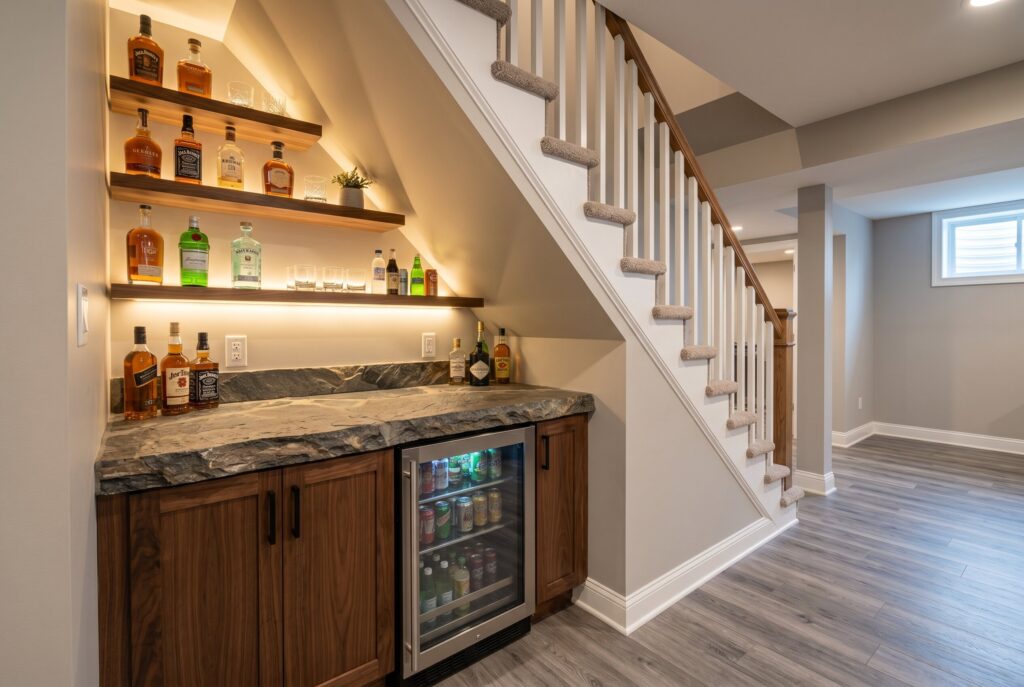
Basement bar ideas don’t need a full pub layout. The space under the stairs can become a compact bar with a stone counter, small beverage fridge, floating walnut shelves, and warm backlighting.
This turns a dead corner into a destination. Keep the palette simple and avoid oversized stools if the walkway is narrow. A small basement bar should feel tucked in, not squeezed in.
9. The Introvert’s Small Man Cave
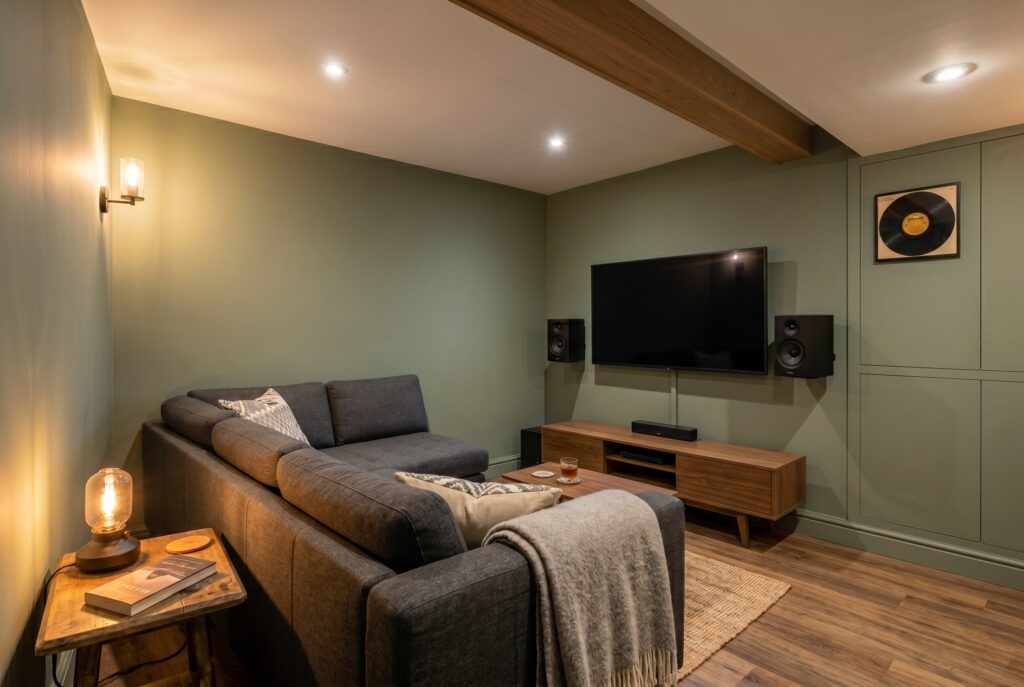
Small man cave ideas work best when they focus on comfort rather than oversized equipment. A low L shaped sofa, wall mounted screen, compact sound system, and hidden storage can create a private retreat in as little as 100 square feet. Use darker paint if the room has no windows. A moody sage green, charcoal, or warm brown can make the basement feel cozy instead of cramped. Add soft lamps so the space feels intentional.
10. Hideaway Murphy Beds
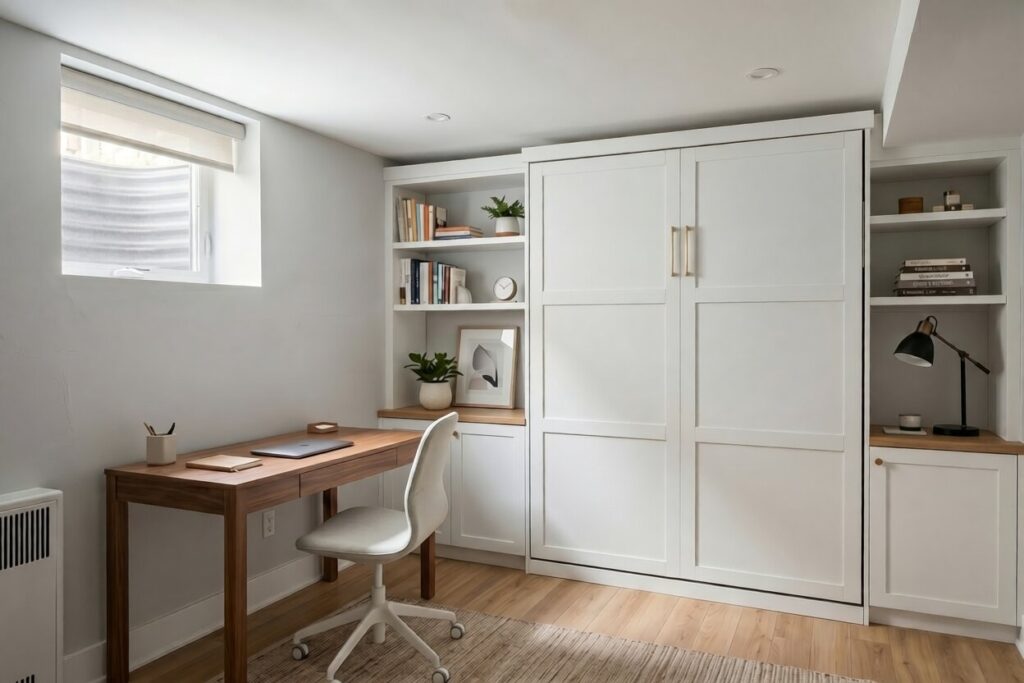
A Murphy bed is one of the best solutions for a small finished basement that needs to serve more than one purpose. During the day, the room can function as an office, gym, or lounge. At night, it becomes a guest room. Choose a Murphy bed with built in side shelves or cabinets. This makes the wall feel custom and gives guests a place for books, lamps, and personal items.
Aesthetic Upgrades: Textures, Colors and Flow
11. Glass Block Window Wells
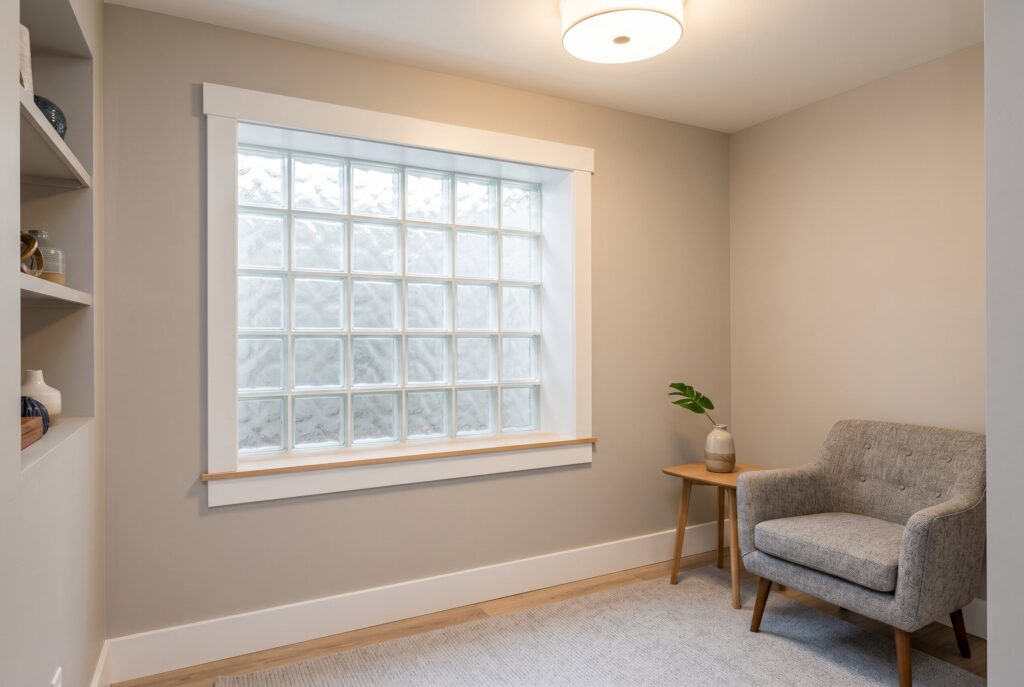
Old basement windows can feel exposed and unattractive. Glass block windows solve privacy while still allowing daylight to enter. They are especially useful near bathrooms, laundry rooms, and street facing basement walls.
To make them feel less dated, pair them with clean trim, soft wall color, and warm lighting. The goal is to make the window feel like part of the design rather than a leftover utility feature.
12. Floor to Ceiling Walnut Built Ins
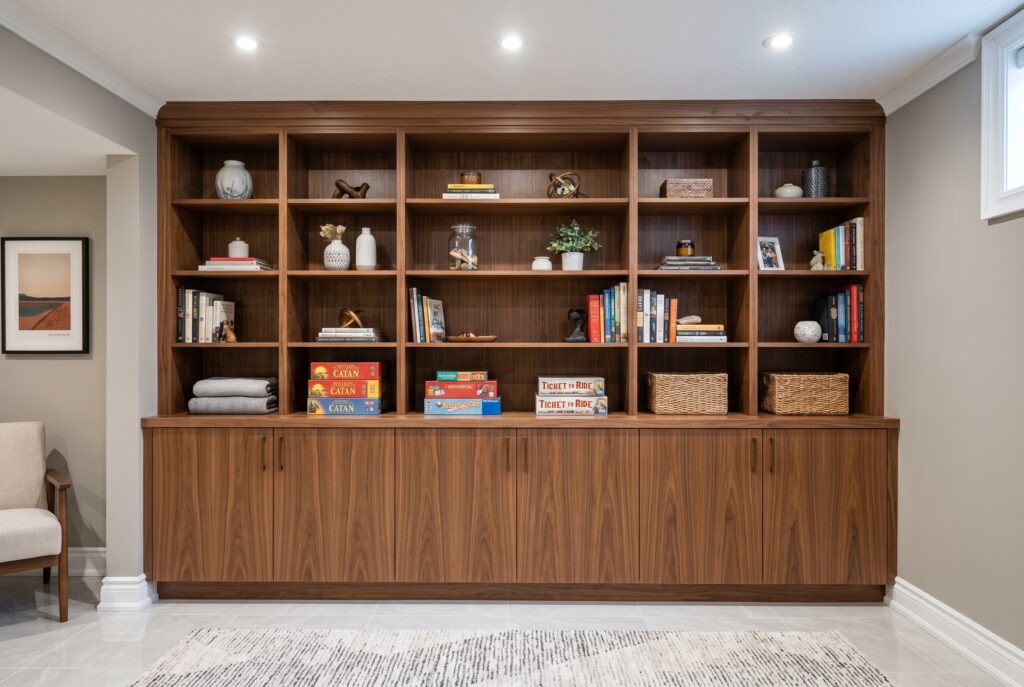
Built-ins are powerful in a small basement because they remove clutter from the floor. A wall of walnut cabinets can hold games, blankets, electronics, toys, and seasonal items while making the room feel more expensive. Run the cabinets close to the ceiling to draw the eye upward. Use closed storage on the bottom and open shelves above for a lighter look.
13. Barefoot Friendly Layered Rugs
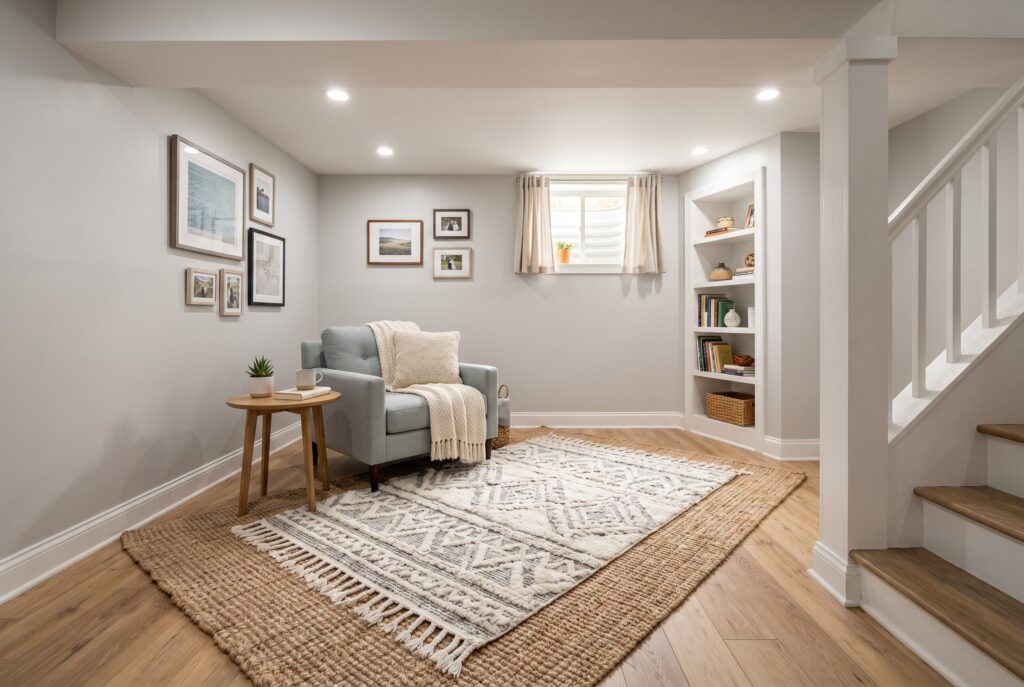
Basements often feel cold because concrete sits beneath the finish layer. Layered rugs add comfort and sound absorption. Start with a large jute rug, then place a soft wool rug on top. This combination warms the room visually and physically. It also helps define zones in an open basement without building walls.
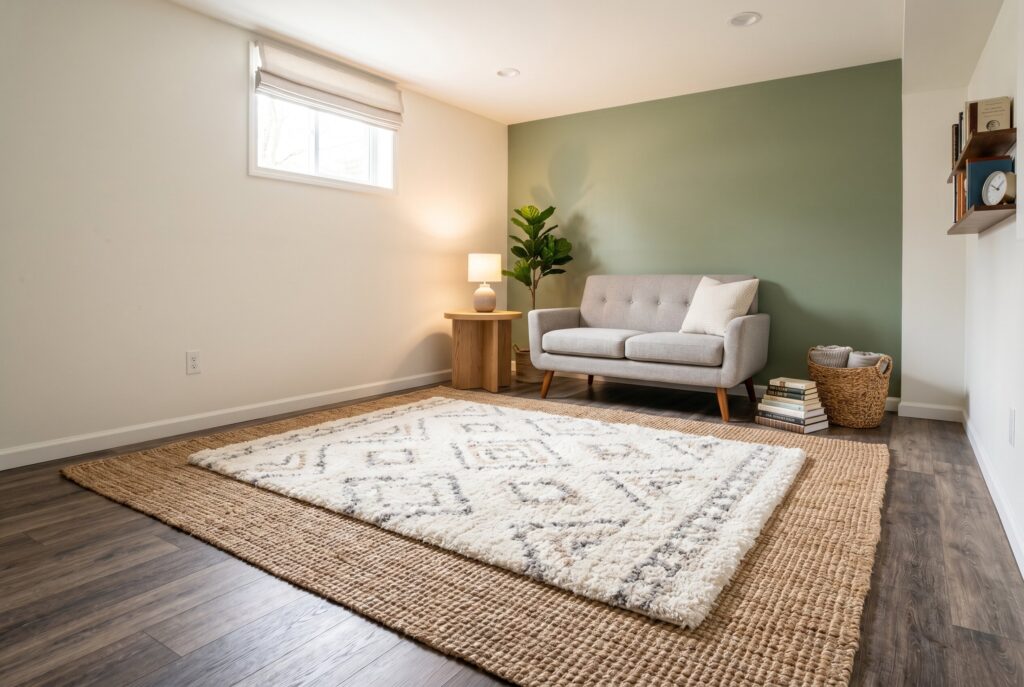
14. Embrace the Dark with Sage Green Dens

Not every small basement needs to be bright white. If the room has no windows, embrace the coziness. Deep sage green can turn a dark basement into a den, reading room, or movie lounge. The key is balance. Pair dark walls with warm lamps, oak furniture, cream textiles, and matte black details. Darkness feels luxurious when it is intentional.

15. Sliding Japandi Shoji Doors
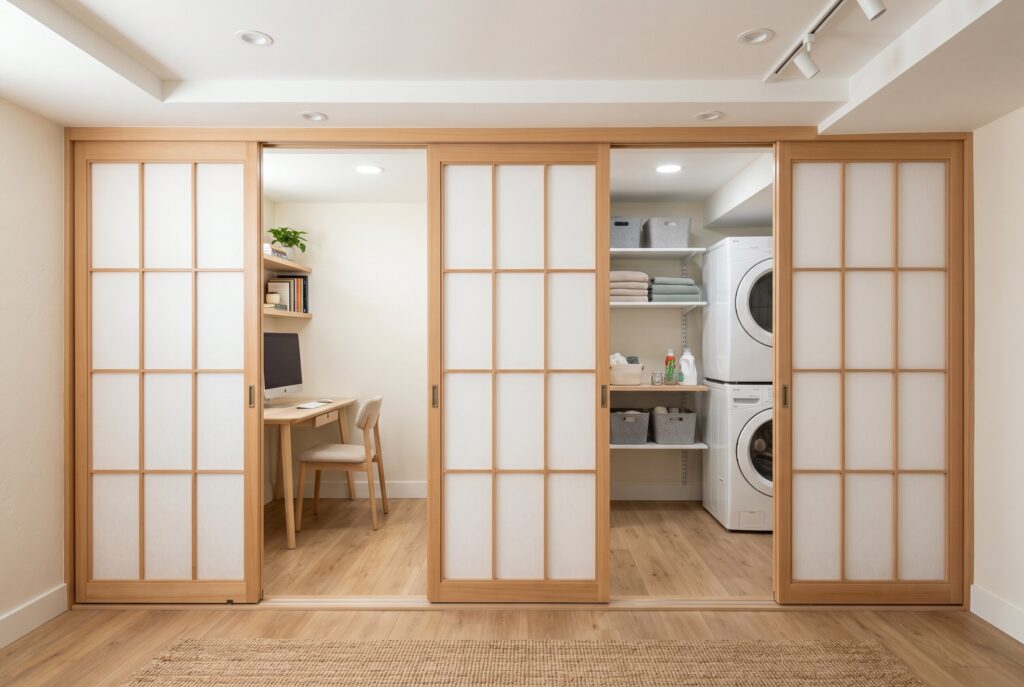
Traditional walls can make a small basement feel chopped up. Sliding Shoji doors divide zones while allowing light to pass through. Use them to separate laundry, storage, office space, or a guest sleeping area. Their soft panels add calm texture and make the basement feel lighter than solid drywall partitions. This is ideal for Japandi or Organic Modern styling.
Conclusion
A small basement can become one of the most enjoyable spaces in your home when it’s designed with purpose. Start by addressing practical considerations such as moisture control, insulation, and local building requirements before moving on to aesthetics. Once the foundation is in place, focus on design choices that maximize comfort and openness. Ceiling treatments that preserve headroom, strategic lighting that brightens every corner, and furniture scaled to the space can all help create a more spacious feel. With thoughtful planning and a cohesive design approach, even a compact basement can be transformed into a welcoming retreat for relaxing, entertaining, working, or spending time with family.
Related Articles
Basement Wall Ideas: 23 Wall Coverings (No Mudding!)
Basement Lighting Ideas: 17 Tricks to Hide Low Ceilings
Unfinished Basement Ideas: 21 Cozy, No Reno Layouts