

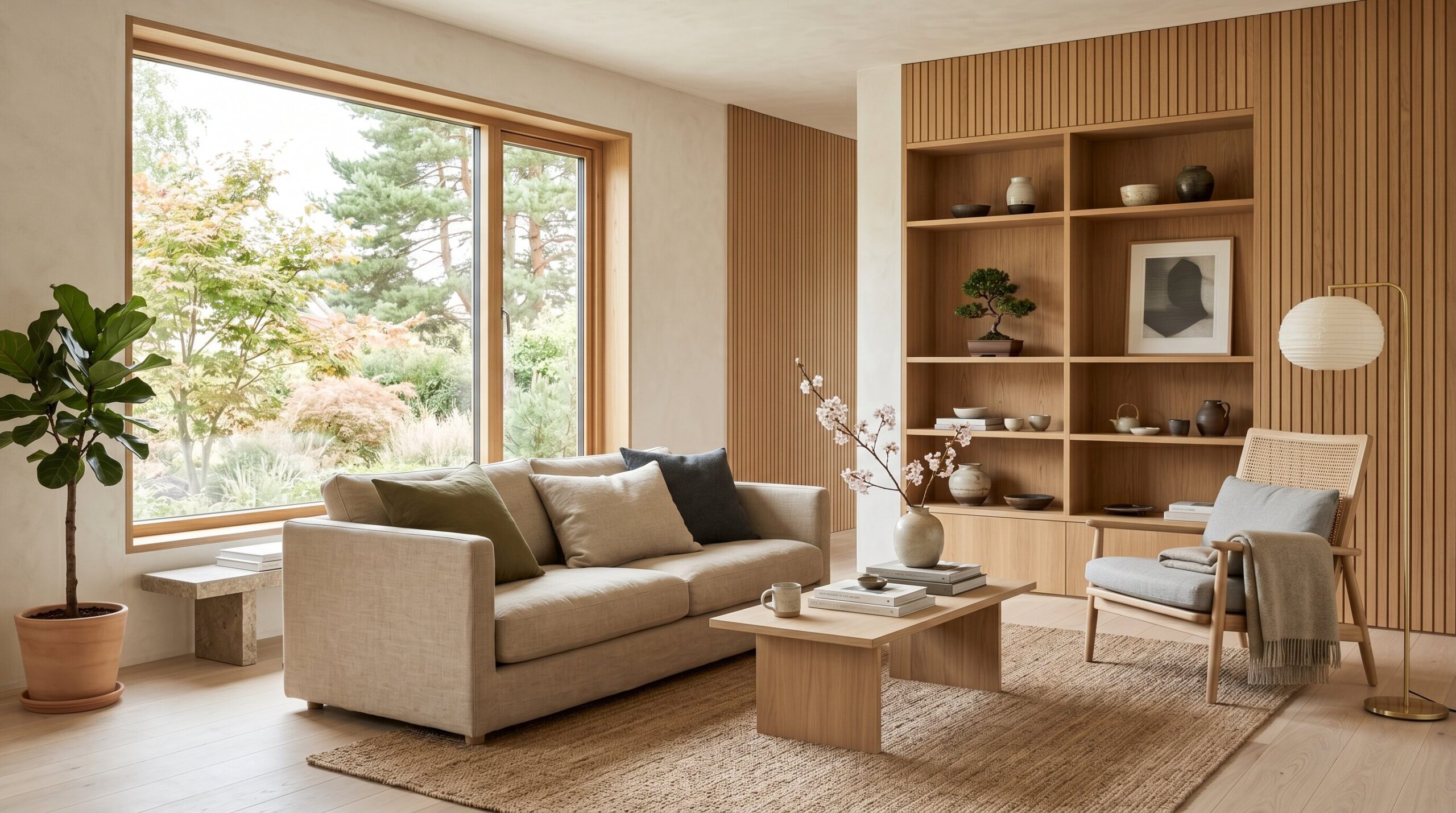
Japandi interior design is a calm, practical, deeply intentional style that blends Japanese interior design with Scandinavian warmth. At its core, Japandi style combines Wabi Sabi, the Japanese appreciation for imperfection and quiet beauty, with Hygge, the Scandinavian idea of comfort, softness, and everyday ease.
The result is a home that feels peaceful without being cold, minimal without being empty, and elegant without trying too hard. Instead of glossy furniture, cluttered shelves, and loud colors, Japandi interiors rely on natural materials, low furniture, tactile textures, warm neutrals, thoughtful storage, and natural light.
If Japanese minimalism sometimes feels too strict, Japandi softens it with linen, oak, wool, rattan, and cozy lighting. If Scandinavian interior design sometimes feels too casual, Japandi gives it discipline, balance, and sculptural stillness. The secret isn’t buying a full room of matching furniture. It’s removing what doesn’t serve your life, then choosing fewer pieces that feel honest, useful, and grounding.
1. Embrace the Hygge and Wabi Sabi Hybrid
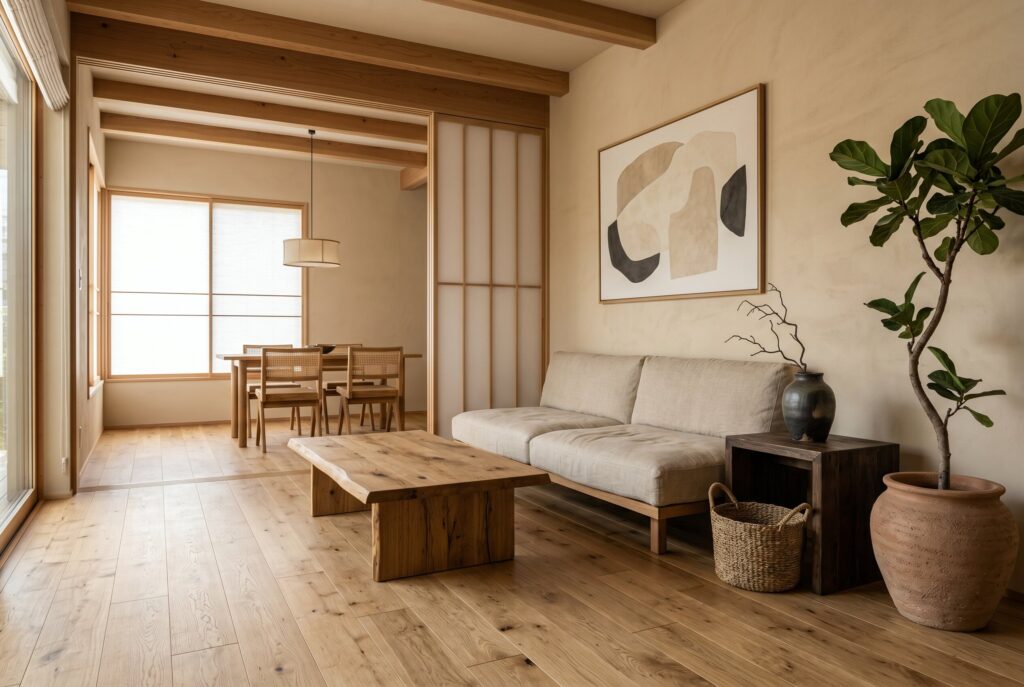
Japandi works because it doesn’t treat minimalism as punishment. Wabi Sabi brings acceptance of age, texture, asymmetry, and small imperfections. Hygge brings warmth, comfort, and the feeling that a room should support daily living. Together, they create a home that feels curated but not fragile. A handmade bowl with uneven glaze, a linen sofa that wrinkles naturally, or a wood table with visible grain all belong here because they feel human.
2. Stick to a Warm, Muted Color Palette

A neutral color palette is essential, but it shouldn’t feel like a hospital. Use sand beige, mushroom, warm white, stone gray, soft taupe, clay, muted olive, and charcoal as your base. These colors calm the eye and let texture become the star. The best Japandi rooms avoid harsh contrast. Instead, they build depth through quiet shifts in tone, such as cream walls, oak floors, a walnut table, and linen cushions in pale gray.
3. Prioritize Functionality Over Pure Aesthetics
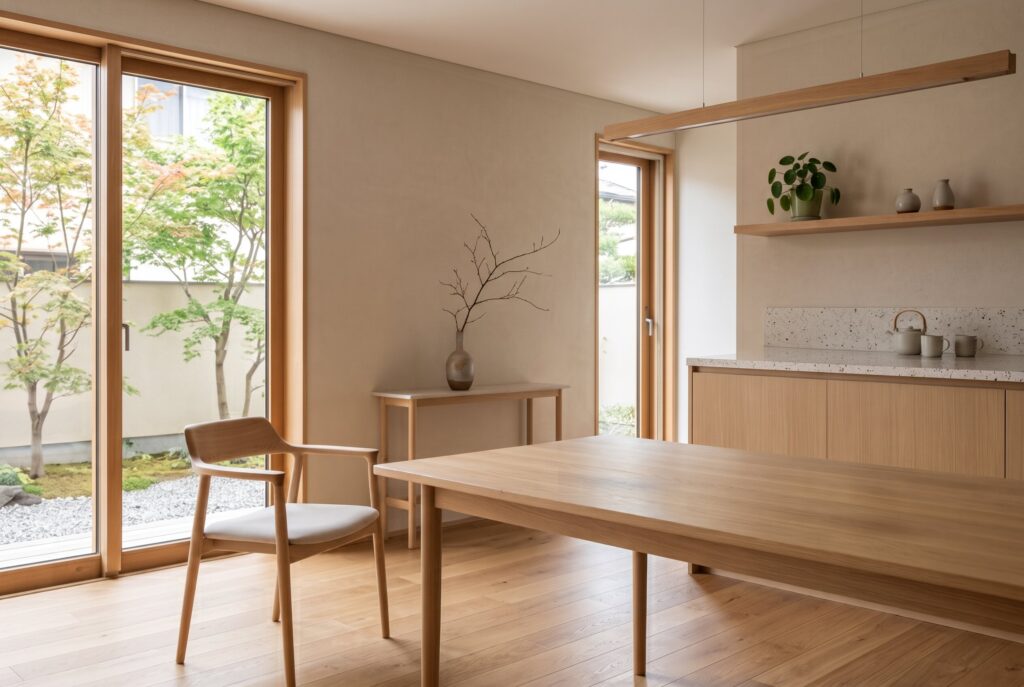
In Japandi interior design, every object should earn its place. A chair should be comfortable, a table should be useful, and decor should create stillness rather than noise. Before buying anything, ask what purpose it serves. If it only fills space, it probably doesn’t belong. This doesn’t mean your home must feel empty. It means each piece should support how you live, whether that’s reading, cooking, resting, hosting, or simply breathing more easily after a long day.
4. Low Profile Furniture Is Essential
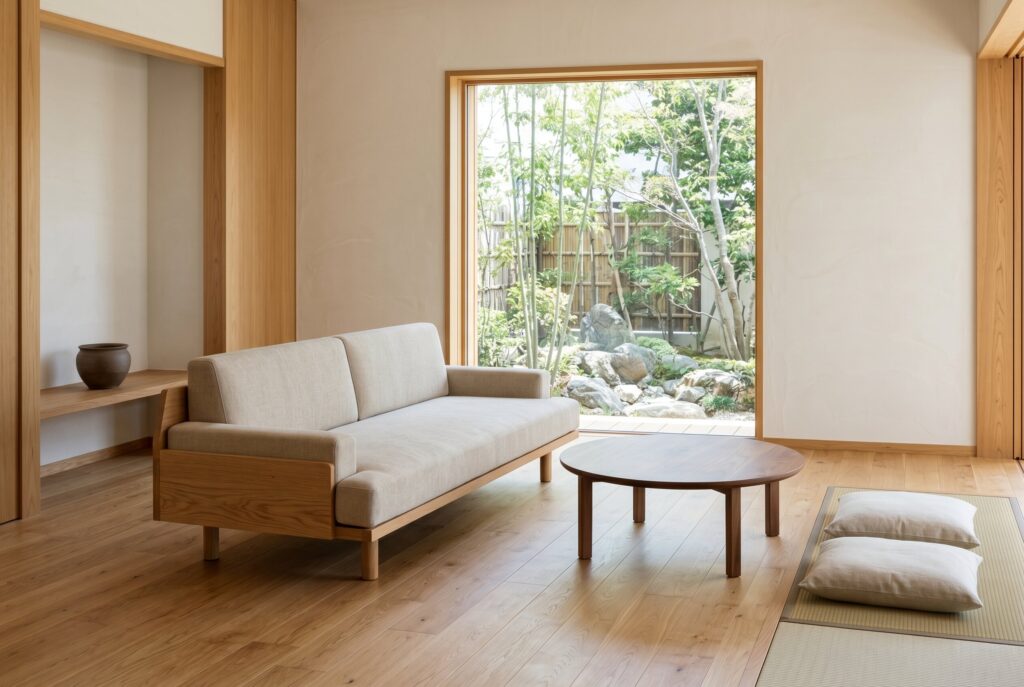
A Japandi living room often begins with low profile furniture. Low sofas, platform beds, floor cushions, and short coffee tables bring the body closer to the ground and make the ceiling feel higher. This design choice borrows from Japanese living traditions, but it also suits modern homes because it creates openness. Choose clean silhouettes, soft upholstery, and visible wood frames. Avoid bulky arms, tall backs, and furniture that visually blocks the room.
5. Let Natural Light Dictate the Layout

Natural light is one of the most important materials in Japandi style. Don’t place tall cabinets, heavy sofas, or dark shelving in front of windows. Let sunlight move across floors, walls, and textured surfaces throughout the day. Use sheer linen curtains, woven shades, or simple panels that filter light instead of blocking it. A room with fewer objects and better light will always feel more expensive than a cluttered room filled with trendy pieces.
6. Introduce Slatted Wood Panels
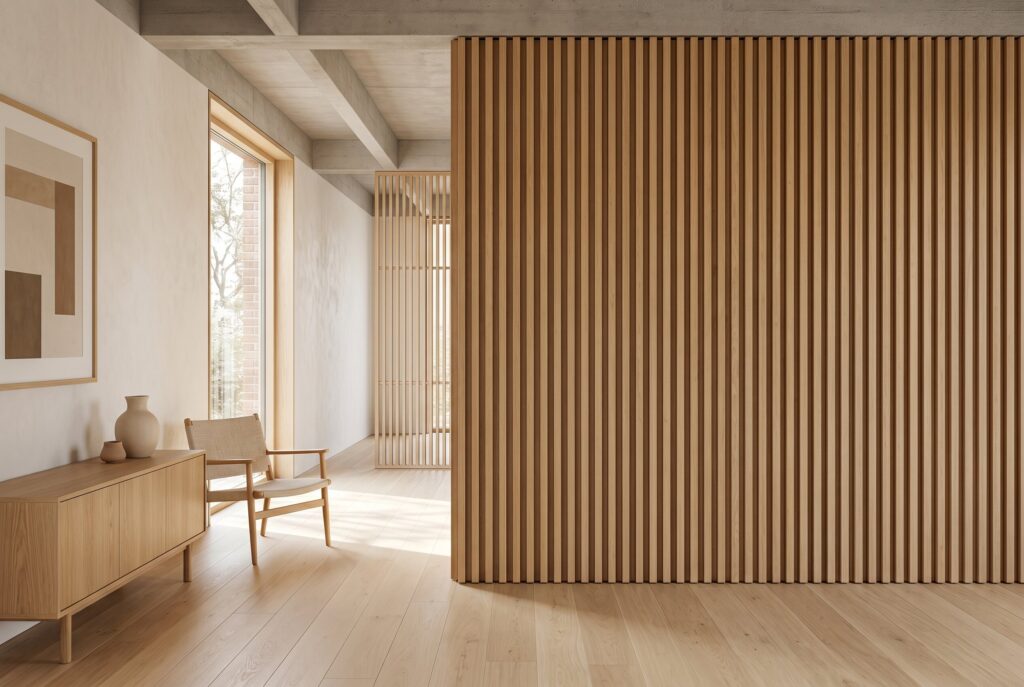
Slatted wood panels are a practical way to add rhythm, warmth, and structure. Vertical oak or ash slats can define a wall, soften an entryway, divide a room, or hide storage without making the space feel closed. They also create beautiful shadow lines when sunlight passes through the room. Use them sparingly. One feature wall or partial divider is enough. Too many slats can turn calm design into a showroom display.
7. Use Statement Shoji Screens

Shoji inspired screens are perfect for open layouts because they separate space without killing air or light. A translucent screen can define a reading corner, soften a bedroom, or create privacy in a studio apartment. The beauty is in the quietness. The screen doesn’t shout for attention. It changes how light moves, which changes how the whole room feels. Choose wood frames, paper like panels, or fabric inserts in soft neutral tones.
8. Create a Focal Point with Bonsai or Ikebana
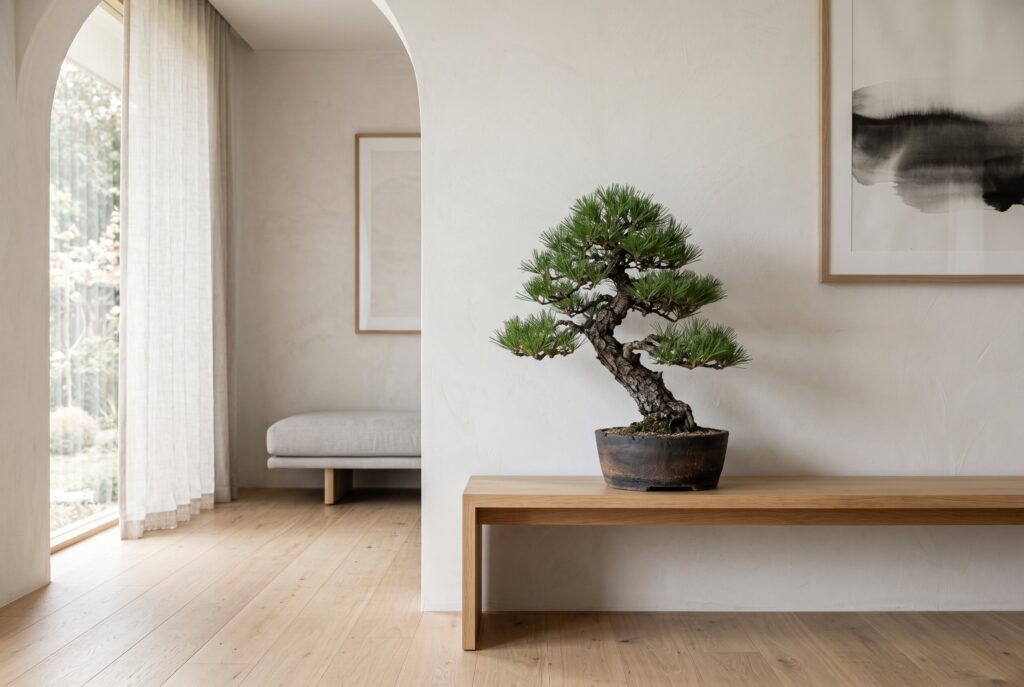
Japandi doesn’t need dozens of plants. In fact, too many small pots can create visual clutter. One sculptural bonsai, one branch arrangement, or one Ikebana inspired vessel can do more than an entire shelf of accessories. The goal is negative space. Let the plant breathe. Place it on a low table, a stone plinth, or an open shelf where its shape can be seen clearly. Nature should feel intentional, not crowded.
9. Mix Light Scandi Woods with Dark Japanese Tones
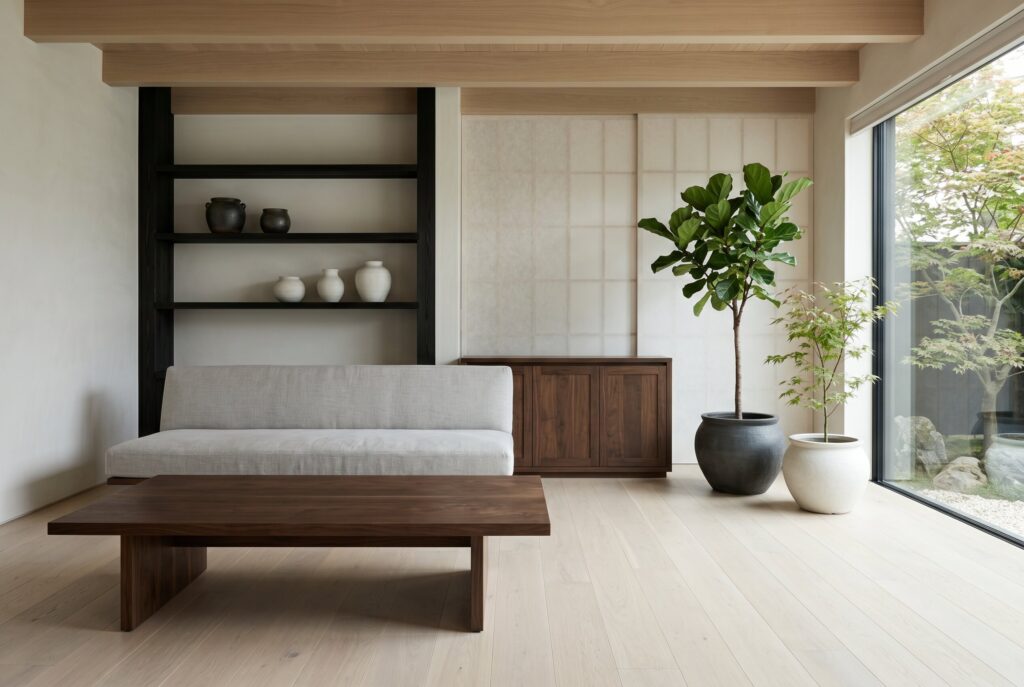
The strongest Japandi interiors balance light and dark wood. Scandinavian design contributes pale oak, ash, and beech. Japanese influence brings walnut, blackened wood, and deeper stained finishes. Combining both prevents the room from looking flat. A light oak floor with a dark walnut coffee table creates contrast without harshness. Keep the finish matte and natural. Glossy surfaces usually feel too polished for this style.
10. Incorporate Bamboo, Rattan, and Cane
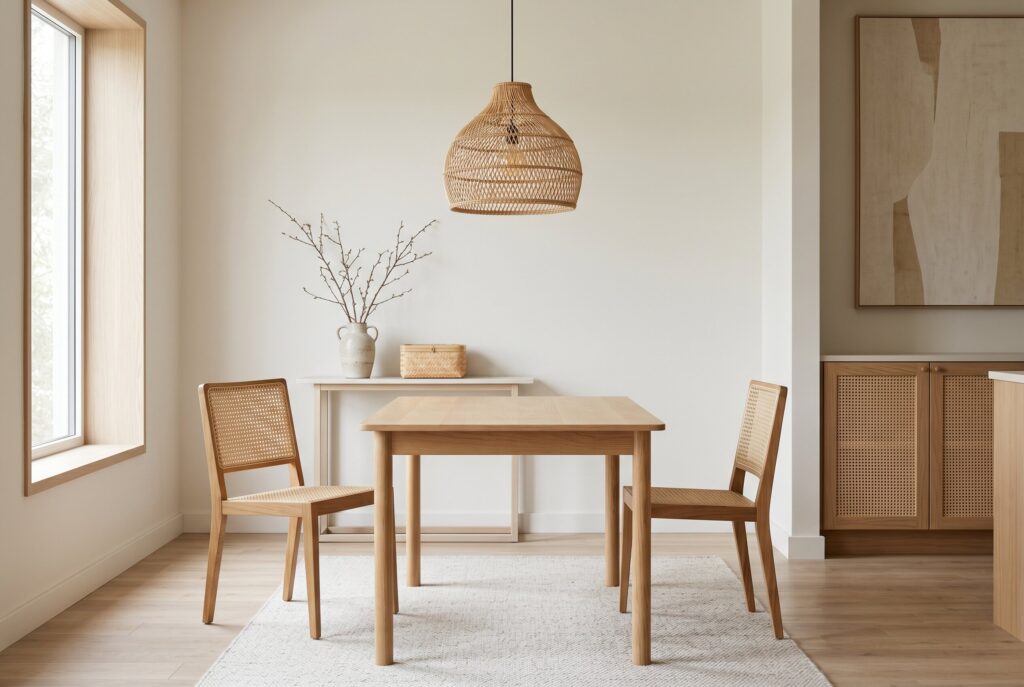
Bamboo, rattan, and cane bring craftsmanship into the room. They add texture without visual weight and connect the home to natural materials. Use them on cabinet fronts, dining chairs, pendant lights, baskets, or room dividers. The key is restraint. One or two woven elements can warm the space beautifully. Too much rattan can make the room drift into beach house territory.
11. Choose Organic Linens and Brushed Cottons
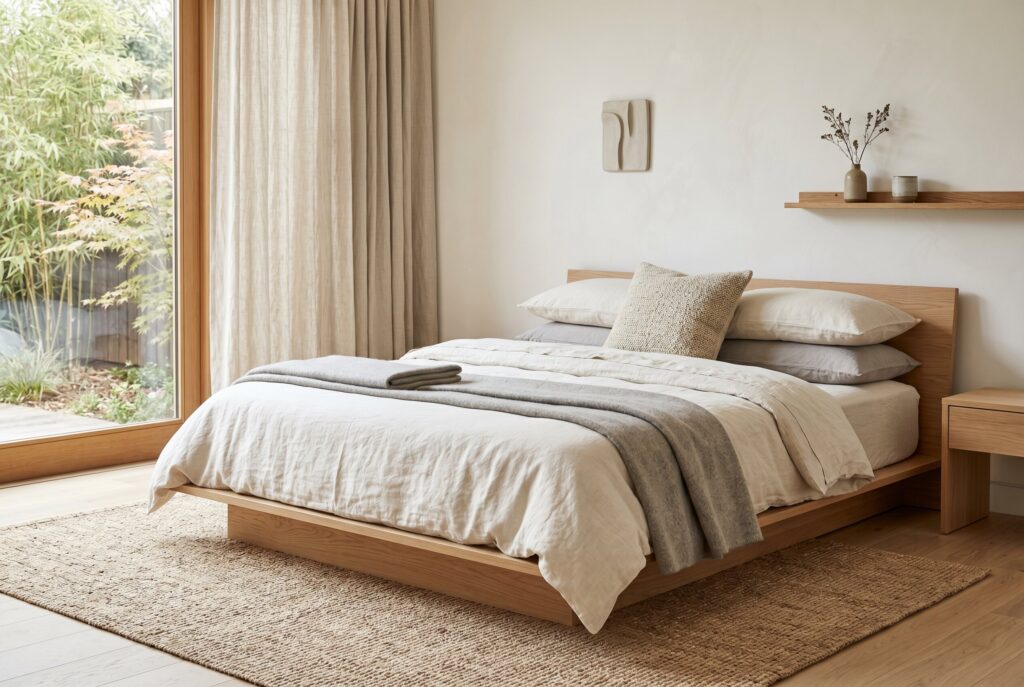
Soft textiles stop Japandi from feeling severe. Linen curtains, cotton bedding, wool throws, and woven rugs give the room quiet comfort. Choose fabrics that feel touchable rather than perfect. Slight wrinkles, visible weave, and muted tones add life. In a Japandi bedroom, this matters especially. A simple platform bed becomes inviting when layered with cream linen, a stone colored blanket, and one textured cushion.
12. Display Handmade Ceramics and Stoneware

Handmade ceramics are the soul of Japandi decor. A rough clay vase, a shallow stoneware bowl, or a tea cup with uneven glaze introduces Wabi Sabi in a natural way. These pieces shouldn’t be scattered everywhere. Give each one breathing room. A single handmade vessel on an empty shelf can feel more powerful than ten decorative objects fighting for attention.
13. Keep Decor Minimal and Intentional

Every decorative item in a Japandi bedroom should have a purpose. Instead of filling surfaces with accessories, focus on a few meaningful pieces that contribute to the room’s calm atmosphere. A framed nature print, a sculptural lamp, or a single branch displayed in a ceramic vase can be enough. This restrained approach reduces visual noise and allows each object to be appreciated. When every piece has space to breathe, the bedroom feels more peaceful and balanced.
14. Incorporate Warm Wood Tones
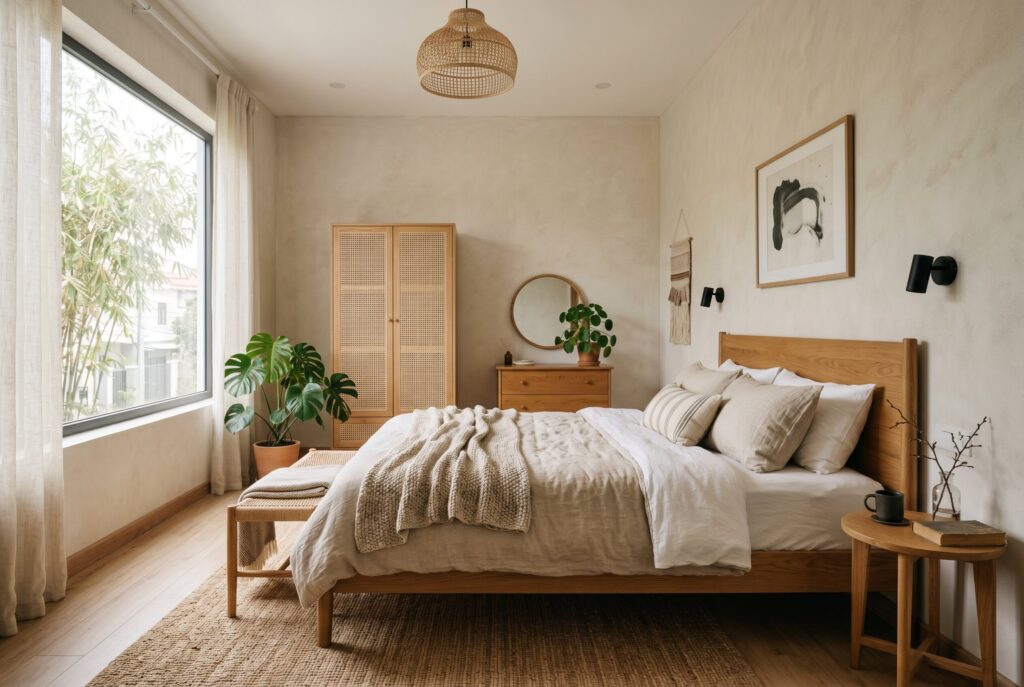
Natural wood is one of the defining elements of Japandi design. In the bedroom, wood introduces warmth that softens the minimalist aesthetic. Choose oak, ash, walnut, or other woods with visible grain and organic character. A low wooden bed frame, floating shelves, or simple bedside tables help ground the space and create a stronger connection to nature. Mixing light and medium wood tones can also add subtle depth while maintaining a cohesive look.
15. Create a Calm Atmosphere with Soft Lighting
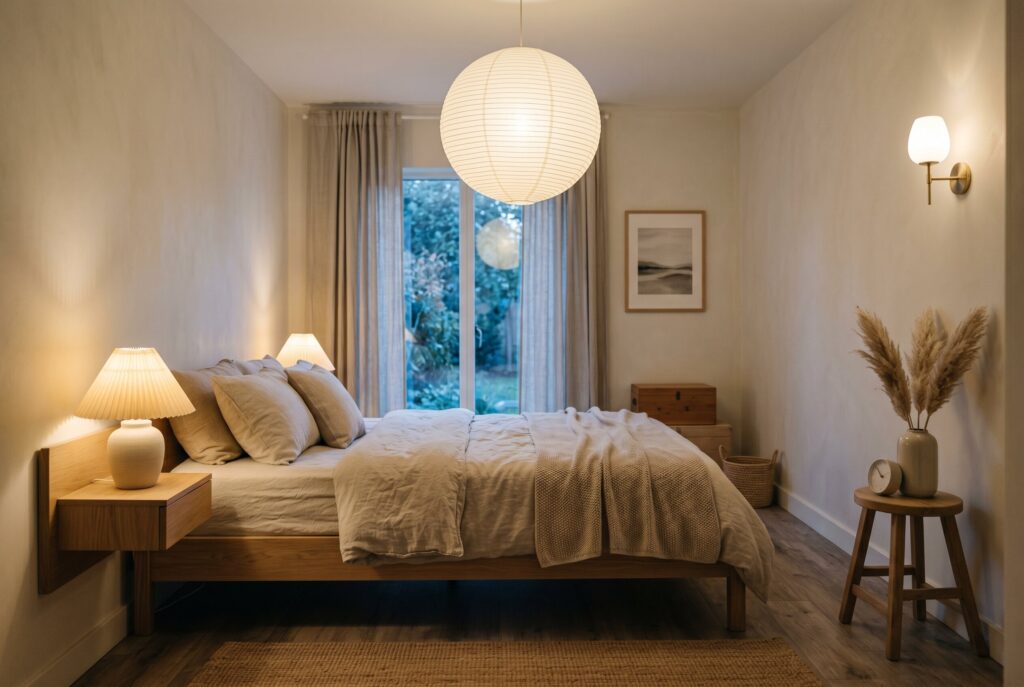
Lighting plays a significant role in shaping the mood of a Japandi bedroom. Harsh overhead lights can feel disruptive, so prioritize warm, layered illumination instead. Table lamps, paper lantern pendants, wall sconces, and indirect lighting create a softer glow that encourages relaxation. Whenever possible, maximize natural daylight during the day and transition to gentle ambient lighting in the evening. The goal is to create an environment that supports rest, reflection, and a slower pace of living.
Avoid the Fake Japandi Trap
1. Stop Cluttering with the One In, One Out Rule
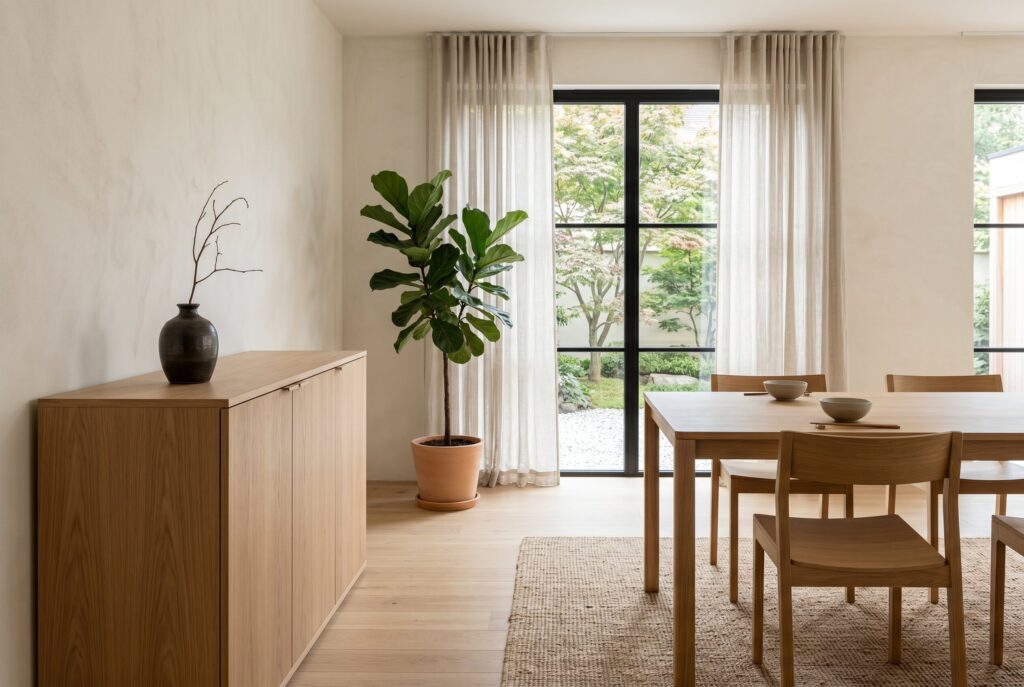
Japandi hates visual noise. Open shelves packed with books, candles, souvenirs, and tiny objects will break the calm immediately. Use closed storage with flat fronts, hidden handles, and simple lines. Follow the one in, one out rule. When you bring in a new object, remove one. This keeps the home from slowly drifting back into clutter.
2. Say No to Mass Produced Plastic Decor
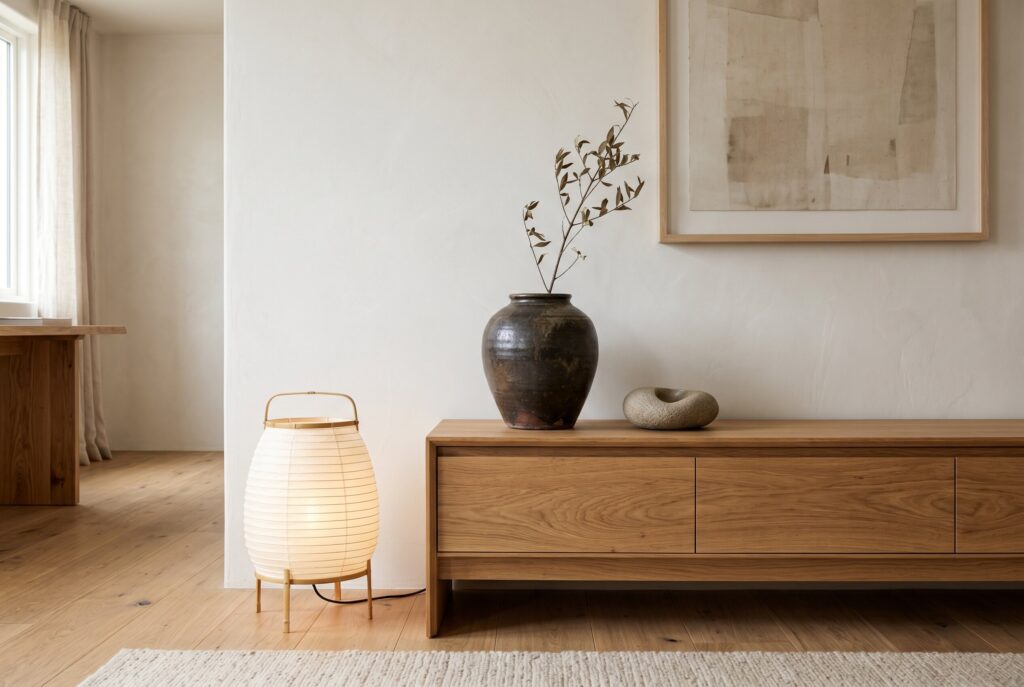
Fake Japandi often happens when people buy cheap plastic objects shaped like handmade pieces. The room may look neutral, but it won’t feel authentic. Choose fewer things and better materials. Wood, clay, stone, linen, wool, bamboo, and glass age better than plastic. A $40 handmade bowl can do more for a room than $200 of disposable decor.
3. Ditch Harsh Cool Lighting for Warm Ambience
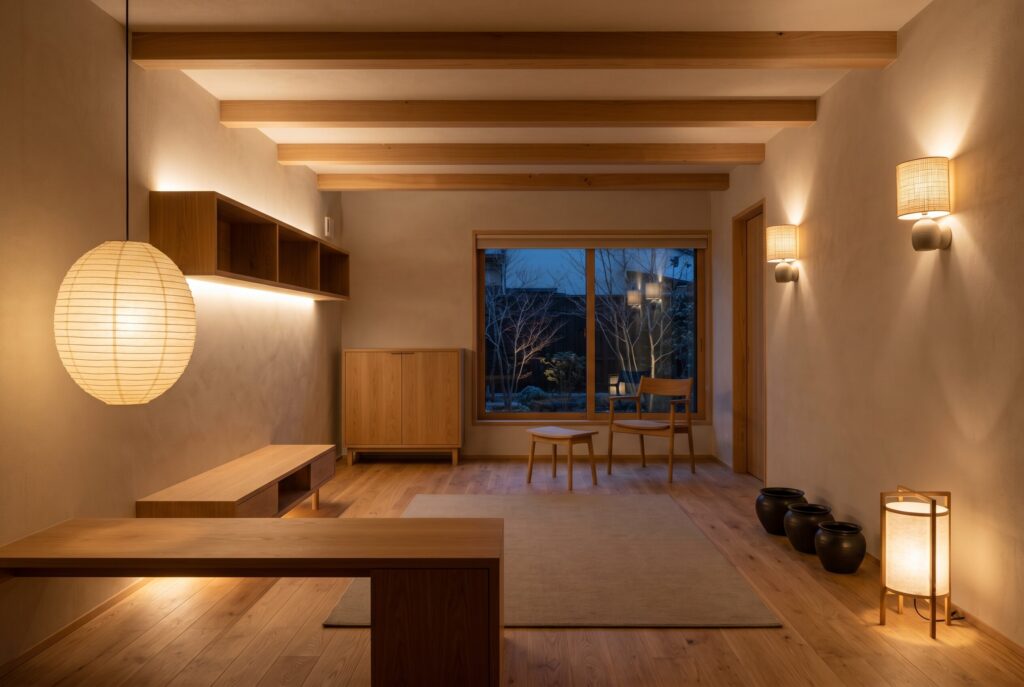
Cold white LED lighting can ruin even the most beautiful Japandi room. Use warm bulbs around 2700K to 3000K, paper lanterns, low table lamps, concealed lighting, and soft wall sconces. Layer the lighting so the room can shift from bright morning function to quiet evening rest. Light should feel like an atmosphere, not interrogation.
Conclusion
Japandi brings together simplicity, comfort, and craftsmanship in a way that feels timeless rather than trendy. Natural materials, uncluttered layouts, and purposeful design choices create spaces that feel calm, inviting, and easy to live in. The beauty lies in restraint, where every element has a reason to be there and contributes to a greater sense of balance.
Related Articles
15 Boho Home Décor Ideas to Create a Cozy, Eclectic, and Stylish Bohemian-Inspired Living Space
Japandi Organization: 9 Smart Storage Ideas for a Clutter-Free Home