

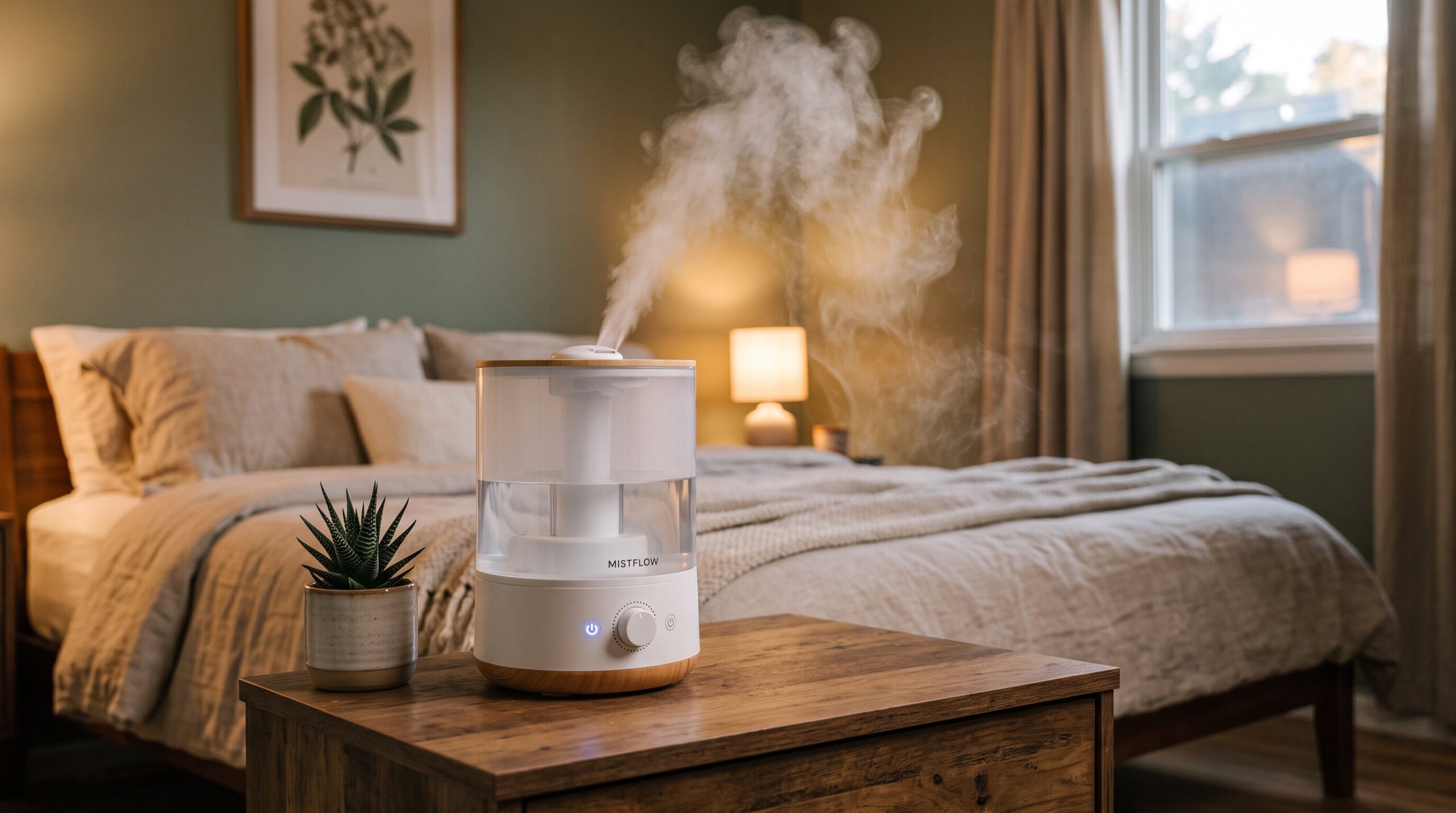
Cleaning a humidifier involves more than rinsing the water tank. Over time, mineral deposits, mold, bacteria, and stagnant water can build up inside the unit and affect the mist it releases.
The process has two steps. First, descale the tank and internal parts with white vinegar to remove mineral buildup. Then disinfect the humidifier with diluted bleach or 3% hydrogen peroxide to reduce mold and bacteria. Never mix these cleaning solutions, and always rinse the unit thoroughly between steps.
Why Cleaning a Humidifier Matters
A humidifier is supposed to make dry air more comfortable, but a dirty one can do the opposite. Warm water, trapped moisture, and mineral residue create an ideal place for microorganisms. That is why a humidifier smells musty after a few days of use if you don’t empty it daily.
Mineral buildup also affects performance. Hard water leaves white scale inside the unit. That scale can block mist output, create white dust, and make the machine work harder. In ultrasonic humidifiers, buildup on the ultrasonic plate can reduce mist almost immediately.
Cleaning a humidifier isn’t only about making the plastic look clean. It’s about protecting the mist itself.
2 Steps to Clean and Descale a Humidifier
Step 1: How to Descale Humidifier Parts With Vinegar

- Unplug the humidifier and empty all water from the tank and base.
- Remove any detachable parts according to the owner’s manual. If your model has a filter or wick, take it out before using vinegar.
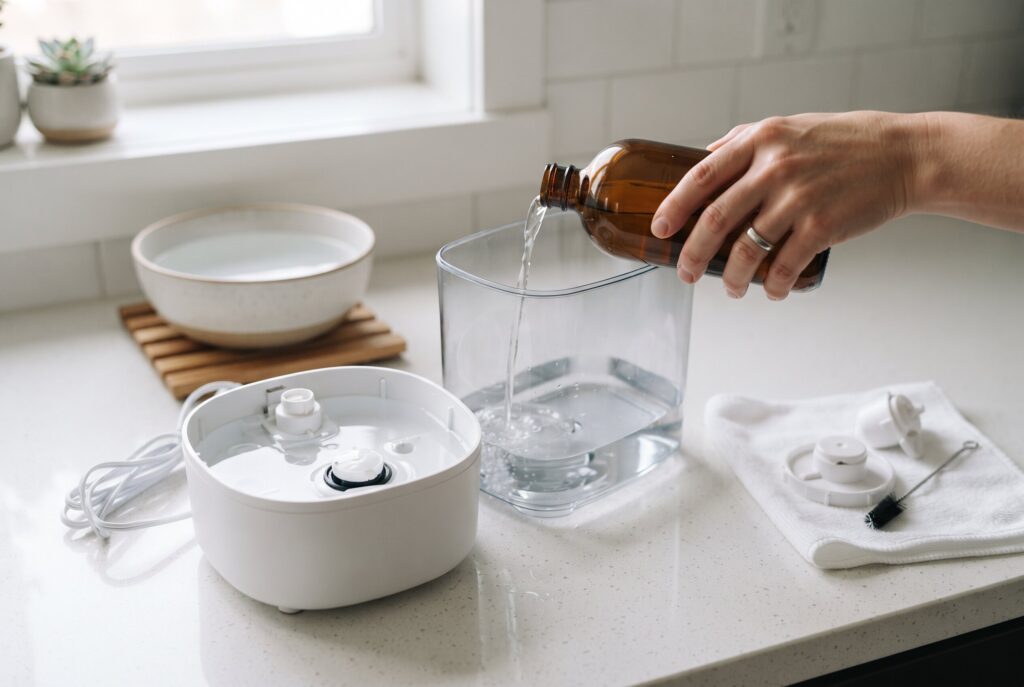
- Fill the tank and base with white vinegar, or a 1 to 1 mix of vinegar and water.
- Let it sit for 20 to 30 minutes. If you see white crust around the tank cap, base, or mist outlet, let those areas soak longer.
- Use an old toothbrush, small bottle brush, or cotton swab to gently scrub corners, seams, and the ultrasonic plate. Avoid metal tools, since they can scratch delicate parts.
- Rinse everything several times with clean water until the vinegar smell is gone.
If you’d rather skip the vinegar smell, citric acid works similarly and is sold as a powder at most grocery stores. Dissolve about two tablespoons in warm water, using roughly the same soak time as vinegar. This step handles mineral scale. It doesn’t replace disinfection, which is the next step.
Step 2: Disinfecting Mold and Pink Slime
After descaling and rinsing, disinfect the humidifier. Use either diluted bleach or hydrogen peroxide, not both.
For bleach, mix 1 teaspoon of household bleach with 1 gallon of water. Pour the solution into the tank, swish it around, and let it sit for 15 to 20 minutes. For the base, add enough solution to touch the areas where water normally sits. Then rinse repeatedly until there’s no bleach smell.

For a gentler option, use 3% hydrogen peroxide. Pour enough into the tank and base to wet the surfaces, let it sit for about 15 to 20 minutes, then rinse well.
If black mold remains after careful cleaning, don’t keep using the machine casually. Mold embedded in cracks, seals, or filters may mean parts need replacement.
The Filter and Wick Dilemma

Reusable filters can often be rinsed clean and put back to work, but most paper wicks are meant to be replaced rather than washed. If a wick is hard, brown, crusty, musty, or dotted with mold, cleaning won’t restore it properly.
For evaporative models, replace the wick every 30 to 60 days during regular use, or sooner if the manufacturer recommends it. A dirty wick can make an otherwise clean tank smell bad again within a day or two.
Daily, Weekly, and Seasonal Schedule
Daily: Empty any leftover water, give the tank a quick rinse, and refill it with fresh water. If possible, use distilled water to reduce mineral buildup and the white dust that can settle around your home.
Weekly: Set aside a few minutes for a deeper clean. Start by descaling the humidifier with white vinegar, then rinse it well. Next, disinfect the tank using either a diluted bleach solution or hydrogen peroxide. Rinse thoroughly again and let all the parts air dry before putting everything back together.
At the End of the Season: Before storing your humidifier, give it one final deep cleaning. Make sure every component is completely dry, replace or discard old filters, and store the unit with the water tank open. Even a little trapped moisture can lead to mold growth while it’s in storage.
What Not to Do
Avoid adding essential oils unless your humidifier is specifically built to handle them. In most models, oils can damage plastic components, clog internal parts, and leave behind a sticky residue that’s difficult to remove later.
Empty the tank at the end of each day rather than reusing yesterday’s water. Fresh water helps keep bacteria and mold from taking hold inside the unit. After cleaning, let every part dry completely before reassembling or storing it, since putting a still damp humidifier away undoes most of the work just done.
Skip abrasive scrub pads, which can scratch the tank and create tiny places for bacteria to hide. And if you notice pink slime, a musty smell, or the mist output getting weaker, treat those as clear signals that it’s time for a thorough cleaning before the buildup gets worse.
Frequently Asked Questions
How Often Should You Clean a Humidifier?
Rinse the tank and refill it with fresh water every day, descale and disinfect the humidifier once a week, and give it a deep clean before storing it for the season. Regular maintenance helps prevent mold, bacteria, and mineral buildup.
Can You Use Apple Cider Vinegar to Clean a Humidifier?
White vinegar or citric acid is the better choice. Apple cider vinegar can leave behind color, residue, and odors that are more difficult to rinse away.
Is It Safe to Use a Humidifier With Mold?
No. Mold in a humidifier can be released into the air with the mist, potentially affecting indoor air quality. If mold cannot be completely removed, especially from seals, cracks, or the wick, replace those parts before using the humidifier again.
Why Does My Humidifier Smell Musty After Cleaning?
A persistent musty smell is often caused by an old wick or filter rather than the water tank. Replacing the wick or filter usually solves the problem if the odor returns soon after cleaning.
Can You Mix Vinegar and Bleach to Clean a Humidifier?
No. Never mix vinegar and bleach because the combination can produce toxic fumes. Always rinse away the vinegar completely and let the humidifier dry before using bleach as a disinfectant.
Conclusion
How to clean humidifier parts safely comes down to separating the jobs. Use vinegar to remove the mineral scale. Use diluted bleach or hydrogen peroxide to disinfect. Rinse completely between steps, clean weekly, replace dirty filters, and use distilled water when possible.
The easiest to clean humidifier is usually one with a wide tank opening, simple removable parts, and a top fill design. If your current model is too hard to scrub, maintenance will always feel like a chore. Clean design helps clean air, and clean air is the whole point.
Related Articles
How to Clean and Descale a Coffee Maker with Vinegar: The Complete 2026 Guide