

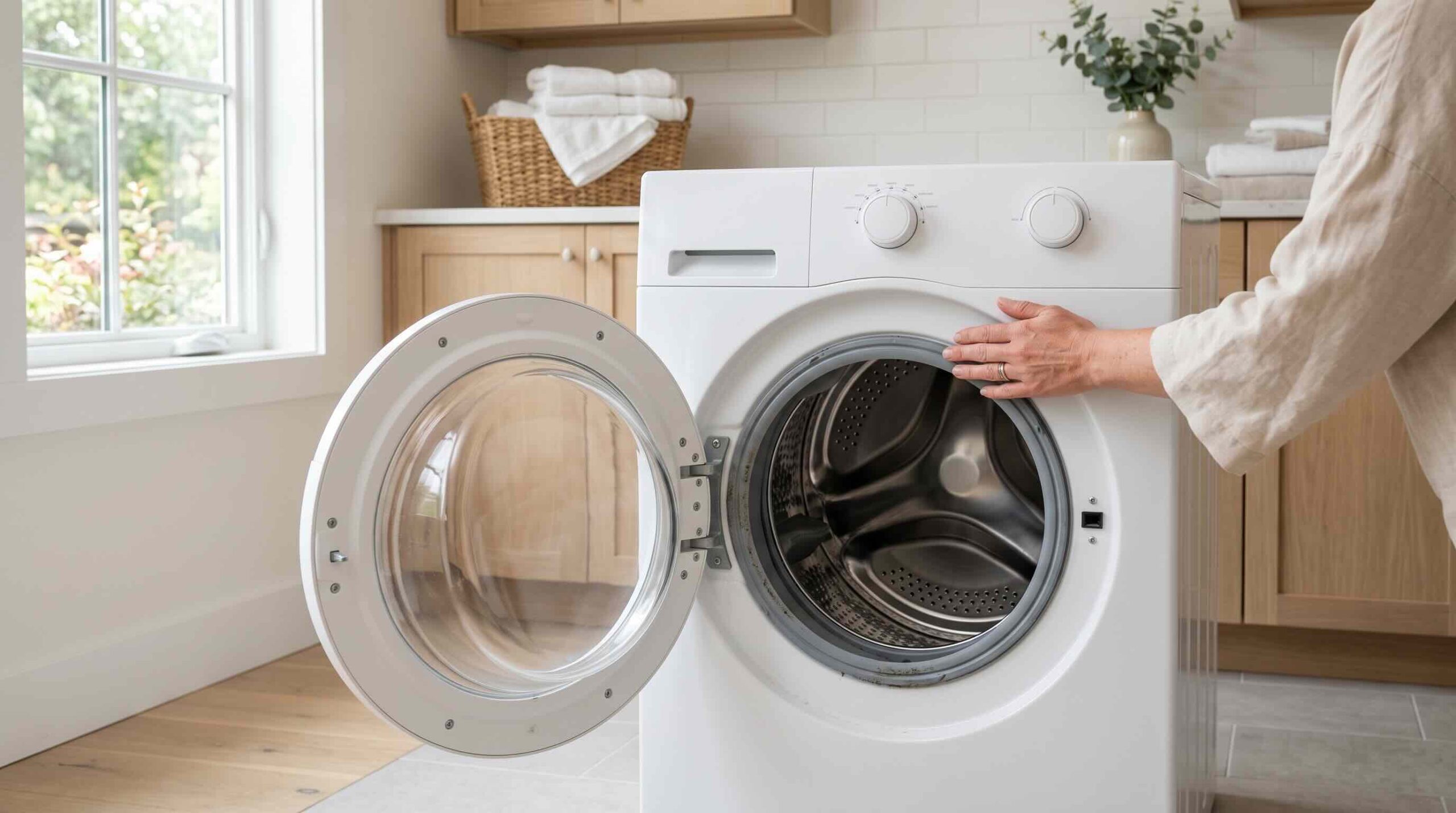
Learning how to get rid of mildew smell in washing machine involves killing hidden mold and flushing out detergent buildup. Moisture, trapped residue, and a closed door between washes almost always trigger this odor, but a hot clean-out combined with a thorough wipe-down of the seal and dispenser will fix most machines. You must treat a rotten-egg or sewage smell differently, however, as one specific version requires an immediate safety check first. This guide covers musty, sour, sewage, and rotten eggs odors, along with strategies to keep each one from coming back.
Why Does My Washing Machine Stink?
Your washing machine stinks because bacteria, mold, and mildew feed on the warm, damp residue left behind after each wash. Detergent, fabric softener, body oils, and standing water collect inside the drum, the gasket, and the dispenser, where they become food for microbes. Those microbes are what produce the smell, and matching the type of odor to its source tells you which fix you need.
The odor itself points to the cause. When a washing machine smells like mildew, that musty, damp scent almost always means mold, while a sour smell usually means bacteria in leftover detergent or stagnant water. A rotten-egg or sewage smell is a separate problem, caused by hydrogen sulfide gas that forms when bacteria build up or when sewer gas enters through the drain.
Front-load washers are the most odor-prone. Their door seal traps water in its folds, and high-efficiency models use less water, so residue rinses away less completely. Mold can start growing in as little as 24 to 48 hours in that environment. The good news is that most washing machine smells trace back to buildup you can reach and clean, and the next section covers the deep clean that handles the most common culprit.
How to Get Rid of Mildew Smell in Washing Machine: A Simple Deep Clean
To get rid of mildew smell in washing machine, you must run a hot cycle with a washer cleaner and then scrub the internal parts that hold moisture. This same routine dictates how to clean a smelly washing machine of any kind, and it explains how to get musty smell out of washing machine drums since high heat chemically breaks down the sticky residue behind the odor. Because the mildew smell lives directly on the drum, the rubber gasket, and inside the detergent dispenser, a simple water rinse alone won’t clear it. You must work through the following steps in order.
- Empty the machine and add cleaner. Remove all laundry entirely, then pour a washing machine cleaner or two cups of white vinegar directly into the main drum rather than the dispenser drawer. The drum is exactly where your cleaner needs to reach the heaviest buildup, so keep it out of the small tray.
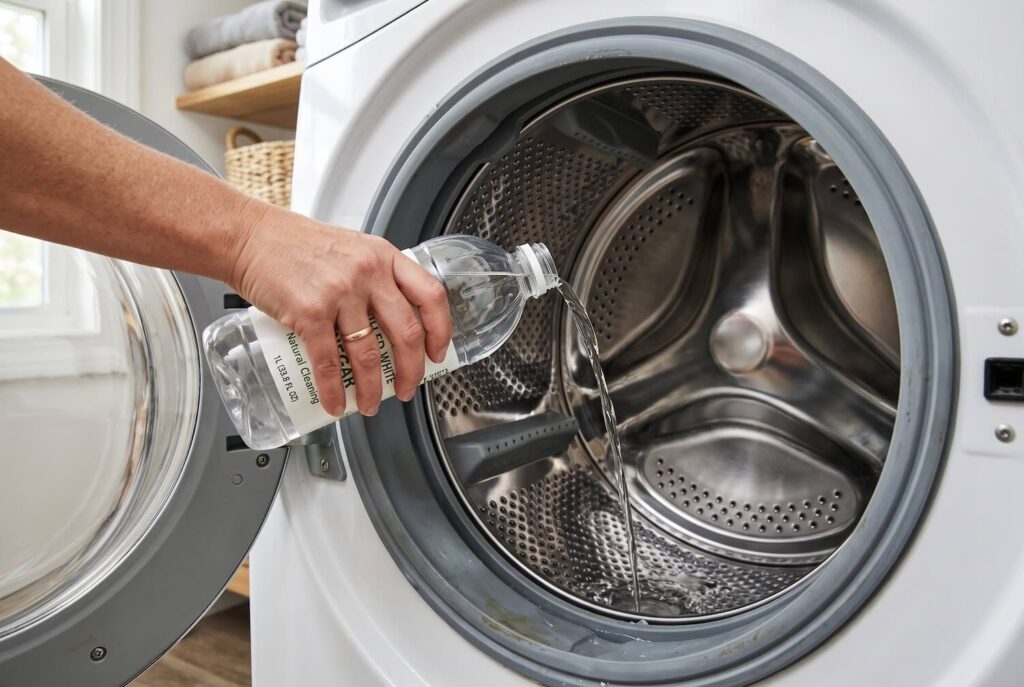
- Run a hot cycle. Run the longest and hottest cycle your specific washer offers, or utilize its dedicated “clean washer” setting if it features one. Extreme heat is what ultimately breaks down the oils and residue that feed the bad smell, meaning cold cycles will simply not do the job here.
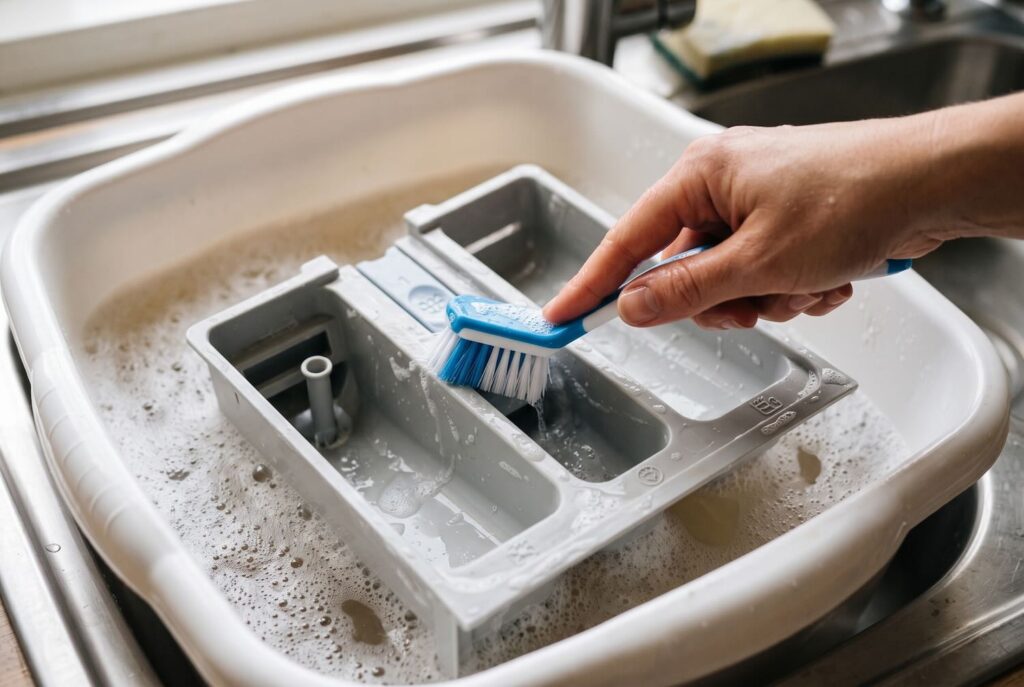
- Scrub the removable parts. Pull the detergent drawer completely out to soak it in warm, soapy water before scrubbing the tight crevices with a small brush. Wipe down both the drum and the door glass with a microfiber cloth, since these smooth surfaces frequently hold an invisible film.
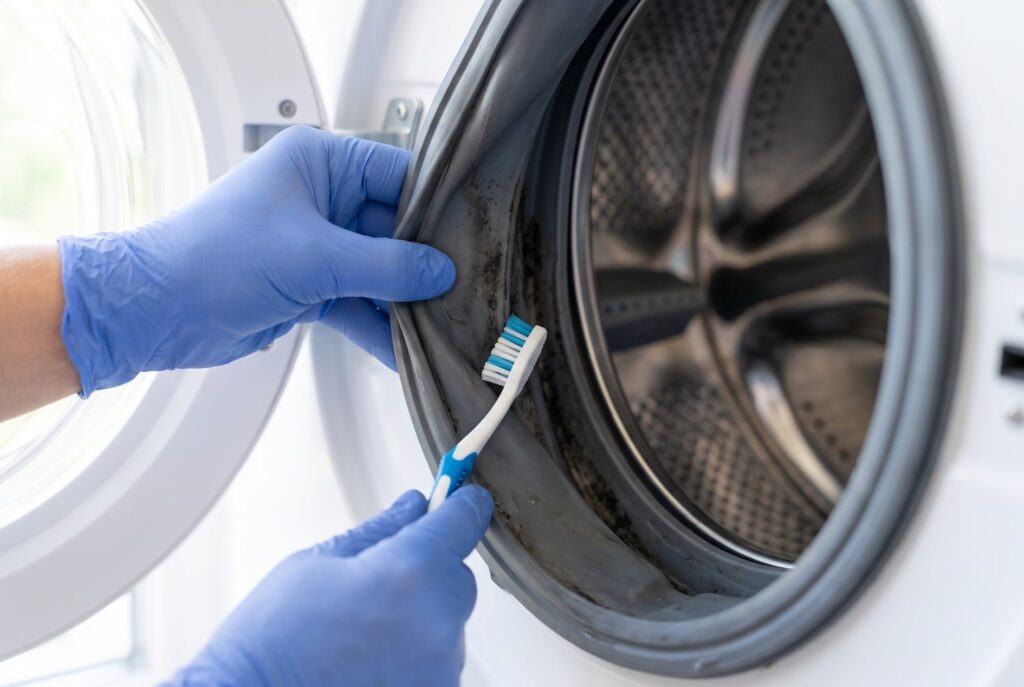
- Clean the seal or agitator. Carefully peel back the rubber folds of the gasket on a front-load washer and clean deep inside them, because that dark area is where mildew hides most often. If you own a top-load washer, thoroughly wipe the lid, the top opening, and the base around the agitator instead. Never mix bleach and vinegar during any portion of this process, as the dangerous combination creates toxic chlorine gas.
- Dry and air out. Dry the rubber seal and metal drum completely with a towel, then leave the door wide open so the dark interior can air out fully. Combining that hot cycle with a careful hand-scrub is exactly how to get rid of mildew smell in washing machine at its root source. While a clean machine successfully handles the musty smell, a sewage odor strongly indicates you need to look further into your plumbing.
Washing Machine Smells Like Sewage or Poop
When wondering “why does my washing machine smell like sewage?”, the answer almost always points to a drainage problem rather than just dirty internal parts. Whenever a washing machine smells like sewage, or a washing machine smells like poop, that heavy odor indicates sewer gas entering through your plumbing or a thick layer of bacteria producing hydrogen sulfide inside the drain line. You must rule out sewer gas first because it can be both flammable and unhealthy, so follow these diagnostic steps carefully.
- Ventilate and check the standpipe. Open a nearby window for safety, pull the bulky washing machine away from the wall, slide the flexible drain hose completely out of the standpipe, and take a careful sniff right at that opening. If the foul smell is strongest right there, your house plumbing is the source rather than the machine itself.
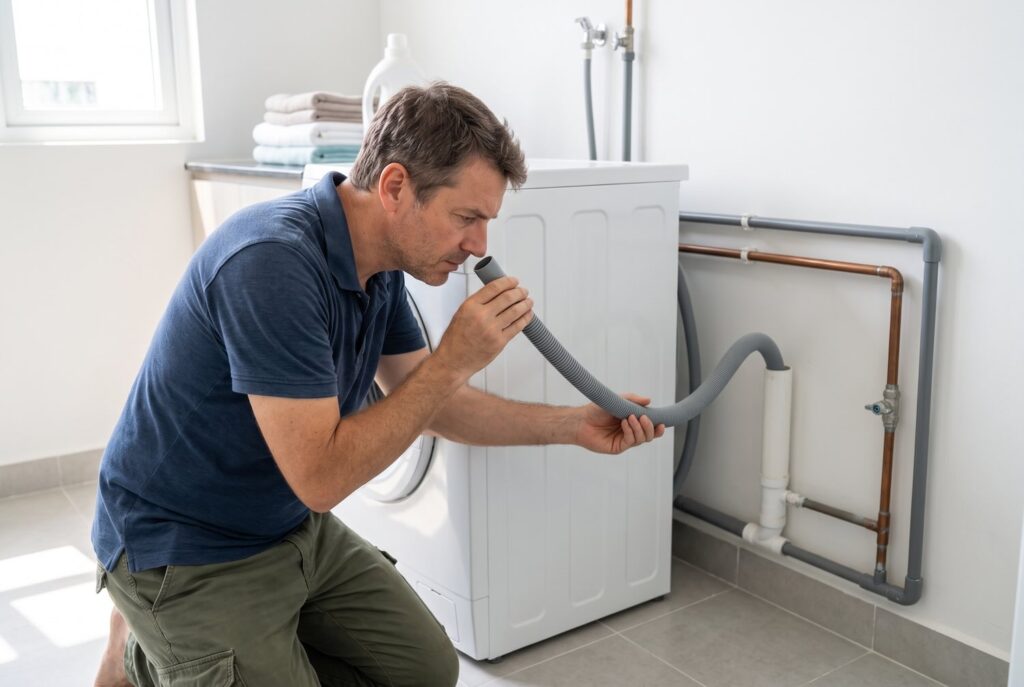
- Identify the plumbing cause. A dry or failing P-trap, a clogged vent pipe, or a heavily clogged drain are the most usual causes. A functional P-trap holds a small amount of water that physically blocks sewer gas from rising into the room, so the terrible odor comes straight through whenever it dries out or clogs.
- Refill the trap or call a plumber. Running fresh water down through the drain can successfully refill a dry trap and sometimes clears the smell entirely on its own. You will absolutely need a plumber for a clogged drain that stays blocked after you have cleaned the machine, and the sewage smell should disappear once that deep clog is gone.
If you find the odor is actively coming from inside the drum instead, the proper fix remains the deep clean outlined in the previous section. A rotten-egg smell, however, deserves its own highly careful check first.
Washing Machine or Top-Loader Smells Like Rotten Eggs or Gas
You must immediately run a safety check before any cleaning if your washer smells like gas or rotten eggs, because that distinct odor can signal a real natural gas leak in your home. Natural gas is completely odorless on its own, prompting utilities to deliberately add a sulfur-like scent that closely resembles rotten eggs specifically so dangerous leaks are noticeable. Treat the gas leak possibility as an emergency first before you ever move on to cleaning the appliance.
- Stop and avoid sparks. Do not flip any electrical switches or light anything if you have a gas dryer sitting beside the washer and the smell is sharp or actively spreading. Creating a tiny spark near a gas leak is the exact risk you are trying to avoid.
- Shut off the gas and leave. Shut off the main gas supply valve leading to the dryer, open your windows wide, and immediately leave the area. Call 911 or your local gas provider’s emergency line strictly from outside your home, utilizing the emergency dispatch number that is usually printed directly on your monthly bill.
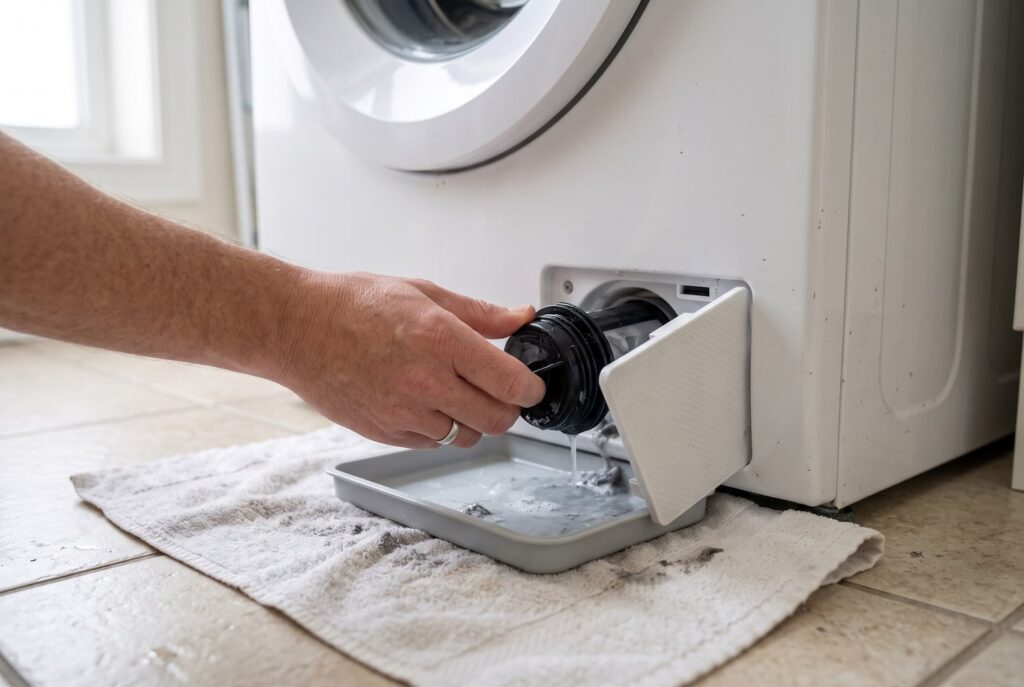
- Clean once a leak is ruled out. Once a gas leak is ruled out, that rotten-egg smell is almost always hydrogen sulfide gas created by bacteria. When a top loading washing machine smells like rotten eggs, you need to run a hot clean cycle using a washer cleaner, scrub the drum and dispenser by hand, and carefully check the drain pump filter since trapped lint and water sitting there can easily turn sour and eggy.
>>> Read more: How to Patch Drywall Corners: Fix Chipped Edges Like a Pro
Should You Use Vinegar? The Honest Answer
Vinegar can deodorize a washing machine, but it is not risk-free, so use it occasionally rather than as a routine cleaner. White vinegar cuts through residue and kills some odor-causing microbes, which is why so many guides recommend it. The concern is what repeated use does to the machine, since vinegar is mildly acidic and can degrade the rubber seals and hoses over time. A failing seal can lead to leaks, and leaks create exactly the damp conditions that grow more mold.
The balanced approach is simple. An occasional vinegar cycle to clear an odor is generally fine for many machines, but relying on vinegar every week is where the risk adds up. Always check your owner’s manual first, since some manufacturers advise against vinegar entirely. If you are wondering how to deodorize washing machine drums without that risk, baking soda is the safer routine option and will not attack the seals.
One rule holds no matter which product you choose. Never combine vinegar and bleach, because the mix releases chlorine gas that is dangerous to breathe. A dedicated washer cleaner avoids the guesswork and is formulated for the job. With the machine handled, the smell may already be trapped in your laundry, which is the next thing to fix.
How to Get Musty or Mildew Smell Out of Clothes
The fix for how to get musty smell out of clothes operates identically to how to get mildew smell out of clothes: rewash them in the hottest water the care label allows before you ever put them in the dryer. Extreme heat from a dryer cycle can permanently lock the foul odor directly into the fabric fibers and make the smell far harder to completely remove later on. Clean the washing machine thoroughly first, then work on the affected clothes using the specific steps below.
- Rewash on hot. Run the smelly load again on the hottest possible setting the clothing care label allows, utilizing your regular everyday detergent. Hot water reaches and kills bacteria that a standard cold wash inevitably leaves behind.
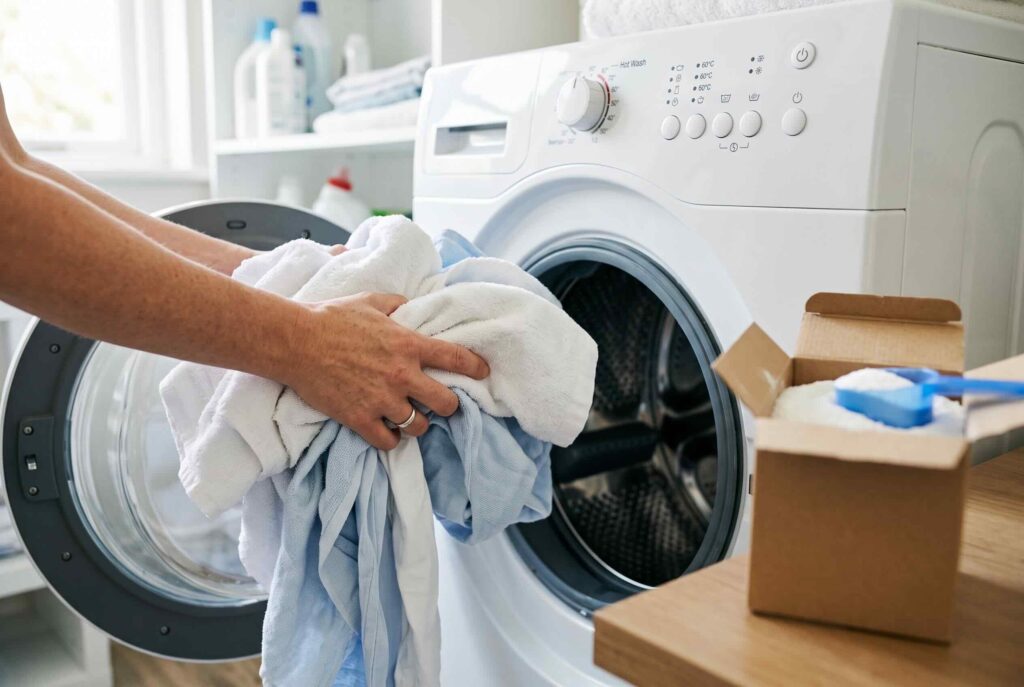
- Boost a stubborn load. For durable whites and cottons that can safely handle it, soak them in a diluted bleach solution before washing, then ensure you rinse everything well. A specialized laundry sanitizer or an odor-control detergent helps when a plain hot rewash falls short, and commercial sanitizers from major brands like Lysol and Clorox are specifically designed to kill the odor-causing bacteria that easily survive standard cold-water wash cycles.
- Skip the dryer until the smell is gone. Do not attempt to dry the load while any hint of mustiness remains, because the drying process permanently locks the bad odor in. Rewash the fabrics first, and only move them to the dryer machine once the clothes genuinely smell clean.
How to Prevent Washing Machine Smells From Coming Back
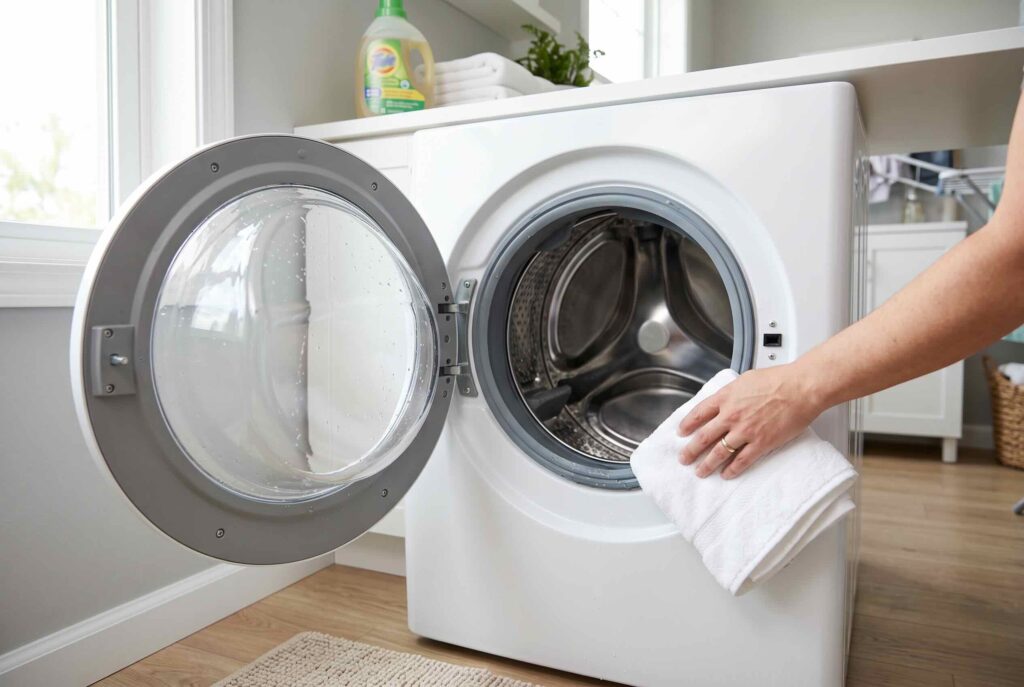
Once you know how to get rid of mildew smell in washing machine, prevention comes down to controlling moisture and residue: the two things mold and bacteria need to grow. Leave the door or lid open between uses so the drum can dry out, and wipe the gasket and seals dry on a front-loader, where water pools in the folds. Remove wet laundry as soon as the cycle ends, since damp clothes in a closed drum grow mildew quickly and pass the smell straight to the next load.
Detergent choice matters just as much. High-efficiency washers need HE detergent, which produces fewer suds and leaves less film, and overdosing any detergent is a leading cause of buildup. Run a hot maintenance cycle about once a month, or every 30 cycles, to break down the oils and residue that cold washes leave behind. Keep the drain pump filter clear too, especially on front-loaders, so trapped debris never has a chance to turn sour.
Frequently Asked Questions
Here are quick, actionable answers to a few common questions regarding washing machine odors.
Should I use vinegar or bleach to clean my washer?
Either liquid can work, but never use them together, because mixing them directly creates toxic chlorine gas. Use vinegar only on an occasional basis, use bleach strictly if your specific manual allows it, and rely on a dedicated commercial washer cleaner for your routine maintenance.
Is a rotten-egg smell from my washer dangerous?
It can be dangerous. The odor is usually just harmless hydrogen sulfide produced by bacteria, but it can also signal a highly dangerous natural gas leak. If you have any gas appliance sitting nearby, you must rule out a leak before you begin cleaning the washer.
How often should I clean my washing machine?
You should clean it about once a month, or roughly every 30 cycles. Regular hot cleaning stops soapy residue and moisture from building into an odor before it ever takes hold.
Why do my clothes still smell after washing?
The washing machine itself may be the primary source, or you may simply be using way too much detergent. Clean the washer appliance first, then rewash the affected clothes in hot water and completely skip the dryer until the smell is entirely gone.
When should I call a professional?
Call a licensed plumber for a heavy sewage smell that actively comes from the drain line, and contact an appliance technician if the foul odor persists after you have meticulously cleaned every reachable part of the washer.
Final Word
Most washer odors trace back to trapped moisture and residue, meaning a hot clean-out combined with a thorough wipe-down of the seal, drum, and dispenser clears the common musty smell fast. Match the specific odor to its actual cause to ensure you fix the real underlying problem instead of just temporarily masking it. Treat mildew with a deep clean, address sewage at the drain line, and treat rotten eggs as a safety check first. Keep the door propped open, pull wet laundry out promptly, and always dose your detergent correctly to permanently stop the smell from returning. For more comprehensive room-by-room cleaning guides, browse Home Tips Daily and be sure to keep this method handy the next time you need to work out how to get rid of mildew smell in washing machine.