


Gutter guards cut your cleaning down to a fraction of what it was, but they do not end it. Learning how to clean gutters with gutter guards is mostly about clearing the debris that piles up on top and flushing the bit that slips underneath, without damaging the guards or yourself. This guide covers the safe method step by step, how it changes with each type of guard, and the jobs worth leaving to a pro.
One rule up front: work in dry conditions, and if the roof is high or steep, call a pro rather than improvising.
Do Gutters With Gutter Guards Still Need Cleaning?
Yes, though far less often than open gutters. Guards stop leaves and twigs from filling the trough. They do nothing about the debris that lands on top of them. And fine grit, shingle granules, pollen, and seed pods still work their way through the openings over time. Left alone, that buildup mats down over the guard, blocks water from getting in, and sends it spilling over the edge in the next heavy rain. That overflow leads to the same rot, staining, and foundation trouble open gutters cause, which is the whole point of what happens if you don’t clean your gutters.
How often you clean depends on what hangs over your roof. A house surrounded by pine or oak may need the guard surface cleared twice a year or more. A home with few trees nearby can go longer between passes. A good routine is a look in late spring and again in fall, plus a check after any big storm. Add an occasional flush of the gutters themselves to clear whatever has slipped below the guard. Building that check into your routine is the quiet half of how to clean gutters with gutter guards, done long before you ever set up a ladder.
How to Stay Safe on the Ladder (and Clean From the Ground)
Ladder falls are one of the more common household injuries, so the safety setup matters more than the cleaning itself. Getting it right is the part of how to clean gutters with gutter guards that keeps a chore from turning into an injury.
On the Ladder

A few rules cover most of the risk:
- Use a stable extension or sturdy step ladder on firm, level ground, not on soft soil or a slope.
- Have a second person foot the base and hand up tools, rather than balancing them on the rungs.
- Work in dry weather only, and keep your hips between the rails instead of leaning out to reach.
- Move the ladder often instead of stretching for one more foot of gutter.
- Wear gloves for the sharp metal edges and grit, and eye protection once you start blowing or rinsing.
Cleaning From the Ground
>>> Read more: Bathroom Essentials for a First Apartment: The Full List
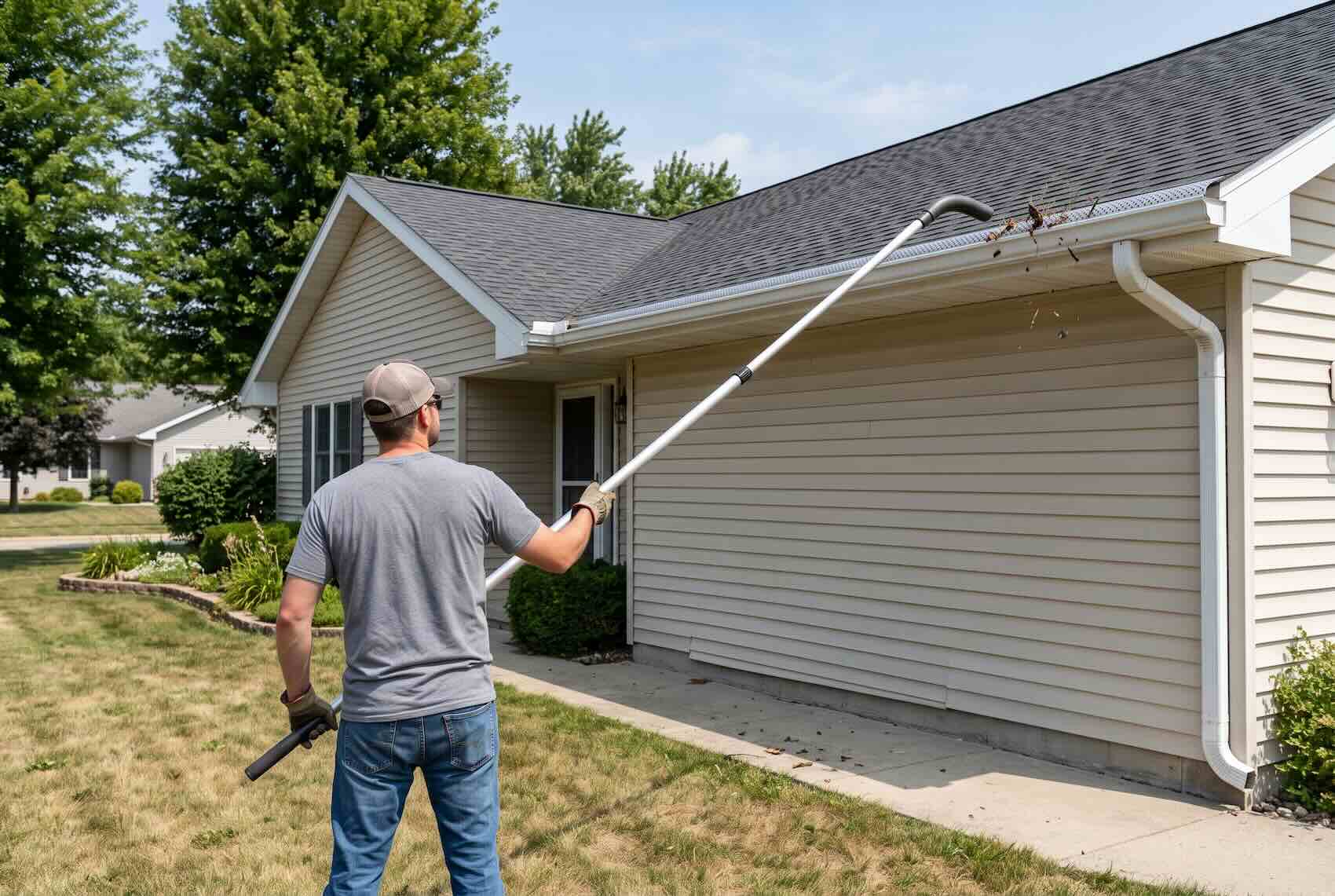
The safest approach skips the ladder altogether. A hose wand or a blower attachment on an extension pole lets you clear the guard surface from the ground on a single-story home, which keeps you off both the ladder and the roof. Stay off the roof in any case. Walking on a sloped, sometimes damp surface is where the bad falls happen, and it is rarely needed for guard cleaning. When the roof is high, steep, or slick, or you are not sure on a ladder, hiring a pro is the sensible call rather than a failure of nerve.
Tools You Need to Clean Gutters With Gutter Guards
You do not need much, and most of it is probably in the garage already:
- A stable extension or step ladder, plus a second person to steady it.
- Work gloves and safety glasses.
- A gutter scoop or a stiff brush for lifting matted debris off the guard.
- A garden hose, ideally with a spray nozzle or a curved gutter-cleaning wand.
- A leaf blower for dry debris, and a bucket or tarp to catch what comes down.
- Optional from-the-ground attachments: an extension pole for the blower, or a pressure-washer wand if you go that route. Note that a pressure washer needs a careful hand near guards, since the force can dent or tear the lighter ones.
How to Clean Gutters With Gutter Guards Step by Step
With the ladder footed and a helper on the ground, here is how to clean gutters with gutter guards from start to finish.
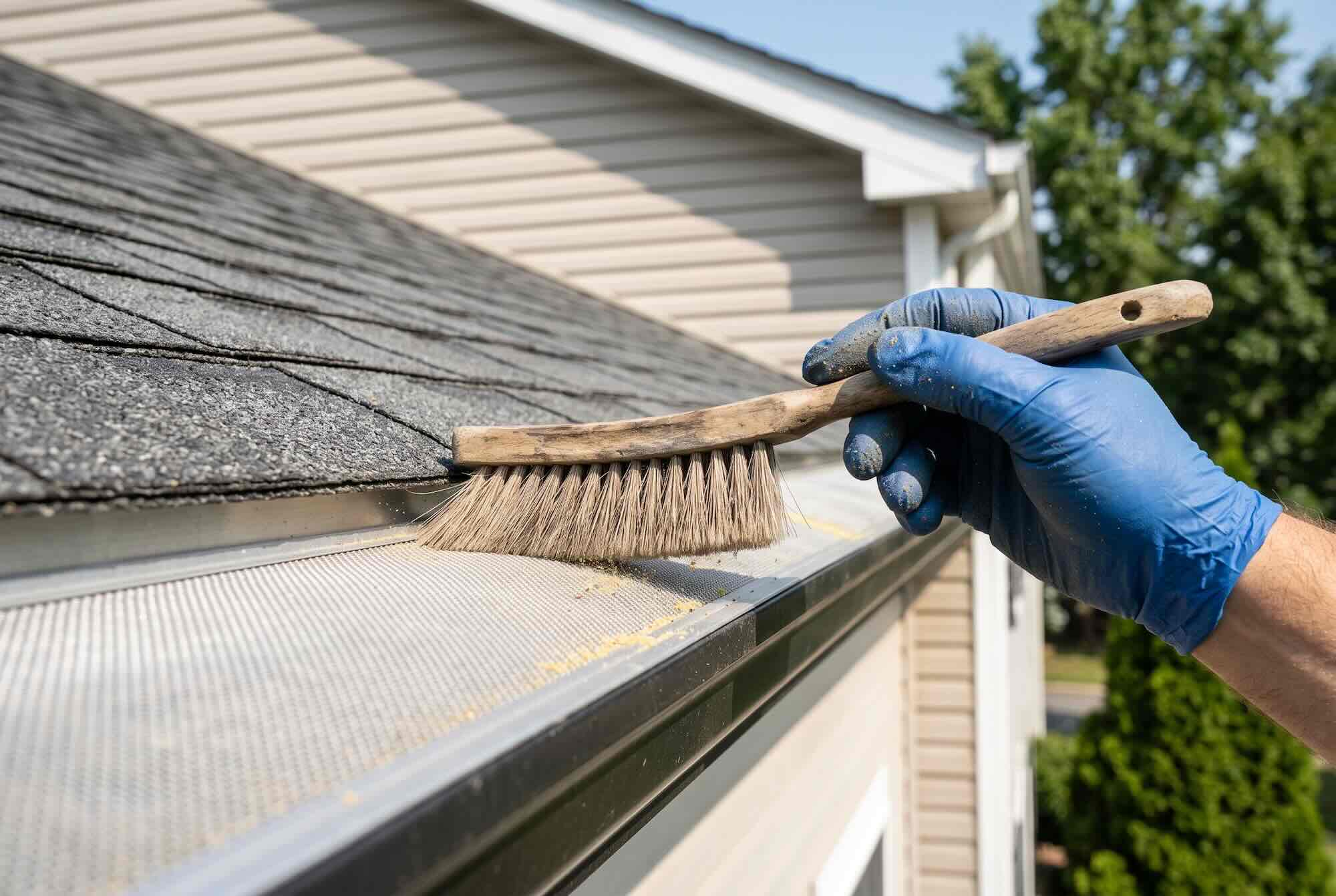
1. Clear debris off the top of the guards. Lift or sweep away the loose leaves, twigs, and matted debris on the guard surface first. A gloved hand, a soft brush, or a blower handles most of it. Do this before you add water, so you do not push debris down through the mesh. Drop what you gather into a bucket or onto a tarp below, not back into the flower beds.
2. Brush or rinse the guard surface. Once the loose material is gone, work the surface with a brush or a gentle hose stream to lift the fine grit and pollen that dull a guard’s openings. Angle the water along the guard rather than straight down into it, so you are washing debris off the top instead of driving it underneath. Watch for spots where the water beads or pools instead of draining through.
3. Check whether debris got underneath. The water tells you what you cannot see. If it sheets through the guard and runs clear out the downspout, the trough below is probably clean. If it pools on top, backs up, or seeps through slowly, debris has collected under the guard and that section needs to come off for a proper flush.

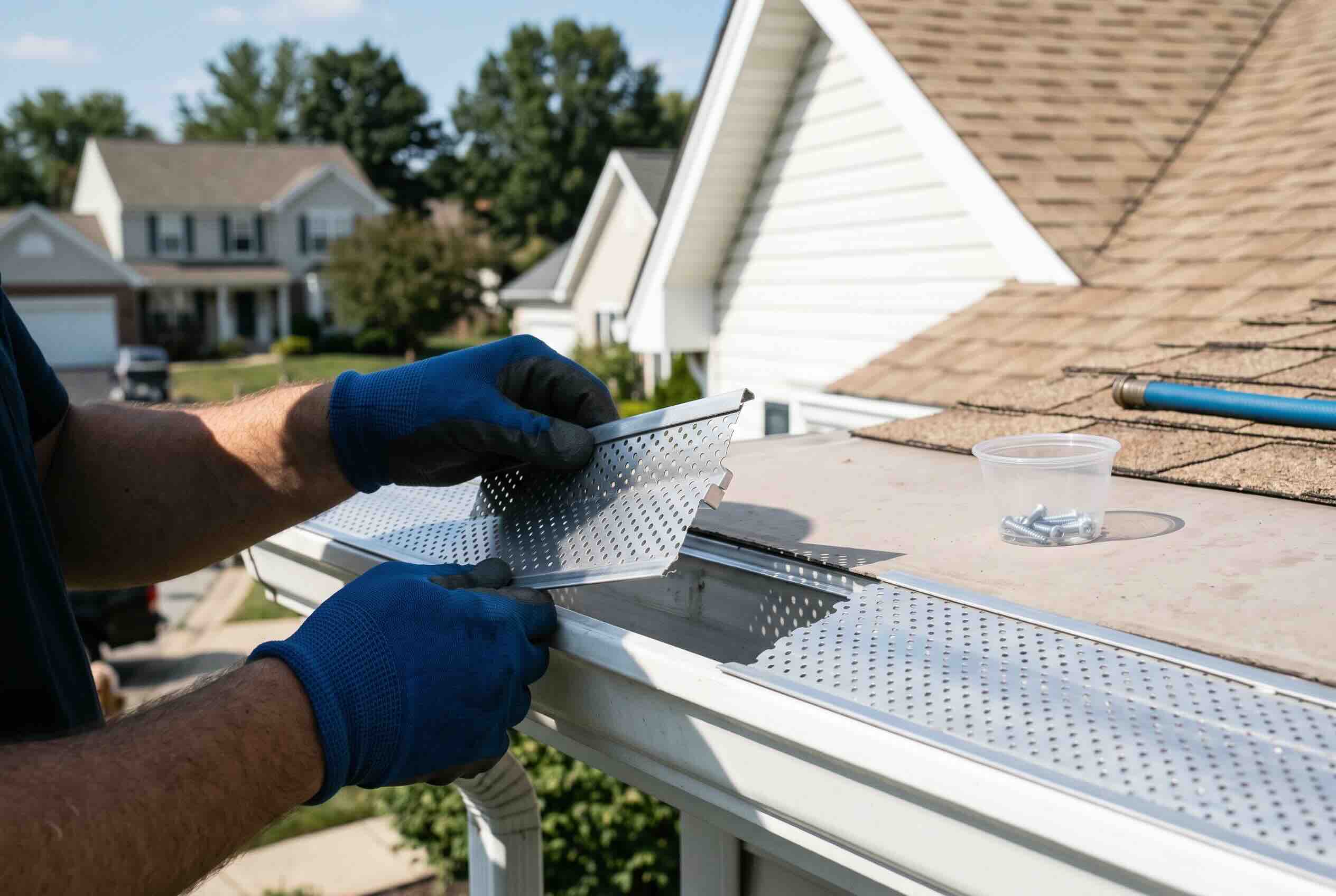
4. Remove a guard section if needed. Guards clip, screw, or snap in depending on the system, so unfasten only the run giving you trouble, not the whole roofline. Set the screws or clips in a pocket or a cup so none rolls off the edge. Lift the section gently, since older guards turn brittle and can crack if you pry at them.
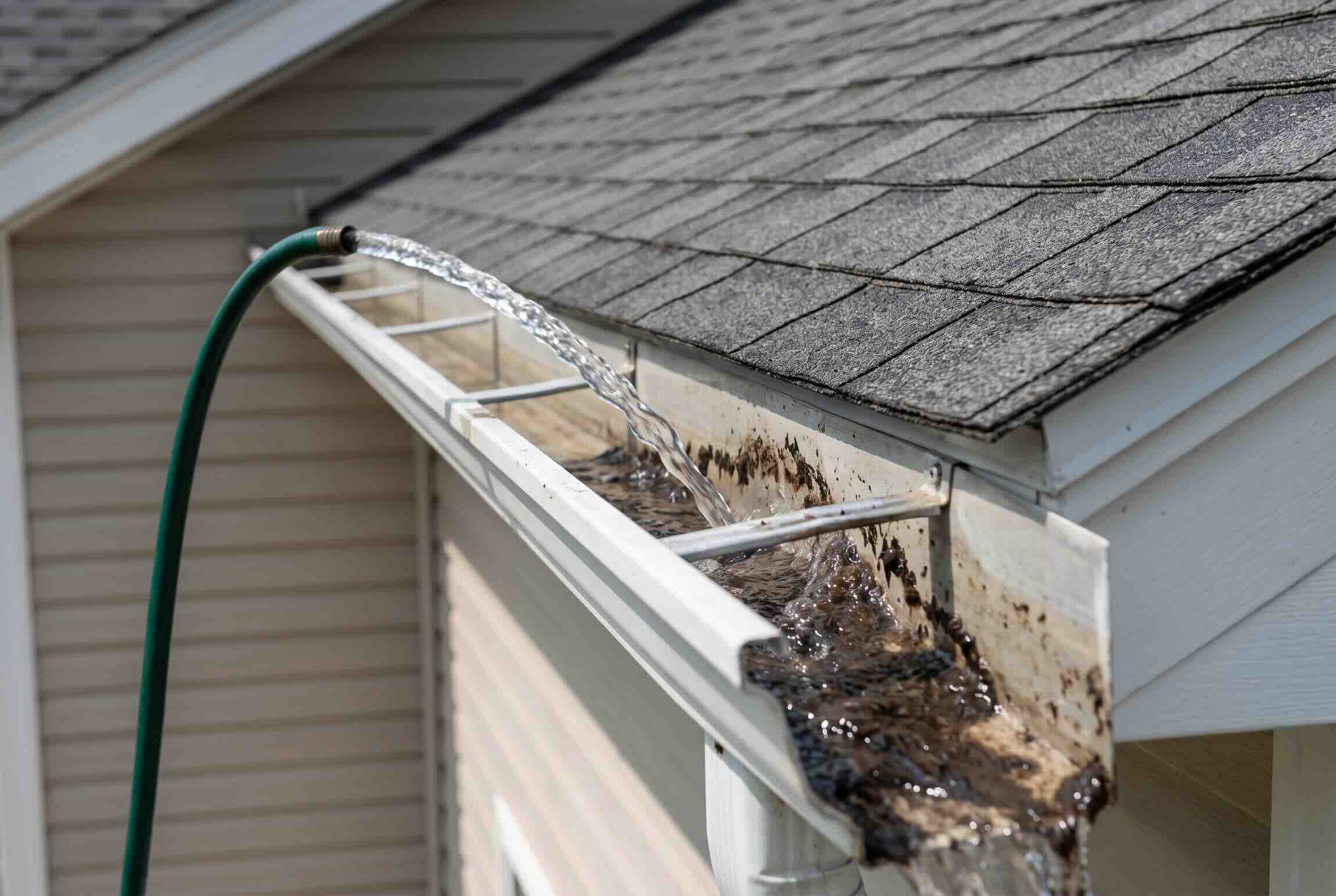
5. Flush the gutters and downspouts. With the section open, scoop out the sludge by hand. Then run the hose from the far end toward the downspout to carry the rest along. Watch the outlet at the bottom of the downspout. A strong, steady stream means it is clear. A trickle or a backup points to a clog, which you will need to flush from below or break up with the hose.
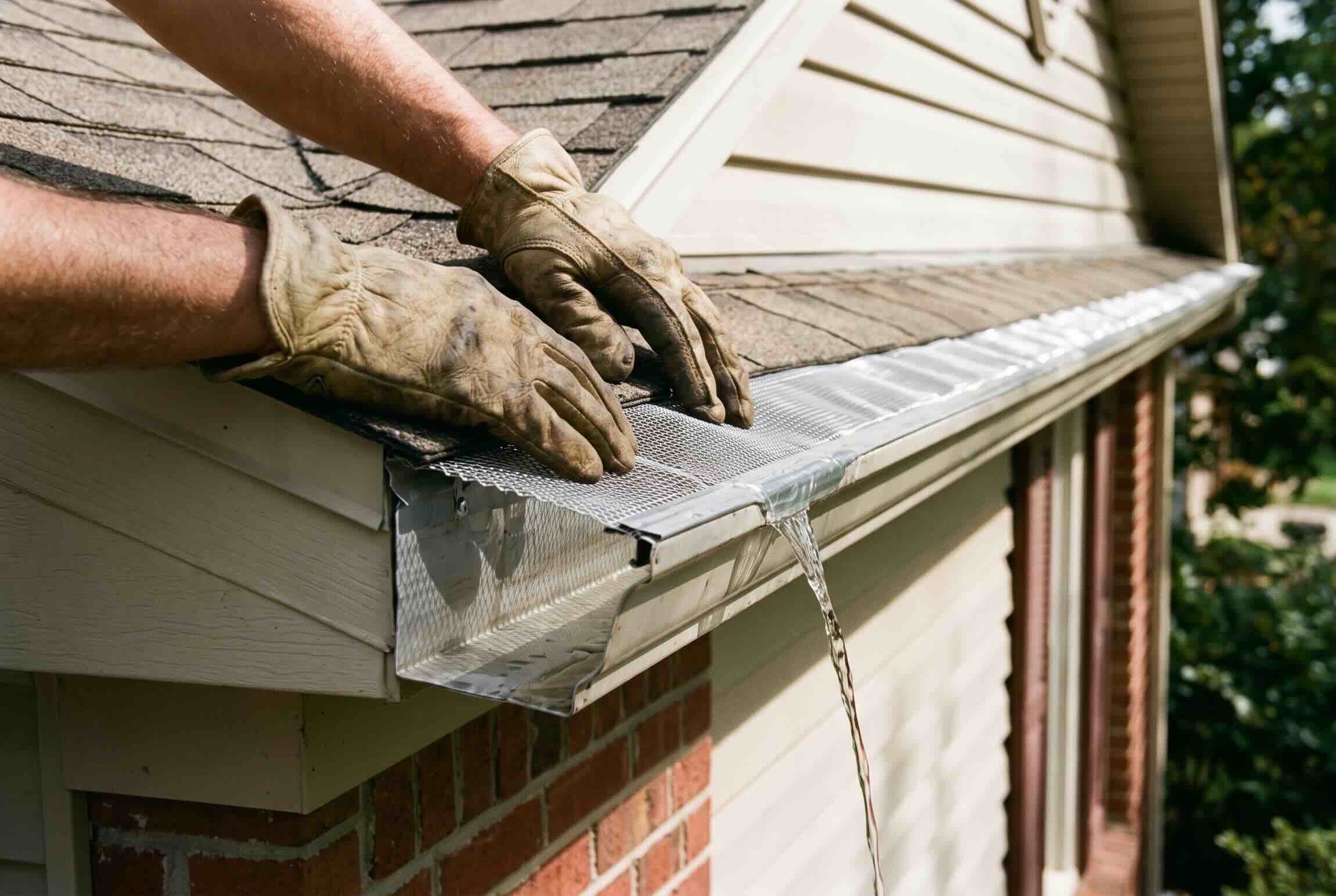
6. Reattach guards and inspect the flow. Refasten the section the way it came off, seating it flat with no lifted edges for debris to catch on. Then run water across the full length one more time and watch it move cleanly into and down the downspout. That last check is what tells you the job is finished rather than half done.
How Cleaning Differs by Gutter Guard Type
The steps above are the backbone, but the guard on your roof changes the details, mainly how gently you treat it and how often it wants attention. Matching the method to the guard is the step most people skip when they learn how to clean gutters with gutter guards. It is also what keeps you from wrecking the guard that is meant to save you the work.
Mesh and Micro-Mesh Guards
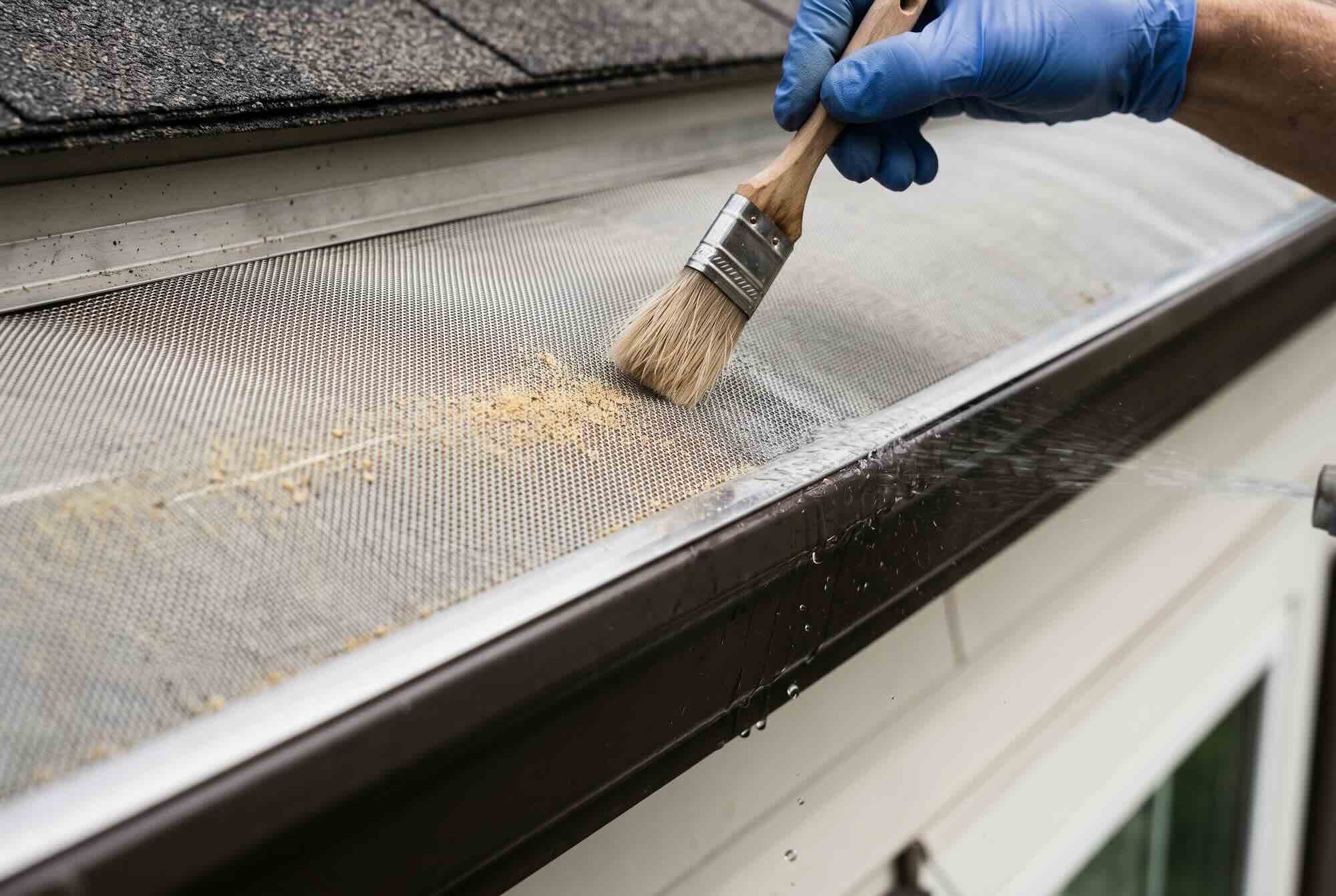
Fine mesh catches almost everything. That is its strength, but also what makes it harder to maintain, since pollen, grit, and shingle granules slowly clog the tiny holes. Clean these with a soft brush and a light rinse. Keep a pressure washer well away, because the force tears or dents the mesh. Micro-mesh in particular does better with a gentle, more frequent wipe than with one aggressive scrub a year.
Screen Guards
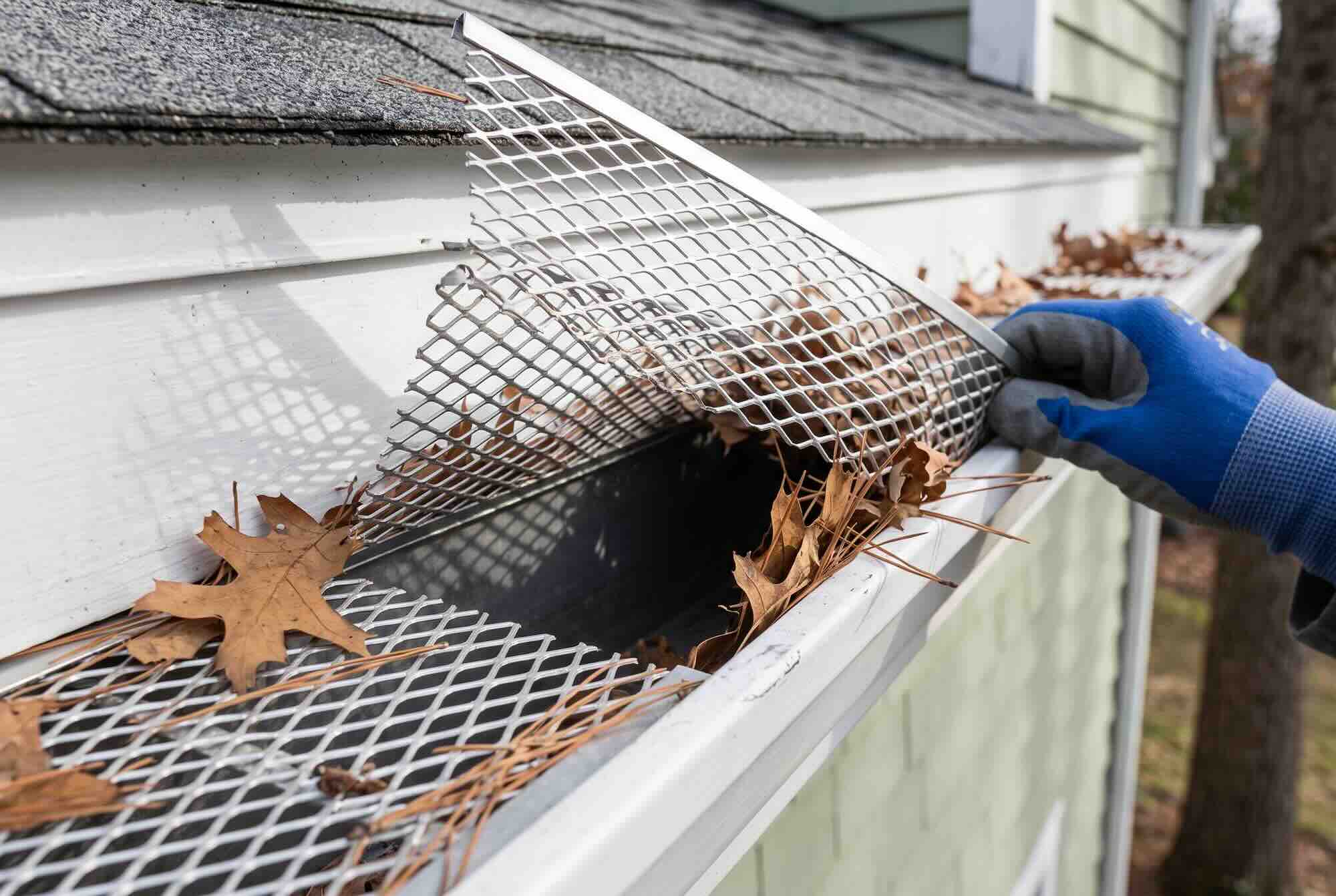
Screen guards use larger openings, so they shed fine debris easily but let small twigs and pine needles slip through. Lift off the loose debris on top, then check underneath more often than you would with mesh, because whatever passes the screen settles into the trough. Many screen panels simply lift out, which makes flushing the gutter beneath them quick.
Reverse-Curve / Surface-Tension Guards
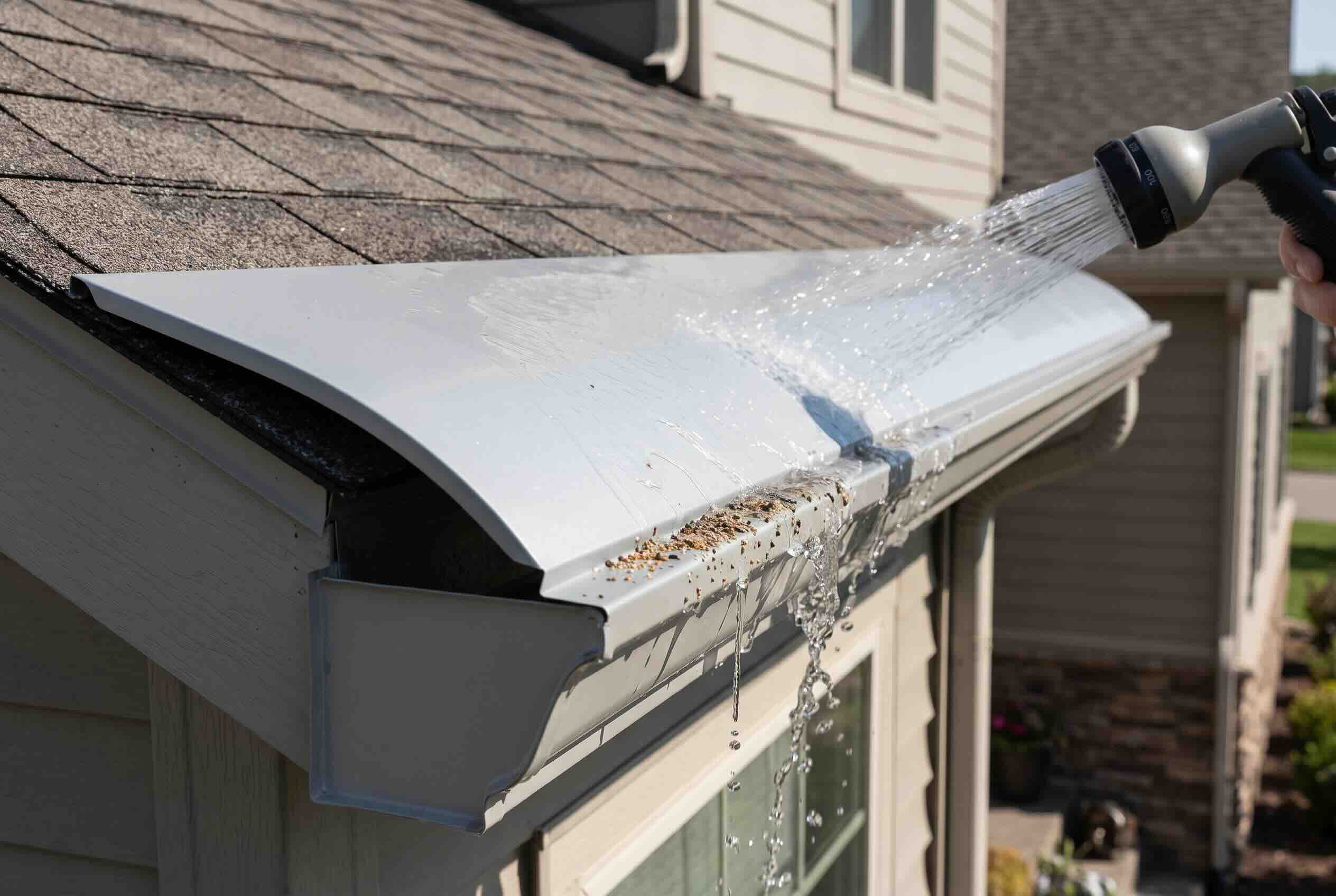
These solid covers guide water around a curved lip while debris tumbles past. They usually stay fixed in place. So most of the cleaning happens from above or from the ground. The curved nose and the slot behind it still collect grime and the odd seed, so rinse the surface and clear the slot. Reaching a stubborn clog can mean calling a pro, since the panels are heavy and fastened down.
Foam and Brush Guards
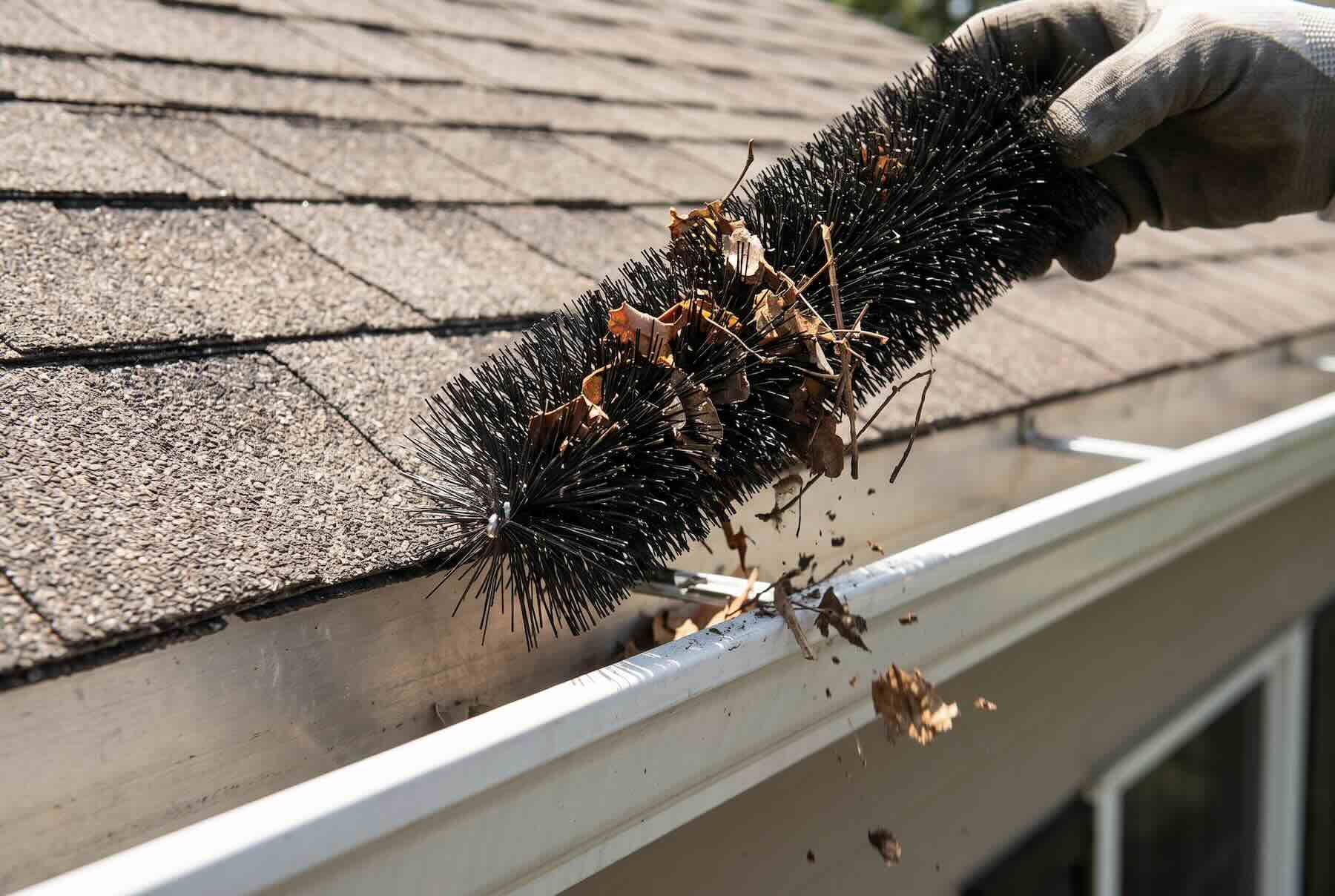
Foam inserts and bristle brushes sit down inside the gutter and trap debris on top of themselves, so what you need to remove is easy to see and easy to reach. Pull the insert, shake or hose it clean, clear the trough beneath it, and set it back. These are the simplest to service, though foam can break down and hold water over the years, so swap out any pieces that are crumbling or staying soggy.
Common Mistakes When Cleaning Gutters With Gutter Guards
A few habits turn a routine cleaning into damage or a second trip up the ladder. Avoid these common mistakes:
- Blasting micro-mesh with a pressure washer: This dents and tears the fine mesh you are trying to protect. Save the pressure for the downspout, or leave it off the guards entirely.
- Working on a wet roof: Cleaning in the rain trades a small time saving for a real fall hazard.
- Forgetting the downspouts: It is easy to fixate on the guard surface, but a gutter that looks clear on top will still back up at the outlet if ignored.
- Skipping the final water test: Leaving without testing leaves you guessing. This test matters most before the wet season and checks that the system drains.
FAQ
Why do my gutters overflow even with guards?
Usually because debris has matted on top of the guard or built up underneath it, so water runs off the surface instead of through it. A guard sheds any water it cannot get into, and a clogged or grimy surface sends that runoff straight over the edge. Clearing the top and flushing beneath fixes most cases; if it keeps happening, the downspout or the guard’s pitch is worth a closer look.
Do gutter guards get clogged or damaged over time?
They can. Fine mesh clogs with pollen and grit, foam breaks down and holds water, and any guard can loosen, sag, or crack after enough seasons of sun and cold. A once-a-year inspection tells you whether a section needs cleaning, refastening, or replacing before it fails in a storm.
Can you clean gutter guards in winter or when frozen?
It is better to wait. Ice makes ladders and roofs slick, and forcing frozen debris or chipping at ice can crack a brittle guard. If your gutters are backing up behind ice, handle the ice safely first. Save the actual cleaning for a dry, mild day.
Do gutter guards mean you can stop cleaning gutters for good?
No. Guards cut the frequency and the mess, but no guard is maintenance-free, and the ones that market themselves that way still need their surface cleared and an occasional flush. Treat them as far less cleaning, not none.
Conclusion
Gutter guards turn a miserable seasonal chore into a quick one, but they do not eliminate it completely. The core of how to clean gutters with gutter guards stays simple: clear the surface debris, flush the trough and downspouts, and use tools suited to your specific guard. Prioritize safety by working from the ground when possible, and always leave steep roofs to the pros. Handle this twice a year to keep your system flowing, and when your next seasonal project rolls around, Home Tips Daily has a guide waiting for you.