

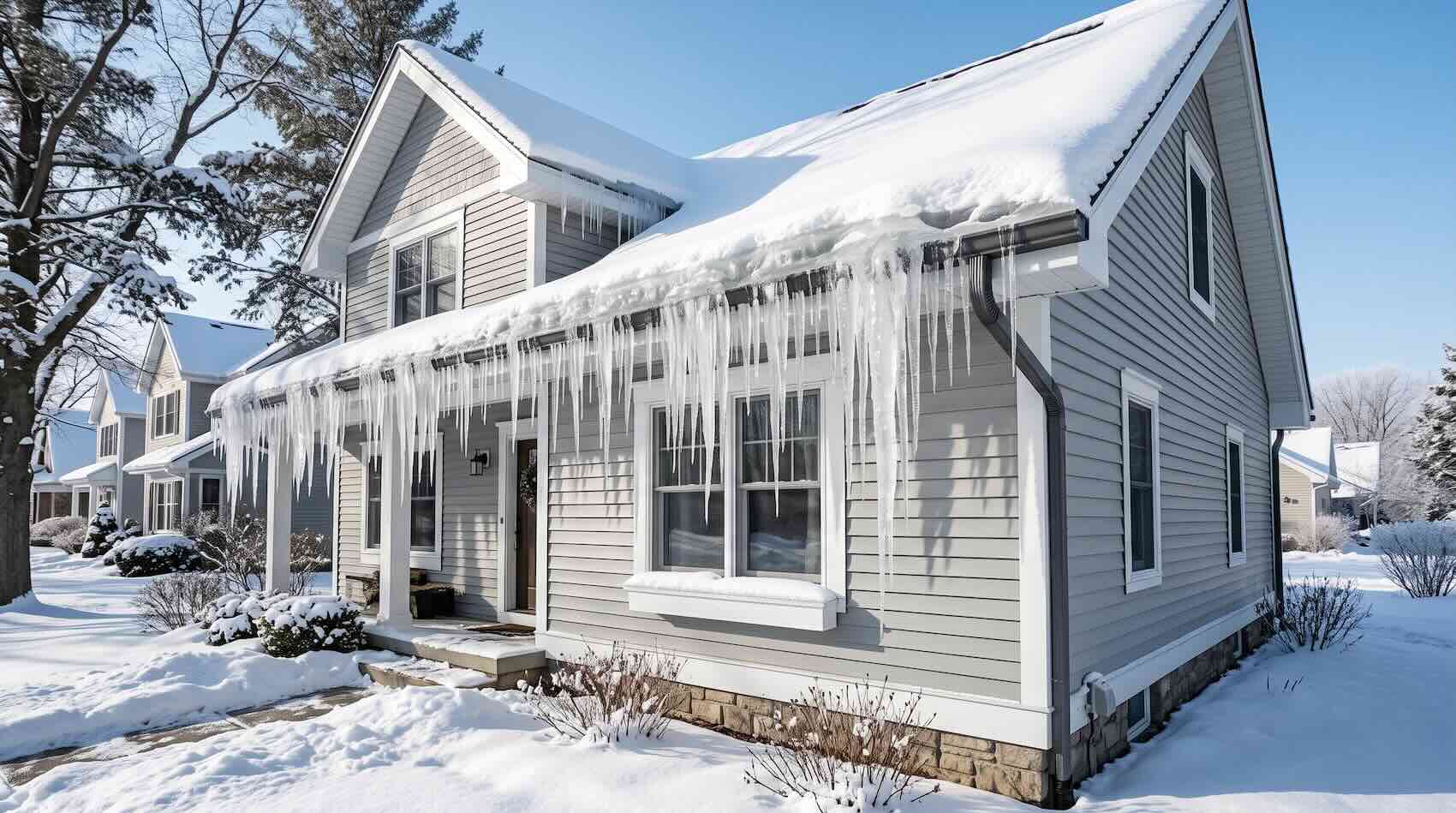
When you see an ice-filled gutter, your first instinct might be to attack it with a hammer, a hatchet, or boiling water. However, physical force and extreme heat will only make the situation worse. The real trick to how to clear ice from gutters runs the other way: melt it slowly with calcium chloride so the ice lets go without cracking the gutter or the shingles.
One caution before you start: winter roof and ladder work is dangerous, so for a large ice dam or a steep, high roof, calling a pro beats improvising.
How to Clear Ice From Gutters Safely
The methods below all share the same logic, opening a drainage channel through the ice and letting it melt out on its own. Here is how to clear ice from gutters gently, one approach at a time, from the safest ground-based options up.
Use Calcium Chloride Ice Melt (Not Rock Salt)
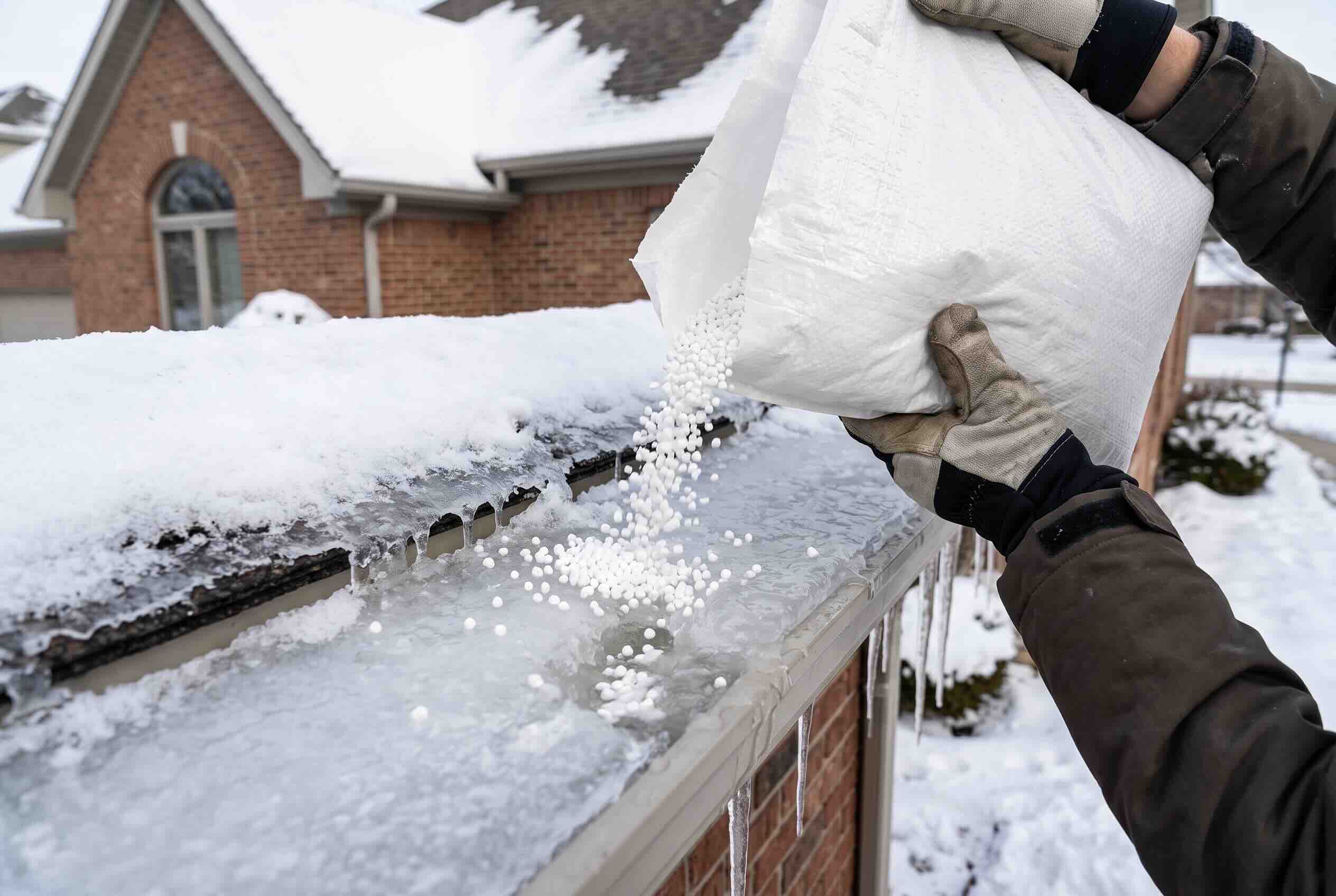
Calcium chloride is one of the ice melt methods you should use on a roof. It continues working in deep, freezing temperatures long after standard rock salt gives up, and it is far gentler on metal gutters. Standard rock salt (sodium chloride) is highly corrosive; it will eat through aluminum and steel finishes, and the toxic runoff will damage your concrete and kill the plants below.
Spread calcium chloride directly on the ice to slowly open a path for trapped water to drain. Most hardware stores sell it in pellet or flake form throughout the winter. If you have pets, look specifically for a pet-safe calcium-chloride blend, and remember to rinse the area thoroughly once the spring thaw arrives.
Fill a Sock or Pantyhose With Ice Melt and Lay It Across
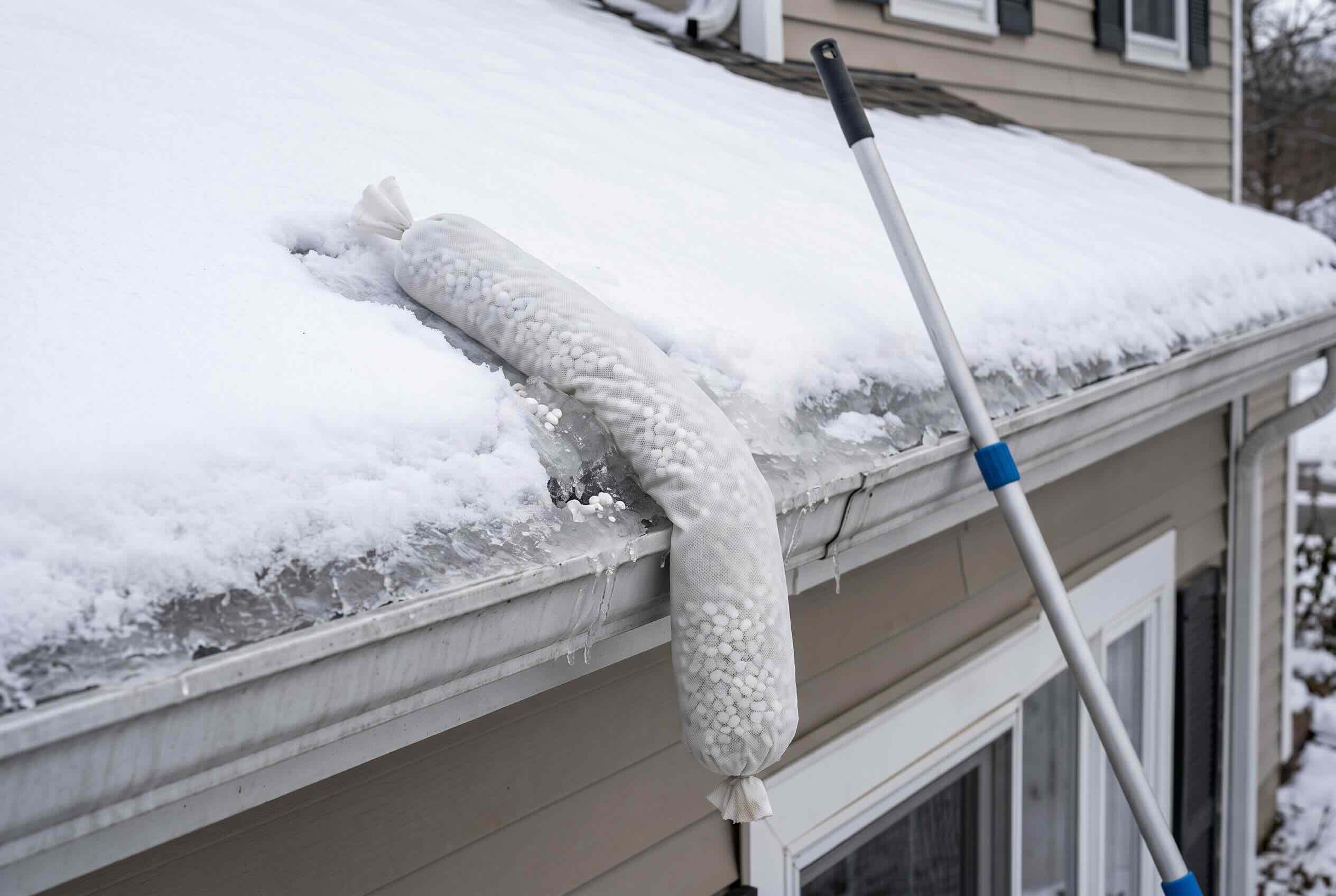
The cleanest way to apply calcium chloride is the pantyhose method. Fill an old sock or a leg of pantyhose with the ice melt, tie it off securely, and lay it vertically across the gutter so it intersects the ice dam.
As the melt works, it opens a vertical channel straight through the dam that lets the water behind it drain off the roof. Set the sock in place with a long pole or from a ladder on clear ground rather than climbing onto the roof. Leave it to work over several hours, and lay a second one further along if the dam runs the length of the eave. Space the socks every couple of feet on a long dam, since each one only clears a channel about as wide as itself.
Apply Warm Water With Ice Melt
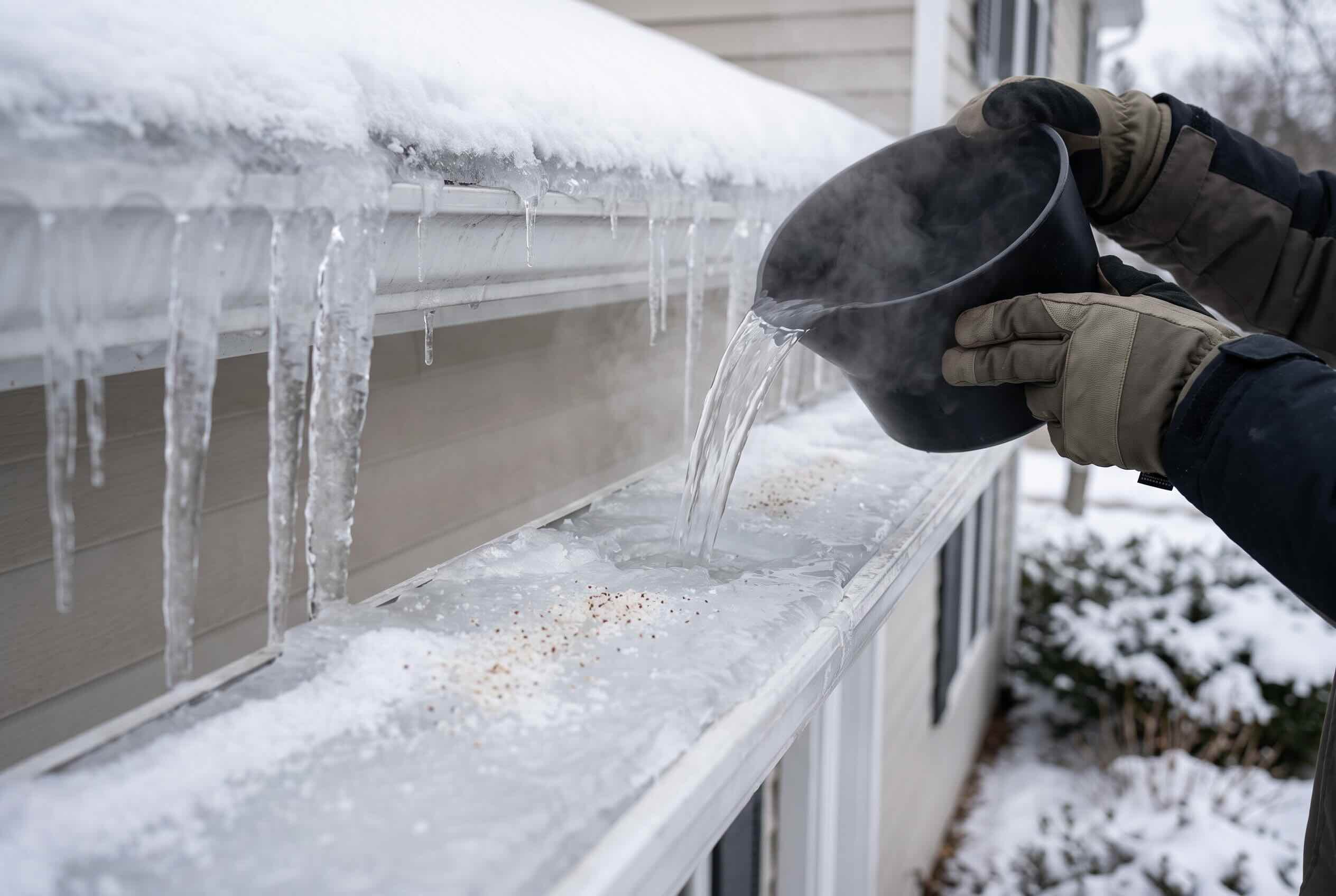
If you need a faster start, warm water can speed up the chemical reaction of the ice melt. But never use boiling water. Boiling water thermally shocks cold metal, causing it to warp or crack. Worse, boiling water cools rapidly and will refreeze into a fresh, solid sheet of ice almost immediately. Pour it where you want the channel to open, ideally right alongside the ice melt so the two work together. This method is better suited to small, accessible dams and should not replace professional removal for large ice dams.
Use a Roof Rake to Clear Snow From the Ground
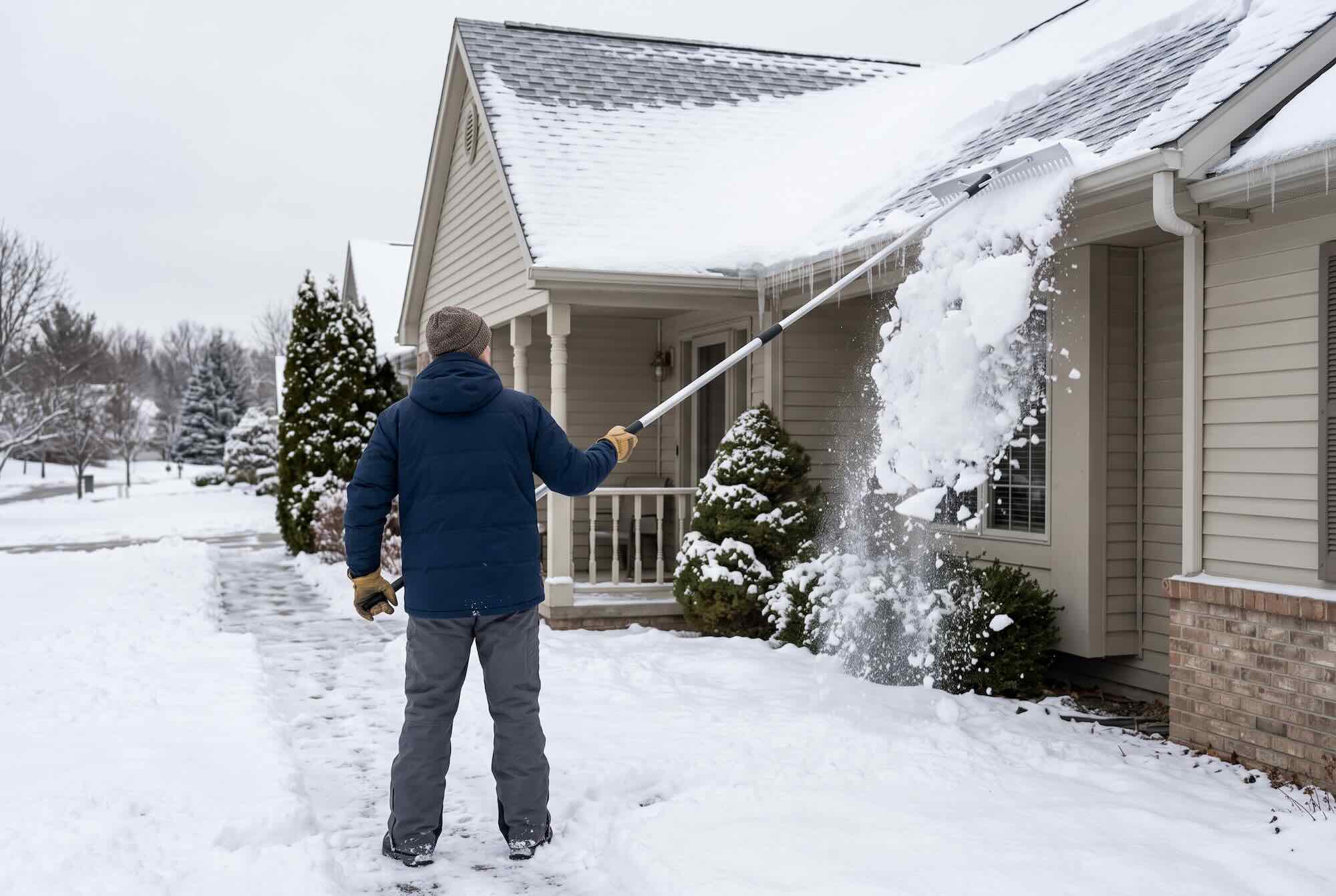
Another way is to take away the snow that feeds the dam before it melts and refreezes. A roof rake is a wide aluminum or plastic blade mounted on a long telescoping pole. It allows you to safely pull snow off the lower three to four feet of your roof while standing firmly on the ground. Clearing that edge cuts off the meltwater supply, so the dam shrinks and struggles to rebuild itself. Stand clear of the snow as it slides down, and look up for power lines before you raise the pole. A rake with small rollers or wheels rides just off the shingles, which clears the snow without scraping the granules off the roof.
How to Clear Frozen Downspouts
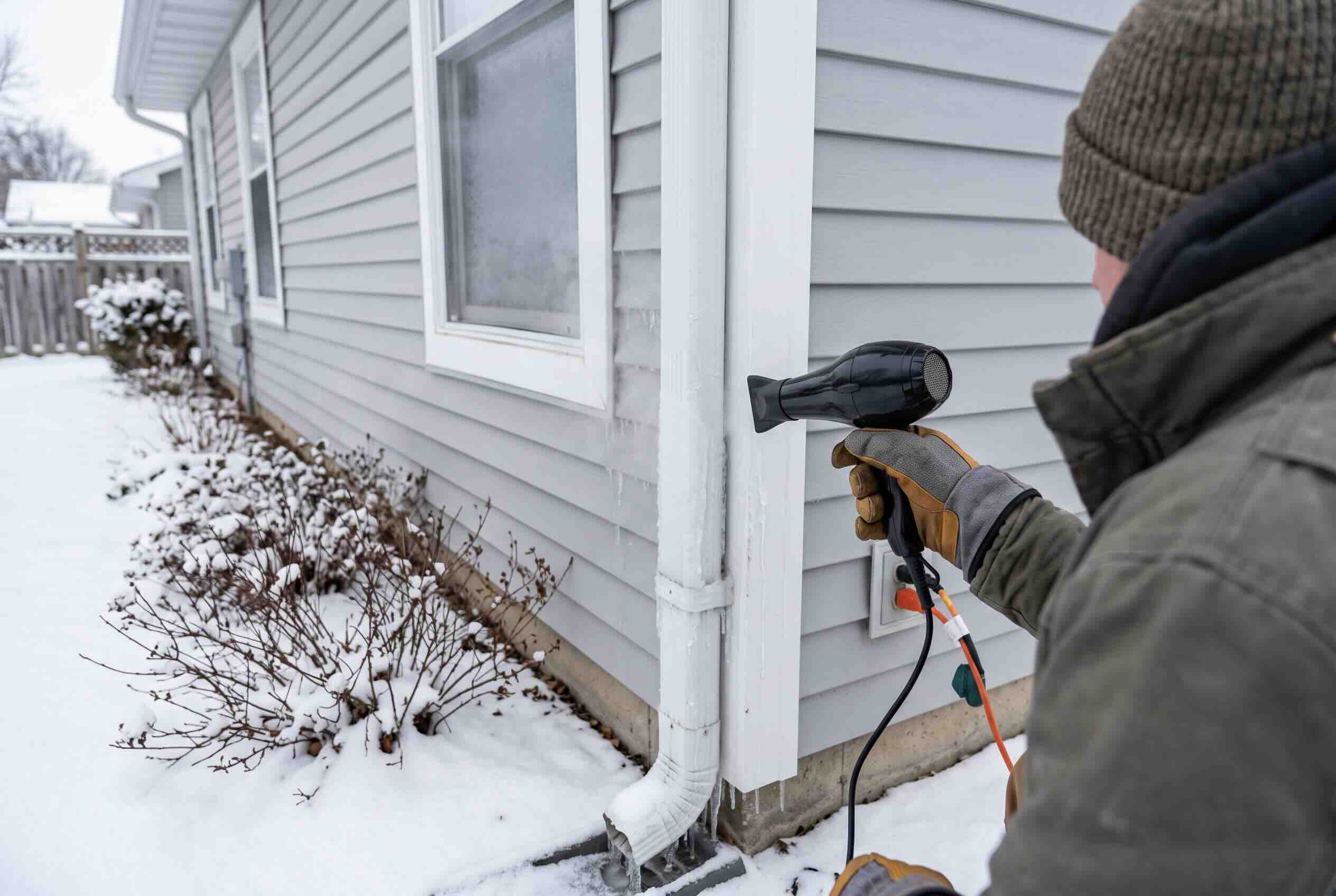
A frozen downspout is its own problem, since the blockage sits in a vertical tube where a roof rake and a sock of ice melt cannot reach. Work it gently, and from the bottom up:
- Flush with warm water. Feed warm (not boiling) water into the downspout from the top, or run a garden hose up into the bottom outlet. This starts melting the ice at the extremities. Repeat this process as the channel slowly opens.
- Add ice melt from the top. Drop calcium chloride pellets in at the top so they settle onto the ice and melt their way down through it. Give them time rather than expecting the blockage to clear at once.
- Warm it from inside where you can reach it. If the frozen downspout runs along a reachable garage or basement wall, apply gentle exterior heat. Holding a hair dryer or strapping a heating pad against the aluminum pipe will slowly thaw the blockage from the outside in.
- Do not force it. Never jam a metal rod down the spout or blast it with a pressure washer. Both methods will crack or blow out the downspout seams the moment they hit solid ice. If warm water and ice melt fail, the downspout is likely frozen solid down to the elbow. At that point, you must wait for a natural thaw or call a professional.
Ice Removal Mistakes and Safety Warnings
A handful of common reactions do more damage than the ice itself. Steer clear of these:
- Chipping or chiseling the ice. Hacking at the ice with a hammer, ax, or ice pick will puncture your gutters and destroy your roof shingles. Furthermore, swinging a heavy tool while balanced on an icy ladder is the leading cause of winter falls.
- Rock salt. Sodium chloride corrodes the gutter, stains the roof, and kills the plants it drips onto, so choose calcium chloride instead.
- Boiling water. It thermal-shocks cold metal and refreezes into worse ice within minutes of hitting the gutter.
- Metal tools or a pressure washer on ice. Both gouge the gutter and the downspout without clearing the blockage.
Beyond avoiding bad tools, prioritize your personal safety. Stay off icy roofs and ladders. Work from the ground using telescoping poles whenever possible, or ensure your ladder is footed on completely clear, dry pavement. Keep all electrical cords and tools away from standing water, and only use powered equipment plugged into a GFCI outlet. Finally, respect your limits: if the ice refuses to give, hire a professional.
How to Prevent Ice in Gutters
The surest way to avoid ever needing to know how to clear ice from gutters is to stop the dam from forming.
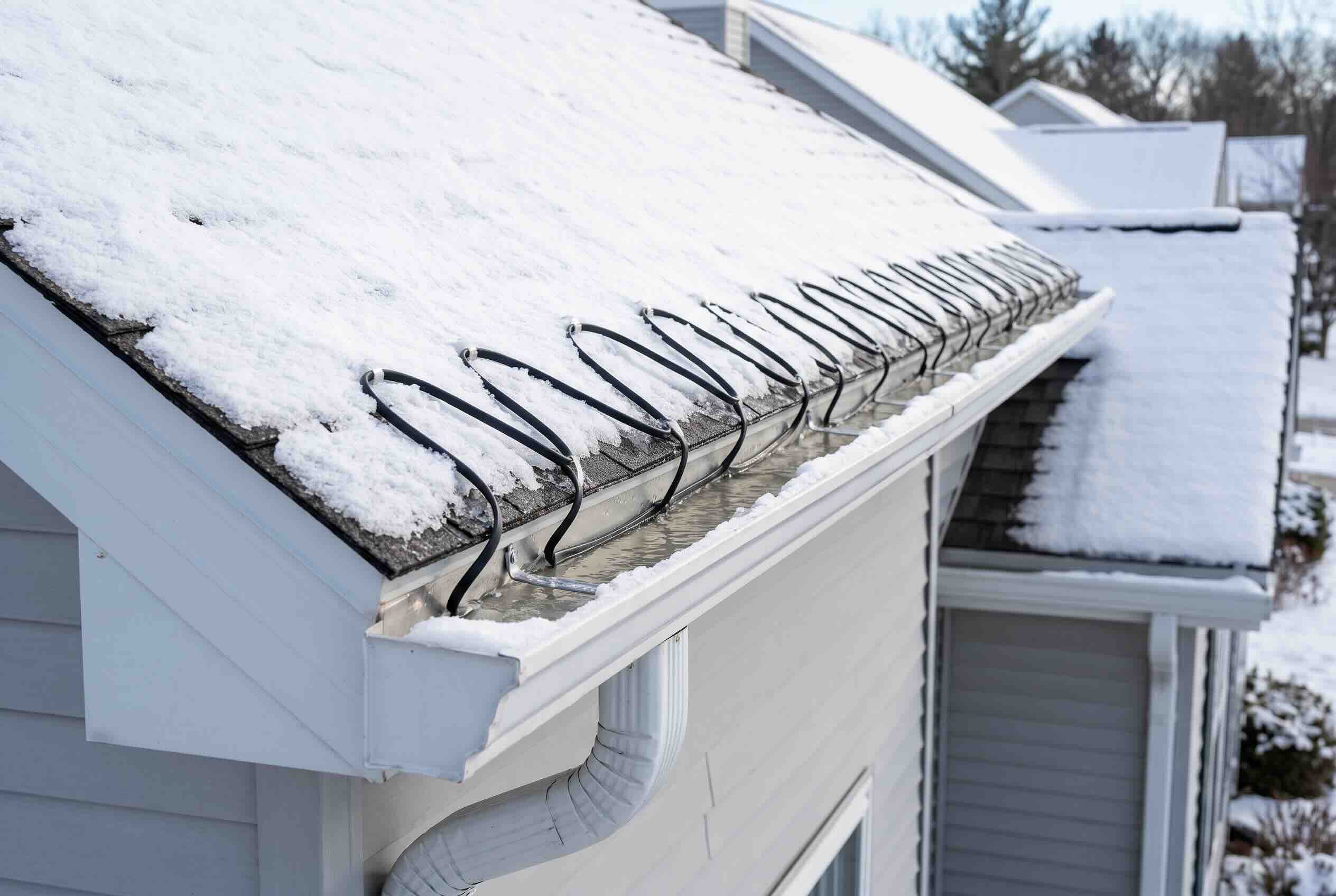
First, clean your gutters in late fall. If wet leaves and debris are left in the trough, they will trap standing water and freeze solid during the first temperature drop. Second, rake the lower edge of your roof immediately after every heavy snowfall to remove the fuel source for the dam. If your roof forms dams every single year despite these efforts, consider installing self-regulating heated cables. These cables run in a zigzag pattern along the eave and drop into the downspout, providing just enough heat to keep a drainage path open.
The deeper fix is up in the attic. Ice dams form because warm air from your living space escapes into the attic, heating the upper roof deck and melting the snow. This meltwater runs down to the overhang (which remains freezing cold) and turns into ice. Upgrading your attic insulation and improving roof ventilation attacks the root cause rather than just treating the symptom.
>>> When Is the Best Time of Year to Clean Gutters? A Seasonal Guide
FAQ
Is it bad to just leave ice in gutters all winter?
Yes. Ice that sits and grows becomes an ice dam that forces meltwater under the shingles and into the walls and ceilings, and its weight can pull a gutter clean off the house. Leaving it is how a cold-weather nuisance turns into spring water damage. Melt a path through it rather than waiting it out, and clear whatever caused it once the weather warms so the next freeze has nothing to grip.
How long does ice melt take to clear a gutter?
It is slow, measured in hours rather than minutes. A sock of calcium chloride can take several hours to open a channel through a thick dam, and a hard freeze stretches that out further. Add warm water to speed it along, lay more socks across a long dam, and give it time instead of switching to a hammer when it does not clear at once. Slow is simply how to clear ice from gutters without damage, so plan to start it and leave it rather than standing on a ladder waiting.
Will gutter guards prevent ice dams?
No. Guards keep debris out, which helps water drain in the other seasons, but they do nothing about the roof heat that drives ice dams, so a guarded gutter can build a dam at the eave just like an open one. The real prevention is attic insulation, good ventilation, and clearing snow off the roof edge. If anything, a guard can make a dam harder to melt out later, since it adds one more layer between your ice melt and the trough.
Who is responsible for ice dam damage in a rental?
It depends on the lease, local law, and the cause of the damage. Once you notice the problem, report to the landlord or property manager promptly and keep a written record of the report. This is general information, not legal advice, and the answer varies by lease and by state.
Conclusion
Learning how to clear ice from gutters safely comes down to one rule: melt it, do not smash it. Using calcium chloride in a pantyhose sock, applying warm water, and utilizing a roof rake from the ground will free an ice dam without the cracked shingles and gouged metal caused by physical force. Keep off icy roofs, hire a pro for severe cases, and fix the root cause by upgrading your attic insulation before next winter. Winter throws a lot at a house, and at Home Tips Daily we are partial to the fixes that stay quiet, cheap, and firmly on the ground.