

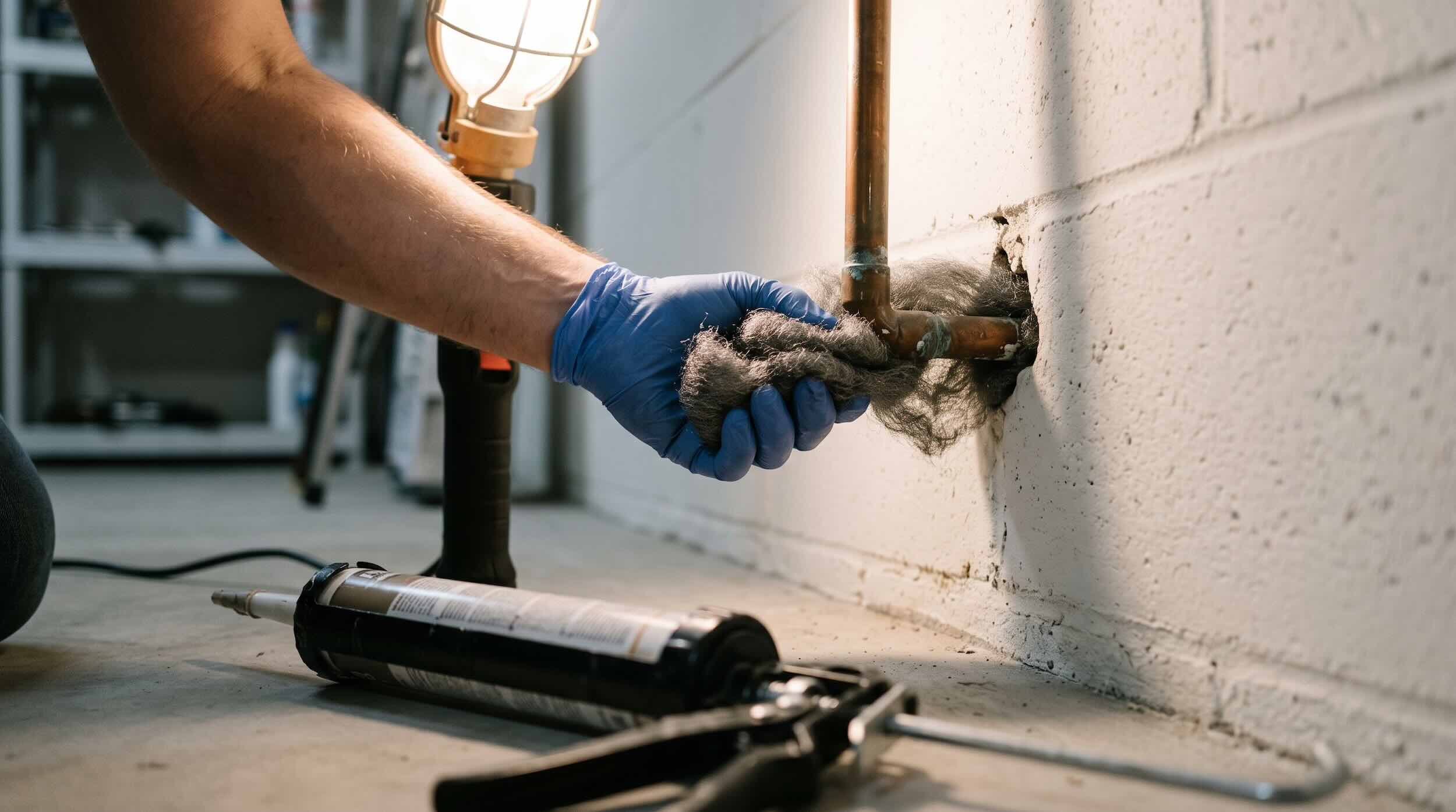
Keeping mice out of your home comes down to one humbling fact: a mouse can slip through a gap the size of a pencil. To permanently solve the problem, you must find and seal these hidden gaps. In this guide, we walk you through the 12 most common entryways and show you how to shut them for good.
12 Common Mice Entry Points
Before you can seal a house, you have to know where mice get in. Here are the twelve most common openings, what makes each one an easy route, and why it is simple to overlook.
Gaps Under Exterior Doors
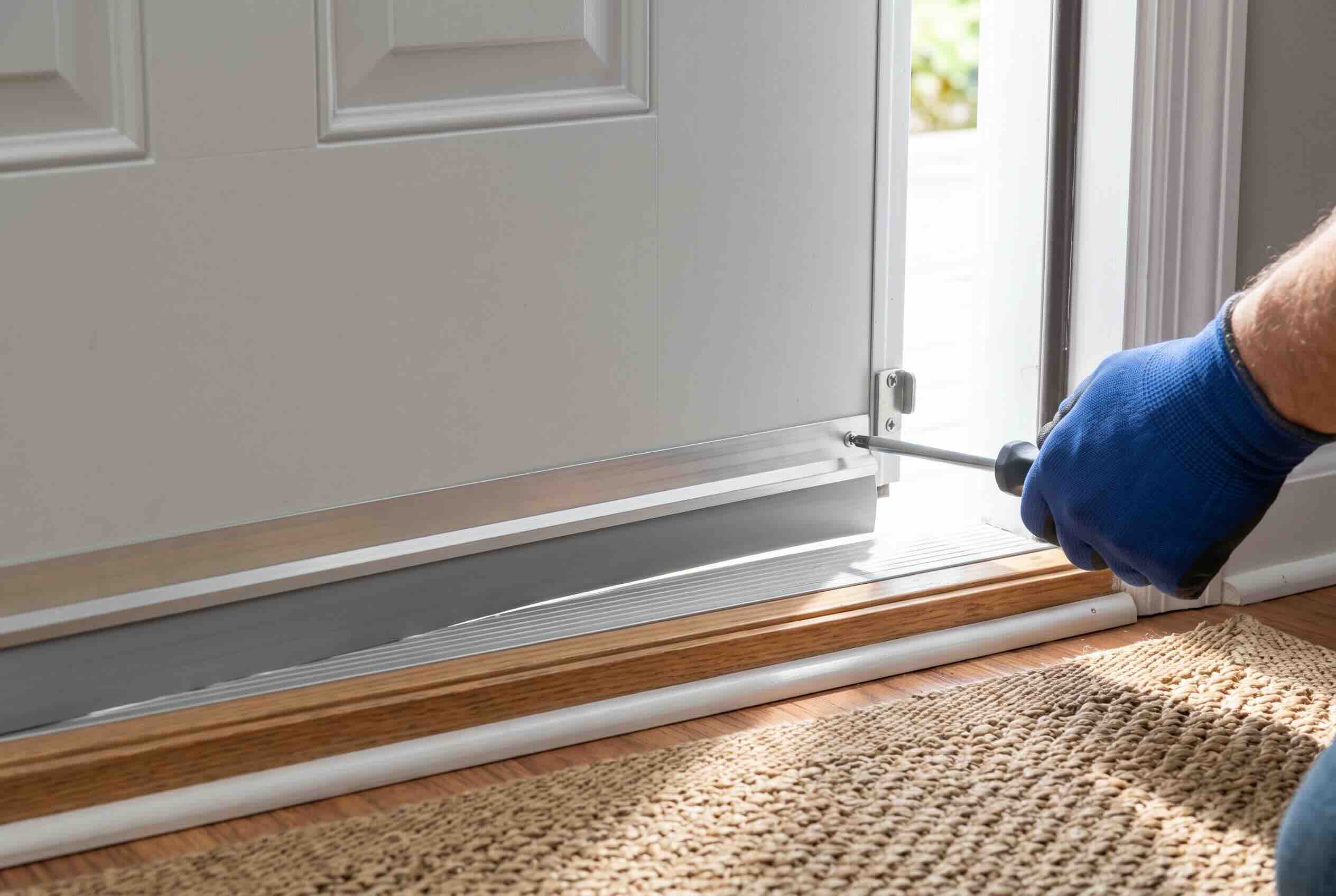
The gap beneath an exterior door is one of the most common ways in, and yes, a mouse can squeeze under a door when that gap reaches a quarter-inch. A worn threshold, a torn or missing sweep, or a door that no longer sits flush leaves a slot right at floor level. Garage-to-house and basement doors are the usual offenders.
Gaps and Cracks in Siding
Mice get under siding through loose seams, open corners, and the spots where siding meets the foundation or trim. Vinyl and clapboard both pull away over the years, opening channels that run up inside the wall. Once behind the siding, a mouse has cover and a path into the wall cavity.
Weep Holes in Brick
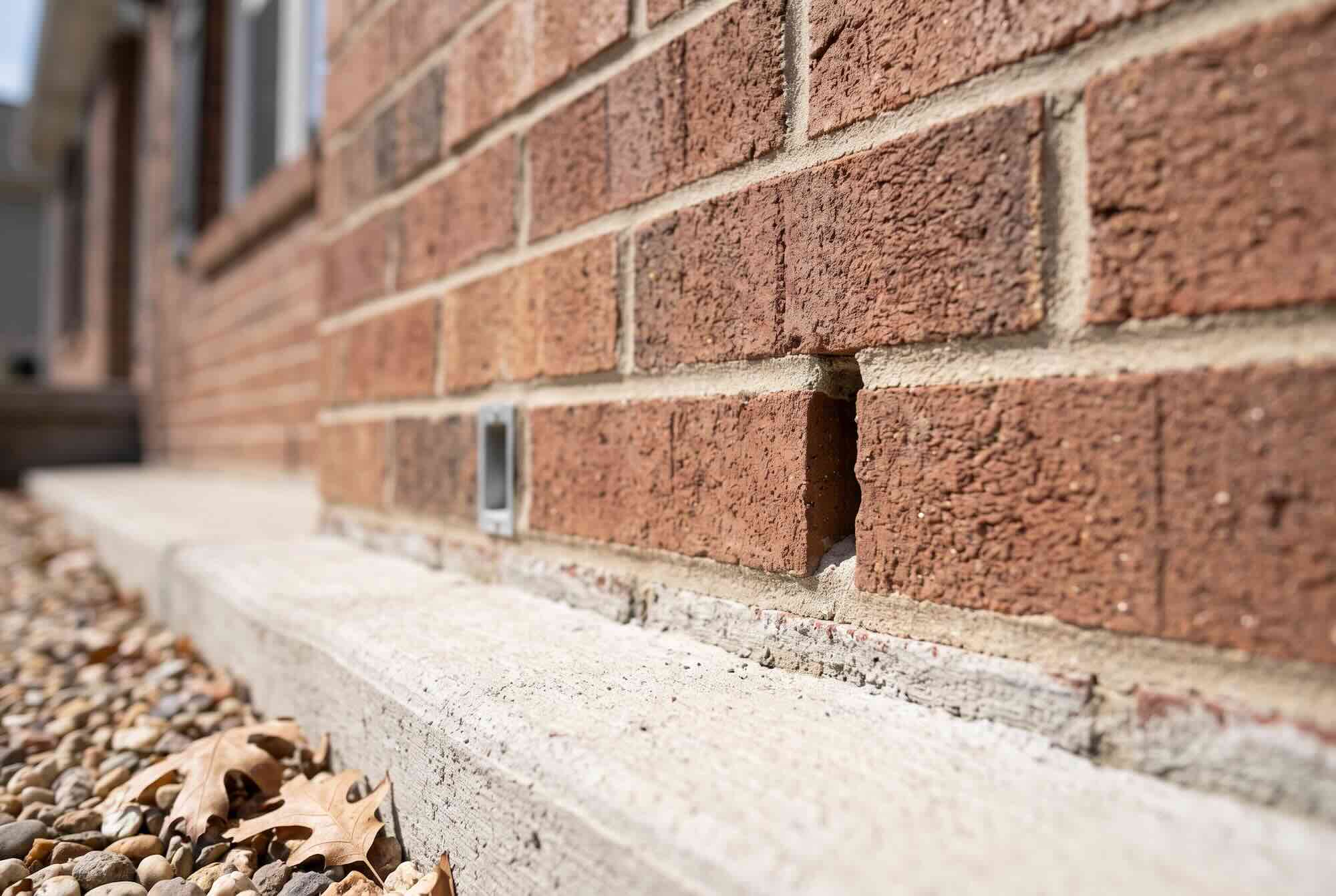
Brick veneer has small weep holes near the base to let moisture drain. Mice and weep holes are a classic pairing, since the holes open straight into the cavity behind the brick. They are there on purpose and cannot just be mortared shut without trapping moisture, which makes them a tricky and often overlooked entry.
Floor and Foundation Vents
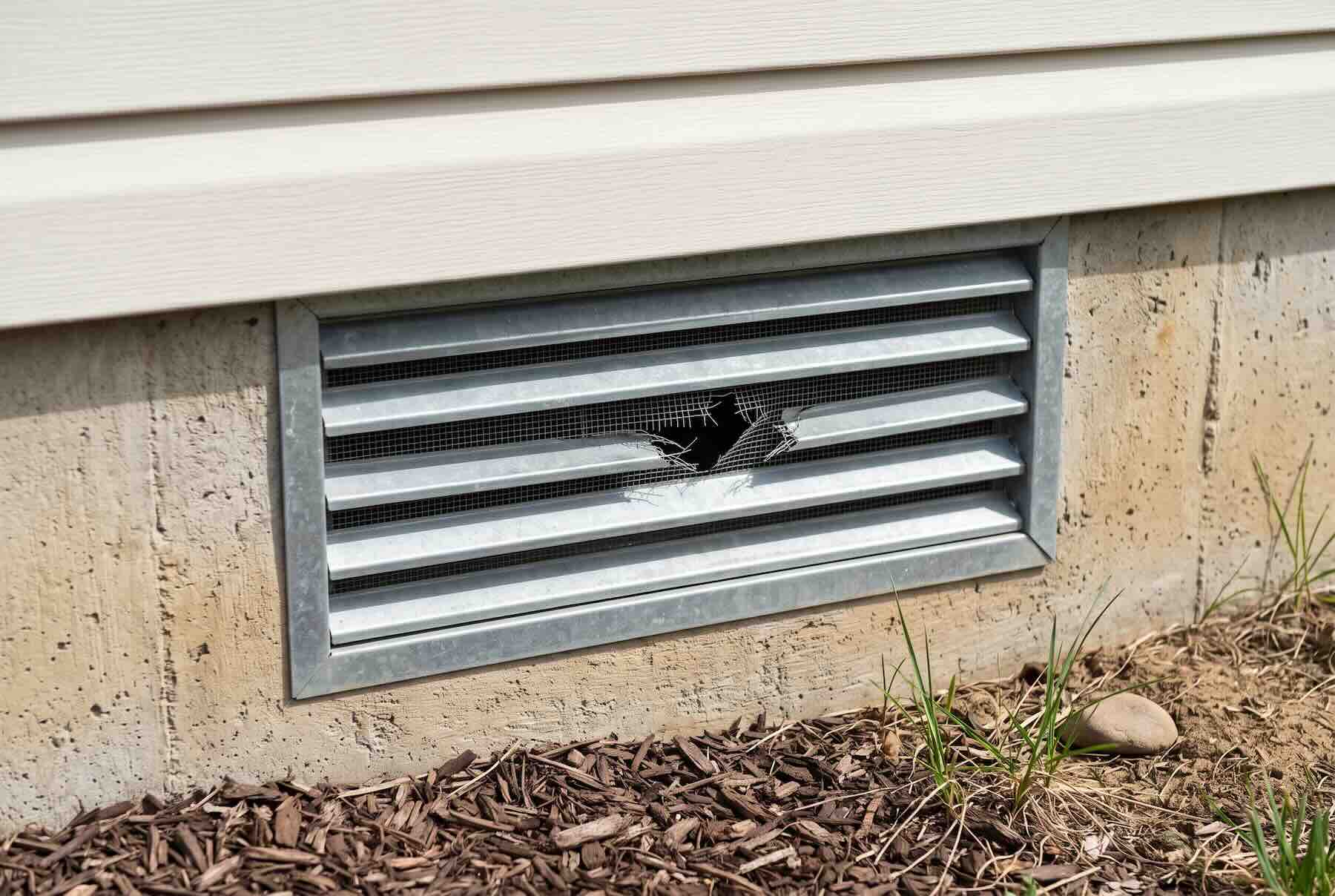
Vents low on the wall or set into the floor feed air to crawl spaces and basements, and a torn or wide-spaced screen lets mice ride in with it. People often ask how to keep mice from coming through floor vents, and it starts with realizing that a standard louver or insect screen does nothing to stop a rodent.
Pipe and Utility Line Penetrations
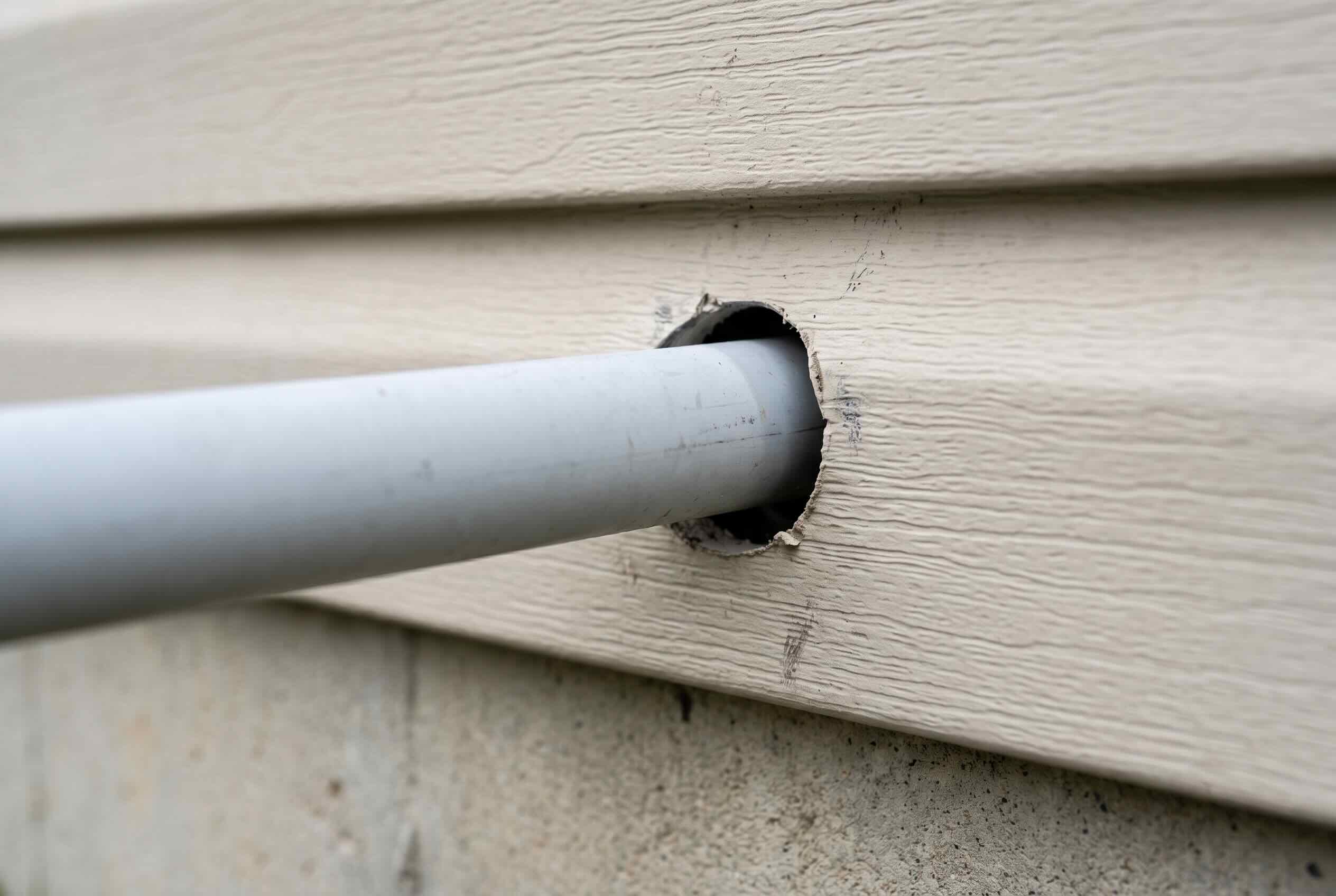
Everywhere a water line, gas line, electrical conduit, or cable enters the house is a drilled hole, and the hole is usually bigger than the pipe running through it. That ring of gaps shows up under the sink, behind the washer, or out at the meter. It is one of the most dependable ways in, hidden in plain sight.
Foundation Cracks
Concrete and block foundations crack as a house settles, and a crack only has to reach a quarter-inch to let a mouse through. The ones at corners, along the sill plate, and where the foundation meets the framing are worth a close look, since they tend to widen over time.
Gaps Around Windows
Windows, especially older and basement ones, leave gaps where the frame meets the wall and where worn weatherstripping no longer seals. A cracked pane, or a window left ajar behind a screen, adds an easy route. Basement windows at or below grade are the ones mice reach most.
Roof, Soffit, and Eave Gaps
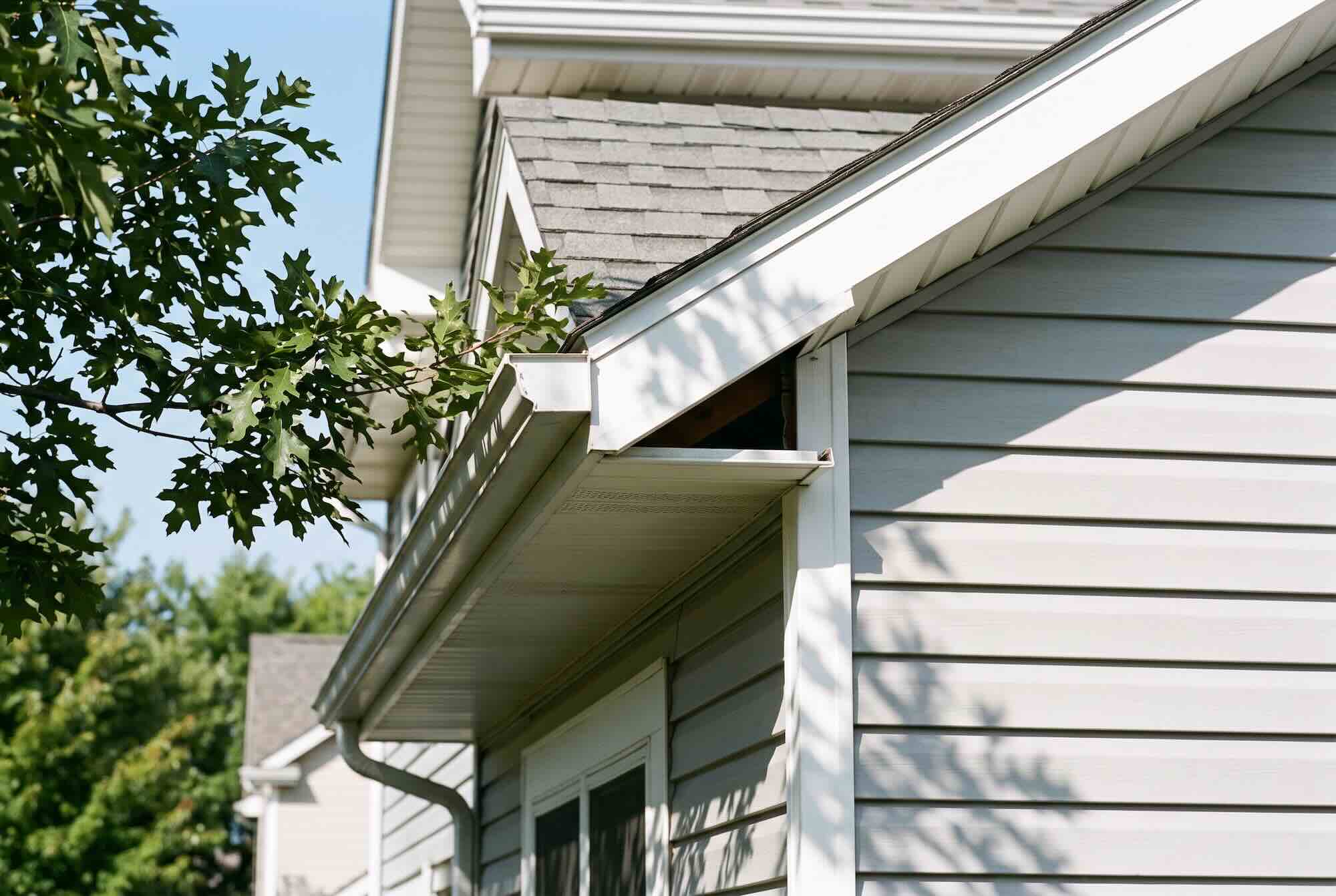
Mice climb, so the roofline is fair game. Openings where the soffit meets the wall, lifted flashing, and gaps at the eaves and gable vents all let mice into the attic from above. A tree branch resting on the roof is a ladder straight up to them.
Garage Doors
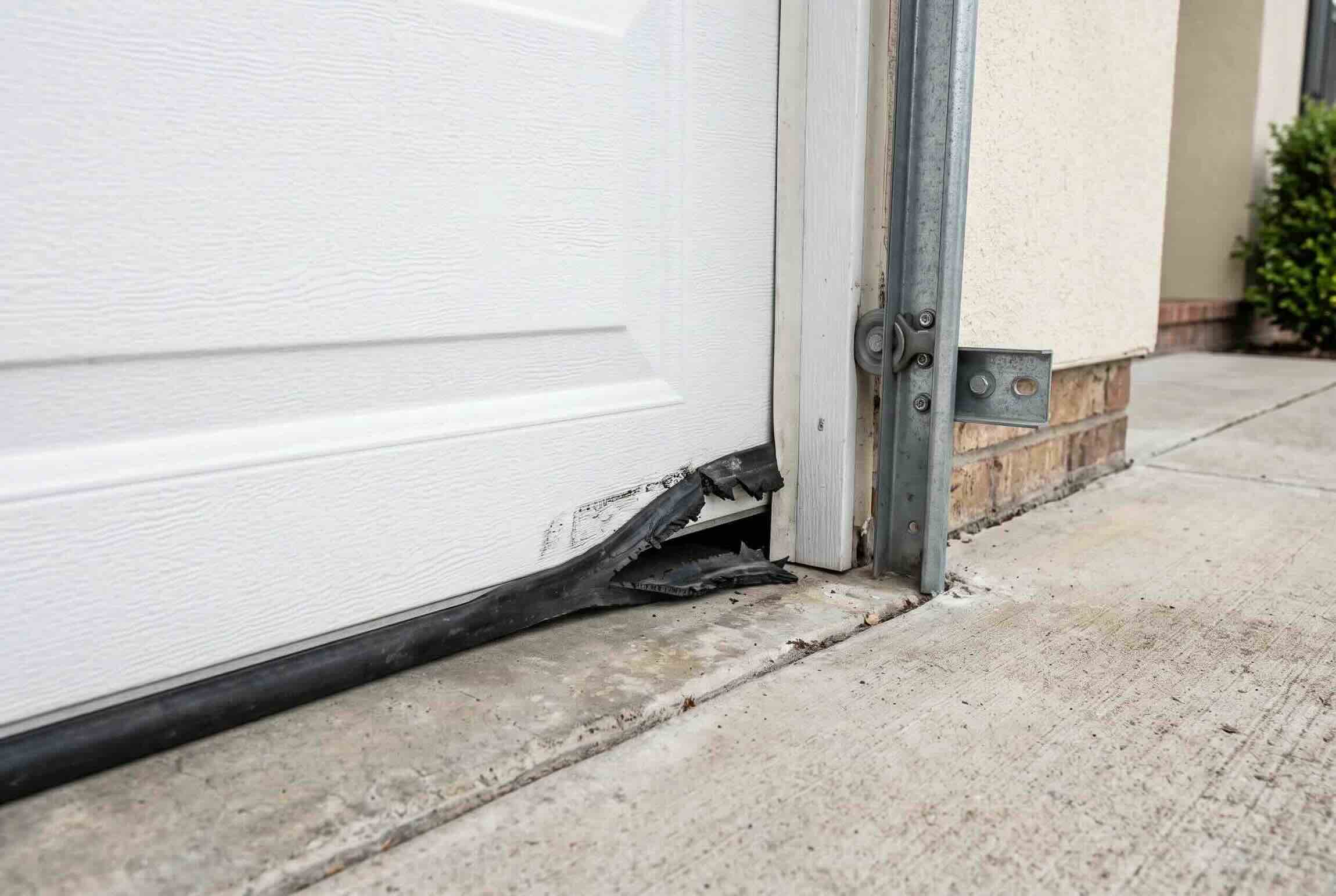
A garage door’s rubber bottom seal wears, tears, and leaves gaps at the corners where it meets the track. The garage makes a warm, sheltered stop, and the door from there into the house is often the next weak point, so a mouse in the garage is already halfway inside.
Dryer and Exhaust Vents
Dryer, bathroom, and kitchen exhaust vents open to the outside through a flap meant to keep weather out, not rodents. A stuck or broken damper, or a vent with no cover at all, becomes an open tunnel into the house, and a lint-packed dryer vent is especially inviting.
Chimney
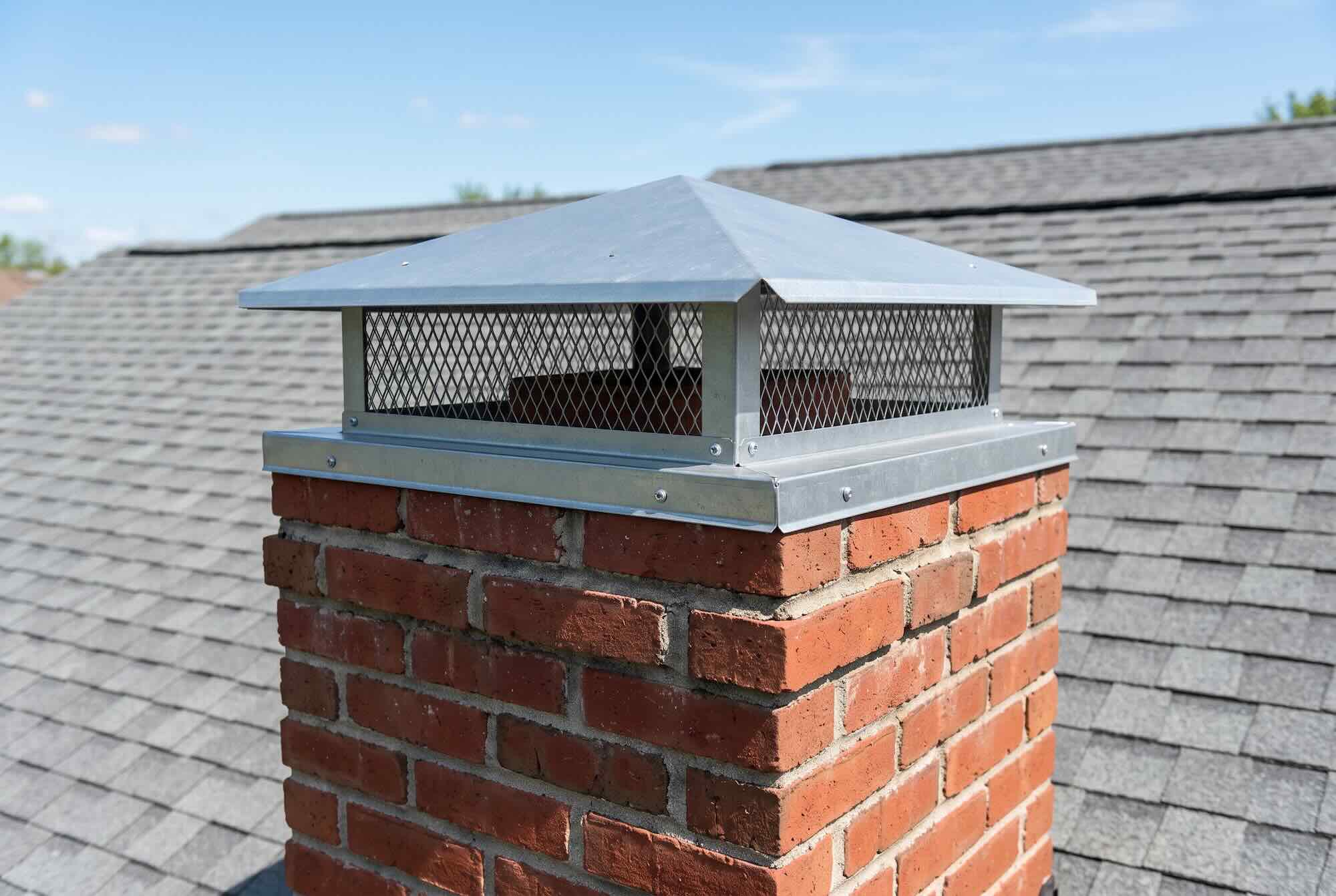
An uncapped or badly capped chimney is an open shaft into the house, and mice drop in along with birds and squirrels. Even a capped chimney lets them through once the cap or its screen is damaged.
Crawl Space Openings
Crawl space access doors, vents, and the gaps around them are a prime way in from below. From there, the crawl space connects to the rest of the house through more gaps around pipes and ducts. Sealing it is a project of its own, covered in how to keep mice out of a crawl space.
How to Find Mice Entry Points
Finding the mice entry points is its own job, and it goes faster as a set order than a random hunt. Work through it step by step:
- Read the inside signs first. Droppings along baseboards and in cabinets, gnaw marks on food packaging and wood, dark grease smears where oily fur rubs the same route, a musty ammonia smell, and scratching in the walls at night all mark where mice travel.
- Follow the trail to the wall. Mice keep the same runways night after night, so the heaviest droppings and darkest grease marks sit near the entry, which lets the inside signs point you toward the outside gap.
- Walk the outside low and slow. Circle the whole house within a foot or two of the ground, checking under every door, around each pipe and vent, along the foundation and siding seams, and at the base of the garage door. Look hardest where two materials meet: brick against siding, foundation against framing, a deck ledger against the wall. Those seams are where gaps quietly open.
- Use light and a draft test. On a bright day you can spot daylight through a gap from inside a dark garage, basement, or crawl space, and a lit incense stick held nearby will waver in the draft from any hole to the outside. Note each spot as you go, so you can seal in order instead of darting from hole to hole.
How to Seal Mice Entry Points (and Which to Do First)
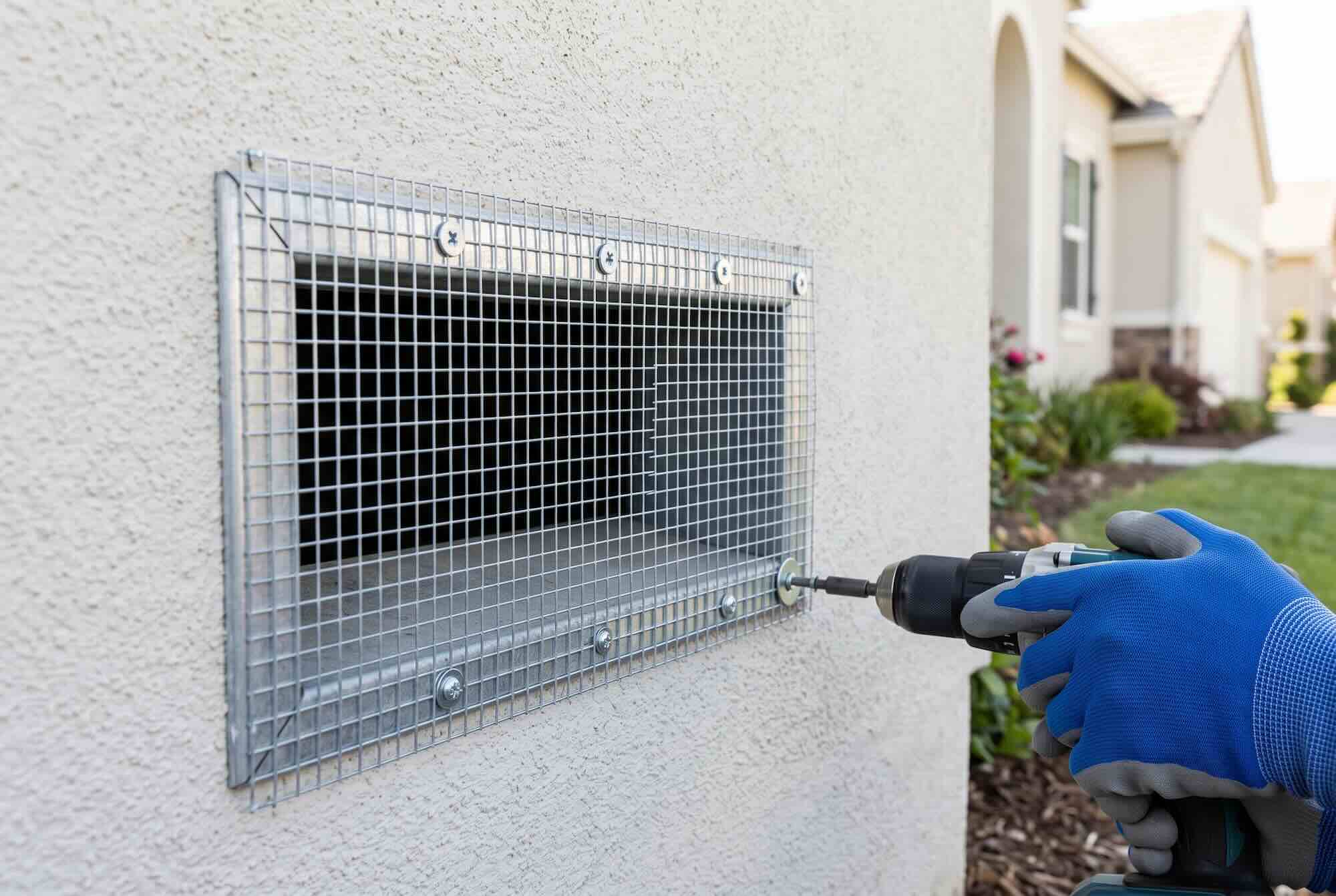
Sealing works only with materials a mouse cannot chew, which rules out the two most popular choices when they are used on their own. Caulk and expanding foam are fine as fillers, but a mouse gnaws straight through either one, so neither can be the barrier; that is the whole point behind can mice chew through caulk. Use hard materials as the plug and let the caulk or foam only lock them in place and seal out air and water:
- Steel wool or copper mesh, packed tightly into a gap and capped with caulk to hold it.
- Hardware cloth, the galvanized wire mesh, screwed over vents, weep holes, and larger openings.
- Metal flashing or a kick plate over chewed edges, and a metal-edged sweep or threshold under a door.
- A chimney cap with a rodent screen, plus a metal escutcheon or mesh stuffed around pipe and utility penetrations.
Order matters as much as material, since you cannot close everything in one afternoon. Start with the largest gaps, the ones at ground level, and the ones nearest food, water, and warmth, because those are the routes mice are running right now. A half-inch gap under a garage door does far more for them than a hairline crack up in a gable, so it comes first. Work from the biggest, lowest, most-used openings outward to the small and the high. When you think you are done, go back on another dry day and check for daylight and drafts again, since better light usually turns up a gap the first pass missed.
FAQ
Do mice come in more in winter?
Yes. As the weather cools, mice hunt for warmth, food, and shelter, and a heated house offers all three, so fall and early winter are the peak season for them moving in. The openings do not change, but the pressure to use them climbs. Sealing in late summer or early fall, ahead of that push, beats waiting until you hear them in the walls. One warm mouse quickly becomes several, since a female can breed within weeks. A gap that let one in during October is a real problem by January.
Will sealing entry points get rid of mice already inside?
No. Sealing entry points is for prevention, not removal. If you seal gaps while mice are still inside, you will trap them in your walls, creating a severe odor problem when they die. Always trap and remove the existing population first. Once you are confident the interior is clear, you can safely seal the exterior gaps.
How do you keep mice out permanently?
There is no one-and-done fix. The closest thing is sealing every entry point with chew-proof materials and keeping it that way, backed by a tidy home that offers little food or nesting. Pairing that with rodent-resistant materials makes the house less livable for mice from the inside as well. Re-check the seals each year, since new gaps open as a house shifts and settles. A repair or a new utility line can punch a fresh hole overnight. Treating the mice entry points as something you maintain, rather than fix once, is what keeps a house closed over the long run.
Conclusion
The common mistake homeowners make is sealing gaps with easily chewable caulk or foam. To permanently close mice entry points, you must rely on hard barriers like tightly packed steel wool, hardware cloth, or metal flashing, using caulk only to hold them in place. Start by securing the largest, ground-level gaps nearest to food sources, then work your way up to the roofline. By combining tough exterior seals with rodent-resistant insulation inside, you remove the welcome mat for good. For more step-by-step pest control strategies, check out the latest guides on Home Tips Daily.