

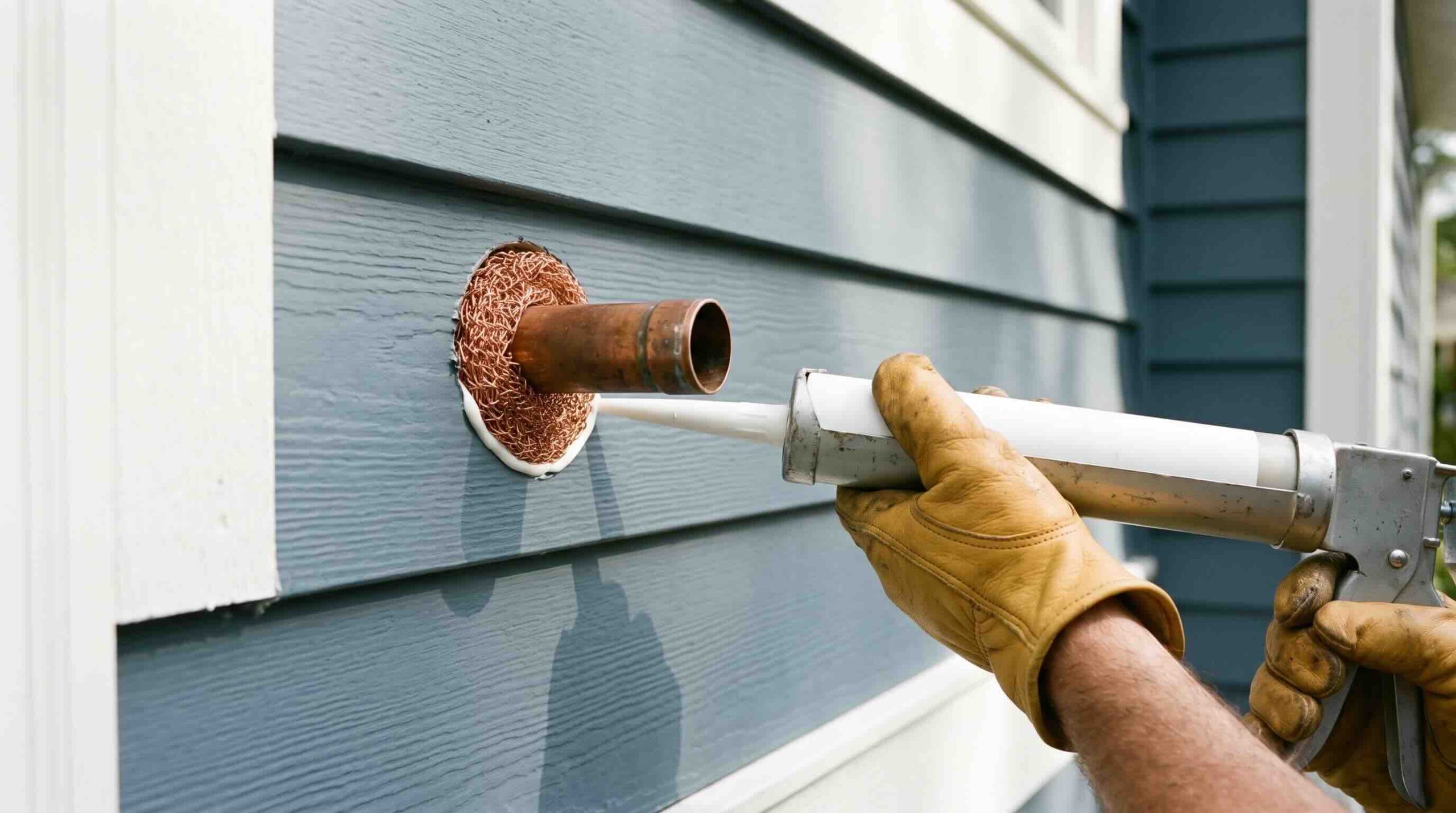
If you have sealed a gap with caulk and found fresh droppings a week later, you already suspect the answer. Can mice chew through caulk? Yes, and through expanding foam too, so a bead of either on its own will not keep them out. This guide explains why soft sealants fail as barriers, which chew-proof materials actually work, and how to permanently seal gaps so rodents stay out for good.
Can Mice Chew Through Caulk?
Yes, mice can chew through caulk, and they do it often. A mouse’s front teeth grow continuously throughout its life, forcing it to gnaw constantly to keep them worn down. Under this pressure, soft sealants give way quickly. Silicone caulk, latex caulk, and expanding foam are all soft enough to bite into, and foam goes even faster, since it is light and full of air pockets.
Cured caulk is firmer than fresh, but firmer is not chew-proof. A mouse works through it fastest at an exposed edge or a bead that has cracked and lifted. Caulk does hold on a thin, static hairline crack that no mouse is pushing against, and it seals out air and water around a joint. The problem is using it as the barrier on an active mouse run, where it is a speed bump, not a wall.
What Materials Mice Can’t Chew Through
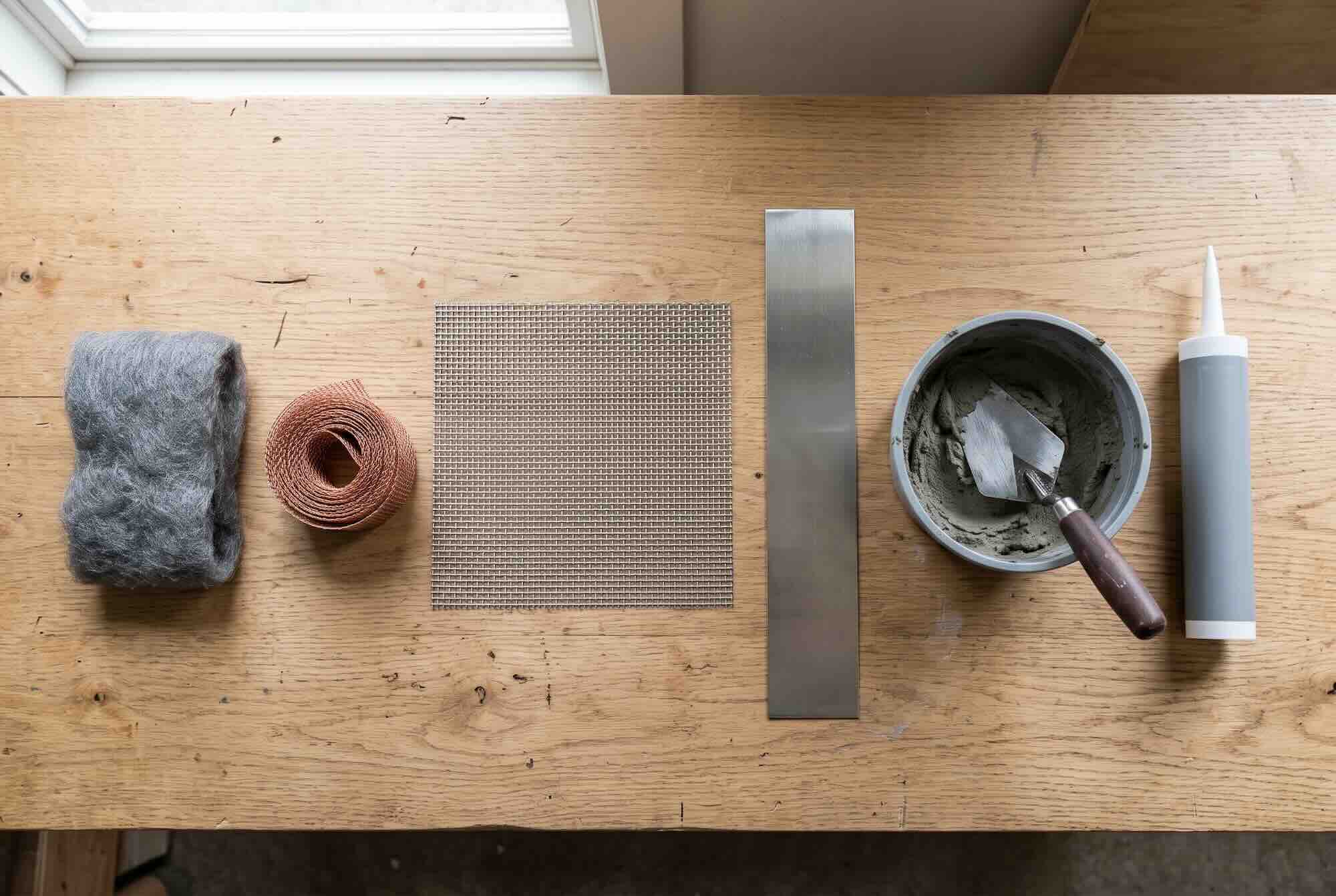
If caulk cannot be the barrier, something harder has to be. Mice get through wood, plastic, rubber, and soft foam, but not metal or masonry. Fill the gap with one of these and let caulk only finish the surface.
| Material | Why a mouse cannot chew it | Best for |
| Steel wool | The coarse metal fibers are too abrasive to bite through | Packing small to medium gaps |
| Copper mesh | Metal that resists rust better than steel wool, so it lasts in damp spots | Gaps around pipes and in wet areas |
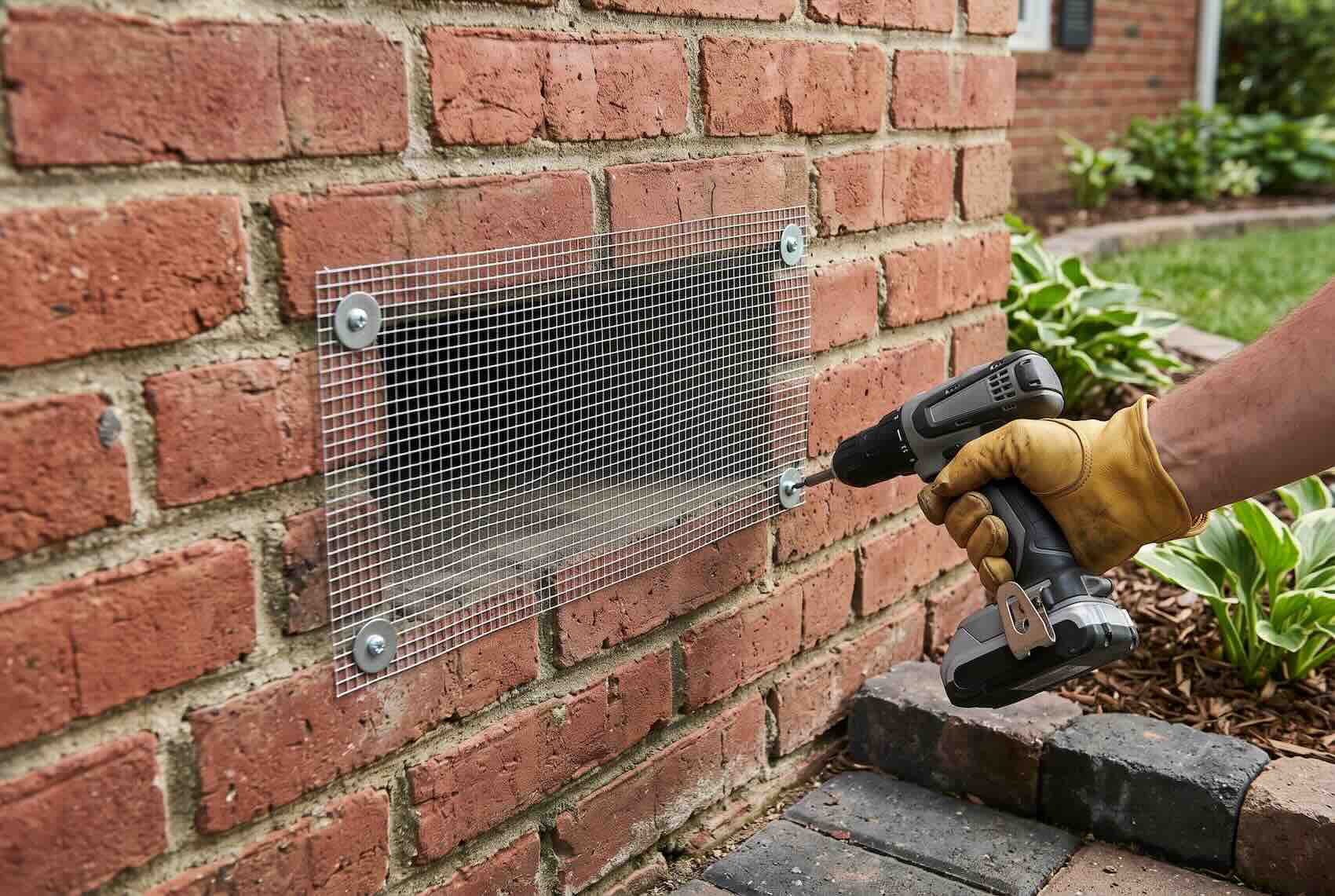
| Hardware cloth | Galvanized wire mesh you cut and screw in place | Vents, weep holes, and larger openings |
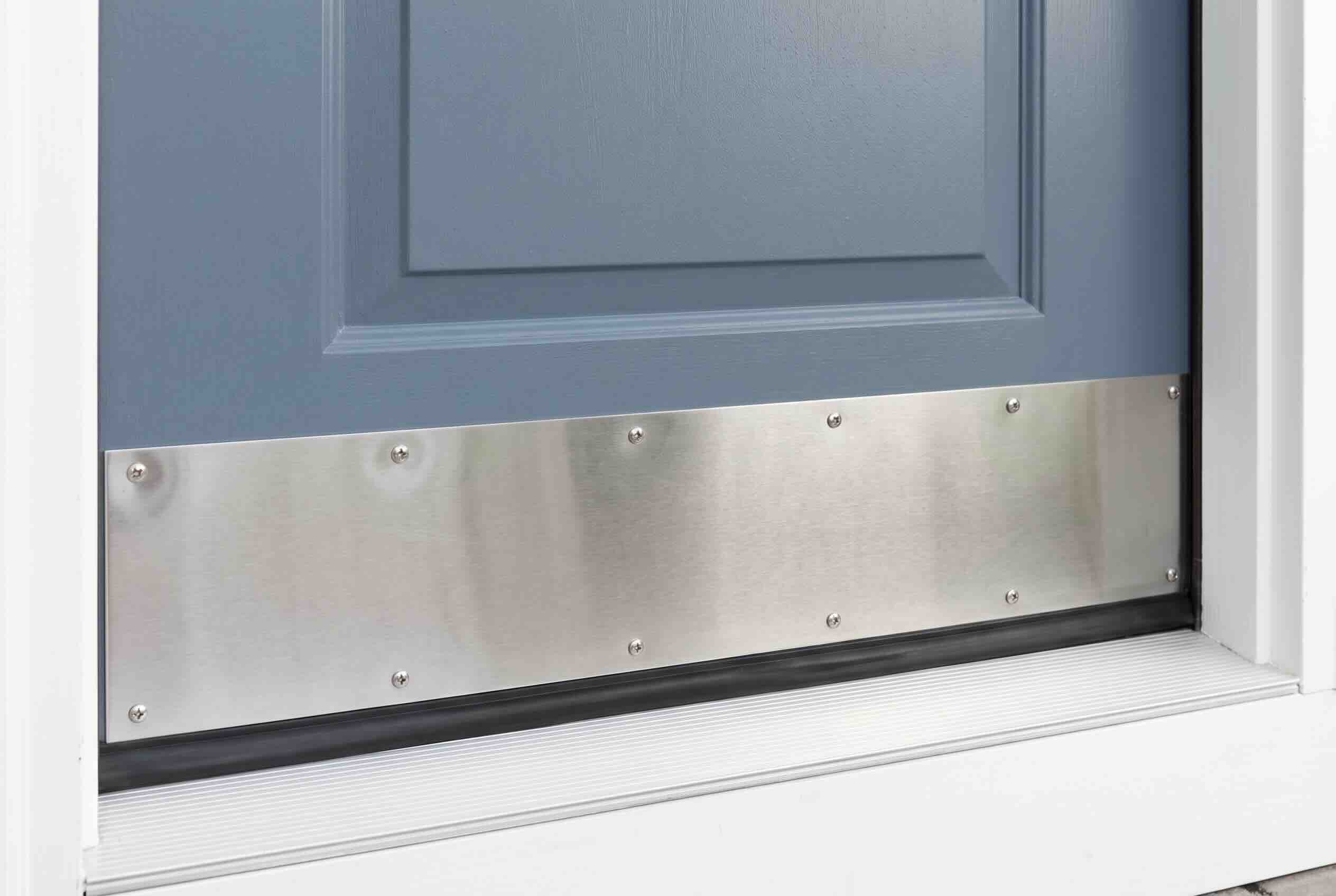
| Sheet metal or a kick plate | A solid metal face a mouse cannot get its teeth into | Chewed door edges and flat gaps |
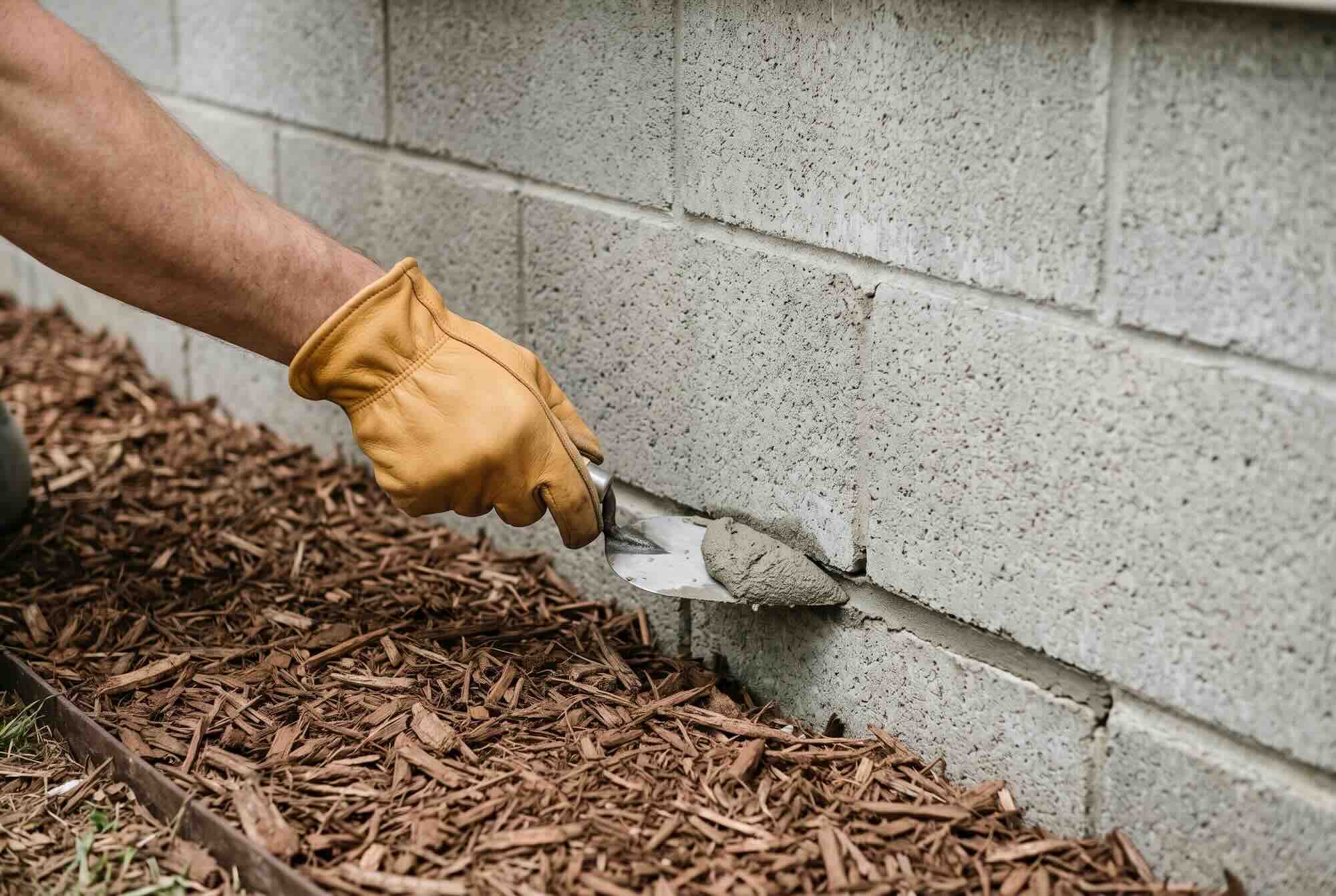
| Cement or mortar | Dries into masonry a mouse cannot gnaw | Foundation cracks and gaps in block or brick |
Match the material to the specific gap. Use steel wool for small, dry holes. Choose copper mesh for damp areas because it resists rust. Screw hardware cloth over openings too wide to pack, and use mortar for foundation cracks. Skip the soft fixes that fail the same way caulk does, which includes plastic mesh, foam backer rod, duct tape, window screen, and spray foam on its own. Pair these hard seals with rodent-proof insulation inside your walls. This ensures that even if a mouse breaches the exterior, it will not find a welcoming place to nest.
How to Seal Gaps So Mice Can’t Chew Through
By now the answer to can mice chew through caulk has pointed to the fix: stop relying on the caulk and build the barrier out of metal. The method is the same wherever the gap sits: a hard core a mouse cannot bite, held in place and finished with caulk. Work through it in this order:
1. Match the material: Use steel wool or copper mesh for small holes, hardware cloth for gaps over an inch, and mortar for masonry cracks.
2. Pack the gap tightly: Push the metal mesh firmly into the entire depth of the hole until it resists a hard tug. Always wear work gloves to protect your skin.
3. Caulk to lock and seal: Run a bead of caulk over the packed metal to lock it in place and seal out air and moisture. The caulk acts as the finish, not the barrier.
4. Screw down hardware cloth: For vents or large openings, cut hardware cloth to size and screw it down flat at the corners so mice cannot lever it up.
5. Verify your work: Re-inspect the area on a dry day after a week. If a repair is chewed open, remove the old filler, pack in more metal, and re-seal.
FAQ
A few questions come up again and again once you ask can mice chew through caulk.
How long does it take mice to chew through caulk?
Less time than most people expect. A motivated mouse can work through a soft bead in a night or two, and an exposed edge speeds that up. Cured caulk slows it down but does not hold forever, which is why caulk belongs over a hard plug rather than on its own.
Can mice smell or find caulked gaps?
Yes. Mice follow air currents, warmth, and the smell of food. A caulked gap that still leaks air will draw them directly to that weak spot. That is one more reason the seal has to be solid rather than cosmetic, since a mouse tends to test the weak point it can feel.
Does rodent-proof or peppermint caulk work?
Not on its own. Peppermint oil or ‘rodent-proof’ caulk might temporarily deter mice. However, the scent fades quickly, leaving the chewable sealant fully exposed. Treat scent-based products as short-term deterrents, not permanent barriers. Treat the caulk as a minor add-on, not a barrier, and keep a metal core behind it.
Can mice chew through walls or drywall too?
Yes. Drywall, wood, and most plastics are well within a mouse’s reach, which is how a small gap grows into a chewed hole over a season. Brick, concrete, and metal are the surfaces that stop them, which is why the lasting repairs use those. Mice rarely start from scratch on a sound wall, though. They widen an opening that is already there, so closing the existing gaps is what matters most.
Can you use caulk to seal gaps if you still have mice inside?
Deal with the mice first. Sealing while they are still inside can trap them in the walls, which turns into a worse problem than a live mouse. Remove the population with traps or a pro, confirm the traffic has stopped, and then close the last openings. Closing the outer gaps while leaving one monitored exit is another way to push them out without sealing any in.
Conclusion
So can mice chew through caulk? Yes, and through expanding foam as well, which is why a bead of either on its own will not hold. Because mice can easily chew through soft sealants, caulk and expanding foam must never be your primary defense. The permanent fix is simple: build the actual barrier out of bite-proof metal or mortar, and use caulk solely to lock it in place and seal the edges. For more step-by-step strategies to permanently pest-proof your property, explore the latest guides on Home Tips Daily.