Saturday mornings often involve a familiar struggle: the realization that the floor level trim has collected a thick layer of dust. Spending an afternoon on hands and knees is a literal pain for the back and knees. It’s the chore most likely to be ignored until a dusty gray film becomes impossible to overlook.
However, the 2026 approach to home maintenance prioritizes ergonomic efficiency over manual labor. The best way to clean baseboards now involves working smarter to protect joints while achieving a professional sparkle. The focus has shifted toward “lazy but effective” strategies that utilize smart tools rather than sheer physical effort.
The Golden Rules of “No-Bend” Baseboard Maintenance
Before selecting tools, understanding the “Order of Operations” is essential for efficiency. Professional cleaning standards dictate a top-to-bottom workflow to ensure that debris from higher surfaces doesn’t ruin finished work.
Clean top-to-bottom: Save cleaning baseboards for the final stage of a room reset to catch any dust that has fallen from walls or furniture.
Establish consistency: Aiming for a quick monthly pass prevents dust from mixing with household oils.
Dry before wet: Attempting to use a liquid baseboard cleaner on thick dust creates a muddy residue that is difficult to remove from crevices.
Visualize the flow: Using a systematic path around the room ensures no section of the baseboard trim is overlooked.
3 Proven Methods to Clean Without Kneeling
The primary weakness in traditional guides is the assumption that a person is willing or able to spend hours on the floor. These three modern methods prioritize physical comfort.
The Vacuum Extension Method
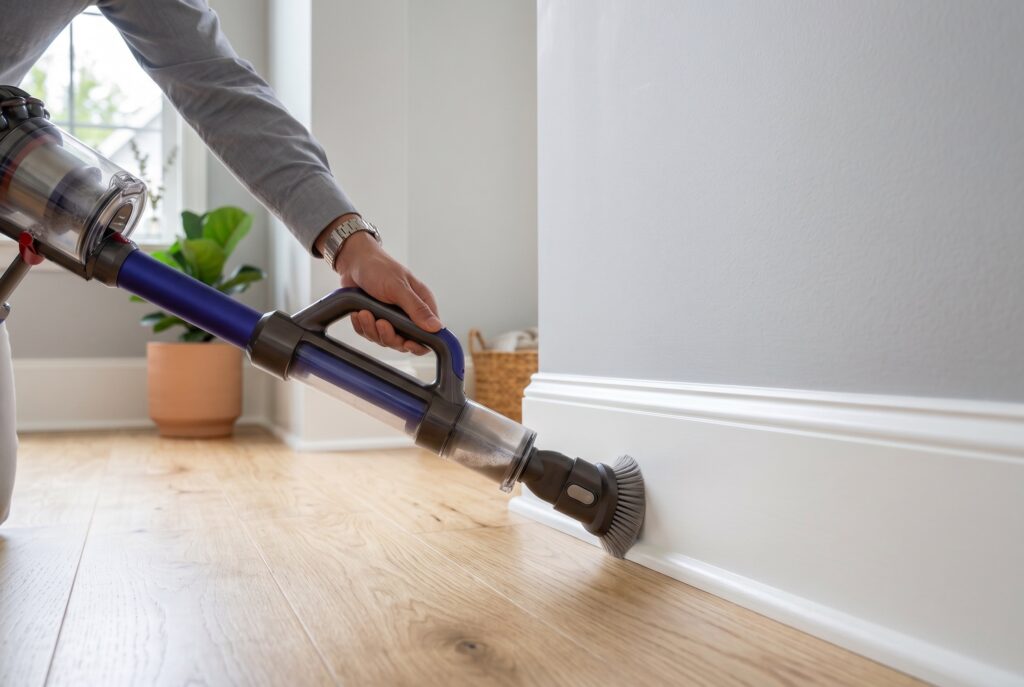
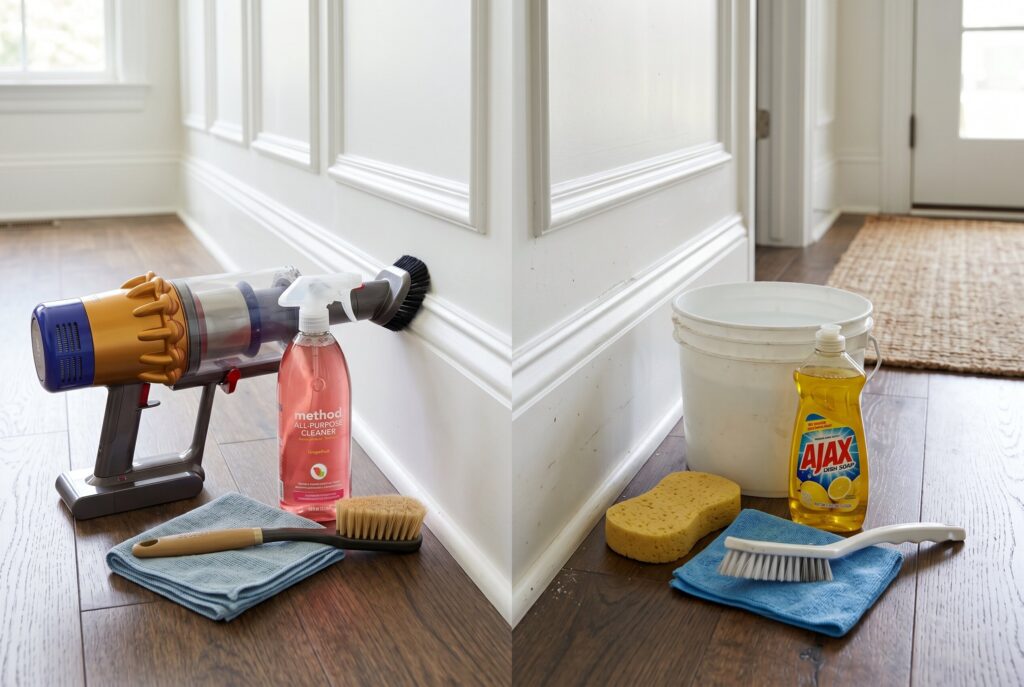
Most modern vacuums include a brush attachment, which serves as a secret weapon for dry dusting. By utilizing the wand extension, the perimeter of a room can be cleared of pet hair and loose debris while standing completely upright. This remains the most efficient method for how to clean baseboards during a standard weekly routine.
The Extendable Duster & Mop
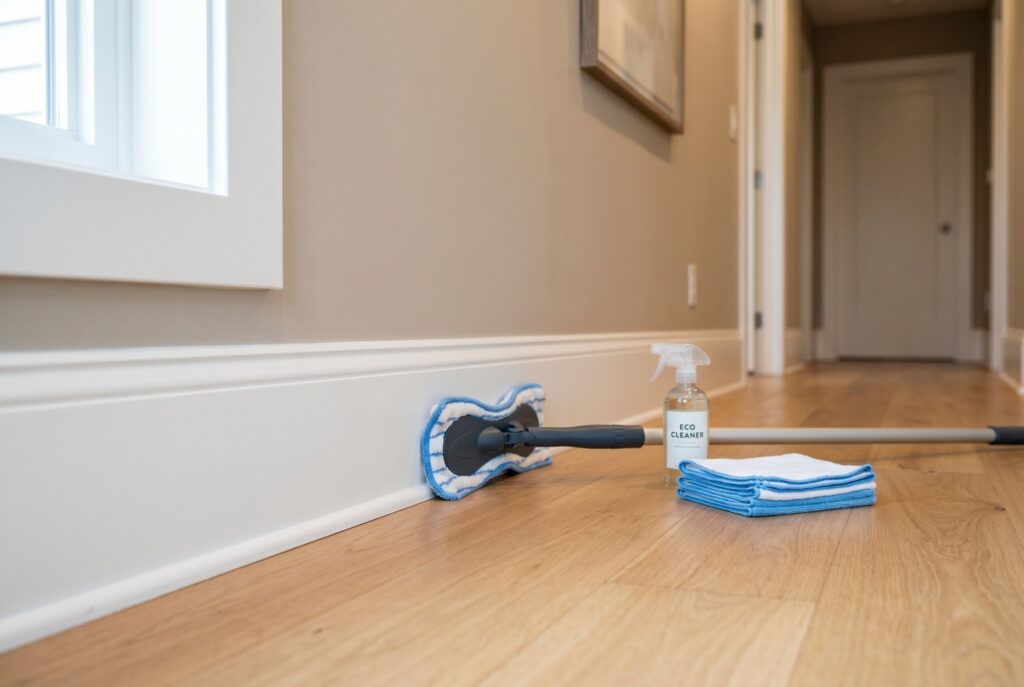
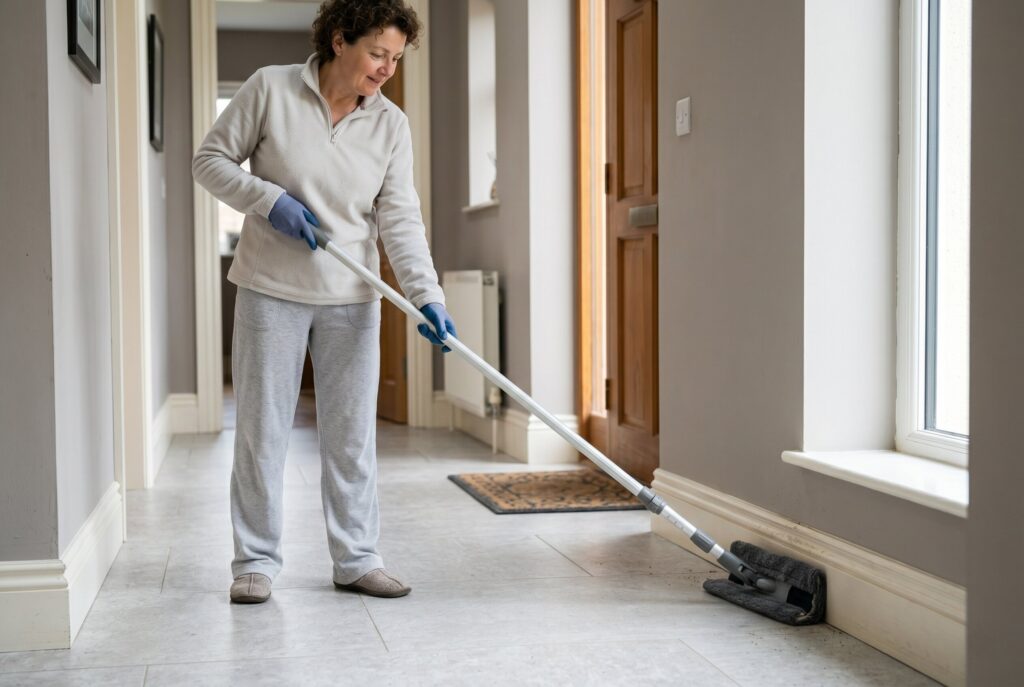
For a deeper clean, a dedicated baseboard cleaning tool with a pivoting head and a long handle is recommended. These tools are engineered to hug the specific curves of the trim. A microfiber pad can be used dry for simple dusting or lightly dampened with a DIY cleaning solution to cut through more stubborn films.
The “Dryer Sheet” Hack
This technique has gained popularity for its preventative properties. Attaching a dryer sheet to the bottom of a flat mop or similar tool allows for quick dusting while leaving behind a microscopic, anti-static film. This film repels future dust, keeping the home cleaner for a longer duration.
Material-Specific Care: Wood, Vinyl, and Painted Trim
Different baseboard materials require specific solutions to avoid dulling the finish or causing structural damage like warping.
Material type
Recommended solution
Why it works
Wood Baseboards
Warm water, a drop of dish soap, and a splash of mineral oil
The oil prevents the wood from drying out and maintains a healthy glow.
Vinyl / Painted Trim
Warm water, white vinegar, and a small amount of dish soap
Vinegar acts as a natural degreaser to cut through grime without harsh chemicals.
Excessive water should be avoided when dealing with a new baseboard installation, as moisture seeping behind the trim can lead to drywall issues.
Expert Solutions for Stubborn Stains & Scuff Marks
Standard cleaning protocols often fall short when addressing the friction marks left by rubber soles or heavy furniture. These blemishes require specific mechanical or chemical interventions to restore surfaces without causing permanent damage.
1. The Magic Eraser
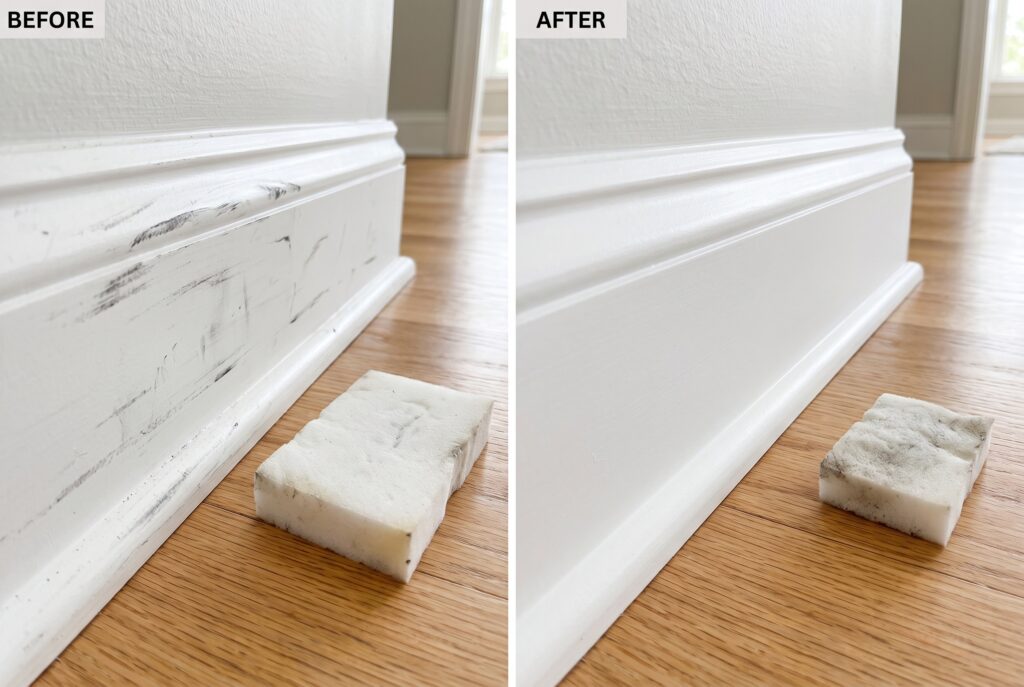
For white-painted trim and baseboards, a melamine sponge remains the gold standard for restoration. This material functions as an ultra-fine abrasive that physically lifts the pigment of the scuff away from the paint. Moistening the sponge before use is vital to activate the microscopic cleaning structures.
Gentle, circular motions will usually clear the surface without the need for aggressive scrubbing that might otherwise dull the finish. It is often helpful to wipe the area with a damp cloth afterward to remove any residue left by the sponge.
2. Cotton Swabs
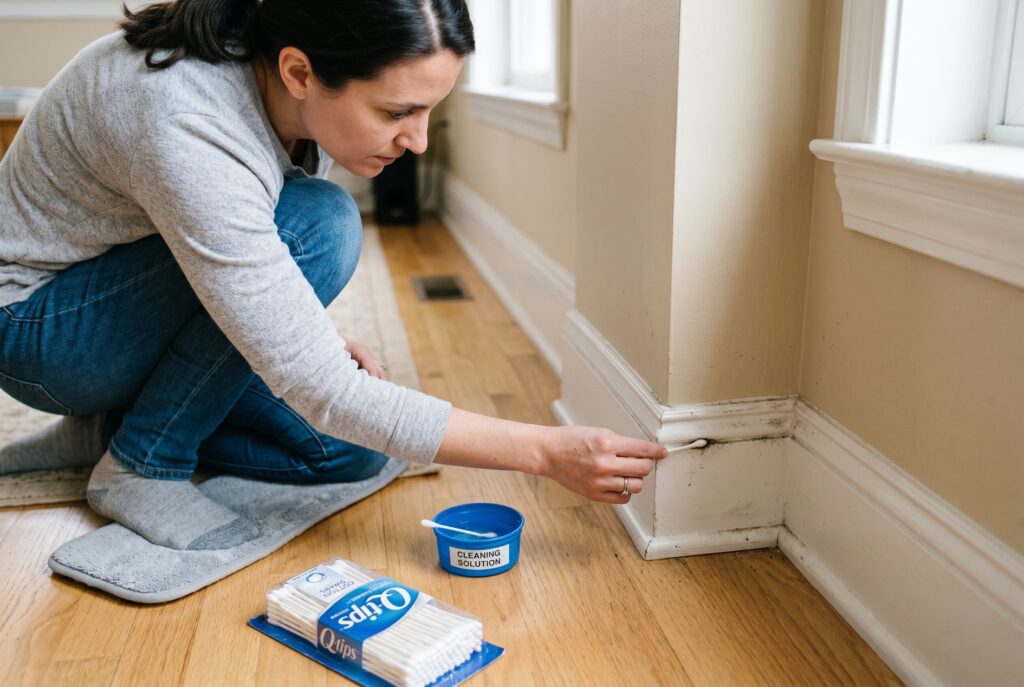
Detailed woodwork and narrow crevices are frequently inaccessible to standard cleaning equipment like mops or large rags. A cotton swab provides the necessary precision to treat these restricted areas without affecting the surrounding materials.
By dipping the tip into a concentrated cleaning solution, the liquid can be applied directly to the stain. This targeted application is especially useful for crown molding or the intricate corners of door frames where dust and scuffs tend to accumulate in deep grooves.
3. Oil For Scuff Removal
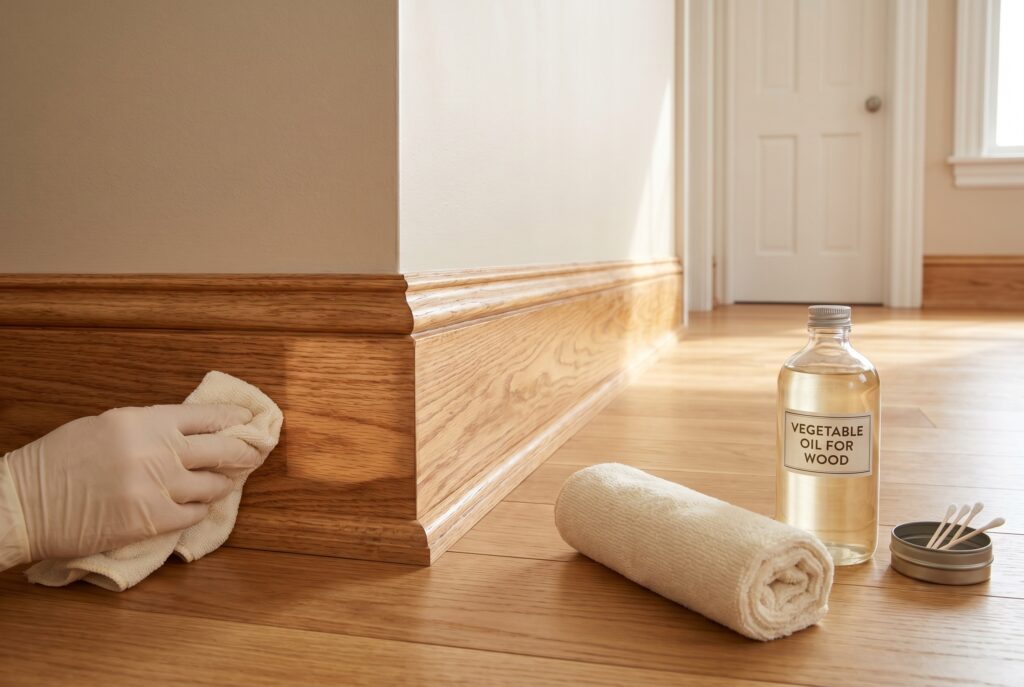
Natural wood surfaces benefit from a different chemistry to resolve surface-level marks that soap and water cannot fix. Vegetable oil acts as a mild solvent to loosen the bond of the scuff without stripping the wood of its finish.
A soft cloth dampened with a small amount of oil can buff the area until the mark disappears completely. Once the blemish is gone, wiping the spot with a clean, dry section of the cloth will remove any excess oil and leave a consistent, healthy sheen on the timber.
Budgeting for a Cleaning Arsenal: Splurge vs. Save
Professional results don’t always require a large financial investment, though certain tools offer significant time savings.
Save: An old toothbrush is ideal for scrubbing corners, and vinegar-based solutions are inexpensive to produce at home. Repurposed socks can also serve as effective dusting mitts.
Splurge: For homes with extensive trim, investing in a steam cleaner is worthwhile. Steam sanitizes and lifts “stuck-on” gunk using only heat and water, making it a premier choice for eco-friendly cleaning.
Conclusion & The “Fresh Home” Checklist
Maintaining clean baseboards isn’t merely a matter of aesthetics; it significantly reduces allergens and pet dander within the living environment. Using ergonomic tools and the correct baseboard cleaner for the specific material ensures a “model home” appearance without the physical toll.
A Monthly Maintenance Checklist:
Clear the area by moving lightweight furniture.
Use a vacuum brush extension to remove hair and loose dust.
Apply an extendable mop for a wet-wipe using a material-safe solution.
Finish with a dryer sheet “swipe” to repel future buildup.