

Investing in high quality bedding is a major step toward better sleep, but maintaining those items often feels like a high stakes gamble. While it is common to wonder can you wash pillows in a standard cycle, memory foam requires a much more delicate touch to avoid permanent damage. The immediate answer for anyone asking can you wash memory foam pillows is that you certainly can clean them, but you must keep them far away from a traditional machine. Knowing how to wash pillows of this variety involves using manual techniques that preserve the foam without compromising its support
The Golden Rule: Why Machine Washing is a “Death Sentence”
The secret to that signature comfort lies in the viscoelastic structure, which is a complex polymer that reacts specifically to your body weight and heat. Putting this material through a cycle is essentially a death sentence for the pillow because the mechanical agitation can tear the foam cells apart.
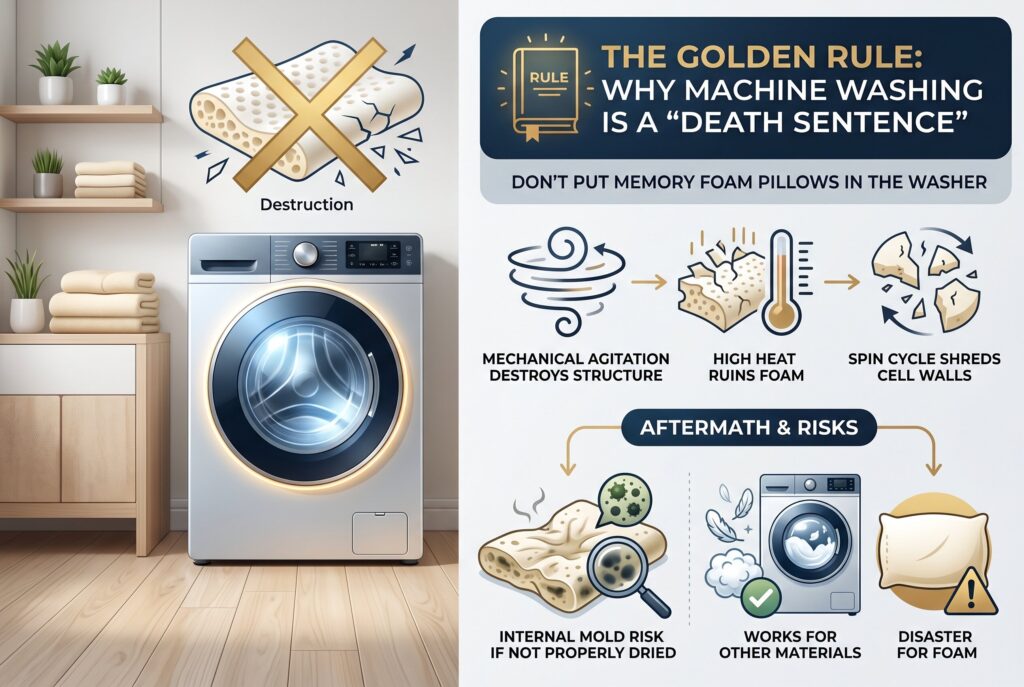
Furthermore, high heat from a dryer can warp the shape or even melt the material. Many people mistakenly think about washing pillows in washing machine units for convenience, but the dense core acts like a massive sponge that traps water. If you try to put pillows in the washer, the moisture left inside creates a perfect environment for mold to grow, which is why washing pillows this way should always be avoided.
5 Safe Spot-Cleaning Hacks for Yellow Stains & Odors
It doesn’t matter if you are dealing with shredded memory foam vs solid memory foam, as both types require targeted care rather than full submersion. These techniques focus on surface maintenance and emergency fixes to keep your bedding fresh.
1. The Baking Soda Odor Neutralizer
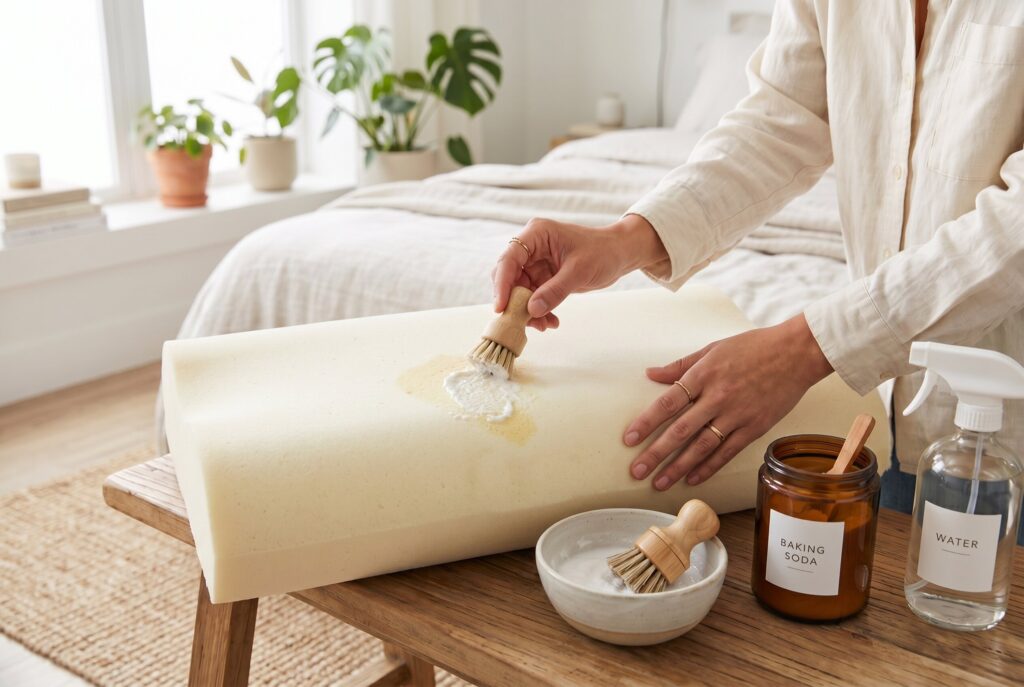
When you need to refresh your bed without using liquid, baking soda for pillows is your best friend for general how to clean pillows routines. You simply sprinkle a generous layer of baking soda over the foam and let it sit for at least thirty minutes to neutralize sweat smells and moisture. Once it has done its job, use an upholstery brush attachment to vacuum up the powder.
2. The Gentle Detergent “Blot” Technique
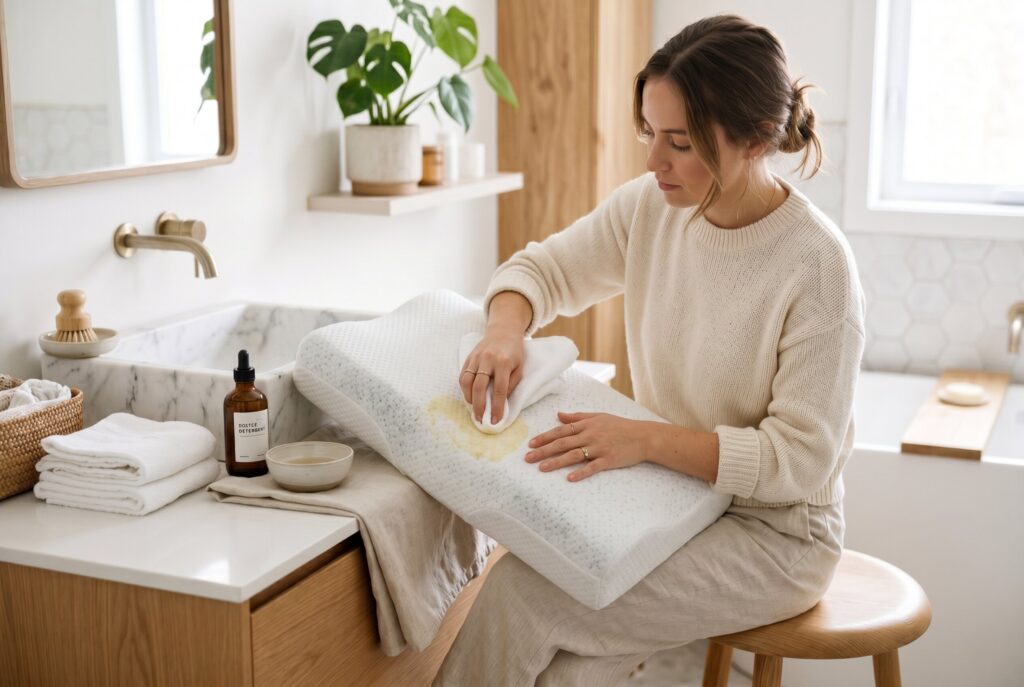
For minor spills, a localized spot-clean pillow approach is the safest way to handle a spot-clean memory foam task. You should mix lukewarm water with a tiny bit of mild detergent and apply it to a clean white cloth. Instead of scrubbing, which can damage the foam, use a gentle blotting motion to lift the stain.
3. The Vinegar Solution for Yellowing Pillows
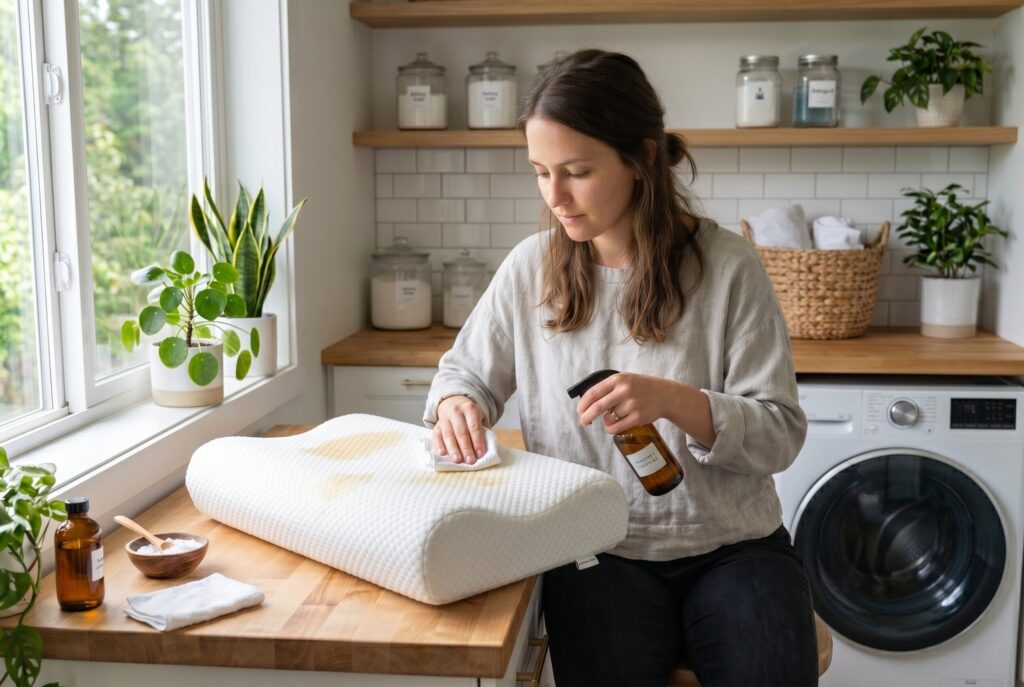
The most common issue owners face is the appearance of yellowing pillows caused by natural body oils and oxidation. To remove pillow stains like these, a 50/50 mix of white vinegar and water works wonders to break down organic proteins. This natural solution refreshes the foam without the need for harsh, damaging chemicals.
4. Hydrogen Peroxide for “Emergency” Spills
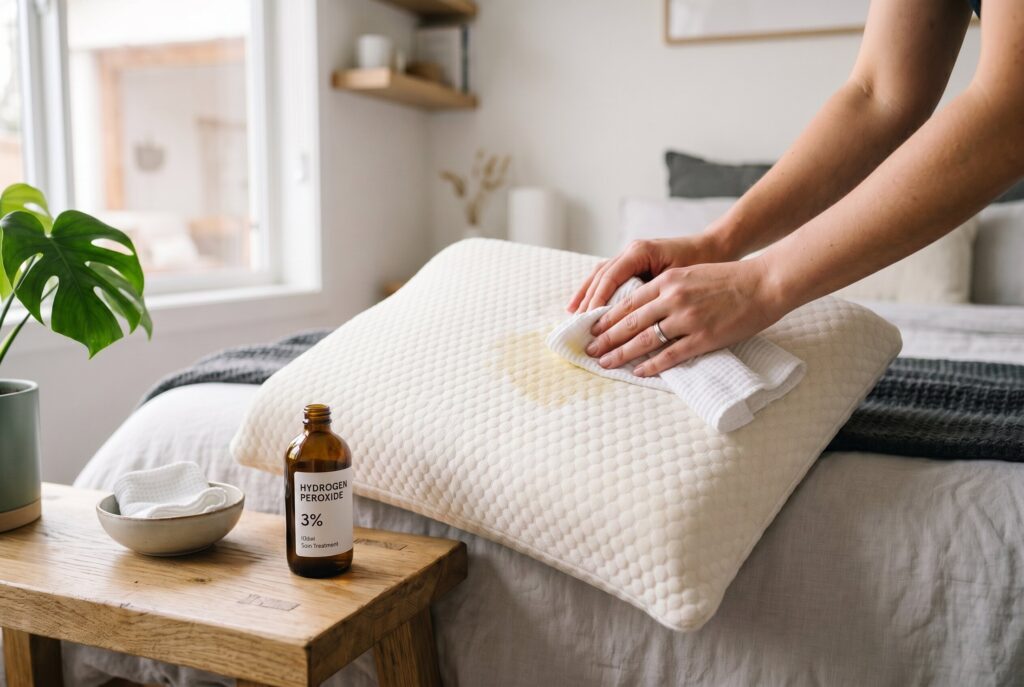
High stress moments like accidental spills require a specific protocol for memory foam stain removal. If you need to remove urine from memory foam, applying a small amount of hydrogen peroxide can help bubble the fluid out of the foam cells. You must blot the area immediately with a damp towel to ensure no residue is left behind.
5. The Sunlight “Sanitizer” Boost
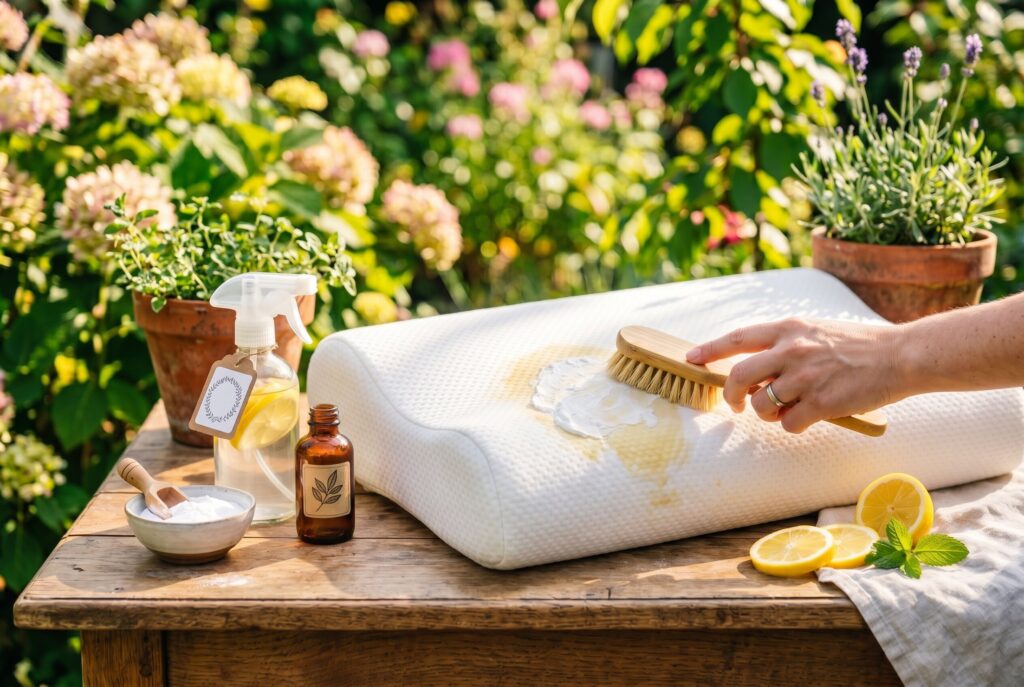
Natural UV rays can be a powerful tool for memory foam pillow maintenance. On a dry day, you can air dry memory foam in indirect sunlight to help deodorize and brighten the material. Be careful not to leave it in direct, high heat for too long, as extreme sun can eventually degrade the foam structure.
Crucial Measurements: The 24-Hour Drying Rule
The biggest mistake people make when learning how to wash a pillow is putting the case back on too soon. Because memory foam is so dense, drying memory foam properly usually takes between 24 and 48 hours.
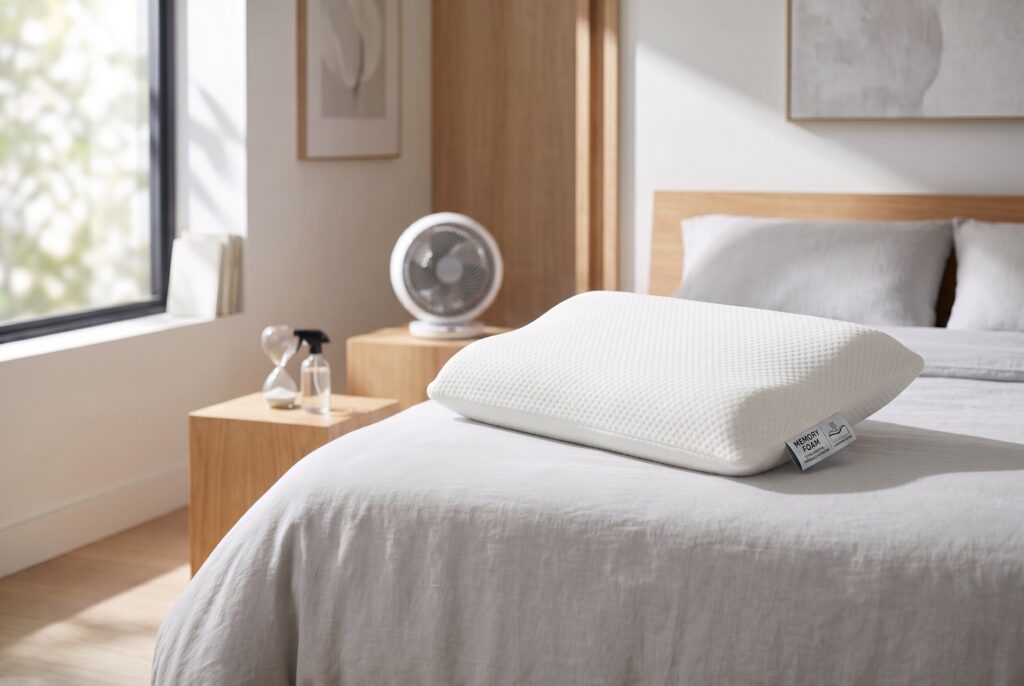
You should always air dry memory foam in a well ventilated area, perhaps using a floor fan to keep air moving. This patience prevents internal mold and ensures your pillow remains a healthy place to rest.
Prevention: Why a Hypoallergenic Protector is Necessary
The easiest way to avoid the stress of cleaning is to use a high quality cover as your first line of defense. Investing in hypoallergenic bedding ensures that dust mites and skin oils stay away from the foam core. One of the best pillow protector benefits is that the cover can be thrown in the wash weekly, which keeps your sleep environment pristine and helps your pillow last for years.
Proper care ensures your memory foam stays supportive, but it is also vital to know when a pillow has finally reached the end of its life. While these hacks extend the lifespan of your favorite bedding, eventually every foam core will need to be replaced to maintain your sleep hygiene.
Conclusion: Is the Pillow “Dead”?
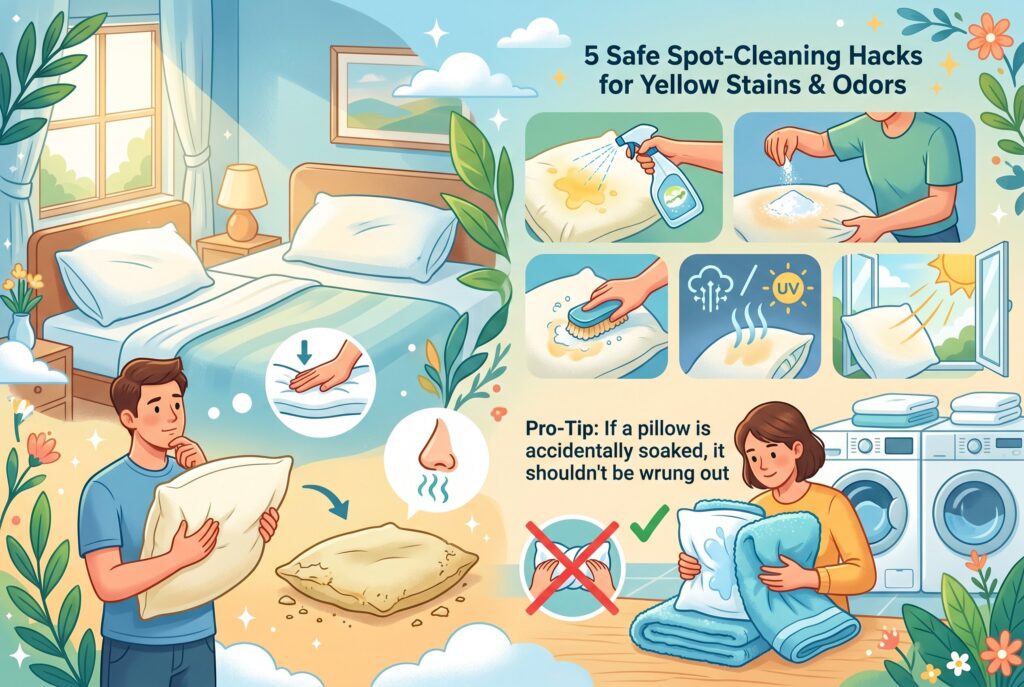
Even with perfect memory foam pillow maintenance, these items aren’t permanent. If the foam has started to crumble, has deep-set odors, or stays flat when pressed, it’s time for a replacement.
Pro-Tip: If a pillow is accidentally soaked, it shouldn’t be wrung out. It should be squeezed gently between two thick towels to absorb moisture without snapping the internal structure.
Related Articles
- How to Wash Throw Pillows: 7 Do’s and Don’ts for Decorative Cover
- How to Wash Down Pillows: Keep Feathers Fluffy & Damage-Free
- Can You Wash Pillows in the Washing Machine? 5 Damage-Free Settings