

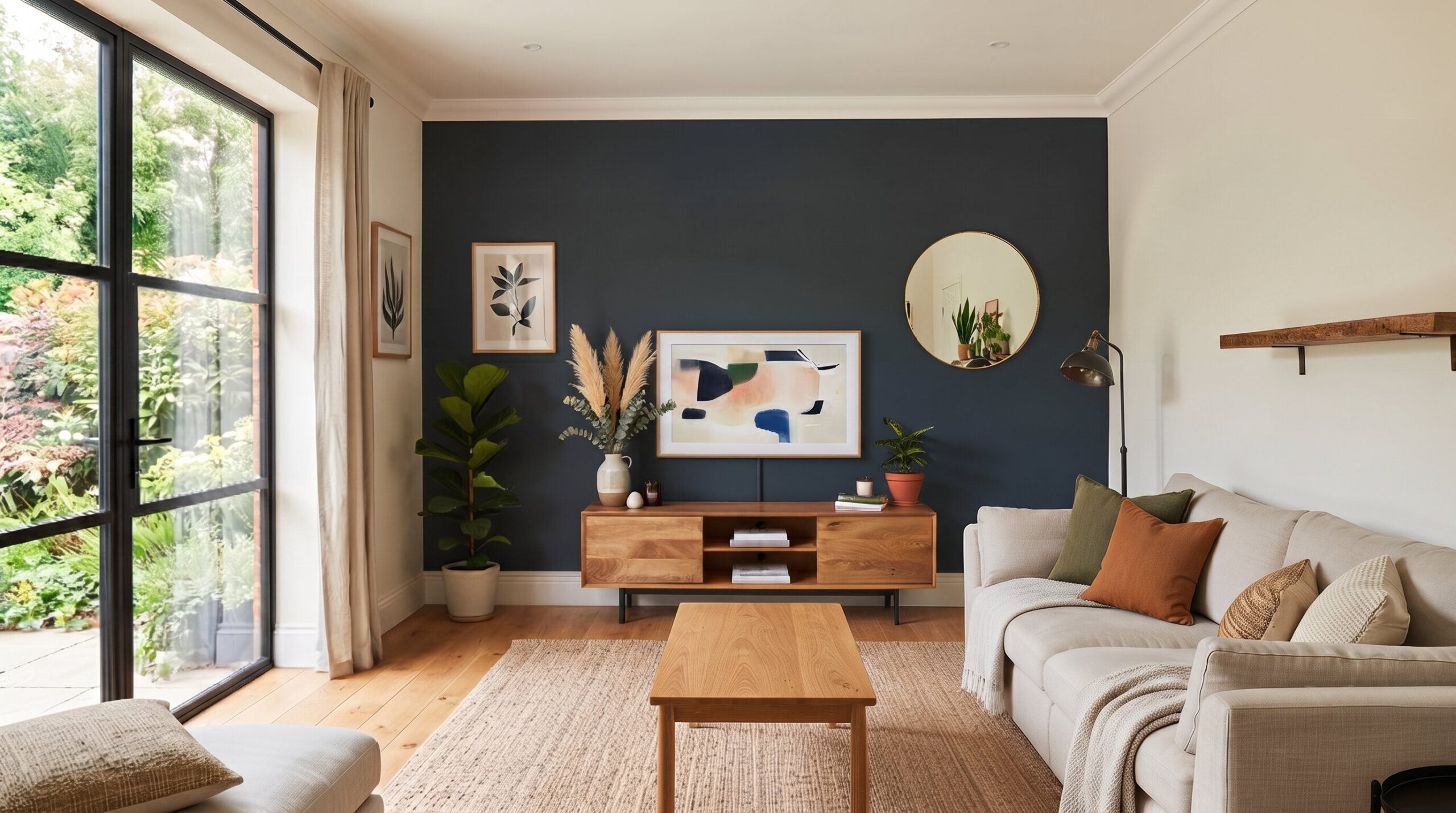
Accent walls used to be loud. One random red wall in the dining room. One bright purple corner in a tiny bedroom. Those trends faded because they felt disconnected from the rest of the home.
But painted accent walls haven’t disappeared in 2026. They evolved. Today’s best accent wall colors create atmosphere instead of shouting for attention. Designers now use earthy neutrals, moody dark shades, muted greens, and soft blues to shape emotion, control light, and make rooms feel layered. An accent wall does far more than introduce color into a space. When designed thoughtfully, it can completely shift the mood, atmosphere, and visual balance of a room throughout the day as natural light changes. Creating that effect isn’t about picking the loudest shade possible. It comes from understanding how placement, undertones, texture, and lighting work together to shape the overall feeling of the space.
Why Painted Accent Walls Still Matter in Modern Homes
Over the past decade, many minimalist interiors became so neutral that they started to feel emotionally flat and visually repetitive. One of the biggest reasons accent wall paint has remained popular is because it adds depth, warmth, and personality without requiring a complete renovation. A single painted wall can anchor a bed, define a dining area, frame a fireplace, or make a living room feel more architectural and intentional. In open-concept homes, accent wall paint also helps separate spaces naturally without adding physical dividers or making the layout feel closed off.
What makes modern accent walls different today is the level of restraint and integration behind them. Instead of using color purely for attention, the best accent wall paint ideas feel connected to the room’s lighting, furniture, and overall atmosphere. The result feels layered, balanced, and timeless rather than trendy or overwhelming.
The 2026 Accent Color and Lighting Matchmaker
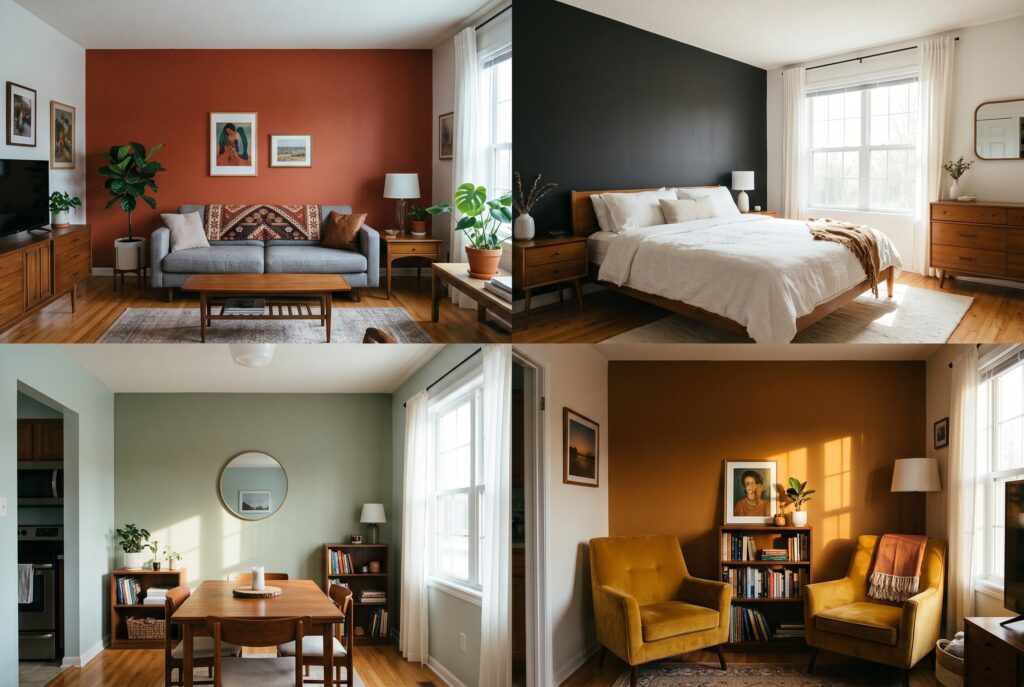
Lighting determines whether accent wall colors look luxurious or disappointing. North facing rooms usually receive cooler gray light, which means warm colors like clay, terracotta, caramel, and olive green feel richer there. South facing rooms receive stronger natural light and can support darker colors like charcoal or black accent wall shades without feeling heavy.
East facing rooms glow with softer green and blue tones during the morning, while west facing spaces become warmer at sunset, making earthy tones especially beautiful in the evening. This is why paint samples always matter more than Pinterest photos.
1. Sage Green Accent Wall for Organic Calm
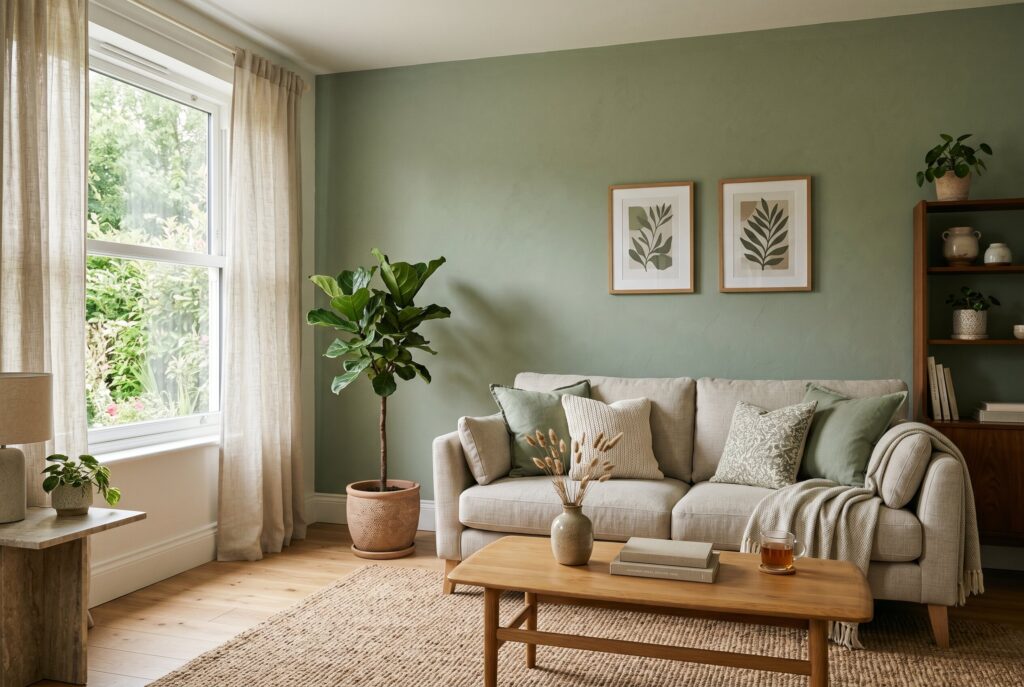
A sage green accent wall creates one of the most relaxing environments possible. It softens harsh architecture and pairs beautifully with natural materials like oak, linen, jute, walnut, and stone. In bedrooms, sage green feels restorative rather than dramatic. In living rooms, it adds depth without overpowering furniture. This is why green accent wall ideas continue dominating modern organic interiors.
2. Olive Green Painted Accent Walls
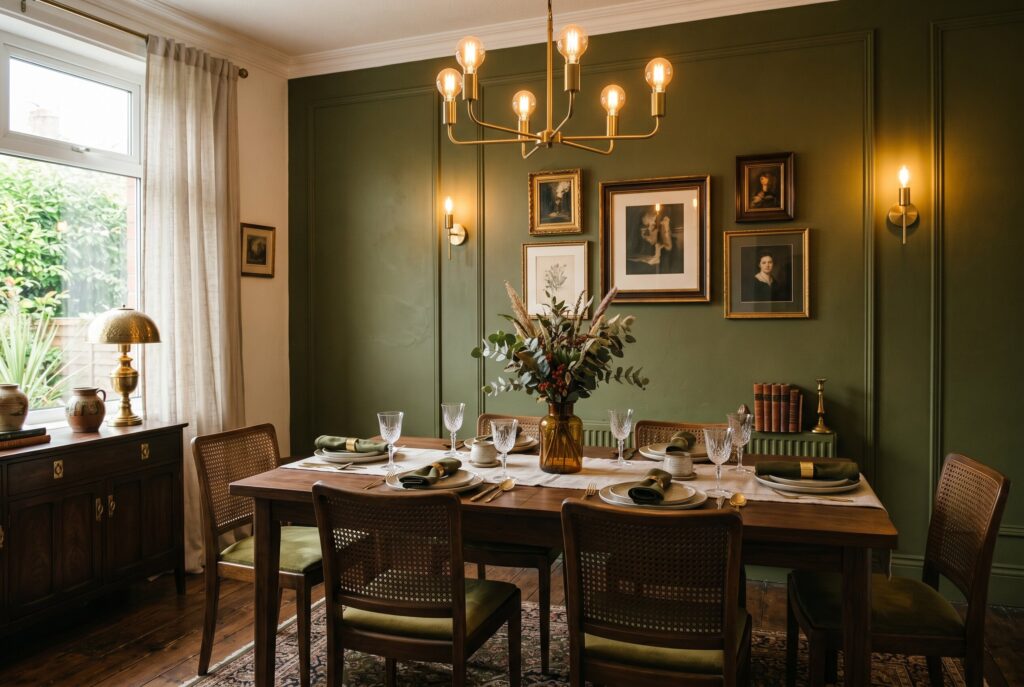
Olive green feels moodier and more sophisticated than sage. It works especially well in dining rooms and offices where warmth matters. When paired with warm brass lighting and darker wood furniture, olive creates a grounded atmosphere that feels timeless instead of trendy.
3. Matte Black Accent Wall Behind the TV
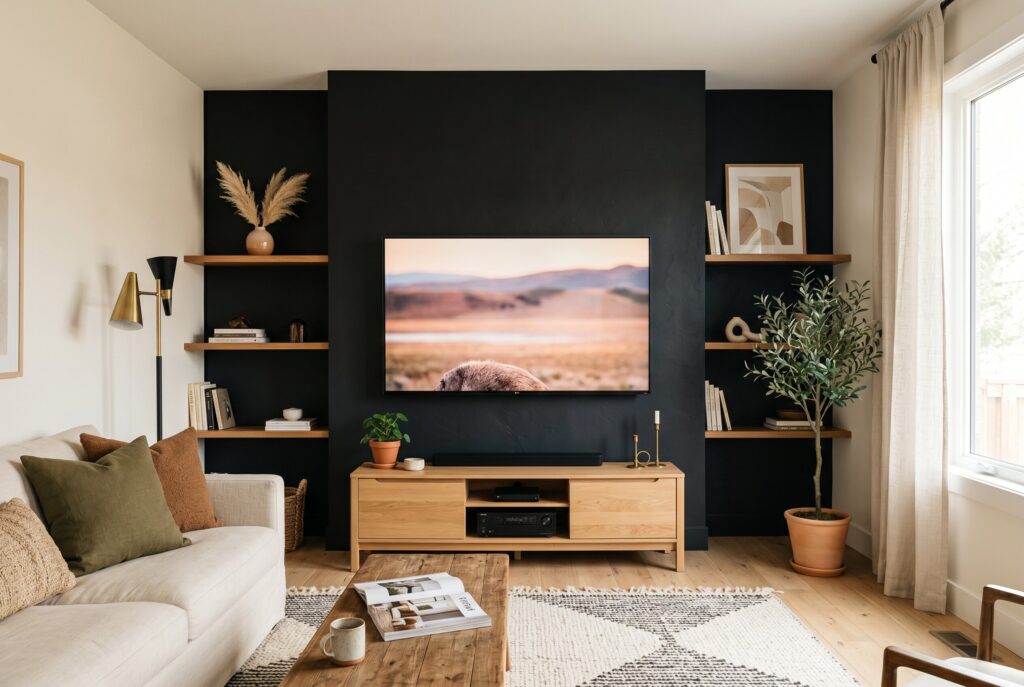
A black accent wall behind a television has become one of the smartest modern design tricks. The dark background visually minimizes the screen, helping it blend into the room rather than dominate it. Matte finishes work best because they absorb glare and create a softer appearance than glossy paint.
4. Charcoal Dark Accent Wall for Cozy Depth
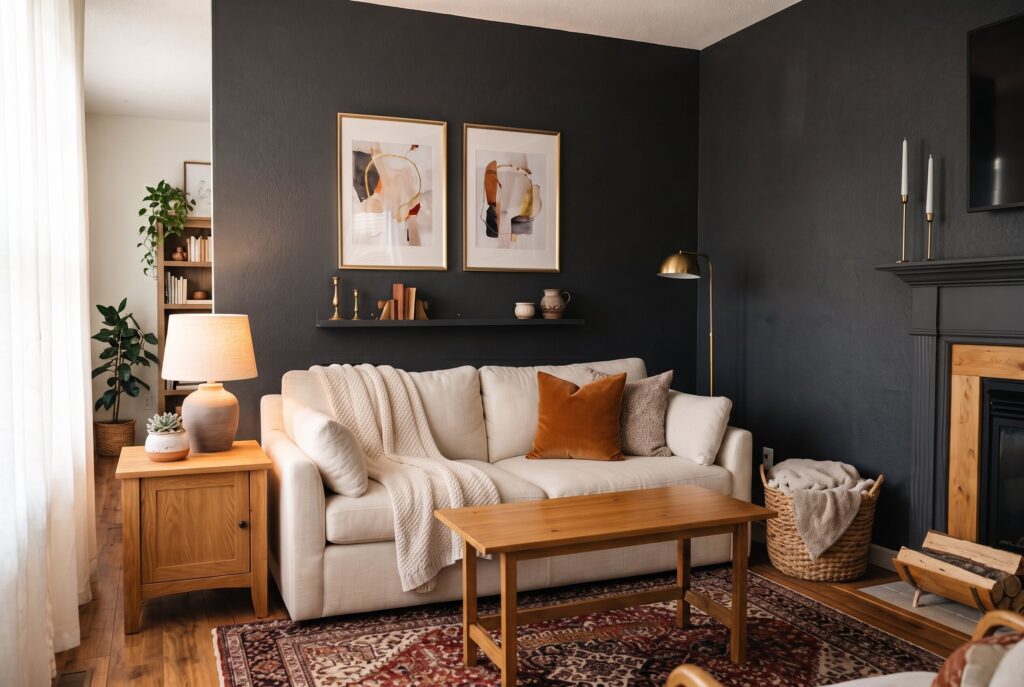
Many homeowners want a dark accent wall but worry black will feel too harsh. Charcoal solves that problem beautifully. It creates dramatic depth while remaining softer and easier to decorate around. Charcoal also highlights cream furniture, warm wood, and metallic accents exceptionally well.
5. Navy Blue Accent Wall in Elegant Bedrooms
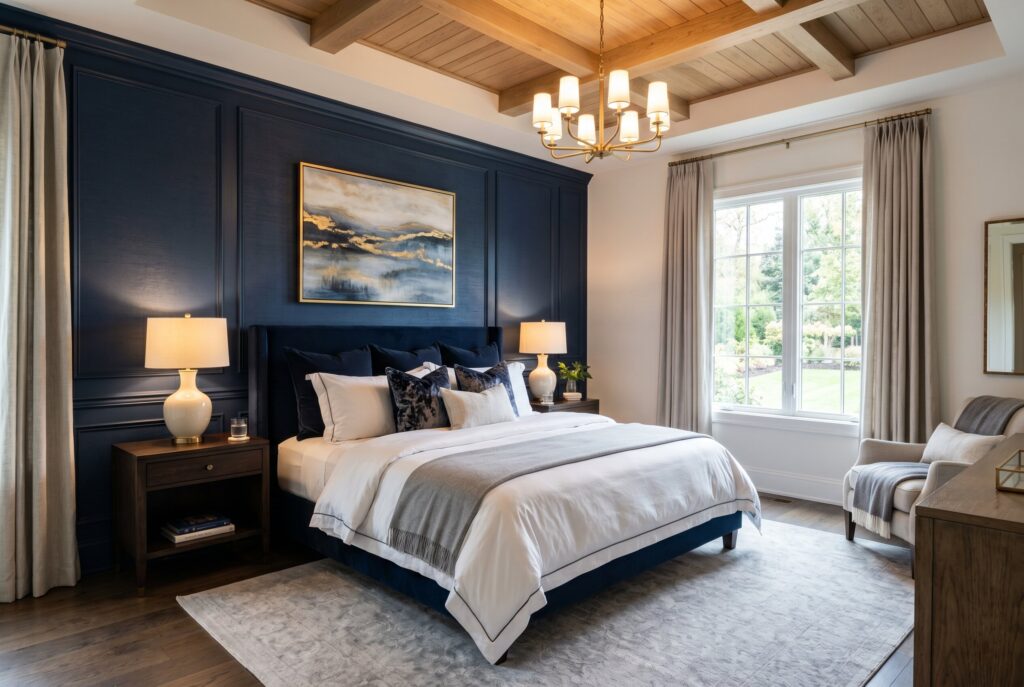
A navy blue accent wall feels structured, tailored, and classic. It works particularly well as a bedroom accent wall because darker blues naturally feel calming at night. Layering navy with crisp white bedding and warm ambient lighting creates a hotel inspired atmosphere without feeling cold.
6. Slate Blue Accent Wall for Soft Modern Style
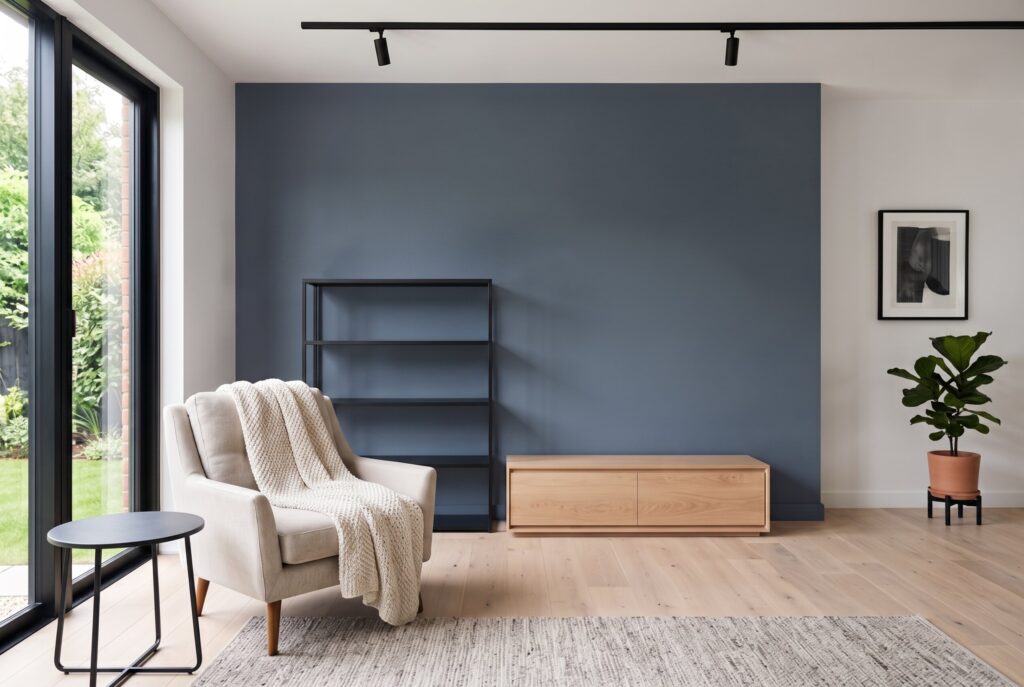
Slate blue has become increasingly popular because it feels quieter than navy. Its gray undertones create softness that works beautifully in modern interiors. This type of blue accent wall complements black fixtures, pale oak flooring, and soft textured fabrics extremely well.
7. Terracotta Accent Walls That Warm Cold Spaces
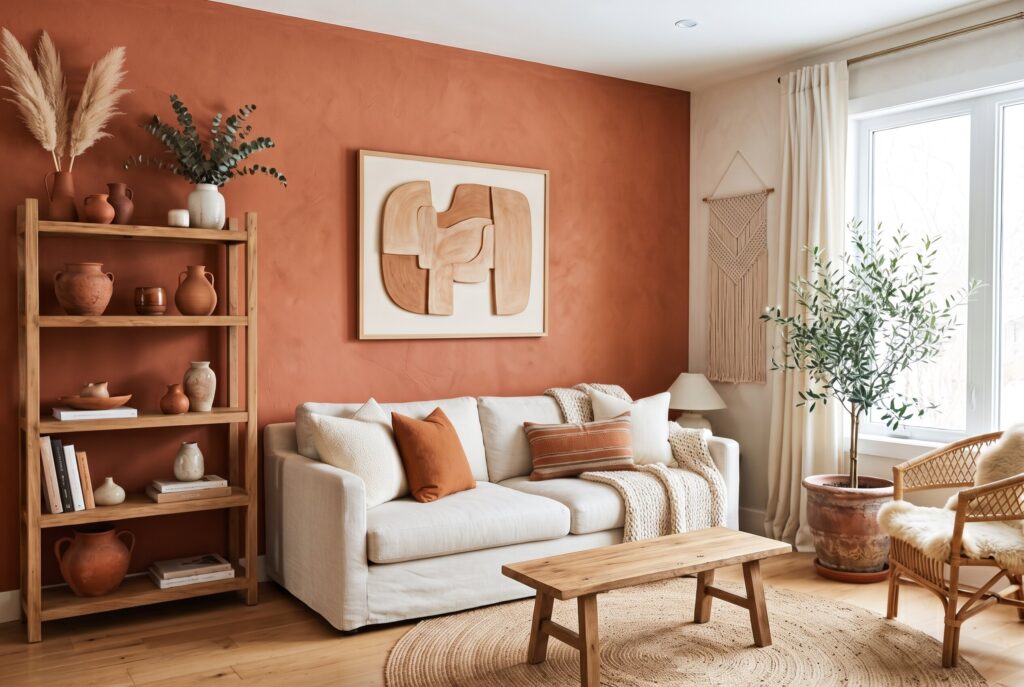
North facing rooms often feel flat because they receive cooler daylight. Terracotta solves this by introducing earthy warmth into the space. Terracotta accent wall colors feel sun baked, grounded, and welcoming. They pair naturally with creamy whites, textured plaster, pottery, and woven materials.
8. Clay Colored Painted Accent Walls
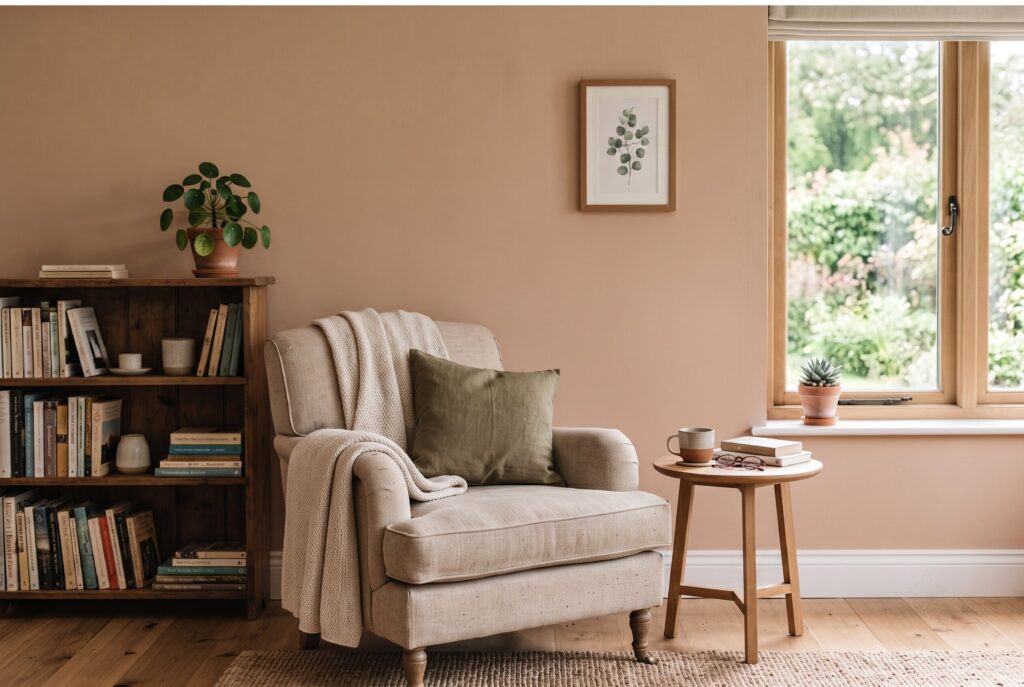
Clay tones are softer than traditional terracotta and easier to use long term. They create subtle warmth without overwhelming the room. This shade works beautifully in reading corners, bedrooms, and quiet sitting areas where comfort matters more than bold contrast.
9. Mushroom Beige Accent Wall Ideas
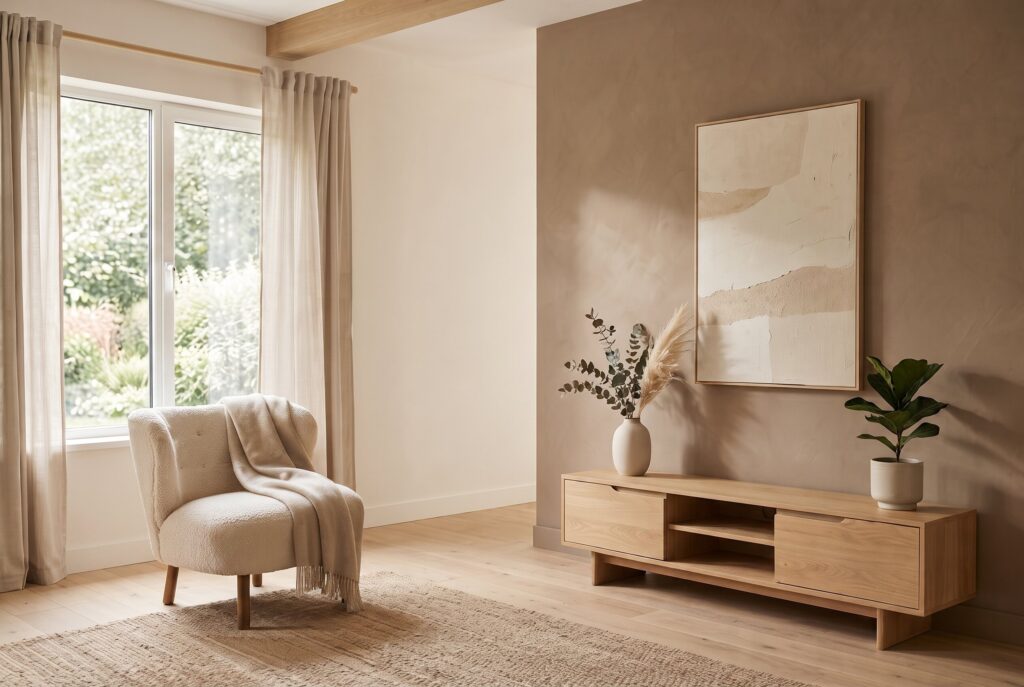
Mushroom beige proves that neutral painted accent walls can still feel rich and dimensional. Instead of using stark gray, mushroom tones add warmth and softness while still maintaining a minimalist appearance. This makes them perfect for Scandinavian and Japandi inspired homes.
10. Warm Taupe Accent Wall Designs
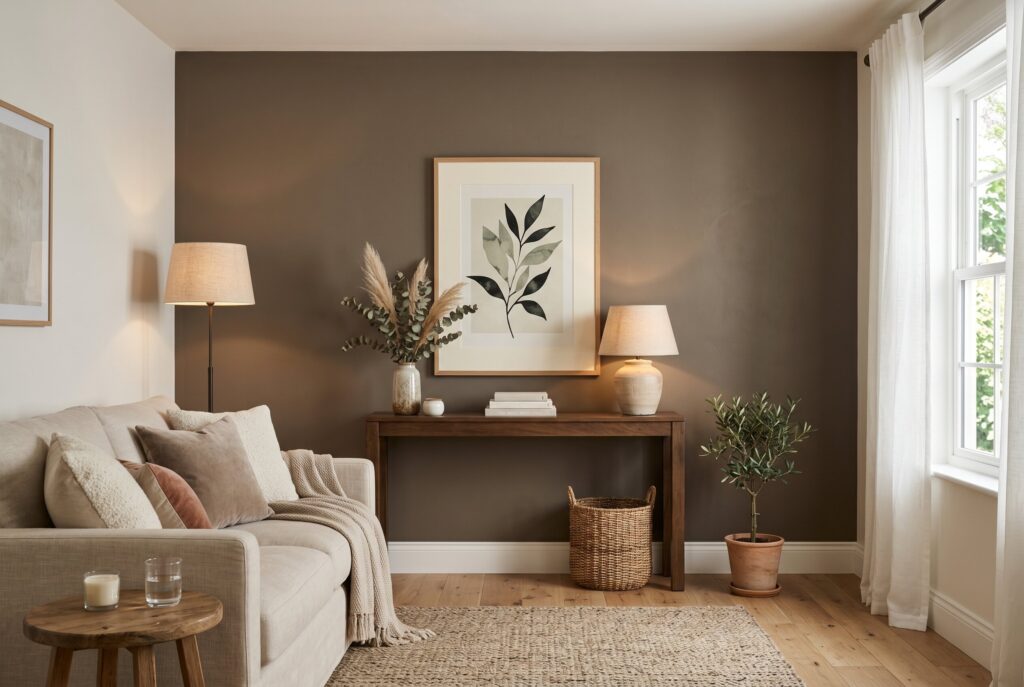
Taupe remains timeless because it balances gray and brown beautifully. A warm taupe accent wall creates gentle contrast without making the room feel visually busy. It also adapts easily to changing décor styles over time.
11. Forest Green Bedroom Accent Wall
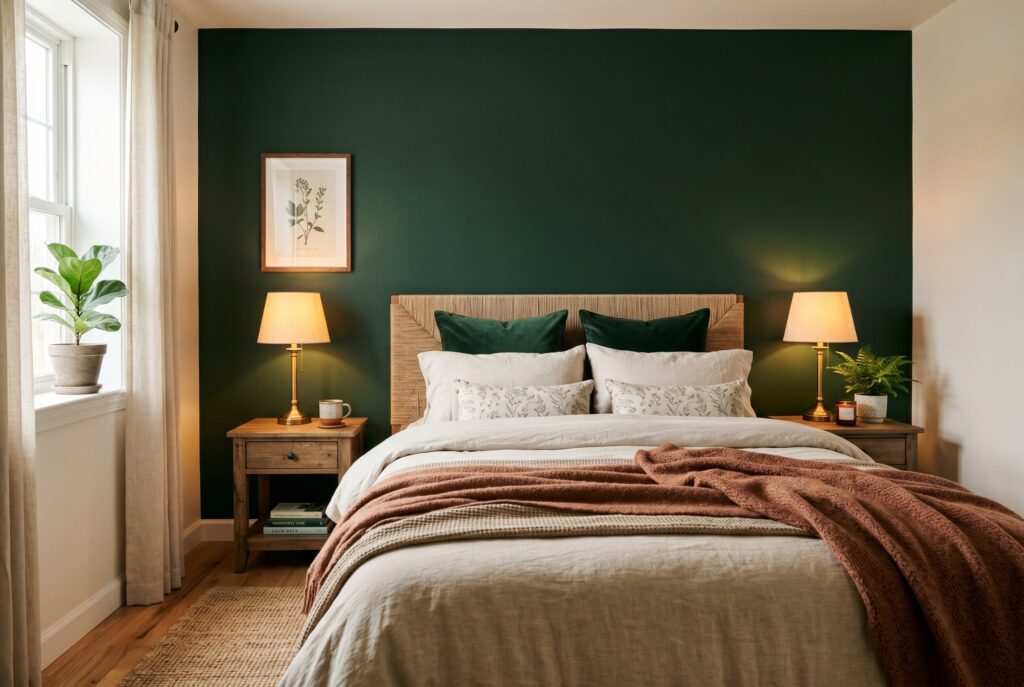
A forest green bedroom accent wall creates a cocoon-like feeling that encourages relaxation and sleep. Unlike brighter greens, forest tones absorb light and reduce visual stimulation at night. Paired with layered bedding and warm lamps, the room instantly feels calmer.
12. Inky Blue Accent Wall for Moody Interiors
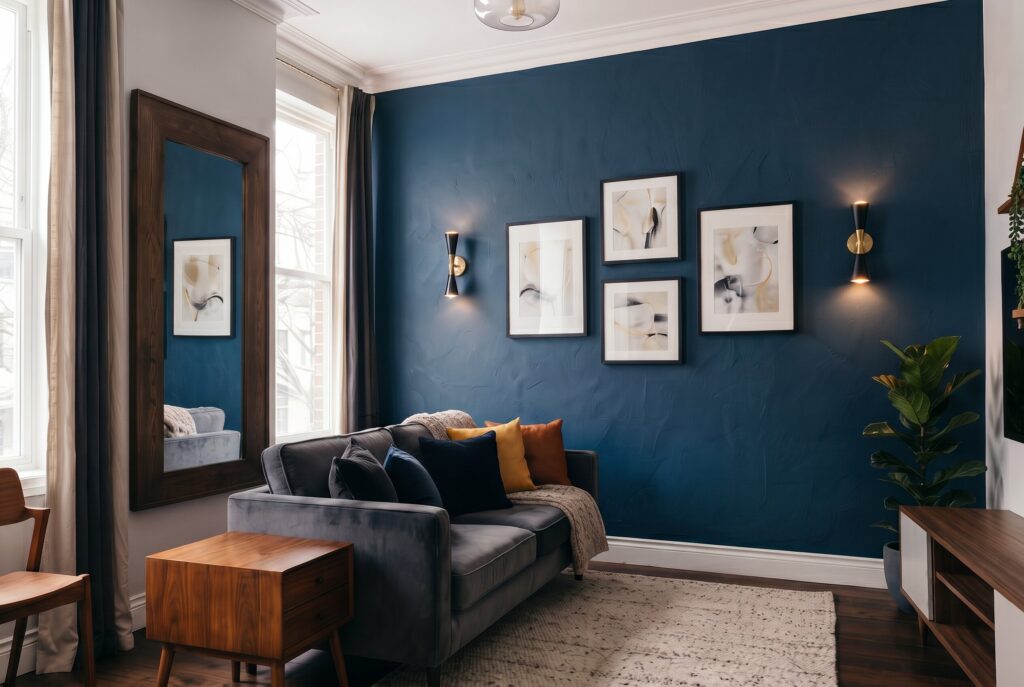
Inky blue creates depth similar to black but feels slightly softer emotionally. It works especially well in modern living rooms and bedrooms where homeowners want drama without harshness.
13. Dusty Rose Accent Wall with Mature Warmth
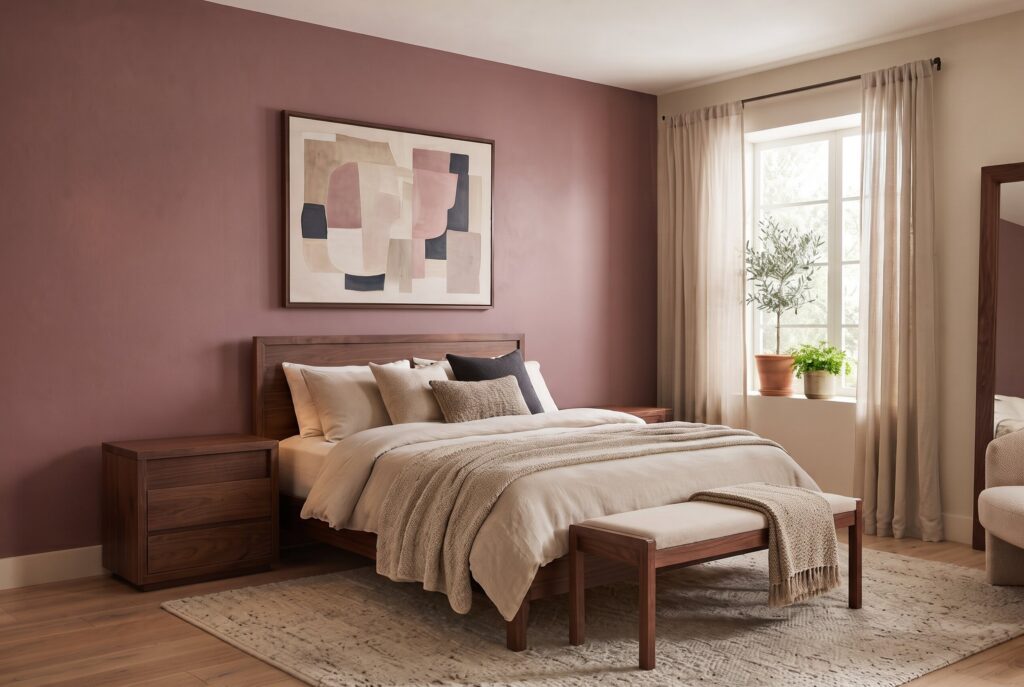
Dusty rose isn’t childish when muted correctly. In 2026, designers use mauve toned dusty rose with walnut furniture, beige textiles, and warm neutrals to create softness without excessive femininity.
14. Deep Plum Accent Wall for Luxury Atmosphere
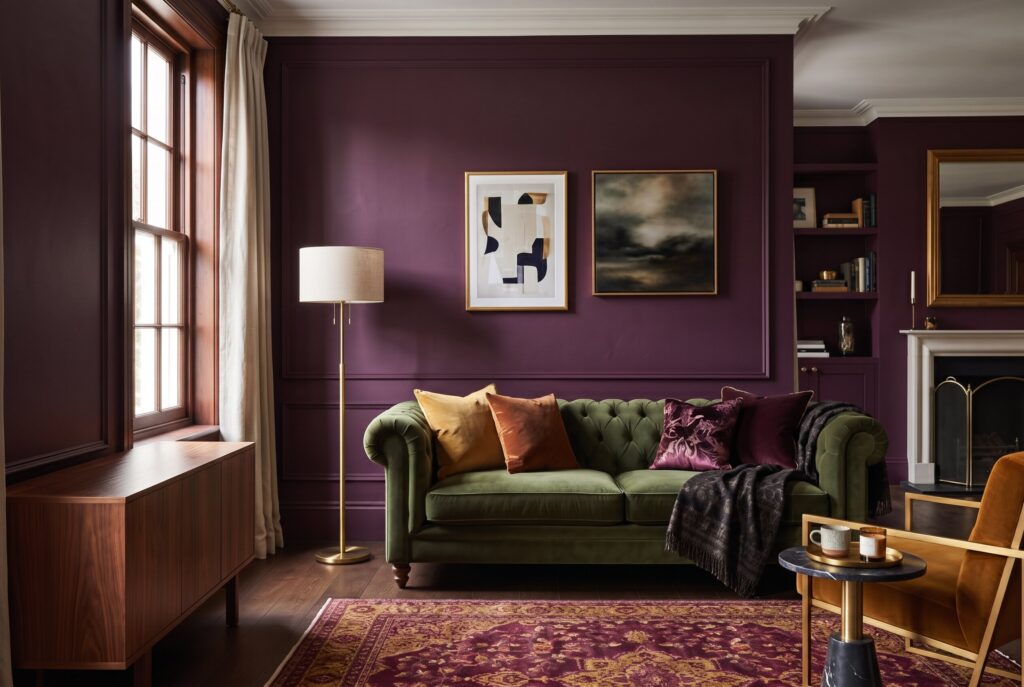
Deep plum feels rich, artistic, and layered. It performs best in rooms with strong lighting contrast and carefully selected décor. When paired with velvet textures and warm metallic finishes, it creates a luxurious atmosphere that feels deeply personal.
15. Greige Painted Accent Walls for Safe Sophistication
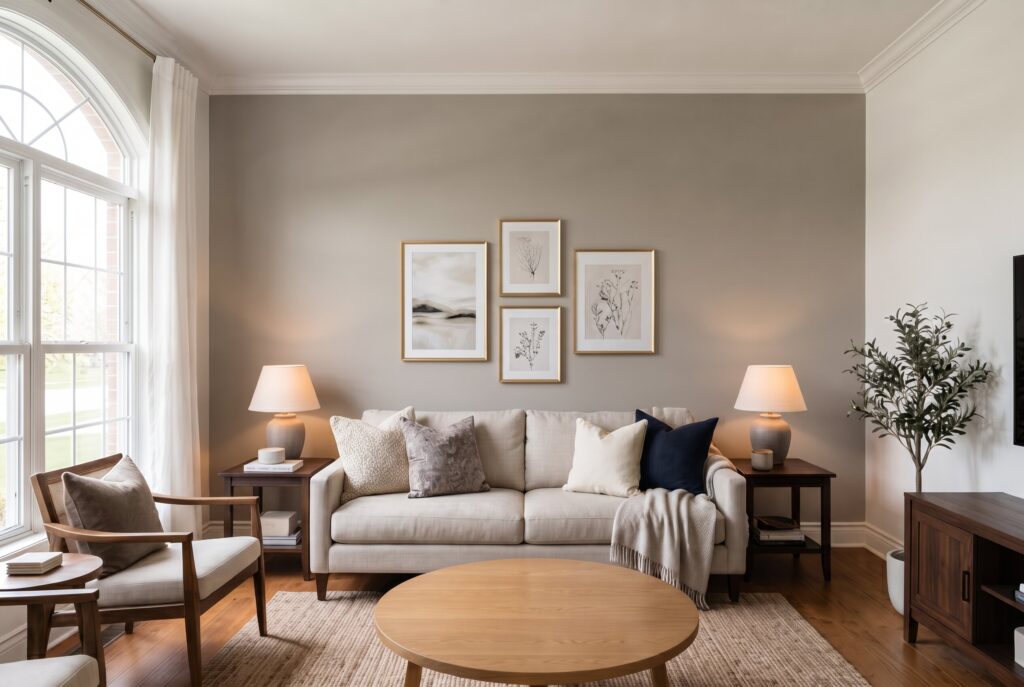
Greige combines beige warmth with gray restraint, making it one of the safest accent wall colors for long term flexibility. It works in almost every room and supports both modern and traditional interiors without competing for attention.
How to Choose the Correct Wall
The best accent wall already has architectural importance. Usually this means the wall behind the bed, sofa, fireplace, shelving, or dining table. Painting a random side wall often makes the room feel visually unbalanced. The color should reinforce the room’s natural focal point, not fight against it.
Conclusion
The best accent wall paint ideas in 2026 no longer rely on bold colors purely for attention. Instead, they focus on creating emotional depth, improving visual balance, and shaping the atmosphere you want the room to have. Whether you choose a green accent wall for a calm and grounded feeling, a blue accent wall for elegance, or a dark accent wall for warmth and intimacy, the goal remains the same. A successful accent wall paint color should feel naturally connected to the room’s architecture, lighting, and overall personality. When the shade still feels beautiful in morning sunlight, afternoon shadows, and soft evening lighting, that’s when you know the color truly works for the space.
Related Articles
- 17 Wood Accent Wall Ideas: Modern DIY Designs on a Budget (2026)
- 15 Bedroom Accent Wall Ideas: Relaxing DIYs for Your Weekend (2026)
- 17 Living Room Accent Wall Ideas: Stunning Focal Points to Wow Guests (2026)
- 15 Dining Room Accent Wall Ideas: Elegant Styles to Elevate Every Meal in 2026