

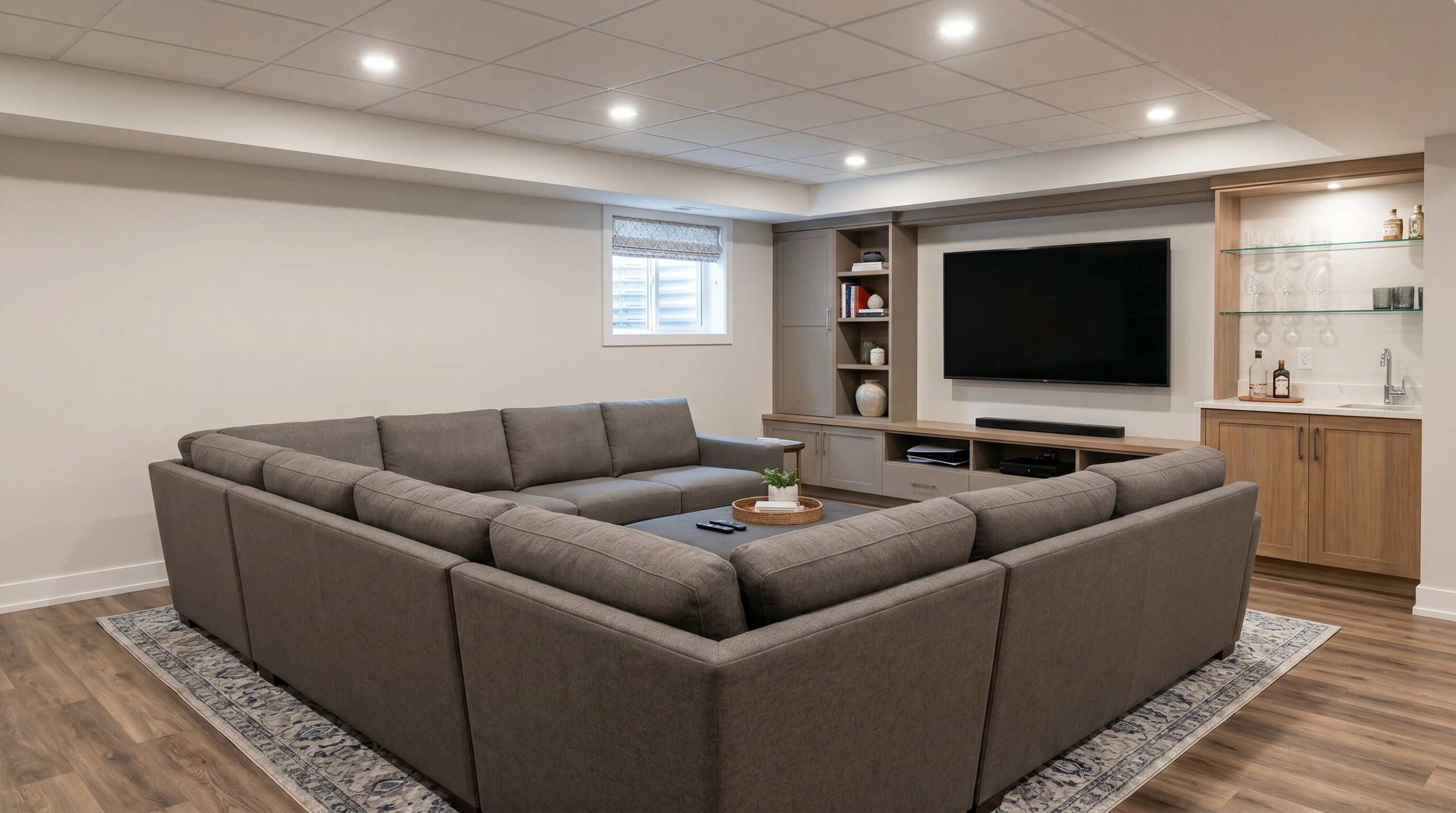
A basement doesn’t have to stay a dark storage zone filled with boxes, old furniture, and unused holiday decorations. With the right planning, it can become one of the most valuable and enjoyable parts of your home. The best basement ideas begin with one question: what should this lower level do better than any other room upstairs?
A finished basement can become a home theater, guest suite, basement bar, gym, playroom, office, man cave, wellness retreat, or flexible family lounge. The key is to stop treating it as leftover space. A strong basement design should solve moisture, lighting, ceiling height, sound, and layout before you choose furniture or paint.
Whether you need small finished basement ideas or a full luxury remodel, the goal is the same. Make the basement feel like a natural extension of the home, not a forgotten room below it.
The Legal and Structural Baseline
Before choosing colors, sofas, or basement bar ideas, solve the technical foundation first. Basements sit below grade, which means moisture is the enemy. A beautiful room can fail quickly if water vapor, seepage, or poor drainage is ignored.
Moisture control: Fix grading, gutters, and any active leaks before you frame a single wall. Use moisture-tolerant insulation such as rigid foam against foundation walls, and run a dehumidifier to keep indoor humidity roughly between 30 and 50 percent, the range the EPA recommends for limiting mold growth.
For flooring, avoid natural hardwood. It can warp, cup, or buckle in humid conditions. Luxury vinyl plank, porcelain tile, rubber gym flooring, and sealed concrete are smarter choices for most finished basement ideas because they tolerate moisture better.
Egress for bedrooms: If you are planning basement bedroom ideas, check egress requirements first. Under the International Residential Code (IRC), which most U.S. jurisdictions adopt with local amendments, a basement sleeping room needs an emergency escape opening with at least 5.7 square feet of net clear opening, a minimum clear height of 24 inches, a minimum clear width of 20 inches, and a sill no more than 44 inches above the floor. Without proper egress, the room may be unsafe and may not count as a legal bedroom during resale.
Ceiling height: Habitable basement space typically needs a ceiling height of about 7 feet, with some allowance for beams and ducts to hang lower. Measure before you commit to a drop ceiling, soffits, or raised theater platforms, since each one eats into that clearance.
Radon and air safety: Radon, a naturally occurring radioactive gas, tends to collect in the lowest level of a home. The EPA recommends testing, and fixing levels at or above 4 picocuries per liter, before you turn a basement into living space. Install smoke alarms and carbon monoxide alarms as well, especially if the furnace or water heater shares the lower level.
Permits: Framing, electrical, plumbing, and egress work usually require permits and inspections. Pulling them protects your safety, your insurance coverage, and your ability to count the space when you sell.
Also think about sound. If the basement will become a theater, gym, or playroom, add insulation between ceiling joists before finishing the ceiling. This keeps foot traffic from upstairs and movie sound from downstairs from colliding.
Basement Ideas at a Glance
Use this table to shortlist ideas by budget and how much of the work you can realistically do yourself. Budget levels are relative: $ is mostly paint, furniture, and décor; $$ adds carpentry or lighting upgrades; $$$ involves plumbing, major electrical, or structural work.
| Idea | Best For | Budget | DIY-Friendly? |
|---|---|---|---|
| 1. Rustic Tavern | Entertaining | $$–$$$ | Partly |
| 2. Sleek Wet Bar | Hosting | $$$ | No (plumbing) |
| 3. Sports Sanctuary | Game days | $$ | Partly |
| 4. Gamer’s Neon Lounge | Gamers and teens | $–$$ | Yes |
| 5. Staggered Seating Theater | Movie nights | $$$ | No |
| 6. Soundproof Haven | Noise control | $$ | Partly |
| 7. Rubber-Floored Home Gym | Fitness | $–$$ | Yes |
| 8. Zen Spa Bathroom | Relaxation | $$$ | No |
| 9. Multi-Gen Guest Suite | Visitors and family | $$$ | No |
| 10. Quiet Home Office | Remote work | $–$$ | Yes |
| 11. Exposed Industrial Look | Budget finishes | $ | Yes |
| 12. Traditional Warmth | A second living room | $$ | Partly |
| 13. Minimal Modern Basement | Clean, simple style | $$ | Partly |
| 14. Modern Farmhouse Lounge | Families | $$ | Partly |
| 15. White-Out Illusion | Small spaces | $ | Yes |
| 16. Circadian Rhythm Lighting | Windowless rooms | $$ | Partly (electrician) |
| 17. Built-In Storage Walls | Hiding clutter | $$ | Partly |
| 18. Column Disguise | Awkward layouts | $ | Yes |
| 19. Ping Pong Corner | Family fun | $ | Yes |
| 20. Kids’ Play Lounge | Young children | $ | Yes |
| 21. Music Room | Musicians | $$ | Partly |
| 22. Wine Wall | Collectors | $$–$$$ | No |
| 23. Laundry Upgrade | Daily chores | $–$$ | Partly |
| 24. Craft Studio | Hobbies | $ | Yes |
| 25. Reading Den | Quiet time | $ | Yes |
| 26. Open Zone Divider | Open layouts | $–$$ | Yes |
| 27. Large Sectional Family Hub | Family gatherings | $$ | Yes |
Entertainment Zones: Bars, Theaters and Man Caves
1. The Rustic Tavern
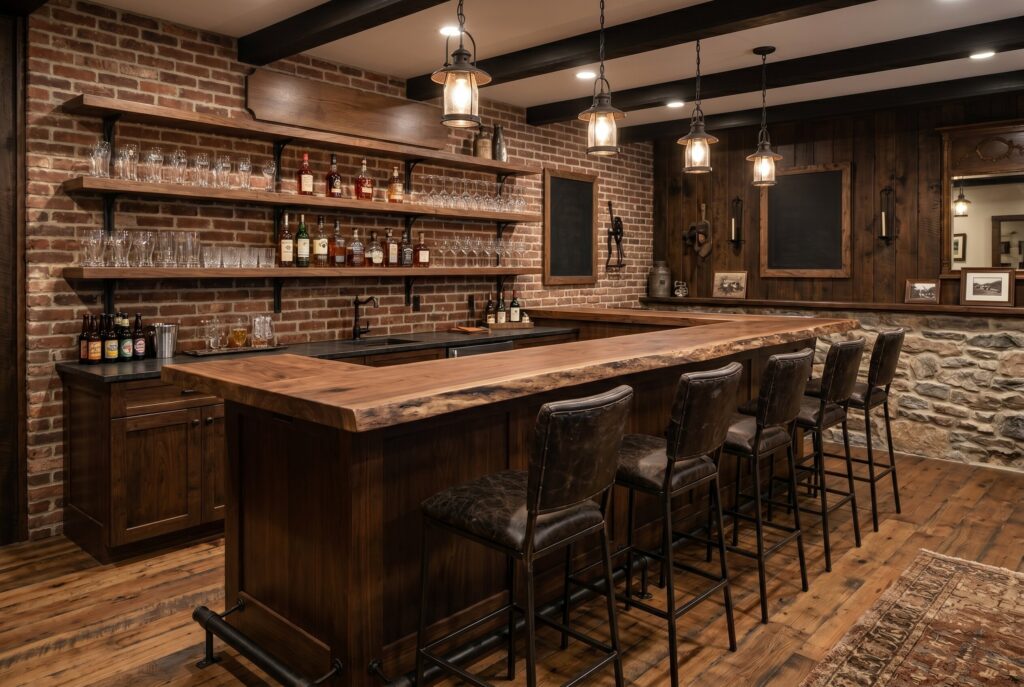
A rustic basement bar uses brick, dark wood, iron lighting, and leather stools to create the feeling of an old pub. Use a live-edge counter if you want warmth and character. Add open shelving for glassware, but keep the layout practical. The best basement bar doesn’t just look good. It gives people a reason to gather.
2. The Sleek Wet Bar
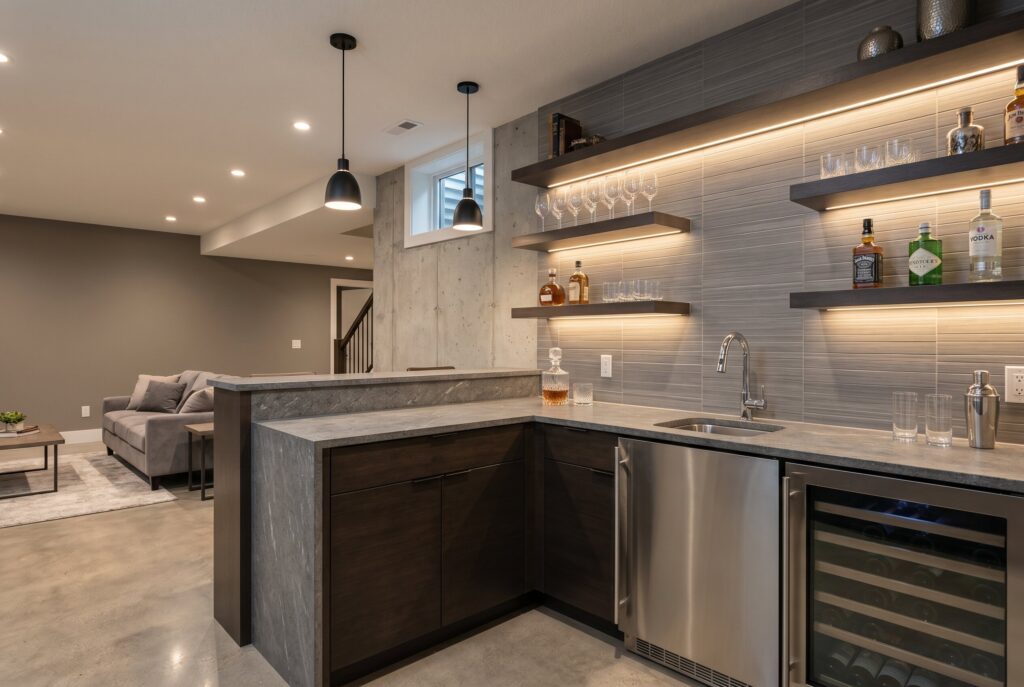
A modern basement bar can feel more like a hotel lounge than a sports room. Add a small sink, beverage fridge, wine storage, stone counter, and closed cabinetry. Use under-shelf lighting to make the bar glow without overpowering the rest of the basement. This works especially well in modern basement ideas where clean lines matter.
>>> 10 Stylish Toilet Paper Storage Ideas for Small Bathrooms
3. The Sports Sanctuary
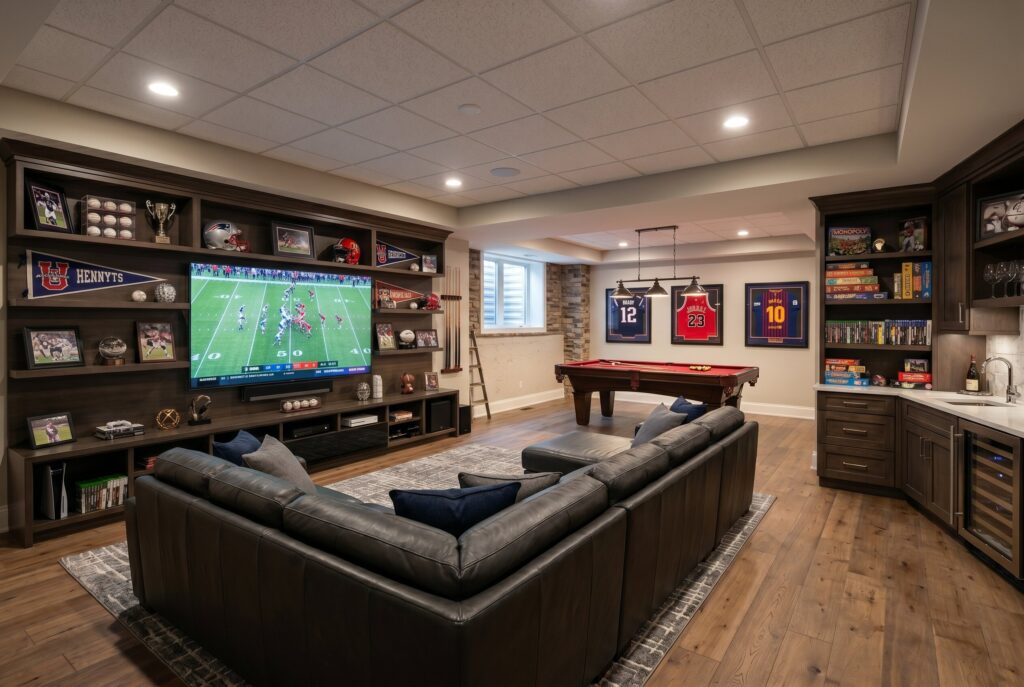
For basement man cave ideas, start with sightlines. Mount multiple screens where they can be seen from one large sectional rather than scattered chairs. Add a pool table, framed jerseys, and built-in storage for games. The space should feel social, not crowded. A U-shaped sectional usually works better than separate recliners because it keeps conversation open.
4. The Gamer’s Neon Lounge
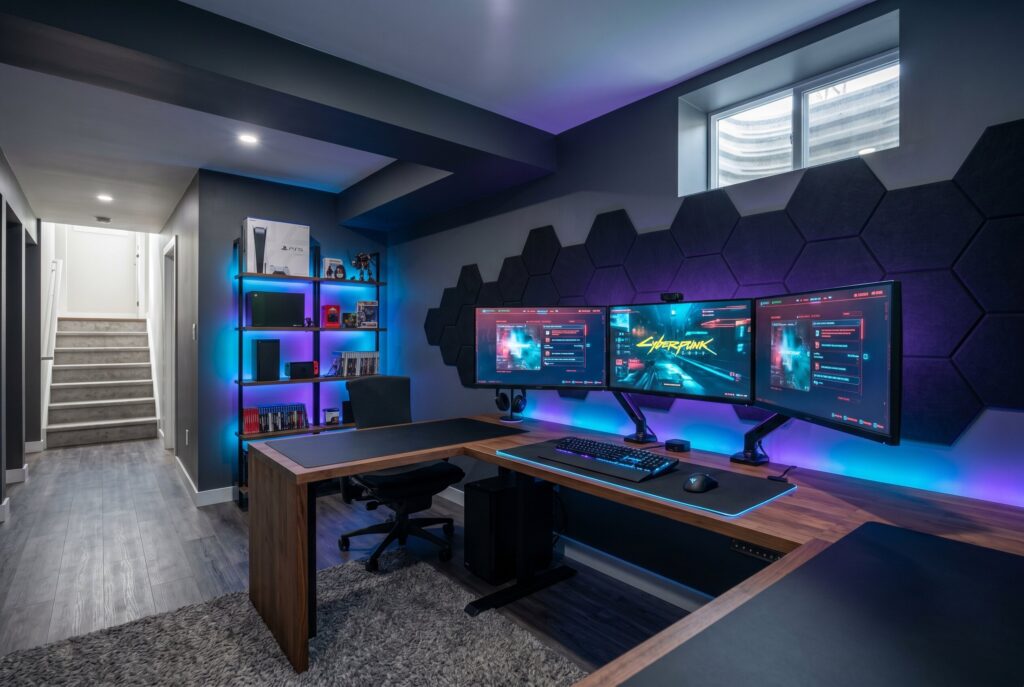
A gaming basement benefits from darker walls, hidden LED lighting, and low-glare surfaces. Use cable management behind consoles and desks so the room doesn’t feel chaotic. Add acoustic panels to reduce echo during games or streaming. This idea works best when the lighting can shift between bright task mode and moody night mode.
5. The Staggered Seating Theater
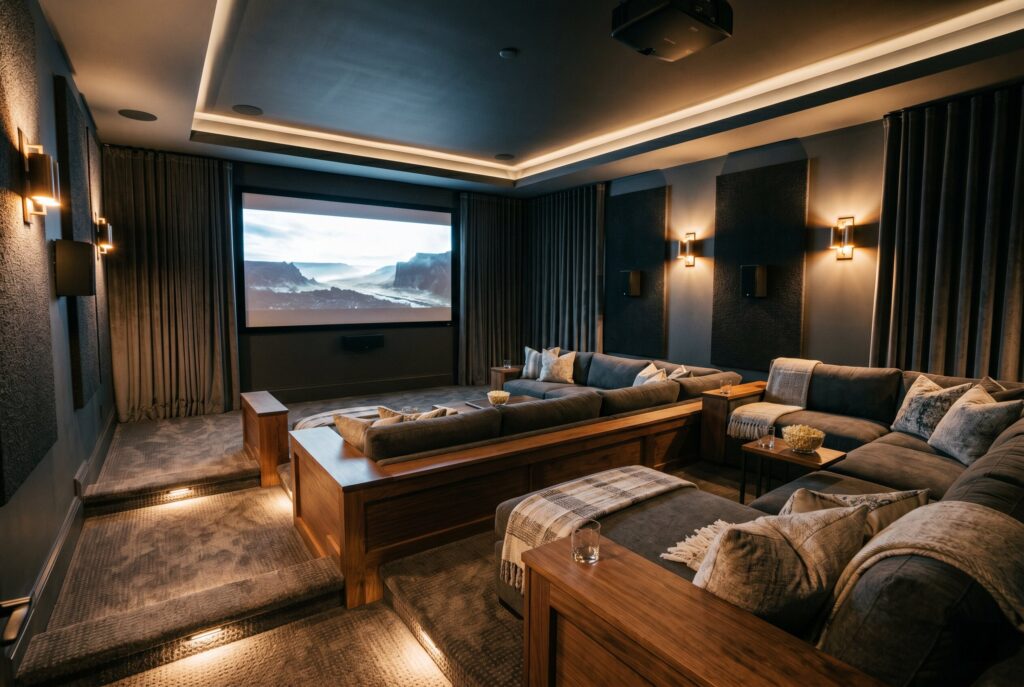
A basement theater needs more than a big screen. Raised platforms help every seat see clearly. Instead of single chairs, use deep sectional seating or long cushioned benches for a more relaxed family experience. Add blackout curtains, acoustic panels, and dimmable sconces. The goal is immersion, not just equipment.
6. The Soundproof Haven
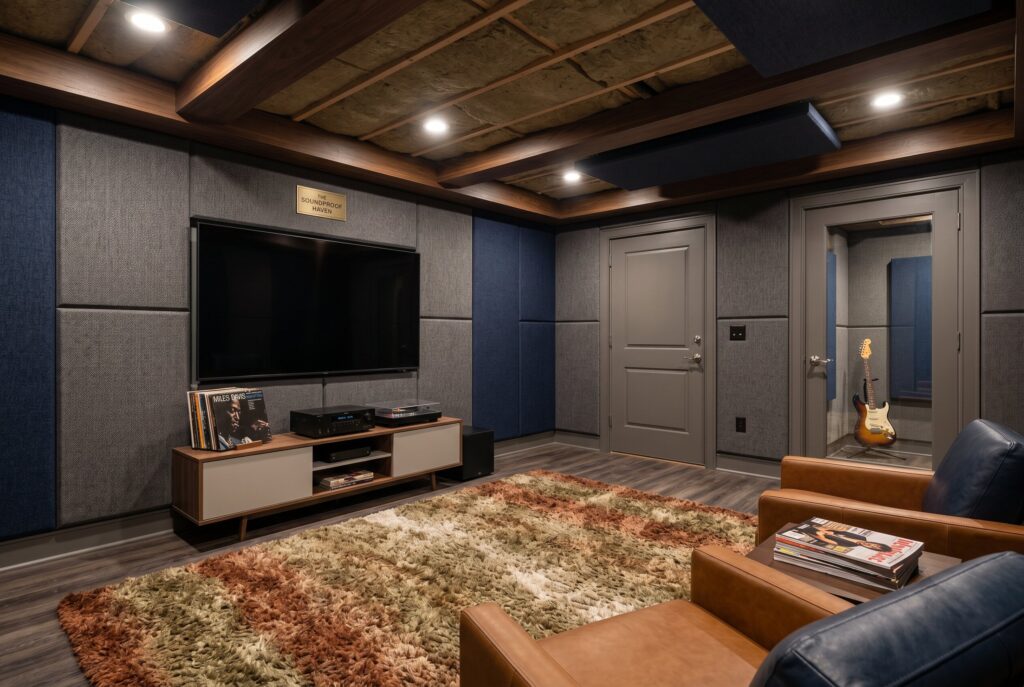
Soundproofing is one of the most overlooked basement ideas. Use mineral wool insulation, thick rugs, fabric panels, and solid-core doors to reduce noise transfer. This matters for theaters, music rooms, gyms, and playrooms. A quiet basement feels more expensive because it doesn’t echo like a hollow concrete box.
Lifestyle and Wellness Spaces
7. The Rubber-Floored Home Gym
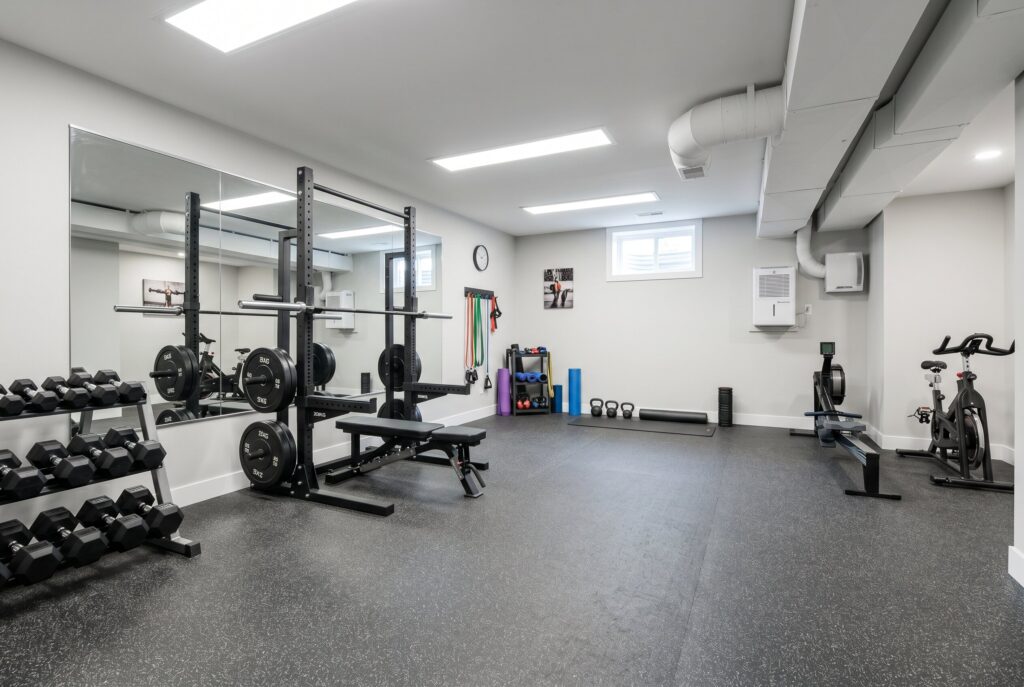
A basement gym needs durable flooring, bright lighting, ventilation, and wall mirrors. Rubber flooring protects both the concrete slab and your joints. Keep equipment against the walls so the center stays open for movement. Add a dehumidifier if the space feels damp.
8. The Zen Spa Bathroom
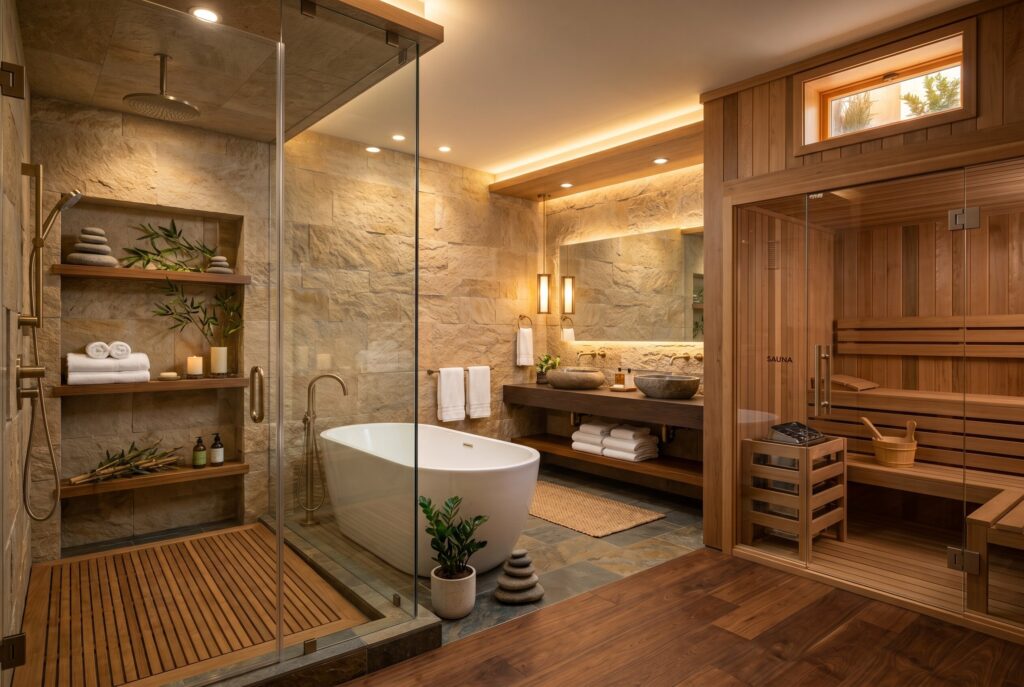
Basement bathroom ideas can feel luxurious when you use warm tile, glass shower walls, soft lighting, and wood accents. If space allows, add a sauna or steam shower. Good ventilation is essential because moisture can create mold in enclosed lower levels.
9. The Multi-Gen Guest Suite
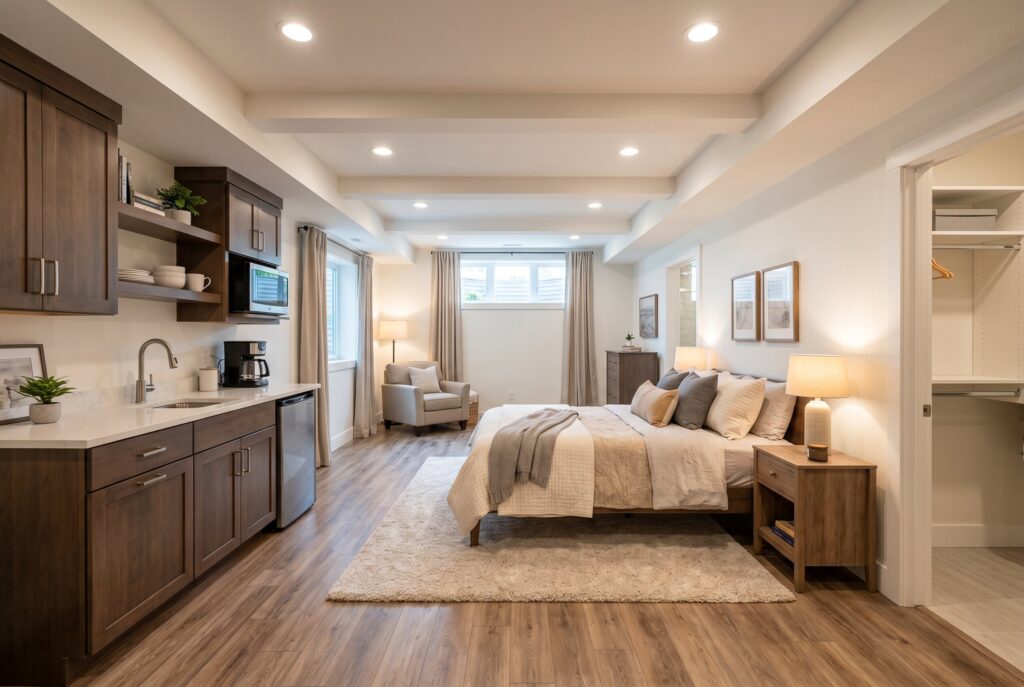
A guest suite is one of the most valuable finished basement ideas. Combine a bedroom, bathroom, closet, and kitchenette to create privacy for visitors, aging parents, or adult children. Use warm lighting and soft textiles so the room doesn’t feel like temporary overflow space.
10. The Quiet Home Office
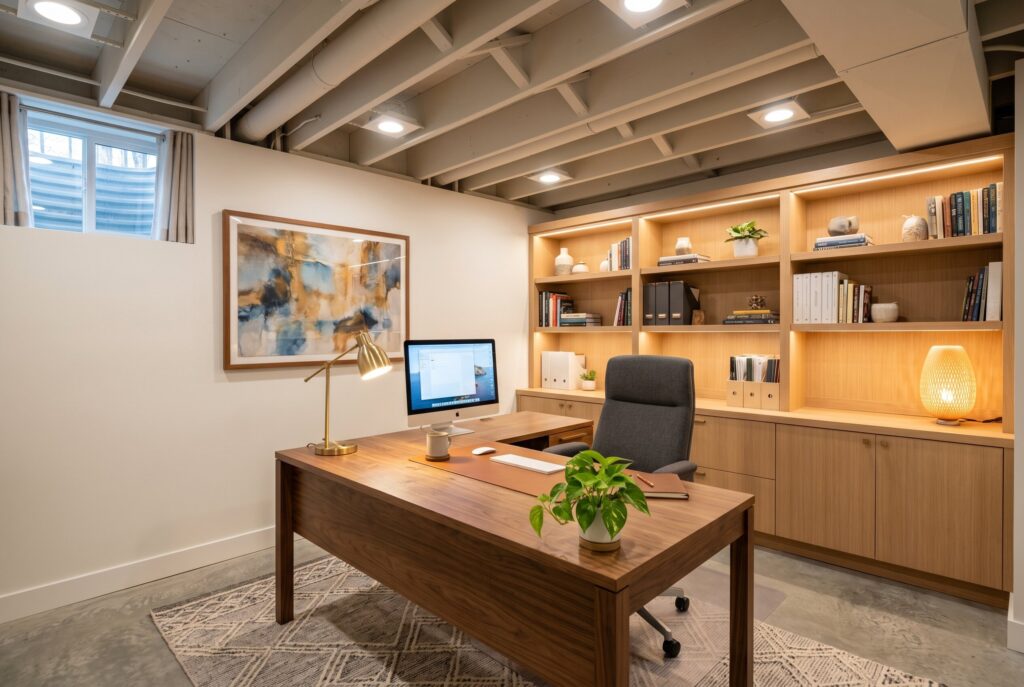
Basements can make excellent workspaces because they are separated from household noise. Use a pale wall color, layered task lighting, and built-in shelving. If there is no window, add art and warm lamps to keep the office from feeling isolated.
Design Styles: From Industrial to Modern
11. The Exposed Industrial Look
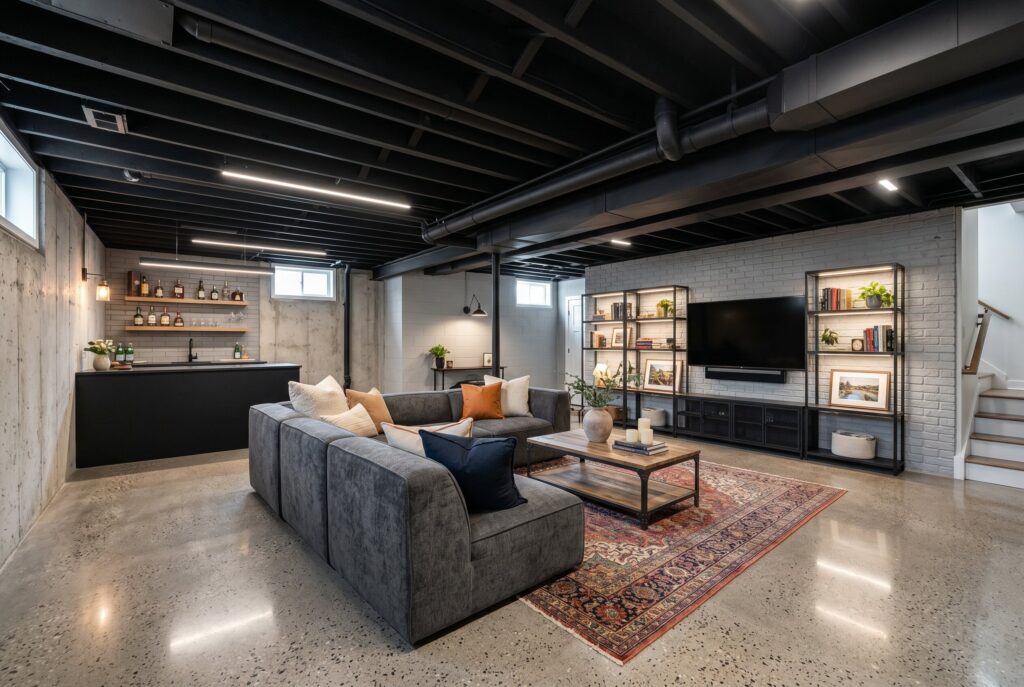
Unfinished basement ideas can look intentional if you commit to the aesthetic. Paint exposed joists, pipes, and ductwork matte black to create an infinity ceiling effect. This can make the ceiling feel higher than a low drop ceiling. Pair it with polished concrete floors, warm rugs, and large seating.
12. Traditional Warmth
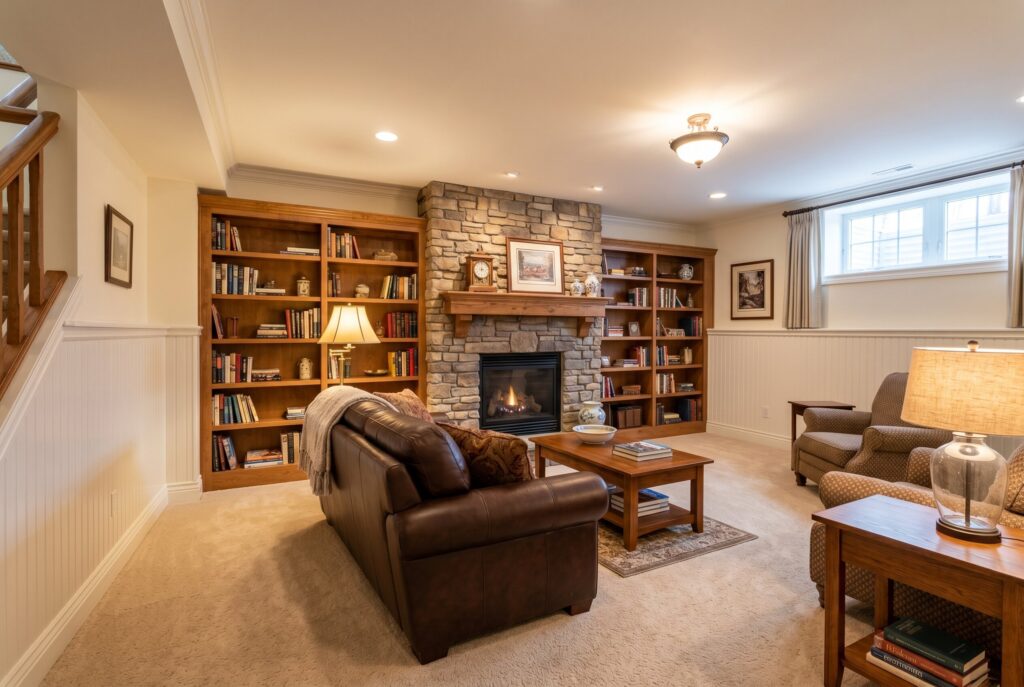
For a classic basement, use wainscoting, soft carpet, warm white walls, and a fireplace feature. This style works well for families who want the basement to feel like a second living room. Add built-in bookshelves and lamps so the room feels layered instead of newly finished.
13. Minimal Modern Basement
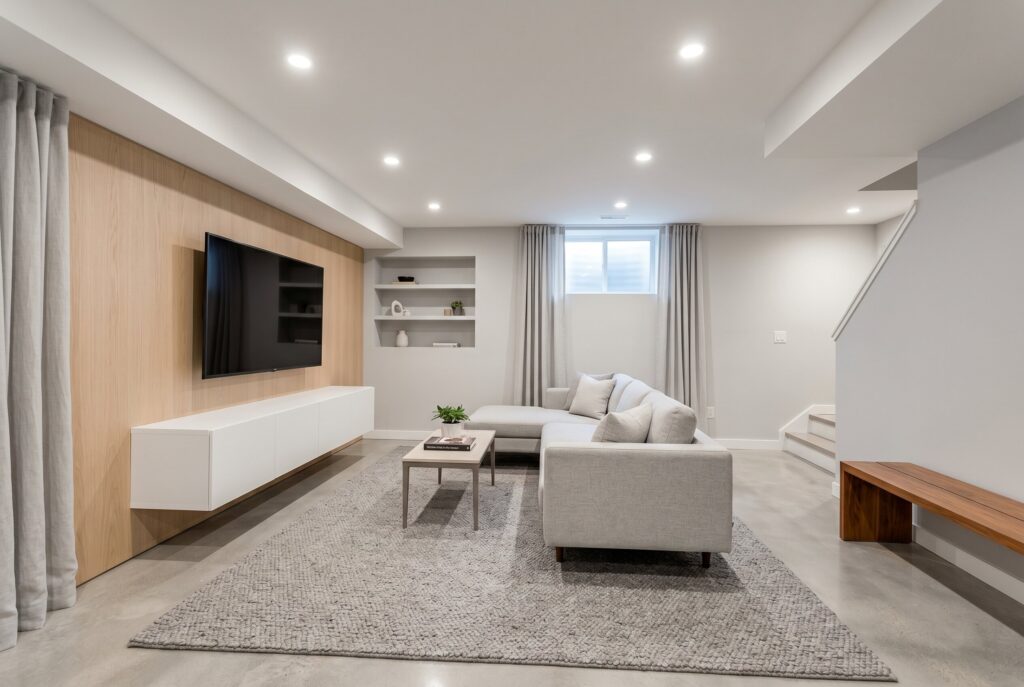
Modern basement ideas rely on simplicity. Use clean lines, pale neutrals, recessed lighting, floating media cabinets, and low-profile sectionals. To avoid a cold look, add wood, wool rugs, linen curtains, and warm LED lighting.
14. The Modern Farmhouse Lounge
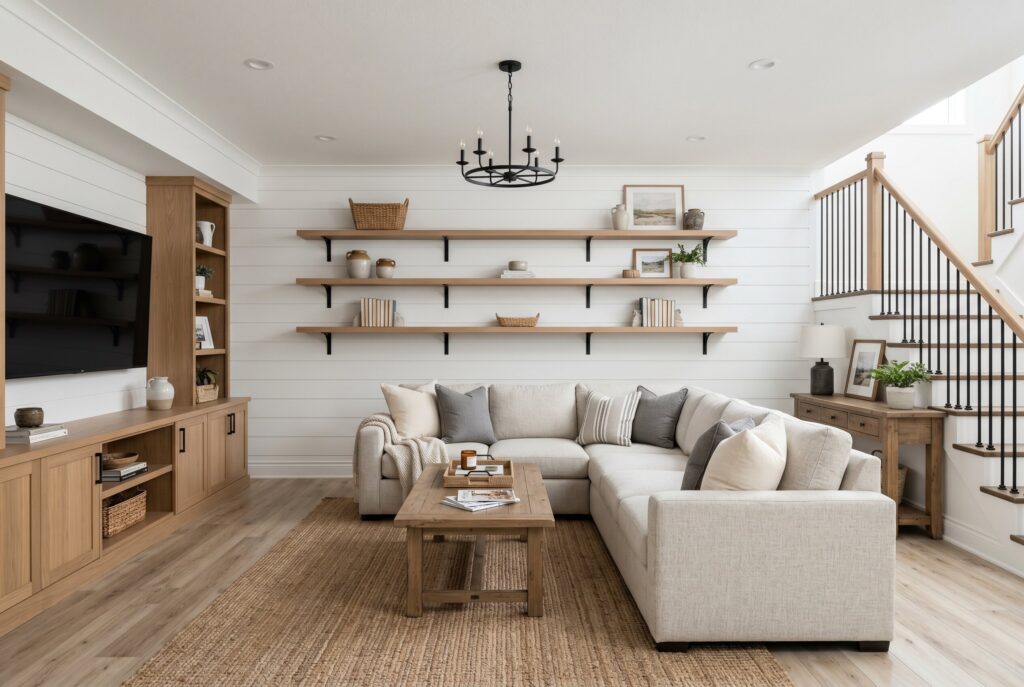
Use shiplap, black hardware, oak shelving, and a long sectional to create a relaxed family lounge. Keep the palette light so the basement doesn’t feel heavy. This style is practical because it welcomes kids, guests, movie nights, and casual entertaining.
Basement Ideas for Small and Dark Spaces
15. The White-Out Illusion
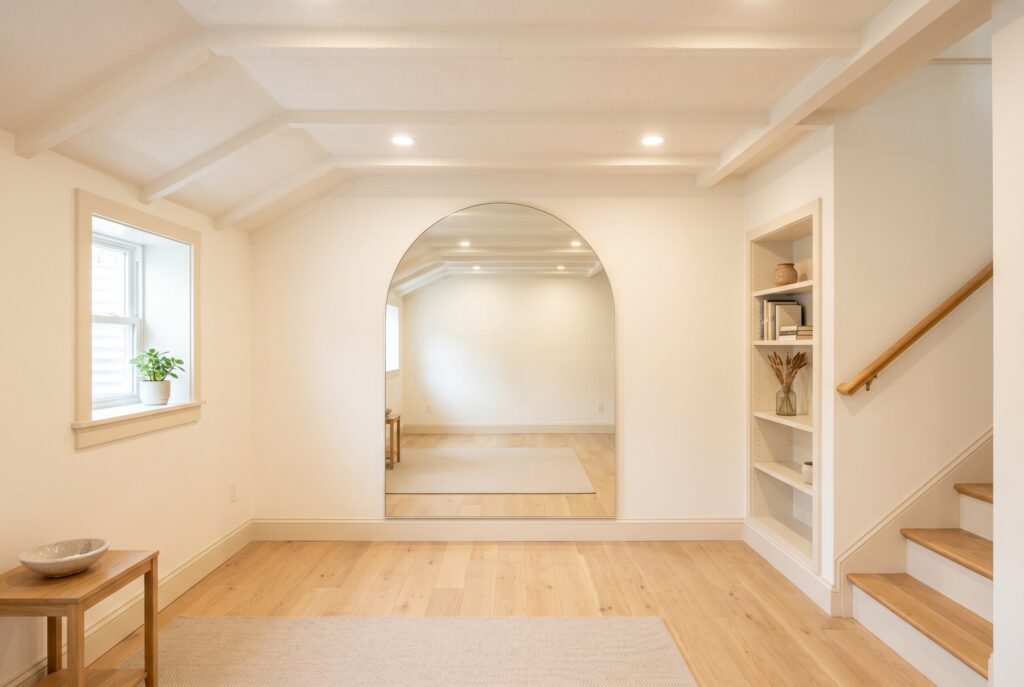
For small basement ideas, paint walls and ceilings in the same warm white. This reduces visual breaks and makes the room feel larger. Add mirrors across from windows or light sources to bounce brightness deeper into the space.
16. Circadian Rhythm Lighting
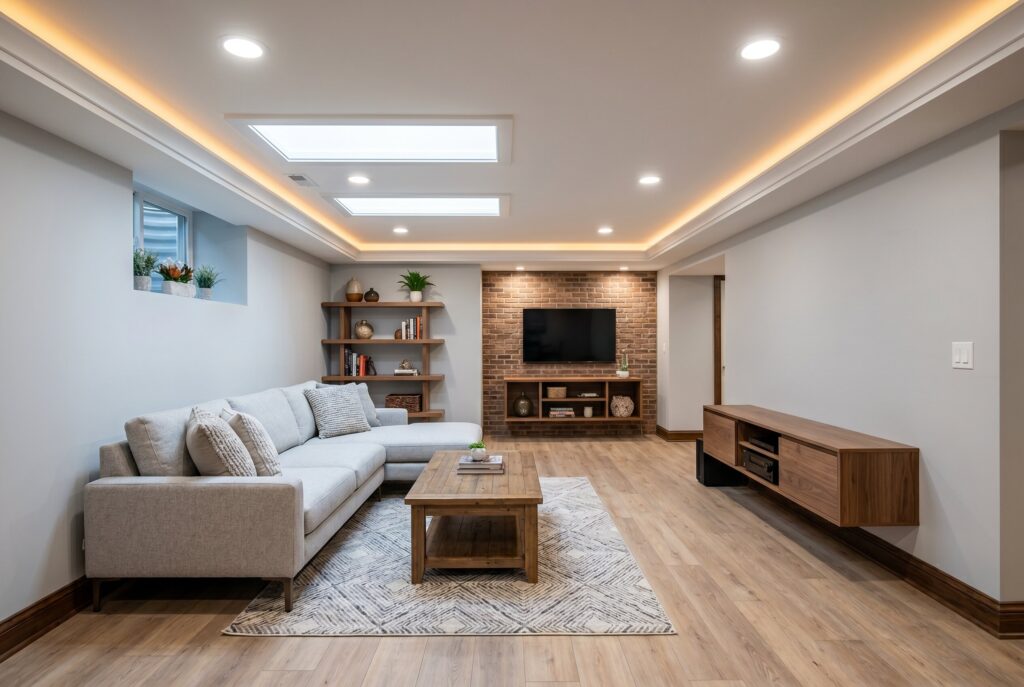
Basements often lack natural light, so lighting design matters. Use layered fixtures that shift from bright white during the day to warm amber at night. Faux skylights can also help reduce the closed-in feeling.
17. Built-In Storage Walls
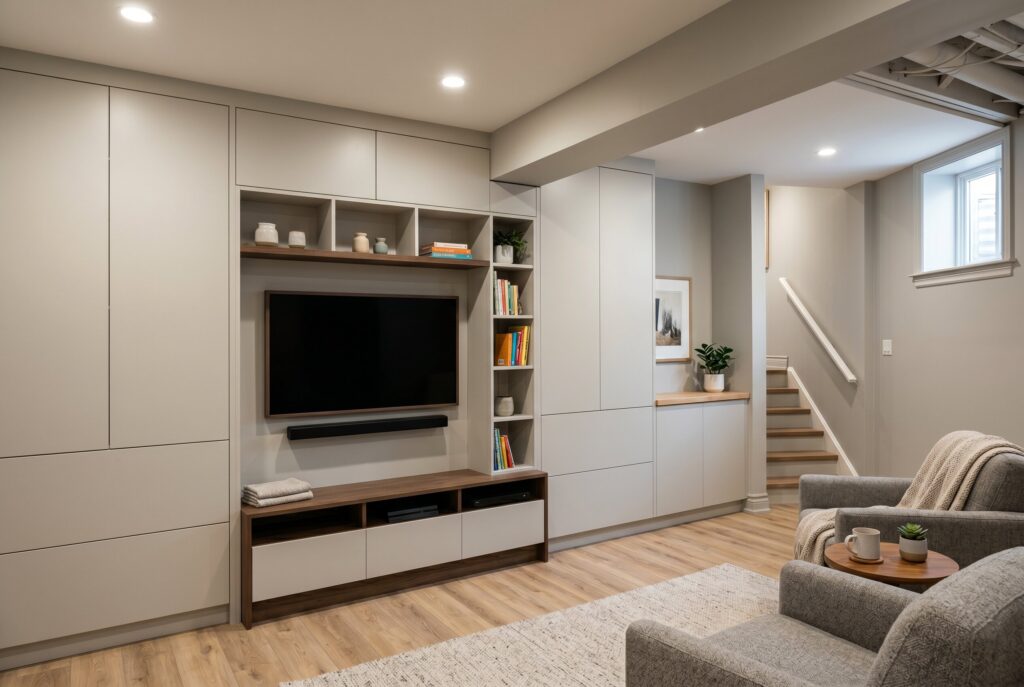
Small finished basement ideas work best when storage is hidden. Built-in cabinets can hold games, blankets, toys, tools, and media equipment. Use flat-front doors in the same color as the wall to keep the room calm.
18. Column Disguise
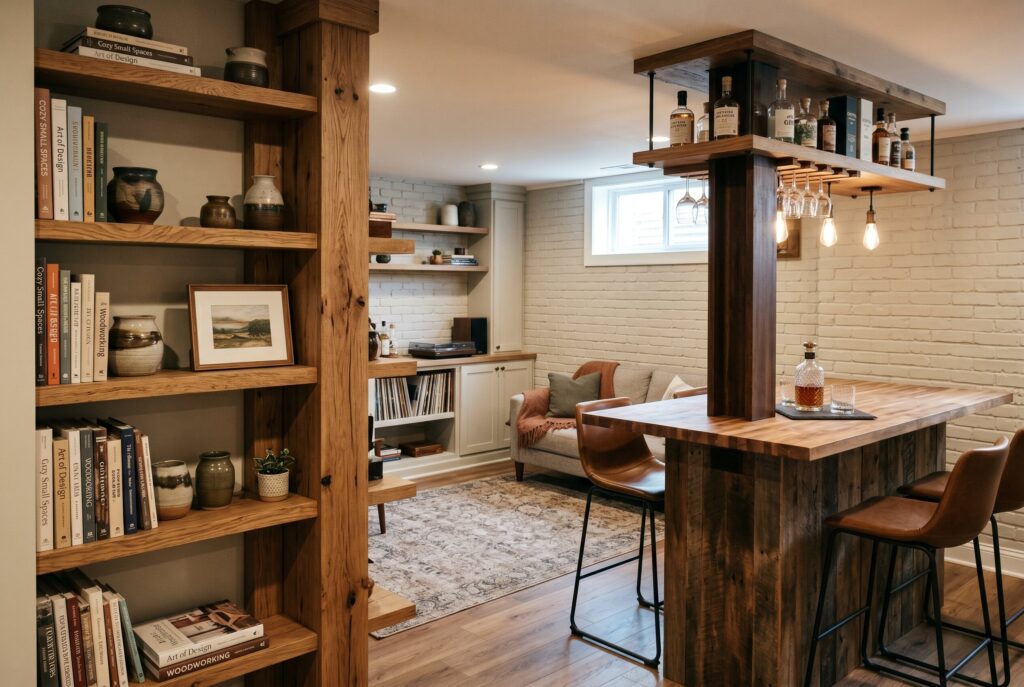
Steel posts can ruin a layout if ignored. Wrap them in wood, turn them into shelving supports, or integrate them into a bar island. When treated intentionally, columns can become part of the design.
Flexible Family Transformations
19. The Ping Pong Corner
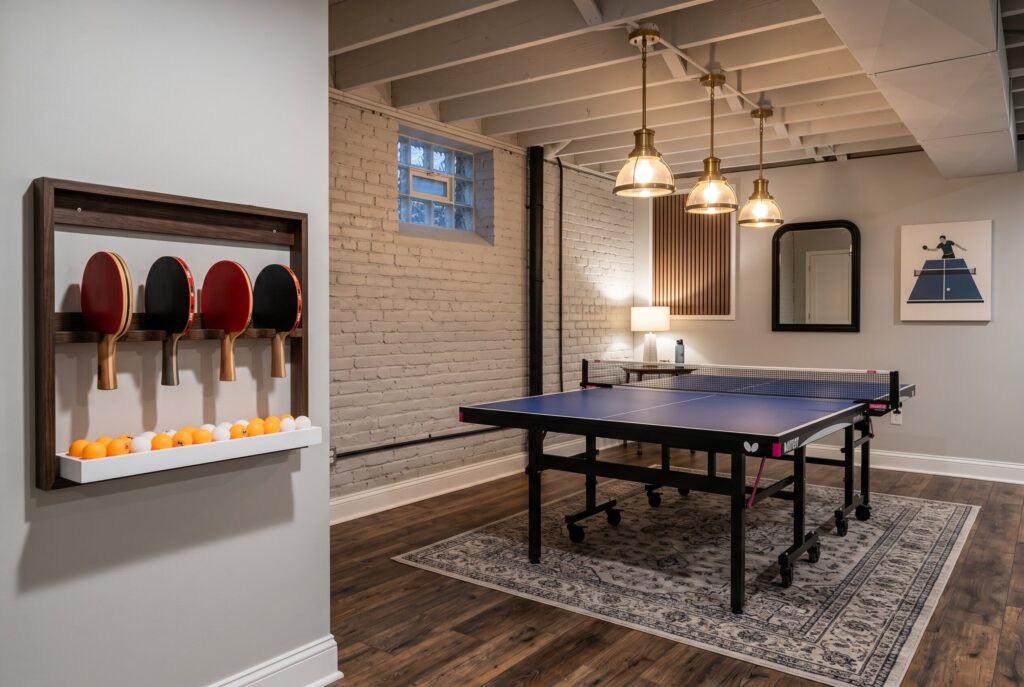
A basement can still include games without feeling juvenile. Place the ping pong table in a defined zone with wall storage for paddles and balls. Add warm lighting so it feels like part of the room.
Measure before you buy: a full-size table is 9 feet long and 5 feet wide, and players need several feet of clearance at each end and along the sides, so many players suggest a play area of roughly 19 by 11 feet for comfortable games. If your space is tighter, a folding table or a smaller “midsize” table can be rolled against the wall when it’s not in use. Low ceilings and hanging pendants also matter, so keep fixtures clear of the space above the table.
20. The Kids’ Play Lounge
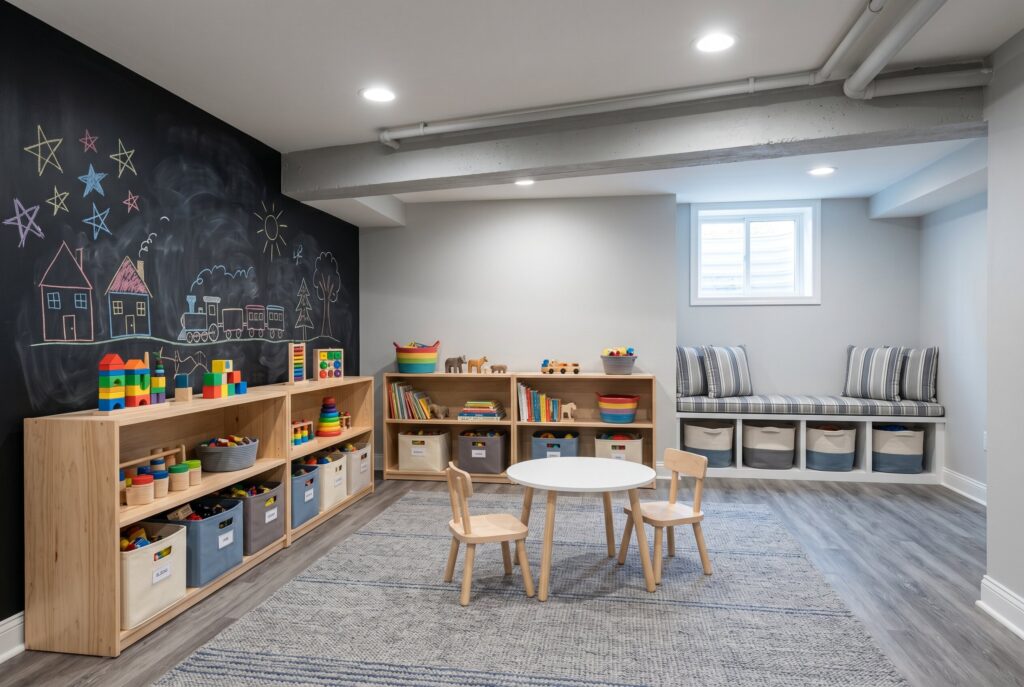
Use washable rugs, soft storage bins, chalkboard walls, and low shelves. Keep the color palette controlled so toys don’t overwhelm the design.
Choose cushioned, easy-to-clean flooring such as interlocking foam or rubber tiles over a moisture-tolerant subfloor, and add outlet covers, anchored furniture, and good lighting at floor level. Keep the play zone within sight of the stairs, and make sure the basement has working smoke and carbon monoxide alarms before it becomes a regular kids’ space.
21. The Music Room
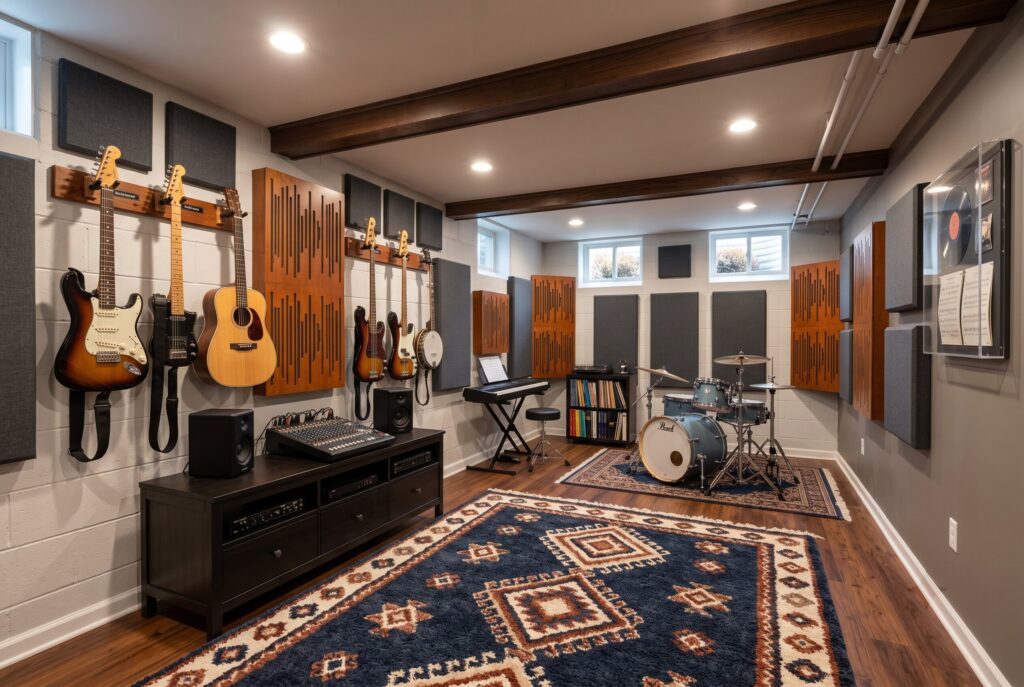
Add acoustic panels, thick rugs, and wall-mounted instrument storage. A music basement should feel creative but still organized.
Separate two goals: acoustic panels improve how the room sounds inside, but they don’t stop sound from reaching upstairs. For drums or amplified instruments, combine dense insulation in the ceiling, a solid-core door, and sealed gaps around outlets and ducts. Stable humidity also helps protect guitars and pianos from warping, which is another reason to keep a dehumidifier running.
22. The Wine Wall
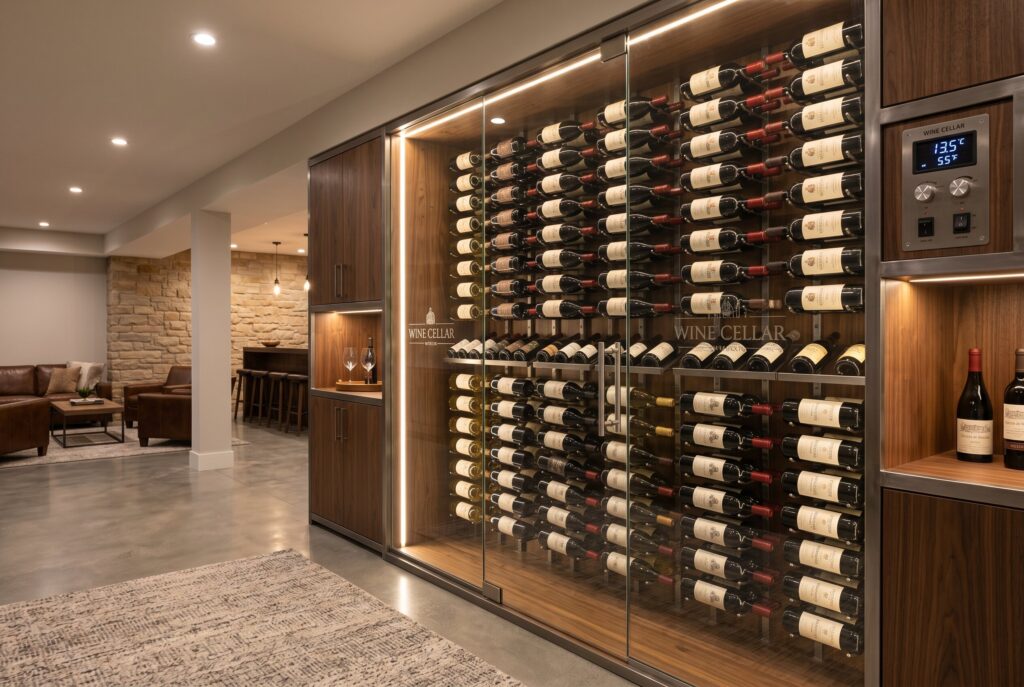
Instead of a full wine cellar, install a glass-front wine wall with temperature control. It gives a luxury effect without taking over the entire basement.
Many collectors aim for a steady temperature around 55°F with moderate humidity, and basements already sit cooler and more stable than most rooms, which gives you a head start. Keep the wall away from the furnace, water heater, and direct sunlight, and choose a cooling unit rated for the size of the enclosure. Even a compact wall can hold a meaningful collection when racks run floor to ceiling.
23. The Laundry Upgrade
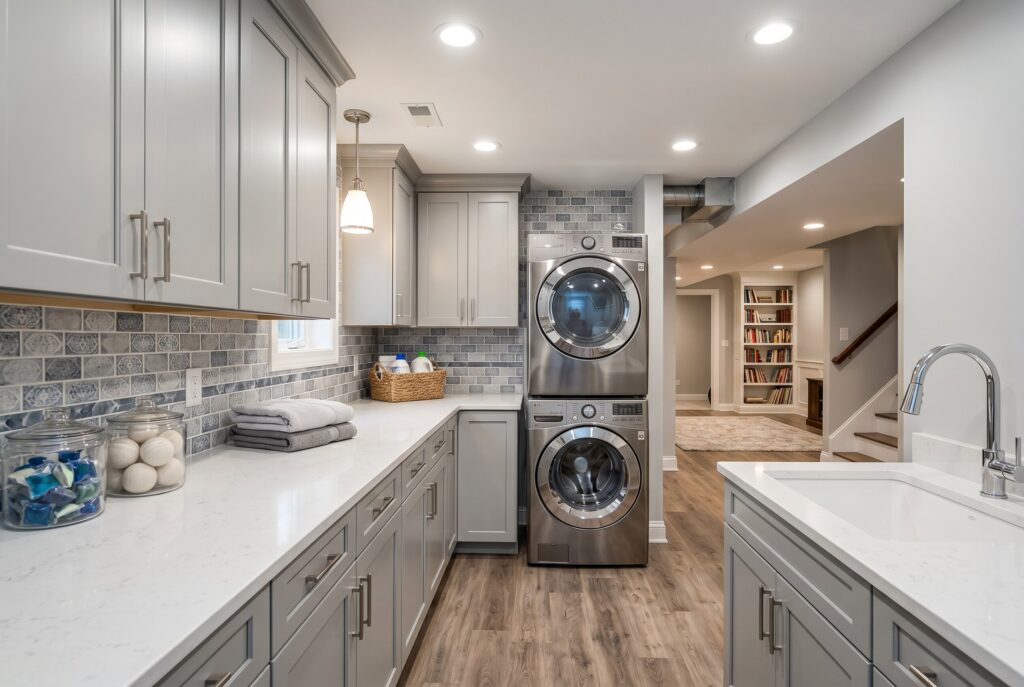
If the laundry room has to remain in the basement, treat it as an intentional part of the home rather than a purely functional space. Add cabinetry to keep supplies organized, install a folding counter for convenience, and use a tile backsplash to bring in texture and style. Better lighting can make the room feel brighter, cleaner, and more enjoyable to use. Keep the dryer vent run short and clean, and place the washer near a floor drain or on a drain pan to limit damage from leaks.
24. The Craft Studio
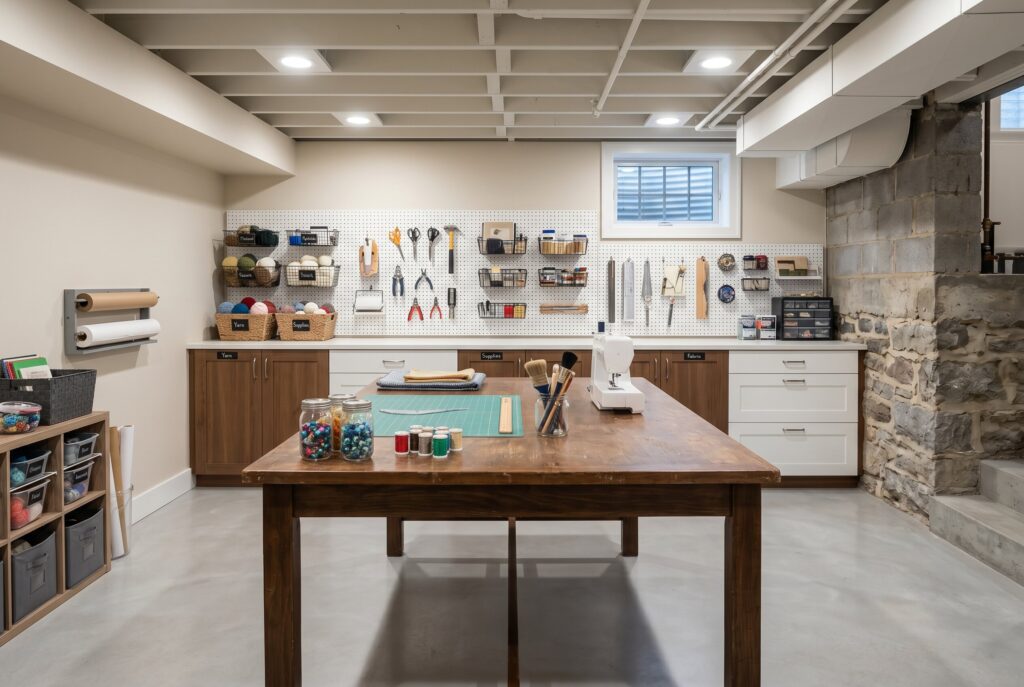
Use durable flooring, pegboards, and a large worktable to create a practical and organized hobby space. Whether you’re into woodworking, crafts, painting, or DIY projects, having dedicated surfaces and storage makes it easier to stay productive. Smart storage solutions help keep tools and supplies within reach while preventing creative mess from turning into permanent clutter. If you work with paints, stains, or glues, plan for ventilation, since basements trap fumes more easily than upstairs rooms.
25. The Reading Den
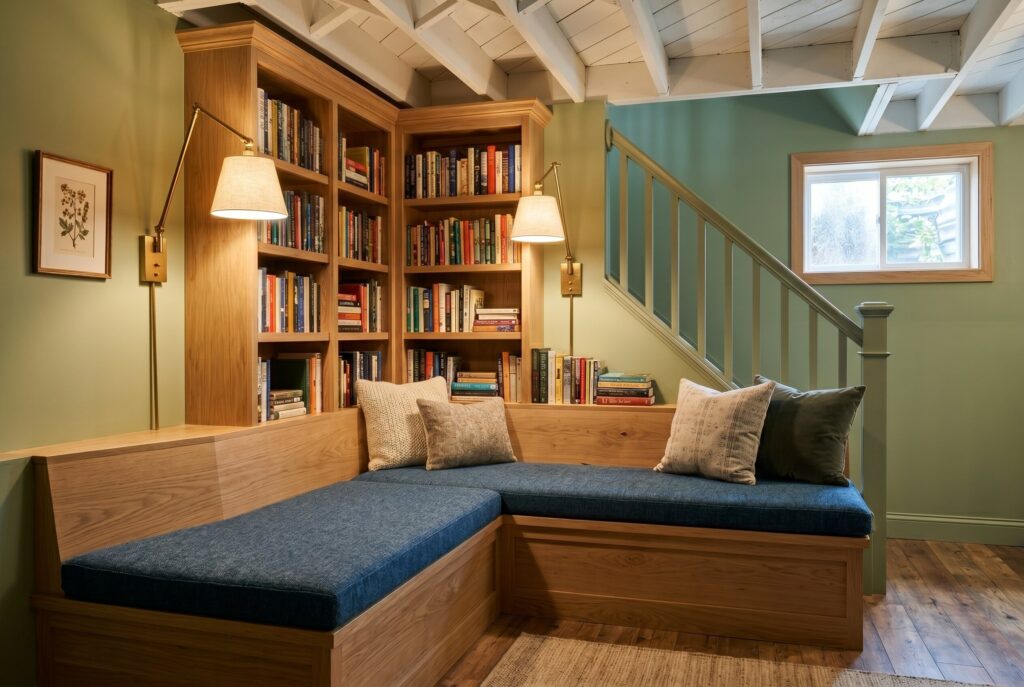
Create a quiet reading nook with built-in shelves, warm wall sconces, and a comfortable bench. What might otherwise be an unused corner becomes a cozy retreat for reading, relaxing, or enjoying a morning coffee. Adding soft cushions, throw blankets, and a small side table can make the space even more inviting.
26. The Open Zone Divider
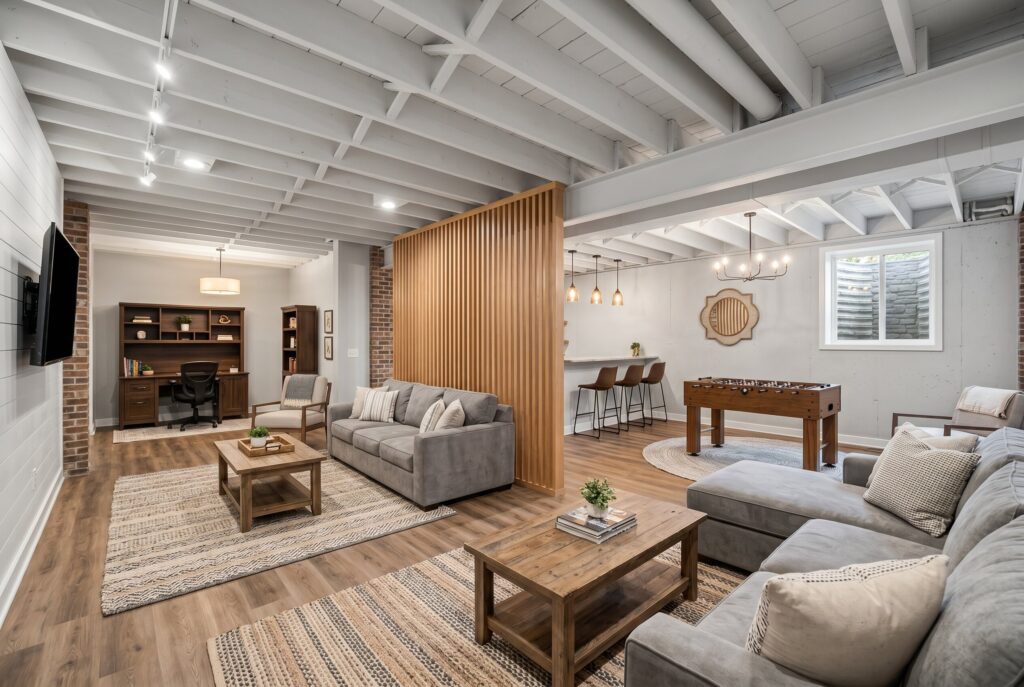
Use rugs, lighting, ceiling beams, or slat partitions to define separate areas without making the basement feel closed in. These design elements create visual boundaries while preserving an open and spacious layout. This approach works especially well in multipurpose basements where entertainment, work, fitness, and relaxation zones need to coexist comfortably.
27. The Large Sectional Family Hub
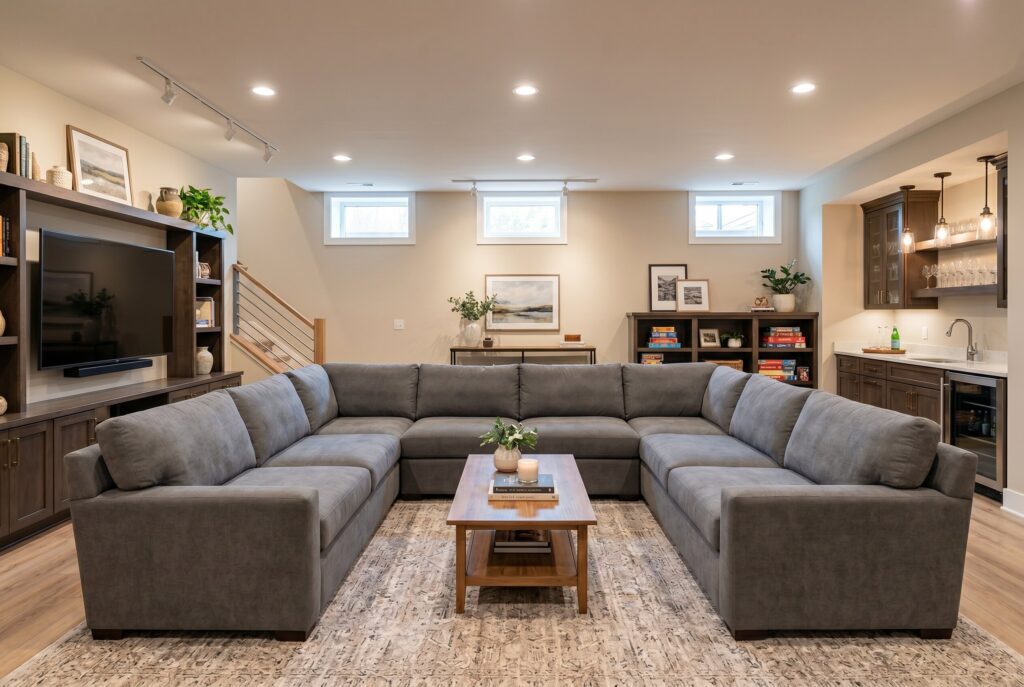
A large L-shaped or U-shaped sectional is often the smartest basement furniture choice. It anchors the room, seats more people, and avoids the scattered look of single chairs. It also helps define the main gathering area, especially in open-concept basement layouts. Pair it with a large area rug and a coffee table to make the space feel even more cohesive and welcoming.
Frequently Asked Questions
How much does it cost to finish a basement?
Costs vary widely with scope. Angi puts basic basement finishing at about $7 to $23 per square foot, while Block Renovation estimates a standard contractor-led finish at roughly $30 to $75 per square foot in 2026, with full living suites going higher. The gap usually comes down to whether moisture work, egress windows, permits, bathrooms, and system upgrades are included, so get itemized quotes before you compare prices.
Does finishing a basement add value to a home?
It can add usable living space and buyer appeal, especially when the work is permitted and includes a bathroom or a legal bedroom with proper egress. Keep in mind that below-grade space is often valued differently from above-grade square footage in appraisals, so treat a finished basement as a lifestyle investment first and a resale boost second.
Do I need a permit to finish a basement?
In most U.S. jurisdictions, yes, for framing, electrical, plumbing, HVAC changes, and egress windows. Requirements vary by city and county, so check with your local building department before starting. Unpermitted work can cause problems with insurance claims and home sales.
What is the best flooring for a basement?
Moisture-tolerant options work best: luxury vinyl plank, porcelain tile, rubber flooring for gyms, and sealed or polished concrete. Avoid solid hardwood, which can warp or cup in humid conditions. See our full guide to basement flooring for pros, cons, and costs.
How low is too low for a basement ceiling?
For habitable space, codes typically call for about 7 feet of ceiling height, with some allowance for beams and ducts. If your ceiling is lower, a painted exposed ceiling usually preserves more height than a drop ceiling, and a local contractor or building official can confirm what your code allows.
Conclusion
The best basement ideas start with a balance of creativity and practical planning. Before focusing on design features, take care of the essentials by addressing waterproofing, managing moisture, testing for radon, choosing durable materials, and making sure the space meets local egress and safety requirements. Thoughtful lighting can make a basement feel brighter and more welcoming, while proper sound control helps create a comfortable environment for different activities.
After the fundamentals are in place, think about how the space can support your family’s lifestyle. Some homeowners prefer a cozy home theater for movie nights, while others turn the area into a home gym, guest suite, office, entertainment room, or basement bar. The most successful designs are built around real needs and create spaces that people naturally gravitate toward. A finished basement should feel like a seamless extension of the home. When planned well, it transforms unused square footage into a warm, functional, and inviting space that adds value to everyday life.