

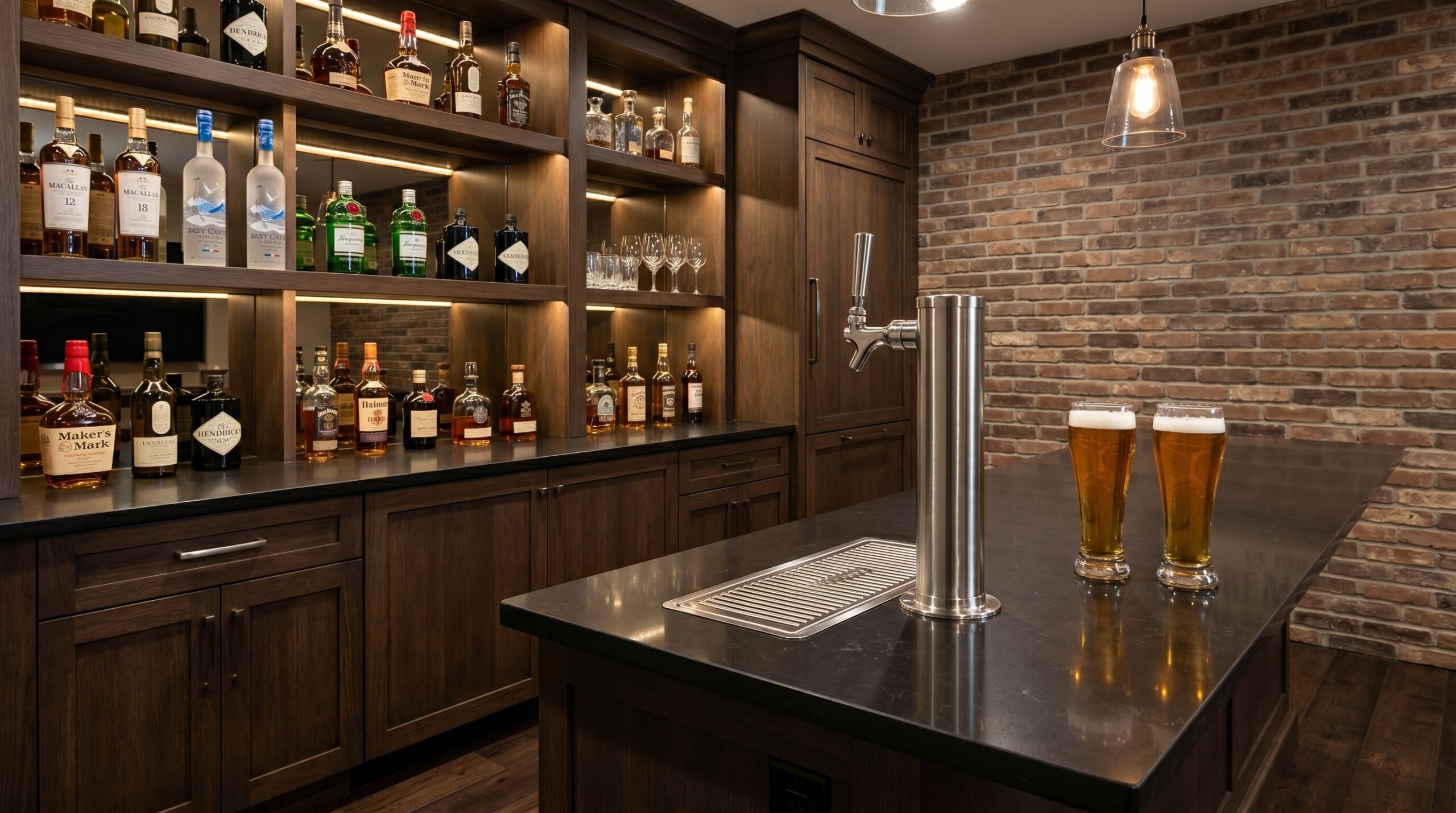
When homeowners search for basement bar ideas, the glossy photos often hide one expensive truth: plumbing. Before choosing walnut cabinets, smoked glass, or a moody speakeasy palette, you need to decide between a dry bar and a wet bar. A dry bar is easier, faster, and more budget friendly because it does not need a sink or drain. A wet bar adds convenience, but it may require plumbing, permits, and possibly a sewage ejector pump. The best finished basement ideas balance this construction reality with a sleek design vision, creating a lounge that feels polished, practical, and ready for entertaining.
Phase 1: The Core Foundation
1. The Wet Bar Reality
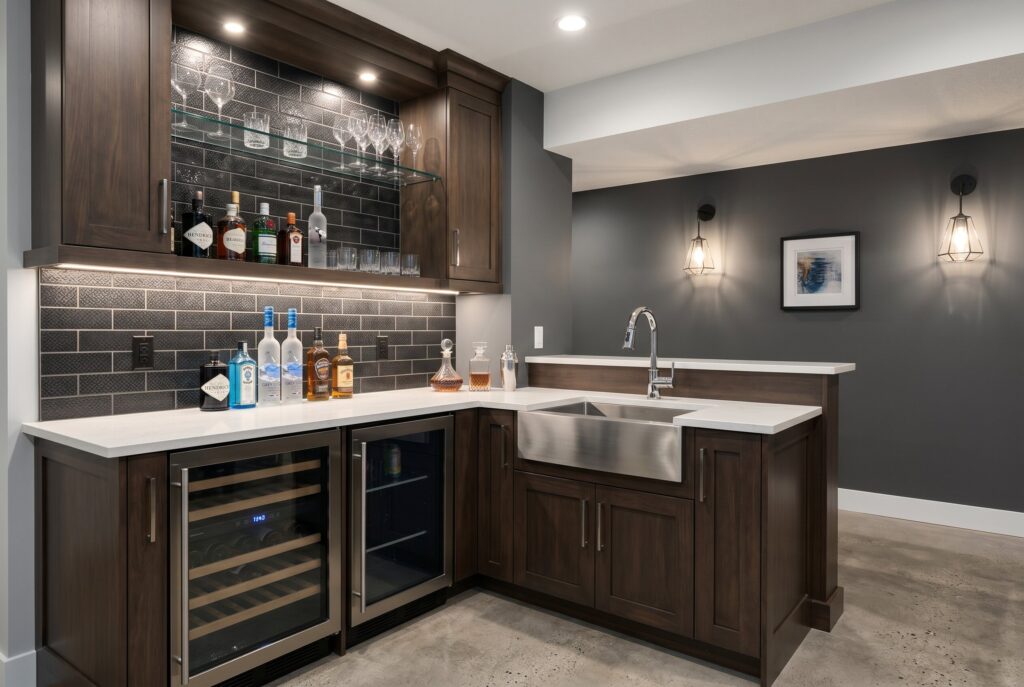
A wet bar sounds simple until you remember that basement drains often sit below the main sewer line. If gravity cannot move wastewater out, the project may need a sewage ejector pump. This can raise cost quickly, especially if the floor must be opened. A wet bar is still worth it for serious entertaining, but it should be planned early with plumbing, electrical, and cabinet layout in mind.
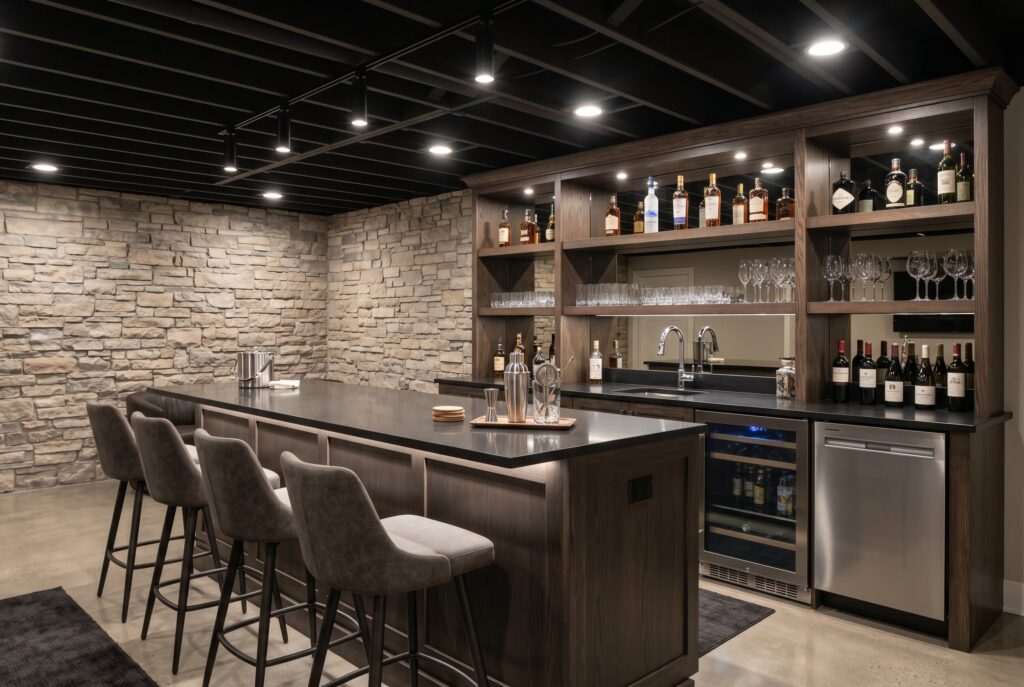
2. The High End Dry Bar Alternative
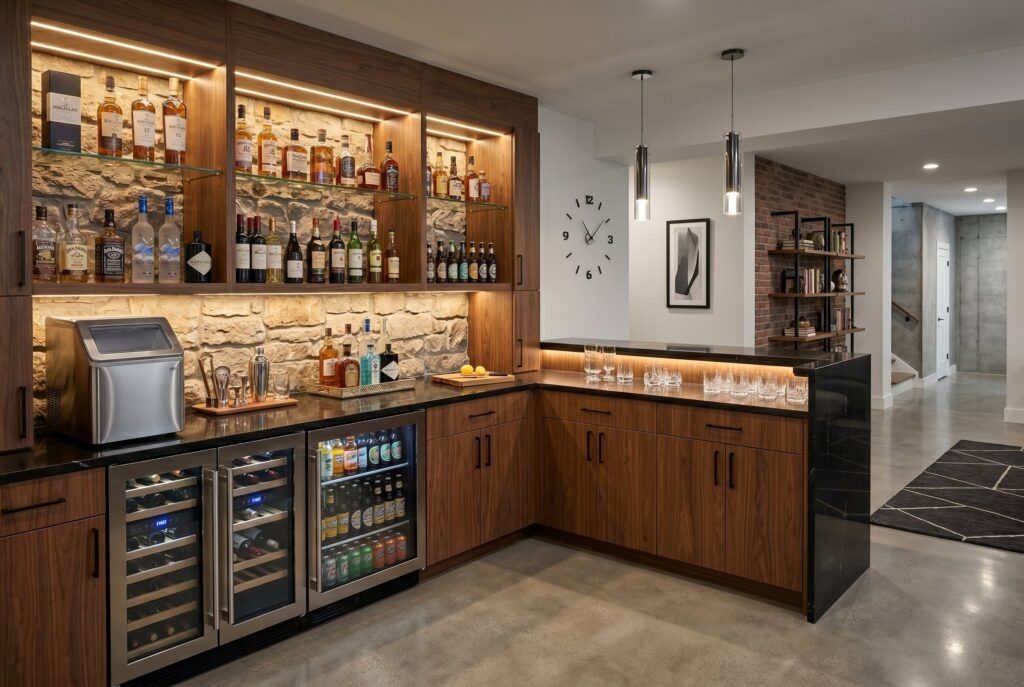
A dry bar can feel just as luxurious without the cost of running water. Instead of a sink, invest in a wine cooler, beverage refrigerator, countertop ice maker, closed storage, and beautiful lighting. For many basement ideas, a dry bar delivers most of the lifestyle value with far less construction disruption.
Phase 2: Space Saving Small Basement Ideas
3. The Under Stair Speakeasy
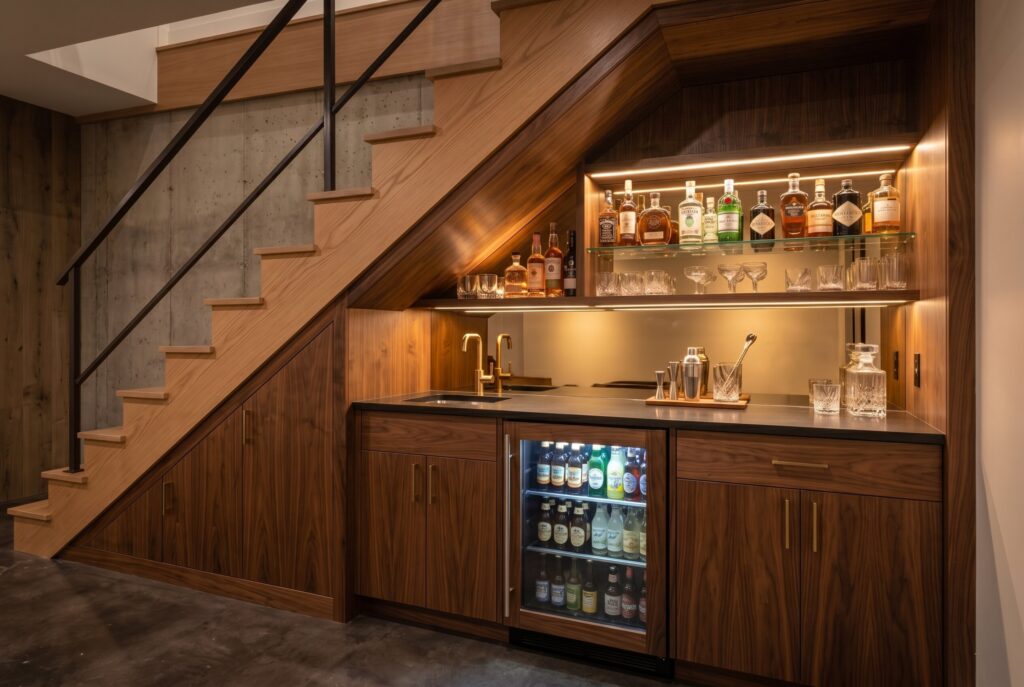
The area under the stairs is often wasted, but it can become a compact hidden bar. Use walnut cabinetry, a mirrored backsplash, and a glass door mini fridge to make the niche feel intentional. Add warm LED shelf lighting to create a tucked away speakeasy mood.
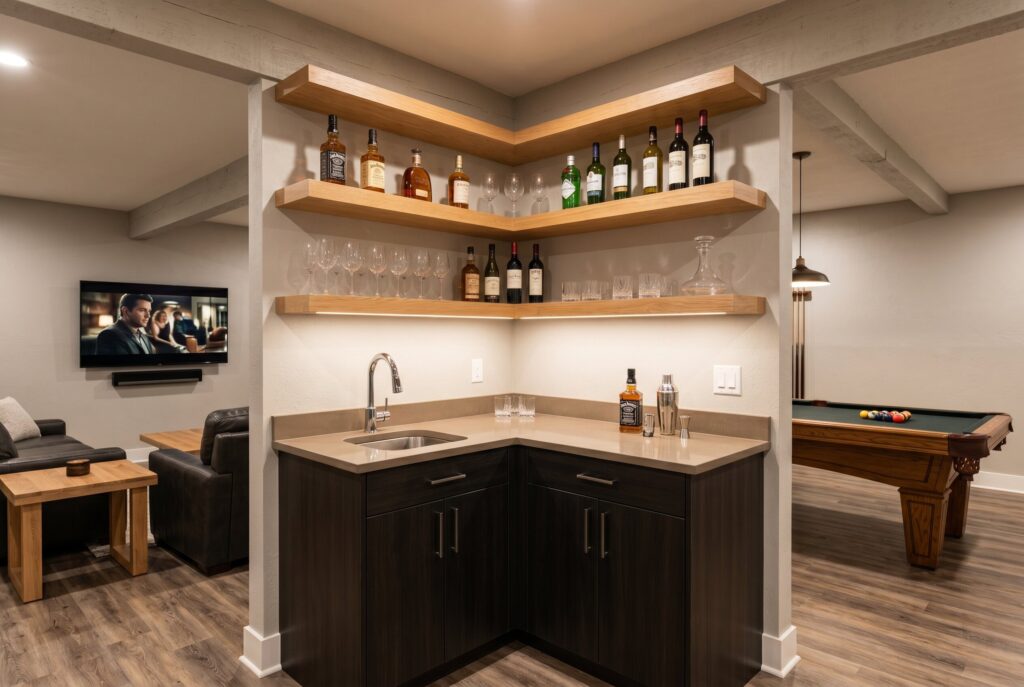
4. The Floating Corner Bar
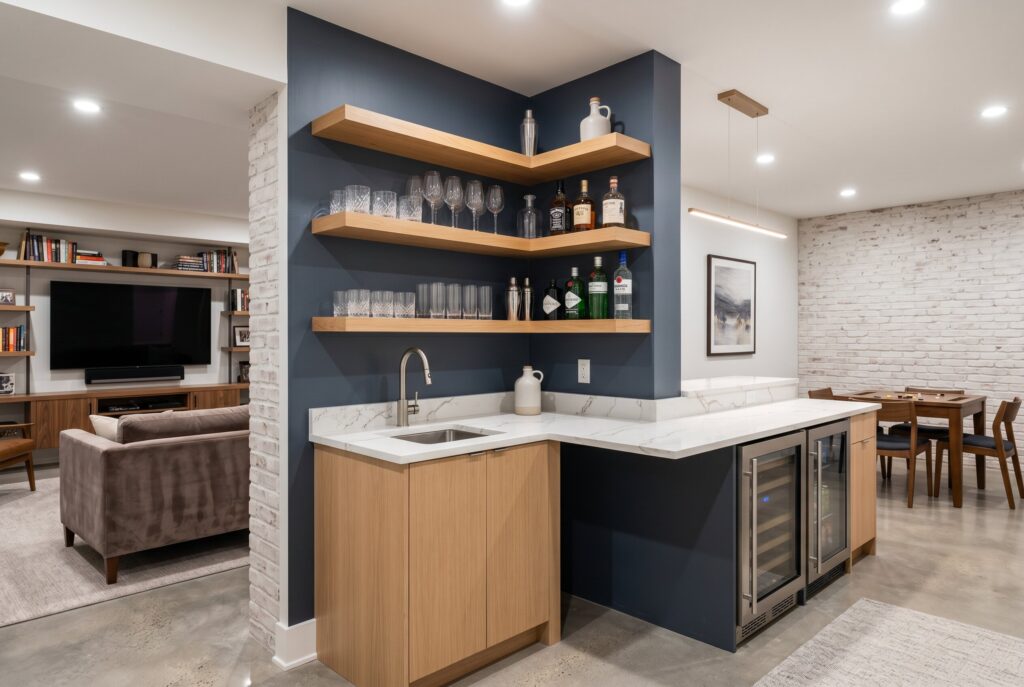
For small basement ideas, avoid heavy upper cabinets that make the room feel cramped. A floating corner bar with oak shelves, a slim base cabinet, and a stone or quartz counter keeps the floor plan open. This works especially well near a media lounge or game table.
5. The Closet Conversion Bar
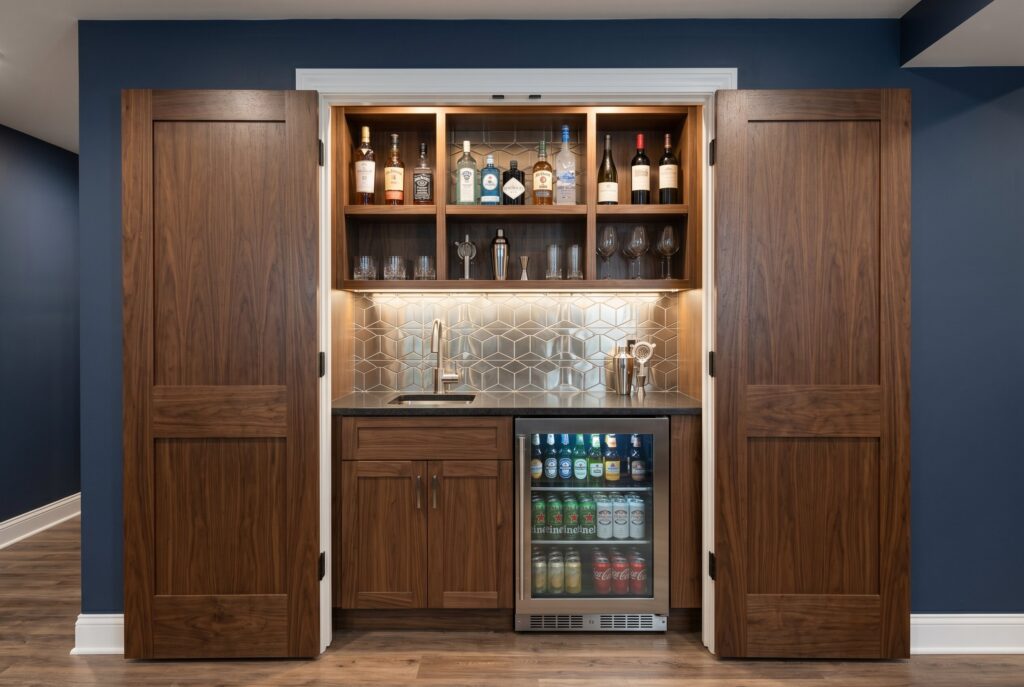
An old basement closet can become a hidden bar with pocket doors or bi fold doors. Inside, add a countertop, backsplash, bottle storage, and a beverage fridge. When closed, the bar disappears completely, making it ideal for compact homes that need flexibility.
Phase 3: Modern Basement Ideas & Aesthetics
6. The Monochromatic Sage Lounge
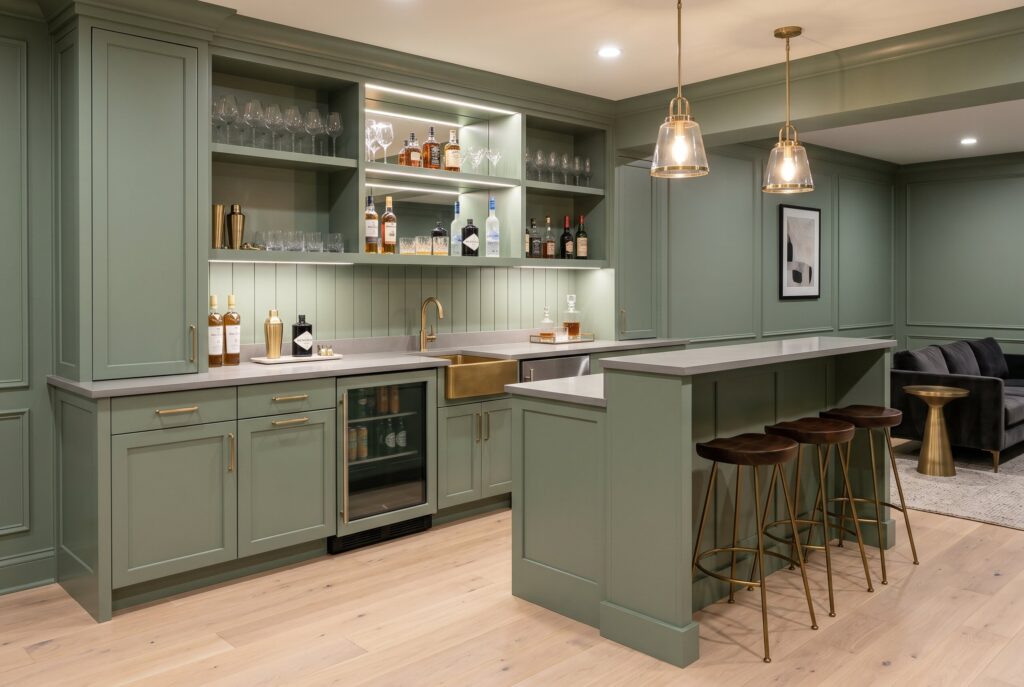
Modern basement ideas often work best when the palette is restrained. Paint the bar cabinetry, side walls, and trim in one muted sage green tone. The result feels calm, deep, and elevated, especially with brass pulls, pale oak floors, and warm white lighting.
7. Fluted Wood Peninsulas
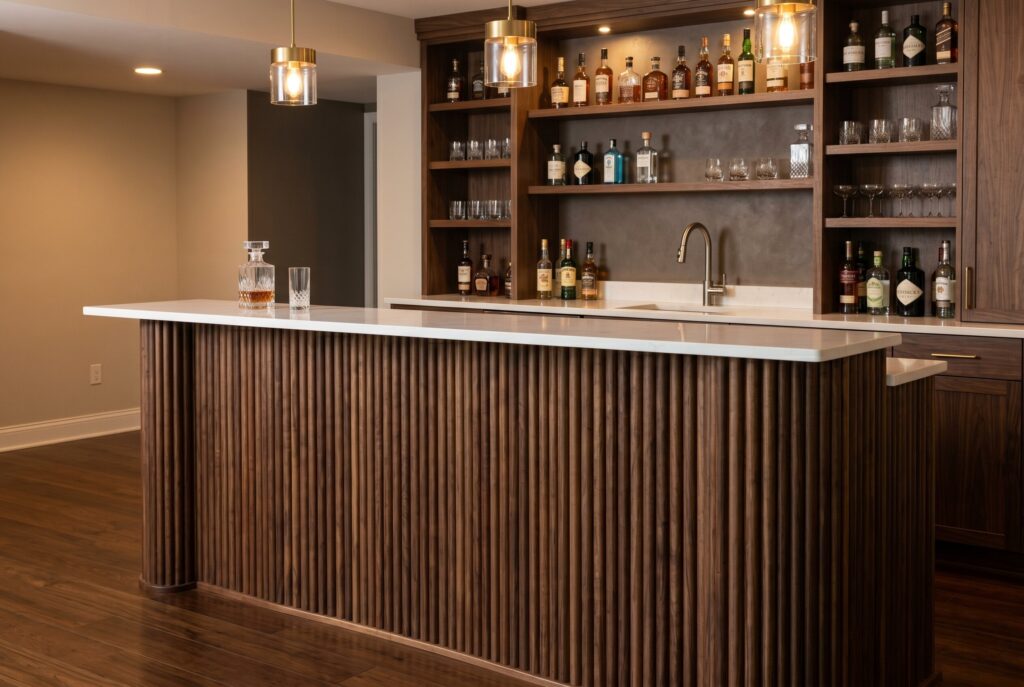
A fluted wood bar front instantly makes a basement bar feel custom. Walnut or oak half round trim adds texture without clutter. It also pairs beautifully with Japandi, Organic Modern, and warm minimalist interiors.
8. Backlit Onyx or Quartzite Countertops
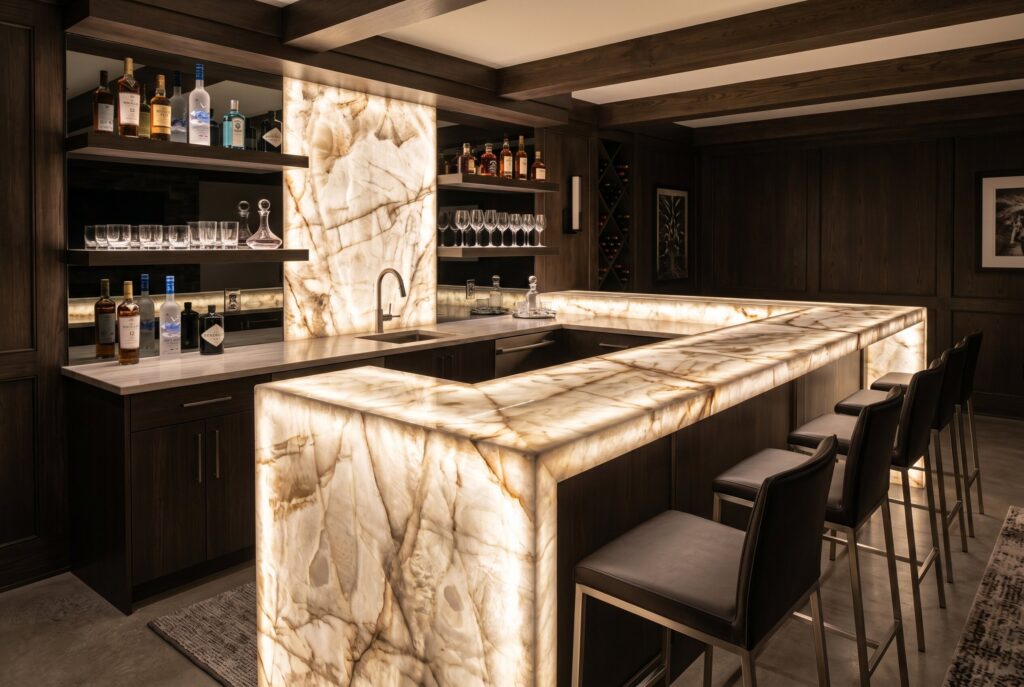
If the budget allows one dramatic feature, choose a translucent stone countertop or backsplash with backlighting. Onyx or quartzite can create a glowing centerpiece that turns the bar into the emotional anchor of the basement.
9. The Minimalist Listening Bar
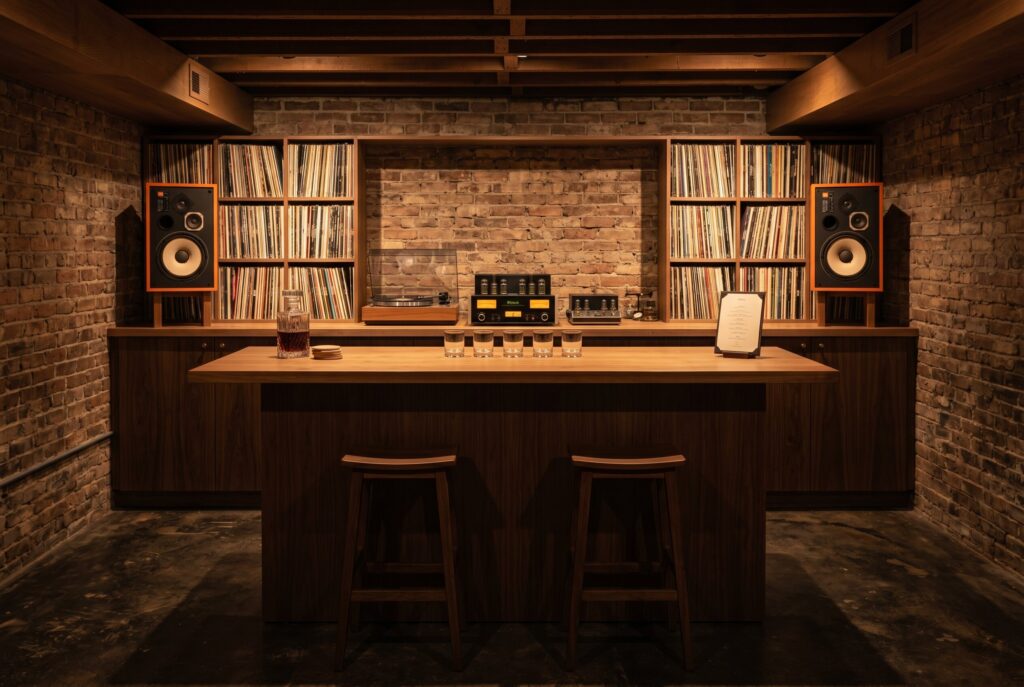
A listening bar combines drinks, music, and conversation. Use a clean counter, open shelves for vinyl records, a visible Hi Fi system, and low amber lighting. This setup feels more sophisticated than a typical sports bar and works beautifully in a moody basement lounge.
10. Moody Tinted Glass Cabinets
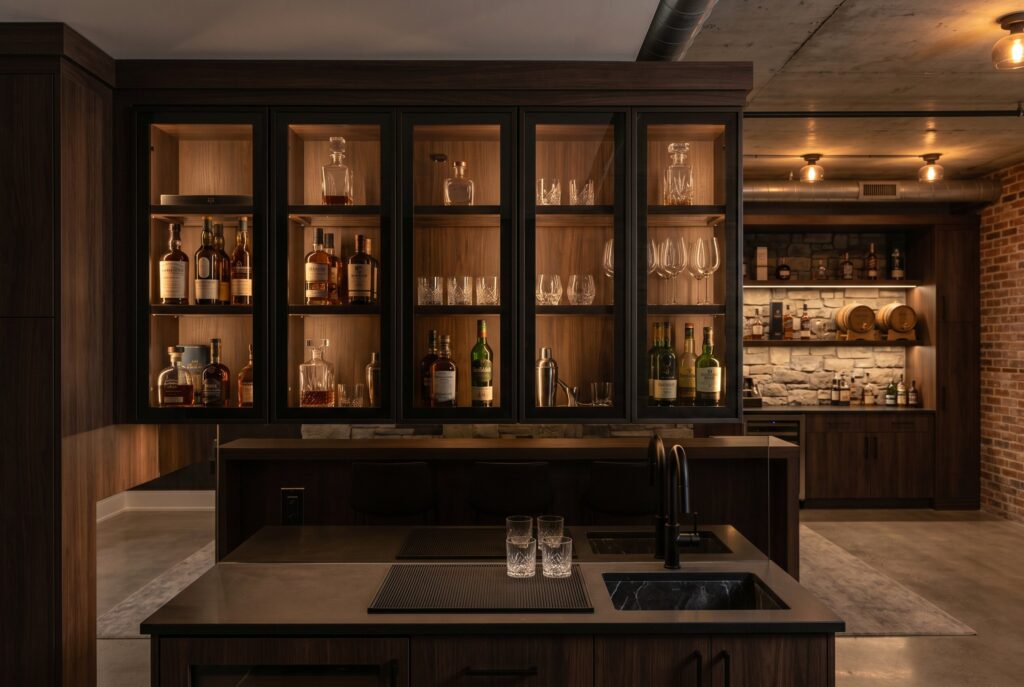
Smoked glass cabinet doors add mystery while keeping bottles and glassware visible. Install 2700K warm LED strips inside the cabinets so the shelves glow softly. This detail makes the bar feel intimate instead of overly bright.
Phase 4: Integration with Basement Man Cave Ideas
11. The U Shaped Cinematic Flow
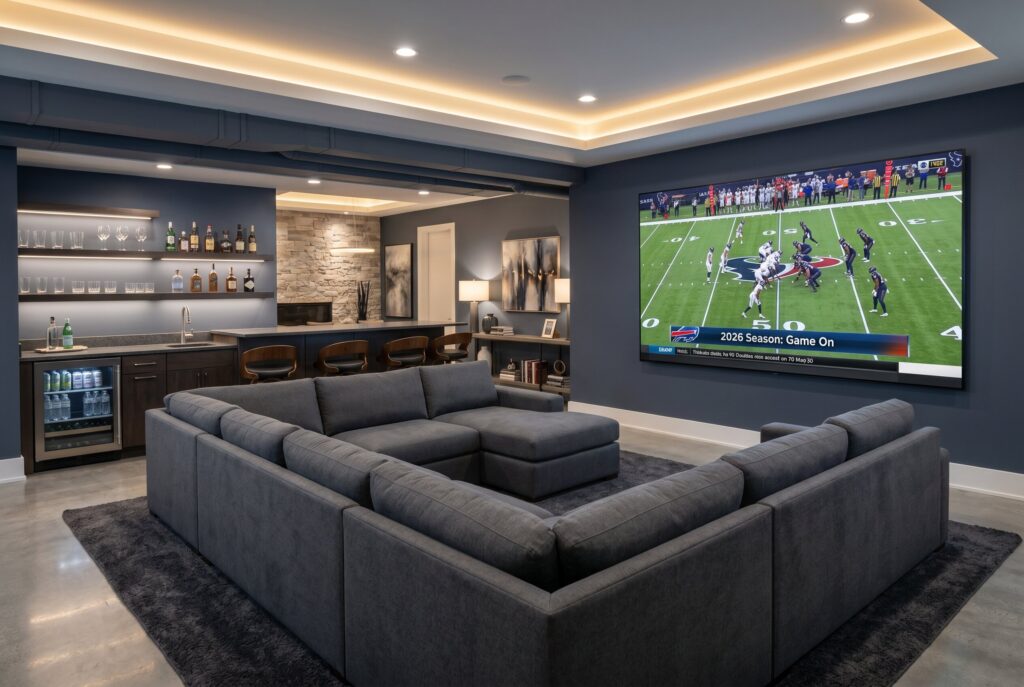
For basement man cave ideas, the bar should connect to the entertainment zone instead of sitting in a lonely corner. Place a large U shaped sectional in front of the screen and position the bar behind or beside it. This allows guests at the bar and on the sofa to share the same movie, game, or conversation.
12. The Seamless Kitchenette Island
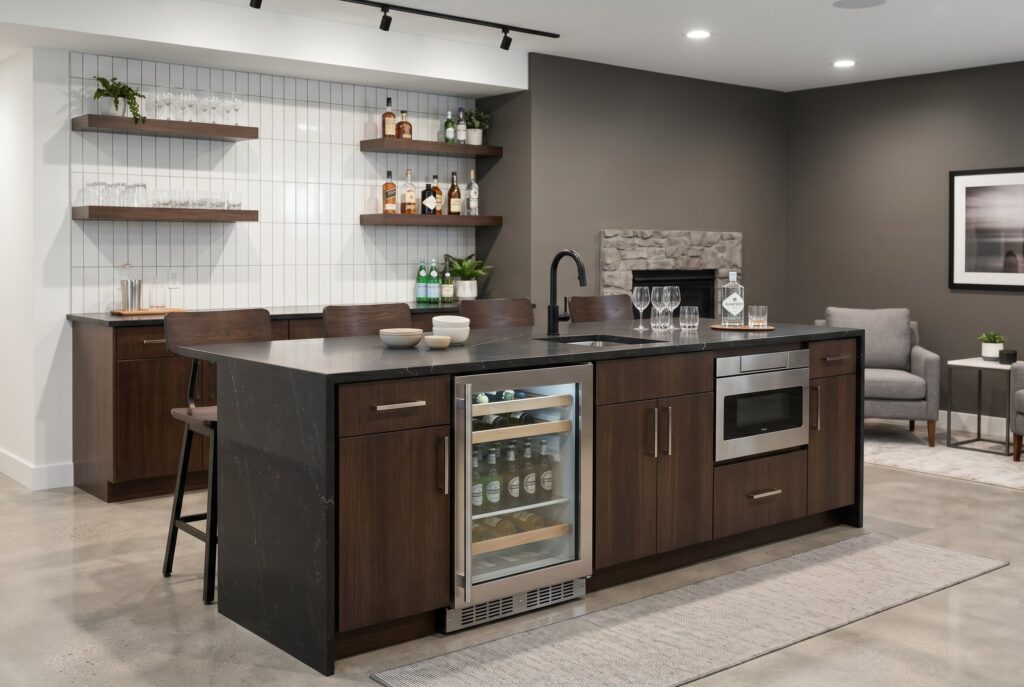
If your basement also serves as a guest suite or family hub, blend the bar into a small kitchenette. A single level island, undercounter fridge, microwave drawer, and closed storage create a practical serving area without making the basement feel like a second full kitchen.
13. Barefoot Friendly Bar Seating
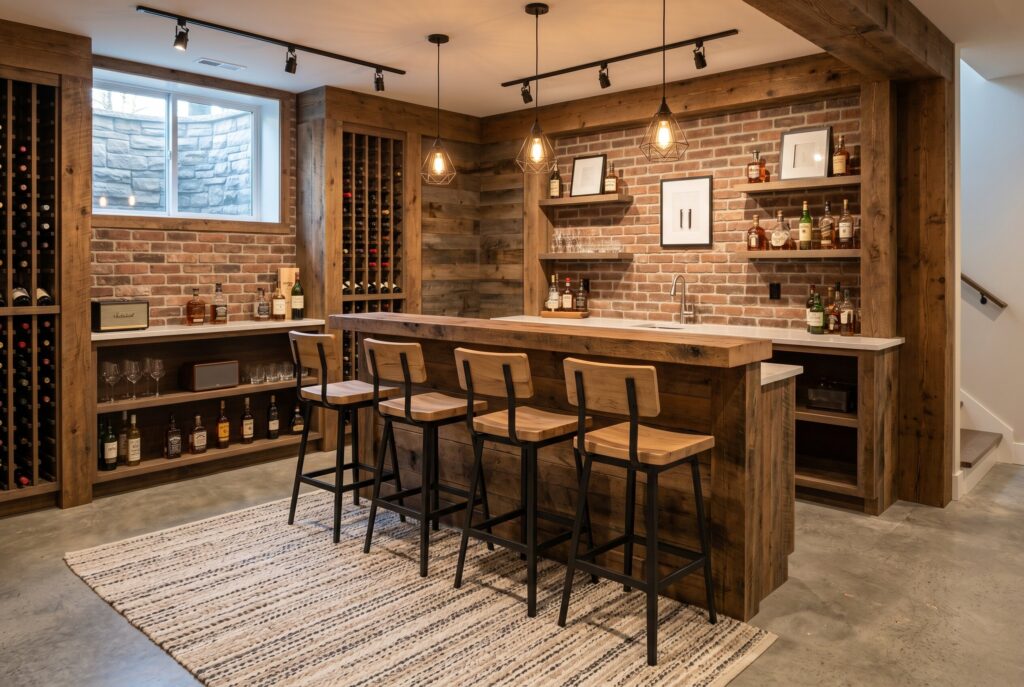
A basement lounge should feel relaxed, not formal. Add a flatweave wool rug beneath the stools, or use radiant heated flooring nearby so guests can take off their shoes and settle in comfortably. Soft surfaces also reduce echo in open basement spaces.
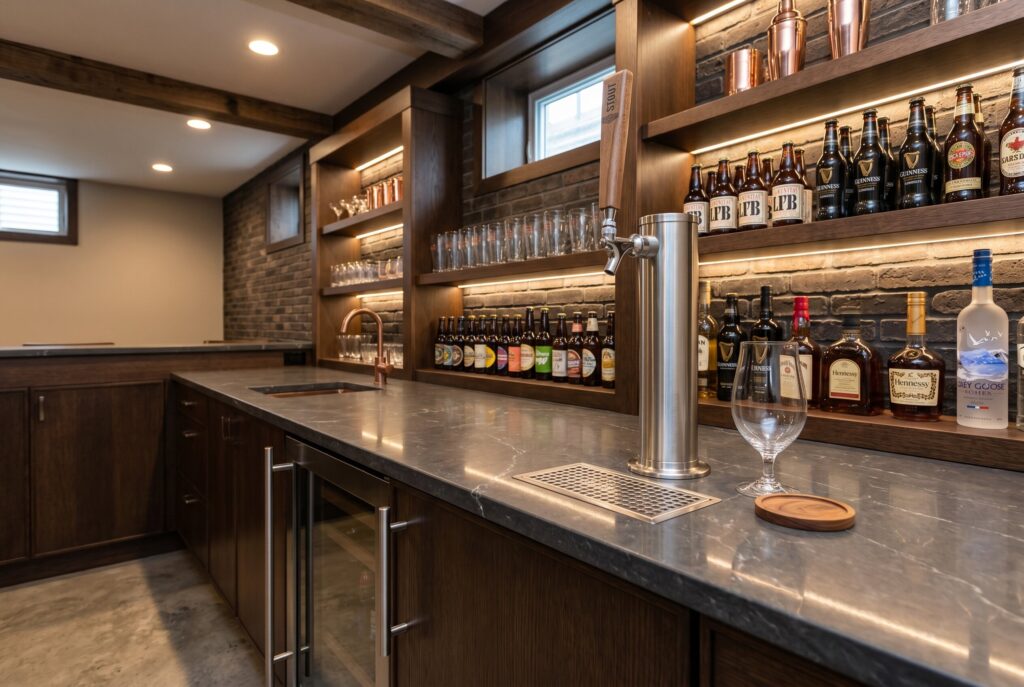
14. Integrated Beer Tap Columns
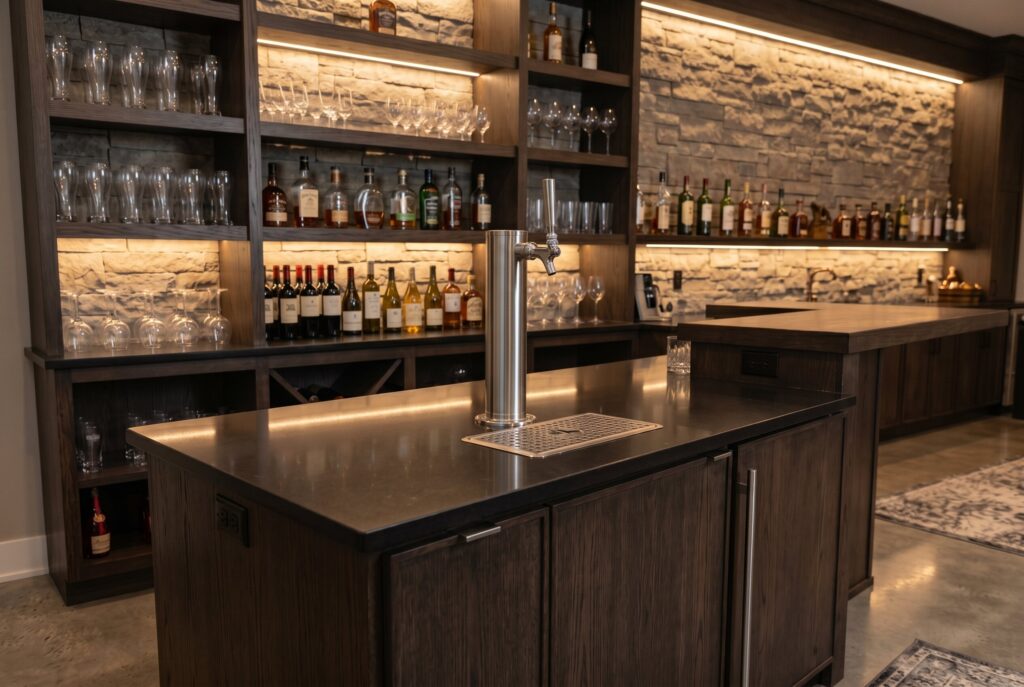
A built in kegerator can look sleek when the equipment is hidden behind cabinet panels. Leave only the brushed metal tap column visible on the counter. This gives the bar a professional feel without the clutter of exposed appliances.
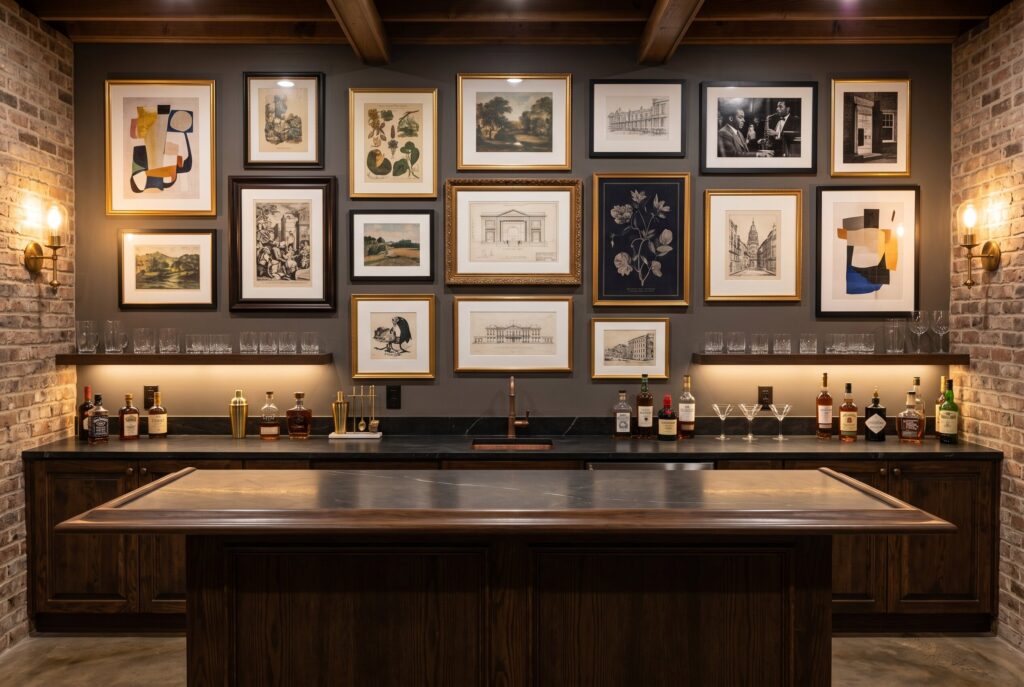
15. The Gallery Wall Backdrop
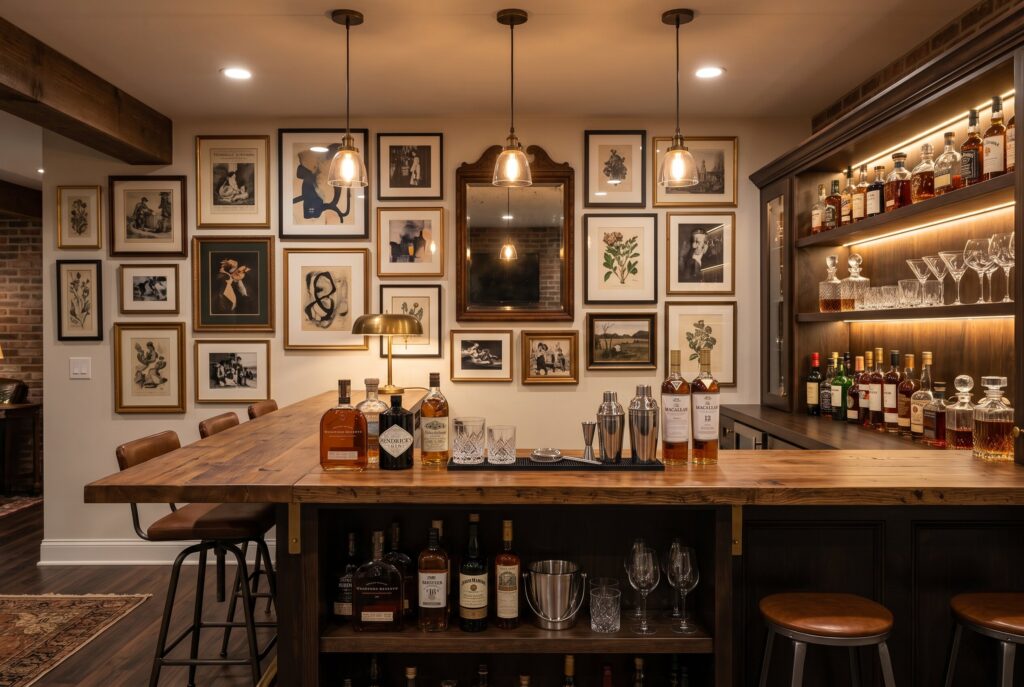
The wall behind a bar should never feel blank. Use one oversized artwork, an antiqued mirror, or a curated gallery wall to add depth. A mirror is especially useful in a basement because it reflects shelf lighting and visually expands the room.
Conclusion
The most successful basement bar ideas begin with honest planning. Decide first whether you want a wet bar or dry bar, because that choice affects budget, permits, plumbing, cabinetry, and timeline. Then shape the atmosphere with materials that feel timeless: walnut, oak, smoked glass, quartz, warm LEDs, and muted color.
A small dry bar can be elegant. A full wet bar can be incredibly convenient. A hidden closet bar can save space. A listening bar can feel personal and refined. Whatever direction you choose, connect the bar to the larger basement lounge with comfortable seating, layered lighting, and a layout that invites people to stay. When the pipes, appliances, storage, and mood all work together, your basement becomes more than extra square footage. It becomes the most memorable entertaining space in the home.
Related Articles
Basement Ceiling Ideas: 13 Pro Ways to Hide Exposed Pipes
Basement Flooring: 7 Best Materials (Pros, Cons & Costs)
Basement Wall Ideas: 23 Wall Coverings (No Mudding!)
Basement Bedroom Ideas: 19 Safe and Legal Guest Suites
Basement Bathrooms: 15 Smart Layouts & Pro Plumbing Tips
Basement Lighting Ideas: 17 Tricks to Hide Low Ceilings